© Shutterstock
 Votre guide Ryo
Visit Amiens in 3 Days: Complete Itinerary for 2026
In Amiens, the Notre-Dame Cathedral is bathed on certain summer evenings in saffron and vermilion hues projected onto its façade, while a quarter of an hour's walk away, a market gardener punts his flat-bottomed boat between rows of leeks planted on an island no bigger than a garden. This city in Picardy is home to the largest Gothic cathedral in France and a medieval floating vegetable garden less than two kilometres apart — a contrast that sums the place up rather well. To visit Amiens in 3 days without rushing, you need to know the right order in which to take in the cathedral, the museums and the hortillonnages. The Ryo audio guide for Amiens maps out exactly this route, from the historic centre to the canals, with the stories that tourist signs so often leave out.
Over these three days, you will encounter an Art Deco tower that was once the tallest skyscraper in Europe, a cemetery where the author of Twenty Thousand Leagues Under the Seas lies beneath a statue that appears to be rising from his own grave, an underground city hewn by Picard peasants to escape marauders, and a village listed among the most beautiful in France where roses have climbed every façade since the early twentieth century. Between visits, there will be talk of ficelle picarde, Amiens macarons and the restaurants of the Saint-Leu district. This guide also covers where to stay, how to get here without a car, and two angles rarely addressed elsewhere: visiting Amiens with children or in the rain, and timing your stay around the Christmas market or a giant flea market depending on the season.
Why Spend Three Days in Amiens
Most travellers pass through Amiens in half a day, en route between Paris and the Opal Coast, pausing just long enough to photograph the cathedral. That is a shame. The Picard capital brings together within a compact area three types of heritage that, elsewhere, would require three separate cities: a Gothic masterpiece listed by UNESCO since 1981, a post-war reconstruction that is rare in France, and 300 hectares of floating gardens found nowhere else in the world. Add the house where Jules Verne imagined much of his Extraordinary Voyages, and you begin to understand why a single day is not enough. Three days also leave time to experience the city at the pace of the Amiénois themselves, aperitif by the canals included.
Day 1: The Cathedral, the City Centre and the Saint-Leu District
The first day is entirely on foot, within a radius of barely two kilometres. Start with the monument that made the city famous, then cross a centre rebuilt after the war, and finish in the most photogenic district of Amiens, where canals replace pavements in front of some of the houses.
Notre-Dame Cathedral, the City Centre and the Tour Perret
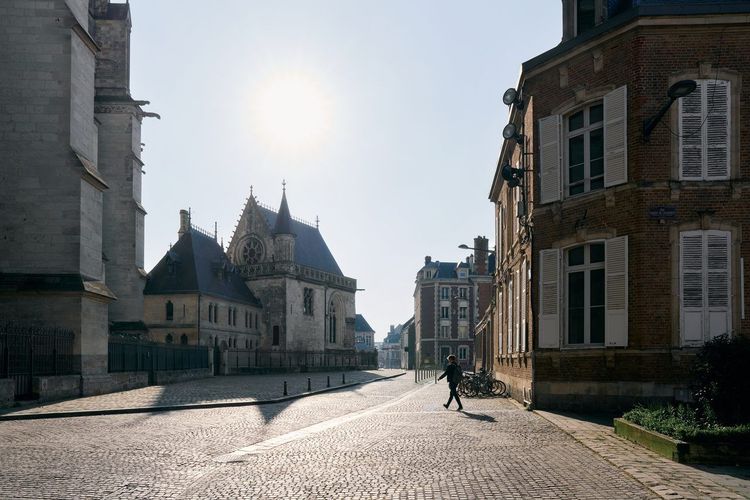
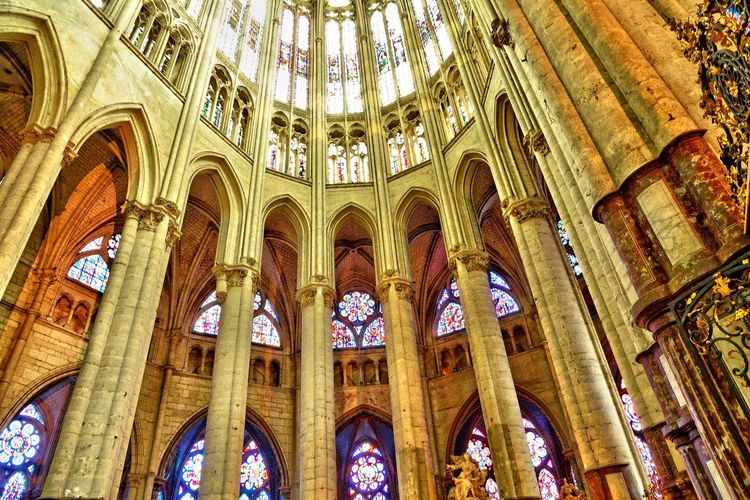
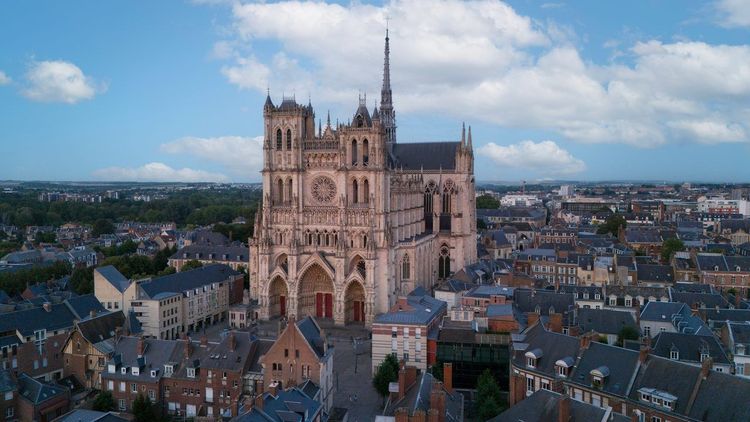
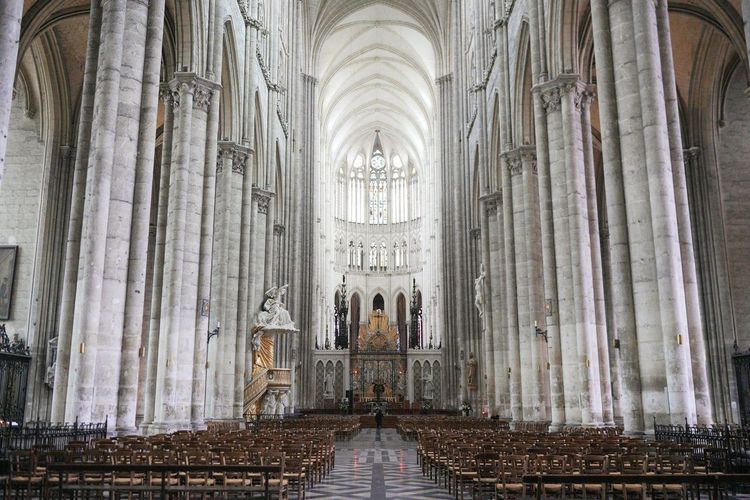
The Notre-Dame Cathedral of Amiens makes an immediate impression, and for good reason: at 42 metres under the vault and 145 metres in length, it is the largest Gothic cathedral in France, capable of containing twice Notre-Dame de Paris by interior volume. Listed as a UNESCO World Heritage Site, it has retained most of its 13th-century statuary, including the famous Beau Dieu welcoming visitors on the central portal's trumeau. Entry to the nave is free.
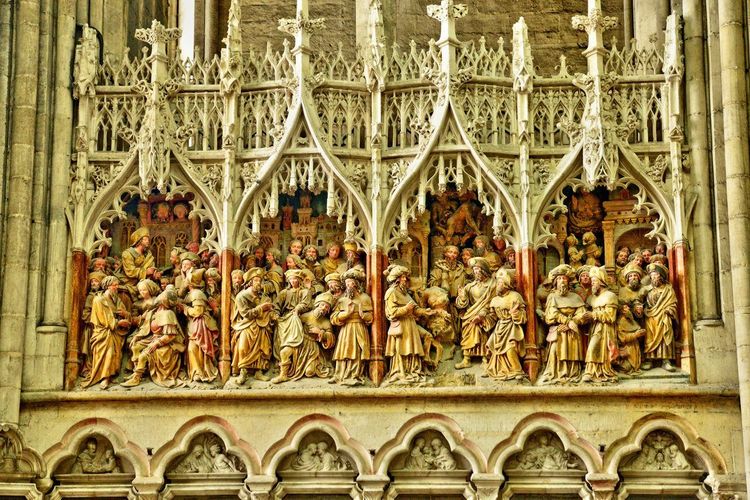
Once inside, look down: the nave's paving traces an octagonal labyrinth 234 metres long, laid in 1288, which pilgrims used to walk on their knees. Then look up at the choir stalls — more than 4,000 figures carved in oak in the early 16th century, one of the richest sets of wooden furnishings in Europe.
There is also an unusual climb to the upper reaches of the building: depending on the time of year, guided tours give access to the towers and upper sections, with a bird's-eye view over the city centre rooftops. This ascent cannot be arranged on the spot; check in advance with the tourist office for available time slots. In the evening, the Chroma show restores in light the original colours of the medieval statuary: in 2026, it runs from 11 July to 12 September, then every evening during the Christmas market, free of charge and with no booking required.
Stepping out onto the forecourt, the city centre of Amiens reveals itself through a leisurely stroll: the town hall, the belfry listed by UNESCO among the belfries of Belgium and France, and the shopping streets rebuilt after the fire of May 1940 that destroyed much of the city's core. The reconstruction plan, entrusted in 1942 to architect Pierre Dufau, redesigned the area around the cathedral and the market square.
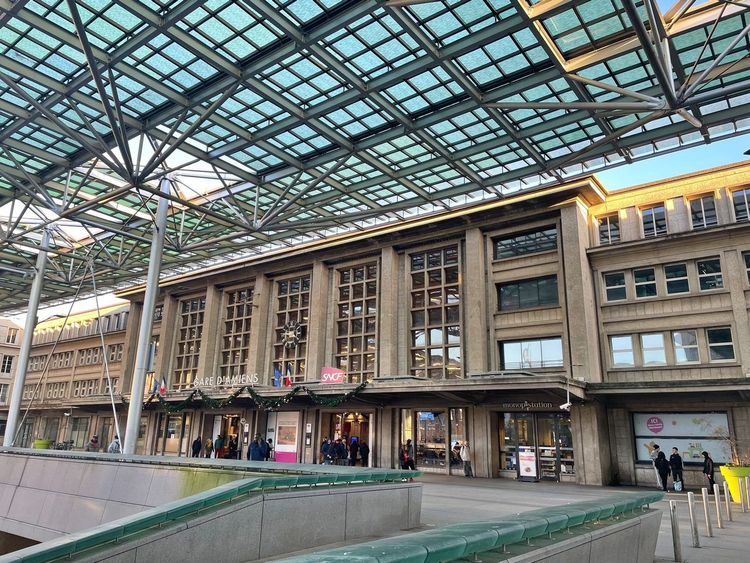
The station district bears the signature of Auguste Perret, and its centrepiece is the Tour Perret, completed in 1952 on Place Alphonse-Fiquet. At 104 metres, it was the tallest skyscraper in Europe until the mid-1960s. Seen from below, it looks like a miniature New York tower planted in the middle of a Picard city — something that never fails to surprise first-time visitors.
Allow a full morning for the cathedral and its surroundings, plus about an hour's walk through the rebuilt centre before heading to the next district. For lunch, the brasseries on Place Gambetta and along the rue des Trois-Cailloux save time, and ficelle picarde is almost always on the menu.
The Saint-Leu District and Its Canals
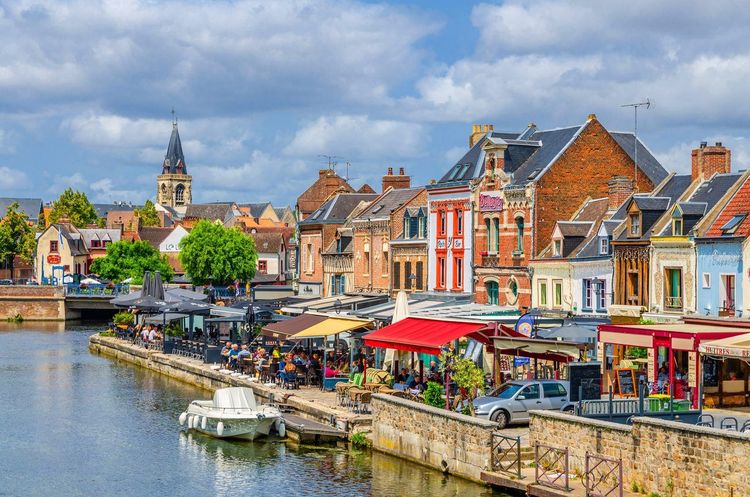
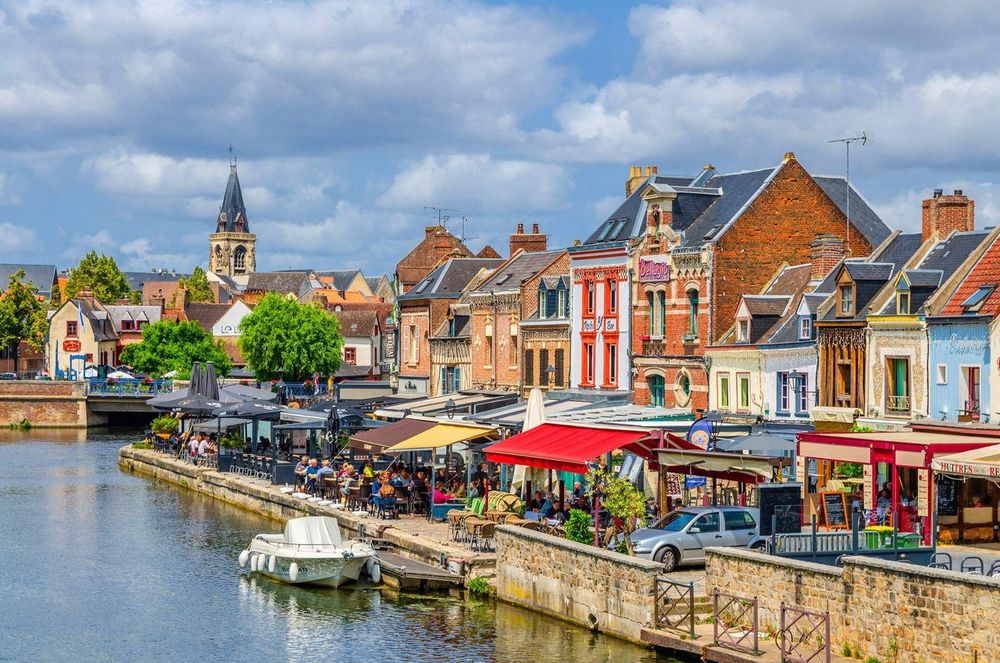
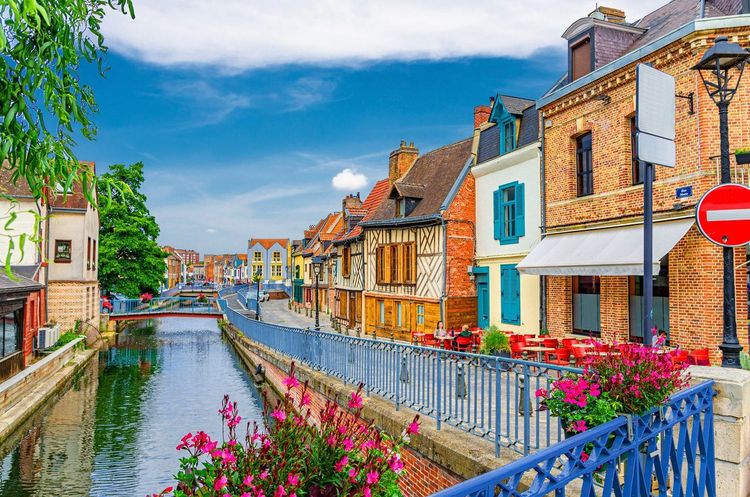
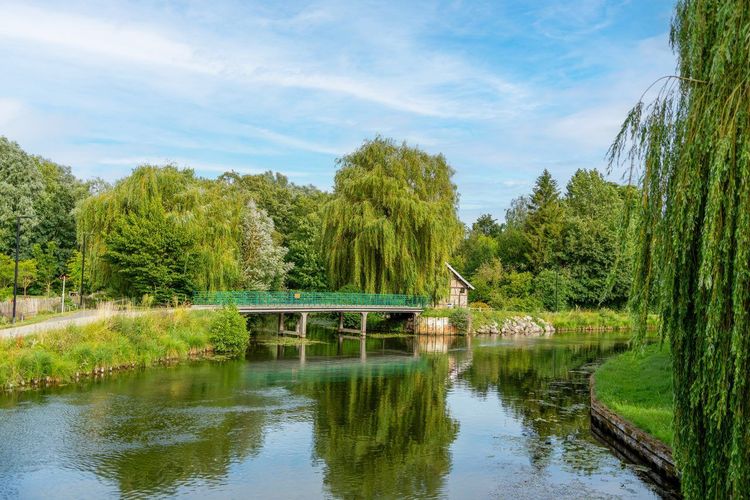
Heading down towards the Somme, ten minutes' walk from the cathedral, you enter a completely different Amiens. The Saint-Leu district (Place du Don, 80000 Amiens, rated 4.6/5 on Google with 4,500 reviews) lines up low-rise houses with colourful façades along canals fed by the Somme, which once powered mills and served dyers and tanners. It is sometimes called the little Venice of the North — a somewhat overused label, but one that resonates immediately.
As evening falls, terraces open up along quai Bélu and the reflections of the façades in the water completely transform the atmosphere compared with daytime. Take time to cross the small bridges on rue des Granges or rue Motte, where houses still have doors opening directly onto the canal — a perfect appetiser before the proper boat trip on day three.
This first day therefore links three very different atmospheres on foot within a few hours: Gothic monumentality, post-war reconstruction, then the picturesque charm of the canals. This is exactly the route followed by the Ryo audio guide from the cathedral to the Saint-Leu district, with a story told at every stop, from the Beau Dieu to the houses on the water, without having to look anything up on the spot.
Day 2: Museums, Heritage and the History of Amiens
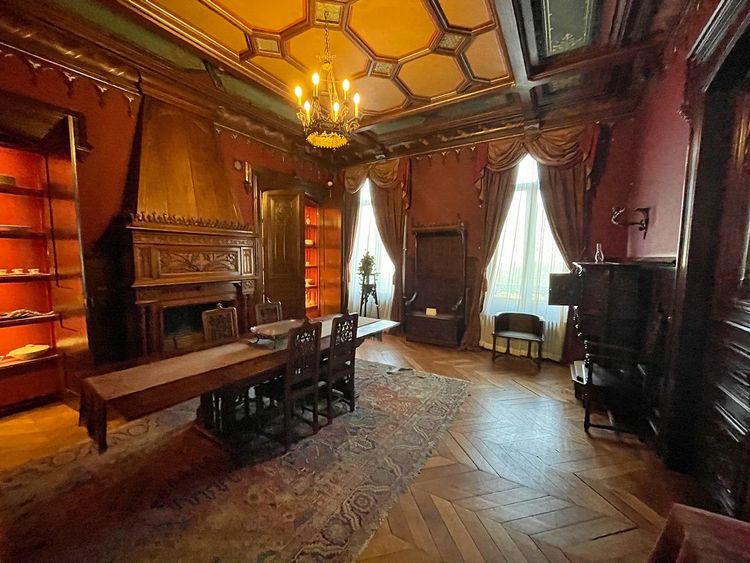
A change of pace for day two: two must-see museums in the morning, then a more dispersed heritage trail in the afternoon, taking in a military citadel and a history-laden cemetery. If you plan to visit both museums, the combined ticket for Jules Verne's House and the Musée de Picardie (16 euros at full price) works out cheaper than two separate admissions.
Jules Verne's House and the Musée de Picardie
Amiens is not Jules Verne's birthplace, but it is the city where he lived for more than thirty years and wrote a large part of his work. Jules Verne's House, where he lived from 1882 to 1900, is now open as a museum: a reconstructed study, globes, models and a turret from which the writer observed the city. The immersion it offers into the author's world feels genuine, far from a stiff museum experience. Admission is 9 euros; closed on Tuesdays.
Allow an hour and a half if you enjoy the detail: the collections include original illustrated editions, posters and personal objects rarely displayed elsewhere.
A few streets away stands the Musée de Picardie, a Second Empire palace designed from the outset to be a museum — a first in France at the time. Renovated and reopened in 2020, it covers regional archaeology, sculpture and painting from the Middle Ages to the 20th century. Do not miss the large mural paintings by Puvis de Chavannes in the main staircase, nor the series of Puys — paintings donated each year to the cathedral by an Amiens confraternity in the 15th and 16th centuries. Allow a good two hours: the archaeology galleries, with their Gallo-Roman finds excavated beneath the city, are a reminder that Amiens was then called Samarobriva, the 'bridge over the Somme'.
The Citadel, the Madeleine Cemetery and the English Quarter
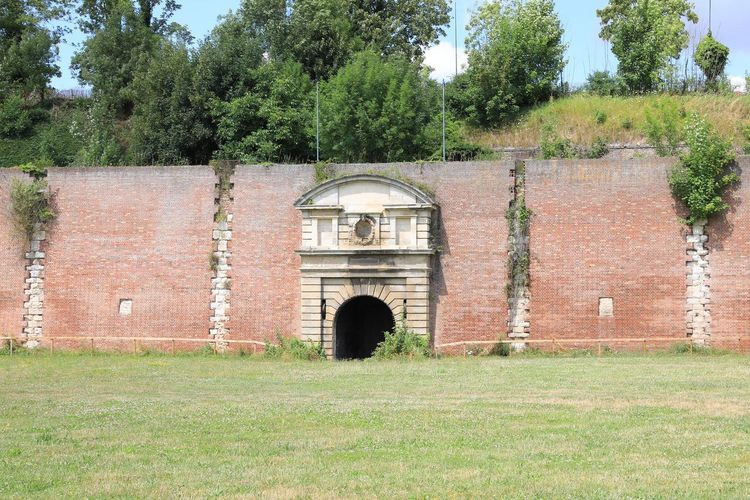
In the afternoon, head north to the citadel of Amiens, a bastioned fortification built by engineer Jean Errard on the orders of Henri IV and completed in 1622. Long occupied by the army, it has housed since 2018 a campus of the Université de Picardie Jules Verne redesigned by Renzo Piano, allowing visitors to walk freely through the courtyards, stroll along the ramparts and enjoy the panoramic view from the roof terrace.
A little further west, the Madeleine cemetery is home to the tomb of Jules Verne, topped by a striking sculpture by Albert Roze entitled Towards Immortality and Eternal Youth: the novelist is depicted lifting the slab of his own tomb, one arm reaching skyward. The cemetery is also worth visiting for its undulating landscaped layout and shaded paths, far from the typical image of an urban graveyard.
At the end of the day, head back south through the English Quarter, properly known as Henriville, next to Jules Verne's House. Its late-19th-century bourgeois villas — red brick, bay windows and enclosed gardens — draw on British architectural styles. Finish with the Amiens circus, also known as the cirque Jules Verne (Place Longueville, 80000 Amiens, rated 4.5/5 on Google with 931 reviews), a circular building by architect Émile Ricquier inaugurated in 1889 by the writer himself, then a city councillor, and still used for performances today.
Several stops on the Ryo audio guide for Amiens are dedicated to Jules Verne and the city's military past: you hear the story directly through your headphones, standing in front of the relevant building, without depending on a guide with fixed schedules.
Day 3: The Hortillonnages and a Nature Escape
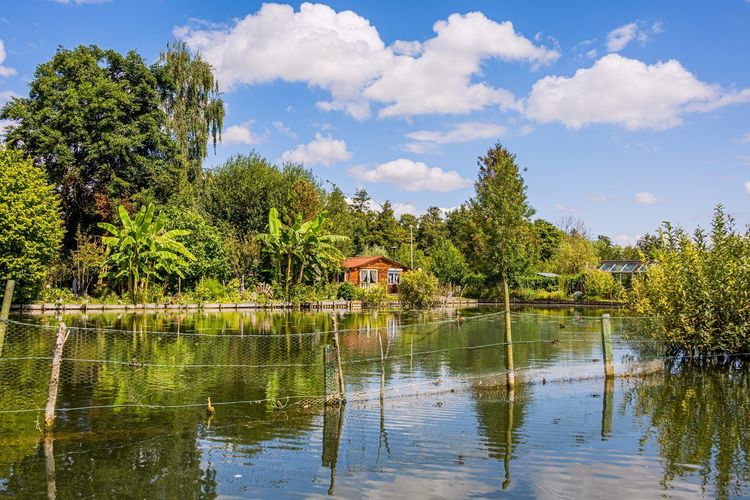
Day three slows the pace. We leave the monuments behind for water and greenery, with the highlight being Amiens' most celebrated visit after the cathedral.
The Hortillonnages by Boat
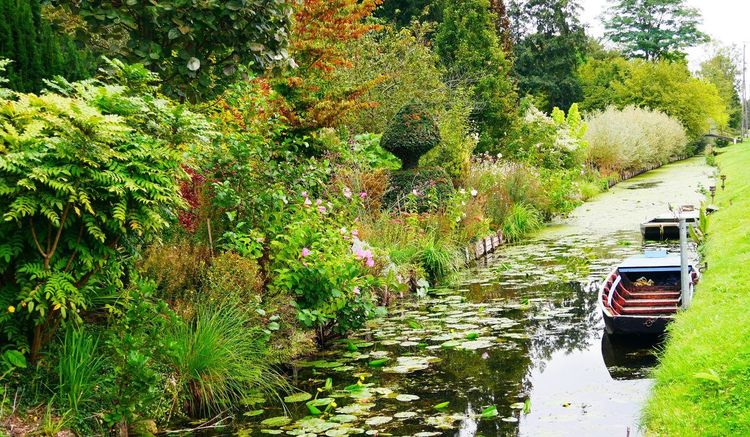
The hortillonnages of Amiens are arguably the city's most iconic image. They comprise a network of around 300 hectares of gardens and market garden plots, criss-crossed by 65 kilometres of canals called rieux, cultivated since the Middle Ages and still worked today by a handful of market gardeners, alongside hundreds of private pleasure gardens.
How do you visit the hortillonnages? The most common option is the guided ride in an electric boat run by the site's conservation association, departing from boulevard Beauvillé: 45 minutes of silent navigation, around 10 to 11 euros per adult, with online booking recommended. The guide comments on the flora, the history of the plots and the techniques of water-based cultivation. Aim for the morning: the raking light on the rieux is more beautiful, and late-afternoon slots fill up quickly in high season. From June to October, the Art, villes et paysage festival also installs contemporary artworks on the islets, to be discovered by boat. For visitors short on time, walking along the banks from the towpath already gives a fine glimpse, free of charge.
The Towpath, Parc Saint-Pierre, the Botanic Garden and the Banks of the Somme
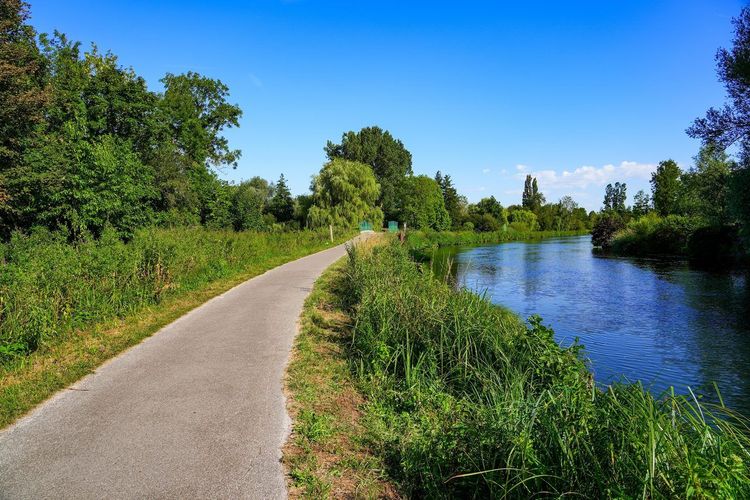
Leaving the hortillonnages, the towpath follows the Somme for several kilometres, laid out for walkers and cyclists. It is one of the most pleasant stretches for a walk along the banks of the Somme, winding past reeds, private gardens and fishermen's huts.
If you are there on a Saturday, start the day instead at Place Parmentier at the foot of Saint-Leu: the market gardeners hold their floating market there every Saturday morning, heir to the sales once made directly from the boats. Leeks, radishes or strawberries depending on the season — everything comes from the plots you will be drifting past an hour later. Once a year, in June, a festive edition revives the tradition with market gardeners in costume arriving by flat-bottomed boat loaded with vegetables.
Close to the landing stage, Parc Saint-Pierre spreads its lawns, ponds and play areas at the foot of the hortillonnages — a fine spot for a picnic with the cathedral rising above the trees.
On the other side of the centre, near the citadel, the Jardin des Plantes of Amiens is more of a hidden gem: a former royal garden entrusted to the city by Louis XV in 1751 to be turned into a botanical garden, it contains greenhouses, medicinal plant beds and rare species. You can combine it with the citadel the day before if you prefer to group visits together.
If time allows, two further sites round out this nature escape: the archaeological garden of Saint-Acheul, developed on a major prehistoric site that gave its name to the Acheulean, an entire period of world prehistory, and the Amiens zoo (42 Rue Voyelle, 80090 Amiens, rated 4.2/5 on Google with 7,882 reviews), set in the parc de la Hotoie — smaller than major wildlife parks but committed to threatened species conservation programmes. Allow half a day if you add these two stops.
From the towpath to the hortillonnages, this loop also follows the nature section of the Ryo audio guide for Amiens: 27 audio stops over 7.4 km in total, enough to fill a morning without a car, headphones on.
Around Amiens: Day Trips in the Somme and Picardy
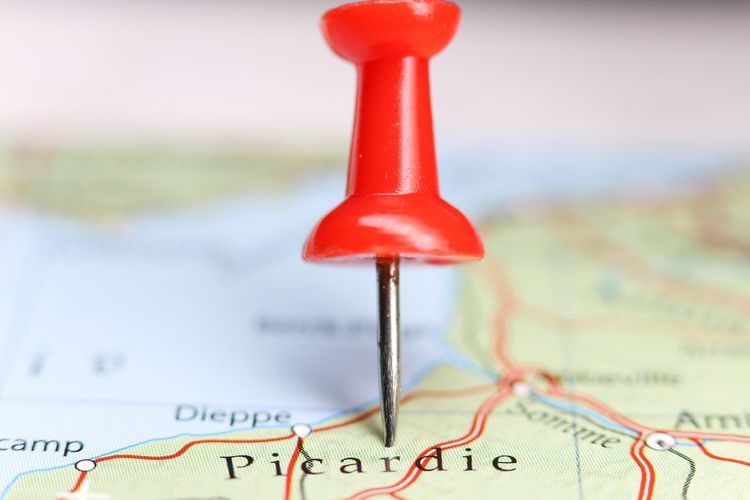
If your stay extends beyond three days, or if you replace part of the third day with an excursion, Picardy around Amiens is full of sites worth the detour, most within less than an hour's drive.
The Baie de Somme and Parc Samara
About an hour away by car, the Baie de Somme ranks among the most beautiful bays in the world and holds the Grand Site de France label. Its landscapes change dramatically with the tide: mudflats stretching to the horizon at low tide, a mirror of water at high tide, and France's largest colony of common seals. Le Crotoy and Saint-Valery-sur-Somme, its two best-known villages, let you combine a coastal walk with a tasting of samphire or salt-meadow lamb.
On the way, a quarter of an hour from Amiens, Parc Samara, an archaeological park set in the Somme valley at La Chaussée-Tirancourt, traces hundreds of thousands of years of human presence through full-scale reconstructions, from prehistoric camps to Gaulish villages. It is a popular stop for families, with hands-on workshops and shaded paths. Cyclists will note that the Vallée de Somme cycle route, a marked trail of more than 180 kilometres, links Amiens to the bay along the river — a pleasant option for those who prefer to pedal rather than drive.
The Underground City of Naours, the Citadel of Doullens, Gerberoy and Beauvais
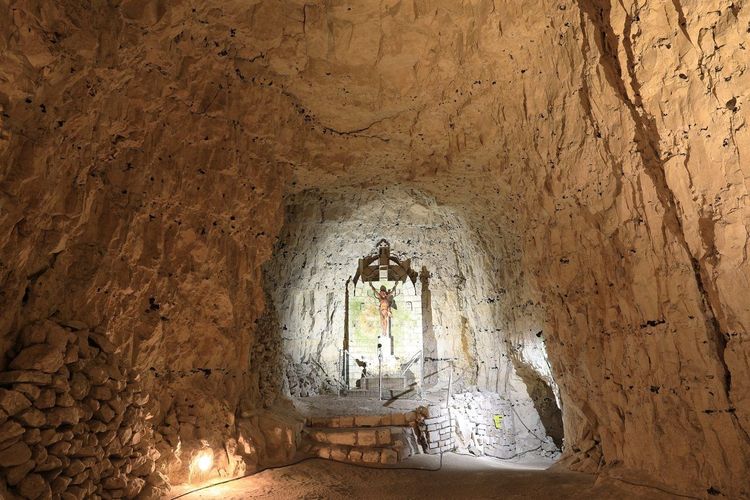
About twenty minutes north of Amiens, the underground city of Naours comprises around 300 rooms and two kilometres of galleries carved into the chalk, a refuge used by villagers from the Middle Ages to escape invasions. During the First World War, thousands of soldiers — many of them Australian — left their graffiti here. The visit, cool even in summer, surprises with its sheer scale.
Further north, Doullens preserves a large 16th-century bastioned citadel, but its great moment in history played out in the town hall: it was there, on 26 March 1918, that Ferdinand Foch was given command of the Allied forces on the Western Front. The Unified Command room can still be visited today.
To the south-west, about an hour's drive away, Gerberoy (60380 Gerberoy, rated 4.7/5 on Google with 1,400 reviews) is well worth the trip for its status as one of the most beautiful villages in the Oise: cobbled lanes, half-timbered houses and thousands of rose bushes planted in the footsteps of painter Henri Le Sidaner, who settled here in 1901, giving rise to the rose festival every June. Finally, an hour from Amiens, Beauvais and its cathedral complete the excursion: the choir of the cathedral of Saint-Pierre reaches 48 metres under the vault — a world record for a Gothic building — even though the nave was never built.
To plan these excursions, Ryo's selection of the most beautiful villages around Amiens details five destinations reachable in half a day. And if you head out early towards the bay, listen the evening before to the Ryo audio guide stops devoted to the Somme — you will see the river in a whole new light as you follow its banks.
Where to Eat in Amiens: Picard Specialities and Good Addresses
Picard Specialities to Try
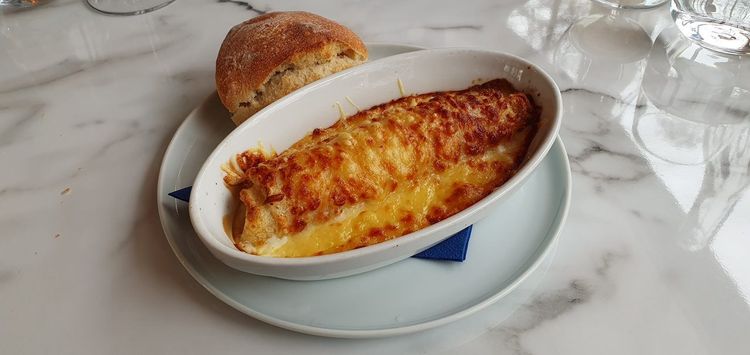
Before choosing a restaurant, look out for three local specialities. Ficelle picarde comes first: a crêpe rolled around a slice of ham and a mushroom duxelles, coated in cream and grilled in the oven — generous and comforting, best ordered at lunch as it is quite filling. The Amiens macaron, made from almond paste, honey and egg white, is quite distinct from the Parisian macaron: denser, softer, with no crisp shell. Round things off with the tuile amiénoise, a thin chocolate and orange biscuit, often sold in the same patisseries.
On the savoury side, Amiens duck pâté en croûte, whose recipe dates back to the 17th century, makes a fine starter, while flamiche aux poireaux — the Picard cousin of the quiche — is a reminder that the hortillonnages long fed the city. Maroilles, a cheese from the Thiérache region, often makes an appearance in brasserie dishes.
Restaurants, Tea Rooms and Bars in the Saint-Leu District
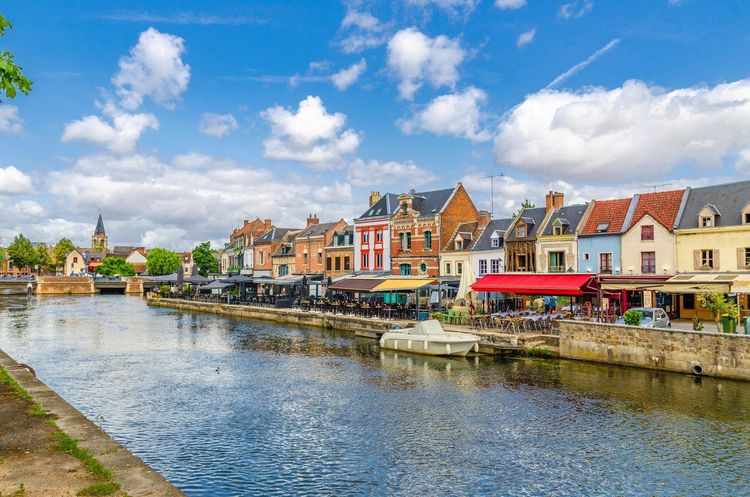
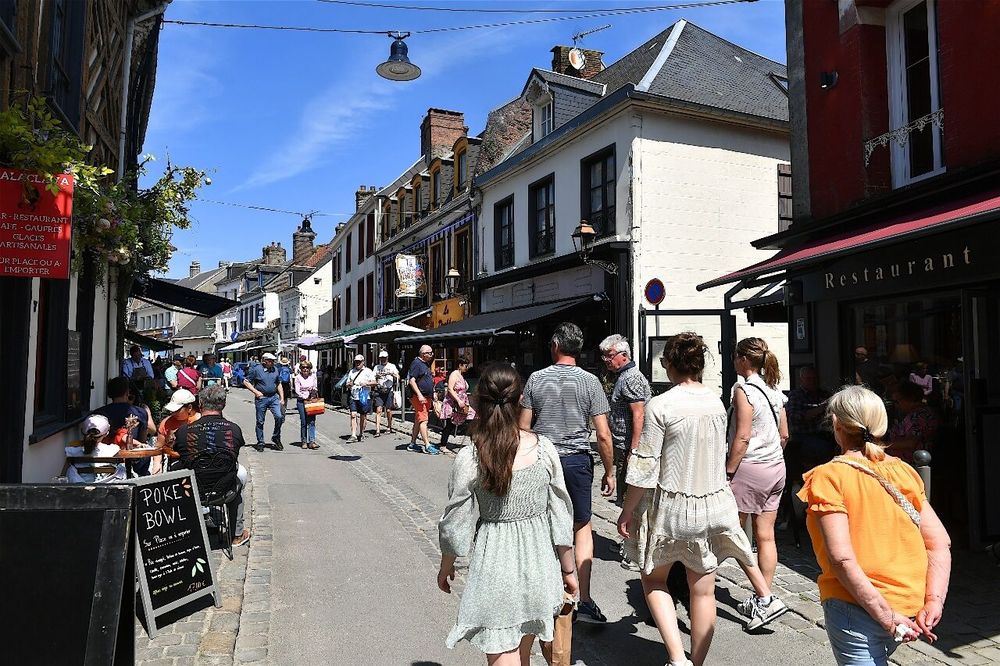
For lunch or dinner, the Saint-Leu district is home to a good proportion of the city's restaurants, with waterside terraces that are particularly pleasant on fine days, along quai Bélu and around Place du Don. You will find everything from restaurants focused on Picard cuisine to more contemporary tables, often set up in restored former craftsmen's houses.
For the best restaurants in Amiens, book ahead at weekends: local regulars mix with visitors from spring onwards. Tea rooms cluster mainly in the rebuilt centre, around rue des Trois-Cailloux, handy for a break between museums. For an evening drink, Saint-Leu remains the liveliest spot, with several student bars and terraces facing the water.
For more detail before you go, this Ryo article on the culinary specialities of Amiens covers the dishes and the addresses where you can try them.
Where to Stay in Amiens
City-Centre Hotels
For a first stay, lodging in the city centre makes everything easier: the cathedral, the station and the Saint-Leu district are all within fifteen minutes' walk at most. The offer ranges from chain hotels close to the station — practical if you are arriving by train — to charming addresses in older buildings around the cathedral. If you want to wake up facing the canals, look in the Saint-Leu area, bearing in mind that the district can be lively late at weekends.
Rentals and Guesthouses for Smaller Budgets
For a tighter budget, rental apartments and guesthouses are multiplying in the streets around Saint-Leu and in the Henriville district, often at gentler rates than equivalent hotels in the very heart of the city. Bear in mind, however, that availability shrinks during the Christmas market or the Grande Réderie, two major events that quickly fill local accommodation: book several weeks in advance.
How to Get to and Around Amiens
By Train or by Car
To visit Amiens by train, allow just over an hour from Paris-Nord on a direct service — one of the most convenient connections for a short car-free break. Lille is around 1h20 away, and the TGV Haute-Picardie station, about forty minutes by shuttle, serves other major cities.
To visit Amiens by car, the A16 motorway links the city to the Paris region and the coast, while the A29 heads towards Saint-Quentin and Rouen. This is the most logical option if you plan to string together the excursions described above, as the Baie de Somme and Gerberoy are poorly served by public transport.
Getting Around Without a Car and Finding Free Parking
Once you are there, the city centre is entirely walkable, with the cathedral, Saint-Leu and the museums all within twenty minutes of each other. The Ametis bus network, including its high-frequency Nemo lines, fills in the gaps for reaching the citadel, the zoo or Saint-Acheul, and a bicycle is ideal along the towpath.
To park for free in Amiens, aim for streets on the immediate outskirts of the centre that fall outside the paid zone, or park-and-ride car parks connected to the centre by bus. The paid zone covers most of the very centre during the day; if you are staying centrally, ask your accommodation whether a parking space is available.
When to Go and How Long to Allow
Spring and early summer remain the most pleasant period: the hortillonnage gardens are in full growth and the Saint-Leu terraces are in full swing. If you are set on seeing the cathedral illuminations, aim for July or August, or December during the Christmas market. Autumn brings soft light over the canals with noticeably fewer crowds.
How long does it take to visit Amiens? Three days comfortably cover the essentials described in this guide, cathedral, museums and hortillonnages included. A single day is enough for the main city-centre highlights, but forces you to sacrifice either the hortillonnages or the museums; for this shorter version, our guide to visiting Amiens in 2 days offers a tighter programme. To add an excursion into Picardy, four days become more comfortable.
Amiens with Families, in the Rain and for All Abilities
Amiens with Children and on Rainy Days
With children, the hortillonnages by boat appeal to all ages, as does the zoo and, a little further afield, Parc Samara, designed with families in mind thanks to its workshops and full-scale reconstructions. In the city, Jules Verne's House works very well with children already familiar with his novels, and the family ticket (two adults, two children) softens the bill.
A rainy day? Covered cultural visits take over: the Musée de Picardie, Jules Verne's House and the cathedral itself are enough to fill an entire day almost without stepping outside. The Amiens circus, when a show is scheduled, rounds off a wet family evening nicely.
Visiting Amiens with a Disability
The post-war rebuilt city centre, with its wide pavements and open layout, generally makes wheelchair navigation easier than in many historic cities with narrow lanes. The cathedral and the Musée de Picardie both have adapted access; however, check in advance for the hortillonnages, where access to the boats depends on the landing stage.
To plan this type of stay in detail, this Ryo guide to visiting Amiens with the family brings together additional practical advice.
Christmas Market, Grande Réderie and Other Events Not to Miss
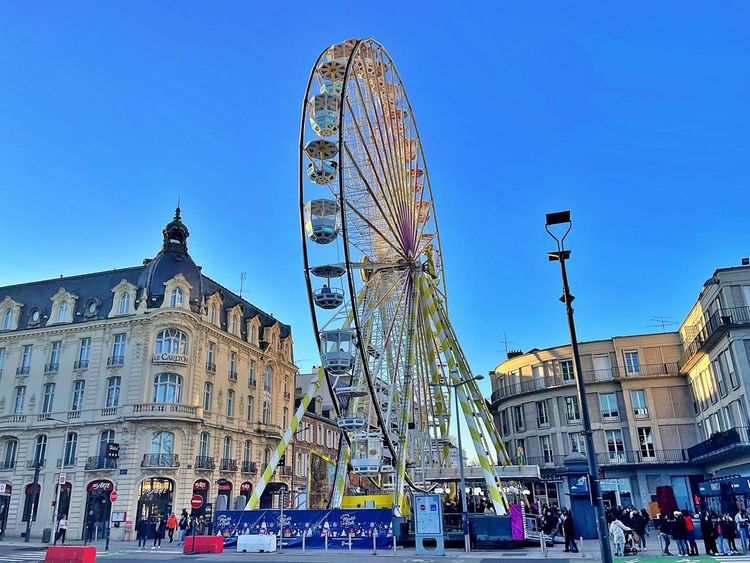
The Amiens Christmas market, billed as the largest in northern France, sets up around 130 chalets along nearly two kilometres of illuminated streets, from rue des Trois-Cailloux to Place Gambetta. In 2026, it runs from 20 November to 30 December, with a big wheel and an ice rink in the city centre. The Chroma show on the cathedral façade accompanies it every evening: be prepared for some patience in the face of weekend crowds.
In spring and autumn, the Grande Réderie d'Amiens turns the city-centre streets into one of the largest flea markets in France, with around 2,000 stallholders and some 80,000 bargain hunters over the course of a Sunday, in April and October. If your visit coincides with one of these events, book accommodation early: the city fills up fast. In between, summer brings its share of free events: Chroma evenings on the cathedral forecourt, the Art, villes et paysage festival in the hortillonnages, and the European Heritage Days in September, when certain usually closed sites open their doors. The Ryo events calendar for Amiens lets you check dates before finalising your itinerary.
FAQ
Is three days enough to visit Amiens?
Yes, three days are enough to cover the cathedral, the main museums, the Saint-Leu district and the hortillonnages without rushing. Add an extra day if you want to include a trip to the Baie de Somme or Gerberoy.
How much time do you really need to visit Amiens?
One day is enough for the main highlights of the city centre, but forces you to choose between the museums and the hortillonnages. Two days cover the essentials; three days allow you to add the citadel, the Madeleine cemetery and a proper morning in nature.
How do you visit the hortillonnages in Amiens?
The most common option is the 45-minute guided ride in an electric boat, departing from boulevard Beauvillé, for around ten euros. A free alternative is to walk along the towpath from the chemin de halage.
Where can you park for free in Amiens?
Several streets on the immediate outskirts of the centre fall outside the paid zone, and park-and-ride car parks are connected to the centre by bus. The city centre itself is mostly paid parking during the day.
When can you see the Amiens Cathedral light show?
In 2026, the Chroma show is free every evening from 11 July to 12 September at nightfall, and then every evening during the Christmas market from 20 November to 30 December. Show times shift earlier as summer progresses — check with the tourist office for updates.
Do you need a car to visit Amiens and its surroundings?
Not for the city centre, which is entirely walkable or accessible by bus. However, the Baie de Somme, Gerberoy and Doullens are much easier to reach by car, as public transport connections to these destinations are limited.
Where should you eat in the Saint-Leu district?
Quai Bélu and Place du Don are home to most of the restaurants, with a mix of Picard cuisine and more contemporary options along the canals. Book ahead at weekends, especially in season.
A Human-Scaled City to Explore at Your Own Pace
Amiens fits into a compact format that is rare for a city housing such a monument: three days are enough to take it all in without ever rushing from one site to the next — cathedral in the morning, canals in the evening, hortillonnages by boat the following day. It is this diversity packed into such a small area that explains why so many visitors leave surprised, having expected a simple stopover on the road north and discovered a destination in its own right.
To make the most of this stay without endless searching, the Ryo audio guide for Amiens remains the simplest resource on the ground: 27 commented stops, around 3h15 of listening and a 7.4-kilometre route covering the essentials of this itinerary, from the cathedral forecourt to the banks of the hortillonnages.
À lire également