© Shutterstock
 Votre guide Ryo
Visiting Annecy in 2 Days: The Complete Itinerary for 2026
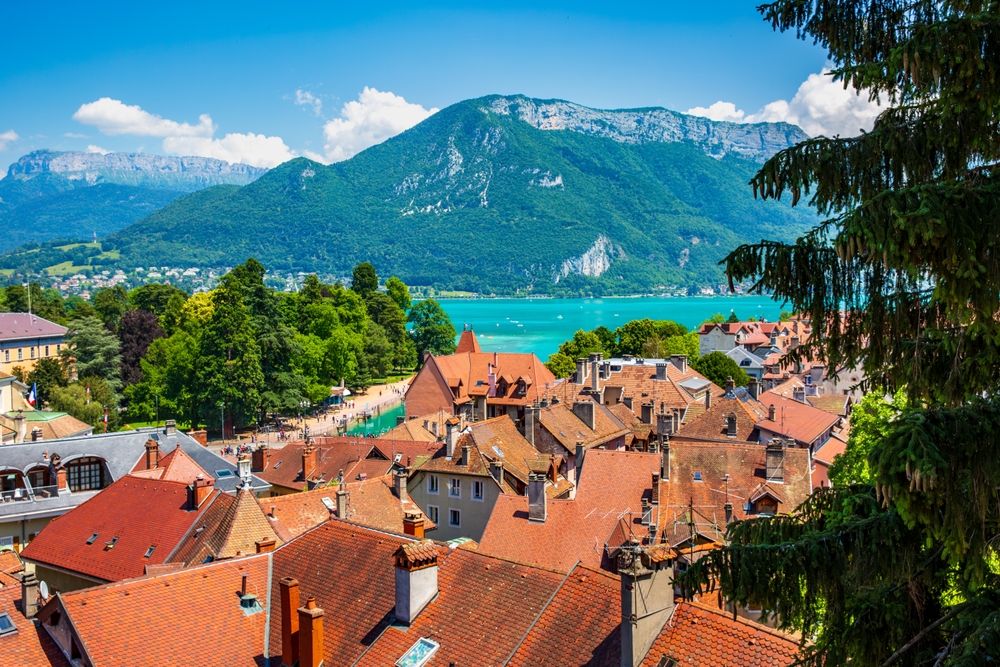
At 8 a.m., before tourist groups flood the quays, the Palais de l'Isle still floats alone on the Thiou, wrapped in mist rising from the lake. This is the best moment to understand why Annecy has earned its reputation as the most romantic city in the French Alps — a title it shares with no one willingly. Visiting Annecy in 2 days is more than enough to take in the old town, the lake, and a glimpse of the surrounding summits, provided you spread your time wisely between the historic centre and the shoreline.
You'll discover a lake ranked among the purest in Europe, a castle that long served as a prison before becoming a museum, free beaches accessible on foot from the centre, and a mountain pass 20 minutes away by car where the sunset draws dozens of photographers every summer evening. The Ryo audio-guided tour of Annecy, available on the app, lets you follow this itinerary without worrying about navigation between canals and alleyways. This guide breaks down both days hour by hour, then broadens out to cover sports activities, lakeside villages, and the best addresses for eating and sleeping.
Before You Go: How Much Time to Allow and How to Organise Your Trip
Two days remain the ideal length of time to discover Annecy without rushing: long enough for the old town, a tour of the lake, and a leisurely lunch on a terrace, but not so long that you'll find yourself staring at the shore with nothing left to do. If your schedule is tighter, a single day on foot is still feasible by concentrating the visit on the historic centre and one beach, even if it means sacrificing the surrounding lakeshore.
How to get there? Annecy can be reached by direct TGV from Paris Gare de Lyon (about 3h40, with the station a ten-minute walk from the old town), or via Geneva airport, 45 minutes away by car or bus. From Lyon, allow 1h30 via the A41 motorway. Once there, forget the car: the city centre is entirely walkable, and no distance between the Palais de l'Isle, the castle, and the lake gardens exceeds fifteen minutes on foot.
The best time to visit Annecy runs from May to September. July and August concentrate the bulk of the crowds, with very busy quays between noon and 3 p.m. June and September offer the best compromise: lake water already around 21–22°C, lighter footfall, and accommodation prices below peak summer rates. Winter has its devotees too, with deserted shores and the surrounding summits under snow, though some water activities close for the season.
One useful reflex before locking in your dates: check the events calendar. In June, the International Animated Film Festival transforms the city into the world capital of animation for a week, with open-air screenings and accommodation booked up months in advance. In early August, the Fête du Lac draws tens of thousands of spectators for a pyrotechnic show fired from the lake, one of the largest in Europe. Both events are worth experiencing, but they push prices up and make booking essential; if you're looking for peace and quiet, shift your stay by a week.
On the budget side, a simple hotel on the outskirts starts at around €90 per night, roughly double in the city centre in summer. A full Savoyard meal costs between €20 and €35 per person depending on the restaurant. What to bring back from Annecy as a souvenir? Tomme des Bauges, a farmhouse Reblochon bought directly from the producer, or a bottle of génépi found at the old town market are more authentic choices than the fridge magnets sold on the tourist quays.
Day 1: Old Annecy, Its Canals, and Its Castle
Devote your first morning to Annecy's historic heart: this is the area with the highest concentration of monuments, and the morning light on the canals alone is worth the trip. The Ryo audio-guided sub-tour of the Venice of the Alps lets you follow this route without straying, with commentary triggered automatically as you approach each monument.
The Palais de l'Isle and the Canals of Old Annecy
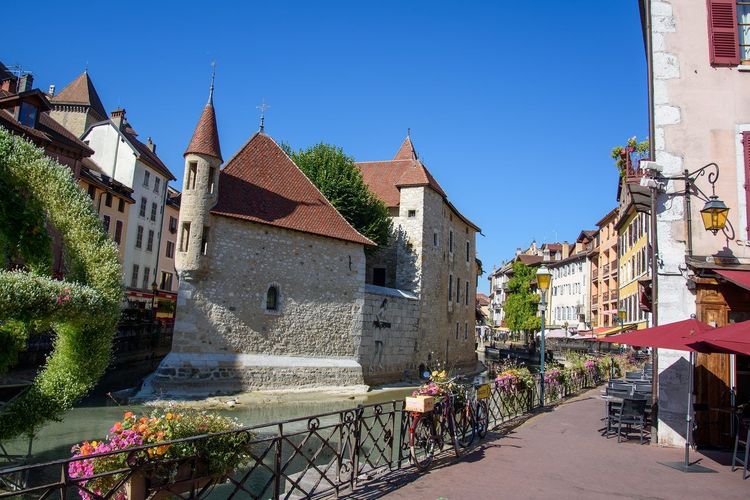
The Palais de l'Isle is the most photographed monument in Annecy, and for good reason: this 12th-century triangular building appears to float in the middle of the Thiou, surrounded by water on both sides. A prison until 1865, then a courthouse, it now houses a small local history museum (entry €4.80, free on the first Sunday of each month from October to May) that traces the building's successive uses.
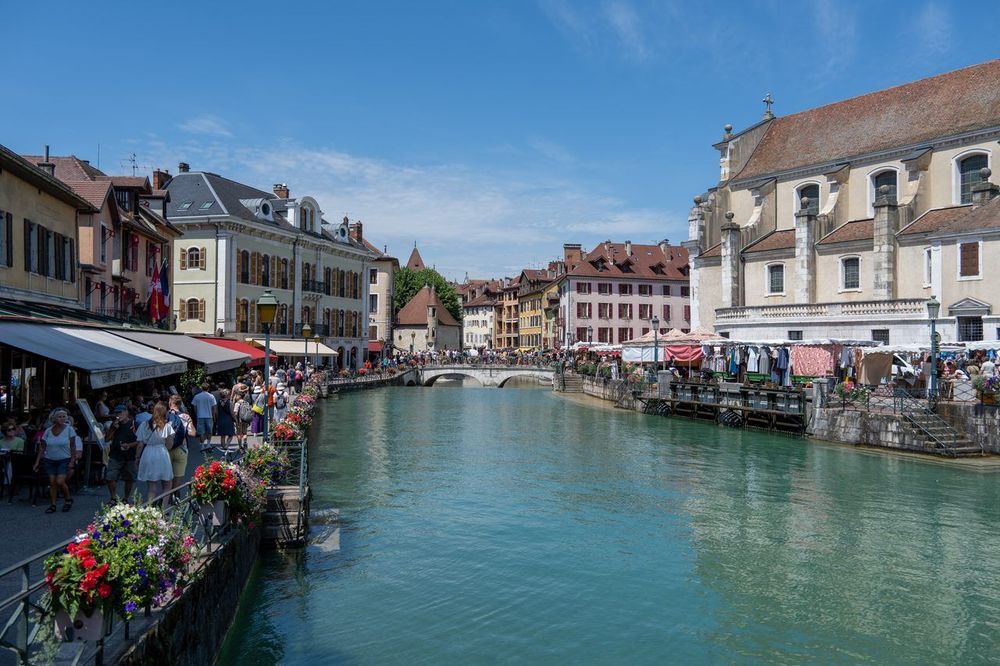
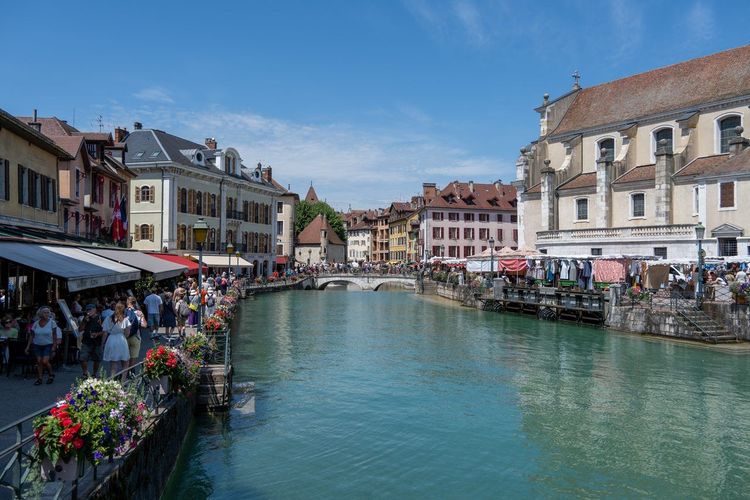
From the bridge running alongside the palace, head up the Quai des Vieilles Prisons and the Quai de l'Isle, lined with colourful facades and café terraces that open from 8 a.m. It is in this maze of canals that the town earned its nickname, the Venice of the Alps: minus the gondolas, but with flower-decked bridges and turquoise water instead. Allow a good hour to wander aimlessly through the old town of Annecy, among the arcaded cobbled streets, craftsmen's shopfronts, and market stalls that set up along the quays on Tuesday, Friday, and Sunday mornings.
The Annecy Castle Museum and the Basilica of the Visitation
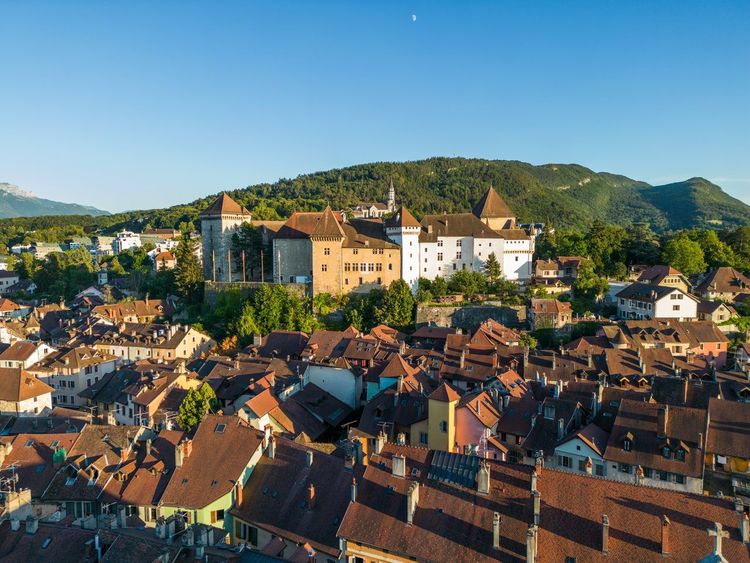
Leaving the old town via the staircase that climbs toward the hill, you reach the Annecy castle museum in about ten minutes. The residence of the Counts of Geneva in the 13th century before becoming a military barracks and then a museum, the building overlooks the old town's rooftops and offers a first panoramic view of the lake. Inside, Savoyard art collections and temporary exhibitions are complemented by scale models tracing the building's evolution; allow 1h30 for the full visit, with entry around €6.50.
A word on Annecy's history to make sense of what you see. The town rose to prominence when the Counts of Geneva, driven out of their original city, settled here and made it the capital of the Genevois. In the 16th century it became a Catholic stronghold against Calvinist Geneva, which explains the high density of religious buildings in such a compact centre and the enduring place that Saint Francis de Sales occupies in local memory. The annexation of Savoy by France in 1860 closed this long Savoyard parenthesis, before lake tourism took over in the following century. These successive layers can be read in the architecture and landmark monuments of the centre: medieval arcades, ochre-and-pink Sardinian facades, religious buildings oversized for the town's scale.
Continuing uphill for another ten minutes or so, the Basilica of the Visitation offers a considerably wider panorama: the entire Annecy basin, the lake, and the first foothills of the Bornes spread out from its forecourt. The neo-Gothic building, constructed in the early 20th century, houses the relics of Saint Francis de Sales and Saint Jane de Chantal. You can walk up or take the small seasonal shuttle that serves the hill from the town centre.
The Jardins de l'Europe and the Pont des Amours
Head back down toward the lake for the afternoon: the Jardins de l'Europe form a large shaded park planted with century-old sequoias, ideal for a picnic break facing the water. This is where most of the summer animation concentrates, with pedalo hire and impromptu evening concerts.
At the end of the park, the Pont des Amours spans the Canal du Vassé and links the Jardins de l'Europe to the Champ de Mars. Local legend has it that couples who cross it while kissing will remain together for life: true or not, the tradition attracts its share of photographers at sunset.
End the day along the shoreline, between the Champ de Mars and the first lake beaches: a natural transition into the second day's programme, entirely centred on the water. The Ryo audio-guided tour links the castle to the Pont des Amours to close the day.
Day 2: Lake Annecy on Foot, by Bike, or by Boat
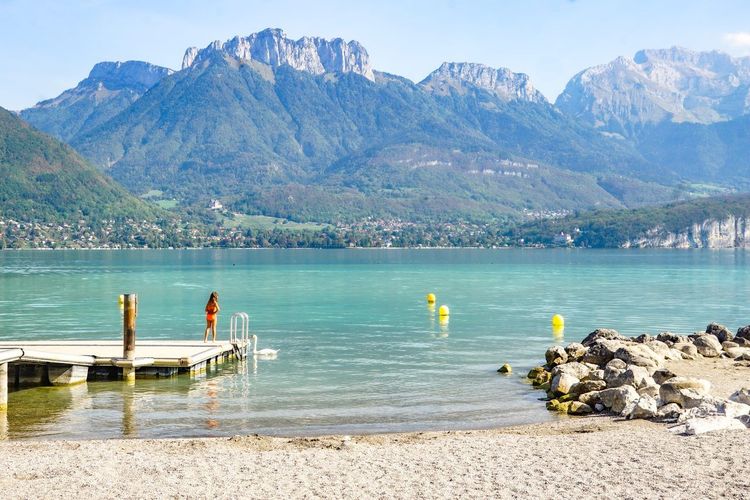
The second day is entirely devoted to Lake Annecy, often cited among the purest in Europe thanks to a clean-up policy launched as early as the 1960s. Enjoying Lake Annecy can be done on foot, by bike, or by boat depending on your pace and the day's weather.
The Lake's Beaches and Water Activities
The town centre has several free beaches accessible on foot. The Plage des Marquisats, the closest to the centre, draws a local rather than tourist crowd, with a marked swimming lane and a diving board. A little further north, the Plage Impérial, backed by the hotel of the same name, has a paid section with sun loungers and an equally pleasant free area.
For water activities, pedalo and paddleboard hire is available directly on the quays, usually without advance booking outside July and August. For a more active outing, several clubs offer sailing or water skiing, with introductory sessions available for half a day. The water stays cool even in midsummer, rarely exceeding 23°C, which doesn't stop locals from swimming from May onwards.
Cycling Around the Lake on the Voie Verte
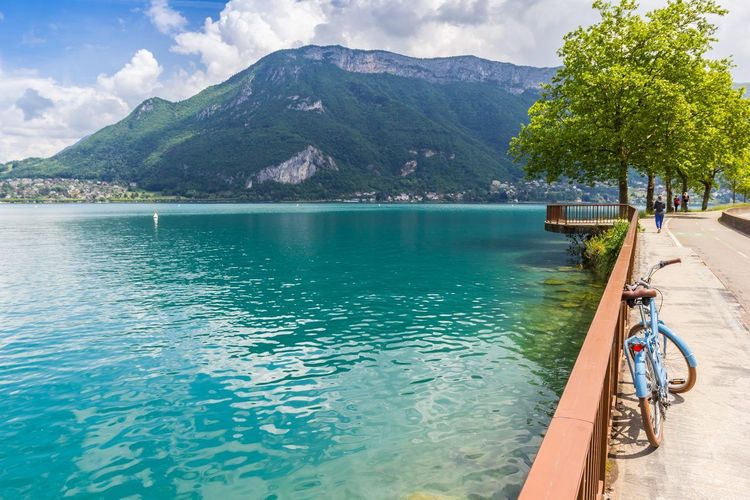
Cycling around the lake is one of the most popular activities in the area. The voie verte, a cycling path fully separated from traffic, runs along the western shore for around thirty kilometres from Annecy, with branches leading to lakeside villages. Allow half a day for a relaxed round trip to Duingt or Talloires, or a full day for the complete loop around the lake — roughly 42 km — which alternates dedicated path and quiet roads on the hillier eastern shore.
A few practical cycling tips before you set off: hire shops in the town centre offer standard bikes from €15 for a half-day and electric bikes from around €25 — well worth it if you plan to complete the full loop in a day with children. Bring water, as the voie verte passes few villages on its southern stretch, and avoid the 11 a.m.–2 p.m. slot in summer when the path becomes very busy.
If cycling isn't your thing, the same route around the lake can be covered differently. The boats run by the company serving the lakeside villages act as shuttles between Annecy, Duingt, Talloires, and Sevrier in season, allowing you to get off at a village, have lunch there, and return by water. The urban bus lines and regional coaches fill the gaps out of season, with stops at most of the villages on the lake circuit. This is the most flexible combination if you're travelling without a car and want to avoid tackling all 42 km at once.
Strolling and Cruising Around the Annecy-le-Vieux Quays
Head to the northern end of the lake for a more local atmosphere. The small harbour of Annecy-le-Vieux (8 Avenue du Petit Port, 74940 Annecy-le-Vieux, rated 4.4/5 on Google across 620 reviews) retains a fishing-village feel, with its moored boats and café terraces away from the bustle of the centre. It makes an excellent starting point for a lakeside walk far from the crowds, or for watching locals who come here to swim after work.
For a change of pace, several companies offer commentary-guided cruises on the lake departing from the town centre, ranging from 45 minutes to 2 hours depending on the option. It's a great choice for admiring the Château de Duingt and the steep shores of the Tournette without any effort, particularly at the end of the day when the raking light transforms the surrounding mountains. To extend this lakeside day, the Ryo article on the best swimming spots in Annecy details the least crowded beaches spot by spot.
Sports Activities and Hikes Around Annecy
If this 48-hour programme isn't enough to satisfy your sporting appetite, know that the activities on offer in Annecy and its surroundings are unusually varied, spanning hiking, aerial sports, and white-water sports. These activities generally require a full half-day and are better suited to an extension of your stay than to a quick detour within a standard itinerary.
Must-Do Hikes: Mont Veyrier and Semnoz
The hike up Mont Veyrier is the most accessible from the town centre: about 1h30 of ascent, with around 550 m of elevation gain and a panorama that takes in the entire lake, the old town, and, on clear days, Mont Blanc. The well-marked trail suits occasional hikers in reasonable shape.
Further south, the Semnoz offers a much wider 360° view, reachable by car almost to the summit for those who'd rather not walk, or via a 3-hour hiking trail from Annecy for the more energetic. It is the best vantage point in the area for taking in the lake, the Aravis range, and the Mont Blanc massif all at once.
Paragliding and Water Sports Above the Lake
Paragliding over Lake Annecy is one of the most sought-after experiences in the region, and for good reason: flying over the lake after taking off from the Col de la Forclaz or the Col de Leschaux ranks among the finest flights in France. A tandem introductory flight lasts between 15 and 25 minutes and generally costs between €90 and €130, with no prior experience required. Book a morning slot when thermal conditions are at their most stable.
On the water sports side, in addition to the beaches, several spots on the lake lend themselves to wakeboarding and water skiing, with schools based on the eastern shore around Doussard and Saint-Jorioz.
Canyoning and Via Ferrata in the Surrounding Area
For a car-free hike directly accessible from the town centre, the path running along the western shore to Duingt can be covered entirely on foot or by public transport, with no need to hire a vehicle.
Canyoning is practised in several gorges in the surrounding area, particularly in the Bauges massif, with routes suited to beginners as well as experienced participants. Allow a guided half-day, equipment provided, from around €55.
The via ferrata at Thônes, about thirty minutes from Annecy, offers several routes of increasing difficulty on the cliffs above the valley. It's a good alternative if you're looking for a vertical activity without the technical commitment of traditional climbing. To plan a stay extension dedicated to hiking, the Ryo article on the most beautiful hikes in Haute-Savoie lists a selection of trails that complement those in the Annecy basin.
The Most Beautiful Viewpoints and Sunsets over the Lake
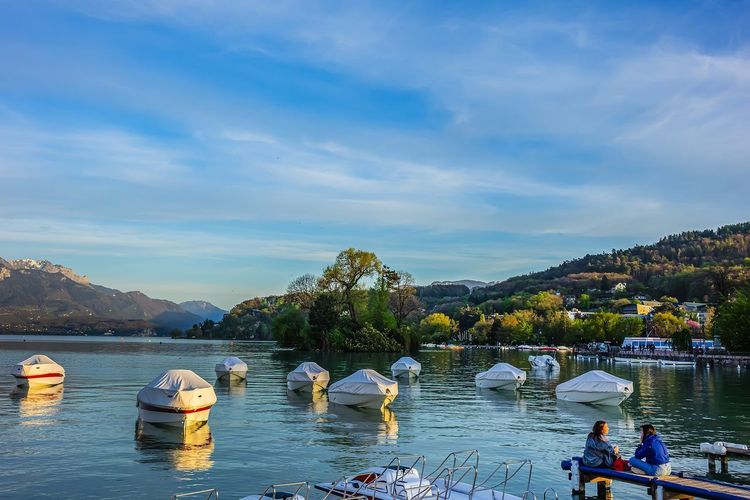
Three viewpoints around Annecy concentrate the best sunsets, and none requires more than 30 minutes' travel from the town centre.
The Col de la Forclaz, a 20-minute drive above Talloires, remains the most photographed spot in the area: the view plunges directly onto the entire lake, framed by the cliffs of the Tournette. It is also the main paragliding launch point in the sector, which adds dozens of colourful wings wheeling above the water in the late afternoon.
The Semnoz and Mont Veyrier, already mentioned for hiking, each offer a very different sunset: the former sweeps the entire Alpine horizon from its summit ridge, while the latter is more intimate and accessible even in the late afternoon for those who haven't planned a full day's walk.
One practical tip: arrive at least 45 minutes before the official sunset time in summer — the best spots at the Col de la Forclaz fill up quickly between June and August. Bring an extra layer too, as the temperature drops sharply once the sun dips behind the ridge. For a car-free lakeside sunset, the quays of the small harbour at Annecy-le-Vieux and the Jardins de l'Europe offer an equally clear view of the evening light reflecting on the water.
Villages and Castles to Discover Around the Lake
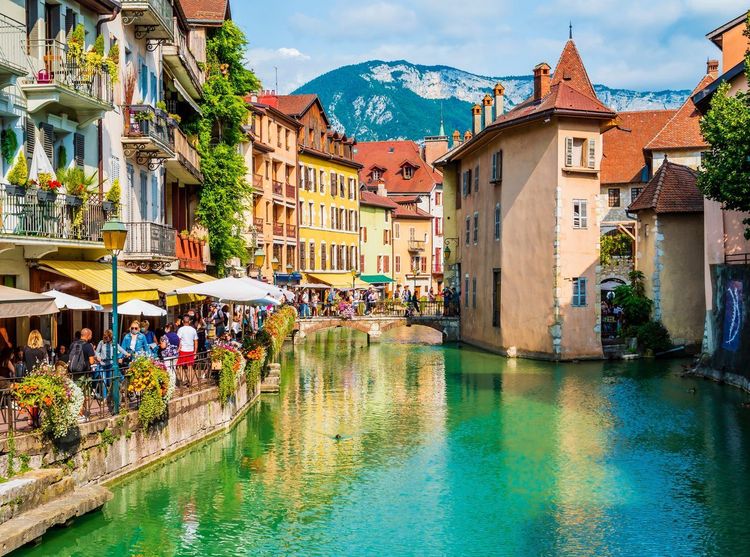
If your stay stretches beyond the weekend, or if you'd rather spend your second afternoon exploring the surroundings instead of cycling, the villages around Lake Annecy and the castles that dot its shores are well worth the detour. For a full selection, the Ryo article on the most beautiful villages around Annecy details ten stops ranked by distance from the centre.
Charming Villages: Talloires, Menthon-Saint-Bernard, Sevrier
Talloires (74290 Talloires-Montmin) sits on the eastern shore of the lake, facing Mont Veyrier, in a setting that guidebooks regularly compare to the most beautiful bays of the Mediterranean. The village long attracted writers and artists drawn by the tranquillity of its streets and the view of the Roc de Chère cliffs. Allow an hour to wander between the small harbour and the former Benedictine abbey.
A few minutes away by car, Menthon-Saint-Bernard owes its fame to its medieval castle perched on a rocky spur, visible from almost anywhere on the lake. The village itself is modest but pleasant, with a few shops and a quiet beach below.
Between Annecy and Menthon, Veyrier-du-Lac is often passed through without stopping — a mistake: the village strings its Belle Époque villas along the foot of Mont Veyrier and provides the most direct trailhead to the summit, alongside a small harbour and a municipal beach far less crowded than those in the Annecy centre. It is also the departure point for seasonal boat-shuttles to the western shore.
On the western shore, Sevrier stands out for its vitality: this is where several local producers are based, including a cheese dairy that offers visits, as well as direct access to the voie verte for cyclists heading out from Annecy. A little further south, Saint-Jorioz plays the family card, with a long gently sloping beach and water sports schools open by the day. The two villages together make the best compromise for sleeping outside the centre without being cut off from everything.
Landmark Castles: Montrottier, Duingt, Thorens
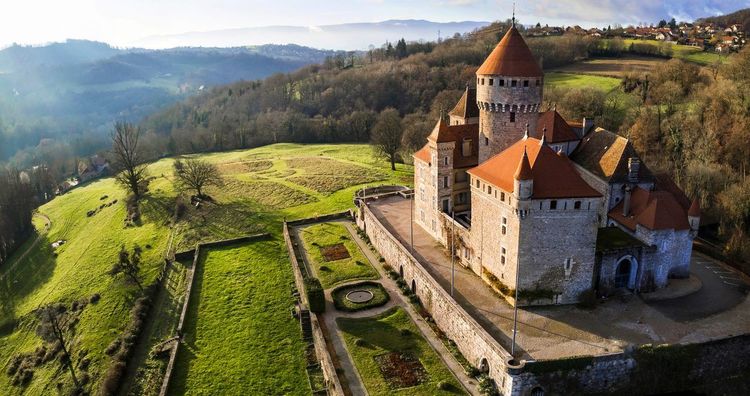
The Château de Montrottier, perched on a hill between Annecy and the Gorges du Fier, can be visited for its collections assembled by a wealthy early-20th-century owner: weapons, tapestries, and Far Eastern ceramics. Combining it with a visit to the Gorges du Fier, a few minutes away, makes for a complete half-day excursion.
The Château de Menthon-Saint-Bernard, mentioned above for the village of the same name, is also open to visitors: this is said to be where Saint Bernard de Menthon grew up, the founder of the Alpine hospices that gave their name to the dog breed. Its architecture, which has retained its medieval appearance, makes it one of the most photographed castles in Haute-Savoie.
On the western shore, the Château de Duingt (1 Chemin du Vieux Fort, 74410 Duingt, rated 4.3/5 on Google across 193 reviews), built on a peninsula jutting into the lake, is not open to visitors but remains one of the most sought-after photographic subjects in the area, especially from a boat or a paddleboard. Further north, near Alby-sur-Chéran, the Château de Clermont surprises with its Renaissance arcaded gallery — rare in the region — and serves as a venue for shows and exhibitions in summer. Finally, the Château de Thorens, former home of the de Sales family, rounds off this castle trail with its collections devoted to the history of Savoy and the memory of Camille Benso de Cavour.
Natural Gems: Five Worth the Detour, All Within 45 Minutes of the Town Centre
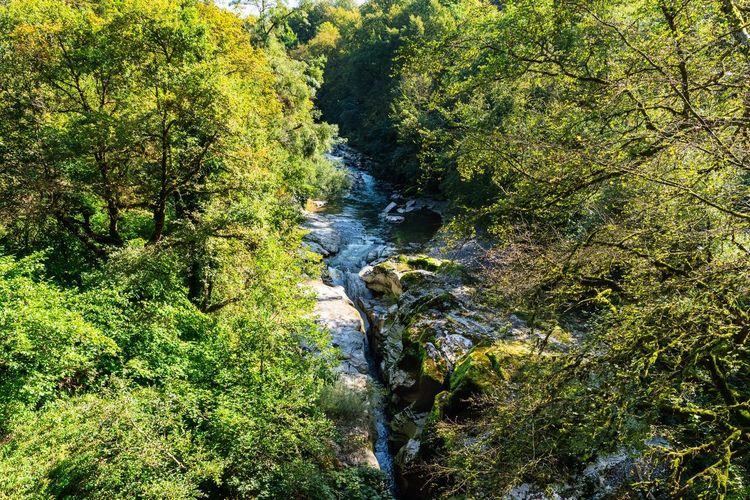
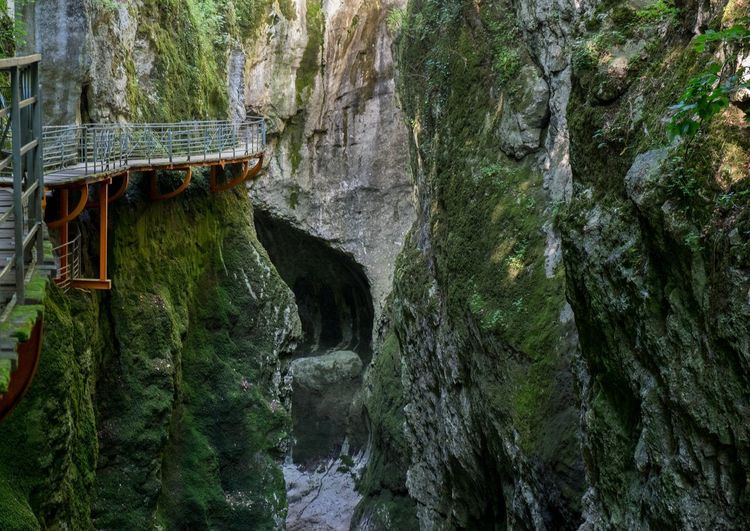
The Gorges du Fier, 15 minutes from the town centre, form a natural canyon crossed via a metal footbridge suspended above turquoise water. The visit takes about 45 minutes and combines easily with the nearby Château de Montrottier, reachable by the same path.
The Plateau des Glières, 45 minutes to the north-east of Annecy, is worth the trip for two distinct reasons: its past as a major site of the French Resistance, marked by a national memorial, and its Alpine meadow landscapes that make it a popular hiking and snowshoeing destination in winter.
Further south, the Grotte et Cascade de Seythenex offer an unusual visit: a developed underground route runs alongside a steep river, extended above ground by a waterfall several dozen metres high. Allow an hour on site, and bring a light layer — the cave temperature stays low even in August.
For panoramic views, the Salève, straddling the Franco-Swiss border about thirty minutes from Annecy, offers a rare view over Lake Geneva and Geneva on one side and the Alps on the other. The summit can be reached by car, by cable car from the Swiss side, or on foot for the more sporty.
Finally, Alby-sur-Chéran (74540 Alby-sur-Chéran), a small medieval village halfway between Annecy and Aix-les-Bains, has retained its arcades and triangular square inherited from its past as a shoemaking town, today occupied by craftsmen's galleries. It's a brief but authentic stop, well away from the crowds of the lake shore.
Where to Eat in Annecy: Good Food Addresses
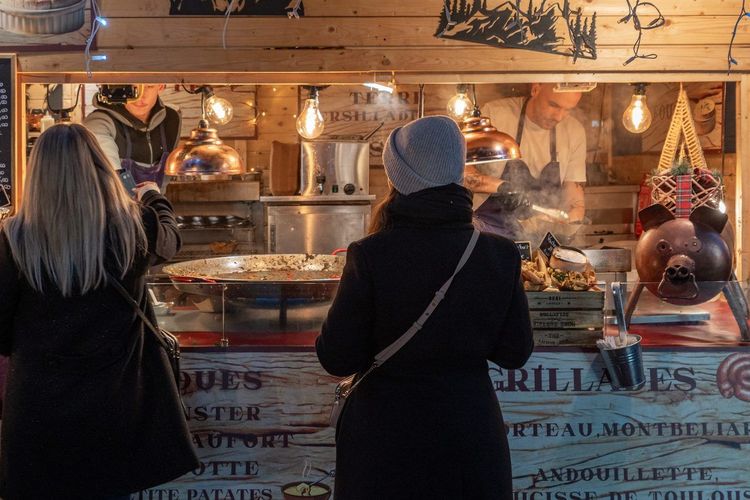
Where to eat in Annecy depends mainly on your budget and your appetite for Savoyard specialities, which are ever-present on menus throughout the town centre.
For a typical meal without breaking the bank, several addresses in the old town serve fondue, raclette, and tartiflette in a warm setting, generally between €18 and €28 per dish. Book ahead in the evenings during high season — the best tables fill up from 7 p.m.
For more refined dining, a handful of starred or semi-gastronomic restaurants — particularly among the lakeside hotels — offer a reinterpreted cuisine built around local produce: lake fish, Savoyard cheeses, and local meats. Expect between €45 and €90 for a set menu, drinks not included.
For a lighter lunch or brunch, several cafés in the town centre and along the quays serve simple dishes made from local produce in a more relaxed atmosphere than traditional restaurants. It's also the most practical option between two visits, with no reservation needed outside the weekend.
One tip for choosing well: restaurants in Annecy lined up directly on the Thiou quays charge for the view, not always for the food. Step back one or two streets, toward Rue Sainte-Claire or the Faubourg des Annonciades, and you'll find the same meal for 20–30% less, often better cooked. Another reliable sign: a short, seasonal menu that doesn't simultaneously offer fondue, pizza, and burgers.
Don't leave without sampling the emblematic Savoyard specialities. Beyond fondue and tartiflette with Reblochon, look out for diots au vin blanc — Savoyard sausages slowly simmered in white wine — farçon, a sweet-savoury potato gratin, or lake fish such as féra and omble chevalier, served at the waterside restaurants. At the old town market, producers also sell biscuits de Savoie and artisan jams, a fine option for a lakeside picnic. The Ryo article on Annecy's culinary specialities provides a more comprehensive selection of addresses by neighbourhood and budget.
Where to Stay in Annecy: Hotels and Campsites
Where to stay in Annecy depends largely on your budget and how much you want to walk to the historic centre in the evenings. Two main approaches prevail: staying in the old town to have everything within walking distance, or settling by the lake for peace and views, at the cost of a daily car or bus journey.
Charming Hotels, from the Town Centre to the Lakeshore
In the historic centre, several small charming hotels occupy restored old buildings a stone's throw from the canals. This is the most practical option for sightseeing on foot, with rates starting around €100 per night out of season and roughly double in summer.
For a more upscale stay, the Impérial Palace remains the most iconic establishment on Lake Annecy: Belle Époque architecture, direct access to a private beach and the casino, and lake-view rooms from around €250 depending on the season.
On the eastern shore, the Black Bass Hotel (1 Route du Port, 74290 Talloires-Montmin, rated 4.4/5 on Google across 699 reviews), sitting right at the water's edge a few minutes from Annecy, offers a more intimate experience with direct water access and a well-regarded restaurant. This type of property is particularly suited to a romantic stay, away from the bustle of the town centre. For a broader selection ranked by budget, the Ryo article on the best hotels in Annecy compares around ten addresses in the centre and along the shores.
Family Campsites Around Lake Annecy
For a family stay or a tighter budget, the campsites around Lake Annecy often offer the best value for money, with direct water access that few hotels in the centre can match. Several four-star sites around Saint-Jorioz and Doussard on the southern shore combine heated pools and fully equipped mobile homes with direct access to the lake and the surrounding mountains.
Expect to pay between €25 and €60 per night for a pitch depending on the season and facilities, and more for a fully equipped mobile home in July and August. Book early: the best lakeside pitches are snapped up from March onwards for the following summer. The Ryo article on the best campsites in Annecy details the options best suited to families with young children, particularly in terms of supervised beaches and gentle slopes.
Adapting Your Stay: Annecy in 1, 3, or 5 Days, and Annecy in Winter
The 48-hour programme detailed above can easily be shortened or extended depending on your available time and the season.
A single day on site means making a choice: the old town and one beach, or the old town and a short hike like Mont Veyrier. Better to skip the lake cycle tour — too time-consuming for a single day.
Three days allow you to add a full day devoted to the surroundings: a lakeside village, a castle, or a more ambitious hike like the Semnoz. It's the ideal length if you want to venture beyond the centre without ever watching the clock. Four or five days then open the door to sports activities (paragliding, canyoning, via ferrata) and more remote natural gems such as the Plateau des Glières or the Salève (74560 Monnetier-Mornex, rated 4.9/5 on Google across 69 reviews), on top of a full cycling loop around the lake.
What to do in Annecy in 3 days without a car? It's entirely feasible: the town centre is walkable, the voie verte connects several lakeside villages by bike — available to hire with no advance booking most of the time — and buses serve the main sites, including some hiking trailheads such as the Semnoz in summer.
Annecy in winter changes its character completely: the quays empty out, the surrounding summits are blanketed in snow visible from the town centre, and several ski resorts less than an hour away allow you to combine city and mountain. Water activities close, however, and some lakeside restaurants reduce their hours.
Finally, Annecy lends itself equally well to a romantic break — strolling across the Pont des Amours and dining with a view of the lake — and to a family holiday, with its supervised beaches and lake cycle tour suited to children from the age of 6 or 7. The Ryo article on Annecy with kids details a programme tailored for younger visitors, with activities designed to minimise fatigue for the youngest children. The Ryo audio-guided tour also follows the Pont des Amours and the lakeshore, so it suits either kind of visit.



FAQ
How many days do you need to visit Annecy?
Two days are enough to cover the essentials: the old town, the castle, and a tour of the lake. Allow three days to add a village or a hike, and five days to also explore the sports activities and more remote natural sites.
How do you get to Annecy without a car?
The direct TGV from Paris takes about 3h40 and drops you ten minutes' walk from the historic centre. From Geneva airport, allow 45 minutes by bus or shuttle. Once there, the entire city centre can be explored on foot.
What can you do in Annecy in 1 day if you're short on time?
Focus on the Palais de l'Isle, the canals of the old town, and a nearby beach such as les Marquisats. The castle-museum can be seen from the outside only if there isn't enough time to go inside.
Should you stay 3 days in Annecy rather than 2?
Three days allow you to add a lakeside village or a hike without rushing. Two days remain sufficient if you prioritise the city centre and the lake over the surrounding area.
Is Annecy in winter a good idea for a short stay?
Yes: the deserted quays and snow-capped summits offer a different atmosphere, and the nearby ski resorts are accessible in under an hour. Water activities, however, close for the season.
Where should you stay to explore Annecy easily on foot?
Choose a hotel in the old town or along the quays, within walking distance of the Palais de l'Isle and the castle. More remote lakeside accommodations require a car or bike to reach the city centre each day.
What should you bring back from Annecy as a souvenir?
Tomme des Bauges, a farmhouse Reblochon bought directly from the producer, or a bottle of génépi found at the old town market are more authentic souvenirs than the items sold on the tourist quays.
Two days in Annecy are enough to understand why the town draws so many visitors every summer, with its photogenic canals, hilltop castle, and a lake of rare purity in Europe. Whether you choose to stay focused on the historic centre or branch out to the surrounding villages and summits, the key is to spread your time well across both days rather than trying to see everything at a run.
To make sure you don't miss anything once you're there, the Ryo audio-guided tour of Annecy automatically triggers historical commentary as you approach each monument, with no need to juggle a paper map and searches on your phone. The perfect way to fully enjoy the canals, the castle, and the lake's shores without wasting time getting your bearings.
À lire également