© Shutterstock
 Votre guide Ryo
Unusual Antibes in 2026: Secret Coves, Hidden Neighborhoods, and Off-the-Beaten-Path Experiences
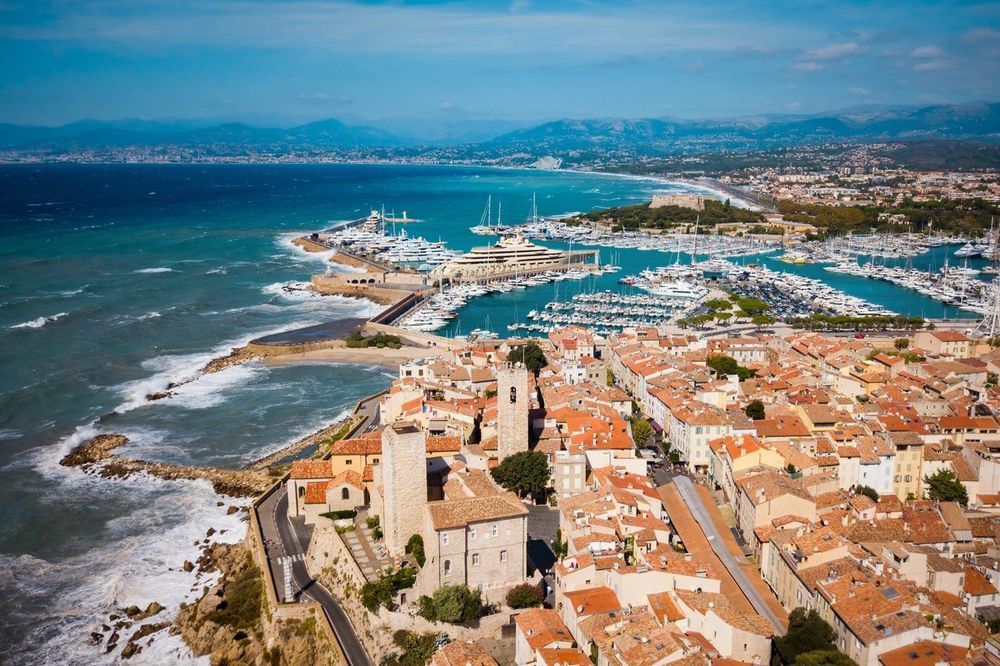
Few visitors know that just a few minutes' walk from port Vauban, a small neighborhood declared itself a "free commune" in 1966 and still elects its own mayor. It is precisely this kind of detail that sets an unusual visit to Antibes apart from a simple round trip between the beach and the covered market. Between the ramparts modernized from Vauban's plans, the gardens of a villa designed by the architect of the Paris Opéra, and a coastal path that runs alongside old German bunkers, the city hides a heritage that most classic guidebooks cover in two lines. To get a feel for the terrain before you leave, the Ryo audio guide dedicated to Antibes already sweeps through a good number of these hidden corners, from the ramparts to the old port.
This guide brings together around forty addresses and experiences that are rarely mentioned together: a lighthouse perched 103 metres above the sea, a sensory deprivation float in complete darkness, a workshop where you craft your own silver jewellery, and an architect's cabin of about thirteen square metres listed by UNESCO, an hour's drive away. You will also find coves frequented only by early-rising hikers, a museum entirely devoted to humorous drawing, and boat excursions that deliberately avoid the crowds of Cannes.
The Secret Side of the Cap d'Antibes: Paths, Coves, and a Lighthouse
The Coastal Path, Tirepoil, and the Anse du Crouton
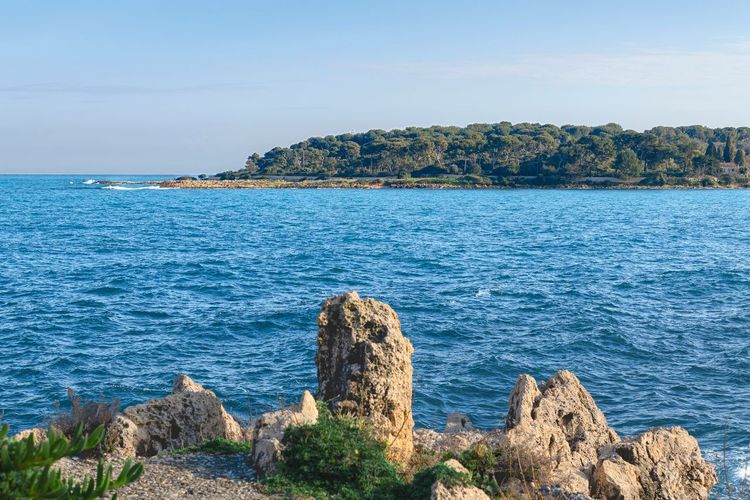
Allow about two hours to complete the Cap d'Antibes coastal path, a roughly 5-kilometre hike that winds between umbrella pines and ochre rocks, just a few metres above the Mediterranean. The most convenient starting point is the large car park on avenue André Sella, barely two hundred metres from the beginning of the trail, near the Garoupe beach. The best-known stretch goes by the name of the Tirepoil path: a paved and rocky track carved right into the coastline, where the wind and spray quickly remind you that you are on the most exposed point of the Cap.
The trail alternates between atmospheres: wide rock slabs lapped by the waves, tiny coves where you climb down holding on to the rocks, and a few more sheltered stretches where the fragrant maquis takes over. Accessible only by the path, the Anse du Crouton is a secluded little cove with no sand or sun loungers, but crystal-clear water that attracts mostly keen snorkellers.
Part of the path runs alongside the high walls of private properties, including the château de la Garoupe, just barely visible behind its stone fence. The return route goes through the interior of the Cap, via avenue Mrs L.D. Beaumont and then avenue de la Tour Gandolphe, which takes you past the entrance to Villa Eilenroc.
Two things to keep in mind. First, the path is closed in bad weather: check the marine forecast before you set off, as swell can sweep over certain sections. Second, arrive early in the morning or outside peak season: in the height of summer, the most photogenic coves fill up by 10 a.m. Wear closed shoes and bring water, as the ground remains slippery and sharp in places.
The Garoupe Lighthouse and Its Bay
Commissioned in 1837, destroyed in August 1944, and rebuilt in 1948, the Garoupe lighthouse (Chemin du Calvaire, 06160 Antibes) stands on a plateau 103 metres above sea level, the highest point of the Cap. From the top, on a clear day, the view reaches the Alps on one side and the Estérel on the other. You get there on foot via the chemin du Calvaire, a short but steep climb dotted with oratories that few walkers stop to look at.
Right next door, the chapel of Notre-Dame de la Garoupe houses a remarkable collection of maritime ex-votos, offered by generations of fishermen and rescued sailors. Below, the Garoupe bay (Chemin de la Garoupe, 06160 Antibes, rated 4.4/5 on Google from 1,213 reviews) shows a completely different face of the Cap: calm, shallow water ideal for families, in total contrast to the wild character of Tirepoil.
The Cap lends itself to a morning of walking; save the afternoon for the old town, where the Ryo Cap sur la French Riviera audio sub-tour strings together 23 audio stops on a 3.4 km loop, taking around 1h30 to enjoy. Combining the two makes for a full day without ever having to pull out a map.
Secret Villas and Gardens of the Cap
Villa Eilenroc and Its Gardens
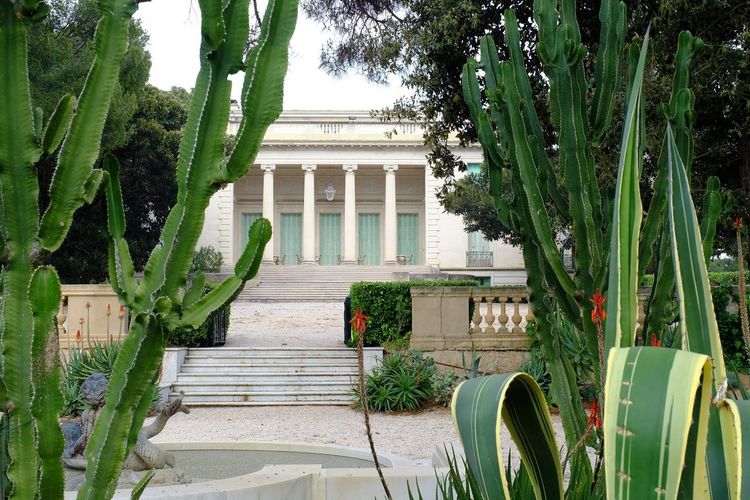
Begun around 1860 and completed in 1867, Villa Eilenroc bears the signature of Charles Garnier, the architect of the Paris Opéra, who designed it for Hugh Hope Loudon, former Governor-General of the Dutch East Indies. Its name is intriguing: in 1873, the new Scottish owner James Wyllie renamed it using an anagram of his wife Cornélie's first name, spelled backwards. The last owner, Hélène Beaumont, bequeathed it to the city of Antibes in 1982.
The estate spreads over eleven hectares facing the sea: an olive grove, a rose garden, and a perfume garden created in 2011. The rose garden is open on Wednesdays and Saturdays, from 10 a.m. to 4:30 p.m., according to the tourist office; the interior of the villa opens far more rarely, making it a curiosity that even some locals have never seen.
Try to arrive towards the end of the opening slot: the low-angled light on the umbrella pines and rose bushes transforms the place, and the morning groups have usually already left the pathways.
The Jardin Thuret and Parc Exflora, Botanical Retreats
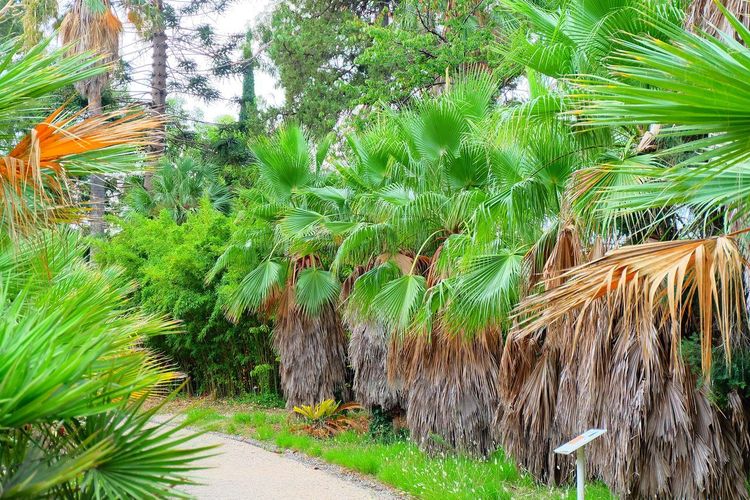
Created in 1857 by botanist Gustave Thuret, the Jardin Thuret, also known as the botanical park of Villa Thuret, served as an acclimatisation garden for hundreds of species from all five continents, including some of the first eucalyptus trees established on the French Riviera. Now attached to INRAE, the national agronomic research institute, it is free to visit on weekdays and remains surprisingly quiet, even at the height of summer.
A change of scenery awaits at parc Exflora (Avenue de Cannes, 06160 Antibes, rated 4.3/5 on Google from 1,797 reviews), a public garden of about five hectares on the Juan-les-Pins side, organised around a large olive grove, ponds, and fountains evoking the gardens of the Belle Époque. You will find shaded picnic areas here: a welcome break between two swims, and one that organised tours almost always overlook.
Military Heritage: Bastions, Bunkers, and Fort Carré
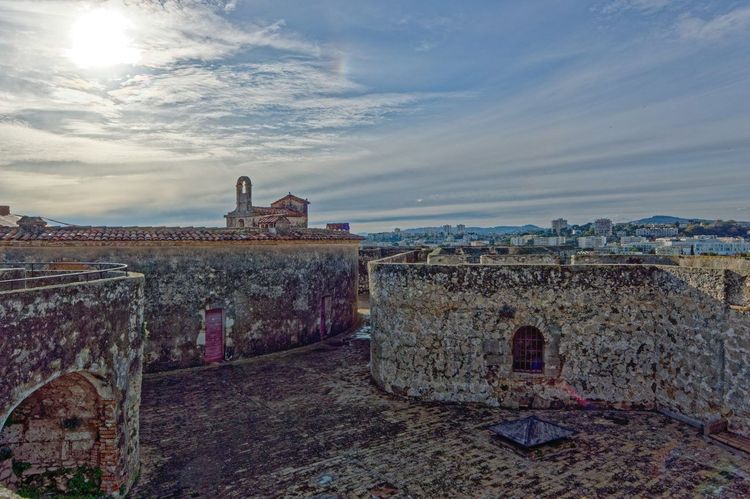
The Bastion Saint-Jaume and the Coastal Bunkers
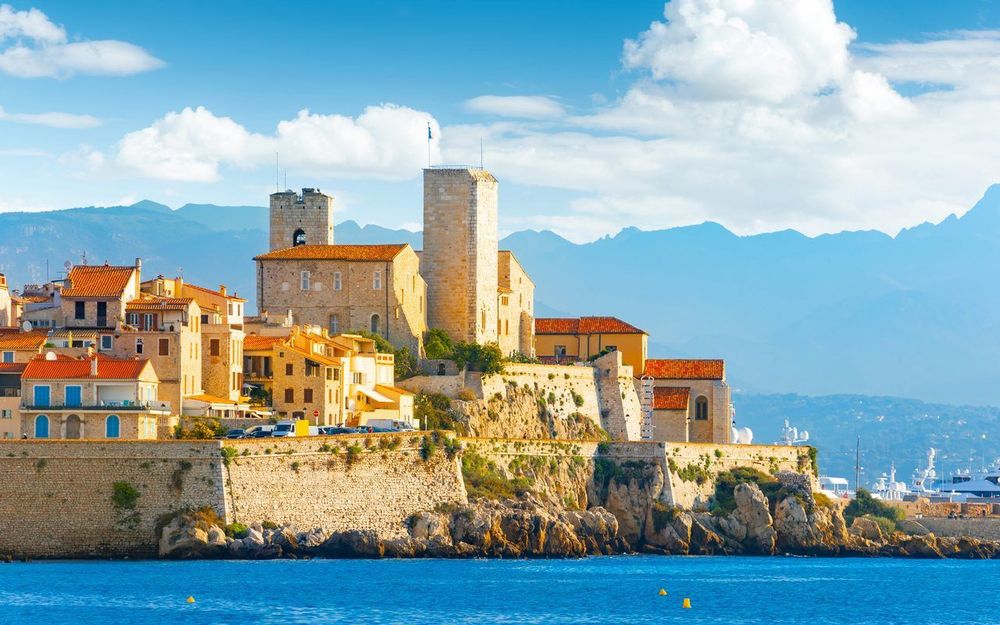
At the entrance to port Vauban, the Bastion Saint-Jaume occupies a seafront promontory that long served as a fortification and then a shipyard, before becoming an esplanade open to the public. This is where Le Nomade stands today, and the spot periodically hosts contemporary art exhibitions. The neighbouring ramparts are a reminder of the vast modernisation programme devised by Vauban following his visits in 1679 and 1682.
Further south, along the coastal path mentioned above, several coastal bunkers dating from the Second World War still emerge from the ground, remnants of the defences built by the German occupiers along the Mediterranean coastline. Some are sealed off, others remain accessible with no signage whatsoever: a striking contrast with the well-heeled villas nearby. Take care, as these structures are neither maintained nor secured.
At the other end of the bay, fort Carré (Avenue du 11 Novembre, 06600 Antibes, rated 4.3/5 on Google from 3,261 reviews) dominates the port with its four-bastion star-shaped silhouette. Construction began in the early 1550s under Henri II, before Vauban incorporated it into his reinforcement plan. Bought back by the city in 1997, it has been open to the public since 1998, and local tradition holds that a young General Bonaparte was briefly held there in 1794. From its ramparts, the 360-degree view takes in the port, the Baie des Anges, and, on a clear day, the peaks of the Alps.
On the Ryo audio-guided tour, fort Carré, the fontaine d'Aguillon and the Bastion Saint-Jaume follow one another in sequence: a few minutes of listening is all it takes to understand why these walls, so discreet today, long marked the border between France and the county of Nice.
The Hidden Art of Port Vauban and the Old Town
Le Nomade and the Sculptures of Port Vauban
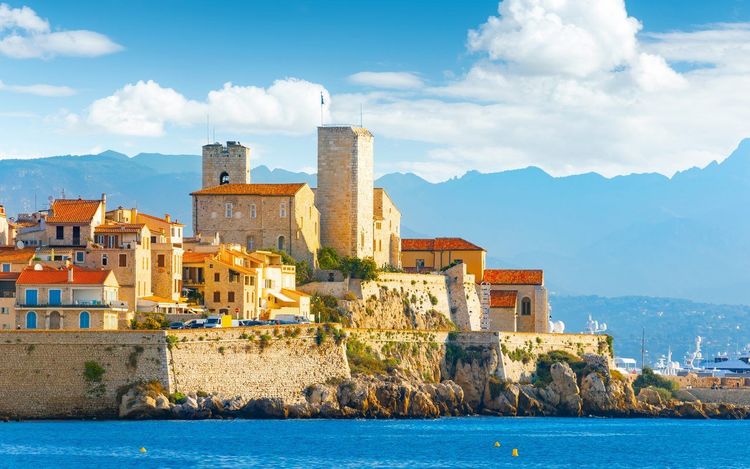
Placed on the Bastion Saint-Jaume, the sculpture Le Nomade by Catalan artist Jaume Plensa depicts a seated human figure facing the sea, made entirely of openwork white steel letters, standing about eight metres tall. Installed in 2010, it has become one of the most shared images of Antibes, especially at sunset, when the light passes through this lacework of metal.
Just below lies port Vauban, considered one of the largest marinas in Europe, with its famous billionaires' quay. The basin occupies the site of the harbour of ancient Antipolis, a colony founded by the Greeks of Marseille around the 4th century BCE: you are walking on a port site that has been active for more than two millennia. One last secret of the area, the tiny plage de la Gravette, nestled inside the ramparts, offers sheltered swimming right in the town centre.
Musée Picasso, Musée Peynet, and Art Workshops
The musée Picasso occupies the château Grimaldi, occupied from 1385 by a branch of the Genoese Grimaldi family, until it was bought back by Henri IV in 1608. In 1946, Pablo Picasso set up his studio there for two months and left behind a number of the works he created. The château officially became the musée Picasso in 1966 and today houses around 245 of the artist's works.
A few streets away, the Musée d'Archéologie (Avenue Général Maizière, 06600 Antibes, rated 4.1/5 on Google from 554 reviews), housed in the Bastion Saint-André facing the sea, brings together Roman artefacts and finds from underwater excavations in the bay: amphorae, ceramics, and remains of ancient cargoes. Most hurried visitors overlook it, as it cannot be seen from the main streets.
Even more offbeat, the Musée Peynet et du Dessin Humoristique pays tribute to Raymond Peynet, the father of the famous "Lovers", and to the art of press illustration. Located on the place Nationale, in the heart of old Antibes, it slips easily between two alleyways and will delight caricature lovers and children alike. Antibes also has a postcard museum and a school museum, two small gems that locals adore and tourists rarely suspect exist. The city's Pass'Musées allows you to combine several of these visits.
On the living creativity side, several art workshops tucked into the lanes of the old town open their doors, and themed guided tours weave this artistic heritage together with the history of the port. With its 23 audio stops, the Ryo loop through old Antibes passes by the Ho Lui workshop, the château Grimaldi, the Bastion Saint-Jaume, and Le Nomade: a chance to hear what museum labels never tell you.
The Village des Fous and Sensory Experiences
The Village des Fous, a Wacky Leisure Park
About fifteen minutes from Antibes, in Villeneuve-Loubet, the Village des Fous is a leisure park boasting 49 attractions spread across six zones. The universe embraces its own brand of madness: a flying bathtub or a 13-metre-high tower, in a fantastical spirit quite removed from the formulaic big theme parks.
Tickets start at around €15.50 and can be booked online, avoiding queues at the entrance. Weekend and school holiday slots fill up quickly in high season: if you are travelling with children, aim for a weekday.
The park is a fifteen-minute drive away along the seafront. Since Marina Baie des Anges is located in the same commune, there is nothing to stop you combining a morning of rides with an end-of-day by the water, a stone's throw from the famous wave-shaped buildings. Bring water and a cap in summer: a good number of the attractions are outdoors.
Sensory Deprivation Floating and Creative Workshops
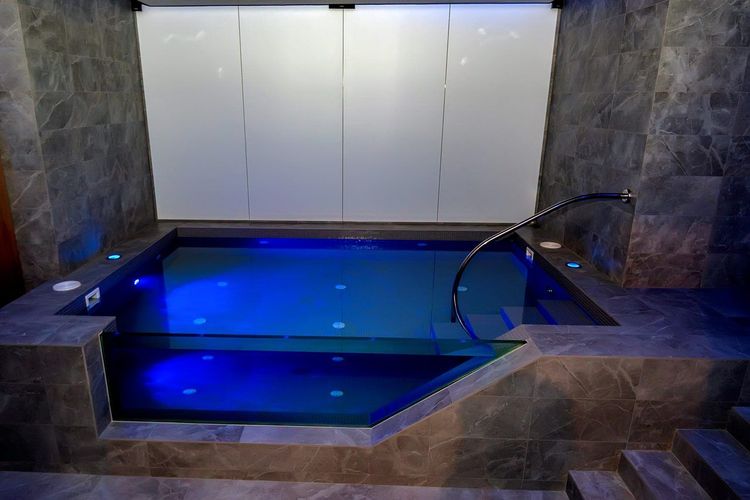
Less spectacular but just as rare, sensory deprivation floating on offer in Antibes has you lying in salt-saturated water at body temperature, in total darkness and silence. You float without any effort whatsoever: devotees seek it out for stress reduction and better sleep, far from the bustle of the seafront. Sessions start from €75.
For a more hands-on experience, a silver jewellery workshop in Antibes takes you through every step, from melting to polishing via rolling and cutting, so that after two hours you leave with a ring, a bracelet, or earrings made by your own hands (from €90). If you prefer a pencil, an adult drawing or painting workshop offers two hours of exploration of different techniques with personalised guidance, from €49, and you leave with your own artwork.
What these three experiences have in common: they are booked in advance, in small groups, and almost never appear in monument-focused guidebooks.
Le Safranier and the Old Town, Neighbourhoods Apart
The Safranier Commune, a Village Within the City
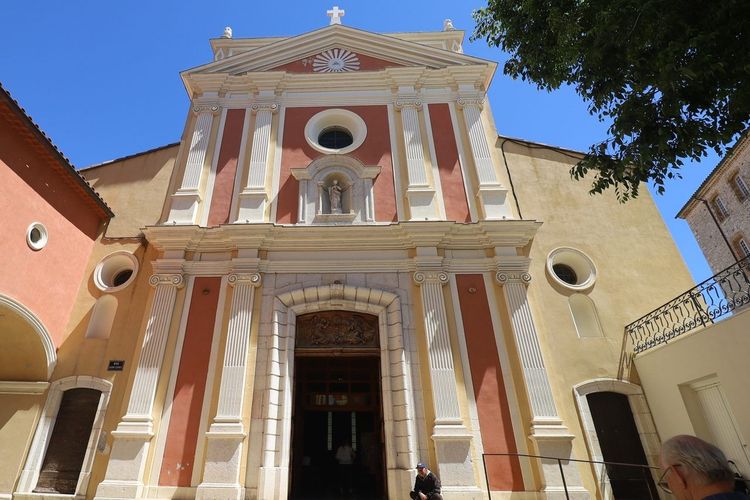
In 1966, the residents of this small neighbourhood founded the commune libre du Safranier, with its own mayor and neighbourhood festivals, a good-natured tradition that has persisted for sixty years. Today, this maze of flower-lined alleyways, wedged between the château Grimaldi and the promenade Amiral de Grasse, proudly asserts its distinct identity.
To make the most of it, arrive via the promenade Amiral de Grasse, which follows the top of the ramparts facing the sea. In the late afternoon, golden light strikes the facades and, when the air is clear, the eye travels all the way to the peaks of the Alpes-Maritimes. Then head back down into the neighbourhood through one of the small perpendicular streets: the contrast between the sea horizon and the intimacy of the lanes is what gives the walk its charm.
It is easy to wander here for half an hour, among pastel facades, geranium pots hanging at windows, and small shaded squares where a few restaurant tables spill out onto the cobblestones. It is one of the rare corners of Antibes where you encounter more cats than tourists, even in the middle of August.
The Old Town, the Cathedral, and the Chapelle Saint-Bernardin
Old Antibes is best discovered on foot, following the promenade that runs along the sea-facing ramparts to the Provençal market. The bell tower of the cathédrale Notre-Dame-de-l'Immaculée-Conception is a former refuge tower built around 1213, which also served as a watchtower; the facade, however, dates from the 18th century. This layering of eras can simply be read by looking up.
A few streets away, the chapelle Saint-Bernardin (Rue de la République, 06600 Antibes, rated 4.7/5 on Google from 62 reviews), a former confraternity chapel, is one of the most discreet religious buildings in the city: you often walk past it without noticing. The château des Grimaldi, which houses the musée Picasso mentioned above, completes this heritage trio concentrated within a few hundred metres.
Not sure about the itinerary? The Ryo audio loop links the chapelle Saint-Bernardin, the Safranier quarter, the jardin des Poètes, the old washhouse, and the porte de l'Orme: a succession of hidden corners that most hurried visitors never see.
Boat Excursions from Antibes
Transparent Kayak and Paddleboarding on Crystal-Clear Waters
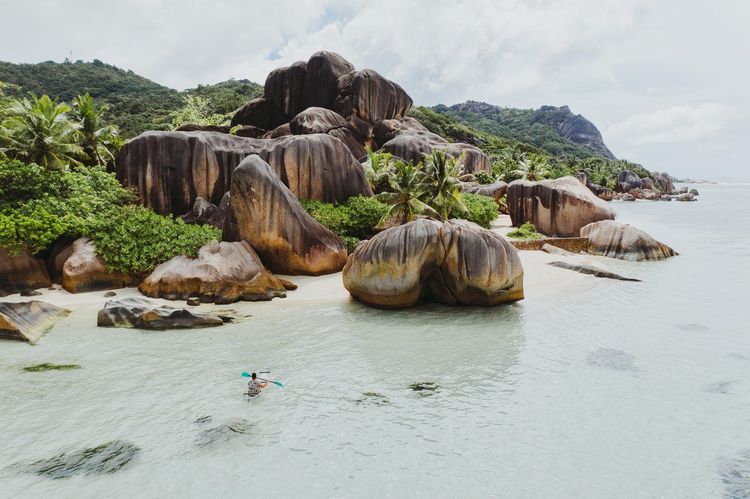
A one-hour transparent kayak rental (from €30) lets you observe the seabed of the Cap through a fully translucent hull: seagrass beds, sea urchins, and small fish drift beneath your feet as you paddle along the coast. The activity is accessible with no prior experience.
For a full-day paddleboard rental, several clubs along the coastline provide equipment by the day, with a quick briefing on balance and the best areas to head to depending on the wind. Morning is the calmest slot, before the thermal breeze picks up.
Whatever the vessel, respect the beach markers: in summer, swimming zones are reserved for swimmers, and marked channels allow you to head out to sea. Bring a life jacket, sunscreen, and a bottle of water, and ask your rental operator about the Cap's coves that are most easily reached by sea.
Îles de Lérins by Sailboat, Sunset Cruise, and Catamaran Dinner
The Îles de Lérins sailing boat tour lets you reach Sainte-Marguerite and Saint-Honorat without taking the packed shuttles from Cannes, often with a mooring in a cove for a swim. Many people are unaware that Antibes is an equally convenient departure point for this trip.
As the day draws to a close, a sunset cruise with aperitif at the Îles de Lérins extends the experience until the sun sets over the water. For a more elaborate evening, a catamaran dinner departing from Marina Baie des Anges, the complex of pyramid-shaped buildings in Villeneuve-Loubet, combines sailing with a meal facing the illuminated bay.
On the fishing front, a sea fishing trip departing from Golfe-Juan, where Napoleon landed on 1 March 1815 on his return from Elba, is suitable for beginners and enthusiasts alike. Finally, a sailing initiation in Antibes remains the simplest option for learning the basics.
Thrills Around Antibes
Helicopter Flight and Skydiving over the Côte d'Azur
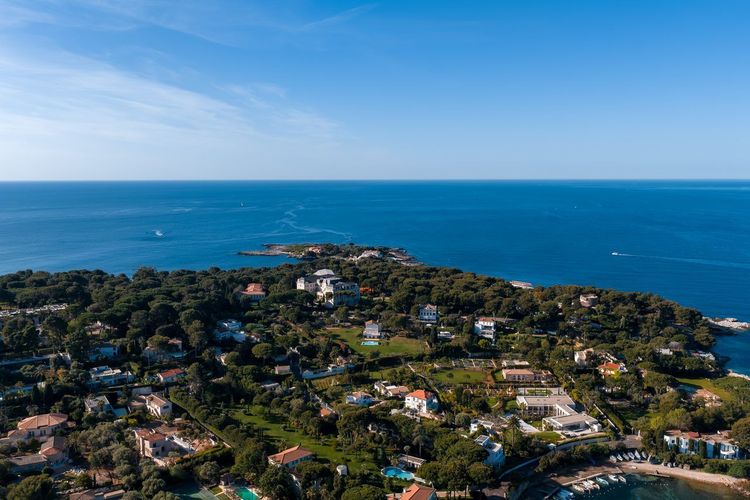
A helicopter introductory flight departing from Cannes offers a bird's-eye view of the Cap d'Antibes and the golfe Juan; some packages head as far as Monaco and fly over Saint-Jean-Cap-Ferrat. A few operators even offer a pilot initiation flight, where you briefly take the controls under supervision.
For freefall, a tandem skydive near Cannes or at Fayence, in the Var hinterland, is done in tandem with a qualified instructor. The jump depends entirely on the weather: leave some flexibility in your stay so you can reschedule if clouds get in the way.
For all these activities, book online a few days in advance, check the minimum age and weight required by the operator, and group them on the same day if you are staying in Antibes without a car: most operators meet you in Cannes or in the Var, 30 to 45 minutes away by road.
Buggy in the Estérel, Jet Skiing at Fréjus, and Paintball
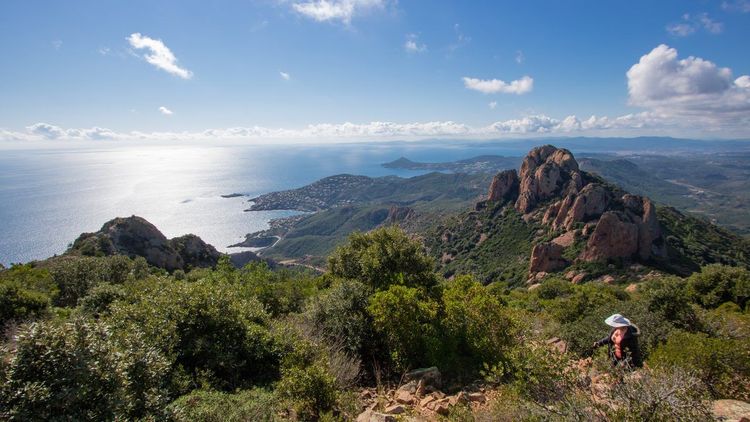
A buggy tour through the Estérel massif, this unique volcanic red relief on the Côte d'Azur, follows rugged tracks above the sea. The red porphyry rocks stand out sharply against the blue of the Mediterranean, a landscape radically different from the sandy beaches of Juan-les-Pins. On the water, a jet ski tour at Fréjus follows the Var coast in a guided convoy. And for a group outing, paintball in Antibes (from €25) features four themed fields, including "Pompeii", "Chernobyl", and "Ghost Town", plus one field adapted for children, with all equipment included.
Day Trip: Le Corbusier's Cabanon and Hilltop Villages
Le Corbusier's Cabanon and Hilltop Villages Within an Hour
Less than an hour's drive from Antibes, in Roquebrune-Cap-Martin, lies one of the most singular addresses on the Côte d'Azur: Le Corbusier's Cabanon (Promenade Le Corbusier, 06190 Roquebrune-Cap-Martin, rated 4.1/5 on Google from 145 reviews), a log-clad cabin measuring about 3.66 metres on each side, barely over 13 m², built in 1952 by the architect for his own holidays. Le Corbusier spent his summers there until his death in 1965, when he drowned while swimming at the foot of the site. Listed as a UNESCO World Heritage Site since 2016 as part of the architectural work of Le Corbusier, it can only be visited in small guided groups, by reservation through the Cap Moderne association, which also manages the nearby Villa E-1027 by Eileen Gray.
The interior, designed to optimise every centimetre, reads like a manifesto: a bed, a desk, storage, and a toilet area all slot together in a space smaller than a Parisian studio, with a sea view that makes you forget the cramped dimensions.
Along the way, Èze deserves a stop for its dizzying panorama over the Mediterranean. If you prefer the hinterland, Saint-Paul-de-Vence with its art galleries or Gourdon, clinging to its cliff, can also be visited in half a day from Antibes. Our selection of what to see around Antibes details these excursions to help you plan an itinerary without retracing your steps.
Provençal Market and Local Gastronomy, the Antibes You Don't See
The Provençal Market and Food Markets
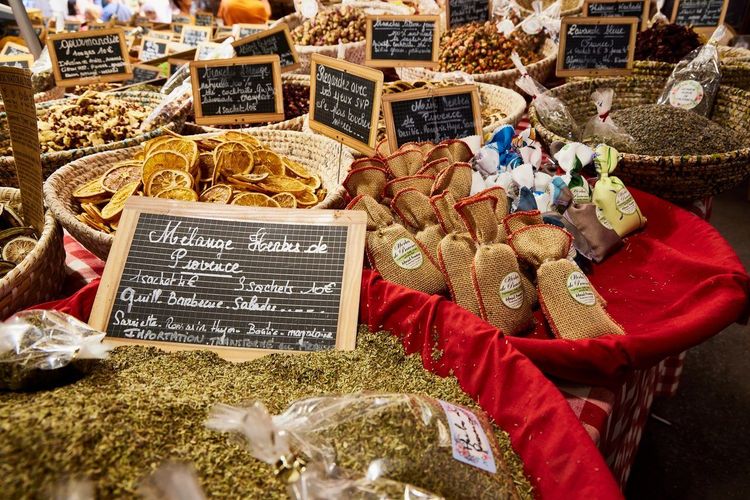
Under its late 19th-century covered halls, the Provençal market (Cours Masséna, 06600 Antibes, rated 4.4/5 on Google from 7,664 reviews) on cours Masséna brings together local producers, fishmongers, and flower stalls every morning, from Tuesday to Sunday out of season and every day in summer. This is where you take the pulse of the city, far better than on any beach.
Alongside this central market, other neighbourhood food markets enliven the commune on weekdays, drawing a mostly local crowd: a great way to observe everyday life in Antibes away from the tourist circuits.
Local Specialities, Wine Tasting, and Good Addresses
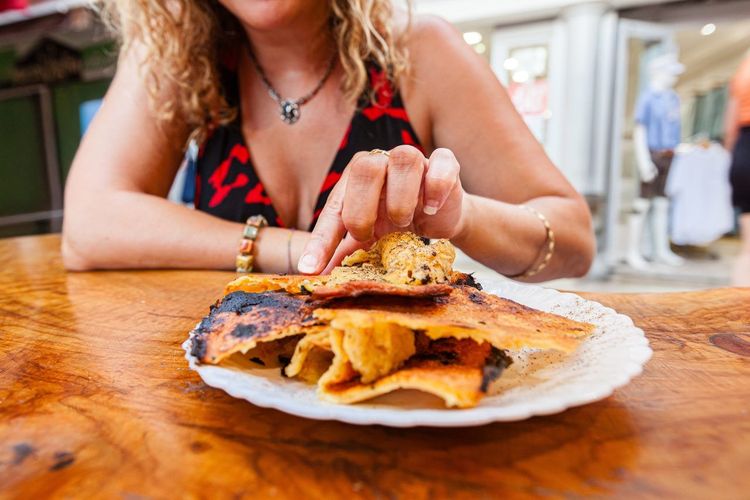
On the food side, local cuisine draws from the Niçois and Provençal repertoire: crispy socca, stuffed vegetables, pissaladière with caramelised onions, fish soup with rouille. For wine tasting, several wine cellars and wine bars in the historic centre offer Provence rosés and Bellet wines, a little-known appellation produced on the hills above Nice.
For your restaurant recommendations, three areas are worth the detour. Rue James Close, one of the narrowest streets in old Antibes, lines up its small tables one after another over a few metres. Boulevard d'Aguillon, set against the ramparts facing the port, concentrates the most lively evening terraces. Finally, the lanes of the Safranier hide a few more family-friendly addresses. Book ahead in high season: the most popular terraces are fully booked by 8 p.m.



FAQ
How Much Time Should I Set Aside for an Unusual Visit to Antibes?
Allow two days to cover the essentials of this guide at a relaxed pace: one day for the Cap d'Antibes (coastal path, villas, gardens), another for the old town, port Vauban, the museums, and an offbeat experience such as sensory deprivation floating. Add half a day if you plan to visit Le Corbusier's Cabanon, the Village des Fous, or take a boat excursion.
Is the Village des Fous Open All Year Round?
The park, located in Villeneuve-Loubet, operates on a seasonal schedule, with days and hours that vary according to school holidays. Check the online calendar and book your ticket before making the trip.
Can You Visit Villa Eilenroc and Its Gardens?
Yes, the rose garden at Villa Eilenroc is open on Wednesdays and Saturdays from 10 a.m. to 4:30 p.m., according to the Antibes Juan-les-Pins tourist office. The interior of the villa only opens occasionally, during events announced by the city.
What Is the Best Time to Explore the Cap d'Antibes on Foot?
Early in the morning, to enjoy the coastal path without the heat or the crowds, and never in bad weather, as the path is closed under those conditions. More broadly, the best months to visit Antibes run from April to October; May, June, and September offer the best balance between swimmable sea and less crowded sites than in July and August.
Can Le Corbusier's Cabanon Be Visited from Antibes?
Yes, it is less than an hour's drive via the A8. Visits are by reservation only through the Cap Moderne association, in small guided groups, and time slots are often fully booked several weeks in advance during the season.
Where Can I Book a Sensory Deprivation Floating Experience in Antibes?
Activity booking platforms offer sessions in Antibes starting from €75. Book a few days in advance, as the number of pods limits available slots.
Unusual Antibes is ultimately less about a list of places than about a different way of looking at a city you think you already know. Between the coves of the Cap, forgotten bastions, a neighbourhood with its own mayor, and a UNESCO-listed architect's cabin, there is enough to fill several stays without ever retracing your steps. To connect these spots without spending hours planning your itinerary, the Ryo audio-guided tour of Antibes lets the city tell its own most secret corners, one audio stop at a time.