© Shutterstock
 Votre guide Ryo
Visiting Arles Without a Car in 2026: The Complete Guide on Foot, by Bus and by Bike
Visiting Arles without a car is no compromise: its historic centre, a UNESCO World Heritage Site, nestles in lanes too narrow for much of anything wider than a bike. The TER train station drops travellers about fifteen minutes' walk from the Roman amphitheatre, the Envia bus network serves the more outlying districts, and for heading off to the neighbouring Camargue, a bike or a bus is more than enough. Not a single parking space to hunt for: the Ryo audio-guided tour of Arles links, on foot and in 1h30, the ancient monuments and the places painted by Van Gogh that made the city famous.
Across its 18 audio stops, this tour takes in an amphitheatre that still hosts shows two thousand years after it was built, an ancient necropolis where you walk among open-air sarcophagi, and the square where Van Gogh set up his easel one evening in September 1888. This guide also explains how to reach Arles by train, how to get around once you're there, what buses and monument passes cost, and how to venture out to the Camargue or Les Baux-de-Provence without ever looking for a parking space.
How to Get to Arles Without a Car
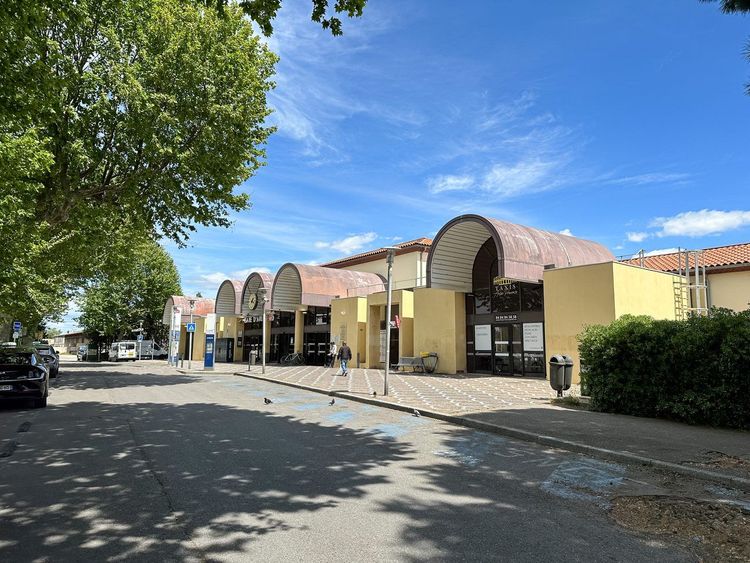
The Arles train station (Avenue Paulin Talabot, 13200 Arles, rated 4/5 on Google from 36 reviews) is connected by direct TER to Avignon (20 minutes), Marseille (around 50 minutes) and Nîmes (30 minutes), with TGV connections at Avignon-Centre or Avignon-TGV for those arriving from Paris or Lyon. The Avignon-Marseille line has a good ten or so daily trains stopping at Arles, which gives real schedule flexibility without having to book weeks in advance.
From the station, the historic centre is about fifteen minutes' walk via place Lamartine and the Porte de la Cavalerie, or a few Envia bus stops away if you're travelling with luggage. Regional Zou coaches complete the offer from Avignon, Salon-de-Provence, Saint-Rémy and the Alpilles villages that have no station, handy if you're building a multi-stop trip without a car. Long-distance coaches also serve Arles from Marseille or Montpellier at low prices: compare timetables, as they are often less frequent than the TER.
Getting Around Arles on Foot: A Compact Historic Centre
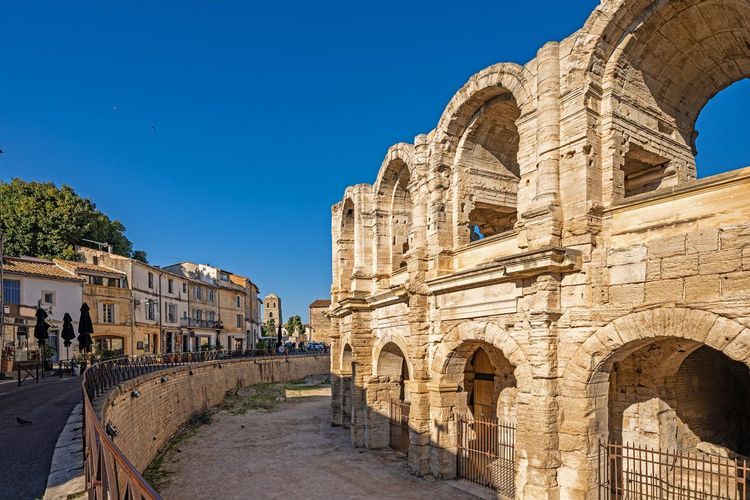
The centre of Arles is contained within a perimeter you can cross from end to end in twenty minutes of easy walking. The amphitheatre, the ancient theatre, the place du Forum and the tourist office are all within ten minutes of each other, which makes the very idea of taking a vehicle to explore Arles absurd.
A few simple precautions improve the experience: the cobblestones and uneven ground of the medieval lanes reward good shoes more than sandals, and in summer the heat is a good reason to schedule walks before 11am or after 5pm. That is exactly the pace of the Ryo audio-guided tour of Arles: its 18 stops cover the historic centre in 1h30 over 3.7 km, and spare you from pulling out a map at every crossroads.
The Envia Bus Network for Exploring Arles and Its Surroundings

The Envia bus network serves the Arles area with about ten urban lines, most of which pass along boulevard Clemenceau, on the edge of the centre. For a visitor without a car, its main value is reaching what you can't cover on foot: the Arles Antique departmental museum, set apart along the Rhône, or the districts where some budget accommodation is located.
Fares remain very gentle: a book of 10 journeys costs 8 euros, enough for an entire weekend for two, a negligible budget compared with the cost of parking in the city centre. In the heart of town, the small free HOPLA shuttle, an electric cargo bike, also carries tired pedestrians between the squares and the market. Services remain frequent on weekdays, but thin out noticeably on Sundays: always check the last departure if your excursion runs into the late afternoon.
For destinations further afield, intercity lines leave Arles for Tarascon, Saint-Martin-de-Crau or Saintes-Maries-de-la-Mer, a useful alternative to renting a car for those who want a glimpse of the Camargue without organising a full excursion. Fares and frequencies change every year: checking the network's app or website before you leave avoids unpleasant surprises.
The Arles Tourist Train: Route and Timetable
The Arles tourist train departs from near the amphitheatre and offers a guided tour of the historic centre, ideal for families or if you prefer a first look from a comfortable seat before exploring on foot. The tour lasts about 35 to 40 minutes and winds between the main monuments, from the amphitheatre to place du Forum via the banks of the Rhône.
It generally runs from spring to autumn, with regular departures in high season and a reduced or suspended service in winter. Expect to pay around 8 to 9 euros per adult, with discounts for children (fares to be confirmed on site, as they change each season). It's a good option for getting your bearings before returning to the places that caught your eye, but it is no substitute for a proper stroll: the commentary stays general, whereas an audio guide stops in front of each façade to tell its story.
Renting a Bike in Arles Without a Car
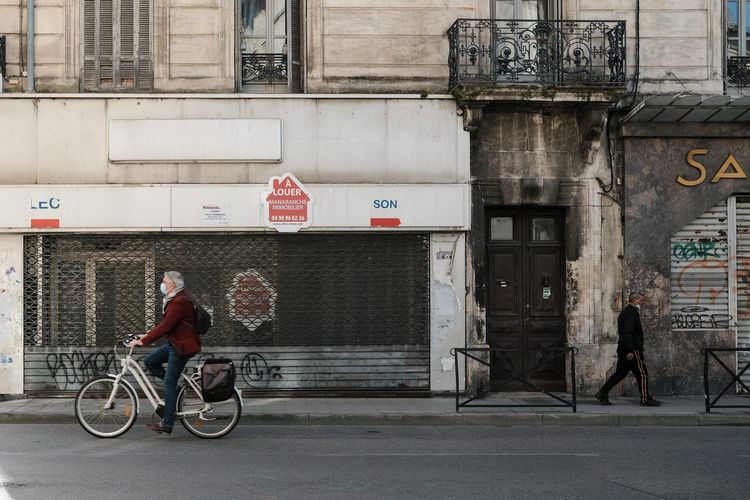
Several rental shops in the city centre and near the station offer standard or electric bikes by the day; expect to pay between 12 and 15 euros for a standard model, more for an e-bike. It is the most effective option for leaving the centre without depending on bus timetables.
Arles lies on the route of the ViaRhôna, the long-distance cycle route that follows the Rhône from Lake Geneva to the Mediterranean, and several marked routes lead to the Camargue across perfectly flat landscape. Allow a little under an hour of pedalling to reach the first marshes, and bring water: shade becomes scarce as soon as you leave town. One tip: check the mistral forecast, which can turn a ride back into the wind into a real workout.
The Roman Amphitheatre and Ancient Theatre, the Historic Heart of Arles
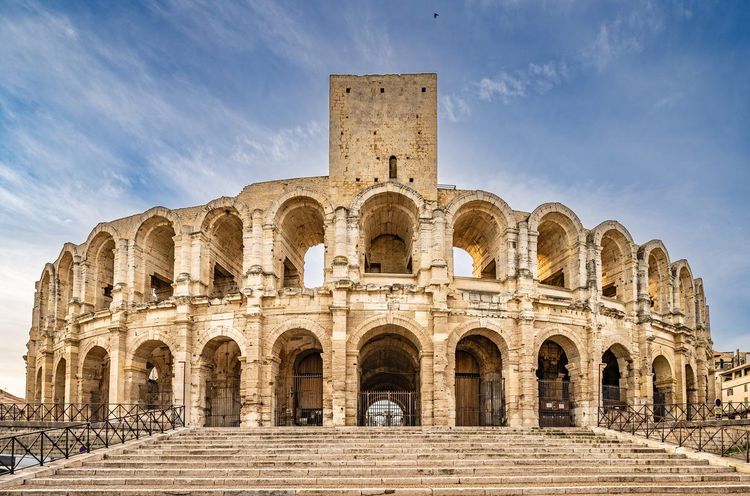
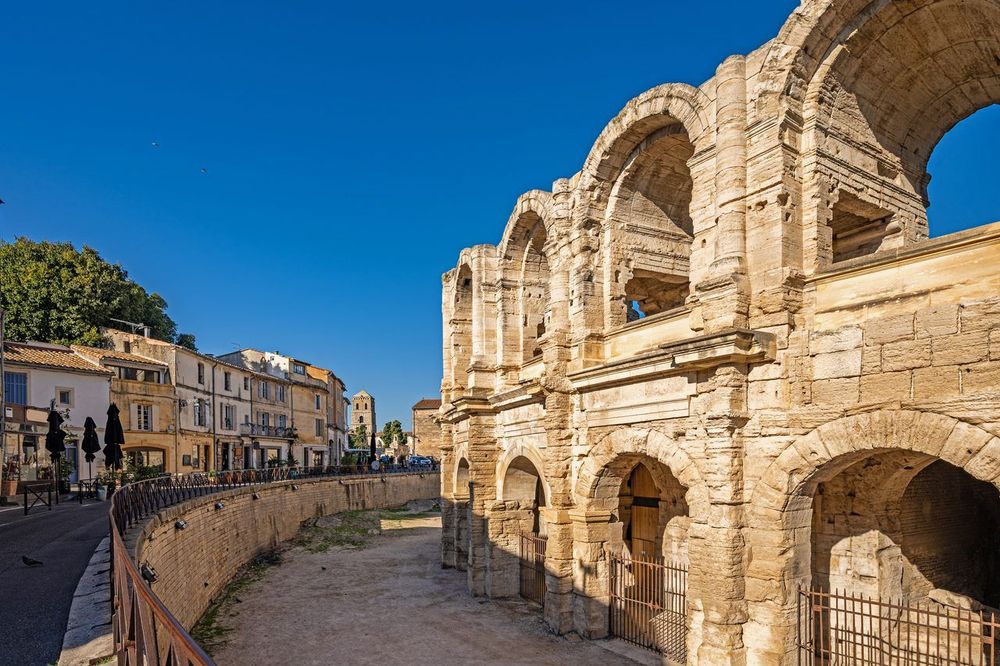
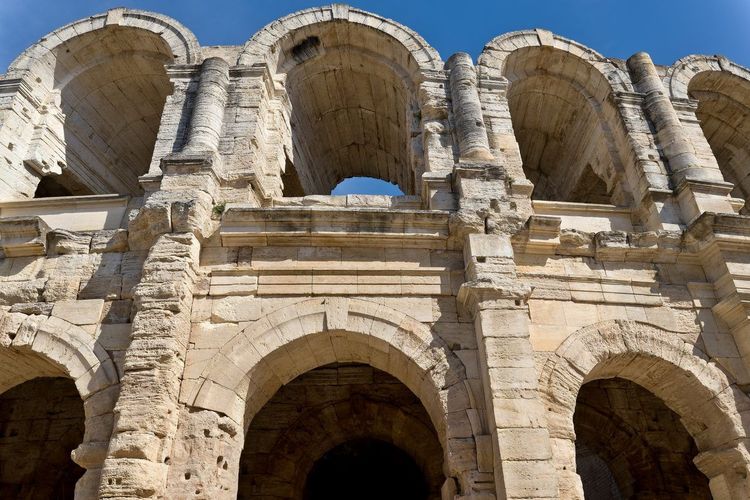
The Arles Amphitheatre has dominated the historic centre for nearly two thousand years and still hosts shows today, proof that the Roman amphitheatre has survived the centuries without losing its function. Built at the end of the 1st century, it could hold around 20,000 spectators during the ancient games, a figure that gives a sense of the importance of Arelate, the Roman name of the city.
Just steps away, the ancient theatre of Arles (Rue de la Calade, 13200 Arles, rated 4.4/5 on Google from 2,655 reviews) completes the visit with partially preserved tiers and two Corinthian columns standing alone amid what remains of the stage. Less spectacular than the amphitheatre at first glance, it especially rewards those who take the time to sit on the tiers and imagine the original acoustics.
Rather than separate tickets, get a pass: the Pass Liberté (15 euros, valid for one month) opens four monuments of your choice, including the amphitheatre, the ancient theatre, the Alyscamps or the Saint-Trophime cloister, plus the Réattu museum and one other museum; the Pass Avantage (19 euros, valid for six months) gives access to all monuments and museums. Allow an hour for both sites if you visit quickly, twice that if you like reading every panel. The Ryo audio-guided tour of Arles also devotes several of its stops to the amphitheatre and the ancient theatre, with their history told right on the spot.
The Alyscamps, the Ancient Necropolis Immortalised by Van Gogh
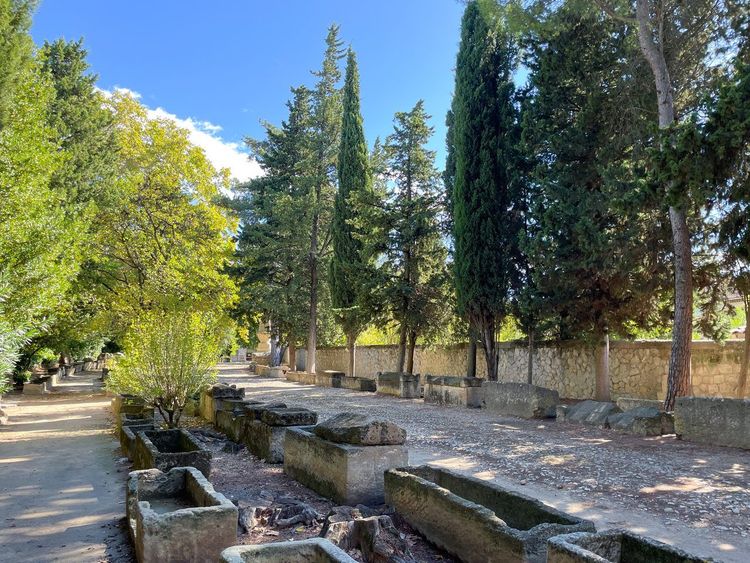
The Alyscamps (Avenue des Alyscamps, 13200 Arles, rated 4.3/5 on Google from 1,718 reviews) form one of Europe's most famous ancient necropolises, an avenue lined with sarcophagi stretching to the south-east of the historic centre. The name comes from the Latin Elysii Campi, the Elysian Fields, and the site served as a cemetery for more than a millennium, from Roman times until the Middle Ages.
You can reach it in about ten minutes on foot from the amphitheatre, over flat ground shaded by large trees, which makes it a pleasant stop even in midsummer. Van Gogh painted several canvases here in autumn 1888, alongside Gauguin, drawn by the contrast between the golden foliage and the grey stone tombs. One of them, now in a private collection, shows precisely the avenue you can still walk today. One stop on the audio-guided tour pauses right here to tell this story, the kind of detail that changes the way you look at a row of sarcophagi.
In the Footsteps of Van Gogh in Arles
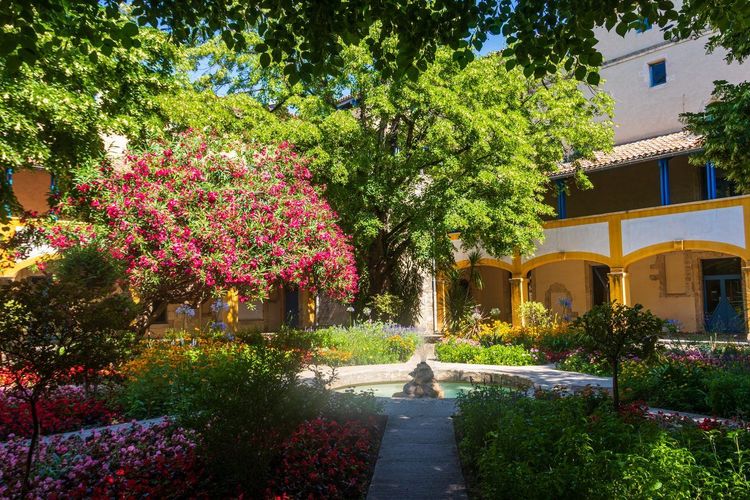
Arles hosted Van Gogh for a little over a year, from February 1888 to May 1889, and this interlude remains the most productive period of his career: around 300 works, paintings and drawings, some of them among the best known in the history of art. Following his traces, entirely on foot, tells as much about the painter as it does about Arles itself.
The Espace Van Gogh occupies the former Hôtel-Dieu where the painter was treated after the severed-ear episode. The inner courtyard and its flower garden have been restored just as he painted them in 1889.
A few minutes' walk away, the place du Forum is home to the café that Van Gogh immortalised in Café Terrace at Night, recognisable by its yellow façade repainted to resemble the painting. You can still sit on the terrace, drink in hand, under the same sky he described in his letters to his brother Theo.
To go deeper, the Fondation Vincent van Gogh Arles occupies the Hôtel Léautaud de Donines, a 15th-century townhouse in the heart of town. It is not a monographic museum: each year the Foundation presents one or more original canvases by the painter, lent by major collections, in dialogue with modern and contemporary artists. Check the programme before your visit to find out which works are on display.
Further out, about 3 kilometres south of the centre, the Langlois Bridge (Route de la Mer, 13200 Arles, rated 4.2/5 on Google from 1,419 reviews) is a replica of the drawbridge that Van Gogh painted several times, the original having been destroyed in 1944. You can reach it by bike in about twenty minutes, without ever needing a car.
If walking from one place to another while mentally reconstructing each painting appeals to you, this 18-stop audio guide passes through several of these Van Gogh-related addresses along its 3.7-kilometre route, with the story of each canvas told in front of the setting that inspired it.
Must-See Museums Without a Car: Arles Antique and Réattu
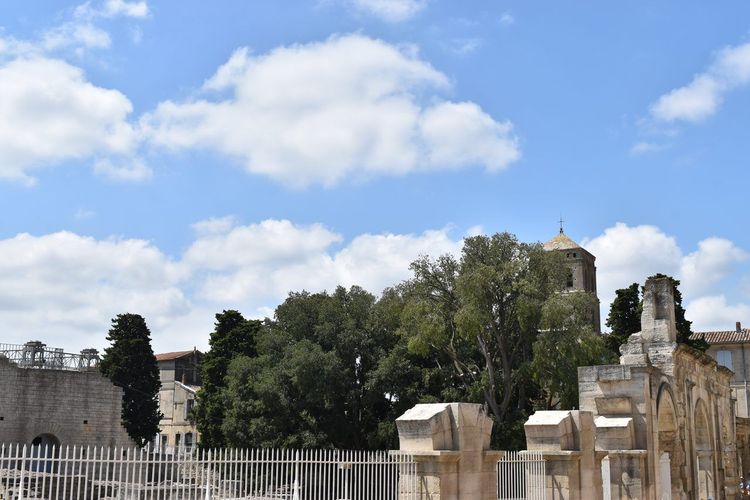
The Arles Antique departmental museum houses one of Provence's richest archaeological collections, with a bust presented as that of Caesar, pulled from the Rhône in 2007, and above all the Roman barge Arles-Rhône 3, 31 metres long and raised from the river in 2011. The blue triangular building stands a little apart from the centre, along the Rhône, about twenty minutes' walk or a few Envia bus stops from the amphitheatre.
The Réattu museum (10 Rue du Grand Prieuré, 13200 Arles, rated 4.2/5 on Google from 730 reviews), for its part, occupies the former grand priory of the Knights of Malta, directly on the banks of the Rhône. Its collection mixes classical painting, photography and a Picasso donation of 57 drawings given by the artist in 1971, a group rarely seen elsewhere outside the major Parisian collections.
The two museums complement rather than compete with each other: one dives into Roman Antiquity, the other into the art of the 19th and 20th centuries. If your time is limited, prioritise Arles Antique for the richness of its collections, and save the Réattu for a second day or a rainy day, its more modest size making it a visit of about an hour.
A Camargue Excursion Without a Car

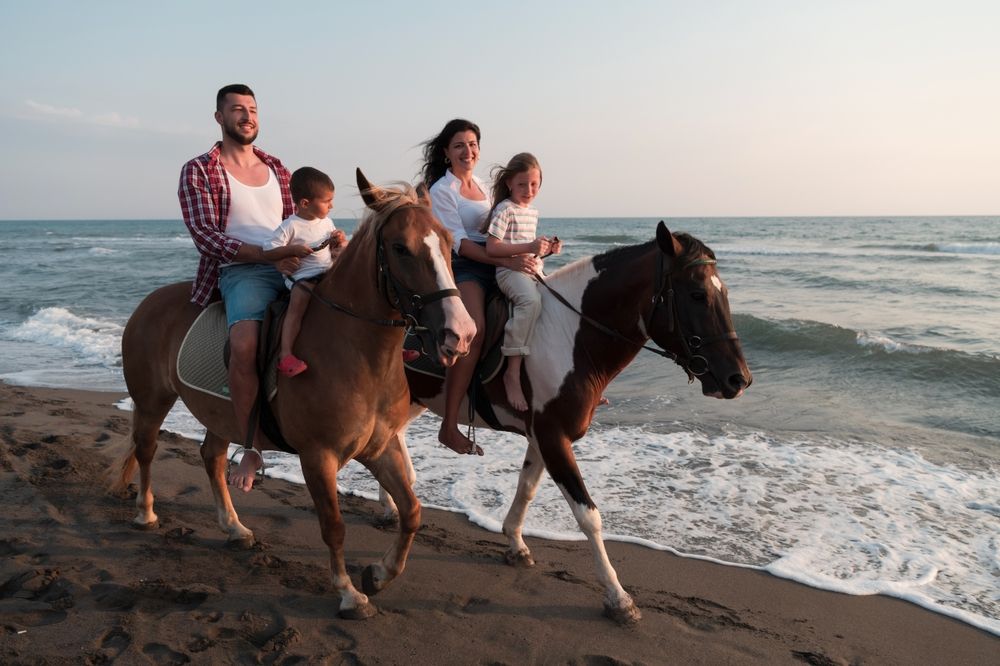
The Camargue stretches immediately south of Arles, and contrary to popular belief, it doesn't necessarily require a car. Several agencies run minibus or 4x4 excursions with pick-up in the city centre, including sightings of pink flamingos, bulls and Camargue horses in the marshes.
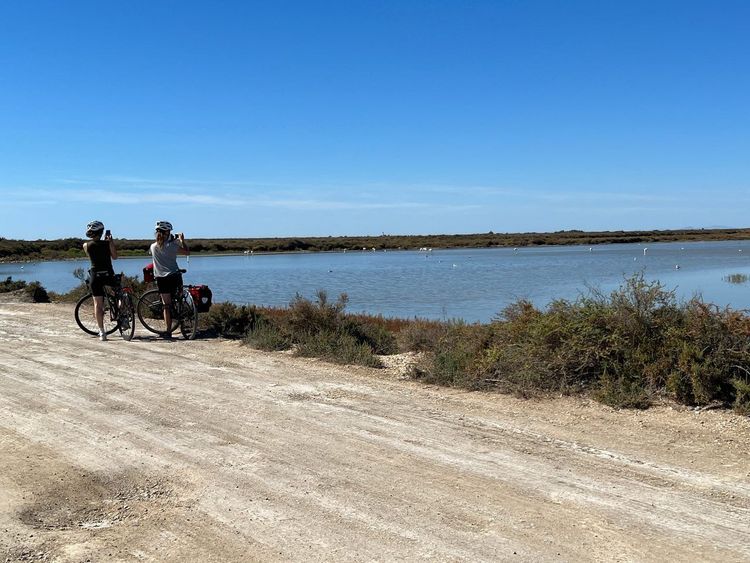
For a more independent approach, the bike remains the most flexible option: the flat roads and paths heading south reach the first lagoons in under an hour, with no particular fitness required. To reach Saintes-Maries-de-la-Mer, the seaside village at the tourist heart of the delta, a regular bus line leaves Arles all year round, with increased frequencies in summer and a journey of about an hour.
Once there, several activities can be done without a vehicle: a cruise on the paddle-wheel boat Tiki III, which goes up the Petit Rhône from its mouth at Saintes-Maries for 1h30, the beach on foot from the village, or the Pont de Gau ornithological park, a few kilometres away and accessible by bike. To prepare for this day, our article on the must-sees of the Camargue details the sites not to miss.
A Day Trip to Les Baux-de-Provence Without a Car
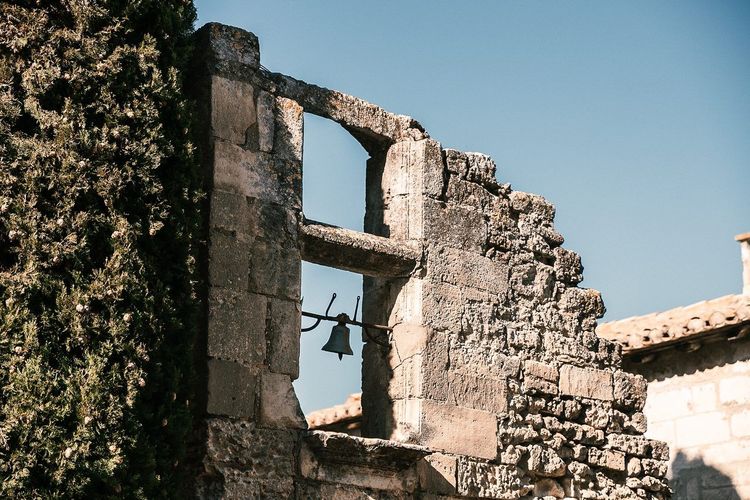
The hilltop village of Les Baux-de-Provence, listed among the most beautiful villages of France, can be visited as a half-day excursion from Arles. Perched on a rocky spur of the Alpilles, it offers a panorama stretching as far as the Camargue on a clear day, and is home to the Carrières de Lumières, an immersive show projected onto the walls of a former limestone quarry.
In summer, the regional Zou 57 line links Arles to Les Baux-de-Provence and Saint-Rémy-de-Provence before continuing to Avignon, which avoids renting a car for this one excursion. Out of season, the journey gets more complicated: you generally have to combine a coach to Saint-Rémy or Fontvieille and then finish by taxi. If Les Baux is at the top of your list, check the summer line's timetable before planning your stay, as it is by far the simplest option.
Where to Stay in Arles to Visit Without a Car
To make the most of a car-free stay, choose accommodation in the historic centre, within the area bounded by boulevard des Lices and the Rhône. The neighbourhoods around place du Forum or the Roquette put the amphitheatre, the ancient theatre and most restaurants within ten minutes' walk.
Hotels near the station also work well, especially if you arrive late or leave early, at the cost of a ten to fifteen minute walk to the historic centre. Avoid accommodation on the outskirts, however, which without a car would make you dependent on the sometimes sparse Envia timetables on Sundays. Guesthouses set in the lanes of the centre often offer the best compromise between charm and walkability.
Budget and Best Season to Visit Arles Without a Car
A stay in Arles without a car costs noticeably less than a motorised one, if only because of the absence of parking and fuel. Budget 15 euros for the Pass Liberté or 19 euros for the Pass Avantage, 8 euros for a book of 10 Envia journeys, and between 12 and 15 euros for a day of cycling if you go as far as the Camargue. Under-18s accompanied by an adult with a pass enter the monuments free of charge.
Spring (April to June) and early autumn (September-October) remain the best seasons for walking comfortably in the lanes, away from the crushing heat of July-August. In winter, the mistral sometimes complicates bike rides, but the monuments remain open and almost deserted. Two full days are enough to cover the historic centre, the museums and a Camargue excursion; our plan for visiting Arles in 2 days offers a ready-made breakdown. Add a third day if Les Baux-de-Provence is on the programme.



FAQ
Is Arles worth visiting?
Absolutely: Arles brings together Roman and Romanesque heritage listed by UNESCO, the legacy of Van Gogh and the gateway to the Camargue, all within a compact historic centre that can be explored entirely on foot in two days.
How do you visit Arles in one day?
In one day, focus on the amphitheatre, the ancient theatre and the Alyscamps in the morning, then the sites linked to Van Gogh (Espace Van Gogh, place du Forum) in the afternoon. The Ryo audio-guided tour covers this route in 1h30, leaving time for a lunch break or a museum.
How do you get around Arles?
On foot for most of the historic centre, by Envia bus for outlying areas such as the Arles Antique museum, and by bike to venture out towards the Camargue. The tourist road train rounds out the options for a first look from a comfortable seat.
What are the opening hours of the Arles tourist train?
The little train generally runs from spring to autumn, with regular departures during the day from near the amphitheatre. The tour lasts 35 to 40 minutes. Check the exact times with the tourist office, as they vary by season.
Is Arles well connected by train from major cities?
Yes: direct TER trains serve Arles from Avignon (20 minutes), Nîmes (30 minutes) and Marseille (around 50 minutes), with TGV connections at Avignon for journeys from Paris or Lyon.
Do you need to rent a bike to visit Arles without a car?
No, not for the historic centre, which can be explored entirely on foot. A bike becomes useful if you want to head out to the Camargue or the Langlois Bridge without relying on bus timetables.
Arles Without a Car, the Smart Choice
Arles lends itself remarkably well to a car-free visit: the historic centre is covered on foot, Envia and Zou buses take over for the outlying museums, the Camargue or Les Baux-de-Provence, and every Van Gogh site can be reached at a leisurely pace. You save on parking, gain freedom, and see the city at the scale for which it was built.
If you'd rather be guided than juggle a paper map and information panels, the Ryo audio-guided tour of Arles links the Roman monuments and Van Gogh's addresses in 18 audio stops, over 1h30 of walking, straight from your smartphone.
À lire également