© Shutterstock
 Votre guide Ryo
Free Things to Do in Bastia in 2026: From the Vieux Port to the Citadel, 30 Ideas to Enjoy Without Paying
In Bastia, the priciest bill of the day can stay at zero. The free things to do in Bastia start the moment you step off the ferry or out of the airport: Genoese ramparts, Baroque churches, hanging gardens and coastal trails can all be discovered without spending a cent, and they are enough to fill several full days. To find your way around without wasting time on site, the Ryo audio-guided tour of Bastia links several of these places in 1h30, from the Vieux Port to the citadel.
A garden clinging beneath the citadel offers a view over the whole bay, with no entrance ticket. A 17th-century church, the largest in Corsica, hides polychrome marble altars behind its twin towers. A coastal trail links Macinaggio to Centuri around the tip of Cap Corse, section by section. And the Biguglia lagoon, just minutes from the centre, is home to more than 120 bird species that you can observe freely. From Place Saint-Nicolas to the alleys of Terra Vecchia, here is how to enjoy Bastia without opening your wallet.
1. Stroll Along the Vieux Port and the Saint-Nicolas Esplanade
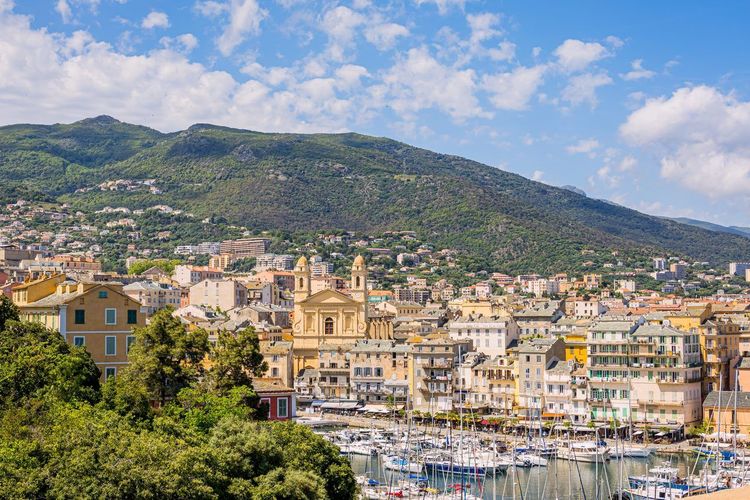
The most logical starting point remains the waterfront. In less than fifteen minutes on foot, you can link the two places that sum up the identity of the city: a fishing port that is still active and a large esplanade open to the Mediterranean. Neither requires a ticket.
The Vieux Port and Its Colourful Quays
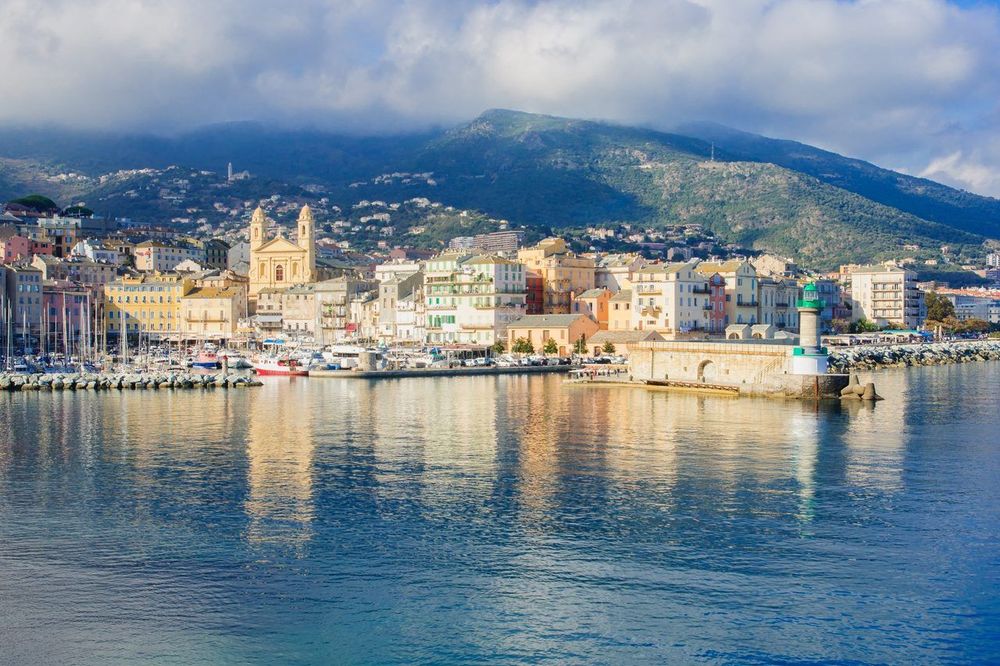
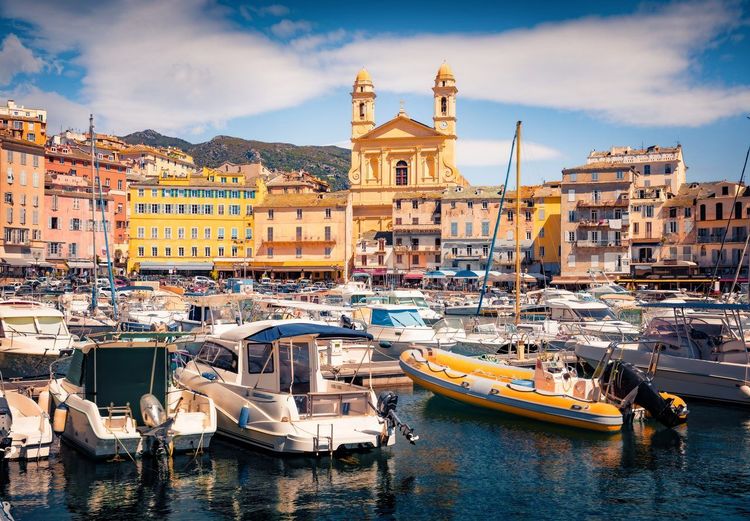
The Vieux Port of Bastia forms an almost round basin, framed by tall ochre and yellow facades that are reflected in the water at sunset. Fishing boats sit alongside a few sailboats, and the quays remain accessible at any hour, without any barrier. People come here to stroll, to watch the pointus return in late morning, or simply to sit on a parapet and watch the citadel take shape above the rooftops.
In the morning, a few fishermen sell their catch directly on the quay, with no stall and no fixed hours. Watching this ritual remains one of the most authentic scenes in the port: asking a question about the catch of the day is often enough to start a conversation with someone who has been a regular here for forty years.
In the late afternoon, the terraces fill up, but nothing obliges you to sit at one. The quays themselves serve as an open-air living room for many Bastia locals, who gather there with a bottle bought at the grocery store. This habit of informal aperitifs, standing or sitting on the stone, gives the port a livelier face around 7 p.m. than in the morning.
Place Saint-Nicolas and the Seafront
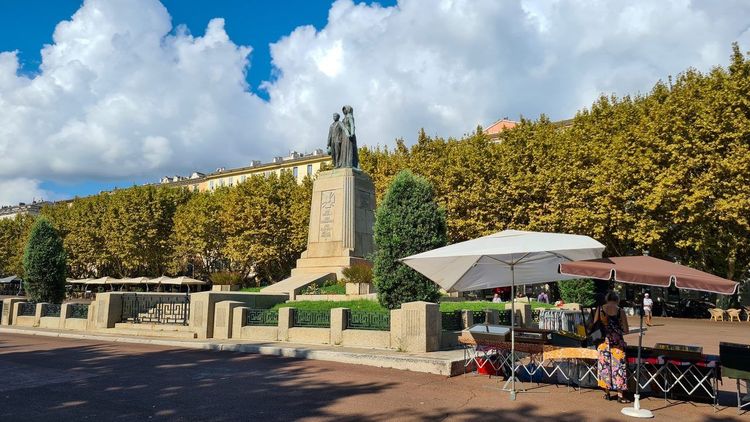
Just a short walk away, Place Saint-Nicolas stretches about 280 metres between century-old plane trees and the seafront. It is one of the largest squares in France, and you can walk it from one end to the other past kiosks, shaded benches and playgrounds. Pétanque players set up there at the end of the day, and the double rows of trees filter the heat even in midsummer.
At the centre stands a statue of Napoleon (Place Saint-Nicolas, 20200 Bastia, rated 4.5/5 on Google from 33 reviews) draped as a Roman emperor, signed by the Florentine sculptor Lorenzo Bartolini. Originally commissioned by Elisa Bonaparte for Lucca, the work was never installed there: Bastia acquired it and unveiled it in 1854. Use it as a landmark to organise your walk: the port on one side, the Toga district on the other.
This way of strolling by the water can be found elsewhere in Corsica, in Ajaccio as in L'Île-Rousse, but Bastia keeps the advantage of a working port that is still alive. To miss nothing of the port-esplanade-citadel ensemble, the Ryo audio-guided tour of Bastia starts right at the Vieux Port: its first stops tell the story of the Genoese port on a 3.5 km route punctuated by 21 audio clips.
2. Explore the Citadel and the Terra Nova District
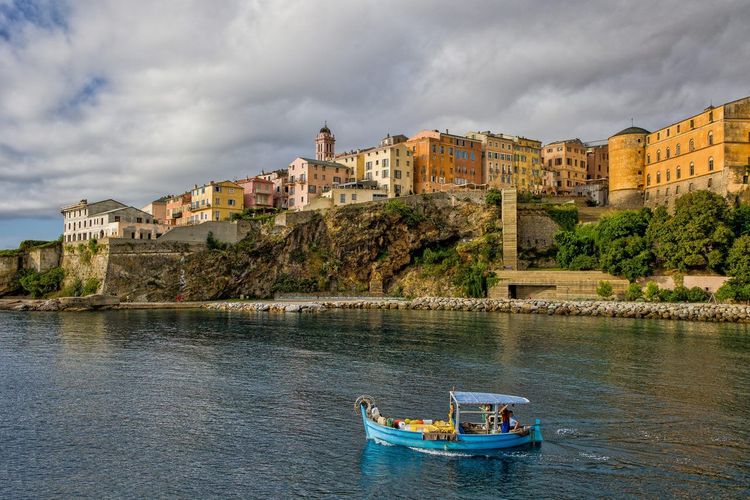
Climbing up from the Vieux Port by the stairs along the quay, you reach the entrance to the citadel in five minutes. The fortified complex can be explored freely: only the museum housed in the palace requires a ticket, not the alleys or the ramparts that surround it.
The Governors' Palace and the Ramparts
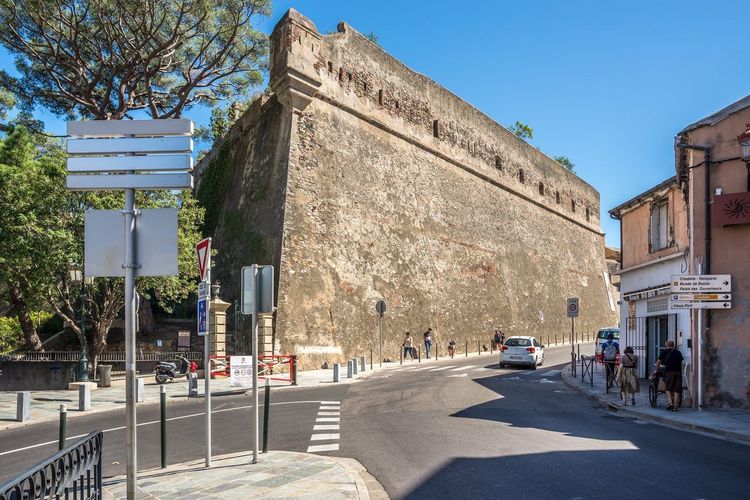
The citadel of Bastia was born in the late 14th century, when the Genoese governor Leonello Lomellini had a keep built, the "bastiglia" that gave the city its name. Today it overlooks the port with its ochre walls. You enter through the main gate with no checkpoint or opening hours, and the inner esplanade already offers an open view over the Vieux Port and, on clear days, the islands of the Tuscan archipelago.
The Governors' Palace (Place du Donjon, 20200 Bastia, rated 4.4/5 on Google from 257 reviews), built from 1448 and now home to the Bastia museum, can also be admired from the outside: its courtyard, square keep and covered walkway remain accessible without a ticket. The ramparts can be walked for several hundred metres, with a different viewpoint at each bastion. Bring good shoes: the old cobblestones are uneven and slippery after rain.
The Alleys and Little Squares of Terra Nova
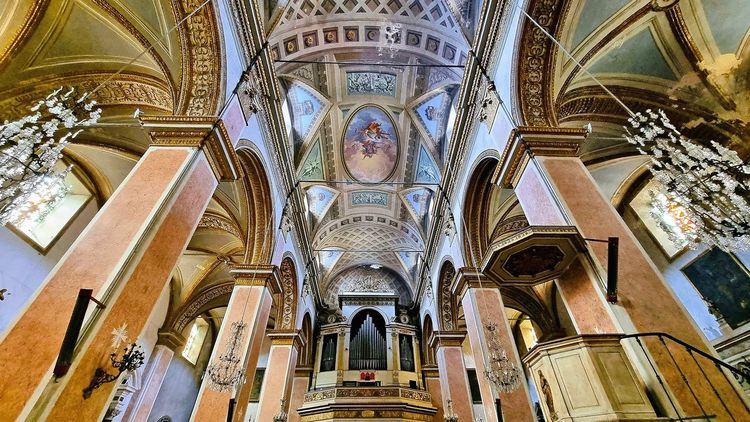
Behind the palace, the Terra Nova district unfolds a maze of cobbled alleys, vaulted passages and small squares where Bastia locals still live year-round. The Sainte-Marie Cathedral, with its light Baroque facade, stands on one of these squares and opens its doors during the day.
Getting deliberately lost in this district makes the most sense late in the day, when the light grazes the pastel facades. Several stops of the Ryo audio guide linger on the Governors' Palace and its ramparts, with anecdotes about the Genoese governors who succeeded one another there until the 18th century.
3. Push Open the Doors of the Churches and Oratories of the Historic Centre
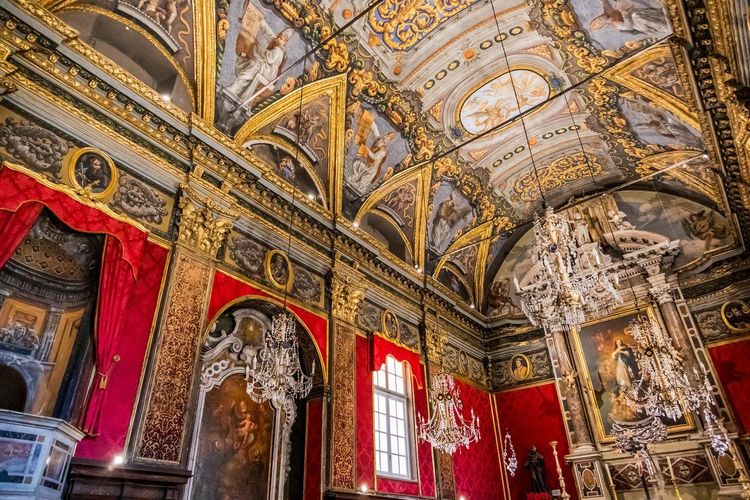
Bastia has a density of religious buildings that is rare for a city of this size, a legacy of its role as the Genoese capital of the island. Most are open freely during the day, outside of services.
The Church of Saint-Jean-Baptiste and Its Baroque Facades
The Church of Saint-Jean-Baptiste, with its twin towers overlooking Terra Vecchia, is the most photographed monument in the city from the Vieux Port. Built in the 17th century, it is also the largest church in Corsica. The interior surprises with its polychrome marble altars, stuccoes and gilding.
The Oratories of Saint-Roch and the Immaculate Conception
A few metres away, on Rue Napoléon, two confraternity oratories complete the visit. The Oratory of Saint-Roch preserves fine woodwork and an 18th-century organ. The Oratory of the Immaculate Conception (Rue Napoléon, 20200 Bastia, rated 4.5/5 on Google from 65 reviews), with a Baroque decor heavy with velvet and chandeliers, hosted the parliament of the short-lived Anglo-Corsican Kingdom in 1795. Both are free to enter during the hours when the confraternities are present, generally in the morning and late afternoon.
If your stay falls in mid-September, the European Heritage Days also open spaces that are usually closed. One stop on the audio tour tells precisely the story of the Baroque architecture of Saint-Jean-Baptiste and the role of these confraternities in Bastia life of the past.
4. Enjoy the Gardens and Sea Views
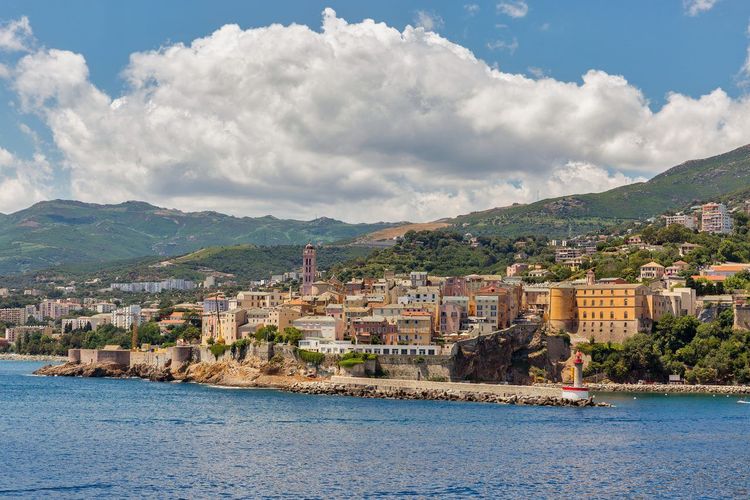
Between two visits, Bastia offers two contrasting breaks: a perched garden and a pier facing the open sea.
The Romieu Garden and Its Panorama
Clinging beneath the citadel, the Romieu garden is reached by a zigzagging staircase from the Vieux Port. At the top, a viewpoint frames the citadel on one side and the sea on the other, with no ticket required.
Come rather in the late afternoon: the shaded benches free up and the light over the bay softens. A pause on the Ryo tour is planned here, so you can listen to the story of the place facing the panorama, with no booking or set schedule.
The Dragon Pier at Sunset
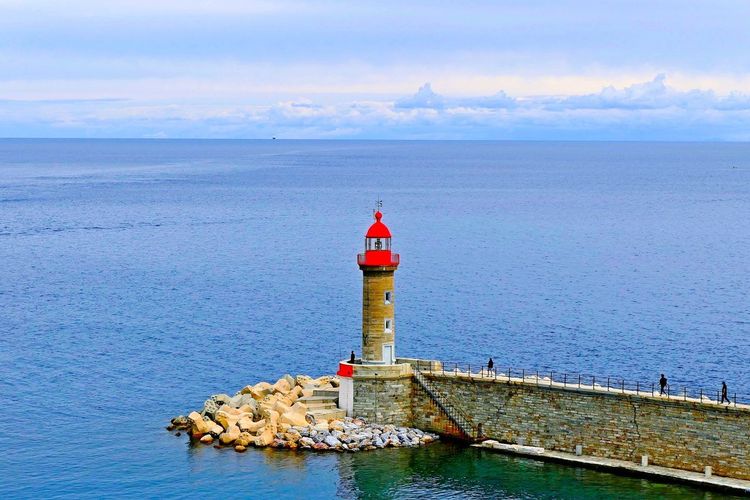
At the other end of the Vieux Port, the Dragon Pier (Vieux Port, 20200 Bastia, rated 4.8/5 on Google from 31 reviews) juts out into the sea. Anglers rub shoulders with strollers who come to watch the sky turn pink above the rooftops and the mountain.
Unlike the Romieu garden, it is best enjoyed at water level: sit on the low wall rather than at the end of the quay if the wind picks up, which often happens in the evening.
5. Relax on the Beaches and at the Biguglia Nature Reserve
Bastia does not have the seaside reputation of Ajaccio or Porto-Vecchio, but its neighbouring beaches are free to access and can be reached without a car.
The Beaches of La Marana and Arinella
The Arinella beach, about 3 kilometres south of the Vieux Port, remains the most practical for a quick swim: allow forty minutes on foot or a few bus stops. Fine sand, shallow water over the first few metres, a view of the city. Further south, the long strip of sand of La Marana stretches for about fifteen kilometres, lined with pines and almost deserted outside July and August.
None of these beaches charges for access to the sand or for the showers installed in summer; only the sunbeds and parasols of the seasonal concessions are paid. Our article on the beaches of Bastia details the access points and supervised areas.
The Biguglia Lagoon Nature Reserve
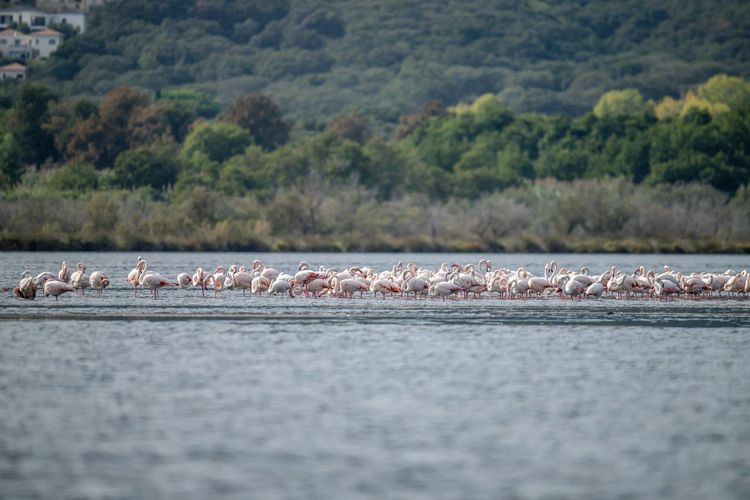
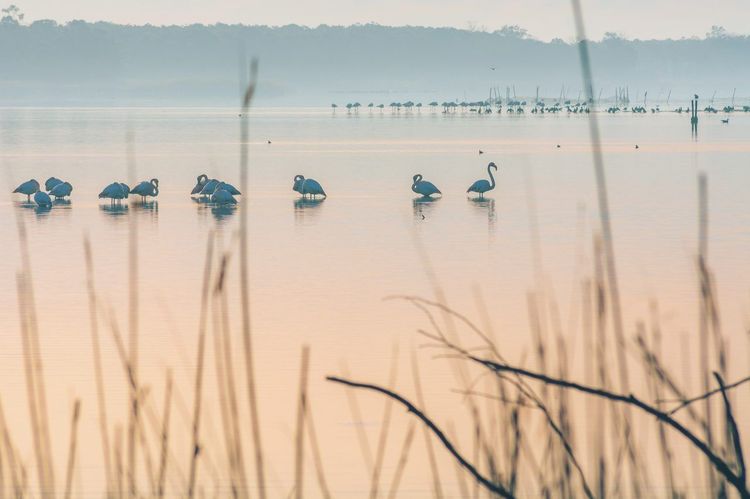
Between La Marana and the airport, the Biguglia lagoon (RD 107, 20620 Biguglia, rated 4.3/5 on Google from 645 reviews) is the largest lagoon in Corsica, classified as a nature reserve since 1994 over nearly 1,800 hectares. Flat trails and observation hides let you watch for herons, passing flamingos and marsh harriers, among more than 120 recorded species, with no entrance fee or mandatory guided tour.
Come early in the morning or late in the day: these are the hours when the birds show themselves the most, away from the midday heat.
6. Hike Around Bastia
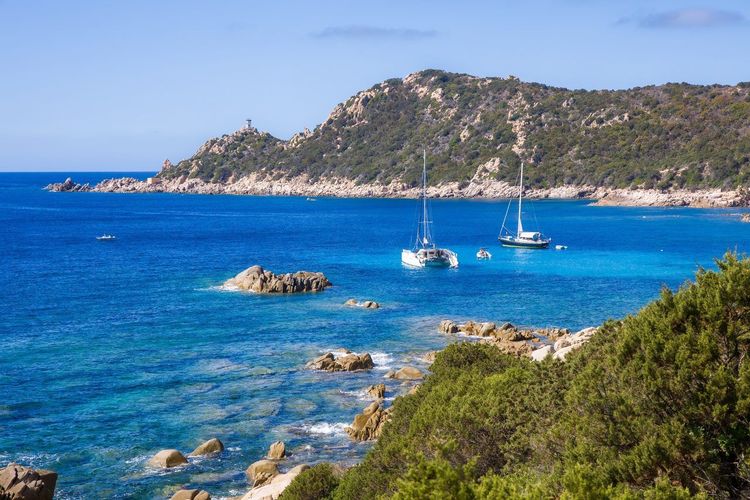
Hiking is probably the richest outing at the gates of Bastia, between the nearby mountains and the coastline of Cap Corse.
The Teghime Pass and the Serra di Pigno
About twenty minutes away by road, the Teghime pass (536 m) marks the natural border between the Bastia basin and the Gulf of Saint-Florent. The viewpoint, accessible by car, lets you take in both seas on a clear day.
From the pass, a trail climbs in about an hour to the Serra di Pigno (961 m) and its antennas, for an even wider panorama over the Biguglia lagoon and the eastern plain. Bring water and good shoes, even for this short climb.
The Customs Officers' Trail of Cap Corse
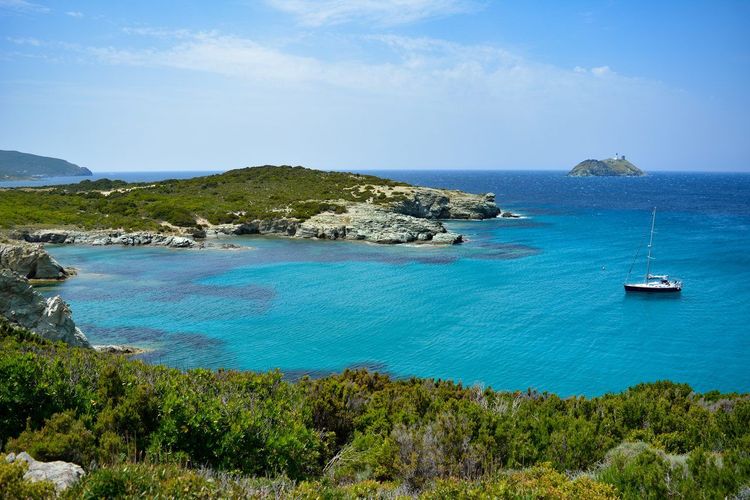
Further north, the customs officers' trail (Port de Macinaggio, 20248 Rogliano, rated 4.8/5 on Google from 20 reviews) links Macinaggio to Centuri around the tip of Cap Corse, over about twenty kilometres divided into independent sections. From the port of Macinaggio, the first section leads in three to four hours to the wild beach of Barcaggio, passing opposite the Finocchiarola islands, with no fee or booking.
It is one of the great classics of all Corsica, far more accessible than the GR20: you do not need to be a seasoned hiker to complete a half-day stage. Our guide to hikes around Bastia details the sections according to the time you have.
7. Experience the Market and Neighbourhood Life in Terra Vecchia
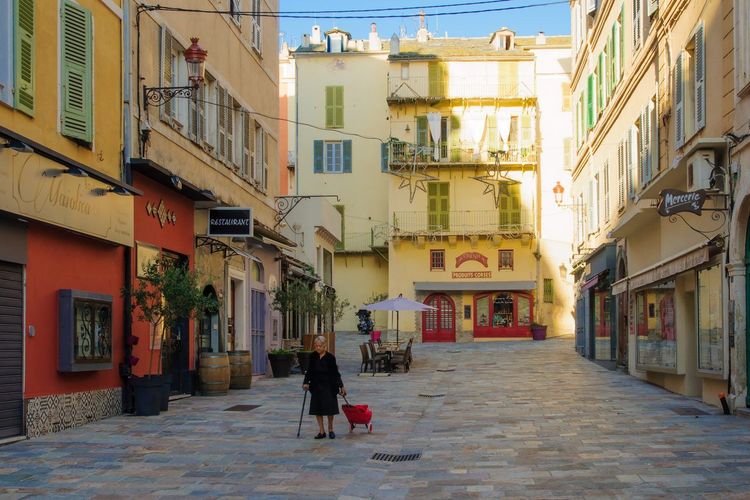
At the foot of the citadel, the Terra Vecchia district concentrates most of Bastia's everyday life, far from the terraces aimed at tourists.
The Covered Market and the Place du Marché
The market, on Place du Marché, brings together local producers and fishermen several mornings a week, with a high point on the weekend. Access is free, and wandering among the stalls of Corsican charcuterie, brocciu and fish costs nothing, even empty-handed.
Arrive before 10 a.m. if you want to see the market in full swing. It is also here, over a coffee taken standing at the counter, that spontaneous conversations with locals begin.
Neighbourhood Life in Terra Vecchia
Around the market, the narrow alleys of Terra Vecchia keep their crumbling facades, laundry drying between buildings and bars where three generations of Bastia locals meet. Nothing here is organised for visitors, which is precisely what makes it the place where you best feel the pulse of the city.
This discreet but warm community reveals itself to those who take the time to sit on a bench for more than ten minutes. The last portion of the Ryo audio-guided tour crosses these alleys, with a stop devoted to neighbourhood life and the stories that residents still tell.
8. Attend Cultural Events and Activities
Bastia's calendar includes several ticket-free events, to be timed according to the season of your stay.
In mid-September, the European Heritage Days open places that are usually paid or closed, including some rooms of the citadel and the oratories. In October, the Science Festival sets up workshops and demonstrations in several places around the city, often aimed at young audiences. In summer, open-air concerts punctuate the evenings on Place Saint-Nicolas, as part of the municipal programme, with no booking.
These three highlights do not overlap: depending on when you visit, you will come across one of them almost by chance. A glance at the city hall or tourist office calendar is enough to find the exact dates.
9. Keep the Kids Busy During School Holidays
For families, school holidays concentrate most of the offering for younger visitors.
The Alb'Oru, the city's cultural hub, regularly offers workshops and movie-and-snack sessions during the short holidays. The Carlu Rocchi centre complements this offering with team sports activities and fun events, often without a paid registration.
Between two workshops, a few unusual ideas round out the list: an improvised treasure hunt in the alleys of the citadel, a picnic on Place Saint-Nicolas, or a swim at Arinella at the end of the day. You do not need a big budget to fill a week of holidays in Bastia with children.
10. Head Out on a Trip Between Sea and Mountains at the Gates of Bastia
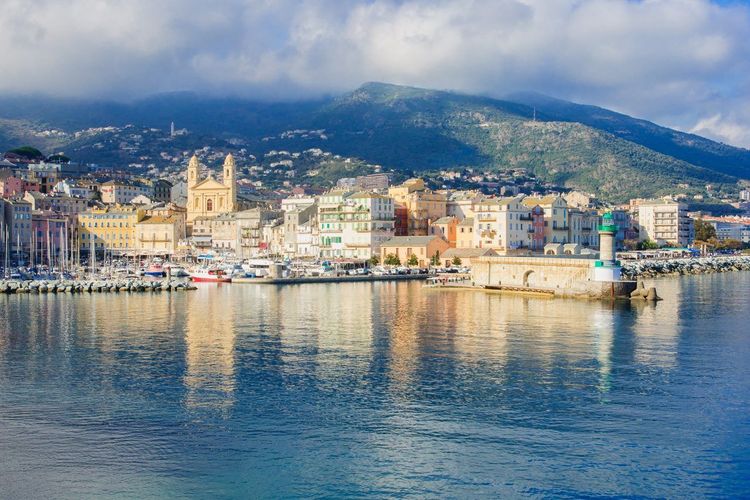
In a single day, spending no more than the cost of fuel or a bus ticket, Bastia gives access to two very different faces of Corsica.
Cap Corse on the Sea Side
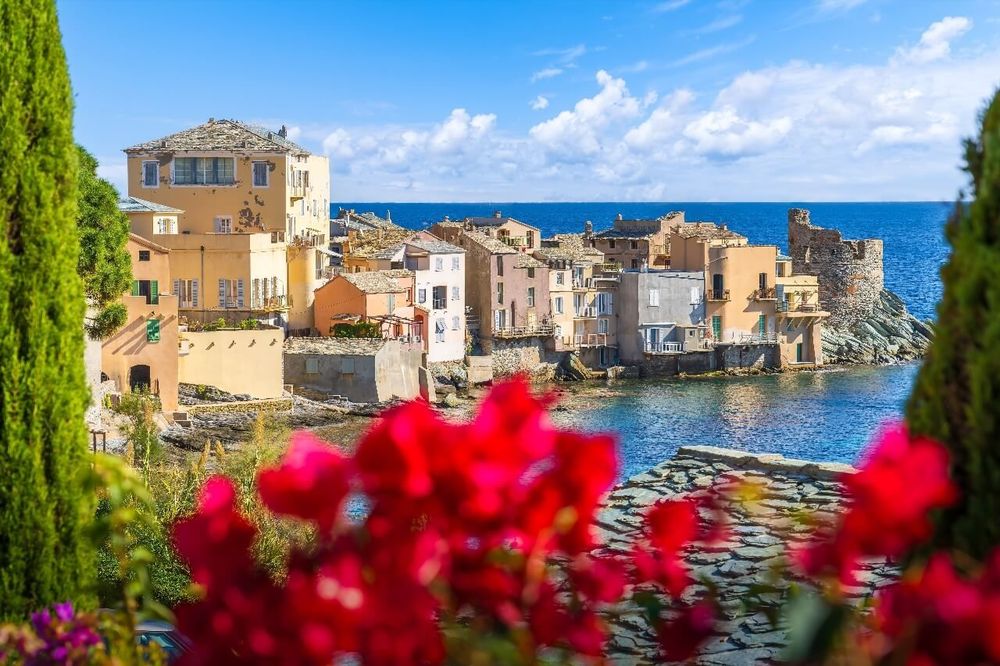
The road along Cap Corse serves a succession of villages such as Erbalunga, with its Genoese tower set on a rocky promontory, or Nonza (20217 Nonza, rated 4.7/5 on Google from 1,400 reviews), perched above its black pebble beach. Parking and walking in these villages costs nothing, except, occasionally, a paid car park in high season.
The Castagniccia and the Hinterland
At the opposite end, the Castagniccia, a massif covered in chestnut trees, is explored by a winding road that passes through stone villages such as Piedicroce or La Porta. Their Baroque churches are often open freely, and the forest trails require neither special equipment nor an access fee.
This double option, sea on one side and mountains on the other, explains why many visitors drop their bags in Bastia: the city serves as a base camp for two very different Corsicas, even outside the season. Our articles on Cap Corse and on the most beautiful villages around Bastia detail itineraries from half a day to a full day.
11. How to Get Around Bastia on a Budget
The centre of Bastia can be covered almost entirely on foot: fifteen minutes separate the Vieux Port from the citadel, and Terra Vecchia and the Romieu garden are on the way.
For longer distances, towards Arinella, La Marana or the Biguglia lagoon, city buses and bikes cost far less than a taxi or a rental car. The Bastia tourist train is still a paid option and runs mainly in season: it can help for a first orientation, but walking is enough to link the same points.
12. Budget: Visiting Bastia Without Breaking the Bank
Relying on the ideas listed above, a three- or four-day stay in Bastia can be built almost without any entrance ticket: the citadel, churches, gardens, beaches and trails cost nothing.
The real expenses remain accommodation, meals and, possibly, a bus trip to La Marana. By shopping at the market rather than eating on a terrace, and by combining hikes with urban strolling, your daily budget stays well below that of a stopover on the island's southern coast. Outside July and August, accommodation prices drop noticeably and the trails regain their calm.
FAQ
How many days should I plan to visit Bastia without spending money?
Two to three days are enough for the must-sees: the Vieux Port, the citadel, the churches of the historic centre and the Romieu garden. Add one day to combine a beach at Arinella or La Marana with a hike at the Teghime pass or along a section of the customs officers' trail.
Which beaches are closest to the centre of Bastia?
Arinella beach, about 3 km south of the Vieux Port, and La Marana, a little further away and reachable by bus or bike, are both free to access, with no mandatory beach concession on the sand.
Are there any free monuments or museums in Bastia?
The citadel, its ramparts and the exterior of the Governors' Palace can be visited freely. The Church of Saint-Jean-Baptiste and the oratories of Saint-Roch and the Immaculate Conception are also free to enter during the day. Only the Bastia museum, housed in the palace, requires a ticket.
When is the best time to enjoy events and activities in Bastia (summer, school holidays)?
The European Heritage Days in September, the Science Festival in October and the concerts on Place Saint-Nicolas in summer set the rhythm of the calendar. During school holidays, the Alb'Oru and the Carlu Rocchi centre offer workshops and movie-and-snack afternoons for children.
Do I need special equipment for hiking around Bastia?
Closed hiking shoes and water are enough for the Teghime pass or a short section of the customs officers' trail. For a longer stage in Cap Corse, bring sun protection, a windproof layer and, outside summer, warm clothing for higher altitudes.
Is Bastia a good destination for a family holiday on a small budget?
Yes: beaches, the Romieu garden, the market and school-holiday workshops at the Alb'Oru or the Carlu Rocchi centre keep both children and adults busy without an entrance ticket, and the compact centre keeps local transport costs low.
Between the Vieux Port, the citadel and the trails of Cap Corse, Bastia proves that a Corsican town can be explored in depth without reaching for your bank card at every street corner. Often all it takes is walking a little more and looking more closely at the facades, the quays and the alleys to turn a simple stopover into a real stay.
If you would rather be guided than find your own way between these sites, the Ryo audio-guided tour of Bastia links most of the historic centre on foot, from the Vieux Port to Terra Vecchia, at your own pace and without booking.
À lire également