© Shutterstock
 Votre guide Ryo
Visiting Biarritz Without a Car: The 2026 Guide to Doing It All on Foot, by Bike and by Bus
In Biarritz, the wait for a parking space in high season can last longer than the train ride from Bayonne. That is the whole case for visiting Biarritz without a car: the town fits within a 1.5-kilometre radius around the Casino municipal, served by free electric shuttles and a bus network at 1.30 euros, and crossed from end to end by the Ryo audio-guided tour of Biarritz, designed to be followed entirely on foot. Forget the parking lot: you arrive at La Négresse station on a direct TGV from Paris, reach the centre by Txik Txak bus, and then take in the Grande Plage, the Rocher de la Vierge connected by its Eiffel-style metal footbridge, and the covered Halles market where fishmongers sell the morning's catch. This guide explains how to get to Biarritz without a car, how to get around on foot, by bike or by shuttle, how to explore beaches, port, lighthouse and museums without ever looking for a parking space, and then how to branch out to Bayonne, Saint-Jean-de-Luz and even San Sebastián, in Spain, about an hour and a half away by train. You will quickly see that a car is of almost no use in this town built for pedestrians.
Getting to Biarritz Without a Car: Train, Plane and Bus
Biarritz Station and the TGV/TER Connections
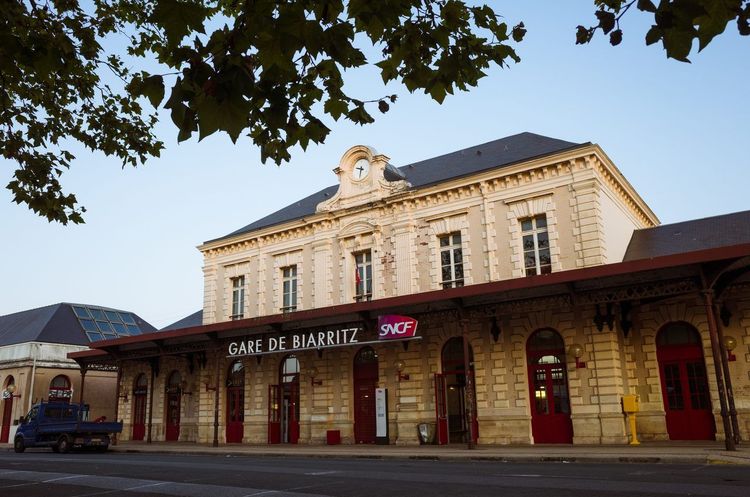
The Biarritz-La Négresse station (Allée du Moura, 64200 Biarritz, rated 4.2/5 on Google from 203 reviews) is the logical entry point if you want to visit Biarritz without a car. Six to nine direct TGVs a day, depending on the season, link it to Paris-Montparnasse in about 4h15, from 29 euros if you book a few weeks ahead. Regional trains (TER) connect it to Bordeaux in 1h45 to 2h, and to Bayonne in about ten minutes for a few euros. From the station, the town centre and the Grande Plage are about 3 km away: too far to walk with luggage, but several Txik Txak lines serve the stop, for a 1.30-euro ticket.
At the exit, a taxi rank awaits laden travellers who prefer to skip the bus for the last ten minutes of the journey, with a fare of around 12 to 15 euros to the centre. If you are travelling light, a rental bike also lets you ride straight to your accommodation.
Many travellers confuse Biarritz station with Bayonne's, located 7 km away: when booking your SNCF ticket, make sure the stop reads “Biarritz”, as both towns share the same TGV service on the Paris-Hendaye line. Getting off at Bayonne by mistake means taking an extra TER or bus, an unpleasant surprise that is easy to avoid by rechecking your ticket before boarding.
Airport Shuttle, Long-Distance Coaches and Flixbus
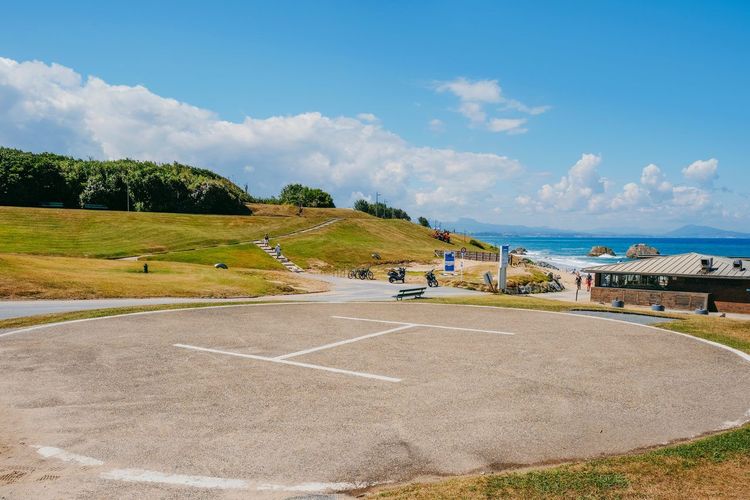
The Biarritz Pays Basque airport, straddling Biarritz and Anglet, is 3 km from the centre, with direct flights from Paris, Lyon, London or Dublin depending on the season. Txik Txak lines 11 and 36 link the terminal to central Biarritz in 15 to 20 minutes for 1.30 euros, and line 8 runs to the station on weekdays; a taxi makes the trip in 10 minutes for about fifteen euros, worthwhile if you are travelling in a group. Walking from the airport is theoretically possible in 35 to 40 minutes, but rarely pleasant with suitcases on a sometimes narrow pavement.
Flixbus and BlaBlaCar Bus coaches also serve Biarritz from Bordeaux, Toulouse or even Madrid, with fares starting around 10 to 15 euros if you book early. The stop is generally near the station or in town, within bus distance of most accommodation in the centre.
Driving in remains possible, but the equation changes quickly once you are there: car parks in the centre and on the seafront are full by late morning in summer, and paid street parking gets expensive on the spots closest to the beach. By contrast, the train or bus drops you directly within the area covered by this whole article. Allow about 2 hours on the road between Bordeaux and Biarritz, often much more in July-August when the A63 is jammed: the TER makes the trip with no traffic and no hunt for parking on arrival. For a weekend or a week, a car rental plus fuel, tolls and parking frequently costs more than a return train ticket.
Getting Around Without a Car: On Foot, by Bike and with the Txik Txak Network
The Txik Txak Network and Its Free Shuttles
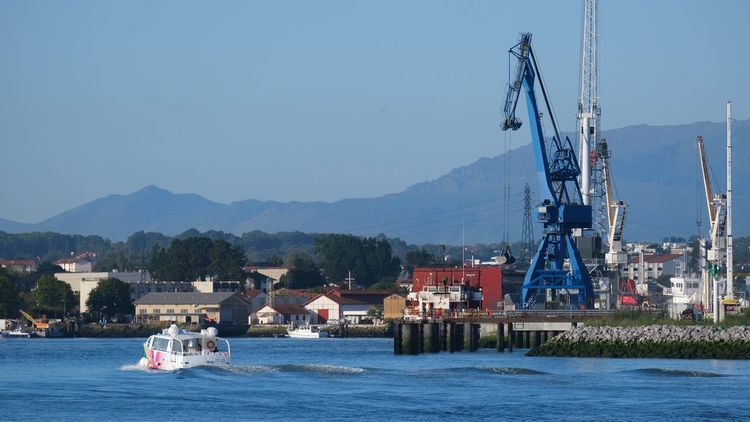
The Txik Txak network, run by the Pays Basque-Adour conurbation, is the cornerstone of any car-free stay in Biarritz. Its regular lines connect the station, the airport, the town centre, the beaches and the residential districts, with a single fare: 1.30 euros per trip, transfers included for 1h30, whatever the distance. The real bargain is the free electric shuttles that criss-cross central Biarritz (including the N4 and N5, launched in January 2025), running roughly every 30 minutes on weekdays and Saturdays. In summer, the service expands significantly: the network goes from 7 to 11 free shuttles across the conurbation, with higher frequencies and longer hours.
Stops are clearly signposted and timetables can be checked via the Txik Txak app or the journey planner on the official website. Most vehicles are accessible to strollers and people with reduced mobility, a detail that matters when you are preparing a family stay without a car.
A practical tip: if you arrive by train, take the bus straight to the centre rather than walking 3 km with your luggage, especially uphill. Outside the high season, frequencies drop noticeably: it is best to check timetables before setting off, especially in the evening.
Walking and Cycling: A Town at Human Scale
Biarritz is remarkably easy to explore on foot: from the Casino municipal to the Rocher de la Vierge, allow barely 10 minutes; to the Hôtel du Palais, 15 minutes along the seafront; to the Port-Vieux, only 5 minutes. The terrain stays gentle near the coast, a little steeper as you move away towards the inland residential districts, such as Larochefoucauld or the Cinq Cantons. From most hotels in the centre, you can therefore reach the sea on foot in under a quarter of an hour.
For longer trips, several rental shops offer standard bikes (15 to 20 euros a day) and electric ones (25 to 35 euros) in the town centre, with cycle paths running along much of the coastline up to Anglet to the north and towards the southern beaches. An electric bike changes everything for climbing effortlessly to the upper districts or heading out to Bidart for the day. In high summer, keep in mind that the seafront promenade is shared between pedestrians, joggers and cyclists: slow down rather than forcing your way through.
To give this walk a common thread, our Ryo audio-guided tour of Biarritz is followed entirely on foot from the centre: you put in your earphones and follow the commentary from one point to the next, with no route to plan and no car to find at the end, and the shuttle stops dotted around town are still there if your legs get tired.
The Iconic Seafront: Grande Plage, Hôtel du Palais and Côte des Basques
The Grande Plage and the Hôtel du Palais
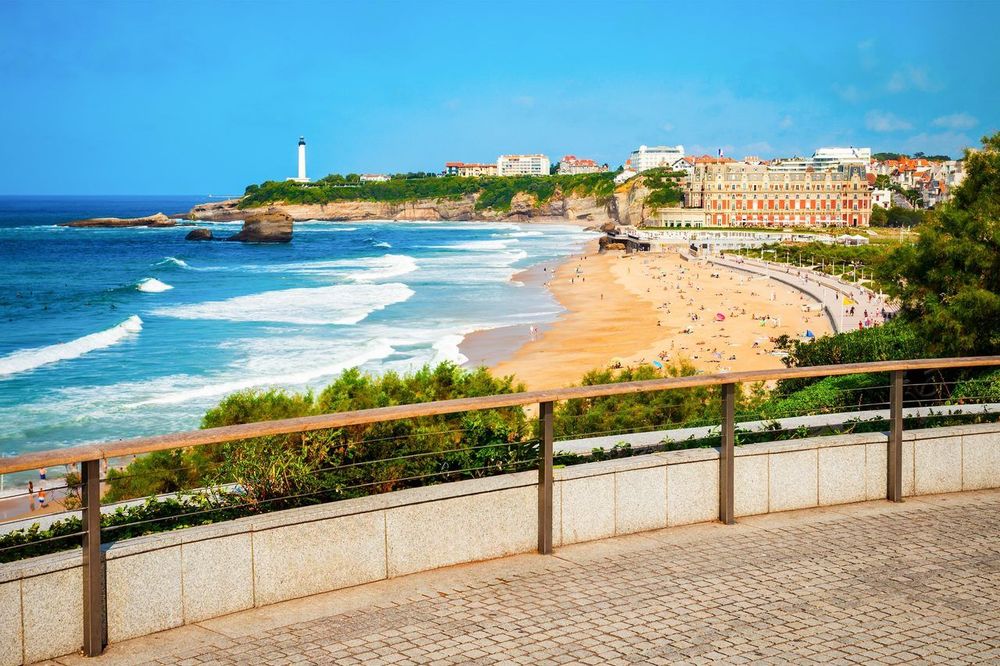
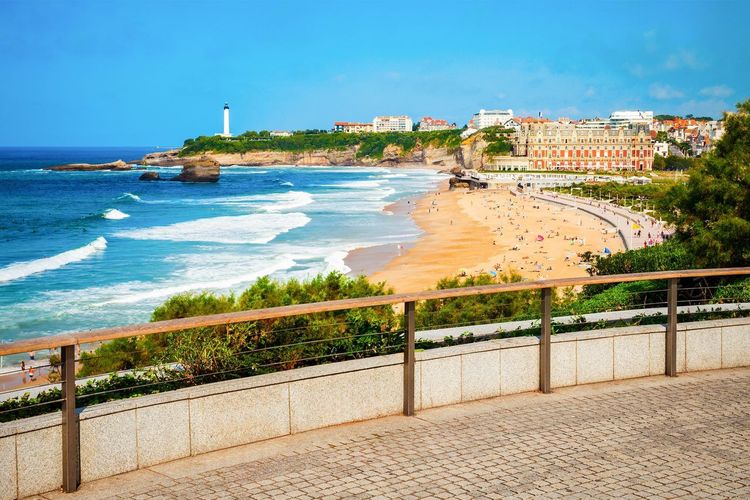
The Grande Plage owes its look to the Belle Époque villas and the Casino that line it. A wide stretch of sand, lifeguarded in season (June to September), it suits swimmers as well as surfers who take advantage of the day's first waves before the families arrive. Parasols and sun loungers can be rented on site for those who don't want to carry their own gear, and showers are set up along the promenade.
Just behind, the Casino municipal, an Art Deco building from 1929 designed by architect Alfred Laulhé and listed as a historic monument in 1992, closes off the view of the beach and still hosts shows and evening events. At the end of the promenade, to the north, stands the Hôtel du Palais, built in 1855 for Empress Eugénie as the Villa Eugénie, converted into a hotel and then rebuilt after the fire of 1903. Its palatial look facing the ocean makes it one of the most photographed buildings on the Basque coast, even for visitors who aren't staying there: its bar and restaurant also welcome non-guests, for a chic break without booking a room.
The Ryo audio-guided sub-tour The Queen of Beaches and the Beach of Kings, with 16 audios over 1h50 and 4.5 km, tells precisely the story of Eugénie and Napoleon III along this stretch of coast: you walk from one end of the Grande Plage to the other while listening to how a simple imperial holiday residence shaped the town's seaside identity, long before Biarritz became a surf capital.
The Côte des Basques, the Historic Surf Spot
Continuing south along the cliff promenade, you reach the Côte des Basques (Boulevard du Prince de Galles, 64200 Biarritz, rated 4.7/5 on Google from 2,100 reviews), where American screenwriter Peter Viertel introduced surfing to France in 1957, during the filming of “The Sun Also Rises”. The cliffs, eroded and regularly reinforced, offer the best sunset view over the whole bay and, in clear weather, the first Spanish hills in the distance.
The beach can be reached on foot from the centre in about fifteen minutes, via one of the staircases descending from the heights. Bring good shoes and watch the tide times: at high tide, the ocean covers almost the entire beach and forces you back up onto the promenade. It was also here, in the late 1950s and the 1960s, that the first surf competitions organised in France took place, a piece of history few visitors know about as they lay down their towel.
The Rocher de la Vierge, the Port des Pêcheurs and the Biarritz Lighthouse
The Rocher de la Vierge and the Atalaye Plateau
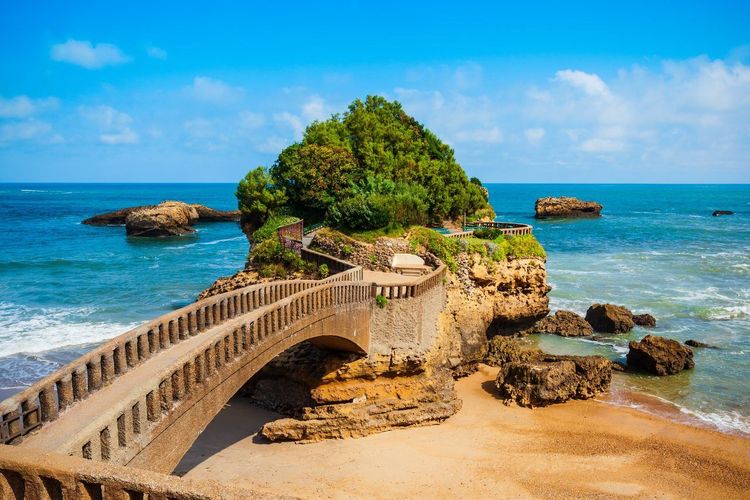
The Rocher de la Vierge is arguably Biarritz's most shared image: a rocky islet topped by a white statue of the Virgin installed in 1865, connected to land by a metal footbridge built in 1887. It is often attributed to Gustave Eiffel, but it was actually built by the Schryvers workshops of Haumont, in the engineer's style. Access is free all year round; in heavy swell it closes and waves crash just below the visitors who remain on the plateau, a spectacle that draws as many people as good weather.
From the Atalaye plateau overlooking the rock, the view takes in the whole bay, from the Grande Plage to the north to the first Spanish hills to the south in clear weather. It is a must on any walking tour, especially as it lies exactly between the port and the town centre.
This area features several audio stops on the Ryo tour, with a tasty anecdote about this footbridge that many still call “the Eiffel bridge”: it explains why the legend long outran the facts, a classic in a town where every monument seems to have its share of myth.
The Port des Pêcheurs and the Biarritz Lighthouse
A few steps below nestles the Port des Pêcheurs, a tiny pocket-sized harbour with colourful houses where a few boats still work. The former fishermen's huts, the crampottes, have largely been turned into seafood restaurants, but the activity remains real, especially in the morning when the boats come back with the day's catch.
Heading up towards the Pointe Saint-Martin, the Biarritz Lighthouse (Rue Mathieu Lalanne, 64200 Biarritz, rated 4.6/5 on Google from 7,328 reviews) has watched over the coast since 1834. The bravest climb its roughly 250 steps to the top, for a small entrance fee, for a panorama of the ocean, the Landes to the north and the first Pyrenean foothills to the south; others simply enjoy the lawns around it, ideal for a picnic. Visiting hours vary by season, with frequent closures in the low season.
Biarritz's Other Beaches on Foot or by Bike
Port-Vieux and Miramar Beach
The Port-Vieux, a sheltered cove between two rocky points, was the town's first bathing spot in the 19th century, at a time when sea bathing was still a medical prescription rather than a leisure activity. Its configuration, protected from the waves, now makes it the favourite beach of families with young children, lifeguarded in season.
At the other end of the seafront, north of the Grande Plage, Miramar beach (Avenue de l'Impératrice, 64200 Biarritz, rated 4.5/5 on Google from 1,460 reviews) stretches at the foot of the lighthouse, below the Hôtel du Palais. Quieter and less crowded than its neighbour, it suits anyone looking for a peaceful spot a stone's throw from the centre without leaving urban life behind.
Milady and Marbella Beaches, South of Town
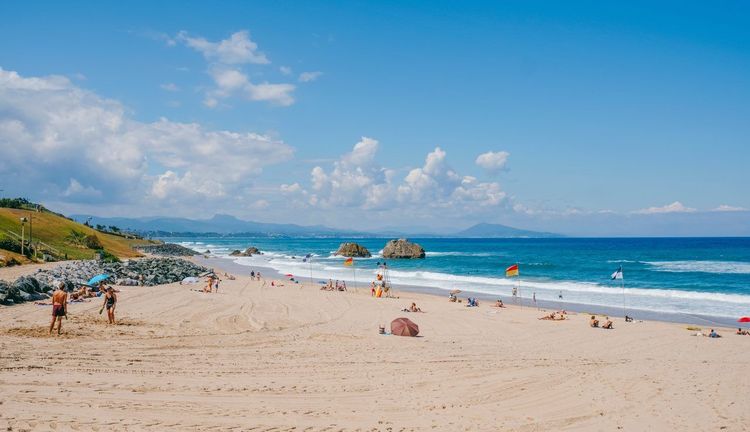
South of the Côte des Basques, the beaches of Marbella and then Milady stretch towards Ilbarritz and Bidart. Marbella, wilder at the foot of its cliffs, mainly attracts experienced surfers. Milady, wide and well equipped, is better suited to a family beach day, and the Cité de l'Océan sits just above.
At the end of the audio-guided sub-tour, you can simply extend your walk south along the coastal promenade, or take a Txik Txak bus if the 3 km from the centre seem long. For a full overview of the region's most beautiful beaches, our article 7 Most Beautiful Beaches in the Basque Country usefully complements this selection with spots beyond Biarritz, towards Guéthary and Bidart.
The Town Centre on Foot: Les Halles, Museums and Old Biarritz
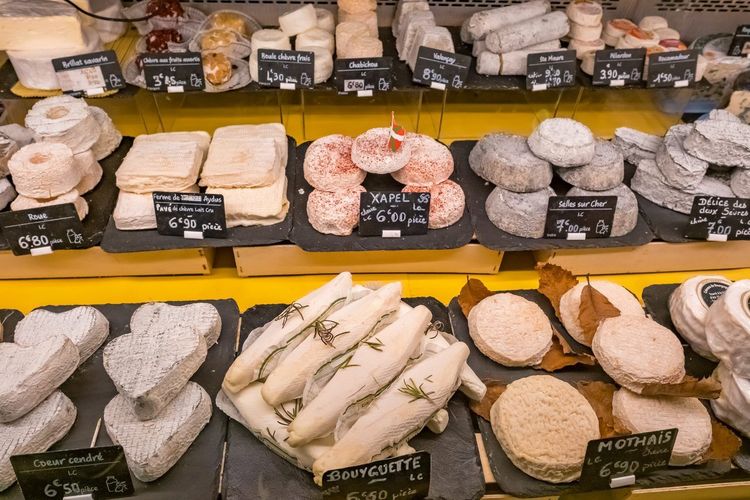
Les Halles de Biarritz and the Covered Market
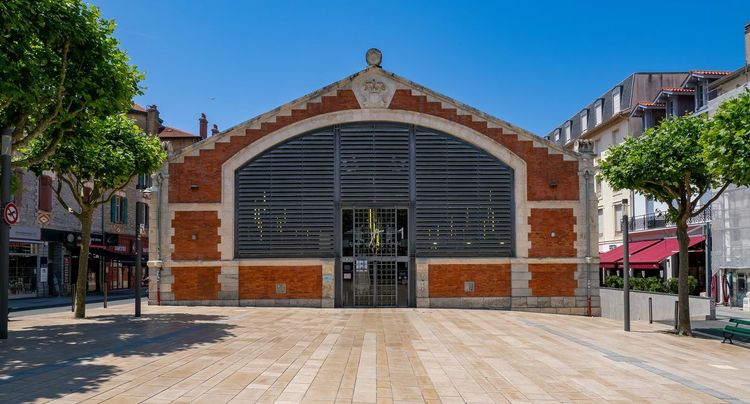
The Halles de Biarritz, built in 1885 a stone's throw from Place Clemenceau, are the belly of the town. Inside, the stalls sell Bayonne ham, Espelette pepper, Basque cake and fish of the day, in an atmosphere that is in full swing from 8am, every morning, even in the depths of winter when the rest of the town slows down.
Around the market, the lanes of old Biarritz are packed with Basque linen shops, espadrilles, pastry shops and café terraces, an area you can cover entirely on foot in a little over an hour if you stroll. The Sainte-Eugénie church, overlooking the Port des Pêcheurs, is worth a detour for its Neo-Gothic architecture, far more discreet than the Hôtel du Palais but a legacy of the same imperial era.
Museums and Culture: Aquarium, Cité de l'Océan, Asiatica Museum
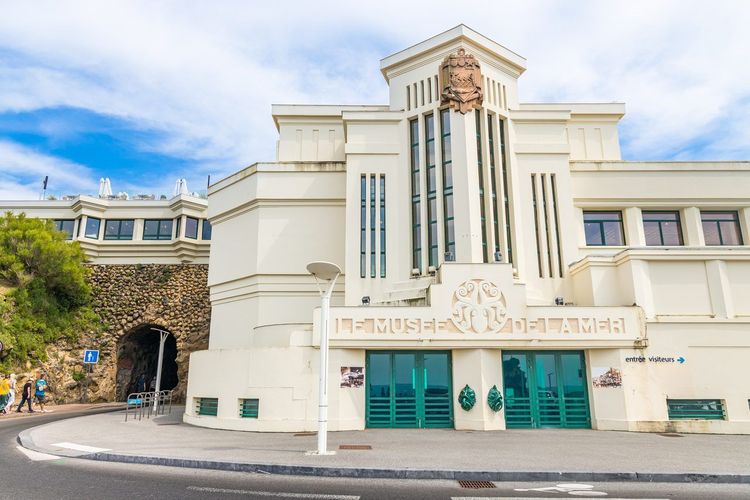
The Biarritz Aquarium, housed in an Art Deco building from 1933 and since expanded, is home to sharks, seals fed at set times and a direct view of the Rocher de la Vierge, just opposite. Allow one to two hours for the visit, a good refuge on gray days.
Further south, near Milady beach (about ten minutes by bus from the centre), the Cité de l'Océan offers a more scientific and interactive approach: wave formation, the history of surfing, marine biodiversity, in a contemporary building with an undulating roof designed by American architect Steven Holl. Combined tickets with the Aquarium let you visit both sites at a reduced rate.
Less well known, the Asiatica museum (1 Rue Guy Petit, 64200 Biarritz, rated 4.5/5 on Google from 365 reviews) houses the private collection of Indian, Himalayan and Chinese art assembled by a passionate collector, an unexpected cultural interlude that few visitors in a hurry take the time to discover. The hushed atmosphere of the rooms contrasts with the bustle of the seafront, just a few hundred metres away.
It is also in this historic centre that the Ryo audio guide lingers on the Belle Époque architecture of the Halles and neighbouring villas: a way to learn while walking rather than reading signs between two museum visits.
Sports and Wellness Activities in Biarritz
Surfing and Lessons for All Levels
Biarritz remains a capital of European surfing, and learning without a car is nothing complicated: the schools, concentrated on the Côte des Basques and the Grande Plage, lend boards and wetsuits and offer group lessons for all levels, often from age 8, at a price that generally runs between 35 and 50 euros per session. The Côte des Basques suits beginners, with long, regular waves; Marbella or Milady attract more experienced surfers. Autumn, less crowded than July-August, often offers the best swell conditions, if you don't mind slightly cooler water.
Golf and Thalassotherapy
For a more relaxed pace, the Golf du Phare, one of the oldest courses in France, opened in 1888, is a few minutes' walk from the town centre, a rarity for a golf course of this renown. The green fee generally exceeds a hundred euros in high season, with equipment rental on site.
On the wellness side, Biarritz is a pioneer: cycling champion Louison Bobet, who popularised modern thalassotherapy in France from the 1960s onwards, long ran a centre here. Several establishments along the seafront now offer seawater treatments and massages, often accessible directly from neighbouring hotels.
Basque Gastronomy Within Walking Distance
Specialities to Taste
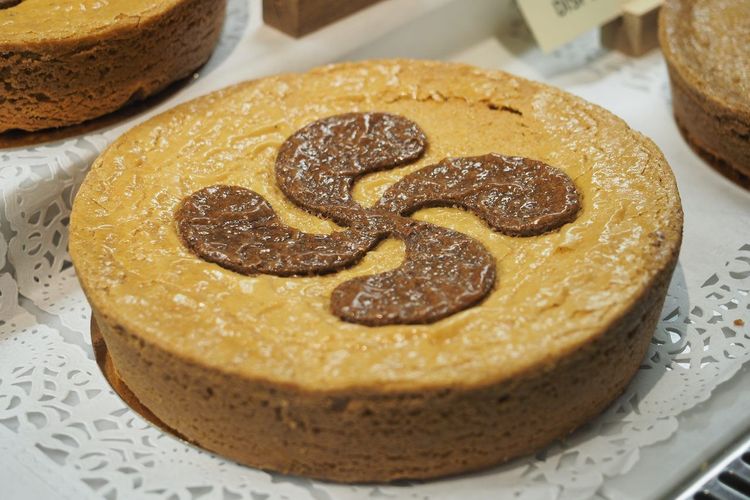
Basque cake, filled with pastry cream or Itxassou black cherry jam, is found in every pastry shop in the centre. Add Bayonne ham, ossau-iraty sheep's milk cheese, chipirons à la plancha, piperade and the Espelette pepper that seasons most local dishes. As for drinks, Irouléguy, the only wine appellation of the French Basque Country, pairs well with these dishes, as does Basque cider poured from a height to make it slightly sparkle.
Our Car-Free Addresses, in the Heart of Town
The best tables are concentrated around the Halles and in the lanes of old Biarritz, within walking distance of most accommodation in the centre. For a quick lunch, a seafood table facing the Port des Pêcheurs lets you eat the day's catch while watching the moored boats. For a fuller dinner, the restaurants around Place Clemenceau serve traditional Basque cuisine, often complemented by a tapas menu inspired by the nearby border. To finish gently, an artisan pastry shop near the Halles is a safe bet for a Basque cake to take away. To refine your choices, our article Top 10 Culinary Specialities of Biarritz details the dishes not to miss.
Car-Free Excursions: Bayonne, Saint-Jean-de-Luz and San Sebastián
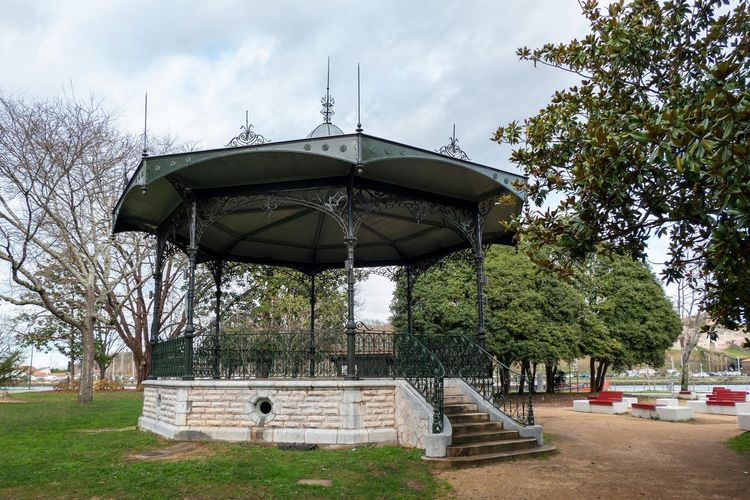
Bayonne, Gateway to the Basque Country
Bayonne can be reached in about ten minutes by TER from Biarritz, or by Txik Txak bus, making it the simplest excursion of all. A former Roman stronghold and later a fortified town, it owes its chocolate-making reputation to Portuguese and Spanish Jews fleeing the Inquisition, who settled in the Saint-Esprit district in the early 17th century with their cocoa know-how. The Cazenave house, founded in 1854, perpetuates this tradition with its frothy chocolate served in a cup, an essential stop in the historic centre.
The Sainte-Marie Cathedral, in the Gothic style, dominates Grand Bayonne, while Petit Bayonne, on the other side of the Nive, lines the quays with tapas bars and the Basque Museum. The ramparts, reworked by Vauban in the 17th century, can be freely walked and offer another perspective on the town. Bayonne is also a rugby town, driven by Aviron Bayonnais, and match days turn the terraces of the centre into a popular celebration.
For eating and sleeping, favour the Saint-Esprit or Petit Bayonne districts, both within walking distance of the station, which avoids any extra transfer. To go further, our article What to See Around Biarritz lists more ideas for getaways accessible by train or bus.
Saint-Jean-de-Luz, Between Beaches and Treats
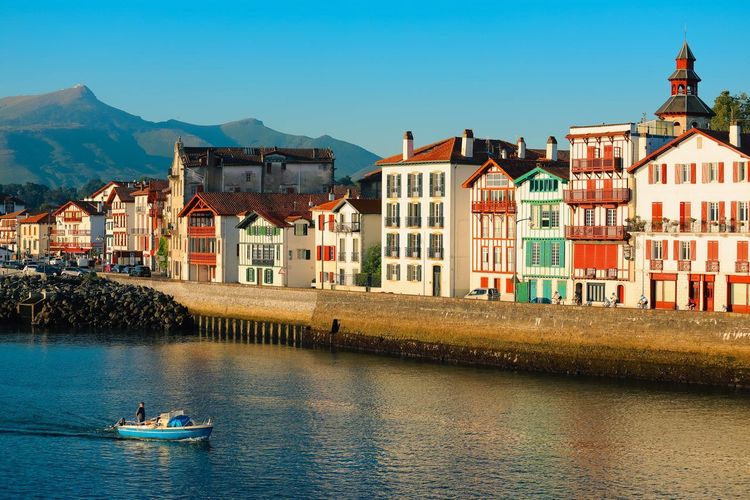
Saint-Jean-de-Luz can be reached in 20 to 25 minutes by TER. The town owes much of its fame to the marriage of Louis XIV and Maria Theresa of Austria in 1660, celebrated in the Saint-Jean-Baptiste church.
In terms of maritime history, the town long lived off whaling and then cod fishing, before becoming a haven for privateers whose ships sailed directly from this port. The Maison Louis XIV, which borders the central square, can be visited and tells the royal episode in detail.
For sweet treats, the Adam house has perpetuated the recipe for Saint-Jean-de-Luz macarons since 1660, an almost obligatory stop on leaving the train. The market hall, open every morning, completes the offer with local produce for a beach picnic. For lunch, seafood tables are concentrated around the port and the Rue de la République; to stay overnight, the pedestrian centre between the station and the bay puts everything within 10 minutes' walk. For the beaches in the area, our article Saint-Jean-de-Luz Beach details the best spots to lay down your towel.
San Sebastián, Spain Within Reach by Train
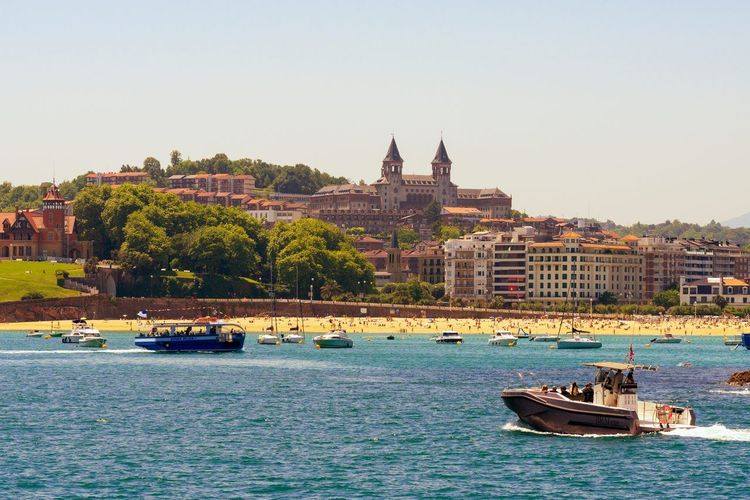
San Sebastián (Donostia in Basque) can be reached in 1h15 to 1h30 from Biarritz: TER to Hendaye, then the little Euskotren train, nicknamed the “Topo”, to the centre. The Spanish city is well worth the detour: La Concha bay, often ranked among Europe's most beautiful urban beaches, and the old town, the Parte Vieja, packed with pintxo bars, offer a striking contrast with Biarritz's more hushed atmosphere.
In the Parte Vieja, the custom is to graze on several pintxos from bar to bar rather than settle in for a full meal, with a glass of txakoli in hand. Surfers will appreciate Zurriola beach, on the other side of the Urumea river, known for waves more powerful than those of La Concha, and panorama lovers will climb Mount Igueldo on the historic funicular. One day is enough for a comfortable round trip, without ever needing a car to cross the border; just bring a valid ID card.
Where to Stay and Eat in Biarritz Without a Car
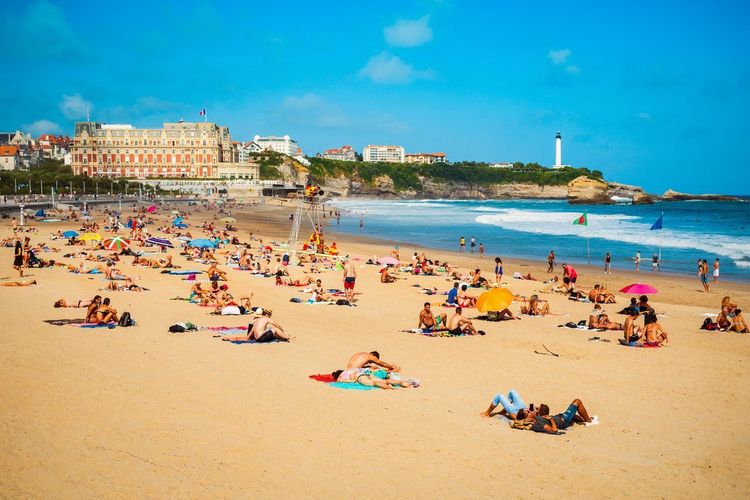
To stay without a car, two districts stand out clearly. The town centre, around the Halles and Place Clemenceau, puts everything within walking distance: beaches, restaurants and shuttle stops are a few minutes away, and it is the most practical option for a first stay. The Grande Plage and Hôtel du Palais area offers a more prestigious setting, with direct sea views, but at higher prices in high season, when rates can double compared with the off-season.
For a calmer stay without giving up walking, the residential districts of the Cinq Cantons or Sainte-Eugénie remain accessible on foot or by bus in about ten minutes from the seafront, far from the summer bustle of the centre. Book early if you are aiming for July or August: the best addresses near the beaches fill up several months ahead.
As for dining, the options are split between the Halles district, where traditional Basque cuisine and budget tapas bars are concentrated, and the seafront, which leans more towards terraces with views and seafood restaurants. A budget-friendly option is to put together your picnic at the Halles and have lunch on the beach. In any case, most of the offer lies within the same area covered by this article, which confirms that an entirely car-free stay works perfectly well in Biarritz.



FAQ
Can you really visit Biarritz without a car?
Yes, easily. The town is compact, served by the Txik Txak network (free shuttles in the centre, regular lines at 1.30 euros) and reachable by direct train from Paris, Bordeaux or Bayonne. Most visitors spend their entire stay without touching a steering wheel, and many leave convinced that a car would mostly have complicated things.
How do you visit Biarritz on foot?
Starting from the centre or the Grande Plage, most of the major sites (Rocher de la Vierge, Hôtel du Palais, Côte des Basques, Halles) are within a 20-minute walk of one another. A Ryo audio-guided tour lets you follow a logical route without having to plan it yourself.
Are there free shuttles in Biarritz?
Yes: free electric shuttles on the Txik Txak network serve the centre of Biarritz, running roughly every 30 minutes on weekdays and Saturdays, with a boosted service in summer. For the train station, the airport or neighbouring towns, regular lines cost 1.30 euros per trip.
What are the 10 must-do things in Biarritz?
The Rocher de la Vierge, the Grande Plage, the Hôtel du Palais, the Côte des Basques, the Port des Pêcheurs, the Biarritz Lighthouse, the Halles, the Aquarium, a surf lesson and a day trip to Bayonne or Saint-Jean-de-Luz make a solid foundation for a first stay, easy to complete in two or three days without a car.
What to do and see in Biarritz in one day?
Focus on the seafront: Grande Plage, Hôtel du Palais, Rocher de la Vierge and Port des Pêcheurs, then finish with the Halles and a Basque lunch in old Biarritz. This is precisely the area covered by the main audio-guided tour, to be explored at a relaxed pace.
What to do in Biarritz when it rains?
The Aquarium, the Cité de l'Océan and the Asiatica museum offer good indoor options, as do the tapas bars and restaurants around the Halles, where the atmosphere stays pleasant even in the rain. Our article What to Do in Biarritz When It Rains details more ideas for gray days.
How many days should you plan to visit Biarritz properly?
Two to three days are enough to cover the essentials of the seafront, the town centre and a day trip to Bayonne or Saint-Jean-de-Luz. With four days or more, adding San Sebastián becomes perfectly comfortable, without rushing.
In Short: Biarritz Is Easy to Discover Without a Car
With a train that drops you at the town's gates, free shuttles in the centre and walking distances measured in minutes rather than kilometres, visiting Biarritz without a car is less a constraint than a comfort. The seafront, the museums, Basque gastronomy and even the excursions to Bayonne, Saint-Jean-de-Luz or San Sebastián follow one another without hunting for a parking space or losing a morning circling the same block.
To organise your itinerary without leaving anything to chance, start the Ryo audio guide to Biarritz at the station or in front of your hotel, and let yourself be carried step by step to the very last audio.
À lire également