© Shutterstock
 Votre guide Ryo
Weekend in Cahors 2026: Medieval Heritage, Vineyards and the Lot Valley
A 14th-century fortified bridge spanning the Lot with three crenellated towers, a cathedral crowned by two Byzantine domes sixteen metres in diameter, and lanes so narrow you walk in the shade even at the height of summer: Cahors is like no other prefecture in the South-West. To plan a weekend in Cahors that doesn't turn into a race against the clock, keep one thing in mind: the city's essential treasures are packed into a few hundred metres, encircled by a bend in the Lot. Our Ryo guide to the must-sees of Cahors complements this itinerary if you want to explore each monument in greater depth.
Over two days, you'll climb mont Saint-Cyr to take in the loop of the Lot, taste the malbec from the Cahors vineyard at the Château de Haute-Serre, set off on a river trip, and end the evening over a plate of Quercy cuisine at Chez Suzanne or L'O à la bouche. The historic centre is entirely walkable, from the cathedral market to the secret gardens tucked between the private mansions. And if you're arriving from Toulouse or Montauban, a Ryo audio-guided tour can turn the journey into the first leg of your stay. Budget, transport, ideal season, excursions to Saint-Cirq-Lapopie: everything you need for a successful weekend is right here.
Saturday Morning: Heritage and a Stroll Through the Old Town of Cahors
The old town wakes up slowly on a Saturday morning. It's the right time to explore it, before the tour groups arrive, between 9am and noon.
The Pont Valentré and the Cathédrale Saint-Étienne
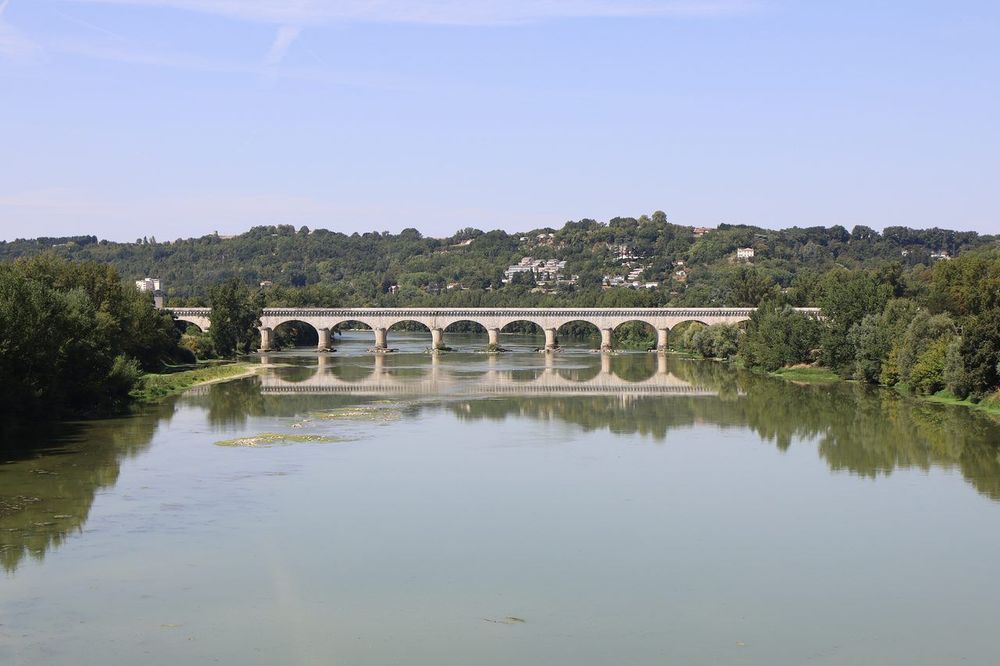
Listed as a UNESCO World Heritage Site in 1998 as part of the routes of Saint-Jacques-de-Compostelle, the Pont Valentré remains the absolute symbol of Cahors. Its foundation stone was laid in 1308, and it took seventy years to complete, in 1378. Its three square, crenellated towers fitted with machicolations rise some forty metres above the water. Look up at the central tower: in 1879, during restoration work, architect Paul Gout had a small devil carved into it, a nod to the legend of a pact struck between the master builder and Satan. Cross it early, when the light still grazes the Lot: you'll have the bridge almost to yourself.
About fifteen minutes' walk away, the Cathédrale Saint-Étienne commands attention with its two Byzantine-style domes, 32 metres high. Its high altar was consecrated in 1119 by Pope Calixtus II. The north portal, sculpted after 1140, depicts the Ascension of Christ surrounded by angels and apostles, with scenes from the martyrdom of Saint Stephen. Don't miss the Flamboyant Gothic cloister, rebuilt from the late 15th century onwards: it is one of the quietest corners in the city.
To connect the two without getting lost in the maze of lanes, follow the route described in our Ryo walk through the lanes of Cahors, which strings together the bridge, the cathedral and the medieval alleys in an easy loop you can do in a morning.
Medieval Houses, the Arc de Diane and the Gambetta Statue
Heading up towards place Henri-IV, the Maison de Roaldès displays a turret and mullioned windows characteristic of the late Middle Ages. Tradition holds that King Henri IV stayed here during the Wars of Religion, hence the name of the neighbouring square. Around it, the half-timbered façades and carved doorways of the Badernes quarter are worth slowing down for.
Continue to the Arc de Diane, the main surviving remnant of the baths of Divona Cadurcorum, the Gallo-Roman city that preceded Cahors. The name Divona, of Gaulish origin, means 'divine' and refers to the city's sacred spring. As for the name Arc de Diane, it comes from an old tradition that saw in these ruins a temple dedicated to the goddess.
Finish with the statue of Léon Gambetta, a local son born in Cahors in 1838, installed near the boulevard and the school that bear his name. The republican tribune is depicted as an orator, true to the image preserved by the Third Republic.
Musée Henri Martin and the Secret Gardens of Cahors
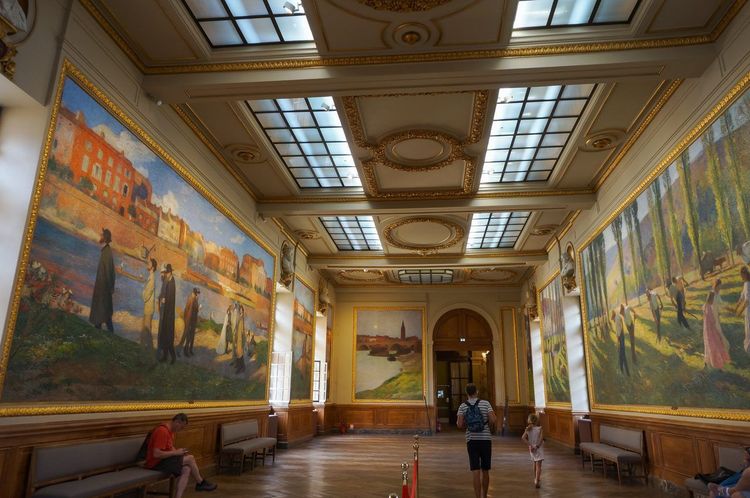
Housed in the former episcopal palace from the early 19th century, the Musée Henri Martin reopened in May 2022 after six years of renovation, with a new wing designed for the painter's large-scale decorative works. Born in Toulouse, Henri Martin painted a large part of his output in the Quercy, particularly around his house in Labastide-du-Vert. The museum holds around 10,000 objects: Greco-Roman archaeology, Egyptian antiquities, paintings from the 16th to the 19th century, and the most significant collection of Henri Martin's works. Opening hours vary by season, so check them before building your morning around a visit.
Allow one to one and a half hours: it's a human-scale museum, designed for a leisurely wander.
On leaving, set off in search of the secret gardens of Cahors (Rue du Château du Roi, 46000 Cahors, rated 4.3/5 on Google from 23 reviews). Around twenty small gardens inspired by the Middle Ages are scattered in courtyards and hidden corners of the old town. Entry is free, and the pleasure lies precisely in discovering them around a bend in a lane.
Saturday Afternoon: Covered Market, Vineyards and Nature Around Cahors
A change of pace in the afternoon: the market halls, then the countryside surrounding the city.
The Covered Market and the Halles de Cahors
On Wednesday and Saturday mornings, the market in Cahors sets up on the cathedral forecourt and in the surrounding streets. The tourist office ranks it among the 25 most beautiful markets in France. Note that during work in the city centre it has been temporarily relocated to the allées Fénelon: check before you visit. The Halles de Cahors, right in the heart of the city, take over for the rest of the week with Quercy goat's cheese, foie gras, Lot walnuts and, in winter, truffles.
Only have Saturday to sample local produce? Put together a cheese board with a bottle of malbec and head for a picnic on the banks of the Lot. The view is well worth a sit-down meal.
The Lot Valley and the Oppidum de l'Impernal: Viewpoints and Walks
Cahors sits in such a tight meander of the Lot that the city occupies almost a peninsula. To grasp this geography at a glance, take the path up mont Saint-Cyr, which starts near the city centre. The climb is short but steep towards the top, and you'll be rewarded at the summit with a panorama over the rooftops of the old town, the pont Valentré and the vineyard slopes.
If you have a car, push on to Luzech, about twenty minutes to the west. The village also sits in a very tight loop of the Lot, dominated by the oppidum de l'Impernal, a fortified plateau occupied by the Gauls before the Roman conquest. From the summit, the meander reads like a map.
Château de Haute-Serre: Visit and Wine Tasting in Cahors
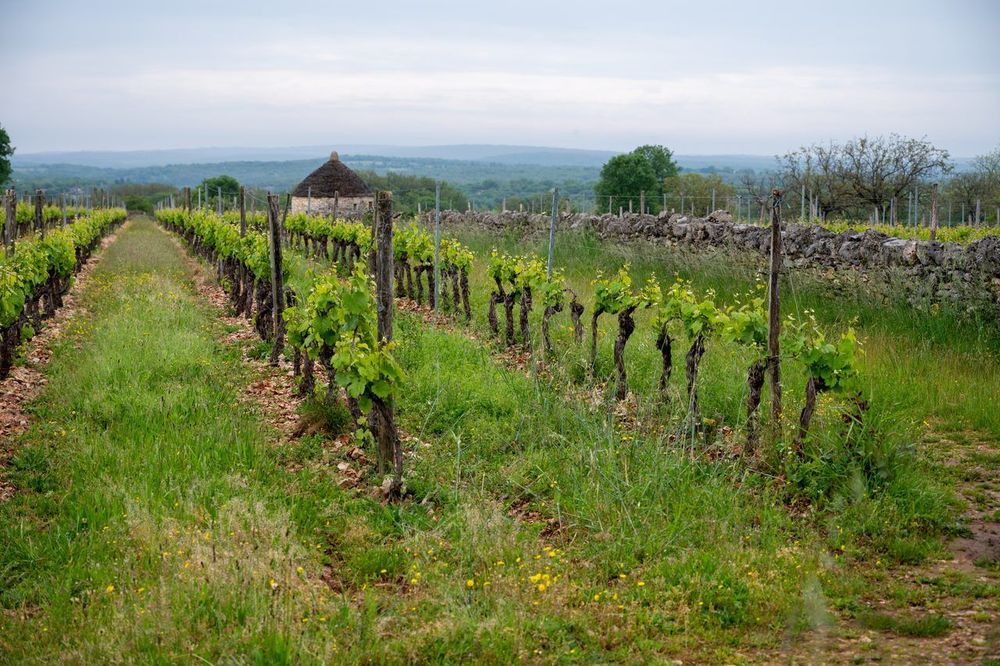
About twenty minutes by car, the Château de Haute-Serre (Lieu-dit Haute-Serre, 46230 Cieurac, rated 4.8/5 on Google from 117 reviews), in Cieurac, belongs to the Vigouroux family. Georges Vigouroux bought it in the 1970s and replanted a vineyard that had been abandoned since the phylloxera epidemic of the late 19th century, on a causse that many considered too arid. The gamble paid off: the estate is now among the best-known in the appellation. It produces full-bodied malbecs, heirs to the 'black wine' that Cahors was already exporting to England in the Middle Ages.
The visit ends with a tasting, and since 2008 the estate has housed a restaurant in its wine cellars. At weekends, especially between May and September, book in advance.
Sunday: River Cruise on the Lot and a Romantic Escape
Sunday unfolds at a slower pace, between the river and the countryside that surrounds Cahors.
Romantic Cruise on the Lot
Seeing Cahors from the water remains one of the most relaxing ways to discover it. Pleasure boats leave from the quays in season for commented trips of about an hour, with views of the pont Valentré and the limestone cliffs framing the city. For centuries the river was the highway for Cahors wine: flat-bottomed gabares carried it down to Bordeaux before the arrival of the railway.
If you're travelling as a couple, take the first morning departure: the water is smooth, the light is low and the other passengers are few. In July and August, book the day before, as Sunday departures fill up quickly.
Adventure and Nature for Two in the Valley
For a more active morning, head to Kapalca (Le Bourg, 46090 Vers, rated 4.8/5 on Google from 1,360 reviews), based in Vers on the banks of the Lot, about twenty minutes from Cahors. The centre offers canoe descents and other guided outdoor activities, with packages for beginners and more experienced paddlers alike. A relaxed descent easily fills half a day, with a return shuttle depending on the package.
Book ahead, especially on Sundays, the most popular day.
One Last Stroll Before Heading Home
Before hitting the road, keep an hour with no plans: the quays of the Lot, the terraces on the allées Fénelon, a wine shop to pick up a bottle of malbec. It's often this moment, between two bags, that leaves the clearest memory of a romantic stay. To revisit what you've seen, our Ryo guide to the must-sees of Cahors covers every monument encountered over the weekend in detail.
Extending Your Stay: Saint-Cirq-Lapopie and the Lot Valley
A third day, or a Sunday without a cruise? The valley upstream offers several easy excursions, even without a car.
Saint-Cirq-Lapopie via the Towpath
Listed among the Plus Beaux Villages de France, Saint-Cirq-Lapopie (Le Bourg, 46330 Saint-Cirq-Lapopie) clings to a cliff above the Lot. From Cahors, the liO 889 bus reaches Bouziès in about thirty minutes for €2. From there, the towpath follows the river for about four kilometres to the village, part of it carved directly into the rock. It is one of the most beautiful walks in the valley.
Grotte du Pech Merle and Stops in Toulouse or Montauban
Nearby, the grotte du Pech Merle (Grotte du Pech Merle, 46330 Cabrerets, rated 4.7/5 on Google from 3,522 reviews) can be visited with a guide over about an hour, through seven chambers decorated with prehistoric paintings. As places are limited, book in advance.
Arriving from Toulouse the evening before? The Ryo audio-guided tour of Toulouse covers 23 audio stops over 6.5 km, or 2h40 of walking through the pink city — a great way to open the weekend with a well-filled evening.
Where to Eat in Cahors: Top Addresses and Local Specialities

Cahors is as much to be savoured as it is to be visited, between neighbourhood bistros and more refined tables. The specialities are easy to sum up: foie gras, Quercy truffle in winter, farm-reared lamb, rocamadour goat's cheese and a glass of malbec to go with it all.
Chez Suzanne and L'O à la Bouche
Chez Suzanne serves generous bistro cooking rooted in Lot produce, with foie gras and Quercy terroir dishes on the chalkboard. The room is small and often full at weekends: book two or three days ahead, especially for Saturday evening. Ask about the daily specials — they change with the market.
On the allées Fénelon, L'O à la bouche takes a more refined approach, somewhere between bistronomie and seasonal produce. The address lends itself well to a romantic dinner: unhurried service, soft lighting and a wine list that gives pride of place to small producers from the appellation.
Bonnie and La Récréation
For a light lunch or a Sunday brunch, Bonnie offers simple, fresh cooking with daily specials on the chalkboard, in a bright setting that contrasts with the stone façades of the old town.
About forty minutes to the north-west, in the village of Les Arques, La Récréation (Le Bourg, 46250 Les Arques, rated 4.8/5 on Google from 626 reviews) occupies the former village school, converted into a restaurant with a terrace under the trees. The address is well worth the trip for a Sunday lunch away from the bustle, with cooking that follows the seasons.
Where to Stay in Cahors: Hotels and Romantic Addresses
The choice is straightforward: sleep in the old town to do everything on foot, or head a few kilometres out for a more rural setting.
Accommodation in the City Centre of Cahors
The Hôtel Terminus, a short walk from the station, occupies an early 20th-century building with carefully considered décor. Its restaurant rounds off a stay that bets as much on the table as on heritage.
More straightforward, the Divona Hôtel Cahors, near the boulevard Gambetta, suits you if you want to stay a few minutes' walk from the cathedral without breaking the bank. Rates climb in summer: compare prices between June and September, as shoulder-season dates are often much more affordable.
A third option: bed-and-breakfasts tucked into the lanes of the centre. They often offer good value for money and a more personal welcome, with fewer services than a hotel.
Le Moulin de Brunard, a Romantic Gîte Near Cahors
For a more intimate night, the Moulin de Brunard (Brunard, 46000 Cahors), a former mill converted into a gîte a few kilometres from Cahors, plays the quiet card: water, woodland and meadows in place of city noise. It's the kind of address you choose to wind down after a day spent exploring monuments and the market.
Capacity is limited: book early, especially in spring.
How to Get to Cahors and Get Around
From Toulouse, the train takes about an hour, with one train per hour at peak times and one every two hours during quieter periods. A useful tip: the tourist office notes that liO regional trains cost €1 on the first weekend of the month (excluding July and August). The station is ten minutes' walk from the pont Valentré, making a car-free weekend perfectly feasible.
The train also stops at Montauban. With two hours to spare, the Ryo audio-guided tour of Montauban covers 18 audio stops over 2.8 km (1h10 of walking) through 'the pinkest of pink cities' — an ideal stopover on the way there or back.
By car, allow around 1h15 from Toulouse via the A62 then the A20. Park on the outskirts of the historic centre, which is largely pedestrianised; the car parks near the allées Fénelon are the most convenient.
Once there, forget the car: from the pont Valentré to the musée Henri Martin, everything is within twenty minutes on foot. The Evidence urban buses are free, and the liO coaches serve the valley for €2 per journey. Only the Château de Haute-Serre, Luzech and Kapalca truly require a vehicle.
Budget for a Weekend in Cahors
Cahors remains a reasonable destination, especially compared with the Lot's major tourist sites. Here are the costs to plan for for two people:
- Transport: the train from Toulouse becomes almost free on the first weekend of the month thanks to the liO €1 fare; on the ground, the Evidence buses are free and the liO coaches to the valley cost €2 per journey.
- Sightseeing: the pont Valentré, the cathedral, the Arc de Diane and the secret gardens are all free to enter. The musée Henri Martin, the river cruise and the tasting at Haute-Serre are paid: check up-to-date prices on their websites.
- Meals: the market and the halles let you eat very well for little money at lunchtime, leaving the budget free for a proper dinner on Saturday evening.
- Accommodation: this is the most variable item, ranging from city-centre bed-and-breakfasts and hotels to a countryside gîte. Booking outside July and August makes a significant difference to the bill.
One tip: group paid activities into a single day and dedicate the other to walking, the market and the free viewpoints.
When to Go and How Long to Stay in Cahors
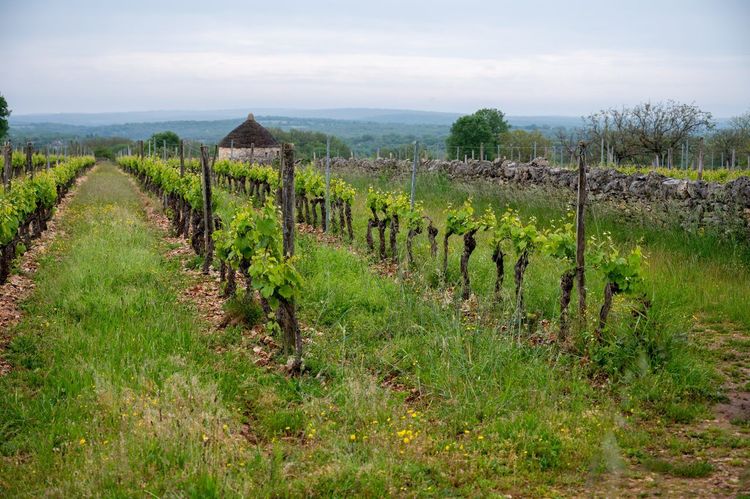
Spring, from April to June, offers the best compromise: mild temperatures, secret gardens in bloom and vines coming back to life, without the sometimes oppressive heat of the causse in high summer. Autumn, in September and October, adds the colours of harvest time and beautiful light on the Lot.
One day is enough to see the essential highlights of the centre, including the pont Valentré, the cathedral and the museum. But a proper weekend changes everything: it makes room for the Lot Valley, the vineyards and an outdoor activity, without turning the trip into a marathon. Many visitors make do with a one-hour stop between Saint-Cirq-Lapopie and Rocamadour. That underestimates the historic centre, which deserves a full morning on its own.
FAQ
How many days should you plan for a weekend in Cahors?
Two days are enough: Saturday for the city-centre heritage and the vineyards, Sunday for the Lot Valley and a more relaxed activity. With just one day, focus on the pont Valentré, the cathédrale Saint-Étienne and the musée Henri Martin, then keep the afternoon for the market or mont Saint-Cyr. A third day lets you push on to Saint-Cirq-Lapopie and the grotte du Pech Merle.
Is Cahors a good destination for a romantic weekend?
Yes, it is actually one of its strongest suits: a human-scale city, quiet medieval lanes outside summer, a boat trip on the Lot, a tasting for two at the Château de Haute-Serre, and a countryside gîte such as the Moulin de Brunard. Cahors doesn't have the reputation of the big romantic destinations, and that's a good thing: fewer crowds, more tranquillity. For dining, L'O à la bouche or Chez Suzanne are both well suited to a careful dinner.
How do you get to Cahors from Toulouse without a car?
The train connects Toulouse to Cahors in about an hour, with regular departures including weekends, and a liO fare of €1 on the first weekend of the month outside summer. From the station, the historic centre is walkable: allow ten minutes to the pont Valentré. For the valley, the liO 889 bus reaches Bouziès in around thirty minutes, the starting point of the towpath walk to Saint-Cirq-Lapopie.
What is the best time to visit Cahors?
Spring and early autumn offer the best balance between pleasant weather and moderate crowds. Summer, very busy and sometimes scorching on the causse, suits those who enjoy boat trips and canoeing most. Winter, quieter, puts the spotlight on gastronomy, with the Quercy truffle leading the way. Harvest time, generally in September, adds an extra draw for wine lovers.
What should you see first in Cahors if you only have one day?
In order: the pont Valentré early in the morning, the cathédrale Saint-Étienne and its cloister, then the Maison de Roaldès and the Arc de Diane on the way up to the musée Henri Martin. Finish with the secret gardens and the market if you come on a Wednesday or Saturday. All these sites are less than fifteen minutes on foot from one another. If you have time left, climb mont Saint-Cyr for a final panorama.
Where should you stay in Cahors for a romantic break?
Two options depending on the atmosphere you're after: the Hôtel Terminus in the city centre, for its character and restaurant, or the Moulin de Brunard, a few kilometres away, for a countryside setting by the water. The first suits you if you want to do everything on foot; the second if you prefer peace and quiet after sightseeing. For a spring or autumn weekend, book two to three weeks in advance.
Conclusion: Making the Most of Your Weekend in Cahors
A weekend in Cahors fits into a compact but rich format: medieval heritage on Saturday morning, vineyards and viewpoints in the afternoon, river and nature on Sunday. This compactness, rare for a prefecture, makes Cahors just as well suited to a romantic break as to a spontaneous escape with friends.
Before you leave, revisit our Ryo walk through the lanes of Cahors to map out your walking itinerary. And if your train passes through Montauban, make the most of it: its Ryo audio guide takes just over an hour to follow — the perfect length for a well-chosen connection.
À lire également