© Shutterstock
 Votre guide Ryo
Things to Do in Chartres in 2026: 15 Must-Have Experiences
Just 90 minutes from Paris, Chartres still lives in the shadow of its cathedral, whose two asymmetrical spires have dominated the Beauce plain for eight centuries. What is there to do in Chartres when you only have a day or a whole weekend? The city concentrates a UNESCO-listed Gothic heritage, an old quarter of half-timbered houses clinging to the banks of the Eure, and every evening from April to January, a light show projected for free onto the facades of the historic centre.
From the largest crypt in France to a Renaissance staircase hidden in a narrow lane in the lower town, and boat rides along the river, this selection of 15 places and experiences covers everything from a quick visit to an extended stay with an excursion to the château de Maintenon. Plenty to organise a romantic outing, a weekend with friends, or a simple stopover on the road through the Beauce, with a few tips for rounding off the evening once night has fallen.
1. Chartres Cathedral (Notre-Dame de Chartres)
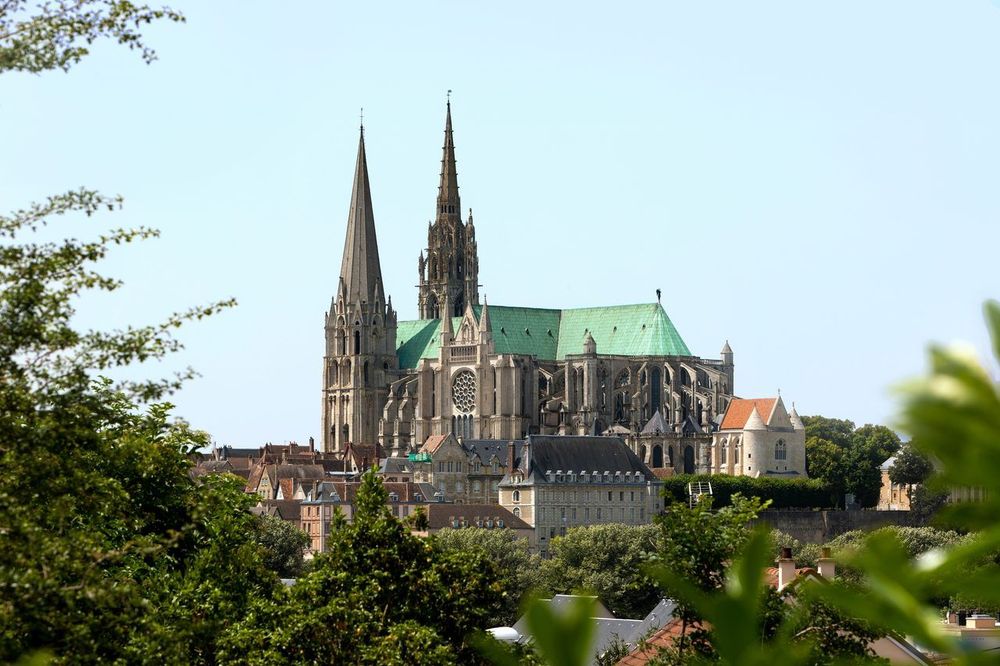
The cathédrale Notre-Dame de Chartres (16 Cloître Notre-Dame, 28000 Chartres, rated 4.8/5 on Google from 19,640 reviews) is the reason the city appears on most tourist itineraries in France. Listed as a UNESCO World Heritage Site as early as 1979, and the first major Gothic cathedral to receive that distinction, it has survived eight centuries without major destruction — which explains the exceptional preservation of its medieval stained-glass windows: nearly 2,600 m² of period glazing, the best-preserved ensemble in the world. The famous blue of Chartres, obtained through a glass-colouring process still not fully understood by researchers, remains one of the most closely guarded technical mysteries of the Middle Ages.
The main Gothic structure was rebuilt in fewer than thirty years after the fire of 1194, a pace that was extraordinarily rare at the time and gives the building a stylistic unity that few cathedrals possess. The two façade towers, however, tell two very different stories: the old Romanesque bell tower, plain and understated, reaches approximately 105 metres, while the new tower — rebuilt by architect Jehan de Beauce after the fire of 1506 — rises to around 113 metres in a decidedly more ornate Flamboyant Gothic style. On the nave floor, a labyrinth roughly 13 metres in diameter traces a path that pilgrims once walked on their knees. It is only fully visible on certain days, when the chairs that normally cover it are moved aside.
Beneath the building lies the crypt, the largest in France and one of the largest in the world, with around 250 metres of Romanesque galleries connecting the two towers. Here you will find the Puits des Saints-Forts and the statue of Notre-Dame de Sous-Terre, long a pilgrimage destination. It can only be visited in a guided group: tickets are available from the tourist office, which also offers candlelit evening tours in season. You can also climb the roughly 300 steps of the north tower for a panoramic view over the Beauce and the rooftops of old Chartres. The ascent is demanding and access may be suspended in bad weather, but the view is worth the effort, especially late in the day when the light skims the wheat fields as far as the eye can see.
If you take away just one practical tip: arrive before 10 a.m. to avoid the organised tour groups that flood the nave mid-morning, and leave time for the exterior. The three sculpted facades bring together more than 1,500 statues and figures, from the 12th-century Royal Portal to the 13th-century side porches — an ensemble that rewards slow, careful observation and good binoculars for the upper registers.
2. The Vieux Chartres and Its Half-Timbered Houses
Walking down from the cathedral plateau towards the Eure valley transports visitors into a completely different setting. The Vieux Chartres, around the Rue de la Tannerie and the Rue du Massacre, preserves a cluster of half-timbered houses, some dating back to the Middle Ages, a legacy of the tanners and cloth merchants who once worked the nearby river.
The leaning facades, the jetties, and the low doorways make up a streetscape that has changed little since medieval times. Many of these houses now contain artisans' workshops or small galleries, allowing visitors to step inside discreetly and admire the original timber frames. Rue Chantault, one of the most photographed streets in the city, lines up colourful facades and is home to the oldest house in Chartres, a Romanesque dwelling from the 12th century. A little further on, on Place de la Poissonnerie, the house known as the 'Maison du Saumon' is recognisable by its 16th-century carved sign.
Between the upper and lower town, movement is via the 'tertres', those steep stone staircases that cut through gardens and ancient walls. The Tertre Saint-Nicolas or the Tertre de la Poissonnerie offer upward-looking views of the cathedral that you will not find on any postcard. Wear sturdy shoes: the cobblestones are uneven, and the gradients are steeper than they appear from the forecourt.
A Ryo audio-guided tour marks out this district with commentary on each notable building, a practical way to miss nothing without having to look up information yourself. Allow a leisurely hour to walk through the entire neighbourhood, more if you stop in the antique shops that have set up here in recent years.
3. The Banks of the Eure and the Saint-André District
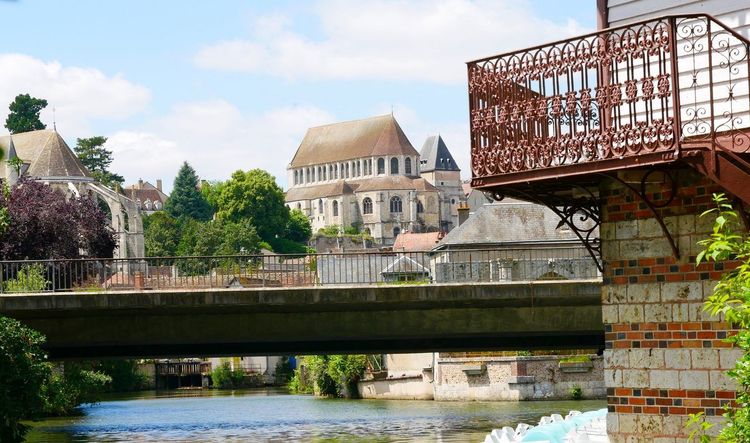
The Eure flows through Chartres in several branches, creating islands and footbridges that give the city centre the feel of a small Beauce Venice. Along the banks of the Eure, between the Pont Bouju and the Saint-André district, old washhouses and tan mills bear witness to the industrial activity that animated the river until the 19th century.
The restored tan mill now houses an exhibition space and a viewing point over the river. The landscaped riverbanks make for an effortless stroll, punctuated by benches and small private gardens that slope down to the water's edge. In the late afternoon, the light filtering through the foliage lends this corner of the city a tranquillity far removed from the bustle of the cathedral forecourt.
The Saint-André district, long a working-class area, has undergone a gradual renovation that has preserved its character without turning it into a frozen stage set. This is also where several cafés and waterside restaurants with terraces are clustered — a pleasant option for a lunch break between visits. To complete the walk, return along the opposite bank: the full circuit, from the Pont Bouju to the collegiate church and back, takes just under an hour and remains flat, making it one of the few walks in Chartres that is suitable for pushchairs.
4. The International Stained Glass Centre

Housed in the Cellier de Loëns, a former 13th-century wine cellar belonging to the cathedral chapter, the Centre international du vitrail (5 Rue du Cardinal Pie, 28000 Chartres, rated 4.1/5 on Google from 272 reviews) explores a craft directly linked to the neighbouring monument.
The temporary exhibitions, renewed each year, present contemporary works alongside historical pieces, offering a useful counterpoint to the medieval windows seen just beforehand in the cathedral. The building itself, with its inverted ship's-hull timber framework and three vaulted naves, deserves as much attention as the stained glass on display.
Stained-glass discovery workshops are offered on a regular basis, with prior booking required: glass painting, lead assembly, and introduction to grisaille depending on the session. It is an activity that appeals particularly to families looking for something more hands-on after several hours of conventional heritage sightseeing. The centre's shop, specialising in publications on stained glass and works by glass craftspeople, is also one of the best addresses in the city for a souvenir that is not a fridge magnet.
5. The Queen Bertha Staircase
At 35 Rue des Écuyers, in the lower town, the escalier de la Reine Berthe (35 Rue des Écuyers, 28000 Chartres, rated 4.5/5 on Google from 17 reviews) is a small treasure that many hurried visitors overlook. It is a spiral staircase turret grafted onto a 16th-century half-timbered house, carved in an exuberant Renaissance style and listed as a historic monument since 1889.
The name refers to Berthe de Bourgogne, widow of Eudes I of Blois, Count of Chartres, who remarried in 997 to King Robert the Pious. The local legend is persistent, but the chronology does not hold up: the house postdates her by a good five centuries. The building actually served as the consuls' house from 1560 until its sale as national property in 1792, before inheriting this royal nickname.
Move in close to the facades to read the detail of the carvings: figures in 16th-century costume, plant motifs, and, beneath the windows, strange fantastical creatures that the people of Chartres cheerfully describe as crocodiles with rabbit ears. The interior is not open to visitors, but the narrow lane offers an ideal photographic framing in late morning, when the sun lights up the carved timber without flattening it.
6. The Chartres Museum of Fine Arts
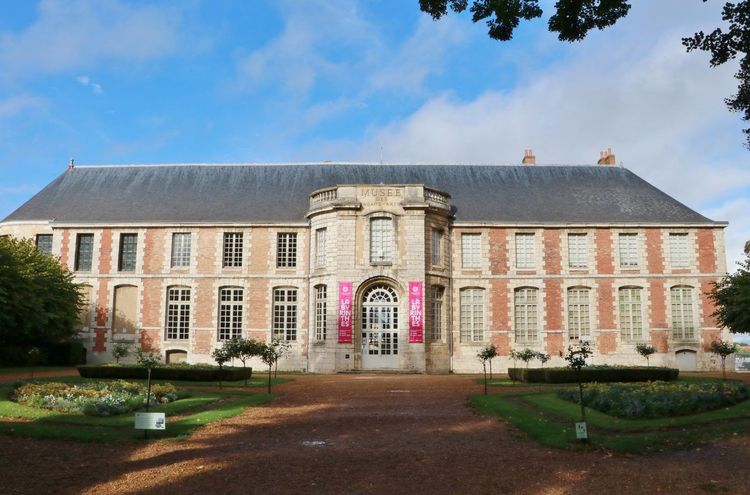
Housed in the former bishop's palace, right behind the cathedral chevet, the Musée des Beaux-Arts de Chartres (29 Cloître Notre-Dame, 28000 Chartres, rated 4/5 on Google from 253 reviews) occupies a 17th- and 18th-century building that is worth a visit in its own right, with its wood-panelled rooms and grand staircase.
The collections span a broad period, from the 16th to the 20th century, with a remarkable group of painted enamels by Léonard Limosin, a master enameller from Limoges working in the 16th century, as well as Flemish paintings and a section devoted to antique furniture. The tapestry room, less visited than the rest, is nonetheless worth lingering in for the quality of the textile details.
In practical terms, the museum is closed on Mondays and admission is free outside temporary exhibition periods; during those periods, expect around €7 for a full-price ticket and €3.50 for a reduced one. A major renovation of the bishop's palace is scheduled for the end of the decade, with an extended closure in prospect: all the more reason to enjoy the rooms in their current configuration while they are accessible.
From the museum gardens, freely accessible, the view over the Eure valley and the cathedral chevet ranks among the finest free vistas in the city. A bench in the shade of a lime tree offers an ideal vantage point for a breather between stages of the visit.
7. The Compa, the Agricultural Heritage Museum
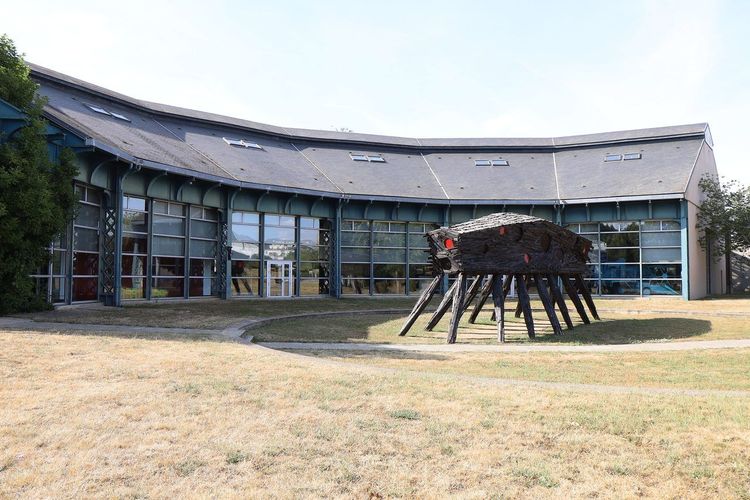
Installed in a former railway roundhouse with an impressive metal structure, the Compa (Pont de Mainvilliers, 28000 Chartres) tells the story of the Beauce, one of the most productive cereal-growing regions in Europe.
The collections of agricultural machinery, from early ploughs to combine harvesters, help explain why this featureless plain has shaped the economy and landscape of the entire Eure-et-Loir department. Educational panels also address contemporary issues in intensive farming, from irrigation to seeds — an angle rarely tackled in conventional museums.
The building itself, with its industrial circular timber frame designed to rotate locomotives, often surprises visitors more than the exhibition content. The museum is closed on Mondays and observes a lunchtime break of around an hour, which is worth checking before you go if you plan to arrive in the middle of the day. Allow an hour and a half for a full visit, a little more if you are travelling with children who are curious about the full-size machines displayed outside. The site can be reached on foot from the centre in about twenty minutes along the Eure, or in a few stops by city bus.
8. The Church of Saint-Pierre
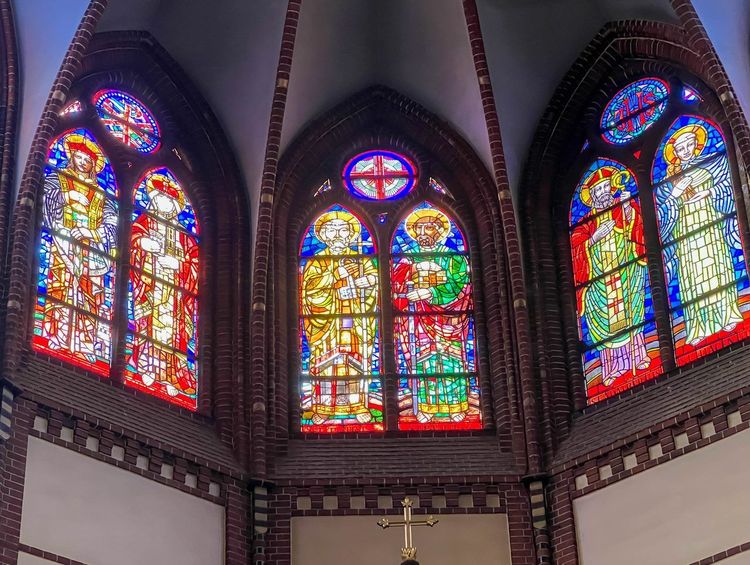
Less photographed than the cathedral, the église Saint-Pierre nonetheless preserves a group of 13th- and 14th-century stained-glass windows of comparable quality, in a noticeably more intimate atmosphere.
Once the Benedictine abbey church of Saint-Père-en-Vallée, it combines a massive Romanesque bell-tower porch, a remnant from the 11th century, with a Gothic nave raised in subsequent centuries. The high windows, where figures of apostles and saints unfold against grisaille backgrounds, benefit from natural light that changes completely depending on the time of visit. Unlike the cathedral, there is no crowd at the entrance, allowing unhurried observation of the details.
If you are visiting Chartres on a Sunday morning, a service is sometimes held there: an opportunity to hear the organ in its original context rather than during a purely tourist visit. The small square alongside, almost always deserted, makes a pleasant stop to catch your breath before heading back up to the upper town.
9. The Collegiate Church of Saint-André
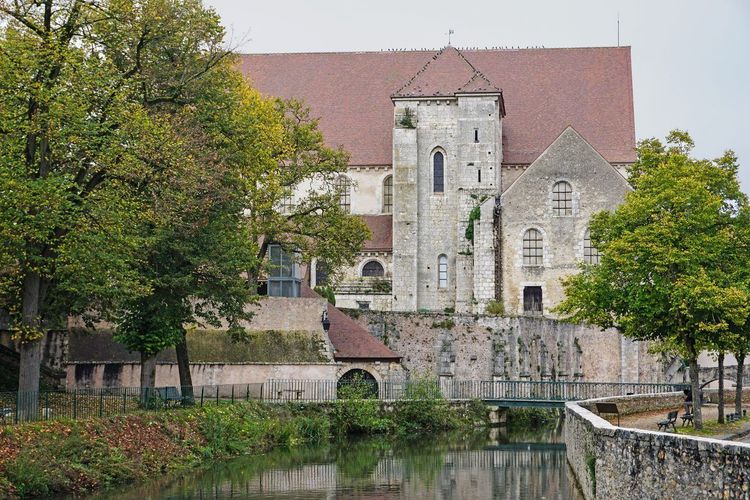
A stone's throw from the Eure, the collégiale Saint-André (Place Saint-André, 28000 Chartres, rated 4.5/5 on Google from 282 reviews) presents a truncated silhouette that intrigues every passer-by: its choir, once built overhanging the river on a series of arches, disappeared in the 19th century.
The history is worth knowing. In 1805, the Lady Chapel built over the water collapsed; the choir, weakened, was demolished in 1827. A fire ravaged the building in 1861, destroying the roof structure and leading to the demolition of the west gable and its 15th-century rose window. What remains is mainly the Romanesque sections from the 12th century, closed off by a rather blunt straight wall that creates a striking contrast with the ancient arches.
Deconsecrated, the collegiate church now serves as an exhibition space and concert hall, its bare volume being appreciated by organisers of cultural events and contemporary art installations. Go in if the door is open: the programme changes frequently and admission is generally free during exhibitions. This hybrid space illustrates well the way Chartres has chosen to repurpose its heritage rather than freeze it in place.
10. Chartres en Lumières, the Night-Time Show
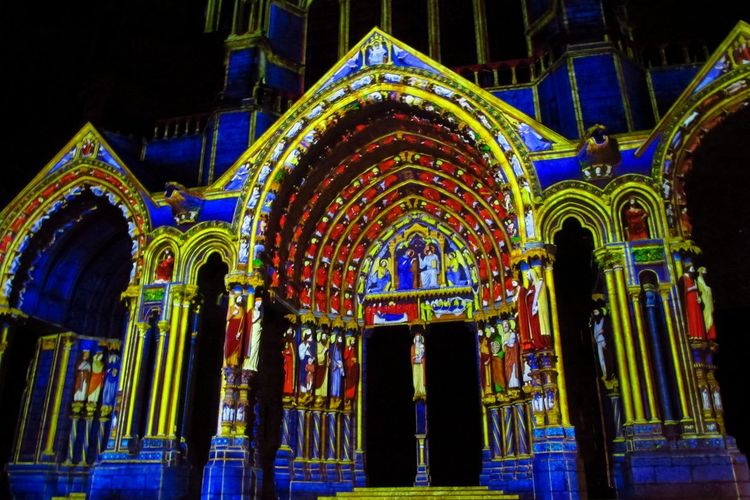
Every evening at nightfall, Chartres en Lumières transforms the monuments of the city centre into giant projection canvases. The 2026 edition, entitled 'L'éclat du patrimoine', runs from 11 April 2026 to 3 January 2027 and illuminates 21 sites in the historic heart. The show is entirely free and runs until 1 a.m., with an earlier switch-off at 11 p.m. from late October onwards — a compelling argument for anyone looking for things to do in Chartres in the evening without spending a penny.
The cathedral facade is among the sites lit up, alongside the Musée des Beaux-Arts, the town hall, the theatre, the collégiale Saint-André, and several bridges over the Eure. Each site receives a different creation, blending graphic animation with a specially composed soundtrack, and the scenographies are renewed from one year to the next. A signposted route through the city centre allows visitors to move from one projection to the next without getting lost; most visitors allow around two hours to see everything.
This event, launched in 2003, has done much to reposition the city as a weekend destination rather than a quick sightseeing stop. Many couples choose this period for a romantic evening out, the soft light on the medieval facades creating an atmosphere that is hard to replicate in daylight.
Two useful tips: in summer, night falls late and the first projections rarely begin before 10:30 p.m., so it is better to have dinner beforehand; in autumn, the show starts as early as 7:30 p.m. and combines perfectly with the tail end of a day's sightseeing. The Ryo app gives you guidance on the best unobstructed viewpoints, to complement the map provided by the tourist office.
Come on a weekday if you want to enjoy the best spots without jostling: at weekends, some of the most iconic viewpoints, such as the cathedral forecourt, fill up quickly from 9 p.m. onwards.
11. The Chartres Market Halls
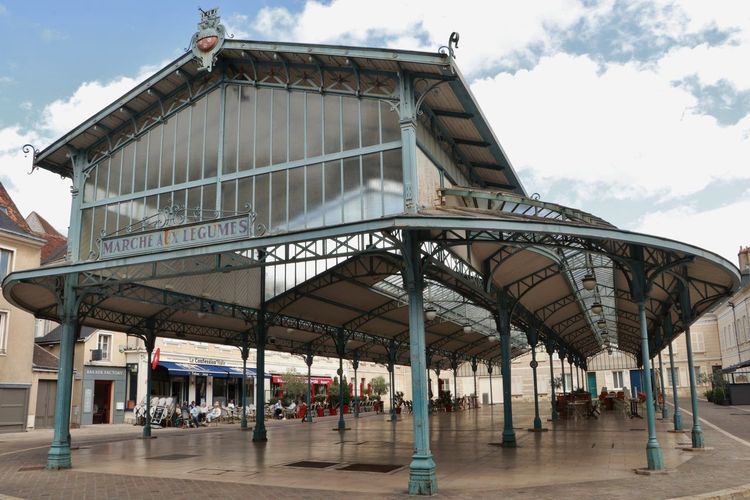
The Halles de Chartres (Place Billard, 28000 Chartres, rated 4.5/5 on Google from 181 reviews), built in the early 20th century in the Baltard style typical of covered metal market halls, host the grand Saturday morning market, one of the liveliest fixtures in local life.
Beauce farmers, cheese sellers, and greengrocers set up from dawn, from 8 a.m. to 2 p.m., and the stalls overflow onto the neighbouring Place de la Poissonnerie. It is a good spot to try local specialities such as pâté de Chartres, the shortcrust pastry pie traditionally made with game, or the farmhouse goat's cheeses from the Perche, before assembling a picnic to take to the nearby Jardin de l'Évêché.
Two treats are worth seeking out in the shops in the area: the mentchikoff, a praline chocolate sweet coated in meringue created by a Chartres confectioner at the end of the 19th century, and the cochelin, a flaky apple turnover that locals still buy in batches. Outside market days, the halls house a few permanent traders — less spectacular but always handy for a quick snack.
12. The Jardin de l'Évêché
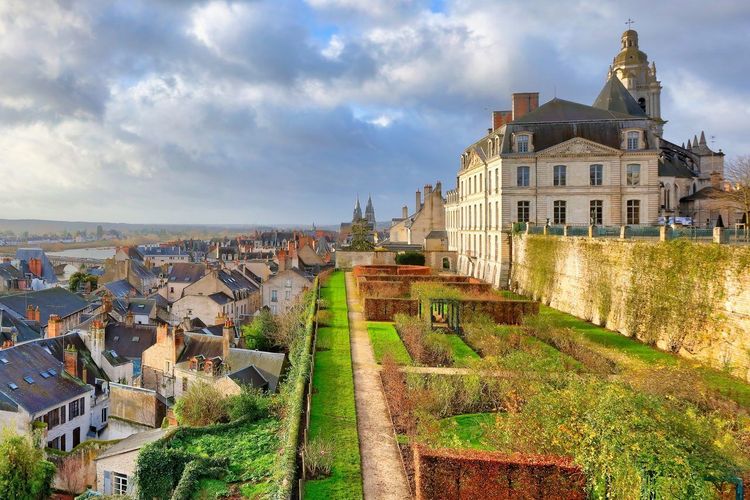
Laid out in terraces on the old ramparts, below the cathedral chevet, the Jardin de l'Évêché (5 Cloître Notre-Dame, 28000 Chartres, rated 4.7/5 on Google from 900 reviews) offers one of the few free elevated views over the Eure valley.
Designed in the French formal style, with geometric flowerbeds, clipped box hedges, and benches oriented towards the river, this garden remains surprisingly uncrowded despite its immediate proximity to the city's most-visited monument. It is the ideal spot for a late-morning picnic or for letting children run around for five minutes between visits. In spring, the flowering beds add a splash of colour that contrasts pleasantly with the grey stone of the surrounding buildings.
Then head down the staircase that extends the lower terrace: it leads directly to the banks of the Eure and the Vieux Chartres, a shortcut that many visitors miss because they have not spotted it from above. The garden is freely accessible, with closing times that follow the daylight hours depending on the season.
13. A Boat Ride on the Eure
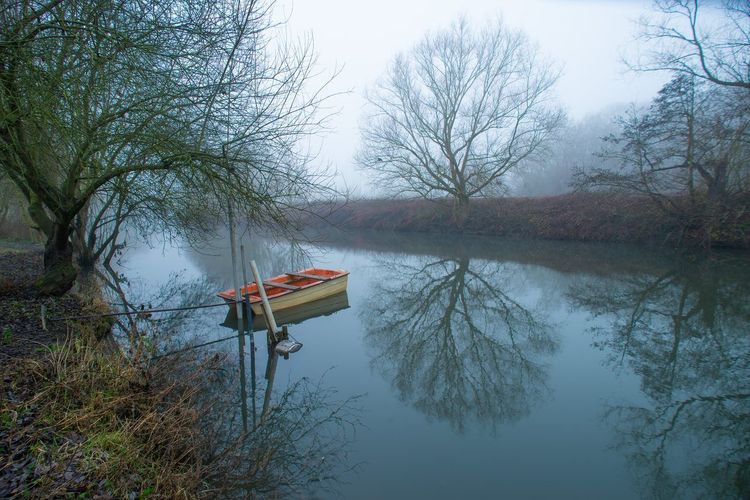
For a change of perspective, nothing beats a boat outing on the Eure, offered from April to October by the local operator 'la Petite Venise' from the riverbanks in the city centre.
The route, around 3 kilometres long, skirts the private gardens that slope down to the river and allows you to observe the city from a completely different angle than that of the cobbled streets. You pass under several old bridges, glide past the washhouses and the back of the Vieux Chartres, with views of the half-timbered houses that are invisible from dry land. Prices range from approximately €6.50 to €13.50 depending on the package and duration chosen, and booking by telephone remains the rule in high season.
This activity, relatively little known among passing visitors, is particularly popular with families and groups looking for something more original than a monument visit. Choose late morning or early evening if possible, when the light on the water is most photogenic and the crowds are thinnest. In uncertain weather, bring an extra layer: it is always cooler on the river than on the quayside.
14. The Chartres Theatre
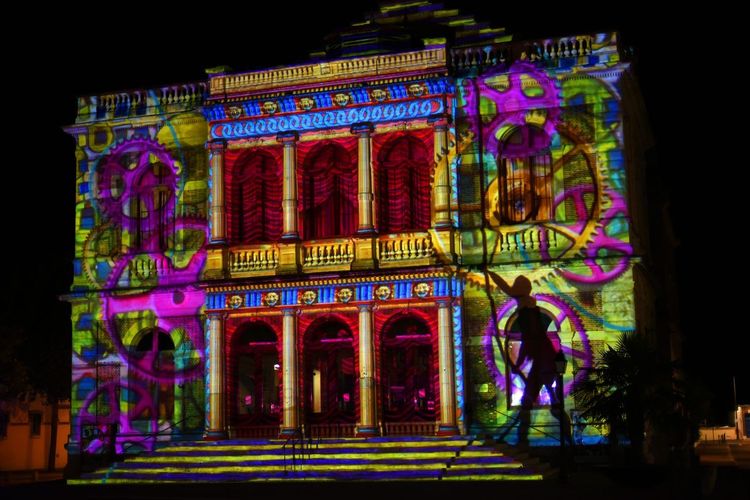
On Boulevard Chasles, the théâtre de Chartres (Boulevard Chasles, 28000 Chartres, rated 4.4/5 on Google from 599 reviews) presents a Second Empire facade that goes almost unnoticed during the day and becomes one of the most spectacular projection surfaces in the night-time show once darkness falls.
Built in 1860 to plans by Chartres architect Alfred Piébourg and inaugurated in April 1861, it retains an Italian-style auditorium of around 700 seats, with tiered balconies, red velvet, and period stage machinery. This slightly old-fashioned setting contrasts with a resolutely varied programme, ranging from contemporary theatre to concerts and children's shows.
Checking the programme before your visit sometimes allows you to combine an evening show with the Chartres en Lumières projections taking place right in front of the building. The theatre also opens its backstage areas during the Journées du patrimoine (Heritage Days), one of the rare opportunities to step onto the stage and see the machinery from the inside.
15. A Day Trip to the Château de Maintenon
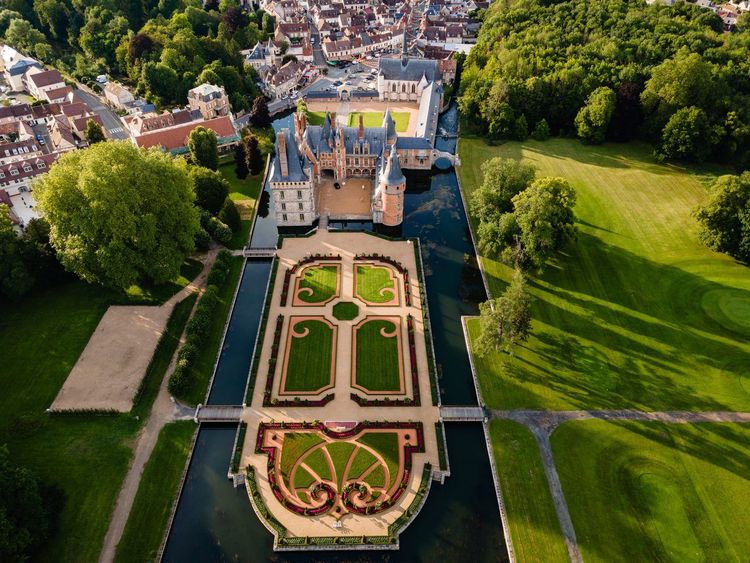
For those wondering what to do in and around Chartres beyond a single day, the château de Maintenon (2 Place Aristide Briand, 28130 Maintenon, rated 4.7/5 on Google from 1,747 reviews), about twenty minutes away by car or train, makes an ideal complement to the visit.
Former home of the Marquise de Maintenon, morganatic wife of Louis XIV, the château blends a medieval tower with Renaissance and Classical wings added over the centuries. The park, redesigned in the spirit of French formal gardens, extends to the monumental remains of the aqueduct launched under Vauban's direction in the late 1680s to divert the waters of the Eure towards the basins of Versailles. The vast and deadly construction project was abandoned before completion.
These unfinished arches, which today cross the surrounding meadows for several hundred metres, form one of the most photographed landscapes in the department after the cathedral itself. Half a day is enough to visit the château and walk alongside the aqueduct, making it an easy excursion to combine with a two-day stay. Maintenon station is on the Paris–Chartres line, a fifteen-minute journey, and the château is a five-minute walk from the platform: the excursion is therefore very manageable without a car.
If your itinerary continues to other towns in the region, the Ryo app also features audio-guided tours in several nearby towns — a practical way to continue exploring without having to do all the research yourself.
FAQ
How much time should you plan for a visit to Chartres?
A full day is enough for the cathedral, the Vieux Chartres, and a museum, but a weekend lets you add the Compa, a boat ride, and the Chartres en Lumières show in the evening, without rushing from one site to the next.
Can Chartres be visited in a day from Paris?
Yes, the train connects Gare Montparnasse to Chartres in just over an hour. Visiting Chartres in 1 day from Paris is entirely feasible for the main highlights of the historic centre, including the cathedral, as long as you leave early in the morning.
What is there to do in Chartres in the evening?
From April to early January, the free Chartres en Lumières show illuminates 21 sites in the historic centre until 1 a.m., with an earlier switch-off from late October onwards. For the rest of the year, the restaurants of the Vieux Chartres and the theatre's programme keep evenings lively.
What can you do in Chartres for free?
The exterior of the cathedral, the Vieux Chartres, the banks of the Eure, the Jardin de l'Évêché, and the Chartres en Lumières show can all be enjoyed without a ticket. The Musée des Beaux-Arts is also free outside temporary exhibition periods.
What is there to do in Chartres with children?
The Compa and its full-size agricultural machinery, the workshops at the Centre international du vitrail, and a boat ride on the Eure are among the activities families with children enjoy most.
What can you do in and around Chartres to extend your stay?
The château de Maintenon and its unfinished aqueduct, twenty minutes away by road or train, naturally complement a two-day visit. The surrounding Beauce also lends itself to cycling trips through the grain fields.
What is there to do in Chartres for a group of young people or friends?
A boat ride on the Eure, the Halles market on Saturday morning, and the terraces of the Saint-André district offer a convivial setting, rounded off in the evening by the free Chartres en Lumières show.
Conclusion
Chartres lends itself just as well to a quick day trip as to an extended stay, with the cathedral serving as an anchor for a heritage that is far richer than it first appears. Between the Vieux Chartres and its tertres, the banks of the Eure, the windows of Saint-Pierre, and the excursion to Maintenon, the city and its surroundings offer more than enough to fill two to three days without repeating the same experiences.
Whether you come for a stopover on the road, a romantic weekend, or a family outing, keep two things in mind: spring and autumn remain the most comfortable seasons for walking around the upper town, and the evening light shows naturally extend the visiting day from April to January. Book the crypt in advance, save the Saturday market for the end of your stay, and leave yourself an hour with no fixed plan to wander through the lower town: that is often where Chartres truly reveals itself. And if your curiosity takes you on to other French cities, the Ryo app and its audio-guided tours can accompany you for the rest of the journey.
À lire également