© Shutterstock
 Votre guide Ryo
Centre-Val de Loire: The 15 Most Beautiful Villages to Discover in 2026
The Loire is more than a river of royal castles. Behind the facades of Renaissance fortresses lie villages where time seems to have stood still since the 15th century: unhurried lanes of white tuffeau stone, cliffs hollowed out into troglodyte dwellings, hills draped in vineyards that passing tourists only glimpse from the motorway. Centre-Val de Loire alone is home to nine villages labelled 'Most Beautiful Villages of France' and a dozen more that would richly deserve the distinction.
This guide brings together 15 remarkable villages in the region, from the banks of the Loire to the foothills of the Berry, taking in the secret valleys of the Indre and the Loir. Among them: a collegiate church where Saint Martin died in 397, a village maintained entirely like a private garden, a troglodyte town whose houses are carved directly into the cliff face, and a 662-metre canal bridge built by Gustave Eiffel's teams. For those who wish to explore the region's major sites with an audio guide, the Ryo road trip Les Châteaux de la Loire offers a multi-stop audio-guided itinerary linking the landmark sites of the Val de Loire. And if your route takes you through Bourges, the regional capital of the Berry, the Ryo audio guide tour of Bourges takes you through 22 sites in the old town at your own pace.
Montrésor, Medieval Gem of the Indrois
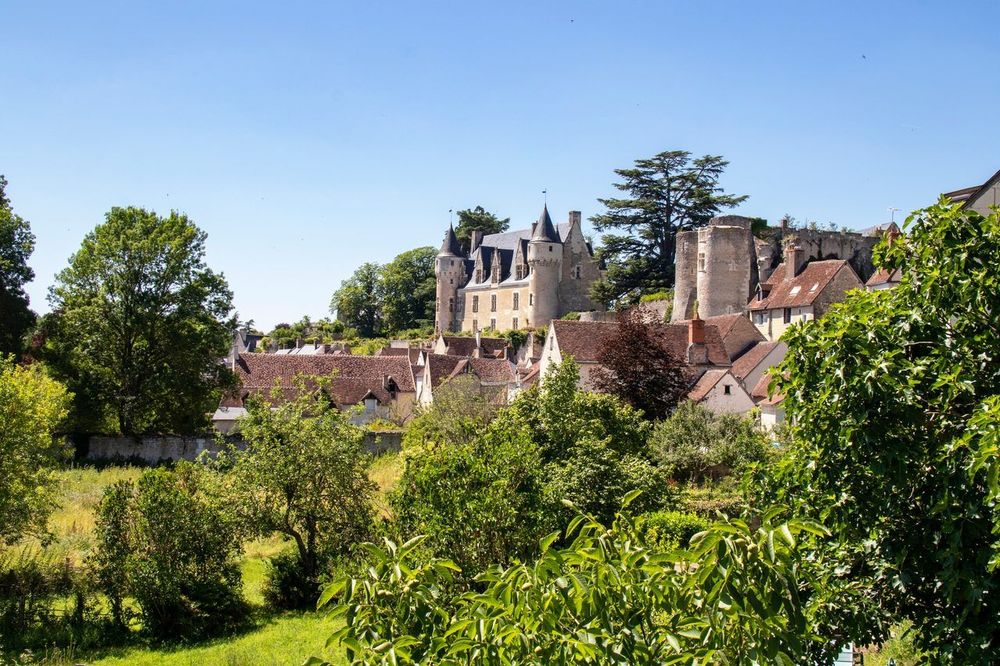
Montrésor (Place du Château, 37460 Montrésor, rated 4.3/5 on Google from 2,896 reviews) is one of the most photographed villages in Touraine, and for good reason. Perched above the Indrois river, this small town of a few hundred inhabitants packs several centuries of history into a handful of lanes, readable at every turn of a wall. Labelled a 'Most Beautiful Village of France', it stands as the natural first stop on any stay in the region.
The Château de Montrésor is the village's centrepiece. Built in the 16th century on the foundations of an 11th-century fortress, it has been in private ownership since 1849: it still belongs today to the Branicki family, Polish aristocrats who bought and restored it in the 19th century. The interior houses collections of arms, Flemish paintings and period furniture of unexpected richness for such a discreet village. The paid visit (around 7 euros for an adult) lasts between 45 minutes and an hour depending on your interest in the state rooms. The view from the terraces over the Indrois valley is worth the detour in itself.
Below, the Collégiale Saint-Jean-Baptiste, a Renaissance building erected in the 16th century by Imbert de Bastarnay, conceals a little-known treasure: the tomb of the Bastarnay family, three alabaster recumbent figures from the 16th century of remarkable delicacy. The stained glass windows date from the 19th century, but the atmosphere remains striking in this austere nave. The village itself is best explored on foot through its lanes: tuffeau houses, 15th-century market halls still standing, a wash house and dry-stone walls follow one another without anything breaking the harmony. An architectural coherence rare in France, best appreciated mid-week when visitors are fewer.
A farmhouse inn on the edge of the village serves local cuisine at lunchtime on weekdays (Touraine goat's cheese, rillons, tarte Tatin): arrive before 12:30 if you have not booked. Allow 1h30 to 2 hours to explore Montrésor on foot, longer if you visit the interior of the château.
Lavardin, Cliffs and Romanesque Frescoes on the Loir
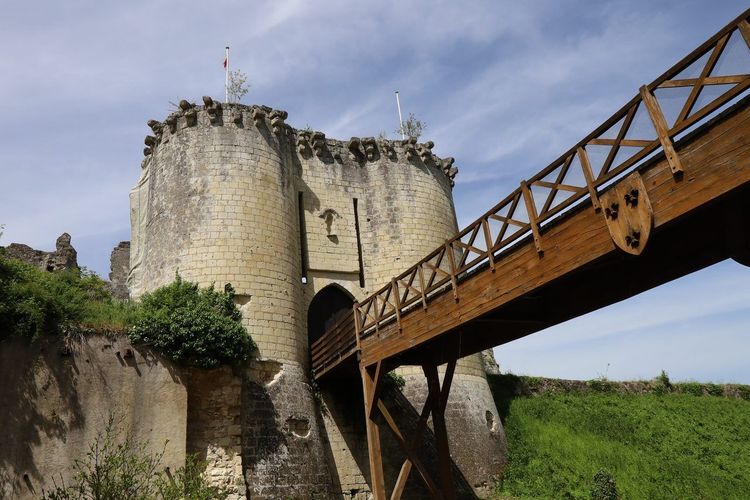
About twenty kilometres north-west of Vendôme, Lavardin surprises from the moment you arrive. The ruins of a medieval castle rise from the limestone in an overhang above the Loir, while the village stretches out peacefully below, almost motionless. The second village in Loir-et-Cher to hold the 'Most Beautiful Villages of France' label, Lavardin is also one of the least visited on this list, which is a distinct advantage in July and August.
The Château de Lavardin (Rue du Château, 41800 Lavardin, rated 4.3/5 on Google from 688 reviews) is a fortress demolished on the orders of Henri IV in 1589, following the Wars of Religion. Only sections of walls and gutted towers remain, but their arrangement on the rocky spur is spectacular. Entry is free. The climb is steep (about twenty minutes from the village) but the panorama over the Loir valley makes the effort worthwhile. In fine weather, you can clearly make out the river's meanders and the wooded hillsides as far as Montoire.
Lavardin's other treasure is its Église Saint-Geniès, whose interior preserves an exceptional collection of Romanesque frescoes from the 11th and 12th centuries. These wall paintings depict the Baptism of Christ, the Passion and scenes from the Apocalypse, among the best-preserved in the entire Centre region. The building is a listed Historic Monument and entry is free.
The village also has several troglodyte dwellings along the limestone cliff, some still inhabited, others converted into craftsmen's workshops. A small local market draws residents from surrounding villages every Sunday morning. Allow at least 2 hours to combine the castle, church and a walk along the Loir. Lavardin pairs easily with Trôo, 12 kilometres away, as part of a full day in the Vendômois.
Candes-Saint-Martin, at the Confluence of Two Rivers
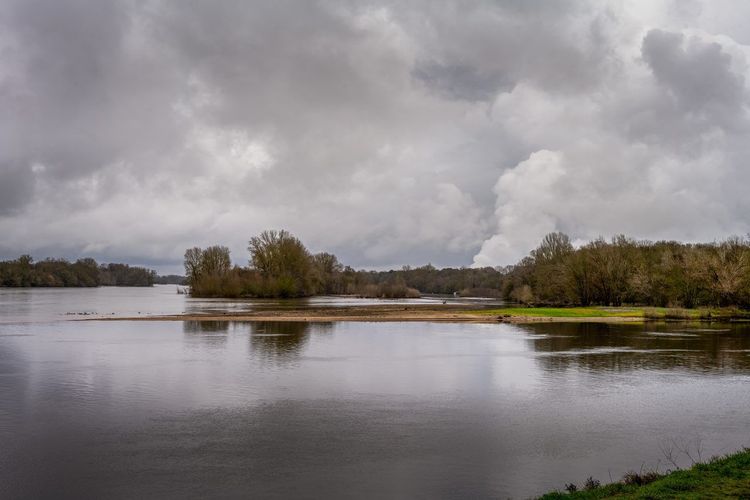
There are few places in France where you can watch two rivers meet from the main square of a village. Candes-Saint-Martin, in Indre-et-Loire, is one of them: the village sits precisely at the confluence of the Loire and the Vienne, and the view from the levee is one of the most arresting in the Val de Loire.
But Candes owes its renown primarily to its religious history. It was here that Saint Martin of Tours died in 397, while attempting to reconcile feuding clergy in his diocese. The Collégiale Saint-Martin, built between the 12th and 14th centuries on the site of his death, is a monument of the first order. Its Gothic portal adorned with sculptures (scenes from the life of the Virgin), its historiated capitals and its well-proportioned nave make it one of the finest collegiate churches in the Val de Loire. The building is listed as a UNESCO World Heritage Site as part of the Val de Loire zone.
The village itself has fewer than 400 inhabitants, yet every house seems carefully placed. The white tuffeau houses, the riverside walkway and the climb up to the collegiate church form a natural sequence of discovery. In summer, several painters set up their easels on the banks of the Vienne. Candes-Saint-Martin is on the Loire à Vélo route (EV6), making it easy to incorporate into a cycling circuit between Saumur and Chinon.
Apremont-sur-Allier, the Garden Village
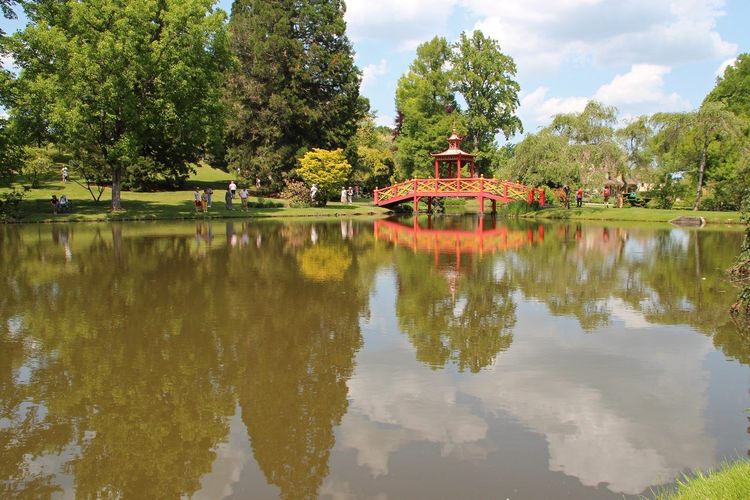
Apremont-sur-Allier is an anomaly. This village in the Cher, set on the banks of the Allier, has been entirely in private ownership since the 19th century. The estate's heirs decided to transform the village into a model settlement open to the public: restored facades, lanes with no visible electrical cables, flower beds everywhere, and a floral park that welcomes 50,000 visitors a year.
The Château d'Apremont (15th–19th century) overlooks the village and the Allier, but its interior is not open to visitors. The adjacent floral park, however, is open from May to October (paid entry, around 9 euros for an adult). Created from the 1970s onwards across 4 hectares, it draws inspiration from Romantic English gardens: rustic bridges, neo-Gothic pavilions, follies, undulating lawns and collections of old roses. It is one of the finest private parks in Centre-Val de Loire, and one of the best-maintained in France.
Labelled a 'Most Beautiful Village of France', Apremont is also one of the quietest on this list. No shops, no café, no souvenir stalls. Just flower-filled houses, a stone bridge over the Allier and cows in the meadow opposite. The sense of escape is total. Allow a minimum of 2 hours for the park and a stroll through the village.
Visit on a weekday if possible, preferably in the morning. On weekends in May and June, the park can be very busy. Apremont pairs well with Sancerre (45 minutes by car), another must-see in the Cher department.
Saint-Benoît-du-Sault, Medieval Citadel of the Berry
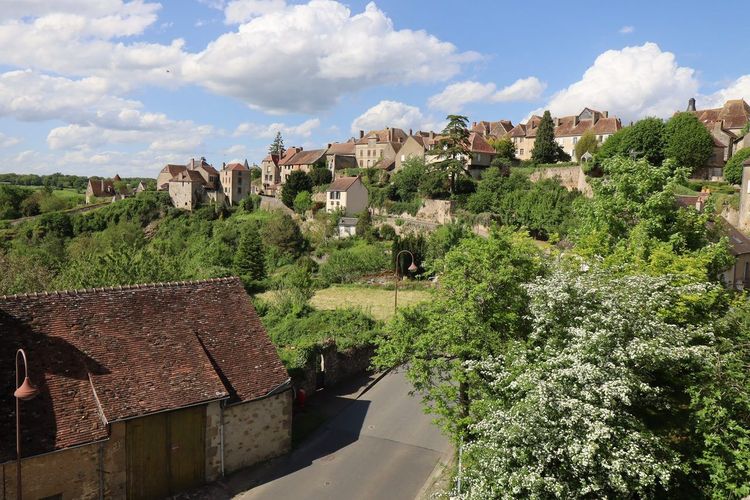
From the plains of the Indre, the silhouette of Saint-Benoît-du-Sault (Place du Prieuré, 36170 Saint-Benoît-du-Sault, rated 4.5/5 on Google from 15 reviews) is visible from afar: a sheer rocky spur, crowned by a church and grey granite houses, towering more than 60 metres above the Bouzanne. This village of 750 inhabitants is one of the most spectacular in southern Berry, and one of the least known on this list.
The historic heart is the Benedictine priory, founded in the 11th century on the rock. The priory church has a plain Romanesque nave and an apse adorned with sculpted capitals. Beside it, the partially restored Romanesque cloister is one of the rare examples of a medieval cloister preserved in the Berry. The whole complex may be visited freely. The medieval gateway marking the lower entrance to the village remains imposing, with its two flanking towers of granite rubble masonry.
The lanes are steep and cobbled: wear suitable footwear. The climb from the car park at the foot of the village takes about ten minutes but offers increasingly spectacular views over the bocage countryside of the Boischaut Sud, a region almost untouched by mass tourism. At the top, the terrace near the church provides a restful panorama over the green hills.
Saint-Benoît-du-Sault holds the 'Most Beautiful Villages of France' label. The village has a local tourist office and several charming gîtes. Market on Wednesday mornings.
Gargilesse-Dampierre, the Artists' Village
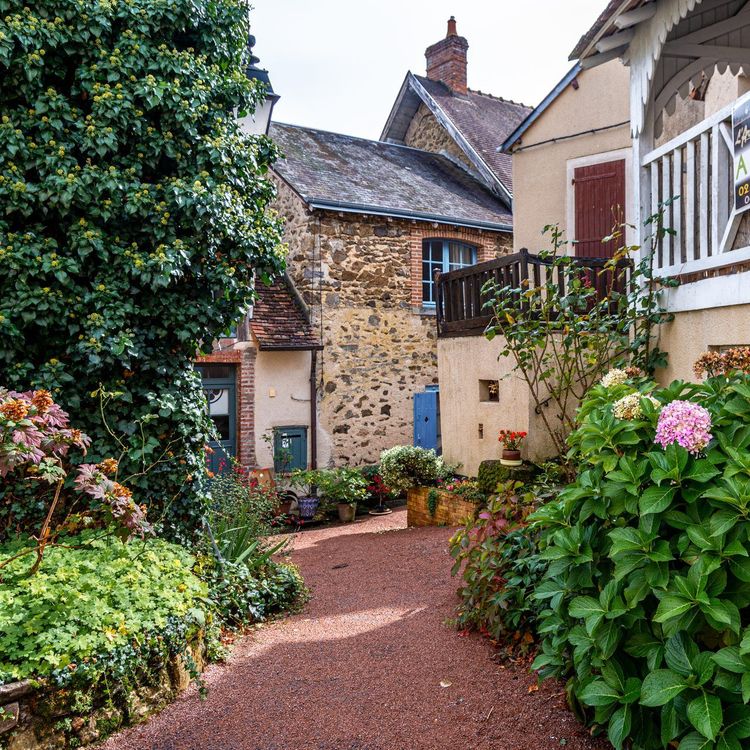
George Sand discovered Gargilesse-Dampierre (Rue du Château, 36190 Gargilesse-Dampierre) in 1857. She had a small retreat built there, the Villa Algira, which she described with passion in her 'Promenades autour d'un village'. Since then, this village in the Indre, nestled in a gorge of the Creuse, has become a magnet for artists, painters and poets — a reputation its 'Most Beautiful Villages of France' label only confirms.
The Maison de George Sand is now a museum with guided tours available (around 5 euros), preserving the writer's personal belongings, her bedroom, study and garden. The place strikes visitors with its modesty, unexpected for such a monumental figure. A few steps away, the Château de Gargilesse (11th–12th century) dominates the Creuse from its cliff. It is privately owned but its surroundings may be visited freely.
The village's Romanesque church, adjoining the castle, merits a visit in its own right. Its crypt contains some of the oldest Romanesque frescoes in the region, dating from the 12th century. Heads of Christ, apostles and cherubs in faded colours adorn the barrel-vaulted ceilings in a contemplative atmosphere that few places in France can still recreate.
The village has about ten contemporary art galleries and studios. In summer, several temporary exhibitions take over barns and stone houses. A craft market is held in July and August. It is hard to spend less than 3 hours here.
Crissay-sur-Manse, Tuffeau and Silence
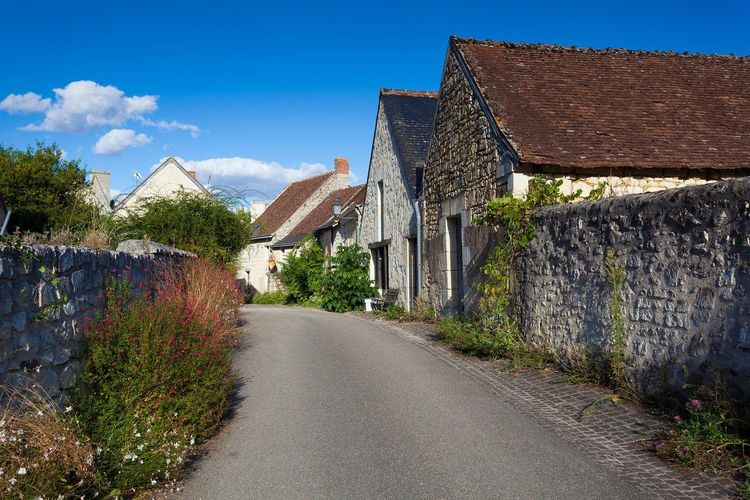
Crissay-sur-Manse (Le Bourg, 37220 Crissay-sur-Manse, rated 4.1/5 on Google from 12 reviews) is little more than a hamlet of a few dozen souls at the bottom of a valley on the Manse river, in Indre-et-Loire. Its 'Most Beautiful Villages of France' label is nonetheless well deserved. The white tuffeau houses with slate roofs, the ruins of the 15th-century castle emerging between the trees and the Romanesque church of Saint-Pierre together compose a picture of remarkable harmony.
The village can be explored on foot in 45 minutes. The ruins of the Château de Crissay (15th century) are freely accessible: the path follows the dry moat and climbs to the remains of the towers. The view over the Manse valley from the top is pleasant. The Romanesque church below retains a few sculpted capitals and a porch-tower typical of the Chinonais.
What strikes you at Crissay is the absence of noise. No through traffic, no shops, no crowds. A few hens crossing the road, a cat on a wall, the wind in the lime trees. A place to breathe, far from the bustle of the nearby royal castles.
Sancerre, at the Summit of the Val de Loire
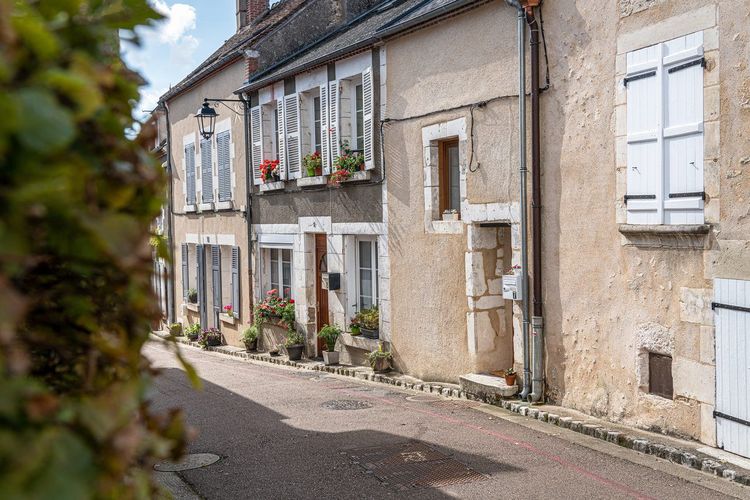
Sancerre (Esplanade de la Porte César, 18300 Sancerre) joined the 'Most Beautiful Villages of France' in 2022, a distinction that crowned years of recognition for this Cher town perched on a limestone hill at 312 metres above sea level. It is also one of the finest viewpoints in the region, and its name remains associated with one of the most imitated Sauvignon Blancs in the world.
The Tour des Fiefs is the sole surviving remnant of Sancerre's medieval fortress, destroyed during the Wars of Religion. The siege of 1573 is one of the most tragic in French history: the besieged town held out for several months before capitulating from starvation, its inhabitants having consumed even cats and rats. This round 14th-century tower can be visited and offers a 360° panorama from its summit over the Loire, the vineyards and the hills of the Berry.
The heart of the village deserves an hour's stroll: cobbled lanes, half-timbered houses, 16th-century townhouses. But Sancerre is above all a viticultural landscape shaped like an amphitheatre. The hillsides around the town produce one of the world's most recognised Sauvignon Blancs, under the AOC Sancerre appellation. Several estates offer visits and tastings.
Les Caves de la Tour, a short walk from the Tour des Fiefs, offers a representative selection of the different styles of white, red and rosé Sancerre. A convenient starting point to sample the essentials before exploring the surrounding estates.
Trôo, the Village That Lives in the Rock
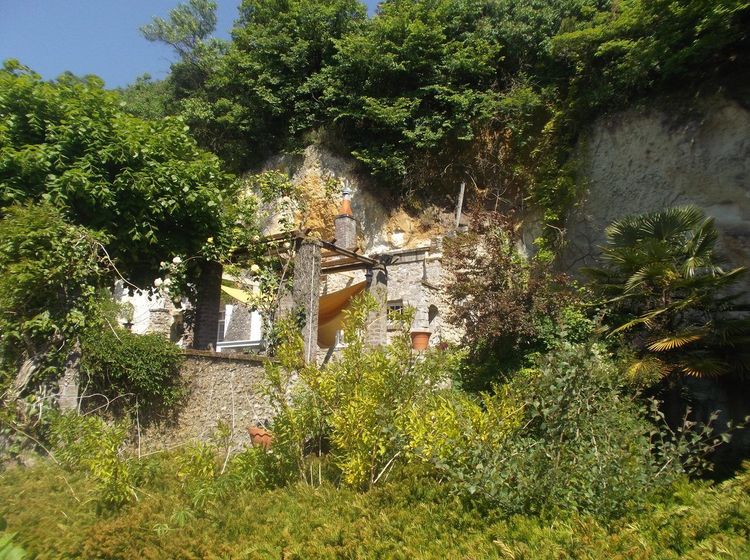
Halfway between Vendôme and La Flèche, Trôo is one of the most unusual villages in the Val de Loire. This Loir-et-Cher town is built on two levels: at the bottom, ordinary houses along the Loir; at the top, a labyrinth of lanes and hanging gardens, and above all dozens of troglodyte dwellings carved directly into the limestone cliff.
These dwellings have been occupied since the Middle Ages and some still are today. Several have been converted into bed and breakfasts or gîtes, making it possible to sleep inside the cliff face — a memorable experience. The temperature inside remains constant, around 12 to 14°C all year round, making them cool in summer and relatively mild in winter.
At the top of the village, the Collégiale Saint-Martin (12th century) stands on the hilltop with remarkable Romanesque simplicity. From its surroundings, the view over the Loir valley stretches for several kilometres. Nearby, the Puits qui Chante is a natural cavity in the rock from which a surprising acoustic resonance rises when you speak into it.
Trôo can be visited in 1h30 to 2 hours. In summer, a few craftspeople keep their shops open. The walk between the lower and upper parts of the village requires a little effort (steps and steep slopes) but remains manageable for most visitors.
Beaugency, Seven Centuries of Stone on the Loire
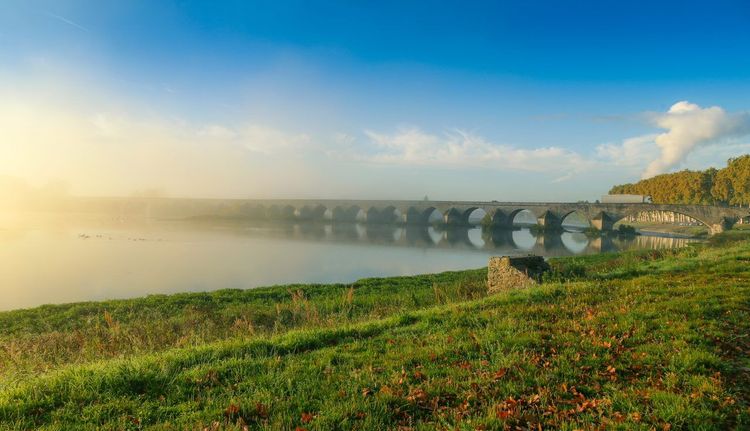
Beaugency (Place Dunois, 45190 Beaugency) is not a village but a small town of 7,000 inhabitants. Its medieval centre is, however, so compact and so cohesive that it belongs in any Loire itinerary. Between its 23-arch medieval bridge and its 11th-century Romanesque keep, Beaugency offers a free lesson in architecture spanning several centuries of history.
The Donjon de Beaugency (known as the 'Tour de César') is one of the oldest and best-preserved keeps in France: 36 metres tall, walls 3 metres thick, built in the 11th century. It stands at the heart of an architectural ensemble that includes the Château Dunois (15th century, housing the Musée régional de l'Orléanais), the Abbatiale Notre-Dame (11th–12th century, with crypt) and the 16th-century town hall.
The Pont de Beaugency, 475 metres long with 23 arches, dates from the 12th century in its earliest sections. It is one of the longest medieval bridges still standing in France. It has undergone many reconstructions but retains a remarkably coherent silhouette when viewed from the left bank.
Beaugency also has an unusual political history: two ecumenical councils were held here in the 11th and 12th centuries, most notably annulling the marriage of Louis VII and Eleanor of Aquitaine in 1152. The town is on the Loire à Vélo route and accessible by TER train from Orléans in 25 minutes. An easy stop to include in a broader Val de Loire itinerary, where Orléans tells its own story across 24 audio-guided stops, walking through history with Clovis, Joan of Arc and Attila.
Briare and Its Eiffel-Designed Canal Bridge
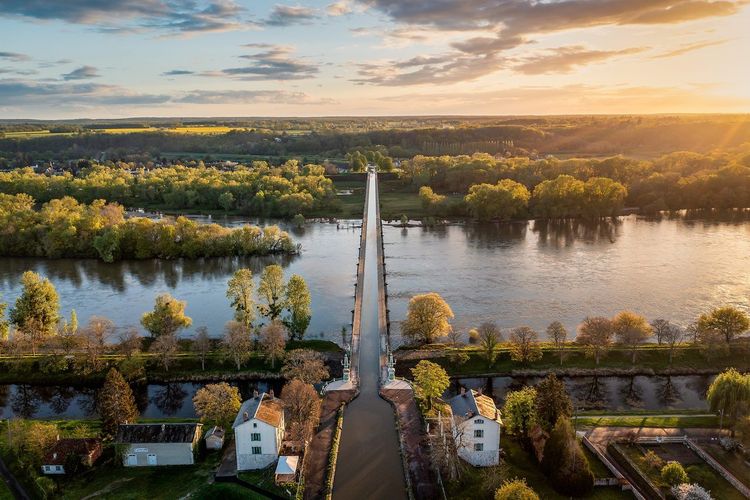
In 1896, Gustave Eiffel's teams completed the construction of the Pont-canal de Briare (Allée du Pont-Canal, 45250 Briare, rated 4.7/5 on Google from 2,765 reviews), which spans the Loire to connect the Canal latéral à la Loire with the Canal de Briare. At 662 metres long, it was then the longest canal bridge in Europe. To this day, it remains a spectacular feat of engineering, well worth seeing and walking across.
The canal bridge can be walked along the towpath, or explored by boat if you hire a vessel from Briare harbour. The bolted metal structure, adorned with Belle Époque lampposts, has something surprising about it when you realise you are walking on water 6 metres above the river. The mosaics decorating certain buildings in the town recall another local point of pride: the Émaux de Briare, a manufacturer founded in 1837 that long dominated the world production of ceramic buttons and mosaic tesserae.
The Musée des Émaux et Mosaïques de Briare traces this industrial history with surprisingly beautiful collections (entry around 6 euros). The town itself is modest, but the combination of canal bridge and museum more than justifies a half-day detour.
Chédigny, the Village of Roses
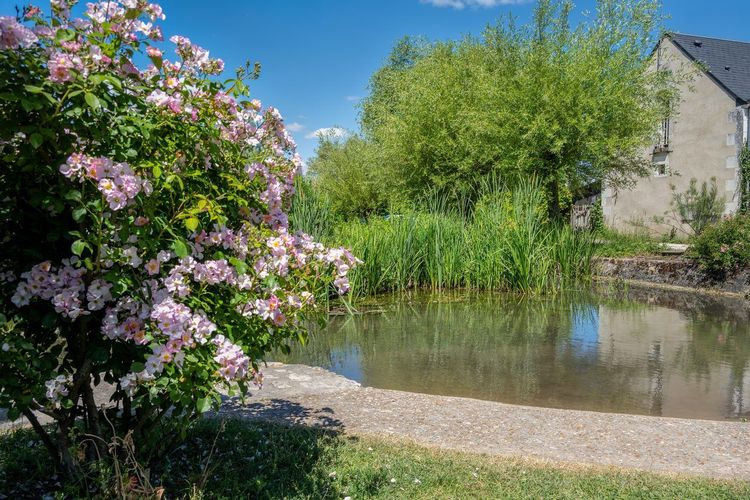
In May and June, Chédigny (Le Bourg, 37310 Chédigny) bursts into bloom. This small village in Indre-et-Loire is the only flower village in France to have built an economy around a single plant: the climbing rose. House facades, gateways, low walls and entire streets are covered in rose bushes, with more than 900 different varieties recorded in this single village.
The Rosiers de Chédigny have been growing and selling rose bushes, bulbs and plants at the heart of the village since the 1990s. Chédigny was the first village in France to be designated a 'Remarkable Garden' in its entirety, and holds 4 flowers in the Villes et Villages Fleuris competition — the maximum score. This municipal policy has transformed an ordinary village into a unique springtime attraction in the Centre region.
Chédigny is less spectacular out of season: avoid autumn and winter. In May and June, a stroll through the lanes is genuinely beautiful, and a rose festival brings the village to life. Several local producers sell rose jams, rose water and syrups directly from their yards. Free entry and parking.
Yèvre-le-Châtel, Forgotten Sentinel of the Beauce
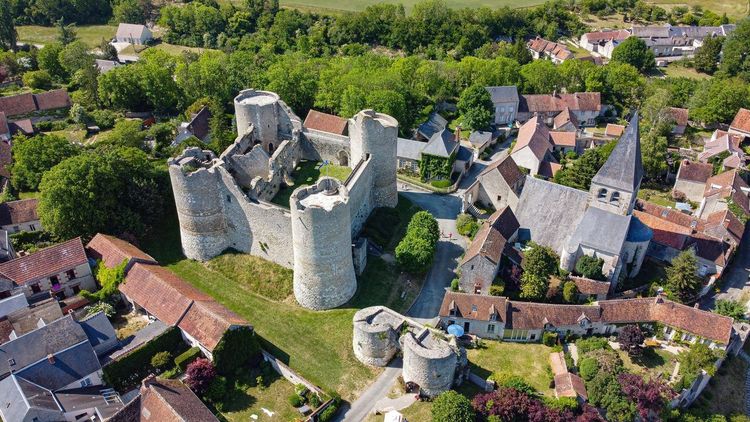
Perched on a rocky promontory on the border of the Loiret and the Gâtinais, Yèvre-le-Châtel is little known to passing tourists. This village, one of the Loiret's 'Most Beautiful Villages of France' since 2002, preserves the ruins of an exceptional royal castle: a quadrangular fortress from the 12th and 13th centuries built by the Capetian kings to guard the road between Étampes and Sens. The four corner towers are largely intact, which is rare for a structure of this age.
The castle may be visited freely and at no charge. You wander among the ramparts imagining the royal garrisons that occupied this site from the 13th to the 15th century, before the Crown gradually abandoned it. The Église Saint-Lubin, below, is a Romanesque collegiate church from the 11th and 12th centuries with a crypt and remarkable sculpted capitals.
From the top of the castle, the view over the Beauce plain is striking in its absolute horizontality: endless fields, a few distant steeples and the distinctive sky of the Paris Basin. The village also holds the 'Remarkable Garden' designation for its streets lined with climbing roses, a detail worth the detour in spring.
Chaumont-sur-Tharonne, in the Heart of the Sologne
Far from the Loire and its royal castles, Chaumont-sur-Tharonne (Place de l'Église, 41600 Chaumont-sur-Tharonne) represents another facet of Centre-Val de Loire: the Sologne, a land of ponds, morning mists, oak forests and hunting estates. This Loir-et-Cher village, set on the banks of the Tharonne, is the archetypal Sologne village.
The Église Saint-Laurent (15th century) dominates the village square with its octagonal bell tower, one of the most photographed in the Sologne. The village has several restaurants and hotels that serve as a base for walks in the surrounding forest. Local cuisine celebrates game (pheasant, deer, wild boar), woodland mushrooms and produce from the ponds encircling the village.
For nature lovers, the surrounding area offers several waymarked walking trails through pine forests and past ponds. Autumn (mushrooms, russet foliage) and spring (migratory birds on the ponds) are the best seasons for this stop.
Saint-Dyé-sur-Loire, François I's Port
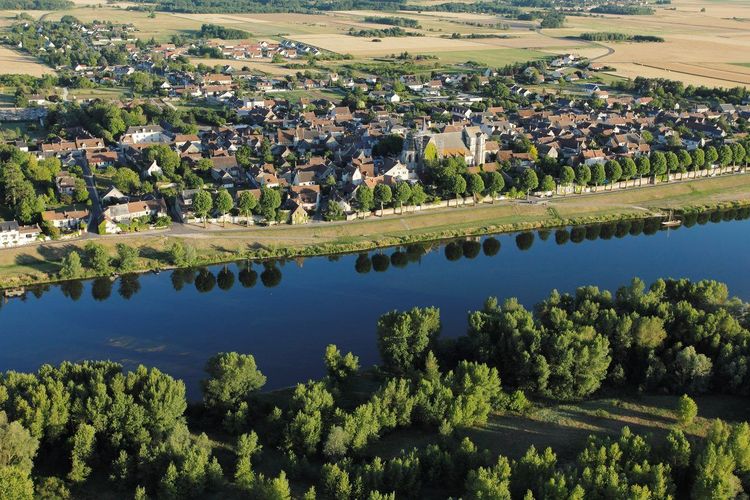
Few villages can claim to have played a concrete role in the construction of a royal castle. Saint-Dyé-sur-Loire (Le Port, 41500 Saint-Dyé-sur-Loire) is one of them: it was from this small Loire port that François I had the building materials for the Château de Chambord shipped, less than 5 kilometres away as the crow flies. Today, the village is a haven of calm on the right bank of the Loire.
The tuffeau houses of the village, clustered along the levee, form a row of uncommon architectural harmony. The marina welcomes a few boats in summer, and several walkers use the embankment to follow the Loire as far as the first reed beds. The Église Saint-Dyé (11th–14th century) is worth a quick look for its Romanesque portal.
Saint-Dyé is ideally placed to combine with Chambord (10 minutes by car) or Blois (30 minutes). In summer, events related to river heritage are organised on the banks by the local association.
Bourges, Medieval Capital of the Berry
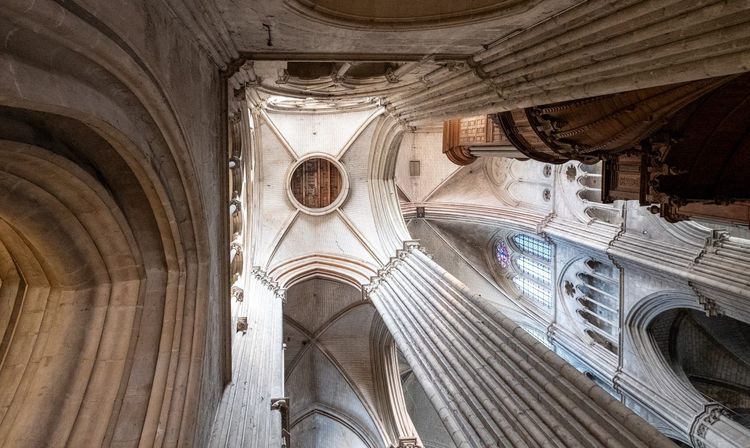
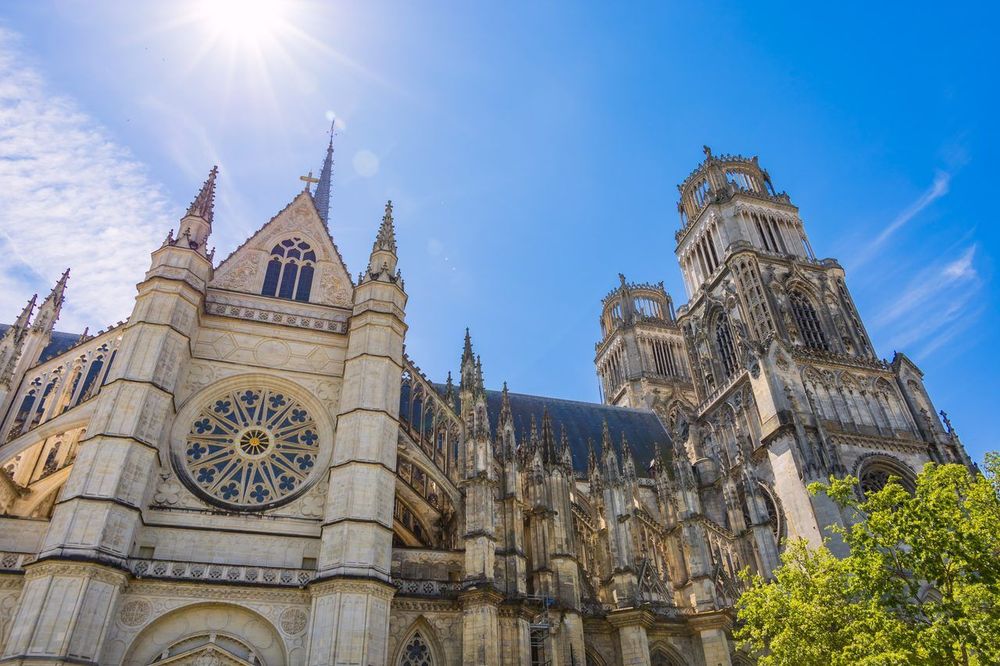
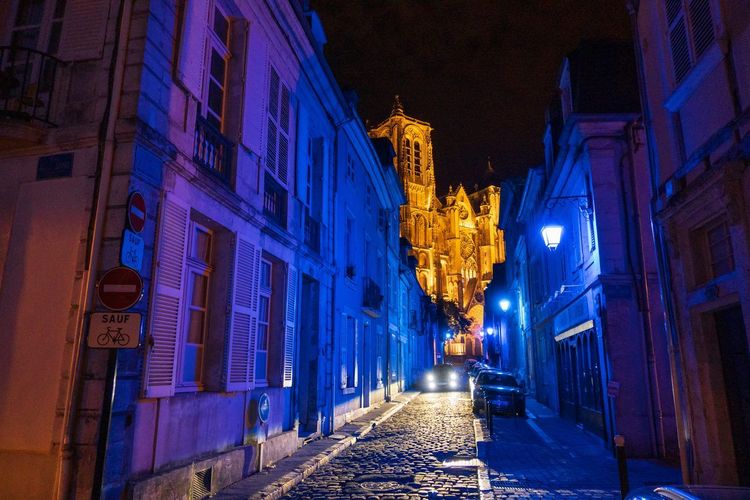
It is impossible to talk about the villages of Centre-Val de Loire without mentioning the city that is its artistic and religious capital. Bourges has 65,000 inhabitants: it is not a village. But its cathedral is one of the great Gothic cathedrals of Europe, its Palais Jacques Cœur is the finest Gothic civil palace in France, and its medieval lanes in the Saint-Pierre-le-Puellier quarter deserve to be included in any Centre-Val de Loire itinerary.
The Cathédrale Saint-Étienne has been a UNESCO World Heritage Site since 1992. Built between 1195 and 1230, it stands apart from other great French cathedrals by its lack of a transept, its five portals sculpted with scenes of the Last Judgement, and above all its extraordinary collection of 1,800 m² of medieval stained glass that transforms the interior into a play of coloured light. Climbing the tower offers a view over the rooftops of the old town and the meanders of the Berry countryside.
The Palais Jacques Cœur (15th century) is the best-preserved Gothic civil palace in France. Jacques Cœur, treasurer to King Charles VII, gave free rein here to an architectural imagination without equal: sculpted fireplaces, coffered ceilings, trompe-l'œil decorations set against white stone. The guided tour (around 9 euros) is strongly recommended to understand the symbolism of the place and the story of this treasurer who financed Charles VII's military campaigns.
To explore Bourges with an audio guide, the Ryo audio guide tour of Bourges covers 22 sites in 1h20 over 3.2 km, to be explored at your own pace with no time constraints. This audio walking tour is one of the most comprehensive on the Ryo network in the Centre region. To complete your stay, our Ryo guide to things to do in Bourges lists the best experiences to suit your interests.
Every spring the city hosts the Printemps de Bourges, one of the largest music festivals in France, drawing hundreds of thousands of spectators each year.
Practical Information for Visiting the Villages of Centre-Val de Loire
When to go?
Centre-Val de Loire can be comfortably visited from April to October. May and June offer a double advantage: the floral parks are open and the roses of Chédigny are in full bloom. July and August are the busiest months, but the villages remain far less crowded than the royal castles. Autumn in the Sologne (Chaumont-sur-Tharonne) is magnificent from late September to November, with russet foliage and mushrooms. Winter is not recommended for this type of itinerary: several museums, floral parks and sites close from November to March.
Getting around?
A car remains the most practical way to travel between these villages. A reasonable itinerary covers 3 to 5 villages per day depending on distances. The departmental roads are in good condition and uncongested outside the summer months.
For cycling enthusiasts, several villages are on the Loire à Vélo route (EV6), including Candes-Saint-Martin, Saint-Dyé-sur-Loire and Beaugency. The cycle path is waymarked and broadly accessible to all levels, with variable quality depending on the section.
By train, Bourges, Blois, Vendôme and Orléans are served by TER from Paris (1h15 to 1h45 depending on the station). However, most of the villages on this list require private transport from these stations. Car hire is available in Orléans, Tours and Bourges.
Accommodation: charming gîtes and bed and breakfasts are plentiful throughout the region. Montrésor, Lavardin and Gargilesse-Dampierre offer options in characterful houses. Book in advance for May and June weekends, which are in high demand.
Budget: most villages on this list are free to enter. Paid visits (Château de Montrésor, Apremont floral park, Palais Jacques Cœur in Bourges) range from 5 to 12 euros per adult. Budget 30 to 40 euros per person per day for a comfortable itinerary including meals and a few entry fees.
FAQ
Which villages in Centre-Val de Loire hold the 'Most Beautiful Villages of France' label?
Centre-Val de Loire has nine villages officially designated as 'Most Beautiful Villages of France': Montrésor, Crissay-sur-Manse and Candes-Saint-Martin in Indre-et-Loire, Lavardin in Loir-et-Cher, Apremont-sur-Allier and Sancerre (designated in 2022) in the Cher, Gargilesse-Dampierre and Saint-Benoît-du-Sault in the Indre, and Yèvre-le-Châtel in the Loiret. The label is awarded by the national association of Most Beautiful Villages of France based on strict heritage criteria: the village must have at least two sites or monuments listed or registered as Historic Monuments, and must meet standards for environmental quality and heritage enhancement.
What is the best time of year to visit these villages?
May and June are the most pleasant months: the villages are in bloom, the parks are open and temperatures are mild (15 to 22°C). Chédigny is particularly spectacular in May and June with its 900 rose varieties in flower. July and August are warm but remain enjoyable in the Loire villages. Autumn in the Sologne (Chaumont-sur-Tharonne) is beautiful from late September to November. Winter is not recommended: the floral park at Apremont, several museums and many sites close from November to March.
Do you need a car to visit the villages of Centre-Val de Loire?
Yes, in the vast majority of cases. Public transport links between villages are rare or non-existent. A few villages are accessible by bicycle via the Loire à Vélo route (Candes-Saint-Martin, Beaugency, Saint-Dyé-sur-Loire), but to reach Gargilesse-Dampierre, Yèvre-le-Châtel or Trôo, a car is essential. Car hire is available in Orléans, Tours, Blois and Bourges.
How much time should you allow to explore the region?
A minimum of 4 to 5 days is recommended to cover the must-see villages. A 5-day itinerary could be organised as follows: Day 1, Touraine (Montrésor, Crissay-sur-Manse, Candes-Saint-Martin); Day 2, Loir-et-Cher (Lavardin, Trôo, Saint-Dyé-sur-Loire); Day 3, Loiret (Beaugency, Briare, Yèvre-le-Châtel); Day 4, Berry (Sancerre, Apremont-sur-Allier, Bourges); Day 5, Indre (Gargilesse-Dampierre, Saint-Benoît-du-Sault). This pace is reasonable and leaves time to linger in the villages that move you most.
Can you visit Bourges in a day?
Yes, provided you prioritise. In a well-organised day, you can reasonably visit the Cathédrale Saint-Étienne (2h), the Palais Jacques Cœur (1h30) and the historic quarter with the Jardins de l'Archevêché (1h). The Ryo audio guide tour of Bourges covers 22 stops in 1h20 over 3.2 km, allowing you to efficiently complete the walking visit by following a coherent narrative thread from one monument to the next.
Are the villages on the list accessible to people with reduced mobility?
Accessibility varies greatly from one village to another. Chédigny, Saint-Dyé-sur-Loire and Candes-Saint-Martin are relatively flat and accessible by pushchair or wheelchair. However, Saint-Benoît-du-Sault, Lavardin, Trôo and Yèvre-le-Châtel involve steep climbs and cobbled lanes that make them difficult to access. It is recommended to check with the local tourist office before planning a visit to hilltop or troglodyte villages.
Conclusion
Centre-Val de Loire is not just the castles you glimpse from the motorway. Its villages tell a quieter but equally rich story: Montrésor with its unexpected Polish collections, Gargilesse with its artists settled since George Sand's time, Trôo with its houses carved into the rock, Apremont with its private garden village, Sancerre with its vineyards arranged in an amphitheatre above the Loire. Each of these places demands time and curiosity to be fully appreciated.
To explore the region at your own pace with an audio guide, the Ryo app offers the Ryo audio guide tour of Bourges (22 stops, 3.2 km) and the Ryo road trip Les Châteaux de la Loire to move through the region's landmark sites at your own pace. Enjoy your journey through Centre-Val de Loire.
À lire également