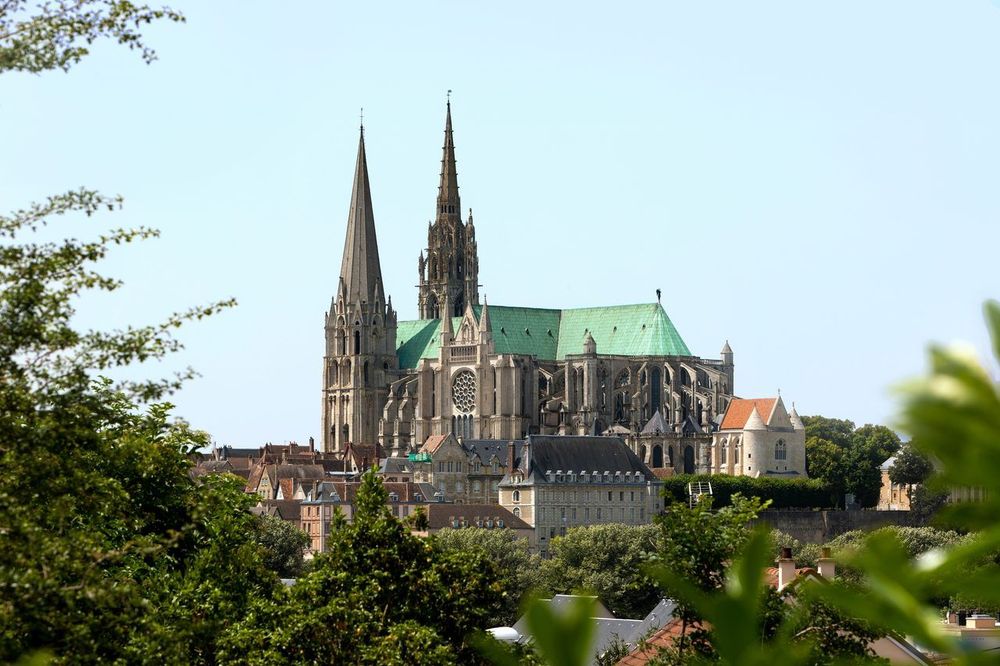
© Shutterstock
 Votre guide Ryo
Unusual Things to Do in Orléans: the 2026 Guide to Off-the-Beaten-Path Experiences
In Orléans, there's the city Joan of Arc liberated in 1429, and there's the one that slips under rooftops, underground, and onto the water without ever appearing on a postcard. An unusual visit to Orléans often begins with a disappointment: classic guides mention the cathedral and the town houses of the old quarter, but forget the underground passages closed to the public for half the year, the murals hidden in dead-end streets, or the fishing boat that still glides across the Loire every Saturday morning. To get a sense of the rest of the city, the Ryo audio-guided tour remains a good starting point before setting off in search of the unexpected.
In the pages that follow: a rooftop far cheaper than a ticket to the Eiffel Tower, perched atop a Gothic cathedral; a canoe-kayak base less than fifteen minutes from the city centre; an escape room that reworks the codes of the Arsène Lupin detective genre; and no fewer than six Loiret estates where you can sleep in a Nordic bath or a tiny house nestled in the middle of a forest. From understated street art and near-secret underground passages to thrills at altitude and great gourmet addresses, this guide covers everything from an impromptu afternoon to a full weekend in the Loiret.
Street Art and Guided Walks off the Beaten Path
Orléans does not have the edgy reputation of Bristol or Berlin when it comes to urban art, and that is precisely what makes hunting for murals so satisfying: nothing is signposted, everything has to be earned. Alongside street art, the city cultivates another tradition — guided walks that step outside the classic tourist trail. From strolls with a volunteer greeter to timed treasure hunts, these formats add an extra layer of storytelling to a simple wander, with the pedestrian rally offering an additional option for families. This is often where a successful unusual visit to Orléans begins, before diving deeper into the city.
Hunting for Murals and Street Art in the City Centre
Street art in Orléans does not leap out at you, and that is exactly why it is worth the detour. Unlike the monumental murals of Lyon or Angoulême, those in Orléans hide in inner courtyards, on construction hoardings, or around the corner of a dead-end street in the Bourgogne district. Keeping your eyes open and tracking down street art becomes a game in itself: spotting a silhouette painted on a blind wall on rue de la Charpenterie, or stumbling by chance upon a political collage near the Halles Châtelet.
Discovering Orléans street art happens at your own pace, with no ticket or set timetable. Allow an hour and a half to cover the city centre on foot, zigzagging between rue de Bourgogne and rue de la République, notebook or camera in hand. The works change from season to season as the city paints over some and new artists intervene, making each visit slightly different from the last. Some murals disappear within a few months, replaced by a new collective; others survive for years and become informal landmarks for local residents.
For a more structured immersion, several local collectives and the tourist office organise occasional themed walks dedicated to stencils and political murals, often in spring when façades regain colour after winter. Checking in advance avoids the classic pitfall: arriving on a day with no events and leaving with the feeling of having missed something.
Greeter, Pedestrian Rally, and Treasure Hunt: Walks That Make a Difference
A stroll with a greeter completely changes your perspective on the city. This volunteer local resident, trained by the tourist office, does not follow any script: they share their Orléans — the neighbourhood spots and Sunday morning habits. The experience is free, lasts about two hours, and must be booked a few days in advance as slots are limited.
Another way to explore Orléans city centre on foot without following a classic guide: the pedestrian rally. Armed with a booklet of riddles or an app, you move from landmark to landmark, the basilica replacing the starting square and a secret square often serving as the finish line. The format is particularly popular with families and groups of friends who want to turn a walk into a game.
In the same spirit but with more elaborate staging, the treasure hunt Les incontournables d'Orléans, designed by Paris Énigmes, offers a full-scale investigation through the streets of the historic centre. Allow two to three hours, a charged smartphone, and a desire to solve riddles connected to the city's history rather than simply following a map. The format works just as well for a couple's outing as for a creative hen or stag do.
These three ways of exploring Orléans on foot share one thing in common: they force you to slow down. You discover cobbled courtyards, old shopfronts, and architectural details that most hurried visitors never notice, stopping precisely where printed guides do not linger.
Taking in the View from the Rooftop of Cathédrale Sainte-Croix
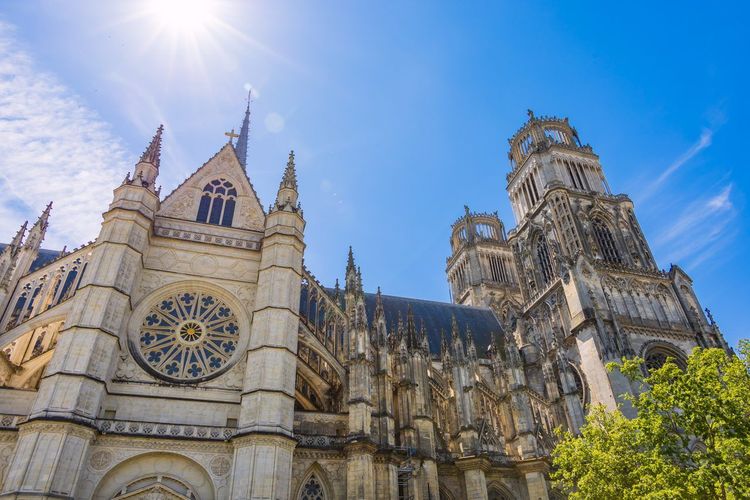
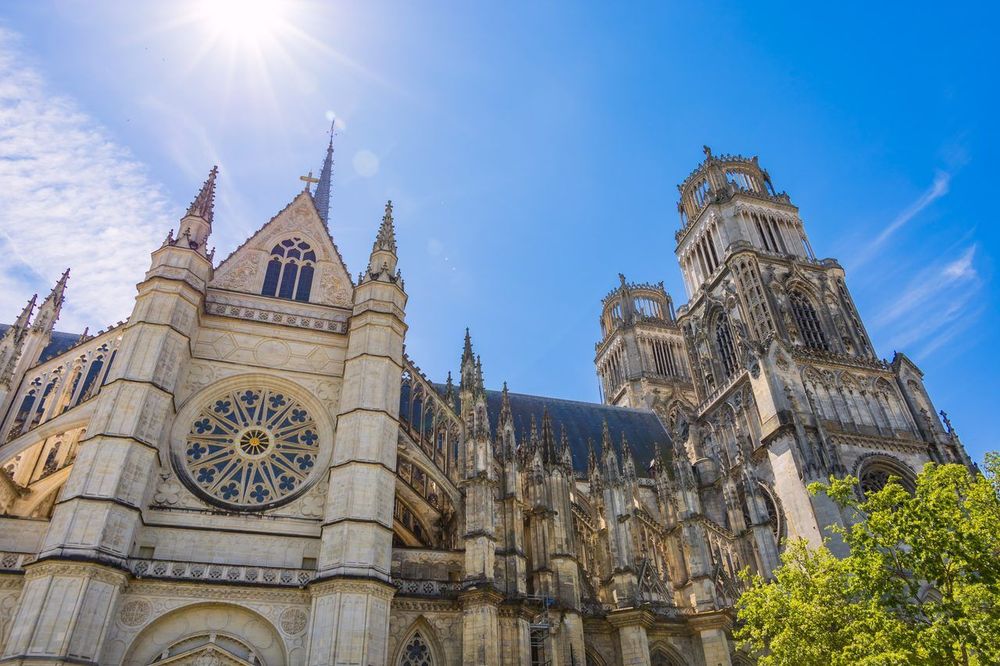
Going to the city's highest rooftop… it is the cathedral that provides it, and the word is no exaggeration. The tower climb at Cathédrale Sainte-Croix d'Orléans (Place Sainte-Croix, 45000 Orléans, rated 4.7/5 on Google across 12,269 reviews) leads to a vantage point more than 65 metres high, well above the slate rooftops of the historic centre.
The ascent is made via a spiral staircase of around 300 steps, accessible on guided tours at fixed times for most of the year. Allow 45 minutes for the round trip; flat shoes are recommended. At the top, the panorama takes in the Loire, the Pont George V, and on a clear day, the first outlines of the Sologne on the horizon.
The ticket is significantly cheaper than any Parisian rooftop, and the queue, outside July and August, rarely exceeds ten minutes. Book a late-morning slot: the raking light over the Loire around midday offers the best photographic result of the entire stay.
The Loire Another Way: Boat, Rowing Boat, Canoe, and Bicycle
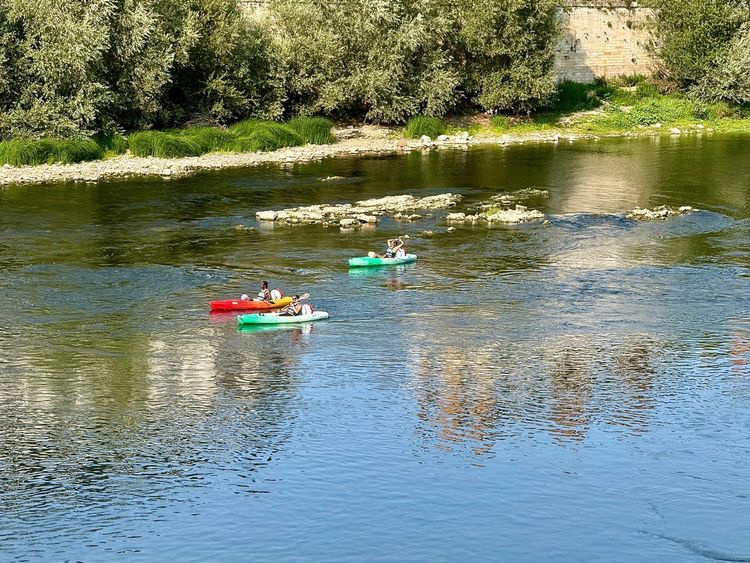
The Loire is not merely a backdrop for sunset selfies: it is a playground to explore in different ways — by boat, canoe, or bicycle. Each option reveals a different facet of the royal river, from river-trading traditions to a long-distance sporting route. Three formats stand out in particular for anyone wanting to go off the beaten path without straying far from the city centre.
Traditional Boat and Rowing Boat Trip on the Loire
Discovering Orléans by boat means boarding a replica gabare or fûtreau — the flat-bottomed vessels that once transported salt and wine along the Loire. Trips run from April to October, departing from the Quai du Roi, last about an hour, and are narrated by a boatman passionate about river history.
Taking a rowing boat on the Loire, in a more intimate version, allows you to glide along sandbars and small islets where grey herons and little terns nest. The pace is slow, almost silent — a world away from the bustle of the city centre just a few hundred metres away.
A traditional boat trip is best booked at weekends during high season, as places are limited to about a dozen passengers per outing. Bring a light layer even in summer: the wind on the water often catches visitors in t-shirts by surprise.
Canoe-Kayak Descent and Canoe Hire
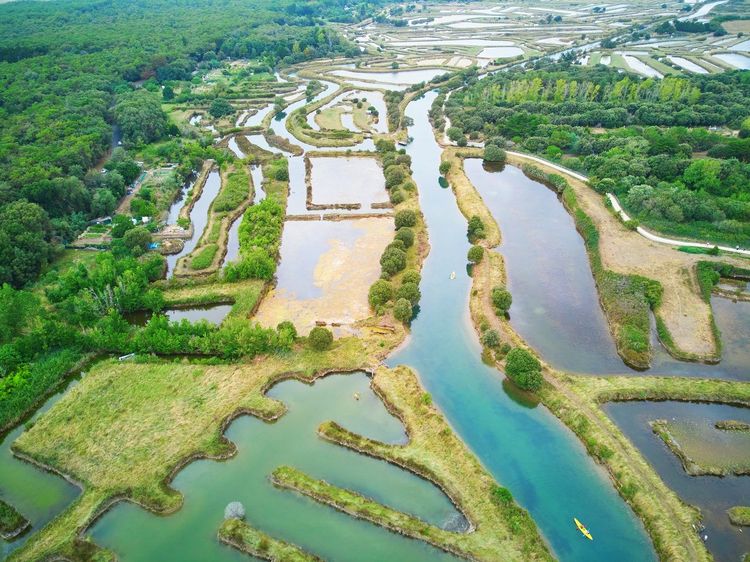
A canoe-kayak descent of the Loire is generally organised from a base located upstream of Orléans, for a two-to-three-hour drift downstream depending on water levels. No prior experience is needed: the river, wide and shallow at this point, is forgiving for beginners as long as levels remain moderate.
For a more independent outing, canoe hire at Saint-Denis-de-l'Hôtel, about fifteen minutes east of the centre, lets you plan your own itinerary between sandbars and small wild beaches.
Bring shoes that can get wet, a water bottle, and sunscreen: on the water, with no shade, the late-spring sun beats down harder than you might expect. Prices remain reasonable compared to other Loire Valley spots that are more touristy, such as Amboise or Chenonceau.
Cycling Along the Loire (Loire à Vélo)
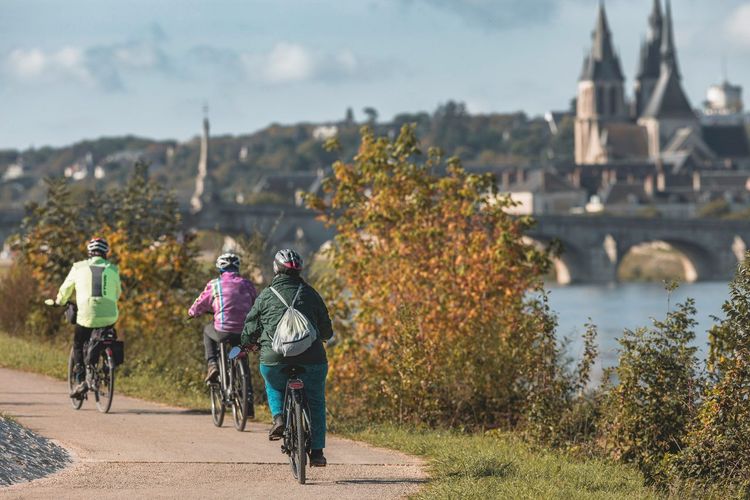
Setting off by bicycle along the Loire means joining a section of the Loire à Vélo network, one of Europe's most comprehensive cycle routes. From Orléans, the path follows the levee east to Châteauneuf-sur-Loire or west to Beaugency, with virtually no elevation gain.
Allow a morning for a comfortable return trip to the Parc floral de la Source, or a full day to reach Meung-sur-Loire. Bikes are easily hired in the city centre by the hour or day, with an electric option for longer distances — a good compromise for families with young children who might not manage the full distance on a classic bicycle.
Whatever format you choose, the water consistently offers the best vantage point on the monuments lining the river: the Pont George V, the redesigned quays, and the silhouette of the cathedral dominating the entire urban landscape. For anyone who already spotted these same landmarks at street level during the Ryo audio-guided tour of Orléans, seeing them again from the Loire — by boat or by bicycle along the levee — offers a complementary perspective that genuinely changes how you read the city.
Beneath the City: Underground Passages and Catacombs of Orléans
Beneath the cobblestones of the historic centre, Orléans conceals a network of caves, galleries, and former limestone quarries dug from the Middle Ages onwards to build the city above ground. People often loosely refer to visiting the catacombs of Orléans, though the term is misleading: unlike the Paris catacombs, there is no publicly visitable ossuary here. What does exist, however, is kilometres of vaulted cellars connected to one another, some of which once served as refuges during the successive sieges and bombings the city endured, notably during the Second World War.
Some of these galleries are open for occasional visits, during the European Heritage Days or on tours organised by local underground history associations. Access remains supervised: most of the networks belong to private owners or the town council, and unsupervised exploration is forbidden for obvious safety reasons, as not all galleries are stable. Some cellars belonging to city-centre businesses, however, open their doors during tastings or private events, offering a partial glimpse of this underground world without going through an official heritage visit.
Legends have long compensated for the scarcity of official visits. It is said that some passages connect former convents to the cathedral, or that they served as hiding places during the Wars of Religion. Each story is impossible to verify, but this air of mystery has for decades fuelled Orléans' reputation as one of the most intriguing unusual spots in the Loiret — long before the word unusual appeared in tourist guides.
For anyone who really wants to go underground, the best approach is to contact the tourist office or keep an eye on the heritage associations' programme: visit slots are rare and go fast, sometimes within just a few days. It is also one of the few unusual experiences in Orléans that cannot be summed up in a few minutes online, due to the lack of regular access — which makes it a truly special experience for those with the patience to wait for the right date.
A Different Kind of Culture at the Musée des Beaux-Arts
Spending some time at the MBA breaks the mould of the dusty museum people sometimes imagine. The Musée des Beaux-Arts d'Orléans (1 Rue Fernand Rabier, 45000 Orléans, rated 4.5/5 on Google across 1,156 reviews) holds one of France's finest provincial collections, with works by Velázquez, Correggio, and Gauguin, as well as a programme of temporary exhibitions that dares less academic angles: comic art, committed contemporary art, or dialogues between old works and digital creations.
Allow an hour and a half for a full visit, a little more if a temporary exhibition is added to the permanent route. The top floor, often overlooked by hurried visitors, houses a collection of 20th-century portraits well worth lingering over.
Admission is free for under-26s residing in the European Union — a detail that makes a real difference for students passing through. Check the weekly closing day before you go: like many municipal museums, the MBA closes one day a week.
Thrills and Adrenaline: Hot-Air Balloon, ULM, Skydiving, and Virtual Reality

For visitors who find a boat trip a little short on adrenaline, Orléans and the Loiret offer a range of decidedly more vertiginous experiences. From high-altitude flights to virtual reality immersion, these activities require advance booking — often several weeks ahead during peak season. For the most daring, a skydive rounds out the picture neatly. There is no obligation to stack them all into a single stay, but pairing an aerial experience with something more urban like an escape room makes for an excellent unusual weekend programme.
Unusual Flights Over the Loiret: Hot-Air Balloon and ULM
A hot-air balloon flight over Orléans reveals a geography no map does justice: the Loire winding between sandbars, the cathedral dominating a carpet of slate rooftops, and the wooded Sologne on the horizon. Take-offs happen early in the morning or at the end of the day when the wind dies down, for a flight of about an hour followed by a traditional champagne ceremony on landing.
For a more sporting sensation, a multi-axis ULM flight in the Loiret offers an entirely different viewpoint: faster, more manoeuvrable, often flown in a two-seater configuration with an instructor who provides live commentary during the overflight. Allow 30 to 45 minutes of flight time; helmet and microphone are provided.
Both experiences are heavily weather-dependent: a flight cancelled due to wind is generally rescheduled at no charge, but it is better to build some flexibility into your itinerary rather than scheduling the outing on your last available day.
Virtual Reality, Escape Rooms, and Skydiving
A virtual reality experience in Orléans lets you channel the adrenaline without leaving solid ground. Several VR rooms in the city centre offer team scenarios — from co-operative heists to zombie escapes — in spaces equipped with headsets and motion sensors. Some venues add physical props such as vibrating vests or connected replica weapons to deepen the immersion beyond a simple headset.
In a more classic but equally immersive vein, the escape room Arsène in Orléans reworks the codes of Arsène Lupin-style heists, while the Discoclub escape room transports players into a reconstructed disco atmosphere with a period soundtrack. Both formats accommodate two to six players and last about an hour.
For those after more radical thrills, a tandem skydive near Montargis, just under an hour's drive from Orléans, combines a plane ascent, roughly 45 seconds of freefall, and a several-minute parachute descent over the Gâtinais countryside. The experience is open to those aged 15 and over with no prior experience required, but booking well in advance during the summer period is essential.
Finally, for groups wanting to chain several challenges in a single day, Jump Virtual Arena in Orléans combines trampolines, inflatable structures, and jumping zones — a particularly suitable option for families with children or for stag dos.
Budget-wise, expect to pay between €90 and €150 for a hot-air balloon or ULM flight, around €20 for a VR session or escape room, and around €250 for a tandem skydive all-inclusive. These prices vary noticeably by season and provider, but give a rough guide for building a realistic budget before booking several activities in a single stay.
Fun Workshops and Activities with Friends: Karaoke, Painting, and Electric Motorbike

Not every unusual experience in Orléans requires jumping out of a plane or going underground. Some are simply enjoyed with friends — around a microphone, a paintbrush, or an electric handlebar. This lighter register complements a stay built around more intense outings, and is particularly well suited to hen and stag dos, colleagues' birthday celebrations, or simply the desire for a different kind of evening.
Private Karaoke, Music Quiz, and Karaoke Box

The private karaoke and music quiz at Noraebang in Orléans takes the Korean concept of closed-room karaoke: each group books their own room, equipped with a sound system and a catalogue of several thousand tracks in French, English, Korean, and Spanish. The music quiz format, offered on certain evenings, adds a competitive dimension between teams across several rounds of track recognition.
A karaoke box in Orléans, on the same private-room principle, can be booked by the hour with no excessive minimum spend, making it a flexible option for a spontaneous evening between two visits. Rooms are generally booked online, with notably high demand on Friday and Saturday evenings.
These formats work particularly well in groups of six to ten, where the awkwardness of the first microphone quickly fades in the collective atmosphere. Book at least a week ahead for a Saturday evening in the city centre, and check whether the price includes drinks or only the room hire.
Creative Workshops and Electric Motorbike Rides
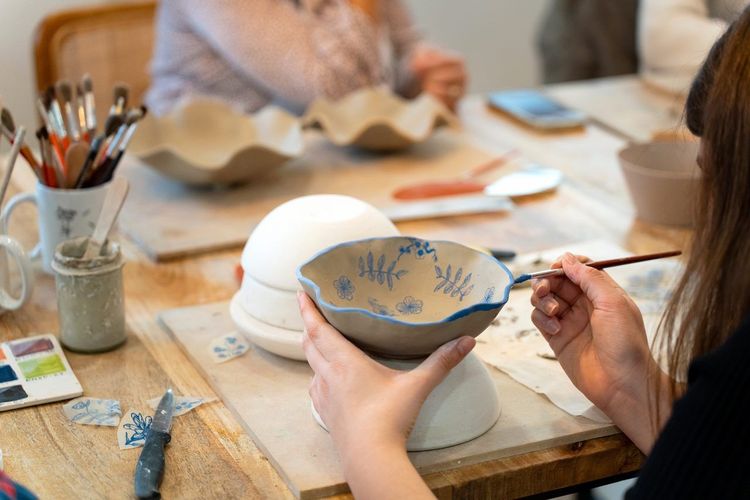
A painting workshop at Artéphé in Orléans introduces oil or acrylic painting techniques over a two-to-three-hour session, with no prior level required. The relaxed atmosphere focuses on the pleasure of painting rather than technical performance, with a glass of wine or coffee offered depending on the package chosen.
Another creative option, a jewellery-making and breakfast workshop in Orléans combines crafting simple pieces — such as bracelets or earrings — with a convivial brunch moment, a format particularly popular for morning hen dos.
For a change of pace, an electric motorbike ride in Orléans lets you explore the surroundings without noise or pollution, on machines that do not require a motorbike licence for the most accessible models. The guided electric motorbike ride with Full Mobility takes the group on a one-to-two-hour route between the city centre and the banks of the Loire, helmet and safety briefing included. Groups often benefit from a sliding-scale rate from six participants onwards — a detail worth negotiating directly with the provider. Back on foot afterwards, Orléans' own audio-guided tour is a good way to slow the pace back down through the old town.
These combined outings make for an excellent afternoon with friends, to slot between two more cultural visits and keep energy levels up until the evening.
Nature and Fresh Air in the Loiret: Axe Throwing, Paddleboarding, and Cinema Dogs
About forty minutes south-east of Orléans, the Étang de la Vallée (Combreux, 45530 Combreux, rated 4.3/5 on Google across 358 reviews), near Combreux, brings together several little-known outdoor activities that hurried city-centre visitors miss entirely. Three of them are worth the trip for their originality alone.
Axe throwing at the Étang de la Vallée has developed in recent years along the same lines as the urban venues dedicated to the discipline, but outdoors among the pines of the Orléans forest. Supervised by an instructor, the session lasts about an hour and suits beginners as well as groups looking for something a little different from a simple treetop adventure course.
Paddleboard hire at the Étang de la Vallée lets you enjoy the lake at your own pace, whether on a leisurely family outing or a more sporty session for those wanting to work on their balance. The water, calm and shallow at the edges, is well suited to complete beginners.
Even more surprising, a meet-and-greet with cinema-famous dogs near Orléans offers a behind-the-scenes look at animal training for film and advertising, with presentations of the dogs, training demonstrations, and sometimes a photo session. This type of experience, rare in France outside the Paris region, rounds off a Loiret day trip perfectly for families with animal-loving children.
These three activities can easily be combined into a single day if booked in advance, and naturally extend the discovery of Orléans into the Loiret countryside for anyone wanting to venture beyond the strictly urban perimeter, as detailed in our Ryo article on things to do in the Loiret around Orléans.
Unusual Overnight Stays: Châteaux and Cabins in the Loiret
Where can you sleep in a truly unusual way in Orléans? The answer is not always found in the city itself, but in the Loiret countryside surrounding it, less than an hour's drive away. Between châteaux that open their reception rooms for a private evening and quirky accommodation scattered through the woods, the département counts a handful of addresses that turn a simple overnight stay into an unusual experience in its own right. This chapter lists the most noteworthy options, deliberately excluding those too far from Orléans, in Loir-et-Cher or Indre-et-Loire.
An Evening or a Night in a Loiret Château
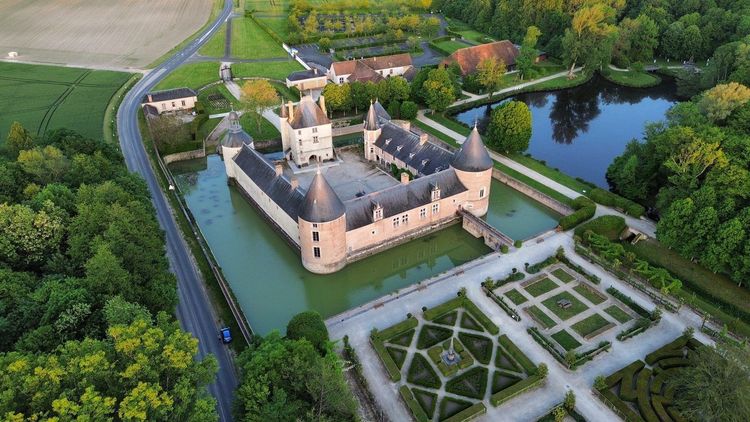
Spending an evening in a Loiret château means experiencing, through a private tour or a candlelit dinner, the atmosphere of a historic residence far from the crowds of classic group visits. The Château de Chamerolles, in Chilleurs-aux-Bois, for instance, offers themed evenings centred on its reconstructed Renaissance gardens and its collection dedicated to historical perfumes.
Other Loiret estates open their doors for unusual overnight stays in guest rooms within the château itself — a formula that lets you dine in a state room and then sleep beneath a 17th-century French ceiling. Rates, noticeably higher than a standard hotel, generally include a private visit outside public opening hours.
To extend the experience beyond Orléans, the Loire Valley is full of other châteaux to explore over several days: the Ryo Châteaux de la Loire road trip offers a complete itinerary for those who want to visit Chambord, Chenonceau, or Cheverny after passing through Orléans.
Cabins, Tiny Houses, and Nordic Baths near Orléans
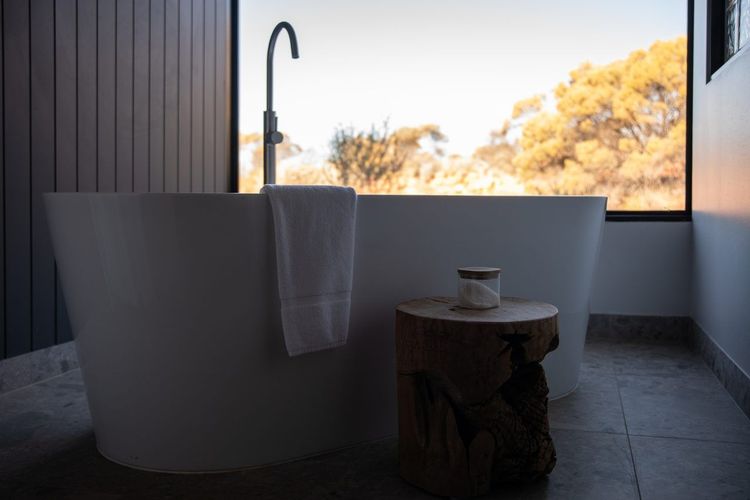
The Loiret has several estates dedicated to unusual stays in the heart of nature, often grouped into small hamlets of independent cabins. La Démaillère (45740 Lailly-en-Val), in Lailly-en-Val, pairs a wooden cabin with a private wood-fired Nordic bath — a formula that is particularly sought-after in autumn and winter when steam rises into the cold air.
Near Cravant, Parcel Tiny House (Cravant, 45190 Cravant, rated 4.8/5 on Google across 25 reviews) installs its wooden modules in the Loiret countryside, with a private terrace and open views over the surrounding fields, far from any noise pollution.
A little further north, in Chambon-la-Forêt, the Parenthèse Tiny House estate offers several units named after stars, each with its own décor and Nordic bath or outdoor tub. On the shores of the Étang de la Vallée at Combreux, already mentioned for its water activities, several Seasonova properties offer stilt lodges and upmarket mobile homes with water views. Finally, in Vieilles-Maisons-sur-Joudry, the Kenya tent set up near the Étang des Bois takes the exotic concept to its logical conclusion, with a comfort level close to that of an African safari lodge in the middle of the Sologne.
This variety of options, all within less than an hour of Orléans, makes it possible to tailor an unusual stay to your needs — from a quiet romantic night to a family weekend with nature activities right on the doorstep. Expect to pay between €150 and €350 per night depending on the package and season, with a private Nordic bath or breakfast pushing the total higher.
These properties are often fully booked several weeks in advance, particularly on spring and autumn weekends when demand peaks. Booking mid-week, outside school holidays, remains the best strategy for finding a last-minute Nordic bath and benefiting from a lower rate than in peak season.
Unusual Dining: Local Specialities and Great Addresses in Orléans
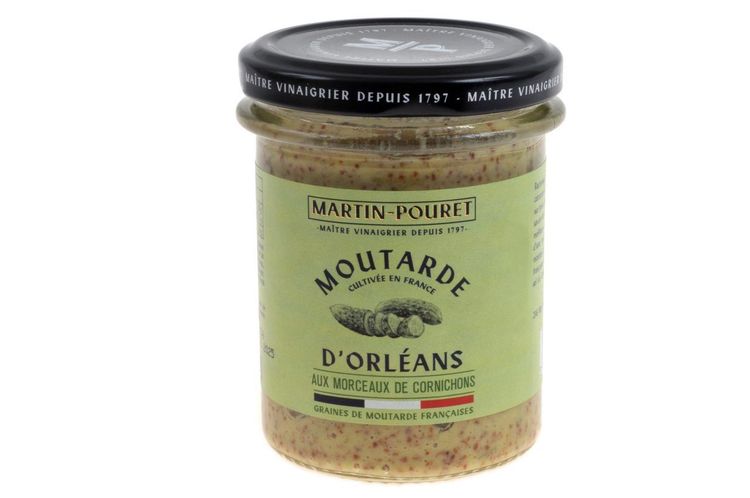
Taking time to discover the city's specialities — Orléans vinegar and mustard — is well worth a pause before sitting down to eat. Long France's vinegar capital, thanks to its position as a river port on the wine route, Orléans has retained a last artisan vinegar producer that perpetuates a slow fermentation method in oak barrels, very different from the industrial process used elsewhere. Some of these houses open their cellars for a short guided visit — a chance to understand why this vinegar once travelled to royal tables before the rise of production in Dijon. Orléans mustard, for its part, stands apart through a recipe that uses no white wine, unlike Dijon mustard, giving it a rounder, less pungent flavour.
Both products can easily be tasted during a workshop visit or brought back as a souvenir from a city-centre deli — a far more original gift than a fridge magnet.
On the unusual restaurant front in Orléans, several venues play on setting rather than a simple gastronomic menu: a 15th-century vaulted cellar converted into a dining room, a floating restaurant moored on the Loire in summer, or an establishment where food is cooked over a wood fire visible from the dining room. These formats cost on average €10 to €15 more than a standard city-centre restaurant — a premium well justified by the experience. Booking a table on the floating terrace requires planning well ahead from the first fine days, as spots vanish within days each spring.
For those with a sweet tooth, a few city-centre pâtisseries revisit local specialities in a modern guise — from macarons with Orléans vinegar to mustard tart as an unashamedly sweet-savoury dessert, a curiosity that consistently surprises visitors.
To go further on this gastronomic chapter, our Ryo article on the culinary specialities of Orléans details the best addresses and the products not to miss before heading home.
Practical Information: Where to Sleep, Weather, and Length of Stay
Before you go, a few practical pointers help you plan an unusual stay in Orléans without any nasty surprises: how long to allow, the right accommodation, and the best season to make the most of outdoor activities. This chapter condenses the essentials without duplicating a full itinerary, already detailed elsewhere for those who want a day-by-day programme.
Where to Sleep in Orléans for an Unusual Experience
Where to sleep in Orléans depends mainly on the type of experience you are looking for. For a full immersion in the historic centre, it is best to choose a hotel or bed and breakfast in the old quarter, within walking distance of the cathedral and the quays. For a more markedly unusual overnight stay, head instead to the Loiret accommodation options mentioned above — châteaux, cabins, Nordic baths, or safari-style tents — though these require having a vehicle.
A compromise exists for those who want to sacrifice neither option: sleep in the city for one night, then head to an unusual Loiret estate for the second, alternating urban heritage and fresh air in a single stay. Getting between the two is straightforward: the departmental road network is dense and most estates can be reached in under forty-five minutes from the centre of Orléans without using the motorway.
Weather and Best Time to Visit
The weather in Orléans is fairly mild throughout the year, with hot but rarely sweltering summers and mild winters for the Centre-Val de Loire region. Spring, from April to June, offers the best balance for combining outdoor activities — canoeing, cycling, paddleboarding — with urban visits, without the heat or the crowds of July and August.
Autumn, often underestimated, is particularly well suited to Nordic bath or forest cabin stays, when the russet leaves of the Orléans forest create an ideal backdrop. Ideal length of stay: two days are enough for an unusual overview of the city centre and one major activity such as a hot-air balloon flight or a canoe descent, while three days allow you to add a nature component or a château night in the Loiret — a format detailed in our Ryo guide to visiting Orléans in 3 days.
FAQ
How much time should you plan for an unusual visit to Orléans?
One day is enough for an unusual overview of the city centre: the cathedral rooftop, a street art hunt, and an escape room or VR session in the late afternoon. To add a more intense activity such as canoeing, a hot-air balloon ride, or a night in a Loiret château, plan two to three days instead. A full weekend lets you combine city and countryside without rushing.
What are the must-do unusual experiences in Orléans?
The rooftop of Cathédrale Sainte-Croix, the Les incontournables d'Orléans treasure hunt, a canoe-kayak descent on the Loire, and an evening in a Loiret château are among the most memorable experiences. Add to that the understated street art of the Bourgogne district and creative workshops with friends — karaoke or painting — to vary the pleasures within a single stay.
Can you visit the catacombs or underground passages of Orléans?
There is no publicly visitable ossuary as in Paris, but Orléans has a vast network of medieval caves and galleries, partially accessible during occasional visits organised by local associations or during the European Heritage Days. Free access is prohibited for safety reasons; it is best to check with the tourist office for upcoming dates.
Where can you sleep in an unusual way near Orléans, in the Loiret?
Several Loiret estates offer unique overnight stays within less than an hour's drive: a Nordic bath at La Démaillère (Lailly-en-Val), tiny houses in Cravant or Chambon-la-Forêt, stilt lodges at l'Étang de la Vallée (Combreux), or a Kenya tent near Vieilles-Maisons-sur-Joudry. Some châteaux in the area also open their doors for a privatised evening or night.
Which unusual restaurant should you choose in Orléans?
The city centre has several venues that bet on atmosphere as much as food: a medieval vaulted cellar, a floating terrace on the Loire in summer, or a kitchen with a wood fire visible from the dining room. These establishments also let you taste local specialities — Orléans vinegar and mustard — in a setting that goes beyond the ordinary.
What is the best time of year for an unusual visit to Orléans?
Spring and early autumn offer the best balance between pleasant weather and moderate crowds. Autumn and winter are particularly well suited to Nordic bath or cabin stays, when the cold makes the experience feel more authentic.
What unusual things can you do in the Loiret, around Orléans?
Beyond the city, the Loiret offers axe throwing and paddleboarding at l'Étang de la Vallée, a meet-and-greet with cinema-famous dogs, a tandem skydive near Montargis, and several estates offering unusual overnight stays between châteaux and forest cabins — more than enough to fill a full weekend in the countryside around the city.
The unusual side of Orléans is definitely not limited to a handful of anecdotes found online. Between street art to track down, the Loire to explore by every means possible, thrills at altitude or underground, and unique overnight stays scattered across the Loiret, the city and its countryside offer more than enough to fill a weekend without ever falling back on the same tourist clichés.
The best strategy is to mix registers: a cultural morning at the MBA or tracing street art, a more physical afternoon canoeing or cycling, and an evening that breaks completely from the rest — private karaoke or an escape room depending on the group's mood. To get the essential historical bearings before heading off on an adventure, the Ryo audio-guided tour of Orléans remains the most efficient starting point: twenty-three audio tracks and less than two hours are enough to understand why the city has left such a mark on the history of France, before leaving the beaten path behind.
À lire également