© Shutterstock
 Votre guide Ryo
Canyoning in Auvergne: the Best Canyons and Practical Tips (2026)
The dark waters of the Alagnon roar through a rocky bottleneck barely two shoulders wide — your first abseil into the void, and the canyon reveals itself in all its scale. Canyoning in Auvergne is one of those well-kept secrets of the Massif central: making your way through a network of gorges carved over millennia into basalt and volcanic granite, where the streams of Cantal and Puy-de-Dôme have sculpted passages that no one can perceive from the road. The region has around thirty accessible sites between June and September, from family-friendly canyons suitable for children aged 8 to major waterfall abseils of more than 40 metres reserved for experienced practitioners. This guide covers the nine most striking sites, from Haut-Cantal to the Sancy massif, with grade information and contacts for finding a qualified guide. Before or after your descents, take the time to explore the region: the Ryo audio-guided tour of Clermont-Ferrand offers 21 points of interest in 2h10 at the heart of Auvergne's black diamond.
Why Auvergne Is an Ideal Playground for Canyoning
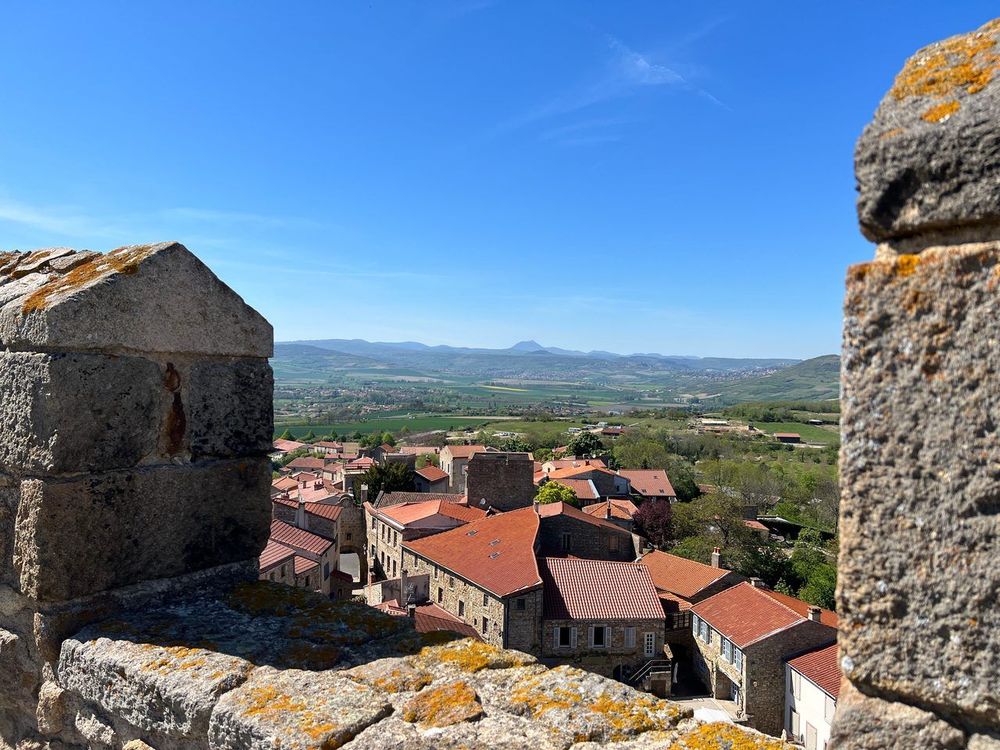
Canyoning in Auvergne benefits from an exceptional geological context: the volcanoes of the Massif central have created a landscape of permanent contrasts, where plateaus at 1,000–1,800 m in altitude feed high-flow rivers that plunge sharply into deep gorges. The volcanic rocks — basalt, phonolite, granite — form smooth walls ideal for natural slides and deep pools. It is the perfect combination for canyoning: cold water, narrow gorges, jumps and abseils in a uniquely volcanic setting.
Cantal concentrates the majority of spots. The department combines descending rivers with substantial flow rates fed by Atlantic rainfall and snowmelt: the result is around ten canyons accessible in good water conditions from May. Puy-de-Dôme, for its part, offers gentler sites around the Sancy massif, perfect for a family introduction with no prior experience.
Within a radius of 80 km around Aurillac, you will find at least six classified sites covering all levels from 1 to 4+. Hard to beat anywhere in mainland France for a landlocked department, far from the Alps and the Pyrenees.
What Season Is Best for Canyoning in Auvergne?
The ideal window runs from mid-May to mid-September. Before this period, flow rates can be too high — particularly in April and early May after snowmelt on the volcanoes — and water temperatures drop below 8 °C, making descents gruelling even in a thick wetsuit.
June and July are the benchmark months: flow rates are stable, pools are well filled, and the long days allow you to set off in the early afternoon without rushing. August is manageable, but drought periods can reduce the flow on certain lightly fed canyons. In September, the first autumn rains revive the rivers; some local guides consider this the best month for clear water conditions and significantly reduced crowds.
Avoid the 48 hours following violent thunderstorms: the deep gorges of Cantal fill up very quickly during intense rainfall events. Check the flood bulletins on Vigicrues before each outing in mountain areas.
Cantal: the Epicentre of Canyoning in Auvergne
The Jordanne Waterfalls
The Jordanne waterfalls are one of the most spectacular entry points into canyoning in Cantal. The canyon unfolds over approximately 2 km through a corridor of dark basalt, with several successive jumps of 3 to 6 metres and a final abseil of 12 metres deep in the heart of the gorge. The entry point is at Saint-Cirgues-de-Jordanne, about fifteen kilometres south of Aurillac, in the glacial valley of the Jordanne.
The grade remains accessible: it is a discovery canyon where most jumps and abseils can be bypassed, making it suitable for families with children from age 8 with professional supervision. Local providers offer this descent as a half-day trip (around 2h30), combinable with the nearby Cornillou for a full day.
The Jordanne remains one of the best choices for a first canyoning experience in Auvergne, with gentle and progressive sections. The Jordanne valley is home to several approved operators offering packages tailored to groups with no prior experience.
The Haut-Alagnon Canyon
Less frequented by passing visitors, the Haut-Alagnon canyon offers one of the finest introductory descents in the department, set against a spectacular volcanic backdrop. The site is located at the foot of the Lioran resort, in the commune of Laveissière, upstream in the Alagnon valley at over 1,000 m altitude.
The route strings together natural slides carved into basalt, small jumps (3 m maximum, all bypassable) and three short abseils, making it accessible to accompanied children from age 8. Allow around 2h30 for the descent, in water that stays cold even in midsummer.
This is one of those Auvergne canyons where the scenery changes radically at every bend: walls several dozen metres high, lush vegetation hanging above the water, and filtered light cutting the gorge floor into bright diamonds. A site that captivates families and lovers of volcanic landscapes in equal measure.
The Espinasse Canyon
More demanding than its neighbours, the Espinasse canyon (Le Vaulmier, 15310 Cantal, rated 4.8/5 on Google from 25 reviews) is considered by many practitioners to be the most complete canyon in Cantal, reserved for those who already have experience. The short version strings together several abseils including an impressive 45-metre abseil, while the long version features up to 12 abseils, jumps of up to 6 m and long slides, over a half-day to full day. The canyon is located in the commune of Le Vaulmier, in the Monts du Cantal.
The grade is significantly higher (3 to 4 depending on flow): Espinasse is aimed at experienced groups in good physical condition and comfortable on long abseils. The water is particularly clear in June, fed directly by plateau springs. Seasoned practitioners often combine it with Argence for a sporting stay in the Monts du Cantal.
Cornillou and Argence: Two Gems of Cantal
The Cornillou is perhaps the most photogenic canyon in the department. Wedged into a narrow fault less than 2 m wide in some sections, it offers a succession of potholes, slides (bypassable jumps up to 8 m) and a 25-metre zip line in an open-air cave setting. Discovery grade, 2h30 duration, accessible from age 8 with professional supervision.
What sets Cornillou apart from other sites in the region: the aquatic atmosphere is total. The walls nearly meet above participants, creating a striking underground feel — ideal for those seeking strong visual sensations without the technicality of long abseils. If you can only do one canyon in Cantal with a mixed group of beginners and experienced practitioners, this is the one.
Argence is a different proposition: an open, high-volume canyon with waterfalls visible from a distance and aerial abseils. The site is located in the south of Cantal, in the valley of the Argence Vive, about twenty kilometres from Saint-Flour. More demanding, it is accessible from age 13: the flow remains sustained through August thanks to the altitude of the catchment area, guaranteeing good conditions in midsummer.
The two canyons are often offered together as a weekend package by providers in the area: from the family-friendly Cornillou to the more sporty Argence, a complete programme for discovering the Massif central at multiple levels.
The Bromme Canyon: Cantal's Hidden Gem
The Bromme canyon (Riom-ès-Montagnes, 15400 Cantal) remains under the radar: few online guides mention it, and that is precisely its appeal. This small tributary of the Rhue descends through a gorge of phonolite — a blue-grey volcanic rock with sharp edges — over approximately 1.5 km.
This is a committed canyon reserved for fit and experienced practitioners: allow a full day on site and ensure good physical condition. The arrival pool, nestled in a rocky cirque enclosed by a 10-metre waterfall, is one of the finest views in Cantal. Check with providers in Aurillac or Riom-ès-Montagnes for the latest conditions — this canyon has no dedicated on-site office.
Canyoning in Puy-de-Dôme and the Sancy Massif
Puy-de-Dôme is often identified as a hiking or skiing destination, but it conceals little-known canyons around the Sancy massif, mainly in the Super Besse area and in the valleys that descend towards Murol.
Ricou La Peyre
Ricou La Peyre is one of the massif's emblematic canyons, accessible through providers in the Murol and Besse area. It lines up eleven waterfalls ranging from 4 to 45 m and ends with a long aerial abseil: a route for already-initiated practitioners, accessible from age 12 with supervision. The verdant setting contrasts sharply with the mineral austerity of the Cantal gorges.
The descent takes around 2h30 and must be done with a guide, given the final abseil. For a genuine first outing with no technical commitment, the discovery canyons of Cantal (Jordanne, Cornillou) are preferable. Pair it with a swim in Lac Chambon, 3 km away by car.
Le Sagnarade
The Sagnarade is one of the introductory canyons of the Sancy: waterfalls and abseils over rocky blocks, without large pools, on a route of around 2h30. Discovery grade, accessible to beginners with a guide.
The altitude of the Sancy keeps the water cool even in July: a thick neoprene wetsuit remains recommended, and the mineral setting takes on an almost alpine feel in places. To extend your stay with hiking in the area, find the most beautiful hikes in Puy-de-Dôme on Ryo.
The Besse Canyon
Around Besse-et-Saint-Anastaise and the Super Besse resort, several providers offer guided canyoning outings. The canyon de Besse (Besse-et-Saint-Anastaise, 63610 Puy-de-Dôme, rated 5/5 on Google from 4 reviews) itself strings together abseils on waterfalls of 15 to 20 m with a predominance of slides, over around 2 hours. Intermediate to sporting grade, best suited to practitioners who have already descended a canyon.
This area concentrates most of the packaged 'Sancy canyoning' offer: half-days, full days with equipment rental, or two-day courses to progress across several consecutive sites. If you are spending a week at Super Besse, canyoning fits naturally into an outdoor programme alongside cycling, hiking and downhill mountain biking.
Which Canyon Should You Choose Based on Your Level?
Here is a clear guide to help you choose before booking:
Complete beginner (never done canyoning): Jordanne waterfalls, Cornillou or Haut-Alagnon. These are discovery canyons with bypassable obstacles, accessible from age 8. No prior technique required, professional supervision mandatory. Allow 2h30 for the outing, equipment provided on site.
Intermediate (1 or 2 previous outings): Ricou La Peyre (from age 12) and Argence (from age 13). Guided abseils, good general fitness sufficient. Being able to swim and having no fear of heights are the two basic conditions.
Experienced (5+ outings, confident on abseils): Espinasse, Bromme canyon and canyon de Besse. Long outings, cold water, major abseils up to 45 m, technical passages. A local guide is still strongly advised for reading water conditions, even for seasoned practitioners.
Family with children: Jordanne waterfalls, Cornillou and Haut-Alagnon, all accessible from age 8 on discovery routes. Always check minimum age and weight restrictions with your provider — some slide sections impose safety thresholds.
Safety and Equipment: What You Need to Know Before You Descend
Canyoning is not an improvised activity. Three pieces of equipment are non-negotiable as soon as you enter a canyon in Auvergne:
The neoprene wetsuit (4 to 5 mm minimum): even in midsummer, the water in Auvergne's gorges rarely exceeds 16 °C. Hypothermia sets in faster than you might think when alternating swimming, abseils and stationary immersion in pools. At altitude — Sancy, Haut-Alagnon — always opt for 5 mm.
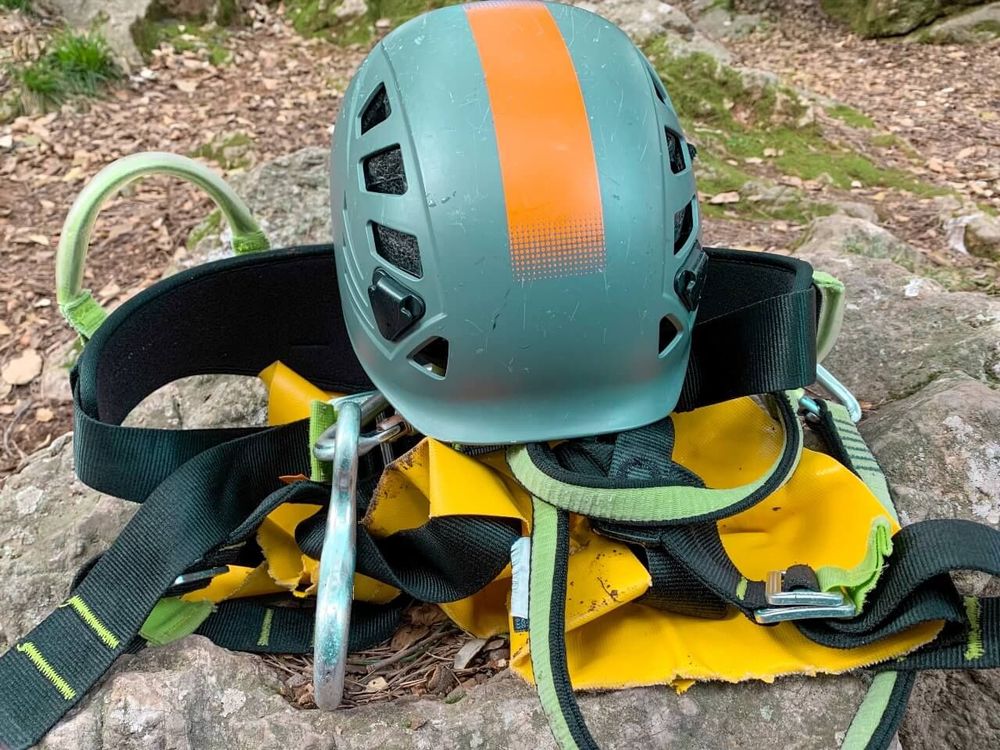
Helmet and harness: provided by approved operators. For independent outings, invest in certified equipment (EN 12492 standard for canyon helmets, CE for harnesses).
The abseil rope: for independent outings at level 3+, a 50-metre rope, 8.5–9 mm diameter covers the vast majority of Auvergne canyons. Always check the in-situ anchor points before loading the rope — some sites have downgraded anchors between seasons with no warning.
On the regulatory side, no prefectural authorisation is required. However, the Parc Naturel Régional des Volcans d'Auvergne, which covers a large proportion of the Cantal and Puy-de-Dôme sites, imposes behavioural rules: no trampling of riverbanks, no fires in the gorges. Understanding the volcanic terrain also helps anticipate flash floods — the essential volcanoes of Auvergne on Ryo provide useful geological context for understanding why these rivers rise so quickly.
Where to Find a Guide or Canyoning School in Auvergne
For a first outing or on a level 3+ site, a state-certified mountain guide (AMM) is the benchmark. In Auvergne, approved providers are listed by the departmental services of Cantal and Puy-de-Dôme responsible for nature sports, with lists available on their official websites.
Provider concentration areas:
- Aurillac and the Jordanne valley: established operators for the Jordanne, Cornillou and Espinasse
- Riom-ès-Montagnes and Saint-Flour: for the Bromme and Argence canyons
- Besse-en-Chandesse and Murol: for the Sancy sites (Ricou La Peyre, Sagnarade, canyon de Besse)
Expect between €45 and €80 per person for a guided half-day with equipment, and €80 to €130 for a full day. Two-day courses run at around €200–250 all-inclusive. Booking is recommended in July–August, particularly for the Jordanne and Ricou La Peyre, whose slots fill up several weeks in advance.
The Fédération Française de Spéléologie (FFS) also publishes a list of local clubs practising sport canyoning with open access — an economical option for already-trained practitioners looking to join local groups.
Between Descents: Exploring Clermont-Ferrand and Vichy
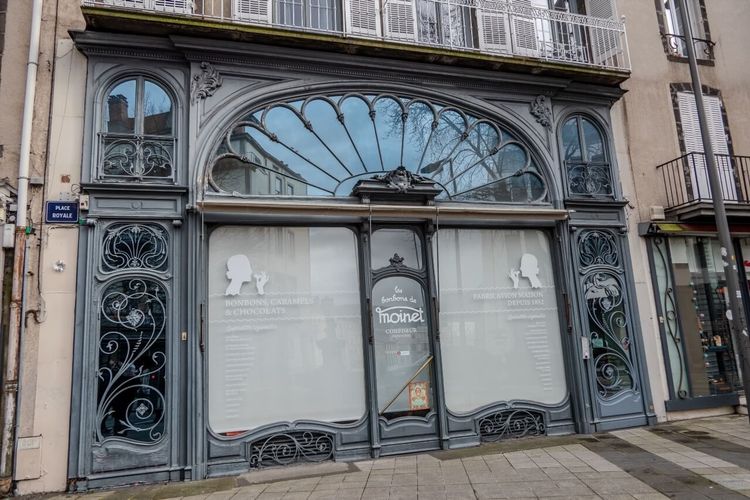
Two cities are worth a stop before or after your canyoning, and Ryo offers complete audio-guided tours of both.
Clermont-Ferrand is the ideal logistical base. Well connected via the A75, it concentrates accommodation, car rental and access to both departments. The Notre-Dame-de-l'Assomption cathedral in black volcanic lava, the Place de Jaude and the lanes of old Montferrand are worth a half-day visit. The Ryo audio guide of Clermont-Ferrand offers 21 points of interest in a 2h10 walk — an efficient way to discover the city between sporting outings, without missing out on local anecdotes.
Vichy, 50 km to the north, is another remarkable option for a recovery night or a day off between descents. The spa town preserves impressive Belle Époque architecture; the historic baths, the Parc des Sources and the opera house are all within a one-kilometre radius. The Ryo audio-guided tour La fièvre de l'eau in Vichy covers 28 points of interest in 1h35, with stories about the city's thermal and political history that make a refreshing change from gorges and abseils. To plan your stay in the area, Ryo lists activities around Vichy within a 30 km radius. On the Clermont-Ferrand side, our 22-stop audio walking tour loops from the Place de Jaude through the old town in a little over two hours.
FAQ
Is canyoning in Auvergne accessible to beginners?
Yes, provided you choose the right site and are accompanied by a qualified professional. The Jordanne waterfalls, Cornillou and Haut-Alagnon, all in Cantal, are discovery canyons specifically tailored to beginners: no prior technique is required, jumps and abseils can be bypassed and the slides remain gentle. A basic level of fitness — being able to swim and walk on uneven terrain — is the only real prerequisite.
Can families with children go canyoning?
Several sites are suitable from age 8: the Jordanne waterfalls, Cornillou and Haut-Alagnon are Cantal's family benchmarks, with bypassable obstacles. Ricou La Peyre and Argence require a higher minimum age (12–13 years). In all cases, a professional provider is mandatory for groups with minors. Ask about minimum height and weight restrictions — some slide sections impose safety thresholds that providers communicate at the time of booking.
Do you need a guide for canyoning in Auvergne?
For levels 1 and 2, experienced practitioners can descend independently, provided they know the site or have done a prior reconnaissance. For level 3 and above, accompaniment by a state-certified AMM guide is strongly recommended, particularly in variable water conditions. Outside the peak season, some level 2+ canyons present changing conditions that exceed the judgment of an amateur, even an experienced one.
What is the best time of year for canyoning in Cantal?
June and September are the two ideal months: stable flow rates, well-filled pools, and lower footfall than in midsummer. May is possible but the water remains cold (6–10 °C) after snowmelt on the volcanoes. In August, watch for drought periods that can drain some secondary canyons of their minimum flow. September often offers the best water visibility, after the summer heat that loads rivers with suspended matter.
How much does a day of canyoning in Auvergne cost?
A guided half-day with equipment comes to €45–80 per person. A full day ranges between €80 and €130. Two-day courses run at around €200–250 all-inclusive. Equipment rental alone (wetsuit, helmet, harness) costs between €15 and €20 if you descend independently with a provider that offers this service.
Is canyoning practised in Puy-de-Dôme?
Yes, mainly around the Sancy massif and the Besse/Super Besse area. The department offers fewer sites than Cantal, but the offering covers several levels, from introductory canyoning (Sagnarade) to more challenging routes (canyon de Besse). Providers in Murol and Besse-en-Chandesse offer guided outings from May to September, often combined with other outdoor activities at the resort.
Conclusion
From the long abseils of Espinasse to the family slides of the Jordanne: Auvergne establishes itself as a serious canyoning destination, long overlooked in favour of the Pyrenees or the Alps. Nine accessible sites, all levels covered, competent providers and a season running from May to September — a compelling case for building an outdoor stay in the Massif central.
Round out your stay by exploring the region's cities with Ryo: the audio-guided tours of Clermont-Ferrand and Vichy are two ways to enjoy urban Auvergne between descents, with audio content on local history and architecture that you will not find in a printed guide. For everything there is to do in Auvergne beyond canyoning, Ryo lists the region's must-sees.
À lire également