© Shutterstock
 Votre guide Ryo
Visiting Collioure as a Couple: The Complete Guide for a Romantic Stay in 2026
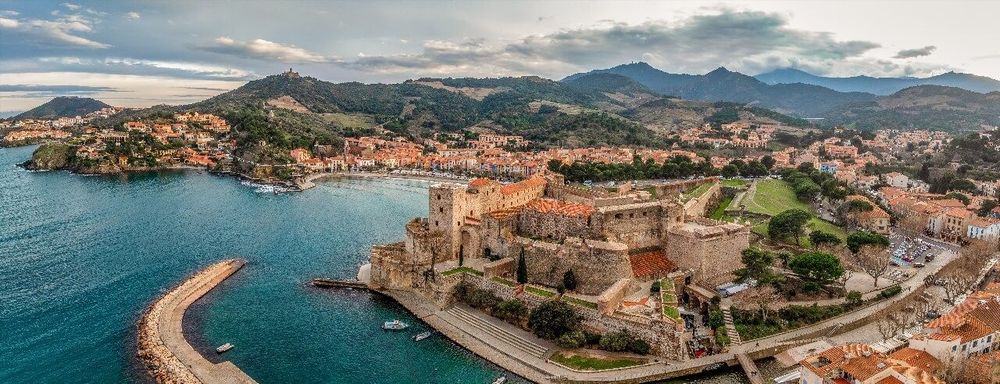
In Collioure, red and blue Catalan boats have rocked before ochre façades for over a century, and the evening light over the Albères hills is reason enough to understand why Matisse set up his easel here rather than anywhere else. Visiting Collioure as a couple means first accepting a slower pace: this small Catalan town of fewer than 3,000 inhabitants is entirely walkable, with a royal castle that plunges into the Mediterranean, turquoise coves reachable in ten minutes on foot, and intimate restaurants where you eat marinated anchovies while watching the pink bell tower light up. You'll also come across a 14th-century windmill converted into an oil mill and a Sunday market where Banyuls winemakers sell their harvest over the counter. This guide covers the Château Royal and the Mouré district, the beaches best suited for two, the harbour restaurants, the nearby vineyards, and the best season to visit — along the way, the Ryo audio-guided tour of Collioure connects all these spots without ever needing to pull out a map.
The Château Royal and the Historic Heart of Collioure
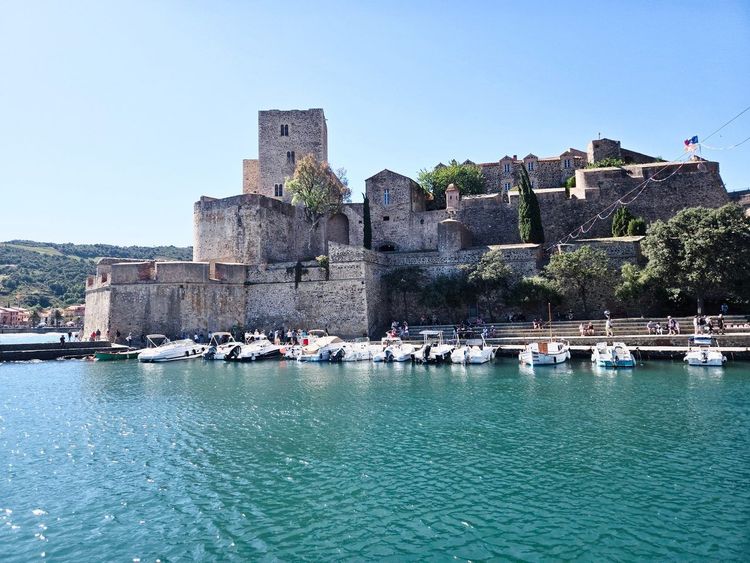
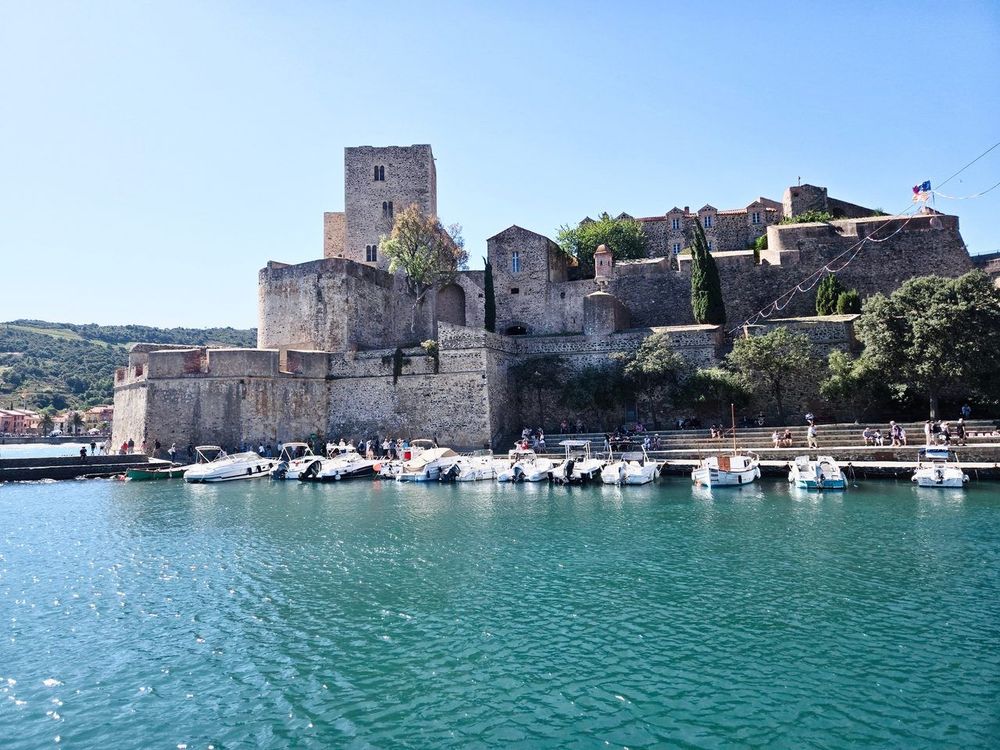
Collioure's seafront can be summed up in one image: a royal fortress advancing into the water, a pink bell tower serving as a landmark from the sea, and between the two, a tangle of alleyways where shutters bang against ochre walls. This postcard scene deserves the first half-day of a couple's stay.
The Château Royal de Collioure separates the Boramar cove from Port d'Avall beach. Already a fortress occupied by the Knights Templar, it became a true royal residence under the kings of Majorca, who transformed it between 1276 and 1344, before Peter IV of Aragon reclaimed Roussillon. Vauban later remodelled it into a stronghold in the 17th century. Today you can visit vaulted chambers, a courtyard open to the open sea, and a parapet walk with commanding views over the entire bay. Admission is €9, free for under-16s, and the site is open year-round (until 6:30 pm in July and August). Allow a good hour, more if you enjoy lingering on the ramparts in the late afternoon when the tawny light that made the town famous takes on its full meaning.
As you leave the castle, look up at the round pink bell tower closing off the beach: it belongs to the church of Notre-Dame-des-Anges, a medieval harbour lighthouse incorporated into the church built at the end of the 17th century. Its silhouette, unique along the entire Côte Vermeille, has become the emblem of Collioure. The interior, laden with gilded baroque altarpieces, contrasts with the plain exterior: a few minutes are enough to appreciate it, but the view from the neighbouring beach is worth lingering over, coffee in hand.
Just behind the church, an ancient schist islet carries the chapelle Saint-Vincent (Îlot Saint-Vincent, 66190 Collioure, rated 4.6/5 on Google from 173 reviews), built in 1701 to house new relics of the town's patron saint, who according to legend was martyred on this very rock. The islet has only been connected to the mainland since 1876 by a jetty, extended to the small green lighthouse inaugurated in 1886. Walking along this jetty, exposed to sea spray, is one of those moments where you naturally slow your pace: few benches, but a rare silence for such a visited town in season, and a view of the castle from the sea.
The town centre, between the church and the ramparts, concentrates the essence of Catalan heritage: fishermen's houses with wrought-iron balconies, small squares shaded by plane trees, and artisan shops in alleyways too narrow for cars. It is this historical thread, from the Château Royal through to old Collioure, that the Ryo audio-guided tour follows: the audio tracks recount, as you walk, the passage of the kings of Majorca, the successive sieges of the town, and the details of Catalan architecture you would never spot alone, without having to consult a map at every corner.
The Mouré District and the Fauvist Alleyways of Collioure
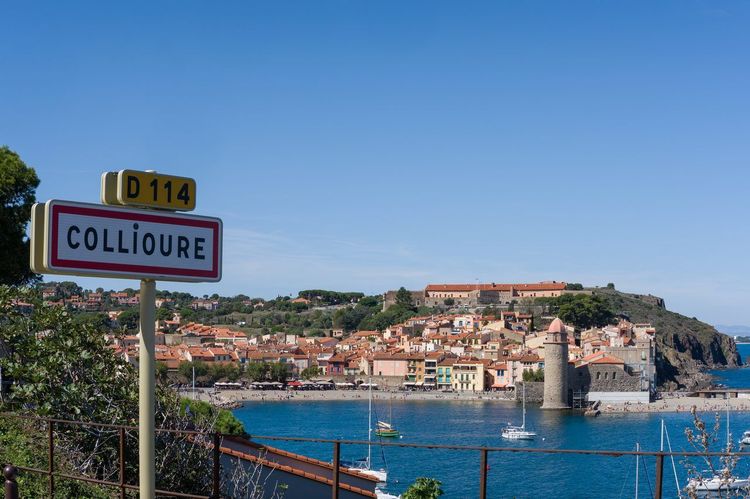
If one district captures the soul of Collioure, it is the Mouré. This is the setting where Matisse and Derain spent the summer of 1905, the summer Fauvism was born.
The Mouré district (Plage du Boramar, 66190 Collioure, rated 4.6/5 on Google from 2,221 reviews) rises behind the seafront, between the church and the slopes climbing toward the Albères. Its fishermen's houses painted in ochre, brick red, and faded blue form a colour gradient that Mediterranean light shifts several times a day. The Catalan boats pulled up on the nearby sand, laundry hanging from windows, and pots of geraniums on doorsteps compose a scene that has changed remarkably little since the two painters captured it on canvas.
For two, this district lends itself first to aimless wandering. You can compare façades with reproductions installed on metal easels at the exact spots where the painters actually worked: the Chemin du Fauvisme marks out the town with twenty reproductions of canvases by Matisse and Derain. A simple game is to find, painting by painting, the precise angle that inspired the work — often barely altered by a century of patina on the walls.
The colourful alleyways climbing toward the old town are worth an hour's stroll with no fixed destination. Narrow staircases, low arches, freshly painted façades before the season: it is generous photographic terrain, especially in late morning when the light still rakes the walls without flattening the colours. In the evening, the same alleyways come alive differently, with terraces spilling out onto the cobblestones.
To extend the artistic immersion, the Musée d'Art Moderne de Collioure, housed in the Villa Pams on the road to Port-Vendres, brings together works by the many painters who came to the town after Matisse. The art galleries on the Rue de la Fraternité and nearby streets, meanwhile, give you the chance to leave with a canvas of the Côte Vermeille rather than a simple fridge magnet.
This Fauvist history is told by the Ryo sub-tour of the painters' city in 21 audio tracks, over a 1h30 walk covering 3 km: Matisse and Derain's stay, their exchanges on colour, and how the light of Collioure upended 20th-century painting.
The Moulin de Collioure and the Best Viewpoints
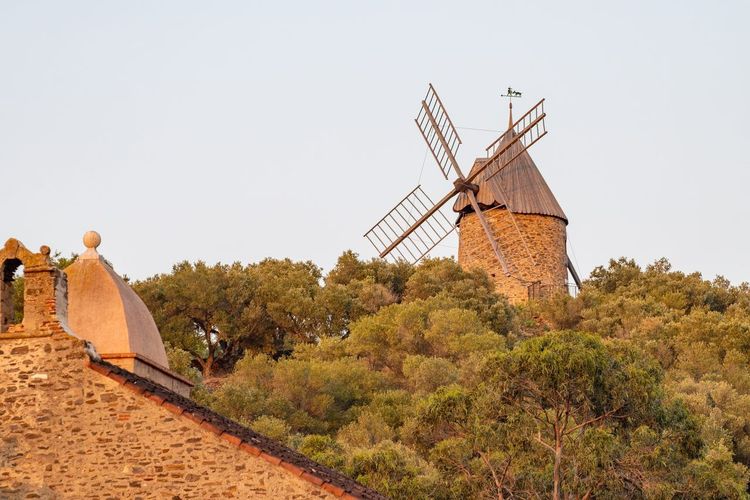
Collioure is also best viewed from above, and two of the three most sought-after belvederes are less than an hour's walk from the centre.
The most accessible is the Moulin de Collioure, also known as the Moulin de la Cortina. Built in 1337 to grind grain, this windmill has been restored and today presses olives — an almost unique case in France. The climb, steep but short, opens onto a terrace taking in one sweeping view of the castle, the bell tower, the harbour, and the blue line of the Mediterranean. From April to September, the association of friends of the mill opens it on Wednesdays and Sundays from 10 am to noon.
Higher up, Fort Saint-Elme dominates the bay from its promontory. Charles V had it built from 1538 around an older tower, at a time when Roussillon belonged to the Spanish crown: its six-pointed star plan foreshadows Vauban's fortifications. The fort is currently closed for renovation and can only be viewed from the outside, but the path leading up to it from the mill remains one of the town's finest walks, with Collioure on one side and Port-Vendres on the other. Head up just before sunset: the heat drops and the path empties.
The Tour de la Madeloc (Route de la Tour Madeloc, 66190 Collioure, rated 4.7/5 on Google from 1,615 reviews), a medieval watchtower perched at around 650 metres in the Albères, demands more commitment: allow a good half-day for the round-trip hike from Collioure, or drive up along the ridge road to a car park near the summit. On a clear day, the view stretches across the entire Côte Vermeille, the Roussillon plain, and the Canigou. Set aside a full morning for it, with a picnic at the top. Our guide to hikes around Collioure covers this route and other loop trails in detail.
The Most Beautiful Beaches and Coves for a Swim for Two
Collioure has fewer fine-sand beaches than its neighbours on the Languedoc coast, but what it offers in coves and turquoise water more than makes up for the absence of long stretches.
Boramar beach, framed by the castle on one side and the church on the other, is the most central and therefore the most crowded in July and August. Its sand is mixed with pebbles, but its position makes it the most photographed beach in town. For a quiet swim, aim for early morning or late afternoon. Just behind the church, the small Saint-Vincent beach offers a more intimate atmosphere at the foot of the jetty.
On the other side of the castle, to the south-east, Port d'Avall beach is the largest in Collioure. It faces Boramar and offers, at the end of the day, the finest view of the illuminated bell tower and ramparts. It is also the departure point for kayak and paddleboard rentals: hugging the rocky coastline together, snorkelling gear in your bag, lets you discover coves inaccessible on foot and water of a clarity typical of the Côte Vermeille.
Further north, toward Argelès, l'Ouille beach forms a small sheltered cove, popular with locals for its particularly clear water. Smaller than Boramar, it fills up more slowly in high season and easily wins over anyone looking for a quiet spot for the afternoon.
To extend your swimming beyond the village, the coastal path toward the Anse des Paulilles (Route de Paulilles, 66660 Port-Vendres, rated 4.6/5 on Google from 1.3K reviews) follows the coast toward Port-Vendres to the former dynamite factory founded by Alfred Nobel, now a protected natural area where a workshop still restores Catalan boats. The walk alternates between deserted coves and open sea views — a great option for a full afternoon away from the crowds. If someone asks which is the most beautiful beach in Collioure, the honest answer depends largely on your appetite for crowds: Boramar for the setting, l'Ouille for tranquillity, Paulilles for escape. The Ryo audio-guided tour points out the best viewpoints over these coves along the way, useful for spotting where to lay your towel without walking the whole route on foot.
An Evening and a Sunrise in Collioure
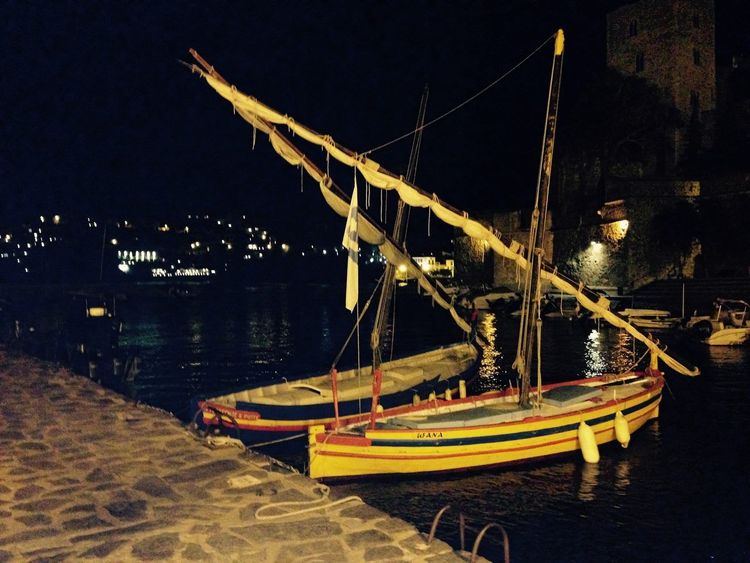
Collioure changes face at nightfall. The terraces light up one by one along the harbour, and the pink bell tower reflects in water that has grown almost still.
Arriving on a Friday evening, dropping off your bags and heading straight to the harbour for sunset remains the simplest way to start a weekend for two: the raking light on the castle lasts a good half-hour, just enough time for an apéritif on a terrace. And if you're early risers, the bay facing east offers spectacular sunrises: the disc rises from the sea opposite the Saint-Vincent jetty, on a beach still deserted.
On Sunday mornings (and Wednesdays), the market sets up on Place du Maréchal-Leclerc: local producers, Roussillon apricots, anchovies, cheeses, and stalls selling Collioure and Banyuls wines. Many visitors close out their weekend with one last swim late in the morning before hitting the road.
Where to Eat as a Couple in Collioure
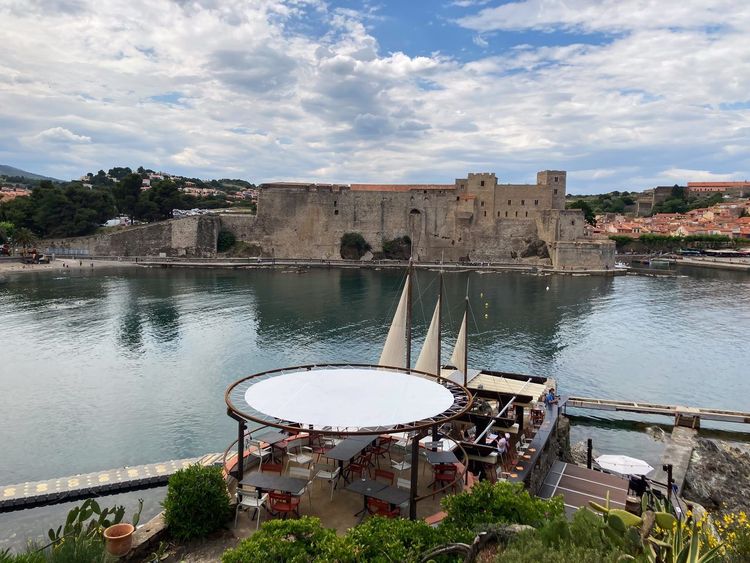
In Collioure, dining is inseparable from the landscape: most restaurants in the centre look out over the harbour, the castle, or Boramar beach, and the choice is as much about the view as about what's on the plate.
The town's unmissable speciality remains the Collioure anchovy, salted and cured using a know-how passed down through generations. Two houses keep the tradition alive, Roque and Desclaux, where you can watch the hand-filleting process and leave with jars. Whether served as tapas in harbour bars or as a more elaborate dish, the anchovy is often paired with roasted peppers or bread rubbed with tomato and olive oil. An anchoïade enjoyed on a terrace at sunset remains one of the most lasting memories of a stay here.
Among the most recommended restaurants, Le Neptune, set on the road to Port-Vendres with a plunging view over the bay, offers seafood-focused cuisine and a terrace ideal for a romantic dinner for two. In the alleyways of the old centre, Le 5ème Péché (16 Rue de la Fraternité, 66190 Collioure, rated 4.7/5 on Google from 515 reviews) is more surprising: Tokyo-born chef Masashi Iijima blends Catalan produce with Japanese techniques in a tiny room with an open kitchen. Seats are scarce — book several days in advance.
Le Trémail, in the centre, focuses on the catch of the day and traditional Catalan cuisine, while the harbour tapas bars suit a more impromptu evening, sharing a few plates and a glass of Collioure rosé. Book in the late afternoon for the best terrace tables: everyone targets the same slot between 7 pm and 8:30 pm in summer. For a lunch without a reservation, nothing beats a picnic assembled at the market — bread, anchovies, sheep's cheese, and apricots — savoured on the jetty rocks or at the foot of the mill.
On the sweet side, don't leave without trying a rousquille, a ring-shaped Catalan biscuit flavoured with lemon and topped with a sugar glaze, or a crème catalane, a cinnamon-and-lemon-scented cousin of crème brûlée. And to toast the evening, ask for a glass of Banyuls at the end of the meal: this fortified sweet wine pairs surprisingly well with dark chocolate.
A Day Out in the Banyuls and Collioure Vineyards
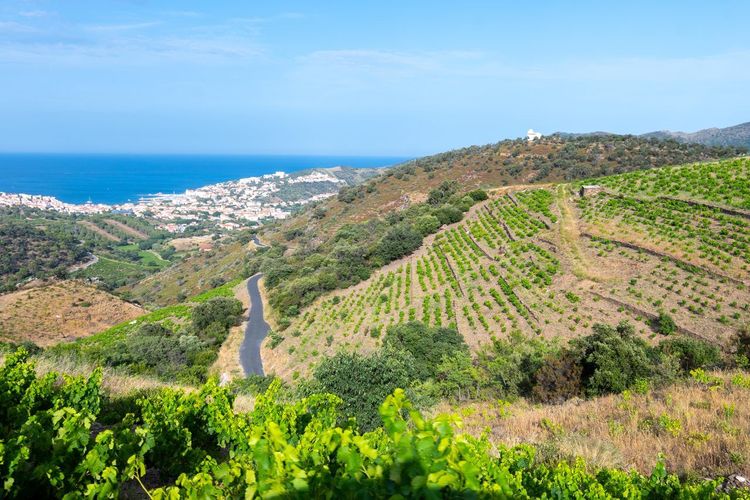
A few minutes' drive from the centre begins one of the most spectacular terraced vineyards in France, carved into the schist hillsides right down to the sea.
The Collioure and Banyuls vineyard spreads across terraces held up by dry-stone walls and produces two distinct appellations: Collioure, a dry red, white, or rosé wine, and Banyuls, a naturally sweet wine fortified with alcohol. On these slopes, the vines are still largely tended by hand, and herringbone-shaped stone channels called "peu de gall" drain storm rain without washing away the soil. Several family estates offer tastings by appointment, often with sea views from their cellar — a simple way to turn an afternoon into a private escape for two.
To unlock the secrets of Banyuls, head to the Cellier des Templiers in Banyuls-sur-Mer, the region's large cooperative cellar, which markets its wines under the Terres des Templiers label: its century-old foudres and glass demijohns exposed to the sun give the wine its dried-fruit and cocoa aromas. A guided tour followed by a tasting nicely rounds off a day spent on the vineyard heights.
Another stop for panorama lovers, the Clos de Paulilles (Route de Paulilles, 66660 Port-Vendres, rated 4.4/5 on Google from 2,281 reviews), a wine estate nestled in a cove between Collioure and Port-Vendres, opens its shaded terrace directly onto the Mediterranean. You can have lunch there, enjoy a glass on the terrace, or stroll through the park that slopes down to the beach — a sought-after setting for a lunch facing the sea, far from the bustle of the harbour.
If you don't have a car, or prefer not to drive after a tasting, several wine shops in Collioure itself offer the chance to sample local vintages right in the centre, a stone's throw from the harbour. By car, the small ridge road linking Collioure to Banyuls via the Tour de la Madeloc cuts through the heart of the vineyard: hairpin bends, dry-stone walls, and glimpses of the sea at every turn.
Collioure Through the Seasons
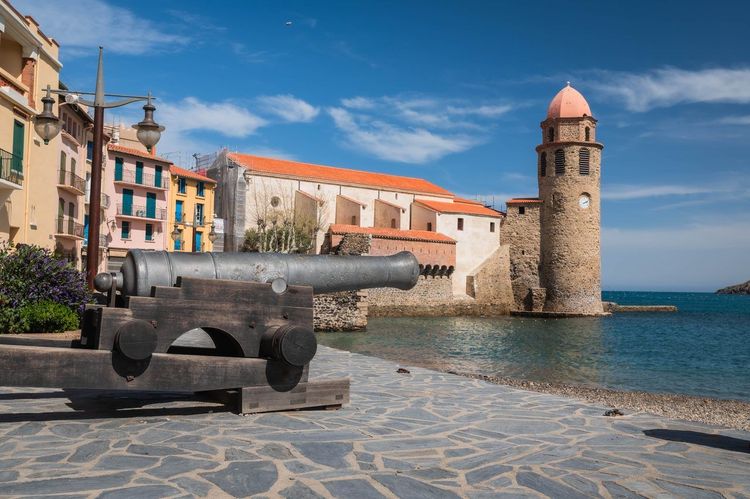
Collioure throughout the year is not the same town. In spring, mimosas then almond trees blossom on the hillsides, terraces reopen, and the water, still cool, is more for admiring than swimming. It is the ideal season for hikes toward the Madeloc or the coastal path, before the heat sets in.
Summer brings swimming, warm evenings, and crowds: the Mouré alleyways become dense between 11 am and 6 pm. In mid-August, the Fête de la Saint-Vincent brings the town alive for several days, with sardanes in the squares and a fireworks display over the bay. Spectacular — provided you accept the bustle and book well in advance.
September and October are perhaps the finest months for a couple's stay: the water is still warm, the grape harvest colours the terraces, and restaurants find a more relaxed rhythm. Winter, finally, returns the town to its residents. Some establishments close in January, the Tramontane blows more frequently, but the raking light on the castle and the empty alleyways offer an intimate Collioure that few visitors ever know.
Day Trips and Walks around Collioure
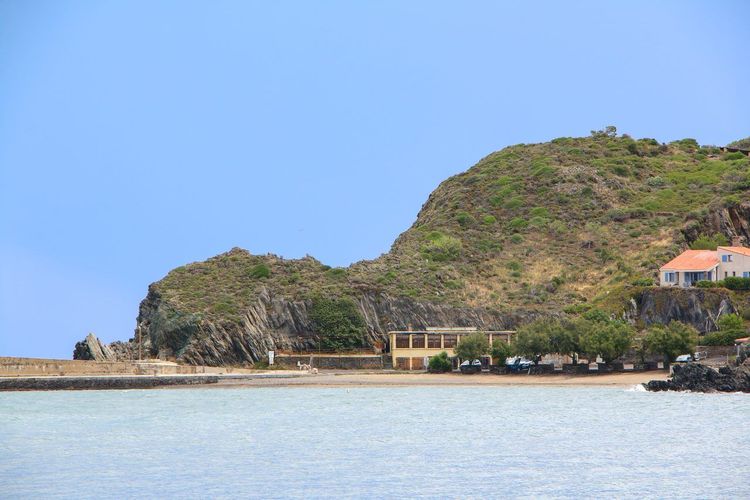
Collioure serves as a natural starting point for exploring the rest of the Côte Vermeille, a stretch of Catalan coastline that has remained far less built-up than the rest of Languedoc-Roussillon.
About an hour on foot via the coastal path, or five minutes by car, Port-Vendres remains a working fishing and commercial port, less photographed than Collioure but very pleasant for an end-of-day stroll along the quays up to its 18th-century obelisk. A little further, Banyuls-sur-Mer combines a pebble beach, a lively seafront, the Maillol museum, and direct access to the vineyard. In summer, the underwater trail at Peyrefite beach, within the Cerbère-Banyuls marine nature reserve, can be followed with fins, mask, and snorkel, with explanatory buoys along the route. Finally, at the very end of the railway line, Cerbère marks the border with Spain: its Belvédère du Rayon Vert hotel, an Art Deco ocean liner from the 1930s, is well worth the detour.
To the north, Argelès-sur-Mer marks the beginning of the long sandy beaches, with the small Racou harbour as a transition between rocks and sand. About twenty kilometres inland, the cathedral of Elne and its sculpted Romanesque cloister offer a quieter stop, ideal on a windy day.
On the nature side, several easy walks start directly from Collioure without a car: the coastal path toward Paulilles, the mill and Fort Saint-Elme loop, or shorter routes through the terraced vineyards. If you enjoy longer walks, the ascent to the Tour de la Madeloc can be extended along the Albères ridgeline, with alternating views over France and Spain. And if you only have one day in town, our itinerary for visiting Collioure in 1 day helps you prioritise.
The Ryo audio-guided tour, designed for the historic centre, ends a short distance from the start of the coastal path: simply continue toward Port-Vendres to pick up the coastal walk without retracing your steps.
Where to Stay in Collioure for a Couple's Getaway
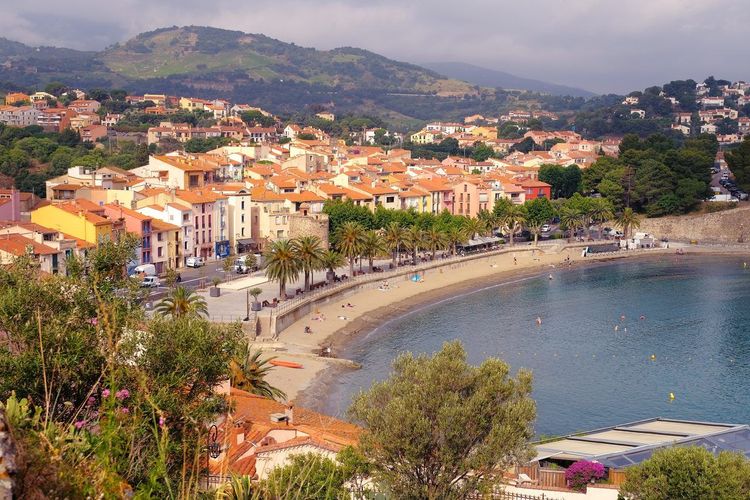
The choice of accommodation comes down to one simple trade-off: sleeping in the heart of the village to do everything on foot, or moving a little further out for more peace and open views.
In the historic centre, the Hôtel Casa Pairal (Impasse des Palmiers, 66190 Collioure, rated 4.6/5 on Google from 518 reviews), a former Catalan manor house turned charming hotel with an inner garden and pool, puts the castle, beaches, and harbour restaurants a few minutes away on foot. It is the most convenient option for a short weekend. Several guesthouses scattered through the Mouré alleyways offer a more intimate alternative, often with views over the rooftops or the bell tower from a terrace.
For a more restful stay, some prefer accommodation on the hillside toward Port-Vendres: the walk down to the centre takes about fifteen minutes, but the view over the bay from the room or pool more than compensates. This option suits summer particularly well, when the centre grows noisy late in the evening around the harbour bars. Another option is renting an apartment with a terrace, practical if you are staying more than three nights and enjoy cooking with market produce.
Whatever you choose, book early between April and October: Collioure's accommodation capacity is limited and the best addresses fill up weeks in advance. Ask for a sea-facing room if the budget allows — waking up to the bay is part of the experience.
Practical Information for a Romantic Weekend in Collioure
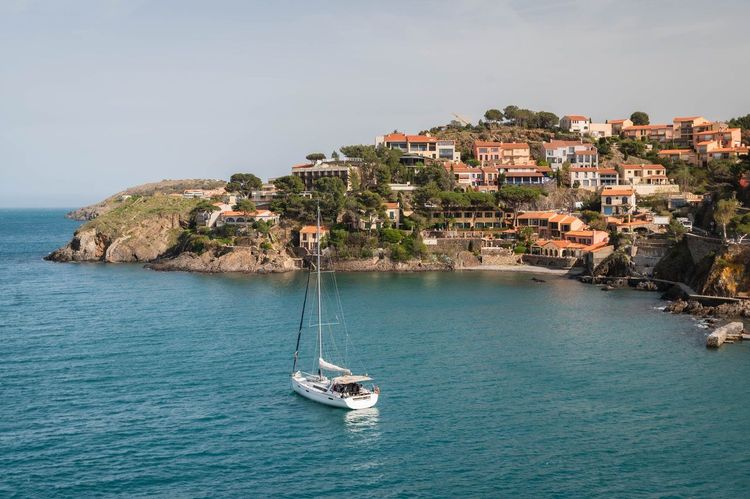
A few logistical pointers simplify the planning, especially if you're coming from far away.
Collioure is easy to reach by train: the station, served by the TER Perpignan–Cerbère line, is about a ten-minute walk from the historic centre, which makes it perfectly possible to leave the car at home for the whole stay. By car, allow around half an hour from Perpignan.
Parking is the main point to watch in high season: central car parks fill up by mid-morning in July and August, and it is better to aim for the peripheral car parks, connected to the centre by a shuttle or a ten-to-fifteen-minute walk. Outside peak season, parking near the harbour is generally no problem.
Weather-wise, Collioure enjoys a mild and sunny Mediterranean climate, but the Tramontane — a sometimes fierce north-westerly wind — can arrive at any season and make hilltop walks more demanding than expected. Pack good shoes: the cobbled alleyways and schist paths become slippery quickly.
For a weekend of two to three days, allow an indicative budget of roughly €250 to €400 per person, including charming accommodation and two good meals, excluding travel. The Château Royal (€9) and the mill are the only basic paid attractions, while the beaches, alleyways, and most viewpoints can be enjoyed for free.



FAQ
How much time do you need to visit Collioure as a couple?
Two full days are enough to cover the essentials: the Château Royal, the Mouré district, a beach, and a terrace dinner. Three days allow you to add a trip to the Banyuls vineyards and a hike to the Tour de la Madeloc or the Paulilles coastal path, without rushing.
Where can you park in Collioure?
In summer, opt for the peripheral car parks, a ten-to-fifteen-minute walk from the centre: central spots fill up by mid-morning. Outside peak season, parking near the harbour or the train station is generally straightforward.
What is the most beautiful beach in Collioure?
It depends on what you're looking for: Boramar beach offers the most stunning setting, framed by the bell tower and the castle, while l'Ouille beach charms with its calm, less-crowded waters. Port d'Avall, the largest, is the best option for spreading out and heading off by kayak.
What is the best time of year for a romantic weekend in Collioure?
Spring and early autumn — September in particular — combine mild weather, photogenic light, and far smaller crowds than July and August. Summer is still pleasant for swimming, but means accepting more people in the narrow streets and on the beaches.
Where should couples stay in Collioure?
The historic centre is ideal for exploring everything on foot, with charming hotels such as Casa Pairal or guesthouses in the Mouré district. The hillside area toward Port-Vendres offers more peace and open views over the bay, at the cost of a fifteen-minute walk.
How do you get to Collioure without a car?
Collioure's train station, on the TER Perpignan–Cerbère line, is about a ten-minute walk from the historic centre. Once there, the heart of the village — from the beaches to the nearest viewpoints — is easily explored on foot.
What budget should you plan for a weekend for two in Collioure?
Allow roughly €250 to €400 per person for two to three days, including charming accommodation and two good meals, excluding travel. The Château Royal costs €9 per adult, and a large share of the activities — beaches and walks included — are free.
Collioure closes as it opens: with an image of a castle plunging into the sea and ochre alleyways that still hold, more than a century later, the light that shaped Fauvism. A stay for two here is as much about what you visit as about the pace you allow yourselves between two beaches and a last drink at the harbour. To link the Château Royal, the Mouré district, and the finest viewpoints over the bay without any effort, the Ryo audio-guided tour of Collioure lets the guide tell the story of the town while you simply enjoy the moment.