© Shutterstock
 Votre guide Ryo
What to Visit around Lyon: the Best Day Trips in 2026
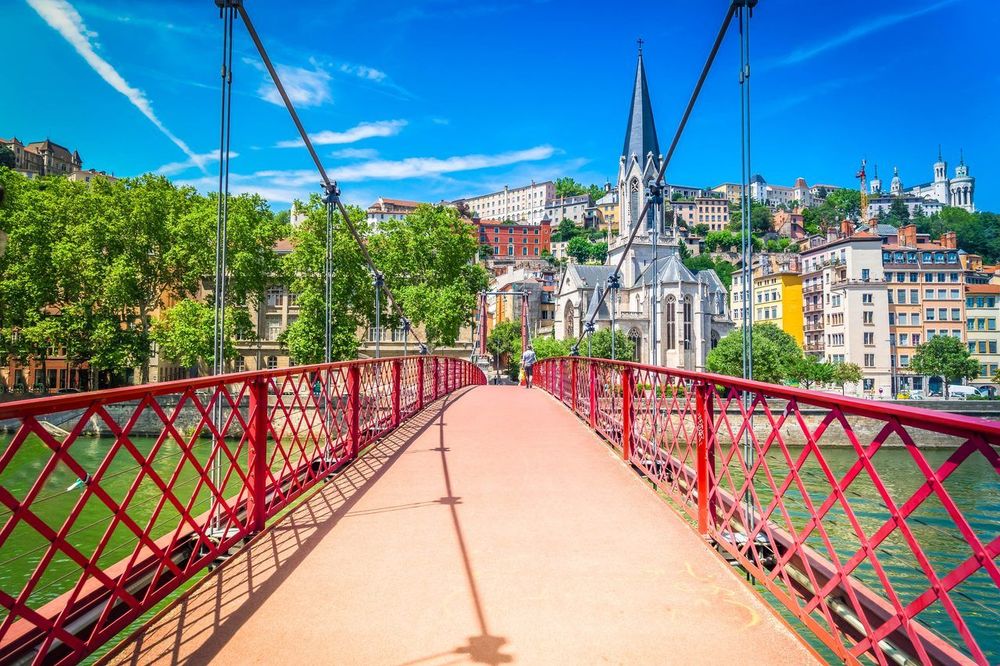
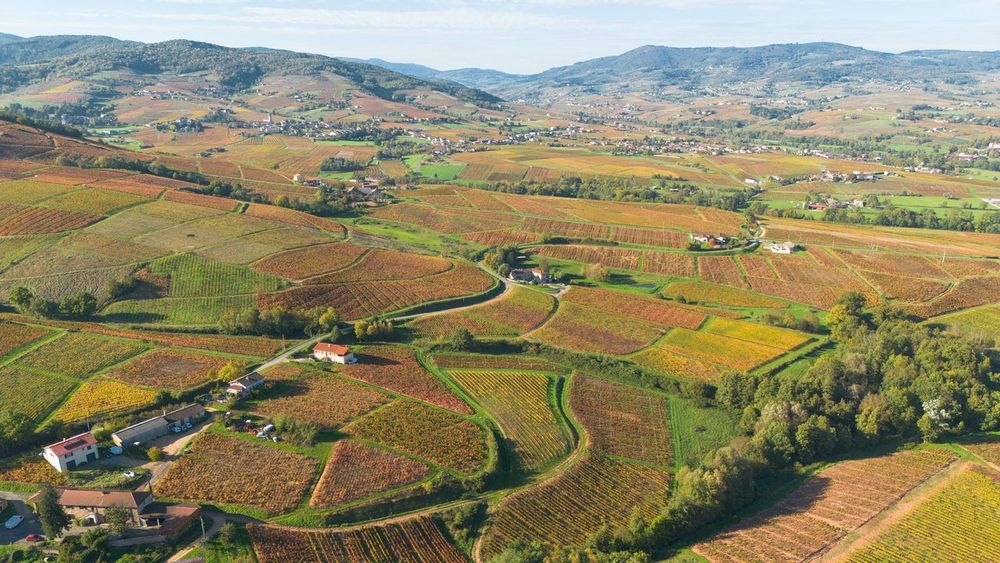
Choosing a day trip around Lyon means enjoying a rare geographic position in France: within a two-hour drive, landscapes change completely, shifting from the Beaujolais vineyards to the Alpine shores of Annecy, from the medieval towns of the Ain to the volcanic plains of Ardèche. The region concentrates destinations that rank among the most visited in the country, alongside others that are far lesser known yet well worth the journey. Many visitors are unaware that Lyon itself holds an exceptional density of heritage before heading out on excursions: the Ryo audio guide for Lyon covers 26 sites in 3h30 over 7.9 km, a solid starting point before venturing into the surrounding area.
This article lists the best visits around Lyon with the information you actually need: the distance from the city, train access where available, and what genuinely makes each destination worth the trip. On the programme: Pérouges, listed among the most beautiful villages in France; the lac d'Aiguebelette, whose waters are among the purest in the country; the Grottes de la Balme just 40 minutes from the city centre; a wildlife safari where white rhinos roam freely; the Palais Idéal du Facteur Cheval, one of the most astonishing works of outsider art in Europe; and of course Annecy with its canals and turquoise lake.
Pérouges, the Best-Preserved Medieval Town in France
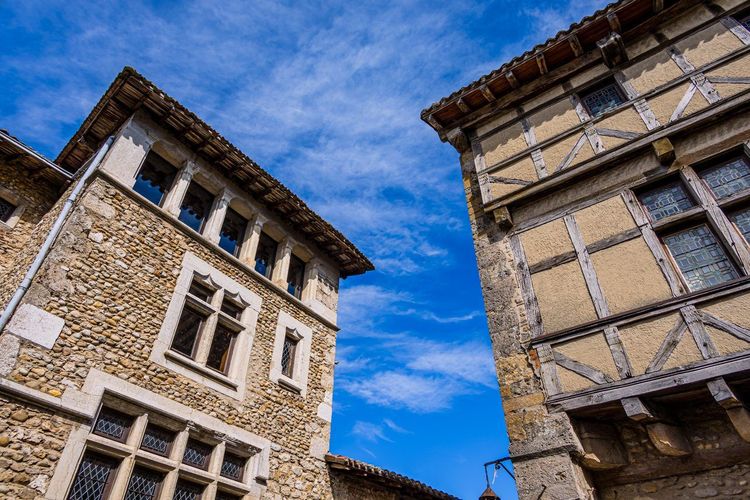
Just 45 minutes north-east of Lyon via the A42 motorway or from the Meximieux-Pérouges station, the town of Pérouges stops time in its tracks. Perched on its hill overlooking the Côtière de l'Ain, this fortified town dates mainly from the 14th century, and its preservation is so remarkable that Hollywood chose it for several productions, including "The Three Musketeers" and "Monsieur Vincent". No modern signage, no cars: the entire settlement is listed as a historic monument, and the rounded cobblestones covering its streets are the same ones laid seven hundred years ago.
The place de la Halle forms the living heart of the town. It is here that the Hostellerie du Vieux Pérouges stands, a 13th-century inn where the galette de Pérouges has been served for generations — a sweet tart made with cream and sugar, thin and caramelised at the edges, found in every bakery in the town. It is best enjoyed with a glass of cerdon du Bugey, a sparkling rosé wine produced in the nearby vineyards. If you are looking for an edible souvenir to bring back to Lyon, this is it.
The promenade des Terreaux runs along the northern ramparts and offers an open view over the Ain plain and, on clear days, the first Alpine foothills. A full tour of the town takes 1h30 to 2h, including the église Sainte-Marie-Madeleine and its medieval frescoes. There is no entrance fee to wander the lanes; only the Musée du Vieux Pérouges charges admission (around €5 per adult). In the evening, once the tour groups have left, the golden light on the cobblestones and the silence of the lanes have something almost hypnotic about them.
Pérouges is accessible from Lyon Part-Dieu by TER train to Meximieux-Pérouges (around 45 minutes), then about twenty minutes on foot to the town. By car, allow the same amount of time via the A42. The town draws more tourists at weekends from April to October; opt for a weekday visit or arrive before 10am in high season to enjoy the lanes in peace.
The Beaujolais Vineyard and Its Cru Villages
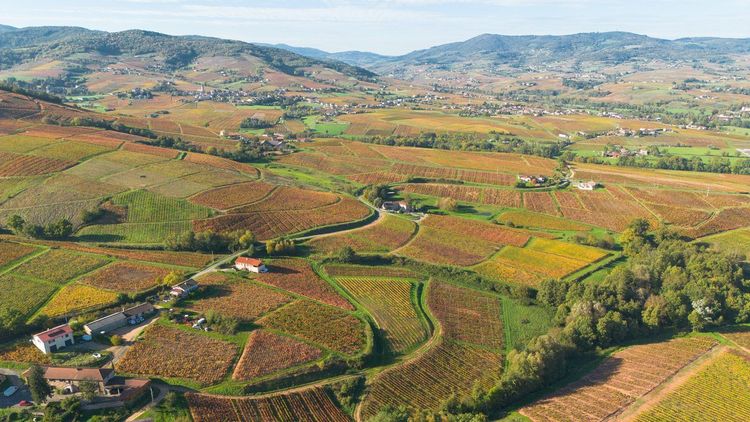
The Beaujolais begins just 30 km north of Lyon, making it one of the most accessible excursions from the city — and yet one of the most under-exploited by Lyonnais themselves. The vineyard stretches 60 km from north to south, between Mâcon and the Monts du Lyonnais, and counts ten cru appellations whose names directly evoke their villages: Fleurie, Moulin-à-Vent, Morgon, Brouilly, Juliénas.
The Beaujolais wine route follows the D68 from Villefranche-sur-Saône, winding through a succession of wine-growing villages with ochre stone houses and cellars open to the public. In Fleurie, the cooperative winery organises tastings year-round — free for groups with a reservation, around €5 per person otherwise. In Moulin-à-Vent, the 15th-century windmill perched on its pink granite mound offers a panoramic view over the patchwork vineyards typical of the terroir. This is where the most structured Beaujolais wines are born — the ones best kept for five to ten years.
For a full day, combine the cru route with the village of Oingt, nestled in the Pierres Dorées. This sub-region of the Beaujolais owes its name to the warm hue of its ferruginous limestone, which turns golden at sunset. The medieval lanes of Oingt, its panoramic view over the Azergues valley, and its craftspeople set up in former wine cellars are worth a good hour's stop. The neighbouring village of Châtillon, with its château and Romanesque church, rounds out the outing nicely.
Practical info: Villefranche-sur-Saône is accessible by TER from Lyon Part-Dieu in 25 minutes, with very frequent departures. To explore the vineyard without a car from Villefranche, bikes are available to hire in town, and the Beaujolais tourist office offers signposted circuits suited to different fitness levels. Avoid the Beaujolais Nouveau period (third Thursday of November) if you prefer a quieter experience — roads get congested and restaurant prices spike.
Vienne and Its Gallo-Roman Treasures
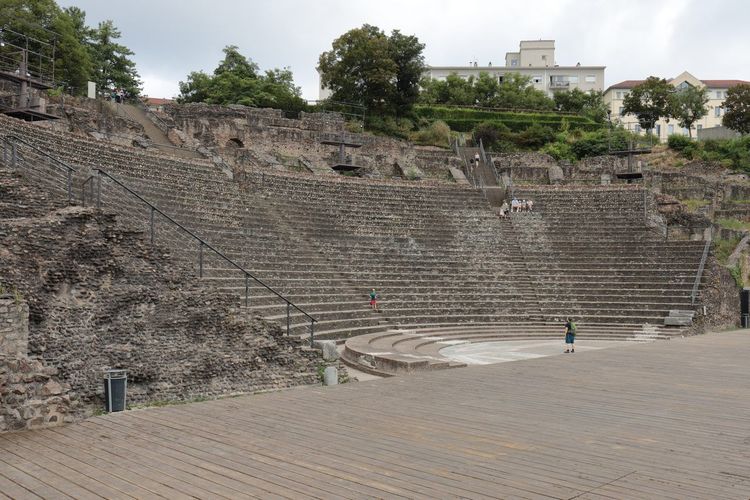
Just 30 km south of Lyon via the A7 or by TER from Perrache (30 min), Vienne is probably the most underrated excursion in the entire region. This city of 30,000 inhabitants is home to one of the most complete Gallo-Roman heritage sites in France — superior, some archaeologists say, to what Nîmes or Orange can offer. And yet, most travellers who pass by on the motorway never stop.
The Temple of Augustus and Livia stands in the very heart of the city, on a lively pedestrian square. Built in the 1st century BCE, it is better preserved than the Maison Carrée in Nîmes, with its Corinthian columns and near-intact pediment. Admission is free; you can walk around it in a few minutes, but take the time to read the information panels — the 3D reconstruction of the Roman forum that once surrounded it gives a striking sense of what Vienne represented in antiquity, when the city rivalled Lyon in prestige.
The Ancient Theatre of Vienne is the largest surviving structure of its kind in France after Orange. Built into the hillside of Pipet, it once held 13,500 spectators, and still does today during the Jazz à Vienne festival in July, one of the largest jazz festivals in Europe. Outside the festival, entry is free, and the view from the upper tiers over the city and the Rhône is remarkable. Excavations carried out in the 1920s revealed that the theatre had been almost entirely buried under residential buildings — an extraordinary rediscovery.
Round off the visit with the Musée et site archéologique de Saint-Romain-en-Gal (Rue du Musée, 69560 Saint-Romain-en-Gal, rated 4.6/5 on Google with 2,361 reviews), located just across the Rhône. This open-air site reveals the residential and craft quarters of the ancient city: floor mosaics still in situ, hypocaust heating systems, oil presses, and dyeing vats. It is one of the most complete archaeological sites in France, regularly overlooked by mainstream travel guides.
Vienne deserves a full half-day, or even a whole day if you add the cathédrale Saint-Maurice from the 12th century and the lanes of the old town. By TER from Lyon Perrache: 30 minutes, very frequent departures, no booking required.
The Parc Naturel Régional du Pilat
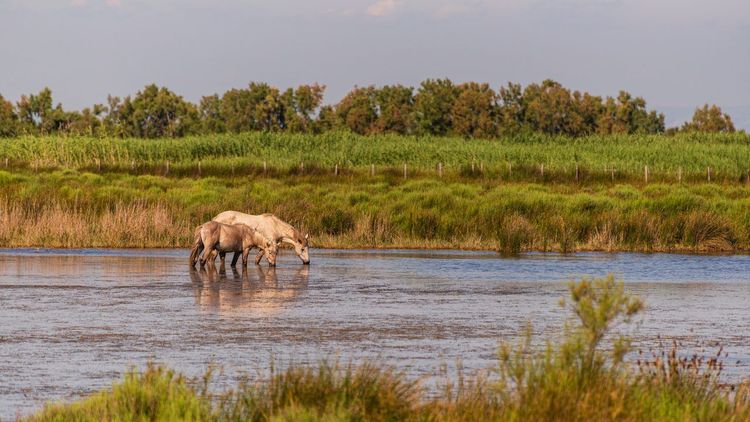
The Parc naturel régional du Pilat begins 45 km south-west of Lyon, on the doorstep of Saint-Étienne, and stretches over more than 700 km² between the Loire and the Rhône. It is the natural balcony of the Lyon region: from the Crêt de la Perdrix (Route du Crêt de la Perdrix, 42470 Doizieu, rated 4.8/5 on Google with 88 reviews) (1,432 m, the highest point of the massif), on a clear day you can see as far as the Alps, Mont Blanc, and sometimes the first peaks of the Massif Central. A panorama that few sites reachable in under an hour from Lyon can match.
The Pilat is not a park to admire from the car. It is hiking terrain with 1,400 km of waymarked paths, including several loops accessible from the Crêt de la Perdrix car park. The ridgeline loop (12 km, 3h30) crosses heathland purple with heather in August, century-old beech forests, and high-altitude meadows dotted with chalets. For those who prefer flat terrain, the Via Rhôna follows the Rhône along the edge of the park on a well-developed cycling route.
In winter, the Pilat ridges receive enough snow to allow snowshoeing and cross-country skiing on the marked trails around the Crêt de la Perdrix, sometimes as early as December. In summer, the springs and waterfalls — notably the cascade de la Barbanche in the Dorlay valley — offer refreshing breaks after the climbs. Seasonal shuttles run from Saint-Étienne on summer weekends to reach the ridges; from Lyon, allow 45 min to 1h by car via the A47.
Annecy and Its Turquoise Lake
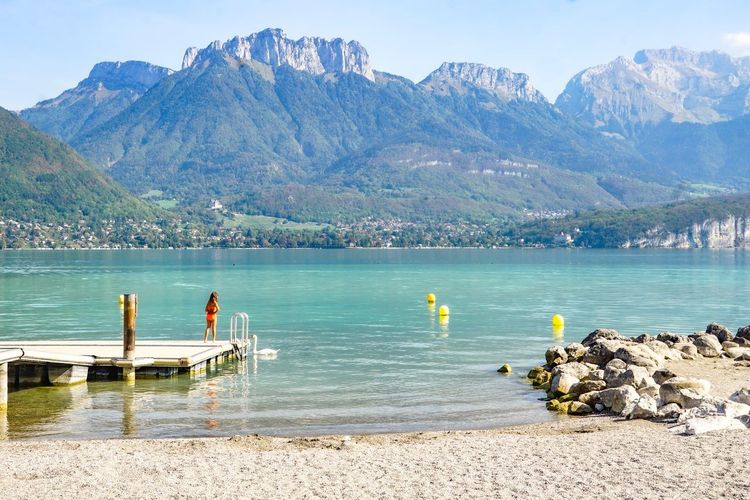
Annecy is the grand excursion from Lyon, the one that appears on every list. 1h45 via the A41 from Lyon, this Haute-Savoie town combines a medieval old town threaded with canals, a lake of exceptional Alpine clarity, and a panorama over the Alps that leaves visitors speechless at every arrival. The reputation is well deserved.
The old town is best explored starting from the Palais de l'Île, a 12th-century medieval prison built in the middle of the Thiou, the river connecting the lake to the town. This boat-prow-shaped structure is the most photographed monument in Annecy. Around it, the colourful arcades of rue Sainte-Claire, the geranium-draped bridges, and the painted façades of the old town form an ensemble of rare aesthetic coherence. The Tuesday, Friday, and Sunday morning market fills the lanes with Savoyard cheeses, charcuterie, and flowers.
The lac d'Annecy is one of the purest bodies of water in Europe, the result of a decision taken in the 1960s: a ban on all industrial or agricultural discharge into the lake, well before national environmental regulations required it. Swimming is permitted at several free beaches, including the plage d'Albigny and the plage Municipale. The circuit around the lake (40 km) can be done by bike in a day on continuous cycle paths, with views of the Alps changing at every bend.
For a more ambitious outing, the climb to the col de la Forclaz (Route de la Forclaz, 74290 Talloires, rated 4.7/5 on Google with 3,200 reviews) gives access to one of the most popular paragliding spots in France — dozens of coloured wings take off every fine morning from the launch platform. Tandem flights are available year-round (€120–150, booking essential in July–August). If you prefer to walk, the Rochers de la Forclaz trail from Talloires takes 1h30 and offers a bird's-eye view of the lake from 1,150 m altitude.
Annecy is easily reached by train: 1h45 from Lyon Part-Dieu, with departures every hour. The station is 10 minutes on foot from the old town. By car, the A41 is direct but prone to traffic on Friday evenings towards the lake — plan to leave early.
The Lac d'Aiguebelette, Savoie's Natural Gem
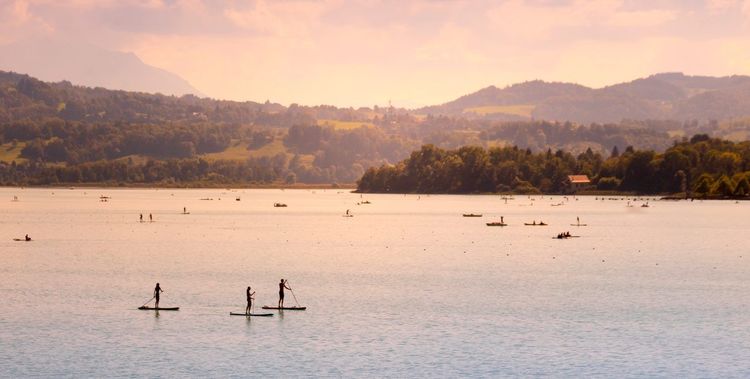
Just 1 hour south-east of Lyon, the lac d'Aiguebelette (Plage de Saint-Alban-de-Montbel, 73610 Saint-Alban-de-Montbel, rated 4.1/5 on Google with 729 reviews) is the third-largest natural lake in France and its best-kept secret. Surrounded by wooded hills and free of all motorised craft since 1976, there are no jet-skis or motorboats here: only the surface of the water — a deep emerald green — and the sound of kayak paddles. This tranquillity is rare within an hour of Lyon.
Swimming is free from several public beaches, particularly in the villages of Saint-Alban-de-Montbel and Lépin-le-Lac. Water visibility reaches 10 to 12 metres, a rare phenomenon for a lowland lake, owing to the absence of pollution and minimal agricultural activity in the catchment area. Local providers offer kayak, pedalo, and paddleboard rentals, costing between €15 and €25 per hour depending on the craft. For those who want to push on to a panoramic viewpoint, the trail climbing from Novalaise above the lake offers a bird's-eye view over the green expanse.
The lake is accessible from Lyon by car only, as no train line serves it directly. Take the A43 towards Chambéry and allow 1 hour from the city centre. Seasonal shuttles run from Chambéry on certain weekends in July and August.
Grenoble: Culture and Alpine Massifs
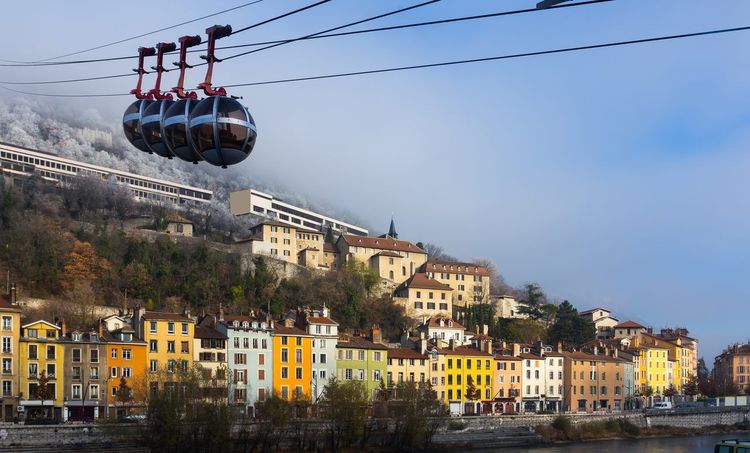
Grenoble presents itself as the most urban and the most mountain-oriented excursion at the same time. 1h15 from Lyon via the A48, the capital of the Alps offers a top-tier fine arts museum, a historic cable car that climbs to the Bastille in three minutes flat, and three massifs — Vercors, Belledonne, Chartreuse — that literally encircle the city like a natural amphitheatre.
The Musée de Grenoble (5 Place de Lavalette, 38000 Grenoble, rated 4.5/5 on Google with 4,025 reviews) is one of the richest regional museums in France in terms of permanent collections: Matisse, Picasso, Chagall, Rubens, and a particularly strong contemporary art section with regular new acquisitions. Admission to the permanent collections is now free for everyone; only temporary exhibitions remain ticketed (€14 full price). It makes an excellent option for a winter excursion or a rainy day in the mountains.
The Bastille de Grenoble is reached by transparent cable cars — the world's first "bubble" gondolas, installed in 1934. The ascent takes three minutes, arriving at 476 m above the city with a 360° view over the three massifs. Hiking trails lead from the Bastille into the Chartreuse range and are accessible year-round, allowing visitors to walk back down into the old town in about an hour.
If you have a full day, combine Grenoble with a foray into the Parc naturel régional du Vercors, accessible from the city in 30 minutes via the D1075. The Gorges de la Bourne and the white limestone cliffs dominating the plateau offer landscapes of magnificent austerity. In winter, the resorts of Villard-de-Lans and Autrans offer both alpine and cross-country skiing 1h30 from Lyon. Grenoble is accessible by TER from Lyon Part-Dieu in 1h10, with frequent departures throughout the day.
The Grottes de la Balme
Only 40 km east of Lyon, the Grottes de la Balme (Chemin des Grottes, 38118 La Balme-les-Grottes, rated 4.6/5 on Google with 4,648 reviews) are one of the most surprising excursions in the region, and among the most accessible with young children. This network of underground galleries, carved into the Isère limestone by infiltration water over millennia, contains impressive rock formations, slate-coloured underground lakes, and a chamber known as the "salle des fées" whose vault reaches 60 metres in height. According to legend, Mandrin, the famous 18th-century smuggler, is said to have hidden his loot here.
Guided tours last approximately 50 minutes, with a gradual descent through naturally lit galleries. Adult admission is around €10 (children €5 to €8). The temperature inside the caves is a constant 12°C year-round — bring an extra layer even in midsummer, especially with children. The caves close in January and February to protect the hibernating bats: more than 400 individuals belonging to 7 different species spend the winter there.
The Palais Idéal du Facteur Cheval
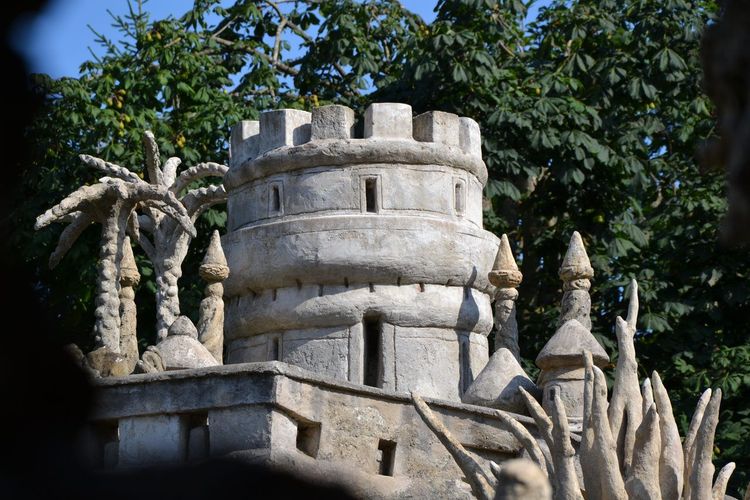
One of the most unusual sites in France lies 1h15 south of Lyon, in the village of Hauterives in the Drôme. The Palais Idéal du Facteur Cheval (8 Rue du Palais, 26390 Hauterives, rated 4.6/5 on Google with 19,211 reviews) is a monumental work of outsider art built alone, by hand, by a 19th-century rural postman named Ferdinand Cheval. Over 33 years of work, from 1879 to 1912, collecting stones along his daily walking route, he erected a structure 26 metres long and 12 metres high blending references to Hindu temples, Oriental mosques, medieval castles, and imaginary figures from his dreams.
Listed as a historic monument in 1969 at the personal request of André Malraux, the Palais Idéal is one of the best-known works of outsider art in the world. Picasso had spoken of it with admiration, the Surrealists had made it a place of pilgrimage, and André Breton cited it as proof that imagination alone could rival learned architecture. The visit takes 1h to 1h30 to appreciate all its details: every square centimetre of façade is sculpted, with inscriptions, fantastical animals, stone giants, and philosophical references that Cheval himself inscribed in the cement. Admission costs €9.50 per adult when booked online (€10.50 on the door).
Combine this excursion with a stop in the Gorges de la Galaure nearby, or continue to Romans-sur-Isère (30 min further south), which is home to the international shoe museum — a collection of 13,000 pairs spanning 4,000 years of history, from ancient Egypt to contemporary design, housed in a 15th-century convent. A second unusual venue that pairs well with the spirit of the Facteur Cheval. Back in Lyon, the short version of our audio walking tour links the two hills in 90 minutes.
Villars-les-Dombes and the Parc des Oiseaux
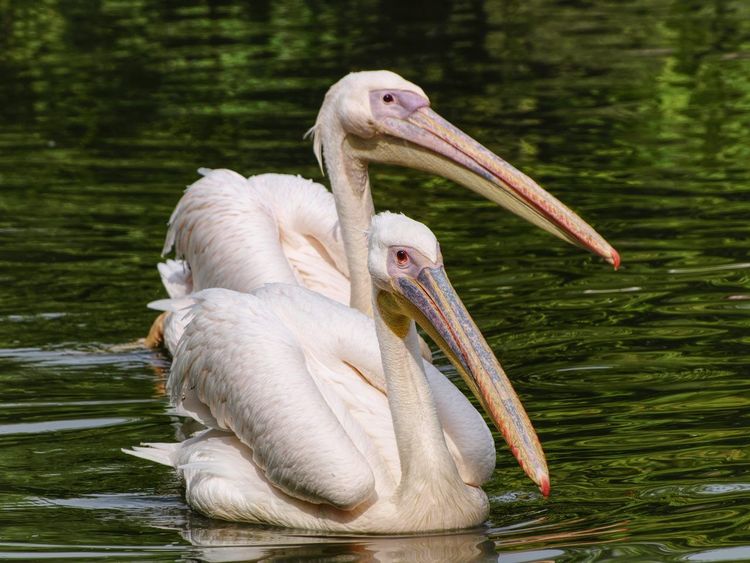
Just 35 km north of Lyon, the Dombes is a plateau dotted with more than 1,000 artificial ponds created in the Middle Ages for carp farming. This wetland territory has become one of the main ornithological sanctuaries in France. In Villars-les-Dombes, the Parc des Oiseaux (Route Nationale 83, 01330 Villars-les-Dombes, rated 4.4/5 on Google with 5,665 reviews) brings together approximately 250 species across 35 hectares, making it one of the most significant ornithological parks in Europe.
Birds of prey shows — featuring peregrine falcons, eagle owls, and common buzzards — take place several times a day during the tourist season. Giant aviaries allow visitors to get within a few metres of Amazon parrots, hornbills, and flamingos. Admission is approximately €25 for adults, €18 for children aged 3 to 12. Allow 2 to 3 hours for a complete visit, including the shows.
Villars-les-Dombes is accessible by TER on the Lyon–Bourg-en-Bresse line (35 minutes from Lyon Part-Dieu). The station is 15 minutes on foot from the Parc des Oiseaux, making it one of the rare family-friendly train excursions in the area.
Yvoire, a Medieval Village on Lake Geneva
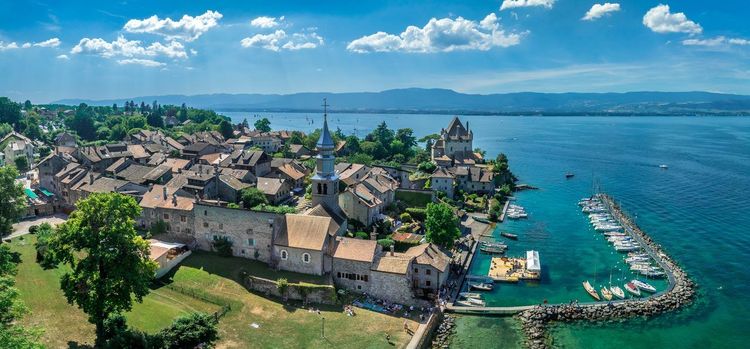
Listed among the most beautiful villages in France, Yvoire is a 14th-century fortified settlement that juts out onto Lake Geneva like the prow of a ship. 1h45 from Lyon via the A40 then the D1005, this village of 800 inhabitants welcomes more than a million visitors a year, but arriving early in the morning or outside the summer season, you will find the calm of its flower-lined lanes and grey stone façades restored.
The Jardin des Cinq Sens is Yvoire's quiet treasure: a 1,350 m² medieval garden set within the castle grounds, designed to successively stimulate smell (old roses, lavender, aromatic herbs), touch (varied leaf textures), sight (chromatic compositions), hearing (fountains, rustling grasses), and taste (edible plants). Admission is €8.90 per adult. From the village port, CGN boats connect to Nyon and Lausanne in Switzerland, making it the starting point for an original cross-border excursion.
La Demeure du Chaos in Saint-Romain-au-Mont-d'Or
Just 20 km north of Lyon, on the slopes of the Mont d'Or, the Demeure du Chaos (14 Rue de la Tourette, 69270 Saint-Romain-au-Mont-d'Or, rated 4.6/5 on Google with 2,981 reviews) is a total work of art that divides opinion as much as it fascinates. Since 1999, collector and entrepreneur Thierry Ehrmann has transformed his 17th-century property into a permanent installation covering the façades entirely: monumental frescoes, steel sculptures, crashed vehicles welded to the walls, works by international graffiti artists, and symbols evoking the fragility of human civilisations in the face of successive crises.
Entry is free, which is rare for a venue of this artistic density and scale. The visit takes 1 to 2 hours depending on your pace and appetite for explanations. Check opening hours before you go, as they vary by season and the Demeure is sometimes closed for several consecutive days for events. Located on the D51, access is easier by car; TCL buses on line C10 connect Saint-Romain-au-Mont-d'Or from Lyon-Vaise in about twenty minutes.
The Safari de Peaugres in Ardèche
Just 1h30 south-west of Lyon via the A7 then the N82, the Safari de Peaugres (Route Nationale 82, 07340 Peaugres, rated 4.5/5 on Google with 10,506 reviews) is the reference wildlife park in Auvergne-Rhône-Alpes. Unlike traditional zoos, a large part of the visit is done by car, driving through enclosures where animals roam freely across several hectares: white rhinos, zebras, giraffes, lions, American bison, and wildebeest pass within metres of your vehicle.
The park is home to more than 1,000 animals belonging to around 130 species in total. The full visit, combining the drive-through safari and the on-foot zoo section, takes 3 to 4 hours. Indicative price: €29.90 per adult (check prices before your visit). The Safari de Peaugres is open year-round, every day in high season and on selected days only in winter, making it a good winter outing: watching lions in the snow or rhinos in the morning mist has no equivalent in the region.
Day Trips around Lyon by Train
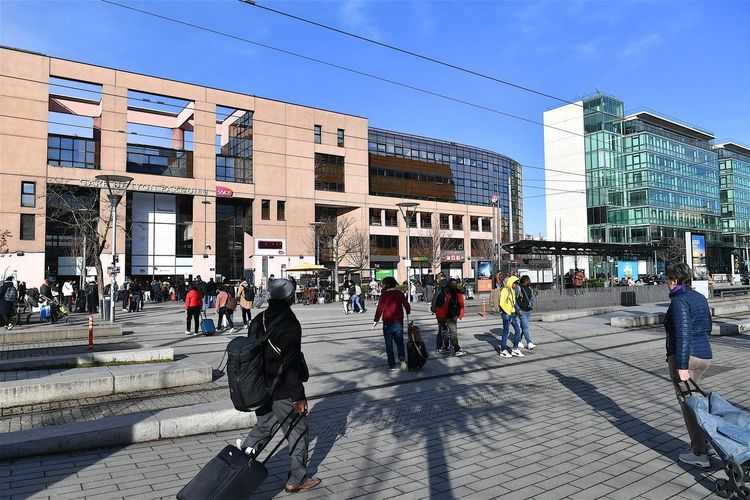
Lyon is one of the most important rail hubs in France, opening up largely under-exploited car-free excursion possibilities. From Lyon Part-Dieu or Lyon Perrache, you can reach several destinations in this article without a reservation. The most practical connections: Vienne (30 min from Perrache), Grenoble (1h10 from Part-Dieu), Villars-les-Dombes (35 min, Bourg-en-Bresse line), Villefranche-sur-Saône (25 min, gateway to the Beaujolais), Annecy (1h45 from Part-Dieu).
For hiking trails accessible directly from a train station, the Ryo guide to hikes around Lyon lists circuits by difficulty level and departure station, with walking times and elevation gain. Some routes in the Monts d'Or and Monts du Lyonnais begin less than 20 minutes from Part-Dieu by TER, with no car or shuttle needed.
Best Family Outings
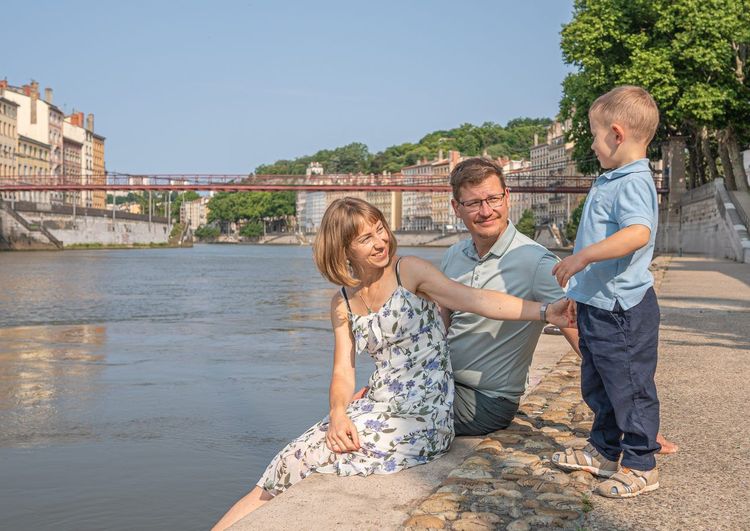
Day trips around Lyon with children deserve a separate selection: practical needs differ — attention spans, pushchair accessibility, on-site dining, and physical risk tolerance. Here are the destinations that receive the best feedback from families.
The Parc des Oiseaux in Villars-les-Dombes is the top choice for families with children aged 3 to 12: the birds of prey shows hold even the youngest children's attention, and the park has restaurants, accessible toilets, and wide pushchair-friendly pathways. The Safari de Peaugres is ideal from age 5 — watching white rhinos at close range from the family car is an experience hard to forget, and the drive-through format makes breaks easy. For children who enjoy a gentle thrill, the Grottes de la Balme offer a spectacular underground world without being frightening, with a guaranteed exit within 50 minutes if a child gets tired.
Pérouges works very well with children aged 7–8 and above who appreciate the "inhabited medieval town" atmosphere. The honey galette de Pérouges is often the key incentive to get them walking through the lanes. For families with teenagers, Grenoble offers the bubble cable car ride up to the Bastille followed by a walk back down through the forest — a combination that appeals to all ages.
For swimming days, the beaches at the lac d'Aiguebelette are among the most family-friendly for young children: the water is shallow along the shore, with no current, and the public beaches are free with toilet facilities. The Ryo guide to swimming spots around Lyon lists lakes, rivers, and bodies of water accessible from the city by season and children's age.
Distances and Practical Tips
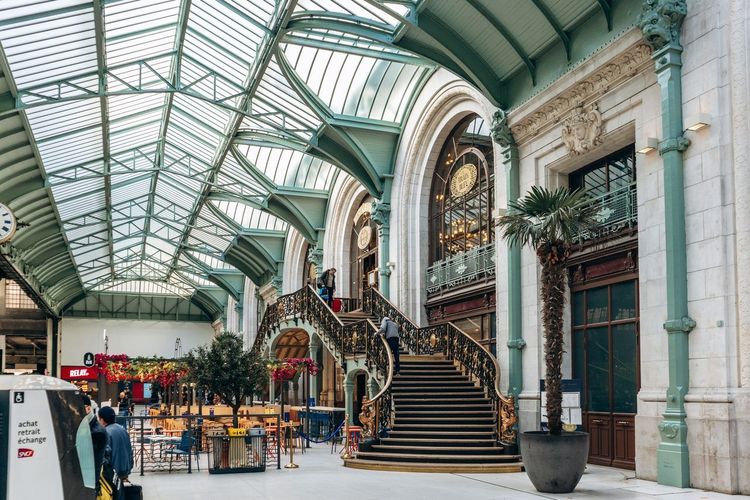
Planning a visit around Lyon is made easier by the city's central position and the quality of its rail network. Here are the distances and driving times for the main destinations in this article:
- Pérouges: 45 km, 45 min (A42 towards Geneva)
- Vienne: 30 km, 30 min (A7 towards Marseille)
- Beaujolais / Villefranche: 32 km, 30 min (A6 towards Paris)
- Grottes de la Balme: 40 km, 45 min (A43 then D65)
- Parc du Pilat: 65 km, 1h (A47 towards Saint-Étienne)
- Palais du Facteur Cheval: 100 km, 1h15 (A7 then D538)
- Grenoble: 100 km, 1h15 (A48)
- Lac d'Aiguebelette: 90 km, 1h (A43 towards Chambéry)
- Safari de Peaugres: 110 km, 1h30 (A7 then N82)
- Annecy: 140 km, 1h45 (A41)
- Yvoire: 145 km, 1h45 (A40 then D1005)
Seasonality: spring (April–May) and autumn (September–October) are the best seasons for most destinations. Avoid Annecy and Yvoire in July–August if you dislike crowds — the Alpine lakes are packed. Winter is particularly well-suited to Grenoble, Vienne, and the Safari de Peaugres. For two-day itinerary ideas combining two or three destinations, the Ryo guide for a weekend around Lyon offers tested combinations organised by distance and theme.
FAQ
What is there to visit within 1 hour of Lyon?
Within a one-hour radius of Lyon, the options are plentiful. Vienne (30 min) is the cultural destination par excellence, with its Gallo-Roman temple from the 1st century BCE and its ancient theatre seating 13,500. Pérouges (45 min) offers an immersive experience in one of the best-preserved medieval towns in France. The Beaujolais vineyard (30–45 min to Villefranche-sur-Saône) is perfect for a nature and food escape among vines and golden-stone villages. The Grottes de la Balme (40 min) impress with their underground beauty and interior lakes. The Parc des Oiseaux in Villars-les-Dombes (35 min) is the best family option for children aged 3 to 12.
What to Do around Lyon This Weekend?
For a well-structured weekend, combine a cultural excursion with a nature outing. Option A: Saturday in Vienne (Gallo-Roman sites in the morning, old town and a Lyonnaise restaurant at lunch, return in the late afternoon), Sunday in the Beaujolais (cru wine route from Villefranche, tasting at a cellar in Fleurie, picnic among the vines). Option B: Friday evening in Lyon, Saturday in Pérouges with lunch at the Hostellerie, Sunday in Grenoble with the bubble cable car ride up to the Bastille. In summer, add the lac d'Aiguebelette as a swimming day: clean, free, motor-free waters.
What to Do around Lyon with the Family?
The best outings with children around Lyon: the Parc des Oiseaux in Villars-les-Dombes (birds of prey shows several times a day, around 250 species, accessible by train in 35 min), the Safari de Peaugres in Ardèche (rhinos and lions roaming semi-freely from the car, open year-round), the Grottes de la Balme (underground world at 12°C, ideal in summer, guided tour of 50 min), Pérouges for children aged 7 and above (medieval town + unmissable sweet galette), and the lac d'Aiguebelette for swimming days in clean, shallow water along the shore, with free public beaches.
What to Do around Lyon in Winter?
Winter opens up specific options. The Parc du Pilat sometimes sees snow as early as December: cross-country skiing and snowshoeing on the Crêt de la Perdrix ridges. Grenoble remains accessible by train (1h10) and offers in winter the Musée de Grenoble, one of the richest regional museums in France, as well as the Vercors ski resorts 30 minutes away by car. The Safari de Peaugres is open year-round (certain days only in low season); African animals in the winter fog make for an unexpected spectacle. Vienne is well worth visiting off-season: no crowds, indoor sites such as the Saint-Romain-en-Gal museum are accessible, and the cathédrale Saint-Maurice stands in absolute calm. The Grottes de la Balme close in January–February for bat hibernation.
What to Do around Lyon by Train?
Several major destinations in this article are directly accessible by TER train without a reservation: Vienne (30 min from Perrache, frequent trains), Grenoble (1h10 from Part-Dieu), Villars-les-Dombes and the Parc des Oiseaux (35 min, Bourg-en-Bresse line, station 15 min on foot from the park), Villefranche-sur-Saône and the Beaujolais (25 min), Annecy (1h45 from Part-Dieu). The Bastille in Grenoble, the old town of Annecy, the Parc des Oiseaux, and the Gallo-Roman sites of Vienne can all be visited entirely without a car from their respective stations.
What Is the Most Beautiful Day Trip from Lyon?
The answer depends on what you are looking for. For scenic beauty, Annecy and its turquoise lake are hard to beat, especially in spring before the summer crowds. For the most unexpected cultural richness, Vienne exceeds all expectations: a Gallo-Roman temple right in the city centre, an ancient theatre seating 13,500, and a complete archaeological site that most travellers have never heard of. For the most unusual experience, the Palais Idéal du Facteur Cheval in Hauterives is a one-of-a-kind work in Europe, 1h15 from Lyon. For an instant medieval escape in under an hour, Pérouges remains unbeatable.
Before or after your day trips, Lyon itself deserves several days of exploration. The Ryo audio tour of Lyon covers 26 must-see sites in 3h30, from the traboules of Vieux-Lyon to the murals of the Croix-Rousse, taking in the Presqu'île and its historic squares. A great way to explore the city before venturing into the surrounding area, or to rediscover it after a day among the Beaujolais vines or on the Pilat ridges.
À lire également