© Shutterstock
 Votre guide Ryo
Heritage Days in Paris 2026: Dates, Hidden Venues and Free Monuments
Every third weekend of September, Paris changes its face. Embassies, ministries, courts of law and private mansions usually locked behind a keypad and a badge open their gates to the public: that is the principle of the Heritage Days in Paris, returning on 19 and 20 September 2026 for their 43rd edition. Two days during which the city lets itself be explored from the back stage rather than its usual tourist façades. Want to keep exploring once the doors close? The Ryo audio-guided tour of Paris lets you continue discovering the same neighbourhoods at your own pace, throughout the rest of the year.
This edition advances under a double theme: "Heritage of Photography", marking the bicentenary of the invention of the photographic process, and "Heritage at Risk: Revive, Resist, Reimagine", selected at the European level. More than 17,000 venues open their doors every year across the country, including several hundred within Paris itself. Some, such as the Panthéon or the Sainte-Chapelle, are accessible year-round; others, such as the Hôtel de Lassay or the Palais de l'Élysée, can only be visited during this specific weekend. Between free monuments, normally closed ministries and guided tours led by passionate volunteers, here is how to organise these two days without spending your entire time standing in queues.
European Heritage Days 2026 in Paris: Dates and Principles
The event traditionally takes place on the third weekend of September. In 2026, it falls on Saturday 19 and Sunday 20 September, for a 43rd edition. An extra day is added beforehand: Friday 18 September is reserved for school groups as part of the "Look Up!" initiative, which brings classes into sites rarely opened to student groups.
The event was born in France in 1984 under the name "Open Doors Day at Historic Monuments", before expanding to a continental scale in 1991 at the initiative of the Council of Europe. More than fifty countries now participate, making it the largest cultural event on the continent.
The principle has not changed in forty years: open to the public, free of charge or at a reduced price, places that are normally closed or require paid admission. In Paris, this ranges from national monuments already accessible year-round (but free on that particular Saturday and Sunday) to the headquarters of institutions one would never otherwise visit. Attendance rises noticeably on Saturday morning at the most in-demand sites: keep that in mind when building your itinerary.
The Two Themes of the 2026 Edition: Photography and Heritage at Risk
Each edition revolves around a thread chosen by the Ministry of Culture. For 2026, there are two. The national theme, "Heritage of Photography", celebrates the bicentenary of the invention of the photographic process. Expect openings of workshops, studios, laboratories and photographic archives usually invisible to the public, as well as exhibitions specially mounted for the occasion in several Parisian institutions.
The second, "Heritage at Risk: Revive, Resist, Reimagine", is the European theme shared by all participating countries. It highlights buildings weakened by time, sites threatened by wear or urbanisation, and artisan skills on the verge of disappearing.
In practice, several Parisian sites are using both angles to open their restoration worksites to the public, with guided tours led by the craftspeople themselves: stonemasons, gilders, stained-glass restorers. You see conservation techniques in action, scaffolding included, rather than an already-restored and frozen monument. Some programmes are linked to the Mission Patrimoine, which funds the rescue of threatened sites across France every year through the heritage lottery. The reference regularly appears on the information boards posted during the weekend.
Who Organises Heritage Weekend in Paris: the Ministry of Culture and the City of Paris
The organisation operates on two levels. At the national level, the Ministry of Culture steers the event through the Regional Directorates of Cultural Affairs (the DRAC Île-de-France for the Paris region), which coordinate the opening of listed historic monuments, ministries and state institutions. The official programme is published from mid-August on the ministry's dedicated website, with filters by venue, theme, activity type or accessibility, and a downloadable PDF or spreadsheet version for planning the weekend offline.
At the municipal level, the City of Paris runs its own programme, relayed on paris.fr: district town halls open to the public, the Hôtel de Ville, municipal cultural venues, gardens usually kept closed. The two programmes complement each other without fully overlapping, which is why it is worth cross-referencing both sources before finalising an itinerary. The City of Paris museums, grouped under the Paris Musées banner, also publish a dedicated selection.
Two particular profiles also gravitate around the event. If you are organising an event at a private venue (association, company, historic co-ownership), a free registration process allows you to join the national programme, generally open in spring for the September edition. And if you are a journalist, a press kit and dedicated contacts are made available by the ministry several weeks before the opening.
Paris Historique: Free Guided Tours by the Association That Protects Parisian Heritage
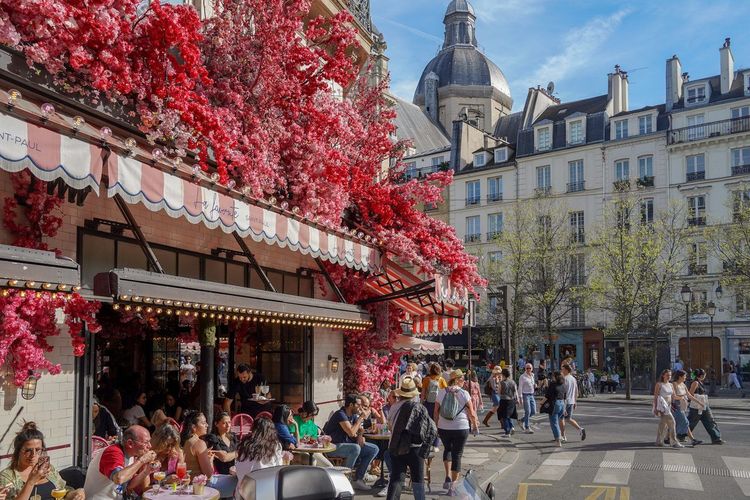
Among the most active players of the weekend, the association Paris Historique holds a special place. Founded in 1963 and recognised as a public utility organisation, it has been campaigning for more than sixty years for the preservation of the capital's built heritage, with a particular focus on the Marais, which it helped save from demolition in the 1960s.
Its headquarters occupy the Maison d'Ourscamp (44 Rue François Miron, 75004 Paris, rated 3/5 on Google based on 1 review), on the Rue François Miron, a medieval building in the Marais whose 13th-century Gothic cellar, restored by volunteers, is open to visit free of charge throughout the year.
During Heritage Weekend, the association's volunteers organise free guided tours of inner courtyards, passageways and private mansions in the Marais and old Paris that are normally inaccessible. Groups often form on the spot, in small numbers, giving these itineraries a noticeably more personal tone than the institutional visits of major monuments. Check the programme in advance nonetheless: some themed tours require prior registration.
Unusual and Private Venues to Discover for a Weekend
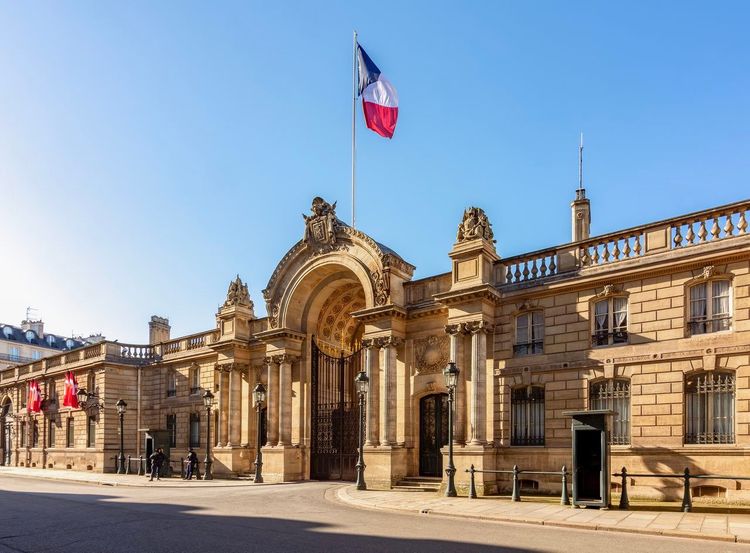
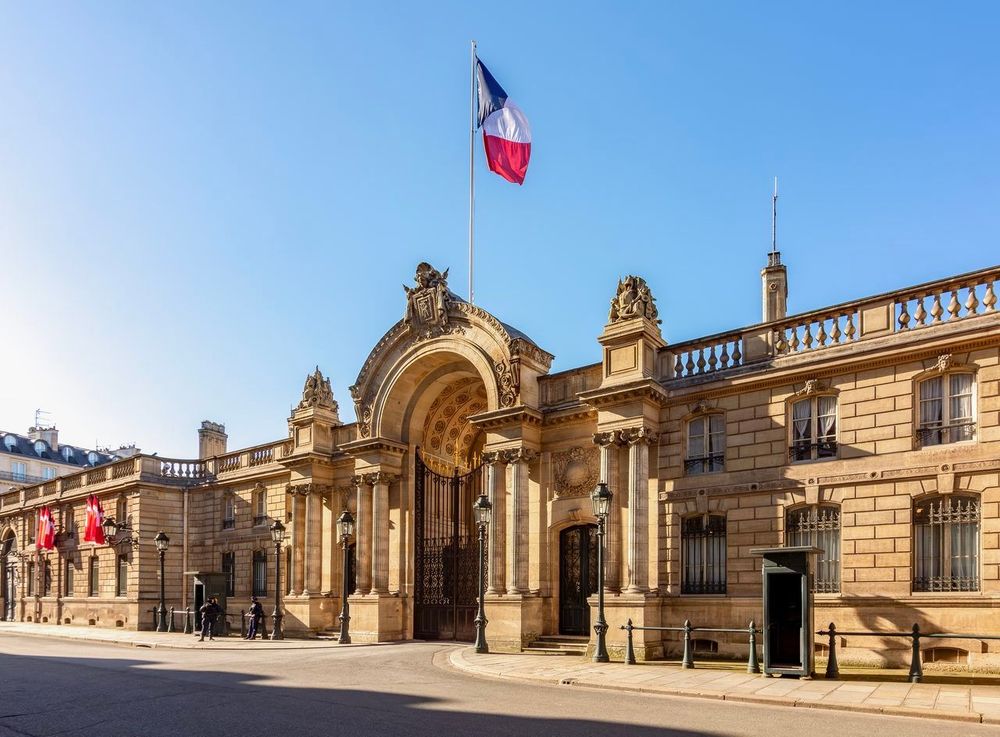
This is the beating heart of these two days: places you would never normally visit, for lack of a badge or an invitation. Let's start with the palaces of the Republic. The Palais de l'Élysée opens its gardens, its entrance hall of honour and part of its reception rooms, with a mandatory booking that generally opens in early September and fills up within minutes. The Hôtel de Matignon, the Prime Minister's residence, follows the same pattern with its three-hectare park, one of the largest private gardens in the capital.
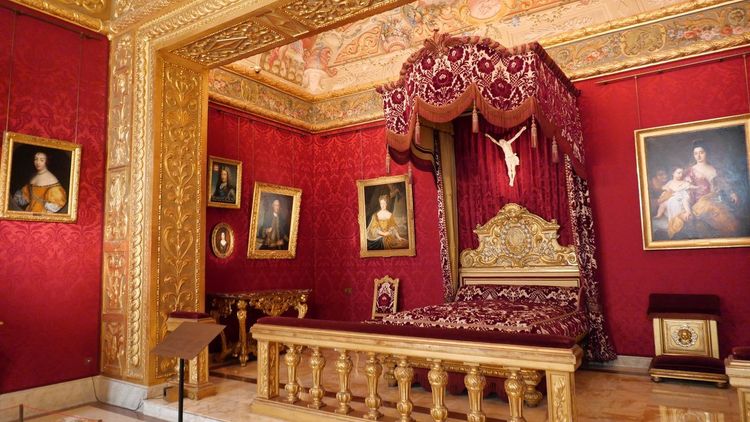
On the parliamentary side, the Hôtel de Lassay (128 Rue de l'Université, 75007 Paris), the official residence of the President of the National Assembly, adjoins the Palais Bourbon and exceptionally opens its gilded reception rooms. The visit can be combined with the chamber and the library whose ceilings were painted by Delacroix.
At the Senate, the Palais du Luxembourg reveals its library, its conference hall and the president's office, alongside the garden's greenhouses and their collection of orchids and fruit trees. A striking contrast with the lawns of the Jardin du Luxembourg, the only part of the estate most visitors know.
The Saint-Germain-des-Prés neighbourhood concentrates a remarkable density of exceptional openings, between 17th-century private mansions and embassy headquarters. Seeing everything in a single afternoon is impossible: better to target two or three addresses and stroll between them rather than rushing from one security checkpoint to the next. To continue exploring the Saint-Germain neighbourhood once the doors close, the itinerary remains available throughout the year.
Just across the river on the opposite bank, the Institut de France opens its dome and its Mazarine Library, the oldest public library in France, with its intact 17th-century shelving.
On the financial side, the Banque de France, housed in the former Hôtel de Toulouse, opens its gilded gallery, an 18th-century interior that nothing in the austere façade on the Rue La Vrillière would suggest. Other institutions, less spectacular but equally rare to visit, are worth the detour: the Conseil d'État at the Palais-Royal, the Court of Cassation on the Île de la Cité, the Ministry of Europe and Foreign Affairs on the Quai d'Orsay, and various embassies that open their gardens by appointment. Each imposes its own hours and, almost always, a security check with ID at the entrance. Plan ahead if your time slot is tight. The Mona-Lisa-to-Notre-Dame audio-guided tour swings past the Institut de France as well, a good anchor for timing this circuit around such institutional visits.
Iconic Monuments Open for Free
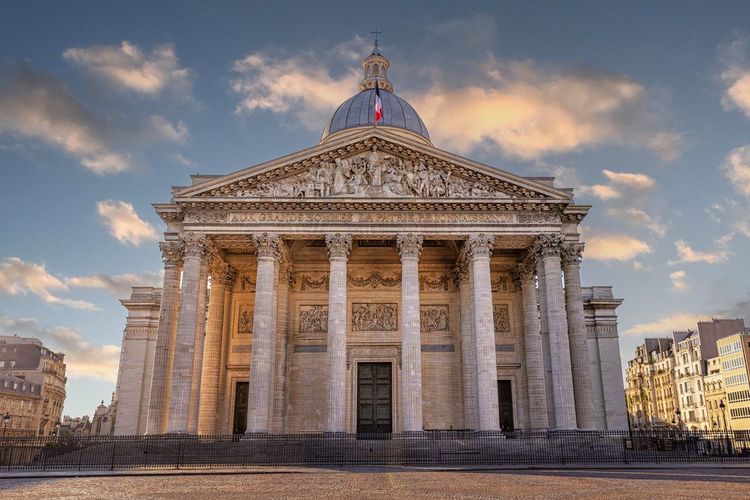
Alongside the hidden gems, Paris's great monuments play along with free admission. The sites of the Centre des Monuments Nationaux lead the way: the Panthéon opens its crypt and its dome, offering one of the finest panoramas over the Left Bank.
On the Île de la Cité, the Sainte-Chapelle with its 13th-century stained glass, and the Conciergerie with its former revolutionary prison, can be visited one after the other with just a few minutes' walk.
On the Right Bank, the Arc de Triomphe allows visitors to climb free of charge to its terrace, one of the rare 360-degree viewpoints over the twelve avenues radiating from the Place Charles-de-Gaulle.
The Musée d'Orsay opens free of charge throughout the weekend and supplements free admission with guided talks dedicated to its architecture — that of a railway station turned museum — with on-site registration at the ticket desk, subject to availability.
The Louvre, on the other hand, does not operate on the blanket free-entry model many people imagine: it instead offers exceptional visits to its art workshops and behind-the-scenes areas, by registration and with very limited capacity, while the Arc du Carrousel can be visited free of charge. If you do not secure a slot, the Ryo audio-guided tour from Mona Lisa to Notre-Dame connects the two monuments on foot with the stories that express visits miss, and our guide for visiting the Louvre provides opening hours and the works to target throughout the rest of the year.
Finally, the Monnaie de Paris (11 Quai de Conti, 75006 Paris, rated 4.4/5 on Google based on 4,427 reviews), on the quays just opposite the Louvre, deserves a special mention: beyond free admission, it programmes every year one of the richest activity offerings in the capital, including workshops and coin-minting demonstrations.
A useful detail for balancing a programme: the permanent collections of the City of Paris museums (Petit Palais, Carnavalet, Musée de la Vie Romantique) are already free year-round. Worth keeping as a backup option if a queue puts you off. The Latin Quarter audio-guided tour sticks closer to the Panthéon and Île de la Cité if the walk matters more than free entry.
Saturday or Sunday: How to Split the Two Days
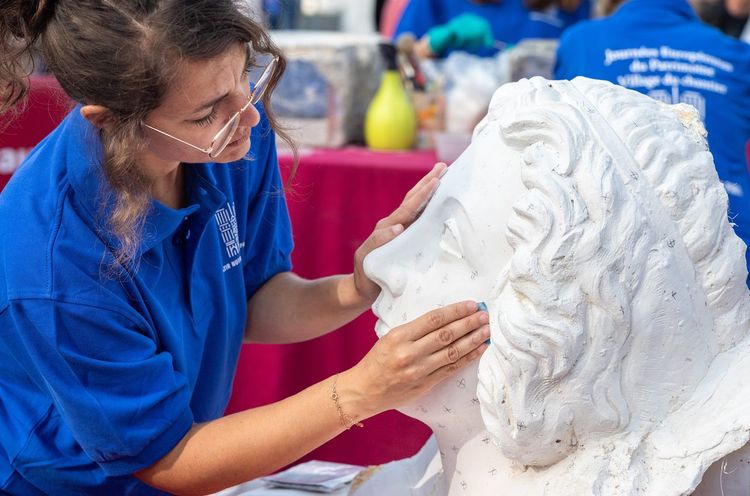
The two days are not alike. Saturday concentrates the bulk of institutional openings and draws the most determined visitors, those who queue from 9 a.m. outside a ministry. Saturday's programme is also where you find the most advance-booking slots: seats of power, embassies, corporate headquarters.
Sunday breathes a little more freely, especially in the early afternoon, when some of Saturday's visitors have already ticked off their list. It is the best time for drop-in venues, neighbourhood walks led by volunteers and family workshops, which are often scheduled on that day.
A split that works well: reserve Saturday for one or two exceptional venues secured by prior booking, then fill in the gaps with free-entry monuments within walking distance; keep Sunday for open-ended exploration on foot, with no set schedule. Watch out for earlier Sunday closing times — several sites shut their doors around 5 or 6 p.m. when they stayed open until 7 p.m. the day before.
Guided Tours and Events Not to Miss
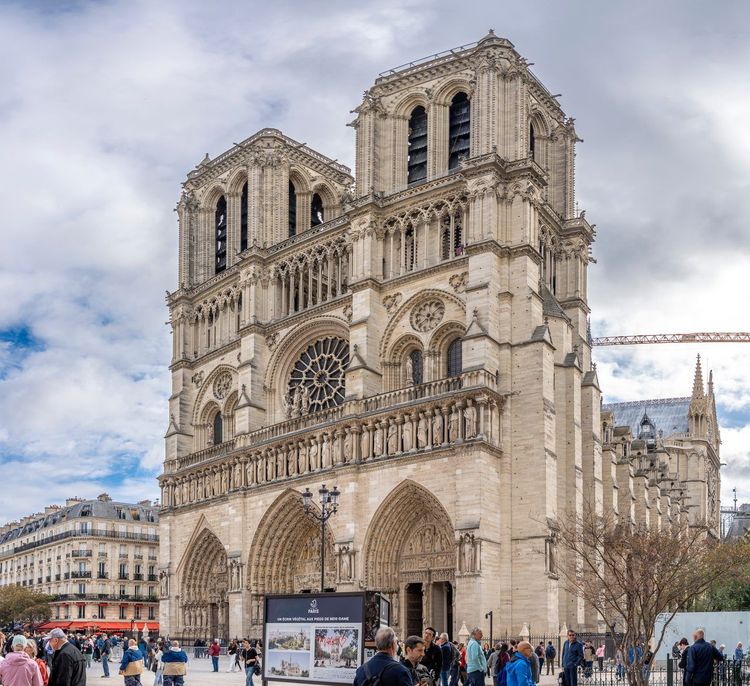
Beyond simply opening the doors, this weekend stands out for the density of its activities. Craft workshops take centre stage: textile restorers, wood gilders and bookbinders, often set up for live demonstrations in the courtyards of opened private mansions.
The Monnaie de Paris offers coin-striking demonstrations, a craft you will find nowhere else in Paris outside museum display cases. The Petit Palais transforms its galleries into a giant treasure hunt, with riddles to solve, to introduce visitors to the work of conservation and the behind-the-scenes life of a museum. The Catacombs, for their part, offer two exceptional nocturnal tours: one informed by texts and testimonies from the 18th century, the other led by a guide who presents himself as a contemporary of 1809, the year the site first opened to the public.
Other institutions opt for theatrical visits: costumed actors at the Archives nationales, staged readings at the Bibliothèque nationale de France, both at the François-Mitterrand site and at the Richelieu site with its Oval Room. On the lecture front, several museums programme talks with historians, curators or heritage architects — free but with limited capacity. For families, activity trails and creative workshops are frequently offered on Sunday afternoons: a good way to keep the momentum going over two days without losing the younger visitors.
Booking Your Spot and Avoiding the Queue
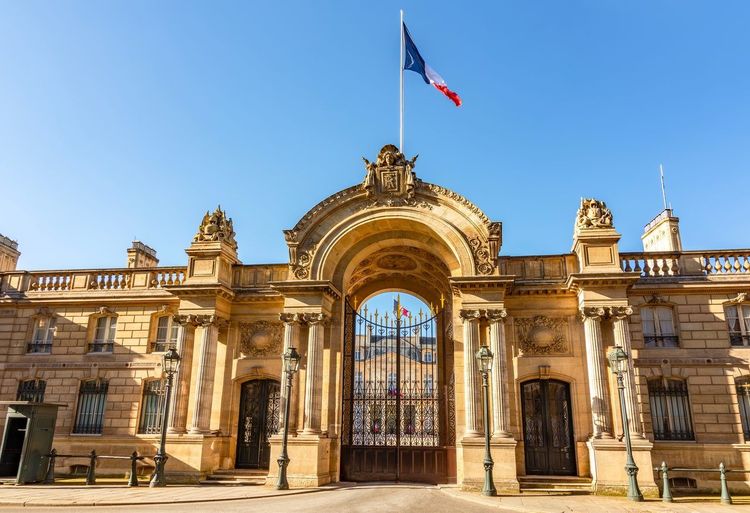
Free admission does not mean no booking required. At the most popular sites (Élysée, Matignon, Hôtel de Lassay, Palais du Luxembourg, certain embassies), an online timed-entry booking is essential, with a mandatory ID check at the entrance and sometimes advance submission of personal details. Booking windows open in dribs and drabs, often one to two weeks before the event: in 2025, the Élysée ticketing opened on Friday 5 September at 7 p.m. for a weekend on the 20th and 21st.
Other venues, particularly national monuments already open to the public for the rest of the year, operate on a first-come, first-served basis. The general rule: the rarer the access to a venue, the more likely online booking is required, and the earlier you need to act.
The habit that saves the most time: identify your three or four absolute priorities as soon as the programme is published in mid-August, note the booking opening date for each one in your calendar, then fill the rest with free-entry sites located within ten minutes' walk of each other. The official programme's search engine allows you to filter by arrondissement, which avoids building a zigzag itinerary across the city.
Practical Information: Hours, Getting Around and Tips for Making the Most of the Weekend
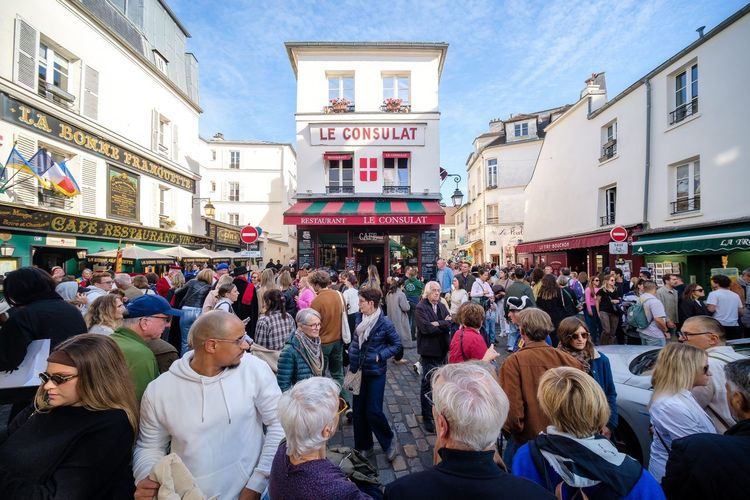
Opening hours vary by site, but most are open between 10 a.m. and 6 p.m. on both Saturday and Sunday, with occasional special late-night events until 10 p.m. Expect longer queues on Saturday morning at the busiest venues: arriving at opening time remains the best strategy for not spending half your day waiting.
For transport, most sites concentrated between the Île de la Cité, Saint-Germain-des-Prés and the Quartier latin are easily reached on foot or by Vélib', avoiding dependence on metro lines that are often packed on these days. If your itinerary covers the Quartier latin, the Sorbonne, the Panthéon and the Jardins du Luxembourg, this compact area lets you string together several unusual venues and free monuments without losing time to transport.
Budget: the essentials are free, but the real cost is time. Plan generously, with two or three venues maximum per half-day rather than a list of ten addresses that is impossible to complete. Bring water and comfortable shoes: most queues are spent standing outdoors, sometimes for more than an hour at the most in-demand sites. And check accessibility in advance if you are coming with a pushchair or wheelchair, as many historic buildings have neither a lift nor a ramp.
Once the gates close, nothing stops you from continuing the exploration. The Ryo audio-guided tour revisits the Panthéon and the Île de la Cité with no opening-hour constraints or booking requirements, letting you deepen what these two days only scratched the surface of.
FAQ
Where should I go in Paris on Heritage Days?
For a first-time visit, focus on a compact area rather than crossing the whole city. The Île de la Cité (Sainte-Chapelle, Conciergerie) and the Quartier latin (Panthéon, Senate) combine well on foot. Exceptional venues such as the Élysée, Matignon or the Hôtel de Lassay require advance booking, so schedule those first.
When do the 2026 Heritage Days take place in Paris?
The 43rd edition is held on the third weekend of September: Saturday 19 and Sunday 20 September 2026, preceded by Friday 18 reserved for school groups. Opening hours vary by site, generally between 10 a.m. and 6 p.m.
Are Heritage Days free in Paris?
The vast majority of participating sites are free or heavily discounted, including museums that charge admission the rest of the year, such as the Musée d'Orsay. A few specific workshops or activities may remain ticketed, and some behind-the-scenes tours operate with very limited capacity.
Do I need to book to visit a venue during Heritage Weekend?
It depends on the venue. National monuments already open year-round generally operate on a first-come, first-served basis. Exceptionally opened sites (ministries, embassies, official residences) almost always require an online booking, which opens one to two weeks in advance, with a mandatory ID check.
Which unusual or private venues open their doors in Paris during the EHD?
Among the most sought-after: the Palais de l'Élysée, the Hôtel de Matignon, the Hôtel de Lassay (National Assembly), the Palais du Luxembourg and its greenhouses (Senate), the Institut de France and its Mazarine Library, the Banque de France and its gilded gallery, as well as several embassies and private mansions in the Marais and Saint-Germain-des-Prés.
How can I participate or open my venue to the national programme?
Owners or managers of venues wishing to join the programme can register free of charge with the Ministry of Culture, generally in the spring preceding the September edition, via a dedicated online procedure. Project organisers can also find a communication kit on the ministry's website and, for the press, a dedicated press pack.
Extending the Exploration Beyond the Weekend
Forty-eight hours, and yet they leave a mental map of the city that lasts far longer: you no longer look at an embassy or ministry façade the same way once you have crossed its threshold. Between unusual venues booked in advance and free monuments with open access, the key is to build a realistic programme rather than a wish list, even if that means saving two or three addresses for next year's edition.
To continue discovering Parisian heritage once the gates close, the Ryo audio-guided tour of Paris connects the same neighbourhoods, from the Louvre to Notre-Dame, with no date constraints or timed-entry slots. Enough to turn a weekend curiosity into a year-round explorer's habit.
À lire également