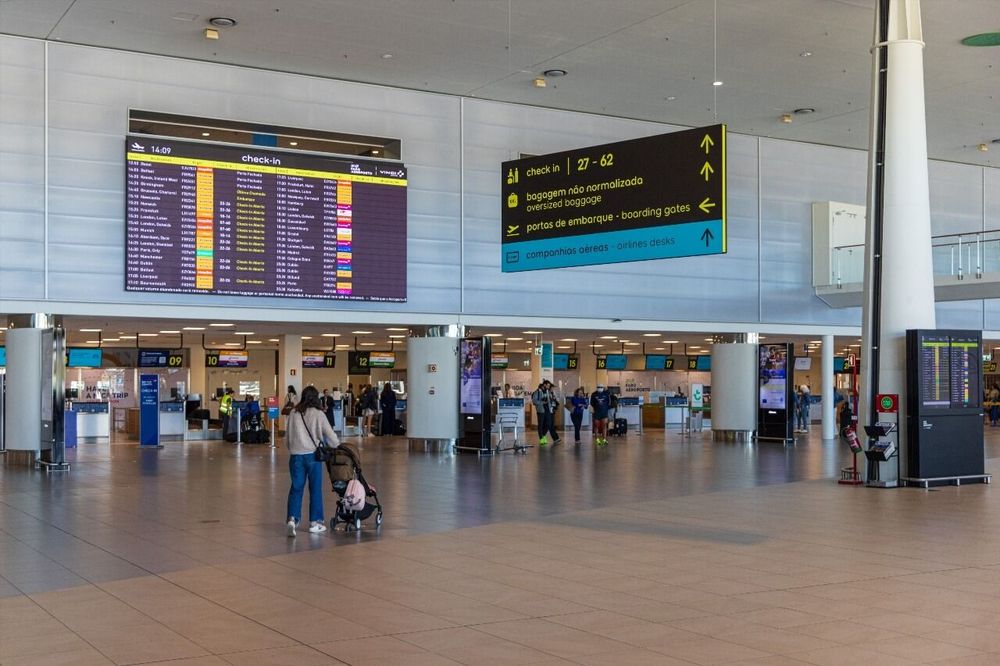
© Shutterstock
 Votre guide Ryo
The World's Largest Airports in 2026: Area, Traffic, and Absolute Records
There is an airport so vast it surpasses the area of inner Paris — and yet most travelers have never heard of it. The world's largest airports are not necessarily the ones we use most: when it comes to total area, runway capacity, and annual passenger volume, the rankings tell very different stories. Some of these hubs were built in the middle of the desert, others born of outsized national ambition, and others still grew in stages over sixty years before reaching a staggering size.
This article reviews the world's most imposing airports across several criteria: total airport area, number of runways, passenger capacity, and actual annual traffic. You will discover why King Fahd Airport in Saudi Arabia dwarfs all competitors in terms of surface area, why Denver is the world's second largest airport despite its geographic isolation, and how Beijing Daxing, opened in 2019, redefined the architectural and operational standards of global aviation. There are also a few surprises from the United States, which alone accounts for four of the ten largest airports in the world.
How Do You Measure the Size of an Airport?
Before drawing up a ranking, we need to agree on what is being measured. The "size" of an airport can refer to three very different things, and the media often confuse them.
The total area of the airport grounds includes runways, taxiways, terminals, cargo areas, parking lots, and sometimes land not yet built on but reserved for future expansion. This is the measure most commonly cited in global rankings. It is expressed in km² or hectares.
The built floor area of the terminals more closely reflects the passenger experience: it is the covered interior surface in m², which determines the comfort of waiting areas, the density of shops, and the smoothness of connections. An airport with a large total area can have relatively modest terminals, and conversely, Changi in Singapore impresses more through its architecture than its footprint.
Finally, annual passenger traffic is the most economically meaningful metric: it measures the real attractiveness of the hub. The two rankings — area and traffic — almost never align. Dallas/Fort Worth handles nearly 88 million passengers a year across 69 km², while King Fahd Airport welcomes barely 10 million passengers across 780 km². In this article, we present both dimensions.
1. King Fahd International Airport, Dammam (OEDM)
The King Fahd International Airport (Dammam, Saudi Arabia, rated 4.4/5 on Google with 26,008 reviews) in Dammam, Saudi Arabia, is unquestionably the world's largest airport by area: 780 km² of airport grounds, larger than Bahrain, the neighboring island state. The Guinness World Records officially recognizes it as the world's largest airport. To put the scale in perspective, Paris and its inner suburbs fit within less than 200 km². It should be noted, however, that most of this domain remains undeveloped desert: the actually developed area is around 37 km².
Inaugurated in 1999 after more than ten years of construction, it was designed for a capacity of 50 million passengers per year, a figure its current traffic — around 10 million passengers — is far from reaching. The explanation lies in geography and politics: Dammam is the capital of the Eastern Province, a quintessential oil region, but not a leading tourist or commercial hub.
The grounds include two terminals, including the main terminal in Islamic style with a tent-shaped roof, and a central mosque capable of accommodating 2,000 worshippers simultaneously. There are two parallel runways, capable of handling the heaviest aircraft.
The vastness of the site is partly explained by Saudi spacing standards for buildings and by the reservation of large areas for future expansion, in the context of Vision 2030, which aims to multiply inbound tourism to Saudi Arabia. Projects for new rail connections with Riyadh and the Gulf region are currently being planned. In the meantime, the airport remains the symbol of a gigantic ambition still largely untapped.
In terms of connections, it serves around 40 airlines and destinations in some thirty countries, with Saudi Arabian Airlines and flyadeal as the main carriers. The Hajj terminal, specifically dedicated to pilgrims heading to Mecca, is activated during the major pilgrimage periods.
2. Denver International Airport (DEN)
Building the world's second largest airport in a landlocked city at 1,650 meters above sea level, on the High Plains of Colorado, was a bold gamble. Yet Denver International Airport (8500 Peña Blvd, Denver, CO 80249, United States, rated 4.1/5 on Google with 51,283 reviews) opened its doors in 1995 and has continued to grow ever since.
With approximately 138 km² in area, it is the largest airport in North America by surface, twice the size of Manhattan island. Its main terminal, the Jeppesen Terminal, is instantly recognizable: its roof shaped like snow-capped peaks — 34 points of stretched white canvas — has become one of the architectural symbols of American aviation. The canvas is made of Teflon-coated fiberglass, translucent by day and luminous at night.
The grounds feature six runways (a US record), all oriented to avoid traffic conflicts despite the plateau's frequent winds. This configuration allows simultaneous operations in bad weather conditions — a significant advantage for an airport exposed to winter snowstorms. Denver is regularly ranked among the most weather-resilient American airports.
In 2024, Denver broke an all-time record by welcoming more than 82 million passengers, making it the sixth busiest airport in the world and one of the three most active in the United States, behind Atlanta and Dallas. United Airlines has its main hub here for flights to the American West, the Rockies, and Latin America. Southwest Airlines is also heavily present.
The distance between the main terminal and concourses B and C is such that an underground automated subway system (the Automated Guideway Transit, or AGT) connects the concourses. The full journey takes about 8 minutes. On the surface, the grounds include agricultural land leased to local ranchers — a curiosity few airports in the world can boast.
For transit travelers, Denver offers a surprisingly wide range of services: meditation facilities, a permanent art gallery with more than 40 works integrated into the architecture, and even a craft brewery in Concourse B.
3. Dallas/Fort Worth International Airport (DFW)
If there is one airport that embodies Texan ambition, it is DFW. With its 69 km² of area, Dallas/Fort Worth International Airport is the third largest in the world and the main hub of American Airlines, the world's largest airline by passenger numbers.
Opened in 1974, it was the first major American airport of the modern era to be designed as a "drive-in airport": each terminal (A, B, C, D, and E, arranged in a semicircle) is directly accessible by car from the international highway running through the site. This "spine road" architecture remains unique in the world at this scale.
Five terminals, seven active runways (an eighth under planning), and a theoretical capacity of 100 million passengers per year. In 2024, DFW welcomed nearly 88 million travelers, maintaining its place as the third busiest airport in the world behind Atlanta and Dubai. Domestic US routes dominate traffic, but DFW also operates direct flights to more than 60 international destinations, particularly in Europe, Asia, and Latin America.
The SkyLink, the automated monorail serving all five terminals, covers 10.5 km of track in a continuous loop. It is the longest airport metro in the United States. At peak hours, it carries up to 3,500 passengers per hour. For extremely tight connections (less than 45 minutes), DFW remains both efficient and generous in services: spas, Texan restaurants, and interfaith chapels.
The airport recently completed a $3.5 billion modernization program, including a full renovation of Terminal D (international), with new dining areas, expanded premium lounges, and a fully automated baggage sorting system.
4. Washington Dulles International Airport (IAD)
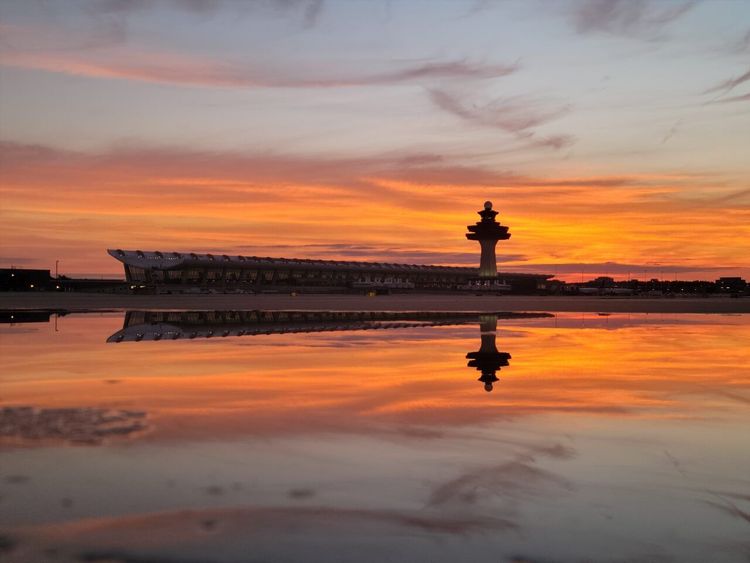
Washington Dulles International Airport (1 Saarinen Circle, Dulles, VA 20166, United States, rated 4.1/5 on Google with 24,592 reviews), in Chantilly, Virginia, has an area of 52 km², making it the fourth largest in the world. Inaugurated in 1962 to designs by architect Eero Saarinen, it remains one of the few airports whose architecture is listed as a historic landmark in the United States.
The curved control tower and the main terminal, whose concrete roof appears to float between two rows of tilted pylons, influenced several generations of architects. The original structure, designed for transport by "mobile lounges" (mobile waiting rooms that drove up to the planes), was later supplemented by satellites connected underground.
Dulles is the main international gateway for the Washington D.C. region, with United Airlines as the dominant operator. In 2024, traffic was around 25 million passengers. The airport has been connected to downtown by the Silver Line metro since 2022, ending decades of relative isolation despite its renown.
The grounds reserve large areas for business aviation and government hangars. A curious detail: the first ridges of the Appalachians are visible from the runways on clear days.
5. Houston George Bush Intercontinental Airport (IAH)
United Airlines' second hub after Newark, George Bush Intercontinental Airport (2800 N Terminal Rd, Houston, TX 77032, United States, rated 4/5 on Google with 37,927 reviews) covers 44 km² north of Houston, Texas. It opened in 1969 to replace Hobby Airport, which had become too small for the oil metropolis.
Five crescent-shaped terminals (A, B, C, D, E) connected by an underground inter-terminal train (ITT). Terminal E, dedicated to international flights, is the most recent and most spacious, featuring wide floor-to-ceiling windows and Tex-Mex cuisine restaurants. Annual traffic is approaching 45 million passengers, driven by routes to Latin America and Mexico, where Houston holds considerable economic influence.
A notable feature: IAH has a medical center on the airport grounds, with emergency services that are rare among major American hubs. Medical emergencies during layovers therefore receive an immediate response.
6. Orlando International Airport (MCO)
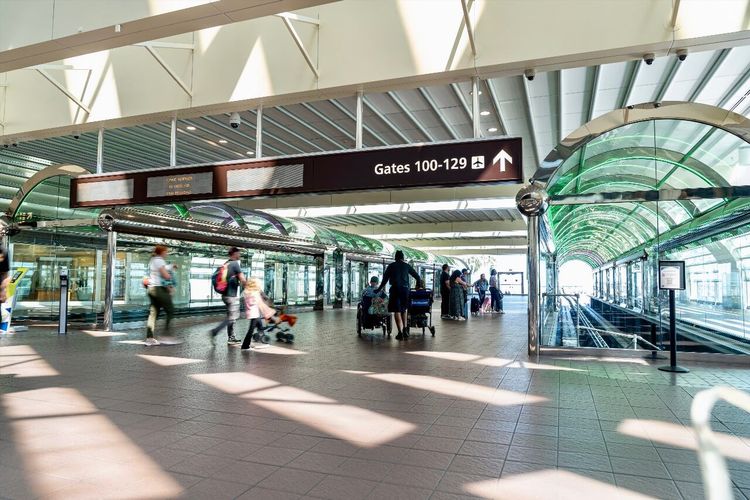
Orlando International Airport (1 Jeff Fuqua Blvd, Orlando, FL 32827, United States, rated 4.1/5 on Google with 63,213 reviews) (MCO) stands out in this ranking for a paradox: it covers approximately 40 km² while handling 57 million passengers in 2024 — one of the most efficient area-to-passenger ratios on the list.
Orlando owes this volume to Disney World, Universal Studios, and SeaWorld: the city is the world's top theme park destination, generating a massive and consistent tourist flow. The airport operates as a "leisure hub" rather than a connection hub, with a very high proportion of direct flights from secondary American and European cities.
Terminal C, inaugurated in 2022, represents an investment of $2.8 billion and can accommodate an additional 15 million passengers. It notably includes direct access to the Brightline rail line, which connects the airport to Miami in under 3 hours — a rare innovation in a country where long-distance rail is underdeveloped.
The interior architecture leans into instant escapism: artificial palm trees, indoor tropical gardens, fountains — Orlando wants the vacation to begin the moment you arrive at the terminal.
7. Shanghai Pudong International Airport (PVG)
China's gateway to the world, Shanghai Pudong International Airport (Yingbin Avenue, Pudong, Shanghai, China, rated 4/5 on Google with 8,491 reviews) covers 40 km² in the Yangtze Delta, 30 km from central Shanghai. Opened in 1999 to relieve congestion at Hongqiao Airport, it has become one of Asia's most active hubs over two decades.
With approximately 76 million passengers in 2024 (post-Covid recovery), PVG ranks among the world's busiest airports. Two main terminals (T1 and T2), four runways, and a fifth terminal under construction to absorb the anticipated growth before 2030. The connection to the city center is provided by the Shanghai Maglev, a magnetic levitation train reaching 430 km/h, covering the 30 km in just 8 minutes — the fastest airport transport experience in the world.
China Eastern Airlines uses Pudong as its main hub for intercontinental routes. Connecting passengers benefit from highly developed transit zones: airside hotels, cultural spaces showcasing Shanghainese art and gastronomy, and some of Asia's best-equipped business lounges.
PVG's grounds include substantial cargo areas: Shanghai is one of the world's leading commercial ports, and Pudong Airport ranks among the very top global hubs for air freight by tonnage.
8. Istanbul Airport (IST)
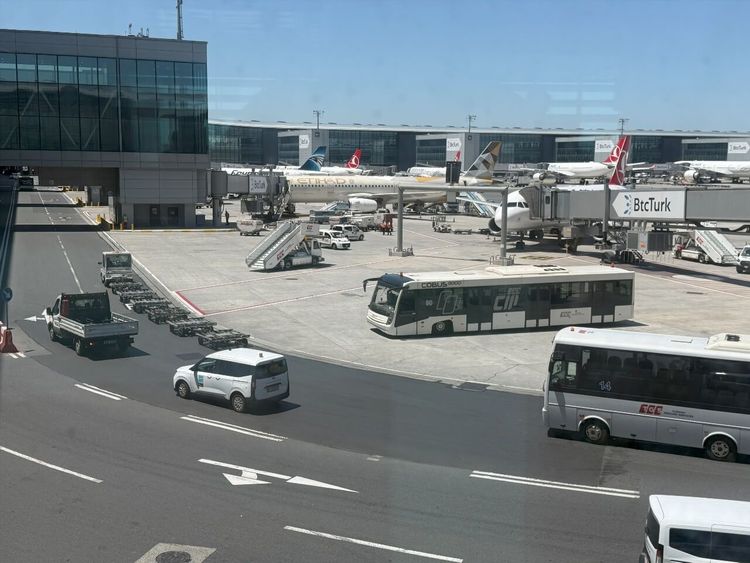
Istanbul Airport (Tayakadın, Istanbul, Turkey, rated 4.4/5 on Google with 109,717 reviews), inaugurated in 2019 to replace the former Atatürk Airport, is one of the most ambitious airport projects of the 21st century. Current phase: 37 km², with a planned final area of 76.5 km² once all construction phases are complete.
Designed by Grimshaw Architects, the main terminal is one of the largest single-roof terminal buildings in the world, with curves inspired by traditional Ottoman flora. It can handle 90 million passengers per year in phase 1, a capacity that will be raised to 200 million ultimately, which would make it by far the world's largest airport.
The ramp-up has been meteoric: nearly 80 million passengers in 2024, already surpassing many long-established airports. Turkish Airlines, for which Istanbul is the sole hub, serves 352 destinations in 131 countries — no other airline in the world covers as many countries.
The terminal features an integrated Turkish aviation museum within the boarding area, several restaurants, private lounges for each cabin class, and a hotel directly connected airside. The connection to central Istanbul is made by bus (45–90 min depending on traffic) or taxi; a direct metro line (M11) has been in service since 2023.
The grounds now include several runways, with additional ones planned in later phases. Istanbul aims to become the world's premier air crossroads between Europe, Asia, and Africa.
9. Beijing Daxing International Airport (PKX)
If any single airport can claim to have changed the world's view of what airport architecture can be, it is Beijing Daxing International Airport (Daxing, Beijing, China, rated 4.4/5 on Google with 1,639 reviews). Inaugurated on September 25, 2019, on the eve of the 70th anniversary of the People's Republic, it was designed by Zaha Hadid Architects and Aéroports de Paris ingénierie — a symbolically powerful Sino-international collaboration.
The shape of the central terminal is often compared to a phoenix with wings spread when seen from above — six curved arms radiating from a star-shaped central core. Its area is 700,000 m² for the terminal alone, making it one of the largest terminal buildings in the world. The airport grounds cover approximately 47 km², and the design has incorporated ambitious environmental goals: a large proportion of the surfaces are naturally lit during the day, reducing the need for artificial lighting.
Current capacity stands at 45 million passengers per year for phase 1, expandable to 100 million in subsequent phases. In 2024, traffic was around 45 million passengers, growing strongly (over 30% year-on-year) following the lifting of China's health restrictions.
Daxing has four runways of exceptional length (the longest measuring 3,800 meters), capable of handling any type of aircraft up to the Airbus A380. The interior flow design is conceived to minimize walking time: from any boarding gate, the journey to the center of the terminal takes no more than 8 minutes — a remarkable feat in a building of this size.
The connection with central Beijing and Beijing South is made by high-speed train (Jingxiong line and intercity), with journey times of 20 to 35 minutes. For travelers eager to discover major Chinese cities, Ryo offers travel content on numerous destinations — a reminder that every great airport is also a gateway to a culture waiting to be explored.
China Southern Airlines and Beijing Capital Airlines have established Daxing as their main hub, while Air China retains Capital Airport (PEK) as its base. This dual-hub setup in Beijing is unique in the world at this scale.
10. King Khalid International Airport, Riyadh (RUH)
Saudi Arabia's second largest airport by area, King Khalid International Airport (Riyadh, Saudi Arabia, rated 4.4/5 on Google with 50,410 reviews) covers 225 km² north of Riyadh. Inaugurated in 1983, it was designed by the American firm Hellmuth, Obata & Kassabaum (HOK) with a footprint heavily inspired by Islamic architecture.
Four terminals, four runways, and a nominal capacity of around 35 million passengers, which will be significantly increased by 2030 as part of a colossal modernization plan. A new giant terminal, currently in development, is intended to make the airport one of the region's largest hubs.
In 2024, traffic reached approximately 35 million passengers, rising sharply thanks to Vision 2030's tourism opening policy and the development of Riyadh Air, the latest newcomer to global aviation. Riyadh aims to become one of the world's top ten hubs by 2030.
The airport features a large central mosque of monumental proportions, accessible both in the public zone and airside. The air-conditioned indoor garden, with its palm trees and fountains, is one of the most photographed spaces in the airport. Once you land in Paris, our audio-guided tour takes over, headphones on.
11. Cairo International Airport (CAI)
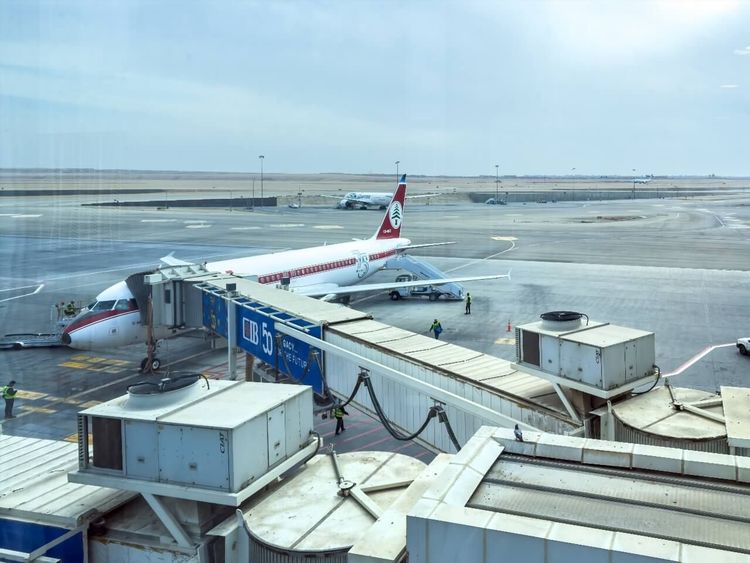
The gateway to the African continent and the bridge between Europe and the Middle East, Cairo International Airport (Cairo, Egypt, rated 4/5 on Google with 63,625 reviews) is one of Africa's largest airports: 37 km² northeast of the Egyptian capital.
Three terminals — T1 (international), T2 (regional flights), and T3 (EgyptAir hub) — serve approximately 22 million passengers annually. Cairo is a natural hub for connections between sub-Saharan Africa, the Middle East, and Southern Europe. EgyptAir, one of Africa's oldest airlines, operates its network from here to more than 60 destinations.
The airport is currently undergoing modernization, with a significant investment program planned through the end of the decade. A new terminal is planned to absorb the growth in Egyptian tourism, which is targeting 30 million visitors by the end of the decade. Despite aging infrastructure in some terminals, Cairo remains indispensable in any map of the world's major hubs.
The World's Busiest Airport: Hartsfield-Jackson Atlanta
It covers "only" 19 km² — far from the giants by area — but Hartsfield-Jackson Atlanta International Airport (ATL) has been the world's busiest airport for more than 25 consecutive years.
In 2024, Atlanta recorded 108 million passengers — the highest volume of any airport on the planet. This figure is explained by the city's geographic position, within less than 2 hours' flying time of 80% of the American population, and by the ultra-dominant hub of Delta Air Lines, which funnels a large share of its connections through here.
The interior layout is a model of efficiency: a central terminal with six concourses (A, B, C, D, E, F, and T international) connected by an automated underground metro (the People Mover) and continuous moving walkways. The minimum recommended connection time is 45 minutes — remarkably short for an airport operating at this level of traffic.
Atlanta is also the world's top airport for domestic destination diversity: more than 150 American cities are directly connected. For travelers exploring the United States, Atlanta is often an unavoidable stop, whether passing through or lingering to discover the capital of the Deep South.
The balance between operational efficiency and passenger services is remarkable: hundreds of restaurants and shops, a spa, a traveling art gallery, and even a space dedicated to the history of Southern aviation. Atlanta itself is well worth a detour, and for those who want to explore it thoughtfully, the Ryo audio guide makes it easy to discover nearby destinations at your own pace.
Europe's Largest Airports
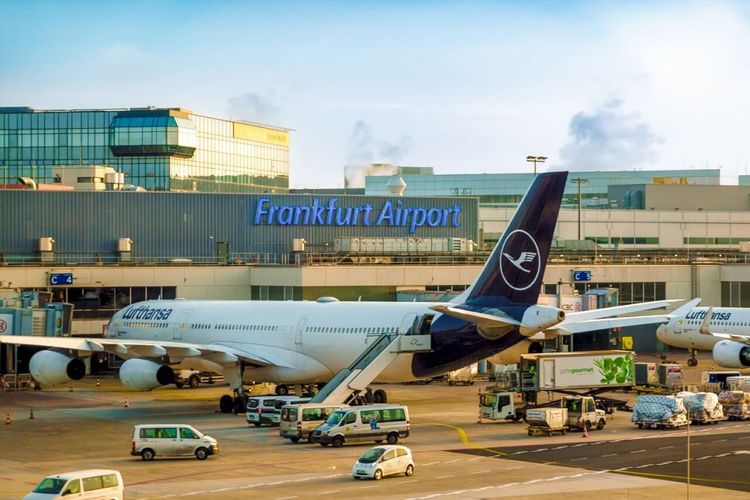
Europe does not rank among the global leaders in terms of airport area, but its hubs concentrate some of the planet's most intense traffic.
Paris Charles de Gaulle (CDG) is Europe's largest airport by area: 32 km², with three main runways and a fourth used as needed. In 2024, CDG welcomed approximately 70 million passengers, placing it among the world's top ten. The hub of Air France and SkyTeam, it serves more than 350 destinations. Its Terminal 2 is a complex maze of satellites (2A through 2G) that often disorients first-time travelers.
London Heathrow (LHR) is Europe's busiest hub: nearly 84 million passengers in 2024, on a footprint of only 12 km². The density is extreme — Heathrow is one of the world's most congested airports relative to its surface area. The third runway project, debated since the 1960s, remains blocked by environmental challenges.
Amsterdam Schiphol (AMS) deserves special mention: built below sea level (at -4 meters), on the drained bed of a former lake, its 27 km² house a single giant terminal served by six runways. The hub of KLM and SkyTeam, Schiphol welcomes 61 million passengers and ranks among Europe's highest-rated airports for service quality.
Frankfurt (FRA), the hub of Lufthansa and Star Alliance, covers 23 km² for 61 million passengers. Its Terminal 3, opened in 2026, brought total capacity to more than 75 million passengers per year. Frankfurt is also Europe's leading cargo airport.
Among the hubs that stand out as gateways to heritage-rich cities: Hamburg, whose airport serves as the entry point to a metropolis that the Ryo audio tour Gateway to the World reveals from a striking historical angle, from the Speicherstadt warehouses to the banks of the Elbe.
Asia-Pacific Hubs
Asia is home to the fastest-growing airports. Beyond Shanghai Pudong and Beijing Daxing, already covered in detail, several others deserve mention.
Singapore Changi (SIN) is regularly voted the world's best airport by travelers. Its area of 13 km² is modest, but its 4 terminals and its Jewel Changi (a hotel-retail complex with a 40-meter indoor waterfall) make it a destination airport in its own right. 58 million passengers in 2024.
Dubai International (DXB) has for a decade been the world's busiest airport for international traffic: 92 million passengers in 2024, its all-time record. Area: 36 km², Emirates hub. Its successor, Al Maktoum International (DWC), under massive construction, is expected to ultimately reach a capacity of 260 million passengers, which would make it by far the world's largest airport.
Tokyo Narita (NRT) and Tokyo Haneda (HND) together form the airport system of Japan's megacity. Narita (30 km²) is the main international hub; Haneda handles domestic flights and some Asian regional routes. The two together total more than 100 million passengers combined.
Area vs. Traffic: Two Very Different Rankings
The table below summarizes the striking gap between the two metrics for the world's major airports:
| Airport | Area | 2024 Traffic | Passengers/km² ratio | |---|---|---|---| | King Fahd (DMM) | 780 km² | ~10 M | ~13,000 | | Denver (DEN) | 138 km² | 82 M | ~595,000 | | Dallas/Fort Worth (DFW) | 69 km² | 88 M | ~1,275,000 | | Beijing Daxing (PKX) | 47 km² | 45 M | ~960,000 | | Istanbul (IST) | 37 km² | 80 M | ~2,160,000 | | Atlanta (ATL) | 19 km² | 108 M | ~5,680,000 | | Heathrow (LHR) | 12 km² | 84 M | ~7,000,000 |
This comparison illustrates a fundamental logic: airports built in desert areas or on vast plateaus have far more generous spacing standards than constrained urban hubs. Heathrow, hemmed in by London's suburbs, optimizes every square meter with extreme density. King Fahd Airport, built without land constraints, handles ten times fewer passengers across an incomparably larger site.
This also means that an airport's area is not an indicator of its economic importance. Atlanta generates economic benefits of several tens of billions of dollars per year for Georgia — incomparable to Dammam, despite the latter's vastly larger surface area.
Architecture and Innovation in the World's Largest Airports
The world's largest airports are also laboratories of architecture and technology. Several major trends are taking shape for the 2025–2035 decade.
Biophilic design is asserting itself in new terminals: indoor gardens, living walls, maximized natural light. Changi's Jewel showed that an airport can become a destination in its own right. Istanbul IST, Daxing, and the future Al Maktoum in Dubai all incorporate substantial indoor green spaces.
Decarbonization has become a design constraint: Denver and CDG have invested heavily in solar panels installed on covered parking rooftops and in geothermal heating networks. Zurich Airport, more modest in size but a pioneer in sustainability, has been testing electric charging systems for ground vehicles since 2023.
Artificial intelligence is reshaping passenger flows: facial recognition for boarding (already deployed at Atlanta, Dubai, and Changi), dynamic gate optimization, predictive baggage management. Dubai International is aiming for "passport-free travel" for all its passengers by 2027.
Finally, rail intermodality is advancing at all major hubs: direct high-speed rail/airport connections (CDG TGV, Frankfurt Fernbahnhof, Zurich HB just 10 minutes away) are redefining the catchment areas of hubs and putting them in direct competition with high-speed trains on journeys of under 3 hours.
Practical Tips for Transiting Through Mega-Hubs

Transiting through an airport of this size requires a minimum of preparation. A few essential principles.
Allow generous connection times. In airports covering more than 50 km², the distance between two gates can exceed 3 km. At Denver, the AGT journey between the main terminal and Concourse C takes 8 minutes, to which you add 5–10 minutes of walking on either side. At DFW, the SkyLink runs every 2–3 minutes but the walking distances remain substantial. 90 minutes is a reasonable minimum at most mega-hubs, 120 minutes for international flights at Istanbul or Daxing.
Download the airport app. Major hubs (Changi, Heathrow, CDG, DFW) offer real-time interactive maps, gate change alerts, and walking time estimates between gates. Some also include information on airside restaurants and shops.
Identify airside transit zones before arrival. At Istanbul IST, some intercontinental connections do not require going back through customs; at others, they do. Checking in advance with your airline avoids unpleasant surprises.
Make the most of long layovers. Several airports offer free or discounted city tour programs for layovers of 5 to 24 hours: Dubai, Singapore (Changi Stopover), and Istanbul (Turkish Airlines Stopover Program). It's an opportunity to visit a new destination at no extra cost, and with Ryo's audio tools, to explore it in depth even in just a few hours.



FAQ
What Is the World's Largest Airport by Area?
King Fahd International Airport in Dammam, Saudi Arabia, is the world's largest airport by area, with 780 km² of airport grounds — a record certified by Guinness World Records. For comparison, inner Paris covers approximately 105 km². The airport opened in 1999 and was designed to accommodate 50 million passengers, although it currently welcomes only around 10 million per year.
What Is the World's Busiest Airport?
Hartsfield-Jackson Atlanta International Airport (ATL) has been the world's busiest airport for more than 25 consecutive years. In 2024, it recorded approximately 108 million passengers. Its success stems from Atlanta's geographic position — within less than 2 hours' flying time of 80% of the American population — and from the presence of Delta Air Lines' hub.
What Is the Largest Airport in Europe?
Paris Charles de Gaulle Airport (CDG) is Europe's largest airport by area, at 32 km². London Heathrow is Europe's busiest, with nearly 84 million passengers in 2024, but on a much smaller footprint (12 km²). Amsterdam Schiphol and Frankfurt Airport round out the European top 4.
Is Beijing Daxing Airport Really That Innovative?
Yes. Opened in 2019 and designed by Zaha Hadid Architects, Beijing Daxing is often described as the world's most architecturally advanced airport. Its terminal, frequently compared to a phoenix, covers 700,000 m² under a single roof, with a large proportion of naturally lit surfaces. The maximum walking distance from any boarding gate to the center of the terminal is 8 minutes, despite the building's colossal dimensions.
How Many American Airports Appear in the Global Top 10 by Area?
Four American airports appear in the global top 10 by area: Denver (2nd, ~138 km²), Dallas/Fort Worth (3rd, 69 km²), Washington Dulles (4th, 52 km²), and Houston George Bush (5th, 44 km²). The United States owes this concentration in part to urban planning policies that allow for large land footprints far from city centers.
Why Is King Fahd Airport So Large Yet So Underused?
King Fahd Airport was designed in the 1990s with national prestige ambitions, in a context of abundant oil revenues and very generous spacing standards. Its home city, Dammam, is not a major tourist hub. Most international visitors to Saudi Arabia transit through Riyadh or Jeddah. Its vast area therefore reflects a long-term vision and a development style particular to the Arabian Peninsula, rather than current traffic levels.
Conclusion
The world's largest airports are at once critical infrastructure, feats of engineering, and mirrors of national ambition. Built across hundreds of square kilometers of Saudi desert or compressed into dense London suburbs, they shape the flows of global tourism and commerce with every takeoff and landing.
Every great hub is also a gateway to a city, a culture, a history. To make the most of the layovers and destinations you pass through, Ryo's audio tours let you explore cities around the world at your own pace — whether you have 3 hours or 3 days. Also discover our articles on the world's largest countries by area and the world's tallest skyscrapers to keep exploring the planet's records.