© Shutterstock
 Votre guide Ryo
Visit Pau in 3 Days: 2026 Itinerary Between the Royal Castle and the Jurançon Vineyards
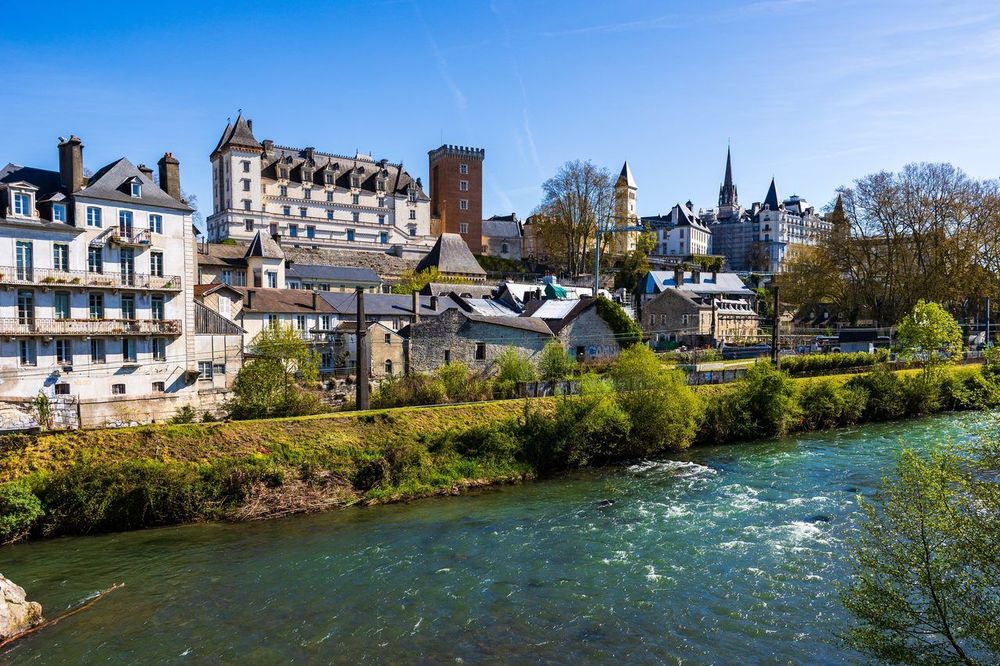
In Pau, you can see palm trees and, in the same glance, a chain of snow-capped peaks stretching for a hundred kilometres. It is this collision of landscapes, the mild foothill climate on one side and the high mountains on the other, that made the city a destination for English winter visitors as early as the 19th century. Visiting Pau in 3 days lets you enjoy both ends of the spectrum: a compact royal capital that can be explored on foot in a day and a half, and a gateway to Béarn and the Pyrenees, which requires going a little further. To set the scene before you leave, the Ryo audio-guided tour of Pau (18 audio tracks, 1h40, 4 km) already covers the essentials of the historic centre.
Over these three days, you come across a funicular that has been free since 1908, a royal child's cradle carved from a giant tortoise shell, a Degas painting bought by a provincial museum before Impressionism became respectable, and Jurançon vines sometimes harvested in December. Enough to fill a stay without ever feeling like you are ticking off a list.
Why Visit Pau in 3 Days?
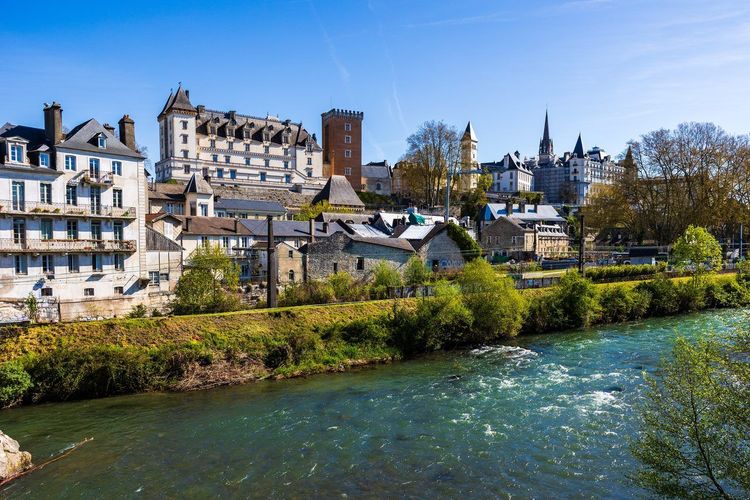
The question often comes up before booking, and the answer comes down to a simple observation: Pau is one of the few French cities where you completely change pace when you change day. One day for the royal city, dense and walkable in a few hours. A second for the museums, the park and the covered market. A third, your choice, for the Jurançon vineyards or for heading out to the major sites of Béarn and the Pyrenees. Three days is the format that avoids both the rushed 24-hour visit and the stay that drags on without structure.
Pau has long held the title of royal capital: it is the birthplace of Henri IV, future king of France and Navarre, born at the château in 1553. This royal past still permeates the historic centre, from the château itself to the private mansions lining the surrounding lanes. It is also a destination well suited to a romantic weekend extended by a day: the city is small, the terraces of the boulevard des Pyrénées look out onto the mountains, and the Jurançon vineyards are twenty minutes away by car for anyone wanting to extend the stroll with a tasting for two.
If you are looking for a common thread so as not to miss anything in the centre without wasting time finding your way, the Ryo audio-guided tour of Pau covers most of old Pau and the château in 1h40 and 4 km, at your own pace, with no booking or group. It makes a good base for the first day, detailed below stop by stop.
Day 1: Pau, Royal Capital, Château and Old Pau
The Château de Pau and the Historic Heart
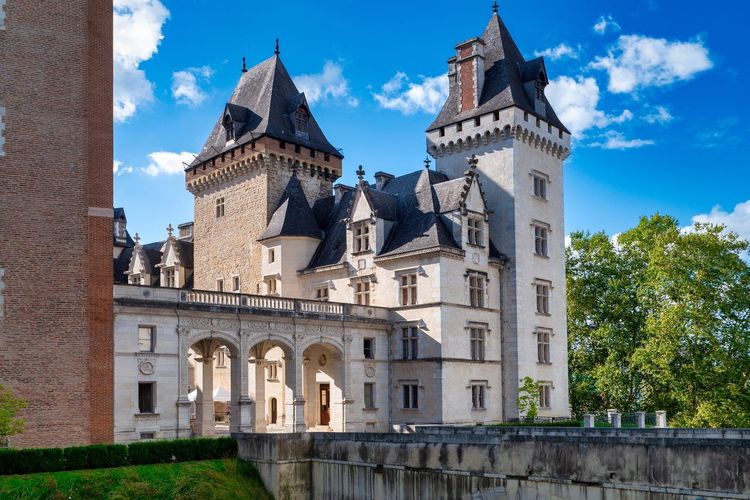
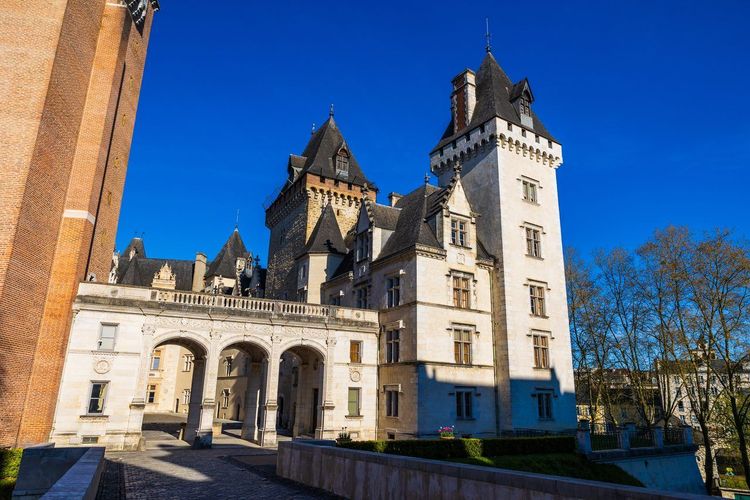
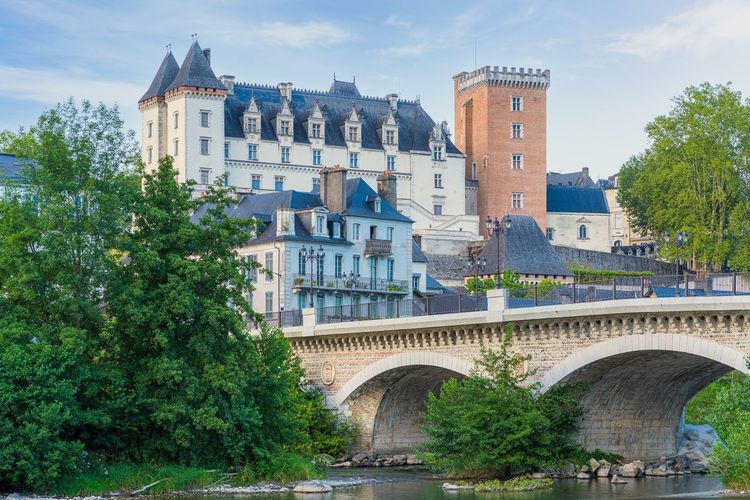
Start with the Château de Pau, a medieval fortress remodelled in the Renaissance and then restored in the 19th century under Louis-Philippe, who wanted to make it a national symbol. You can visit the royal apartments, the Flemish tapestries and, above all, Henri IV's cradle: an immense sea turtle shell mounted on a gilded stand, given at his birth. The anecdote always makes children and adults smile, and the guides of the national museum happily tell the legend that the newborn was rubbed with garlic and moistened with Jurançon wine, a Béarnais ritual meant to give him strength and character.
Around the château, the Old Pau district can be explored without a precise route: cobbled lanes, shaded squares, half-timbered façades mixed with more bourgeois 19th-century buildings. The rue du Château and the rue Tran have most of the old houses. It is a district to take slowly, with a café on a terrace, rather than to tick off point by point. Continuing north, the place Royale opens up a clear view of the equestrian statue of Henri IV, installed there in the 19th century to remind every visitor who the city truly belongs to. Allow a good hour of pure wandering before heading back up to the town centre, where the place Clemenceau marks the shift between old Pau and the more commercial part of the city.
The Boulevard des Pyrénées and the Funicular
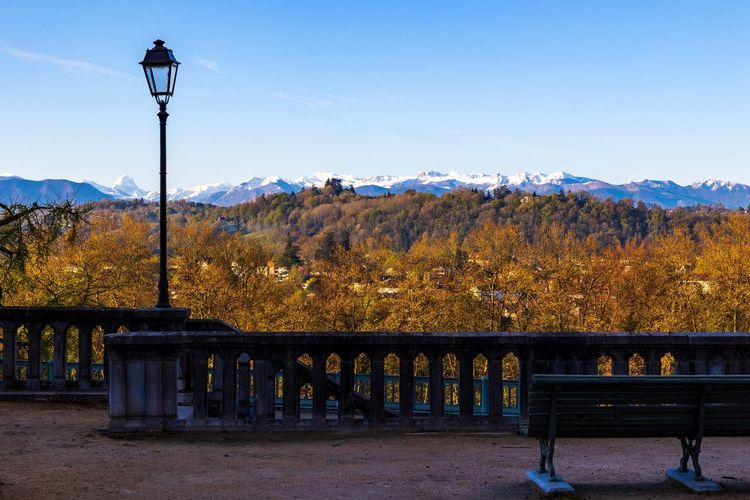
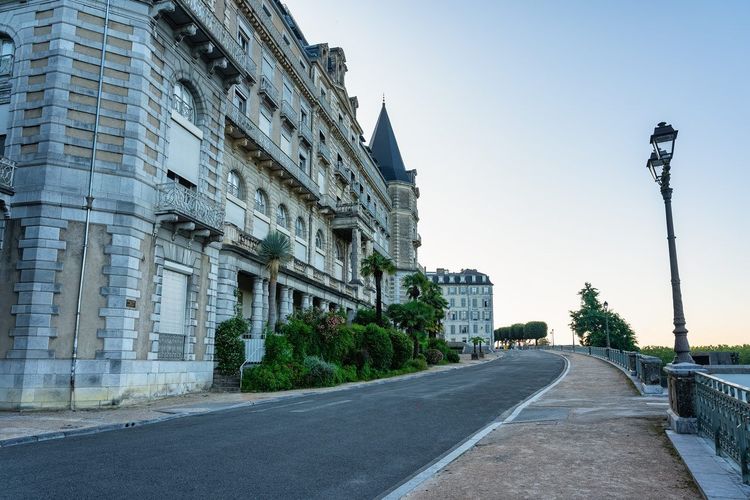
Walking up from the château, you come out onto the boulevard des Pyrénées, a promenade of nearly a kilometre and a half laid out at the end of the 19th century on the initiative of the mayor of the time, who wanted to give the city a permanent balcony over the range. On a clear day, you can make out the Pic du Midi d'Ossau and, further away, the Pic du Midi de Bigorre. Lamartine is said to have called this view one of the most beautiful panoramas on earth; true or not, the phrase has stuck to the city.
At the end of the boulevard, a stone's throw from the station, the Pau funicular (Place de la Monnaie, 64000 Pau, rated 4.6/5 on Google from 1,354 reviews) connects the lower town to the centre with a one-minute ride. Free since it opened in 1908 (it is one of the few ticket-free funiculars in France), it remains a practical way of getting down to the SNCF station without walking the whole slope back down. Many visitors first enjoy it as an attraction, before realising that it is mostly used by Pau residents for their daily journeys. Its 18 audio stops also string together this combination of château, old Pau lanes and boulevard des Pyrénées, with an anecdote about Henri IV slipped in along the way, handy if you prefer a voice in your ear to a paper map.
End the day quietly on the boulevard, at the hour when the light skims the peaks: it is often when the view is at its clearest, and when the neighbouring terraces fill up for aperitifs.
Day 2: Museums, Parc Beaumont and the Pau Art of Living
Pau's Museums: Fine Arts and Bernadotte
The second day starts gently, as museums demand. The Pau Fine Arts Museum, located on rue Mathieu-Lalanne, houses a compact but surprising collection for a city of this size: a Rubens, an El Greco, and above all Degas's "A Cotton Office in New Orleans", bought by the museum in 1878. At the time, it was one of the first Impressionist paintings to enter a French public collection, bought when the movement was still mocked by Parisian critics. The room dedicated to it deserves a good ten minutes' pause.
A few streets away, the Bernadotte Museum occupies the birthplace of Jean-Baptiste Bernadotte, a general born in Pau in 1763 who later became king of Sweden and Norway under the name Charles XIV John. There are Napoleonic mementos, uniforms and a few personal items in a deliberately modest, almost intimate setting that contrasts with the extraordinary trajectory of the man. These two museums can be visited in one unhurried morning, and their proximity lets you go from one to the other without recalculating your route.
Parc Beaumont and the Saligues du Gave
The afternoon turns to greenery. The Parc Beaumont, behind the palace of the same name that houses a casino and a convention centre, unfolds its twelve hectares of lawns, its boating lake and its aviary filled with exotic species, a legacy of the 19th-century taste for acclimatisation gardens. The palace itself, built at the turn of the 20th century to welcome British winter visitors and then the region's first casinos, now hosts shows and conventions without having lost its Belle Époque look. It is one of the places where Pau most resembles what it was in the days of the English winter visitors: a Mediterranean garden set at the foot of the Pyrenees.
If you want to extend the walk, the saligues of the Gave de Pau run along the river just below the centre: these are wooded wetlands, a refuge for herons, kingfishers and sometimes otters, crossed by paths accessible on foot or by bike. People come mostly for the calm, just minutes from the bustle of the town centre.
Pau's Covered Market and Béarnaise Gastronomy
At the end of the day, head for the Pau covered market (Place de la République, 64000 Pau, rated 4.5/5 on Google from 2,318 reviews), a covered market renamed halles André Labarrère and entirely rebuilt between 2017 and 2020 on the site of the 1975 halles: some fifty stallholders are spread over two levels, Tuesday to Sunday, from around 7am to 3pm. You will find Ossau-Iraty cheese, that raw-milk ewe's tomme produced in the Ossau valley and neighbouring Basque Country, and Bayonne ham. It is also the best place to try garbure, a thick soup of cabbage and duck confit that is one of Béarn's signature dishes, along with poule au pot, a dish that legend directly associates with Henri IV, who was said to have promised his subjects "a chicken in the pot every Sunday".
If you like to leave with something in your suitcase, the market also sells bottled Jurançon and products stamped "100% Béarnais", a good way of taking home day 3 before you have even lived it. As for cheeses, ask the producers there for a young Ossau-Iraty for a milkier note, or one aged twelve months for stronger hazelnut aromas: the difference is noticeable from the first bite. Along its route, the Ryo audio-guided tour also links the Parc Beaumont area to the market area without any pointless detours, handy if you want to combine a museum and a gourmet break without pulling out the map every five minutes: the Ryo audio guide to Pau covers this area in a few extra stops.
Day 3: Jurançon Vineyards and the Major Sites of Béarn
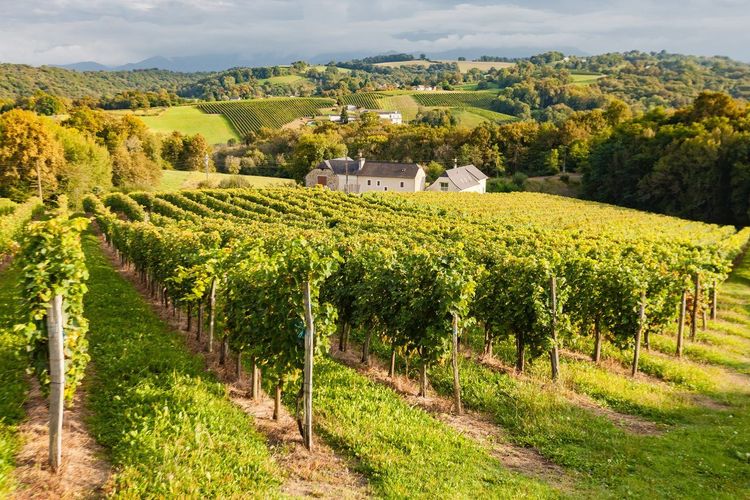
The third day works differently from the first two: there is no single itinerary but three possible directions, and you need to choose according to your tastes rather than try to do everything. The Jurançon vineyards can be visited in a relaxed half-day. The caves and villages of Béarn call for a full day by car. The major Pyrenean sites (Pic du Midi, cirques, gorges) require an early start and a willingness to drive one to two hours. Nothing stops you combining an early start at the vineyards with a detour through villages in the afternoon; however, trying to combine Jurançon and the Pic du Midi on the same day is a marathon.
The Jurançon Vineyards and Wine Cellars
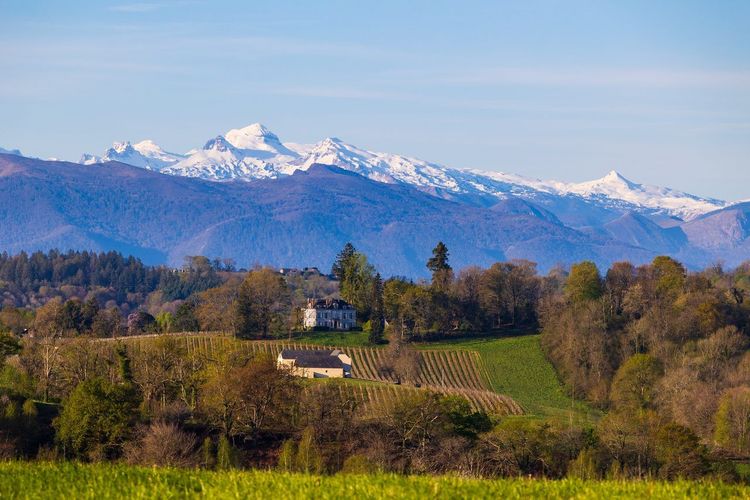
About twenty minutes from Pau, the Jurançon appellation, one of the oldest French AOCs, has produced white wines since 1936 in two families: the dry ones, to be drunk young with citrus notes, and the sweet ones, made from late harvests that sometimes stretch into December on south-facing slopes, concentrating aromas of candied fruit and honey. The communes of Jurançon, Gan and above all Monein, the appellation's leading producing village, hold most of the estates open for visits and tastings.
In Monein, the Saint-Girons church is worth the detour in its own right: its 15th-century timberwork, which covers three naves at different heights without any central pillar, is considered a tour de force of medieval carpentry, and is listed for that reason. Getting into oenology here often takes the form of a tasting directly at the winemaker's, with views of the terraced rows of vines and, in the distance, the silhouette of the Pyrenees. Many estates offer a cellar visit followed by a tasting of three to five vintages; allow one to one and a half hours per stop, and don't hesitate to ask for a pairing with local foie gras: sweet Jurançon goes particularly well with it.
Betharram Caves and Characterful Villages of Béarn
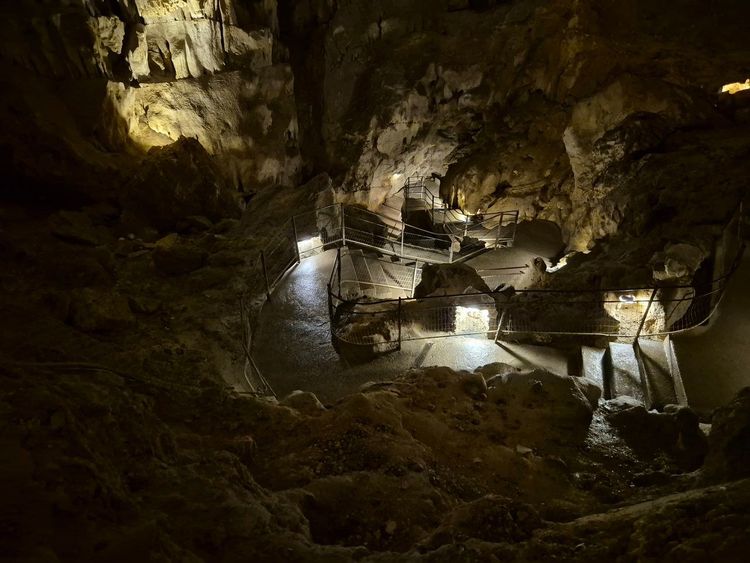
About 25 kilometres from Pau, towards Lourdes, the Betharram caves form a network of galleries carved by an underground river, visited partly by boat and partly by little train on rails, a rather spectacular formula for families. Stalactites, an underground lake and vast chambers punctuate a guided tour of about 1h20 to 1h30: around ten minutes by boat on the underground river, then nearly 800 metres by little train for the return. Bring a light sweater, as the temperature stays cool all year round.
Béarn also lines up several villages worth a stop, each for a different reason. The Béret Museum (Place Saint-Roch, 64800 Nay, rated 4.6/5 on Google from 282 reviews), in Nay, tells the industrial story of this accessory turned regional symbol, through the old Béarnais factories that exported it as far as Latin America in the last century. The Lartigue 1910 weaving mill, founded in Oloron-Sainte-Marie and now based in Bidos, at its gates, runs looms that are still in operation to produce striped Basque linen; the workshop visit, of about 25 minutes, literally follows the thread of the fabric, from bobbin to loom. Navarrenx, a bastide founded in 1316 and ringed in the 16th century by almost intact bastioned ramparts, became in 2014 the first village in Béarn listed among the Plus Beaux Villages de France; it also attracts salmon fishermen on the Gave d'Oloron. Salies-de-Béarn owes its reputation to its saltwater springs, among the most concentrated in Europe, exploited for centuries and told at the Salt Museum, before continuing into thermal treatments. Sauveterre-de-Béarn, a perched medieval town, overlooks the Gave d'Oloron from its rocky spur, with the broken arches of the Pont de la Légende still visible below. Finally, in Laàs, the château of the same name preserves period furniture and French-style gardens, with a room that, according to local tradition, once housed Napoleon's bed.
Great Pyrenean Landscapes: Pic du Midi, Gorges and Cirques
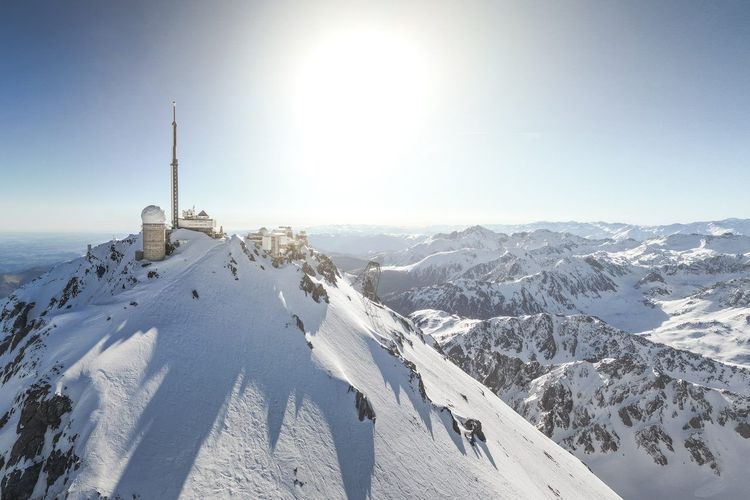
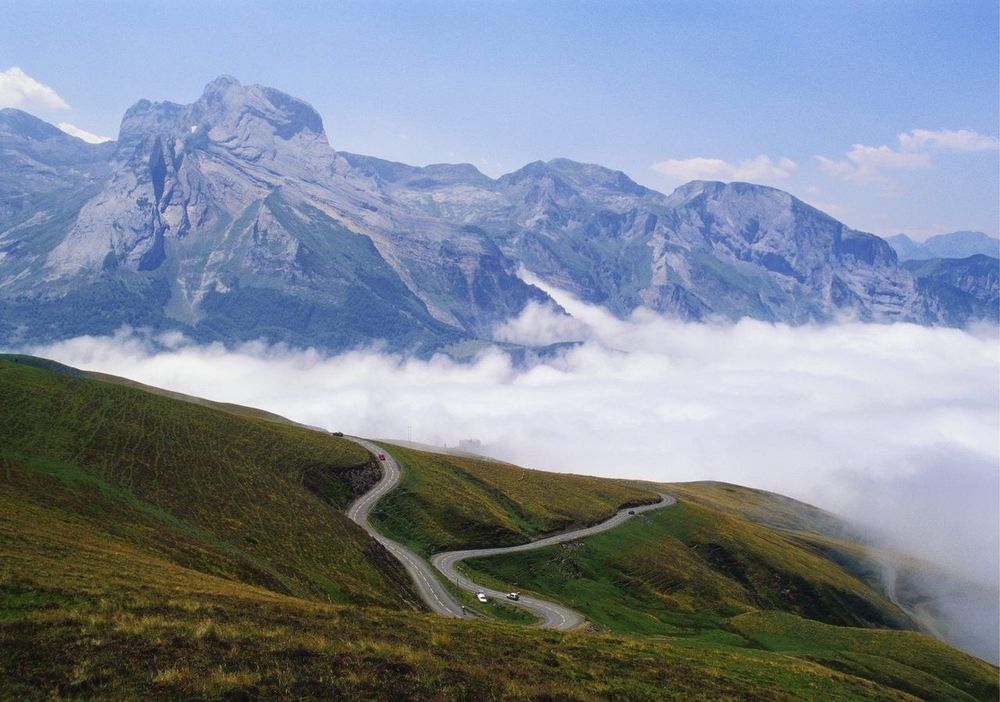
For those with a full day who are willing to drive further, Béarn opens straight onto the great Pyrenean landscapes. The Pic du Midi de Bigorre observatory, accessible by cable car from La Mongie a little over an hour and a half from Pau, peaks at 2,877 metres and offers a 360° panorama of the range, with overnight stays possible for stargazing, far from any light pollution. Further west, in the Ossau valley, the Lac de Bious-Artigues reflects the silhouette of the Pic du Midi d'Ossau in calm weather, and is the classic starting point for GR10 hikers.
The Cirque de Gavarnie, a UNESCO World Heritage site, is home to the highest waterfall in France with a drop of about 420 metres, accessible on foot, on horseback or by horse-drawn carriage from the village. Less crowded, the Cirque de Lescun, in the Aspe valley, unfolds its limestone peaks around a pastoral village that has remained authentic, where flocks of sheep still come down each autumn on the transhumance. For rarer curiosities, the Kakuetta gorges, in Sainte-Engrâce in the Basque Country, are explored on wooden walkways suspended above a particularly narrow and deep canyon, cool even in midsummer.
To gain altitude without walking, the Artouste little train, in the Ossau valley, claims the title of the highest tourist train in Europe and runs along the mountainside to Lac d'Artouste, while the Bénou plateau, not far away, offers vast pastures where horses and cattle live freely for much of the year, an almost Irish backdrop in the heart of Béarn. Amateur bird-watchers, for their part, head instead for the vulture cliff of Aste-Béon, where an observation centre lets you follow, through binoculars or even by camera, the colonies of griffon and Egyptian vultures nesting on the rock face. Further afield, about two hours' drive on the Basque coast, the Château d'Abbadia, in Hendaye, deserves a mention for its neo-Gothic architecture commissioned by the explorer and astronomer Antoine d'Abbadie, observatory included: a site better reserved for an extension of your stay than for this already busy third day.
Sports and Nature Activities Around Pau
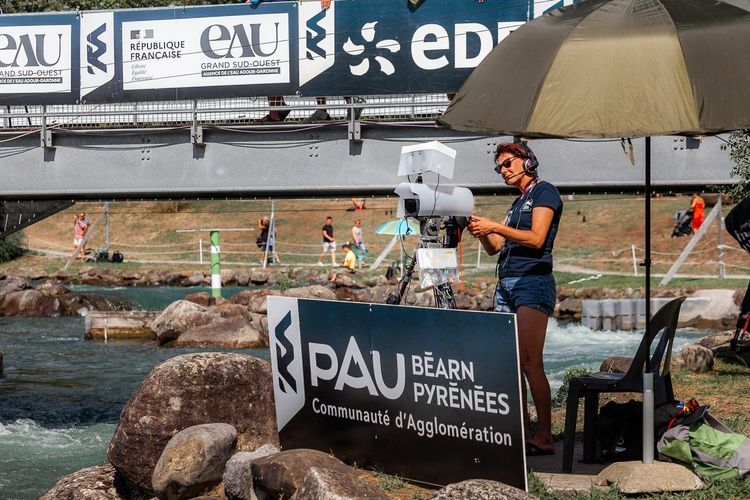
Pau is not just a city of museums and vineyards: it is also a practical base for anyone who wants to get moving. The whitewater stadium Pau Béarn Pyrénées, in Bizanos, an artificial river opened in 2009 with a 300-metre slalom course, serves as a training centre for the French canoe-kayak team and is also open to the general public for beginner sessions: an hour of rafting or kayaking is enough to understand why top-level paddlers come to train here, sometimes just metres from novice tourists.
By bike, the Vélosud (V81) links Pau to Lourdes over about fifty kilometres, following the Gave de Pau between greenways and small roads, for barely 300 metres of elevation gain: the first ten kilometres along the water are enough for a family morning. In town, several Idécycle self-service rental stations (near the funicular, the Hédas district, the SNCF station or the place Clémenceau) let you rent a bike without booking in advance. Incidentally, the route of the Ryo audio-guided tour of Pau lends itself as well to a bike version as to a walking one, linking the funicular and the Gave quays: a sportier option for anyone wanting a warm-up before kayaking or tree-climbing.
For tree lovers, the Vert-Tiges forest, in the Bastard forest about twenty minutes from the centre, offers around fifteen treetop adventure courses in a centuries-old oak grove, giant zip lines included, in a wooded setting that particularly appeals to families with children, from the smallest ground-level courses to lines perched several metres up. Fans of more technical thrills will also find several via ferrata sites in Béarn, notably towards the Pyrenean gorges and valleys mentioned above, for those who want to combine supervised climbing and mountain scenery without the commitment of a classic ascent. Finally, for motorised travellers, a road trip along the Gave de Pau lets you link several of these activities in a single loop, stopping wherever you feel like it rather than following a rigid schedule, from the river up to the first foothills.
Lourdes and Oloron-Sainte-Marie: Two Easy Escapes from Pau
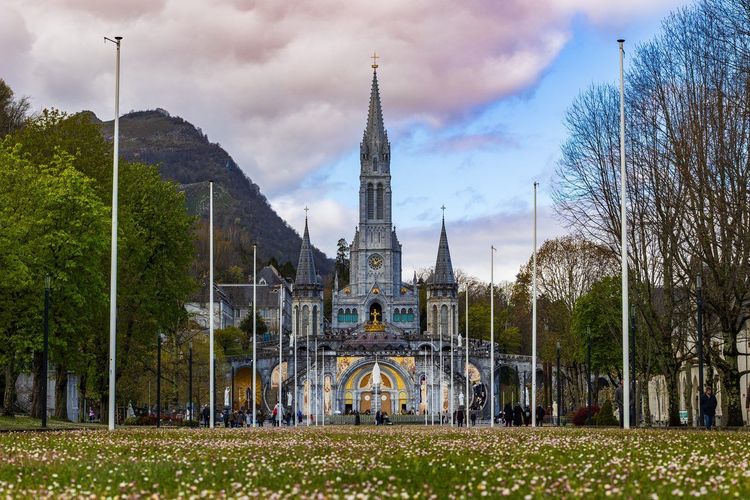
If a fourth day frees up, or if you simply want to vary the third, two towns near Pau deserve half a day each. Lourdes, three quarters of an hour away by road, is known worldwide for its Marian sanctuary and its Massabielle grotto, a place of pilgrimage since the apparitions of 1858 that today attracts several million visitors a year, believers or simply curious about the scale of the site. The fortress overlooking the town offers a viewpoint independent of any religious dimension, with a Pyrenean museum inside.
Oloron-Sainte-Marie, half an hour south-west of Pau, serves as a gateway to the Aspe and Ossau valleys. The town, born of the merger of two medieval boroughs, preserves a Sainte-Marie cathedral whose sculpted Romanesque portal is among the most elaborate in the region, as well as a tradition of chocolate and beret making that still endures today. Nay, about twenty kilometres from Pau, completes this triangle with its arcaded square, its quiet bastide atmosphere and its Maison Carrée, a 16th-century Renaissance mansion listed as a historic monument that houses an Industry museum (3 euros entry), to be combined with the nearby Béret Museum.
Our dedicated articles detail each of these stops if you want to dig deeper before leaving: what to do in Oloron-Sainte-Marie and what to do in Lourdes. The audio-guided tour of Pau also ends gently, without rushing you, before you hit the road to one or other of these escapes.
Where to Eat in Pau
Pau's food scene runs from the neighbourhood bistro to the starred table without any dull grey area in between. Near the market, several simple restaurants serve garbure, poule au pot or tourtière béarnaise (a sweet pie with finely hand-stretched pastry) at reasonable prices, ideal for a quick lunch between visits.
In the evening, Pau has several restaurants listed in the Michelin Guide, which work with Béarn produce, lamb, Ossau-Iraty cheese, Jurançon in food-and-wine pairings, in a more contemporary vein. Booking ahead remains wise at weekends, as the city attracts regulars and passing visitors alike. Between these two extremes, more discreet "favourite" places, often run by a single chef in an open kitchen, deserve a lingering visit: ask your accommodation for advice, as Pau locals pass these names around rather than displaying them in a shop window.
For those with a sweet tooth, don't leave town without trying a few local specialities such as the gâteau à la broche, baked in successive layers around a rotating spit, a traditional Béarn pastry that you sometimes find at markets or at certain artisans. It is often served with a glass of sweet Jurançon, a pairing that sums up the Pau table rather well: simple in appearance, but thoughtful. To go further than this selection, our article on Pau's culinary specialities reviews the ten essentials of the Béarnais table.
Where to Have a Coffee and Go Shopping in Pau
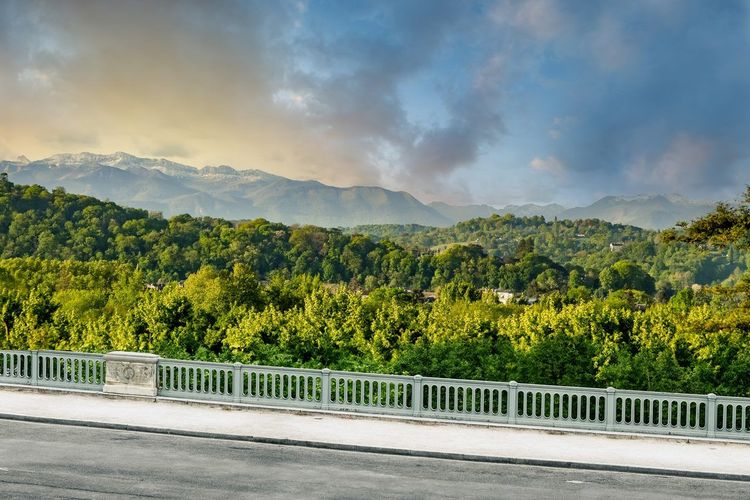
The historic centre is full of terraces where you can linger over a coffee in the afternoon, particularly around the place Clemenceau and at the top of the boulevard des Pyrénées, where the view of the mountains accompanies your break. It is an almost obligatory ritual after a morning of museums or walking: sit down, order, and watch the people of Pau go by with no particular urgency.
As for shopping, the rue Serviez and the shopping streets around the place Clemenceau bring together independent boutiques and more conventional chains. You will find regional products (Basque linen, bottled Jurançon, cheese to take away) as well as more urban fashion. For an afternoon of window-shopping with no particular goal, this is the area to favour: the adjacent lanes often hide one or two less obvious shops, artisan workshops or antiquarian bookshops, which are worth the detour even with no intention to buy, and where shopkeepers readily take the time to explain their craft.
Where to Stay in Pau
Two approaches compete when choosing your neighbourhood. The historic centre, around the château and the place Clemenceau, suits those who want to do everything on foot: charming hotels and a few characterful places sit alongside more conventional establishments, at rates that climb quickly in high season, notably during the Grand Prix or Hestiv'Òc. The Trespoey district, more residential and leafy, to the east of the centre, has more guesthouses and estates with grounds, in a quiet setting, at the cost of a car or bus ride to reach the heart of town.
Budget-wise, options range from a small simple hotel in the town centre, around 70 to 90 euros a night, to more upscale places from 150 euros, or even more for a room with a view of the Pyrenees in high season. Two places stand out for their character: the Suite du Domaine La Paloma and the Domaine Mont-Riant, both geared towards guesthouse rooms with a garden, an interesting alternative to conventional hotels for a three-day stay where you also enjoy your accommodation, and not just a bed for the night.
When to Visit Pau
Pau's climate, mild and relatively sheltered by the proximity of the Pyrenees, allows you to visit the city almost all year round, but each season has its own character. Spring and early autumn offer the most pleasant conditions for walking and enjoying the boulevard des Pyrénées, with visibility of the range often better than in midsummer, when the heat can make the peaks disappear in a heat haze.
Autumn in Béarn adds another argument: it is the late-harvest season in Jurançon, and the wine landscapes take on colours worth the trip in their own right, between the yellow of the vine leaves and the first morning mists on the slopes. In winter, Pau has for decades hosted a big Christmas Circus, set up under a heated 1,800-seat big top on the place de Verdun, from early December to early January: book early if you come over the holidays.
In summer, the big Pau festival is called Hestiv'Òc: four days of concerts, dances and songs from Occitan and Pyrenean cultures, free of charge, between the place Royale, the square Georges-V and the parc Beaumont (21st edition from 20 to 23 August 2026). In spring, the Pau Grand Prix makes single-seaters roar around a street circuit laid out around the parc Beaumont, a tradition started in 1933. If you are looking for calm instead, avoid these two highlights: hotels are full and prices climb. Outside the festivals, the Théâtre Saint-Louis and the Espaces Pluriels run a year-round programme, from classical theatre to contemporary dance.
How to Get to and Around Pau
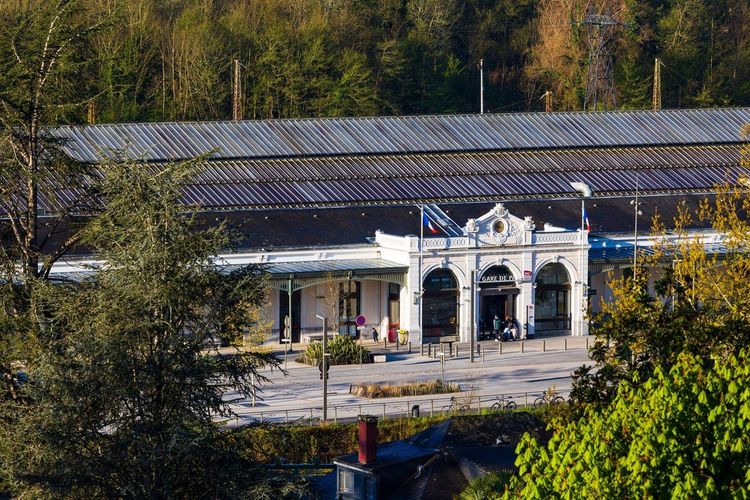
Pau has its own airport (Pau-Pyrénées), linked to several French cities by direct flights, and an SNCF station well served from Bordeaux or Toulouse, with journeys of around two hours depending on the line. By car, the city is connected by motorway to the main routes of the South-West, which makes return trips to the Béarn sites mentioned for the third day easy.
Once there, the question "do you need a car in Pau?" depends mostly on what you want to see. For the first two days, devoted to the historic centre, the museums and the parc Beaumont, the city is very easy to explore on foot: distances between the main points of interest are counted in minutes, and the free funicular even spares you the climb between the station and the centre. However, for the third day (vineyards, caves, villages or major Pyrenean sites), a car becomes almost indispensable, as public transport does not serve these rural areas frequently enough for a short stay. An urban bus network does, however, round out the offering for trips to Trespoey or the outlying districts.
Budget for Visiting Pau in 3 Days
None of the existing guides to Pau really puts a figure on what a three-day stay costs, so here is a realistic range to help you plan. For a tight budget, count on roughly 250 to 350 euros per person over three days: simple accommodation in the town centre, meals taken partly at the market or as lunch menus, free visits (château exterior, boulevard, parc Beaumont) and getting around on foot.
For a mid-range budget, around 450 to 600 euros per person, you can include a more comfortable room, one or two restaurant dinners, entry to the château and museums, and a paid outing such as the Betharram caves or a cellar tasting in Jurançon. Finally, for a more comfortable stay, above 700 euros per person, add a night in a charming guesthouse such as Domaine La Paloma, a starred dinner, and a more ambitious excursion such as the Pic du Midi de Bigorre, cable car and high-altitude lunch included. Car rental for the third day, if you don't already have a vehicle, generally adds 40 to 70 euros for the day, fuel not included.



FAQ
Is Pau worth visiting?
Yes, and not just to tick a box on a map of the South-West. Pau combines a dense historic centre, an unbeatable view of the Pyrenees from the boulevard, and quick access to vineyards and natural sites that you won't find grouped together anywhere else in such a small area.
What are the 10 must-do things in Pau?
Château de Pau, boulevard des Pyrénées, the free funicular, the Fine Arts Museum, the Bernadotte Museum, Parc Beaumont, Pau's covered market, a tasting in Jurançon, the Betharram caves and the whitewater stadium make a solid foundation for a three-day stay with no downtime.
What is the prettiest village around Pau?
Navarrenx, the only village in Béarn with the Plus Beaux Villages de France label (since 2014), is the favourite thanks to its bastioned ramparts on the banks of the Gave d'Oloron. Sauveterre-de-Béarn, perched on its rocky spur facing the remains of its medieval bridge, and Monein, for the timberwork of its Saint-Girons church, remain serious contenders.
What is the most beautiful neighbourhood in Pau?
The château and Old Pau district, with its cobbled lanes and old façades, has the most heritage charm. The boulevard des Pyrénées, for its part, wins hands down when it comes to views.
How long does it take to visit Pau?
Two days are enough for the city centre and its museums. Three days let you add either the Jurançon vineyards or an excursion to the Betharram caves and the villages of Béarn, which makes it the most balanced format for a first stay.
Do you need a car in Pau?
Not for the first two days, as the city is very easy to explore on foot thanks to the free funicular. Yes for the third day, as soon as you head out to the vineyards, the caves or the major Pyrenean sites, which are hard to reach by public transport.
Three days in Pau leave a two-speed memory: that of a royal city you took the time to look at properly, and that of a region, Béarn, that you have only just begun to explore. That is precisely what makes you want to come back, this time to venture further into the Pyrenees. For the urban part, slip in your earphones and start the Ryo audio guide From Palm Trees to the Pyrenees: 18 audio tracks and 4 km so you don't miss a thing from the château to the boulevard des Pyrénées, without having to plan an itinerary. And if you only have two days, our weekend in Pau version tightens up the essentials.
À lire également