© Shutterstock
 Votre guide Ryo
Visiting Rennes Solo in 2026: Complete Itinerary for Solo Travelers
At 7 a.m., Place Sainte-Anne in Rennes still belongs to the pigeons and the waiters setting out their terrace tables. Two hours later, students have taken over the cobbled streets, and nobody will look twice at you for walking alone, a notebook or earphones in hand. Visiting Rennes solo is nothing like an acrobatic feat: the city is compact, full of counters where eating alone is the norm, and young enough that a solo visitor blends in effortlessly. The Ryo audio-guided tour of Rennes also draws a practical thread between the key sights of the centre, with 25 commented stops over 1h50 for those who prefer to go at their own pace rather than follow a group.
In the pages that follow: an escape game in the middle of the city, an app that recognises monuments just by photographing them, bars that swap playing cards for board games, and a book town where a dozen bookshops fit into a village of barely 700 inhabitants, about thirty kilometres from the centre. Enough to fill a weekend or an entire week, without relying on a car or waiting for a travel companion.
Rennes, a Destination Made for Solo Travel
With nearly 220,000 inhabitants and a student population exceeding 70,000, Rennes has one of the highest student-to-resident ratios in France. This youthfulness shapes the whole urban life: bars open late, shared flats number in the hundreds around the centre, and social codes are noticeably less formal than in Paris or Bordeaux. A solo traveller doesn't stand out here, they blend into the scenery.
The size of the city also works in favour of solo travel. The historic centre can be crossed on foot in about twenty minutes from end to end, which limits long night-time journeys and complicated transport decisions. Rennes regularly appears in French urban safety rankings for cities of its size, with street crime below the average of comparable metropolises.
The solo travel format also changes the way you visit. With no travel companion to answer to, you can linger twenty more minutes in a bookshop, change route on a whim after spotting a cobbled alley, or treat yourself to a quiet dinner at a counter without justifying yourself. Rennes lends itself well to this: its neighbourhoods follow one another without long distances to cover, and the density of places that accept, even encourage, tables for one (game bars, Japanese counters, book cafés) far exceeds what you find in cities of comparable size.
Finally, Rennes remains a destination not overrun by mass tourism. No two-hour queue in front of a monument, no prices inflated by organised groups: real comfort for those travelling on a tight budget who prefer to improvise their schedule rather than book slots six months in advance.
How to Get to Rennes
From Paris, the TGV connects Montparnasse station to Rennes in 1h25, with a departure almost every hour on weekdays. It is the most comfortable option for a solo traveller: no carpool to negotiate, no uncertain bus timetables, and the chance to read or work during the journey. Booked a month in advance, a one-way ticket regularly drops below €30.
Carpooling (BlaBlaCar first and foremost) remains the cheapest alternative, especially from Nantes, Caen or Paris, but means fitting in with the driver's schedule and, for some, the discomfort of sharing a car for several hours with strangers. Long-distance buses (Flixbus, BlaBlaBus) serve Rennes from around thirty French cities, with fares often under €20 if you book in advance, at the cost of a longer journey.
Rennes-Saint-Jacques airport mainly serves regional destinations and a few European routes; for an international visitor, going through Paris or Nantes and then taking the train is generally simpler. Once you arrive at Rennes station, the city centre is reachable on foot in 15 minutes or in two metro stops, which avoids having to look for a taxi alone outside an unfamiliar station.
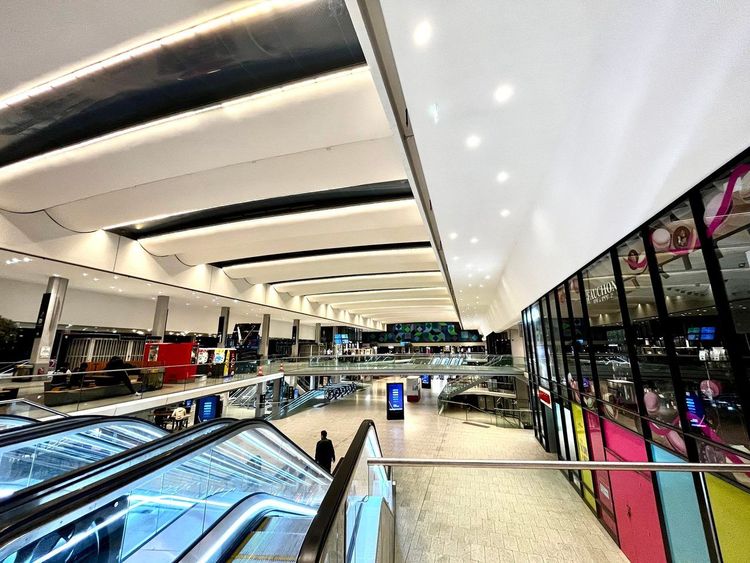
A tip if you arrive late: the station has been completely redeveloped with the multimodal hub, and the north exit leads directly onto Avenue Jean-Janvier, well lit and busy until late in the evening. If your accommodation is only available in the late afternoon, favour a morning train and simply drop your bag at your accommodation on arrival: most hostels and guesthouses are happy to hold luggage for a few hours, leaving your hands free for a first stroll.
Getting Around Rennes Independently
In 2002, with the opening of line A of its automatic VAL metro, Rennes became the smallest city in the world with a metro. Line B, which opened in September 2022, inaugurated Cityval technology, a world first. Trains run every 2 to 4 minutes at peak times, which makes travel reliable even late at night, a real asset for a traveller heading home alone after a night out.
The STAR bike-sharing service complements the network well: stations are dense in the hypercentre and day access costs a few euros. Download the STAR app as soon as you arrive: it gives real-time timetables and lets you buy tickets on your phone, without queuing at a machine. On foot, most of the heritage is concentrated in a tight perimeter around Place Sainte-Anne and the cathedral, doable in a morning without any transport.
For a solo traveller, this compactness concretely changes the experience: no need to synchronise a schedule with someone else, no negotiation over which mode of transport to choose. A single metro or bus ticket costs less than €2, and the day pass, at a few euros, pays for itself from the third journey. Checking them on the STAR network website before departure is wise, as fares change every year.
Where to Stay Solo in Rennes: Hostels and Friendly Places
Accommodation is often the most anxiety-inducing part of a first solo trip. Rennes has the advantage of offering several places designed to encourage meeting people rather than isolation. Chez Marnie et Mister H (Rennes, 35000 Rennes, rated 4.9/5 on Google from 128 reviews) works on this principle: a friendly guesthouse where breakfasts are often shared and where the hosts gladly point visitors to the best addresses in the neighbourhood.
Classic youth hostels remain a safe bet for those looking above all to meet other travellers: dorms from around fifteen euros a night, a shared kitchen, and often a common lounge that serves as an informal meeting point at the end of the day.
The choice of neighbourhood matters as much as the type of accommodation. Around Place Sainte-Anne and the Thabor, nights are quiet and the walk to the historic centre takes only a few minutes. Conversely, staying near Rue Saint-Michel puts the traveller in the heart of the student nightlife, handy for going out without a long journey back but noisier on Thursday and Friday nights. Our Ryo article on the neighbourhoods of Rennes details the atmosphere of each area to help you refine this choice according to your travel rhythm.
Budget-wise, allow €15 to €25 a night in a dorm, €45 to €70 for a double room in a city-centre hotel used solo, and more for charming places near the Parliament of Brittany. Booking on weekdays rather than weekends, when the city runs at student pace, often saves €10 to €15 a night at the same places.
If you are hesitating between several places, read first the reviews left by other solo travellers: they often mention the atmosphere of the common areas, the soundproofing or how easy it is to come back late, all details missing from the descriptions.
Also check whether the establishment offers a secure locker in the dorm: it is the detail that changes the peace of mind of a solo stay, especially if you travel light with a single bag.
The Historic Heart of Rennes on Foot
The historic centre of Rennes can be discovered almost without a map, as the cobbled streets and half-timbered houses draw a natural route. Allow half a day to stroll without rushing, two hours if you go straight through without stopping. Our Ryo audio tour of Rennes links these squares and monuments in 25 commented stops over 1h50 and 4.7 km, handy when you visit solo and want a framework without depending on a guided tour schedule: Ryo audio-guided tour of Rennes.
Place Sainte-Anne, Rue Saint-Georges and the Portes Mordelaises
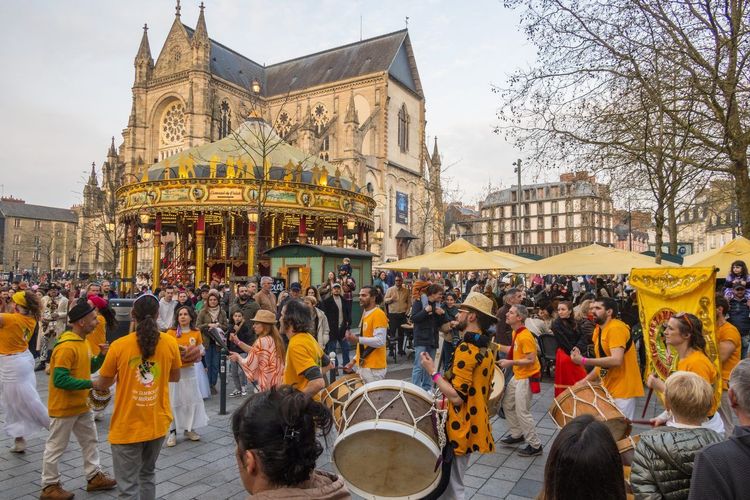
The Place Sainte-Anne serves as an open-air living room for the people of Rennes: lined-up terraces, students sitting right on the steps, and a buzz that almost never fades, from the morning coffee to the evening beer. It is also an easy landmark for those visiting solo who want a central place to come back to between visits.
Heading north, Rue Saint-Georges lines up half-timbered houses from the 15th and 16th centuries, now occupied by bars and restaurants that spill onto the cobbles as soon as the weather is fine. The street takes its name from the former Saint-Georges abbey, of which the Palais Saint-Georges remains, a large 17th-century building bordered by a flower garden open to the public. Take the time to look up: the façades alone tell several centuries of urban history, far more than the street's modest width suggests.
At the very end, the Portes Mordelaises form the last visible remnant of the medieval walls of Rennes. It was through this fortified gate that the dukes of Brittany traditionally entered the city for their coronation. The stone has blackened over the centuries, but the two round towers framing the passage remain impressive for a monument so little promoted in general guidebooks.
For a solo traveller, this triangle between Place Sainte-Anne, Rue Saint-Georges and the Portes Mordelaises can be covered in 30 to 40 minutes of relaxed walking, never more than 400 metres from a café or terrace where you can stop if you get tired. At the weekend, Place Sainte-Anne turns into a meeting point before outings to the nearby Saint-Michel district: a good landmark if you want to strike up a conversation with other travellers or locals before an evening out.
Place du Champ-Jacquet, Saint-Pierre Cathedral, Place de la Mairie and the Parliament of Brittany
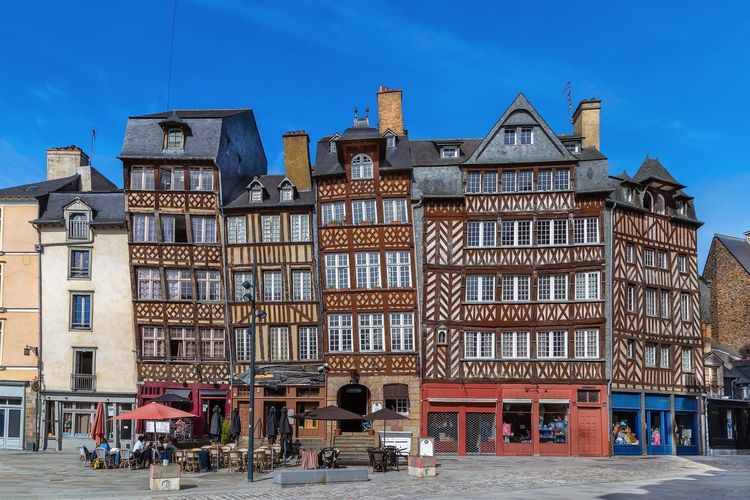
The Place du Champ-Jacquet is home to some of the best-preserved half-timbered houses in Rennes, spared by the great fire of 1720 that ravaged a good part of the centre. The statue of Jean Leperdit, mayor of Rennes during the Revolution, and the leaning façades give this square an almost miniature charm compared to the more imposing squares of the centre.
A few steps away, Saint-Pierre Cathedral of Rennes stands out with its two towers and classical façade, built between the 16th and the early 18th century, while the nave was rebuilt between 1787 and 1844 on the site of much older buildings. The interior surprises with its abundant gilding and painted ceiling, far from the sobriety you might expect from the outside. Entry is free, which makes it an easy break to fit into a day of solo walking.
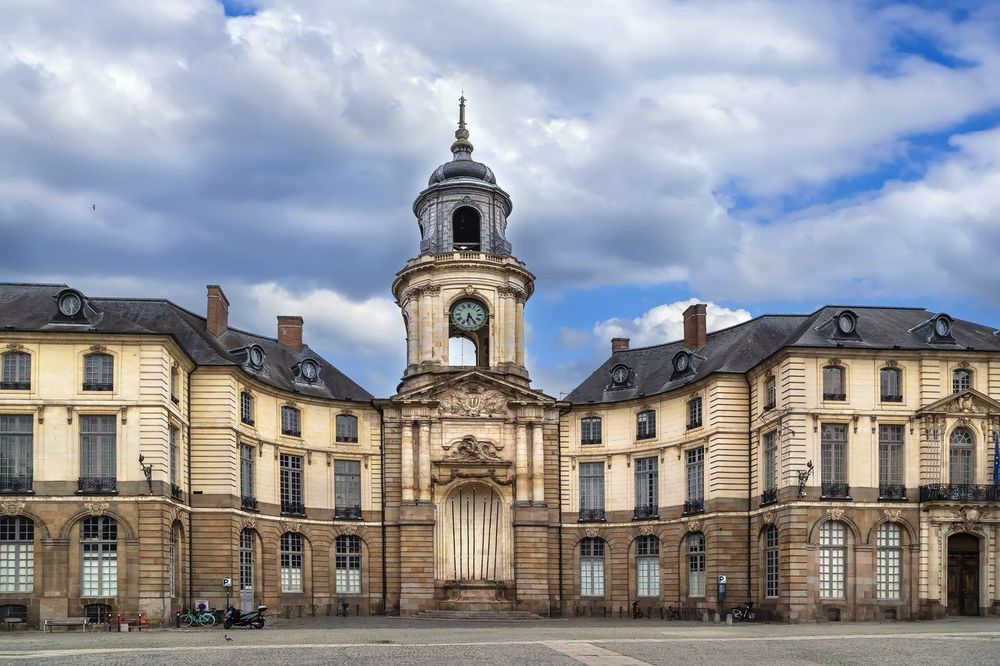
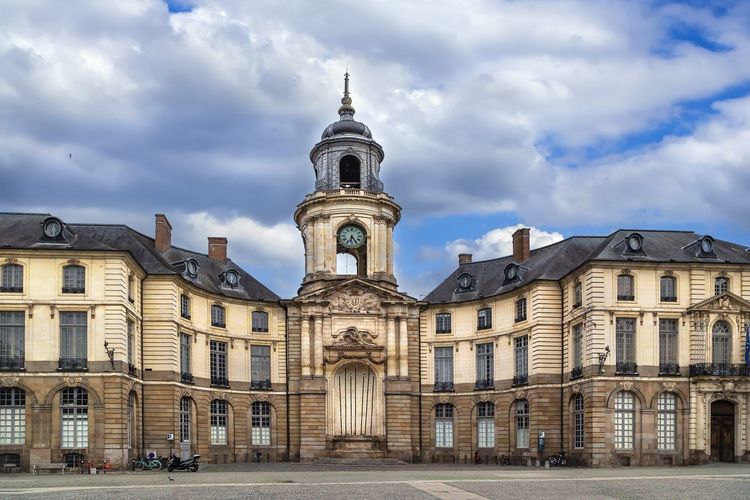
The Place de la Mairie forms the widest breathing space of the historic centre, with the town hall by Jacques Gabriel (18th century) on one side and the Opéra de Rennes on the other, inaugurated in 1836, whose concave façade echoes that of the town hall. The contrast between the two façades and the openness of the square, quite rare in an otherwise dense centre, makes it a pleasant place to sit with no particular purpose.
Finally, the Parliament of Brittany (Place du Parlement, 35000 Rennes, rated 4.7/5 on Google from 10 reviews) closes this second stretch of the visit. Former seat of the Breton parliament since the 17th century, the building was badly damaged by a fire in 1994 before being restored with particular care for its painted ceilings. Guided tours of the interior must be booked in advance, but the façade alone, with its imposing proportions, deserves several minutes of your time.
Allow an extra hour for this second stretch if you visit the inside of the cathedral and take a break on Place de la Mairie, versus 20 minutes if you simply walk past the façades.
Parks, Quays and Nature Breaks When Solo
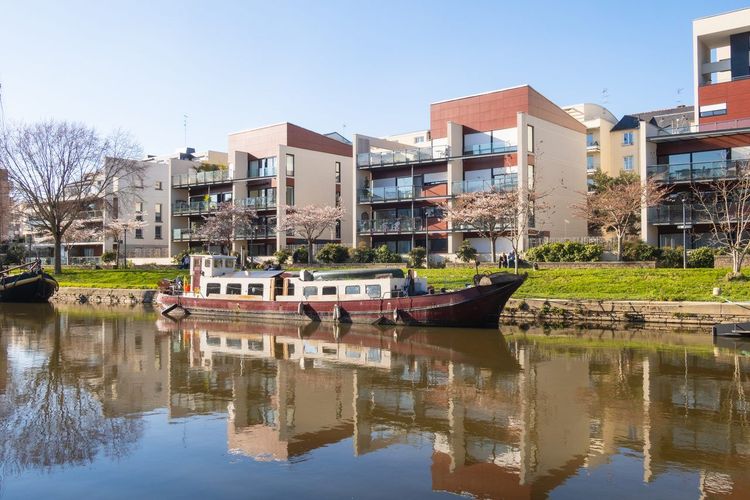
Travelling solo also calls for breaks without interruption: a bench, flowing water, no one to talk to. Rennes offers two spaces that fill exactly this role.
Thabor Park, a Green Haven to Catch Your Breath Solo
The Thabor Park extends over more than 10 hectares between a former French-style garden, a rose garden with several hundred varieties, and an aviary housing exotic birds. Unlike many urban parks, its varied nooks make it easy to find an isolated bench, away from groups, to read or simply observe.
Entry is free and the park opens early in the morning, making it an ideal stopover between two visits to the centre. Don't miss the botanical garden and its greenhouses, nor the bandstand where concerts are sometimes held in summer: you can spend an hour or half a day there, depending on your mood.
Early in the morning, before the strollers and joggers arrive, the park belongs almost entirely to the regulars. It is the time many solo travellers choose to settle in with a notebook or a book, long before the afternoon heat fills the lawns.
The Vilaine Quays and the Saint-Georges Swimming Pool
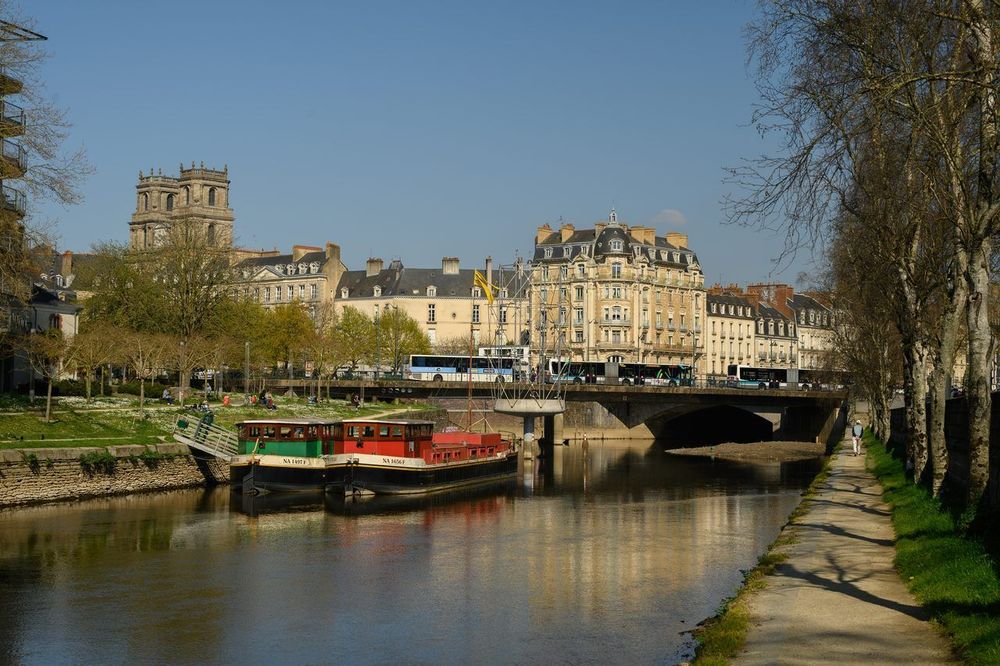
The Vilaine quays run through the city centre and offer a linear walking route, ideal for strolling aimlessly and letting your mind wander. In the evening, the quays on the Rue Saint-Georges side concentrate part of the student life, with terraces spilling onto the cobbles.
Nearby, the Saint-Georges swimming pool (4 Rue Gambetta, 35000 Rennes, rated 4.3/5 on Google from 561 reviews) deserves a special mention: inaugurated in 1926 to plans by the architect Emmanuel Le Ray and listed as a historic monument in 2016, it is among the most beautiful Art Deco settings in France, with the mosaics by Isidore Odorico. A major renovation project was announced in 2025: check whether it is open before planning to swim. Swimming a few lengths alone in this setting remains one of the most unexpected activities to slip into a sightseeing programme.
One loop of the Ryo audio-guided tour of Rennes follows the Vilaine to the Thabor, handy for linking these two breathing spaces without pulling out a map at every crossroads.
Unusual and Immersive Activities to Enjoy Solo
The following activities fall into two quite different families: those experienced in complete independence, smartphone in hand, and those that, on the contrary, bring a collective dimension back into a solo trip.
Treasure Hunts and Apps to Explore Independently (Whatizis, Sutanpu, Street Art)
The Whatizis app works as a visual identifier of heritage: point your phone at a façade or a monument in Rennes, and the app identifies the building and displays its history in a few seconds. A tool tailor-made for solo travel, since it instantly replaces the question you would normally ask a travel companion.
Sutanpu offers a different mechanic: collecting souvenir stamps across several points of the city, a bit like a tourist pilgrimage booklet. The goal is not so much to see everything as to give a playful structure to a walk that might otherwise lack direction.
Finally, Rennes's street art deserves an afternoon all to itself. The city has several dozen murals, concentrated in particular around some outlying neighbourhoods and in a few alleys of the centre, which turn ordinary stretches of wall into an open-air gallery. No booking, no schedule: you move along as you find things, which suits the rhythm of an unconstrained solo visit.
Guided Tours, Workshops and Escape Games to Meet Other Travellers (Odorico, Vilaine Mosaics, Movies, Escape Game)
Conversely, some activities deliberately bring social connection back into a solo trip. The Odorico guided tour delves into the history of a dynasty of Italian mosaicists who settled in Rennes at the turn of the 20th century, whose Art Nouveau façades still adorn several buildings in the centre. The small-group format makes it an easy opportunity to exchange a few words with other participants.
In the same spirit, the "Les Mosaïques de la Vilaine" workshop offers a hands-on introduction to this craft, led by a professional, so you leave with a piece made by your own hands rather than a simple bought souvenir.
Movies, a new hub dedicated to image and sound, combines interactive exhibitions and screenings, a good option for a rainy afternoon where you easily meet other visitors curious about the same programme.
Finally, tourism in Rennes has also embraced the escape game: several rooms in the city centre offer sessions open to individual players, regularly completed by other solo participants on site. Same logic as the treasure hunts mentioned above: the Ryo audio-guided tour of Rennes also delivers an anecdote at each stop, without depending on a group or a pre-booked visit slot.
Where to Eat and Shop at the Market Solo in Rennes
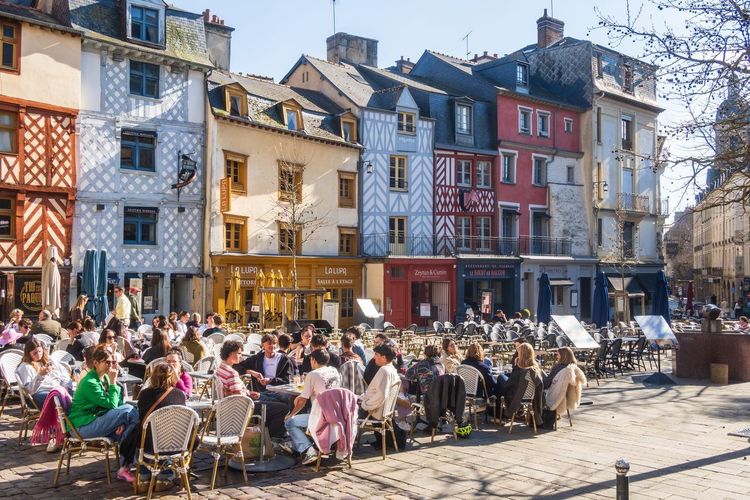
Eating alone is often the step that intimidates the most when travelling solo. Rennes makes things easier with a generous offer of counters, tapas bars and market stalls suited to a single person.
Crêpes, Galettes and Place des Lices: The Breton Classics
It is impossible to visit Brittany without stopping for a crêpe or a buckwheat galette, and Rennes has several dozen crêperies in its historic centre alone. The full set menu (galette, crêpe, cider) remains the simplest option for a quick solo meal, with no booking or long wait.
On Saturday mornings, the Place des Lices hosts one of the largest markets in France, with more than 300 stallholders on some days. It's an ideal playground for putting together a meal on the go: a bit of cheese here, a galette-saucisse there, without ever having to sit down at a table for one.
Friendly Places for a Solo Meal (Hanami Ramen, Satio, Coup de Foudre)
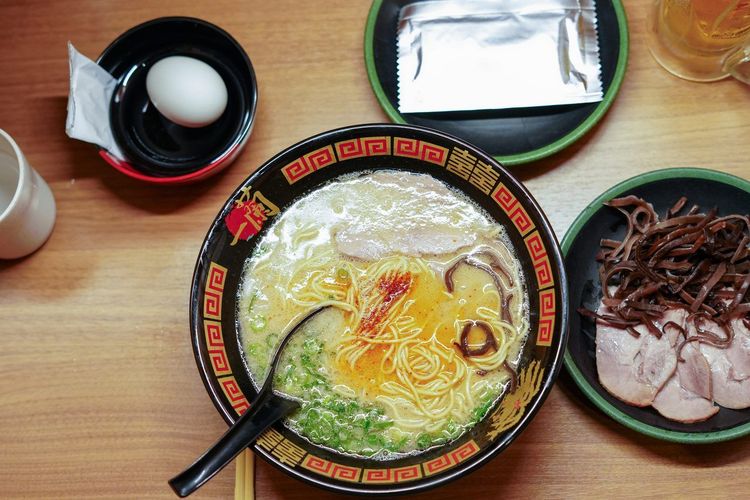
Hanami Ramen relies on an open counter where eating alone is the norm rather than the exception, in the tradition of Japanese ramen shops. Allow about twenty minutes' wait at peak times for a seat at the bar.
A useful tip for eating alone in Rennes: aim for the 12 p.m. or 7 p.m. service, before the rush. Tables for one free up more easily, and the staff have time to chat a few words or recommend a dish.
Satio offers Mediterranean cuisine to share in small plates, a format that suits a solo meal well without looking lost in front of a menu designed for two or four people.
Coup de Foudre (Rue Vasselot, 35000 Rennes, rated 4.8/5 on Google from 185 reviews), finally, works as a natural wine bar with a small kitchen, with an atmosphere lively enough that a solo visitor feels welcome at the counter rather than stared at.
To explore local specialities beyond these three places, our Ryo article on the culinary specialities of Rennes lists a wider selection, useful for varying meals over a stay of several days.
Going Out at Night Solo: Bars and Student Atmosphere
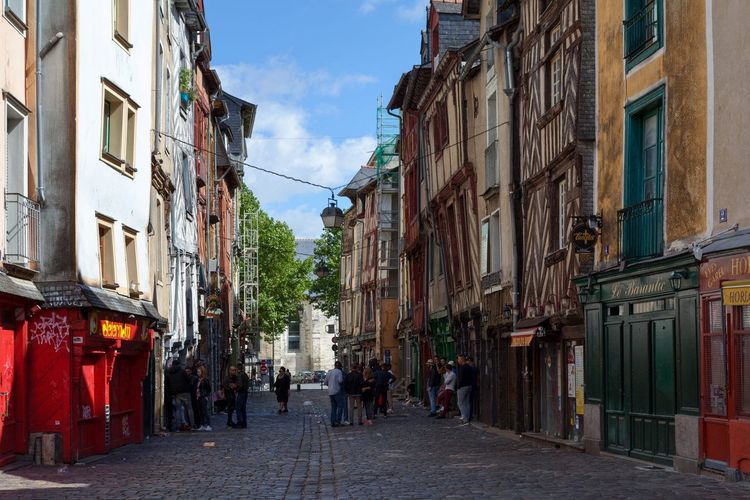
The Rue Saint-Michel (Rue Saint-Michel, 35000 Rennes, rated 4.3/5 on Google from 900 reviews), nicknamed locally the "rue de la Soif" (Thirst Street), packs around twenty bars into a few hundred metres. The atmosphere is noisy, student-driven, and dense enough that a solo visitor never feels alone for long: just settle at the counter of a lively place to strike up a conversation.
To break away from the classic pattern, several bars in Rennes rely on concepts that make meeting people easier: board games freely available, arcade game counters or regular themed nights. A local ranking of the city's most unusual bars circulates regularly on Rennes tourism sites, often useful for picking a place to suit the evening's mood rather than choosing at random.
Game bars are probably the best way in for you: just ask to join a game in progress, and the rules explained by your neighbours at the table break the ice far faster than a conversation at the counter. If you prefer music, keep an eye on the programme of the concert venues in the centre: Rennes gave birth to the Trans Musicales, a festival of musical discoveries that enlivens the city every early December, and the local scene remains very active the rest of the year.
As for safety, the city centre remains generally calm even late at night, but a few standard precautions apply: avoid isolating yourself in poorly lit streets after 1 a.m., prefer walking back along streets that are still busy, and keep an eye on your drink in the very crowded bars on Thursday night, the traditional student night in Rennes.
Day Trips from Rennes to Extend Your Solo Stay
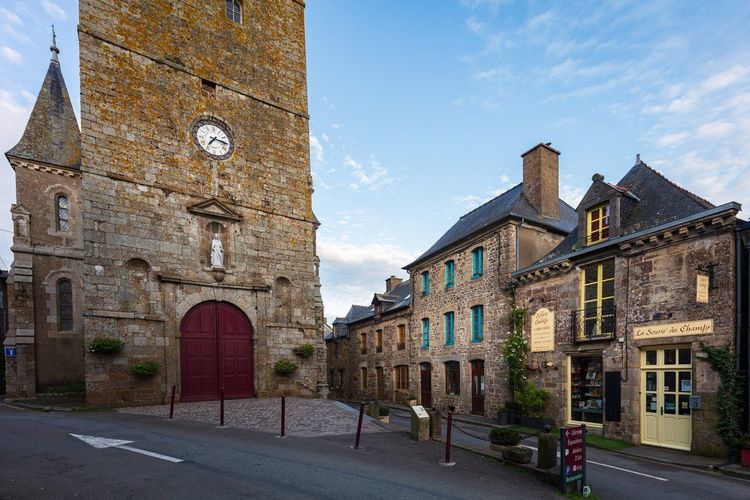
Rennes is self-sufficient for two or three days, but its central position in Brittany also opens up several day trips, all accessible without a car.
The Bay of Saint-Brieuc and the Emerald Coast Solo
A little under an hour by train, the Bay of Saint-Brieuc opens onto wide beaches and some of the most photogenic cliffs of northern Brittany. The receding tide sometimes reveals more than a kilometre of foreshore, a spectacle that is enough in itself for a day of solitary walking by the water.
Further east, the Emerald Coast stretches from Cancale to Cap Fréhel. Saint-Malo, about an hour by TER from Rennes, is its ideal gateway: walk around the ramparts, then cross to Dinard by water shuttle to follow the Clair de Lune promenade. It can all be done without a car, in one long day, at your own pace. For those who want to explore the Breton coastline further over several days, our Ryo article on the most beautiful beaches in Brittany details a more complete itinerary.
Bécherel, the Book Town 30 Minutes from Rennes
About thirty kilometres to the north-west, reachable by car, carpool or the STAR bus line 82 from the Villejean-Université station, Bécherel (Place Jean Lebigot, 35190 Bécherel, rated 3/5 on Google from 7 reviews) gathers a dozen bookshops and second-hand booksellers in a village of barely 700 inhabitants. The "Book Town" status, launched in 1989 with the first book festival, makes it a national reference for lovers of old and rare books.
A morning is enough to browse between the stalls, but enthusiasts happily spend the whole day there, lunch included at one of the small places in the village centre. It is one of the easiest excursions to organise solo from Rennes, with no timetable constraints or group to follow. For those who want to string together other Breton stops straight afterwards, the same Ryo audio-guided tour format exists for other cities in the region, handy for continuing the solo trip without renting a car.
Budget and Practical Tips for Travelling Solo in Rennes
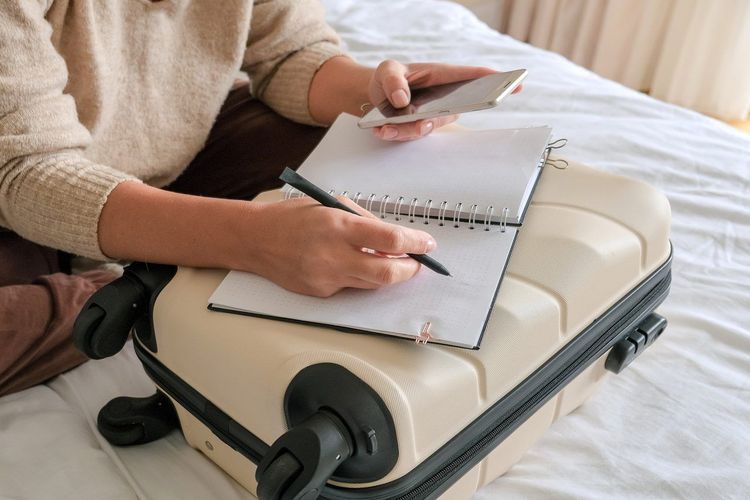
Allow an average daily budget of €50 to €80 for a solo trip to Rennes, including hostel or simple room accommodation, two meals and a few paid activities. This budget rises to €100-120 per day for city-centre hotel accommodation and meals systematically in restaurants.
As for safety, Rennes remains one of the large French cities where returning alone in the evening poses the fewest problems, provided you keep the usual precautions: avoid poorly lit isolated alleys, tell someone close to you your itinerary for the day, and favour lively neighbourhoods for night-time journeys.
As for the length of stay, one full day covers the essentials of the historic centre, but a weekend of two to three days leaves room for an excursion to Bécherel or the Emerald Coast without rushing. The best period runs from April to October, and the Saturday morning markets are liveliest then. In early December, the Trans Musicales attract tens of thousands of festival-goers: an atmosphere In case of rain, frequent in Brittany even in summer, Les Champs Libres (library, Museum of Brittany and Science Centre combined under one roof near the station) offer a refuge for several hours.
Finally, travelling light remains the best ally of the urban solo traveller: a backpack is more than enough for a stay of this kind, and saves you from having to watch a suitcase in crowded bars or market aisles.

FAQ
Is Rennes a good destination to visit solo?
Yes: the city is compact, student-oriented and used to solo visitors thanks to its large young population. Counters, game bars and hostels make it easy to meet people without ever making solitude feel heavy.
How many days should I plan to visit Rennes solo?
One day covers the historic centre, but two to three days let you add an excursion to Bécherel or Saint-Malo and the Emerald Coast without rushing the schedule.
What budget should I plan for a solo trip to Rennes?
Allow €50 to €80 per day for a budget trip (hostel, simple meals), and €100 to €120 per day for a more comfortable stay in a city-centre hotel.
Where should I stay in Rennes when travelling solo?
Youth hostels and friendly places like Chez Marnie et Mister H encourage socialising. The areas around Place Sainte-Anne offer quiet nights, while staying near Rue Saint-Michel puts you in the middle of the student nightlife.
Is Rennes a safe city for solo travellers?
Yes, Rennes regularly ranks among the safest large French cities for its size. Standard precautions (avoiding isolated alleys late at night, sticking to busy streets) are still recommended, as anywhere else.
How can I meet other travellers in Rennes?
Youth hostels, guided tours such as the Odorico tour, mosaic workshops and the game bars on Rue Saint-Michel each offer a natural setting to start a conversation without forcing it.
What can I do in Rennes in a single day when travelling solo?
Combine the historic centre (Place Sainte-Anne, the cathedral, the Parliament of Brittany), a break in the Thabor park, then a meal at Place des Lices or at one of the counters in the centre before an evening on Rue Saint-Michel.
Rennes ticks, almost by accident, all the boxes of a successful solo destination: compact, safe, young, and rich enough in playful experiences that you never feel the need for a travel companion to enjoy it fully. Between the half-timbered façades of the historic centre, an improvised escape game on a rainy evening and a morning lost among the shelves of Bécherel, the programme is as easy to build alone as with others.
To structure a first day without spending hours on preparation, our Ryo audio-guided tour of Rennes remains the simplest starting point: 25 commented stops, 1h50 of walking over 4.7 km, to follow at your own pace, with no booking or fixed schedule.
À lire également