© Shutterstock
 Votre guide Ryo
Weekend in Saint-Nazaire: 2-Day Itinerary Between Concrete and Steel (2026)
Many travelers rush to La Baule or Guérande without stopping in Saint-Nazaire, and that's a mistake. A weekend in Saint-Nazaire reveals a city unlike any other stop on the Atlantic coast: here, some of the world's largest ocean liners still slide out of the dry docks right next to the terraces of the Ville-Port. The Ryo audio-guided tour of Saint-Nazaire traces on foot, in 23 stops and 2.5 hours, the thread that links this industrial past to the city's uses today.
In two days, you can walk through a submarine base protected by nearly 8 meters of concrete, step through the reconstructed lounges of transatlantic liners at Escal'Atlantic, watch a cruise ship being fitted out towering over the docks, then end the day with your feet in the sand. This guide details the two-day itinerary, places to eat and sleep, transport tips and a few excursions to extend your stay toward Guérande or La Baule.
Why Spend a Weekend in Saint-Nazaire
Saint-Nazaire has lived for over a century and a half to the rhythm of its port and shipyards, and this industrial identity is precisely what sets it apart from the neighboring seaside resorts. The city was about 85% destroyed during the Second World War and then rebuilt in concrete, which today gives a resolutely modernist, almost brutalist seafront in places, the opposite of the Belle Époque villas of La Baule, about twenty minutes away by road.
The typical weekend is built around two complementary themes: industrial and military heritage (submarine base, shipyards, Ville-Port) on one side, the Loire estuary and its maritime views on the other. You can also choose a more active angle (cycling along the coast, walks on the coastal path) or a more cultural one (exhibitions, concerts), depending on the season. The advantage of a city this size is that you can combine both without ever spending more than 20 minutes getting around.
The Must-Sees in Saint-Nazaire
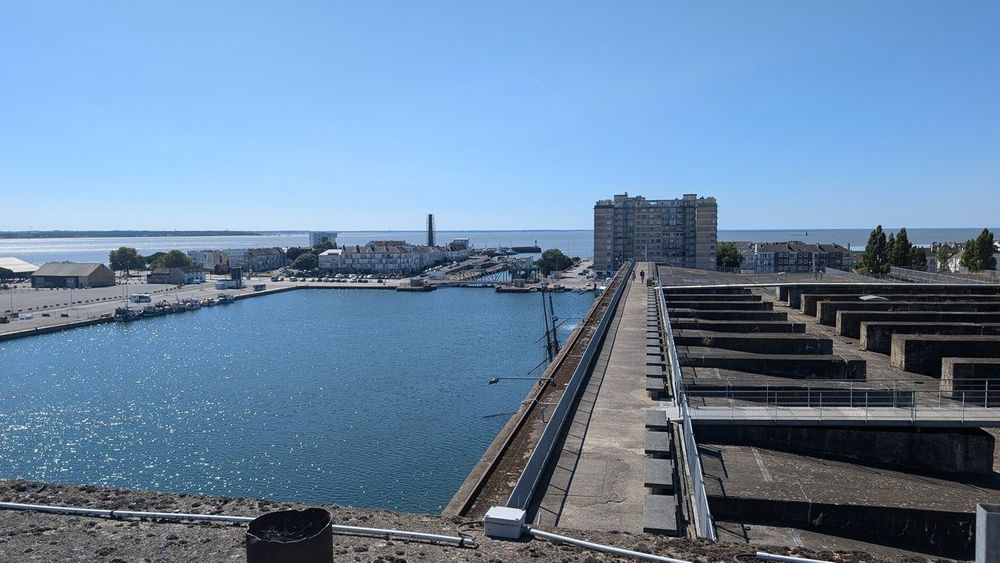
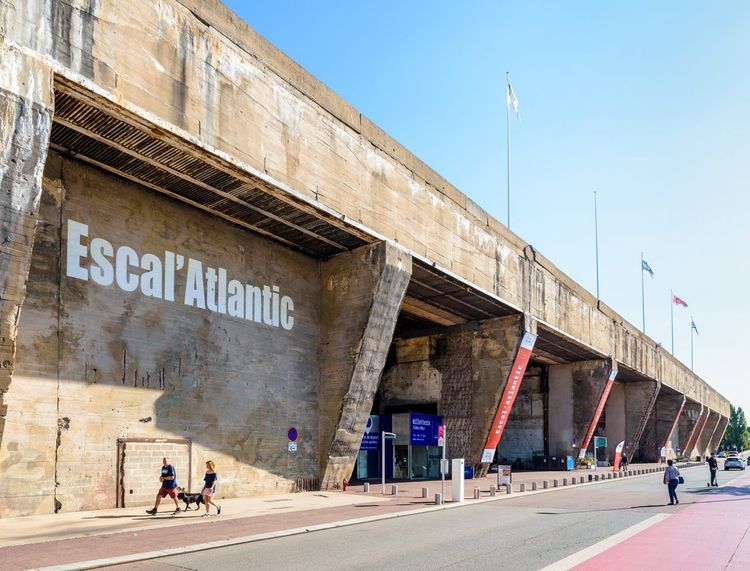
The visit almost always starts with the submarine base, a bunker of about 300 by 130 meters built by the German occupying forces between 1941 and 1943. Its 14 pens could shelter around twenty submarines from Allied bombing, beneath a roof that reaches 8 meters thick in places. The building survived almost intact while the city around it was razed. Today you can walk around freely, and the rooftop terrace, landscaped as gardens by landscape architect Gilles Clément, offers a 360-degree view of the port and the estuary.
Escal'Atlantic, opened in 2000 in one of the pens, tells the story of the golden age of the transatlantic liners built in Saint-Nazaire, from the Normandie to the France via the Île-de-France. Over three levels, you walk through a first-class cabin, an engine room, a promenade deck and a dining room, punctuated by around 200 original objects salvaged from the ships. Allow 1.5 to 2 hours, a little more if you linger over the archive films.
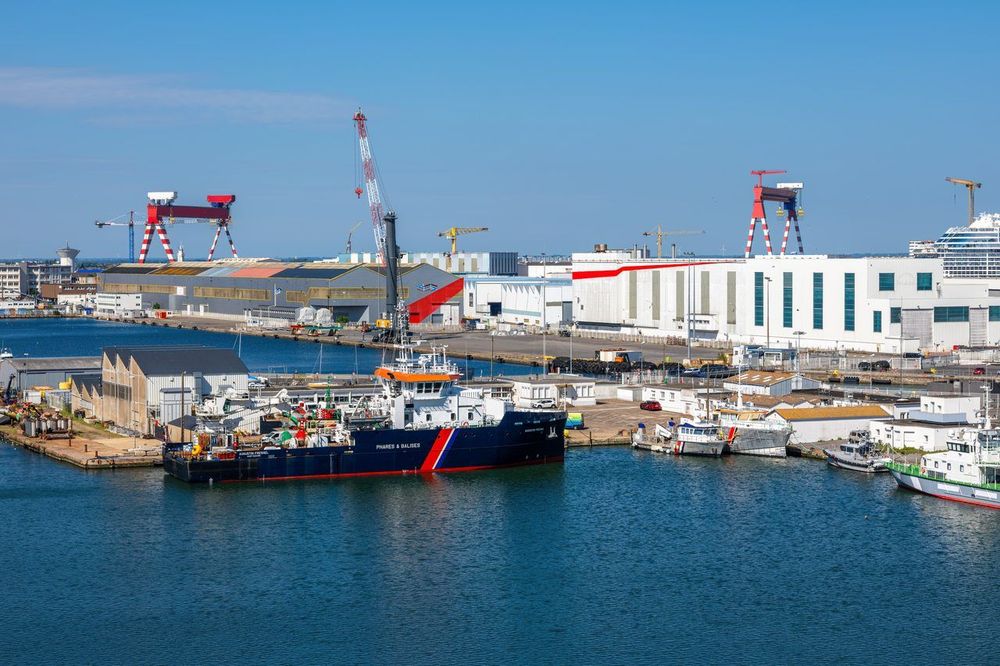
Around the base lies the Ville-Port, the redesigned district that stitches the city center back to the harbor basins. Inside the base itself, the LiFE hosts contemporary art installations and the VIP programs contemporary music concerts. It is from the heights of the district that you get the best view of the shipyards (Chantiers de l'Atlantique (Avenue Jean Moulin, 44600 Saint-Nazaire, rated 4.2/5 on Google from 103 reviews)), where some of the largest cruise ships in the world are assembled: depending on the schedule, a ship under construction can completely block the horizon.
You only really understand this industrial history of the port by walking on it rather than reading it on a sign. The 23 audio stops of the Ryo audio-guided tour link the submarine base, the Ville-Port and the surroundings of the shipyards on foot, with anecdotes you won't find on commemorative plaques.
Day 1: The Ville-Port and the Industrial Waterfront
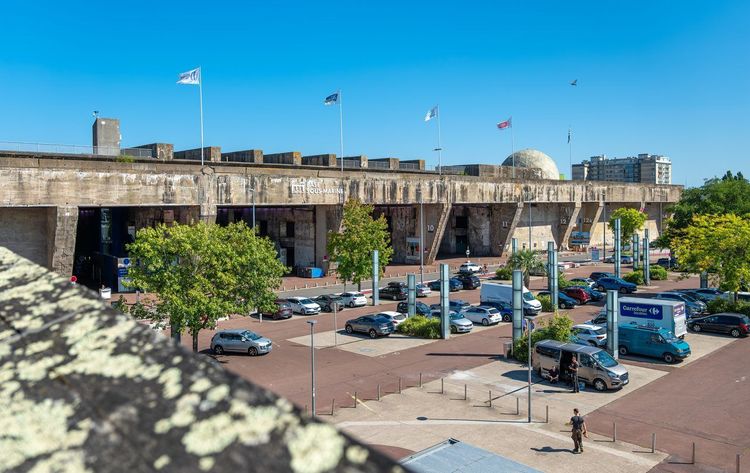
Devote your morning to the submarine base and Escal'Atlantic: allow a good half-day if you do both without rushing. On your way out, climb up to the rooftop terrace via the ramp: the view over the basins and the port cranes is striking, especially in late morning when the light skims the locks.
For this first morning, a more compact option than the full circuit also exists: the short version of the Ryo audio-guided tour condenses the essentials into a few stops, without leaving the Ville-Port area.
Have lunch at one of the restaurants in the port, then resume your visit in the afternoon toward the shipyards. It is an active industrial site, but guided tours of the Chantiers de l'Atlantique are organized by reservation by Saint-Nazaire Renversante, the organization that also manages Escal'Atlantic and the base. Remember to book several days ahead in high season and to bring an ID. Otherwise, the roof of the base remains the best free viewpoint over the ships being fitted out.
If you have a little time before dinner, head to the Méan-Penhoët district (Quartier Méan-Penhoët, 44600 Saint-Nazaire, rated 4.6/5 on Google from 37 reviews), east of the center, which has preserved the imprint of the former workers' district built to house shipyard employees. Its low, aligned houses and old shops tell a story of the city that the rebuilt buildings of the center no longer show.
Day 2: Seafront, Beaches and Estuary
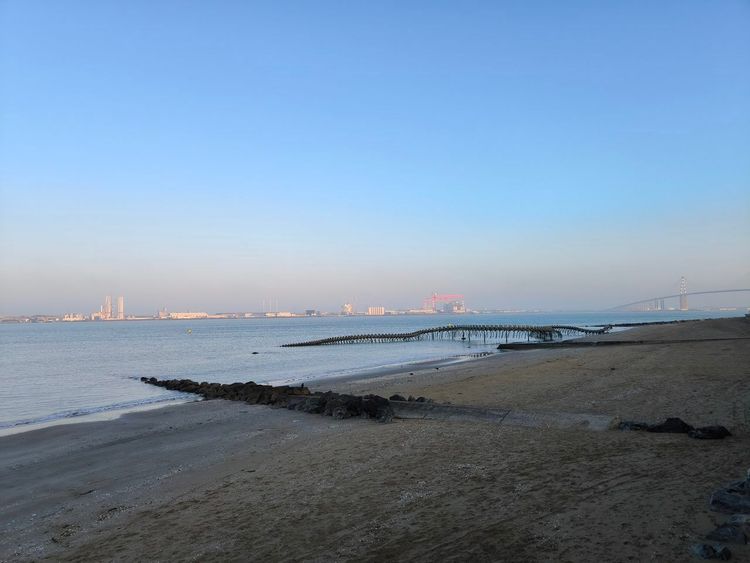
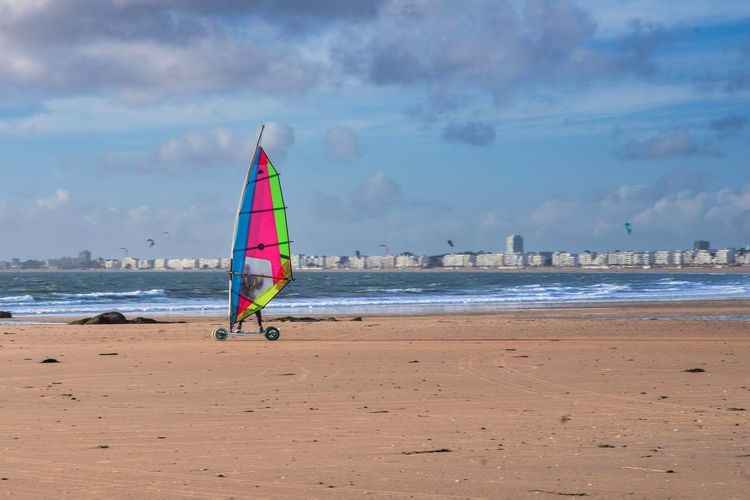
Change the scenery completely for the second day. Head to the seafront, ten minutes on foot from the center, where Saint-Nazaire cultivates a seaside identity that is more discreet than its neighbors' but very real. The Saint-Nazaire beach stretches over several hundred meters of sand, supervised in summer, with a direct view of the Loire estuary and, in the distance, the silhouettes of container ships approaching the port.
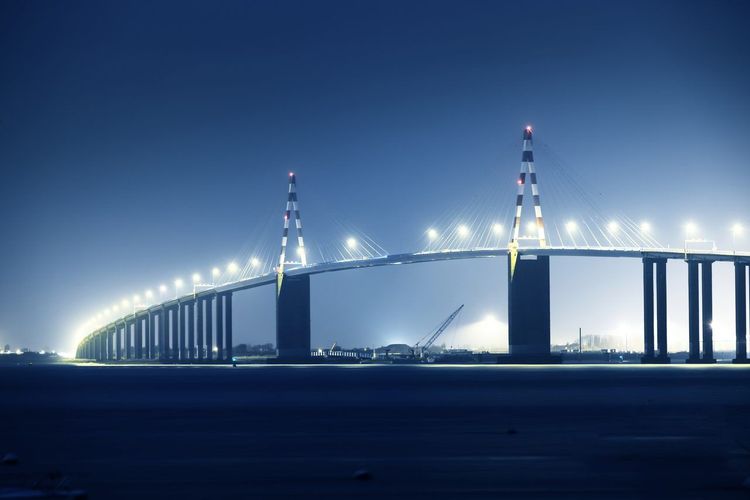
From the jetty, turn your gaze upstream: the Saint-Nazaire–Saint-Brevin bridge (Pont de Saint-Nazaire, 44600 Saint-Nazaire, rated 4.4/5 on Google from 1,757 reviews) spans the estuary over 3,356 meters and connects Saint-Nazaire to Saint-Brevin-les-Pins on the south bank. Opened in 1975 and toll-free since 1994, it offers one of the best panoramas over the mouth of the Loire. To see it head-on at sunset, drive across it and stop at the pointe de Mindin, on the Saint-Brevin side.
The afternoon lends itself to a slower stroll: cycling along the coast, a nap on the sand, or simply a coffee on a terrace facing the water. It is also the right moment to grasp why this city tells two stories in a single walk: that of the concrete of the Occupation, visible in the blockhouses that still dot the coast, and that of the steel of the shipyards, which continues to be written a little further along in the estuary. With headphones on, the Ryo audio guide accompanies you through this shift as you cross the seafront.
What to Do in the Evening and Outings in Saint-Nazaire
Saint-Nazaire has a dense community and cultural life for its size, driven by a calendar that changes with the seasons. Depending on the period, you will find art workshops open year-round or in 10-session blocks, regular classes (yoga, qi gong), themed photo contests, or one-off music events. It's better to check the local calendar before leaving rather than rely on a fixed list: programs change quickly from one month to the next.
In the evening, the port area remains the liveliest, with a few wine bars and terraces open late in summer. The VIP, inside the submarine base, hosts concerts several nights a week in season, while Le Théâtre, a national stage facing the port, offers dance, circus and theater. If your weekend falls midweek, take a look at the classes offered by local associations: it is often a chance to meet locals rather than other visitors.
Where to Eat in Saint-Nazaire
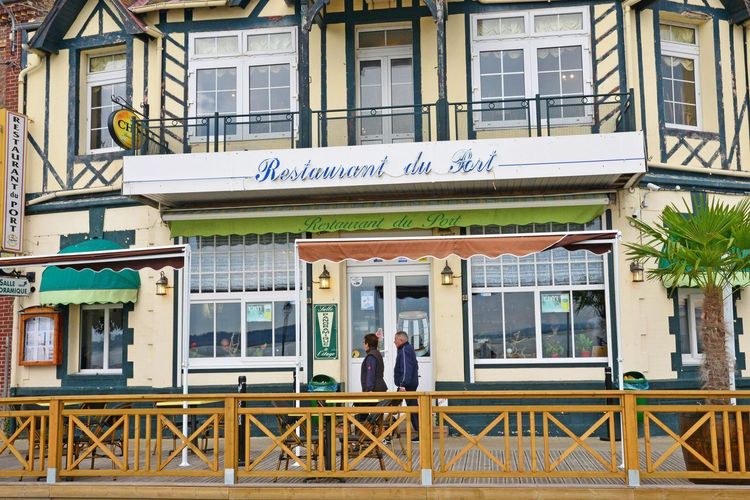
For a dinner with a view, go for the tables overlooking the port and the basins: seafood cuisine, market menus, a rather relaxed atmosphere. Seafood is the city's strong point: oysters, small-boat fish and shellfish appear on most menus, often at gentler prices than in La Baule.
As for bistros, the city center has several family-run places where you can eat well without breaking the bank, ideal between two visits. The covered market, open several mornings a week, is the perfect spot for an improvised platter or a few galettes. For a more gastronomic option, some restaurants work with local products (market gardening from the Nantes region, Guérande salt, fish landed at Le Croisic). Book on Friday and Saturday evenings in season: the best places fill up quickly.
Where to Stay in Saint-Nazaire
Two options emerge depending on the atmosphere you want. Near the train station and the Ville-Port, you will find practical chain hotels, well placed for visiting the submarine base and Escal'Atlantic on foot, with good value for money outside July–August. On the seafront side, guesthouses and charming rentals take over, some with views over the estuary: best if your stay is more focused on the beach and strolling.
In low season, a decent double room in the city center remains affordable. In summer, prices rise noticeably, especially on weekends, and it's better to book a month ahead if you're aiming for the seafront. Guesthouses often offer a more personalized welcome, with useful advice on restaurants and tide times.
How to Get to and Around Saint-Nazaire
By train, Saint-Nazaire is connected to Nantes in about 40 to 50 minutes, with regular TER trains throughout the day, and direct TGV trains also link it to Paris. By car, allow about 50 minutes from Nantes via the expressway, longer during the heavy summer traffic toward La Baule.
Once there, the city is very easy to visit on foot: the submarine base, Escal'Atlantic and the Ville-Port are grouped within a compact area, a few minutes from the station. To reach the seafront or push on toward the pointe de Villès-Martin, cycling is a good option, as is the STRAN bus network, which serves most neighborhoods. A car remains useful for an excursion to Guérande or to the other side of the bridge.
When to Go and How Long to Stay
Spring and early autumn offer the best compromise: generally mild weather on the coast, less crowded visits than in midsummer and more reasonable accommodation rates. Summer remains pleasant for the beach, but some Escal'Atlantic slots and shipyard tours are fully booked in August: reserve online.
Two full days are enough to cover the essentials: heritage visits on the first day, the coastline and estuary on the second. If you plan to go on to Guérande or La Baule, allow an additional half-day. Budget-wise, a weekend in Saint-Nazaire is generally more affordable than in La Baule, particularly for accommodation and dining. To pace your timing, keep one simple benchmark in mind: 2.5 hours and about 6 km is the length of the Ryo audio-guided tour, which means half a day for most of the port center, with the rest of the weekend for the beach and excursions.
Excursion Ideas Around Saint-Nazaire
If your weekend stretches to three days, several options are available without a long journey. La Baule (Front de mer, 44500 La Baule-Escoublac, rated 4.9/5 on Google from 79 reviews), about twenty minutes away by road, offers a bay of roughly 9 kilometers of fine sand lined with Belle Époque villas, a striking contrast with the reconstruction-era architecture of Saint-Nazaire.
Guérande, 20 minutes away, deserves half a day on its own: its medieval town, encircled by almost intact ramparts, overlooks the salt marshes where salt is still harvested by hand. Wandering the cobbled lanes inside the walls, then watching the salt workers in season, is a complete change of register from industrial Saint-Nazaire.
For travelers who have a week rather than a weekend, the Loire Valley châteaux remain accessible by heading east up the river, even if you then need to allow several hours of driving from the estuary. Depending on your tastes (beach, medieval heritage or grand Loire tourism), these three extensions combine easily with a stay centered on Saint-Nazaire. And if you fancy an adventure, the Ryo audio-guided road trip of the Loire Valley châteaux covers this itinerary step by step.



FAQ
How much time should you plan for a weekend in Saint-Nazaire?
Two full days are enough to cover the submarine base, Escal'Atlantic, the Ville-Port and the seafront. Allow an extra half-day if you add Guérande or La Baule to your plans.
What is the best time to visit Saint-Nazaire?
Spring and early autumn offer the best balance between weather, crowds and prices. Summer is great for the beach, but book your visits in advance.
How do you get to Saint-Nazaire from Nantes?
By train, allow 40 to 50 minutes with regular departures. By car, the expressway takes about 50 minutes outside the summer peaks.
What should you see first in Saint-Nazaire in 2 days?
The submarine base and Escal'Atlantic on the first morning, the Ville-Port and the shipyards in the afternoon, then the seafront and the Saint-Nazaire–Saint-Brevin bridge on the second day.
Is Saint-Nazaire worth a detour for a weekend?
Yes, especially if you are looking for something other than a classic seaside resort: the city's industrial and military heritage is unique on the Atlantic coast, and it combines easily with a beach stop in La Baule.
Where should you stay in Saint-Nazaire for a weekend?
The train station and Ville-Port area suits walking visits of the city's heritage sites, while the seafront is better for a more beach-oriented stay. Book in advance in summer, as prices and availability tighten quickly.
A weekend in Saint-Nazaire works precisely because the city doesn't try to imitate its seaside neighbors: it embraces its identity as an industrial port, with an intact submarine base and a seafront that is more raw than picturesque. It is this tension between concrete and steel, military heritage and present-day port life, that makes the visit memorable in just two days.
To find your way around once there and connect all the sites in this guide, start the Ryo audio-guided tour of Saint-Nazaire: 23 audio stories over 6 km that give meaning to every stop.