© Shutterstock
 Votre guide Ryo
Free Things to Do in Saumur: 15 Experiences to Enjoy Without Spending in 2026
In Saumur, the Loire Valley postcard costs nothing. The château esplanade, the half-timbered lanes of the old town and the vineyard slopes overlooking the river can all be discovered without opening your wallet. Yet most guides focus on paid visits and overlook the free activities in Saumur, from the Loire quays to the troglodyte villages of Turquant and Rochemenier. The Ryo audio-guided tour of Saumur links most of the historic centre on foot, between the old town and the château terrace, for the price of a simple stroll.
In the pages that follow, you will discover a church with a Romanesque apse where no one will ask for a ticket, a signposted cycle route that follows the Loire for dozens of kilometres, one of the liveliest Saturday markets in Anjou and hamlets carved into the tuffeau stone where you can wander freely. You will also learn where free access ends: the Bagneux dolmen and the Cadre Noir require a small budget, and it is better to know that before you go. Enough to fill an entire stay without touching the budget set aside for accommodation or meals.
1. Saumur's Historic Centre: Old Town and Half-Timbered Houses
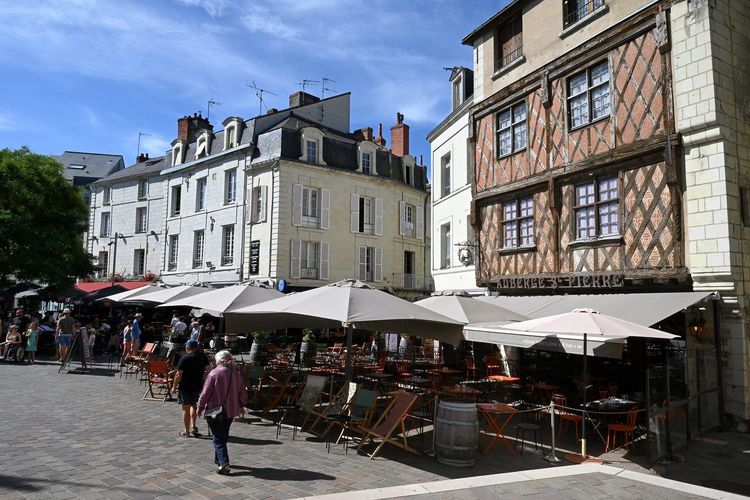
Saumur has preserved the layout of its medieval town around Place Saint-Pierre (Place Saint-Pierre, 49400 Saumur), lined with 15th-century half-timbered houses. You can reach it in a few minutes from the quays, via rue Saint-Jean or rue Haute-Saint-Pierre, streets that have kept their overhanging upper floors and timber-framed façades. Unlike other towns along the Loire, Saumur has preserved a fine concentration of old buildings in this district, which explains the intact charm of its lanes.
Allow an hour to wander aimlessly, looking up at the carved beams that adorn some of the façades. The white tuffeau stone, typical of the region, gives the whole area a striking luminosity, especially late in the afternoon. A tip: avoid Sunday afternoons in the height of summer, when café terraces spill onto the narrow pavements around the square.
To miss nothing of this maze of streets, the Royal and Equestrian City sub-route guides you through 18 audio stops, 1h30 and 3.2 km, from Place Saint-Pierre to the approaches of the château. Each stop tells of an architectural detail or a local anecdote you would never spot on your own, at your own pace and with no reservation.
2. The Château de Saumur: Esplanade and Breathtaking Views of the Loire
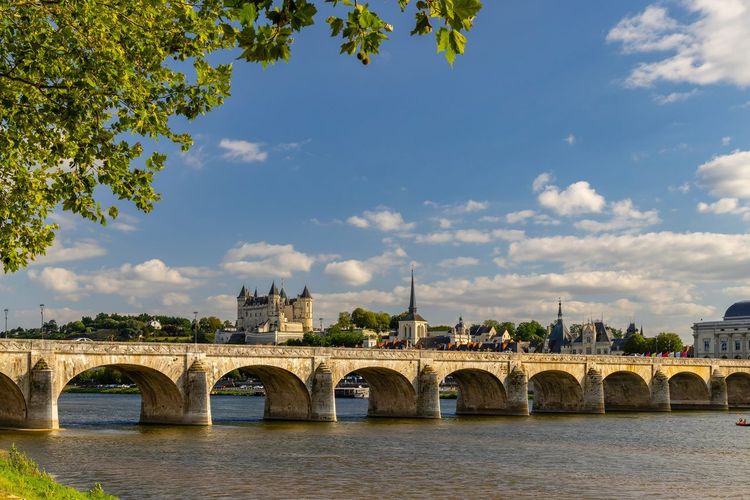
Perched on a tuffeau promontory, the Château de Saumur (Place du Château, 49400 Saumur, rated 4.3/5 on Google from 12,452 reviews) has overlooked the town and the valley since the end of the 14th century. Its silhouette of turrets and slate roofs served as the model for the September illustration in the Très Riches Heures du duc de Berry, one of the most famous illuminated manuscripts of the Middle Ages.
The esplanade and the exterior grounds remain freely accessible: come at sunset, when the light skims the rooftops of the old town and makes the Thouet glitter below. From this natural viewpoint, your gaze takes in the islands of the Loire, the Pont Cessart and the Saumur-Champigny slopes on the horizon.
Only entry into the buildings is paid. It gives access to the Decorative Arts Museum and the Horse Museum, housed in the château since the early 20th century, as well as to the summer events. If you save that visit for another time, the exterior is more than enough to understand the strategic importance of the site. The Ryo audio guide even stops on this esplanade to recount the story of the royal city.
3. Saint-Pierre Church in Saumur, a Gem in the Heart of Town
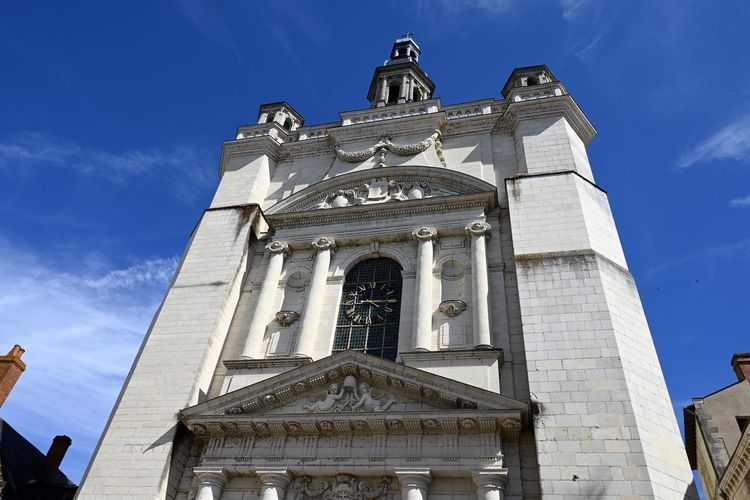
A stone's throw from the square of the same name, Saint-Pierre Church in Saumur (Place Saint-Pierre, 49400 Saumur, rated 4.5/5 on Google from 149 reviews) combines a Romanesque apse and Gothic Plantagenet vaulting (12th-13th centuries) with a classical façade, rebuilt after the collapse of 1674 caused by subsiding foundations. Entry requires no ticket, and yet most visitors head straight for the château without pushing open its door.
Inside, look for the carved 15th-century choir stalls and the old tapestries hanging in the nave. The baptismal font is also a reminder that a local saint, Jeanne Delanoue, founder of a congregation devoted to the poor, was baptised here in 1666. Sit down for a few minutes: the weekday silence contrasts with the bustle of the square. Opening hours vary by season, so it is best to drop by in the morning. A bonus if your stay coincides with an organ concert: the instrument, installed in 1805 and brought from the former Cordeliers church, has 37 stops.
4. A Walk Along the Loire Quays
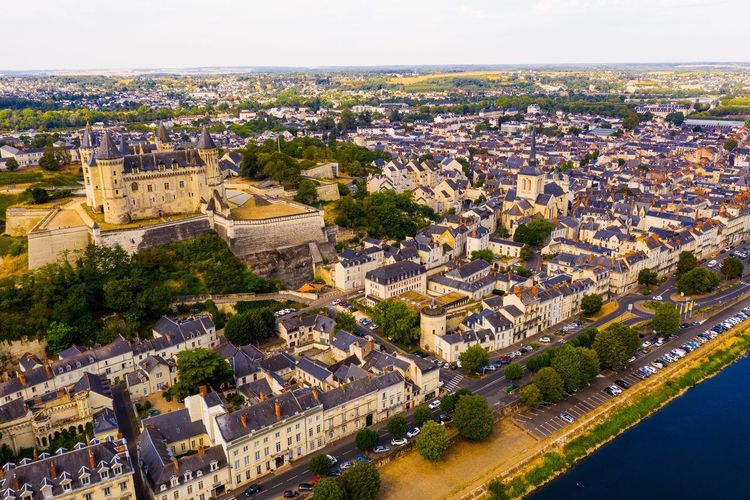
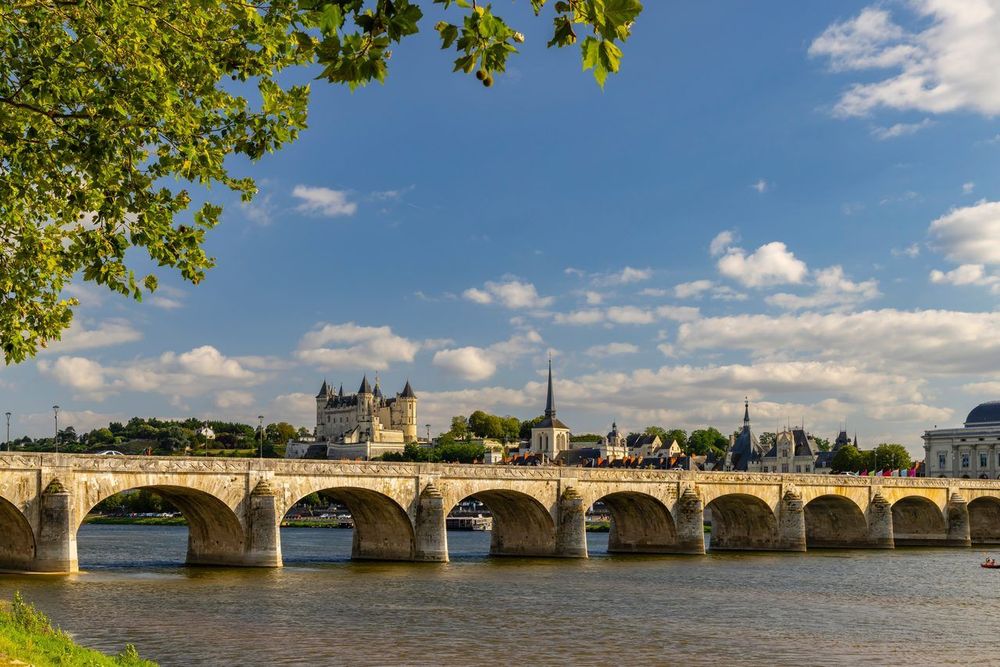
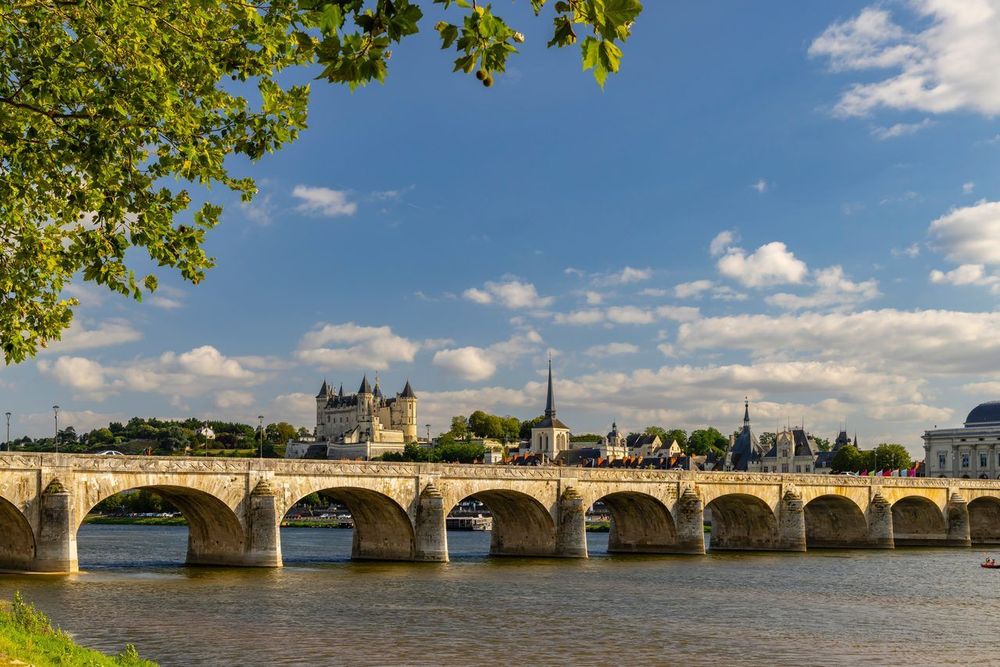
The quays of Saumur offer one of the finest views of the château, especially from the Pont Cessart (Pont Cessart, 49400 Saumur), built in the 18th century to link the town centre to the île d'Offard. In the past, barges laden with wine, salt and tuffeau docked here, before the railway supplanted river traffic in the 19th century.
Walking along quai Mayaud and then quai Lucien-Gautier, you will pass benches facing the river, perfect for watching the château's reflections at the end of the day. Spring and autumn offer softer light for photos than the height of summer. Continue to the île d'Offard without leaving the Loire's edge: a simple option for walking off lunch without getting back in the car.
Keep in mind that you are walking through a protected landscape: the Loire Valley, between Sully-sur-Loire and Chalonnes-sur-Loire, has been a UNESCO World Heritage Site since 2000 as a cultural landscape. The quays of Saumur are one of its most photogenic showcases, with that rare dialogue between wild river, sandbanks and tuffeau architecture.
5. The Loire à Vélo Cycle Route at Saumur
Saumur lies on the route of the Loire à Vélo, the cycle path that follows the river for more than 900 kilometres to the Atlantic. The local stretch, flat and well signposted, lets you reach Montsoreau to the east or Gennes to the west without any notable climbs.
Several access points start from the town centre: quai Mayaud, the Pont Cessart or the île d'Offard. The route crosses vineyards, poplar groves and small river ports, with regular picnic areas. No ticket is required: only renting a bike, if you do not have your own, remains an expense to plan for.
For a half-day, the Saumur-Montsoreau stretch (about 12 kilometres one way) combines views of the Loire, roadside troglodyte caves and arrival in one of the Most Beautiful Villages of France. Bring water in summer: shade is scarce on some sections.
6. The Cadre Noir and the Equestrian Tradition: What You Can See Without a Ticket
Based in Saint-Hilaire-Saint-Florent, west of Saumur, the Cadre Noir carries on an academic riding tradition whose French form has been inscribed on UNESCO's Intangible Cultural Heritage list since 2011. The École nationale d'équitation, created in 1972 around this corps of elite riders, took over from the famous Cavalry School.
Let's be clear: access to the Terrefort site is by paid guided tour, as are the galas and public performances. Yet the equestrian tradition can be seen all over town without spending a euro. Head to place du Chardonnet, a vast riding arena in the town centre where the Carrousel takes place every summer, and admire the long 18th-century façade of the former Cavalry School that borders it. The "Royal and Equestrian City" sub-route owes its name to this dual identity, and one of its stops tells how Saumur became as famous for its riders as for its château.
7. The Troglodyte Villages Around Saumur
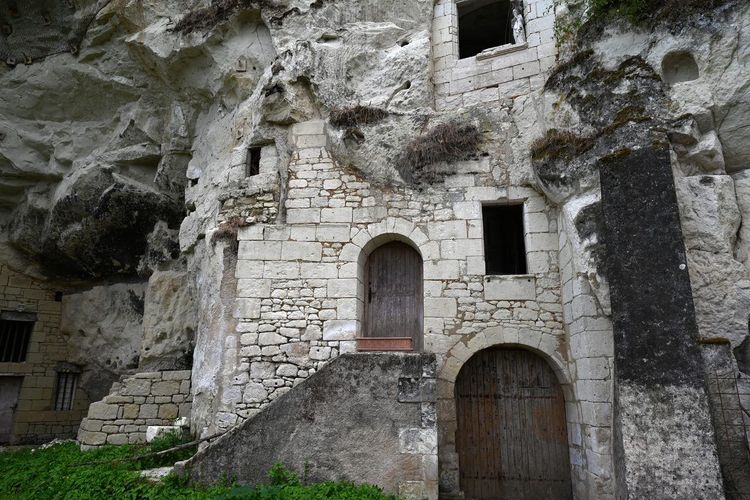
The tuffeau bedrock that was used to build Saumur was also hollowed out to create homes, cellars and workshops. The easiest place to start is Turquant, about ten minutes by car to the east: along the main street, the houses and artisan workshops are cut directly into the cliff, and the walk costs nothing. On weekdays out of season, you will often have the lanes to yourself.
Further south, the troglodyte village of Rochemenier (14 Rue du Musée, 49700 Louresse-Rochemenier, rated 4.5/5 on Google from 3,663 reviews), about 25 minutes by road, brings together former farms carved around sunken courtyards. Part of it can be visited as a paid museum, but the surrounding hamlet can be explored freely.
A few kilometres away, Dénezé-sous-Doué is home to the Cave aux Sculptures, an enigmatic group of figures carved into the rock, which is a paid visit; the village and its hollowed-out façades, however, can be discovered free of charge. Around Doué-la-Fontaine, a town where tuffeau was quarried for centuries, several sites (Perrières, a zoo set in former quarries) require a ticket: save them for another day if your budget is tight.
You can string together two or three of these villages in half a day, stopping to admire the doorways and chimneys without entering every museum. It is often when you see these chimneys poking out of the ground in the middle of the fields that you truly understand what Loire troglodyte living is all about.
8. The Saumur-Champigny Vineyards and Cellars: A Walk Among Vines and Slopes
South-east of the town, the Saumur-Champigny appellation stretches across limestone slopes overlooking the Loire, around Souzay-Champigny, Parnay and Turquant. The vineyard paths are open all year round, with no reservation, for walking between the rows of vines.
From the heights of Parnay, the view takes in the valley for several kilometres, with the Château de Saumur visible on a clear day. In spring, when the buds burst, or at the end of September during the grape harvest, the landscape changes colour dramatically, which alone justifies two visits.
Tastings in the cellars are paid, whether at an independent winemaker or in the large sparkling-wine houses of Saint-Hilaire-Saint-Florent, whose tuffeau galleries run for kilometres. But nothing stops you from picnicking on a sunny low wall and leaving without opening your wallet. For photos, cabernet franc, the king grape of Saumur-Champigny, takes on spectacular purple hues in October.
9. The Bagneux Dolmen, a Neolithic Giant at the Gates of Saumur
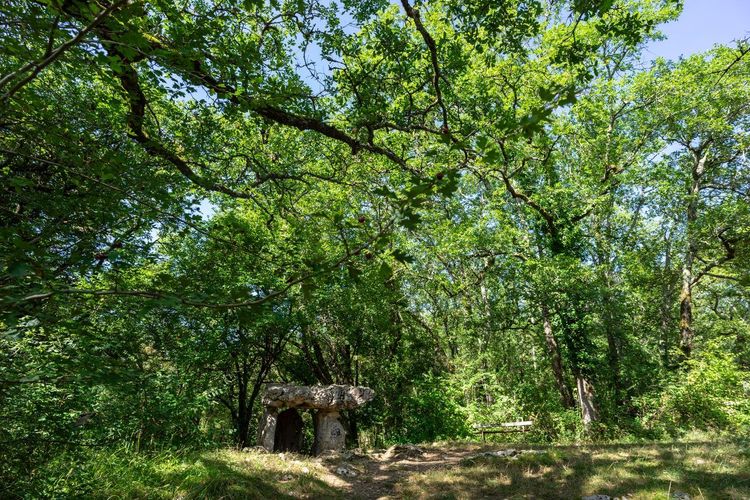
In the Bagneux district, about ten minutes by bike from the centre, stands one of the largest dolmens in France: more than 17 metres long, with a chamber around 5 metres wide. The Bagneux dolmen (15 Rue du Dolmen, 49400 Saumur, rated 3.2/5 on Google from 9 reviews), built in the Neolithic period and listed as a historic monument in 1889, now stands on private land.
Note, then, that entry is paid, though only a few euros. It is mentioned here because few visitors know it exists and the emotion-to-price ratio is unbeatable. Allow about twenty minutes on site.
10. The Saumur Market and Local Life
On Saturday mornings, place Saint-Pierre and its surroundings turn into a market, with local producers set up from early morning until late in the morning. Anjou vegetables, goat's cheeses, bottles of Saumur-Champigny and sometimes fouaces, those flatbreads of bread dough baked in a troglodyte oven, make for a very tempting scene.
Browsing the stalls costs nothing and remains the best way to take the pulse of the town. You can chat with the vendors or photograph the colourful stalls with no obligation to buy. Arrive around 9 a.m. to enjoy the atmosphere before the crowds, especially in summer. The market flows naturally into a coffee on a terrace facing the timber-framed houses, a chance to watch the town wake up.
11. The île d'Offard and the Green Spaces Along the Loire
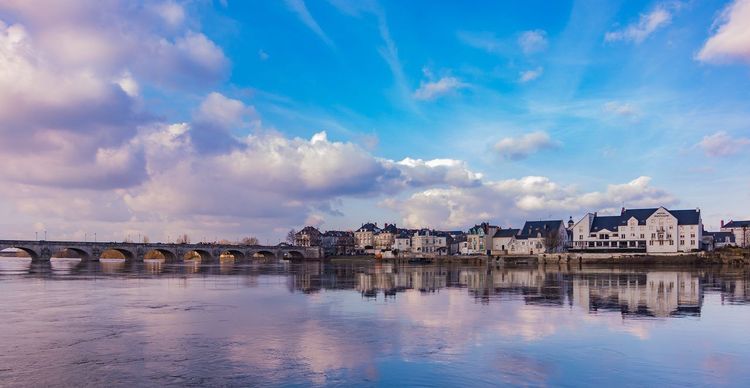
Facing the historic centre, the île d'Offard (Île d'Offard, 49400 Saumur, rated 4.3/5 on Google from 34 reviews) stretches between two arms of the Loire, lined with poplars and shaded walking paths. You can reach it on foot from the Pont Cessart in a few minutes, making it an easy nature escape between two visits.
The island has a campsite and sports facilities, but its banks and paths remain open to everyone. Together with the quays mentioned above and the cycle route that heads toward Saint-Hilaire-Saint-Florent, these green spaces form an area of several kilometres where you can alternate walking, cycling and picnicking by the water. In the evening, you will enjoy a postcard view of the illuminated château.
12. The Exterior of the Royal Abbey of Fontevraud
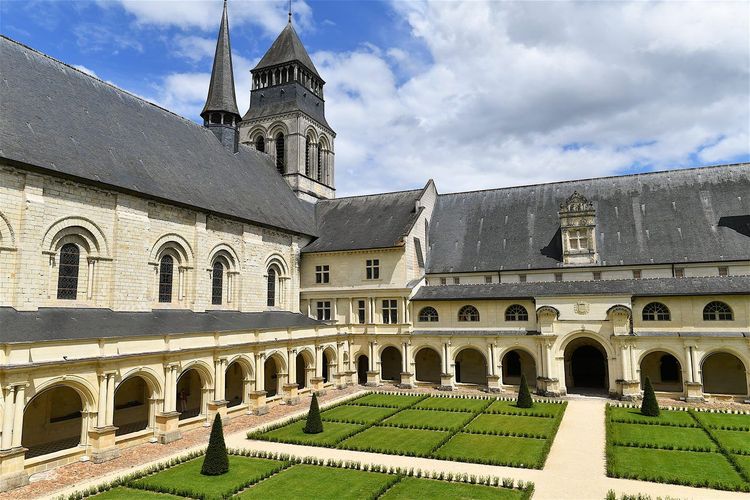
About twenty minutes by car from Saumur, the Royal Abbey of Fontevraud (49590 Fontevraud-l'Abbaye, rated 4.6/5 on Google from 8,329 reviews) is one of the largest surviving monastic complexes in Europe, founded in 1101. It houses the effigies of Eleanor of Aquitaine, Henry II and Richard the Lionheart, which can be seen on a paid visit.
While the interior requires a ticket, the village of Fontevraud-l'Abbaye can be explored freely, with its white-stone lanes and old buildings. You can walk along the walls of the enclosure and admire the tuffeau façades late in the day, when the low light turns them golden. Easily combine this excursion with Montsoreau or Candes-Saint-Martin, on the same route.
13. Family and Kids' Outings in Saumur

At certain times of year, the town offers 9-13 year-olds free sports activities in the neighbourhoods, supervised by instructors during school holidays. Check with the town hall or the tourist office for the schedule.
Outside these slots, the banks of the quays and the île d'Offard let the youngest burn off energy while parents enjoy the view. The Loire à Vélo, flat and safe, is also ideal for a family outing, with breaks to watch the herons and terns on the sandbanks.
Children who love horses will adore place du Chardonnet, especially in the lead-up to the Carrousel in July. For the more adventurous, the troglodyte chimneys of Rochemenier poking out of the fields never fail to impress, and the Saturday market quickly turns into a hunt for colours and smells. Bring something to snack on: shops become scarce as soon as you move away from the centre.
14. The Best Ticket-Free Getaways Within an Hour of Saumur
Fifteen minutes to the east, Montsoreau is one of the Most Beautiful Villages of France: its lanes and the grounds around its château can be explored without a ticket, with only the interior visit being paid.
Right next door, Candes-Saint-Martin sits at the confluence of the Loire and the Vienne, with a Gothic collegiate church open to visitors and a panoramic viewpoint reached after a short climb. A little further east, in Touraine, the old town of Chinon and its half-timbered houses can be explored freely, while the fortress requires a ticket.
To link these stops without improvising, the Ryo audio-guided tour of the Loire châteaux strings them together by car, with stories to listen to along the way. And if you are looking for more ideas over a wider area, our selection of what to see around Saumur usefully complements this list.
15. Practical Information: Getting There Without a Car, Best Time to Visit and Budget
Saumur can be reached by train from Paris-Montparnasse in a little over two hours, with a change at Tours or Angers. The station is on the right bank, about a fifteen-minute walk from the historic centre across the bridges. Locally, the Agglobus bus network serves the main districts, including Saint-Hilaire-Saint-Florent.
Cycling remains the most practical way to combine several sites in a day, thanks to flat terrain and the Loire à Vélo running through the town. For the troglodyte villages and Fontevraud, however, a car or carpool makes getting around easier.
Spring and early autumn offer the best compromise between mild weather and reasonable crowds, while July-August fills the quays and the esplanade. If possible, aim for the third weekend of September: during the European Heritage Days, many monuments that are usually paid open their doors free or at a reduced rate, letting you see the inside of some of the sites mentioned above.
By budgeting only for meals, transport and possibly a bike rental, you can build a very affordable two- to three-day stay without sacrificing heritage.



FAQ
How much time should I allow to enjoy the free activities in Saumur?
Two full days cover the essentials: the historic centre, the château esplanade, Saint-Pierre Church and the quays on the first day, then Turquant, a troglodyte village and the Saumur-Champigny slopes on the second. With three days, add Fontevraud and Montsoreau.
What can you do in Saumur with children without spending money?
The riverbanks of the quays and the île d'Offard, the Loire à Vélo and the municipal sports activities for 9-13 year-olds suit families well. Place du Chardonnet also appeals to children who love horses.
What can you do in Saumur when it rains?
Saint-Pierre Church offers a ticket-free shelter in the heart of town, with its 15th-century choir stalls. The Saturday market and the shops of the old town also let you wait out the rain under cover.
Can you visit Saumur without a car?
Yes for the historic centre, the château, Saint-Pierre Church, the quays and the île d'Offard, all reachable on foot or by bike from the train station. Agglobus buses serve Saint-Hilaire-Saint-Florent; the troglodyte villages and Fontevraud are better reached by car.
Is the Château de Saumur free?
The esplanade and the exterior can be visited freely. Only access to the buildings, which house the Horse Museum and the Decorative Arts Museum, requires a ticket.
What romantic and foodie outings can you do around Saumur?
A sunset stroll on the château esplanade, followed by a picnic of market produce (fouaces, goat's cheese, Saumur-Champigny) on the slopes overlooking the valley, makes for a very slow-paced afternoon. Candes-Saint-Martin, at the confluence of the Loire and the Vienne, is an ideal way to round off the outing.
What is the best time of year to visit Saumur?
Spring and early autumn offer pleasant weather with fewer crowds than in summer, especially on the quays and the slopes. The troglodyte villages and the Loire riverbanks, however, can be enjoyed all year round.
In Summary
Saumur proves that a successful trip does not depend on the budget spent on paid visits. Between the château esplanade, the half-timbered lanes, the troglodytes of Turquant and the Saumur-Champigny slopes, the equestrian town offers enough freely accessible sites to fill several days, and the free activities in Saumur are not limited to the town centre.
Before you go, download the Ryo audio guide to Saumur: it links the château, the old town and the quays on foot, with anecdotes that no tourist sign tells.