© Shutterstock
 Votre guide Ryo
Museums in Toulouse: the Complete Guide to Must-See Attractions in 2026
Museums in Toulouse often surprise visitors who came for the pink brick and cassoulet: the city has around twenty museums and permanent exhibition venues. Here you'll find a 14th-century convent that became a fine arts museum as early as 1795, a palaeochristian necropolis uncovered beneath a Renaissance college, and a 47-tonne mechanical Minotaur that carries passengers on its back. To get a feel for the historic centre before diving into the collections, the Ryo audio tour of Toulouse (23 audio tracks, 2h40, 6.5 km) connects several of these institutions on foot.
You'll also find in this guide a stage curtain painted in 1936 after Picasso, two Concordes — one of which you can explore from the inside — a replica of the Ariane 5 rocket standing 53 metres tall, and a replica of the Salmson that completed Latécoère's first flight to Barcelona. From art museums and science museums to heritage sites, this article covers the must-see collections, the lesser-known addresses, and the practical information (opening hours, prices, free admission, passes) you need to plan your visit without wasting time. Whether you have two hours between appointments or a full weekend ahead of you, it helps you choose the right stops rather than chasing an endless list.
Musée des Augustins: the Treasure of Toulouse Art
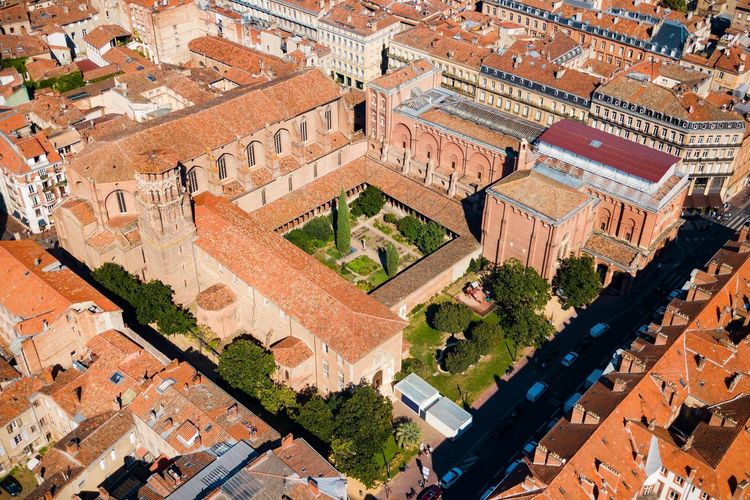
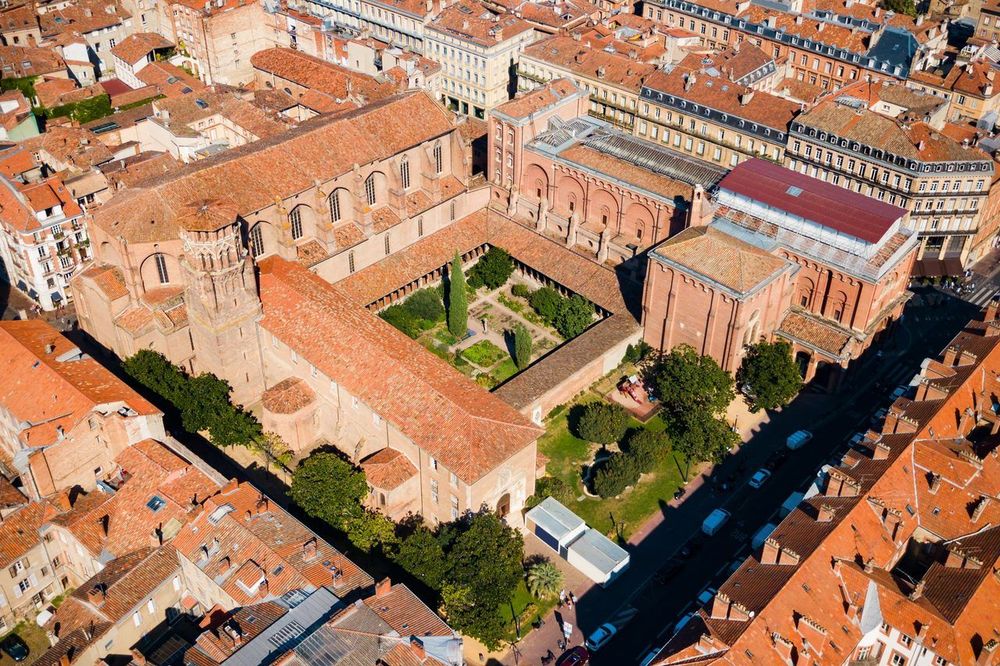
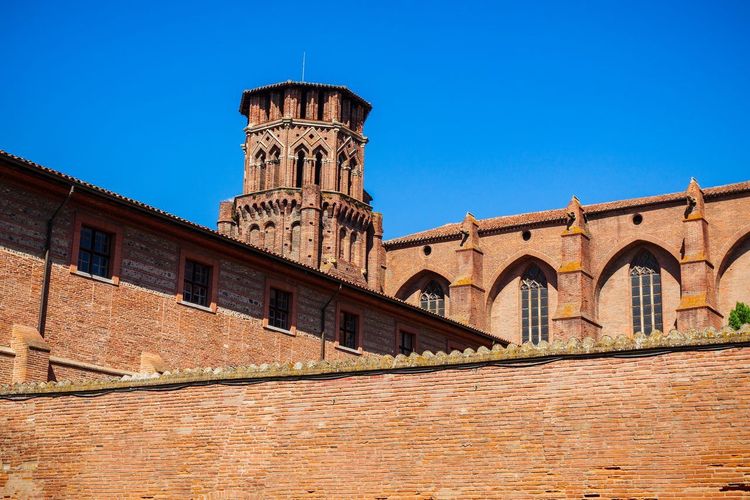
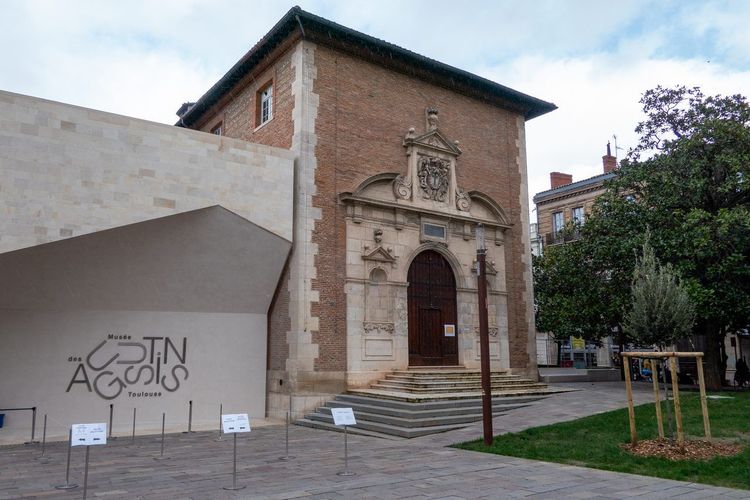
Any discussion of Toulouse's museums has to begin with the musée des Augustins (21 Rue de Metz, 31000 Toulouse, rated 4.4/5 on Google from 3,313 reviews). Housed in a Gothic convent built from 1310, it opened its doors to the public on 27 August 1795, making it one of the oldest museums in France, founded shortly after the Louvre. Its collections bring together more than 4,000 pieces, including one of the richest ensembles of Romanesque sculpture in the country, largely saved from revolutionary destruction.
Beyond the medieval sculpture, the museum displays paintings spanning the 14th to the 19th century: early masters, large academic canvases, and more intimate works. The cloître des Augustins remains one of the most photographed corners of the city centre, especially late in the day when the light grazes the arcades.
One important note before you visit: closed in 2019 for major renovation works, the museum has been reopening in stages since 19 December 2025, with the project scheduled for completion in spring 2027. Some rooms may therefore be inaccessible during your visit: check the museum's website to find out which spaces are open. On the historical side, the former convent des Augustins features a stop on the Ryo audio tour, where one episode recounts how it went from a place of prayer to a fine arts museum, through revolutionary confiscation and heritage rescue.
If you want to plan your visit in detail (works not to miss, access), our article on the musée des Augustins goes into full detail.
Musée Saint-Raymond: from Prehistory to the Roman Era
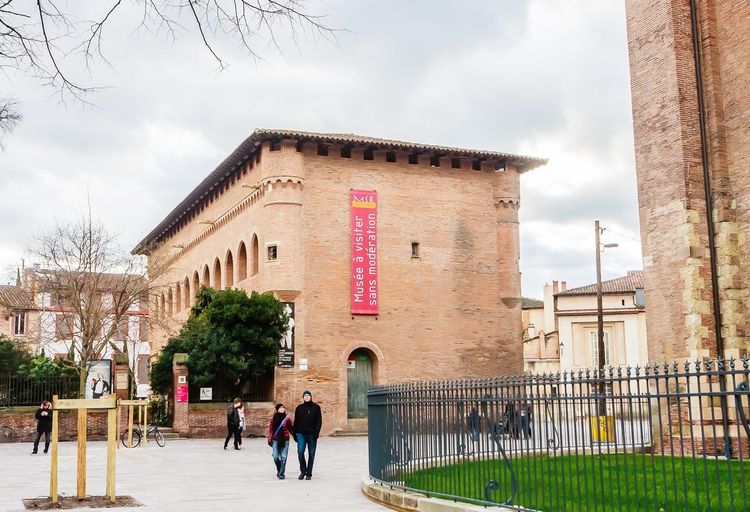
Steps away from the basilique Saint-Sernin, the musée Saint-Raymond (Place Saint-Sernin, 31000 Toulouse, rated 4.6/5 on Google from 1,763 reviews) occupies a former university college dating from 1523, restored by Viollet-le-Duc in the 19th century. It is the city's archaeology museum, covering the period from prehistory to late antiquity.
Its centrepiece: the Roman imperial portraits from the villa de Chiragan, in Martres-Tolosane — a collection of busts second in France only to that of the Louvre. Head down to the basement too: the renovation completed in 1999 revealed a palaeochristian necropolis from the 4th and 5th centuries, visible on site. Mosaics, ceramics, and everyday objects round out the portrait of Tolosa, the ancient city.
Want to understand the neighbourhood before going in? The audio stops dedicated to Saint-Sernin set the ancient and medieval scene of the area in just a few minutes.
Les Abattoirs: Toulouse's Temple of Modern and Contemporary Art
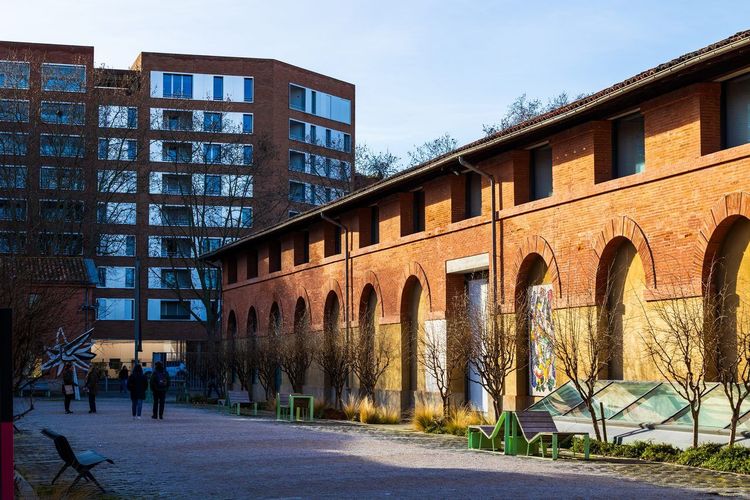
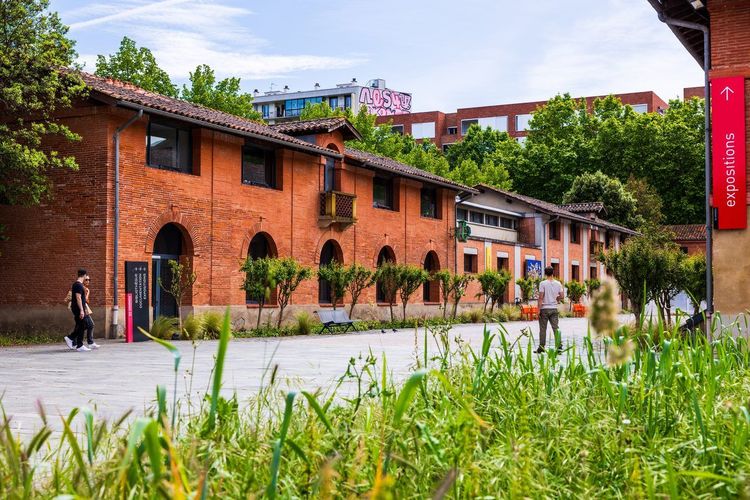
A change of register with Les Abattoirs (76 Allées Charles de Fitte, 31300 Toulouse, rated 4.3/5 on Google from 4,465 reviews), a museum of modern and contemporary art opened in 2000 in the former municipal slaughterhouse, in the Saint-Cyprien neighbourhood on the left bank of the Garonne. Managed by a joint authority bringing together the city and the region, it also houses the Frac Occitanie Toulouse. The conversion retained the brick hall while opening it up to natural light.
The most celebrated piece remains the stage curtain by Pablo Picasso and Luis Fernández (1936), created for Romain Rolland's play "Le 14 Juillet". Note: for conservation reasons, this monumental canvas is displayed in the basement for only six consecutive months before a rest period in the dark. If this is the work you're coming to see, check that it is on display during your visit.
Around this work revolves a collection spanning art from the second half of the 20th century to the present day, complemented by temporary exhibitions renewed several times a year. On the way out, the jardin Raymond VI, which stretches behind the museum down to the Garonne, offers a welcome break.
Entry is free on the first Sunday of the month — a great opportunity to explore contemporary art with no commitment. Themed guided tours help visitors engage with it if they sometimes find it hard to access.
Le Couvent des Jacobins: a Gothic Masterpiece in the Heart of the City
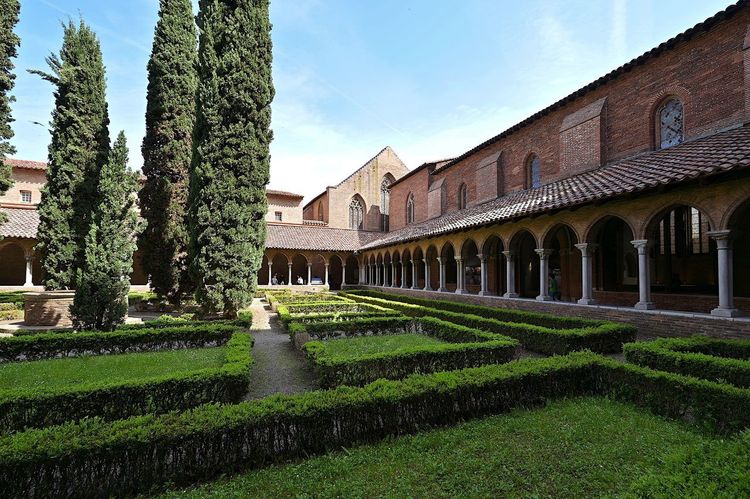
The Couvent des Jacobins (69 Rue Pargaminières, 31000 Toulouse, rated 4.6/5 on Google from 7,782 reviews), whose construction began in 1230 at the initiative of the Dominicans, is without doubt the most spectacular monument in the city centre. Inside the church, a single column spreads 22 ribs in a fan shape: this is the famous palmier, the pinnacle of southern Gothic architecture. The church also houses the relics of Saint Thomas Aquinas, which returned to Toulouse in 1974.
The cloister and the refectory, which hosts temporary exhibitions, can be visited in about an hour.
Short on time? The short version of the Ryo audio tour of Toulouse passes through the historic heart and gives you the keys to knowing exactly where to look once you're under the vaults.
Le Muséum de Toulouse and Its Botanical Garden: Diving into Natural History
With 310,202 visitors in 2025, the Muséum de Toulouse is the second-largest natural history museum in France after the one in Paris. Founded by a municipal decision in 1865, it occupies the former convent of the Discalced Carmelites, where the naturalist Picot de Lapeyrouse had established a botanical garden and collections as early as 1796. Completely renovated, it reopened to the public in January 2008.
The reserves hold more than two and a half million items, a selection of which is displayed across approximately 6,000 m²: skeletons, minerals, insects (nearly 1,200 specimens on display), birds (480 specimens), and a journey through the evolution of life that captivates children and adults alike. Temporary exhibitions, which change regularly, affect the ticket price.
Right next door, the jardin botanique Henri-Gaussen, managed by the Université Paul-Sabatier, spreads 5,500 m² of plantings around an ethnobotanical spiral. It opens at the same times as the museum but closes during weather alerts.
The museum has a second, lesser-known address: the Jardins du Muséum à Borderouge (24-26 Avenue Bourges-Maunoury, 31200 Toulouse, rated 4.4/5 on Google from 927 reviews), in the north of the city. This outdoor site features "world vegetable gardens" arranged in themed beds showcasing the diversity of the planet's food plants, as well as a wetland area and observation spaces. Family workshops (gardening, small-fauna observation) make it an ideal outing with children. The gardens open mainly in the warmer months: check the dates before visiting.
In practical terms, the museum opens Tuesday to Sunday from 10am to 6pm. It closes on 1 January, 1 May, 25 December, and notably from 1 to 14 September each year — a closure that regularly catches back-to-school visitors off guard. Full-price admission is €9 without a temporary exhibition, €12 during peak season (€5 and €8 at reduced rate). Allow around two hours; the museum advises arriving around 4pm or visiting in the morning, on Fridays or Saturdays, to avoid crowds, and recommends booking online.
Cité de l'Espace: a Journey to the Edges of the Universe
Head east of Toulouse for the Cité de l'Espace (Avenue Jean Gonord, 31500 Toulouse, rated 4.2/5 on Google from 8,927 reviews), about twenty minutes from the city centre by car or bus. Opened in June 1997, this 4-hectare park welcomed 452,000 visitors in 2024, making it the most visited site in this selection.
Highlights include a full-scale replica of the Ariane 5 rocket, standing 53 metres tall, the engineering model of the Mir space station, a planetarium with a 600 m² hemispherical screen, and an IMAX theatre. For families, LuneXplorer, billed as unique in Europe, offers an immersive lunar exploration experience. The permanent exhibitions cover the solar system, the exploration of Mars, and Earth observation by satellite.
Allow a full day: the site is large, partly outdoors, and the headline attractions draw crowds. In summer, bring a hat and sunscreen.
The Cité owes its existence to Toulouse's weight in the European space industry: the Centre national d'études spatiales has its main technical centre here, and the park is its public-facing showcase.
Aéroscopia and l'Envol des Pionniers: Toulouse, Capital of Aeronautics
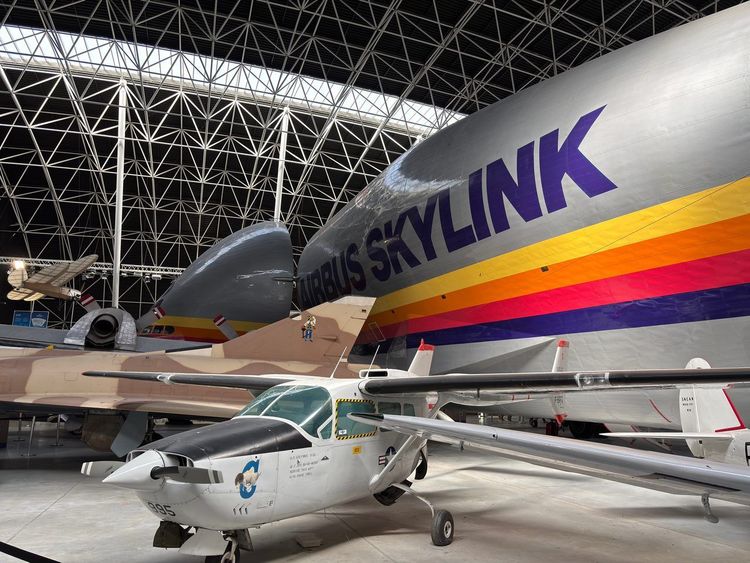
Toulouse is also a world capital of civil aeronautics: Airbus assembles its aircraft here, and this industrial history is told across two complementary museums, located about fifteen kilometres apart.
Aéroscopia (Allée André Turcat, 31700 Blagnac, rated 4.5/5 on Google from 13,868 reviews), opened in January 2015 in Blagnac, next to the Airbus assembly lines, today presents more than 40 aircraft. The hangar's star exhibits can be explored from the inside: one of two Concordes (the other is displayed outside), the A300B F-WUAB in prototype livery, with transparent panels revealing its structure, and the Super Guppy, whose cargo hold hosts a film screening. Going on board completely transforms the visit. With 260,412 visitors in 2025, the museum has far exceeded the 120,000 entries hoped for at opening.
The other site, l'Envol des Pionniers, opened on 22 December 2018 on the former Montaudran runway, in the buildings of the Latécoère factory: the château Petit Espinet-Raynal (the former company headquarters, a listed historic monument), the general warehouse no. 30, where aircraft parts were stored, and the small Radio House, built for Aéropostale communications. The route follows in the footsteps of Mermoz, Guillaumet, and Saint-Exupéry. Don't miss the replica of the Salmson 2A2, the aircraft of Latécoère's first flight to Barcelona, built by enthusiasts and vocational high schools in the region.
Why Toulouse? During the First World War, the industrialist Pierre-Georges Latécoère built aircraft here, then launched postal routes from Montaudran to Spain, Africa, and South America. This ecosystem never left the city.
Allow 2 to 2.5 hours for Aéroscopia. L'Envol des Pionniers pairs more naturally with the nearby Halle de la Machine than with Blagnac.
La Halle de la Machine: the Living Spectacle of Giant Machines
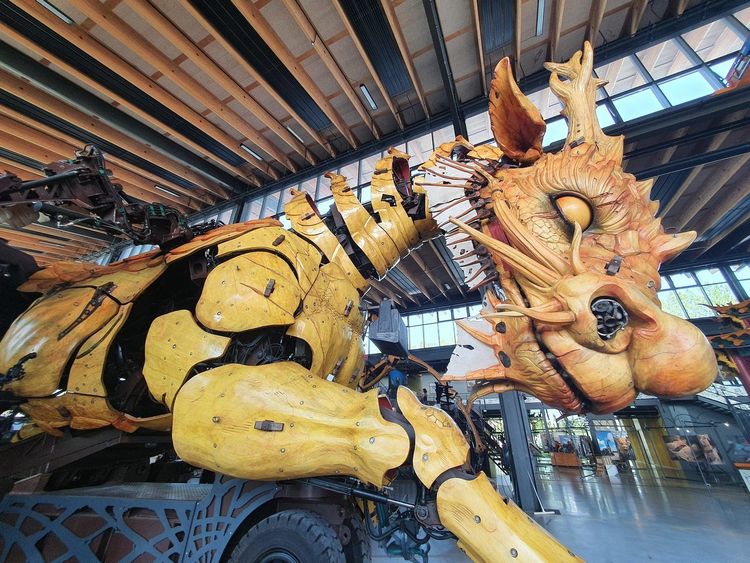
Right next to l'Envol des Pionniers, on the same Montaudran runway, La Halle de la Machine (3 Avenue de l'Aérodrome de Montaudran, 31400 Toulouse, rated 4.5/5 on Google from 10,784 reviews) blends museum and live performance. It houses the creations of the company La Machine, chief among them Astérion, the Minotaur: 47 tonnes and up to 14 metres tall. You can even ride on its back for a journey of around 25 minutes. The giant spider, which strides over trees, lamp posts, and bus shelters during its outings in the city, is also part of the troupe.
Inside the hall, machinists bring the creatures to life in front of the audience and explain their mechanics. A carousel rounds out the experience. It works for all ages: it's one of the most child-friendly museums in Toulouse.
Full-price admission: €12 for the hall visit (around 1h30), €12 for a ride on the Minotaur, €21 for both, €3.50 for the carousel, free for children under 5. The "Piste des Géants" ticket (€20.50) combines the hall and l'Envol des Pionniers: the most logical option for a half-day at Montaudran. Book the rides online — they fill up quickly during school holidays.
Quai des Savoirs: Science and Interactive Culture
Neighbouring the Muséum, the Quai des Savoirs (Allée Matilda, 31000 Toulouse, rated 4.5/5 on Google from 1,758 reviews) is less a traditional museum than a centre for scientific culture: visitors handle, test, and debate. The exhibitions change themes regularly, such as "À l'écoute du vivant", on display from April to November 2026.
The venue is undergoing works to house a new auditorium and the "Agora des Futurs", a space for conferences, debates, and screenings. It closed from 5 January to 20 February 2026 and has since been open Tuesday to Sunday, from 10am to 6pm. In autumn, the "Lumières sur le Quai" festival runs from 17 October to 1 November 2026.
Collection Bemberg, Musée Georges-Labit, and Other Hidden Gems
Beyond the big names, several more intimate museums are worth an hour of your time.
The Collection Bemberg, housed in the magnificent hôtel d'Assézat, brings together around 1,100 works from the 15th to the 20th century, including more than thirty paintings by Pierre Bonnard and works by Lucas Cranach the Elder. Closed in 2020 for renovation, it reopened on 2 February 2024 with more accessible spaces and a refreshed museography. Long known as the Fondation Bemberg, it took the name Collection Bemberg in 2026.
Near the canal du Midi, the musée Georges-Labit (17 Rue du Japon, 31400 Toulouse, rated 4.3/5 on Google from 1,024 reviews) presents collections of Asian arts and ancient Egypt in an orientally inspired villa set in a garden. The musée Paul-Dupuy, dedicated to graphic and decorative arts, completes this municipal network: check opening hours before you visit, as the city's museums are subject to successive renovation works.
Free Museums and Cultural Passes in Toulouse: the Best Deals
Good news for those on a budget: Toulouse's municipal museums, such as the musée des Augustins and the musée Saint-Raymond, are free on the first Sunday of each month, as is Les Abattoirs. It's the perfect opportunity to take in two or three collections in a single day.
For the rest of the year, municipal museums offer reduced rates or free admission for young people and certain groups (job seekers, recipients of minimum social benefits): conditions vary by institution, so keep proof of eligibility with you.
On the pass front, the tourist office sells a Pass Tourisme that grants free entry or discounts at several sites: admission to La Halle de la Machine, for example, drops to €9. The major sites (Cité de l'Espace, Aéroscopia, La Halle de la Machine) each manage their own ticketing, with a few combined options such as the "Piste des Géants" ticket.
Opening Hours, Prices, and Closing Days of Toulouse Museums
Most of Toulouse's public museums close on Mondays. The Muséum and the Quai des Savoirs, for example, open Tuesday to Sunday from 10am to 6pm. Major tourist sites have more flexible schedules, with extended hours during school holidays: check their online calendars.
Budget-wise, a ticket for a municipal museum or the Muséum runs around €9 to €12 at full price, La Halle de la Machine starts at €12, while the Cité de l'Espace, which is a full-day visit, costs considerably more. Discounts for young people, students, and families are common.
Also watch out for annual closures: the Muséum shuts its doors from 1 to 14 September, and several institutions (Augustins, Quai des Savoirs) are subject to ongoing works in 2026. Visiting Toulouse on a Monday? Turn to private or tourist sites — after checking their schedule — rather than the municipal museums.
Planning Your Visit: Neighbourhoods, Duration, and Museums for Children
To make the most of your time, group museums by neighbourhood. The historic centre concentrates the musée des Augustins, the musée Saint-Raymond, the Couvent des Jacobins, and the Collection Bemberg, all within a few minutes' walk of one another. Les Abattoirs, on the left bank in Saint-Cyprien, and the Muséum, botanical garden, and Quai des Savoirs cluster along the allées Jules-Guesde, forming two other groupings. Montaudran (La Halle de la Machine, l'Envol des Pionniers), Blagnac (Aéroscopia), and the Cité de l'Espace each require a dedicated outing. If you're staying near the Capitole, almost all of the historic centre is walkable.
To choose where to base yourself, our article on Toulouse's neighbourhoods helps identify the areas worth exploring. Between collections, the Ryo audio tour of Toulouse takes you through these neighbourhoods over 6.5 km, with 23 audio stories to listen to at your own pace, phone in hand.
With children, four sites stand out: La Halle de la Machine, the Cité de l'Espace, Aéroscopia, and the Muséum (with the Jardins du Muséum in fine weather). These, along with the Quai des Savoirs, are also good options when it rains; our selection of rainy-day activities in Toulouse has more suggestions.
FAQ
What is the most visited museum in Toulouse?
The Cité de l'Espace tops the list with 452,000 visitors in 2024, followed by the Muséum de Toulouse (310,202 visitors in 2025) and Aéroscopia (260,412 visitors in 2025).
Which museums are free in Toulouse?
The municipal museums, including the musée des Augustins and the musée Saint-Raymond, as well as Les Abattoirs, are free on the first Sunday of each month. Free admission is also available year-round for certain visitors, depending on the institution.
How many museums does Toulouse have?
Toulouse has around twenty museums and permanent exhibition venues: art and archaeology museums, science sites, and aeronautical museums spread across several neighbourhoods.
Which museums should I visit in Toulouse with children?
La Halle de la Machine, the Cité de l'Espace, Aéroscopia, and the Muséum de Toulouse are the most family-friendly, offering animated machines, aircraft to explore from the inside, and natural history collections.
What day are Toulouse museums closed?
Most public museums close on Mondays, including the Muséum and the Quai des Savoirs. The Muséum also closes from 1 to 14 September. Major tourist sites have their own schedules, which should be checked online.
Is there a pass for visiting several museums in Toulouse?
Yes: the tourist office's Pass Tourisme grants access to free entry or reduced rates at several sites. At Montaudran, the "Piste des Géants" ticket (€20.50) combines La Halle de la Machine and l'Envol des Pionniers.
Romanesque art, Roman busts, contemporary art, natural sciences, space exploration, and the Aéropostale saga: Toulouse's museums tell the story of a city far richer than its pink-brick façade. It's hard to see everything in one stay — choose two or three sites that truly speak to you.
And to make sense of the façades you pass between visits, launch the Ryo audio tour of Toulouse: 23 audio tracks, 2h40 of walking, and the story of the Pink City told street by street.
À lire également