© Shutterstock
 Votre guide Ryo
Tours Neighborhoods: the Complete Guide to Finding Your Way Around in 2026
Understanding the neighborhoods of Tours means accepting that a single street can change its character in under five minutes on foot. Walking from the half-timbered façades of le Vieux-Tours to the renovated housing blocks of le Sanitas means crossing several decades of urban history without leaving the same postal district. The neighborhoods of Tours each tell a different side of the city: the bourgeois grandeur of Prébendes-Béranger, the working-class diversity of le Sanitas, the business dynamism of Grammont, and the village life that persists in La Tranchée, on the other side of the Loire.
Whether you're looking for a place to stay for a weekend, somewhere to settle more permanently, or simply want to understand the geography of this city of around 140,000 inhabitants, this guide covers the main neighborhoods, their real atmosphere, and those most often mentioned when people talk about neighborhoods in Tours to avoid. Before heading out to explore the streets, take a look at the Ryo audio guide for Tours: it passes through several of these neighborhoods and gives you an initial sonic reference point before exploring on foot.
Le Vieux-Tours and Its Historic Center
The tourist heart of the city fits within a triangle of a few hundred meters, yet it concentrates most of what has made Tours famous. Here, half-timbered houses dating from the 15th century stand alongside bars and restaurants that keep the neighborhood lively long after the shops have closed.
Everything revolves around place Plumereau, nicknamed 'place Plum'' by locals. The square literally changes its crowd depending on the time of day: market stalls and quiet terraces in the morning, students and groups of friends from 7 p.m. onwards. The half-timbered façades surrounding it, some leaning at spectacular angles, are among the best preserved in the Centre-Val de Loire region.
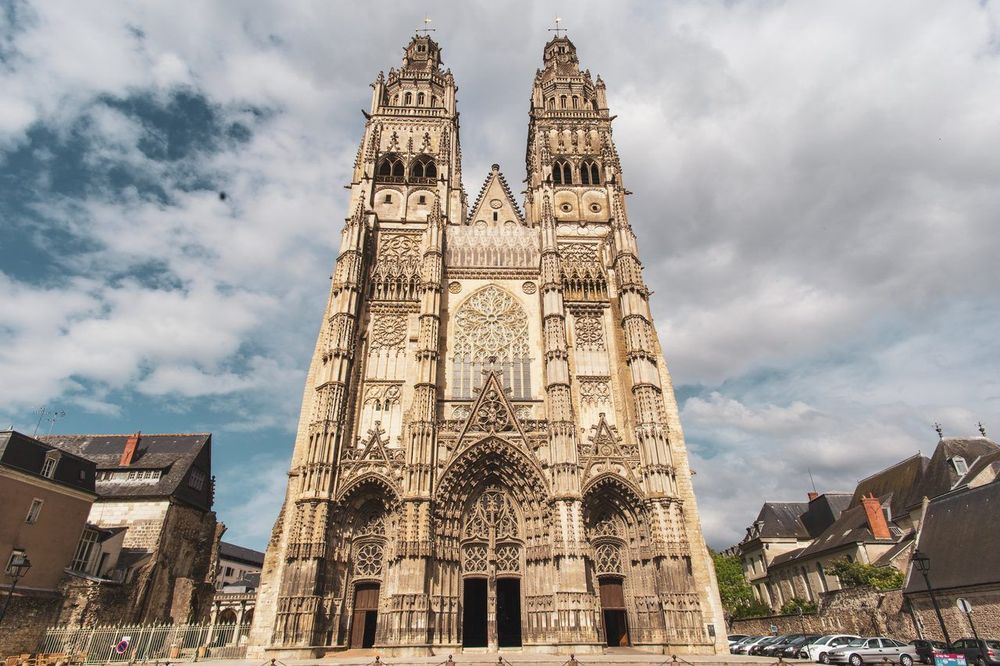
Five minutes' walk away, the cathédrale Saint-Gatien rises with its two Flamboyant Gothic towers and stained-glass windows, some dating back to the 13th century. Just behind it, the cloître de la Psalette is worth a peaceful detour, often overlooked by visitors in a hurry.
Heading west, the basilique Saint-Martin houses the tomb of Saint Martin de Tours, one of the oldest pilgrimage sites in France. Its neo-Byzantine silhouette, completed in 1924, deliberately contrasts with the Gothic style of the cathedral. If you can only visit one neighborhood in a day, this one remains the most heritage-dense per square meter walked.
Prébendes-Béranger, the Elegance of the 19th Century
A completely different atmosphere awaits just a few streets away. The Prébendes-Béranger neighborhood developed at the end of the 19th century around an English-style park, with bourgeois tuffeau stone buildings and tree-lined avenues that contrast sharply with the density of le Vieux-Tours.
The jardin des Prébendes is its center of gravity: a pond, black swans, a bandstand and a variety of tree species planted when the park was first laid out. It is also one of the rare spots in the city where you hear the wind in the leaves more than the traffic.
This neighborhood attracts mainly settled families and working professionals who commute to the train station, ten minutes on foot. Property prices per square meter are among the highest in the city, making it rarely an option for a tight budget, but an obvious choice if you want peace and quiet without straying from the center.
Grammont, the Neighborhood That Runs on Business
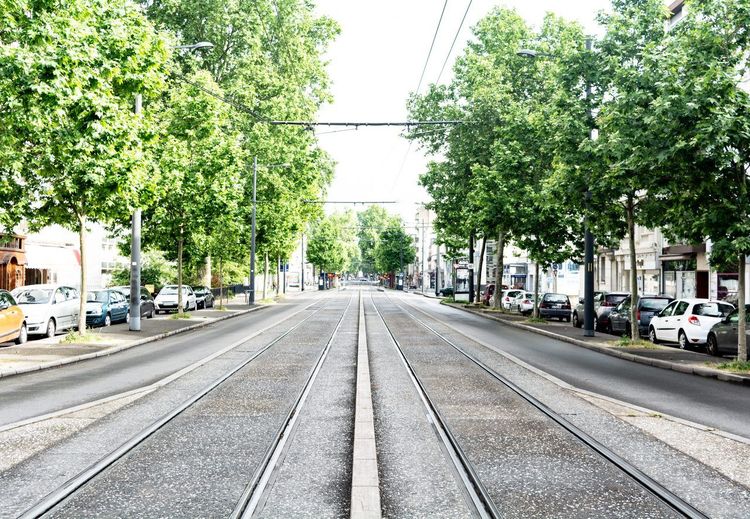
Located to the southeast, Grammont has established itself as a major tertiary hub for the wider urban area. The Grammont neighborhood is home to company headquarters, retail outlets and major road arteries that drive the local economy far more than tourism does. The Vinci convention center is located further north, next to the train station, but it is the avenue de Grammont that truly defines this southeastern economic hub.
On weekdays, activity here is intense between 8 a.m. and 7 p.m.: full car parks, business restaurants, a constant flow of traffic heading south. At weekends, however, the streets empty out almost entirely — a contrast that often surprises newcomers. If you're staying here for a business trip, everything is designed for efficiency. If you're looking for the charm of a neighborhood that buzzes at all hours, this is clearly not the right address.
Le Sanitas, the Major Urban Renewal Project
Built in the 1960s to quickly house a rapidly growing population, the Sanitas neighborhood is today at the heart of a major urban renewal program (NPNRU). It is most often described as a working-class neighborhood, but it has changed considerably in appearance over the past ten years.
Some tower blocks have been demolished, others renovated, and new public facilities — a media library, schools, sports areas — have been built. The diversity of the population here is more pronounced than elsewhere in Tours, with a dense network of community organizations and a neighborhood market that remains a weekly meeting point.
Le Sanitas still carries something of a reputation, fueled by isolated incidents widely covered by the local press. In practice, it is a neighborhood that is visibly transforming, with rents noticeably more affordable than the rest of the city. For a visitor passing through, there is no particular reason to avoid it during the day; it is above all a useful case study for understanding French urban renewal policies.
Europe, the Northern Face in Full Transformation
Just north of the train station, the Europe neighborhood is also undergoing rapid change. Formerly a zone of warehouses and disused railway land, it now hosts office developments, student residences and new housing served by the tram line.
The Europe neighborhood does not yet have the established identity of le Vieux-Tours or Grammont: it is a permanent construction site, with its cranes and hoardings, but also its first businesses beginning to move in. One to watch rather than visit right now, unless you have an interest in urban development in motion.
Velpeau and Bretonneau, the Hospital Neighborhood
Around the CHU Bretonneau and the faculty of medicine, this area remains primarily residential and functional. It is home to a large number of healthcare students, medical staff and families who value the immediate proximity of care.
There is nothing exceptional here for a tourist, but the neighborhood plays a real role in the city's overall balance: moderate rents, frequent buses to the center, and a noticeably calmer atmosphere than Grammont or the historic center. Boulevard Tonnellé and the surrounding streets are lined with small shops, pharmacies and cafés geared toward the daily lives of local residents, far from the tourist bustle.
Tours-Nord, Quiet Life Beyond the Loire
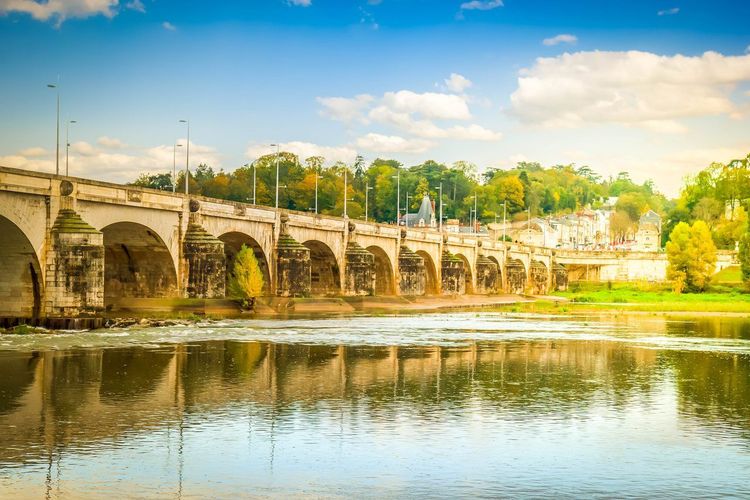
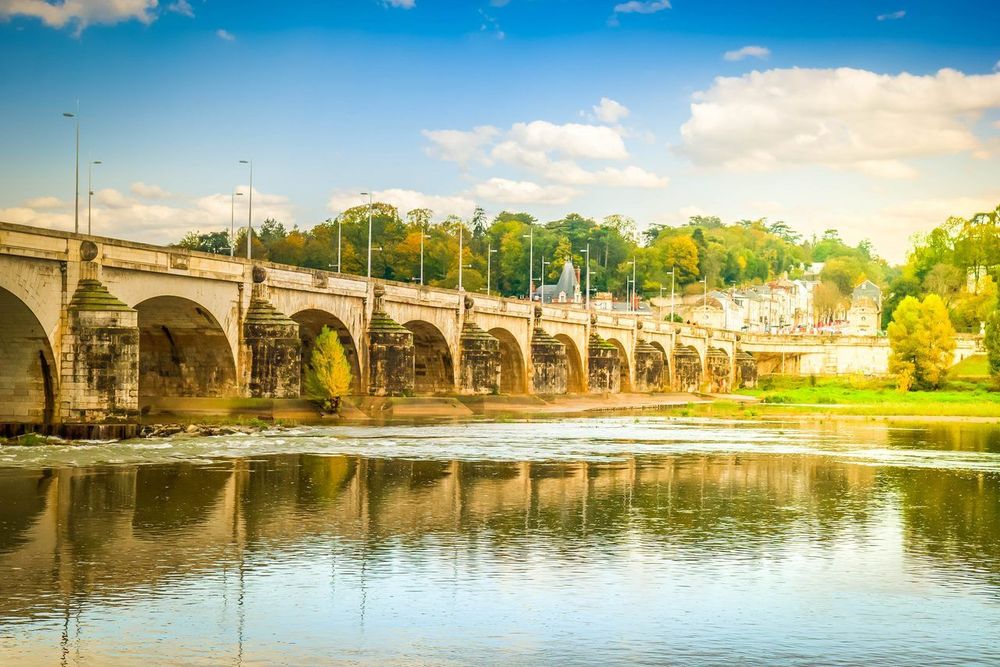
Cross the pont Wilson and you almost enter a different city. Tours-Nord brings together former villages absorbed by the city over the course of the 20th century, such as Saint-Symphorien and Sainte-Radegonde, which have retained a strong residential identity, alongside more recent developments like the Monconseil district.
Detached houses are more common here than south of the Loire, property prices are more accessible, and the pace is noticeably slower. Many families from Tours make this choice precisely to step back from the bustle of the center while remaining ten minutes by car from the cathedral. If your stay in Tours extends beyond a simple weekend and you want to push your exploration into the Touraine countryside, the road trip to the châteaux de la Loire extends the walk naturally from this side of the city, much as The Little Paris audio-guided tour does through the historic centre on the opposite bank.
Beaujardin and the Rives du Cher, the Green Breathing Space
To the south, along the river, the Beaujardin area and the Rives du Cher offer the city a breath of fresh air. Walking paths, outdoor sports facilities and seasonal riverside bars bring the riverbanks to life as soon as fine weather arrives.
It is a fairly family-oriented neighborhood, less dense than the center, where children ride bikes on paths far wider than anywhere else in the city. People rarely come here for the built heritage, but often to breathe, run or picnic on a Sunday. In fine weather, the riverside bars along the Cher become a rallying point for local families, and the cycle paths that follow the river allow you to reach the center without ever encountering a car.
La Tranchée, the Former Village That Stayed True to Itself
Absorbed into Tours in 1964 along with the neighboring commune of Saint-Symphorien, La Tranchée long retained the feel of an independent town, and that village spirit lives on along its main avenue, lined with local shops and lower-rise buildings than elsewhere in the city.
You mainly come across long-standing residents here, attached to their bakeries, cafés and neighborhood market. Served by the tram line running north through the urban area, La Tranchée offers an appreciated compromise: the tranquility of a former village and direct access to the center in around ten minutes. It is the kind of area where people settle for the community spirit rather than the monuments.
The Tours Neighborhood Map: Getting Your Bearings
The geography of Tours is fairly easy to read once you have identified the two rivers that frame it. The Loire separates the historic center, to the south, from Tours-Nord; the Cher closes off the city to the south, near Beaujardin and the Rives du Cher.
Between the two, running roughly from west to east, you find: le Vieux-Tours and the historic city center, Prébendes-Béranger, Velpeau-Bretonneau, and then Grammont further east. Le Sanitas and Europe lie north of the center, on either side of the railway lines, before reaching the bridge that leads to Tours-Nord. For a first visit, keeping this two-axis logic in mind — north/south of the Loire, east/west of the center — is more than enough to find your way without constantly consulting a map.
Which Neighborhoods in Tours Should Be Avoided?
The search query 'neighborhoods in Tours to avoid' comes up frequently, and the honest answer is a nuanced one. Tours remains a medium-sized city, regularly ranked among French cities where the sense of personal safety is reasonable, with no area that should genuinely be ruled out in all circumstances.
Le Sanitas and, to a lesser extent, certain streets around the train station account for most of the incidents covered by the local press, particularly at night or on weekends. These remain isolated and concentrated in a handful of streets, not generalizable to the neighborhood as a whole. The common-sense caution that applies to any train station at night, in any French city, applies here too.
For a visitor or a newcomer, it is better to think in terms of time of day rather than entire neighborhoods: the deserted commercial streets of Grammont in the evening, the immediate surroundings of the train station after midnight, or certain poorly lit paths in le Sanitas warrant ordinary vigilance. Nothing that justifies crossing an entire neighborhood off the map.
Where to Stay in Tours Based on Your Profile
The choice of the best neighborhoods in Tours depends almost entirely on what you are looking for. For a first tourist stay, the city center between le Vieux-Tours and the cathedral is hard to beat: everything is walkable, restaurants close late, and the audio-guided tour of Tours literally starts from this area.
If you are traveling for work, Grammont or hotels close to the train station simplify journeys to business zones. Families considering a longer stay tend to look toward Tours-Nord or Beaujardin for the space and calm, while those who appreciate heritage and upmarket tranquility gravitate toward Prébendes-Béranger.
Looking for concrete ideas once you have chosen your neighborhood? The top 7 things to do in Tours complements this guide well for building a first itinerary, neighborhood by neighborhood.



FAQ
Which is the most central neighborhood in Tours?
Le Vieux-Tours, around place Plumereau and the cathédrale Saint-Gatien, forms the historic and tourist heart of the city. It is also the area with the highest concentration of shops, bars and restaurants.
What are the best neighborhoods in Tours for tourists?
For a first stay, le Vieux-Tours and the cathedral district remain the most practical: everything is within walking distance. Prébendes-Béranger suits those looking for more peace and quiet without straying far from the center.
Is le Sanitas a safe neighborhood today?
Le Sanitas has been the subject of an active urban renewal program for several years. During the day, there is no particular reason to avoid it; the usual caution applies mainly in the evening, as in most large French housing estates.
Which neighborhoods in Tours should be avoided at night?
No neighborhood should be ruled out entirely, but the immediate surroundings of the train station after midnight and certain quiet streets in le Sanitas warrant ordinary vigilance, without overstating the matter.
Where is the Grammont neighborhood in relation to the city center?
Grammont lies to the southeast of the city center, about fifteen to twenty minutes on foot or a few minutes by public transport. It is a major business hub for the wider urban area.
How do you find your way around the Tours neighborhood map?
The simplest landmark is the Loire, which separates the historic center from Tours-Nord, and the Cher, which closes off the city to the south near Beaujardin. Between the two lie the center, Prébendes, Grammont, le Sanitas and Europe.
In the end, the neighborhoods of Tours form less a list than a gradient, from the quiet bourgeois atmosphere of Prébendes to the working-class district in full transformation that is le Sanitas, by way of the discreet business world of Grammont and the village feel of La Tranchée. None needs to be 'the best': each serves a different purpose, from a discovery weekend to a long-term move. If the idea of exploring a city neighborhood by neighborhood appeals to you, the exercise works elsewhere too: the audio-guided tour of Buenos Aires offers a walk through its finest districts on the same principle. For Tours, the simplest thing is still to launch the Ryo audio guide and let the streets do the rest.
À lire également