© Shutterstock
 Votre guide Ryo
Visiting Tours in 3 Days: Complete Itinerary in the Val de Loire (2026)
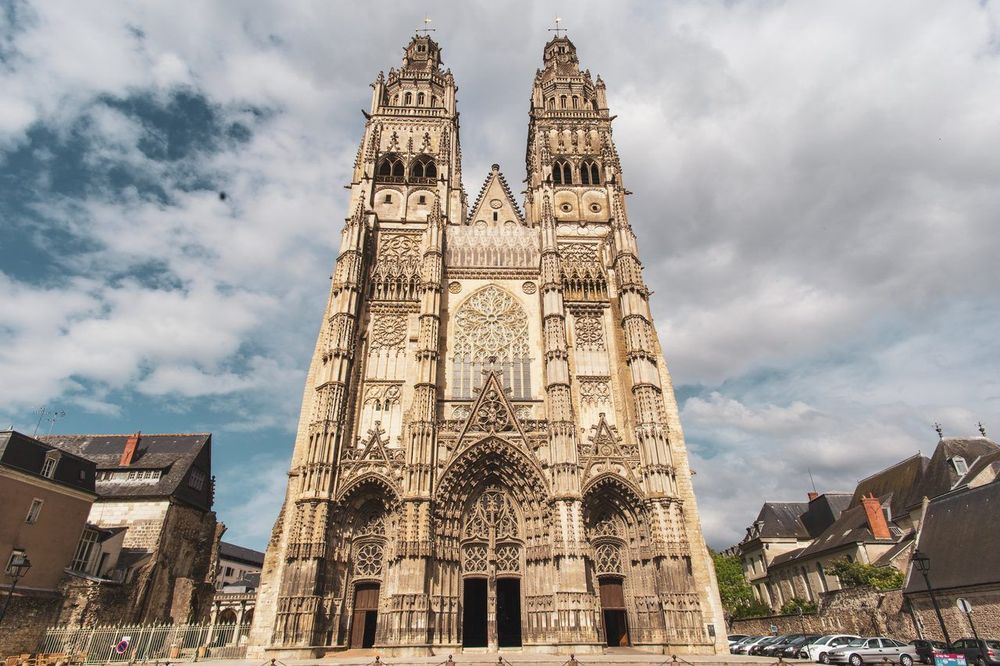
On the first morning, the raking light on the twin towers of Saint-Gatien Cathedral is enough to understand why locals nickname their city "the Little Paris." To visit Tours in 3 days, you need to embrace a particular rhythm: the city itself can be explored on foot in a full day, but each neighborhood opens a door to the outside world — Loire châteaux, Vouvray vineyards, villages listed among the most beautiful in France.
This itinerary is organized around three packed days in the city center, supplemented by ideas for when the urge to venture beyond the ramparts takes hold: the Renaissance kitchen garden at Château de Villandry by bike, an unlikely Compagnonnage museum tucked inside a former abbey, a tasting at a Vouvray winemaker who welcomes drop-ins, or a riverside guinguette on the banks of the Cher at Savonnières. The Ryo audio guide for Tours (23 audio tracks, approximately 2 hours of guided walking over 5.4 km) serves as the backbone for exploring the Vieux Tours without getting lost in the maze of half-timbered alleyways; we will return to it several times throughout this guide. Three days is the format that lets you see everything without rushing, with room to spare for a day trip to Amboise or an afternoon with your feet in the water.
Day 1 in Tours: Saint-Gatien Cathedral and the Historic Heart of the Vieux Tours
Dedicate this first day to the historic center: everything can be done on foot, with no need for a car or bike.
Morning: Saint-Gatien Cathedral and the Cathedral Quarter
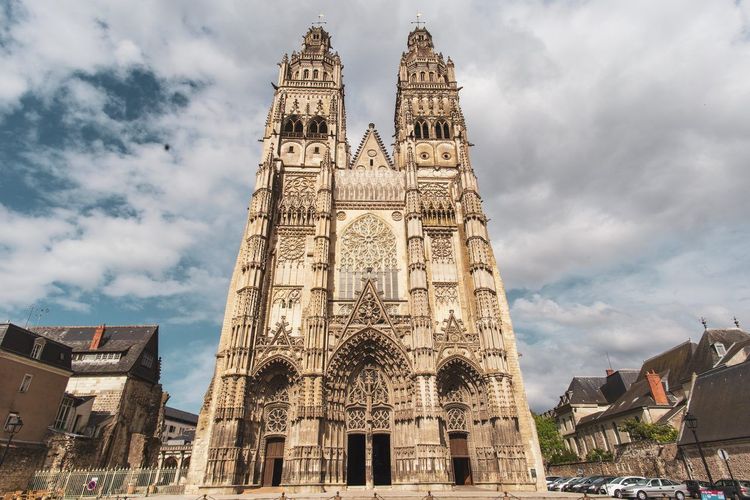
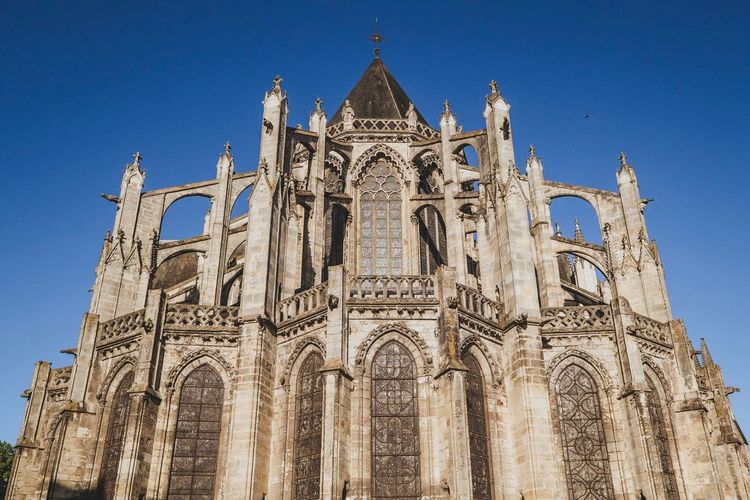
Saint-Gatien Cathedral dominates the eastern part of the city center with its two towers rising nearly 70 meters, one still Gothic, the other already marked by the Renaissance: a gap of several centuries of construction, between the 13th and 16th centuries, that can be read directly on the façade without any explanation. Inside, the 13th-century stained-glass windows rank among the finest in the Loire Valley, with a deep blue typical of the workshops of the period.
Just behind, the Cloître de la Psalette (paid entry, included in the Tours City Pass) is worth a twenty-minute detour: Gothic galleries, a Renaissance spiral staircase, and a surprising calm just a few meters from the cathedral. Arrive before 10:30 a.m. if you want to photograph the façade without the groups that arrive late in the morning.
The cathedral quarter that surrounds the building blends canons' houses, Gallo-Roman remains, and a small shaded square. It is one of the most historically dense neighborhoods to visit in Tours per square meter: the curve of the old Roman amphitheater can still be traced in the layout of the streets, right next to the Fine Arts Museum. A guided tour of the Vieux Tours, offered by the tourist office and included in the City Pass, often starts from this area and helps place these layers in chronological order. If you are unsure which neighborhood to focus on, the Ryo article on the neighborhoods of Tours details what each one offers for a short stay.
Allow two hours for this first block if you enter the cathedral and the cloister. Without a ticket, a little under an hour is enough for the exterior and a stroll through the adjacent streets, rue Racine and rue Manceau, where a few half-timbered façades already hint at the atmosphere of the Vieux Tours.
Locals say that the cathedral's north tower, completed nearly three centuries after the start of construction, required the invention of new stone-cutting techniques with each generation of builders. The result is an unapologetically eclectic mix of styles, unlike other cathedrals that were standardized after the fact. If you are traveling with children, the game is to spot, façade by façade, exactly where the style changes: they usually find it faster than the adults.
Afternoon: Vieux Tours, Place Plumereau, and Renaissance Mansions
The afternoon shifts to an entirely different register: the Vieux Tours, a pedestrian quarter of half-timbered houses, stretches between the cathedral and the Loire along a grid of medieval alleyways. Place Plumereau, the beating heart of the neighborhood, concentrates the city's most photographed façades, with half-timbered frames dating back in some cases to the 15th century. On weekdays, the square lends itself to a quiet terrace break; on weekends, it takes on a different character in the late afternoon with the student crowd.
A five-minute walk away, on rue du Commerce, the Hôtel Goüin (25 Rue du Commerce, 37000 Tours, rated 4.5/5 on Google with 562 reviews) is one of the few Renaissance mansions still visible from the street in Tours: a façade decorated with medallions and pilasters, and a turbulent history, as the building was severely damaged in the fire of June 1940 before being restored. It is open to visitors according to its exhibition schedule and is among the ten sites included in the Tours City Pass. The façade alone gives a clear sense of what Tours looked like during the Renaissance, when the French court regularly stayed here under Louis XI and Charles VIII.
To visit Tours on foot without getting lost, remember three axes: rue Colbert (from the cathedral quarter toward the Loire), rue Briçonnet (one of the oldest streets, lined with medieval houses), and place Plumereau as the central hub. These three axes concentrate most of the medieval and Renaissance heritage and can be explored comfortably in an afternoon. If you prefer a guided tour of the Vieux Tours rather than exploring independently, the tourist office offers regular time slots during the season, usually in the late morning.
End the day on the Loire riverbanks, a ten-minute walk from place Plumereau: the river, still largely free from urban development, offers a sharp contrast with the density of the historic center.
For dinner, place Plumereau and the surrounding streets concentrate a good portion of the city center's bistronomy scene, but avoid the terraces directly on the square if you are looking for quiet and quality: head instead to the small adjacent streets, rue du Grand Marché or rue de la Rôtisserie, where a few more discreet tables serve refined local cuisine without the tourist queue. It is also the ideal moment to sample the first local specialties before exploring them in more detail later in this guide. The audio-guided tour will already have taken you past Saint-Gatien Cathedral and the Loire riverside earlier in the day, making this dinner stop a fitting close.
Day 2 in Tours: Château de Villandry and the Loire Riverbanks by Bike
Second day, change of scenery: head out into the Touraine countryside for one of the finest gardens in France, then return to Tours along the water.
Morning: Château and Gardens of Villandry
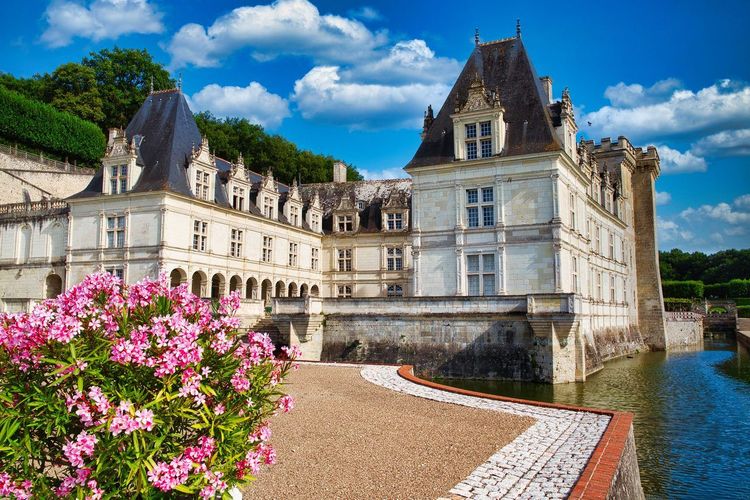
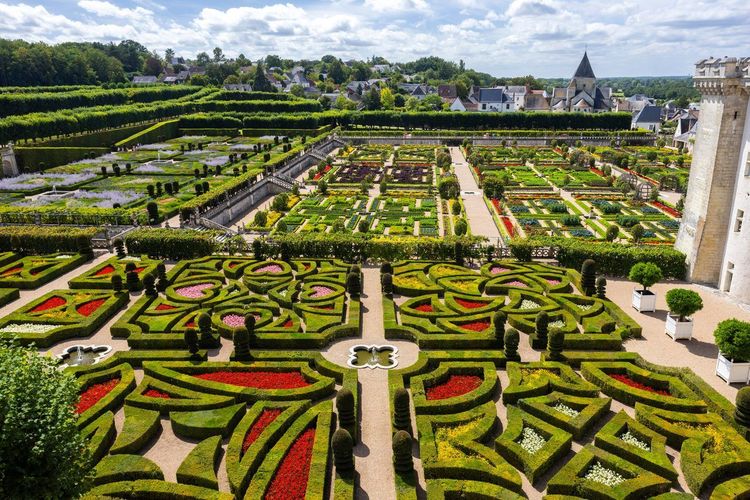
About fifteen kilometers west of Tours, the Château and Gardens of Villandry play in a different league from the other great Loire châteaux: here, it is the gardens that steal the show from the building. The Renaissance kitchen garden, recreated in the early 20th century by Joachim Carvallo, arranges cabbages, leeks, and roses in colorful checkerboard patterns, with a complete replanting twice a year, within a garden complex covering several terraced hectares. Climb up to the belvedere to take in the full geometry of the parterres in a single glance — a viewpoint that many hurried visitors miss by staying at ground level.
The château itself, built in the 16th century on the foundations of a medieval fortress, takes about an hour to visit: period furniture, a Mudéjar ceiling brought from Spain, and a bird's-eye view over the gardens from the upper floors that alone makes the climb worthwhile. Allow a full half-day, gardens and château combined, with a stop at the water garden, cooler and less crowded than the kitchen garden in the summer heat. Good news for your budget: entry to the estate is covered by the Tours City Pass.
Villandry is also one of the few great Loire châteaux to have remained in the hands of the same family since Carvallo bought it over a century ago, which explains the meticulous upkeep of the gardens to this day. Bring a hat and water in summer: the kitchen garden offers little shade in the middle of the day, unlike the water garden and the small woodland bordering the estate.
For the bike ride to Château de Villandry, the Loire à Vélo (EuroVelo 6 cycling route) follows the river and then turns toward the Cher: allow 1h15 to 1h30 each way, on a generally flat and well-signposted route that is manageable for families with experienced children. Several bike rental shops in the Tours city center offer electric-assist bikes for the day, and the City Pass already includes one day of bike rental — just enough to cover this excursion. Book the day before in high season: stock runs out quickly on weekends.
Afternoon: Loire Riverbanks by Bike or Boat, Stop at Savonnières
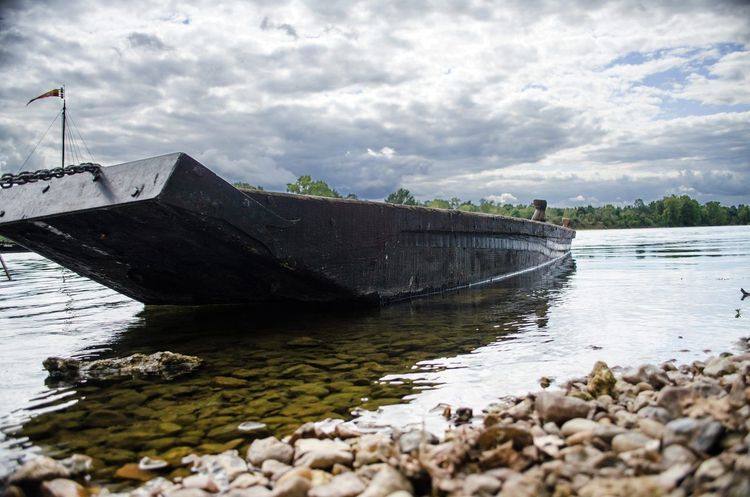
The afternoon lends itself to two options depending on your remaining energy: continuing by bike along the Loire riverbanks, or opting for a boat trip on the Loire or the Cher. Traditional gabares and toues, flat-bottomed boats designed to navigate a shallow and ever-changing river, offer outings of about an hour departing from several points between Tours and Villandry. It is a radically different way to take in the landscape, right at water level, without the kilometers in your legs.
On the way back, plan a stop at the village of Savonnières and its guinguette, set directly on the banks of the Cher. It serves local sharing platters and Touraine wines at reasonable prices, in a relaxed atmosphere quite removed from the morning's heritage tourism. The village also has some remarkable petrifying caves, where calcareous water slowly coats various objects with a mineral film: a geological curiosity that particularly appeals to children.
If you are not comfortable cycling, a Tours–Villandry–Savonnières round trip also works well by car (about 25 minutes from the center) or by combining bus and taxi for the château leg. For those who prefer to coordinate everything in advance, the Ryo article on Château de Villandry and its gardens details seasonal opening hours and combined château-plus-gardens pricing.
Return to Tours in the late afternoon: the city's quays, near pont Wilson, offer a lovely view of the sunset over the Loire, a ten-minute walk from place Plumereau.
Day 3 in Tours: Museums, Street Art, and Secret Gardens
This third day steps away from façades and focuses on collections and urban nature — a slower pace after two packed days.
Morning: Fine Arts Museum and Compagnonnage Museum
Housed in the former archbishop's palace of Tours, right next to the cathedral, the Musée des Beaux-Arts de Tours holds collections spanning from the Middle Ages to the 20th century, with two panels by Andrea Mantegna among its most admired pieces. The garden, with its two-hundred-year-old cedar of Lebanon and Fritz, the circus elephant that died in Tours in 1902 and was then taxidermied, becoming almost a symbol of the museum, is worth a visit in its own right. Allow an hour and a half for an unhurried visit.
A ten-minute walk away, the Musée du Compagnonnage occupies the former convent rooms of the Abbaye Saint-Julien and presents a heritage unique in France: masterpieces created by compagnons on their Tour de France, from seemingly impossible staircase models to cabinetwork of breathtaking precision. It is the kind of museum you enter without expectations and leave often surprised by the virtuosity of certain pieces, particularly the miniature timber-frame models that took their makers months to complete. The setting itself — with its medieval rooms and exposed timber roof — contributes to the experience.
Both museums are among the ten sites included in the Tours City Pass, making the morning free of charge if you purchased the pass the day before. The Abbaye Saint-Julien, which houses the Compagnonnage Museum, has retained its vaulted cellar in the basement, long occupied by the Touraine wine museum: the space is no longer systematically open to visitors, but the monastic complex can still be read perfectly from rue Nationale and the adjoining garden.
The two museums combine well in a single morning if you walk at a moderate pace between them. If you have to choose, prioritize the Compagnonnage for its originality: it is an experience found in no other major French city, unlike the fine arts museum, which is more conventional in its genre.
Afternoon: Street Art, Prieuré Saint-Cosme, and Jardin des Prébendes d'Oé
The street art trail in the city center of Tours has developed over the past decade or so on the gable walls and hoardings of the Velpeau district and the area around the train station: monumental murals, large-format portraits, some politically engaged works. Commissions regularly brought in from outside artists renew part of the offering, which gives a good reason to pass through Tours again from one visit to the next. Allow about an hour of walking to spot the main works, with no fixed route imposed: the ideal is to get deliberately lost in the small streets around place Velpeau.
If you are traveling with teenagers who are less enthused by museums, this contemporary facet of the visit often works better at capturing their attention than the morning's classical collections. Bring your phone: several works lend themselves particularly well to photography in the late afternoon, when raking light brings out the relief of the murals.
About twenty minutes away by tram and then on foot, Prieuré Saint-Cosme, in La Riche, is worth the trip for its unique atmosphere: Romanesque ruins draped in rose gardens, and above all the house where the poet Ronsard spent his final years and is buried. The site has a quiet romanticism, far from the bustle of the city center, with contemporary gardens that extend the ruins. It is an ideal stop to close out a stay gently, particularly appreciated in the late afternoon when the light grazes the stones of the ruined cloister.
If you prefer to stay in the city center, the Jardin des Prébendes d'Oé (Boulevard Béranger, 37000 Tours, rated 4.6/5 on Google with 2,960 reviews), with its English-style landscaping, swans, and bandstand, plays the same role of a green pause just a short distance from the main thoroughfares. The Jardin Botanique de Tours, the city's oldest public garden, rounds out the options with its greenhouses and small free-access animal park, a popular choice for families at the end of the day. Between the two, it is hard to go wrong: both are accessible on foot or by a few minutes on the tram from the center.
Loire Châteaux and the Most Beautiful Villages Around Tours
If your stay extends beyond three days, or if you prefer to swap a half-day in the city for an excursion, two routes naturally suggest themselves around Tours.
Amboise and Azay-le-Rideau, Two Must-Sees Less than an Hour Away
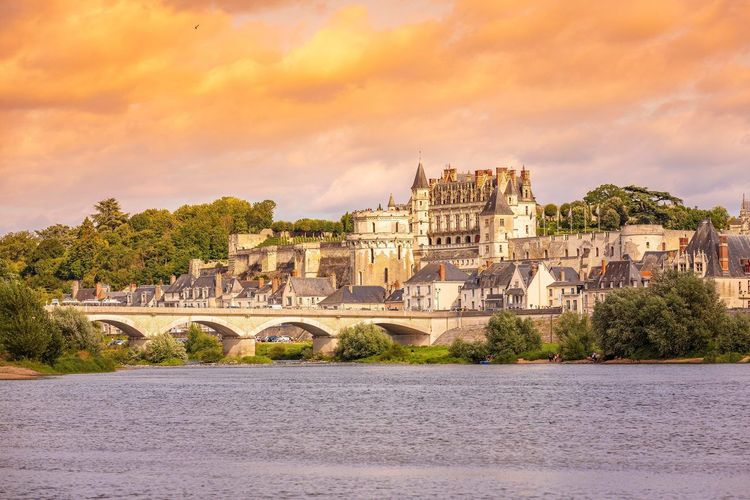
Among the Loire châteaux nearby Tours, two stand out clearly for a day trip. Château d'Amboise, about thirty minutes' drive to the east, overlooks the town from a rocky spur and houses the Chapelle Saint-Hubert where Leonardo da Vinci rests, having died nearby at the Clos Lucé, where he spent his final years at the invitation of François I. A visit to the château pairs naturally with a stop at the Clos Lucé, whose park displays full-scale models of Leonardo's inventions, a visit that appeals as much to children as to adults.
In the opposite direction, about thirty minutes to the southwest, Château d'Azay-le-Rideau (19 Rue Balzac, 37190 Azay-le-Rideau, rated 4.6/5 on Google with 18,045 reviews) plays a different card: set literally on the water, in the middle of a branch of the Indre turned into a mirror, it is probably the most photogenic château in the region at the golden hour. Its entry, like Villandry, is covered by the Tours City Pass, which changes the calculation considerably if you plan to visit both. A visit to Château d'Amboise or Château d'Azay-le-Rideau takes about half a day each, château plus associated village, making it difficult to combine both on the same day without rushing. If you have to choose, Azay-le-Rideau wins for its architecture, Amboise for its history and the atmosphere of a lively small town.
The Most Beautiful Villages of Touraine Candes-Saint-Martin, at the confluence of the Loire and the Vienne, is worth a detour for its fortified collegiate church and the panorama from the heights of the village, about 45 minutes from Tours. Crissay-sur-Manse, more off the beaten path, lines its tuffeau stone houses and the ruins of its château in a valley still sheltered from mass tourism, away from the main roads.
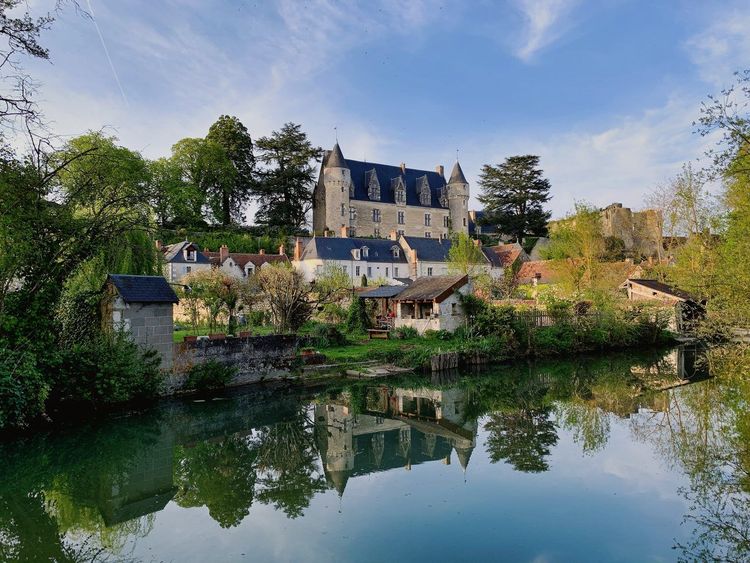
A third village deserves a mention: Montrésor, on the border of Berry, where a château built on a medieval fortress overlooks a remarkably homogeneous tuffeau stone village. Further away (about 1 hour by road), it is better suited to a dedicated excursion than to being combined with Candes-Saint-Martin or Crissay-sur-Manse on the same day. Garden enthusiasts will also appreciate the landscaped promenade at the foot of the château, along the Indrois river.
To explore the beautiful surrounding villages without multiplying transfers, a one-day driving loop can link two or three of these villages with a château along the way. The Ryo article on the most beautiful villages around Tours offers a detailed itinerary, as does the road trip Les Châteaux de la Loire, which covers the entire valley over several days for travelers who want to extend the experience beyond Tours.
If you only have half a day for this excursion, focus on a single château paired with a village: Azay-le-Rideau and its town can be visited together in three hours, as can Amboise and its steep alleyways climbing toward the château. Rent a car rather than relying on public transport for this part of the stay: connections between villages are infrequent outside of direct trains to Amboise. A picnic put together in the morning at the Halles de Tours remains a simple option for a quick lunch between two visits, without depending on restaurant hours in the middle of the countryside.
Vouvray and Montlouis-sur-Loire Vineyards: Wine Tastings in Touraine
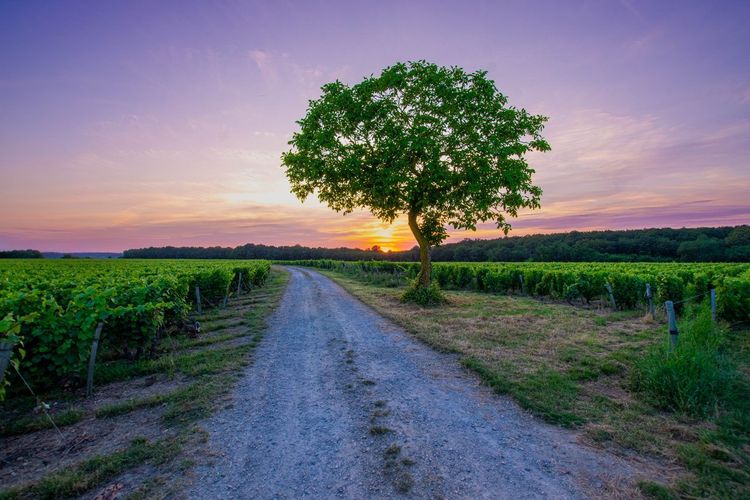
Just ten minutes from the center of Tours, on the north bank of the Loire, the Vouvray appellation spreads across tuffeau hillsides riddled with hundreds of troglodyte caves. Exploring the Vouvray vineyards also means understanding why chenin blanc finds one of its finest terroirs in France here: this same appellation produces dry wines, sweet wines, and sparkling wines alike, a versatility rare enough to frequently surprise first-time visitors to the region.
Across the river, on the south bank, the Montlouis-sur-Loire appellation (37270 Montlouis-sur-Loire) cultivates a more discreet identity but one of equal quality, with family-run estates that welcome visitors warmly, often without an appointment on weekdays. A Vouvray or Montlouis AOC wine tasting typically lasts 45 minutes to an hour, often free or for a nominal fee deducted on purchase, and frequently ends with a descent into the caves carved directly into the rock, cool year-round, where the bottles age. The Tours City Pass also includes a guided visit with tasting at the Vouvray cave, a good entry point if you know nothing about the subject.
For a more in-depth meeting with a local winemaker, several estates offer guided vineyard tours in addition to tastings, with explanations of the winemaking methods specific to chenin blanc. It is often the occasion to hear about the late April frosts, the number one enemy of Loire Valley winemakers in recent years, and to understand why certain vintages fetch considerably higher prices despite equivalent terroir quality.
A half-day excursion into the vineyard combines easily with a visit to Vouvray itself, a charming wine village in its own right, or with a return to Tours along the Loire by bike. If you only have a morning, focus on a single estate rather than chasing several tastings: the quality of the exchange with the winemaker is worth more than the quantity of glasses sampled.
Where to Stay in Tours and How to Get Around

Your choice of neighborhood has a significant impact on the comfort of your stay, especially if you are traveling without a car.
Where to Stay: City Center, Tours-Centre Station, or Loire Riverfront
For where to stay in Tours, three areas stand out. The historic center, around place Plumereau and the Vieux Tours, puts everything within walking distance but can be noisy on weekends due to the student scene and late-night terraces. The train station district, ten minutes' walk from place Plumereau, offers a practical compromise for those arriving by rail and wanting to minimize transfers at the start and end of their stay, with a varied range of hotels from budget to charming boutique.
Accommodations along the Loire riverfront, particularly on the north bank, are appealing for their views and relative calm, at the cost of a slightly longer walk to the main Vieux Tours sites. The best place to stay in Tours depends above all on your mode of transport: without a car, stay within a 15-minute walk of the historic center; with a car, a peripheral accommodation with free parking can make a real difference to the overall trip budget.
Getting Around Tours: Tram, Bike, and Parking
For getting around Tours, the city center is entirely walkable: the main sites of the Vieux Tours, the cathedral, and the Plumereau quarter all fall within a 15-to-20-minute walking radius. The Fil Bleu network, with its tram running north to south through the urban area, is a useful supplement for reaching the train station or outlying neighborhoods like the botanical garden. A single ticket costs under two euros, and a day pass pays off after three journeys.
For excursions to Villandry, Savonnières, or the Vouvray vineyards, a bike (rental shops in the city center, several offering electric assist) remains the most enjoyable option thanks to the network of signposted cycle paths along the Loire and the Cher. Before you leave, download the Ryo app to identify the best neighborhoods and plan your walking routes using Ryo audio guide for Tours: it saves you from losing time finding your way once on the ground, especially on your first day in the Vieux Tours.
For parking, several underground car parks border the pedestrian center at reasonable daytime rates, and park-and-ride facilities on the outskirts allow you to leave your car before taking the tram. Avoid parking a vehicle in the heart of the city for the entire duration of your stay if you are based there: it will only be needed for the excursion to the châteaux or the vineyards.
For one-off trips — a late return after dinner outside the center or a one-way ride to the station with luggage — taxis and ride-hailing services are available in sufficient numbers and their fares remain reasonable compared to those in a large city. If you are traveling with young children or people with reduced mobility, note that the tram and a good portion of the Vieux Tours are accessible, unlike some cobblestone streets where pushchairs and wheelchairs are more difficult to maneuver, particularly around place Plumereau and its narrow alleyways.
The Tours City Pass: Which Option to Choose (24h, 48h, 72h)
The first thing to know — and it surprises many travelers — is that the Tours City Pass does not exist in a 24-hour version. The tourist office on place Anatole France sells only two options: a 48-hour pass at €38 and a 72-hour pass at €45, both also available online to skip the queue on day one. If you were looking for a 24-hour Tours City Pass for a quick visit, you are better off paying individual entry fees: municipal museum rates are moderate, and a single monument never justifies a pass.
What the pass covers, regardless of duration, remains identical: free access to ten sites, including the Fine Arts Museum, the Compagnonnage Museum, the Natural History Museum, the Château de Tours and the Olivier Debré Contemporary Creation Center, the Cloître de la Psalette, Prieuré Saint-Cosme, the Hôtel Goüin, and — crucially, where the real value lies — the château and gardens of Villandry and Château d'Azay-le-Rideau.
Also included are a guided walking tour of Tours, a commented ride on the little tourist train from April to October, a guided visit with tasting at the Vouvray cave, a second tasting at a partner producer, and one day of bike rental — exactly what is needed for the Day 2 excursion to Villandry along the Loire à Vélo.
The 48-hour Tours City Pass at €38 suits the weekend format: the two main museums, a full stroll through the Vieux Tours, and a half-day excursion to Villandry or the vineyards. At that scale, the Villandry entry alone plus one tasting already covers a good portion of the cost.
The 72-hour Tours City Pass at €45 — just €7 more — is the obvious choice as soon as you follow a three-day itinerary like this one: the third day of museum visits and a second outdoor outing, Azay-le-Rideau for example, make that price difference negligible. Simply add up the individual tickets you were planning to buy: beyond two museums plus one château, the 72-hour pass pays for itself.
Local Specialties and Great Places to Eat in Tours
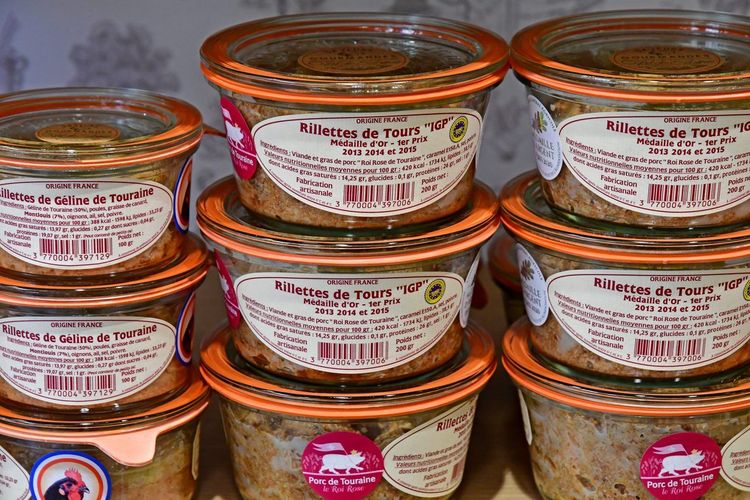
Visiting Tours and discovering its specialties inevitably means trying rillettes de Tours, drier and less fatty than their counterparts from Le Mans, and the Sainte-Maure de Touraine goat's cheese, recognizable by the rye straw running lengthwise through the log. The nougat de Tours, a tart filled with apricot jam and almond macaron, completes the trio of local culinary staples, to be sampled at any good pâtisserie in the center.
For the best restaurants to experience local cuisine in Tours, the central Halles market and its surroundings offer a varied choice, from traditional Touraine bistros to more creative tables that reimagine regional produce. Loire wines — chinon, bourgueil, vouvray — naturally accompany most menus, often offered by the glass to allow tasting across several appellations without committing to a full bottle.
The Halles de Tours, a covered market open every day (with reduced activity early in the week), offer a good introduction to sampling several specialties without sitting down to a full meal: rillettes cut to order, goat's cheeses aged to different stages of ripeness, and a few wine stalls from local producers. It is also the most reliable place to put together a picnic before the excursion to Villandry or the vineyards.
For dinner at a bistronomy restaurant, book ahead if possible: the best addresses, often intimate with around fifteen covers, fill up from Thursday evening onwards during the tourist season. This format — more accessible than a classic fine dining restaurant while maintaining a commitment to seasonal ingredients and technique — suits the spirit of the city well: refined without being stiff. The Ryo article on the culinary specialties of Tours details ten emblematic products and addresses.
For a quicker lunch between two visits, several Vieux Tours addresses offer affordable midday menus centered on local produce rather than a generic tourist bistro menu. Look for establishments displaying the "Fait Maison" (homemade) label or a daily chalkboard menu that changes with the market: it is usually a reliable indicator of quality, more trustworthy than a laminated menu with food photos at the entrance.
Getting to Tours and Adapting the Itinerary if You Have Fewer than Three Days
Before even laying out the program, two questions come up consistently: how to arrive without overcomplicating things, and what to cut if the stay shrinks to a weekend.
Arriving by Train, Car, or Plane
From Paris-Montparnasse, the TGV reaches Tours in approximately one hour, arriving either at the Tours station in the city center or at Saint-Pierre-des-Corps, connected to the center by a short rail shuttle of a few minutes. Check the arrival station carefully when booking: it is the classic mistake on a first visit, harmless but time-consuming with luggage. By car, allow just over two hours from Paris via the A10, and a similar journey time from Nantes or Rennes along the Loire Valley. Tours Val de Loire Airport, a few kilometers north of the city, serves a small number of low-cost routes, mostly seasonal.
Once on the ground, no vehicle is needed for the first two-thirds of this itinerary: the train station is a quarter of an hour's walk from the cathedral, and the tram covers the rest. Reserve the car rental for the single day of excursions to châteaux or villages, picking it up at the station in the morning and returning it in the evening.
Visiting Tours in One or Two Days
If you only have one day, focus on the Day 1 program: visiting Tours on foot between Saint-Gatien Cathedral, the cathedral quarter, and the Vieux Tours is enough to capture the city's identity, with an end-of-day stroll along the Loire riverbanks. Add the Compagnonnage Museum if the weather turns.
With two days, keep the first day as is and merge Days 2 and 3: morning at Villandry, return in the early afternoon, then the Fine Arts Museum or the Jardin des Prébendes d'Oé depending on remaining energy. Visiting Tours in 2 days is still comfortable; it is beyond that point — when you add Amboise, Azay-le-Rideau, or the vineyards — that the third day truly earns its place. Conversely, if you have four or five days, the itinerary extends effortlessly to the classified villages and the Vouvray caves, without ever retracing your steps. Either way, the Ryo audio-guided tour already covers Saint-Gatien Cathedral and the Loire riverbanks on day one, so nothing gets missed if the rest is compressed.
Weather, Crowds, and Practical Tips Before You Go
Weather and Crowds in Tours by Season
The weather in Tours benefits from a degraded oceanic climate, milder and drier than Brittany or Normandy, with summers that can climb above 30°C in July and August during recent heat waves. Spring, between April and June, remains the most pleasant season for walking around the city and visiting the gardens of Villandry in full bloom, before the summer heat and the crowds of July and August. Autumn, particularly September, still combines good temperatures with noticeably lower crowds in museums and on the roads to the châteaux.
In terms of crowds in Tours, the historic center remains manageable year-round compared to other towns in the Val de Loire, except during the major long weekends in May and during the school holidays in July and August, when châteaux like Villandry or Azay-le-Rideau sometimes have queues at the entrance in the middle of the day. Book your château tickets online in advance during high season: this often allows priority access and saves a good half hour of queuing.
What to Do in Tours When It Rains, With Family, or as a Couple
Adapting your itinerary when it rains is not a major issue in Tours: the two museums on the third day (Fine Arts, Compagnonnage), the Natural History Museum, the Château de Tours and its contemporary art center, as well as the cathedral, can all be visited under cover. A good portion of the Vieux Tours remains pleasant even in light drizzle thanks to the porches and narrow streets. What to do in Tours when it rains ultimately comes down to reversing the order of your days: prioritize outdoor activities (Villandry, vineyards) on forecast sunny days, and keep the museums in reserve for a rainy day.
What to do in Tours with family revolves mainly around the Compagnonnage Museum, which often fascinates children with its painstakingly precise models, the Natural History Museum, and the botanical garden with its free-access animal park. For a more targeted stay with children, the Ryo article on visiting Tours with family offers an adapted itinerary, with more frequent breaks and activities designed for younger visitors.
What to do in Tours as a couple lends itself particularly well to Prieuré Saint-Cosme at the end of the day, or a wine tasting in Vouvray followed by dinner at one of the bistronomy restaurants in the center. For activities to do in Tours on a Sunday: most municipal museums remain open, but many shops close, making it a good excuse to prioritize an outdoor walk, including the Halles market, which maintains a lovely Sunday atmosphere.
Finally, what to do in Tours for free: the cathedral, the Vieux Tours and its façades, the Loire riverbanks, the Jardin des Prébendes d'Oé, the botanical garden's animal park, and the street art trail are all free of charge. The Ryo article on free activities in Tours lists more ideas to lighten the budget without giving up the essential heritage.
FAQ
Is 3 Days in Tours Enough to See Everything?
Yes, for the essentials of the city center and one outdoor excursion such as Villandry. Three days allow you to cover Saint-Gatien Cathedral, the Vieux Tours, the two main museums, and a château or vineyard outing, without rushing. To add Amboise, Azay-le-Rideau, and a classified village, plan for four to five days instead.
Is Tours Worth Visiting for a Multi-Day Stay?
Yes: beyond the historic center, Tours serves as a base from which Villandry, Amboise, Azay-le-Rideau, the Vouvray vineyards, and three villages listed among the Most Beautiful Villages in France are all less than an hour away, while sleeping in the same place each night, avoiding hotel changes.
What to Do in Tours for Free?
Saint-Gatien Cathedral, the Vieux Tours, the Loire riverbanks, the Jardin des Prébendes d'Oé, and the botanical garden's animal park can all be visited without a ticket. The city center street art trail can also be explored freely on a stroll, and wine tastings at Vouvray or Montlouis producers are often offered at no charge.
What Is the Best Tours City Pass for Visiting the City?
There is no 24-hour option: the pass comes in 48-hour at €38 and 72-hour at €45. For a three-day stay, the 72-hour pass wins hands down, since a €7 difference is enough to cover an extra day of visits, including the châteaux of Villandry and Azay-le-Rideau.
Where to Stay to Visit Tours and Its Surroundings?
The historic center around place Plumereau is ideal if you are traveling without a car, the train station district offers a practical compromise for those arriving by rail, and accommodations along the Loire are appealing for their calm and views, at the cost of a slightly longer walk.
What to Do in Tours When It Rains?
Prioritize museums (Fine Arts, Compagnonnage, Natural History Museum), the Château de Tours, and the cathedral, all visitable under cover. A good portion of the Vieux Tours remains pleasant even in the rain thanks to the porches and narrow alleyways that shelter the half-timbered façades.
What to Do in Tours With Family or as a Couple?
With family, focus on the Compagnonnage Museum and the botanical garden with its free-access animal park. As a couple, Prieuré Saint-Cosme at the end of the day and a wine tasting in Vouvray followed by a bistronomy dinner make for an effortlessly romantic afternoon.
Three days in Tours are enough to understand why the city continues to attract travelers seeking a Val de Loire experience less overwhelming than its most visited châteaux. The historic center, between Saint-Gatien Cathedral and the Vieux Tours, can be explored without fatigue; excursions to Villandry, the Vouvray vineyards, or the classified villages around the city round out a stay that always has something in reserve, whatever the weather or season.
Before you leave, take time to prepare your itinerary with the Ryo audio guide for Tours: the route covers the main sites of the Vieux Tours — Saint-Gatien Cathedral and the Loire riverbanks included — across 23 audio tracks, enough to turn a simple walk into a guided visit without needing to book a human guide. Whether you stay three days or extend your trip toward Amboise and the vineyards, Tours and its surrounding region offer more than enough to fill a stay, without ever feeling like you are racing through a checklist.