© Shutterstock
 Votre guide Ryo
18 Free Activities to Do in Tours in 2026
In Tours, the evening light glides over the Loire with a particular hue — the one that earned the city its nickname of Little Paris as early as the 19th century. Yet free activities in Tours are plentiful: most visitors make do with a round trip between the cathedral and the place Plumereau, unaware that an entire programme of ticket-free experiences is waiting just a few streets away. The Ryo audio guide for Tours is designed precisely to connect these places without spending a cent on admission, headphones on and itinerary already mapped out.
This selection of free activities in Tours covers 18 verified addresses: a basilica that houses the tomb of a bishop who became a national saint, a garden planted as early as 1843 where a century-old cedar grows, a beach set up every summer along the banks of the Loire, and a network of 48 marked trails across the whole metropolitan area. Some of these experiences are free all year round; others only open their doors without a ticket one Sunday per month. Also included are little-known river islands, a shopping street eight centuries old, and two listed villages less than twenty minutes from the centre. Follow the guide.
1. Cathédrale Saint-Gatien de Tours
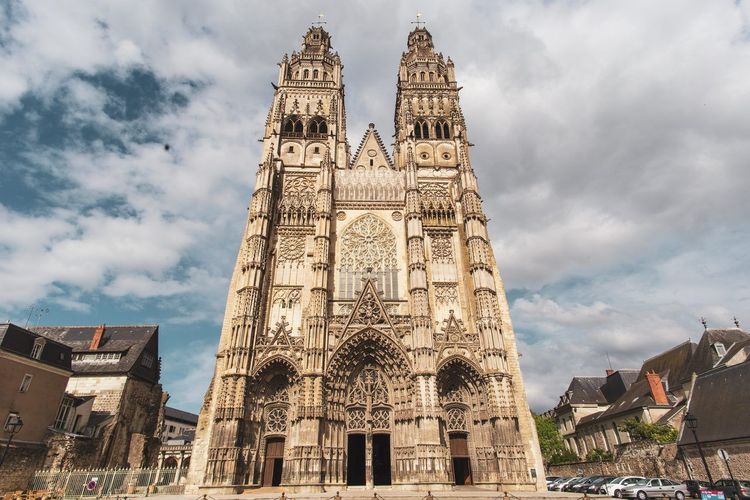
The Cathédrale Saint-Gatien de Tours (Place de la Cathédrale, 37000 Tours, rated 4.6/5 on Google from 7,954 reviews) encapsulates five centuries of Gothic construction in a single building. Work began on the choir in the 13th century and was not completed until the 16th, which explains why the two twin towers carry Renaissance domes set atop a Flamboyant Gothic base — an architectural shorthand that few French cathedrals display so clearly on a single façade.
Entry is free all year round, during normal public opening hours (generally 9am–7pm, with partial closure during services). Inside, the 13th-century stained-glass windows rank among the best-preserved in France: their deep blue, achieved through a glass-colouring process now lost to history, has survived more than seven centuries without major restoration. Take the time to sit on a central pew in late morning, when the sun passes through the west rose window and casts its colours across the flagstones.
The adjoining cloister, la Psalette, requires a separate ticket and is therefore not included in this selection. Instead, walk around the building along the rue Manceau to appreciate the flying buttresses on the north side, less photographed than the main façade but equally impressive. The square in front of the cathedral also hosts open-air concerts in summer with no ticketing required, announced on municipal noticeboards a few weeks in advance.
2. Basilique Saint-Martin de Tours
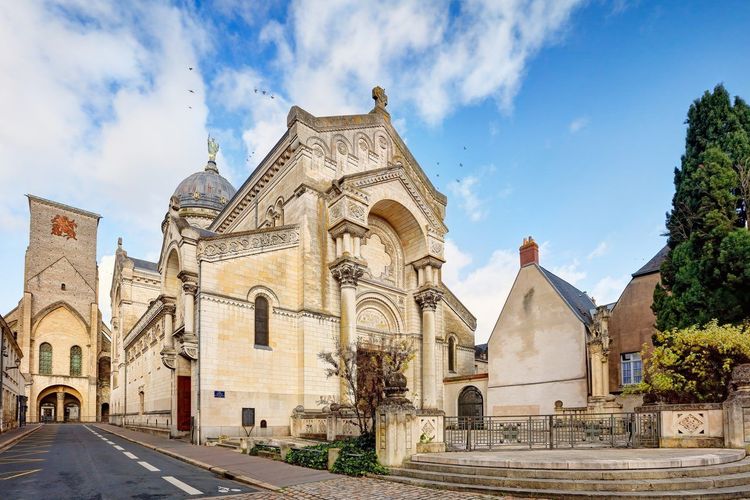
The Basilique Saint-Martin de Tours (Rue Descartes, 37000 Tours, rated 4.6/5 on Google from 2,387 reviews) houses in its crypt the tomb of Martin of Tours, a 4th-century bishop who became one of the most venerated saints in Western Christianity. The current building, completed in 1924, is only a century old: the medieval basilica had been almost entirely demolished after the Revolution, when its stones were quarried by the village that had sprung up among its ruins.
Two remnants of that past still stand a few metres apart: the tour Charlemagne and the tour de l'Horloge, the only surviving fragments of the original Romanesque basilica. They stand today in isolation in the middle of a junction, severed from the building they once flanked, giving this stretch of street an almost incongruous atmosphere amid the traffic.
Entry to the current basilica is free, as is access to the crypt where the tomb rests. The site remains a pilgrimage stop on the via Turonensis, one of the historic routes to Santiago de Compostela, and you will regularly come across walkers with a scallop shell on their backpack. The visit takes 20 to 30 minutes, but take the time to look out for the ex-votos left on the floor of the crypt by visitors over the decades. The bell tower visible from the rue des Halles remains one of the most reliable landmarks for finding your bearings in the Vieux Tours.
3. Place Plumereau and the Vieux Tours
The place Plumereau alone captures the image most visitors take away from Tours: 15th-century half-timbered houses leaning towards one another, framing a cobbled square where café terraces spill out at the first sign of fine weather. The entire neighbourhood, known locally as the Vieux Tours, escaped the 1940 bombings that flattened part of the city centre — which explains the unusually high density of preserved medieval façades within such a compact area.
Strolling here costs nothing, and the best strategy is to leave the square itself and head up the adjacent streets. The rue du Change and the rue Briçonnet line up even older half-timbered houses, some dated to the 13th century by dendrochronology. Look up: the carved beams, often decorated with religious motifs or scenes of trades, tell you who occupied the house when it was built.
On Saturday mornings, a market sets up on the square itself and spills into the surrounding lanes. This is not a tourist market: locals come here to buy their Sainte-Maure-de-Touraine goat's cheese and seasonal vegetables, making it a good vantage point for observing local life rather than simply a postcard photo opportunity.
In the evening, the atmosphere changes completely. The terraces come alive, students from the nearby university fill the bars, and the square takes on the feel of an open-air living room until late at night. If you prefer a quieter moment, visit on a weekday late morning, when the low-angle light on the half-timbered façades offers the best photographs and the streets are still relatively empty. The neighbourhood also lends itself to aimless wandering without a fixed itinerary: it is by getting lost in the alleyways perpendicular to the square that you discover the most surprising details — carved corbels, old shop signs or hidden doorways that guides often fail to mention.
4. Jardin Botanique de Tours
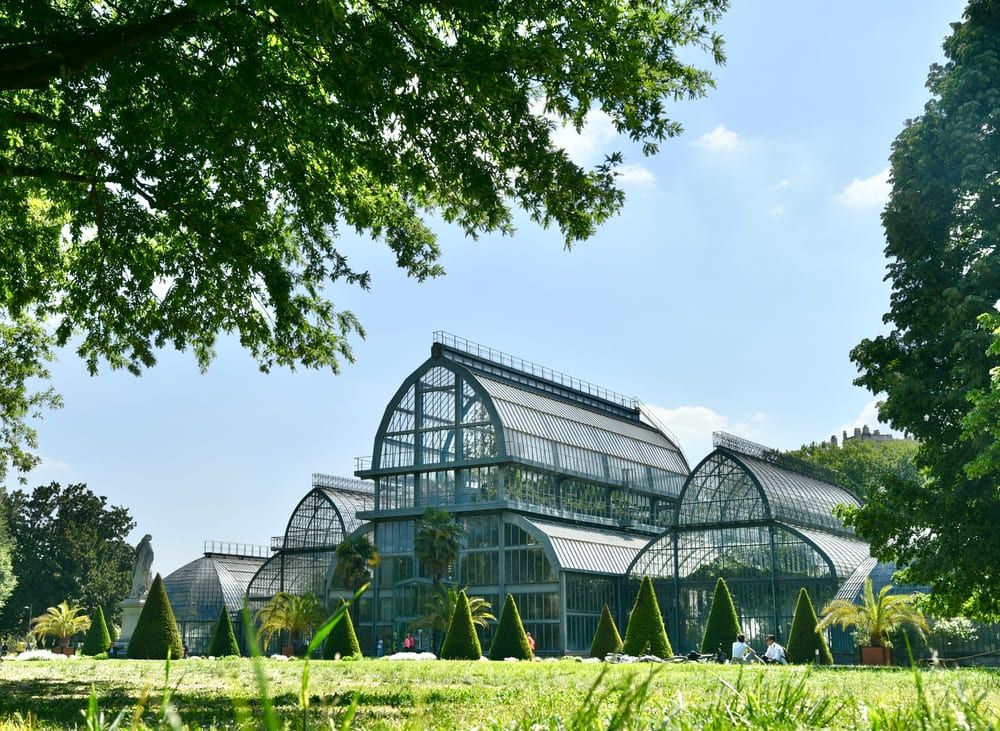
Founded in 1843, the jardin botanique de Tours (35 Boulevard Tonnellé, 37000 Tours, rated 4.6/5 on Google from 6,726 reviews) covers nearly five hectares north of the city centre, well away from the usual tourist flows. The collections include medicinal plants, a rock garden and tropical greenhouses, all freely accessible during the opening hours posted at the entrance.
A vivarium houses a few reptiles and amphibians, making it a popular outing with children at no cost. Take the time to spot the Lebanon cedar planted in the 19th century near the main entrance: its trunk, now several metres wide, makes it one of the most photographed remarkable trees in the garden.
Unlike the jardin des Prébendes, which attracts more visitors, this garden remains quiet even at weekends. Allow an hour to walk through it in full, longer if you stop at each themed plot.
5. Musée des Beaux-Arts de Tours
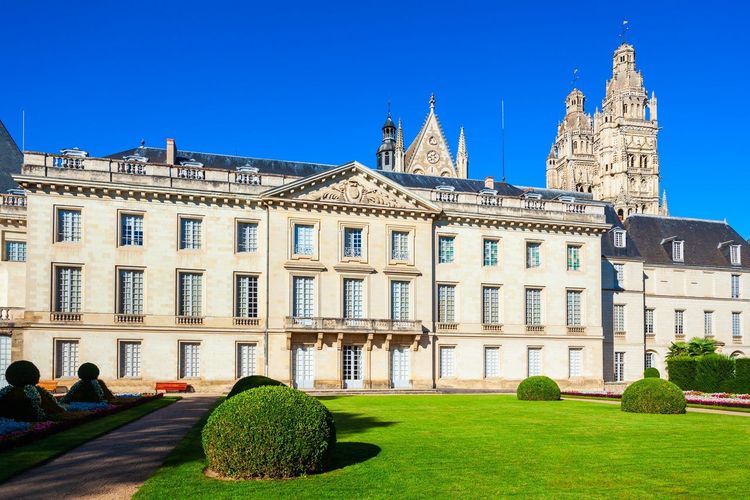
Housed in the former archbishop's palace, the Musée des Beaux-Arts de Tours (18 Place François Sicard, 37000 Tours, rated 4.4/5 on Google from 1,588 reviews) holds paintings by Rembrandt, Delacroix and Degas in a setting worth the visit in itself. Admission is normally charged, but entry becomes free on the first Sunday of each month, except in July and August when the museum applies its standard rate to cope with the summer influx.
In the inner courtyard stands a Lebanon cedar planted in the early 19th century, one of the oldest urban trees in the city: its canopy, supported by metal props for decades, now spreads over an impressive area and casts shade across much of the courtyard.
To make the most of a free-admission Sunday without queuing, arrive at opening time, around 9am: visitor numbers rise noticeably after 11am. If you are planning your visit to Tours in advance, the Ryo audio-guided tour of Tours lets you fit this visit into a broader itinerary, avoiding unnecessary trips back and forth between neighbourhoods.
Even on paid days, the courtyard and the adjoining gardens remain freely accessible from the street, allowing you to admire the cedar and the classical façade without passing through the ticket desk.
6. Jardin des Prébendes d'Oé
The jardin des Prébendes d'Oé (Boulevard Béranger, 37000 Tours, rated 4.6/5 on Google from 2,950 reviews) unfolds in an English landscape style around two ponds where swans and ducks glide. Laid out in the late 19th century on former drained marshland, it remains one of the favourite green lungs of the people of Tours, far from the tourist crowds of the Vieux Tours.
A bandstand hosts free-admission concerts on certain summer Sundays, announced on the noticeboard at the main entrance. The rhododendron beds, planted in the 1930s, flower spectacularly between April and May.
The benches arranged around the large pond offer a peaceful spot for an impromptu picnic, as long as you avoid Wednesday afternoons when local families descend on the nearby play area.
7. Pont Wilson
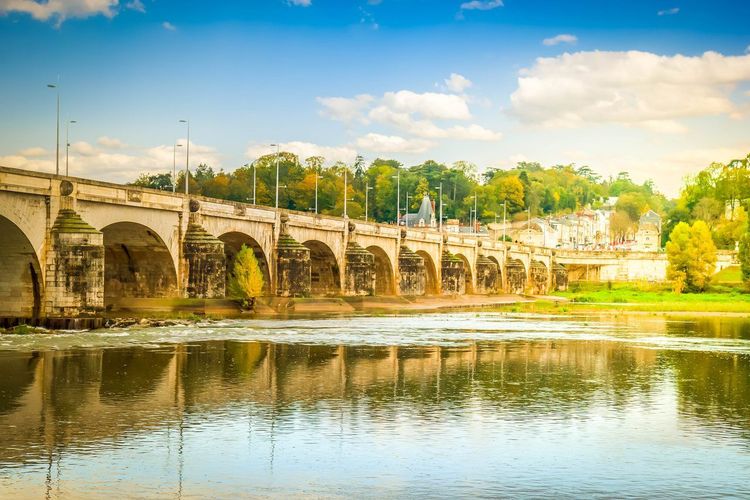
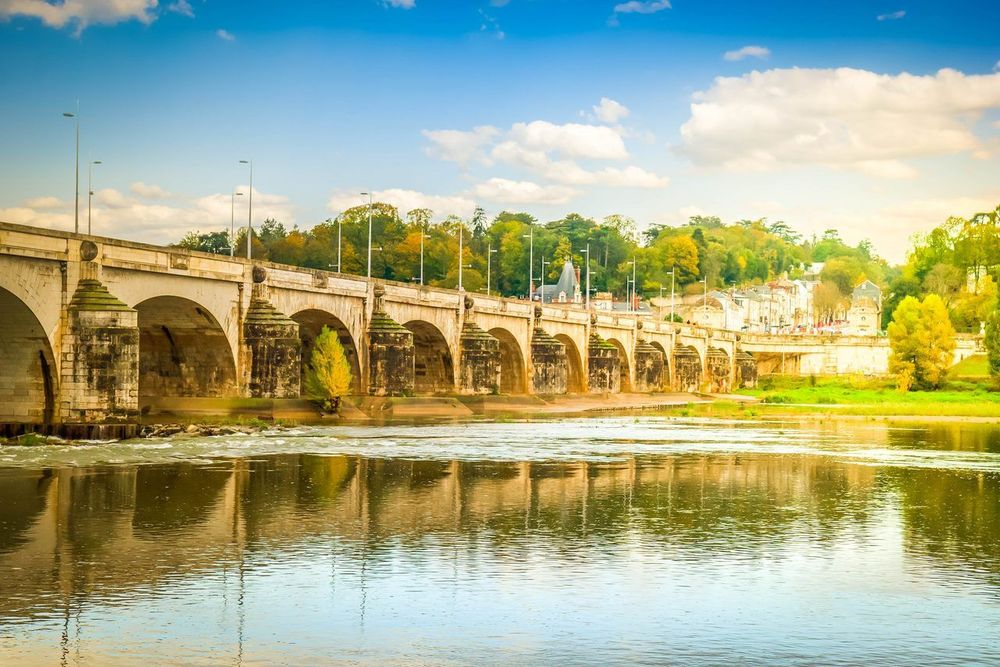
The pont Wilson, rebuilt after its partial collapse in 1978, remains the most unobstructed viewpoint over the Loire and the city's rooftops. At nightfall, the street lighting traces a golden line across the water that contrasts with the calm of the river, often reduced to a thin thread between its sandbanks in summer.
Walk to the centre of the bridge rather than stopping at the entrance: it is from this point that the perspective over both banks is most complete, with the cathedral visible in the background on the south side.
8. La Loire à Vélo
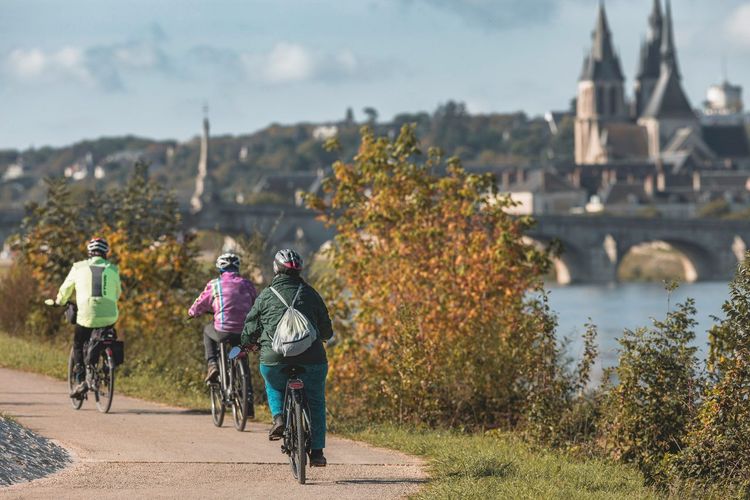
Tours lies on the route of the Loire à Vélo, the cycling trail that follows the river for more than 900 kilometres between the Pays de la Loire and the Cher. From the city centre quays, a marked path heads west towards Villandry and Langeais, and east towards Amboise, without ever crossing a high-traffic road.
No bike hire is needed to enjoy the urban section: the route runs along the river just below the quays, accessible on foot as well as by bicycle. Allow about two hours return to reach the first vineyards west of the city, a flat route suitable for families and faster cyclists alike.
To extend the experience towards the châteaux that line the Loire, the Ryo Châteaux de la Loire trip outlines a complete itinerary including several stops reachable from Tours in half a day.
9. The Tours Urban Beach
Every summer, the city sets up an urban beach on the quays between the pont Wilson and the pont Mirabeau, with imported sand, deck chairs and parasols provided at no charge. The event, modelled on Paris-Plages, is accompanied by sports activities and pétanque courts open to all without reservation.
Swimming in the Loire itself remains prohibited due to unpredictable currents, but the water play areas set up nearby allow children to cool down safely. The atmosphere stays family-friendly during the day and extends into the evening with open-air concerts on certain nights of the week.
Check the opening dates before making the trip: the installation is usually dismantled at the end of August, shortly before the new school year begins.
10. Les Halles de Tours
The Halles de Tours (Place Gaston Pailhou, 37000 Tours, rated 4.4/5 on Google from 6,140 reviews) bring together around sixty food traders under a single metal-framed market hall: cheesemongers, fishmongers, greengrocers and a handful of counters where you can grab a quick lunch. Entry is free and browsing the stalls costs nothing, even without any intention of buying.
The market is open Tuesday to Sunday morning, with the highest footfall on Saturdays. Come instead on a weekday around 9am to enjoy the place without the crowds, and take a look at the stalls of local specialities such as Tours rillettes or Chinon wines sold by the bottle. Ryo's audio-guided tour of Tours makes it easy to swing by Les Halles on the way between other stops.
11. Rue Colbert
The rue Colbert ranks among the oldest thoroughfares in Tours, laid out along the ancient plan of the Roman city of Caesarodunum. Today lined with restaurants and independent shops, it retains in places 18th-century façades that speak to its age.
A late-afternoon stroll here reveals a different side of Tours — more commercial than heritage-focused. To round off this walk with other lesser-known addresses, the Ryo article on the top 7 things to do in Tours lists several stops located just a few minutes' walk from this street.
12. Tours Municipal Libraries
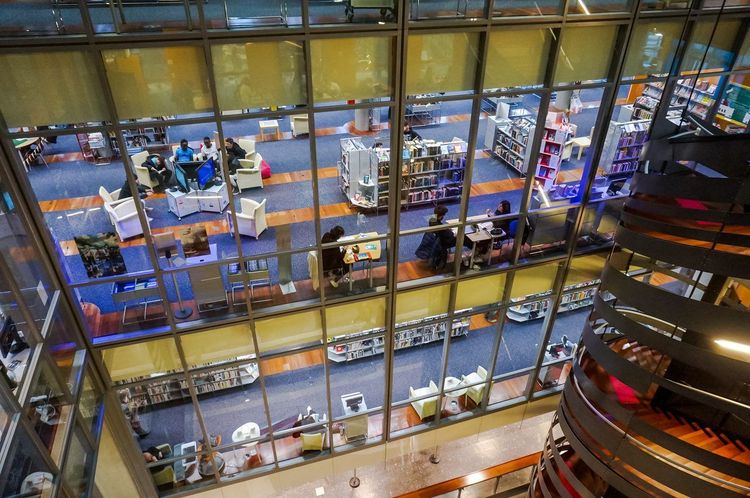
The city-centre media library offers free access to its reading rooms, wifi and a large portion of its collections on simple presentation, with no subscription required for on-site consultation. The building, opened in 2013, overlooks the Loire and has a terrace accessible to readers.
Free temporary exhibitions are held here several times a year, often related to local heritage or comics. A press area also offers a wide selection of newspapers and magazines to browse at no cost.
13. Château de Tours
The château de Tours (25 Avenue André Malraux, 37000 Tours, rated 4.1/5 on Google from 1,513 reviews) overlooks the Loire from a site that has been occupied without interruption since the Gallo-Roman era. The complex blends remains from several periods: a 13th-century tower and a 15th-century royal residence, complemented by later buildings converted into exhibition spaces.
Access to the temporary exhibitions is paid, but the grounds of the château, its gardens and the view over the river remain free. The raised terrace offers one of the best viewpoints over the pont Wilson and the quays, particularly at sunset when the tuffeau stone takes on the golden hue characteristic of the region.
Take the opportunity from this elevated vantage point to spot the Loire islands that take shape downstream — a good way to plan your next stop.
14. Walk on the Loire Islands
Facing the city centre, several river islands dot the bed of the Loire: the île Simon and the île Balzac, accessible via pedestrian footbridges, form a preserved natural space in the heart of the city. Poplars and willows interspersed with wide sandbanks create a landscape that changes dramatically depending on the river's level — sometimes broad and vigorous in spring, sometimes reduced to a trickle in summer.
These islands harbour surprising wildlife for an urban centre: grey herons and, more rarely, beavers spotted in the late afternoon by the most patient walkers. No paid facilities restrict access: the paths remain open year-round, except during floods.
Bring binoculars if you have them: the low-angle light of the morning is ideal for watching birds without disturbing them.
15. Tours en Lumières
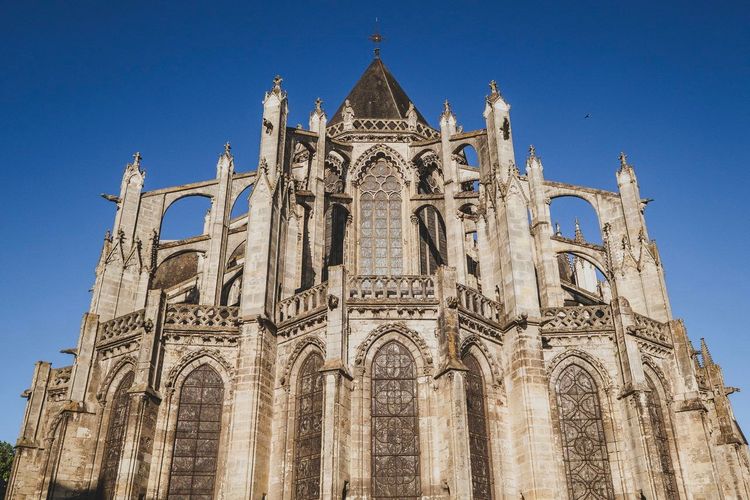
Every year, between November and March, the city stages Tours en Lumières, a nocturnal trail that brings façades and monuments to life through light projections designed specifically for each site. The Cathédrale Saint-Gatien, the town hall and several façades in the Vieux Tours serve as giant screens for new creations renewed each season, without any ticket required to attend.
The trail follows a signposted route of about two kilometres, walkable in an hour and a half if you stop at each point. Projection times change according to nightfall: check the programme posted on municipal noticeboards or on the town hall website before setting out, as the slots shift throughout the winter.
The atmosphere is radically different from a daytime visit: familiar monuments take on an almost theatrical dimension, and streets that are usually quiet on winter evenings regain a surprising level of activity. Dress warmly: the most popular spots, especially in front of the cathedral, often require waiting several minutes outdoors during busy evenings, generally at weekends.
This seasonal event complements a daytime exploration of the Vieux Tours well: many visitors choose to walk the same route twice — once in daylight and once under the projections — to see just how dramatically lighting transforms the perception of the half-timbered façades.
16. Hiking on the Métropole Trails
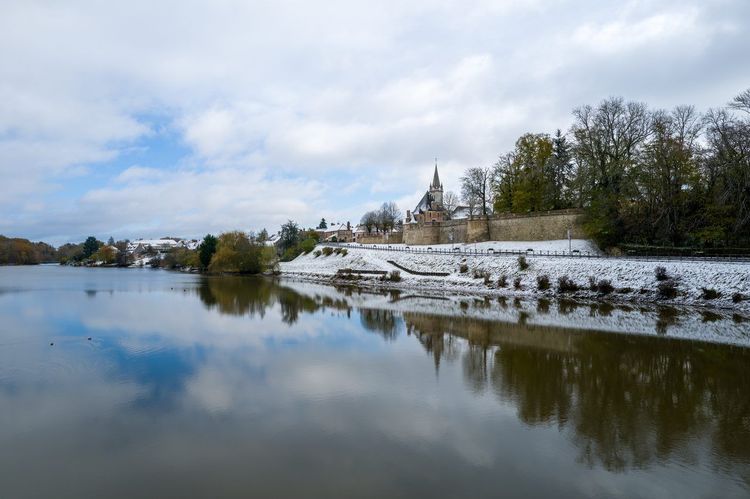
The Tours metropolitan area maintains a network of 48 marked hiking trails, totalling several hundred kilometres across the Loire riverbanks, vineyard hillsides and more wooded valleys such as the Choisille. Each route is listed on freely downloadable trail sheets, with distance, elevation gain and estimated duration, making it easy to choose a suitable walk without having to improvise on the day.
The sentier des vignes, starting from Rochecorbon, passes through several wine estates with views over the Loire, with no mandatory or paid stops along the way. Other shorter circuits, doable in an hour, are better suited to a family outing from the city centre, in particular the one that follows the Cher south of the agglomeration.
Remember to check the weather before setting out on the more exposed sections, especially along the hillsides, where the wind can blow strongly in autumn and winter.
17. Rochecorbon and Its Cave Dwellings
Less than ten minutes by car from the centre of Tours, Rochecorbon (Rochecorbon, 37210 Rochecorbon) lines its cave dwellings directly into the tuffeau cliff that overlooks the Loire. The village, occupied since the Gallo-Roman period according to remains found in the cellars, long served as a place of refuge and economical housing: carving into the soft stone cost far less than building, and offered into the bargain a natural thermal insulation appreciated in both summer and winter.
A walk through the village lanes allows you to observe, from the street, façades set directly into the rock, with doors and windows cut straight into the cliff face. Many of these cave dwellings remain private and inhabited today, which means entering them is not possible, but observing them from the public footpath costs nothing and is enough to grasp the ingenuity of the method.
The lanterne de Rochecorbon, an isolated turret perched at the top of the cliff, is visible from several points in the village without needing to climb up to it. This 15th-century structure is said to have served as a light beacon for river navigation, according to local archives, though its exact use remains debated among regional historians.
Below, the path that runs alongside the Loire links Rochecorbon to the centre of Tours on foot or by bicycle, along a flat route of about six kilometres. It is one of the most pleasant stretches of the Loire à Vélo mentioned earlier, with regular views over the vineyard hillsides.
If you visit in late afternoon, the low-angle light striking the cliff brings out the ochre and white tones of the tuffeau — a moment that local photographers consider the most flattering for capturing the village. Allow a good hour on site to fully appreciate it, longer if you extend the visit with a walk along the river.
18. Luynes, Petite Cité de Caractère
To the west of Tours, the village of Luynes (Luynes, 37230 Luynes) holds the Petite Cité de Caractère label, awarded to towns that have preserved a remarkable built heritage without becoming a museum piece. The covered market hall on the place Vauban, a timber-framed structure resting on stone pillars, is believed to date from the 15th century and continues to host a weekly market.
The château that dominates the village, still inhabited by private owners, is not open to visitors, but its silhouette perched on a rocky spur is visible free of charge from several points in the town, notably from the main square. A row of cave-cut dovecotes and former tuffeau quarries carved into the rock complete the landscape, many of them converted into cellars or dwellings.
To place Luynes among other similar villages to explore around Tours, the Ryo guide to the most beautiful villages around Tours outlines several complementary itineraries to combine depending on the time you have available.
FAQ
What are the free activities to do in Tours?
The must-see sites with no admission fee include the Cathédrale Saint-Gatien, the Basilique Saint-Martin, the place Plumereau, the botanical garden, the jardin des Prébendes d'Oé, and walks along the Loire or on its islands. Allow a full day to cover the main stops in the city centre on foot, longer if you add Rochecorbon or Luynes.
Is the Musée des Beaux-Arts in Tours free?
It is free on the first Sunday of each month, except in July and August when the standard admission applies year-round. At other times, only the inner courtyard and its Lebanon cedar remain freely accessible from the entrance, without passing through the ticket desk.
How do you visit Tours on foot for free?
The Vieux Tours, its religious monuments and its riverbanks can be explored entirely on foot without any ticket. A one-day itinerary easily links the cathedral, the place Plumereau, the Loire and the château, covering about six kilometres of walking in total, not counting detours through the half-timbered alleyways.
Where can you swim for free in Tours?
Swimming in the Loire is prohibited due to the currents, but the urban beach set up every summer on the riverbanks offers water play areas and deck chairs at no cost. It generally closes at the end of August, just before the new school year.
Is Tours en Lumières free?
Yes, this nocturnal light projection trail along the monuments, held every winter between November and March, is entirely free and accessible without reservation along a signposted route of about two kilometres through the historic centre.
Which villages near Tours can you visit for free?
Rochecorbon with its cave dwellings, and Luynes with its medieval market hall, can both be visited freely within twenty minutes of the city centre. Their respective châteaux are not open to visitors but remain visible from public spaces, silhouette included.
Eighteen ticket-free addresses are more than enough to fill two or three days in Tours without ever reaching for your wallet at an entrance desk. The most surprising aspect is perhaps the diversity on offer: a Gothic cathedral and a pilgrimage basilica just a few hundred metres apart, a garden planted during the Restoration period, an urban beach reinvented every summer, and two cave villages less than half an hour by road.
To organise these visits without unnecessary back-and-forth, the Ryo audio guide for Tours offers a structured itinerary linking several of these stops by neighbourhood rather than presenting a random list. Headphones on or simply notebook in hand, Tours is there to be discovered without spending much more than a good pair of walking shoes.
À lire également