© Shutterstock
 Votre guide Ryo
Things to Do in Amboise in 2026: 15 Experiences between the Renaissance and the Loire
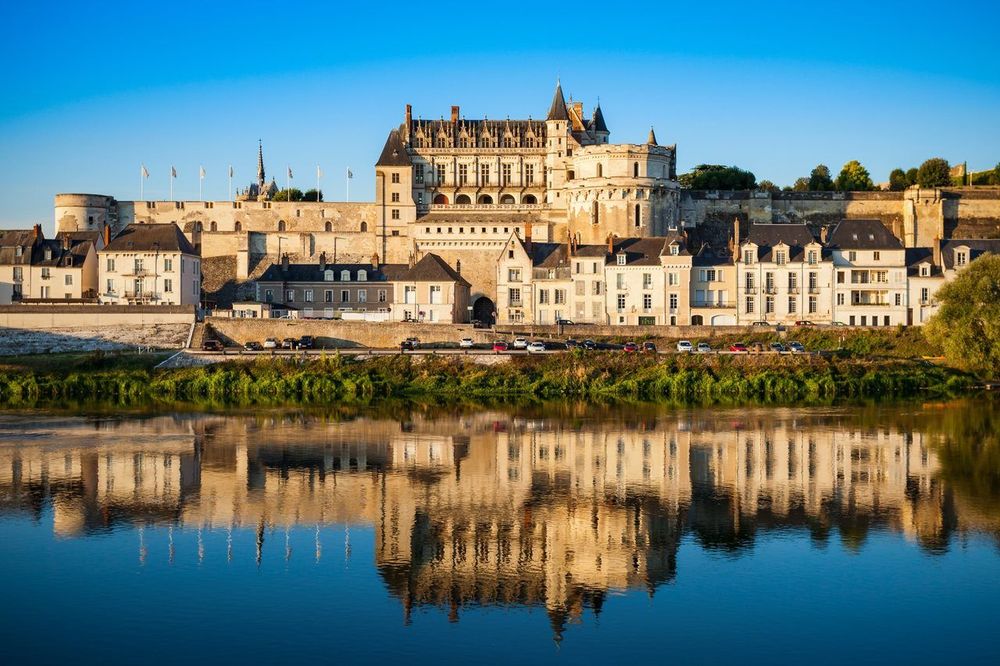
Wondering what to do in Amboise reveals a thicker file than you might expect for a town of 13,000 inhabitants. Here, the Loire flows at the foot of a château where Charles VIII struck his head on a stone lintel in 1498, a domestic accident that altered the French line of succession. Nestled between the river and its tufa promontory, the town packs a dense heritage: a royal château, Leonardo da Vinci's last home, a 44-metre Chinese pagoda, and kilometres of caves carved into the rock. Ryo has not yet laid an audio-guided route on Amboise's cobblestones, but the Ryo audio-guided tour of Tours, thirty kilometres away, naturally extends the stay; on the ground, every step of this itinerary can be combined on foot, by bike, or by car.
Here you explore underground passages that once linked the château to the town, climb to the top of a pagoda built to commemorate an 18th-century political alliance, and taste Touraine wines in troglodyte caves where the temperature never exceeds 13°C. One of Europe's largest freshwater aquariums hides ten minutes from the centre, a miniature park reproduces 44 Loire châteaux at a scale of 1/25, and the weekend market stretches along the quays twice a week as it has done for generations. Amboise also works as a base: Chenonceau, Tours, and a handful of wine villages are all within an hour's drive.
1. Visit the Château Royal d'Amboise and Its Underground Passages
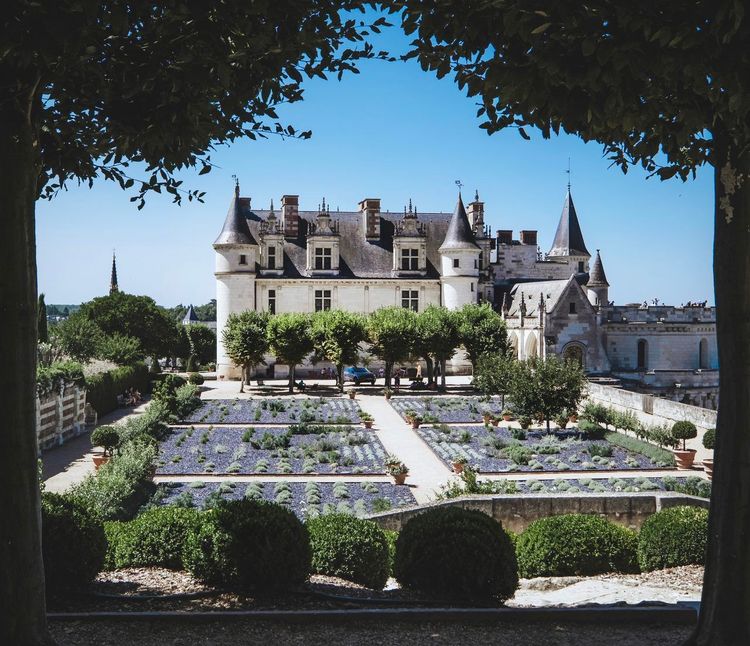
The Château Royal d'Amboise (Place Michel Debré, 37400 Amboise, rated 4.5/5 on Google from 30,768 reviews) dominates the town from a tufa spur rising nearly forty metres above the Loire. A favoured residence of the Kings of France in the late 15th century, it witnessed the death of Charles VIII, who accidentally struck his head on the lintel of a low doorway in 1498 while on his way to the royal tennis court set up in the moat — an episode local guides recount with a mixture of amusement and gravity. Francis I also spent part of his childhood here, before making the château a cradle of the French Renaissance.
The Chapelle Saint-Hubert, built against the ramparts, houses what local tradition designates as the presumed tomb of Leonardo da Vinci. The artist, who died at the Clos Lucé in 1519, is said to have been interred here after several relocations of his remains during the Wars of Religion; historians remain cautious about the authenticity of the bones, but the Flamboyant Gothic chapel, with its sculpted tympanum depicting the legend of Saint Hubert, is worth a visit in its own right.
The château's underground passages are one of the highlights of the visit. This network of galleries carved into the tufa once connected the royal kitchens to the wine cellars and also served as an escape route in the event of a siege. Some sections can be explored freely with the entrance ticket, cool throughout the year, while other segments remain closed to the public for structural safety reasons. Allow an extra thirty minutes if you want to walk through them at a relaxed pace.
Two massive cylindrical towers, the Tour Heurtault and the Tour des Minimes, structure the approach to the château's plateau. Their distinctive feature: a wide, gently sloping interior ramp designed to allow riders and carriages to ascend directly to the courtyard without dismounting, a feat of 15th-century engineering that can still be walked today. The Tour des Minimes, in particular, offers a gradual ascent punctuated by rest points that break up the effort.
The château also bears the memory of a darker episode: the Conjuration d'Amboise of 1560, a failed Protestant coup attempt against the Guise family, suppressed in bloodshed. Several conspirators' bodies were hanged from the battlements and the metal fittings of the ramparts, a fact that the site's information panels recount without omission. This history contrasts with the château's now peaceful gardens and invites visitors to view the monument through a more political lens than a purely aesthetic one.
From the château's terrace, the view sweeps across the Loire, the Île d'Or, and the slate rooftops of the historic centre. You can linger in the French-style gardens, redesigned in the 19th century, where a few busts evoke the major figures who frequented the site. In high season, arrive at opening time (generally 9am) to avoid the groups that flood in late morning; the château is self-guided with an audioguide included in the ticket price, a format that lets you set your own pace between the royal lodgings, the chapel, and the ramparts.
Each summer the château organises costumed evenings and night-time shows evoking the Renaissance court, an entertainment that complements rather than replaces the daytime visit. In December, the gardens host a medieval Christmas market with wooden stalls and children's activities, a different way to discover the site outside the tourist season.
Access for visitors with reduced mobility is partial: the gardens and terrace are accessible, but some sections of the underground passages and towers have steps that prevent full wheelchair access throughout the route. Ask at the reception desk, which provides a detailed map of accessible areas.
On the budget side, expect around €16 for full-price entry including the audioguide (rates are revised annually — check the current price list on the official ticketing site before you go), and book online in July and August to avoid queues that can exceed thirty minutes at midday. The nearest parking is on Place Michel-Debré, at the foot of the château, and is paid during the day. If you visit only one monument in Amboise, make it this one: it concentrates the essential history of the town, from the Renaissance to the Reformation, within an architectural setting that has no equivalent elsewhere in the Loire Valley.
2. Follow in Leonardo da Vinci's Footsteps at the Château du Clos Lucé
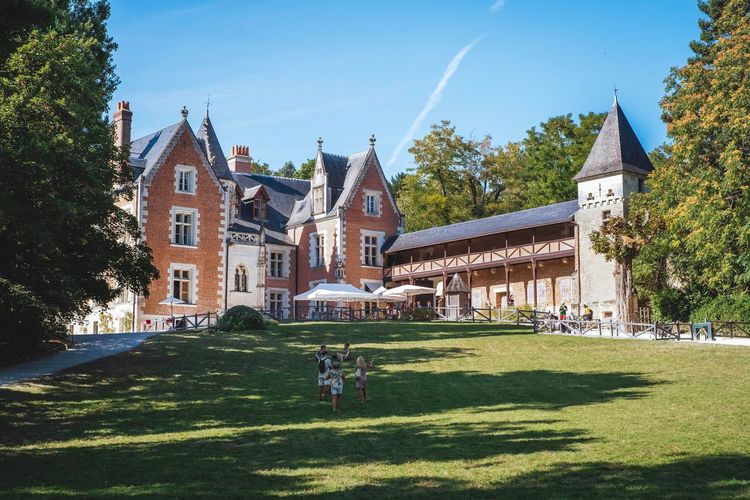
The Château du Clos Lucé (2 Rue du Clos Lucé, 37400 Amboise, rated 4.5/5 on Google from 24,461 reviews) lies less than five hundred metres from the Château Royal, connected according to local legend by an underground passage that Francis I reportedly had dug so he could visit his guest discreetly. Leonardo da Vinci lived here during the last three years of his life, from 1516 until his death in 1519, invited by the young king who offered him the manor as a residence and a generous pension in exchange for the title of 'first painter, engineer, and architect of the king'.
The visit unfolds across several levels. The private apartments recreate the atmosphere of the Italian Renaissance transplanted into the Loire Valley, including the bedroom where Da Vinci is said to have died, attended according to tradition by Francis I himself. The basement houses around forty scale models built from the engineer's notebooks: a tank, a swing bridge, a flying machine, a diving suit. Each model is accompanied by an explanatory diagram that makes the mechanical principle clear even without any prior technical knowledge.
The seven-hectare park deserves a good hour on its own. It features an interactive trail where Da Vinci's machines are reproduced at full scale and set within the vegetation: you can operate certain mechanisms, test the principle of a drawbridge, or observe a replica of his famous glider suspended between the trees. Water features inspired by his hydraulic research are also dotted along the route, much appreciated by children in summer.
An immersive space projects some of his paintings, including a large-format reproduction of the Mona Lisa, onto the walls of a converted outbuilding. It is an opportunity to examine compositional details invisible to the naked eye on the original in the Louvre, particularly the pentimenti revealed by infrared imaging.
The gardens, redesigned in a romantic English style, incorporate rare species and carefully framed views of the canopy, a deliberate contrast with the geometric rigour of the French-style gardens at the neighbouring Château Royal. Contemporary sculptures are also installed at intervals, the result of collaborations with visual artists.
On summer evenings, the estate occasionally offers candlelit night tours, with illuminations of the manor and its grounds. These slots sell out quickly in July and August; check the château's official website in advance if this option interests you.
A tearoom set in the former stables offers a break after the visit, with views over the park. This is a practical option if you are heading straight to the Château Royal in the afternoon and want a pause between the two visits rather than going back into town to find a restaurant.
Allow two hours for a full visit of the château, basement, and park, more if you linger over the interactive machines with children. The ticket office offers a reduced rate for under-18s and a combined ticket with the Château Royal, generally better value than two separate entries. Book online in summer: entry slots are timed in high season to limit crowding in the narrowest spaces, particularly the vaulted basement. The site also runs educational workshops during school holidays, where children build a mini model inspired by Da Vinci's inventions under the supervision of a guide.
3. Stroll through the Historic Centre and See the Tour de l'Horloge
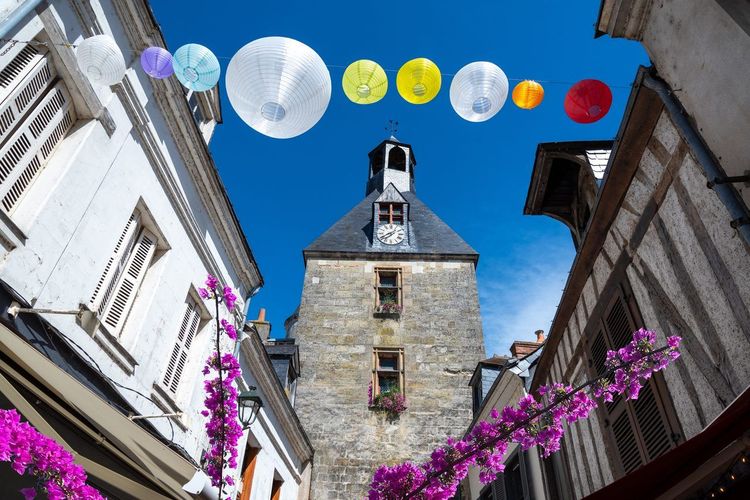
Between the Château Royal and the Clos Lucé, Amboise's historic centre can be covered entirely on foot in half a day. The Tour de l'Horloge, a fortified 15th-century gateway integrated into the medieval ramparts, marks the entrance to the Rue Nationale, the main shopping street lined with half-timbered houses and sculpted tufa façades.
You will easily recognise the half-timbered houses of the château quarter, around Place Michel-Debré, where a few Renaissance townhouses survive, now converted into shops or private residences. The Rue Nationale, pedestrianised along its central stretch, is home to regional produce shops, ice cream parlours, and café terraces — an atmosphere that contrasts with the calm of the Quai du Général-de-Gaulle along the Loire, where locals come to picnic in the evenings.
To explore Amboise on foot without a car, allow about two hours to connect the main points of interest in the town centre: from the Place Michel-Debré car park to the Tour de l'Horloge and on to the quays, everything is manageable without particular effort, with the main elevation concentrated on the climb up to the château. The side streets running perpendicular to the Rue Nationale, such as the Rue Rabelais, hide interior courtyards and vaulted passages that only reveal themselves when you look up.
The covered market and quays are particularly lively on market mornings, but even outside those hours, wandering through this compact town centre remains one of the simplest ways to take the pulse of Amboise before tackling more structured visits.
4. Take in the Panorama from the Île d'Or and the Banks of the Loire
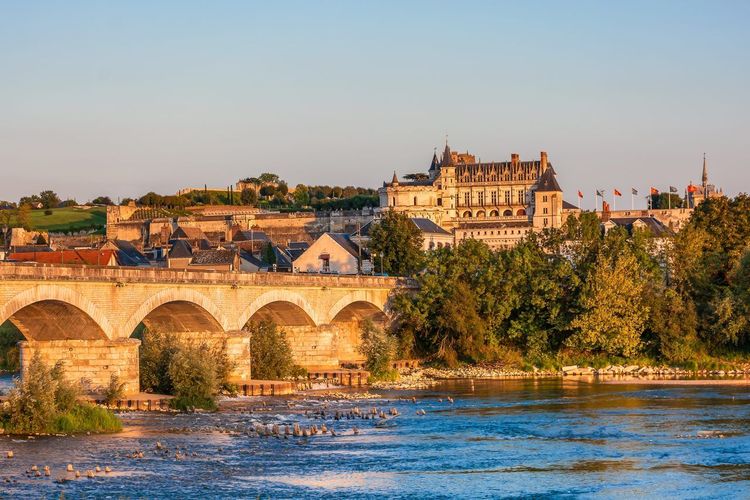
The Île d'Or, a long strip of land sitting in the middle of the river directly opposite the château, offers one of the best vantage points over Amboise. You reach it on foot from the town centre via the bridge that crosses the island before spanning the second arm of the river, and the contrast is immediate: urban noise gives way to the rustling of poplars and the lapping of the Loire against the sandy banks.
The island hosts a municipal campsite, an outdoor swimming pool open in summer, and vast lawns ideal for picnics. It is from its northern bank, facing the château, that the most striking photographs of Amboise's skyline are taken, particularly at the end of the day when the raking light gilds the tufa stone.
In the late afternoon, the people of Amboise often come here to enjoy the sunset over the Loire, a moment when the river takes on copper hues that reflect off the château's façades. You can extend the walk by following the quays on the town side, laid out as a continuous promenade from the bridge and beyond the historic centre, with benches and a few information panels on the Loire's river history — the river is listed as a UNESCO World Heritage Site for its living cultural landscape.
This stop requires no ticket or reservation: it is one of the rare entirely free experiences Amboise has to offer, worth including without hesitation even in a single-day programme, ideally at the end of the route to make the most of the evening light.
5. Explore the Gardens of the Domaine Royal de Château-Gaillard
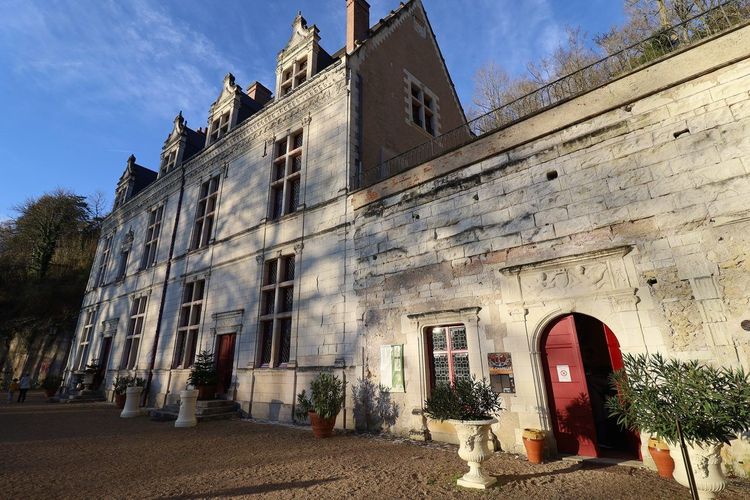
Less well-known than its two royal neighbours, the Domaine Royal de Château-Gaillard (37 Rue de la Châtellenie, 37400 Amboise, rated 4.4/5 on Google from 1,919 reviews) nonetheless claims a founding role in the history of French gardens. It is here that Dom Pacello da Mercogliano, a Neapolitan monk brought back by Charles VIII from the Italian wars, is said to have introduced the first Italian-style gardening techniques on French soil at the very end of the 15th century.
The estate is organised around an orangery that today houses one of the most important collections of orange trees in France, with some specimens exceeding two centuries in age. The terraced gardens, redesigned in a Renaissance spirit, alternate geometric parterres, heritage orchards, and wilder areas, with particular attention paid to historic plant varieties rather than contemporary decorative plantings.
Beneath the gardens, a network of troglodyte caves carved into the tufa once served as a store for protecting citrus trees from winter frost, an ingenious technique before the invention of modern greenhouses. These caves are part of the visitor route and provide a welcome cool break in midsummer, with a temperature that remains stable at around 13°C year-round.
Allow an hour and a half to cover the entire estate at a relaxed pace, more if you linger at the heritage orchard where several old varieties of apples and pears are cultivated. The site remains less crowded than the Château Royal or the Clos Lucé, making it a pleasant stop in the middle of the day when the two major monuments are at their busiest. Wear closed shoes: some of the dirt paths remain damp after rain, particularly in the wooded section of the estate.
6. Climb to the Top of the Pagode de Chanteloup
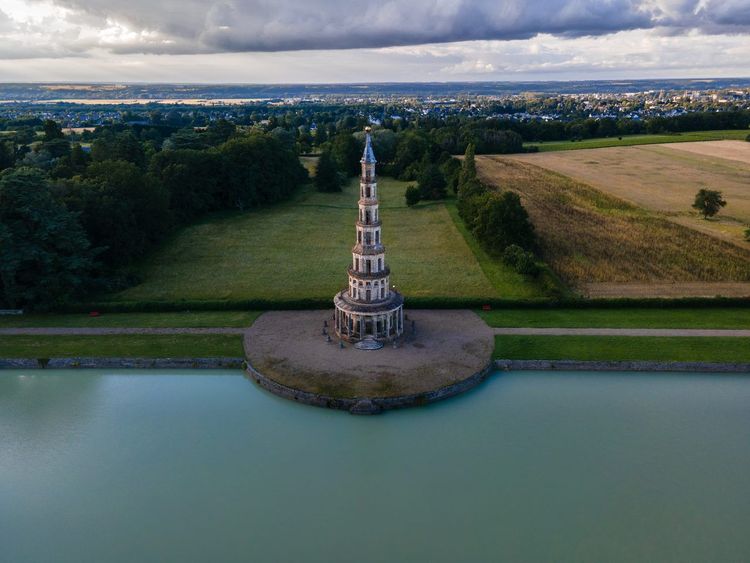
The Pagode de Chanteloup (Route de Bléré, 37400 Amboise, rated 3.5/5 on Google from 1,016 reviews) rises to 44 metres, the sole surviving structure of the vast Château de Chanteloup, the property of the Duke of Choiseul, Louis XV's disgraced minister, who had it built between 1775 and 1778 to commemorate the visits of his loyal friends who came to support him during his fall from grace. The château itself was demolished in the 19th century and sold stone by stone; only the pagoda, deemed too costly to demolish, survived the destruction.
Seven storeys, 149 spiral steps: the ascent to the top requires moderate but sustained effort, rewarded by a 360-degree panorama over the Amboise forest, the Loire valley, and on a clear day as far as the outskirts of Tours. Each landing offers a different view and a natural pause to catch your breath, a structure that makes the climb accessible even for children from around six or seven years old.
Around the pagoda, the 14-hectare park is laid out around a star-shaped lake, a remnant of the original 18th-century garden design. Pedal boats can be hired in summer, picnics can be enjoyed in the shade of centuries-old cedars, and wooden games scattered around the park keep younger visitors busy while adults stroll along the banks. Allow a good hour for the climb and a walk around the lake, more if you plan a picnic. Access by car is via the Route de Bléré, about ten minutes from the centre of Amboise; a free car park adjoins the entrance to the site.
7. Have Fun with the Family at the Parc des Mini-Châteaux
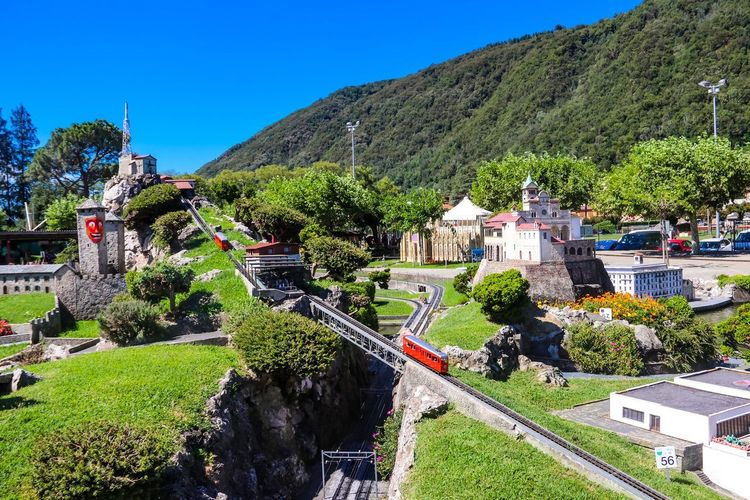
The Parc des Mini-Châteaux (Route de Bléré, 37400 Amboise, rated 4.4/5 on Google from 5,086 reviews) recreates 44 emblematic châteaux and monuments of the Loire Valley at a scale of 1/25, with a level of detail that extends to the reproduction of gardens, miniature waterways, and costumed figurines animating the scenes.
Chambord, Chenonceau, Villandry, and the Château Royal d'Amboise itself all stand side by side along a two-hectare trail, allowing visitors to grasp in one hour the architectural diversity of a region that would otherwise take several days to cover in full. The models, made from weather-resistant materials, are regularly restored and repainted to maintain their fidelity to the original monuments.
The park places a strong emphasis on family fun: water play areas in summer where children can cool off freely, a themed mini-golf, a playground, and an educational trail explaining the history of each château represented. A tourist train also runs through the park for visitors who prefer to observe the models without walking.
Allow two to three hours if you come with young children, who particularly enjoy the water play in summer. The visit lends itself well to a full morning, before following up in the afternoon with a quieter activity such as the gardens of Château Gaillard or a walk along the Loire. The park generally closes from November to March; check seasonal opening times before visiting, particularly during reduced-hours periods in spring and autumn.
8. Discover Underwater Life at the Grand Aquarium de Touraine
About ten minutes by car from Amboise, in the neighbouring commune of Lussault-sur-Loire, the Grand Aquarium de Touraine (26 Rue Louis Proust, 37400 Lussault-sur-Loire, rated 4.3/5 on Google from 6,128 reviews) ranks among the largest freshwater aquariums in Europe, with more than two million litres of water spread across an underground trail that recreates the ecosystems of several continents.
Sharks, piranhas, lionfish, and an impressive collection of giant catfish can be seen along a glass tunnel traversing a tank several metres deep. The touch pools, where children can handle rays or small sharks under the supervision of a guide, remain the most popular attraction for families.
Allow one and a half to two hours for the visit, avoiding the lunchtime slot if possible, when school groups leave and families take over. This makes for an easy excursion to combine at the end of the day with the Parc des Mini-Châteaux, a few minutes away by road, creating an entire afternoon dedicated to children.
9. Browse the Amboise Market and Discover Local Artisan Food
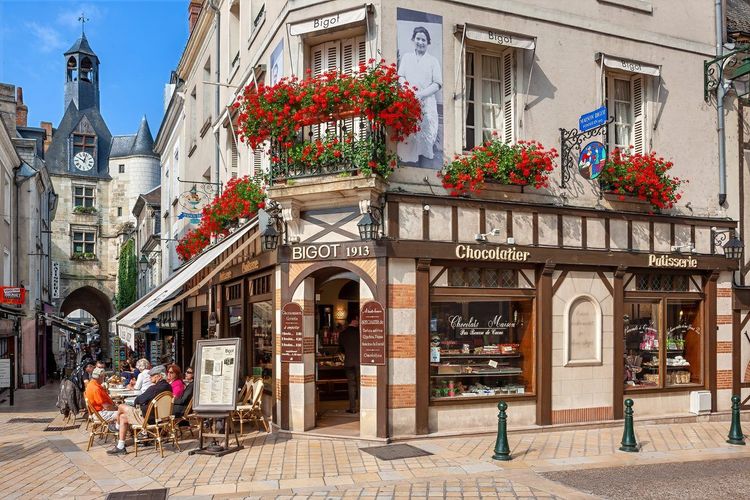
The Amboise market sets up twice a week — Friday morning and especially Sunday morning — along the Quai du Général-de-Gaulle and on Place Michel-Debré, at the foot of the château. Local producers, cheesemongers, greengrocers, and a few bric-a-brac stalls mingle in an atmosphere that draws locals and passing visitors alike, particularly on Sundays when the market extends nearly a kilometre along the quays.
Producers of Sainte-Maure-de-Touraine goat's cheese, recognisable by its characteristic ash-covered log shape, stand alongside market gardeners selling asparagus in spring and Touraine melons in summer. Plan to arrive early, before 10am, to avoid the crowds and get the best choice at the fresh produce stalls.
To extend the gastronomic discovery, the Conservatoire de la Confiserie, located in the town centre, traces the history of local confectionery, including Tours nougat and specialities made with almonds and candied fruits that have made the region's sweet reputation since the 19th century.
Nearby, the Verrerie d'Art d'Amboise (Rue Nationale, 37400 Amboise, rated 4.7/5 on Google from 218 reviews) opens its workshop to the public: visitors can watch glassblowers shape unique pieces freehand in front of a furnace heated to over 1,000 degrees, an impressive spectacle that typically lasts around twenty minutes per demonstration. The adjoining shop sells pieces made on the premises, from blown vases to decorative objects.
More broadly, the town and its surroundings cultivate a way of life rooted in Touraine produce: rillettes and rillons, goat's cheeses, wines from the Touraine-Amboise appellation, and a tradition of food-focused dining that often pairs local producers with chefs trained in classical techniques. Several town-centre restaurants feature menus that change with market deliveries, an easy way to eat truly local without looking far. A handful of wine merchants and delicatessens in the town centre supplement the market's offer during the week, for those who miss the Sunday gathering: they generally stock a concise but well-chosen selection from the same local producers.
If you can only set aside one morning for this experience, choose Sunday: that is when the market displays the greatest variety of producers, and when the atmosphere — lively conversations and impromptu tastings — gives the best sense of everyday life in Amboise. Autumn brings its own specialities: squash, wild mushrooms, and the first roasted chestnuts appear on the stalls from mid-October, while wine producers take the opportunity to offer the first bottles of the new vintage for direct tasting at their stands. A morning at the market pairs nicely with an afternoon on our audio-guided tour of Tours, just half an hour away.
10. Cruise the Loire, Cycle along the Banks, or Ride the Petit Train
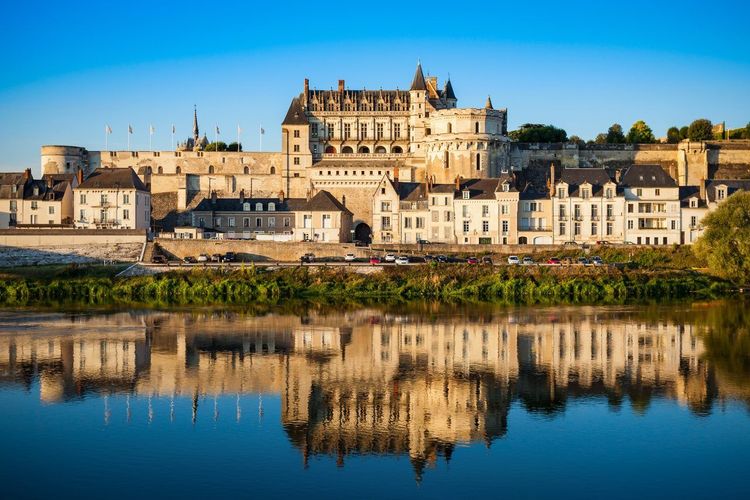
Amboise lends itself particularly well to exploration by water. Cruises aboard a gabare, the traditional flat-bottomed boat once used to transport goods along the river, depart regularly from the quay below the château. The trip, narrated by the boatman, generally lasts 45 minutes to an hour and offers an unusual perspective on the château from water level, impossible to achieve from the bank.
Passing under the bridge arches, reading the current and the shifting sandbanks characteristic of the wild Loire, turns the experience into something as educational as it is contemplative: the boatman generally explains the unique qualities of this river, one of the last great European waterways to remain without heavy infrastructure along a large stretch of its course, listed for this reason as a UNESCO World Heritage Site on the Val de Loire section.
For cycling enthusiasts, the La Loire à Vélo route passes directly through Amboise and allows you to reach Tours to the west or Chaumont-sur-Loire and Chenonceaux to the east, mostly on paths separated from motor traffic. Several hire shops in the town centre offer standard bikes and electric-assist bikes by the day or half-day, a welcome option for covering the kilometres without effort under the summer sun. Hire rates typically range from €15 to €20 per day for a standard model, more for electric-assist, a cost quickly justified over a route of several dozen kilometres.
The stretch linking Amboise to Chenonceaux, around 13 kilometres, takes about an hour and a half at a leisurely pace, following vineyards and then the banks of the Cher towards the end of the route. Allow a half-day if you plan to visit the château on arrival before cycling back.
For a lighter option, without physical exertion, the Petit Train d'Amboise makes a narrated loop through the main streets of the historic centre and up to the château, with regular departures from Place Michel-Debré during the tourist season. The circuit lasts about thirty minutes and is particularly well suited to families with young children or visitors with reduced mobility who still want a broad overview of the town.
The level of the Loire varies greatly by season: in summer, the river reveals wide sandbanks that give an almost desert-like impression in places, while in spring, after snowmelt and rainfall, the current runs stronger and the banks almost disappear beneath the water. This variability, typical of a largely wild river, often surprises visitors who expect a more stable waterway.
Canoe and kayak outings, organised by local operators departing from Amboise or nearby communes such as Chargé, offer a more active immersion, paddling between sandbanks and wooded islets that dot the riverbed. These outings, generally guided, last two to three hours and remain accessible to beginners on the calm stretches around Amboise. Finally, for those who simply want to walk, the paved promenade along the quays, between the bridge and the Île d'Or campsite, provides a flat, shaded route of about three kilometres return, dotted with benches and interpretation panels on the river's wildlife, including the colonies of terns that nest on the sandbanks during the breeding season, generally from April to August.
11. Taste the Wines of the Val d'Amboise in the Troglodyte Caves
The Val d'Amboise vineyard, under the Touraine-Amboise appellation, spreads across the hillsides overlooking the right bank of the Loire, planted mainly with chenin blanc, cabernet franc, and gamay. If you enjoy wine and terroir, the troglodyte caves carved into the tufa offer a particularly atmospheric setting for tasting, with a constant temperature that naturally favours the ageing of bottles.
The Caves Ambacia, set in former stone quarries a few minutes from the centre, offer tasting tours that pair local wines with a presentation of the barrel-ageing process, in vaulted galleries where raw rock remains visible on the walls.
A few kilometres away, the estate Plou & Fils (Route de Chargé, 37400 Amboise, rated 4.8/5 on Google from 651 reviews), a family operation established for several generations on the slopes of the Val d'Amboise, also opens its troglodyte caves for tastings, in a more intimate setting directly connected to the family's own work in the vineyard.
These two addresses offer complementary atmospheres: one more structured and educational at Ambacia, the other more family-oriented and convivial at Plou & Fils, with the frequent possibility of chatting directly with the winemaker on site. Both caves offer guided tours followed by a tasting of three to five cuvées, generally by reservation in high season.
Allow an hour for a standard tour-and-tasting. This activity pairs well with a quiet afternoon, as a complement to a morning spent at the châteaux, and offers the chance to leave with a few bottles at producer prices, often better value than in supermarkets for wines of comparable quality.
12. Branch Out to the Loire Châteaux and Surrounding Villages
Amboise makes an ideal base for exploring the Loire châteaux, several of which are within less than an hour's drive. The Château de Chenonceau (37150 Chenonceaux, rated 4.7/5 on Google from 50,682 reviews), about 13 kilometres away, is the most obvious excursion: nicknamed the 'château of the ladies' for the influential women who shaped its history, it literally spans the Cher river thanks to its gallery built on the arches of a former fortified mill.
The visit is complemented by spectacular formal gardens laid out on either side of the château, and a hedge maze popular with children. Allow a half-day for the full visit, including travel from Amboise, more if you plan to have lunch on site.
For visitors with more time, Chambord and Chaumont-sur-Loire usefully complete the picture. Chambord, about 45 minutes by road, impresses with its scale (440 rooms, a double-helix staircase attributed to Leonardo da Vinci's plans), while Chaumont-sur-Loire, about twenty minutes away, is distinguished by its international garden festival, renewed each year between April and November on a different theme.
Tours, the prefecture of Indre-et-Loire, can be reached in under 30 minutes by car or train from Amboise station, with several daily services. The city offers a welcome contrast to Amboise's quieter pace: a lively old quarter around Place Plumereau, lined with half-timbered houses hosting bars and restaurants, the Gothic Cathédrale Saint-Gatien with its remarkable stained-glass windows, and a more active nightlife driven by a large student population. A half-day is enough for a taste of the historic centre, more if you want to visit the museums. If you take the opportunity to explore Tours more thoroughly, the Ryo audio-guided tour of Tours covers 23 audios over 5.4 kilometres, from the old quarter to the Cathédrale Saint-Gatien: enough to turn a half-day of wandering into a guided visit, with no paper guide and no fixed schedule.
Around Amboise, several villages are worth a detour for those with an extra day. Lussault-sur-Loire, already mentioned for its aquarium, also preserves troglodyte heritage carved into the hillside. Chançay, about fifteen minutes to the north, is home to the Château de Valmer and its terraced gardens, open to visitors in season. Further south, the wine villages of Limeray and Pocé-sur-Cisse offer an authentic glimpse of the Touraine agricultural landscape, far from the tourist flows concentrated on the major châteaux.
To organise these excursions without wasting time, it is best to prioritise according to the length of your stay: on a weekend, focus on Chenonceau alone as a complement to Amboise; over three to four days, add Tours and one of the other two châteaux depending on your preference for grandeur or gardens; beyond a week, the wine villages and troglodyte caves deserve a full day to themselves, with no other objective than unhurried exploration.
On the transport side, a car remains the most flexible option for visiting several châteaux in the same day, as the region is not always well served by public transport outside the Tours–Amboise–Blois rail corridor. Seasonal tourist shuttles do, however, connect Amboise to Chenonceau and Chambord between April and September — an option worth considering if you are travelling without a vehicle; check with the Amboise tourist office for up-to-date timetables, which vary each year. If you are travelling outside high season, bear in mind that some châteaux reduce their opening hours between November and March, with occasional closures in January for maintenance. Always check opening times online before setting out, particularly for excursions combining several sites in the same day.
13. Things to Do in Amboise with the Family
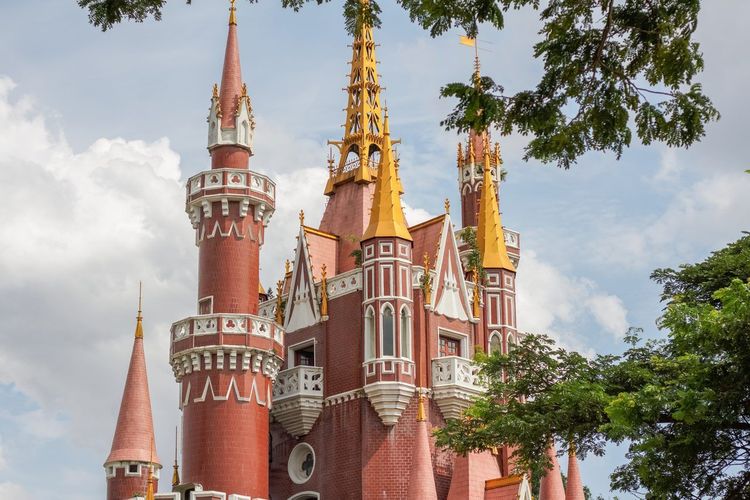
With children, Amboise packs enough varied activities to fill a multi-day stay without repetition. The Parc des Mini-Châteaux and its water play areas remain the must for younger visitors, particularly in summer, while the Grand Aquarium de Touraine appeals to all ages thanks to its touch pools.
The underground passages of the Château Royal tend to fascinate children from around seven or eight, who enjoy the slightly mysterious quality of this part of the monument, while the park at the Clos Lucé, with its full-scale Da Vinci machines that visitors can operate themselves, works well across all age groups, including the youngest who do not need to understand the history to enjoy turning a handle.
The climb up the Pagode de Chanteloup, with its seven floors and a view from each landing, turns the ascent into a small progression game that children readily approach as a challenge, unlike a simple walk on flat ground. The park's lake, with pedal boats available for hire in summer, naturally extends the outing.
For rest days between more intensive visits, the Sunday market, a walk on the Île d'Or, or a simple crêpe eaten on a terrace along the Rue Nationale are enough to fill a morning without effort or a rigid schedule. Many families deliberately alternate a 'monument day' (château, Clos Lucé) with an 'outdoors day' (aquarium, mini-châteaux park, Loire à Vélo by family tandem) to avoid tiring the youngest with an accumulation of heritage visits.
14. Things to Do in Amboise on a Rainy Day
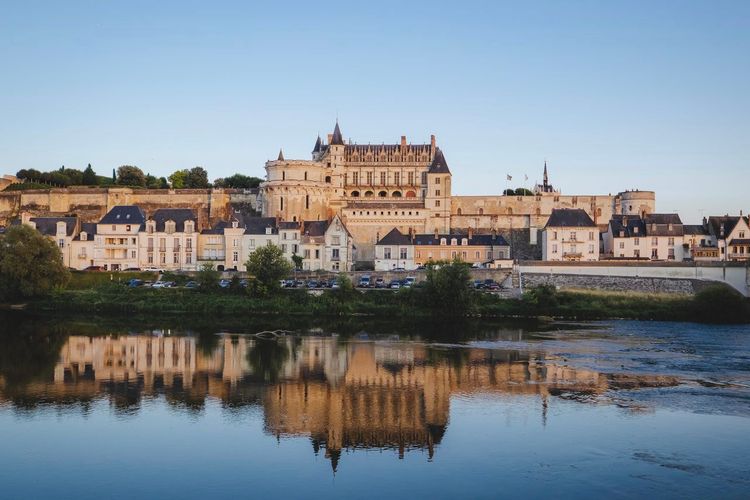
A rainy stay in Amboise is no problem at all: the majority of the top attractions take place indoors or are largely sheltered. The underground passages of the Château Royal, in fact, take on an entirely different character in the rain, with the ambient humidity heightening the atmosphere of the rock-carved galleries.
The Clos Lucé — with its apartments, vaulted basement housing Da Vinci's models, and light workshop — can be visited almost entirely under cover, with only the outdoor park needing to wait for a dry spell. The Grand Aquarium de Touraine, entirely indoors, is obviously the ultimate refuge in extended bad weather.
The troglodyte caves of the Caves Ambacia or Plou & Fils also offer a pleasant escape, with wine tasting lending itself particularly well to a grey afternoon. The Conservatoire de la Confiserie and the Verrerie d'Art, both indoors, usefully round out a rainy-day programme without sacrificing local heritage discovery. Only the Pagode de Chanteloup and its gardens lose much of their appeal in driving rain: best to save that for a clearer day.
15. Practical Information: Where Amboise Is, How to Get There, Parking, and Where to Eat
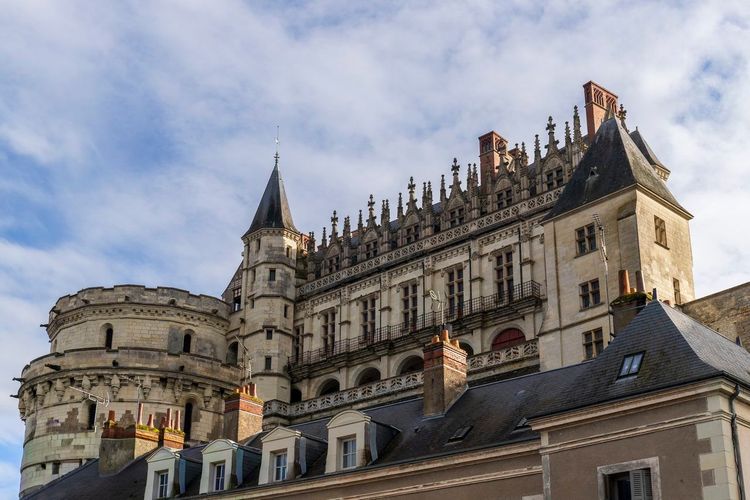
Amboise is located in the Indre-et-Loire department, in the Centre-Val de Loire region, approximately 220 kilometres southwest of Paris and about thirty kilometres from Tours. The town stretches along the right bank of the Loire, at the confluence with the small Amasse river, set among wine-growing hillsides that overlook the valley.
To reach Amboise from Paris, there are two main options. A direct train from Gare d'Austerlitz serves Amboise station in just over two hours, with several daily services; alternatively, the TGV to Saint-Pierre-des-Corps (Tours) followed by a twenty-minute regional train reduces the journey to around 1h20, often faster despite the connection. By car, allow approximately 2h15 via the A10 motorway from Paris, exiting at Amboise or Tours-Centre depending on your destination.
From Tours, Amboise is 20 to 30 minutes away depending on your mode of transport: regional train, car via the D751 road that follows the Loire, or even by bike along the La Loire à Vélo route for the more athletic, covering around thirty kilometres.
Parking in Amboise is generally straightforward outside the July–August peak. The Place Michel-Debré car park at the foot of the château is the most central but also the busiest; free parking is also available on the immediate outskirts of the centre, notably near the station, a ten-minute walk from the château. In high season, arriving before 10am usually guarantees a space without a long search.
For eating in Amboise, the Rue Nationale and the quays concentrate most of the dining options, from traditional brasseries to more gastronomic tables. Local specialities to look for on menus include Tours rillettes, Sainte-Maure goat's cheese, Loire fish (pike-perch, pike) prepared with beurre blanc, and wines from the Touraine-Amboise appellation to accompany them. Book ahead in summer for the most popular spots, particularly those with a terrace overlooking the Loire or the château.
The best season to visit Amboise depends on your priorities: spring (April–June) offers soft light and gardens in full bloom with still manageable crowds; summer guarantees the best weather but also the highest footfall, with noticeably longer queues at the monuments at midday in July and August; autumn (September–October) still enjoys fine conditions with a return to calm, a period that regulars often consider ideal; winter, finally, reduces opening hours at several sites but gives the town almost back to itself, with the bonus of the château's Christmas market in December.
For a single-day visit to Amboise, prioritise carefully: Château Royal in the morning (before the crowds), Clos Lucé late morning or early afternoon, then the historic centre and the banks of the Loire to wind down gently. This trio is enough to capture the essence of the heritage, leaving excursions and family activities for a future, longer stay.
Finally, several local operators offer an activity pass bundling entry to multiple sites (château, Clos Lucé, mini-châteaux park in particular) at a reduced rate compared to buying tickets separately: an option worth considering if your programme includes three or more paid visits during the same stay. If you are moving on to other Loire Valley towns, the Ryo audio-guided tour of Blois fits easily into a day trip eastward: 23 audios over four kilometres, about forty minutes by road from Amboise, with the royal château of Blois as the centrepiece.
FAQ
What are the must-do activities in Amboise?
The Château Royal d'Amboise and the Château du Clos Lucé form the unmissable duo, complemented by a stroll through the historic centre to the Tour de l'Horloge. If time allows, add the gardens of Château Gaillard or the climb up the Pagode de Chanteloup, a ten-minute drive from the centre, to vary the pleasures between built heritage and natural spaces.
What can you do in Amboise for free?
A walk on the Île d'Or and along the Loire quays costs nothing, as does wandering through the historic centre and its half-timbered lanes. The Sunday market can also be visited without an entrance ticket, even if tasting the products is obviously paid. The exterior and ramparts of the Château Royal can also be admired for free from the town.
How can you explore Amboise without a car?
The town centre can be covered entirely on foot in about two hours, from the central car park to the quays. For longer distances, such as reaching the aquarium or the Pagode de Chanteloup, a bike rented in the town centre or the tourist Petit Train are more than sufficient. Some visitors complement their walk with the Ryo app, whose audio-guided routes cover other Loire Valley towns visited during the same trip.
Is Amboise a beautiful town to visit?
Amboise combines an exceptional Renaissance heritage, a preserved natural setting along the UNESCO-listed Loire, and a human scale that makes it easy to take in within a short time. It is one of the most complete stops in the Loire Valley for those with two to three days.
How much time should you plan for visiting Amboise?
Two days are enough to cover the must-sees (château, Clos Lucé, historic centre) at a leisurely pace. Three to four days leave room for the gardens of Château Gaillard, the Pagode de Chanteloup, wine-tasting caves, and a trip to Chenonceau, for a more complete stay.
What can you do in Amboise in just one day?
Prioritise the Château Royal in the morning, followed by the Clos Lucé in the early afternoon, then finish with a stroll through the historic centre down to the banks of the Loire in the late afternoon. This condensed itinerary covers the essentials without overdoing it, leaving family activities or excursions for a future visit.
Amboise stands out from other Loire Valley stops for its ability to bring together several styles of visit within a compact area: royal heritage, the memory of Leonardo da Vinci, Loire nature, gastronomy, and troglodyte vineyards. Two to three days are enough to grasp the essentials, but there is nothing stopping you from extending towards Chenonceau, Tours, or the nearby wine villages for those with a week to spare.
If your itinerary continues westward or eastward along the river, remember to download the app before you leave: the Ryo audio-guided tour of Orléans, 24 audios over 4.6 kilometres, applies to Joan of Arc's city the same principle of self-guided commentary appreciated in Amboise through its mediation features. Enough to turn each new stop on your Loire Valley trip into a discovery just as rich as this one.
À lire également