© Shutterstock
 Votre guide Ryo
Visiting Tours with Kids: Our 2026 Family Guide
In Tours, kids don't just visit a Gothic cathedral — they hunt for the devil hidden in the stone facade and count the gargoyles before their parents do. It's this human-scale city, where the old centre can be crossed on foot in twenty minutes, that makes visiting Tours with children surprisingly easy: no endless queues, no half-closed sites under renovation, just a dense historic centre where monuments follow one after another just steps apart. The Ryo audio guide tour of Tours lets you connect several of these stops without getting lost in the half-timbered alleyways.
In a single day, you can come across a cedar of Lebanon planted in 1804 in the courtyard of a museum that's free for under-18s, an 11th-century tower that leans slightly without ever having fallen, and a fully pedestrianised square where the youngest visitors inevitably end up running between the café terraces. Add a panda zoo less than an hour's drive away and châteaux where you can deliberately lose yourself in a garden maze, and Tours becomes an ideal base for a stay in the Val de Loire — whether you remain in the city or multiply day trips.
Vieux Tours and Its Carrois: an Open-Air Playground
The Vieux Tours quarter has kept its medieval layout almost intact, and it's precisely this labyrinth of cobbled alleyways that captures children's attention even before the first monument. Dozens of half-timbered houses line the streets, some leaning, others adorned with sculptures of animals or grimacing faces carved in the 15th century. Locals call these narrow lanes carrois, a word derived from the Latin quadruvium meaning crossroads. The carroi aux Chevaux, the carroi des Trois Pucelles, and the carroi des Trois Rois bear names that immediately amuse younger visitors and turn a simple stroll into an improvised treasure hunt.
Along rue du Grand Marché and rue Colbert, chocolate shop windows and ice cream vendors punctuate the route at regular intervals, helping to keep a pushchair or a pair of tired six-year-old legs moving without negotiation. Try challenging your kids to spot three different facades decorated with sculptures: a cat, a face, and a bunch of grapes are recurring motifs on the exposed beams.
Local guides also recount that in the Middle Ages, each carroi corresponded to a trade or guild, which explains why certain streets still bear the names of long-vanished businesses, such as rue de la Rôtisserie. This continuity between a street name and its history works well for capturing the attention of older children, curious to understand why a city preserves such ancient traces in its present-day layout.
The best time to wander through is late morning on a weekday, when the terraces aren't yet packed and the light filters nicely through the narrow lanes. Allow around one hour for this walking route, not counting the food stops that will inevitably be negotiated along the way.
Place Plumereau and the Secret Garden of Saint-Pierre-le-Puellier
Nicknamed "Place Plum" by locals, Place Plumereau is the beating heart of Vieux Tours: half-timbered houses all around, café terraces spilling onto the cobblestones, and a space wide enough for children to run without bothering anyone. In summer, street musicians and jugglers set up there in the late afternoon, turning the wait for an ice cream into a free little show.
Two minutes on foot away, the jardin Saint-Pierre-le-Puellier (Rue Jules Favre, 37000 Tours, rated 4.6/5 on Google from 10 reviews) hides behind a discreet archway that many hurried visitors completely miss. It's a small green space laid out over the remains of a former church, with benches, shade, and enough quiet to catch your breath for ten minutes between visits. Entry is free and it makes an excellent impromptu picnic spot if you've brought snacks.
For a more comfortable break with toddlers, book a table on the square-side terrace rather than the shopping street side: less foot traffic, more room to leave a pushchair out of the way.
Saint-Gatien Cathedral and Its Gargoyles to Spot
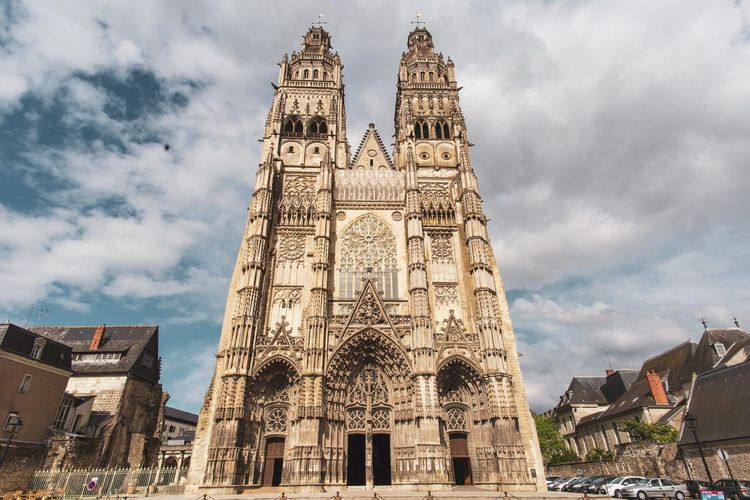
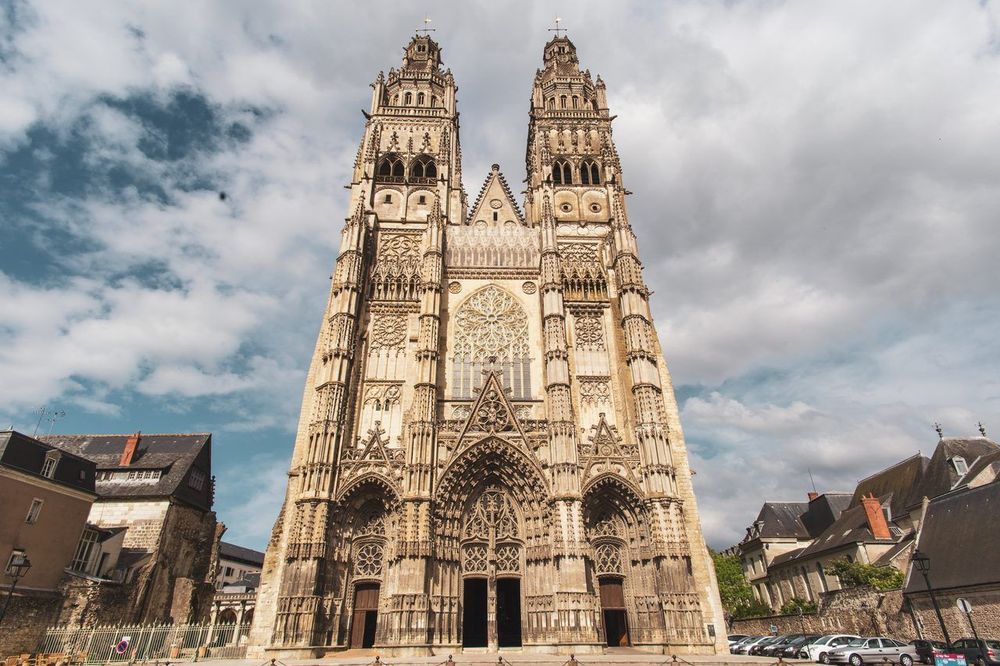
The cathédrale Saint-Gatien (Place de la Cathédrale, 37000 Tours, rated 4.6/5 on Google from 7,954 reviews) impresses first with its Flamboyant Gothic facade topped by two towers crowned with Renaissance domes — a blend of styles that unfolded over three centuries of construction. Inside, the 13th-century stained glass windows are among the oldest preserved in France, and their deep blue draws the eye the moment you step into the nave. Set a challenge: spot the gargoyles carved along the exterior cornices — each facade hides several, often grimacing or animal-shaped.
The Cloître de la Psalette: a Quiet Interlude
Just behind the cathedral, the cloître de la Psalette (Cloître de la Psalette, 37000 Tours, rated 4.2/5 on Google from 98 reviews) remains little known to hurried visitors, making it a calmer stop after the crowds in the nave. Built between the 15th and 16th centuries, it preserves a remarkable spiral staircase and a vaulted gallery where footsteps echo — a detail that always delights younger children. The visit takes fifteen minutes, the ideal format for not testing the patience of a four- or five-year-old.
Tour Charlemagne: the Leaning Remnant
The Tour Charlemagne is all that remains, along with another remnant a few streets away, of an immense Romanesque basilica demolished in the early 19th century. It leans slightly, a phenomenon immediately noticed by the most curious visitors and a great opportunity to explain why certain ancient monuments tilt without ever collapsing.
Basilique Saint-Martin and Its Golden Mosaics
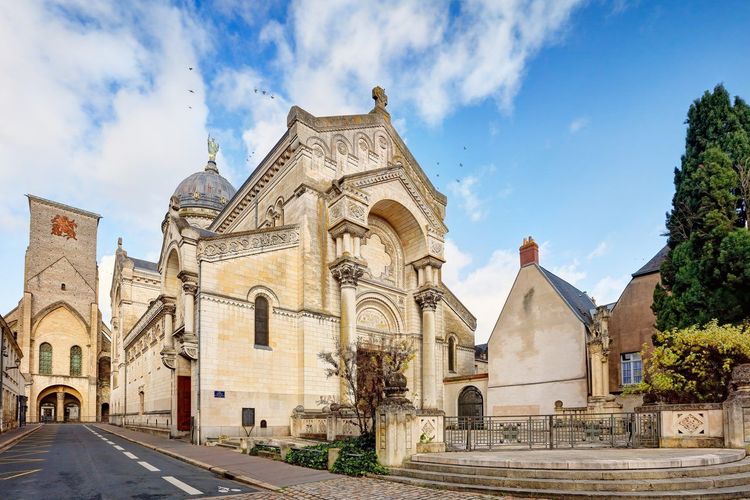
Nearby, the basilique Saint-Martin, built in the late 19th century in a neo-Byzantine style that is surprising for the region, houses in its crypt the tomb of Saint Martin, one of the oldest pilgrimage sites in France. Entry is free and the golden mosaics inside easily hold visitors' attention, even those who usually find churches dull.
Musée des Beaux-Arts and Its Centuries-Old Cedar of Lebanon

Housed in the former archbishops' palace, the musée des Beaux-Arts de Tours (Place François Sicard, 37000 Tours, rated 4.4/5 on Google from 1,588 reviews) stands out as much for its collections as for its courtyard, where a cedar of Lebanon planted in 1804 spreads its enormous branches across almost the entire space — an impressive sight before you've even stepped inside the galleries.
Local lore also tells that in 1902, a circus elephant named Fritz, who became uncontrollable during a visit to Tours, was shot there; taxidermied, he is now one of the best-known exhibits at the city's Natural History Museum — a macabre tale that strangely fascinates curious ten-year-olds and up. Admission to the museum's collections is free for under-18s, and the garden offers room to stretch your legs between galleries if attention begins to flag. Allow one hour for the essentials, a little more if there's interest in the Flemish paintings on the first floor.
Musée du Compagnonnage: the Museum You Look at Up Close
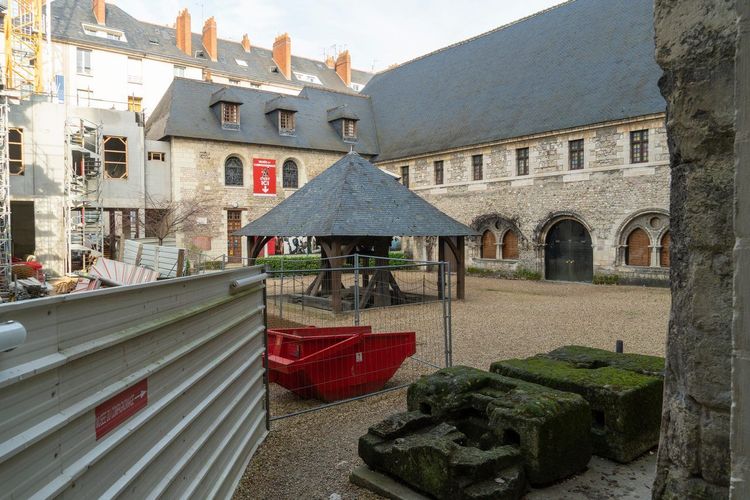
Housed in the former abbaye Saint-Julien, the musée du Compagnonnage (Rue Nationale, 37000 Tours, rated 4.6/5 on Google from 1,627 reviews) brings together hundreds of miniature masterpieces made by apprentice craftsmen over the centuries: tiny staircases, precision timber frames, shoes carved with a knife, model boats assembled entirely by hand.
This level of detail speaks particularly to children who enjoy construction toys, as they immediately recognise the complexity of a miniature object. Workshops are sometimes organised during school holidays, offering a short introduction to a simple craft technique — ask at the front desk when you arrive, as slots fill up quickly during peak season.
Natural History Museum: Dinosaurs and Taxidermy Animals
The Muséum d'Histoire Naturelle de Tours (Rue Marcel Proust, 37000 Tours, rated 4.2/5 on Google from 755 reviews) remains one of the most reliable outings regardless of age. The collections combine minerals, insects arranged by the hundreds in glass-fronted drawers, and taxidermied animals from around the world — including Fritz the elephant and a reduced-scale dinosaur skeleton that always makes a strong impression on the first floor.
Some interactive display cases allow visitors to handle reproductions, a format that holds attention far longer than a simple explanatory label. Temporary exhibitions regularly refresh the appeal of the venue, often focusing on the local wildlife of the Val de Loire.
Allow an hour and a half for the full visit, and consider booking online during school holidays: weekend slots sell out as early as Friday evening some weeks.
The Botanical Garden and the Loire Riverbanks: Breathing Space Between Visits
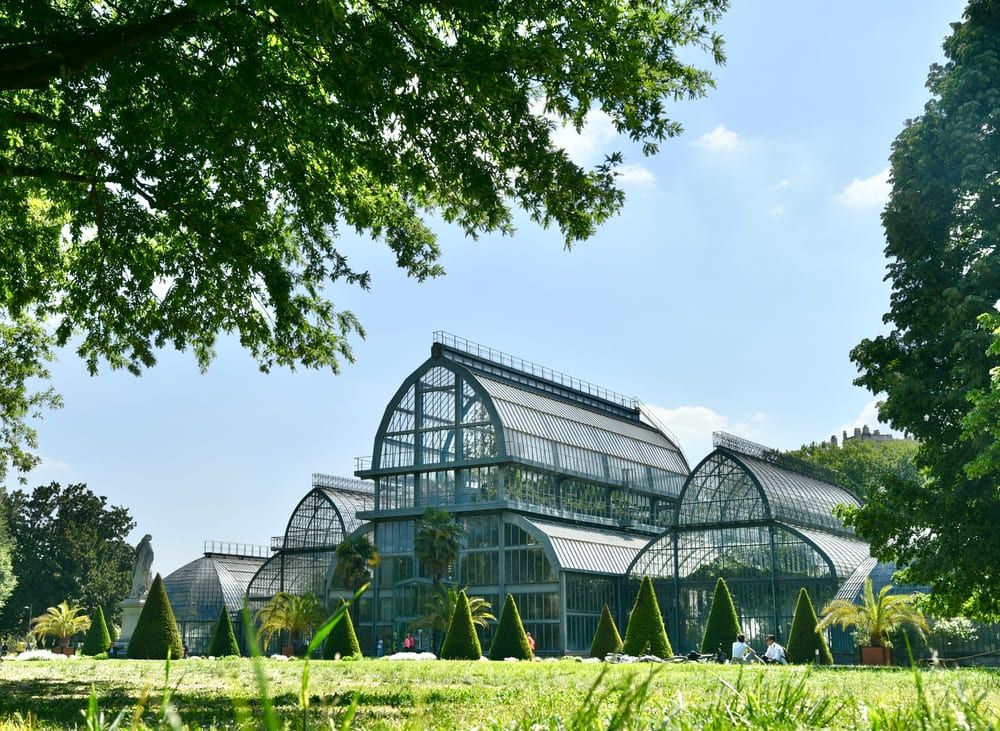
The jardin botanique de Tours (Rue Jean-Jacques Bousrez, 37000 Tours, rated 4.6/5 on Google from 6,726 reviews) combines tropical greenhouses, a rose garden, and — most importantly — a small animal enclosure with pygmy goats and poultry, making it a livelier break than a standard garden. A playground completes the space, handy for letting younger children burn off energy while parents read the botanical information panels.
A few minutes away, the Loire riverbanks shift to a completely different atmosphere in summer: a sandy beach is set up each year along the river, with deck chairs and free entertainment. Some traditional flat-bottomed boats also offer one-hour outings on the river from the city centre, a peaceful way to see the Loire from the water rather than the bank. This stretch of the river is also covered by the audio-guided tour of Tours, making it easy to follow the river walk with a visit to the historic centre straight after.
Aquarium du Val de Loire: the Safe Bet on Rainy Days

About thirty minutes from Tours, in Lussault-sur-Loire, the Aquarium du Val de Loire focuses mainly on the wildlife of rivers and freshwater ponds — giant catfish leading the way — before opening onto a few more colourful tropical tanks. It's an ideal fallback outing when rain arrives: the entire route is covered and takes between ninety minutes and two hours to complete.
The touch pools, where you can hold your hand near small rays or river fish, remain the most memorable moment for younger visitors. Book online during school holidays, as queues at the ticket desk grow fast on bad-weather days.
Escape Rooms, Virtual Reality, and Activities for Teens

Tours has several escape rooms and a virtual reality arcade in the city centre — welcome options when the weather isn't cooperating or when the teenagers in the group find museums a little too quiet for their liking.
These activities generally need to be booked online, especially at weekends and during school holidays when evening slots go fast. Allow one hour per session — a format that fits easily between a morning visit and dinner.
Day Trip to ZooParc de Beauval: the Outing Everyone Agrees On

Just under an hour's drive from Tours, ZooParc de Beauval (41110 Saint-Aignan, rated 4.7/5 on Google from 98,245 reviews) ranks among the most visited zoos in France, and it will likely be the first outing requested once children know it exists. The park is home to giant pandas — it is the only zoo in France to house them — as well as koalas, one of Europe's largest collections of big cats, and an equatorial dome sheltering tropical species in a heated greenhouse year-round.
The sheer size of the park means you should plan a full day rather than a half-day: the distances between zones are real, and the Beauval Express mini-train lets you rest between pavilions without exhausting younger legs.
Arrive at opening time if possible, especially during school holidays: the pandas and shaded areas are packed by ten o'clock. Booking tickets online in advance is strongly recommended, as prices vary by season and queues at the ticket desk can exceed thirty minutes during peak periods.
If your itinerary is tight, this detour is still worth prioritising: few outings generate such spontaneous enthusiasm, from toddlers captivated by the giraffes to teenagers more drawn to the big cats.
Loire Valley Châteaux: Which Ones to Choose with Young Visitors
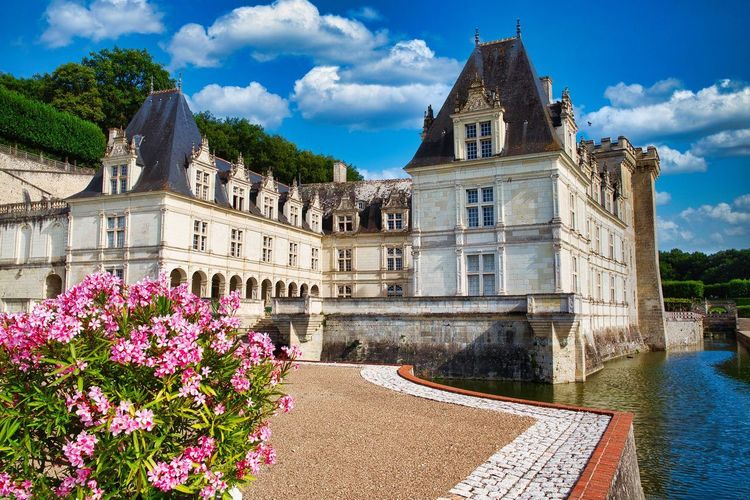
Tours is less than thirty minutes from several Loire Valley châteaux known for their accessibility, and there's no need to visit them all to make a stay memorable. The château de Villandry stands out for its gardens rather than its state rooms: a garden maze, an ornamental kitchen garden arranged in a chequerboard of vegetables, and a lovers' garden shaped like hearts hold young visitors' attention far longer than the furnished interiors.
To explore this estate in detail before your visit, our Ryo article on the château de Villandry and its gardens lists the best times to visit the kitchen garden in bloom.
The château de Chenonceau, built partly over the river itself, charms with its gallery suspended above the water — a covered bridge you cross from one bank to the other without ever leaving the building. The pathways are wide and broadly pushchair-friendly, a detail that matters when the day promises to be a long one.
In Amboise, the château du Clos Lucé (Rue du Clos Lucé, 37400 Amboise, rated 4.5/5 on Google from 24,240 reviews), Leonardo da Vinci's last home, features a park dotted with giant scale models of his inventions — a tank, a movable bridge, a flying machine — which visitors can touch and sometimes operate. It is probably the most suitable château for those more curious about science than art history.
To plan a complete multi-day itinerary, our road trip of the Loire Valley Châteaux offers a route connecting these stops without retracing the same road twice.
Where to Eat in Tours Without Ruining the Mood
Rue Colbert concentrates most of the city centre's best addresses, from traditional crêperies to restaurants offering children's menus without any fuss. The rillettes de Tours and the local nougat — sweeter and more crumbly than its Provençal counterpart — are worth a taste even with picky eaters reluctant to try unfamiliar dishes.
Around Place Plumereau, shaded terraces easily accommodate pushchairs and often offer a simple dish such as pasta or steak and chips — a reassuring option at the end of a long day of sightseeing. To explore the local specialities further before your visit, our Ryo article on the culinary specialities of Tours details the must-try dishes.
Where to Stay in Tours for a Family Trip

The city centre has several hotels within walking distance of Vieux Tours, convenient for heading back quickly if fatigue sets in mid-afternoon. Apartment-style accommodations with a kitchenette, more common near the train station, allow you to prepare a simple meal without depending on restaurant hours — a real comfort with young children.
For outdoor enthusiasts, several campsites line the Loire about fifteen minutes from the centre, with direct access to cycling paths and often a small beach set up in summer.
Good to Know: Budget, Transport, and Best Season
The Fil Bleu tram network covers most of the city centre and makes travelling with a pushchair straightforward — a comfortable alternative to walking at the end of the day. Most municipal museums remain free for under-18s, which noticeably reduces the budget for a multi-day stay.
Spring, when the gardens at Villandry and the botanical garden are in bloom, and early autumn, when queues shorten considerably, remain the best windows for discovering Tours and its surroundings. To fine-tune your excursion planning, our Ryo guide to the Loire Valley châteaux details travel times between each site.


FAQ
How much time should you plan to visit Tours with kids?
Two days are enough to cover Vieux Tours, the cathedral, and one family-friendly museum. Allow three to four days if you add a trip to ZooParc de Beauval and one or two Loire Valley châteaux.
Is Tours suitable for toddlers?
Yes: the historic centre is entirely walkable with no significant elevation changes, municipal museums are free for under-18s, and several gardens offer quiet spaces for a stroller nap.
What budget should you plan for a stay in Tours?
Plan for a moderate budget in the city itself thanks to free admission at several museums, but set aside a dedicated amount for excursions — especially ZooParc de Beauval and the paid châteaux, which make up the bulk of activity costs.
Is ZooParc de Beauval reachable without a car from Tours?
Seasonal shuttles and bus services connect Tours to Saint-Aignan during school holidays, but a car remains the simplest and most flexible option for a full day on site.
Which Loire Valley châteaux are best for young visitors?
Villandry for its gardens and maze, and Clos Lucé in Amboise for its giant interactive models, are consistently the two most appreciated options for children under ten.
What is the best time of year to visit Tours as a family?
Spring, when the gardens at Villandry and the botanical garden are in bloom, and early autumn, which is less crowded, offer the best conditions for discovering the city and its surroundings.
Tours doesn't need an overloaded itinerary to impress: a compact historic centre, free museums for younger visitors, and a panda zoo less than an hour's drive away are enough to fill several days without needing to get back in the car every morning and evening. Whether you stay focused on Vieux Tours and its carrois or venture out to the Loire Valley châteaux, the Ryo audio guide to Tours remains a great way to connect the main stops in the city centre without spending too much time searching for your bearings.
À lire également