© Shutterstock
 Votre guide Ryo
A Weekend in Heraklion: 2-Day Itinerary Between the Venetian Old Town and the Palace of Knossos (2026)
Forty-eight hours in Heraklion is all it takes to realize Crete is more than its beaches. Between the Venetian walls that still encircle the old harbor and the frescoes of the Palace of Knossos five kilometers away, a weekend in Heraklion means constantly choosing between Venetian lanes and a Minoan civilization more than 3,500 years old. To find your way around this maze of alleys without wasting time, the Ryo audio-guided tour of Heraklion traces a walking thread from the Venetian harbor to the Agios Minas Cathedral.
Two days are enough to see the essentials, provided you organize them well. On the program: the Koules Fortress and its 16th-century walls, the richest collection of Minoan art in the world at the Archaeological Museum, ancient machines reconstructed at the Kotsanas Museum, and, a little over an hour away by road, the fortress island of Spinalonga set in a turquoise lagoon. Between visits, a Cretan taverna serves a moussaka generous with vegetables and local olive oil. What remains is deciding how to spread these must-sees over two days, where to go out in the evening, where to sleep and how much to budget: that is the purpose of this guide, designed as a short but packed Cretan getaway.
Day 1: Heraklion's Venetian Old Town
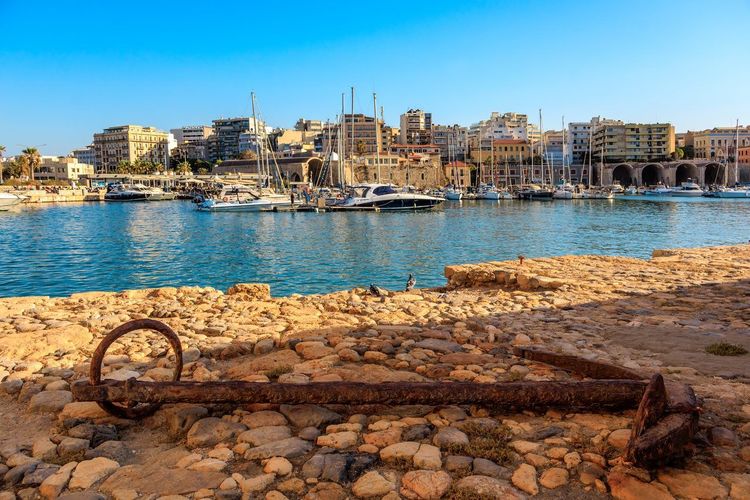
The first day is spent entirely in the historic center, which is compact and largely pedestrian. Heraklion has preserved most of its Venetian urban layout: ramparts, paved squares, fountains with sculpted lions. Allow a morning for religious and museum heritage, and the afternoon for the waterfront and its bastions.
Agios Minas Cathedral and the Archaeological Museum
Start at the square of the same name, home to the Agios Minas Cathedral, the largest church in Crete and one of the largest in Greece. Its foundation stone was laid in 1862, but the Cretan revolt of 1866-1869 halted construction, which resumed only in 1883: it was not consecrated until 1895. Right next door, a much more modest chapel bears the same name, and locals still celebrate their patron saint there every November 11, a sign that the place has never lost its role as a living parish.
Ten minutes on foot away, the Heraklion Archaeological Museum houses the most complete Minoan collection in the world: the Phaistos Disc with its still undeciphered signs, the restored colored frescoes from the Palace of Knossos, the figurines of the snake goddess. Allow an hour and a half for a serious visit, two if you like reading every label.
Note that the official combined museum and Knossos ticket no longer exists: each site is now paid for separately, at 20 euros full price per entry. Buy your tickets in advance on the Greek Ministry of Culture's e-ticket platform to avoid the ticket office. On your way out, continue to Venizelou Square, where the Morosini Fountain has poured its water through four marble lions since 1628: it is the locals' favorite meeting spot for an iced coffee on a terrace before resuming the visit.
Koules Fortress and the Venetian Harbor
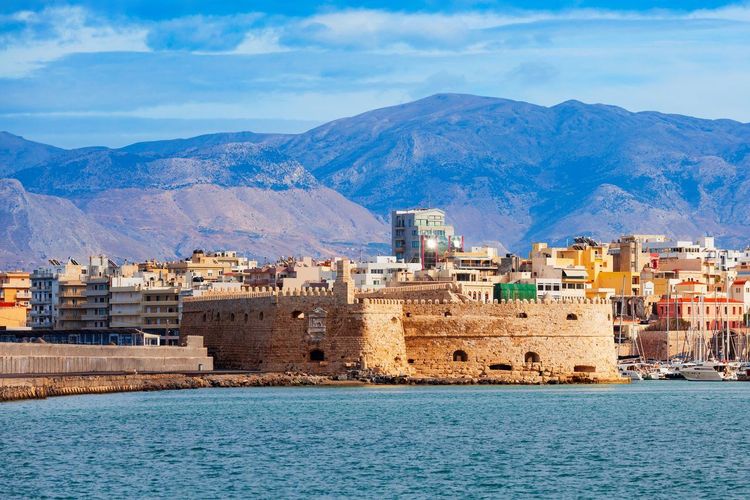
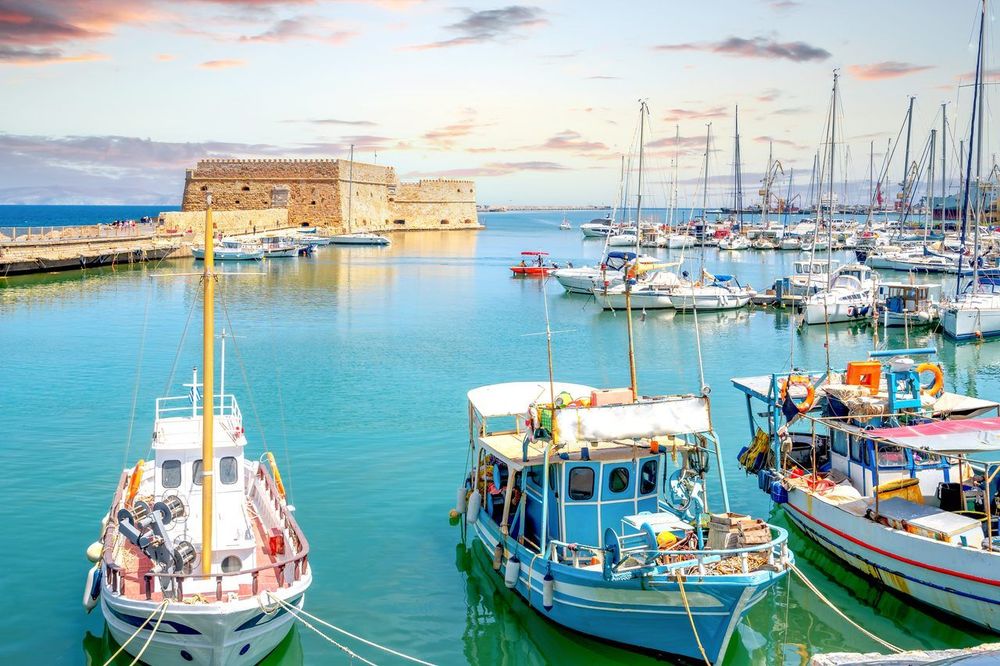
Heading back down toward the sea, the old harbor quay leads to the Koules Fortress (Venetian old port, 712 02 Heraklion, rated 4.6/5 on Google from 12,205 reviews), a stone bastion built by the Venetians between 1523 and 1540 to protect the harbor entrance from Ottoman raids. Its vaulted rooms now house an exhibition on the city's naval history, and the walkway offers one of the finest views over the bay.
Just behind, the long arcades of the Venetian arsenals (neoria) were used to build and repair the Republic's galleys. Several have been restored and now host occasional cultural events, announced on site.
In the late afternoon, the terraces lining the quay fill up for aperitifs: it is the best time to watch the fishermen come home and to book a table with a view of the fortress before the dinner crowd. If you prefer walking at your own pace rather than following a group, the Ryo audio guide to the historic center links the cathedral, museum and fortress together, with dedicated commentary for each stop.
Day 2: The Palace of Knossos and Ancient Sites
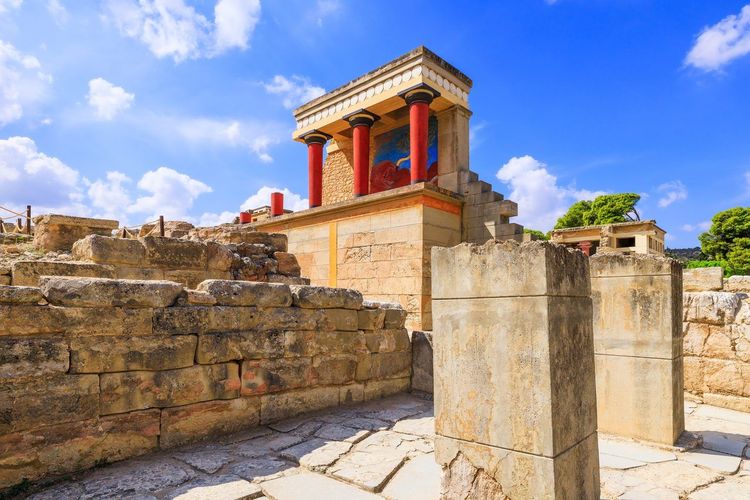
The second day shifts toward Antiquity. Rent a car for the half-day or take city bus no. 2 from Eleftherias Square: it drops you at the site entrance in about twenty minutes, with a departure every 15 to 20 minutes.
Knossos and the Venetian Walls
The Palace of Knossos, 5 kilometers south of the center, was the heart of Minoan civilization between 1900 and 1350 BCE. People come for the legend of the Minotaur, imprisoned according to myth in a labyrinth beneath the palace foundations, but above all for the scale of the site: more than a thousand rooms spread over several levels, the restored Prince of the Lilies fresco, and a drainage system that was already sophisticated 3,500 years ago. British archaeologist Arthur Evans excavated and partially reconstructed the site starting in 1900, a choice still debated by specialists but one that, in practice, makes it possible to visualize volumes that mere foundations would not convey. Admission costs 20 euros full price.
Come early: from 11 a.m., cruise ship groups saturate the narrow paths and the heat becomes difficult in summer. A guide or an audio app helps a great deal in understanding the layout of the palace, which is anything but intuitive to an untrained eye.
On the way back to the center, make a detour to the Martinengo Bastion, one of the seven bastions of the Venetian walls that once encircled the whole city. The writer Nikos Kazantzakis, author of Zorba the Greek, is buried here: as the Orthodox Church refused to bury him in consecrated ground, his grave overlooks the city from the rampart, bearing a now-famous epitaph: "I hope for nothing, I fear nothing, I am free."
To discover the walls and the old town without depending on a guided tour slot, the Ryo audio-guided tour can be followed at your own pace, coffee break included, without having to follow a guide's flag.
The Kotsanas Museum and a Gourmet Food Tour
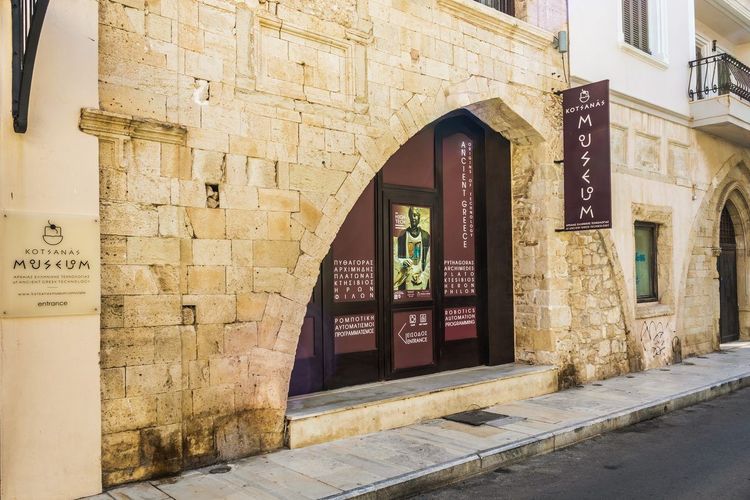
Back in town, stop at the Kotsanas Museum (Epimenidou 18, 712 02 Heraklion, rated 4.9/5 on Google from 2,018 reviews), devoted to the technologies of ancient Greece and housed in a restored Venetian building. You can discover working reconstructions: automata, water clocks, hydraulic systems, and a replica of the Antikythera mechanism, often described as the first known analog computer. The visit takes no more than an hour, making it an ideal complement before lunch, especially with curious children.
The afternoon lends itself well to a food tour in the lanes around the 1866 Street market: several local organizers offer a two-to-three-hour stroll between a cheese shop, a bougatsa bakery and a taverna that still serves its homemade preserved vegetables. It is a concrete way to understand why Cretan cuisine relies so heavily on short supply chains, and to leave with a few jars of olive oil or thyme honey bought directly from the producer.
If You Have a Bit More Time: Excursions and Relaxation
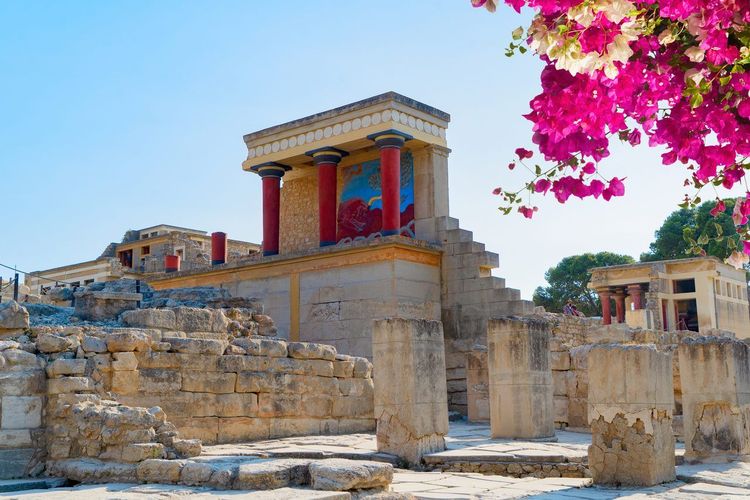
With a third day, or by replacing part of the heritage program, two options are open to you: head to an island steeped in history, or stay near Heraklion for a quieter, even family-friendly day.
Excursion to Spinalonga and Agios Nikolaos
Spinalonga, a fortified islet off Elounda, served successively as a Venetian fortress, an Ottoman stronghold from 1715, and then a leper colony from 1904 to 1957. The deserted lanes, the houses with closed shutters and the former dispensary tell this last period with rare intensity, well documented on panels in several languages. Allow about 14 euros for the round-trip boat ride from Elounda, plus 20 euros admission to the site, and a good hour on site to tour the islet without rushing.
Boats leave from Elounda or Agios Nikolaos, about an hour's drive from Heraklion. Take advantage of the stop in Agios Nikolaos to walk along Lake Voulismeni, connected to the harbor by a canal around 1870 and widened in the early 20th century, lined with cafés where a frappé is readily served at any hour.
Ammoudara Beach, Watercity Park and Cretaquarium with Family
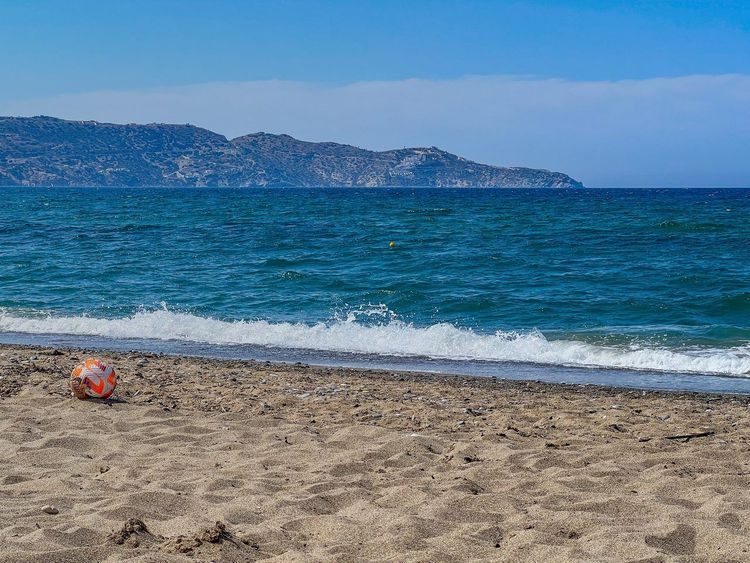
If you are traveling with children, Ammoudara Beach, about 6 kilometers west of the center, offers fine sand and shallow water along a long stretch of coastline well equipped with showers and sun loungers.
About twenty minutes away by road, Watercity Water Park lines up slides and pools for all sizes, while the Cretaquarium (Gournes, 700 14 Heraklion, rated 4.5/5 on Google from 30,456 reviews), set in a former American military base at Gournes, presents sharks and seahorses in tanks that recreate Mediterranean ecosystems. The aquarium operates year-round and is a great fix for a rainy afternoon; the water park, meanwhile, only opens in the summer season.
If your weekend shifts a full day toward Spinalonga or the coast, keep in mind that the Ryo audio-guided tour specifically covers the center of Heraklion: listen to it instead on the morning of departure or on your return, as a complement to the excursion.
Where to Eat in Heraklion: Cretan Cuisine
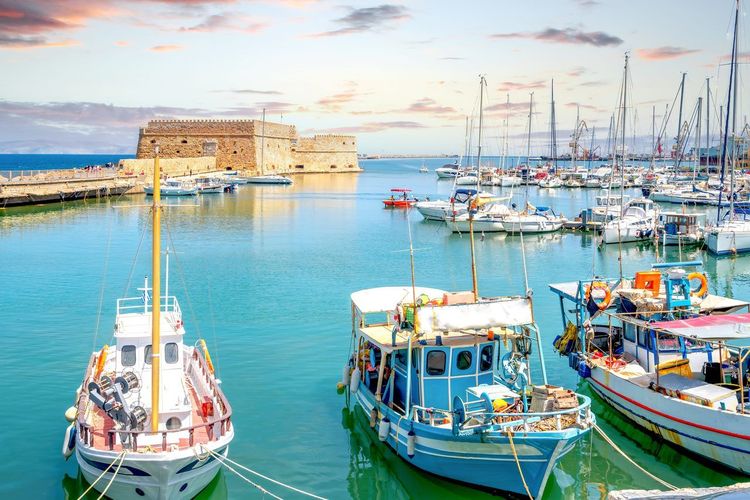
Forget the preconceived idea of a uniform Greek cuisine: the Cretan table has its own codes, inherited from a mountain agriculture long isolated from the rest of the country.
The Cretan moussaka varies from one taverna to another, often more generous with garden vegetables and cooked in the island's olive oil. Also worth trying: dakos, a barley rusk soaked then topped with tomato, mizithra and capers, kalitsounia, small pastries filled with sheep's cheese or wild herbs, and raki (or tsikoudia), the local digestif often offered at the end of a meal without being asked. As for wine, the local grape varieties vilana and kotsifali go very well with slow-cooked dishes.
The most authentic tavernas are found far from the waterfront, in the streets parallel to Daidalou Street. Allow 15 to 20 euros for a full meal with local wine, versus almost double in establishments facing the harbor directly. The audio tour passes through these very lanes of the old town, a practical way to spot where to stop along the way.
Heraklion at Night: Nightlife and Events
You will be surprised by the nightlife of a city that many rush through. From 9 p.m., Lions Square and Korai Street fill with students and families: cocktail bars in inner courtyards, cafés where people play tavli, small live-music venues where a Cretan lyra player sometimes accompanies diners until midnight.
On the calendar, summer is punctuated by the Heraklion cultural festival, with open-air concerts and theater, notably in the courtyard of the Koules Fortress. In autumn, the feast of Saint Minas, the city's patron saint, draws a considerable crowd around the cathedral every November 11. Check locally, as programs are posted on the municipal notice boards in the center.
Where to Stay in Heraklion Depending on Your Weekend Style
Two approaches compete depending on what you expect from your stay. The old town, around Daidalou Street and Venizelou Square, puts everything within walking distance: museum, cathedral, harbor and restaurants are all reachable in under ten minutes. The downside is summer nights, sometimes noisy near the bars.
The seafront, to the west toward Ammoudara or further toward Agia Pelagia, suits a quiet weekend with direct beach access better, at the cost of a 15 to 30-minute bus or taxi ride to reach the historic center. Hotels there also generally offer gentler rates outside July-August, a criterion that quickly matters on a stay of only two nights.
Getting Around, Weather and Crowds in Heraklion
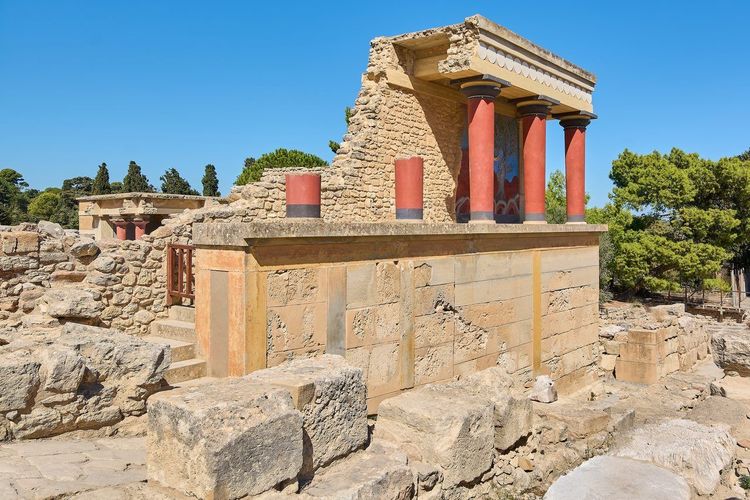
Getting Around on Site
The city center can be explored entirely on foot: allow twenty minutes between the Venetian harbor and the Archaeological Museum. For Knossos, city bus no. 2 costs about 1.70 euros per trip (a little more if you pay the driver), and KTEL buses serve nearby beaches and towns from the bus stations. Car rental remains the most flexible solution for combining several sites in the same day, with paid but affordable parking around the old town.
Since the audio-guided tour is done entirely on foot and works without a network connection once the audio files are downloaded, it remains a good option for finding your way through the lanes without a car or paper map.
Weather, Best Time to Visit and Crowds
April-May and September-October offer the best compromise: temperatures around 23-26°C, the sea still swimmable in October, and crowds clearly lower than in midsummer. July and August regularly exceed 32°C and turn Knossos into a furnace from 11 a.m.
Crowds also rise sharply on cruise ship days: a quick look at the harbor when you wake up lets you anticipate a busier morning at the sites. In case of rain, rare but possible in spring and winter, fall back on the Archaeological Museum, the Kotsanas Museum, the Cretaquarium and the 1866 Street market, without upending the whole program.
Flights, Airport and Budget for a Weekend in Heraklion
Airports and Airlines
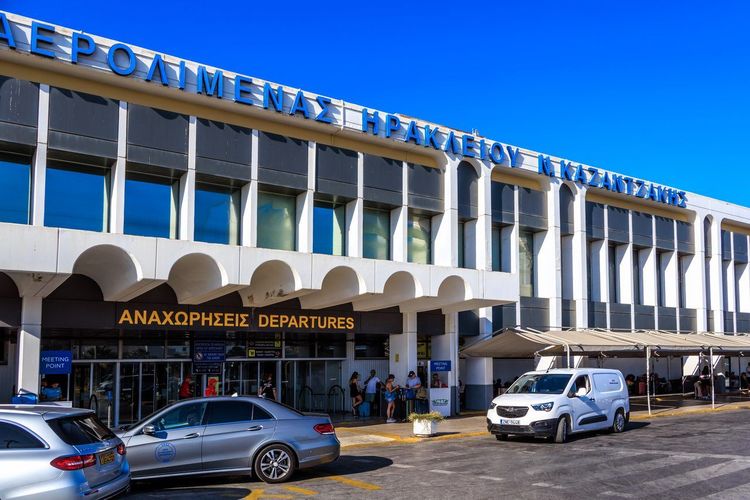
Nikos Kazantzakis Airport (code HER) is only 5 kilometers from the center of Heraklion, served in high season by direct flights from several French cities (Paris, Lyon, Marseille, Nantes) operated notably by Transavia, easyJet, Volotea and Aegean Airlines. The flight takes about 3.5 hours direct. Off-season, a flight with a stopover in Athens remains the most reliable solution, with total travel time rising to 5-6 hours.
An alternative exists via Chania Airport, in the west of the island, but you then need to allow about two hours by road to Heraklion: best reserved for travelers linking several Cretan cities. From Athens, the overnight Piraeus-Heraklion ferry (8 to 9 hours crossing) remains an economical option, especially in a shared cabin.
Indicative Budget on Site
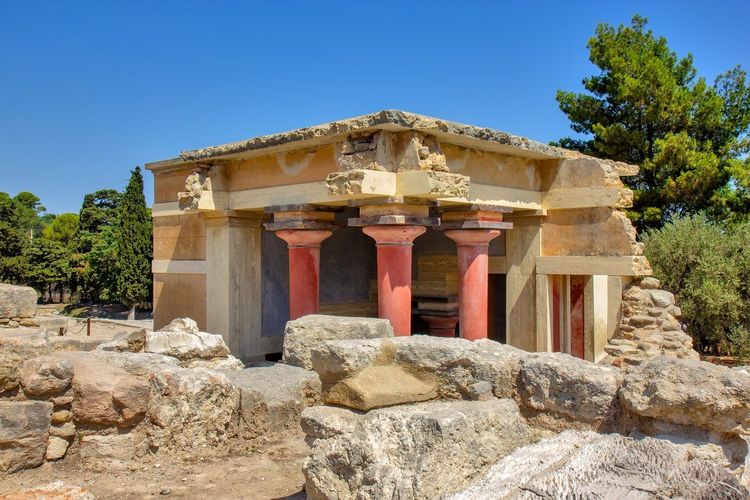
For a two-day weekend, budget about 25 to 40 euros per person per day for food, 40 euros for admission to Knossos and the Archaeological Museum (20 euros each), and 10 to 15 euros per day for bus transport and occasional taxis. A decent double room in the city center starts around 60 euros per night outside July-August, versus 100 euros and more in high season.
To cut costs, travel in April-May or October, book your hotel at least six weeks in advance for summer dates, and favor tavernas located more than two streets from the harbor. European students under 25 benefit from reduced rates or free admission at national archaeological sites, so remember to bring your card. As for flights, booking two to three months ahead with low-cost carriers generally helps you avoid last-minute price hikes.



FAQ
Is Heraklion worth visiting for a weekend?
Yes: within a few kilometers, the city packs in dense Venetian heritage, Greece's most famous Minoan site and an accessible food scene. Even without a car, two days are enough to fit in the old town and Knossos without feeling you missed out.
What is the best time to visit Heraklion?
April-May and September-October offer the best balance between mild weather and reasonable crowds. July-August is still doable but means visiting Knossos early in the morning to avoid the heat and the crowds.
How many days are recommended to visit Heraklion?
Two days let you cover the old town, Knossos and the Archaeological Museum without rushing. A third day frees up time for Spinalonga, the nearby beaches or a slower pace in the streets of the center.
What pitfalls should you avoid in Crete?
Avoid restaurants that display photos of dishes in the window along the waterfront, which are often pricier and less authentic. Also beware of car rental companies that charge for supplementary insurance as an extra not specified at booking, and of "skip-the-line" ticket resellers that are much more expensive than the sites' official ticket offices.
Do you need to book the Palace of Knossos in advance?
It is not mandatory but strongly recommended in high season: the official e-ticket (20 euros) lets you skip the ticket office queue. The combined ticket with the Archaeological Museum has been discontinued, so plan on two separate purchases.
How do you get around Heraklion without a car?
The center can be explored entirely on foot, city bus no. 2 reaches Knossos in twenty minutes, and KTEL buses serve the airport and nearby beaches for a few euros per trip.
Our Advice for a Successful Weekend in Heraklion
Two days in Heraklion are therefore enough to touch the essentials of a place where three thousand five hundred years of history overlap across a few square kilometers, from the Venetian harbor to the Minoan ruins. Keep the morning for Knossos, the afternoon for the lanes and the evening for Lions Square.
And to link the monuments without searching for your way, download the Ryo audio-guided tour of Heraklion before departure: it works offline and tells you, step by step, about the cathedral, the harbor and the Koules Fortress.
À lire également