© Shutterstock
 Votre guide Ryo
Things to Do in Dublin in 2026: the Complete Guide to Must-Sees and Local Gems
What do you do in Dublin when it rains every other day? Hide in a pub like the locals, or follow a programme dense enough to fill any stay, whether it lasts 48 hours or a full week. The question is knowing what to do exactly, and in what order. The Irish capital can be explored on foot, neighbourhood by neighbourhood, or along a Ryo audio-guided route linking its iconic landmarks, from the Trinity College campus to the banks of the Liffey.
This guide covers more than 40 places and experiences: an illuminated manuscript 1,200 years old kept in a dark-wood library, a brewery converted into a seven-storey museum with a 360° view over the city, a prison where the leaders of the 1916 uprising were executed, and a cemetery that holds 1.5 million graves beneath a 55-metre round tower. It also covers the best day trips within two hours by road, from 200-metre-high cliffs to 6th-century monastic ruins. Everything you need to plan a tailor-made stay, alone, as a couple, with family or friends, free or otherwise.
1. Trinity College and the Book of Kells
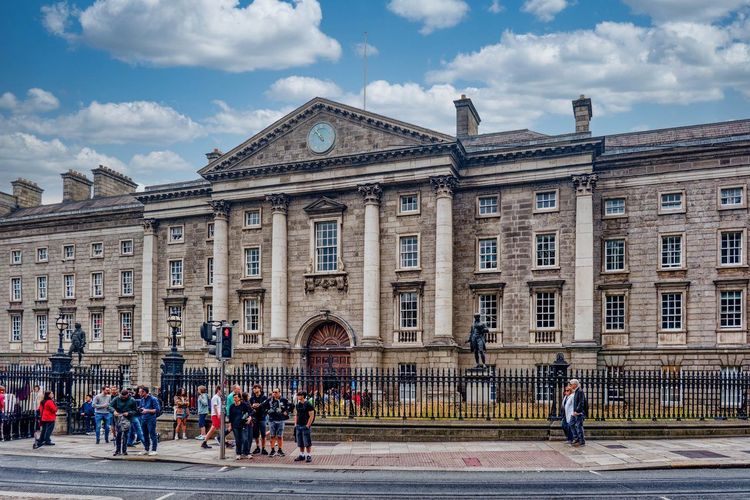
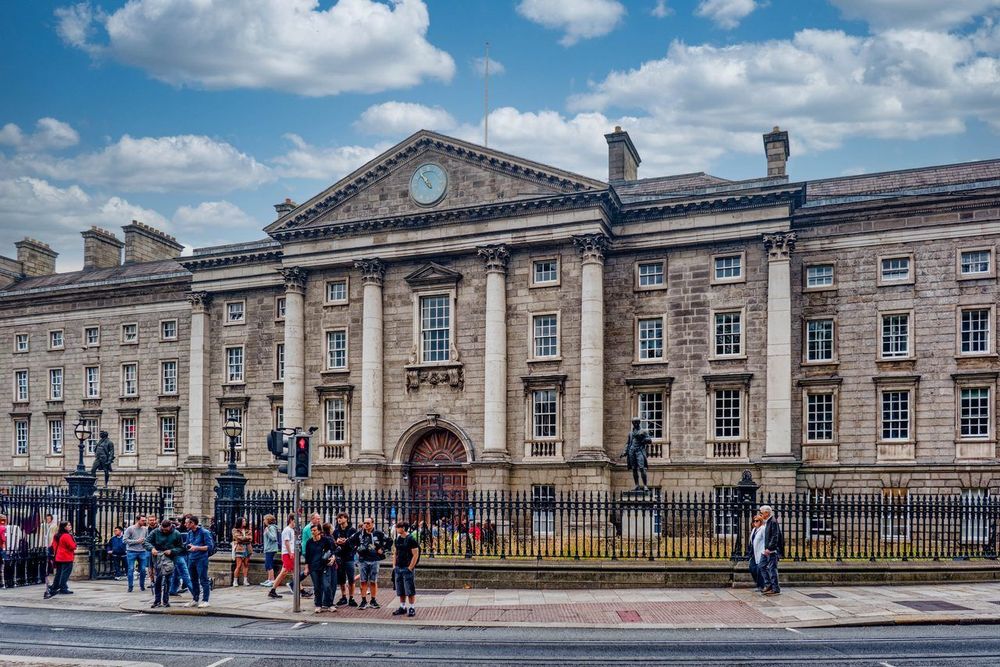
Trinity College is Ireland's oldest university, founded in 1592 by order of Elizabeth I. Its cobblestoned, lawn-filled campus splits the city into two worlds: on one side the hum of Grafton Street, on the other the studious silence of the inner courtyards lined with Georgian buildings.
The flagship attraction is the Book of Kells, an illuminated gospel written around the year 800 by Celtic monks, displayed in the Old Library. You then enter the Long Room, a 65-metre gallery lined with oak shelves on two levels, where light falls from tall windows onto the marble busts lined up along the floor.
One detail few guides mention: the 200,000 old volumes have been removed from the shelves as part of the Old Library renovation project, except for the first four bays at the entrance. You will therefore find a gallery that is largely empty of books, occupied by the Gaia installation, a globe suspended beneath the vaulted ceiling. If you were coming for the classic photograph of the full shelves, it is worth knowing this before you book. The visit then continues in the neighbouring Red Pavilion, with three immersive digital exhibitions (Secret Life of the Collections, Book of Kells 360 and The Long Room Reimagined) that enlarge the manuscript's illuminations right down to individual brushstrokes.
The campus also rewards a stroll independent of the Book of Kells: the Campanile, a 19th-century stone tower at the centre of Parliament Square, the chapel and the zoology museum housed in the Museum Building are all free to visit. Student legend has it that walking under the Campanile brings bad luck in exams, a piece of folklore that local guides enjoy sharing with visitors.
Book your tickets online with a specific time slot: without one, queues can easily exceed 45 minutes in high season, especially between June and August. Allow around 1h30 for the full experience, Old Library and Red Pavilion combined. In terms of pricing, the self-guided Book of Kells Experience starts at 26 euros for an adult, with an audio guide included in thirteen languages, compared to 19 euros for the lighter Book of Kells & Old Library option and 65 euros for a live guided tour. Students and seniors benefit from reduced rates on presentation of valid ID. If your budget is tight, note that the campus itself is free to enter: only the Old Library and Book of Kells visit is paid. Our short audio-guided tour, From Celtic Charm to Dynamic Streets, starts right here at Trinity College.
2. Temple Bar, Dublin's Most Vibrant Neighbourhood
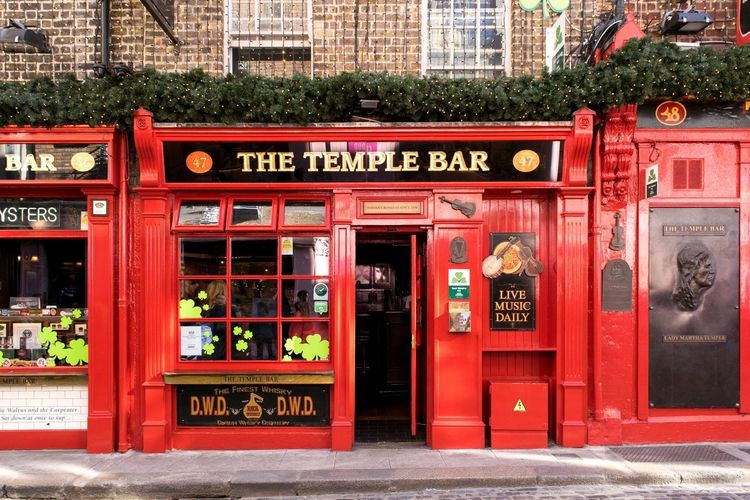
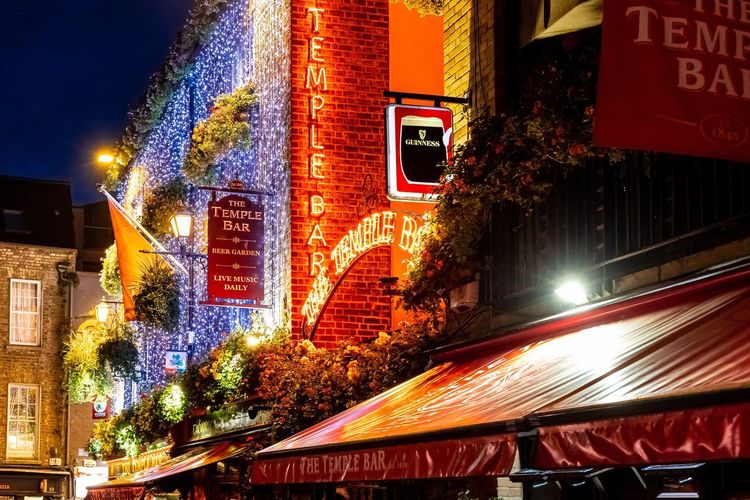
The name Temple Bar comes not from a pub but from Sir William Temple, who owned the land in the 17th century. Today, this web of cobbled lanes between the Liffey and Dame Street has the highest density of pubs in the city, with live traditional music played from 4pm in most venues.
The eponymous pub, with its red facade covered in flowers, serves as a photographic landmark for every visitor, but regulars often prefer the slightly more discreet bars on adjacent streets, where a pint costs 1 to 2 euros less. At weekends, the atmosphere turns into a noisy student party, while on weekdays and during the day the neighbourhood reveals its other face: contemporary art galleries, an independent cinema at the Irish Film Institute and a food market at Meeting House Square on Saturdays.
The Cultural Quarter, which borders the tourist area, brings together around ten independent galleries and the Gaiety School of Acting. It is also here that the Temple Bar TradFest takes place each year, a traditional music festival that draws tens of thousands of visitors at the end of January — a great way to discover the neighbourhood outside the summer crowds.
For the full Irish pub experience, the Ryo article dedicated to Temple Bar lists more good addresses, slightly away from the crowds. One practical tip before you settle in: the drinks menus posted at the entrance are worth a look, as prices in Temple Bar regularly run 20 to 30% higher than elsewhere in the city. There is nothing stopping you from having a first pint here for the atmosphere, then continuing the evening in pubs in neighbouring areas like Portobello or Stoneybatter.
3. The Guinness Storehouse and the Art of the Perfect Pint
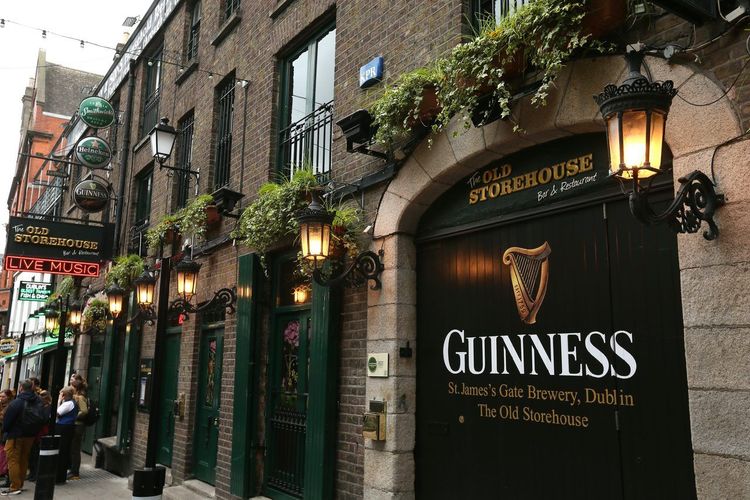
In 1759, Arthur Guinness signed a 9,000-year lease for the Saint James's Gate brewery, still in operation today, adjoining a museum that traces the brand's history across seven floors built in the shape of a giant pint glass. The brand's name is inseparable from Dublin, and the plant still employs several hundred people on this historic site.
Visiting the Guinness Storehouse: Tickets, Gravity Bar and Insider Tips
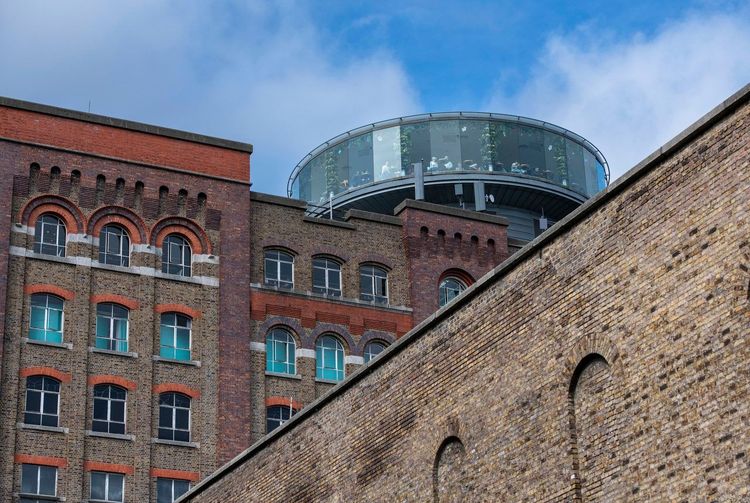
The visit traces the brewing process from ingredients to kegging, before leading to a workshop where you learn to pour your own pint following the 119.5-second rule popularised by the brand. The ticket includes a tasting at the end of the tour, served at the Gravity Bar, a circular all-glass viewing deck offering a 360° view over the city and the Wicklow Hills on a clear day.
Book online, ideally several days in advance in summer: weekend time slots regularly sell out. Adult tickets start at 24 euros for the self-guided tour of all seven floors, pint included. Additional experiences cost significantly more: 36 euros for the Guinness Academy and its certified pouring workshop, 32 euros for the Stoutie and its selfie printed on the foam, 48 euros for the fully guided Home of Guinness tour, reserved for over-18s on weekdays. Allow 2 to 2h30 on site, and avoid arriving between 1pm and 3pm, the busiest window for group visits.
Other Ways to Taste Guinness in Dublin
A short walk from the Storehouse, the Guinness Open Gate Brewery offers a more intimate setting: an experimental brewery where recipes that may never reach mainstream distribution are tested, open only on certain evenings by reservation. The atmosphere is far less touristy, with a genuine tasting counter in the style of a microbrewery. A combined ticket at 41 euros pairs the self-guided Storehouse visit with a tasting board at the Open Gate Brewery, making it the most worthwhile option if you are genuinely more interested in beer than in the museum.
For a more local approach, nothing beats a neighbourhood pub in the Liberties, where bartenders still take pride in respecting the resting time between the two stages of pouring. A pint there generally costs 1 to 2 euros less than in the tourist centre. Families or visitors who prefer to avoid alcohol can focus on the floors dedicated to the brand's advertising and design history, rich in visual archives, without ever stopping at the tasting bar.
4. Dublin Castle and the Great Cathedrals
Dublin Castle and Its Gardens
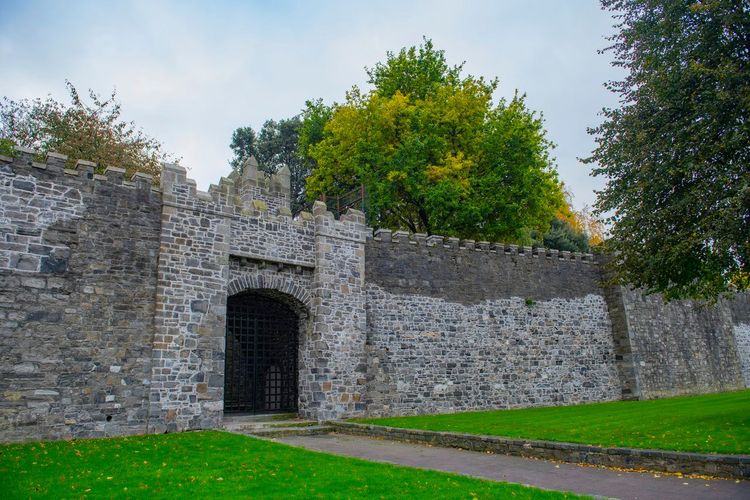
Built from 1204 on the site of a Viking fort, Dublin Castle long served as the seat of British power in Ireland before becoming, after independence, the place where Irish presidents are inaugurated. The State Apartments, with their red velvet-lined salons and crystal chandeliers, still reflect the official ceremonies held here today.
Behind the official buildings, the Dubh Linn Garden occupies the site of the black pool that gave the city its name (dubh linn literally means black pool in Gaelic). It is one of the rare quiet corners in the city centre where you can picnic between visits. The guided tour of the castle lasts about an hour and includes access to the archaeological excavations visible beneath the building, where the remains of superimposed Viking and Norman fortifications can still be made out. The Chester Beatty Library is also located within the castle grounds (Dublin Castle, Dublin 2, rated 4.7/5 on Google with 4,154 reviews), one of the city's most acclaimed free museums, covered in more detail later in this guide.
St Patrick's Cathedral and Christ Church Cathedral
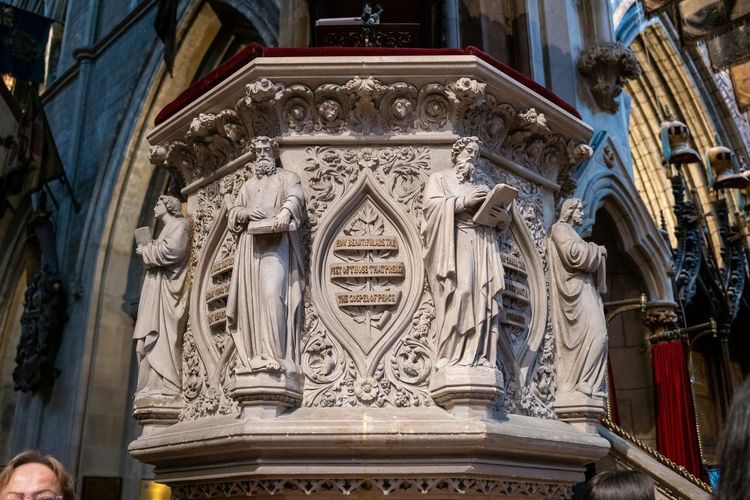
St Patrick's Cathedral (founded in 1191) is the largest church in Ireland, built according to legend on the very site where St Patrick himself baptised converts in the 5th century. Jonathan Swift, the author of Gulliver's Travels, served as dean here for over 30 years and now rests within its walls, just a few metres from his companion Esther Johnson.
Ten minutes' walk away, Christ Church Cathedral claims the title of Dublin's oldest surviving building, with foundations dating back to the 1030s. Its medieval crypt, the largest in Ireland and the United Kingdom, holds some curious relics: a mummified cat and rat found wedged in an organ pipe in the 19th century and nicknamed Tom and Jerry by the staff.
Contrary to what is often written, there is no combined ticket for both cathedrals: Christ Church admission costs 12 euros for an adult at the door (cheaper when booked online, 4 euros for a child, 28 euros for a family), and St Patrick's is paid separately. The genuinely useful combined ticket pairs Christ Church with Dublinia at 25 euros for an adult and 66 euros for a family, the two sites being connected by a covered bridge above St Michael's Hill. To explore the city's religious history in greater depth, the Ryo article on St Patrick's Cathedral details the guided tours available and the times of choral services, which are open to the public free of charge on certain weekday evenings. Allow half a day to visit the castle and cathedrals on foot, as all three sites are within 15 minutes' walk of one another. Our short audio-guided tour, From Celtic Charm to Dynamic Streets, links the castle to Christ Church Cathedral on foot.
5. Kilmainham Gaol and Glasnevin Cemetery: Tracing Irish History
Kilmainham Gaol
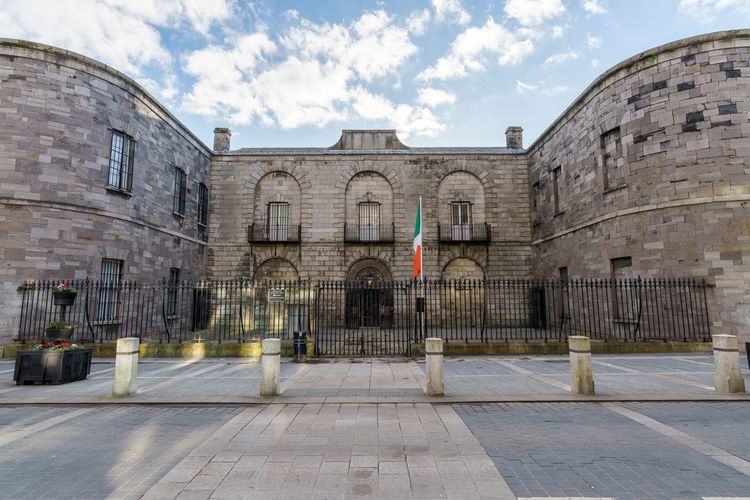
Opened in 1796 and closed in 1924, Kilmainham Gaol (Inchicore Road, Kilmainham, Dublin 8, rated 4.7/5 on Google with 3,219 reviews) held generations of Irish political prisoners, including the leaders of the Easter Rising of 1916, who were executed in the stone-breakers' yard visible during the tour. The atmosphere is deliberately austere: bare stone, star-shaped corridors inspired by British Victorian prisons, cramped cells.
The visit is only possible as part of a guided group, with online booking mandatory — slots are often fully booked several weeks in advance during high season. Allow one hour for the guided tour, plus additional time to explore the museum at your own pace afterwards, totalling around 1h30 on site. Book as soon as your travel dates are confirmed: many visitors regard this as the single most memorable visit of an entire trip to Dublin.
Glasnevin Cemetery and Its Memorial
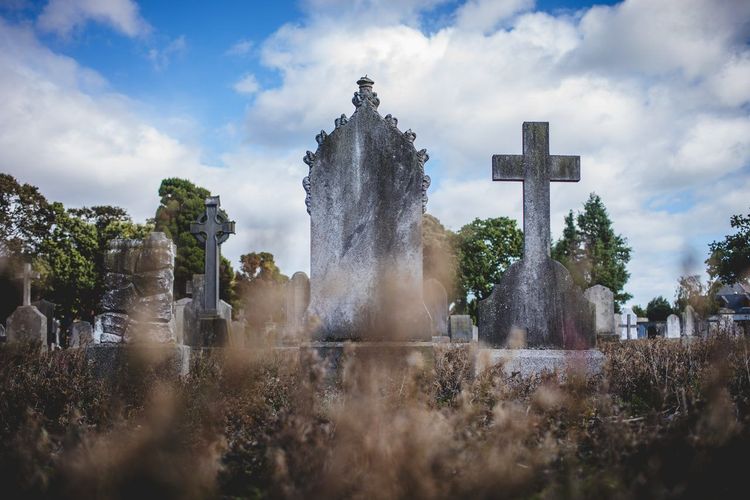
A few kilometres to the north, Glasnevin Cemetery has held 1.5 million graves since it opened in 1832, making it one of the largest cemeteries in Europe. The 55-metre round tower erected above the grave of Daniel O'Connell, a key figure in Catholic emancipation, dominates the site and can be visited with guides from the adjoining museum.
The cemetery's guided tours tell the story of Irish independence through the graves of its great figures, from Michael Collins to Éamon de Valera. Several formats are available, with or without an ascent of the round tower: if you are unsure, opt for the one that includes the climb, as the view over the city and Dublin Bay from the top is well worth the extra cost. Allow 1 to 1h30, and wear comfortable shoes: the site covers more than 50 hectares of gravelled paths.
6. Grafton Street and Dublin's Iconic Whiskey Distilleries
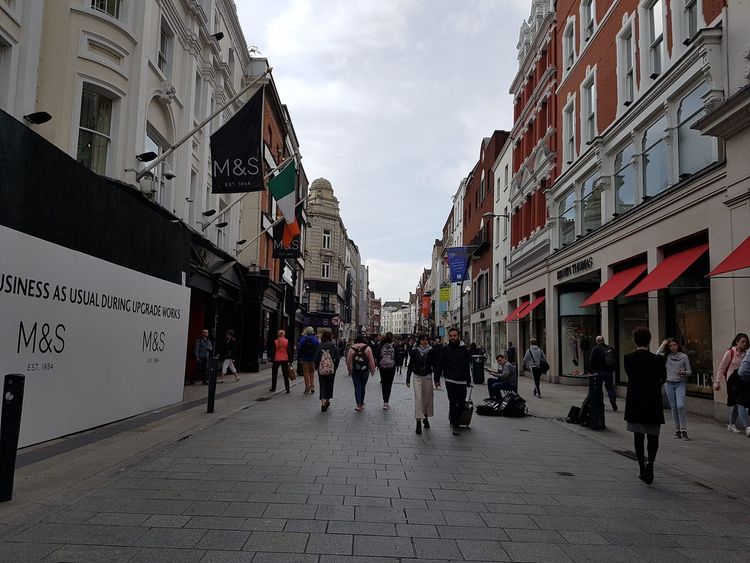
Grafton Street (Grafton Street, Dublin 2, rated 4.5/5 on Google with 12K reviews) is the city centre's pedestrianised shopping street, lined with shops and constantly animated by street musicians, some of whom have since broken through internationally. It links Trinity College to St Stephen's Green in a ten-minute walk, making it a convenient axis for structuring your day between visits.
To the west of the centre, the Jameson Bow St. Distillery occupies the historic site where the brand produced its whiskey from 1780, before production was transferred to Midleton in County Cork. The visit compares three whiskeys — Irish, Scotch and American — to understand the differences in distillation and cask ageing. Guides are happy to highlight triple distillation, an Irish characteristic that produces a smoother profile than Scotch.
In the Liberties neighbourhood, the Teeling Whiskey Distillery claims the title of the first new distillery to open in Dublin in 125 years when it launched in 2015. Its small-batch production, distinctive finishing casks (rum, wine, beer) and on-site bar draw a younger crowd than the established major brands. The visit lasts about an hour and ends with a tasting of three whiskeys of your choice.
For enthusiasts, it is perfectly possible to visit both distilleries in the same day using public transport, as the two sites are about 25 minutes apart by bus.
7. Dublin's Must-See Museums
Beyond the major historic sites, Dublin offers a dense and often free museum scene that deserves a full day on its own.
The Little Museum of Dublin and EPIC, the Irish Emigration Museum
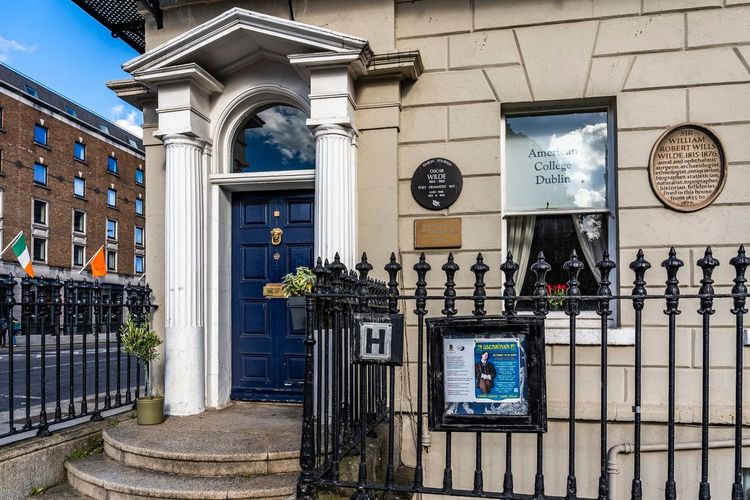
Housed in a Georgian townhouse overlooking St Stephen's Green, the Little Museum of Dublin tells the social and cultural history of the capital through objects donated by its residents: posters, photographs, personal mementos. The guided tours, led by local storytellers rather than conventional audio guides, include an entire room dedicated to U2, a band that originated in the city.
On the quays, inside the historic CHQ building, EPIC, the Irish Emigration Museum, traces the departure of more than 10 million Irish people to the rest of the world since the 17th century. The fully digital and interactive journey explains how this diaspora shaped the culture, politics and music of countries as diverse as the United States, Argentina and Australia. One room even lets visitors search for their own Irish ancestors using digitised archives.
National Museum of Ireland, Chester Beatty Library and Irish Whiskey Museum
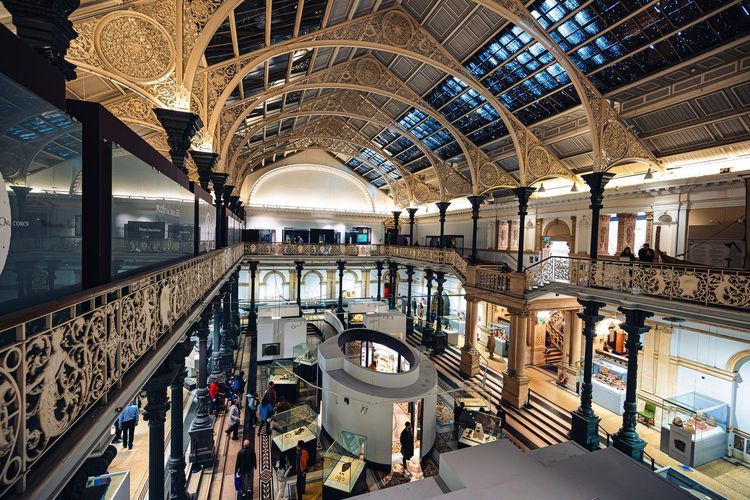
The National Museum of Ireland, archaeology branch on Kildare Street, displays exceptional pieces free of charge: the Tara Brooch, the 8th-century Ardagh Chalice in silver, and several bodies naturally mummified in Irish bogs and preserved since the Iron Age. It is one of the richest free museums in Europe for anyone interested in Celtic history.
Within the grounds of Dublin Castle, the Chester Beatty Library holds a collection of Islamic, Asian and European manuscripts assembled by an American mining magnate in the 20th century. Voted European Museum of the Year in 2002, it remains surprisingly unknown among visitors in a hurry, despite free entry and a pleasant rooftop garden for a break.
Finally, the Irish Whiskey Museum, on Grafton Street, offers a shorter and more accessible format than classic distillery visits, with a comparative tasting of four whiskeys at the end. The Irish Museum of Modern Art (Royal Hospital, Military Road, Kilmainham, Dublin 8, rated 4.3/5 on Google with 5,293 reviews) (IMMA), housed in the 17th-century former Royal Hospital Kilmainham, hosts free temporary exhibitions in a remarkable architectural setting, surrounded by formal gardens open to the public all year round.
Plan to spread these visits over two days rather than one: the density of content, particularly at EPIC and the National Museum, takes time to appreciate without rushing.
8. Dublin's Parks and Green Spaces
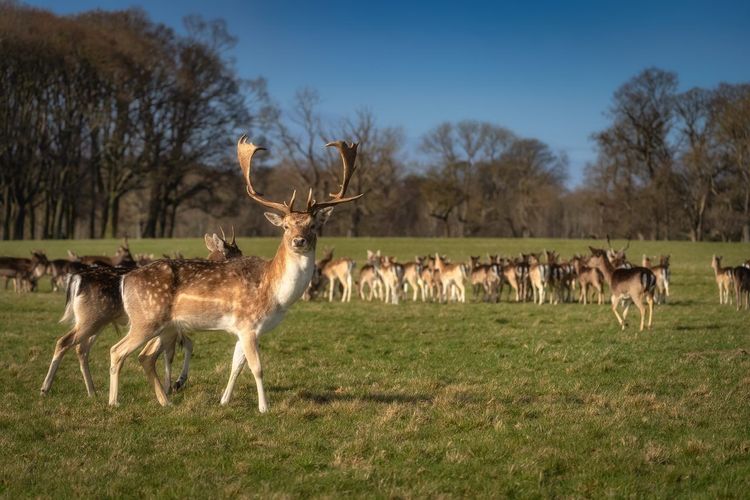
Phoenix Park covers 707 hectares on the edge of the city centre, making it one of the largest enclosed urban parks in Europe, twice the size of Central Park in New York. A herd of wild deer has roamed freely here since the 17th century, most easily spotted early in the morning or late in the day near the Furry Glen. The park also contains the official residence of the Irish President, Áras an Uachtaráin, as well as an obelisk dedicated to the Duke of Wellington.
Within the park itself, Dublin Zoo is one of the oldest zoos still in operation in the world, founded in 1831. Its immersive enclosures for elephants and great apes make it a popular family outing, easily combined with a walk or a picnic in the rest of the park.
More centrally, St Stephen's Green covers 9 hectares in the heart of the city, a stone's throw from Grafton Street. This Victorian park with its ornamental lake and bandstand hosts free concerts in summer at lunchtime. It is the green lung most frequented by Dubliners on their midday break.
Finally, the National Botanic Gardens (Botanic Road, Glasnevin, Dublin 9, rated 4.8/5 on Google with 18,806 reviews) in Glasnevin bring together more than 15,000 plant species across 20 hectares, including impressive Victorian iron-and-glass glasshouses dating from the mid-19th century. Entry is free, and the site is adjacent to Glasnevin Cemetery, making it easy to combine both visits in a single morning.
Hiring a self-service bike allows you to cross Phoenix Park in around 20 minutes, a practical option for those who want to combine several parks in the same day without relying on buses. One tip: book your zoo slot online during Irish school holidays, when attendance rises sharply. Photography enthusiasts will particularly appreciate Phoenix Park at sunrise, when the raking light crosses the meadows and the deer approach fearlessly the few walkers who are out.
9. A Walk Along the Liffey and Through the Historic Neighbourhoods
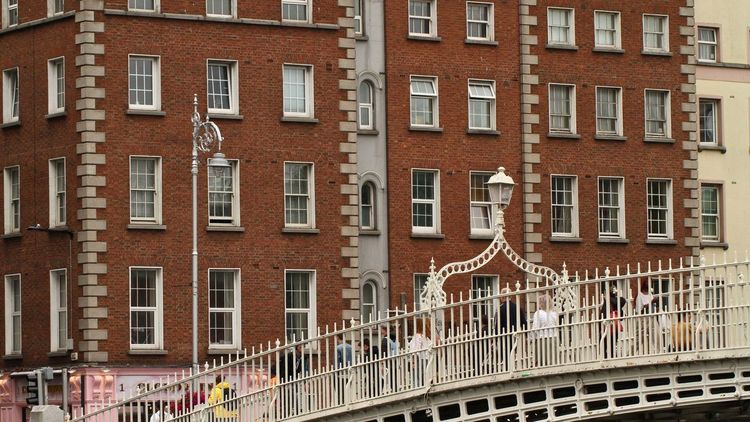
The Ha'Penny Bridge, a cast-iron pedestrian bridge built in 1816, owes its nickname to the half-penny toll once charged to cross it. It is now one of Dublin's most photographed landmarks, particularly at sunset when the light reflects off the Liffey.
Heading north-west, Henrietta Street (Henrietta Street, Dublin 7) is considered the best-preserved Georgian street in the city, with its red-brick facades aligned along original cobblestones. Number 14 houses a small museum tracing the slide of these 18th-century aristocratic townhouses into the overcrowded working-class tenements of the 19th and 20th centuries.
On the south side of the Liffey, the Liberties neighbourhood maintains a more working-class and industrial identity, historically linked to weaving and brewing. Street art, microbreweries and farmers' markets have taken over from the old factories, particularly around Francis Street and its Saturday antiques market.
To extend the walk, Georgian architecture unfolds mainly around Merrion Square and Fitzwilliam Square, where the colourful front doors of 18th-century houses are a classic photographic subject. A short walk from Christ Church, Dublinia offers an immersive recreation of Viking and medieval Dublin, complete with skeletons, model ships and children's workshops — a good alternative on rainy days.
10. In the Footsteps of Irish Writers, Musicians and Sports Stars
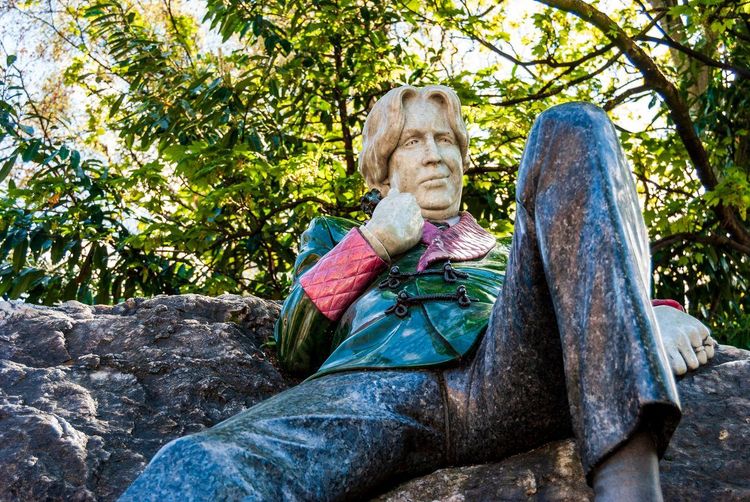
Dublin has held the UNESCO City of Literature label since 2010, a legacy that stretches back to James Joyce, Oscar Wilde, Samuel Beckett and Bram Stoker. Several self-guided walking itineraries connect their birthplaces, statues and favourite pubs, offering a different way to cross the city centre.
On the music side, the Irish Rock 'n' Roll Museum Experience, located in Temple Bar, traces the history of the local music scene and takes you inside Temple Lane Studios, at the heart of Irish music since 1984, where dozens of Irish bands have rehearsed and recorded. The guided tour lasts one hour, departs every half hour between 10:30am and 5pm, seven days a week, and passes through a rehearsal room, a recording studio and a small screening room.
For sports fans, Croke Park, Ireland's largest stadium with more than 82,000 seats, hosts the finals of hurling and camogie, two traditional Gaelic sports played with a wooden stick and a small leather ball. The adjoining GAA museum explains these rules, which can be baffling to international visitors, and the Skyline Tour lets you walk on the roof of the stadium for a panoramic view over the city.
Finally, the National Gallery of Ireland (Merrion Square West, Dublin 2, rated 4.7/5 on Google with 18,600 reviews), free to enter and located on Merrion Square, has since 2001 housed the London studio of painter Francis Bacon, dismantled plank by plank and reassembled exactly as it was, with its original creative chaos intact. Attending a match on a Saturday afternoon, even without knowing the rules, remains one of the most authentic experiences the city can offer outside the mainstream tourist season.
11. Dublin Food and Drink: What to Eat and Where to Go

Iconic Dishes to Try in Dublin
Traditional Irish stew simmers lamb, potatoes, carrots and onions for several hours, a dish originally designed to make use of the least noble cuts of meat. Its local variant, Dublin coddle, replaces the lamb with sausages and smoked bacon, a direct legacy of the Saturday-night meals that dock workers prepared with whatever was left at the end of the week.
Guinness beef stew adds a more contemporary touch by replacing some of the stock with dark beer, resulting in a richer, slightly bitter sauce. Alongside it, colcannon (mashed potato with green cabbage or kale, generously buttered) and boxty (a grated potato cake pan-fried until crispy) round out the traditional sides found in most gastropubs in the centre. The full Irish breakfast, with bacon, sausages, eggs, black and white pudding, grilled tomatoes and baked beans, remains an institution served by most city-centre cafés well into the late morning — ideal before a long day of sightseeing.
Where to Drink: Must-Visit Pubs and Bars
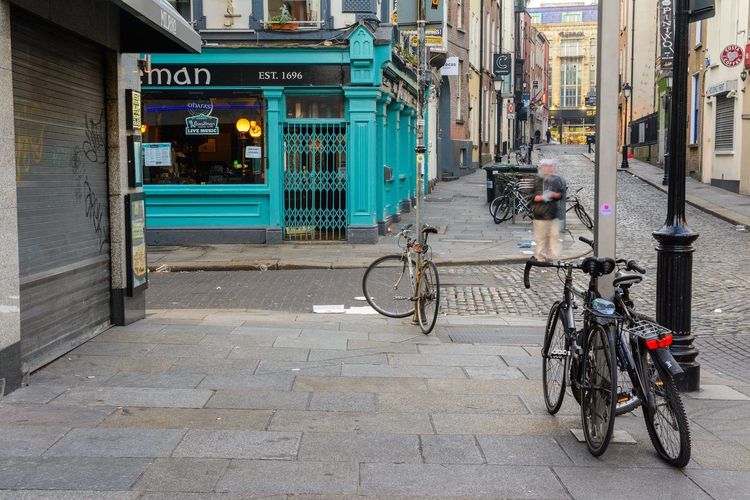
In the Liberties, Bar 1661 has specialised in poitín, a traditional Irish spirit that was long banned, reimagined here as contemporary cocktails.
Camerino and Brew Lab Specialty Coffee attract a largely local crowd looking for specialty coffee and carefully crafted brunches, away from the tourist bustle. The Church (Mary Street, Dublin 1, rated 4.4/5 on Google with 19,759 reviews), a bar-restaurant set inside an 18th-century former church on Mary Street, offers a spectacular setting for lunch or a cocktail beneath the original stained-glass windows. It was here that Arthur Guinness married in 1761, a detail the staff are always happy to share.
The Bank Bar & Restaurant occupies a former Victorian bank headquarters on College Green, with ornate ceilings and safes still visible in the basement. For a more refined experience, The Saddle Room, inside The Shelbourne hotel facing St Stephen's Green, serves seafood and champagne in a Belle Époque setting. Book ahead for Friday and Saturday evenings at the most sought-after addresses, particularly The Church and The Saddle Room, where the wait can exceed 45 minutes without a reservation.
To explore the full list of local specialities, the Ryo article on Dublin's culinary specialities lists ten tried-and-tested addresses, from the traditional pub to the fine-dining restaurant.
12. Day Trips and Surroundings of Dublin
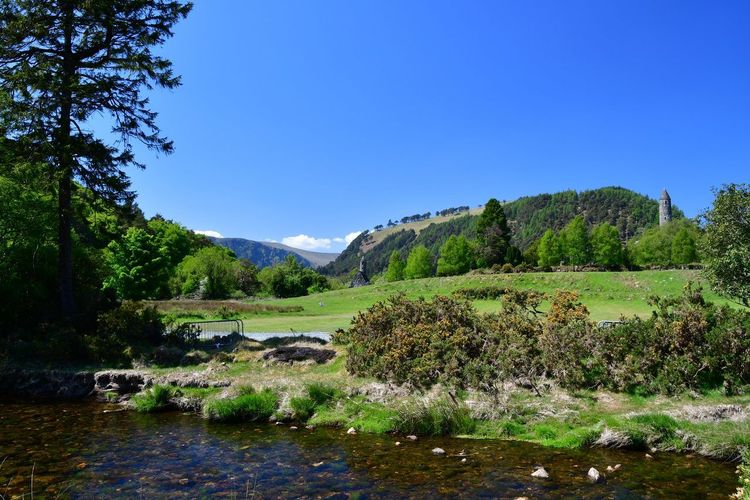
Glendalough and the Wicklow Mountains
About an hour's drive south of Dublin, Glendalough sits in a glacial valley carved between two lakes, around a monastic site founded in the 6th century by St Kevin. The stone round tower, 30 metres tall and almost entirely intact, looms over the ruins of a cathedral and several medieval oratories. Several walking trails, from the simple loop of the lower lake (30 minutes) to the ascent of the Spinc (3 hours return), allow the visit to be tailored to any fitness level.
Howth and Powerscourt Estate
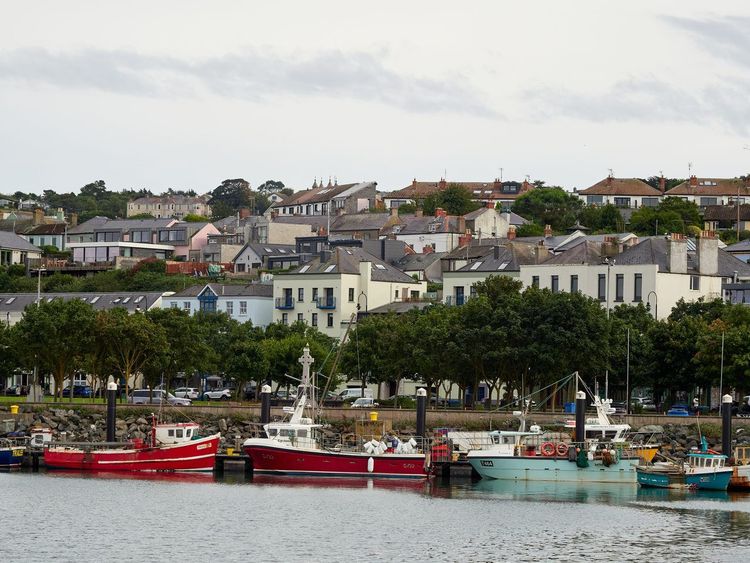
Just 30 minutes by DART train from the city centre, Howth (Howth, County Dublin, rated 4.7/5 on Google with 10K reviews) is a fishing village perched on a rocky peninsula, known for its weekend fish market and its cliff path that runs along spray-battered headlands. Allow 2 hours for the full loop, with views across to Ireland's Eye island.
Inland, Powerscourt Estate, in Enniskerry, combines an 18th-century manor house with Italian-style gardens ranked among the most beautiful in Ireland, as well as the country's highest waterfall, at 121 metres, a few kilometres from the main estate.
Cliffs of Moher, the Burren and Galway
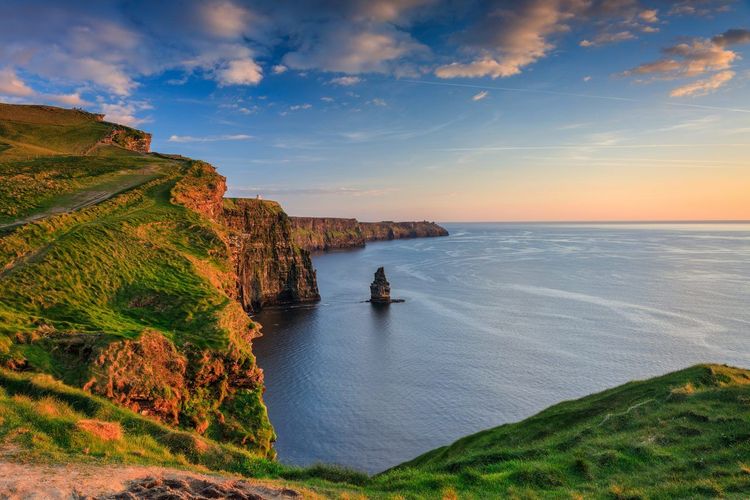
For a more ambitious full-day excursion (around 3 hours each way), the Cliffs of Moher rise up to 214 metres above the Atlantic on the west coast of County Clare. The road leading there crosses the Burren, a karst landscape unique in Europe made of striated limestone pavements, before reaching Galway, a university city with colourful facades and a lively musical atmosphere in the evenings. An organised coach excursion from Dublin remains the easiest option, as the distance makes a self-drive round trip in a single day quite tiring.
Giant's Causeway and Belfast
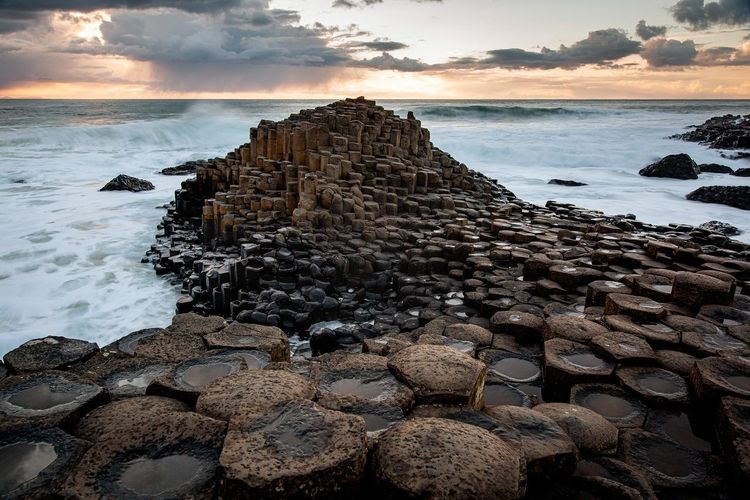
To the north, the border with Northern Ireland fades away after about 2 hours by road. The Giant's Causeway, a formation of 40,000 hexagonal basalt columns born of a volcanic eruption 60 million years ago, can be visited freely or with a guide from the visitor centre. Along the way, the Dark Hedges (made famous by a hit TV series) and the ruins of Dunluce Castle, perched on the edge of a cliff, are both worth a photo stop.
Belfast, 1h45 by road from Dublin, rounds off the loop nicely with its Titanic Museum, built on the very shipyard site where the liner was assembled. To plan this leg of the trip or venture further towards County Cork, home to the famous Blarney Castle and its kissing stone, the Ryo articles on the Ryo guide to Cork, the Ryo guide to Belfast and the most beautiful places in Ireland according to Ryo set out complete multi-day itineraries.
For travellers arriving from France, the ferry crossing remains an alternative to flying, particularly for those bringing their own vehicle: the Ryo article on the ferry to Ireland from France compares the available routes and crossing times.
13. What to Do in Dublin for Free
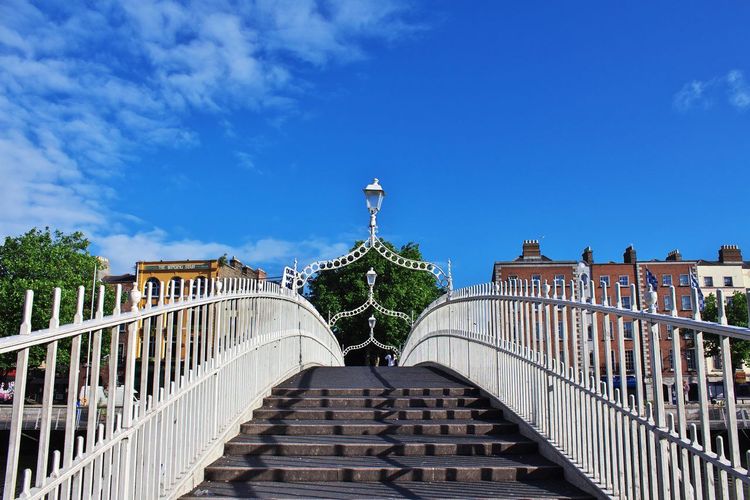
A good portion of the experiences mentioned above cost nothing: the parks (St Stephen's Green, Phoenix Park, the National Botanic Gardens), crossing the Ha'Penny Bridge, and the National Gallery of Ireland with its permanent collection, accessible without a ticket all year round.
On the museum front, the National Museum of Ireland (archaeology section) and the Chester Beatty Library, within the castle grounds, remain among the richest free collections in central and western Europe. Many visitors in a hurry overlook them in favour of paid sites that are often less content-rich.
Three more sites deserve a place in a budget-conscious trip. First, the exteriors of both great cathedrals, St Patrick's and Christ Church, can be admired freely from the surrounding gardens without paying for entry. Second, a walk through the Georgian streets of Merrion Square or Henrietta Street costs nothing but a comfortable pair of shoes. Third, the traditional music concerts that start early evening in Temple Bar pubs are generally free to enjoy, with the purchase of a drink being all that is needed to take in the show.
One final simple reflex: the ground floor of the Guinness Storehouse (St James's Gate, St James's St, Dublin 8, rated 4.4/5 on Google with 26,338 reviews) or of several distilleries sometimes has exhibitions accessible without a full ticket — worth checking directly at the entrance depending on the time of year.
14. What to Do in Dublin with Family
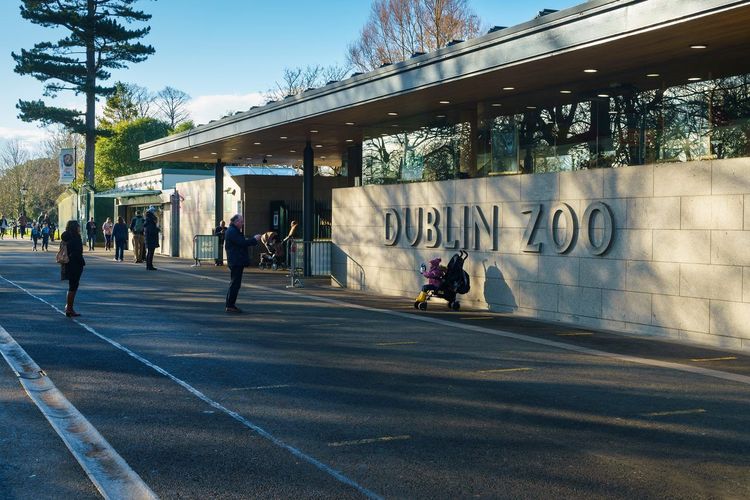
Dublin Zoo, within the grounds of Phoenix Park, remains the most obvious family outing, with its immersive zones for watching elephants, tigers and gorillas without too much walking between enclosures. Allow a full half-day, more if you add a picnic in the surrounding park.
Within Phoenix Park itself, bike hire and wide open lawns give younger visitors a chance to burn off energy between cultural stops — a real advantage compared to other, denser European capitals.
On rainy days, which are frequent in Dublin, Dublinia offers costumed workshops and interactive Viking-life reconstructions that generally appeal to children aged 6 to 12, while the EPIC Museum's digital and game-like format suits older, more independent teenagers.
A DART trip to Howth, easily manageable with a pushchair, tends to delight parents (scenery, sea air, fish market) and children alike, who enjoy spotting the seals near the harbour that are regularly visible from the pier. Finally, Trinity College, with its large lawns and resident squirrel, makes for a pleasant family pause before or after visiting the Book of Kells, whose reduced child admission remains very affordable compared to other paid attractions in the centre.
For families travelling with young children, planning frequent breaks remains the golden rule: Dublin is above all a walking city, and the distances between sites, though short on paper, quickly add up with a pushchair on uneven cobblestones. Our short audio-guided tour, From Celtic Charm to Dynamic Streets, keeps stops close together — handy with a pushchair in tow.
15. Practical Information for Planning Your Dublin Stay
Where to Stay in Dublin by Neighbourhood
The city centre, around Temple Bar and Trinity College, offers the most direct walking access to the main attractions, at the cost of higher noise levels in the evening and some of the highest hotel rates in the city. The Docklands, further north-east along the Liffey, appeal to travellers looking for quieter surroundings and modern hotels, with fast Luas tram access to the historic centre.
For better value, the Rathmines and Portobello neighbourhoods, 20 to 25 minutes' walk from the centre or 10 minutes by tram, offer a more local atmosphere, with cafés and restaurants frequented by residents rather than tour groups. Expect to pay between 120 and 180 euros per night for a well-located 3 to 4-star hotel in high season, compared to 80 to 110 euros in slightly more peripheral areas like Portobello or Phibsborough. Central youth hostels, numerous around Temple Bar, offer dorm beds from 25 to 30 euros. The Ryo guide to Dublin's neighbourhoods for accommodation details the advantages of each area depending on your travel profile.
Getting Around the City
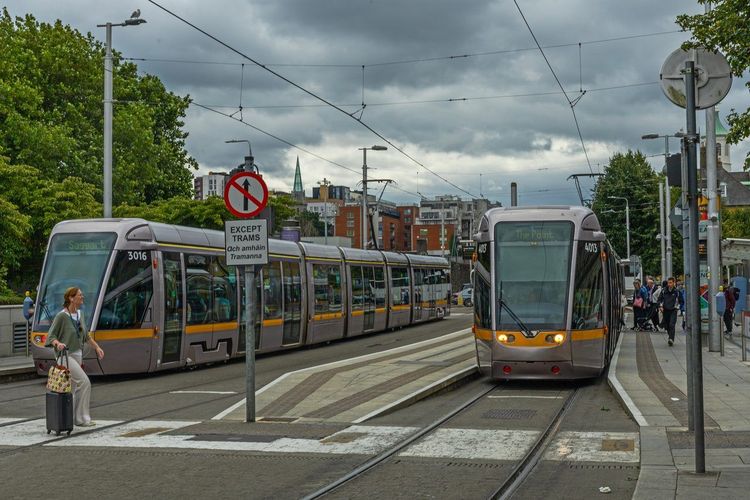
Dublin's historic centre is largely walkable: most major sites, from Trinity College to the castle, fall within a 25-minute walking radius. For longer journeys, the Luas tram (red and green lines) serves the main points of interest and train stations, while the coastal DART train links the centre to Howth in the north and Dún Laoghaire in the south in 20 to 30 minutes.
The Leap Visitor Card, a rechargeable card valid on bus, tram and DART, simplifies travel and works out cheaper than individual tickets from the second or third journey of the day onwards. From the airport, the Aircoach and Airlink Express shuttles reach the city centre in 30 to 45 minutes depending on traffic, at a price significantly lower than a taxi, which runs at around 30 to 35 euros during the day. Ride-hailing apps such as FreeNow work well in the event of a sudden downpour or a late-night journey — a common scenario given the local climate.
When to Go and How Many Days to Allow
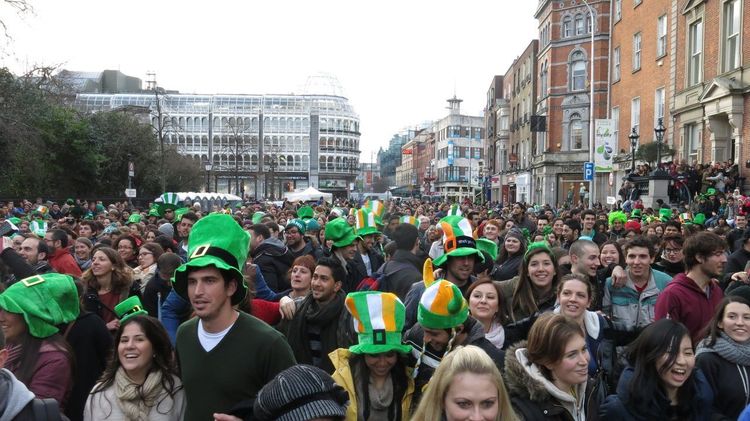
The period from May to September offers the best weather conditions, with longer days and temperatures around 15 to 19°C, though rain can never be ruled out. Mid-March, around the 17th, coincides with the St Patrick's Festival, the liveliest but also the busiest and most expensive time of year for accommodation.
For a first visit, 2 days are enough to cover the city-centre essentials (Trinity College, Guinness Storehouse, Temple Bar, one cathedral). With 3 days, you can add the free museums and a short day trip such as Howth. 4 days or more allow for a full-day excursion to Wicklow or further west without rushing. For a simple weekend, it is better to focus on a tight area around the historic centre rather than trying to see everything in two days, saving the day trips for a future visit.
How to get to Dublin from France: Dublin Airport is served by direct flights from Paris, Lyon, Marseille, Bordeaux and Nantes in 1h50 to 2h15 depending on the departure city, with several low-cost airlines offering attractive fares outside school holidays. A direct ferry route from certain French ports remains an option for travellers wishing to bring their own vehicle. Whatever length of stay you choose, it is worth booking tickets for the Guinness Storehouse and the Book of Kells well in advance, as both attractions sell out several days ahead during summer and the St Patrick's period.
FAQ
How many days do you need to visit Dublin?
Two days are enough for the city-centre essentials (Trinity College, Guinness Storehouse, Temple Bar, a cathedral). Allow 3 to 4 days to add the free museums and a day trip, such as Howth or Glendalough, without rushing. Travellers with a full week can add a second excursion, towards Wicklow or even Northern Ireland.
What can you do in Dublin for free?
The parks (Phoenix Park, St Stephen's Green), the National Museum of Ireland, the Chester Beatty Library and the National Gallery of Ireland are all free to enter. The exteriors of the cathedrals, a stroll through the Georgian streets and the street concerts in Temple Bar easily round out a programme with no spending required.
What is the best time to visit Dublin?
May to September offers the most favourable weather conditions, with long days and temperatures around 15 to 19°C. Mid-March, around St Patrick's Day, is lively but also busier and more expensive for accommodation, while autumn often brings lower prices.
How do you get around Dublin?
The city centre is largely walkable. The Luas tram and the coastal DART train cover longer journeys, while the Leap Visitor Card simplifies travel and reduces the cost of bus, tram and train trips for a stay of several days.
What is there to do in Dublin with family?
Dublin Zoo in Phoenix Park, the park's wide open lawns, Dublinia with its interactive Viking atmosphere and a DART trip to Howth make up a well-balanced family programme mixing outdoor activities and indoor options for rainy days.
What should you do in Dublin for a weekend?
It is best to focus on a tight area: Trinity College and the Book of Kells, the Guinness Storehouse, a cathedral and Temple Bar in the evening. Saving excursions like Glendalough or Howth for a future trip avoids unnecessary rushing over just two days.
Should you book the Guinness Storehouse and the Book of Kells in advance?
Yes, strongly recommended in high season (June to August) and around St Patrick's Day in March. Online time slots sell out several days ahead, and booking online also often saves up to 15% off the full price.
Dublin lends itself just as well to a weekend focused on the historic centre as to a full week combining museums and day trips to neighbouring counties. The city is compact enough to explore on foot, while offering enough depth — from Trinity College manuscripts to the Cliffs of Moher — to justify coming back more than once.
To plan your route in detail, neighbourhood by neighbourhood, the audio-guided tour of Dublin offers a complete Ryo audio guide, with 29 narrated tracks spread across nearly 4 hours of listening, to follow at your own pace between two pints of Guinness.
À lire également