© Shutterstock
 Votre guide Ryo
Solo Travel in Kyoto: A Complete 2026 Guide to Temples, Tea Ceremonies and Traveling Alone
The first thing that surprises most people about solo travel in Kyoto is how little it actually feels like being alone. Waiters slide a single cup of hojicha across the counter without a second glance, shrine attendants nod at solo visitors the same way they nod at couples, and an entire industry of one-person tea ceremonies, calligraphy sessions and kaiseki counters has grown up around travelers who'd rather set their own pace than negotiate someone else's. Kyoto has quietly become one of Japan's easiest cities to visit alone, and Ryo's self-guided audio tour of Kyoto is built around exactly that rhythm: walk when you want, pause when something catches your eye, and let the next story start whenever you're ready.
Over the next sections, you'll find out why a torii gate corridor with ten thousand gates is actually one of the calmer places to be alone in the city, which neighborhood lets you walk home from a bar at midnight without a second thought, and how a single traveler can book a private tea ceremony for one without feeling like an inconvenience. There's a bamboo grove best seen before 8am, a geisha district with etiquette rules (and fines) worth knowing before you arrive, a lodging tax that changed in March 2026, and a very specific answer to whether $1,000 covers a week in Japan.
Why Kyoto Is One of the Best Cities in Japan for Solo Travel
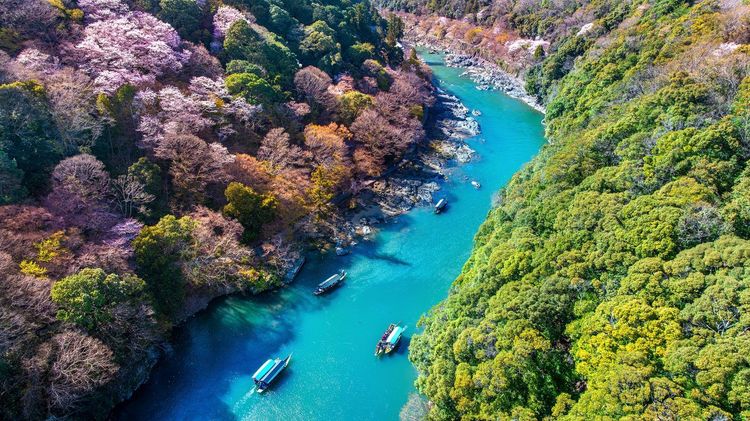
Kyoto was built for walking, and walking alone here rarely feels conspicuous. Unlike Tokyo's sprawl, the historic core fits into a handful of districts you can cross on foot or by a short bus ride, so a solo itinerary doesn't require constant logistics. Restaurants with counter seating, temples designed for quiet contemplation rather than group photo stops, and a culture that generally treats solitude as a reasonable way to experience a city rather than something to apologize for, all make Kyoto unusually forgiving for independent travelers.
There's also a practical case for going it alone here specifically. Kyoto rewards a slower pace, the kind that's hard to negotiate with travel companions who want to move faster or linger longer than you do. You can spend forty minutes sitting with a bowl of matcha at a quiet corner of a temple garden and nobody will rush you. You can also change your plan entirely at 11am because a side street looked interesting, something that gets harder with every additional person in your group. Solo travelers in Kyoto consistently report that the city lets them absorb its pace rather than impose one on it.
Is Kyoto Safe for Solo Travelers?
Kyoto ranks among the safer major cities in the world for a solo traveler, Japan as a whole included, and most of what feels unfamiliar here is etiquette rather than danger.
General safety rules and everyday etiquette
Violent crime against travelers is rare enough in Kyoto that it rarely features in local news. The more practical risks are the mundane ones: bicycles sharing narrow sidewalks, a language barrier that can slow down an emergency request, and the occasional pickpocket near Kyoto Station during peak tourist season. Carry a paper map or offline map downloaded in advance, since mobile signal drops inside some of the older stone-walled temple grounds. Convenience stores (konbini) double as reliable, well-lit landmarks if you need directions or a bathroom at odd hours, and most are staffed late into the night.
Japan's etiquette around noise, queueing and public behavior is unusually consistent, which paradoxically makes it easier to blend in: watch what locals do at a crosswalk or a train platform and mirror it. Tipping isn't expected anywhere, including at restaurants where you're eating solo, which removes one layer of social friction entirely.
Is Kyoto safe for solo female travelers?
Is Japan safe for a solo female traveler? By most measures, yes, and Kyoto specifically has a reputation among long-term expats and repeat visitors as one of the more comfortable Japanese cities for women traveling alone. Public transport runs on predictable schedules late into the evening, streets around the main tourist districts stay well lit and populated past 10pm, and harassment, while not nonexistent, is markedly less common than in many other major tourist cities.
That said, a few habits help. Some train lines in the Kansai region run women-only carriages during rush hour, useful if you'd simply rather avoid the crush of a packed commute. Staying in neighborhoods with steady foot traffic after dark, rather than isolated residential streets, is a sensible default anywhere, Kyoto included.
Respecting Gion's residents: maiko and geiko etiquette
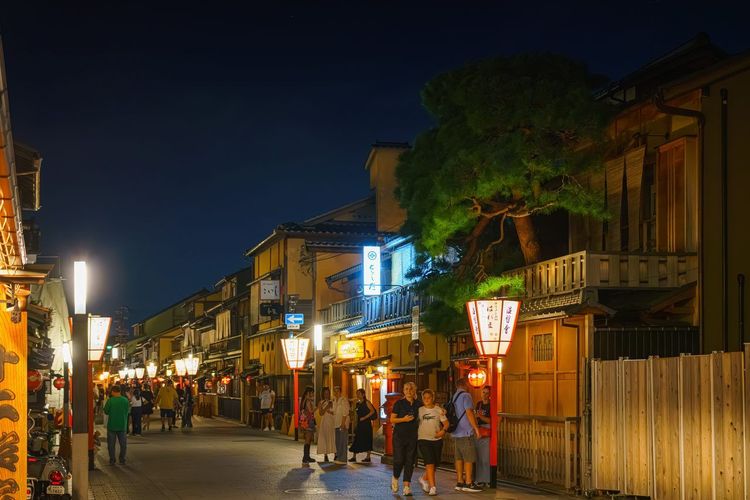
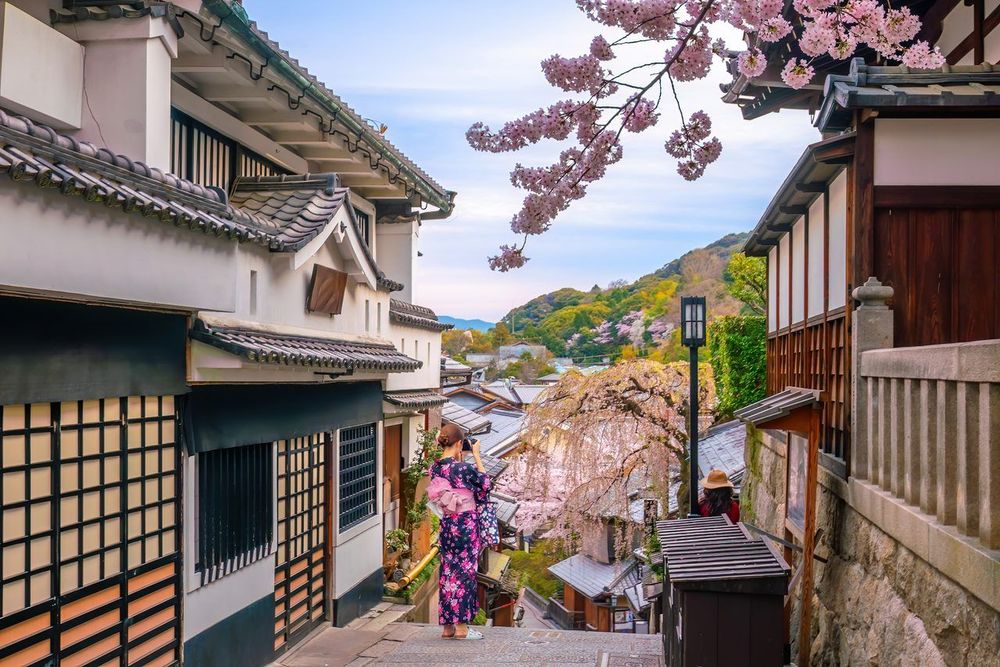
Gion is a working neighborhood, not a theme park, and that distinction matters for how you behave there as a solo visitor. Maiko (apprentice geisha) and geiko (the Kyoto term for geisha) commute between appointments through these same lanes, often in the early evening. Since 2019, signs on Gion's private streets have warned of a 10,000 yen fine for photographing without permission, and in April 2024 the neighborhood went further, closing several private alleys off Hanamikoji-dori to tourists altogether. The main Hanamikoji street itself stays public. If you see a maiko or geiko walking to an appointment, the respectful move is simple: don't approach, don't photograph at close range, and give way on the narrow lanes the same way you would for anyone rushing to work. This single piece of etiquette does more for how welcome solo travelers feel in Gion than almost anything else.
Getting to Kyoto and Getting Around Once You're There
Kyoto has no airport of its own, which actually simplifies the solo traveler's decision tree rather than complicating it.
Flying or taking the train into Kyoto
Most travelers fly into Kansai International Airport (Osaka) or Tokyo's Narita or Haneda, then connect to Kyoto by train. From Kansai, the Haruka limited express runs directly to Kyoto Station in about 75 minutes. From Tokyo, the fastest Nozomi trains on the Tokaido Shinkansen cover the distance in about two hours and fifteen minutes, comfortable enough to work, eat or nap through solo without any real downside. If you're arriving from elsewhere in Japan, Kyoto Station sits on the Shinkansen's main Tokyo-to-Osaka line, so it's rarely more than a short detour.
Booking a seat reservation in advance isn't mandatory on most Shinkansen trains, but it removes one small source of solo-travel stress: standing in an unreserved car during a busy departure, luggage in hand, scanning for a free seat. If you travel with a large suitcase, note that oversized bags on the Tokaido line require a reserved seat with luggage space.
Getting around solo: bus, subway, and bike
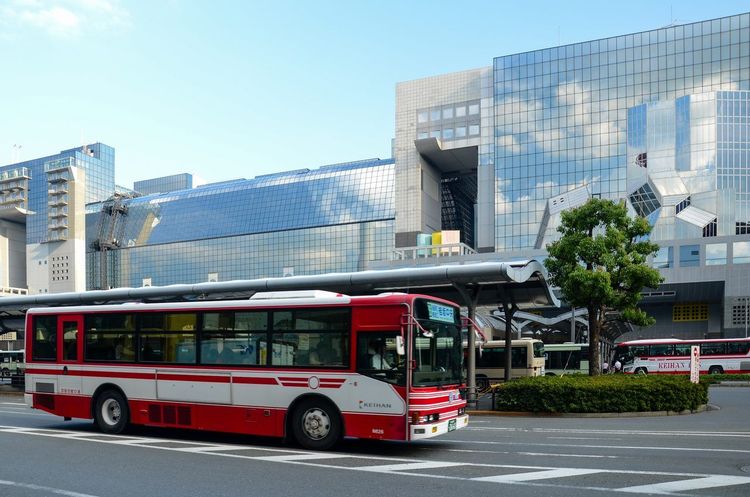
For two days or longer in Kyoto, a prepaid IC card (ICOCA or Suica) covers buses, subways and most trains with a simple tap, and it works the same way whether you're alone or in a group of six, which removes any need to split fares or coordinate tickets. The bus network reaches most major sights, including Fushimi Inari, Kinkaku-ji and Arashiyama, though buses can get crowded during midday peaks.
Biking is arguably the most solo-friendly way to move through flatter parts of the city. Several rental shops near Kyoto Station and in Arashiyama rent bikes by the day, and a ride through Kyoto Gyoen (Kyoto Gyoen, Kamigyo Ward, Kyoto, rated 4.5/5 on Google (10 171 avis)), the former imperial palace grounds, is one of the few activities in the city where going alone is a real advantage: no one to wait for, no pace to match, just open paths through a park that covers roughly 63 hectares.
When Should You Take Your Solo Trip to Kyoto?
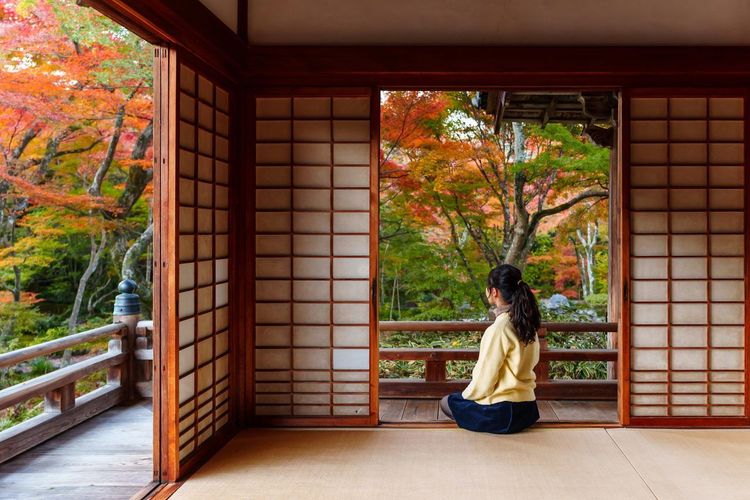
Late March through early April brings cherry blossoms and the heaviest crowds of the year, which is worth knowing before you book, since solo travelers competing for a quiet temple bench during peak sakura season will mostly lose that competition. Mid-November through early December, when the maple leaves turn, carries similar crowd levels with slightly more manageable weather.
If your priority is space to think rather than peak scenery, late May through early June or late September through October gives you mild temperatures, thinner crowds, and a Kyoto that feels closer to how residents actually experience it. Winter, from January through February, is the quietest stretch of all: cold, occasionally snowy, and the cheapest season for accommodation by a wide margin, which matters if you're budgeting a trip alone.
Where to Stay in Kyoto When Traveling Alone
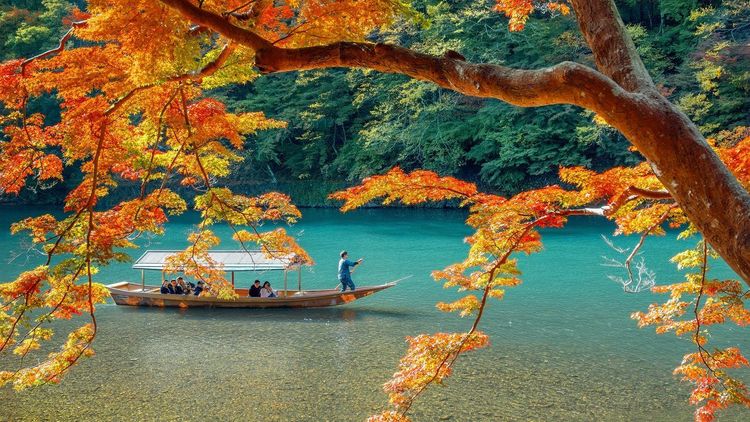
Where you sleep shapes your solo trip more than almost any other single decision, mostly because it determines how much walking, waiting and transferring you do every single day.
Best neighborhoods for solo travelers (Gion, Kawaramachi, Kyoto Station)
Kyoto Station is the pragmatic choice: every train and most buses radiate from here, so a base nearby minimizes daily transit time, at the cost of a slightly less atmospheric neighborhood. Gion and the surrounding Higashiyama area put you within walking distance of Kiyomizu-dera, Yasaka Shrine and some of the city's best evening dining, and staying here means you can wander back from dinner through lantern-lit lanes instead of catching a last bus. Kawaramachi, the downtown core along the Kamogawa River, offers the densest concentration of solo-friendly restaurants, bars and nightlife, useful if evenings alone in your room aren't your idea of a vacation.
Hostels, guesthouses, and capsule hotels for solo budgets
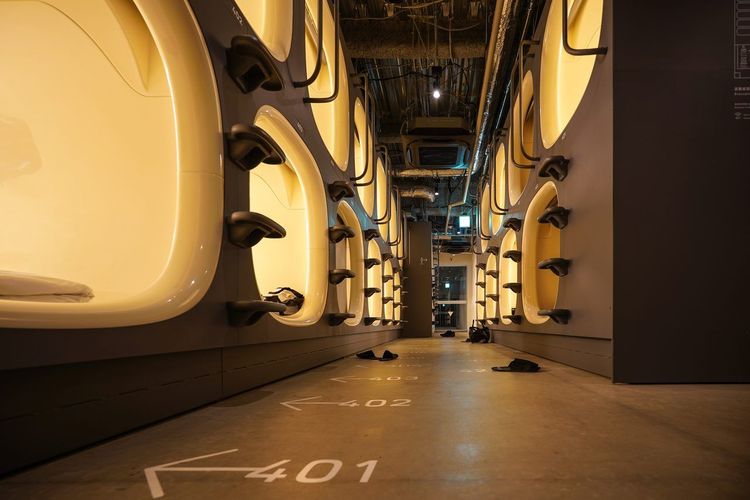
Capsule hotels remain one of Japan's most solo-optimized inventions: private, secure, climate-controlled pods for a fraction of a standard room's price, with shared bathrooms and lounges that double as informal meeting spots. Hostels with private single rooms, rather than dorm beds, strike a middle ground for travelers who want their own door but still want a common kitchen or lounge where striking up a conversation is easy. Traditional guesthouses (ryokan) aimed at solo guests exist too, though they're less common and worth booking well ahead, since many were historically designed around groups or couples.
One cost to factor in: since 1 March 2026, Kyoto charges a five-tier lodging tax per person per night, from 200 yen for rooms under 6,000 yen up to 10,000 yen for rooms at 100,000 yen and above. A mid-range single room between 6,000 and 19,999 yen now carries 400 yen a night, so budget beds are hit least. For a longer stay, Ryo's free things to do in Kyoto guide is worth bookmarking alongside your accommodation search, since it pairs well with a budget-conscious base near Kawaramachi or Kyoto Station.
The Unmissable Temples and Shrines to Explore on Your Own
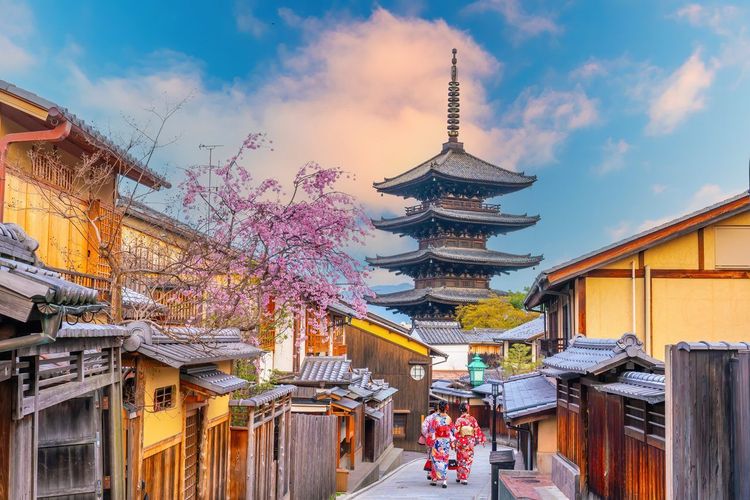
Kyoto has over 1,600 Buddhist temples and 400 Shinto shrines, and three sites in particular define most solo itineraries, each for a different reason.
Fushimi Inari Taisha and its thousand torii gates
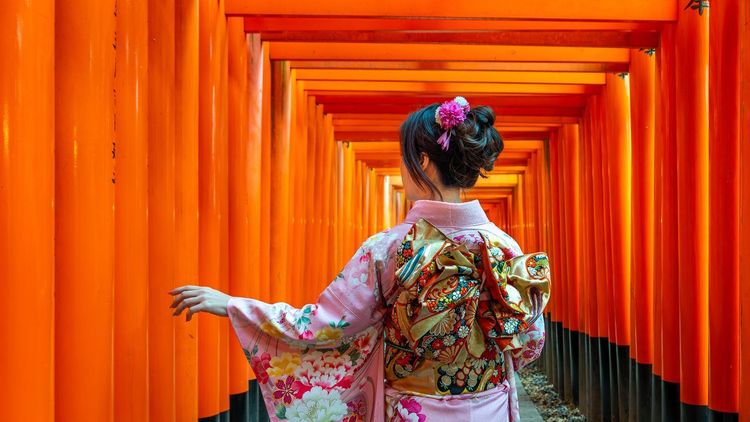
Fushimi Inari Taisha) is famous for its tunnel of vermilion torii gates climbing the mountainside, somewhere between four thousand and ten thousand depending on how you count, and it's one of the rare major sights in Kyoto that's open 24 hours with free entry. That detail matters enormously for solo travelers: arriving before 7am or after sunset means walking the lower gates in near-total solitude, something close to impossible during the 10am-to-4pm rush of tour groups.
The full climb to the summit and back takes two to three hours, but most visitors, solo travelers included, turn around after the first thirty minutes once the crowds thin and the gates give way to quieter side shrines. There's no wrong point to stop. Going alone here means you can decide that for yourself, at whichever gate feels right.
Kiyomizu-dera and the historic Higashiyama slopes
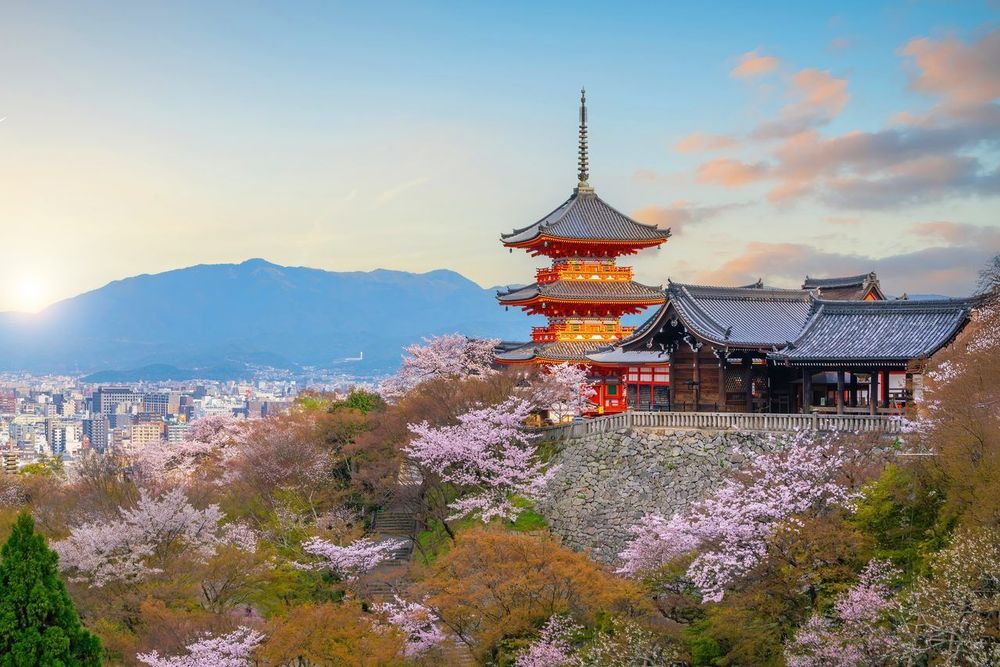
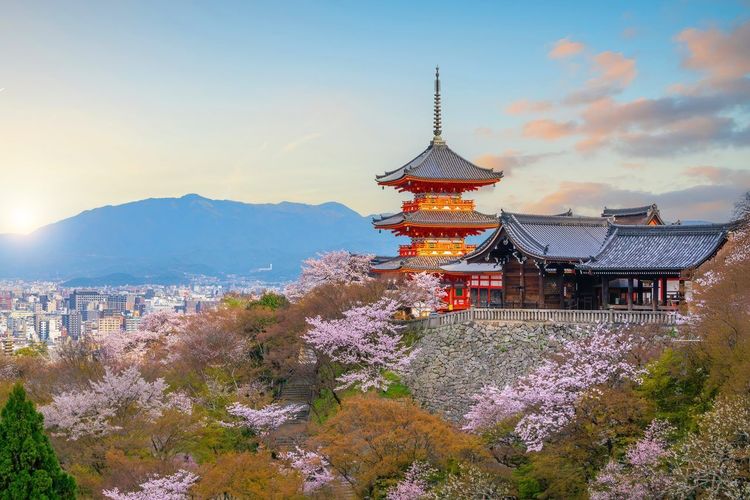
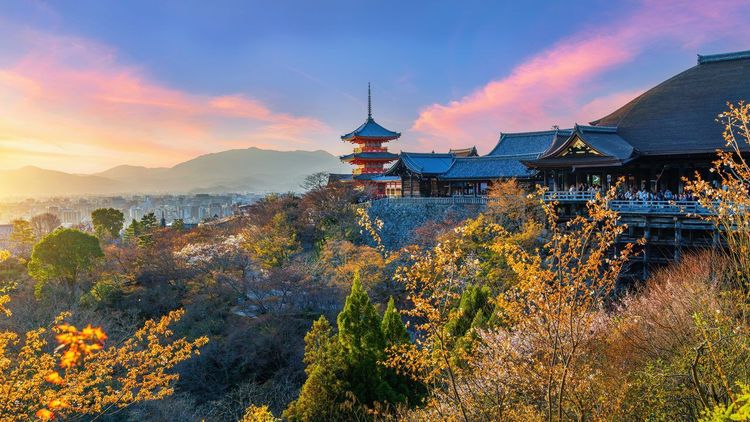
Kiyomizu-dera) perches on the hillside above a wooden stage held up by a lattice of pillars assembled without a single nail, and that veranda gives one of the better panoramic views over the city. The approach matters as much as the temple itself: Higashiyama's sloped lanes, lined with traditional shops selling pottery, sweets and textiles, are some of the most photogenic streets in Kyoto, and walking them alone in the early morning before the shops open is a completely different experience than fighting through them at noon.
Go before 8am if a quiet photo matters to you. By 10am, tour buses have arrived in force and the narrow approach streets slow to a shuffle.
Kinkaku-ji, the Golden Pavilion, at sunset
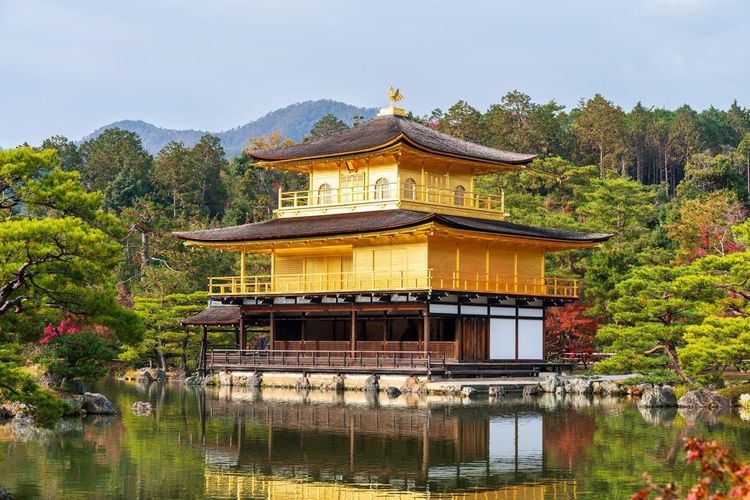
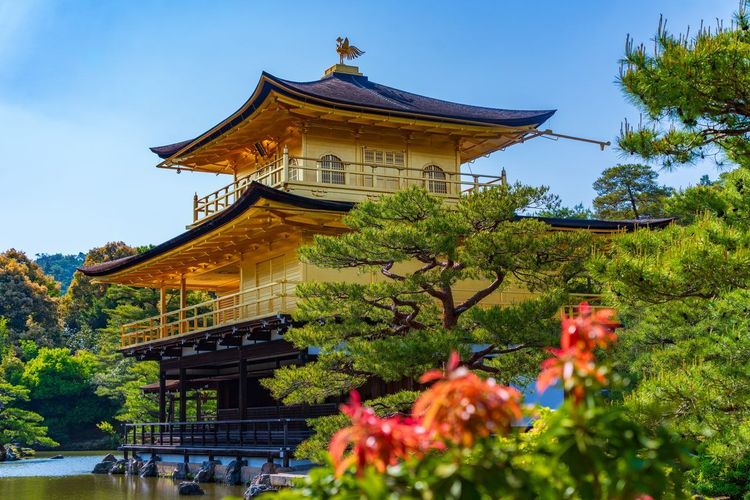
Kinkaku-ji (1 Kinkakujicho, Kita Ward, 603-8361 Kyoto, rated 4.6/5 on Google (71 579 avis)), the gold leaf-covered pavilion reflected in its own pond, is arguably Kyoto's single most photographed building. The current pavilion is a 1955 reconstruction, the original having been burned down by a young monk in 1950. Guidebooks love to recommend it at sunset, but the grounds open from 9am to 5pm every day of the year, so a true sunset visit only works in deep winter, when the sun sets around 4:45pm. The rest of the year, aim for the last hour before closing: the light is warmer and the midday tour groups have thinned. Entry costs 500 yen, paid in cash at the gate.
Between these three sites, Ryo's audio-guided tour of Kyoto threads a route that links Fushimi Inari's gates, Kiyomizu-dera and Kinkaku-ji with a short audio story queued up at each stop, so you're not stuck toggling between a map app and a guidebook while trying to find the next turn.
Gion and Higashiyama: Walking the Old Geisha District Alone
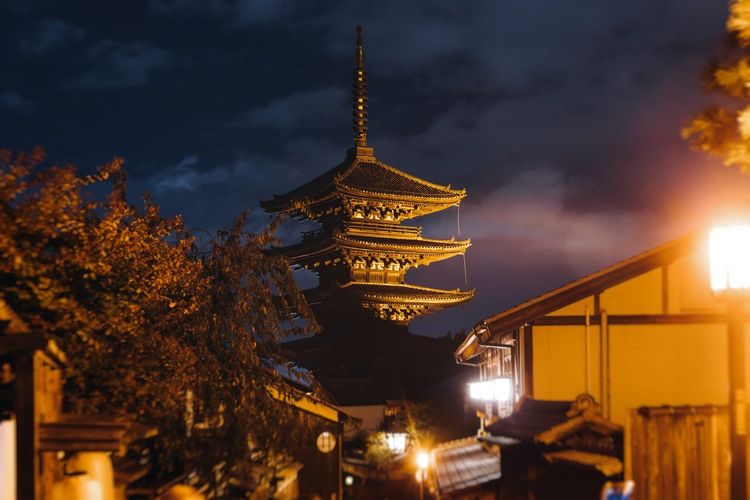
Gion rewards a slow, specific route more than almost any other part of Kyoto, and a half-day is enough to see it properly on your own.
A half-day solo itinerary through Kennin-ji and Gion's lanes
Start around 10am at Kennin-ji Temple), founded in 1202 and Kyoto's oldest Zen temple. Look up in the Hatto hall: Koizumi Junsaku's « Twin Dragons », painted across the ceiling in 2002 for the temple's 800th anniversary, covers an area of about 108 tatami mats, and the temple is usually quiet enough for an unhurried look. From there, it's a fifteen-minute walk through historic Gion itself, past the wooden teahouses of Hanamikoji-dori, before stopping for lunch somewhere along the way. Solo dining here is entirely normal; several restaurants in Gion have counter seating specifically suited to one.
Yasaka Shrine and Maruyama Park
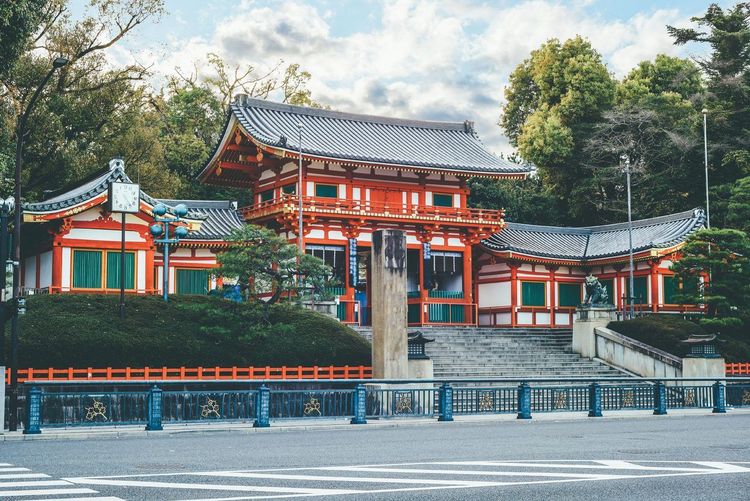
Continuing east brings you to Yasaka Shrine), Gion's guardian shrine, its vermilion gate lit at night and its grounds busy with locals stopping to pray on their way home. Just behind it, Maruyama Park (Maruyamacho, Higashiyama Ward, 605-0071 Kyoto, rated 4.4/5 on Google (6 968 avis)) opens into Kyoto's oldest public park, a green space dotted with a famous weeping cherry tree that draws its own crowds every spring. Together, the two make a natural afternoon pairing: a few minutes at the shrine, then a slower wander through the park's paths.
Photographing Gion's streets at sunrise, before the crowds
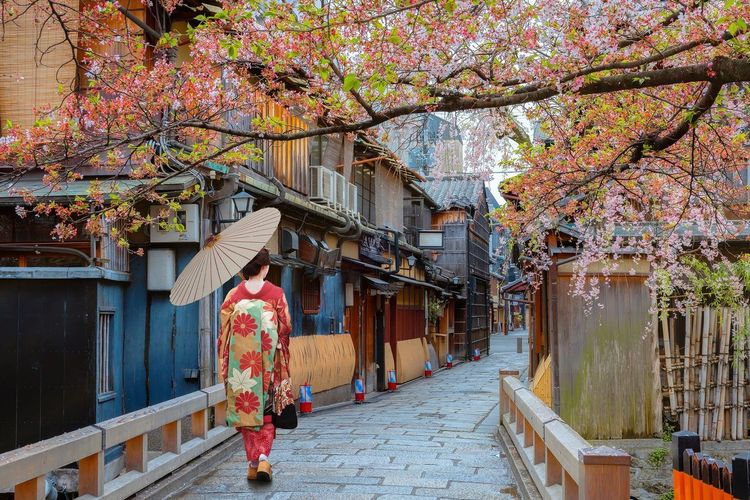
If a photograph of Gion's lanterns and wooden facades without a single other tourist in frame matters to you, sunrise is the only reliable window. By 7am, the lanes are nearly empty, the light is soft, and shopkeepers are only just beginning to slide open their shutters. Stick to public streets like Hanamikoji-dori and Shirakawa's canal-side lane, since the private alleys are now off limits. A short stretch of Ryo's audio guide runs through exactly these lanes, with notes on when and how to spot a maiko respectfully rather than turning the moment into a photo op she didn't agree to.
Can solo travelers meet a real maiko? Not casually on the street, and that's by design. A maiko makeover experience, where you're dressed and styled in the costume yourself, is widely available and fun for a solo traveler, but it's a different thing entirely from meeting a real, working maiko, which generally happens only through a formal ozashiki banquet booking, usually arranged well in advance and often through a ryokan or specialist agency.
Arashiyama: Bamboo Grove, Gardens, and Quiet Temples
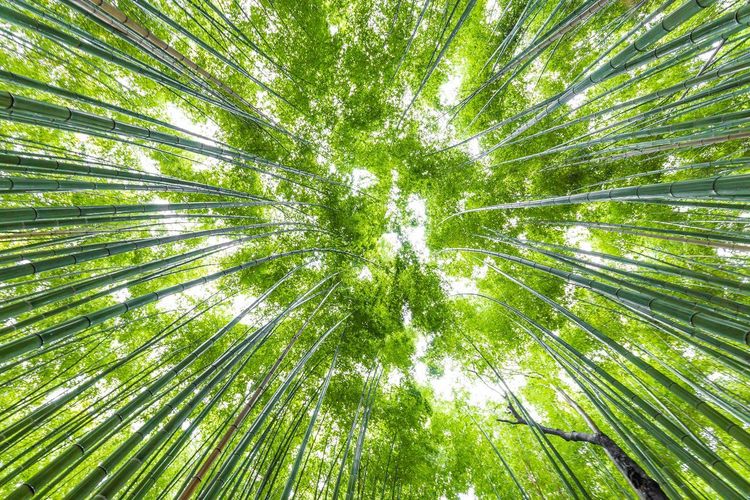
Arashiyama sits on the western edge of the city, close enough for a half-day trip but distinct enough in character that it feels like leaving Kyoto proper.
The Bamboo Grove and Tenryu-ji Temple
The Arashiyama Bamboo Grove) is the postcard image most people associate with the district: a narrow path cutting through towering bamboo stalks that creak and sway overhead. It's also one of the most crowded single spots in Kyoto by mid-morning, so arriving early, ideally before 8am, is the difference between an empty path and a shuffling queue for photos.
Adjacent to the grove, Tenryu-ji Temple)'s garden, designed around a central pond with the mountains as a borrowed backdrop, is one of Kyoto's UNESCO World Heritage sites and tends to stay calmer than the bamboo path right next to it.
Okochi Sanso Garden and the hidden Gio-ji Temple
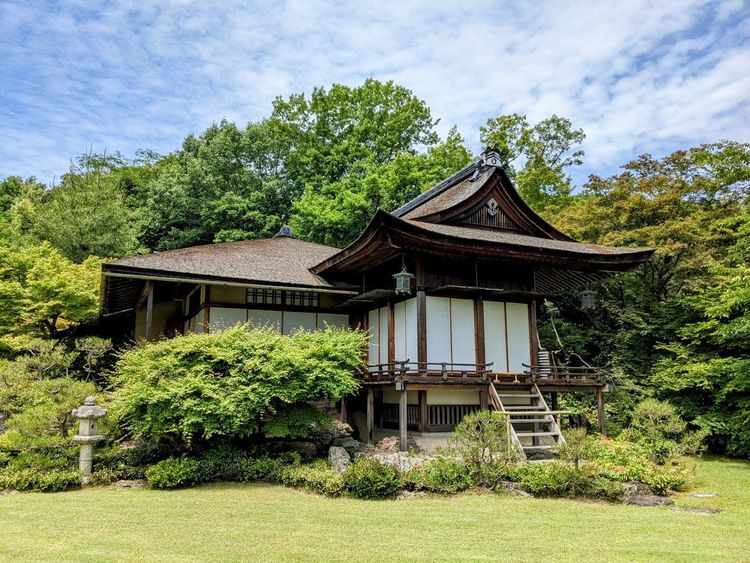
A short uphill walk past the bamboo grove leads to Okochi Sanso Garden), once the private villa of silent-film star Denjiro Okochi, who spent some thirty years shaping its grounds. The 1,000 yen entry includes a bowl of matcha and a sweet at a small teahouse overlooking the valley. Fewer tourists make it this far, which makes it one of the better value-for-quiet ratios in the entire district.
Farther north, in the Sagano backstreets, Gio-ji Temple (32 Sagatoriimoto Kozakacho, Ukyo Ward, 616-8402 Kyoto, rated 4.5/5 on Google (2 886 avis))'s moss garden is small enough to see in twenty minutes and peaceful enough that you may have it entirely to yourself on a weekday morning. The stretch of Ryo's audio-guided tour covering Arashiyama walks this same loop, timed loosely for a solo half-day visit rather than a rushed group itinerary.
Quiet Corners for Reflection: Philosopher's Path, Ginkaku-ji, and Nijo Castle
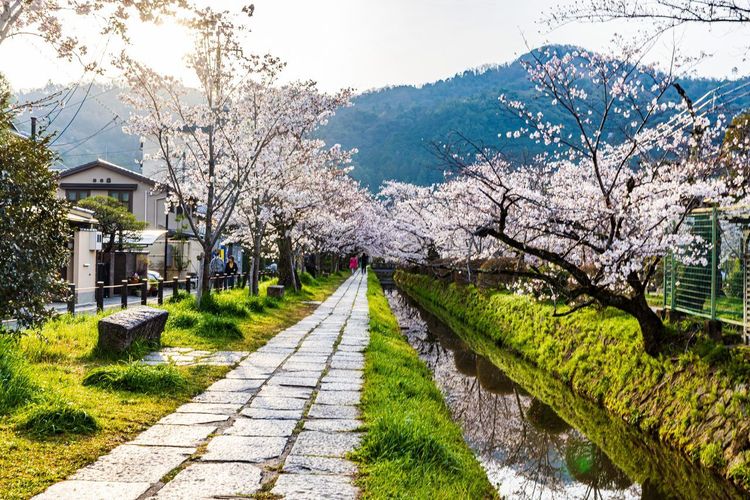
Some of Kyoto's best solo afternoons happen away from the headline sights, on routes built for walking rather than ticking off a list.
Walking the Philosopher's Path to Ginkaku-ji
The Philosopher's Path (Tetsugaku no Michi) follows a canal lined with hundreds of cherry trees for about two kilometers, named for Nishida Kitaro, the Kyoto University philosopher who walked it daily on his way to lectures. It's an easy, mostly flat route, made for the kind of unhurried walk that's hard to replicate with company: no destination pressure, just a canal, a path, and your own pace.
If you start from the southern end, at Nanzen-ji, don't miss the Suirokaku, a red-brick aqueduct completed in 1890 to carry Lake Biwa's water into the city, a quietly odd piece of Meiji-era engineering that most visitors photograph without quite knowing what it is.
The path ends at Ginkaku-ji), the Silver Pavilion, which despite its name was never actually covered in silver. Its moss gardens and raked sand cone are considered some of the finest Zen garden design in Japan, and the temple's hillside path gives one of the better overlooked views of Kyoto from above the rooftops.
Nijo Castle and the Kyoto Gyoen imperial grounds
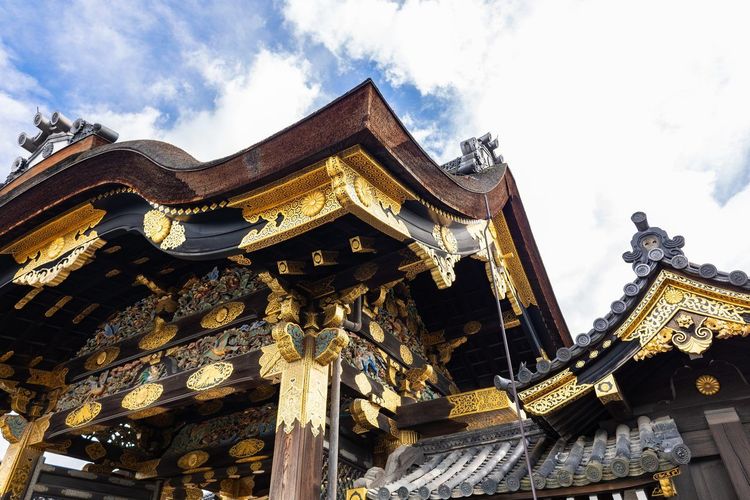
Nijo Castle (541 Nijojocho, Nakagyo Ward, 604-8301 Kyoto, rated 4.4/5 on Google (43 635 avis)), built by the first Tokugawa shogun as his Kyoto residence, is famous for its « nightingale floors », corridors engineered to chirp underfoot as an early-warning system against intruders. Walking them alone, listening for the sound with no one else's footsteps to confuse it, is a small, strange pleasure unique to visiting solo.
Northeast of the castle, Kyoto Gyoen, the former imperial palace grounds mentioned earlier for cycling, doubles as a vast park for a slower walk if you'd rather explore it on foot. Either way, solo visitors tend to linger on benches here far longer than groups ever do, and no one's waiting on you to move along. Back on the east side, a quieter stretch of the Ryo audio route traces the Philosopher's Path toward Ginkaku-ji, flagging the benches and viewpoints best suited to sitting still for a while.
Markets, Streets, and Solo-Friendly Dining Downtown
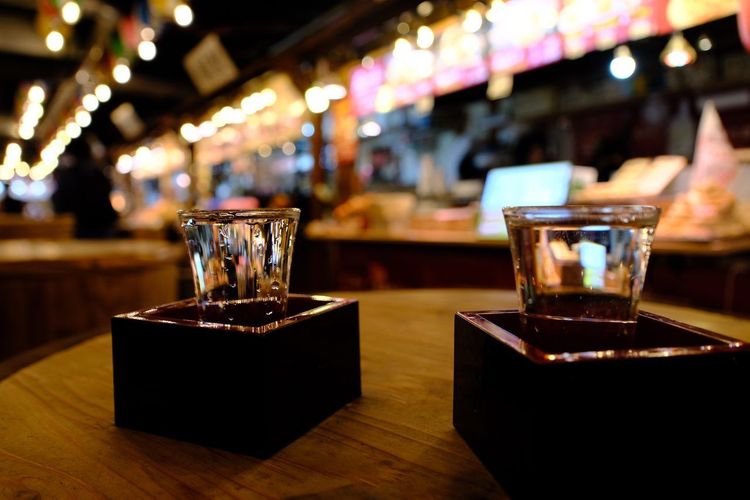
Eating alone in Kyoto is rarely the awkward experience it can be elsewhere, largely because counter dining is the default rather than the exception.
Nishiki Market, Teramachi, and Shinkyogoku shopping streets
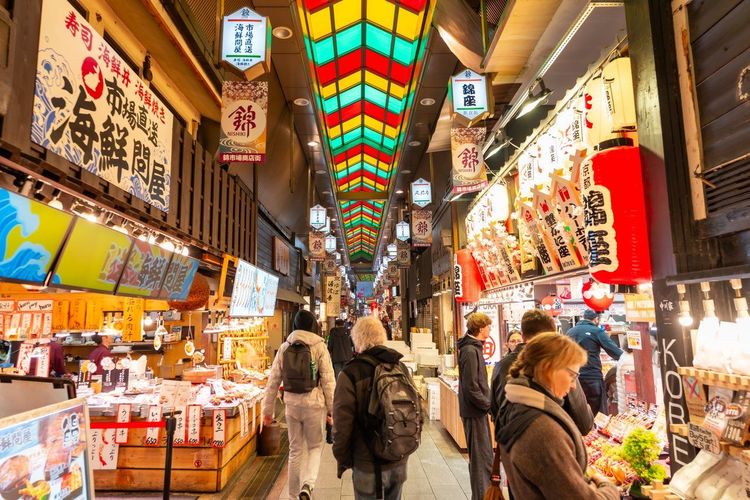
Nishiki Market), a narrow covered arcade stretching five blocks through downtown Kyoto, is often called the city's kitchen, and grazing your way through its food stalls is one of the easiest solo activities in the entire city: no reservation, no waiting for a table, just stall after stall of skewered seafood, pickles and sweets. One local rule to know: the market asks visitors not to eat while walking, so finish your snack at the stall.
At its eastern end, Nishiki Market feeds directly into Teramachi Street and the covered Shinkyogoku shopping arcade, both good for an afternoon of browsing stationery shops, souvenir stores and the occasional century-old sweet shop, entirely at your own pace.
Where to eat solo: tofu, udon, and counter seating
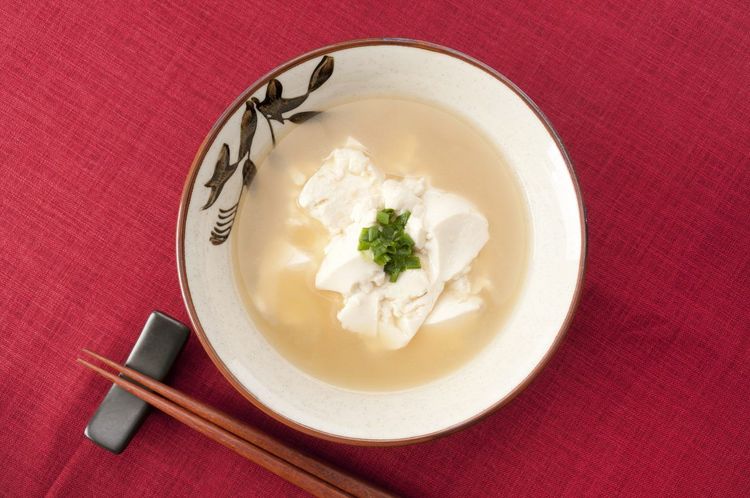
Kyoto's cuisine leans toward refined simplicity, and two dishes in particular suit solo dining well. Silky tofu (yudofu), simmered tableside in a simple kombu broth, is a specialty of temple restaurants around Arashiyama and Nanzen-ji and often served at single-seat counters. Kyoto-style udon, generally served in a lighter, more delicate broth than the Osaka version, is widely available at counter restaurants throughout downtown, many of which are set up for quick, solo meals rather than lingering groups.
For dinner, Kawaramachi has the city's densest cluster of restaurants comfortable with a party of one, ranging from standing yakitori bars to quiet kaiseki counters that take solo reservations without hesitation.
An evening walk along the Kamogawa River and Pontocho Alley
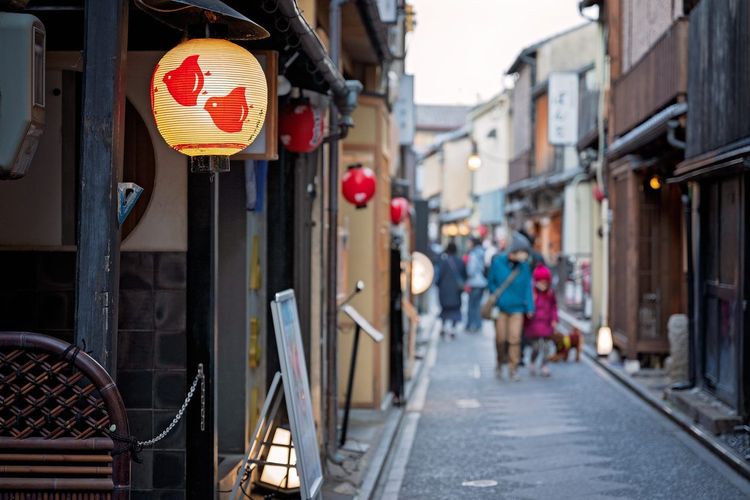
As evening sets in, the Kamogawa River banks fill with locals sitting at even, deliberate intervals along the water, a small cultural quirk worth noticing on your own evening walk. Just across the river, Pontocho Alley (Pontocho, Nakagyo Ward, 604-8017 Kyoto, rated 4.5/5 on Google (1 067 avis)), a single-lane corridor of lantern-lit restaurants and bars, is narrow enough that you can duck into almost any open door without feeling like you're interrupting anything.
Authentic Cultural Experiences You Can Enjoy Completely Alone
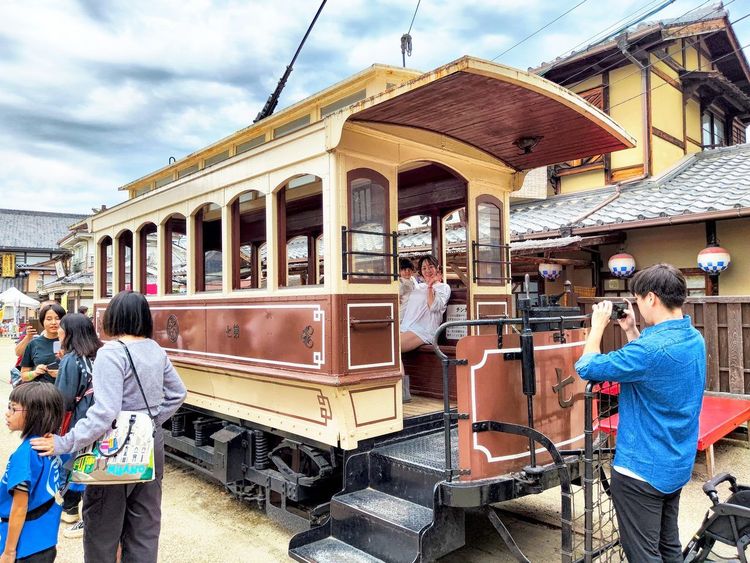
This is where Kyoto separates itself from most other cities for solo travelers: a dense cluster of hands-on cultural workshops built around one-person bookings as a normal, expected format rather than an afterthought.
Tea ceremony and calligraphy workshops
A traditional Japanese tea ceremony distills an entire philosophy of hospitality into a single, slow ritual: whisking matcha, presenting the bowl, receiving it with both hands. Its whole structure rests on a one-on-one exchange between host and guest, so a solo booking isn't an accommodation made for you; it's closer to the format the ceremony was designed for in the first place. Can you join a Japanese tea ceremony alone? Yes, and many teahouses in and around Gion advertise single-guest sessions, typically running 45 minutes to an hour, no prior experience required.
Japanese calligraphy workshops let you create your own kanji artwork under the guidance of an instructor. You usually pick a character with personal meaning (strength, journey and peace are common choices), practice the brushstrokes, then produce a final piece to take home. The session is self-paced and meditative by design, and the finished sheet becomes a far more personal souvenir than anything bought in a shop.
Wagashi making, pottery, and traditional crafts
Wagashi making workshops teach the delicate art of Japan's traditional sweets, shaped by hand into seasonal motifs (cherry blossoms in spring, maple leaves in autumn) using little more than a small wooden tool and practiced fingers. Classes run in small groups where the instructor corrects each pair of hands individually, and the almost sculptural focus the craft demands leaves no room to feel like the odd one out.
Japanese pottery and traditional crafts workshops, covering everything from wheel-thrown ceramics to textile dyeing and fan-making, give you a personal Kyoto souvenir made rather than bought. Most studios set these up as individual stations even within a group class, so your pace and your project remain your own from start to finish.
Kimono rental, Zen meditation, and meeting a maiko
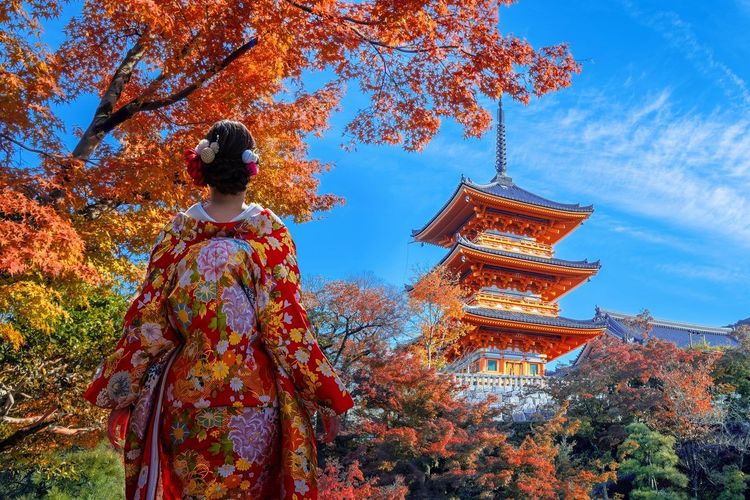
A kimono rental experience lets you explore Kyoto's temples and lanes in traditional dress for a day, and yes, you can rent kimono alone; shops near Kiyomizu-dera and Gion cater to solo visitors with staff who'll help with the full dressing process regardless of party size. Once dressed, photographing yourself against temple backdrops becomes part of the fun rather than an afterthought.
Zen meditation (zazen) sessions at temples around the city, often conducted partly in English for visitors, offer a peaceful side of Kyoto beyond the sightseeing circuit. Sitting meditation is a solitary practice to begin with, so there's no format to adapt: you simply show up and sit, exactly as intended.
A maiko cultural experience, distinct from the makeover-photo version, offers a tradition unique to Kyoto: watching or briefly interacting with a maiko in a formal, respectful setting arranged through a licensed experience provider. What does an authentic one involve? Typically a short performance of traditional dance or a tea-serving demonstration, booked through specialist operators rather than approached casually in Gion's streets.
How to Choose the Right Cultural Experience When Traveling Alone
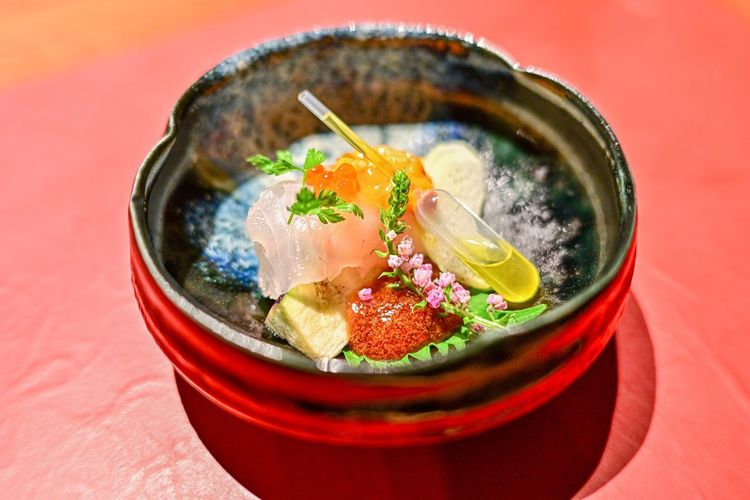
With so many options available, a few practical filters make the decision easier.
One-person bookings, English guidance, and beginner-friendly programs
Check whether one-person bookings are allowed before anything else; most are, but minimum group sizes still occasionally apply, particularly for private tea ceremonies at smaller, traditional venues. Look for English-language guidance if you're not comfortable with Japanese instructions mid-workshop; most tourist-facing studios offer at least basic English, though it's worth confirming for anything beyond the most popular experiences. Choose a beginner-friendly program unless you have prior experience; nearly every workshop in Kyoto assumes zero background, so this is rarely a real constraint, but it's worth double-checking for anything described as « advanced » or « intensive ».
Group vs. private sessions, and choosing a convenient location
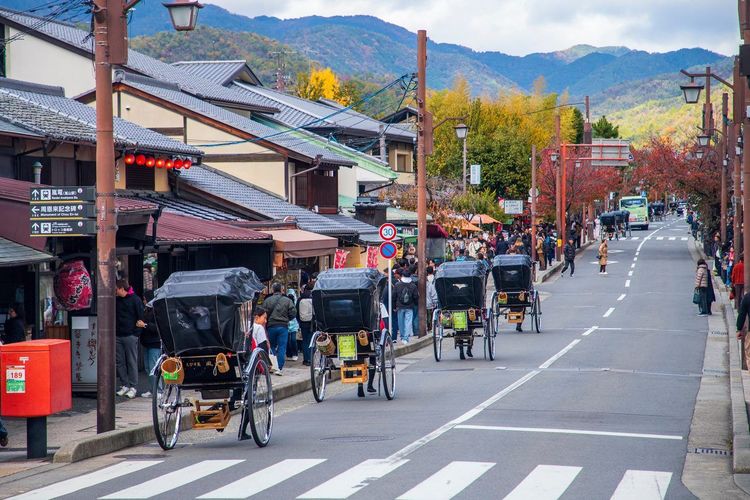
Decide whether you prefer a group or private experience. Group sessions are cheaper and often more social, useful if meeting other travelers matters to you, while private sessions give you full control over pace and timing, generally at a higher price. Consider the location and travel time too; a workshop tucked into a quiet corner of Arashiyama might be worth the detour if you're already spending the day there, but less so if it adds an hour of transit to an otherwise packed schedule. Do you need to speak Japanese to join cultural experiences in Kyoto? No; the vast majority of workshops aimed at visitors run comfortably in English or with enough visual instruction that language barely matters.
Meeting Other Travelers and Connecting With Locals
Traveling alone doesn't mean staying isolated, and Kyoto makes it fairly easy to talk to people if you want to.
Simple ways to start a conversation with locals
Shopkeepers, temple staff and counter restaurant chefs are generally receptive to a bit of conversation, even limited to a few phrases of Japanese paired with gestures and a translation app. Asking a simple question, which bus stop, which dish is the specialty, often opens a short, friendly exchange that a group of four would never get offered the same way. Locals tend to respond warmly to solo travelers making a visible effort, however small: a « sumimasen » before a question and an « arigato gozaimasu » after go a long way.
Meeting other travelers through shared tables and group activities
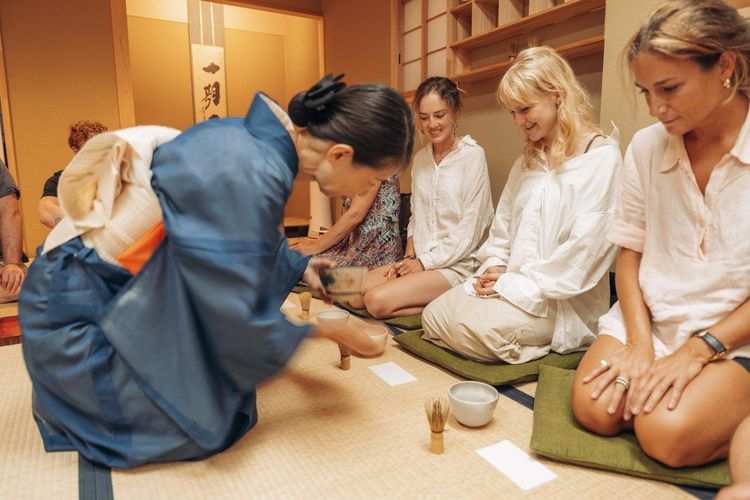
Hostel common areas, shared cooking classes, and group cultural workshops (the tea ceremony or wagashi sessions mentioned above, booked as group rather than private) are the most reliable places to meet other travelers. Can I meet other travelers during cultural activities? Frequently, yes; these small-group workshops naturally put you at a shared table with two to six other people for an hour or more, which is often enough time to swap recommendations or even arrange to explore together for the rest of the day.
What to Do Alone in Kyoto on a Rainy Day
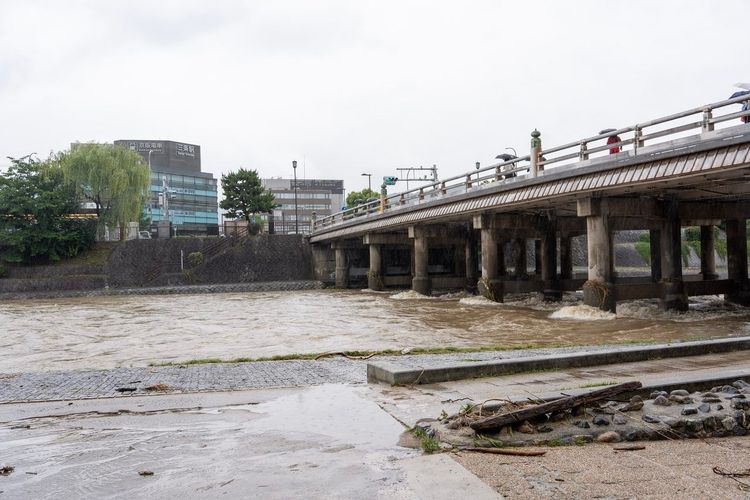
Kyoto's rainy season, roughly early June through mid-July, doesn't have to derail a solo itinerary.
A simple rainy-day itinerary built around museums and workshops
Indoor cultural workshops, the tea ceremony, calligraphy and pottery sessions covered earlier, are naturally rain-proof and tend to feel even cozier with weather outside. The Kyoto National Museum and the Kyoto International Manga Museum both offer hours of indoor browsing well suited to a solo pace, no one to hurry past an exhibit you want to linger on. Add a covered stroll through Nishiki Market and the Teramachi arcades, and you have a full day without ever opening an umbrella. Are traditional Japanese workshops good rainy-day activities? Yes, since most run in covered studios regardless of weather, and a wet afternoon is, if anything, a good excuse to book the tea ceremony you'd been putting off for a sunnier day.
Budgeting for a Solo Trip to Kyoto
Traveling alone changes the math on a Kyoto trip in ways worth planning around before you book anything.
A realistic daily budget breakdown
Is $1,000 enough for one week in Japan? For a solo traveler sticking to hostels or capsule hotels, convenience-store meals and the occasional counter restaurant, roughly $140 a day is workable, though it leaves little room for paid experiences beyond one or two workshops. Temple entries stay cheap (500 yen at Kinkaku-ji, nothing at Fushimi Inari), which helps. Is $2,000 enough for one week in Japan? That budget, around $285 a day, covers a private guesthouse or mid-range hotel, regular restaurant meals, and several of the cultural experiences described above without much compromise. Is $6,000 enough for two weeks in Japan? At roughly $430 a day across a longer trip, that figure comfortably covers higher-end ryokan stays, frequent kaiseki dinners and essentially unlimited workshop bookings, with room left over for shopping or day trips beyond Kyoto itself.
Where solo travelers tend to overspend, and how to avoid it
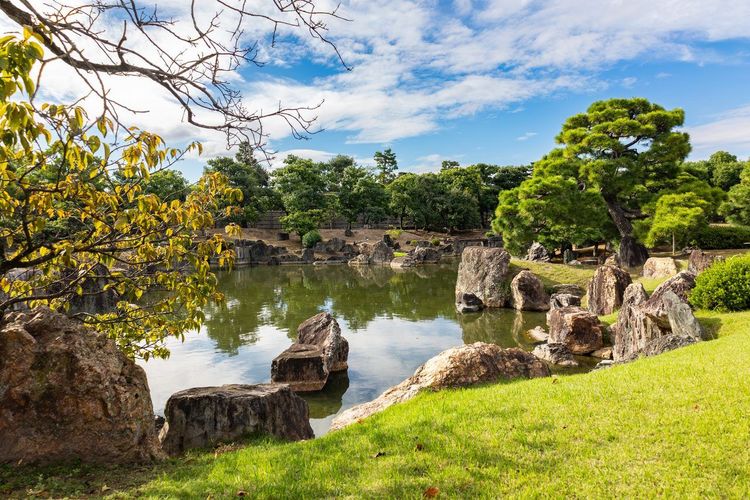
Solo travelers often lose money on accommodation specifically, since single-occupancy rates rarely scale down proportionally from double rooms, and Kyoto's per-person lodging tax now adds 400 yen or more a night on mid-range rooms. Capsule hotels and hostel single rooms close most of that gap. Taxis are another common overspend, convenient after a late dinner but expensive compared to Kyoto's bus and subway network. Finally, booking every cultural experience as a private session adds up fast; mixing in a few group sessions, where the price per person drops significantly, keeps the budget intact without sacrificing much of the experience.



FAQ
Is $2,000 enough for one week in Japan?
For a solo traveler, yes. Around $285 a day covers mid-range accommodation, regular restaurant meals and several paid cultural experiences without major compromise, assuming flights are booked separately.
Is $1,000 enough for one week in Japan?
It's workable but tight. Budget accommodation (hostels, capsule hotels), mostly convenience-store or counter-restaurant meals, and one or two paid experiences fit into roughly $140 a day, though there's little margin for extras.
Is $6,000 enough for two weeks in Japan?
Comfortably, yes. At around $430 a day, this budget supports higher-end stays, frequent dining out and essentially unrestricted cultural workshop bookings, with room for day trips beyond Kyoto.
Is Japan safe for a solo female traveler?
Generally, yes. Japan and Kyoto specifically rank among the safer destinations in the world for women traveling alone, with low rates of violent crime and reliable, well-used public transport running late into the evening. Basic precautions, like avoiding isolated streets at night, still apply as they would anywhere.
Can I join a Japanese tea ceremony or rent a kimono alone in Kyoto?
Yes to both. Many teahouses around Gion offer single-guest tea ceremony sessions, and kimono rental shops near Kiyomizu-dera and Gion routinely dress solo visitors with the same process used for groups.
Do I need to speak Japanese to enjoy Kyoto as a solo traveler?
No. Most temples, restaurants and cultural workshops aimed at visitors operate comfortably in English or rely on visual instruction, and Kyoto's major transit signage is bilingual throughout.
How many days should I spend in Kyoto on a solo trip?
Three to four days covers the major temples, Gion, Arashiyama and at least one cultural workshop without feeling rushed. A week allows for a truly unhurried pace, a rainy-day buffer, and time for the quieter corners, like the Philosopher's Path or Kyoto Gyoen, that a tighter itinerary tends to skip.
Kyoto doesn't ask a solo traveler to adapt to it so much as it simply works at a pace that happens to suit one person well. Between the thousand gates at Fushimi Inari, a quiet half-day in Gion, and an afternoon spent whisking your own matcha, there's enough here to fill a week without once needing anyone else's agenda to line up with yours. When you're ready to turn all of it into a single, walkable route, Ryo's audio guide to Kyoto picks up where this guide leaves off, one stop and one story at a time.