© Shutterstock
 Votre guide Ryo
Valletta in 3 Days: Complete Itinerary to Explore Malta's Fortified Capital (2026)
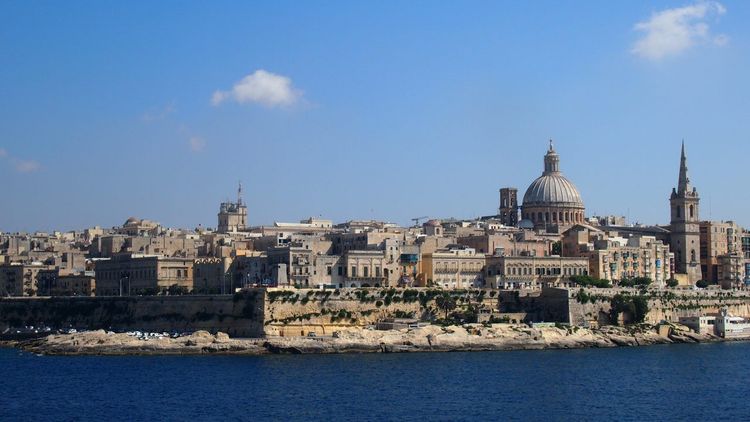
Step through the City Gate and you'll see that Valletta is no ordinary capital: its golden limestone ramparts enclose less than one square kilometre, yet this tiny perimeter holds more than 320 listed monuments, five centuries of history of the Knights of the Order of St John and one of the most photographed waterfronts in the Mediterranean. To visit Valletta in 3 days without rushing, it's best to let yourself be guided first: the Ryo audio-guided tour of Valletta unfolds precisely this route, street by street, with the historical commentary you miss when walking alone with a map.
This guide details a day-by-day itinerary: hanging gardens above the Grand Harbour on the first day, theatres and museums set in former knights' inns on the second, and a boat trip to the fortified Three Cities on the third. You'll also find help deciding between 1, 2 or 3 days on site, the best time to come, where to sleep without straying far from the city gates, and ideas for families, couples and rainy days.
Why Visit Valletta, the Fortified Capital of Malta
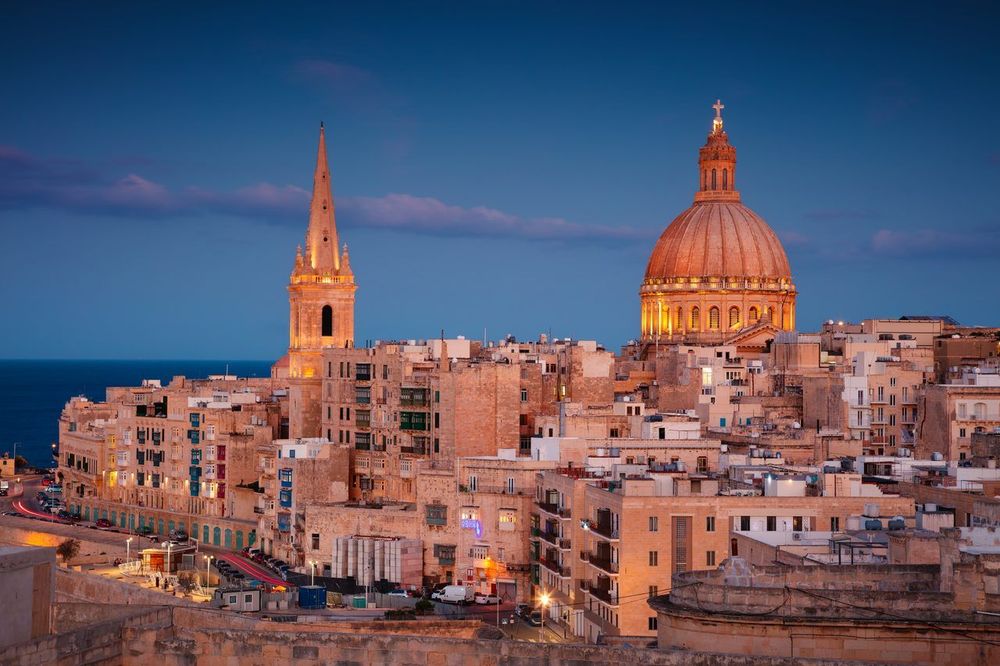
Valletta fits in the palm of your hand: barely 0.6 km², making it the smallest capital in the European Union, built entirely on a rocky peninsula between two natural harbours. It owes its name and its grid plan to Jean de Valette, Grand Master of the Order of St John, who launched its construction in 1566, a year after repelling the Ottoman siege of 1565. The papal architect Francesco Laparelli then laid out straight streets, a continuous line of fortifications and a defensive system designed so that no point in the city would be out of reach of friendly cannon.
Four centuries later, in 1980, UNESCO listed the entire old town as a World Heritage Site, citing more than 320 monuments within this tiny perimeter: palaces, churches, bastions, and knights' inns converted into museums. Few European capitals pack such a density of heritage into a space you can cross on foot in twenty minutes.
Is Valletta worth visiting beyond its role as a gateway to Malta? The answer lies in the constant contrast between austere Baroque façades and hanging gardens over the Grand Harbour, between lively shopping streets and the silence of the inner courtyards of the knights' former palaces. Few people come for just one day: the city held the title of European Capital of Culture in 2018, and its historic centre keeps opening new spaces without altering the 16th-century layout.
If your trip also includes discovering Malta as a whole, Valletta remains the logical starting point: most of the island's buses converge on its terminus, and the neighbouring islands of Gozo and Comino can be visited on a day trip from the harbour. But this guide deliberately stays focused on the capital itself: three days is barely enough to explore what its ramparts hold.
Valletta's Must-Sees at a Glance
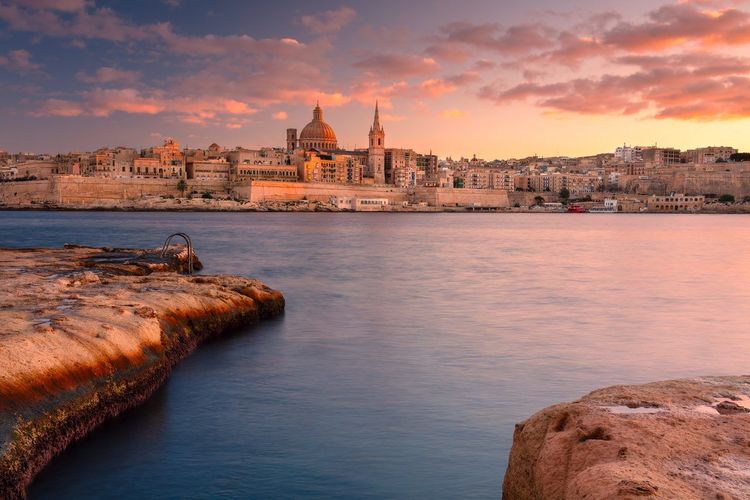
Before detailing the day-by-day itinerary, here is a quick overview of what structures any visit to Valletta: each site below has a full section further down.
- The Upper Barrakka Gardens, the panoramic terrace over the Grand Harbour where the Saluting Battery's cannon fires every midday.
- The St John's Co-Cathedral, whose funerary marble floor and the Caravaggio in the oratory alone justify the city's reputation.
- The Grand Master's Palace, seat of power since the 16th century, which today houses the office of the President of Malta and a spectacular armoury.
- The Fort St Elmo, a defensive stronghold at the tip of the peninsula, home to the National War Museum.
- The Manoel Theatre, an Italian-style auditorium from 1731 still in use, among the oldest in Europe.
- Republic Street and Merchant Street, the two arteries that run the full length of the city.
- The Three Cities, just across the Grand Harbour, for a half-day extension beyond the ramparts.
This list says nothing about the order in which to link these places or how much time to give them: that is the whole point of the three days detailed below. If you prefer to walk without checking your phone at every crossroads, the Ryo audio-guided tour links most of these landmarks in a 4.3 km loop starting from the Triton Fountain: 20 audio stops, about 1h45 of listening, from the co-cathedral to Fort St Elmo via the two Barrakka gardens.
How Long Do You Need to Visit Valletta (1, 2 or 3 Days)?
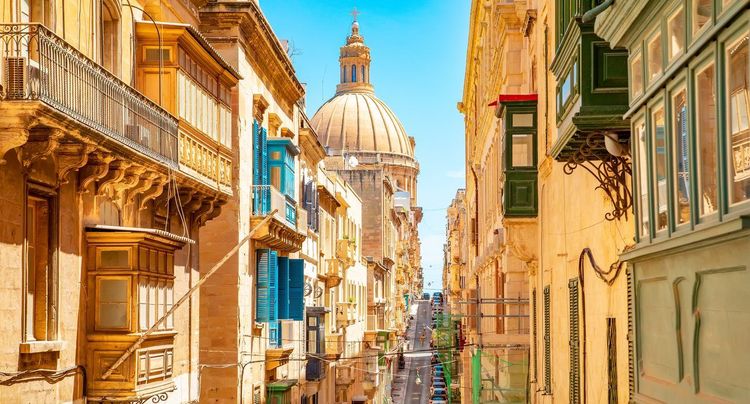
How long does it take to visit Valletta? It all depends on what you want to take away from it. The city can be walked from one end to the other in about twenty minutes, but the density of monuments changes everything.
Visiting Valletta in 1 day is possible if you are only making a flying visit between two excursions elsewhere on the island: in that case, count on the Barrakka gardens, the co-cathedral and Republic Street, sacrificing the museums and the detour to the Three Cities. This is the format adopted by many cruise-stop visitors, who are often disappointed to have to choose so quickly.
Visiting Valletta in 2 days lets you add the Grand Master's Palace and at least one of the major museums (MUZA or the National Museum of Archaeology), without rushing through the gardens on the first day. It's a good compromise for those splitting their stay between Valletta and the rest of Malta.
Three days, on the other hand, leave time to include the boat extension to the Three Cities, to visit two museums rather than just one, and above all not to rush from site to site. This is the option detailed in this itinerary, built around three themed days: gardens and major monuments, then theatres and museums, then an excursion across the Grand Harbour.
To visit Malta as a whole, including Gozo, allow at least 5 to 7 additional days: distances are short, but each island deserves its own day so that your trip doesn't turn into a checklist.
When to Go: The Best Time to Visit Valletta
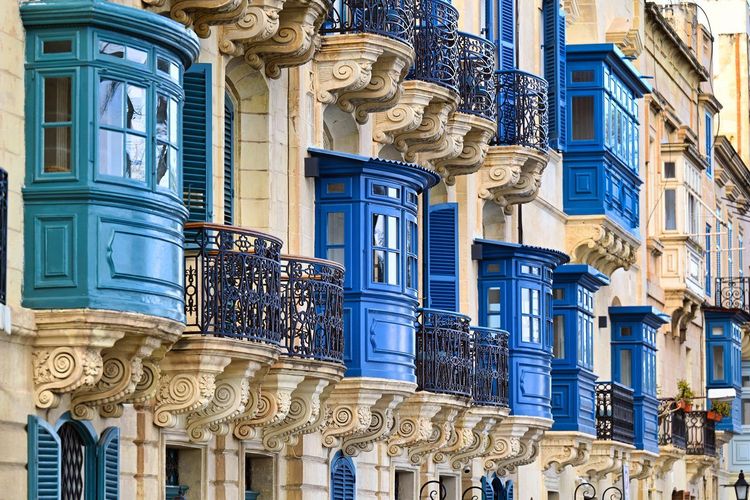
To know when to visit Valletta, first consider your tolerance for heat. Between June and September, the thermometer regularly exceeds 30°C during the day, and the narrow lanes of the old town, which offer little shade in the hot hours, become gruelling for anyone walking a lot.
April, May, then September and October offer the best compromise: temperatures around 22-26°C, a sea still warm at the end of the season, and far fewer tourists than in the height of summer. This is the period favoured by most regulars of the island.
The Maltese winter is mild compared with the rest of Europe (12-16°C during the day), but the wind and rain from November to January complicate visits to outdoor gardens such as the Upper Barrakka Gardens. If you come at this time, it's best to focus on museums and indoor sites in the first days, and keep outdoor sites for a break in the weather.
As for when to visit Malta more broadly, the logic remains the same: low season, from November to March, appeals mostly to travellers who prefer heritage to beaches, while high season in July and August attracts those who also come to swim, at the price of heat that can be hard to reconcile with intensive walking in the city.
How to Get to Valletta and Get Around
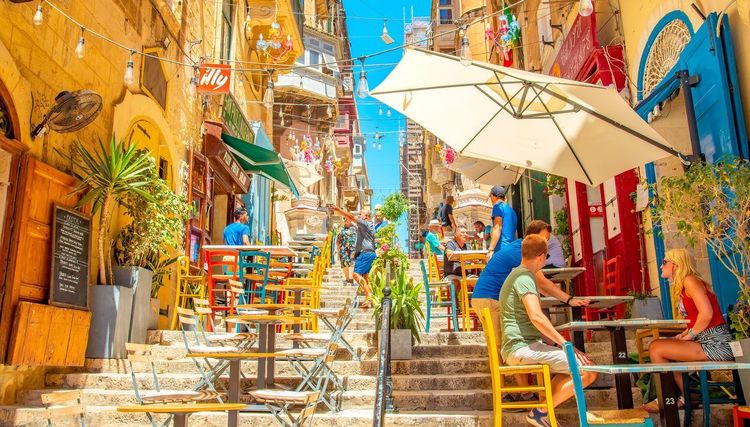
Two questions come up every time before a stay in Valletta: how to get there, and how to get around once your bags are down.
From Malta Airport to Valletta
Getting to Valletta almost always starts with the same entry point: Malta International Airport (MLA), located in Luqa, about twenty minutes by road from the capital. Several daily flights operate from France depending on the season, departing from Paris, Lyon or Marseille.
From the airport, you have three options. The public bus, line X4 to Valletta, remains the cheapest solution, with a journey of about 30 minutes and a stop right at the city terminus, in front of the Triton Fountain. A taxi or ride-hailing car costs more but drops you directly at one of the old town's gates, useful with luggage. Finally, some hotels offer a private shuttle on request, handy for a flight arriving late at night.
Flying to Valletta is therefore simple: no ferry connection or complicated transfer, unlike a stay centred on Gozo, which adds a sea crossing from Ċirkewwa.
Getting Around the City and to Neighbouring Islands
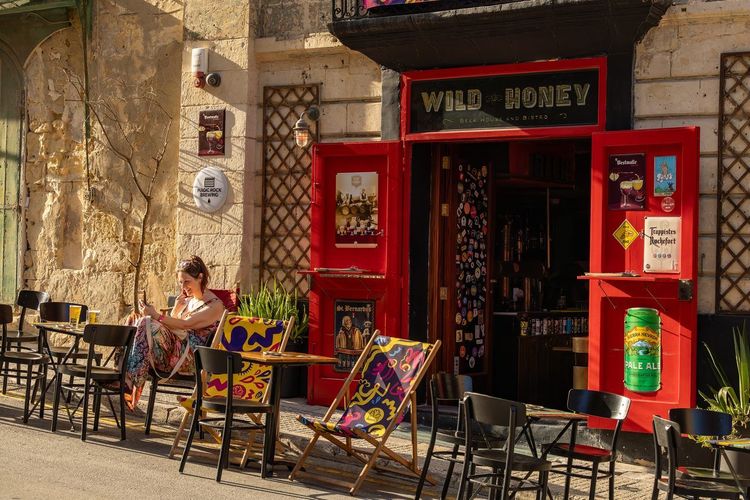
How do you get around Malta from Valletta once you're there? Inside the ramparts, everything is done on foot: car traffic is limited by an urban toll and many streets are pedestrianised, Republic Street first among them. The streets that plunge towards the harbours often end in steps; to climb back up from the Grand Harbour quay without effort, the Barrakka Lift, a 58-metre elevator, drops you straight into the Upper Barrakka Gardens.
To leave the city, the Malta Public Transport bus network converges on the Triton Fountain terminus, with lines to Sliema, Mdina, Mellieħa and the south of the island. A single ticket costs 2 euros in winter and 2.50 euros in summer, valid for two hours with transfers; for a week on site, the Explore card (25 euros) gives unlimited access to the network for seven days.
By sea, two ferries leave from Valletta itself: the first, from the Marsamxett quay, reaches Sliema in about ten minutes; the second, from Lascaris Wharf at the foot of the Barrakka Lift, crosses the Grand Harbour to the Three Cities (detailed on day three). For Gozo, a fast ferry links Valletta to Mġarr in about 45 minutes, while the classic ferry leaves from Ċirkewwa, in the north of the island, for a crossing of just under half an hour.
Where to Stay to Visit Valletta
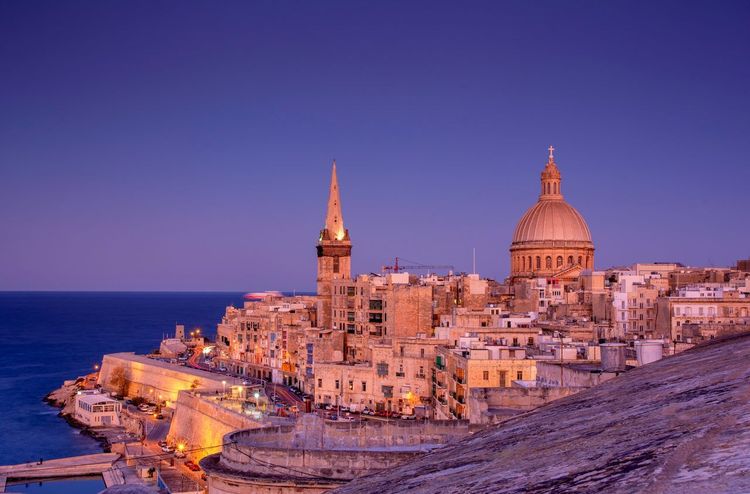
Where to stay to visit Valletta comes down to a binary choice: sleep within the ramparts, or just opposite, on the other side of the harbour.
Sleeping intra-muros, in the old town itself, means waking up a stone's throw from the co-cathedral and being able to walk home after dinner. The offer is limited, however, and often upmarket: several former knights' palaces have been converted into boutique hotels with inner courtyards and roof terraces, a formula that generally costs more than the Maltese average but spares you any morning commute. A useful landmark when choosing your address: the Triton Fountain, in front of the City Gate, is less than ten minutes' walk from most intra-muros accommodation.
Another very popular option: staying in Sliema or St Julian's, on the other side of Marsamxett Harbour, connected to Valletta by a direct ferry of about ten minutes or by bus. The advantage is a wider choice of accommodation and more affordable prices, plus direct access to the seafront promenade and to restaurants open later in the evening. The downside: you have to plan your crossings around ferry times, which generally stop in the evening.
Finally, some travellers choose Mdina or the south of the island for their village authenticity, at the cost of a 30 to 45-minute bus or car journey to Valletta. This option mainly suits a stay focused on discovering Malta in general rather than on the capital alone.
Where to sleep in Malta, in short: intra-muros for heritage immersion, Sliema or St Julian's for value for money and nightlife, the rest of the island for those who rent a car and explore widely.
Day 1: Gardens, Squares and Major Monuments of Valletta
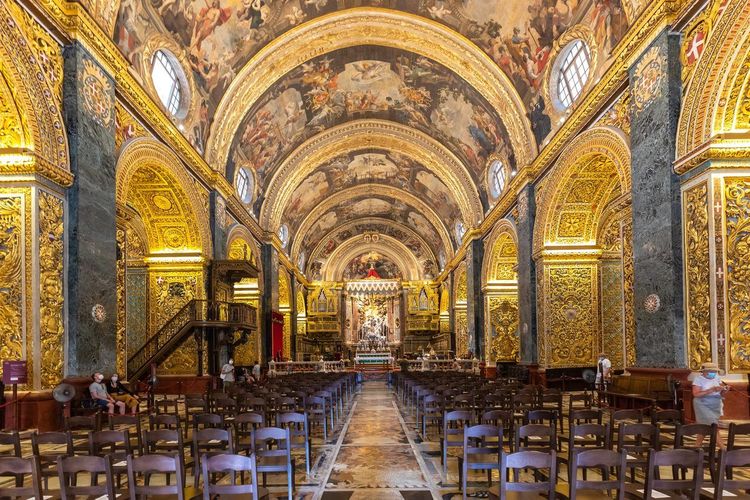
The first day follows a simple logic: enter the city through its historic gate, climb to the gardens overlooking the harbour, then come back down towards its institutional and religious heart. Allow a full day, meals included, so you don't rush through the co-cathedral.
Gardens and Viewpoints over the Grand Harbour
Every itinerary in Valletta starts at almost the same place: Triton Square, right in front of the city's main gate, recognisable by its bronze fountain showing three tritons holding up a basin. This is where buses from across the island converge, and where the loop of the Ryo audio guide to Valletta begins, whose first stops take you from the fountain to the new Parliament designed by Renzo Piano, just behind the City Gate.
Once through the gate, the climb to the Upper Barrakka Gardens takes less than ten minutes on foot, bearing right after the gate. These hanging gardens, laid out in the 17th century on a former bastion, offer the most photographed panorama in Malta: a sweeping view over the Grand Harbour, the Three Cities opposite, and the domes of Birgu standing out in the distance. Every day at noon and at 4pm, the Saluting Battery below fires a cannon shot, a descendant of the salutes and time signal the battery once sent to the ships in the harbour.
Plan to spend at least thirty minutes there, ideally in late morning to enjoy the light without the crowd that the midday cannon inevitably draws.
On the other side of the City Gate, on the western bastions, the Hastings Garden offers a quieter version of the same idea: a panorama over Marsamxett Harbour and Manoel Island rather than the Grand Harbour. Many visitors skip this stop, pressed by their schedule, which makes it a good place for a break in the shade of the trees, away from the groups.
Castille Square, Grand Master's Palace and St John's Co-Cathedral
Heading back down towards the city centre, Castille Square marks the boundary between the garden district and Valletta's administrative heart. It takes its name from the Auberge de Castille, now the seat of the Maltese Prime Minister, a Baroque building whose sculpted façade contrasts with the sobriety of the rest of the city.
Ten minutes' walk away, the Grand Master's Palace has occupied an entire city block since the 16th century. The official residence of the Grand Masters of the Order of St John for two centuries, it now houses the State Rooms and an armoury that preserves one of the largest collections of Renaissance armour still visible in Europe. Reopened in 2024 after a long restoration, it can be visited for 12 euros, armoury included; the State Rooms, where the cycle of frescoes by Matteo Perez d'Aleccio recounts the Great Siege of 1565, alone require 45 minutes to 1 hour. On certain days, they close for official ceremonies and only the armoury remains accessible.
Book your tickets online if you are visiting in high season: entry slots fill up quickly in the morning, and the queue on site can exceed 30 minutes after 11am.
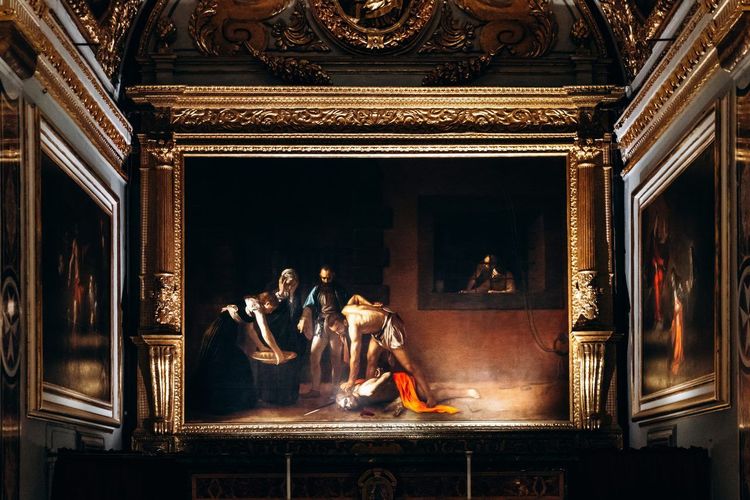
Two streets away, St John's Co-Cathedral (Triq ir-Repubblika, Valletta, rated 4.8/5 on Google from 27,415 reviews) closes the day with its richest site. From the outside, the façade remains austere, almost military. The interior has the opposite effect: a floor entirely paved with marquetry marble funerary slabs depicting the knights buried there, a ceiling painted by Mattia Preti recounting the life of St John the Baptist, and above all the oratory housing two paintings by Caravaggio, including The Beheading of Saint John the Baptist, the only work signed by his hand. Take the audio guide included in the ticket (15 euros, free for under-12s): without it, the richness of the funerary floor often goes unnoticed in your first steps down the nave.
Allow a good hour for the cathedral, adjoining museum included. On leaving, there is generally just enough time for dinner before enjoying the evening atmosphere on Republic Street, detailed in the next section.
Day 1 (Evening): Shopping Streets and Evening Atmosphere
The end of the first day lends itself to strolling more than scheduled visits. Republic Street, the main artery crossing Valletta from the Triton Fountain to Fort St Elmo, gathers shops, cafés and Baroque façades over just over a kilometre, entirely pedestrianised.
Parallel and slightly lower down, Merchant Street (Triq il-Merkanti, Valletta, rated 4.6/5 on Google from 129 reviews) keeps a more local character: a covered market in the morning, fabric shops and small grocers rather than the international chains found on Republic Street. It's the street to choose to feel the city living outside the tourist rhythm, especially in late afternoon when locals do their shopping before dinner.
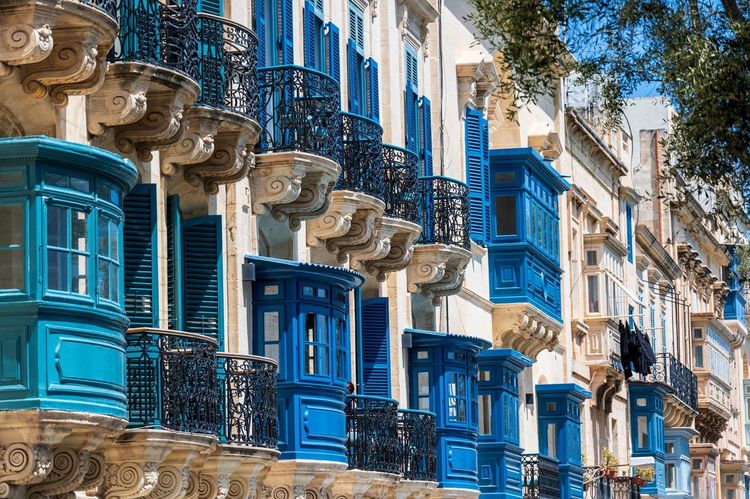
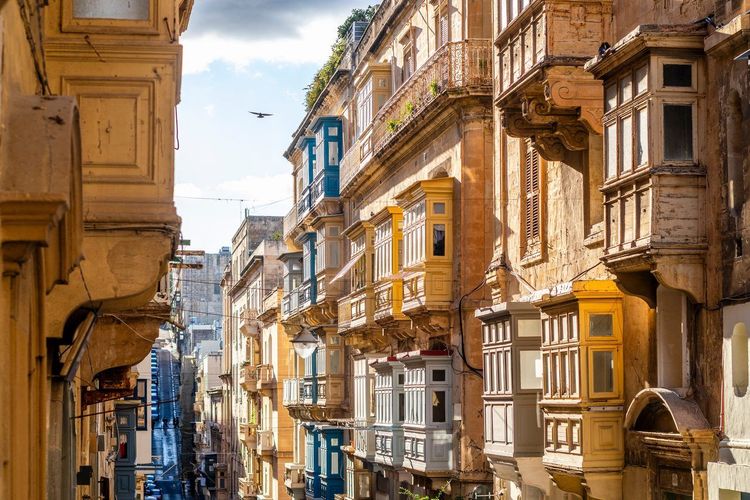
Wandering the streets of Valletta in the evening reveals another face of the city. Terraces set up on the small squares, Pjazza Teatru Rjal first among them, illuminated façades reveal details invisible in broad daylight, and the heat drops enough to walk without thinking about it. It's also when many visitors realise that streets that looked identical during the day each have their own identity: wooden balconies painted in different colours depending on the district, house numbers engraved by hand on certain 18th-century façades.
What is there to do in Valletta in the evening, specifically? Options are calmer than in Sliema or St Julian's, a few minutes away by ferry: a few wine bars in vaulted cellars near Strait Street, the city's former red-light district now turned into a street of discreet bars, an occasional concert at the Manoel Theatre, or simply dinner on a terrace facing the harbour. The island's liveliest nightlife is elsewhere; Valletta remains a capital that goes to bed early, and that is precisely what makes it a pleasant counterpoint after a day of intensive sightseeing.
Strait Street owes its sulphurous reputation to the sailors of the Royal Navy, who went from bar to bar and music hall there until the British forces left in 1979. If you are following the Ryo audio-guided tour, save its Republic Street and Pjazza Teatru Rjal stops for this moment: the loop passes through both places, and listening to them in the evening light changes the whole perspective.
For dinner, avoid the terraces right on Republic Street at peak times: prices climb quickly without the quality following. Two streets away, around Melita Street or Old Bakery Street, small family-run trattorias serve decent Maltese cuisine, fenek (braised rabbit) or ftira (topped flatbread), at much more reasonable prices, often frequented by locals rather than groups of visitors.
Before heading back, one last stop is often a must at the end of Republic Street, near Fort St Elmo: the view over the harbour glows differently at dusk, and the ramparts take on a golden hue that alone justifies extending your walk by ten minutes.
Day 2: Theatres, Museums and Fortresses of Valletta
The second day changes register: less outdoors, more interiors. Valletta owes its cultural reputation to a rare concentration of theatres and museums set in former knights' inns, each linked to a nation of origin of the members of the Order of St John. Plan to link visits in slots of 45 minutes to 1 hour, with a proper lunch break between the two sides of Republic Street.
Manoel Theatre and Royal Opera House
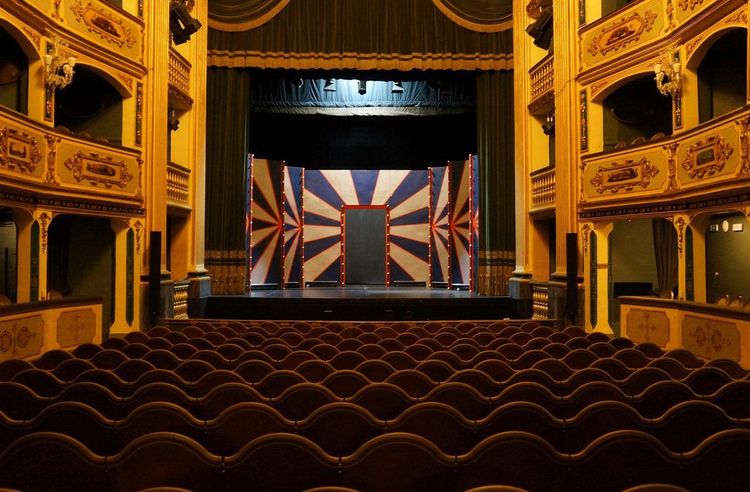
The Manoel Theatre, inaugurated in 1731, is among the oldest theatres still in operation in Europe. Its oval auditorium, entirely in gilded wood and velvet, can be visited during the day on a 30-minute guided tour when no rehearsal is under way, a rarity for a theatre with a live programme.
Ten minutes' walk away, on Republic Street, the ruins of the Royal Opera House tell a more eventful story. Destroyed by a bombing raid in 1942 during the Siege of Malta in the Second World War, the building remained in ruins for decades before being turned in 2013 into an open-air theatre, the Pjazza Teatru Rjal, which deliberately leaves the original columns exposed. The contrast between the modern seating and the neoclassical remains makes it one of the few places in the city where 20th-century history, more than that of the knights, comes directly to the surface.
MUZA and the National Museum of Archaeology
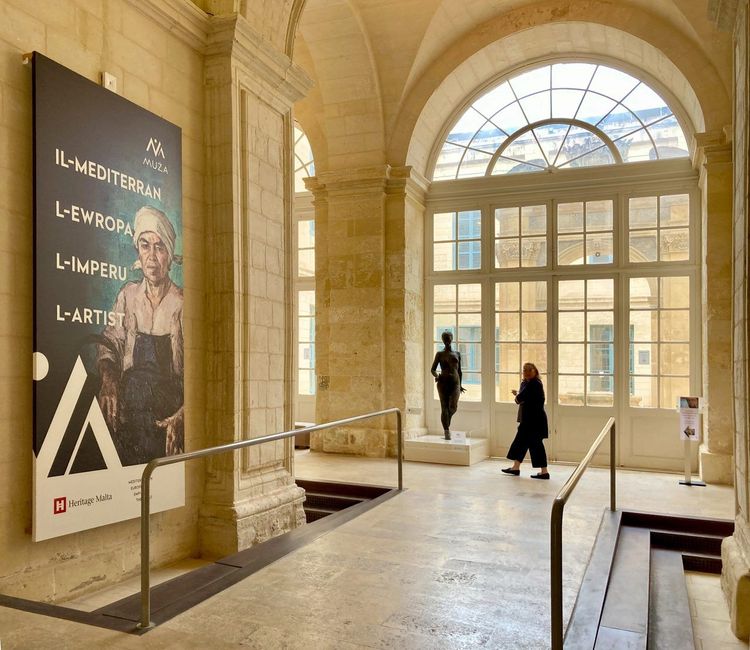
The MUZA, the National Museum of Fine Arts, has occupied the Auberge d'Italie since 2018, reimagined to tell the story of Maltese art through the lens of society rather than simple chronology: each room pairs a work with its original social context. The collection spans five centuries, from the knights' religious painting to contemporary Maltese artists.
A little further along Republic Street, the National Museum of Archaeology, set in the Auberge de Provence, holds Malta's oldest pieces: Neolithic statuettes and objects from the megalithic temples listed by UNESCO. Allow an hour, more if the archipelago's prehistoric history interests you beyond the knights' period alone.
Between the two museums, a detour to Casa Rocca Piccola usefully completes the picture: this 16th-century palazzo, still inhabited by the aristocratic family that owns it, can be partly visited, including reception rooms, a period kitchen and an air-raid shelter dug beneath the house during the war. It's a rare chance to see a noble Maltese interior still alive, rather than a frozen museum.
Fort St Elmo and the National War Museum
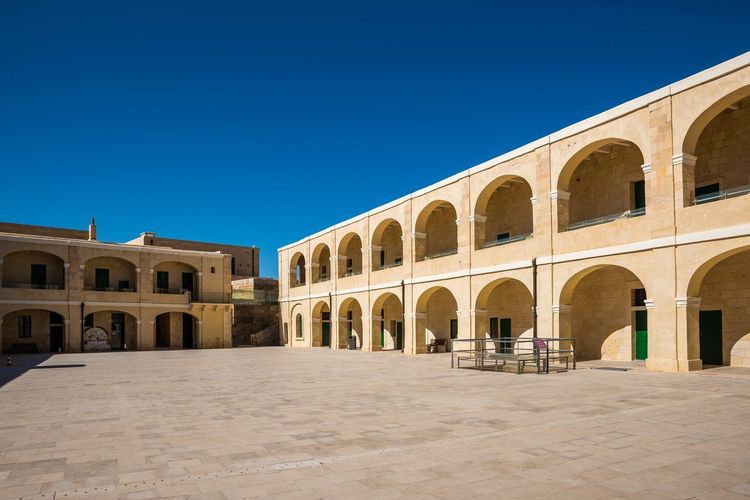
At the tip of the peninsula, Fort St Elmo (Pjazza Vittoriosa, Valletta, rated 4.6/5 on Google from 19 reviews) closes the second day's visit. Built in 1552, well before the rest of the city, it paid the heaviest price in the Great Siege of 1565: almost its entire garrison fell there after a month of Ottoman bombardment, delaying the assault long enough for Christian reinforcements to arrive.
The fort now houses the National War Museum, which covers the entire military history of the archipelago up to the Siege of Malta of 1940-1943, one of the most intense episodes of aerial bombardment of the whole Second World War relative to the size of the territory. The George Cross awarded collectively to the Maltese people by King George VI is displayed there, along with the remains of a Gloster Gladiator fighter that defended the island in the first days of the conflict.
The Ryo audio-guided tour devotes stops to the Manoel Theatre, Casa Rocca Piccola, the National Library and Fort St Elmo: a chance to hear the story of each façade while you wait for a museum to open.
Allow one to two hours for the fort and its museum, more if the fortifications themselves interest you: several levels of ramparts can be explored freely, offering an unobstructed view over the entrance to the two harbours that frame the city.
Day 3: Excursion to the Three Cities from Valletta
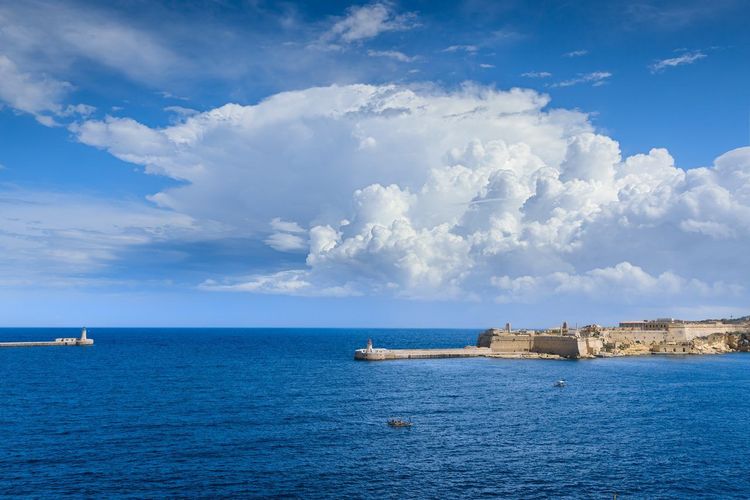
The third day leaves the ramparts without really going far: the Three Cities lie just opposite, on the other side of the Grand Harbour, visible from the Upper Barrakka Gardens visited on the first day.
Vittoriosa, Senglea and Cospicua, the Knights' Fortified Cities
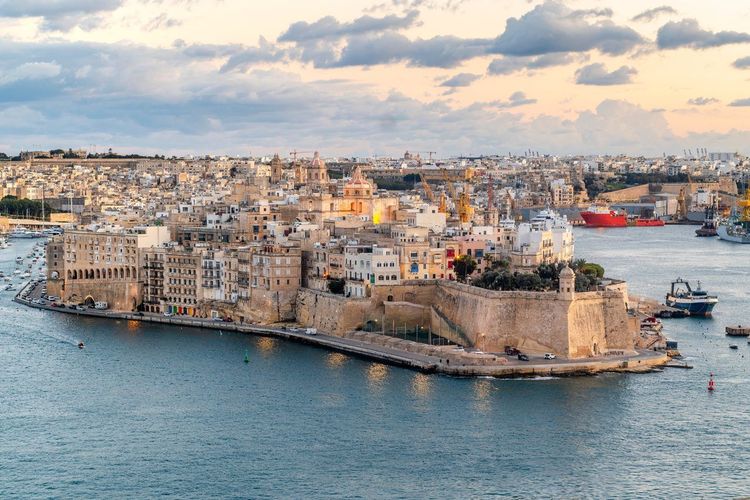
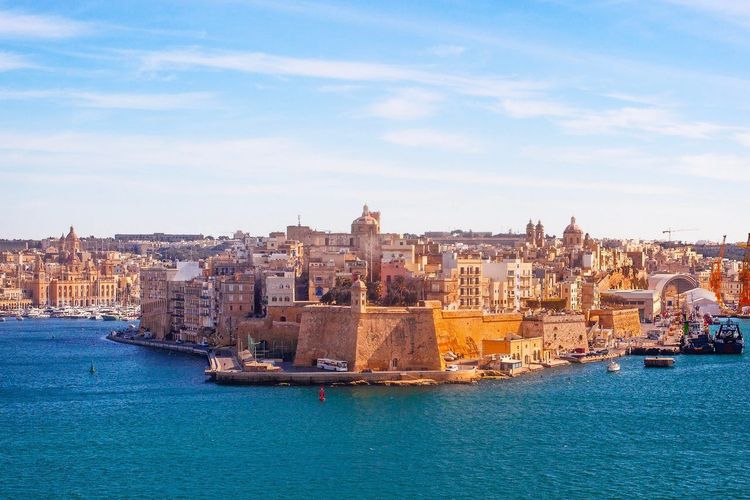
The Three Cities comprise Vittoriosa (Birgu, Malta), Senglea (Isla, Malta) and Cospicua (Bormla, Malta), three fortified peninsulas that in fact preceded Valletta as the stronghold of the Order of St John: the knights settled there from 1530, even before the construction of the present capital.
Vittoriosa holds most of the tourist interest: its waterfront, Fort St Angelo, which closes the harbour entrance, and a maze of lanes far quieter than those of Valletta, where contemporary yacht marinas stand next to 17th-century fishermen's houses. It was here, not in the capital, that most of the Great Siege of 1565 was played out.
Senglea, the smallest of the three, is often reduced to its Gardjola viewpoint, a watchtower carved with an eye and an ear that once watched over the harbour entrance, now offering a symmetrical view of Valletta from the opposite shore.
Cospicua, more residential, is mainly of interest for its Cottonera Lines, a set of 17th-century ramparts encircling the three cities on the landward side and still largely unknown to hurried visitors. If time is short, focus your half-day on Vittoriosa rather than trying to cover all three cities in detail: the density of heritage there is comparable to Valletta's, without the crowds.
Crossing by Ferry or Dgħajsa from Valletta
How do you visit the Three Cities from Valletta? There are two options, very different in experience. The modern ferry leaves from Lascaris Wharf, at the foot of the Barrakka Lift, and goes directly to Vittoriosa in about ten minutes, for a few euros, with a departure every 30 to 45 minutes during the day.
The more picturesque alternative is to board a dgħajsa, the traditional Maltese boat, rowed or motorised, identical in form to those that already carried the knights between the two shores in the 16th century. The trip costs a little more than a regular ferry and is negotiated directly with the boatman on the quay, but the slow crossing, close to the water, offers a perspective on the fortifications that no bridge or fast ferry can match.
The Ryo audio-guided tour of Valletta doesn't cross the harbour, but its stop devoted to the viewpoint over the Three Cities, from the ramparts, makes an excellent prologue: listen to it the day before, and you'll be able to recognise Senglea, Vittoriosa and Cospicua once on the boat.
Allow half a day for the round trip with a visit to Vittoriosa, a full day if you want to cover all three cities without rushing. In both cases, returning to Valletta before nightfall is advisable: the ferries stop in the evening, and the dgħajsa becomes harder to negotiate once the sun has set.
What to Do in Valletta with Family
What to do in Valletta with children is mostly about alternating outdoor time with cool breaks. Fort St Elmo works particularly well with children curious about military history: ramparts to walk, cannons to observe up close, and historical re-enactments in costume, such as the In Guardia parade on certain Sundays, which turn the visit into a show rather than a history lesson.
The Upper Barrakka Gardens offer another unbeatable argument: the daily cannon shot at noon and 4pm impresses just about every age, and the gardens themselves leave room to run around a bit after a morning spent walking quietly between monuments.
For the youngest, tired of churches and museums, the crossing by ferry or dgħajsa to the Three Cities is almost an attraction in itself: boarding a small colourful boat generally appeals more than another guided tour, while retaining real heritage value for the parents.
Finally, allow plenty of leeway with schedules when travelling with small children: sites like the Grand Master's Palace or the co-cathedral impose a quiet, restrained pace of visit that suits young children poorly. It's better to reserve these two visits for nap times or concentrate them in a short morning, leaving the afternoon for the gardens and the harbour.
What to Do in Valletta as a Couple
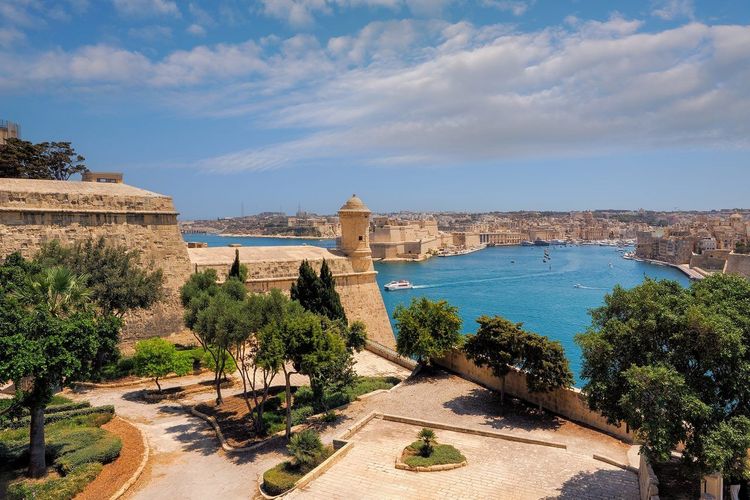
What to do in Valletta as a couple often starts with the same ritual everyone follows, but at the right time: the Upper Barrakka Gardens at sunset, when the low light gilds the fortifications of the Three Cities opposite and most of the day's visitors have already left.
For a dinner out of the ordinary, the terraces set on the old bastions, on the Valletta Waterfront side, offer a view over the harbour that justifies booking ahead, especially at weekends. A more discreet option: sit on the steps of Pjazza Teatru Rjal in the evening, glass in hand, to enjoy the illuminated architecture without the price of a restaurant terrace.
The dgħajsa crossing at dusk to the Three Cities also works as a moment apart: the trip, slower than a ferry, gives you time to watch the city gradually light up from the water, a perspective most visitors never take the time to seek out.
Finally, lesser-known gardens like Hastings Garden, often deserted at the end of the day, offer a more intimate setting than the Barrakka Gardens for a quiet pause between two visits.
What to Do in Valletta on a Rainy Day
What to do in Valletta when it rains? The answer comes down to almost one word: museums. The city has enough remarkable interiors to turn a gloomy day into a dense cultural programme rather than a setback.
The Grand Master's Palace, St John's Co-Cathedral, the MUZA, the National Museum of Archaeology and the National War Museum at Fort St Elmo alone fill a full day without setting foot outside for more than a few minutes between doors.
Casa Rocca Piccola can also be visited entirely indoors, with the underground air-raid shelter offering a literal break from the bad weather. The Manoel Theatre, finally, often has an evening programme that lets you end the day dry rather than on a terrace.
The one drawback: Valletta's cobbled streets become slippery in the rain, particularly the slopes near the harbour. Bring shoes with a grippy sole rather than sandals, even in the height of the Maltese summer, when a thunderstorm remains possible despite the generally dry climate.
Map and Plan of Valletta to Find Your Way
The layout of Valletta in Malta follows an almost perfectly regular grid, inherited directly from the plan devised by Francesco Laparelli in the 16th century: the streets climbing from the two harbours cross at right angles with those running the length of the peninsula, with Republic Street as the backbone.
This regularity makes the city hard to get truly lost in: from any point, you only need to head back down to one of the two harbours to get your bearings. The few exceptions are the steps and passages linking parallel streets at different levels, invisible on a standard map but very handy for taking shortcuts.
A tourist map of Valletta, available free at the city's tourist information points, is more than enough for the three days of this itinerary. Also download an offline map on your phone: the steps linking parallel streets don't always appear on paper maps.
Budget, Language and Practical Tips for Visiting Valletta
What language is spoken in Valletta and Malta is a question that often surprises first-time visitors: Maltese and English are both official languages, which in practice solves any communication problem. Signs, menus and tourist information systematically exist in English, and a large majority of the population speaks it fluently in daily life.
Budget-wise, Valletta remains more affordable than most Western European capitals. A decent meal in a local trattoria costs between 12 and 18 euros, compared with 20 to 30 euros on the most touristy terraces of Republic Street. Entry to St John's Co-Cathedral is around 15 euros, the Grand Master's Palace about 12 euros; a combined pass covering several sites run by Heritage Malta often saves money if you plan to visit three or more museums.
Practical tips for enjoying Valletta: bring closed, comfortable shoes, as the cobblestones and slopes forgive neither sandals nor heels. Carry water in summer, as public fountains remain rare in the historic centre. And keep in mind that most museums and monuments close around 5pm or 5:30pm, which means scheduling indoor visits in the morning or early afternoon rather than at the end of the day.
One last point often underestimated: the currency is the euro, Malta being part of the eurozone despite its insularity, and bank cards are accepted almost everywhere, including in the small shops of Merchant Street. Having cash is only useful for drinks bought from street vendors near the Barrakka gardens.



FAQ
Is St John's Co-Cathedral really worth its high entrance fee?
At around 15 euros, it is indeed one of the most expensive tickets in Valletta for a church. The price reflects the upkeep of a marquetry marble funerary floor unique in Europe, a ceiling painted by Mattia Preti and an oratory housing two original Caravaggio paintings. For a visit of 45 minutes to 1 hour, including the audio guide provided at the entrance, the wealth of heritage largely justifies the price, especially compared with the 20 to 25 euros charged by other major European cathedrals for often less impressive content.
How do you visit the Three Cities from Valletta?
The simplest option is the ferry that leaves from Lascaris Wharf, at the foot of the Barrakka Lift, and reaches Vittoriosa in about ten minutes for a few euros, with a departure every 30 to 45 minutes. For a more picturesque experience, a traditional dgħajsa can be negotiated directly on the quay. In both cases, allow half a day for Vittoriosa alone, a full day for all three cities, and plan to be back before nightfall, as the crossings stop in the evening.
What is the best place to watch the sunset in Valletta?
The Upper Barrakka Gardens remain the benchmark, even though they face east: at sunset, it is the low-angled light that sets the Three Cities ablaze across the water. To avoid the crowds, the Siege Bell War Memorial, a little lower down the ramparts, offers a similar perspective with far fewer people. And if you want to see the sun itself dip below the horizon, head instead to the Hastings Garden, which faces west above Marsamxett Harbour.
Where can you eat in Valletta without falling into a tourist trap?
Avoid the terraces right on Republic Street at peak times, where prices climb without the quality always following. Two streets away, around Old Bakery Street or Melita Street, small family-run trattorias serve decent Maltese cuisine, such as fenek or ftira, at much more reasonable prices. A simple rule of thumb: a dining room filled with locals on a weekday at lunchtime is almost always better than a terrace plastered with photos of dishes out front.
Do you need to book Grand Master's Palace tickets in advance?
In high season, from April to October, yes: entry slots fill up from the morning and the queue on site can exceed 30 minutes after 11am. Booking online on the Heritage Malta website lets you choose a fixed time and avoid the wait. In low season, buying on site is generally fine, except on the rare days of official ceremonies that temporarily close some rooms.
Is Valletta a pedestrian-friendly city that is easy to explore on foot?
Yes, very much so: car traffic is limited by an urban toll, Republic Street and many other streets are pedestrianised, and you can cross the city on foot in about twenty minutes. The streets that descend to the harbours often end in steps, but the Barrakka Lift links the Grand Harbour quay to the Upper Barrakka Gardens, which is very handy with luggage. With reduced mobility, stick to Republic Street, the least uneven route, and bring shoes suited to cobblestones.
Three days is barely enough to exhaust what Valletta holds behind its golden limestone ramparts: hanging gardens over the Grand Harbour, a co-cathedral housing a Caravaggio, centuries-old theatres, museums set in former knights' inns, and the extension to the Three Cities that continues the visit on the other side of the harbour without ever really leaving the history of the Knights of St John.
While this itinerary provides the order and the pace, it deliberately leaves some room for manoeuvre: nothing stops you from swapping days, spending longer in the gardens at the expense of a museum, or devoting a whole morning to Vittoriosa rather than half a day. For those who prefer to move forward without pulling out a map at every crossroads, the Ryo audio-guided tour of Valletta condenses the city into 20 audio stops on a 4.3 km loop: 1h45 of listening on the first morning, which then leaves you free to return, map in hand, to the places that struck you most.