Créé par Emilie, le 17 nov. 2026
Votre guide Ryo
Valletta, Malta
Step Into the World of the Knights of St. John
Parcours audioguidé pour visiter Valletta en 1 jour
This tour of Valletta’s historic center invites you to explore a fortress city unlike any other, featuring golden limestone bastions, sumptuous Baroque churches, and iconic colorful balconies. Throughout the route, discover the legacy of the Knights of St. John, the shadows of the historic Auberge palaces, and the breathtaking views over the Grand Harbour. A simple and immersive way to explore the impregnable and majestic heart of Valletta at your own pace.
Quand partir à Valletta ?
Jan.
13°
12
Feb.
13°
9
March
14°
7
April
16°
4
May
20°
2
June
24°
1
July
27°
0
Aug.
27°
1
Sept.
25°
5
Oct.
21°
9
Nov.
18°
10
Dec.
14°
12
Throughout the year, Valletta enjoys an average temperature of around 19°C, thanks to its warm Mediterranean climate. Winters are mild, and summers tend to be dry. From January to March, temperatures reach their annual lows, with minimums hovering around 14°C. On the flip side, the warmest months fall between June and October, when maximum temperatures average around 27°C. October and November tend to be the rainiest months, but overall, Valletta hasfavourable weather and can be visited year-round. Just be aware of occasional drought conditions during the summer months.
Départ conseillé
No need to worry about where to begin! Our tours are designed as a loop, so you can jump in wherever you are. The navigation system and audioguide will automatically adjust to your location. However, if you happen to be nearby, we do have a preferred starting point: Next to the Triton Fountain
Parking à proximité
MCP Parking Garage : St Anne Street
Charming as it is, the heart of Valletta is so compact that parking is even more of a challenge than usual. Within the city walls, visitors are allowed to park only in the blue-marked spaces. Avoid the green ones—they’re reserved for residents. To save hassle, we recommend the underground MCP car park or the park-and-ride facility south of Floriana. The latter may be paid, but it’s cheaper and comes with a shuttle that takes you straight into the city centre—definitely worth it when you’re meant to be on holiday, after all! In Malta, people drive on the left. In fact, it’s one of the few traffic rules that locals follow religiously. As for right of way, traffic lights, overtaking on the right, and speed limits—let’s just say those are treated a bit more casually.
À savoir
During our visit, you’ll be making stops at both the Lower Barrakka Gardens and the Upper Barrakka Gardens. To avoid any last-minute surprises, please note that these sites have set opening and closing hours. It’s a good idea to check the schedules before you dive into the day’s itinerary. If both spots happen to be closed when you arrive—no worries. Just carry on with the rest of the route.
Like any top-tier tourist destination, Valletta offers a range of perks and discounts on transport and attractions through the Valletta Card. It’s a great option if you’d like to explore the city at your own pace—while making the most of the deals along the way.
You’ll quickly notice that there aren't many public restrooms in Valletta. To avoid any inconvenient moments during your visit, we recommend taking advantage of stops at cafés, restaurants, or bars whenever you get the chance to eat or have a drink.
Découvrez 20 lieux d'intérêt pour visiter Valletta









What to see in Valletta on your 1h45 tour?
This 4.3 km loop takes about 1 h 45 and links 17 sights. From the city gate, marked by the New Parliament, it runs down Republic Street to the historic core, between St John's Co-Cathedral and the Grandmaster's Palace, then reaches the tip of Fort St Elmo. The way back follows gardens and ramparts above the Grand Harbour, past the Auberge de Castille. With the Ryo app in your ears, every façade or panorama tells its story, at your own pace.
Information checked in November 2026 and subject to change.
1 - The New Parliament
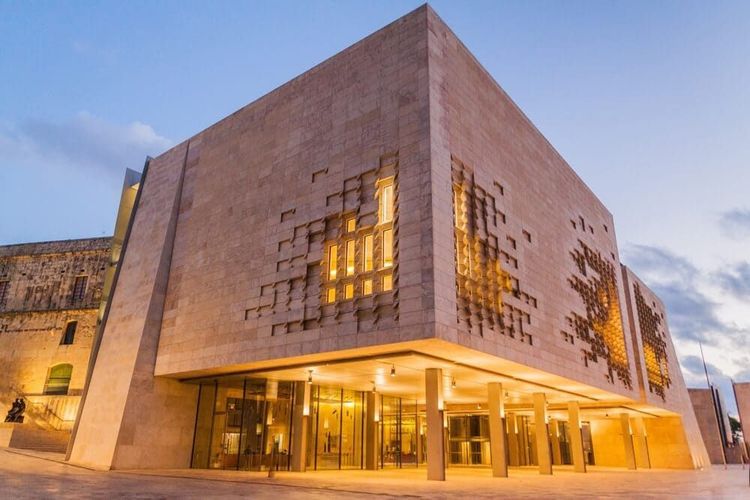
The walk opens at the city gate, facing a building that breaks with Valletta's ochre palette: the New Parliament. Italian architect Renzo Piano, the 1998 Pritzker laureate, shaped two limestone blocks of volumes joined by a raised walkway. The mirrored façade panels are no mere decoration: paired with rooftop solar panels, they help the building aim for near-zero carbon emissions. Completed in 2015 after a 90-million-euro budget, the project still sparks debate today.
Free to see from outside
2 - Pjazza Teatru Rjal
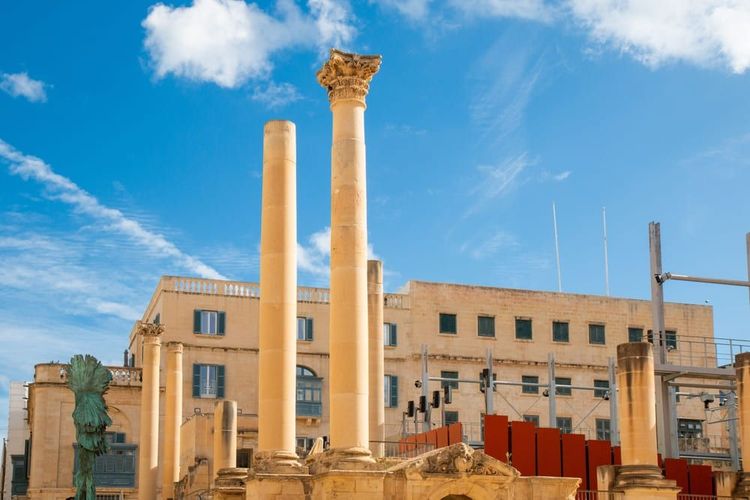
A little further on, the remains of the former Royal Opera House announce Pjazza Teatru Rjal. English architect Edward Middleton Barry designed this neoclassical theatre in 1866; fire gutted it in 1873, it was rebuilt, then a 1942 air raid left it almost flattened. Its ruins served as a plain car park for decades until Renzo Piano, in 2013, turned them into an open-air stage, original columns kept intact. Concerts and festivals now ring out under the stars, blending memory and creation.
Free entry
3 - Republic Street
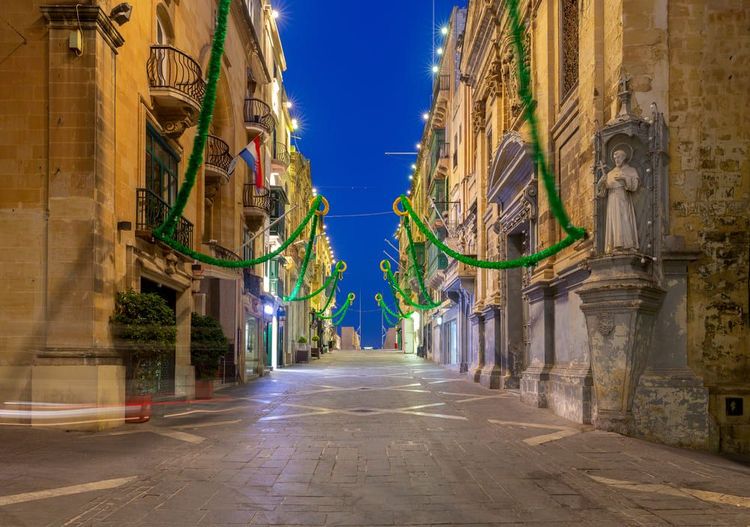
You're now on Republic Street, the lively pedestrian spine that links the city gate to Fort St Elmo over roughly a kilometre. Jewellers working gold and silver filigree, cafés and souvenir stalls line the way, perfect for a relaxed break. Peek down the side streets too: laid out on the 1565 grid plan, they still feel barely touched by time, no effort required to feel the shift.
Free entry
4 - St John's Co-Cathedral
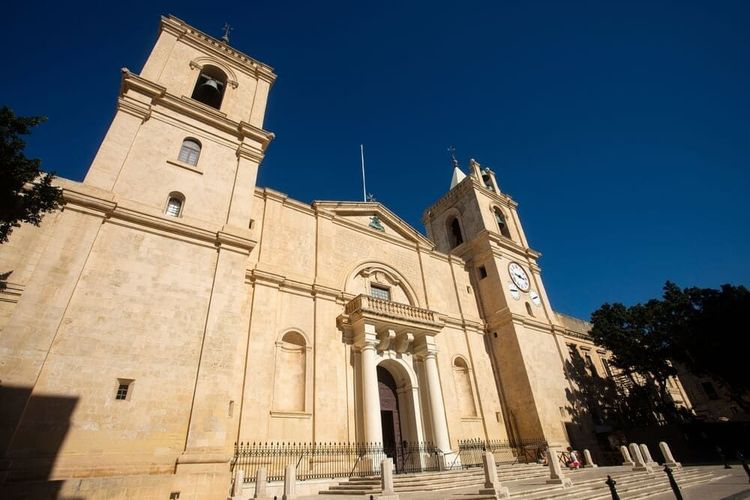
Behind a plain façade commissioned by Jean de La Cassière between 1575 and 1577, St John's Co-Cathedral hides one of Europe's richest baroque interiors. Since Malta's official cathedral already stood in Mdina, this new church gained the rare status of co-cathedral. Its marble floor holds over 400 knights' tombs, including that of the city's founder, Jean Parisot de La Valette. Near the side door, a carved inscription reminds every visitor how fleeting a life on earth really is.
Paid entry
5 - View from the Fortifications
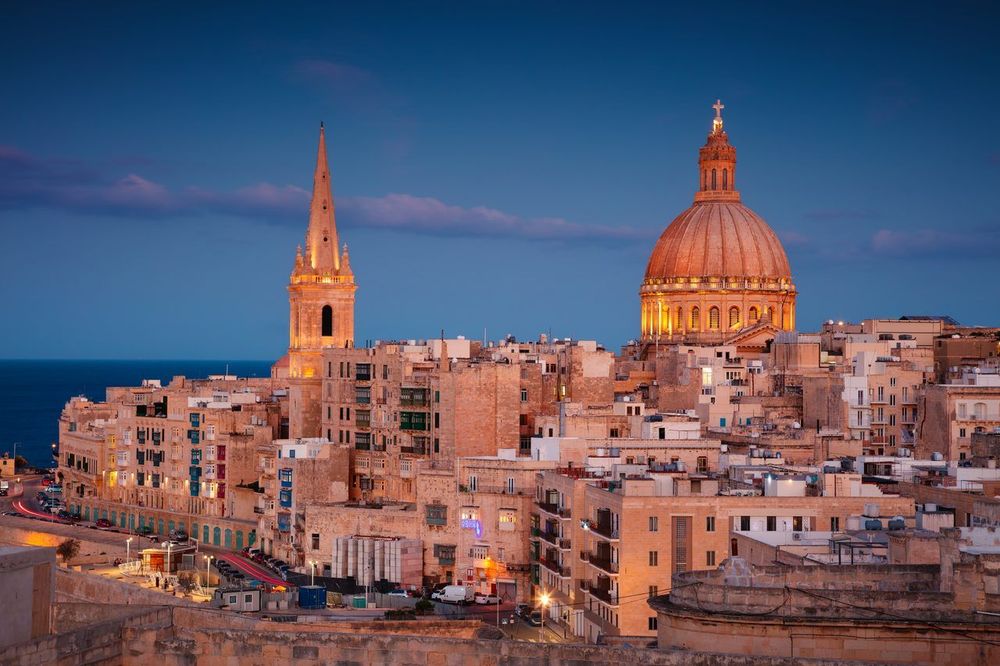
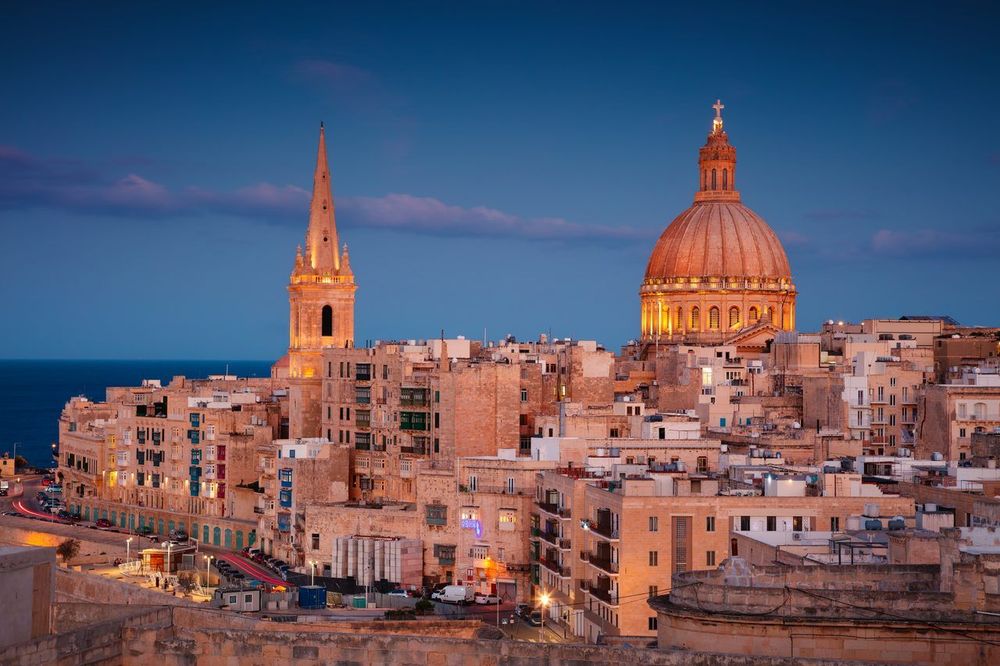
From the 16th-century ramparts that ring Valletta's steep streets opens a postcard view: St Paul's spire and the dome of the nearby Basilica of Our Lady of Mount Carmel rise side by side above the rooftops. Look up at the façades too — Maltese balconies, timber or metal loggias that once signalled social rank, add the splash of colour the city's ochre tones sometimes lack.
Free entry · Best late in the day
6 - The Manoel Theatre
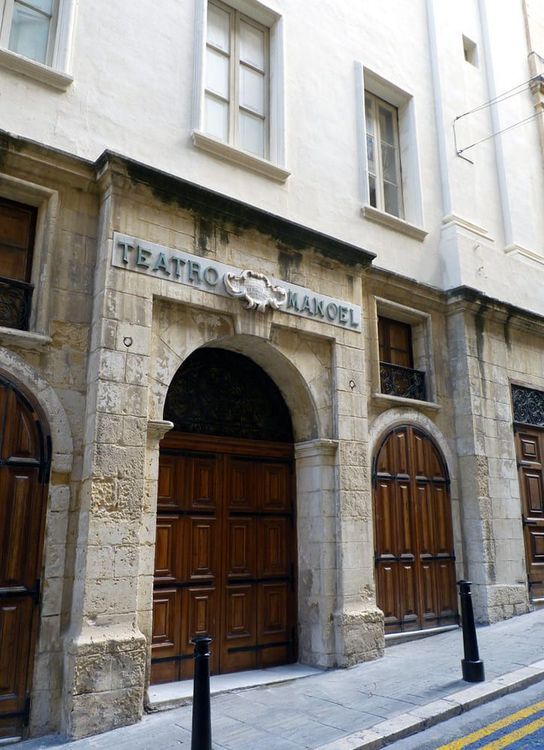
Tucked away on your left is a small cultural gem: the Manoel Theatre. Portuguese aristocrat António Manoel de Vilhena funded it in 1731 to offer honest entertainment to everyone, not just wealthy families. Overshadowed for decades by the grand Royal Opera House, it came back to life in 1960 and now hosts the Malta Philharmonic Orchestra. With its gilded wooden boxes and intimate hall, it ranks as the third-oldest working theatre in Europe.
Paid entry (about €10)
7 - The Grandmaster’s Palace
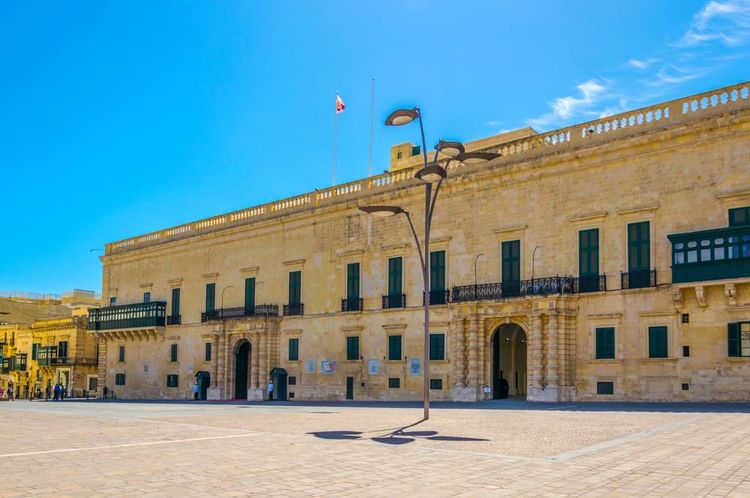
The palace facing you housed the Grandmasters of the Order of St John from 1570 to 1580 and for two centuries after. Under British rule it served as the Governor's residence, and since 1974 it has held the House of Representatives of Malta and the office of its President. Every 25 minutes, a free changing-of-the-guard ceremony unfolds at its entrance, a living reminder of four centuries of uninterrupted military and political life within these walls.
Paid entry (about €12)
8 - The National Library
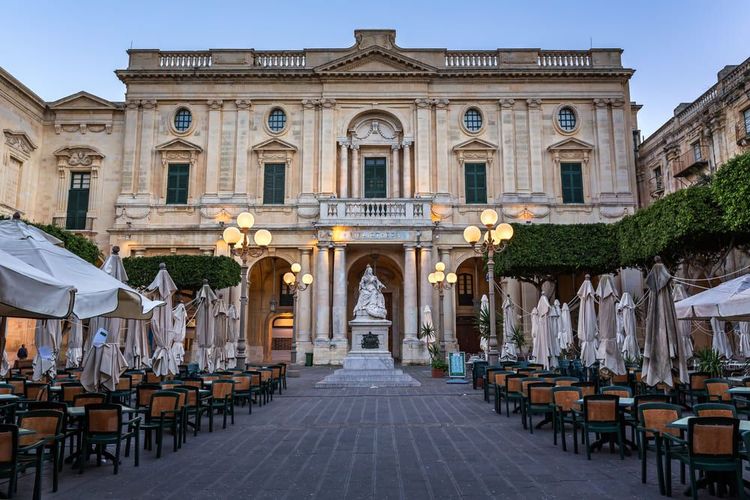
Easy to spot thanks to its columns and gilded inscription, the National Library, nicknamed the Bibliotheca, was founded in 1796 and now holds roughly 4 million volumes and archival documents. Among its rarest pieces is the 1530 charter in which Charles V granted the island to the Knights of St John, who would rule it for 250 years. The statue outside depicts Queen Victoria, a nod to the British influence still visible across Malta today.
9 - The Covered Market
After climbing and dropping through the lanes, the covered market earns its break: first opened in the 19th century under the Knights, it suffered demolition, wartime bombing and abandonment through the 1990s. Valletta's 2018 title of European Capital of Culture gave it new life around a simple idea — Cook, Eat, Relax — with a grocery downstairs, a dining floor at street level, and a relaxed lounge upstairs, occasionally hosting cultural events.
Free entry
10 - Casa Rocca Piccola
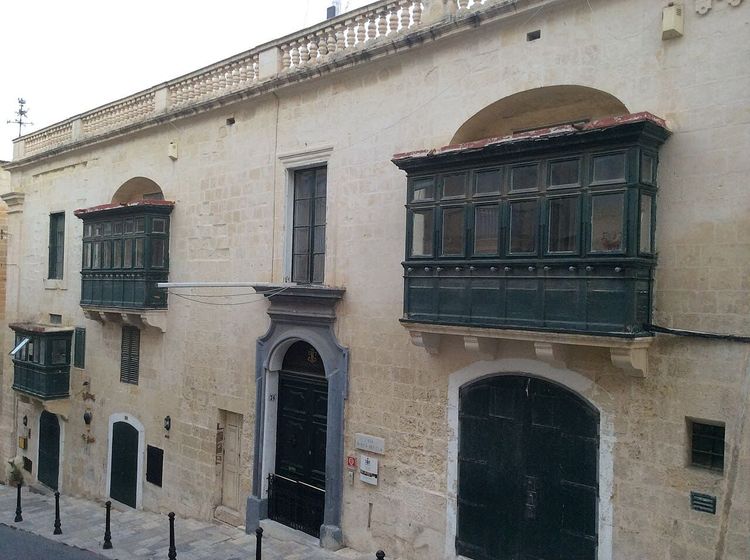
Looking much like its neighbours from outside, Casa Rocca Piccola actually hides a private palace with over 50 rooms laid out in enfilade, chapel included. Its name honours the home's very first occupant, Admiral Don Pietro de La Rocca; it still belongs to a noble Maltese family, that of the Marchioness de Piro, who personally leads some of the tours. Visitors can also explore air-raid shelters dug beneath its foundations, tangible traces of the Second World War.
Paid entry
11 - Fort St. Elmo
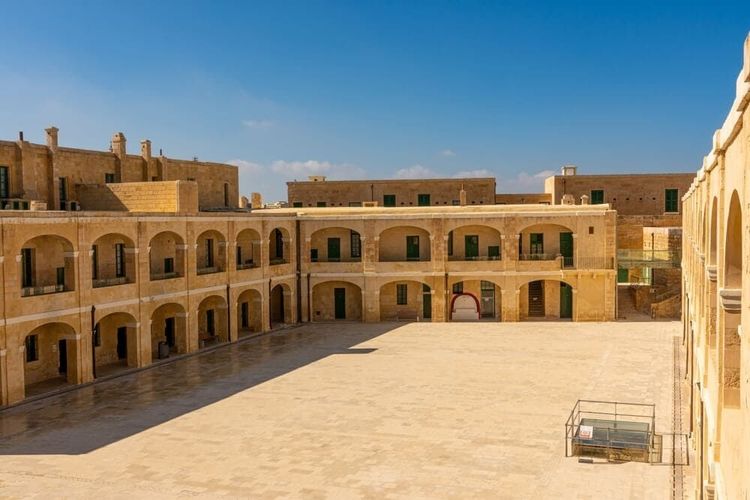
At the northern tip of the city, Fort St Elmo has stood watch since 1552, when the Knights, sensing an Ottoman invasion coming, raised this star-shaped stronghold in just 4 years. The threat became real in May 1565: 30 days of fierce fighting during the Great Siege cost the lives of 1,500 defenders and 4,000 Ottoman soldiers. Rebuilt with European funding and later damaged by World War II air raids, it now houses the Police Academy and the National War Museum.
Paid entry (about €10)
12 - Lower Barrakka Gardens
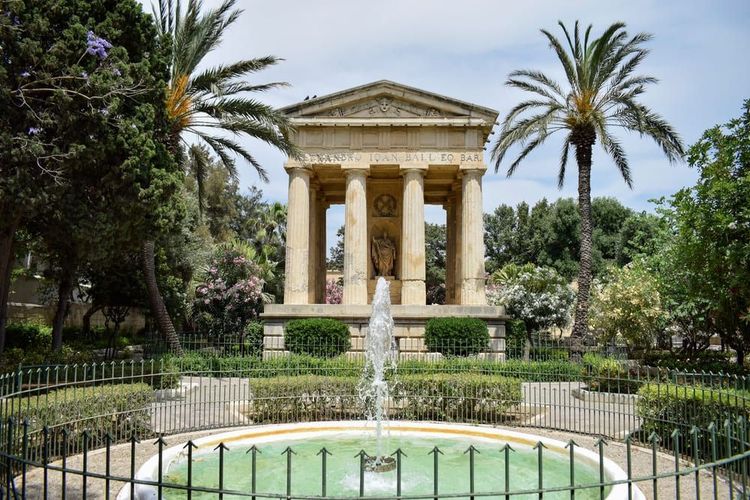
Quieter than their larger neighbour, the Lower Barrakka Gardens form a small green oasis above the Grand Harbour. Look for the neoclassical memorial to British admiral Alexander Ball, credited with ending French rule over the island in the late 18th century, and a bronze by Antonio Sciortino honouring the defenders of the 1565 Great Siege. Beyond the history, it's above all a calm spot to sit and take in the waterfront view.
Free entry
13 - The Siege Bell War Memorial
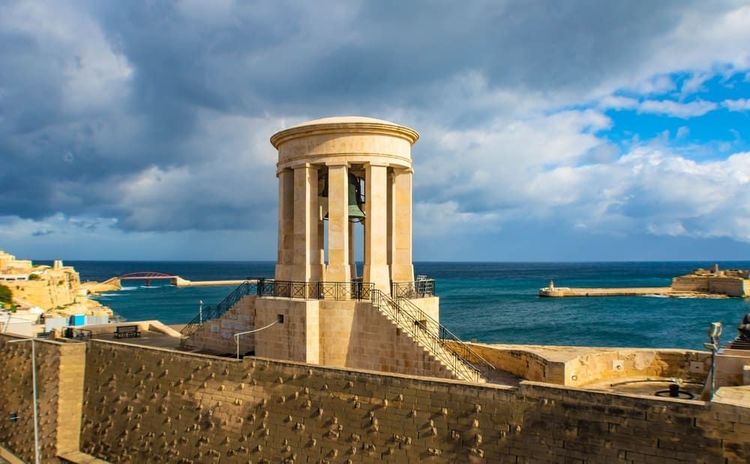
Facing you, the Siege Bell War Memorial quietly honours the dark years of 1940 to 1943, when Fascist Italy and Nazi Germany relentlessly bombed Malta, a key strategic ally of Britain. 1,700 air raids levelled 75% of all housing and claimed over 7,000 civilian and military lives. Unveiled nearly fifty years later by Queen Elizabeth II and Malta's then president, the memorial still tolls its 10-tonne bronze bell every day at noon above the Grand Harbour.
Free entry
14 - View of the Three Cities
Turn your back on Valletta and the view opens onto the Three Cities, Senglea, Vittoriosa and Cospicua, across the Grand Harbour. The Knights settled there as early as 1530, well before founding the capital itself: 4.5 km of ramparts and several forts, all older than Valletta's own, still stand as proof. From here you catch all three in a single photo, easier than visiting them one by one.
Free entry
15 - Upper Barrakka Gardens
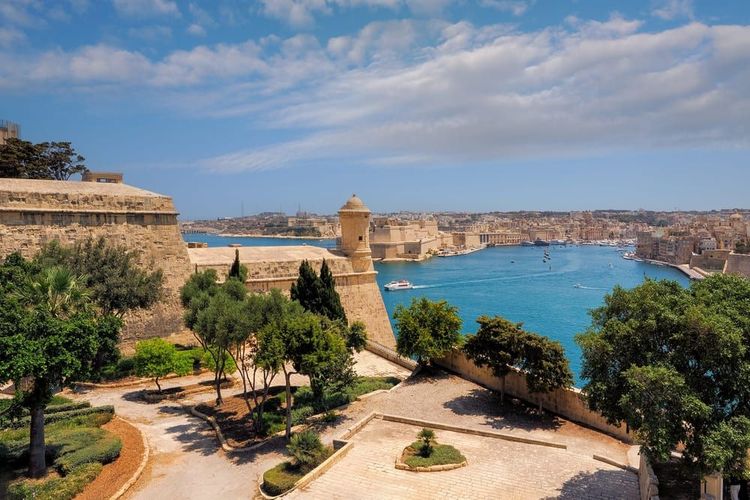
Perched atop the bastions, the Upper Barrakka Gardens date back to 1661, when only the Knights could come here to rest or train. The gardens opened to the Maltese public once French occupation ended in 1800. From the balcony, the eye takes in both the Grand Harbour and the Three Cities at once, one of Malta's finest sights. Below, the Saluting Battery's cannons still fire every day at noon, harmless now, a simple nod to tradition.
Free entry · Best late in the day
16 - Auberge de Castille, León and Portugal
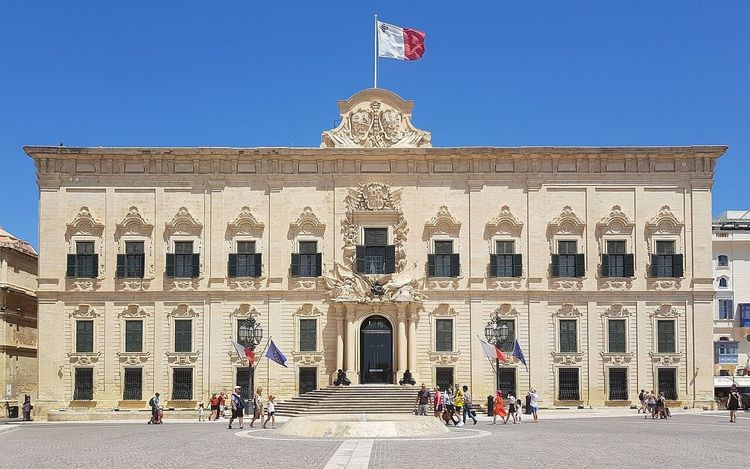
The Auberge de Castille has overlooked the harbour since 1574: one of 7 auberges housing the Knights, each tied to a langue of the Order, this one to Castile, León and Portugal. Grand Master Manoel Pinto da Fonseca reworked its plain classical style into the baroque façade seen today, adding his own bust and coat of arms. Headquarters of the British forces in 1805, the building is now home to the Maltese head of government, still a seat of power.
Free to see from outside
17 - The Church of Our Lady of Victory
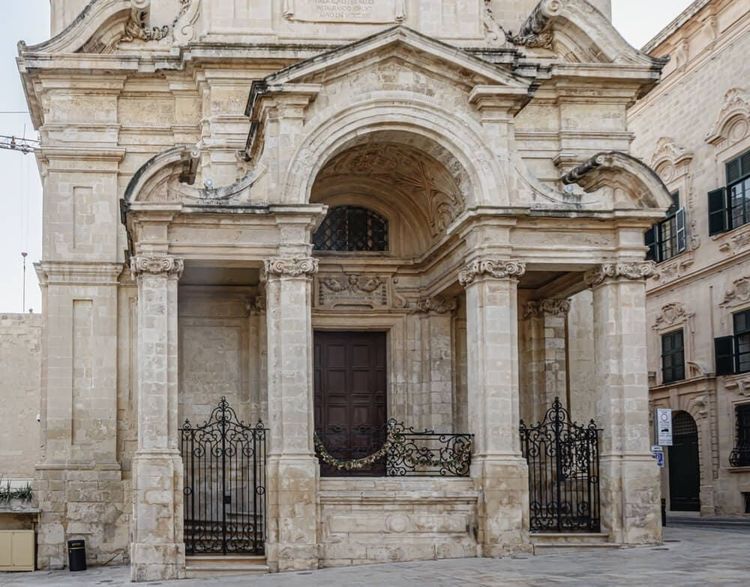
On your right, behind its double staircase, stands Valletta's oldest church: Our Lady of Victory, built in 1566 by the Knights to celebrate their triumph over the Ottomans in the Great Siege the year before. Before St John's Co-Cathedral was finished in 1577, it held the tomb of Jean de La Valette for 11 years, the Order's 49th Grand Master and founder of the capital that still bears his name.
Free entry
What to do in Valletta in 2 or 3 days?
The Valletta audio-guided walk covers 4.3 km in 1 hour 45, on a peninsula smaller than a square kilometre: that leaves plenty of time, on day one, to step inside St John's Co-Cathedral, which the route only passes (stop 4), to see its floor of knights' tombs in inlaid marble and its two Caravaggio paintings.
The next day, come back to go inside Casa Rocca Piccola, which the route passes (stop 10): this palace, still lived in by a Maltese noble family, is visited with a guide, from its furnished salons down to the air-raid shelters dug beneath the building.
A third day can be spent on a boat trip to Comino and Gozo, or wandering the grid of streets in search of the lane that British sailors once nicknamed ‘the Gut’; our walking guide to Valletta on your own points out the details that hurried visitors miss.
Which neighbourhoods does the tour cross?
As a loop, the route links the districts that tell Valletta's story, from the fortified entrance to Fort St Elmo at the tip of the peninsula.
It runs down Republic Street from the New Parliament and Pjazza Teatru Rjal to St John's Co-Cathedral (stops 1 to 4).
It then reaches a viewpoint over the fortifications and continues past the Manoel Theatre, the Grandmaster's Palace, the National Library and the Covered Market, before Casa Rocca Piccola and Fort St Elmo (stops 5 to 11).
The way back follows the gardens and ramparts above the Grand Harbour, from the Lower Barrakka Gardens to the view of the Three Cities and the Upper Barrakka Gardens, past the Auberge de Castille and the Church of Our Lady of Victory (stops 12 to 17).
How much does it cost to visit Valletta?
Of the 17 stops on the loop, 9 are open to visit freely, from the covered market to the fortified gardens, and 2 more, the New Parliament and the Auberge de Castille, are only seen from outside. Of the rest, 5 charge for entry:
- the Manoel Theatre, €10 for a visit;
- the Grandmaster's Palace, €12;
- Fort St Elmo and its War Museum, €10;
- St John's Co-Cathedral, where modest dress is required;
- Casa Rocca Piccola, by guided tour.
The Valletta Card bundles discounts on the city's transport and attractions; check its terms before buying it.
Information checked in November 2026 and subject to change.
Where to stop for a bite along the tour?
The Covered Market (stop 9), in the jewellers' quarter, brings together fresh produce stalls, restaurants and food shops around a three-word motto, ‘Cook, Eat, Relax’.
Try pastizzi, small ricotta-filled pastries sold from street kiosks or bakeries at any hour, and ftira, the flat Maltese bread, traditionally rubbed with olive oil, tomato, onion and garlic.
On the plate, fenkata, rabbit stewed in red wine then fried with garlic, remains the most iconic dish, while aljotta, a garlicky fish soup with tomato, is served with slices of grilled bread. Our top 10 culinary specialties of Valletta also covers gbejna, ravjul, bragioli, lampuki and imqaret.
What should you know before visiting Valletta?
Two gardens on the route keep their own opening hours, and a few precautions are worth knowing before setting out.
The Lower Barrakka Gardens (stop 12) and the Upper Barrakka Gardens (stop 15) open and close at set times: check them in advance and, if either is shut when you pass, simply carry on with the route.
Valletta has few public restrooms, so it's best to use the ones in cafés and restaurants whenever you stop to eat or drink. As elsewhere in Malta, avoid leaving belongings unattended in busy spots, markets and shops above all, and keep your ID safe.
The city can be visited all year round, with mild winters and fairly dry summers, although October and November are the rainiest months.
What to see around Valletta?
Beyond its peninsula, Valletta is a starting point for trips to the other islands of the archipelago.
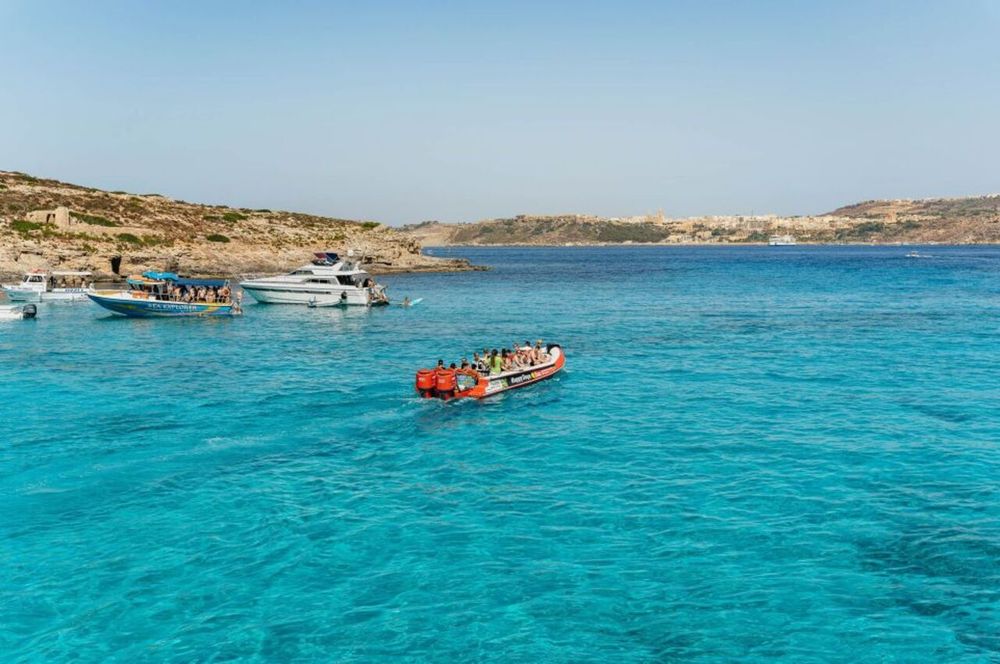
A guided excursion lasting the whole afternoon, until sunset, first reaches Comino by boat, for a swim in the Blue Lagoon and a look at the Crystal Lagoon, then crosses to Gozo, where you continue by quad to the Sanap cliffs, the Xwejni salt pans and several bays; our pick of the best things to do in Valletta details this outing and other options.
Le plein d'inspirations
Explorez le monde en totale liberté, à pied au cœur des villes ou au fil des routes. Nos guides audios transforment chaque destination en une découverte culturelle immersive et unique.










FAQ for visiting Valletta
When is the best time to visit Valletta?
Thanks to its privileged Mediterranean climate, Valletta is a pleasure to visit all year round. To enjoy ideal weather, opt for spring and autumn, particularly from April to June and from September to October, when temperatures range between 20 and 25°C. Summer remains very pleasant despite the heat, which can reach 27°C, and the dry spells. Winters are mild with temperatures around 14°C, perfect for exploring the city without the crowds. If possible, avoid October and November, the rainiest months. The summer period naturally attracts more visitors, while winter offers a more authentic and peaceful experience to discover this fortress city.
How long do you need to visit Valletta?
A full day is generally enough to discover the essentials of Valletta's historic centre. You'll be able to walk the main streets, visit the major monuments such as St John's Co-Cathedral and admire the views over the Grand Harbour. For a more in-depth exploration including the museums, the gardens and an immersion in the atmosphere of the different districts, allow two days. History enthusiasts will enjoy devoting an additional day to the Auberge palaces and the fortifications. If you have more time, take the opportunity to explore the Three Cities on the other side of the harbour or take a trip to Mdina. The Ryo audioguide accompanies you to optimise your itinerary according to the time you have available.
How do you get around Valletta and how do you get there?
Valletta is a compact city that is ideally explored on foot. The historic centre is relatively flat on the plateau, even if a few staircases connect the various levels down to the harbour. From the international airport, express buses take you directly to Valletta in about 30 minutes. Taxis remain a practical if more expensive option. Once there, the local bus network efficiently serves the surroundings. To reach the Three Cities, take the traditional dgħajsa water taxis or the regular ferry from the Grand Harbour. If you come by car, be aware that parking remains complicated in the historic centre, so opt for the car parks on the outskirts. The pedestrian streets and short distances make walking the best way to discover the city.
What are the must-see monuments in Valletta?
St John's Co-Cathedral is the absolute jewel of Valletta with its sumptuous Baroque interior and the works of Caravaggio. The Grand Master's Palace, the historic seat of the Knights of the Order of Malta, is worth a visit for its state rooms. The Upper Barrakka Gardens offer spectacular views over the Grand Harbour and the Three Cities. Don't miss Fort Saint Elmo, which guards the harbour entrance, nor the various auberges of the langues that bear witness to the unique organisation of the Knights. The ramparts and bastions in golden limestone are omnipresent and form the soul of this fortress city. The Ryo audioguide guides you through these must-sees, revealing their fascinating history and the architectural details not to be missed.
Where should you stay in Valletta and in which district?
The historic centre remains the preferred choice for staying in the heart of the action, with options ranging from boutique hotels in former palaces to charming apartments with traditional Maltese balconies. The area around Republic Street offers an ideal central location for exploring on foot. For more tranquillity while remaining close by, consider the areas near the Hastings Gardens or Floriana just outside the ramparts. Sliema, on the other side of Marsamxett Harbour, offers more modern accommodation with views of Valletta, reachable by ferry in just a few minutes. The Three Cities offer an authentic and generally more affordable alternative. Book in advance, especially in high season, as Valletta remains a small capital with limited accommodation capacity.
What is there to do in Valletta in the evening and at night?
Valletta comes alive differently once the sun has set, revealing a more intimate atmosphere. Start by admiring the sunset from the Upper Barrakka Gardens, an unforgettable spectacle over the illuminated Grand Harbour. The alleys around Strait Street, the former sailors' quarter, are full of wine bars, restaurants and jazz clubs in vaulted cellars. Republic Street and its surroundings offer a fine selection of restaurants serving traditional Maltese cuisine and Mediterranean gastronomy. In summer, attend the open-air concerts and cultural events that regularly liven up the squares. For a livelier night out, Paceville in St Julian's concentrates the nightclubs, accessible by bus or taxi. Illuminated Valletta also offers a romantic night-time stroll along the ramparts.
What should you eat in Valletta and which Maltese specialities should you try?
Maltese cooking blends Sicilian, Arab and British influences. The great street classic is the pastizz, a crisp pastry filled with ricotta or mushy peas, sold from small shops in the centre and usually washed down with very sweet tea. At the table you will find rabbit stewed in wine and garlic, widely considered the national dish, the ftira, a round bread sandwich filled with tuna, capers and sun-dried tomatoes, and hearty fish soup. As for drinks, the local bitter-orange soft drink surprises most visitors, and Maltese wines, produced in small quantities, are well worth tasting.
What is there to see inside St John's Co-Cathedral?
Behind a plain façade hides one of the most spectacular baroque interiors in Europe. Built by the Order of St John, the church is entirely covered in gilding, carved wood and vaults painted by Mattia Preti. The floor is paved with hundreds of tombstones in coloured marble inlay, under which the knights are buried, each one decorated with coats of arms and funerary symbols. The visit continues through the chapels of the order's different langues, then the oratory, where two paintings by Caravaggio are displayed, including the famous Beheading of St John the Baptist. Dress with shoulders and knees covered, and wear flat shoes.
Where can you enjoy the best views over the Grand Harbour from Valletta?
The Upper Barrakka Gardens, laid out as a terrace on the old bastions, offer the best-known panorama: the Grand Harbour, its ships, its dockyards and, opposite, the ramparts of the Three Cities. Below them, the saluting battery still fires its cannon following a ceremony inherited from British times. The Lower Barrakka Gardens, quieter, look out over the harbour entrance and the breakwater. On the other side of the peninsula, the ramparts near Fort St Elmo face Marsamxett and are especially lovely at sunset. A crossing in a traditional boat completes the experience by showing the city from the water.
What can you do in Valletta during a cruise stopover?
The terminal sits right below the city, so you can reach the centre on foot up the ramps, or in a couple of minutes using the panoramic lift that rises to the Upper Barrakka Gardens. In half a day you can take in St John's Co-Cathedral, St George's Square and the Grandmaster's Palace, then walk back down towards Fort St Elmo through the grid of straight streets. If time allows, a short crossing to the Three Cities gives another perspective on the fortifications. The Ryo audio guide offers a dedicated Valletta route, handy for finding your bearings when hours are counted.
Which Maltese dishes should you try in Valletta, from pastizzi to fenkata and imqaret?
The must-have snack is the pastizz, a ricotta-filled pastry sold at street kiosks. Fenkata, rabbit marinated in red wine, is considered the Maltese speciality par excellence, alongside bragioli, beef olives in tomato sauce, and ravjul filled with ricotta.
From the sea, lampuki is cooked in a caper sauce or baked in a pie, while aljotta is a garlicky fish soup. Also try gbejna cheese, ftira bread, date-filled imqaret and Cisk beer.
Discover all ten specialities in our top culinary specialities of Valletta.
Which day trips and unusual activities can you enjoy from Valletta?
A boat trip takes you to Comino to swim in the Blue Lagoon and admire the Crystal Lagoon, then on to Gozo, which you can explore by quad bike as far as the Xwejni salt pans, returning around 10pm. A day cruise by catamaran with underwater windows also visits Comino and Gozo, with its citadel.
In town, a three-hour food tour serves pastizzi between the old market and the Upper Barrakka Gardens. Casa Rocca Piccola, a palace from 1580, reveals fifty rooms and its Second World War shelters.
Find every idea in our top 5 activities to do in Valletta.
Is Valletta easy to explore on foot as a solo traveller?
Yes: the peninsula covers less than one square kilometre and can be crossed in twenty-five minutes, along safe streets that stay lively into the evening. From City Gate, follow Republic Street to the Grand Master's Palace, then St John's Co-Cathedral with its two Caravaggios (45 to 60 minutes, book the day before in summer) and Fort St Elmo.
Add the Upper Barrakka Gardens and their cannon salute at noon and 4pm, the quieter St Barbara Bastion, Casa Rocca Piccola, the 1732 Manoel Theatre and, in the evening, the Waterfront.
Follow the full route in our guide to visiting Valletta solo.
What is the best 3-day itinerary for visiting Valletta at a relaxed pace?
Three days let you explore Valletta without rushing. Day one is devoted to the hanging gardens overlooking the Grand Harbour, day two to the theatres and museums housed in former knights' inns, and day three to a boat trip to the fortified Three Cities. This capital, smaller than one square kilometre, holds more than 320 listed monuments and five centuries of history from the Knights of the Order of St John.
The article also helps you choose between 1, 2 or 3 days, pick the best time to visit and find a place to stay close to the city gates.
Find the detailed day-by-day plan in our complete 3-day Valletta itinerary.
Vos commentaires, idées et suggestions
Aucun avis pour le moment