© Shutterstock
 Votre guide Ryo
Visit Amsterdam in 3 Days: Complete 2026 Itinerary
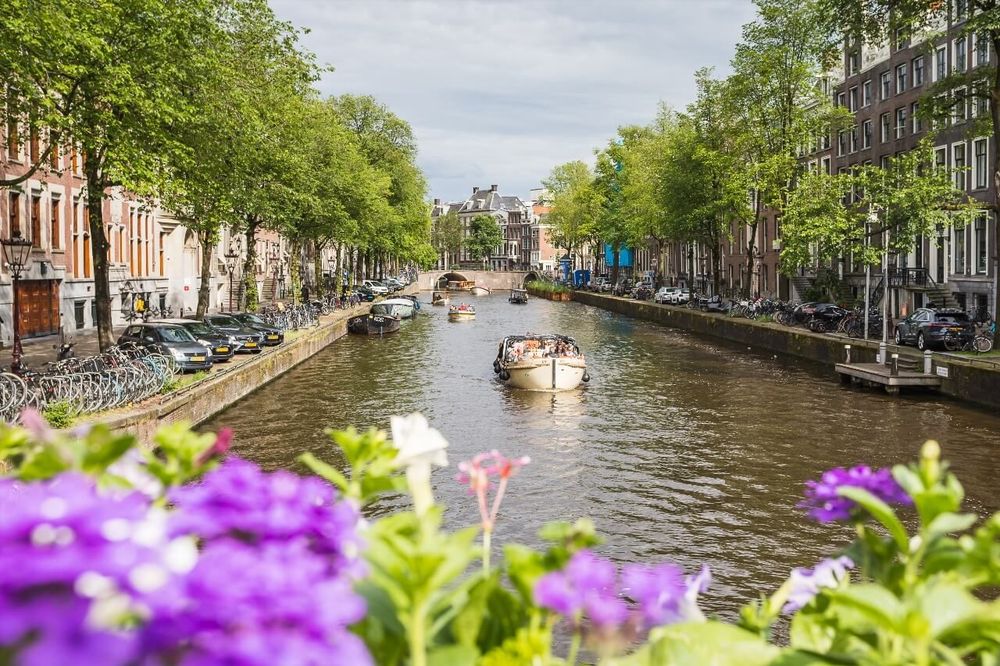
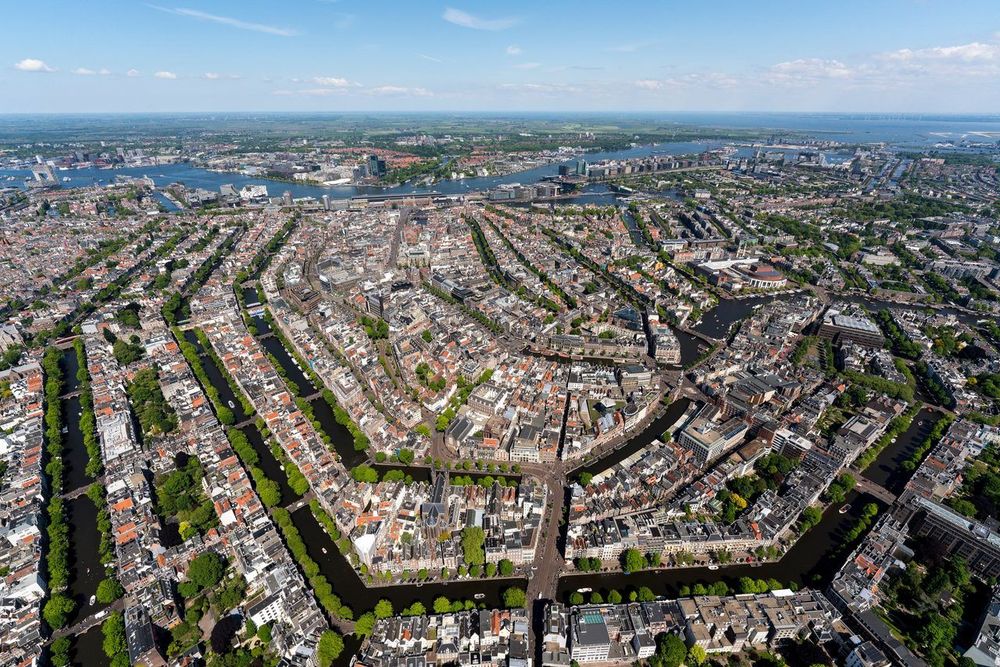
Amsterdam is made for cycling, yet most travelers explore it on foot without ever renting a bike, which completely changes the pace of a stay. To visit Amsterdam in 3 days without rushing, it is best to accept from the outset that you won't see everything: the city has more than 1,500 bridges and 165 canals, plenty to fill an entire week. The Ryo audio-guided tour of Amsterdam starts precisely from Dam Square, at the exact center of this web of canals: 30 audio stops on a 6.3 km loop, about 2.5 hours of walking, which can serve as a common thread to organize the three days that follow.
In three days, you have time to visit the Anne Frank House (provided you booked online six weeks earlier, as no tickets are sold on site), to cross a bridge in the Jordaan and watch the city turn postcard-perfect, to compare a Rembrandt at the Rijksmuseum with a Van Gogh a hundred meters away in the same afternoon, and to set off on an optional fourth day toward the windmills of Zaanse Schans or the tulip fields of Keukenhof depending on the season. In between, a stop at a brown café in the Jordaan and a morning market are enough to understand why Amsterdammers don't want to live anywhere else.
Day 1: Dam Square, the Historic Center and the Red Light District
The first day is the densest in symbols: the historic cradle of the city in the morning, the most debated nightlife in the evening.
Dam Square, the Royal Palace and Nieuwe Kerk
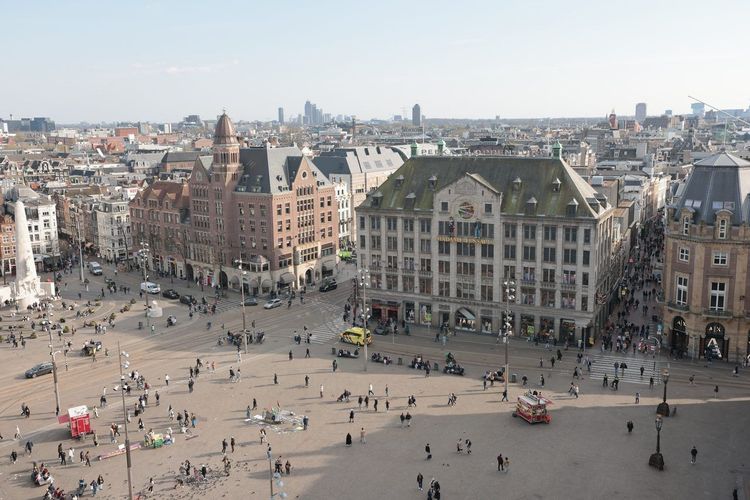
Every Amsterdam itinerary begins, whether you like it or not, on Dam Square. It is the historic point zero of the city, where a dam on the Amstel gave Amsterdam its name in the 13th century. Today, the square hosts pigeons, herring vendors and the column of the National Monument, erected in 1956 in memory of the victims of the Second World War.
On its west side stands the Royal Palace (Paleis op de Dam), built in the 17th century as a city hall before becoming a royal residence under Louis Bonaparte. The state rooms, lined with Italian marble, can be visited on certain days of the week according to the official calendar, which you should check before showing up. Right next door, the Nieuwe Kerk (Gravenstraat 1, 1012 NX Amsterdam, rated 4.2/5 on Google from 3,927 reviews) is new in name only: dating from the 15th century, it has hosted the inauguration of Dutch sovereigns since 1814 (no crowning takes place there: the king takes an oath, and the crown stays resting on a credence table) and regularly turns into a temporary exhibition gallery.
Allow a good hour for the three sites if you enter the palace, 20 minutes if you only look at the façades. The best time to enjoy the square without the crowd of tourist carriages is before 9:30 am, when the café terraces haven't yet put out their chairs.
Béguinage (Begijnhof) and the Bloemenmarkt Flower Market
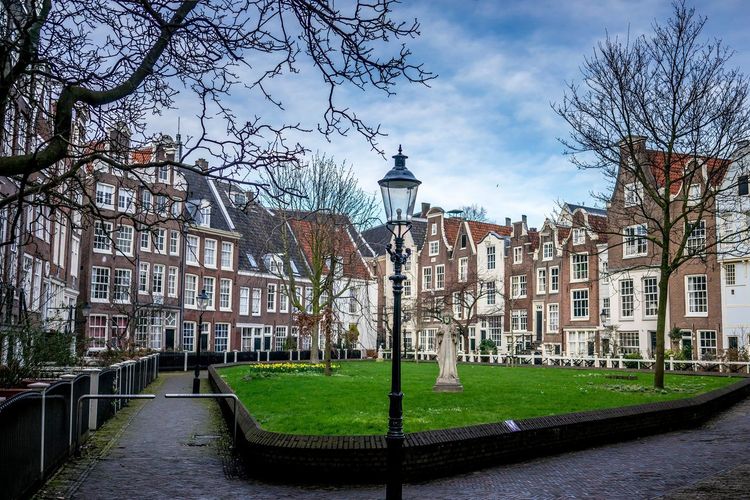
Five minutes on foot from Dam Square, a discreet door opens onto a different world: the Begijnhof. This 14th-century beguinage, once the home of a community of lay women, hides a paved inner courtyard, a clandestine Catholic chapel and one of the oldest wooden houses in Amsterdam, number 34, dating from 1528. The place is still inhabited: people whisper here more than they talk.
Heading back down toward the Singel, the Bloemenmarkt has occupied floating pontoons since 1862, the world's only floating flower market. Between the bagged tulip bulbs (for some countries outside the European Union, only bulbs with a phytosanitary certificate get through customs, so check before buying) and the miniature windmills for tourists, you will also find real local florists selling color by the square meter. If you are traveling outside tulip season (April–May), the bulb stalls remain well stocked all year, unlike the Keukenhof fields discussed below.
Red Light District (De Wallen) and an Evening at Leidseplein
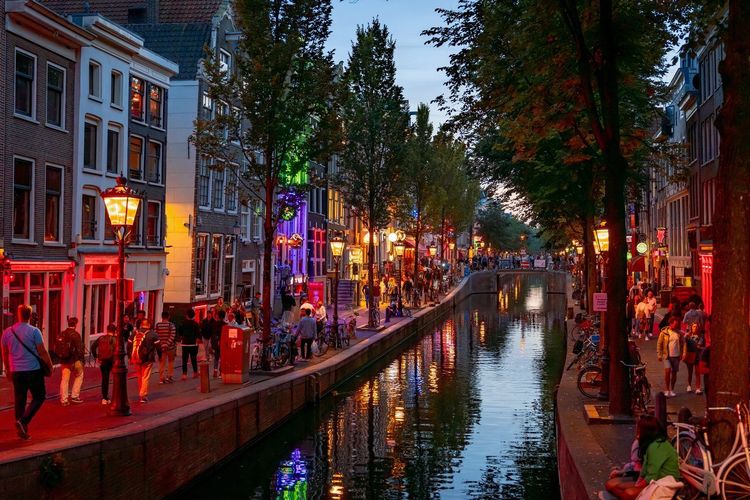
The Red Light District) begins literally a hundred meters from the Nieuwe Kerk, which always surprises first-time visitors. The red windows sit alongside one of the oldest churches in the city, the Oude Kerk, in a mix that Amsterdam has embraced since the 17th century. A daytime visit, in a small silent group, has nothing of the nighttime folklore you might imagine: you mostly discover an architecture of narrow, leaning houses, typical of the old center.
To find your way through the neighborhood's unspoken rules (no photos in front of the windows, areas to avoid at night), our Ryo article on the Amsterdam Red Light District details what you need to know before wandering through.
The evening generally ends at Leidseplein, the liveliest square in the center, ringed by theaters, beer bars and terraces that spill onto the sidewalk as soon as the weather turns nice. If you would rather get through this first day without looking up information yourself between stops, the Ryo audio-guided tour mentioned above does exactly this route: departure from Dam Square, the story of the former city hall turned Royal Palace, then a dive into the alleys of the Red Light District.
Day 2: The Anne Frank House, the Jordaan and a Canal Stroll
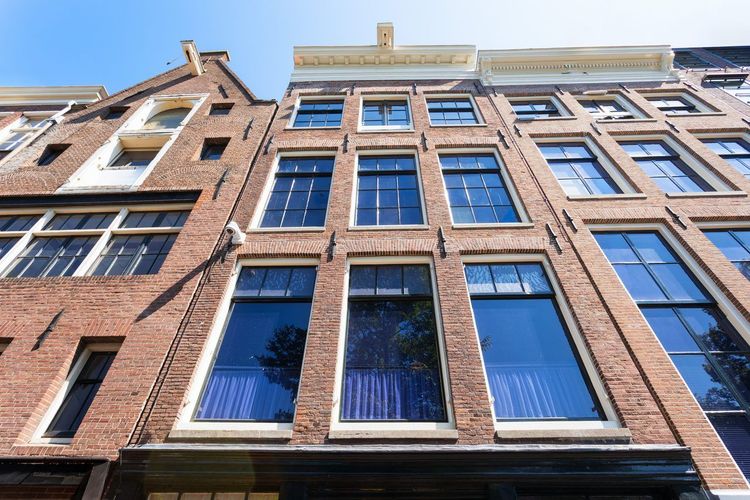
The second day swaps royal history for a darker memory and more intimate façades. You start early and finish on the water.
Anne Frank House and the Jordaan District
The Anne Frank House (Anne Frank Huis) sells out weeks in advance: tickets are sold only on the official website, every Tuesday at 10 am for visits six weeks later (16.50 euros for an adult, booking fee included), and no tickets are sold at the entrance. Put a reminder in your calendar as soon as your dates are set. Behind the swinging bookcase that hid the secret annex, the rooms left almost bare since the war, at the request of Otto Frank, Anne's father, are more striking than any furnished reconstruction.
Just opposite, the Westerkerk rings the same bells that Anne described in her diary as reassuring despite the curfew. Its bell tower, the Westertoren, rises to 85 meters: it is the tallest church tower in Amsterdam, and Rembrandt rests somewhere beneath the flagstones of the nave, in an unmarked grave.
From there, the Jordaan stretches over a few streets in an irregular grid, a former working-class neighborhood that has become one of the most sought-after in Amsterdam. People come for the art galleries set up in former workshops, the flower-filled courtyards (hofjes) you would never suspect from the street, and a handful of brown cafés where beer is still served without a cocktail menu. Take half an hour to get lost there without a precise itinerary: it is the best way to visit this neighborhood.
Canal Cruise and the 9 Streets District (De 9 Straatjes)
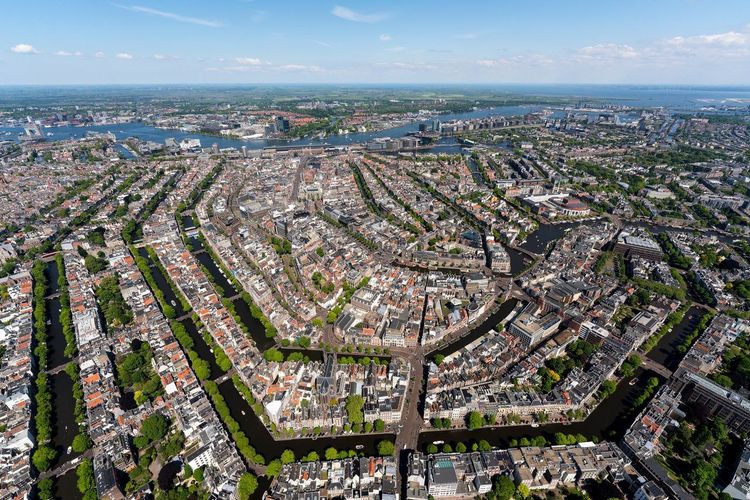
The Amsterdam canals (Grachtengordel) form three concentric belts listed by UNESCO since 2010: Herengracht, Keizersgracht and Prinsengracht. Seeing them from the bank gives you one idea; seeing them from the water gives you another. A cruise of about an hour is enough to understand why the houses lean (foundations on piles, sunken over the centuries) and why some façades display a hoisting hook at the top: the interior staircases are too narrow to carry up furniture, so it is hoisted through the window.
To follow this route at your own pace rather than in a group on a boat, the Ryo "at the pace of the canals" sub-tour offers a short 3.8 km version in about 1.5 hours, with 21 audio clips that trigger along the bridges between the Anne Frank House and the Jordaan. Handy for linking the first two stops of the morning without replanning your route.
Heading back down to the west, the 9 Streets District (De 9 Straatjes (Negen Straatjes, 1016 Amsterdam, rated 4.5/5 on Google from 16,126 reviews)) packs nine small shopping streets between Herengracht and Prinsengracht. You will find local designer boutiques, vinyl record shops, tiny tea rooms and Dutch delicatessens, all within a few hundred square meters.
It is also a good opportunity to try a brown café (bruin café), those bars of dark wood smoked by decades of pipes, now banned but whose smell seems to have stayed in the walls. Our Ryo guide to Amsterdam's culinary specialties lists a few addresses to pair your beer with bitterballen, the typical local croquette.
Day 3: The Rijksmuseum, Vondelpark and the De Pijp District
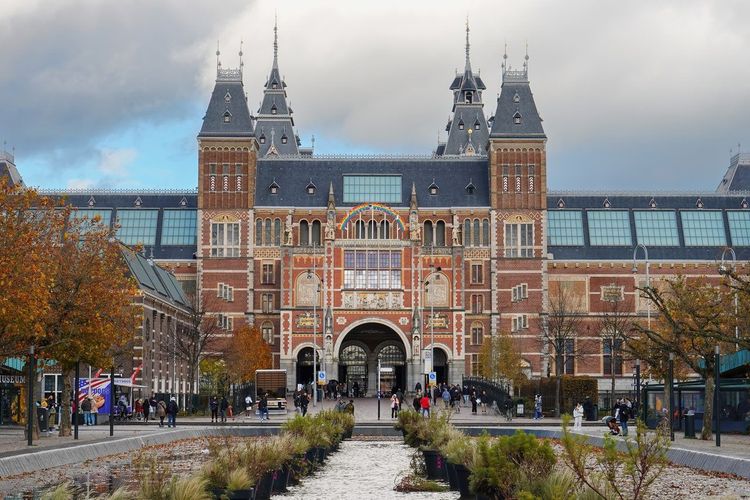
The third day leaves the historic center for the museum district, then slides toward a more local Amsterdam, far from the selfie canals.
Rijksmuseum and Van Gogh Museum, the Art Essentials
The Rijksmuseum displays about 8,000 objects spread over 80 rooms, from Rembrandt's Night Watch to the ship models of the East India Company. Booking your ticket online avoids a queue that can exceed 45 minutes in high season, especially in front of the bicycle passage that runs through the center of the building, an architectural oddity that stirred controversy before becoming an attraction in its own right.
200 meters away, the Van Gogh Museum holds the largest collection in the world of the artist: more than 200 paintings and 500 drawings, including the Sunflowers and several self-portraits. The two museums face each other on the Museumplein and rank every year among the most visited museums in the country. As with Anne Frank, booking a time slot online is strongly recommended, especially on weekends.
If you only plan to visit one museum, favor the Van Gogh in the late afternoon: the morning crowd has dissipated and the natural light of the main building, designed by Gerrit Rietveld (the oval exhibition wing is by Kisho Kurokawa), softens the perception of the canvases.
Vondelpark and the Zevenlandenhuizen (the 7 Houses)
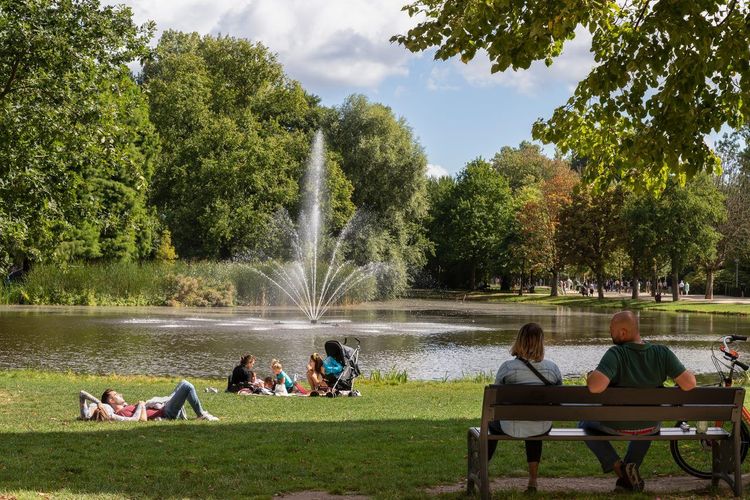
The Vondelpark stretches over 47 hectares in the heart of the museum district, laid out in 1865 in the English landscape style then in fashion. Joggers, families on cargo bikes and street musicians mingle there all year, but it is in summer that it takes on the air of a permanent festival, with its free open-air theater on certain evenings.
At its edge, on Roemer Visscherstraat, seven miniature façades each represent a European country (France, England, Spain, Italy, Russia...): these are the Zevenlandenhuizen (Roemer Visscherstraat 20, 1054 EZ Amsterdam, rated 4.3/5 on Google from 186 reviews), the seven houses, built in 1894 by an architect who had fun copying national styles onto a single row of homes. Few printed guides mention them, which makes this a surprisingly quiet stop.
Allow twenty minutes for the row of façades before walking to the Albert Cuyp market, fifteen minutes further south.
Albert Cuyp Market and the De Pijp District, to Live Like a Local
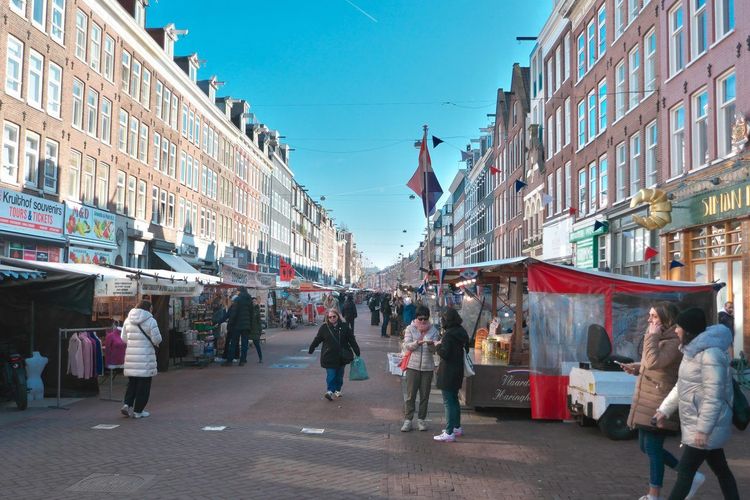
The Albert Cuyp market stretches over 500 meters from Monday to Saturday, the Netherlands' busiest street market by attendance. Dutch cheeses sold by the slice, raw herring at the counter, poffertjes just flipped: it is the place for a quick lunch between two visits.
The market gives its name to the De Pijp district, a former working-class area that has become one of the most densely populated and cosmopolitan in the city, with a large Surinamese population that has left its culinary mark. Our Ryo article on activities around Amsterdam details a few addresses to extend the day if the pace of the three days still leaves some energy.
The alleys around Ferdinand Bolstraat hold a good share of the natural wine bars and small, recently opened eateries, far from the bustle of the historic center.
Optional Day 4: Zaanse Schans, Keukenhof and Amsterdam's Lesser-Known Gems

If you can extend by a day, it is often the most memorable day of the stay. Head to the Dutch countryside, then return to the city for the evening.
Zaanse Schans and Its Windmills
20 minutes by train from the central station, Zaanse Schans recreates an 18th-century windmill village, several of which are still in operation: spice mill, oil mill, paint mill. You can enter some of them, watch the millstones turn and leave with a jar of mustard made on site.
The site also houses a traditional clog workshop and an artisanal cheese dairy that hold free demonstrations throughout the day. Arrive before 10:30 am to avoid the tour buses that unload in numbers from opening time. Allow half a day on site, travel included, so you don't rush between the windmills.
Keukenhof, the Tulip Garden (Spring)
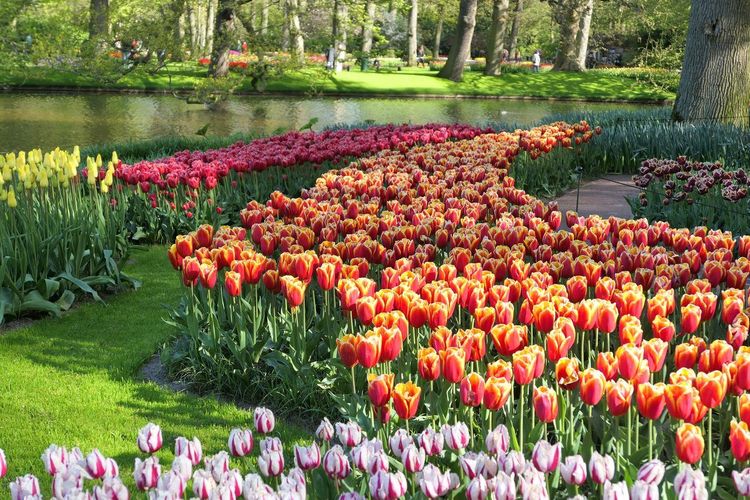
Keukenhof opens only eight weeks a year, from mid-March to mid-May depending on the year (from March 18 to May 9 for the 2027 season), the time it takes for its 7 million bulbs to bloom across 32 hectares of landscaped gardens. It is one of the few places in the world where you can see tulip fields stretching to the horizon behind the flowering paths themselves.
Outside this spring window, the site closes completely: check the dates before building this fourth day around Keukenhof rather than around Zaanse Schans. Our Ryo guide to visiting Keukenhof from Amsterdam details the direct bus routes from Schiphol and the city center. Allow about 3 hours on site to enjoy the gardens without rushing, more if you add the central pavilion in high season.
Hortus Botanicus and the Maritime Museum, for the Curious
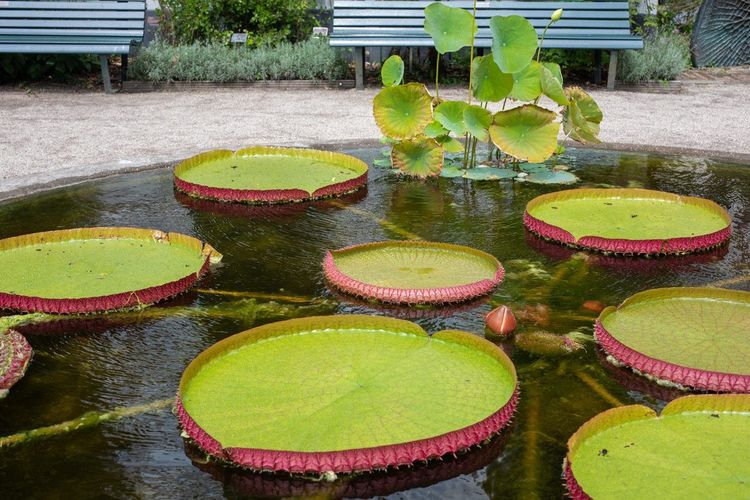
For days without spring flowers or the desire to take a train, the Hortus Botanicus stays open all year in the heart of the city, near the Jewish quarter. Founded in 1638 as a medicinal plant garden, it now preserves a potted cycad more than 300 years old and a surprising story: a coffee plant grown here in the early 18th century, later given to Louis XIV, is said to be the ancestor of a good part of Latin America's coffee plantations.
Not far away, the Maritime Museum (Het Scheepvaartmuseum (Kattenburgerplein 1, 1018 KK Amsterdam, rated 4.5/5 on Google from 13,579 reviews)) occupies a former 17th-century naval storehouse and houses the full-scale replica of an East India Company ship moored in front of the building. Even if this day takes you outside the center, the Ryo app remains usable as soon as you are back in the city in the evening, notably on the canal route already walked the day before, to extend the stroll without pulling out the paper map.
Choosing Your Tourist Pass: City Card, Holland Pass and Museumkaart
With so many museums and transport rides to fit into three days, the question of the pass comes up quickly. Here is what you need to decide based on your profile.
I amsterdam City Card and Amsterdam City Pass: Which One to Choose
The I amsterdam City Card combines free entry to several dozen museums and attractions (check the up-to-date list: the major Museumplein museums are not always included, the Van Gogh Museum generally being excluded), a canal cruise and unlimited public transport, with options ranging from 24 to 120 hours. Its price climbs quickly on longer options, which makes it mostly worthwhile for a culturally dense stay of 2 to 3 full days.
The Amsterdam City Pass, sold by a different private operator, works on a similar principle but with a partly different list of attractions, more oriented toward tourist attractions (canal boat, beer museum) than art museums. Compare the two inclusion lists before buying: depending on whether you favor art or the classic tourist experience, one or the other pays for itself faster. For a family, the City Pass often includes more fun activities suited to children than the City Card, which is more heritage-oriented.
Holland Pass and Museumkaart, the Museum Pass
The Holland Pass works with credits to spend in a selection of attractions across the country, not only in Amsterdam: useful if your stay extends to The Hague or Rotterdam, less worthwhile if you stay confined to the capital.
The Museumkaart, for its part, targets museums exclusively, but all year round and across the whole country, more than 400 institutions, for a fixed annual fee. On a 3-day stay, it only pays off if you plan to visit 4 or more museums, Rijksmuseum and Van Gogh included: otherwise, single tickets remain cheaper. Non-residents receive a temporary card, valid for 31 days and limited to five museum visits, to be registered online afterward to benefit from the annual validity: a detail worth knowing if you are aiming for five museums in three days.
Where to Stay in Amsterdam for 3 Days: Neighborhoods and Accommodation Tips
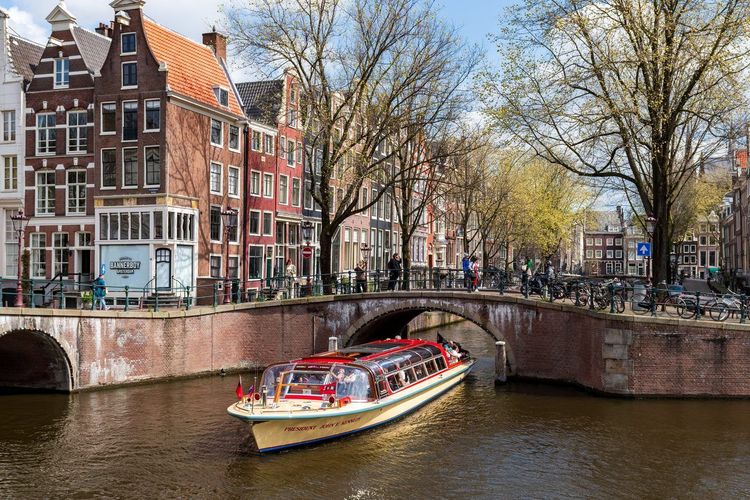
The choice of neighborhood changes the experience of the stay more than the choice of hotel itself, since walking distances in Amsterdam remain short.
Recommended Neighborhoods by Traveler Profile
The Centre and the old center put everything within walking distance, Dam Square, the Red Light District and the central station included, at the cost of more present nighttime noise, especially on weekends. It is the logical choice for a very short stay where every hour of travel counts.
The Jordaan appeals to travelers who prefer waking up in peace on a canal rather than above a bar, even if it means walking 15 to 20 minutes to reach the historic center. De Pijp, for its part, suits those who want to stay like a local, near the Albert Cuyp market, with quick access on foot to the museum district.
Around the central station, chain hotels dominate, convenient for a late arrival by train but often pricier per square meter for a less charming setting.
Accommodation Tips for a Short Stay
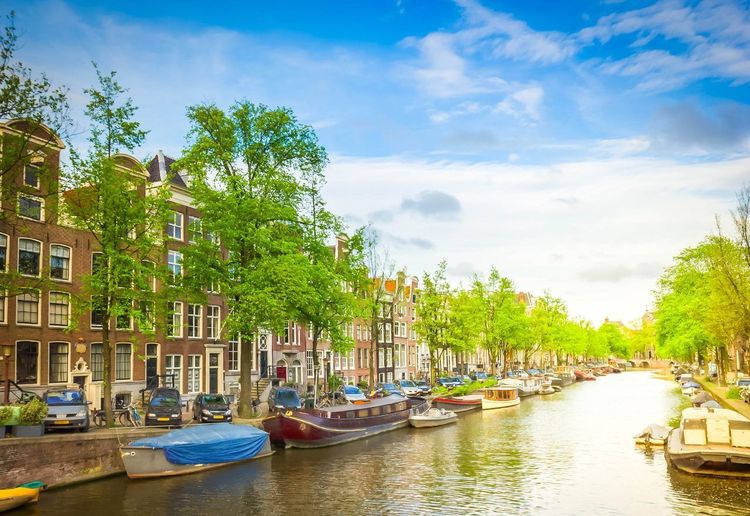
Over 3 days, it is better to favor proximity to a tram stop rather than the most central address at all costs: the network serves the center in 10 to 15 minutes from most residential neighborhoods, at a much lower price than the accommodation.
Hostels in the Jordaan and the west of the city often offer private rooms at a price close to a 2-star hotel in the center, with a shared kitchen that lets you save on meals. Book at least 6 to 8 weeks in advance in high season (April to September), as prices sometimes double in the 15 days before arrival.
Getting Around Amsterdam: Bike, Tram and Walking
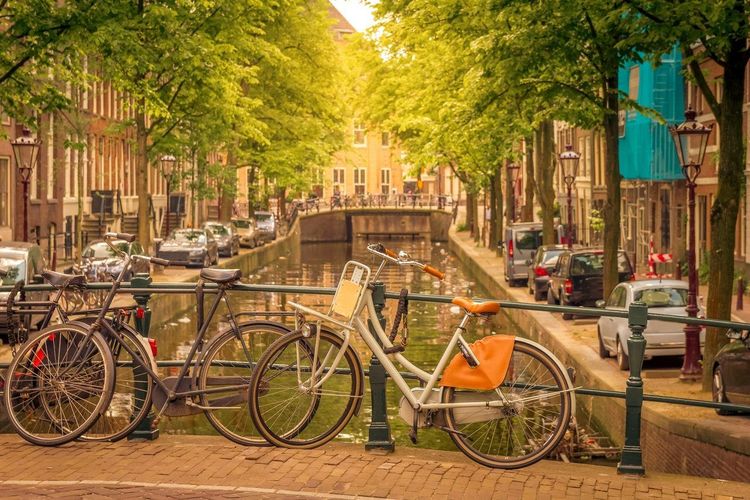
Amsterdam has more bikes than inhabitants, a figure that says it all about the priority given to this mode of transport. Renting a bike generally costs 10 to 15 euros per day, deposit included, at one of the many shops around the central station or the center.
The city is compact enough to be explored on foot: allow 25 to 30 minutes to cross the old center from north to south, a little more to reach the museum district from the station. The tram, dense and frequent (every 5 to 10 minutes on the main lines), usefully complements walking on longer trips, notably to De Pijp or the Jordaan in the evening.
For a first bike outing without getting lost in the cycle paths, often more numerous than the roads for cars, our Ryo article on cycling in Amsterdam details a first relaxed itinerary. And to sightsee on foot without having to watch a map or a GPS, the Ryo audio-guided tour automatically triggers each audio stop as you approach the relevant place, which leaves your hands free for the handlebars or the camera.
If you arrive by car anyway, parking in the center remains expensive and limited: it is better to park on the outskirts and finish by tram.
Amsterdam in 3 Days with the Family: Adapting the Itinerary
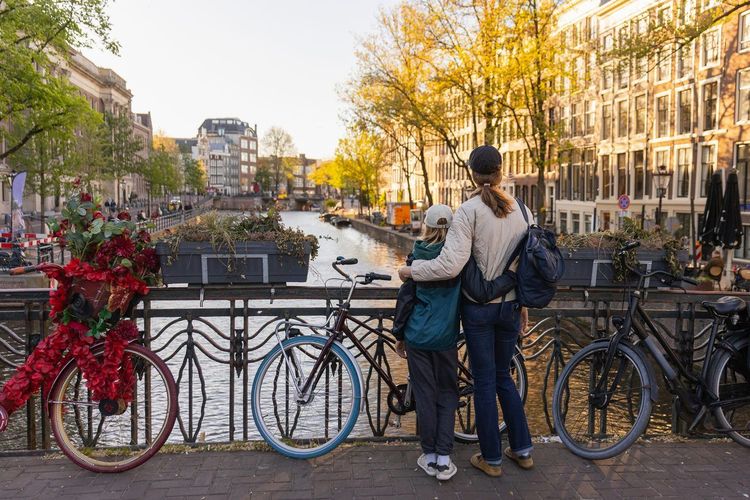
The itinerary for days 1 to 3 works broadly as a family, provided you adjust the pace: allow two places per half-day rather than three, and plan a proper sit-down lunch break rather than a standing sandwich between two museums.
The Rijksmuseum, free for under-18s, offers trails designed for families, a good way to turn the visit into a game rather than a cultural chore. The Vondelpark, with its playgrounds and its area for safe cycling, remains the best outlet for an outdoor break between two visits.
On the other hand, avoid the Red Light District in the evening with young children: it isn't forbidden, but the nighttime atmosphere brings nothing at that age. Zaanse Schans, with its windmills and its dairy that you can visit freely, generally works very well as a children's activity for the optional fourth day, better than Keukenhof, where the prolonged walking between the flowerbeds can tire the youngest.
The canal cruise also remains a good family choice: seated, sheltered, with enough movement to hold attention without tiring legs.
What to Visit in Amsterdam for Free
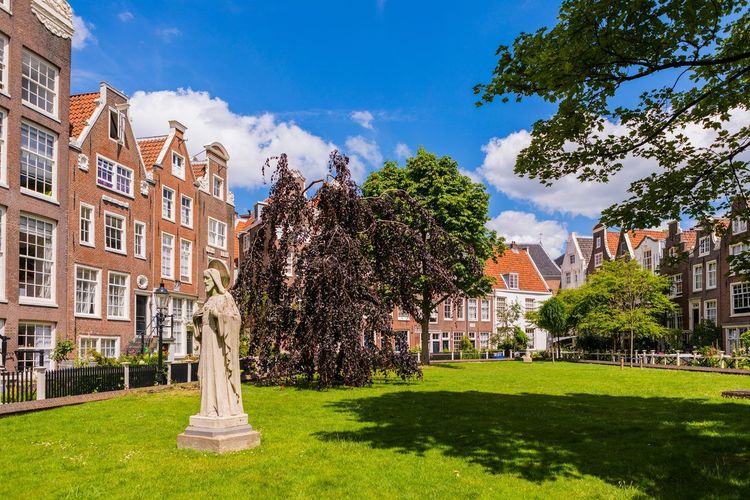
Free Amsterdam does exist, as long as you focus on the outside of places rather than the collections. The Begijnhof, the Bloemenmarkt (excluding purchases), Vondelpark and the Zevenlandenhuizen cost nothing to visit, just like a good part of the quays along the UNESCO-listed canals.
Several churches, including the Oude Kerk and the Westerkerk, can be visited for free from the outside, with paid entry applying only to the interior or the bell tower. As for markets, strolling through Albert Cuyp or around the Bloemenmarkt costs nothing as long as you resist the temptation to buy.
Finally, some museums, including the Rijksmuseum for under-18s, are free for children and teenagers all year, which noticeably changes the budget of a 3-day family stay.
How Many Days to Visit Amsterdam: 2, 4 or 5 Days?
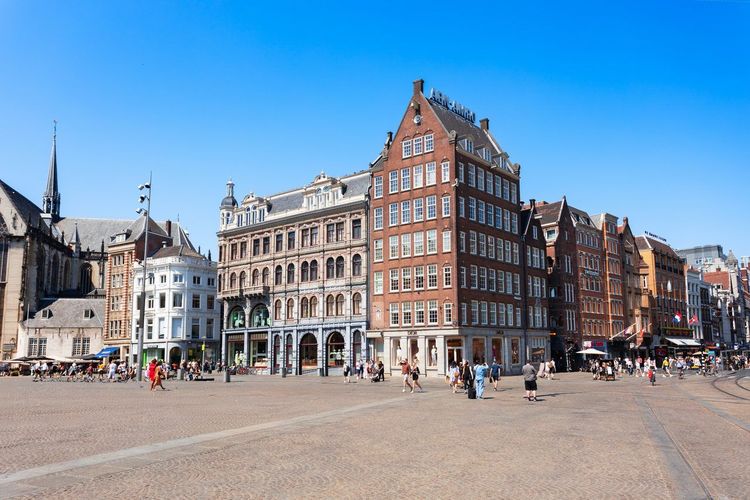
How many days to visit Amsterdam depends mainly on the pace you want. In 1 day, you realistically limit yourself to Dam Square, a single museum and a canal stroll, with no margin for error on schedules.
Visiting Amsterdam in 2 days lets you fit in the historic center and a major museum on the first day, then the Anne Frank House, the Jordaan and Vondelpark on the second, sacrificing the optional fourth day and the De Pijp district. For a weekend format, our selection of activities for a weekend in Amsterdam helps sort out the essentials.
Visiting Amsterdam in 4 days adds precisely the excursion described above to Zaanse Schans or Keukenhof. Visiting Amsterdam in 5 days also leaves time for a second excursion, to Utrecht or Haarlem for example, or simply a slower pace in the city, without an early alarm every day. Three days remain, for the majority of visitors, the balance point between thoroughness and travel fatigue.
Budget and Best Time for a Successful Stay in Amsterdam
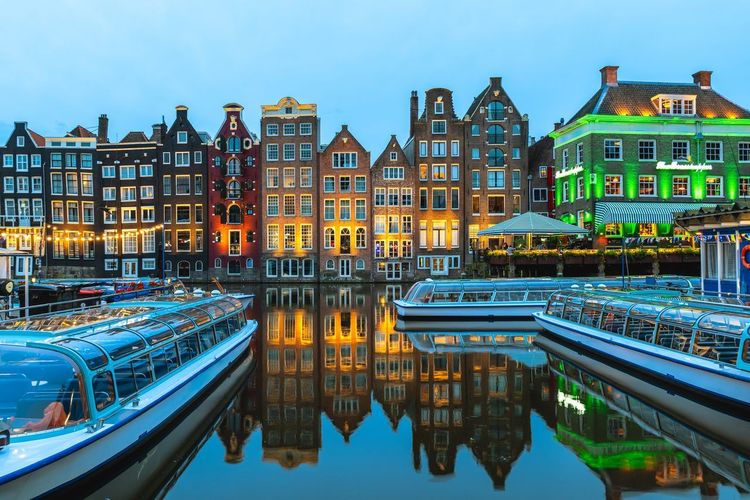
For a 3-day Amsterdam travel budget, expect rather 150 to 200 euros per day per person at mid-range (shared double room, two meals, one museum and transport included, excluding flight or train to get there): Amsterdam's hotels are among the most expensive in Europe, and the tourist tax, calculated as a percentage of the room price, is added to the bill. Backpackers can go down to around 80 euros per day in a hostel dorm with market picnics. To lighten the bill, group your museums on a single pass and favor walking, which is free and often faster than the tram in the old center.
The best time to visit Amsterdam remains debated among regulars. Spring (April–May) coincides with the Keukenhof bloom but also with the heaviest crowds and the highest accommodation prices. Autumn (September–October) offers a good compromise: less crowded museums, still mild temperatures, prices slightly lower than in summer.
Winter, cold and often rainy, remains the cheapest and most authentic season for those who like cities without tourists, as long as you accept short days with night falling at 4:30 pm.
A few practical tips before leaving: tap water is perfectly safe to drink, tipping (5 to 10%) is appreciated but not mandatory, and bank cards are accepted almost everywhere, even for very small amounts. Once these basics are in place, all that remains is to plan the three days in practice, backpack packed.



FAQ
How many days do you need to visit Amsterdam?
Three days comfortably cover the great classics: the historic center, the Anne Frank House, the canals, the Rijksmuseum and Vondelpark. Two days are enough for a tighter overview, while four or five days allow you to add an excursion to Zaanse Schans or Keukenhof without sacrificing the pace in the city.
Can you visit Amsterdam in just 2 days?
Yes, as long as you prioritize: one day for the historic center and one major museum, a second day for the Anne Frank House, the Jordaan and a canal stroll. The De Pijp neighborhood and the optional day get dropped, and it is best to book museum tickets in advance so you don't lose time in queues.
What else is there to see in Amsterdam in 4 or 5 days?
The fourth day naturally turns toward Zaanse Schans and its windmills, or toward Keukenhof if your stay falls between mid-March and mid-May. A fifth day leaves time for an additional excursion, to Utrecht or Haarlem, or simply for a slower pace in the city, with a real morning free of an early alarm.
What can you visit in Amsterdam for free?
The Begijnhof, Vondelpark, the Zevenlandenhuizen and the quays along the UNESCO-listed canals can be visited without a ticket. Several churches can be admired from the outside for free, and many museums remain free for children and teenagers depending on their age.
Is Amsterdam in 3 days suitable for a family trip?
Yes, as long as you lighten the pace: two places per half-day rather than three, a proper lunch break, and a detour through Vondelpark or Zaanse Schans rather than the Red Light District in the evening. The Rijksmuseum also offers a fun trail dedicated to children.
Which tourist pass should you choose for 3 days in Amsterdam?
For a culturally packed stay, the I amsterdam City Card remains the most complete option over 2 to 3 days. The Museumkaart only pays off from 4 museums visited, and the Holland Pass is mostly aimed at stays that extend to other Dutch cities such as The Hague or Rotterdam.
Do you need to rent a bike to visit Amsterdam in 3 days?
It isn't essential: the center is easy to explore on foot and by tram. But for a 3-day stay, half a day on a bike changes your perception of the city, especially for getting to the Jordaan or Vondelpark without depending on tram schedules.
Three days in Amsterdam give you plenty to come back changed: the gravity of the Anne Frank House, the lightness of a floating flower market, the quiet rivalry between two neighboring museums. The optional fourth day, for its part, proves that you only need to leave the center for twenty minutes to find windmills that still genuinely turn.
To link these stops without pulling out a map at every crossroads, our Ryo audio-guided tour unfolds its 30 audio clips along a 6.3 km loop starting from Dam Square, and its short version at the pace of the canals takes over when your schedule tightens.
À lire également