© Shutterstock
 Votre guide Ryo
Visiting San Sebastian at Christmas 2026: Markets, Olentzero and a Ferris Wheel Facing the Ocean
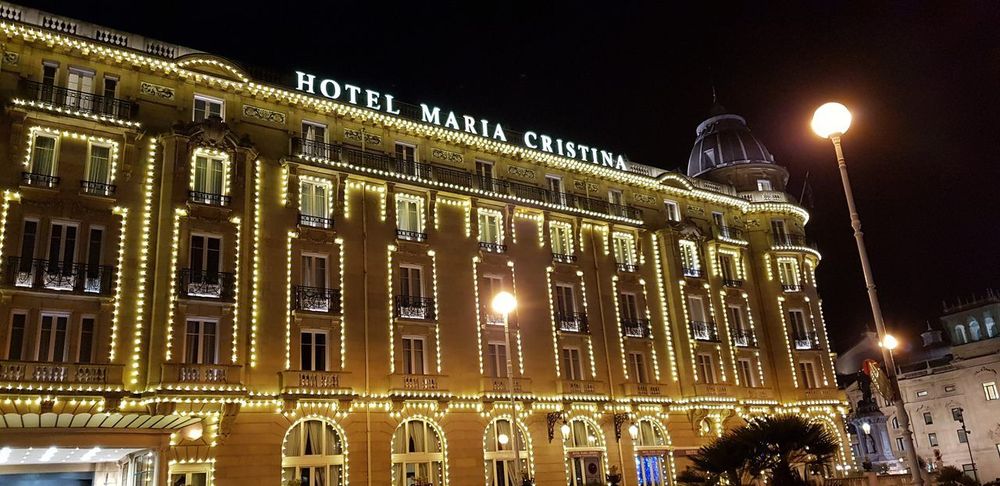
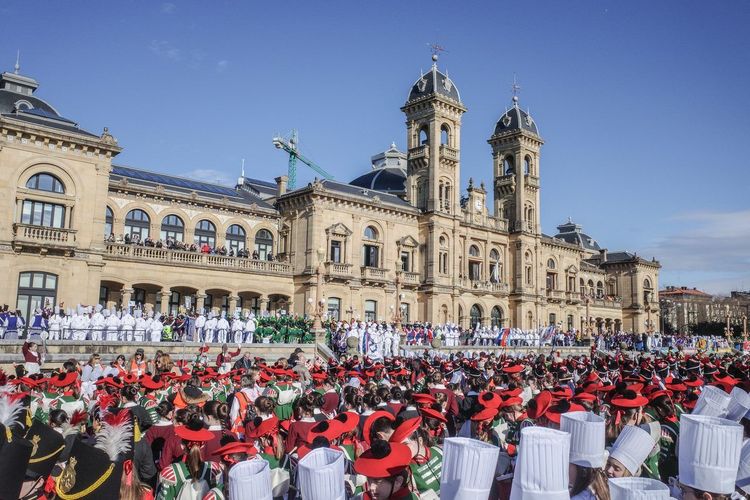
Visiting San Sebastian at Christmas often starts with a surprise: on December 21, half the city dons a beret and red scarf for the Saint Thomas Fair, on la Plaza de la Constitución — a more reliable indicator than any advent calendar for marking the true start of the festive season in the capital of Gipuzkoa. A seaside city in summer, San Sebastian changes its character completely in December: the seafront terraces empty out, the facades of the city centre light up, and traditional Basque songs take over from the bustle of summer tourism. To get your bearings before diving into the holiday programme, the Ryo audio guide tour of San Sebastian already covers the main landmarks of the old town, making it easy to place each Christmas event in context.
In just over a month, the city lines up a Christmas market stretching along the Urumea, a giant nativity scene installed since 1957 in a central garden, a 32-metre Ferris wheel set against the Atlantic, and — for the bravest — a winter swim in water rarely above 13 to 14 degrees. Add to that the arrival of a gruff charcoal-maker descended from the mountains with his companion in peasant costume, a popular race on New Year's Eve, and a Three Kings' parade to close everything out in early January: few Spanish cities concentrate so many different traditions in such a compact area.
Christmas Traditions in San Sebastian: Olentzero and Basque Festivities
Before mapping your itinerary onto specific calendar dates, it is worth understanding where these customs come from. Most were not born in San Sebastian but in the surrounding villages, before migrating to the city over the course of the 20th century.
Olentzero and Mari Domingi, the Basque Christmas Figures
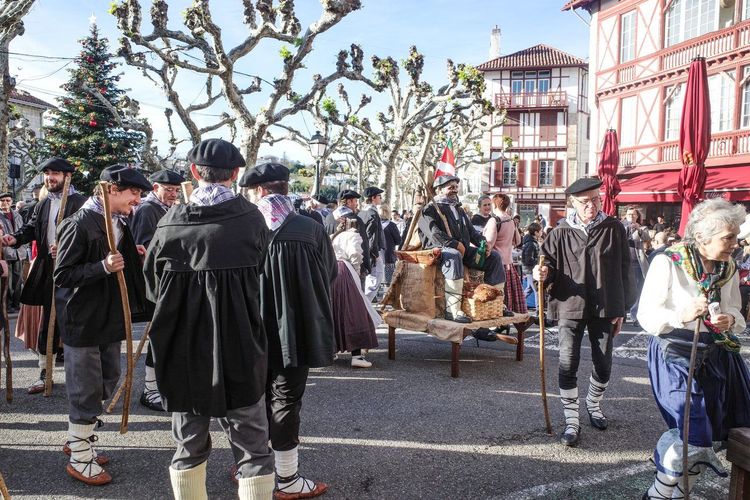
Olentzero is a gruff charcoal-maker, his face blackened by soot, who descends each year from the Basque mountains to deliver gifts to children on the evening of December 24. The legend varies from valley to valley: some say he is greedy and lazy, others present him as the last of the pagan giants, tasked with announcing the birth of Christ. In San Sebastian, he never travels alone.
He is accompanied by Mari Domingi, a female figure dressed as a peasant woman, wearing a headscarf and carrying a basket. The pair begin by receiving children's letters at the town hall, then parade through the neighbourhoods on December 24, often preceded by txistularis — Basque flute players — and followed by children in costume. Unlike other, more commercial Christmas figures, Olentzero retains an unapologetically rural character: he is still hand-crafted in schools, ikastolas and the gastronomic societies of Gipuzkoa before being carried through the streets on a cart.
The Tamborrada and the Feast of the Caldereros
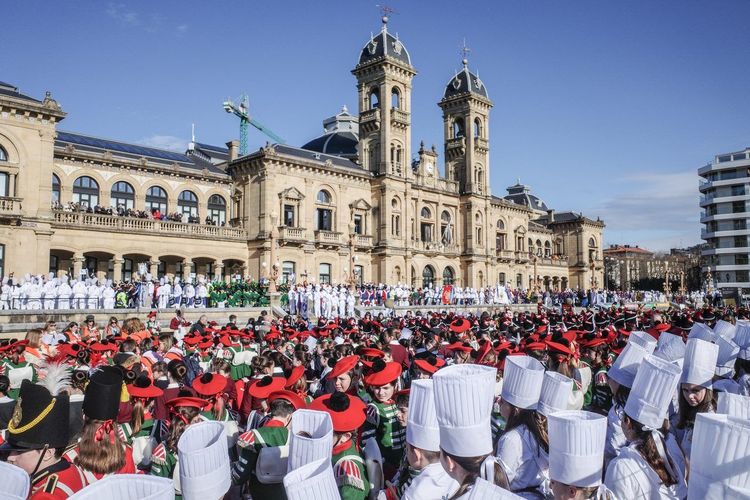
Two other traditions frame the period, and you may well hear about them locally even if they fall after the holidays. The Tamborrada, on January 20 — the feast day of San Sebastian — sees companies dressed as cooks or Napoleonic soldiers parade for 24 hours, drums and barrels slung over their shoulders. The children's Tamborrada, with thousands of schoolchildren, takes place the same day, but rehearsals begin well before: in December, it is not unusual to hear a group drumming away in a school courtyard or a gastronomic society in the city centre.
The Feast of the Caldereros, often mentioned in Christmas guides, actually takes place on the first Saturday of February — February 7 in 2026. Groups dressed as Romani tinkers wander through the Parte Vieja, banging pots and cauldrons to the rhythm of traditional songs. If your year-end stay stretches into February, this noisy parade is well worth catching; otherwise, keep it in mind for a future visit. While walking through the Parte Vieja with the Ryo audio guide, several stops tell the stories of Olentzero and the Tamborrada, step by step, with no precise schedule to follow.
The Gabonetako Azoka Christmas Market and the Nativity Scene at the Plaza de Gipuzkoa
Two events concentrate most of the festive atmosphere in the city centre, less than a ten-minute walk from each other.
The Gabonetako Azoka Christmas Market, near the Plaza Ramón Labayen
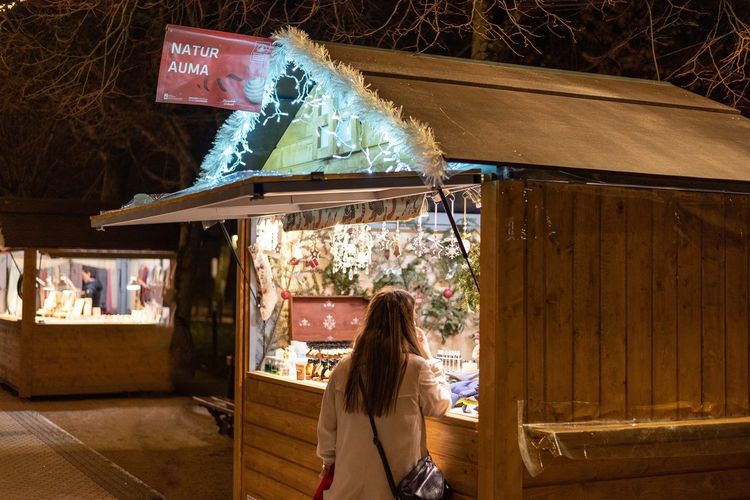
The Christmas market, known locally as the Gabonetako Azoka, stretches along the banks of the Urumea, between the Paseo de Francia and the Plaza Ramón Labayen (Plaza Ramón Labayen, 20003 San Sebastián). The 2025 edition featured 71 chalets — a record — including around a dozen grouped into a gourmet market on the Plaza Ramón Labayen, where visitors could sample local produce: Idiazabal cheese, txistorra, mountain honey and coastal preserves. The remaining stalls mix Basque crafts, decorations and gifts.
The market opens in late November and closes on January 6, with a midday break (11am–2pm, then 4:30pm–8:30pm in the most recent edition). A natural ice rink set up on the Paseo de Francia adds to the atmosphere and delights families. Unlike the vast markets of central Europe, this one remains human in scale: allow about an hour if you stop to taste the food stalls, making it an easy addition to a stroll along the river.
The Nativity Scene (Belén) at the Plaza de Gipuzkoa
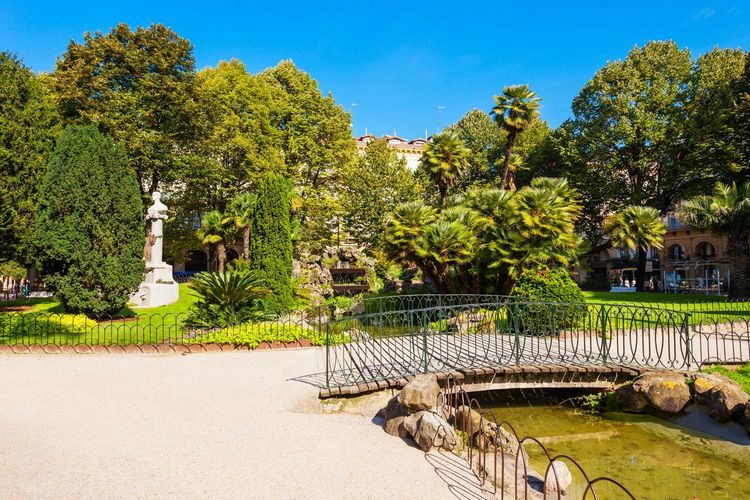
On the other side of the river, the Plaza de Gipuzkoa hosts a monumental nativity scene — a Belén — every year, set up in the middle of this garden bordered by century-old trees and the Diputación palace. The tradition dates back to 1957, and the nativity scene has been growing steadily since 1986: it now unfolds across seven scenes from the Nativity, with figures that are sometimes animated and lit up after dark.
This public garden, already pleasant in summer for its flowerbeds and small duck pond, takes on a different dimension in December: decorated trees and a marked contrast with the commercial bustle of the surrounding streets. Come on a weekday evening if you want to get close to the scenes without navigating pushchairs. The Ryo audio guide tour passes right by the Plaza de Gipuzkoa — a good opportunity to listen to the history of the neighbourhood before continuing on to the market.
Christmas Lights in the Streets and along the Paseo del Urumea
Night falls early in December on the Basque coast, leaving you plenty of time to enjoy the lights before dinner.
The City Centre Lights Trail
Each year, the municipality rolls out a different lighting scheme along the main shopping streets, with Calle San Marcial (Calle San Marcial, 20007 San Sebastián) and the Avenida de la Libertad as the backbone of the route. Hanging garlands, animated motifs and sometimes an annual theme transform these busy daytime streets into a photogenic evening promenade. In the Alderdi Eder gardens, an illuminated woodland is arranged around an 18-metre Christmas tree, launched in the most recent edition with a drone show and fireworks.
The best approach is to head out after sunset, around 6pm in December, when the shop windows add to the street decorations. Allow about an hour to walk leisurely to the old town along these main streets.
The Illuminated Walk along the Paseo del Urumea
Less crowded than the Concha seafront, the Paseo del Urumea (Paseo del Urumea, 20014 San Sebastián) runs along the river of the same name, facing the Gros neighbourhood, passing beneath the Santa Catalina and María Cristina bridges. In December, the fairy lights are reflected in the water on calm evenings, offering a quieter alternative to the busy shopping streets of the centre.
By crossing one of the bridges, you reach the Christmas market on the Paseo de Francia, then the Zurriola beach and the Gros neighbourhood, livelier on the surfer-bar side. The Ryo audio guide route runs along part of these riverbanks, with audio stops that recount the architecture of the facades — equally enjoyable once night has fallen.
The Alderdi Eder Ferris Wheel and Christmas Shopping
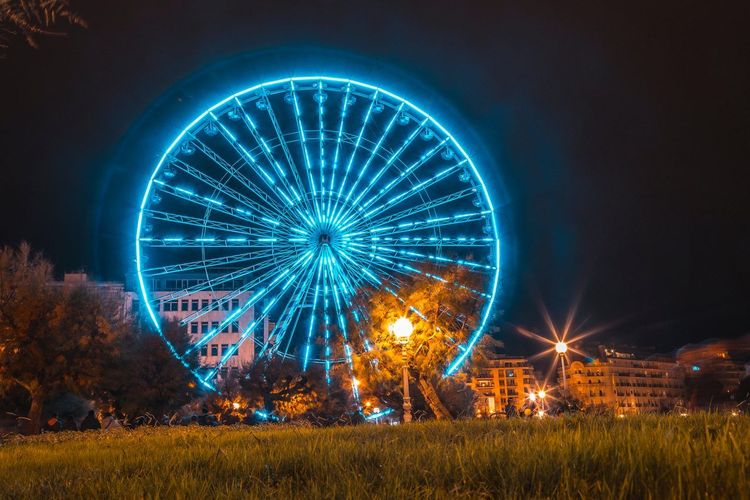
The seafront alone concentrates two of the season's main attractions, less than ten minutes' walk from each other.
The Panoramic Ferris Wheel at Alderdi Eder Park
Installed every winter in Parque de Alderdi Eder (Parque de Alderdi Eder, 20003 San Sebastián, rated 4.6/5 on Google with 17,737 reviews), between the town hall and the Concha promenade, the Ferris wheel rises to 32 metres and has 24 semi-enclosed cabins, including one accessible to people with reduced mobility. In the most recent season, it ran from mid-November to January 31, at €6 per ride (€3 on Mondays). The view takes in the bay, Monte Igueldo on one side, Monte Urgull on the other, and the Santa Clara island in the middle.
At the end of the day, the golden light over the bay makes the ride particularly photogenic. Queues lengthen at weekends in the early evening: aim for a weekday slot or mid-afternoon instead.
Christmas Shop Windows and Boutiques in the City Centre
Christmas shopping is concentrated in two distinct areas: the major chains along the Avenida de la Libertad and Calle San Marcial on one side, and the small artisan and gourmet shops of the Parte Vieja on the other. Chocolatiers, delicatessens and Basque textile boutiques (home linen, espadrilles, berets) compete with elaborately decorated shop windows.
The Ryo sub-route 'The Pearl of the Cantabrian' connects the Concha promenade to Alderdi Eder park — handy for combining the Ferris wheel and the Christmas shop windows without retracing your steps.
The Calendar of the Major December Festivities
Three dates define the month and are worth knowing before you book your tickets.
December 21: the Saint Thomas Fair
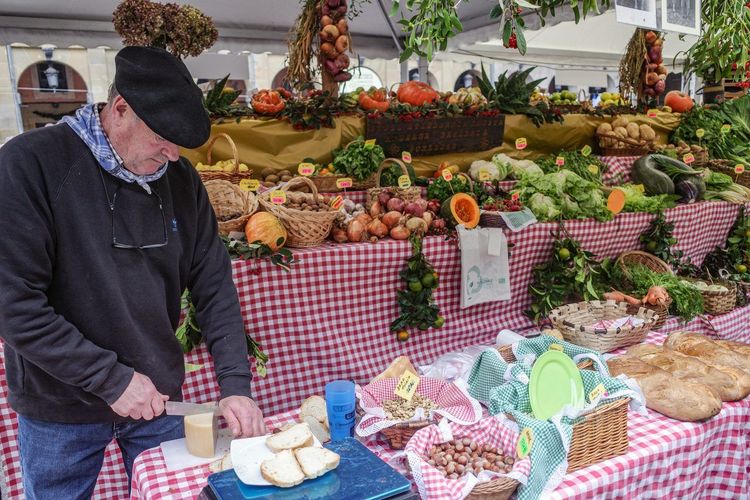
On December 21, the feast of Saint Thomas, the Plaza de la Constitución and the adjacent streets of the Parte Vieja are transformed into a vast rural market. Producers from Gipuzkoa and Navarre come to sell Idiazabal cheese, winter vegetables, honey and above all talos and txistorra sausage sandwiches, grilled on braziers set up right in the street — the smell fills the whole neighbourhood from morning onwards. The festival harks back to the time when peasants came down to the city to pay their rent.
Tradition has it that you wear a Basque beret and a scarf tied around your neck on this day — including visitors who get swept up in the spirit. The atmosphere feels more like a village fair than an urban celebration: allow a full morning to browse the stalls before the crowds thicken in early afternoon.
December 24: the Arrival of Olentzero and Mari Domingi
On December 24, before the Christmas Eve dinner, Olentzero and Mari Domingi make their way through the city, accompanied by groups of traditional dancers and musicians. The procession passes through several neighbourhoods, each often organising its own passage, before children head home to wait for their gifts.
Exact timings and the precise route vary from year to year: check with the tourist office when you arrive — it is the most reliable way to make sure you don't miss anything. The crowd is large but good-natured, and you can follow the procession along part of its route before heading back to sit down for dinner.
December 25: the Christmas Day Swim
On the morning of December 25, while most of the city is still asleep after the night before, a hardy few plunge into water that rarely exceeds 13 to 14 degrees at Playa de la Concha (Playa de la Concha, 20007 San Sebastián, rated 4.7/5 on Google with 23,792 reviews). This winter swim is not an official event: timings and turnout vary from year to year.
The occasion brings together seasoned swimmers and curious onlookers cheering from the sand in equal measure. Even without getting wet, an early morning walk along la Concha on that day — with Monte Urgull shrouded in the winter chill — remains one of the most peaceful moments of the entire stay.
From New Year's Eve to Three Kings' Day: the Year-End Festivities
Many visitors limit their stay to Christmas Day itself, missing out on a large part of the Basque calendar.
December 31: the New Year's Eve Race (San Silvestre)
As in many Spanish cities, San Sebastian holds its own New Year's Eve race, the San Silvestre donostiarra, on December 31. Several thousand runners — many in fancy dress — set off on a course of a few kilometres through the city centre, in an atmosphere far closer to street party than sporting competition.
You don't need to run to enjoy it: the pavements along the route are just as good for watching, with spectators cheering on the most outlandish costumes. The evening continues in the bars of the Parte Vieja and Gros until the midnight countdown, when Spanish tradition calls for swallowing twelve grapes on the twelve strokes of the clock.
January 5–6: the Three Kings' Parade
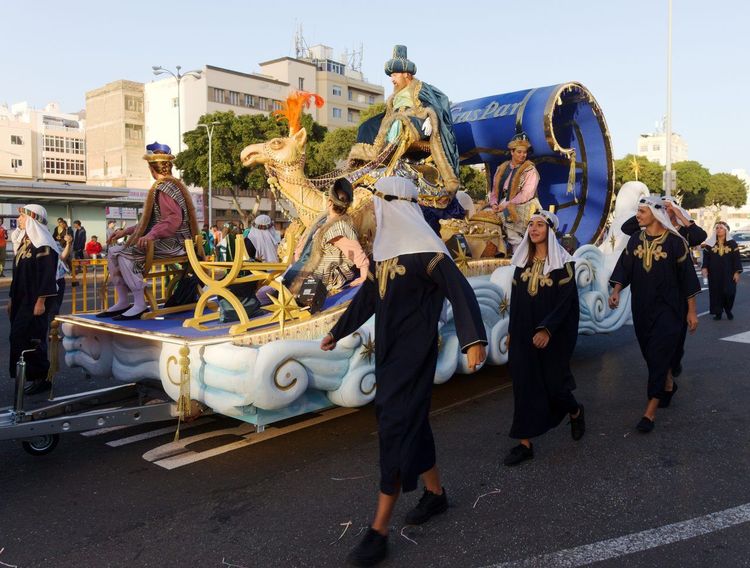
The Three Kings' parade, on the evening of January 5, remains one of the most eagerly awaited events for Spanish families — even more so than Christmas itself in some households. Illuminated floats make their way along the main streets, with Melchior, Gaspar and Balthazar at the head, throwing sweets to the crowds massed along the route.
The following day, January 6, Epiphany, marks the end of the Christmas holidays in Spain, with the opening of gifts and the sharing of the roscón de reyes — a ring-shaped brioche filled with cream or candied fruit. Extending your stay to this date means seeing the city from an angle that few foreign visitors ever experience, and it is also the last day of the Christmas market.
Christmas Gastronomy: Pintxos, Cider and Seasonal Dishes
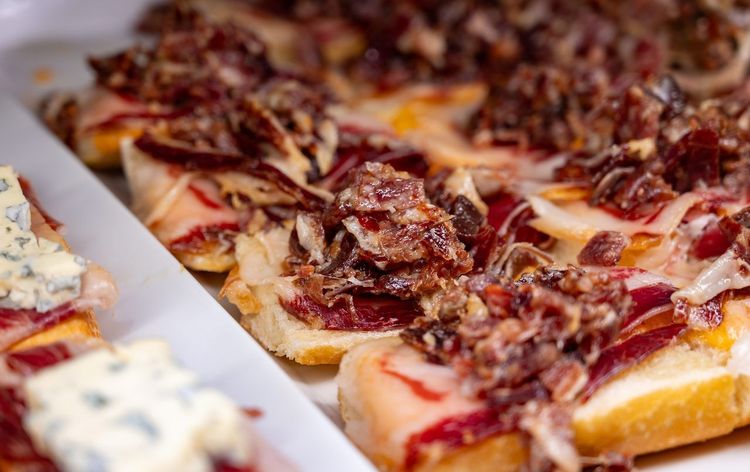
Food plays a central role in Basque celebrations, even more so during the festive season.
The Essential Pintxos of the Old Town
The Parte Vieja (Calle Fermín Calbetón, 20003 San Sebastián) has the highest density of pintxos bars in the city, with streets like Calle 31 de Agosto and Calle Fermín Calbetón where you practically hop from counter to counter. In December, some establishments add festive versions to their menu: foie gras pintxo, Iberian ham croquettes or small bites based on txangurro, the local spider crab.
Local custom dictates that you never linger beyond one or two pintxos and a glass (a txakoli, a zurito of beer) in the same bar before moving on to the next. This way you taste as many specialities as possible over one evening without breaking the bank. Late afternoons in December, between 7pm and 9pm, remain the liveliest time slots.
Cider Season and Traditional Christmas Dishes
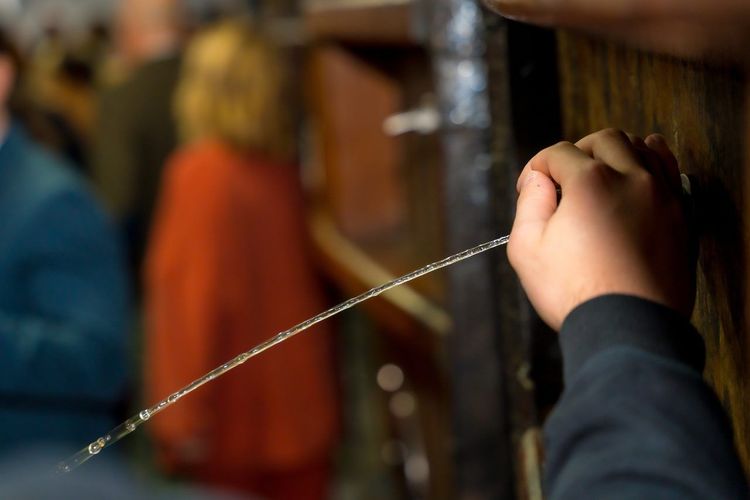
The true season of the sagardotegis — the cider houses where you drink new cider straight from the barrel to the cry of 'txotx' — does not begin until mid-January, mainly around Astigarraga and Hernani. In December, however, you will find cider in many bars in the city centre, and the Saint Thomas Fair flows with it generously.
As for the festive table, the Basque Christmas menu favours seafood (spider crab, hake, prawns) as a starter, followed by grilled red meat or stuffed poultry, before the traditional turrones and sometimes a dried-fruit compote in wine, sopa de almendras or Basque cake. If you are aiming for a well-regarded restaurant in the Parte Vieja for December 24 or 31, book several weeks in advance — many are closed on Christmas Eve.
Museums and Christmas Concerts Not to Be Missed
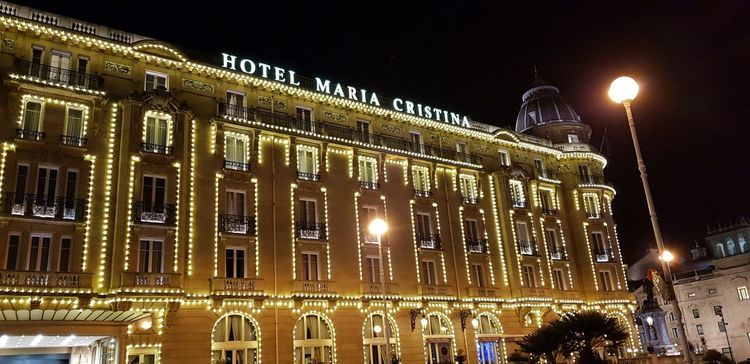
Between showers — frequent on the Basque coast in winter — a few addresses let you continue your visit under cover.
Museums to Visit on a Rainy Day
The San Telmo Museum, housed in a 16th-century former Dominican convent built against Monte Urgull, traces Basque history and culture with a modern museography that appeals equally to families and history enthusiasts. Don't miss the former convent church, whose walls are covered with the large golden canvases of Josep Maria Sert.
The Aquarium, open since 1928 at the end of the harbour, rounds out a rainy family morning with its transparent tunnel beneath the main tank. Art lovers can head further out to Chillida Leku, the museum-garden of sculptor Eduardo Chillida in Hernani, reachable by bus from the city centre.
Concerts and Shows during the Festive Season
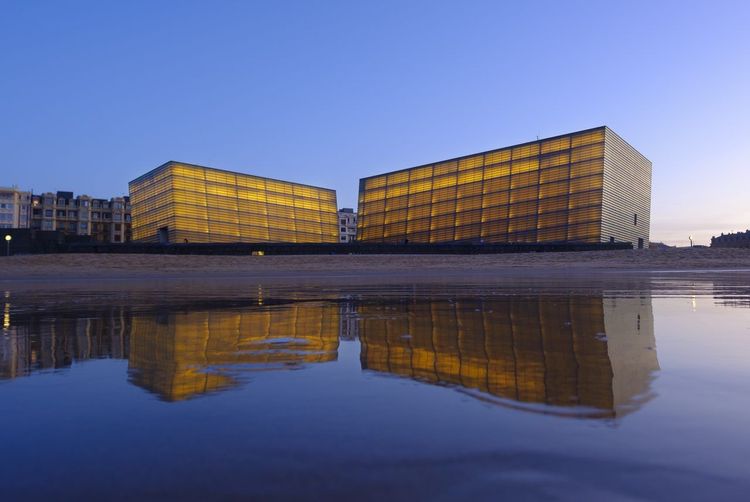
The Kursaal (Avenida Zurriola 1, 20002 San Sebastián, rated 4.4/5 on Google with 7,472 reviews) — the iconic glass-cube building designed by Rafael Moneo — typically programmes several seasonal concerts in December, ranging from classical repertoire to more popular formats suited to the festive period.
The Victoria Eugenia Theatre, near the Boulevard and the mouth of the Urumea, hosts family shows and sometimes classical ballet in December. Check the programmes before you travel: some evenings sell out several days in advance.
Practical Information: Weather, Crowds and Packing
A few logistical pointers before you zip up your suitcase.
Climate and Weather in December
The Basque climate remains oceanic and humid throughout the year, including in December: expect daytime temperatures of around 12 to 14 degrees, cooler nights between 6 and 8 degrees, and frequent rainfall — sometimes several days in a row. Clear spells do occur but are unpredictable, and the days are short: the sun sets just after 5:30pm.
Tourist Crowds and Price Levels
San Sebastian is noticeably quieter in December than in the height of summer, except around the Constitution Day bank holiday (December 6–8), the days leading up to New Year's Eve, and the Three Kings' week, when accommodation prices rise sharply. Outside these peaks, rates remain close to low-season levels, making it an attractive time to discover the city without the summer crowds.
What to Pack for a Basque Winter
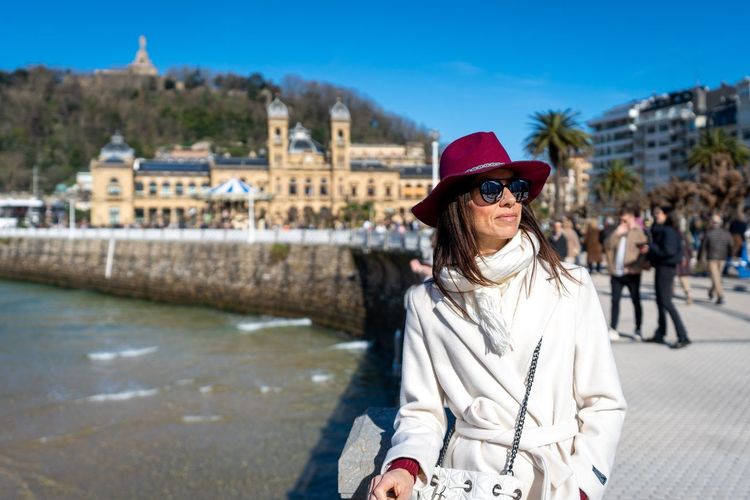
Bring a waterproof jacket rather than a simple umbrella, which is often useless against the wind that accompanies Atlantic showers. Closed, comfortable shoes are a must for walking on the sometimes slippery cobblestones of the old town, and a few layerable pieces will help you adapt to the temperature difference between the outdoors and the packed bars in the evening.
Where to Stay in San Sebastian during the Holidays
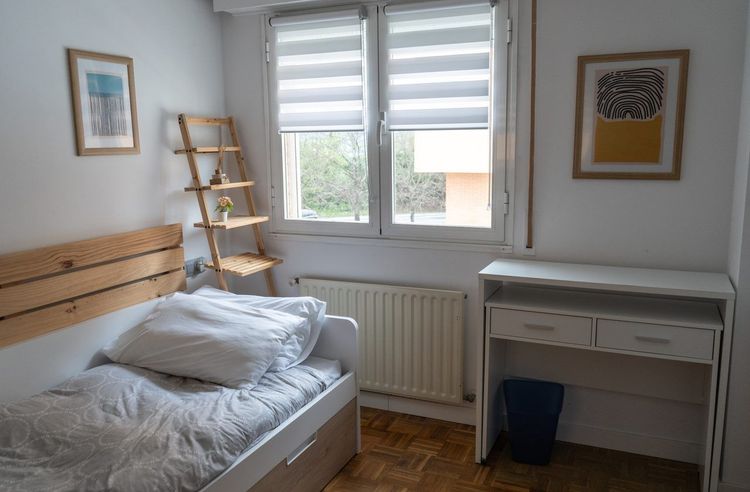
Three neighbourhoods concentrate the bulk of the accommodation offer for a Christmas stay.
The Parte Vieja — the old town — puts everything within easy walking distance: pintxos bars, the Saint Thomas Fair and the nativity scene at the Plaza de Gipuzkoa are all just minutes away. It is also the liveliest neighbourhood in the evenings, which is either an asset or a drawback depending on how sensitive you are to noise.
The Gros neighbourhood, on the other side of the Urumea, offers a more local atmosphere and generally lower prices, with the Paseo de Francia Christmas market right on the doorstep.
Finally, the Centre around the Avenida de la Libertad suits those who prioritise Christmas shopping and immediate proximity to the Alderdi Eder Ferris wheel, at the cost of slightly higher rates. Whatever you choose, book early: availability tightens quickly for the nights of December 24 and 31.
FAQ
Where is it recommended to go at Christmas in Spain?
The major cities of northern Spain, including San Sebastian, Bilbao and Vitoria-Gasteiz, offer an interesting balance between Christmas markets, gastronomy and a milder climate than the rest of continental Europe. San Sebastian stands out for the depth of its Basque traditions, such as Olentzero and the Saint Thomas Fair, which are found nowhere else in Spain.
How many days should you plan to visit San Sebastian at Christmas?
Three to four days are enough to cover the essentials: Christmas market, nativity scene, lights, Ferris wheel and an evening of pintxos. Extending your stay through New Year's Eve or Three Kings' Day allows you to experience additional events, but also drives up accommodation costs on those dates.
When does the San Sebastian Christmas market take place?
The Gabonetako Azoka market opens in late November (November 28 in the most recent edition) and closes on January 6, between the Paseo de Francia and the Plaza Ramón Labayen. Exact dates vary slightly from one edition to the next; check with the tourist office before you travel.
Is the Christmas Day swim on December 25 open to everyone?
It is not an official event with registration: a few regulars take a dip at la Concha on Christmas morning, and nothing stops you from joining them if you feel like it. Simply check sea conditions and the bathing flag before entering the water.
What is the weather like in San Sebastian in December?
The climate remains oceanic and humid, with daytime temperatures around 12 to 14 degrees and frequent rainfall. A waterproof jacket and layerable clothing are the best option, rather than a simple umbrella that is often ineffective against the wind.
Do you need to book your hotel well in advance for the holidays?
Yes, particularly for the nights of December 24 and 31, as well as for the early December bank holiday weekend. Booking two to three months in advance is wise for these dates, with more flexibility outside these peak periods.
Between the Saint Thomas rural fair, the Olentzero procession and the Christmas Day winter swim, San Sebastian packs a large part of Basque identity into just a few weeks, without ever becoming a frozen postcard. The city lends itself equally well to a short stay focused on the market and the lights or to a full programme running through the Three Kings' parade in early January.
Whatever neighbourhood you choose to stay in, the Ryo audio guide tour of San Sebastian can be started from any point in the city — a great way to connect historical landmarks and Christmas traditions along a single route, at your own pace and with no time constraints.