© Shutterstock
 Votre guide Ryo
Weekend in Dubrovnik 2026: 3-Day Itinerary Through City Walls, Islands and Beaches
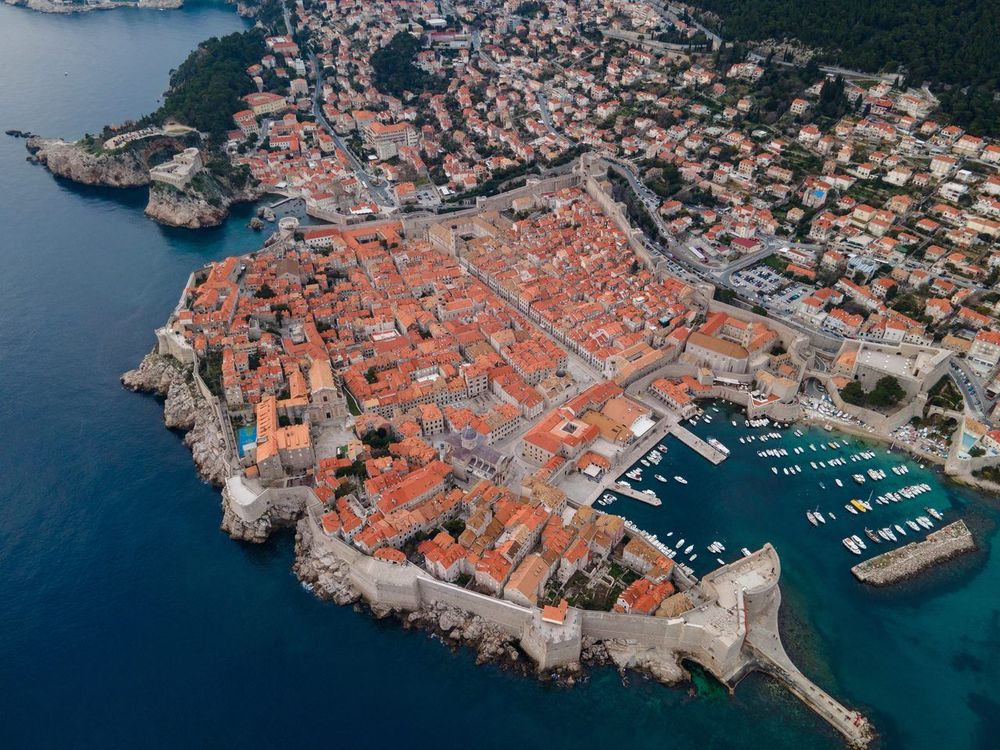
At 6:30 am, before the first cruise ships arrive, Dubrovnik's old town still belongs to the fishermen hauling in their nets near Pile Gate. This is the moment when a weekend in Dubrovnik makes the most sense: the limestone paving of the Stradun, polished by centuries of footsteps, reflects an almost white light, and the city walls are empty for nearly two kilometres. Two hours later, the same street will welcome several thousand visitors. To plan a two- to three-day stay here wisely, it is better to know this kind of detail before you leave. Our Ryo audio-guided tour of Dubrovnik was designed to connect the key sites without wasting time in the alleys.
This guide covers the essentials of a weekend in Dubrovnik: a three-day itinerary (adaptable to two), the beaches where locals actually swim, a protected island 15 minutes away by boat where peacocks roam free, the Game of Thrones sets scattered between the city walls and Fort Lovrijenac, and the practical questions that often make the difference on a short stay: where to sleep, how to get around without a car, and whether the Dubrovnik Pass is really worth it over two days.
Day 1: The Old Town, City Walls and the Stradun
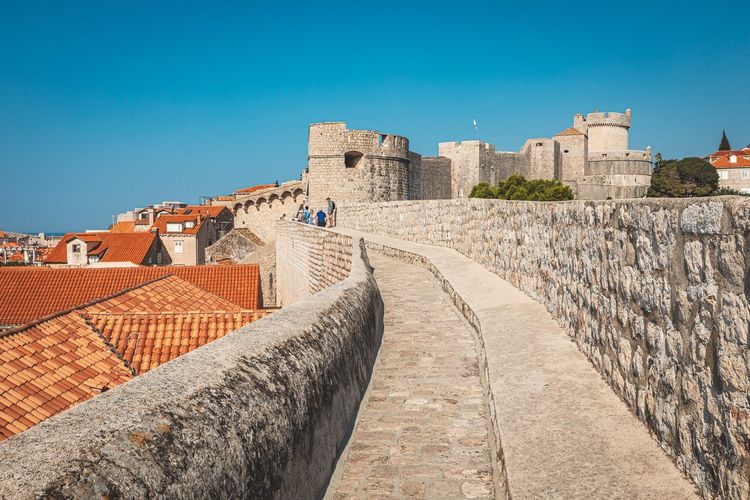
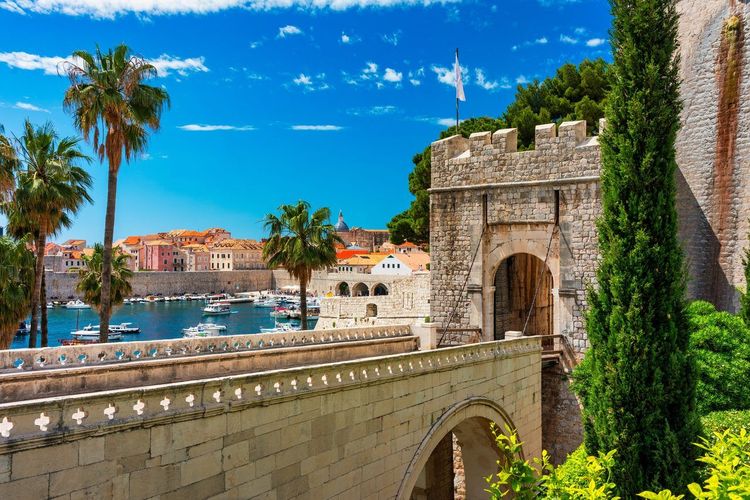
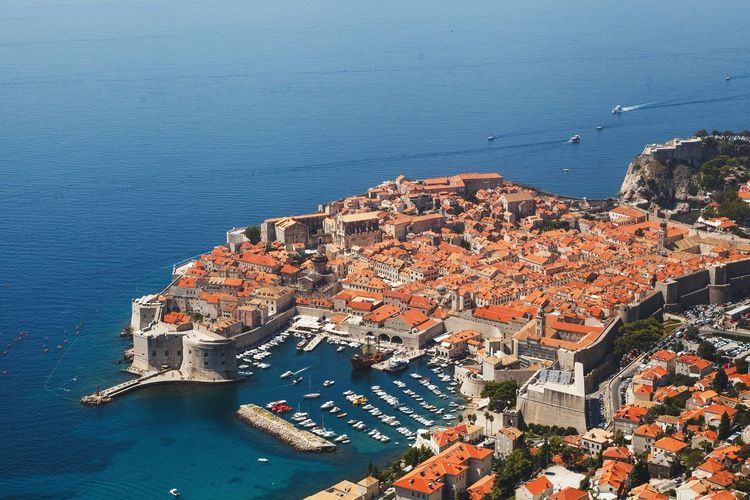
Start with the Dubrovnik city walls (Gradske zidine), and start early. The main entrance near Pile Gate opens in the morning in summer (around 8 am), and it is the only window to enjoy the circuit without getting stuck behind groups of twenty people at every viewpoint. Allow 1.5 to 2 hours for the 1,940 metres of walls, with regular photo stops over the sea on one side and the orange tiled roofs on the other, a large part of which had to be rebuilt after the siege of 1991: from the wall walk, you can easily tell the brighter new tiles from the old ones.
Dubrovnik's City Walls and the Stradun
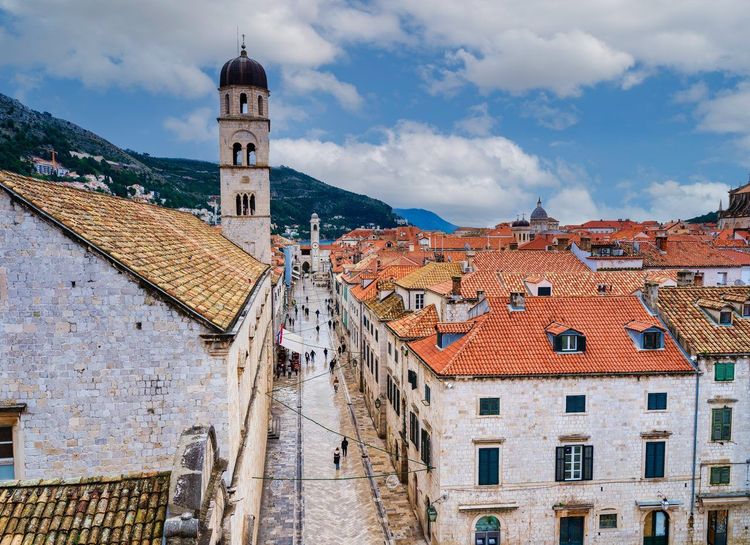
Once back down, head onto the Stradun (or Placa), the central artery paved in white limestone that crosses the old town from west to east. This is where Dubrovnik life gathers at the end of the day, when locals come out for the traditional korzo, that evening stroll where you bump into your neighbours. In the morning, the street is almost silent: the right moment to notice the Baroque façades rebuilt after the 1667 earthquake, the identical green shutters from one house to the next (an architectural rule still in force), and Onofrio's Great Fountain at the Pile end of the street, whose water has been drinkable since 1438.
If you would rather follow a thread than improvise, the Ryo audio-guided tour The Pearl of the Adriatic covers exactly this first block of sightseeing: 18 commented stops over 2.5 km, in 1 hour, linking the city walls, the Stradun and the monuments in the logical order of the walk.
Rector's Palace, Cathedral and Alleys of the Centre
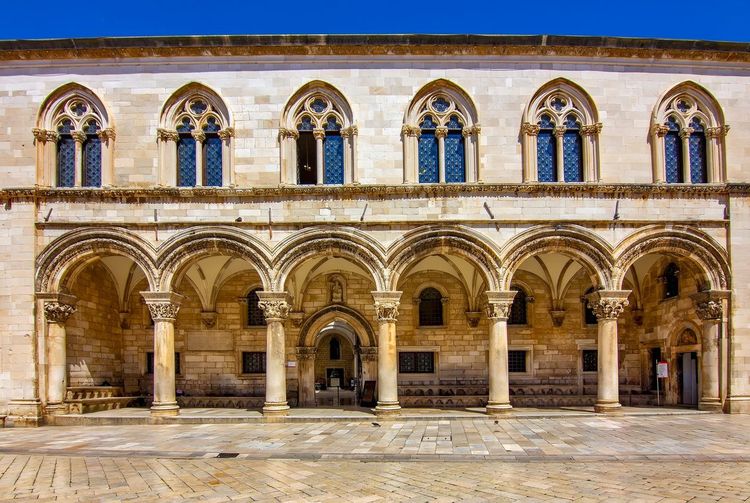
At the end of the Stradun, Luža Square opens onto the Rector's Palace, seat of power of the former Republic of Ragusa for more than four centuries. Its architecture blends Gothic and Renaissance, a compromise visible even in the inner courtyard where concerts are still held in summer. The interior, now a cultural history museum, can be visited in 30 to 40 minutes. Don't miss the portraits of the rectors: each held office for only one month, without leaving the palace, a rule introduced to prevent any concentration of power.
Right next door, the Cathedral of the Assumption houses a surprising treasury for such a small city: reliquaries of Saint Blaise, the patron saint of Dubrovnik, and a polyptych of the Assumption attributed to Titian above the high altar. Access to the nave is free, while the treasury requires a ticket. Allow 20 minutes, a little more if you linger under the Baroque dome, typical of the post-1667 reconstruction.
From the cathedral, get deliberately lost in the alleys running perpendicular to the Stradun. They climb in narrow staircases towards the northern walls, lined with laundry drying at the windows and small ceramics shops. It is one of the few places in the old town where you can still walk for five minutes without meeting anyone, even in high season.
Fort Lovrijenac and Pile Harbour
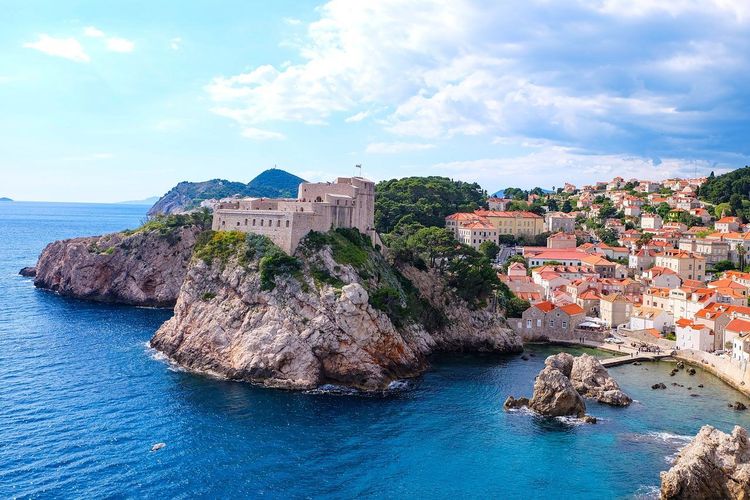
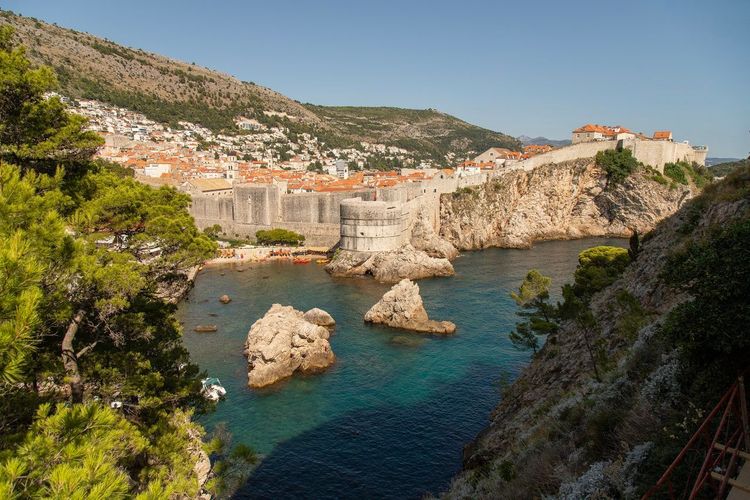
Leave through Pile Gate to reach Fort Lovrijenac, perched on a 37-metre rocky outcrop outside the walls. Nicknamed the "Gibraltar of Dubrovnik", it had its own garrison, whose commander was also replaced every month. Legend has it that the Ragusans built it in just three months, fearing the Venetians would build their own fortress there first. Above the entrance, a Latin inscription recalls the city's motto: "Liberty is not sold for all the gold in the world". Climb to the top for the view of the walls from the outside, an angle that few hurried visitors take the time to look for.
Below, the small cove of Pile Harbour is home to a few fishing boats and the departure point for several kayak trips. A good spot for a break in the shade before lunch, with a direct view of the fort.
For lunch, head to Soul Kitchen (Ispod Mira 10, 20000 Dubrovnik, rated 4.7/5 on Google from 2,805 reviews), a small bistro that focuses on local products and simple dishes (Adriatic risotto, grilled vegetables) rather than the standard tourist menu of the Stradun. You will pay noticeably less than in the establishments with terraces on the main street, for cooking that is often better.
Day 2: Lokrum Island, Beaches and Lively Evenings
The second day changes pace completely: head for the sea, first thing in the morning if you want to avoid the crush on the midday boat.
Lokrum Island and Its Nature Reserve
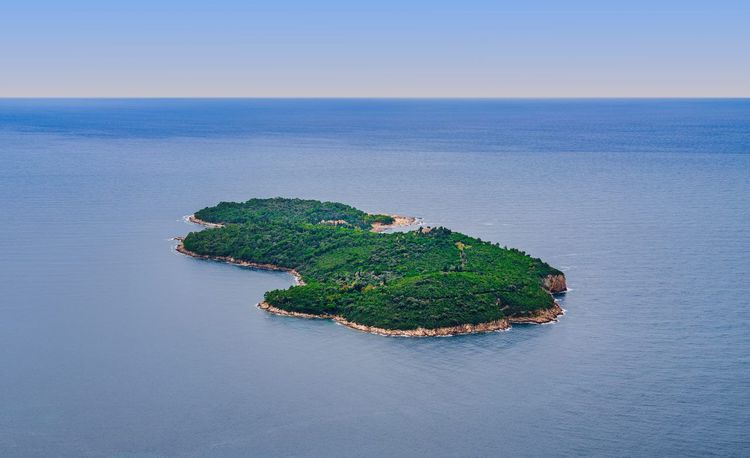
From the old port, boats leave about every 30 minutes in season for Lokrum Island, a 10-15 minute crossing. A protected nature reserve, the island is closed to overnight stays, and a local legend speaks of a curse cast by the Benedictine monks driven out in the early 19th century. The result: almost intact vegetation, pines, cypresses and olive trees, around the gardens laid out by Archduke Maximilian of Austria, who owned the island in the 1860s, and a botanical garden created later. Peacocks wander freely along the paths, descendants of those introduced at that time, and don't hesitate to approach your picnic.
In the south of the island, a small salt lake nicknamed the "Dead Sea" (Mrtvo More) allows swimming in calm water, sheltered from the Adriatic chop. Allow half a day to explore the island on foot: ruins of the Benedictine monastery, the Royal Fort at the summit, built by the French, with a panoramic view over the old town, and a few rocky coves for swimming. Remember to bring water, as refreshment points are rare and expensive.
The Ryo audio tour of Dubrovnik lasts only an hour and ends near the old port: do it first thing, and you will be at the boarding quay just in time for one of the first boats to Lokrum.
Banje and Lapad Beaches
Back on the mainland, you have two options for an afternoon at the beach. Banje Beach, just east of the old town, offers the most spectacular view: city walls and old port in the background, small pebbles, and a festive atmosphere with its beach club. It is also the most expensive and the most crowded, a stone's throw from the upscale hotels of Ploče.
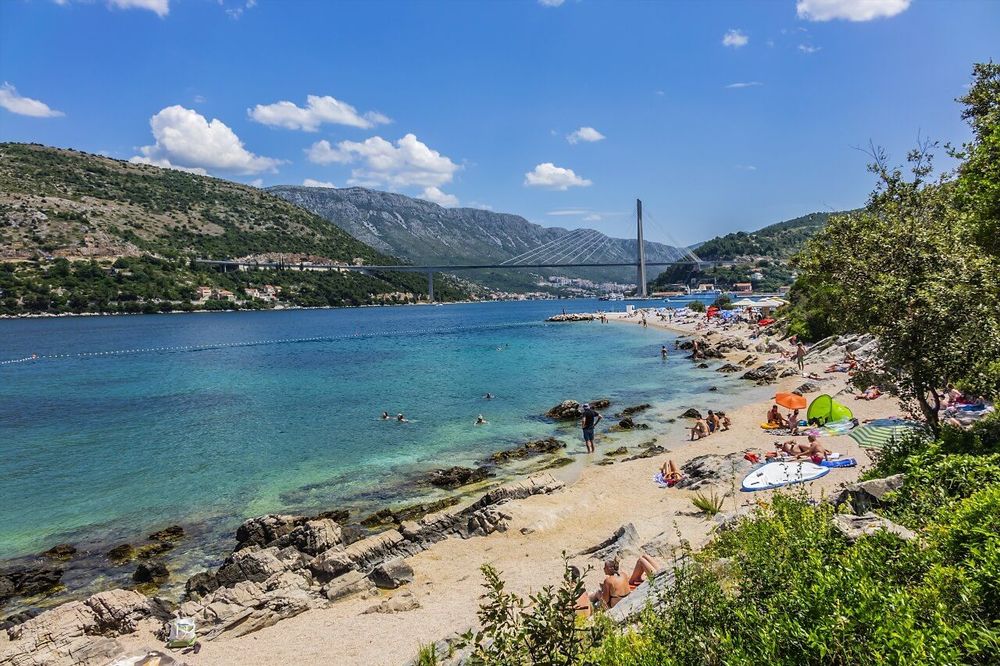
Lapad Beach, to the west, at the head of Lapad Bay, is much more family-oriented. The water deepens gently, better suited to children, and sun loungers cost noticeably less than at Banje. It is also where many Croatian families gather in summer, a good indicator if you are looking for a less touristy atmosphere. For other coves, our selection of the most beautiful beaches in Dubrovnik compares about ten options.
For lunch or dinner between the two beaches, Gradska Kavana Arsenal, set in the Republic's former arsenal, has a terrace on the old port with a view of the city walls. The place is well known: book if you are aiming for a sunset dinner.
Buža Bar and the Alleys at Night
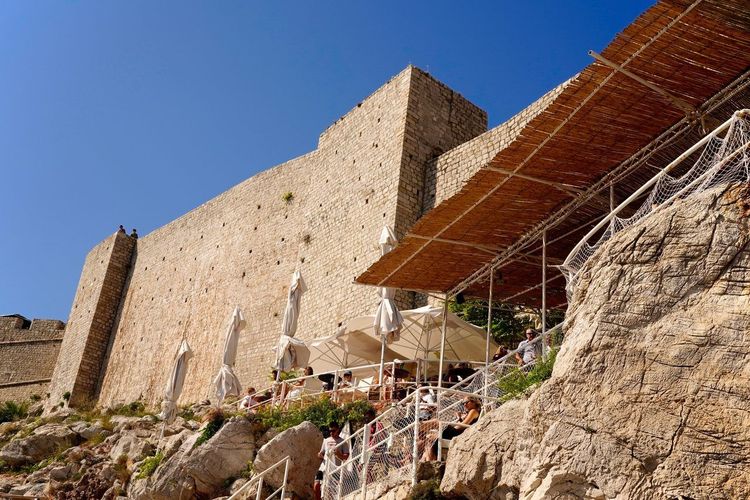
Dubrovnik changes its face at nightfall. Have a drink at Buža Bar (Ilije Sarake 7, 20000 Dubrovnik, rated 4.1/5 on Google from 3,601 reviews), literally "the hole", clinging to the rocks at the foot of the seaward walls and reached through a discreet opening marked "Cold Drinks" in the wall. The tables are set directly on the rock, a few metres above the water, and the sunset over the Adriatic from this improvised terrace is worth the trip on its own. Arrive an hour before sunset, as seats go fast.
Afterwards, head back into the alleys, this time at night. The golden glow of the street lamps on the limestone completely changes the atmosphere of the Stradun, emptied of three quarters of its day visitors. In summer, you can also watch an open-air film: Kino Jadran, an open-air cinema tucked into the old town, and Kino Slavica in Lapad screen films in the original language under the stars. July and August are also the season of the Dubrovnik Summer Festival, with theatre and concerts in the courtyards and squares.
Day 3: Mount Srđ, Panoramas and Offbeat Museums
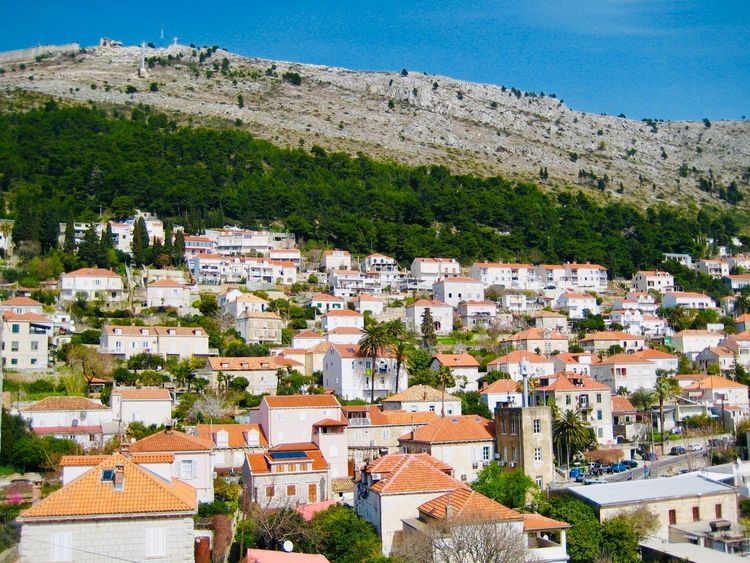
If your weekend is only two days long, this third day is the easiest to sacrifice or cut down to a half day: keep at least Mount Srđ, which sums up the essentials.
Mount Srđ and the Cable Car
The Dubrovnik cable car climbs in under four minutes to the summit of Mount Srđ, at 412 metres above sea level. The view from up there far surpasses that from the city walls: the whole old town below, the Elaphiti Islands on the horizon, and on a clear day, as far as the Montenegrin coast. Go up preferably in the late afternoon to watch the city shift from harsh light to the golden hour, then to nightfall as the first lights come on.
At the top, the Imperial Fort, built by the French between 1806 and 1812, now houses a museum dedicated to the Croatian War of Independence. This is where a handful of defenders held the position during the siege of 1991-1992, while the city was being bombarded from the neighbouring heights. One stop of the Ryo audio tour revisits precisely this episode: listen to it before going up, and the panorama takes on a whole new dimension.
Offbeat Museums: War Photo Limited and Red History Museum
Back in town, two museums that are modest in size but dense in content deserve an hour each. War Photo Limited exhibits war photography, with a permanent section devoted to the Yugoslav conflicts of the 1990s and temporary exhibitions on other conflict zones. An emotionally demanding museum, not to be visited right after a light lunch.
The Red History Museum, located outside the walls in the port district of Gruž, on the ground floor of a former factory, recreates a typical Yugoslav-era apartment and looks back at daily life under Tito. The approach is playful, almost immersive, and deliberately contrasts with the grave tone of War Photo Limited. Allow 10 minutes by bus from Pile.
If time allows, the Maritime Museum, housed in St. John's Fortress at the entrance to the old port, traces the naval history of the Republic of Ragusa, which in the 16th century had one of the largest merchant fleets in the Mediterranean. Ship models and old maps will mostly appeal to enthusiasts.
To end the day gently, a sunset kayak tour runs along the seaward walls, with a viewpoint impossible to get from land. Several operators offer guided outings of about 2 hours from Pile, often with a swimming stop in a cave or near Lokrum. In the evening, dinner at Bota Šare (Boškovićeva 10, 20000 Dubrovnik, rated 4.6/5 on Google from 1,838 reviews), a specialist in Ston oysters and seafood, rounds off this third day nicely.
Following in the Footsteps of Game of Thrones in Dubrovnik
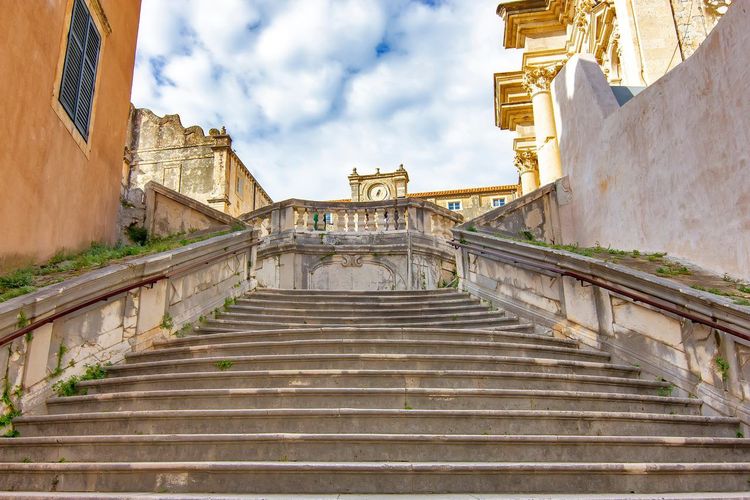
Dubrovnik served as the main setting for King's Landing in Game of Thrones, and several places you will already have passed on Day 1 are part of it. Cersei's famous walk of atonement was filmed on the Jesuit Stairs, the grand Baroque staircase leading up to St. Ignatius Church, then along the Stradun. Fort Lovrijenac lent its walls to the Red Keep, notably for Joffrey's name-day tournament, which explains the sometimes dense crowds there in high season.
Other scenes were filmed on the city walls, at the port and in Gradac Park, near Pile, where Joffrey's "Purple Wedding" banquet was shot. Several stops on the Ryo audio-guided tour tell these filming anecdotes at the foot of the very same walls, with no need to book a separate themed tour. To go further, our dedicated article on the Game of Thrones filming locations in Dubrovnik details each location with the corresponding scenes.
There is therefore no need to devote an entire half day to this theme on a short weekend: it naturally overlaps with the Day 1 itinerary.
Where to Stay in Dubrovnik: Old Town, Lapad or Ploče
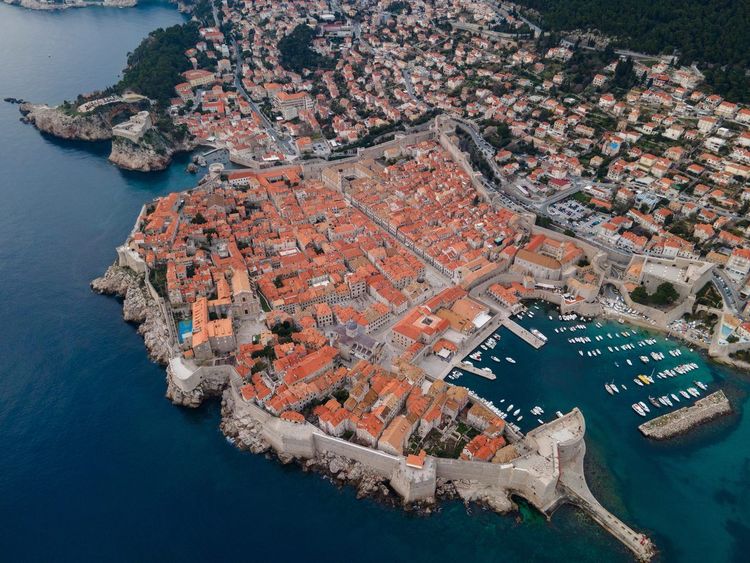
The choice of neighbourhood radically changes the experience of a two- or three-day stay, much more than in most European cities of this size.
Sleeping Inside the Old Town Walls
Staying within the walls means waking up a few steps from the Stradun and tackling the city walls as soon as they open. It is also the most expensive option, often double the rate charged in Lapad for a comparable room, and the offer consists mostly of private apartments and small guesthouse rooms rather than traditional hotels, for lack of space. Be prepared to carry your luggage over cobblestones and stairs: no cars enter the walls.
Lapad and Babin Kuk, the Seaside District
The Lapad district, about 10 minutes by bus from Pile Gate, concentrates most of the family-friendly hotel offer and more reasonable prices. It is also the most practical area if you plan to enjoy the beaches several afternoons in a row, with Babin Kuk just to the north, more residential and even quieter.
Finally, Ploče, east of the old town, just past Banje Beach, mainly gathers upscale hotels with sea views, within walking distance of the city walls but away from the bustle of the centre. Whichever neighbourhood you choose, take a look at the route of the Ryo audio-guided tour of Dubrovnik before booking: the closer you stay to Pile Gate, the less time you will lose each morning.
How to Get to and Around Dubrovnik

The Dubrovnik airport (Dobrota 24, 20213 Čilipi, rated 3.9/5 on Google from 6,740 reviews) is in Čilipi, about 20 km southeast of the city, a 25 to 30 minute drive. Direct flights connect Paris, Lyon, Nantes or Marseille in season, in a little over two hours. Platanus shuttles run in coordination with arrivals, for around ten euros one way. A taxi costs noticeably more, but remains the most direct solution late at night.
Once there, the old town can only be visited on foot: no cars circulate there, and that's all the better for the stroll. To reach Lapad, Gruž or the bus station, the Libertas city bus network is reliable and frequent, with tickets cheaper at kiosks than from the driver.
If you plan a trip to Kotor or the Pelješac peninsula outside organised tours, renting a car in Dubrovnik becomes worthwhile. Several agencies are grouped at the airport and in Lapad; book in advance in high season, as availability dries up quickly in July-August. For the old town and the beaches, however, a car is useless, even counterproductive given the scarce and expensive parking around Pile.
The Dubrovnik Pass: Price, Benefits and Best Tip
The Dubrovnik Pass includes entry to the city walls (the heaviest expense of the visit), access to several museums in the city (Rector's Palace, Maritime Museum, among others) and Libertas bus rides during its validity period. It comes in 1-, 3- or 7-day versions, with decreasing rates, and can be bought online or at the walls' ticket offices.
For a 2-3 day weekend, the calculation is simple: if you plan to do the city walls and at least two included museums, the pass pays for itself, since the walls ticket alone accounts for most of its price. If your plans focus on Lokrum, the beaches and Mount Srđ (not included), buying tickets individually often remains more advantageous. Check the exact list of covered sites before deciding, as it changes from one season to the next.
What Is the Best Time for a Weekend in Dubrovnik?
July and August offer the heat and the most pleasant sea, but also maximum crowds: city walls packed from 9 am, accommodation at its peak, and several cruise ships unloading their passengers into the old town at the same time. On a short stay, this density can easily cost you a third of your sightseeing time in queues. Check the cruise call schedule before fixing your dates: some weekdays are much quieter than others.
May-June and September-October make the best compromise: water still comfortable (especially in June and September), softer light for photos, much cheaper accommodation, and city walls you can walk without elbowing your way through. Winter, finally, transforms the mood: the city empties almost completely and some restaurants close, but the silent Stradun under a low sun and the Feast of Saint Blaise, every 3 February, offer a version of Dubrovnik that few visitors know.
Budget for a Weekend in Dubrovnik
For two people over three days, it is better to think in orders of magnitude, as seasonal differences are so marked. A return flight from France ranges from about €80 in low season to more than €300 in midsummer. Accommodation is generally the biggest expense: from €60-80 a night for an apartment in Lapad out of season to more than €200 for a place within the walls in summer.
For meals, expect €15-25 per person for a simple lunch, more for Stradun terraces or places with sea views. The city walls cost about €40 per adult (the Dubrovnik Pass can lighten this expense), and a kayak trip or the return boat to Lokrum, entrance fee included, add €20 to €40 per person. In total, a comfortable weekend for two comes to around €500 to €700 excluding flights, more in the height of summer.
Excursions and Islands Around Dubrovnik
If your stay stretches to three full days or you push back your departure by a day, several excursions are worth the detour.
The Elaphiti Islands and Lopud
The Elaphiti archipelago, just northwest of Dubrovnik, comprises a handful of almost car-free islands where time seems to have stopped. Lopud is the most accessible for a day trip, with its Šunj beach, one of the few sandy beaches in the region, on a mostly rocky coast. Boats departing from Gruž or the old port let you combine Koločep, Lopud and Šipan over a full day, lunch often included.
Excursions to Kotor, Mostar or Split
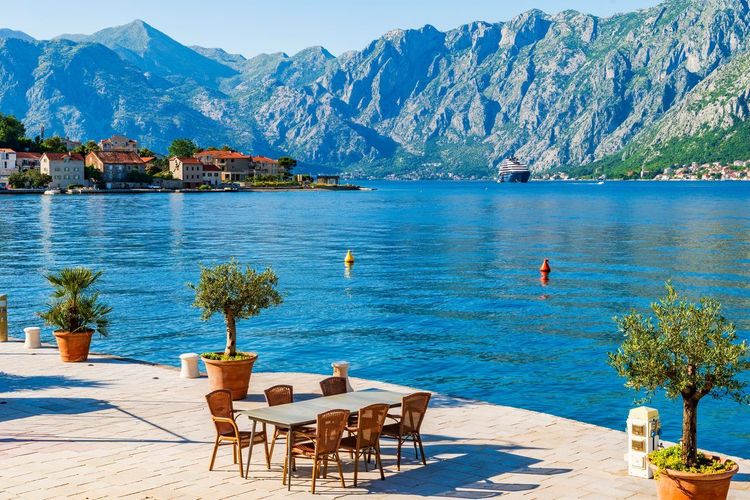
Kotor, in Montenegro, can be visited as a day trip from Dubrovnik: about 2 hours' drive each way, not counting waiting time at the border, for a UNESCO-listed bay often compared to a fjord, with its fortified old town clinging to the mountain. Our article what to do in Kotor details an itinerary for the day.
Mostar, in Bosnia and Herzegovina, is farther away (about 3 hours' drive) but remains feasible as a long excursion, to see the famous Ottoman bridge destroyed in 1993 and rebuilt identically in 2004. Better to save this option for a stay of four days or more, otherwise you will spend more time on the bus than sightseeing.
Finally, if your Croatian itinerary doesn't stop at Dubrovnik, the article weekend in Split lets you compare the two cities before choosing, or combine them. For the full range of day-trip options, our guide what to visit around Dubrovnik remains the most complete reference.



FAQ
Is Dubrovnik worth visiting?
Yes, and its reputation as an overcrowded city should not hide its real richness: almost intact city walls, dense Baroque architecture, and an exceptional seaside setting. The key is to schedule your visits early in the morning or late in the day to avoid the crowds that come with the cruise ships.
What is the best time to go to Dubrovnik?
May-June and September-October offer the best compromise between pleasant weather, swimmable sea and reasonable crowds. July-August remains the hottest choice, but also the most crowded and the most expensive.
How many days do you need to visit Dubrovnik?
Two full days are enough to cover the old town, the city walls and Lokrum. A third day lets you add Mount Srđ, the museums and a trip to Kotor or the Elaphiti Islands without rushing.
Which is better, Split or Dubrovnik?
Dubrovnik offers more spectacular city walls and a more uniform old town, at the price of heavier crowds and higher prices. Split, larger and livelier day to day, suits a stay that mixes local life and heritage, with easier access to Dalmatian islands such as Hvar or Brač.
Should you buy the Dubrovnik Pass?
It depends on your plans: if you intend to visit the city walls and at least two of the included museums, the pass pays for itself. If your plans are limited to the beaches, Lokrum and Mount Srđ, which are not covered, buying tickets individually is often cheaper.
Where were the Game of Thrones scenes filmed in Dubrovnik?
Mainly on the Jesuit Stairs and the Stradun (Cersei's walk of atonement), at Fort Lovrijenac (the Red Keep), on the city walls and in Gradac Park. Several alleys in the centre were also used for secondary scenes.
A weekend in Dubrovnik fits comfortably into two intense days, or three if you want to breathe a little more and go as far as Mount Srđ or Kotor. The main thing is not to model your schedule on that of the cruise ships: rise early for the walls, spend the afternoon on the water or on Lokrum, and spend the evening in alleys emptied of their crowds. To link these stops at your own pace, headphones on and without relying on a group guide, start the Ryo audio guide to Dubrovnik right from Pile Gate.