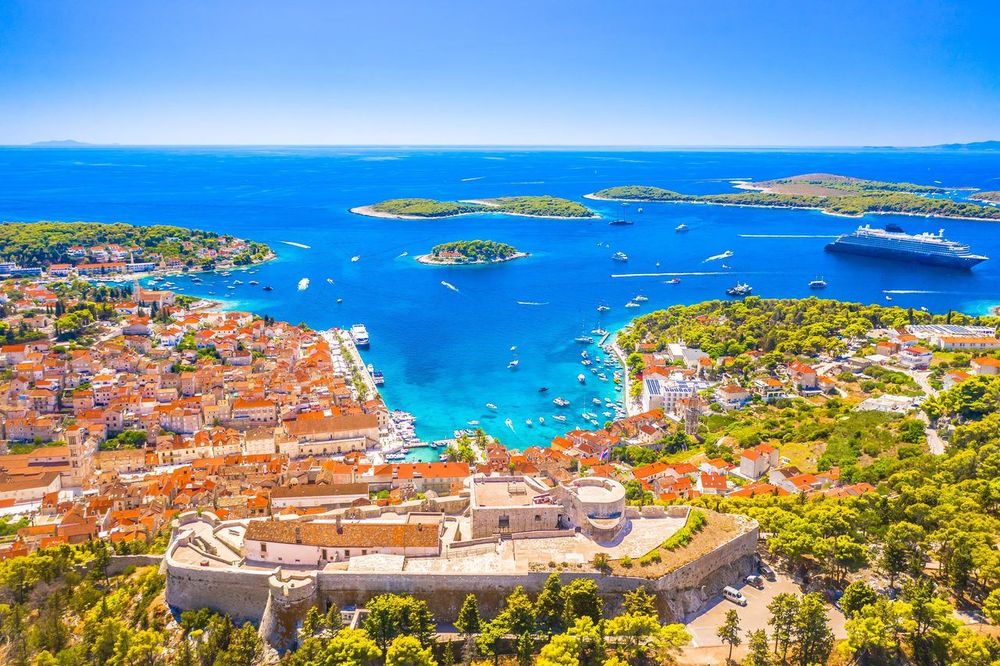
© Shutterstock
 Votre guide Ryo
What to Do in Split in 2026: 24 Experiences Between a Roman Palace and the Adriatic
In Split, it's not unusual to pass a bride posing in front of 1,700-year-old columns while a fruit vendor sets up his stall three meters away. Knowing what to do in Split starts with embracing this deliberate disorder: the city was literally built inside a Roman palace — that of Emperor Diocletian — and this cohabitation between antiquity and everyday Croatian life gives it a texture no other Adriatic destination quite possesses. The Ryo audio-guided tour of Split is precisely designed to decode this layered history street by street, without depending on a human guide's schedule.
Here you will find 24 experiences that make up the city today: a cathedral housed in the former mausoleum of the emperor who persecuted Christians, a wooded hill where locals dive off the rocks ten minutes from the city center, a fortress that served as the set for Meereen in Game of Thrones, and islands reachable in under an hour by catamaran. There is also a shell-shaped beach where a locally invented sport, picigin, has been played for over a century. Enough to fill a one-day stopover or a full week, with or without a car.
1. Diocletian's Palace
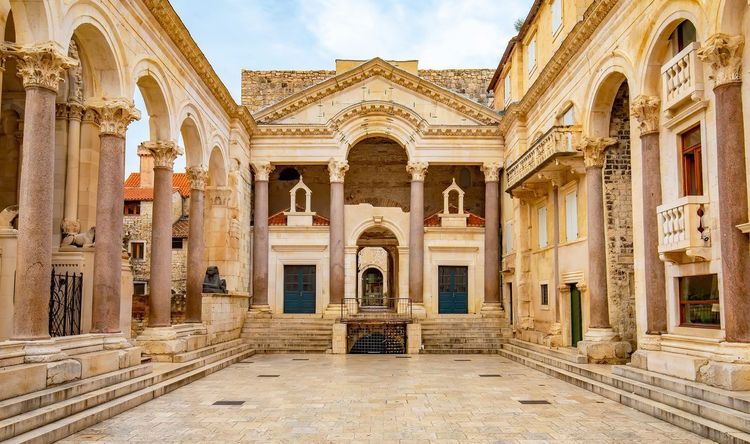
Built around 295 to 305 AD as a retirement residence for the Roman Emperor Diocletian, Diocletian's Palace (Dioklecijanova ulica, 21000 Split, rated 4.7/5 on Google with 91,430 reviews) is not a monument you visit from the outside and then leave: it is an entire neighborhood, continuously inhabited for seventeen centuries, where several thousand people still live today within ancient walls. The proportions are staggering once you know them: approximately 215 meters for the east and west walls, 175 meters to the north, 181 meters to the south — a built area of more than 3.8 hectares, inscribed on the UNESCO World Heritage List since 1979.
What strikes visitors most is the absence of any boundary between the monument and ordinary life. A bar occupies a former guardroom, a leather goods shop has set up in a vaulted alcove, and residents hang their laundry from a window that once looked out over the imperial apartments. You can enter through the Golden Gate to the north (Porta Aurea), the gate through which the emperor returned from his military campaigns, or through the Bronze Gate on the sea side, which led directly to Diocletian's private apartments. Allow at least two hours for a first visit, not counting the adjacent sites covered later in this article: the cathedral, the Peristyle, and the cellars are all part of the same complex.
One practical tip worth repeating: come early in the morning, before 9 a.m., to photograph the Peristyle without the crowds of organized groups that arrive by bus from 10 a.m. onward. The raking light on the white Brač marble — quarried on the nearby island and transported by boat two millennia ago — changes completely depending on the time of day.
2. Cathedral of Saint Domnius and Its Bell Tower
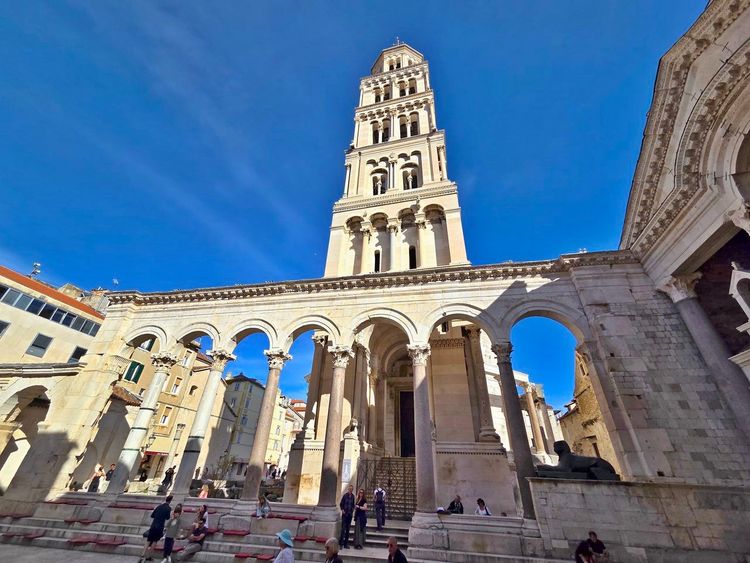
The historical irony is delicious: the Cathedral of Saint Domnius (Kraj Svetog Duje 5, 21000 Split, rated 4.6/5 on Google with 7,483 reviews) occupies the former mausoleum that Diocletian had built for himself — the very emperor remembered as one of the most ruthless persecutors of Christians in the Roman Empire. A few centuries after his death, his tomb was converted into a Christian place of worship, making it the oldest Catholic cathedral in the world still in use in its original building.
The octagonal interior preserves a sculpted frieze depicting Diocletian and his wife, as well as 13th-century Gothic furnishings added long after the site's conversion. The real draw, however, lies outside: the Romanesque bell tower, added in the Middle Ages and rising to 57 meters, is climbed via a rather steep spiral metal staircase that discourages less determined visitors. The ascent takes about ten minutes and opens onto a 360-degree panorama over the tiled rooftops, the port, and the Marjan hill in the background.
You can explore this entire complex, along with the rest of the historic center, through the Ryo audio-guided tour Between Marble and the Mediterranean, a themed walk centered on the coexistence of Roman stone and Croatian culture. Look for a combined ticket covering the cathedral, the bell tower, and the crypts: it works out cheaper than three separate admissions and saves you from repeated queuing at each ticket window. A useful note if you are traveling with young children or have a fear of heights: the bell tower steps are open-riser, meaning you can see the drop beneath your feet, and the descent uses the same narrow staircase as the climb.
3. The Peristyle and the Palace Vestibule
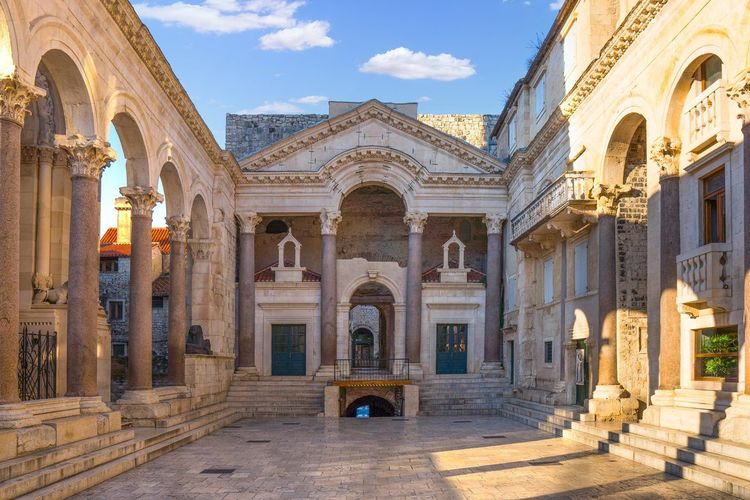
The Peristyle (Peristil, 21000 Split, rated 4.7/5 on Google with 156 reviews) is the monumental courtyard that served as the antechamber to the imperial apartments, flanked by Corinthian columns and two black granite Egyptian sphinxes brought from Egypt in the 3rd century. One of the two lost its head over the centuries; the other still stands intact facing the entrance to the cathedral.
In the evenings, costumed actors dressed as Roman legionaries and as Diocletian himself pose with tourists for a few euros — Croatia adopted the euro on 1 January 2023 and the kuna is no longer legal tender, so bear that in mind before exchanging currency. It's a knowing piece of theater that tends to amuse rather than annoy. Just behind stands the vestibule, an open-roofed rotunda whose natural acoustics attract, on some summer evenings, klapa singers — traditional Dalmatian a cappella vocal groups. If you come across one, stop and listen: the reverberation beneath the dome gives these voices a depth that no concert hall can replicate.
4. Diocletian's Cellars
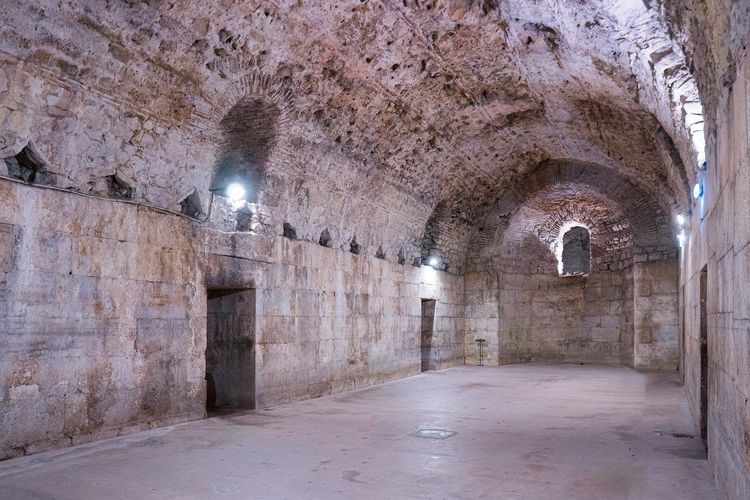
Beneath the palace stretch the cellars — vast vaulted halls that once served as storage rooms and foundations for the emperor's residential wing, now emptied out and open to visitors.
Their recent fame owes much to Game of Thrones: these galleries served as the dungeons where Daenerys kept her dragons in season 4. Fans will easily recognize the columns and arches, identical to those on screen. Beyond the TV reference, the visit is worthwhile in its own right for understanding Roman engineering: the floor plan of the cellars mirrors exactly that of the apartments above, which has allowed archaeologists to virtually reconstruct the rooms that have since disappeared at surface level.
One detail few visitors notice: these cellars remained filled with rubble and refuse for centuries, which paradoxically preserved them, and their systematic excavation only began in earnest in the 20th century. Part of the space is still freely accessible — the covered passage lined with souvenir shops running between the Riva and the Peristyle; only the large lateral halls require a paid ticket. The temperature down here drops noticeably below that of the street outside, making it a welcome refuge in the middle of an August afternoon when the marble of the Peristyle radiates heat like an oven.
5. The Riva Promenade
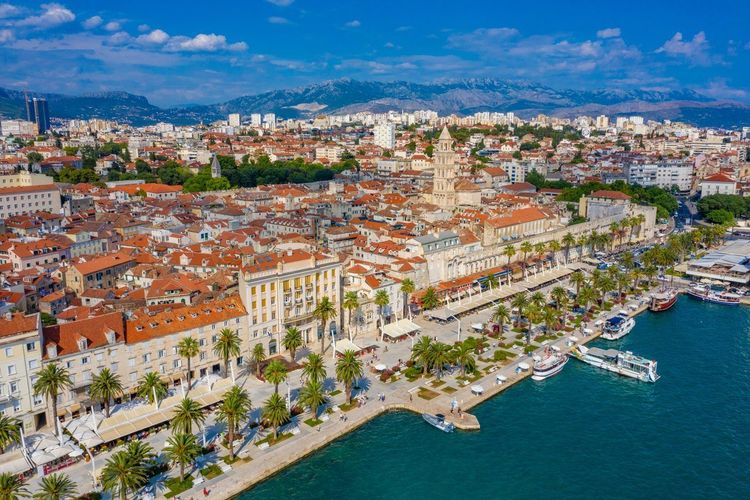
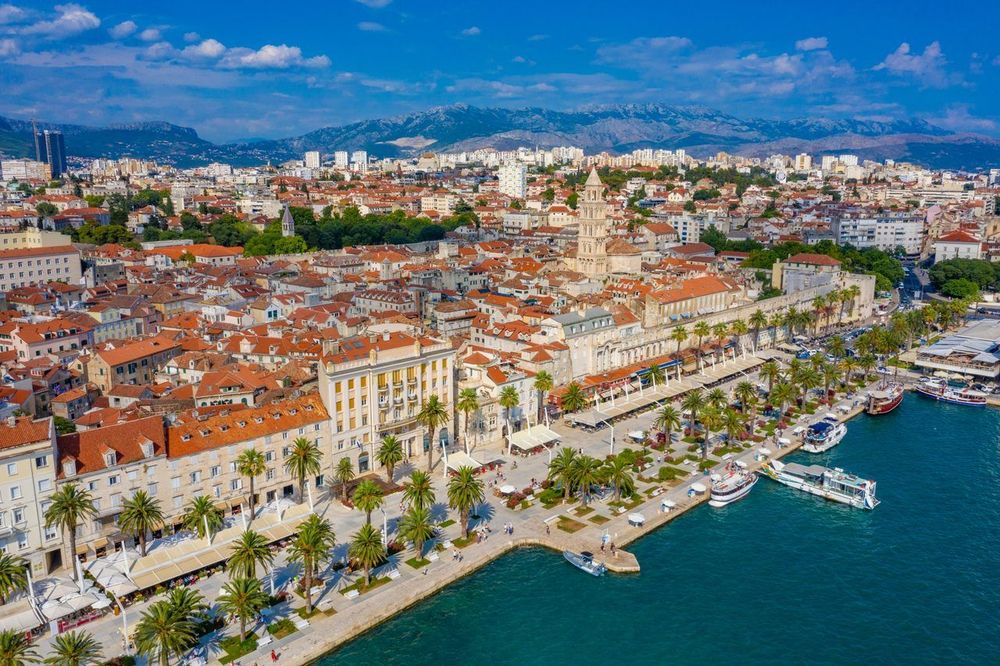
The Riva is the palm-lined waterfront that runs along the southern side of the palace, and the natural gathering point for all social life in Split, from morning coffee to evening aperitivo.
The promenade runs along the southern palace wall for some 250 meters, extending on one side toward the ferry port and on the other toward Bačvice bay, with a direct view of the boats that depart daily for the islands of Brač, Hvar, and Vis. The café terraces lining it charge higher prices than elsewhere in the city — a premium willingly paid for the view and the constant buzz of activity. In the late afternoon, when the sun dips behind the masts of the sailboats moored in the harbor, the golden light on the Austro-Hungarian façades makes the Riva one of the best spots in the city to watch the sunset without leaving your chair. On summer evenings, craft markets sometimes set up along the promenade, selling jewelry, olive oil, and lavender from the Dalmatian hinterland.
If you can only remember one landmark to orient yourself in Split, make it this one: the entire historic center radiates outward from the Riva, just a few minutes' walk in any direction.
6. People's Square (Narodni Trg)
The People's Square, or Narodni trg (Narodni trg, 21000 Split, rated 4.5/5 on Google with 2K reviews), took over from the Peristyle as the city's administrative center as early as the Middle Ages, when the population began to spill beyond the palace walls.
The 15th-century Gothic town hall, recognizable by its pointed arch arcades, still borders the square and now houses an exhibition space. You will find here a concentration of cafés and restaurants that are less touristy than those on the Riva, with noticeably more reasonable prices for a coffee or a glass of local wine. On some mornings, a small flower market sets up in the square, giving it the feel of a provincial daily scene, far removed from the bustle of the nearby waterfront.
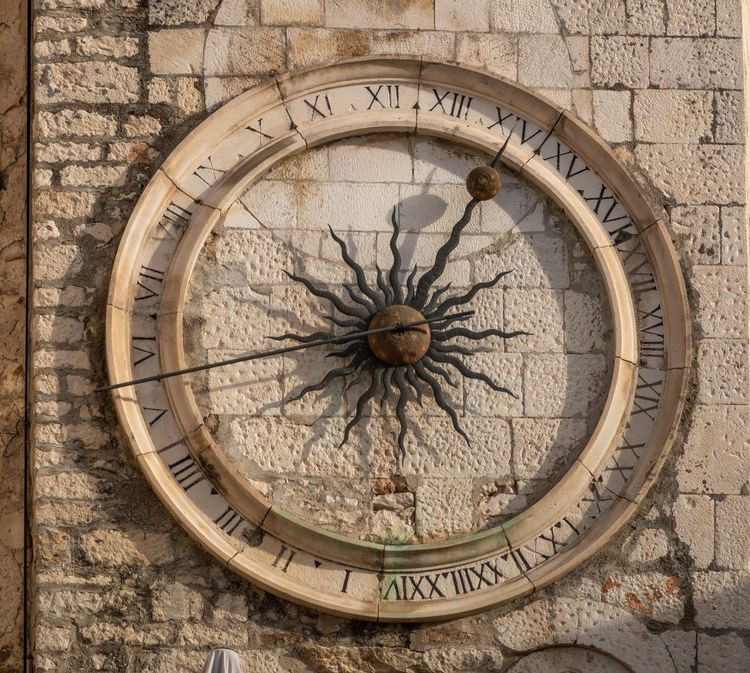
Look up at the north façade of the square: an old stone clock displaying a 24-hour dial marks time there, a Venetian legacy that has become one of the locals' favorite meeting spots — people arrange to meet "under the clock" the way others might say "in front of the town hall." The neighboring square of Braće Radić, which everyone calls Voćni trg, the "fruit square," extends the walk thirty seconds away, with its octagonal Venetian tower and the statue of Marko Marulić by Ivan Meštrović, the sculptor whose gallery appears later in this list.
7. Pazar Green Market
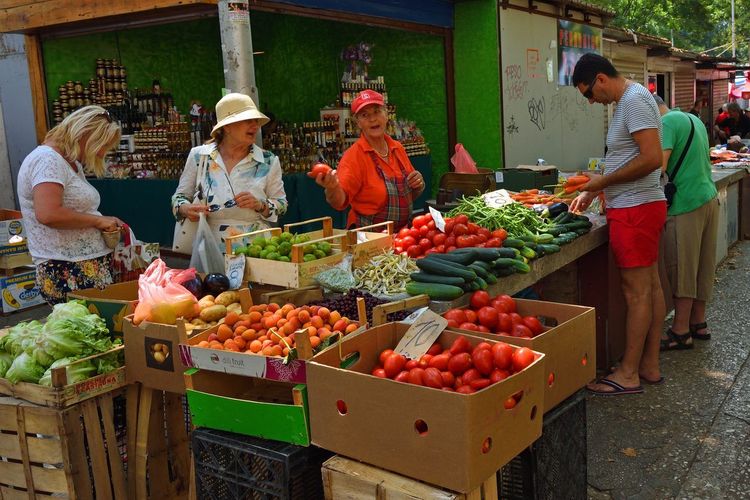
The Pazar market (Obala kneza Domagoja, 21000 Split, rated 4.4/5 on Google with 3,352 reviews) stretches just behind the Silver Gate on the palace's eastern side, and has sold fruit, vegetables, and produce from the Croatian hinterland from open-air stalls for generations.
You will find dried lavender, artisan olive oil, and fresh figs in summer, sold directly by producers from the island of Šolta or the Kaštela countryside. It is a lively, unstaged place where prices are sometimes quietly negotiated in Croatian. Come early, before 10 a.m.: the best produce goes first, and the early-morning atmosphere, with vendors calling out to one another across the stalls, is worth the trip in itself.
Its counterpart on the western side of the center also deserves five minutes of your time: the Ribarnica, the fish market, occupies an early 20th-century pavilion where the day's catch — sea bream, sardines, and octopus included — is sold every morning. A local curiosity worth noting: you'll see almost no flies there, a phenomenon locals attribute to nearby sulfurous springs whose particular smell supposedly keeps insects away. Even if you buy nothing, the place gives a quick lesson in what Dalmatians actually put on their plates.
8. The Veli Varoš Neighborhood
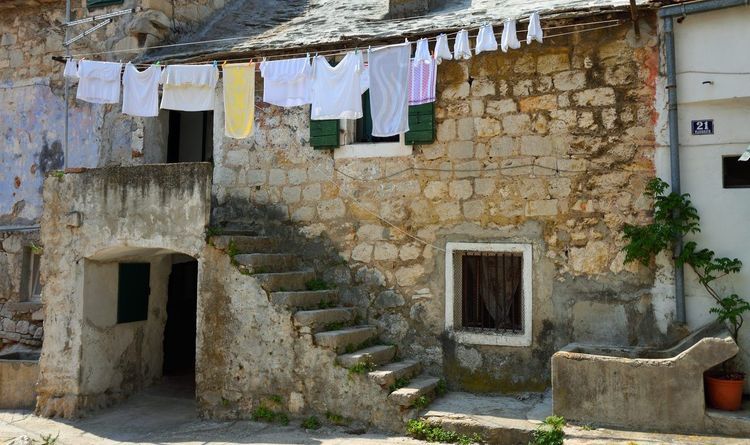
Veli Varoš is the old fishing neighborhood that spreads at the foot of the Marjan hill on the western side of the historic center, with its sloping cobbled lanes and white stone houses with colorful shutters.
Unlike the Roman center, this district dates from the Middle Ages and the Venetian period, when Split's population began to spread outside the palace walls for lack of space. The lanes here are so narrow that two people can barely pass each other, and many still bear the names of vanished trades, such as the street of the Tanners or the street of the Cobblers. The charm of Veli Varoš lies in its preserved authenticity: laundry strung between façades, cats dozing on doorsteps, the scent of a fig tree spilling over a garden wall.
You will encounter fewer tourists here than at the Peristyle, but more locals going about their daily lives. A walk without a fixed itinerary, letting the staircases that climb toward Marjan lead the way, remains the best way to absorb the atmosphere. Allow a good hour to wander through, camera at the ready: every lane offers a different frame of white stone and Mediterranean greenery spilling over low walls.
9. Marjan Hill and Its Nature Park
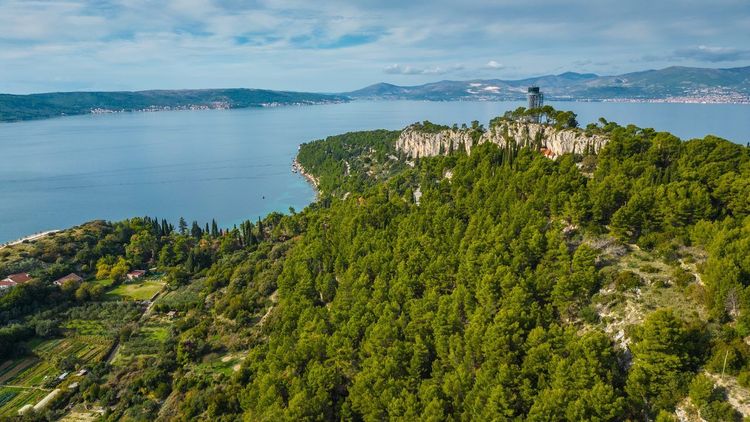
Nicknamed "the green lung of Split" by locals, Marjan hill rises to 178 meters and covers nearly 340 hectares of pine forest right above Veli Varoš, fifteen minutes on foot from the historic center.
A network of marked trails winds through the pines, passing several small medieval chapels carved into the rock, including the 15th-century hermitage of Saint Jerome. Split residents come up here in the evenings to run, cycle, or simply escape the heat of the city center in summer, when the paved streets of the palace can become stifling. The Ryo app highlights several viewpoints along the audio-guided route, useful for not missing the best panoramas without constantly consulting a paper map.
The most photographed viewpoint is at the Telegrin belvedere, from which the view takes in the historic center, the port, the islands of Čiovo and Šolta, and on a clear day, the distant outline of the island of Brač. On the southern slope of the hill, several small rocky coves allow for a swim in turquoise water, far from the crowded sandy beaches; locals head there after work, towel over the shoulder, unconcerned with mass tourism, which concentrates mostly on the Riva. Wear proper shoes: some paths climb steeply, and the pine shade does not reliably cover the entire route at midday.
One last detail worth noting for itinerary planning: the full loop of the park, including the summit, takes about three hours at a leisurely pace, but a simple walk up to the first viewpoint gives you a good sense of the place in forty-five minutes. The classic approach goes via the staircase from Veli Varoš, emerging at the terrace of the Vidilica café halfway up, where many stop for a drink before continuing. If the uphill walk puts you off in the heat, a city bus connects the center to the western tip of the peninsula near Bene beach: you descend the hill rather than climbing it, which changes a July afternoon entirely.
10. The Ivan Meštrović Gallery
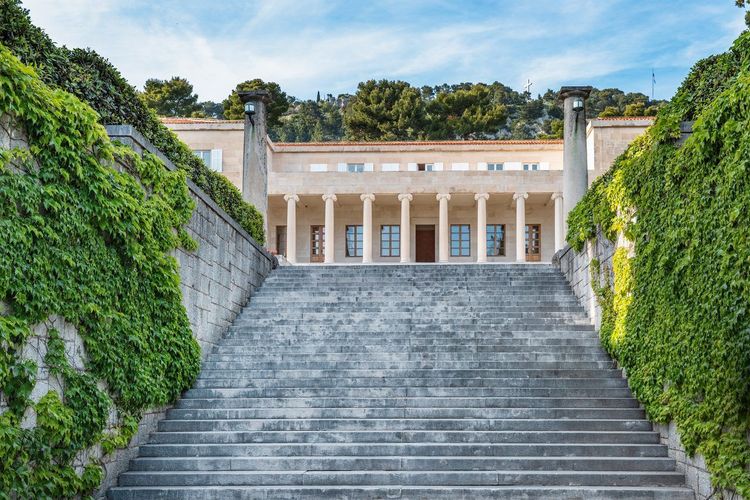
The Ivan Meštrović Gallery (Šetalište Ivana Meštrovića 46, 21000 Split, rated 4.7/5 on Google with 1,443 reviews) occupies the former villa that the most celebrated Croatian sculptor of the 20th century had built between 1931 and 1939 as his home and studio, on the Marjan peninsula.
The building itself, designed by Meštrović, is worth the visit as much as the works it houses: columns, sea-facing terraces, and a sculpture garden compose a coherent whole conceived by its creator as a total work of art. You will see dozens of monumental bronzes and marbles, including several preparatory studies for works displayed elsewhere in the world, notably in the United States where Meštrović spent the end of his life. The ticket also grants access, a few hundred meters away, to the Kaštilac, a private chapel that the sculptor decorated entirely with bas-reliefs depicting the life of Christ.
The walk from the Riva takes about twenty minutes along the seafront on the Meštrović promenade, or a few minutes by bus if you plan to follow up with a swim at Kašjuni just below. Allow at least an hour on site: the most striking part is often not the villa itself but the Kaštilac, where the carved wooden panels, worked on over several decades, read like a religious narrative chiseled by hand.
11. Split Archaeological Museum
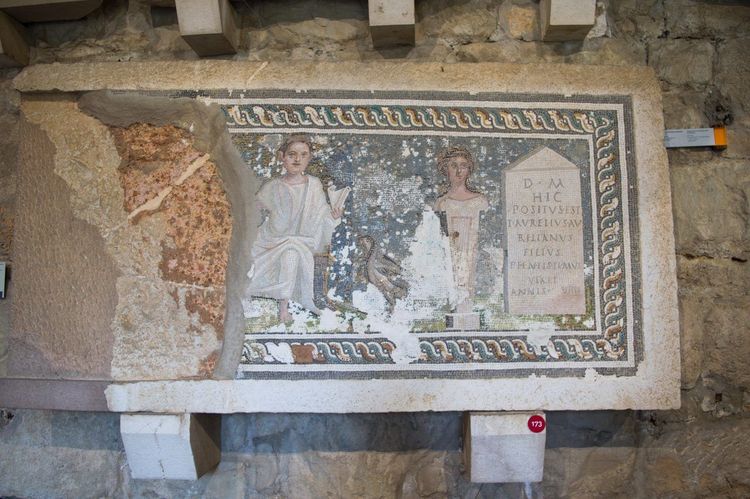
Founded in 1820, the Split Archaeological Museum (Zrinsko-Frankopanska 25, 21000 Split, rated 4.3/5 on Google with 1,062 reviews) is the oldest museum in Croatia and holds one of the richest collections of Roman and Greek antiquities in the Adriatic region.
The galleries trace the history of Salona, the former Roman capital of the province of Dalmatia, whose ruins can be visited today at Solin, about ten kilometers from Split. Sculpted sarcophagi, mosaics, and everyday Roman objects are displayed in a clear chronological order, with a few panels in English alongside Croatian. The outdoor garden, where funerary steles stand in a row beneath the pines, can be visited free of charge even without a ticket for the interior galleries.
The museum works best when combined on the same day with the Salona site itself, reachable by city bus from the center in about twenty minutes: you see the objects first, then the amphitheater and basilicas they came from, and the whole thing finally makes sense. Allow one hour for the museum alone, half a day with Solin.
12. Klis Fortress
Perched at 360 meters on a rocky spur that controls the only pass between the sea and the hinterland, Klis Fortress (Megdan 46, 21231 Klis, rated 4.5/5 on Google with 11,919 reviews) withstood repeated assaults for centuries before falling on 12 March 1537: the Ottomans prevailed following the death of Croatian captain Petar Kružić and the exhaustion of the defenders' water reserves.
The Turks then established a sanjak headquarters there and held it for over a century, before Venice seized the fortress definitively in the 17th century and kept it until the fall of the Republic in 1797. Its current architecture — a maze of ramparts, towers, and vaulted passages accumulated over more than a thousand years of occupation — makes it one of the best-preserved fortifications in Croatia. Game of Thrones fans will recognize it immediately: Klis served as the exterior backdrop for Meereen, the city conquered by Daenerys Targaryen in season 4, and several on-site panels indicate the exact filming spots.
Beyond the TV reference, the view from the ramparts alone justifies the trip: on a clear day, you can make out Split, the sea, and the first ridges of the Dinaric Mountains separating the coast from the hinterland. The fortress is reachable in about twenty minutes by bus from the center of Split, making it an easy excursion even without a car — possibly combined with a visit to the village of Klis itself, known for its spit-roasted lamb restaurants, a local specialty prepared over open coals outdoors on weekends. A sensible word of warning: the ramparts are uneven, guardrails are scarce, and the stone is slippery after rain; closed shoes are far better than flip-flops, and the wind can blow hard up there even when not a leaf stirs on the Riva.
13. Split's Beaches (Bačvice, Kašjuni)
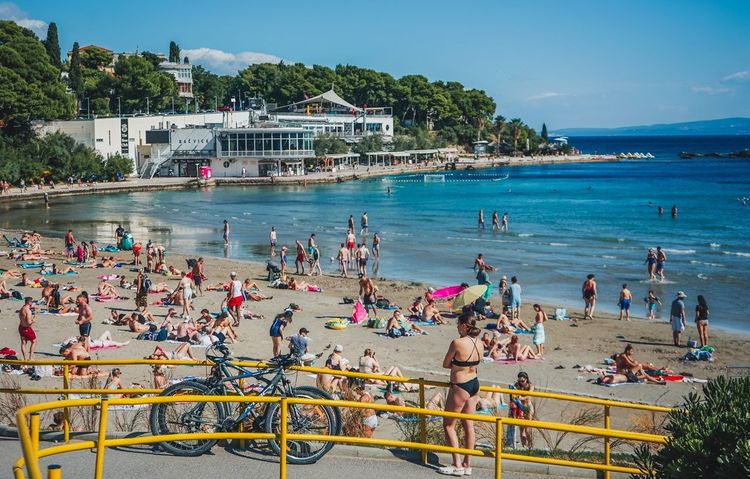
The city's most famous beach, Bačvice (Uvala Bačvice, 21000 Split, rated 4.2/5 on Google with 328 reviews), owes its shell shape to a naturally shallow bay, ideal for families and for playing picigin, the traditional Dalmatian sport invented here in the early 20th century.
Picigin is played by a group, barefoot in the shallows, with the aim of keeping a small rubber ball out of the water for as long as possible through acrobatic dives. In summer, unofficial championships spring up spontaneously among locals, to the amused watching of tourists on the sand. A local tradition holds that the game is also played on 1 January, in swimwear, whatever the water temperature. Prefer clearer, less crowded water? The cove of Kašjuni, tucked on the southern slope of Marjan about thirty minutes on foot from the center, offers turquoise water and a quieter setting, with a simple beach bar where you can have a drink with your feet in the water at sunset.
Two more options are worth knowing depending on your preferences. Žnjan, east of Bačvice, has been revamped after extensive waterfront renovation works: more space, shade, facilities, and parking, at the cost of a decidedly more urban setting. Bene, at the western tip of Marjan, plays the opposite card — pine trees, rocky platforms, sports facilities, and local families in the evenings. One comfort note: in Split, "beach" most often means pebbles or flat rock, and water shoes will spare you a great deal of wincing on the way in — a pleasant contrast to a morning spent following Split's audio-guided tour through the old town.
14. Island Boat Trip (Brač, Hvar, Šolta)
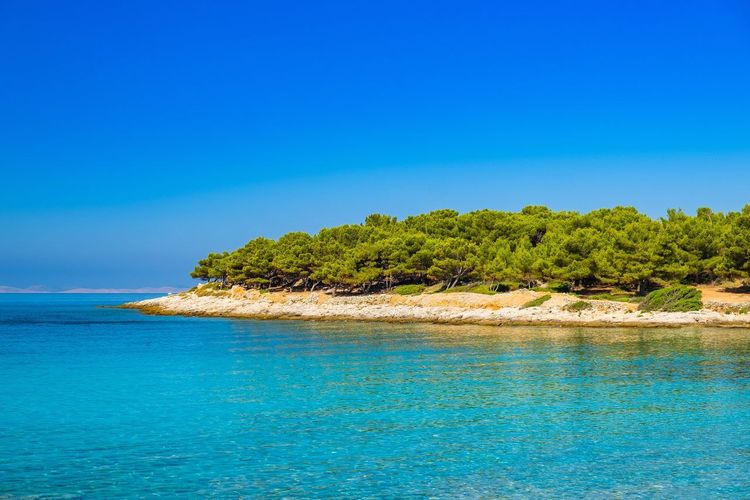
Split serves as the maritime gateway to some of the most beautiful islands in the Adriatic, and an island boat trip ranks consistently among the best memories of travelers passing through the city.
From the port, fast catamarans reach Brač in just under an hour — famous for its Zlatni Rat beach, whose pebbly spit shifts direction with the wind, a rare natural phenomenon that draws thousands of kitesurfers every summer. Hvar, known for its nightlife and Venetian town center, is reachable in one to one and a half hours depending on the boat. The more discreet Šolta takes under an hour to cross and offers near-deserted coves outside August, ideal for those looking to escape the summer crowds on the more popular islands.
Several companies offer full-day excursions combining two or three islands, with swimming stops in coves accessible only by sea. Book the night before in high season: spots on the fastest catamarans sell out quickly in July and August, and late departures sometimes leave only deck seats with no shade. For a first trip, focusing on a single island per day is more comfortable than cramming in three stops that leave little real time ashore. Make sure you understand the difference between the two options: the public ferry, cheaper, takes cars and calls at the main ports, while the catamaran, for passengers only, is faster but runs on stricter timetables and sells out earlier.
15. Day Trip to Krka Waterfalls
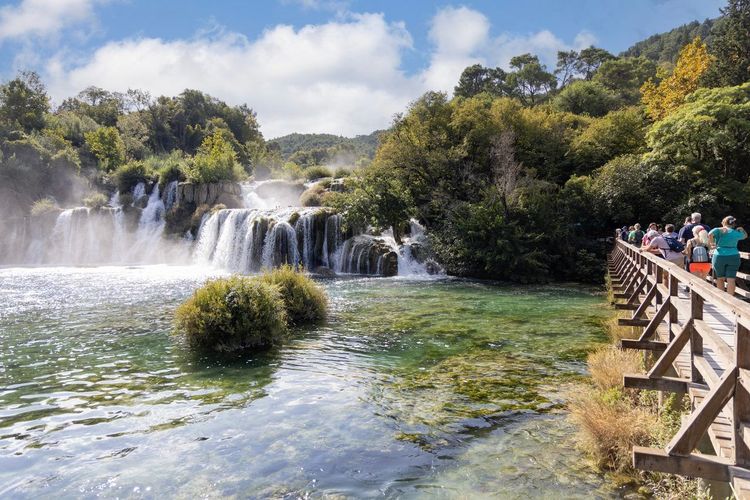
The Krka National Park (Lozovac, 22222 Šibenik, rated 4.5/5 on Google with 68,553 reviews), about an hour's drive north of Split, protects a series of tiered travertine waterfalls along the river of the same name, the most spectacular of which, Skradinski buk, drops nearly 46 meters in a succession of steps.
An elevated wooden walkway lets you follow the falls at close range, with a viewpoint that captures the full cascade in a single photograph — particularly sought after in the late afternoon when light filters through the suspended water. Swimming in the pool below the falls has been banned since 2021 to protect the ecosystem, a restriction that disappoints some visitors but is fully justified by the park's record attendance of over one million visitors per year.
You can reach Krka on an organized excursion from Split, usually combining bus transport and park entry, or by renting a car for greater scheduling flexibility. Plan a full half-day including travel, and arrive early: tourist buses saturate the main trails from 11 a.m. onward in summer. Be aware that entry fees vary considerably by season — the full summer rate is several times higher than the winter price — and that access from the Lozovac entrance is by a shuttle included in the ticket during high season.
16. Trogir, the Neighboring Gem
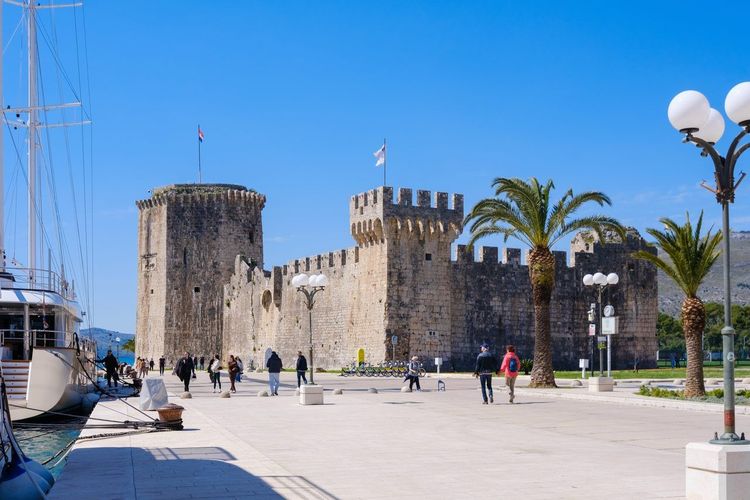
Less than thirty kilometers from Split, Trogir sits on a small island connected to the mainland by two bridges, with a historic center so densely packed with medieval and Renaissance monuments that it has been a UNESCO World Heritage Site since 1997.
The Cathedral of Saint Lawrence, whose 13th-century Romanesque portal ranks among the masterpieces of Dalmatian medieval sculpture, dominates the main square surrounded by Venetian limestone palaces. Unlike Split, whose historic center rarely exceeds 500 meters in diameter, Trogir can be explored entirely on foot in an hour and a half, making it an easy excursion to pair with another activity on the same day, such as a swim on one of the nearby beaches of Čiovo.
The regional bus from Split bus station (Obala Kneza Domagoja 12, 21000 Split, rated 3.4/5 on Google with 116 reviews) reaches Trogir in thirty-five minutes to an hour depending on the route, with frequent departures throughout the day — making a rental car unnecessary for this specific excursion. Another practical argument often overlooked: the airport lies on the way, which means Trogir can be squeezed in on arrival or departure day rather than losing half a day waiting for a flight.
17. Following Game of Thrones Filming Locations in Split
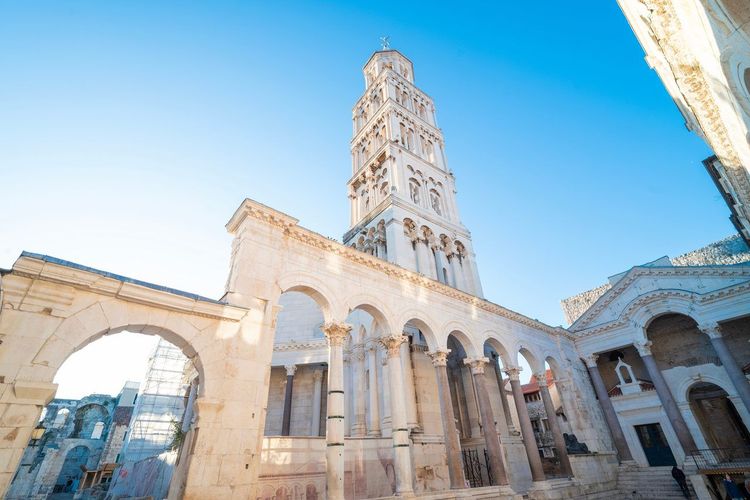
Split and its surroundings served as the main backdrop for Meereen, one of the most important cities in the Game of Thrones series — a notoriety that has permanently changed the city's tourist footfall since season 4 aired in 2014.
The palace cellars, already mentioned above, served as the dungeons where Daenerys's dragons were locked up, while Klis Fortress represented the outer walls of the besieged city. The Peristyle also appears in several crowd scenes, recognizable by its Corinthian columns. Several local agencies offer themed guided tours focused solely on filming locations, with behind-the-scenes anecdotes and side-by-side image comparisons, but you can just as easily spot these sites yourself using the Ryo audio-guided tour Between Marble and the Mediterranean, which covers the main filming areas in the historic center.
18. Split Nightlife and Bars
Split's nightlife is concentrated mainly in the narrow lanes of the palace, where former vaulted cellars have been converted into cocktail bars, and along the Riva, livelier but more touristy in the evening.
Unlike Hvar, known for its clubs that stay open until the early hours, Split cultivates a more relaxed atmosphere centered on terraces and wine bars rather than nightclubs. Locals particularly enjoy the small bars along Majstora Jurja street in the Veli Varoš neighborhood, where Dalmatian white wine — notably pošip and grk — is poured at prices considerably gentler than on the Riva. In summer, certain rooftops on buildings near the palace offer a stunning view over the tiled rooftops at aperitivo hour.
Two reference points for planning your evening: Bačvice beach hosts the bars that stay open latest, a ten-minute walk from the center, while the palace area winds down earlier due to noise regulations — families live there, after all. And if you are looking for a night out that doesn't revolve around drinks, keep an eye out for open-air concerts at the Peristyle or on the Sustipan peninsula in summer: the program, often free, ranges from klapa singing to jazz.
19. Where to Eat in Split: Croatian Specialties
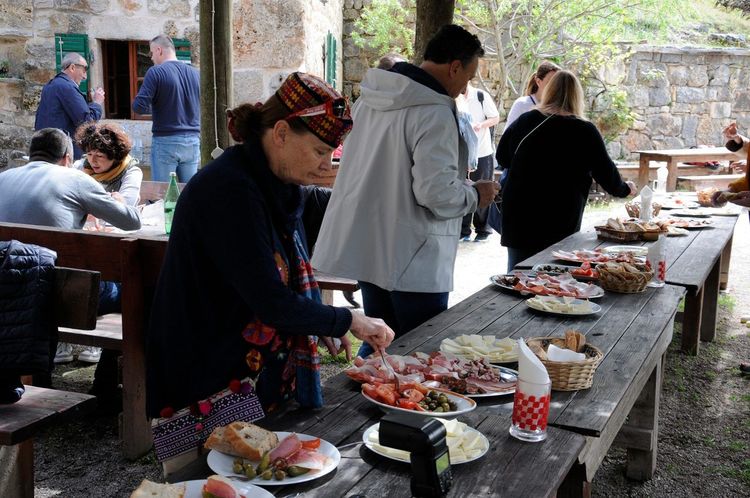
Dalmatian cuisine is defined by its Mediterranean roots: grilled fish, local olive oil, and garden vegetables make up the bulk of most menus, in a culinary tradition closer to neighboring Italy than to Central Europe.
Among the must-try dishes, peka requires slow cooking under a cast-iron dome covered with embers, typically made with lamb or octopus and potatoes, but needs to be ordered several hours in advance at most restaurants. Pašticada, a beef marinated and braised in a wine and prune sauce, is traditionally eaten on Sundays with the family and appears on the menus of the best tables in the historic center. You will also find, in small eateries called konoba, simply grilled fish dressed in olive oil — often cheaper and more authentic than restaurants directly on the Peristyle.
For a quick and affordable lunch, burek stalls — flaky pastry filled with meat or cheese, sold from dawn near Pazar market (Obala kneza Domagoja, 21000 Split, rated 4.4/5 on Google with 3,352 reviews) — remain a reliable choice appreciated as much by locals as by travelers in a hurry. One reflex to develop when reading a menu: fresh fish is sold by weight, per kilogram, and the price listed does not correspond to the portion served. Ask for the weight of the piece before ordering and there will be no surprises on the bill. For dessert, finish with a rožata, the Dalmatian crème caramel flavored with rose liqueur, or with fritule, the tiny doughnuts fried to order at winter market stalls.
20. What to Do in Split When It Rains
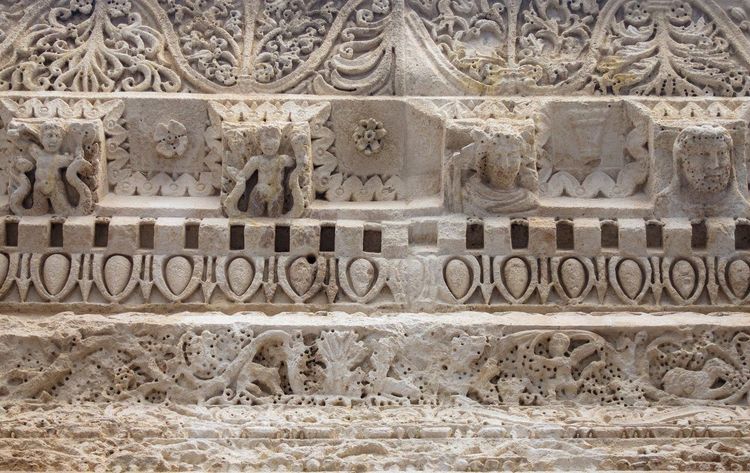
Rainy days are not particularly common in Split, especially between May and September, but they do occur from time to time — particularly in spring and autumn — without necessarily ruining a well-organized trip.
The Archaeological Museum, the Ivan Meštrović Gallery, and Diocletian's Cellars all offer fully covered visits that are completely independent of the weather. You can also take advantage of a light shower to explore the vaulted lanes of the palace itself, a good portion of which passes under archways and galleries that naturally shelter from the rain. The cafés around the People's Square offer a comfortable refuge for watching the city from a partly covered terrace, Croatian coffee in hand, while waiting for a break in the clouds.
Add to this list the ethnographic museum inside the palace enclosure, the Split Art Gallery with its collection of Croatian painting, or a tasting session at one of the vaulted wine bars in the center. One thing to know: when the jugo blows — the humid south wind — rain is often accompanied by a choppy sea, and some fast connections to the islands are cancelled at the last minute. Have a land-based backup plan rather than banking everything on a catamaran for the day.
21. What to Do Around Split Without a Car
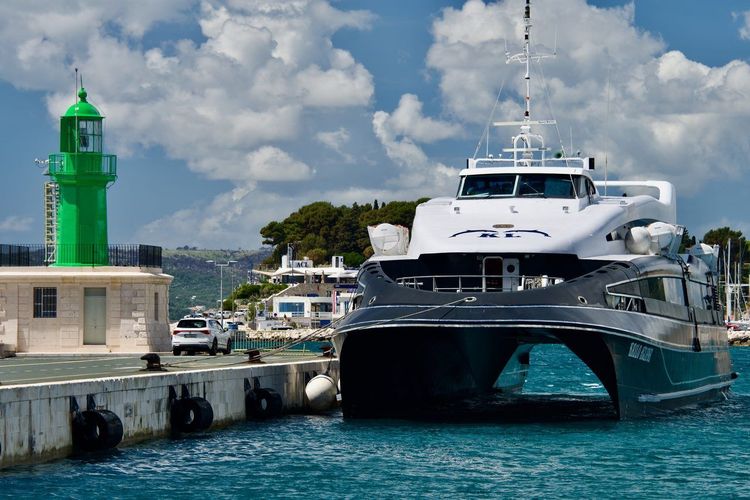
Unlike other coastal areas of Croatia, Split and its immediate surroundings are very easy to explore without a car, thanks to a network of local buses and frequent ferries.
Klis Fortress, Trogir, and Krka National Park are all reachable by regular bus or organized excursion from the bus station, a few minutes' walk from the port. The islands of Brač, Hvar, and Šolta are accessible exclusively by boat, making a car superfluous for these maritime excursions. Only the Kaštela bay, with its quieter seaside villages, is more comfortably visited with a vehicle, given the lack of sufficiently frequent direct public transport connections.
The overall logistics are unusually straightforward: the bus station, train station, and ferry terminal stand side by side, five minutes' walk from the Riva, so switching between modes of transport never requires crossing the city. City bus tickets can be bought at a kiosk or directly from the driver for a few euros, and crossings to the islands can be booked online in advance in summer — especially for the morning catamarans that sell out several days before departure.
22. How Long to Visit Split (1 Day, 3 Days, 1 Week)
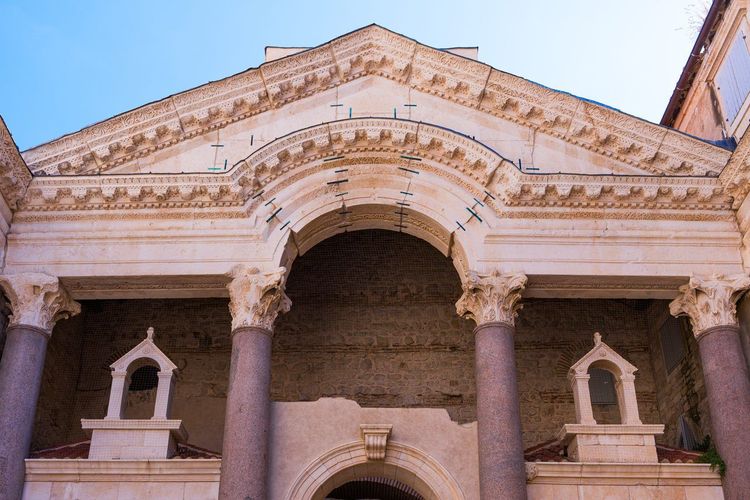
A single day in Split is enough to cover the main highlights of the historic center: the palace, cathedral, Peristyle, and a stroll along the Riva can easily be combined in a few hours on foot, with a lunch break on Narodni trg between visits.
Over three days, you can add Marjan hill, a trip to Trogir or Klis, and an evening in the bars of Veli Varoš — a comfortable pace that leaves time to wander without rushing from one monument to the next. A full week allows you to include the islands of Brač and Hvar, a full day at Krka National Park, and a more thorough exploration of the coves of Marjan and Kašjuni, away from the buzz of the center. The Ryo audio guide organizes the historic center into timed stages, which is handy for slotting a precise half-day visit between two longer excursions without worrying about the clock.
23. Where to Stay in Split: The Best Neighborhoods
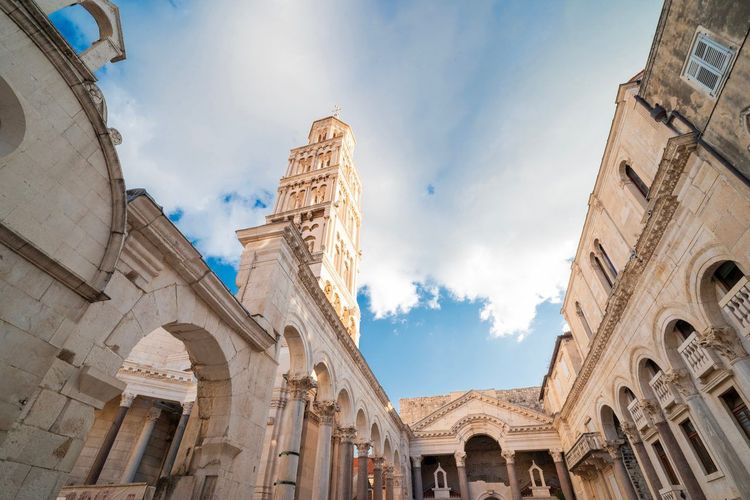
Staying inside the palace itself puts every major monument within a five-minute walk, at the cost of comfort sometimes limited by the age of the buildings and higher noise levels in the evening, especially on weekends.
Veli Varoš, a few minutes' walk from the center, offers an appreciated balance between residential calm and immediate proximity to the main sites, often with guesthouses run by local families. Further-out neighborhoods such as Bačvice or Žnjan to the east suit travelers who prioritize beach access and are comfortable with a fifteen-to-twenty-minute walk or bus ride to the historic center. For a longer stay of a week or more, renting an apartment in the outer neighborhoods generally offers better value than hotels in the center, whose rates climb sharply in July and August.
Two details to check before booking in the old town: the number of steps, since many accommodations occupy upper floors without a lift, reached by very steep stone staircases; and car access, which is often impossible within several hundred meters since the historic center is closed to traffic. If you are arriving with a rental car, choosing accommodation with parking — near Bačvice or Žnjan — will save you a long search and steep parking fees during peak season.
24. How to Get to Split (Plane, Ferry, Bus)

The Split Airport (Cesta Dr. Franje Tuđmana 1270, 21217 Kaštel Štafilić, rated 3.8/5 on Google with 10,801 reviews) (IATA code: SPU), located about 25 kilometers west of the city center, is served by direct seasonal flights from many European cities in summer, with a regular shuttle bus connecting it to the center in around forty minutes.
The port of Split is also one of the busiest maritime hubs on the Adriatic, with daily services to the Croatian islands and international ferries to Italy — including Ancona — in high season. For travelers coming from Zagreb or Dubrovnik, the overland route remains competitive: the A1 motorway links Zagreb to Split in about four hours over just over 400 kilometers, while long-distance buses cover the journey from Dubrovnik in three and a half to four hours along a particularly spectacular coastal road.
A train line also connects Zagreb to Split — slower than the bus but practical overnight in summer. And if you are driving down from Dubrovnik, bear in mind that the Pelješac Bridge now bypasses the Bosnian corridor at Neum, eliminating two border crossings on the journey.
FAQ
How many days do you need to visit Split?
One day is enough for the historic center, but three days allow you to add Marjan, Trogir, or Klis without rushing. Plan a full week to include the islands of Brač and Hvar as well as a trip to Krka National Park.
What can you do in Split for free?
The Peristyle, the Riva promenade, the lanes of Veli Varoš, and the Marjan hill can all be visited freely, without an entrance ticket. The outdoor garden of the Archaeological Museum and the exterior of the cathedral round out this list of free activities.
What can you do in Split when it rains?
Head to Diocletian's Cellars, the Ivan Meštrović Gallery, and the Archaeological Museum — three fully covered visits that don't depend on the weather. The vaulted lanes of the palace also provide shelter from a moderate shower.
How do you get around Split without a car?
The historic center is entirely walkable. Klis, Trogir, and Krka can be reached by bus or organized excursion, while the islands are only accessible by ferry or catamaran from the port.
What is the best time to visit Split?
May, June, and September offer the best balance of pleasant warmth, swimmable sea, and moderate crowds. July and August remain the hottest and busiest months, especially on the beaches and on ferries to the islands.
Is Split worth it compared to Dubrovnik?
The two cities complement rather than compete with each other. Split offers a lively historic center that is lived in every day and serves as a better base for reaching the central Adriatic islands, while Dubrovnik boasts fully preserved city walls.
Can you visit Split in one day from a cruise ship?
Yes, the historic center can be covered in a few hours on foot from the port. Focus on the palace, the cathedral, the Peristyle, and the Riva, and skip excursions to Klis or the islands, which require more time.
Split is more than a TV-series backdrop or a stopover between two island ferries. It is a city where Roman antiquity, Venetian heritage, and contemporary Mediterranean life overlap without ever truly freezing into a museum — from laundry drying between palace columns to the acrobatic dives of picigin players on Bačvice beach.
Whether you stay one day in port or a full week exploring the neighboring islands, the Ryo audio-guided tour of Split remains the simplest way to navigate this layered history without depending on a human guide's schedule, one lane at a time.