© Shutterstock
 Votre guide Ryo
Visit Bastia in 2 Days: The Complete Itinerary for 2026
The first thing that strikes you when arriving at the Bastia Old Port isn't the citadel overlooking the bay, but the smell of grilled fish mingled with the salt drifting between the ochre and coral facades. Many visitors spend only one night here before rushing off to Saint-Florent or Cap Corse, convinced there is "nothing to see" beyond the harbor. That's a mistake: visiting Bastia in 2 days lets you take in a Genoese citadel born in the late 14th century, the largest church in Corsica, a hanging garden linked to the port by a long staircase, and even a hike to old ice houses in the heights of the Pigno. The Ryo audio-guided tour of Bastia covers precisely this rollercoaster between sea and hills, with 21 audio stops and 1h30 of listening over 3.5 km. Over two days, you have plenty of time to fit in Terra Vecchia in the morning, the Old Port at noon, the Citadel in the afternoon, then the market, the Glacières de Cardo and the beaches the next day, without rushing.
Day 1 Morning: Place Saint-Nicolas and the Historic Heart of Terra Vecchia
Place Saint-Nicolas, Bastia's Morning Wake-Up
The Place Saint-Nicolas stretches nearly 300 meters between the commercial port and the town, lined with plane trees and palms. It is one of the largest squares in France, laid out in the 19th century facing the sea. In the center, a statue of Napoleon draped as a Roman emperor gazes out to sea, a nod to the island's imperial history.
In the morning, before 9am, it's the ideal spot for a coffee on a terrace without the afternoon crowds. Shopkeepers raise their shutters one by one, the ferries from the mainland dock a few dozen meters away, and the square returns to the rhythm of a small island capital before the cruise passengers arrive. The tourist office is also on the square: stop by for a map of the town before tackling the alleys.
The people of Bastia still gather here for a game of pétanque at the end of the day, under the same plane trees that have shaded the benches for over a century. In summer, the square also regularly hosts open-air concerts, a good reason to come back after dinner.
Terra Vecchia, Rue Napoléon and the Market Square
Leaving the square to the south, you enter Terra Vecchia, Bastia's densest historic neighborhood. The Rue Napoléon (Rue Napoléon, 20200 Bastia), narrow and lined with shops, winds between tall buildings with weathered facades, dotted with delicatessens, artisan workshops and small boutiques.
Push open the doors of the two oratories that line it, Saint-Roch and the Immaculate Conception. From the outside, nothing hints at their baroque interiors hung with red damask, gilded woodwork and crystal chandeliers. These confraternity chapels tell the story of Bastia's religious fervor in the 17th and 18th centuries better than any museum.
The street leads out to the Place du Marché (Place de l'Hôtel de Ville, 20200 Bastia, rated 4.4/5 on Google from 1,015 reviews), officially the Place de l'Hôtel de Ville, where the traditional market sets up on Saturday and Sunday mornings. Corsican cured meats, sheep's milk cheeses, clementines, fish and maquis honey are sold straight from the stalls, often by the producers themselves.
Terra Vecchia nonetheless suffered greatly during the Second World War: the 1943 bombings hit part of the neighborhood and the Old Port, which were then rebuilt respecting the spirit of the original facades. Discreet commemorative plaques remind attentive visitors of this episode.
If you enjoy the details the eye can't catch on its own, the Ryo audio-guided tour of Bastia stops right in this maze of Terra Vecchia to tell the story of the neighborhood, from its confraternities to its shopping alleys.
Day 1 Midday: The Old Port and Saint-Jean-Baptiste Church
The Old Port, the Living Heart of the City
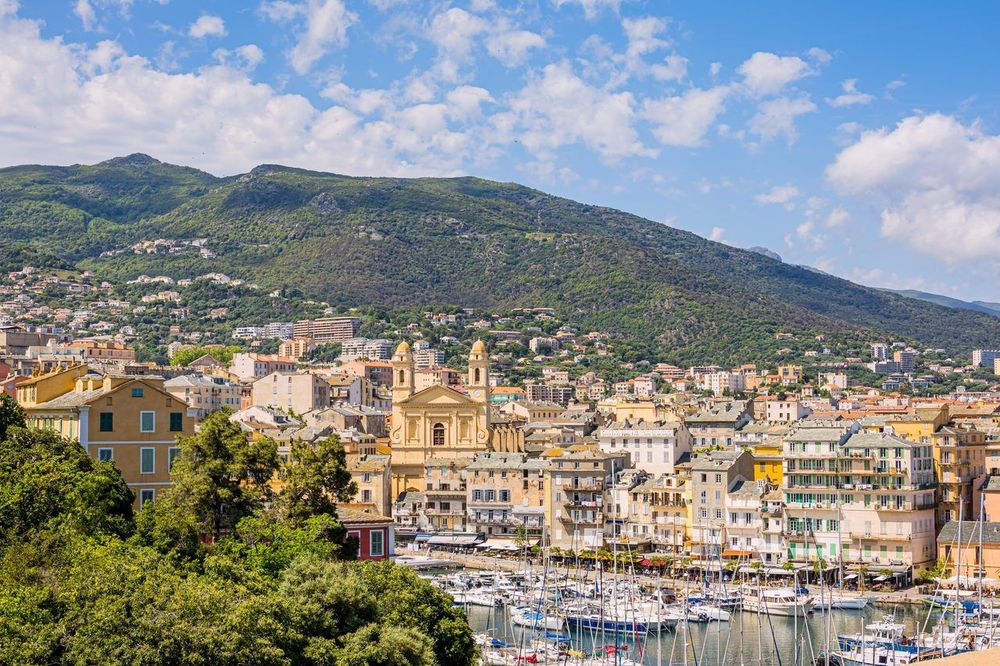
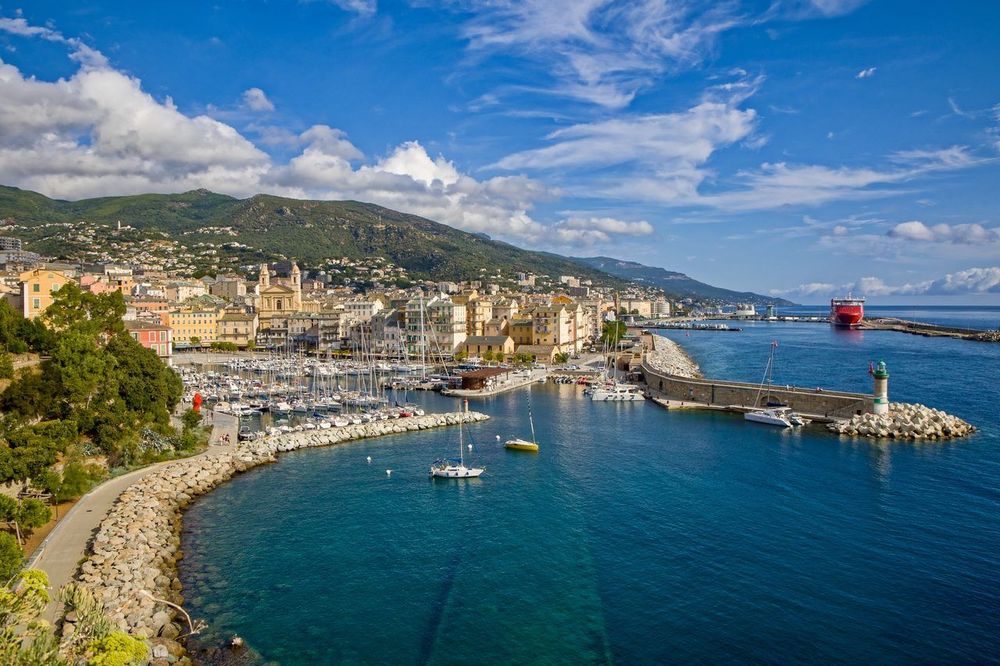
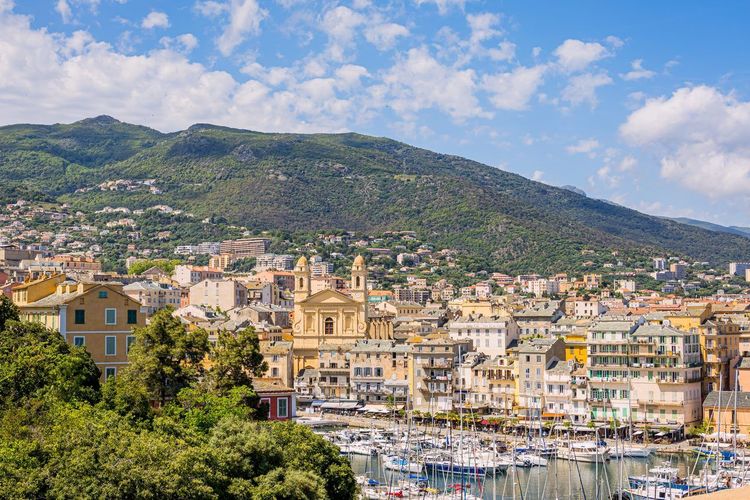
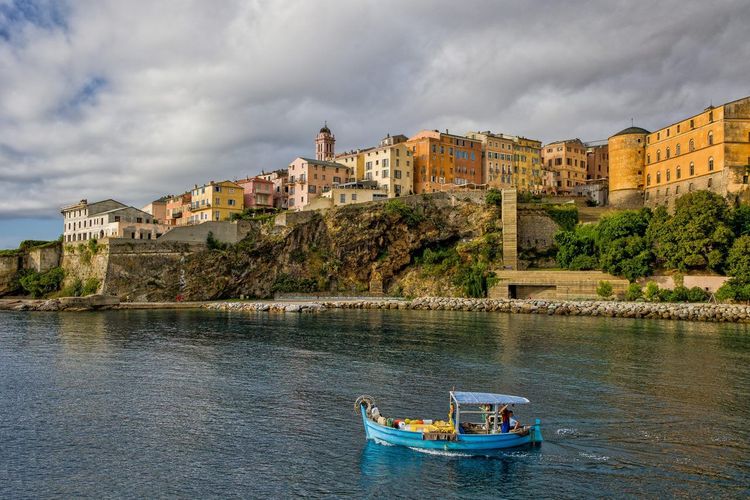
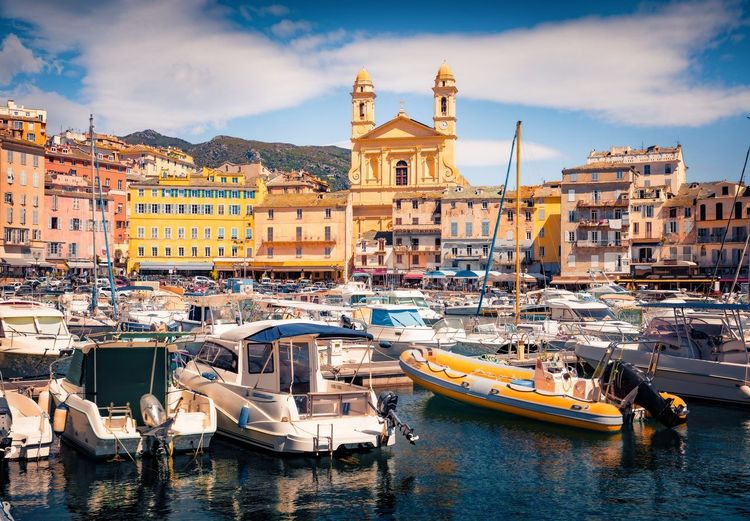
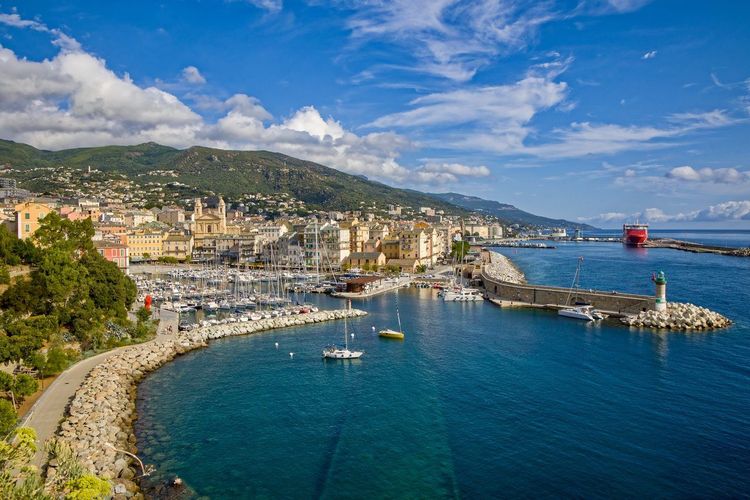
The Bastia Old Port concentrates everything that makes the city charming: ochre and coral facades reflected in the water, fishing boats moored between restaurants, and a stunning view of the Citadel, which overlooks it all from its rocky spur.
This is where the small Genoese port stood around which the city developed, long before the commercial port was built further north. A few fishermen still work here and sometimes sell their catch of the day directly on the quay, early in the morning. The Jetée du Dragon, which closes off the basin, offers a short walk with the best angle on the facades.
At lunchtime, settle in at a terrace on the quayside rather than the square side: the view of the colorful boats is better there. Allow a good hour if you want to taste a local fish dish without being rushed.
In the evening, the Old Port takes on a completely different look: the facades light up, the terraces fill and the Citadel, also illuminated, stands out sharply against the sky. Since Bastia faces east, early risers can also enjoy a sunrise over the sea from the jetty.
The audio stop devoted to the port in the Ryo audio-guided tour tells precisely this story of the link between the city and the sea, from the Genoese fishermen to the colorful boats that make up today's postcard.
Saint-Jean-Baptiste Church, the Largest Church in Corsica
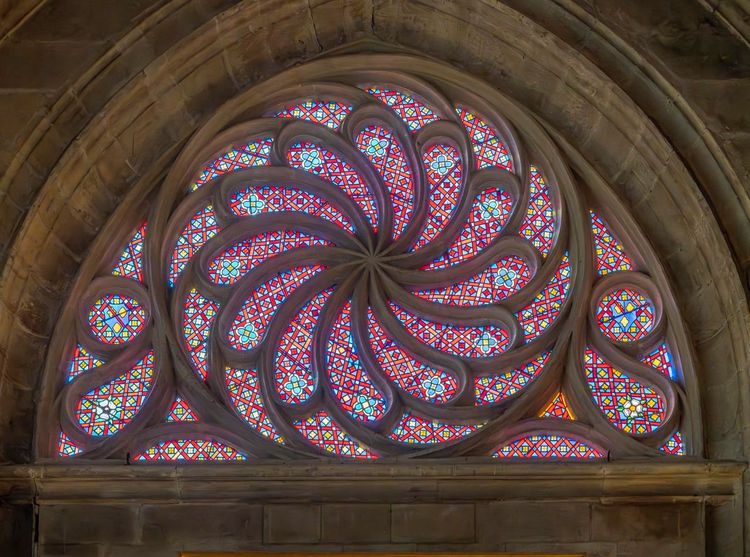
Above the port, the twin bell towers of Saint-Jean-Baptiste Church (Rue Notre-Dame, 20200 Bastia, rated 4.6/5 on Google from 311 reviews) dominate Bastia's skyline. Built in the 17th century and completed in the 18th for its facade, it is the largest church on the island, with an interior richly decorated with stucco, marble and gilding.
Entry is free and the building stays open for much of the day outside of services. Take five minutes to look up at the painted vaults, often overlooked by visitors who head straight for the Citadel.
Just below, several artisan ice cream shops offer flavors made with Corsican ingredients (myrtle, clementine, chestnut); it's a welcome break after the visit, especially in late morning when the heat builds on the quays. The neighboring alleys also serve fish dishes at gentler prices than on the main quay, for anyone looking for a simple option before the afternoon climb.
Day 1 Afternoon: The Citadel, the Governors' Palace and the Jardin Romieu
The Citadel and the Governors' Palace
The climb to the Bastia Citadel, also called Terra Nova, begins just south of the Old Port. It all started with a keep, the "bastiglia," built by the Genoese in 1378, which gave the city its name. The enclosure was completed in the 15th and 16th centuries, with its ramparts, bastions and a network of cobbled alleys climbing to the top of the rocky spur.
For nearly four centuries, the Citadel housed the administrative and military power of the Republic of Genoa on the island, before Corsica came under French sovereignty in 1768. Bastia remained the island's capital for a long time, which explains the richness of its religious and civic heritage.
At the heart of the enclosure stands the Governors' Palace, the former residence of the Genoese governors. The building now houses the Musée de Bastia, devoted to the history of the city from the Genoese period to the present day, with collections of paintings, maps and everyday objects.
Allow one to one and a half hours for the museum if Genoese history interests you. Admission costs €5 for the full price and €2.50 for the reduced rate (students, ages 10-18, seniors), and is free for children under 10. In high season, the museum is open from 10am to 6:30pm, every day in July and August, but it closes on Mondays in May, June and September. Even without going into the rooms, the palace courtyard and terraces offer a lovely view of the Old Port.
A few steps away, Sainte-Marie Church, the former cathedral of Bastia, and the Sainte-Croix Chapel deserve a stop. The latter houses the Christ of Miracles, a blackened wooden crucifix that tradition says was fished out of the sea by fishermen in the 15th century, and which remains the focus of a well-attended procession every year.
The alleys around the Palace, lined with houses with colorful shutters, offer sudden glimpses of the sea in places, between two lines of laundry drying above the cobblestones. It is one of the few neighborhoods in Bastia where you can still feel the rhythm of a small fortified town, far from the bustle of the port.
To eat inside the Citadel, the few places set up near the ramparts mainly play the view card: expect to pay a little more than at the Old Port, but the terrace looks directly out over the bay and the rooftops of Terra Vecchia below.
The climb to the Citadel is one of the highlights of the Ryo audio-guided tour of Bastia: several stops detail the construction of the Genoese fortifications and the view that opens up from the seaward ramparts.
The Jardin Romieu and Its Panoramic Staircase
To head back down to the port, take the Jardin Romieu (20200 Bastia, rated 4.3/5 on Google from 227 reviews), a terraced garden built on the hillside between the Citadel and the Old Port. Its grand Romieu staircase, lined with palm trees and Mediterranean plants, links the upper town directly to the quays.
Access is open and free. It's a pleasant shortcut between the Citadel and the port, with shaded benches that make it a welcome break after the heat of the ramparts.
Settle on one of the landings in late afternoon: the view plunges over the tiled roofs of the Old Port and the bay, which the low evening light tints orange. It is also one of the locals' favorite spots to read or chat away from the bustle of the quays.
Corsican Cuisine in Bastia: Where to Eat Well
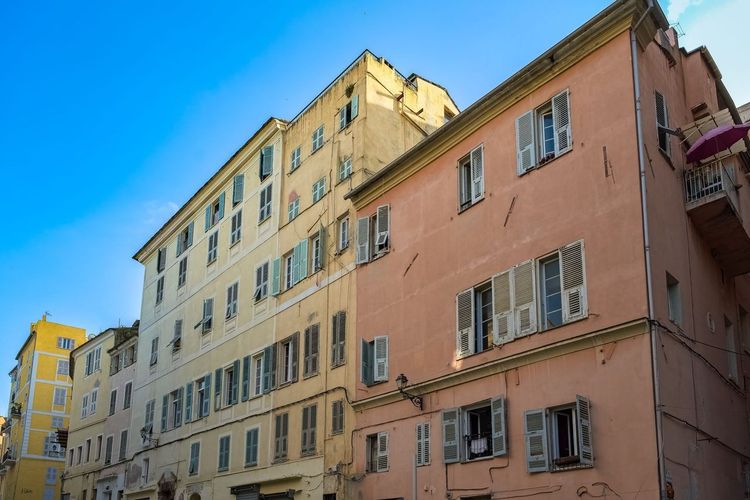
Between the Old Port and the Citadel, Bastia's restaurants play on the same basics: cured meats (coppa, lonzu, figatellu in winter), sheep's milk cheeses such as brocciu, and fish of the day depending on the catch. Prices climb quickly on the waterfront, but remain reasonable one street further back.
For a simple, quick meal, go for the small places in Terra Vecchia rather than the most visible terraces on the port, which are often geared toward passing groups. The menus displayed in the windows give a good idea of the value for money before you sit down.
The sweet specialties are also worth a detour: fiadone (a brocciu and lemon cake) and canistrelli (dry biscuits flavored with anise, lemon or almonds) can be found in almost every grocery in the center. Our article on Bastia's culinary specialties details the products and the places to favor if you want to bring some home in your suitcase.
A cheaper option is to put together a picnic from the weekend market produce, then enjoy it in the Jardin Romieu or on the Jetée du Dragon. It's also a chance to taste several cured meats and cheeses without racking up restaurant bills.
Day 2 Morning: Local Market and Panorama from the Glacières de Cardo
The Morning Market and Local Life in Bastia
If your second day falls on a Saturday or Sunday, start at the Place du Marché when the producers are setting up, around 8am. The atmosphere is more authentic than in late morning, when the aisles fill with visitors, and the market wraps up around 1pm.
Take the time to chat with the vendors: many come from villages in Cap Corse or the Castagniccia and gladly tell you where their products come from, sometimes with an accent that immediately sets the tone for your stay.
On weekdays, fall back on the groceries of Rue Napoléon and the bakeries of Terra Vecchia to pick up something to tide you over until lunch. In any case, fill up on water before the hike.
Hiking to the Glacières de Cardo
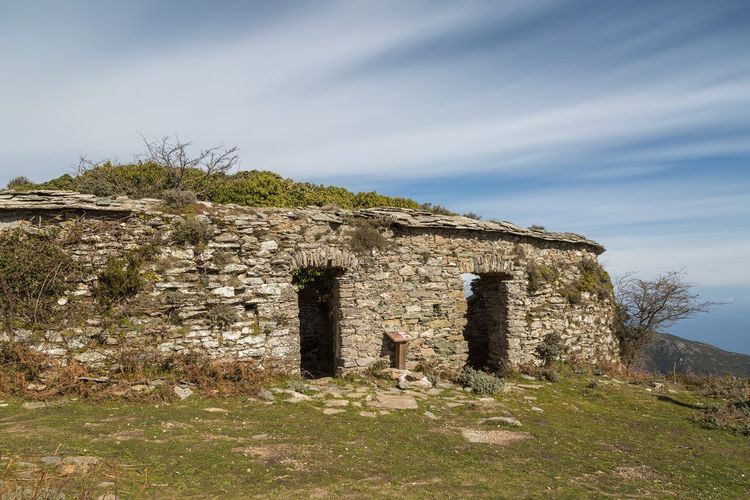
About ten minutes by car above Bastia, the hamlet of Cardo is the starting point of the trail to the ice houses, two stone buildings where snow that fell on the heights was once stored. When summer came, it was cut into blocks and carried down by mule to cool the drinks in Bastia's cafés, long before the refrigerator was invented.
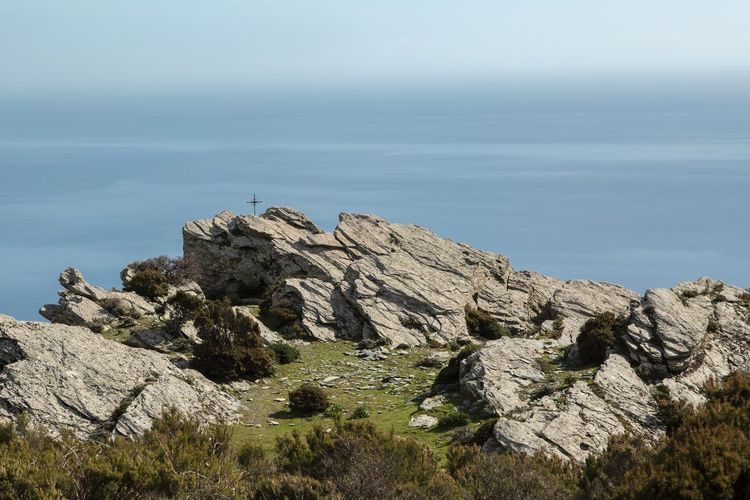
The trail climbs the foothills of the Pigno, through holm oak woods and low maquis. Allow 2h30 to 3h30 round trip for about 500 meters of elevation gain: the hike is short in distance but strenuous. Bring good shoes, water and an early start between June and September, when the sun beats down from 10am.
From the ice houses, the panorama takes in the whole bay of Bastia and, in clear weather, the Tuscan islands of Capraia, Elba and Montecristo on the horizon. It is one of the least crowded viewpoints over Bastia, best saved for those who toured the historic center the day before.
For more hiking ideas in the surrounding area, our article on hikes around Bastia lists several trails, from the easiest to the most challenging, to combine depending on the time you have.
Day 2 Afternoon: Beaches and the Customs Officers' Path Around Bastia
Nearby Beaches: Arinella and Ficaghjola
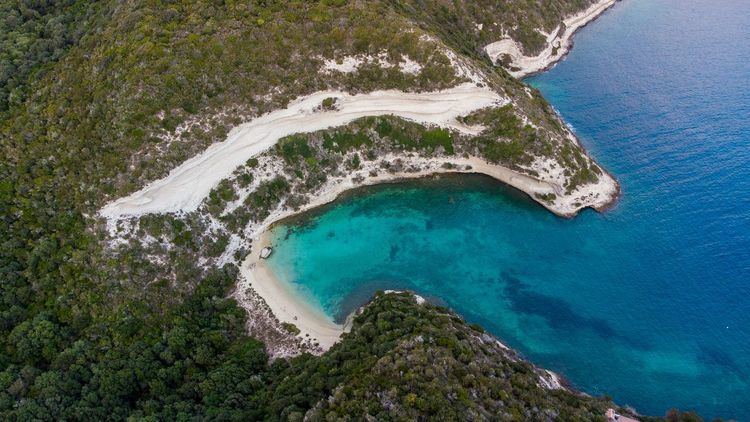
South of the town, Arinella beach is Bastia's main urban beach: fine sand, shallow water for several meters, and a long stretch running south toward the Biguglia lagoon. It is easy to reach by bus or car from the center.
It fills up quickly on weekends and in midsummer, especially in late afternoon when locals get off work. On weekdays or in the morning, it stays rather calm, making it a good option for swimming with children.
Closer to the center, Ficaghjola beach is a small pebble cove nestled at the foot of the town, just south of the Citadel, about a fifteen-minute walk from the Old Port along the seafront promenade. Lined with rocks, it mainly attracts locals who come for a quick dip at the end of the day.
If you only have one beach to choose, pick Arinella for the sand and space, and Ficaghjola if you want to swim without leaving the center or taking a vehicle.
The Customs Officers' Path Toward Cap Corse
The real customs officers' path (Macinaggio, 20248 Rogliano, rated 4.8/5 on Google from 20 reviews) is at the northern tip of Cap Corse: it links Macinaggio to Centuri over some twenty kilometers, passing white-sand beaches, dunes, maquis and several Genoese watchtowers. Macinaggio is about an hour's drive from Bastia along the east coast.
The path takes its name from the customs officers who once patrolled it to watch for smuggling on this exposed coast. Well marked and without technical difficulty, it divides into two stages: Macinaggio-Barcaggio (about 3 hours) then Barcaggio-Centuri (about 5 hours), which is wilder. Allow 8 hours for the whole route.
For a second afternoon in Bastia, the Macinaggio-Barcaggio stage is the only realistic one, provided you set out right after lunch. In summer, a boat shuttle generally links Barcaggio to Macinaggio, which saves you the walk back. The trail offers little shade: a hat, sunscreen and two liters of water per person are not a luxury.
On the way, stop at Erbalunga, about ten kilometers from Bastia: this fishing village perched on a rocky promontory, with its ruined Genoese tower, is one of the prettiest stops on the Cape's east coast.
To extend your exploration of the Cape beyond half a day, our dedicated Cap Corse itinerary details the full loop around the peninsula, village by village.
Beyond 2 Days: Cap Corse, the Agriates Desert and the Biguglia Lagoon
A Longer Escape to Cap Corse
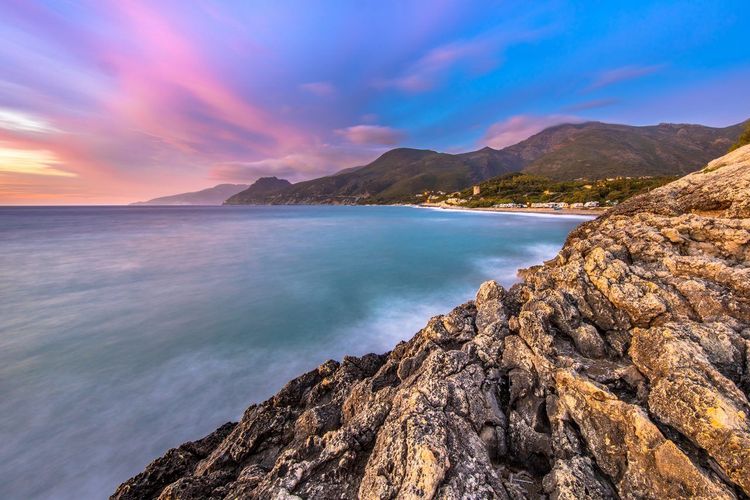
If your stay exceeds 2 days, Cap Corse deserves a full day on its own. This mountainous peninsula extending the island northward is home to villages such as Erbalunga, Macinaggio and Centuri, and a coastal road that alternates between coves, Genoese towers and terraced vineyards.
Allow a good day to drive the full loop of the Cape, with regular photo stops. The road is narrow and winding in places, particularly on the west coast between Centuri and Nonza, whose black pebble beach always surprises first-time visitors.
Set out early if you want to enjoy the villages before the late-morning crowds, especially in Erbalunga and Centuri, which remain the most photographed stops on the peninsula. The Cape's vineyards, on hillsides facing the sea, are also worth a tasting stop along the way.
The Agriates Desert and the Biguglia Lagoon
West of Saint-Florent, the Agriates Desert is a vast protected expanse of wild maquis, bordered by some of the island's most beautiful beaches such as Saleccia and Lotu, reached mainly by boat or by track.
Access by car is limited to a few bumpy tracks; for the most remote beaches, it is best to book a boat shuttle from Saint-Florent in high season, when seats go quickly.
South of Bastia, the Biguglia lagoon (20620 Biguglia, rated 4.3/5 on Google from 645 reviews) is the largest lagoon in Corsica, classified as a nature reserve. It is a site popular with birdwatchers, with herons, egrets and sometimes passing flamingos depending on the season, and observation trails set up along its shores.
For a wider selection of destinations within an hour's drive, our articles on the most beautiful villages in Corsica around Bastia and on the best places to visit in Haute-Corse are a useful complement to this stage if you extend your stay.
Where to Stay in Bastia According to Your Budget
The Old Port and Terra Vecchia neighborhood remains the most popular: you're within walking distance of everything, with a postcard atmosphere when you wake up, but prices climb in high season and some streets can be noisy in the evening.
The Citadel offers a quieter alternative, with a few places set in historic buildings and an open view over the bay, at the cost of a somewhat steeper climb to reach your room after dinner.
For a stay on a tighter budget or with family, vacation rentals on the outskirts often help bring down the bill, while remaining just a few minutes by bus from the center.
Whichever area you choose, book several weeks in advance between June and September: Bastia remains a must-pass point for ferries to the mainland, and rooms go quickly in peak season.
How to Get to Bastia and Get Around
Plane, Ferry and Connections to Bastia
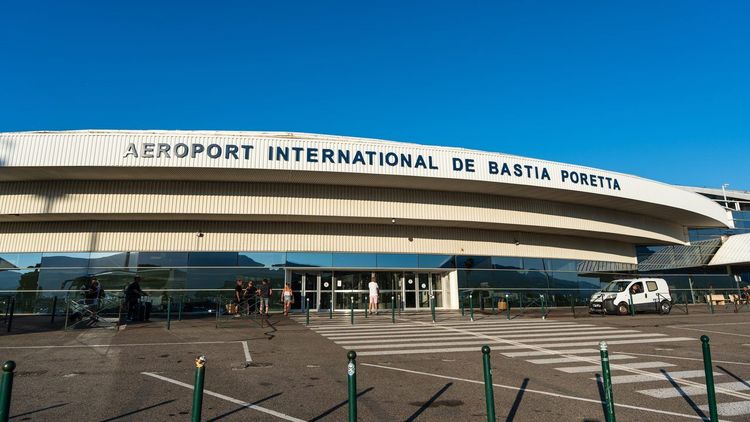
Bastia is served by Bastia-Poretta airport, about twenty kilometers south of the town, with direct flights from several French and European cities depending on the season. A shuttle links the airport to the center.
The port also receives ferries from Marseille, Toulon, Nice, and several Italian ports such as Livorno, Savona or Genoa, a practical option if you bring a car to then explore Cap Corse or the Agriates Desert.
For overland journeys from the rest of the island, the Chemins de fer de la Corse line links Bastia to Ajaccio and Calvi, on a route that crosses the mountainous interior and offers beautiful views of the passes.
Getting Around on Foot, by Bus or by Rental Car
The historic center can be explored entirely on foot: allow 20 to 30 minutes to get from Place Saint-Nicolas to the Citadel via Terra Vecchia and the Old Port. A city bus network fills in the trips to the Arinella or the more distant neighborhoods.
To explore Cap Corse, the Agriates, the Glacières de Cardo (Cardo, 20200 Bastia, rated 4.8/5 on Google from 4 reviews) or the Biguglia lagoon, a rental car remains the most flexible solution. Rental agencies are found at both the airport and the port, and rates rise noticeably in July-August: booking ahead often makes the difference in the final price.
Practical Information: When to Go, Budget and Museums in Bastia
When to Go and What Budget to Plan
Spring (April to June) and early autumn (September) offer the best conditions for visiting Bastia: pleasant temperatures, smaller crowds, and a sea that is already or still swimmable depending on the year. July and August remain hot and noticeably busier, particularly around the Old Port and nearby beaches.
For a 2-day stay, most of the sights cost little: the Citadel, the churches, the Jardin Romieu and the beaches are free, and only the Musée de Bastia charges admission (€5). Your budget will mainly depend on accommodation, meals and a possible car rental for Cap Corse. Meals on the port cost noticeably more than at a place one or two streets back.
Museums and the Tourist Map of Bastia
Beyond the Musée de Bastia in the Governors' Palace, the oratories of Terra Vecchia, Sainte-Marie Church and the Sainte-Croix Chapel form a true baroque art trail, free of charge, for anyone who wants to delve deeper into the city's Genoese history.
A tourist map of Bastia, useful for locating the main sites without relying solely on your phone, is available free of charge at the tourist office on Place Saint-Nicolas, or to download from its website before you leave.



FAQ
Can you really visit Bastia in just 2 days?
Yes, 2 days is enough to cover the essentials: Terra Vecchia, the Old Port, the Citadel and the Jardin Romieu on the first day, then the market, the Glacières de Cardo and the beaches on the second. For the full tour of Cap Corse, the customs officers' path or the Agriates Desert, it is better to add a third day.
Where is Bastia located in Corsica?
Bastia is on the northeast coast of Corsica, in Haute-Corse, at the base of Cap Corse and facing the Italian coast. It is the island's second-largest city after Ajaccio and the main entry point for anyone arriving by ferry from the mainland.
What are the best months to visit Bastia?
April, May, June and September offer the best compromise between pleasant weather and moderate crowds. July and August remain the hottest and busiest months, especially around the Old Port and the nearby beaches.
How do you get around Bastia without a car?
The historic center can be explored entirely on foot, from Place Saint-Nicolas to the Citadel via Terra Vecchia. For the Arinella and the southern neighborhoods, a city bus network fills in the gaps; a car is mainly useful for Cardo, Cap Corse or the Agriates.
Where to stay in Bastia: which neighborhood should you choose?
The Old Port and Terra Vecchia are ideal for being in the heart of the action, the Citadel for more peace and views, and the southern neighborhoods toward the Arinella for better value for money just a few minutes from the center.
What are the most beautiful villages to visit around Bastia?
Erbalunga, Macinaggio, Centuri and Nonza on Cap Corse are among the most photogenic, as is Saint-Florent on the Agriates Desert side. Each can be visited in half a day from Bastia if you extend your stay beyond 2 days.
Conclusion
Two days in Bastia is more than enough to understand why the city holds a special place in Corsica: neither a simple gateway to the island's interior nor a seaside resort, but a real fortified town between sea and mountain, where a baroque church sits alongside a producers' market and a hike to old ice houses. By taking the time to link Terra Vecchia, the Citadel and the nearby beaches, you'll leave with a much richer picture than that of a mere stopover on the way to the ferries.
To link these places at your own pace, without the constraints of a group schedule, the Ryo audio-guided tour of Bastia accompanies you over 3.5 km through the city, with 21 audio stops and 1h30 of anecdotes to listen to on site.
À lire également