© Shutterstock
 Votre guide Ryo
Besançon with Family in 2026: Citadelle, Doubs River, and Wide Open Spaces Within Stroller Reach
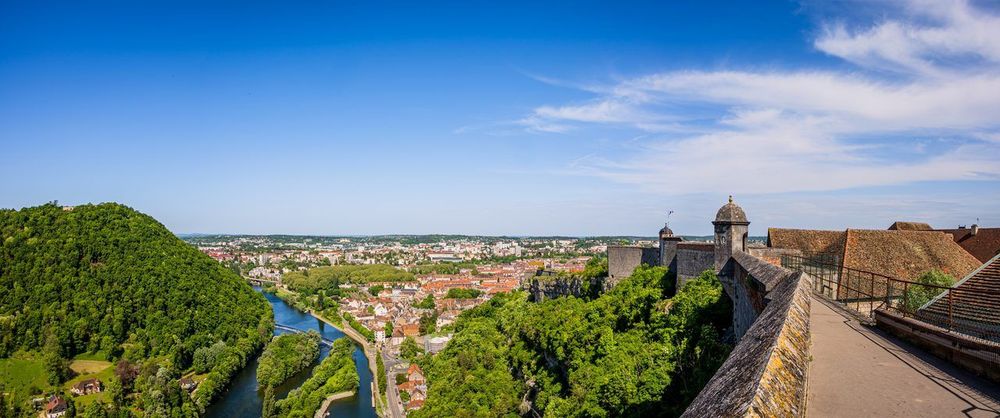
The first instinct of visitors to Besançon is to look up. The city wraps around a bend in the Doubs so tight it almost resembles a peninsula, dominated by a fortress more than three centuries old that now houses a zoo. For visiting Besançon with family, it's a dream starting point: between a citadelle where you can spot red kangaroos and lemurs, a river you descend by boat through a tunnel carved under the rock, and a llama farm a quarter of an hour from the center, the capital of Franche-Comté offers endless opportunities to get children away from their screens.
This guide brings together what truly works with young children and teenagers: the Citadelle and its museum, the cruise on the Doubs, a walk through the clockmaking alleyways of Old Besançon, wildlife parks and trails in the Haut-Doubs, and the great excursions of Franche-Comté, with 2026 prices where known. To get a sense of the fortified heights before losing yourself in them, the Ryo audio-guided tour of Besançon makes for a great warm-up, with anecdotes you can follow at stroller pace.
The Citadelle of Besançon: the Must-See Site with Children
The Citadelle of Besançon (99 Rue des Fusillés de la Résistance, 25000 Besançon, rated 4.5/5 on Google from 9,059 reviews) towers over the Doubs loop from its rocky spur. The structure, designed by Vauban at the end of the 17th century to secure the Comté stronghold, is part of the Vauban Fortifications listed as a UNESCO World Heritage Site since 2008. Ramparts, bastions, and rampart walks can be explored freely once you have your ticket: for children who love to climb and hide in the embrasures, it's already an adventure playground.
What really captivates children is the Muséum de la Citadelle, which combines a natural history museum and a zoological garden. No lions or elephants here: the park focuses on endangered species monitored by European breeding programs, including primates, lemurs, red kangaroos, macaws, and scarlet ibises. Several spaces around the zoo genuinely transform the visit:
- the insectarium, billed as the largest in France, with tens of thousands of insects and arthropods;
- the aquarium, dedicated to freshwater fish and rivers (sturgeon, Rhône streber, wels catfish, trout);
- the noctarium, where you can observe small nocturnal mammals in the dim light, such as the dormouse and the polecat;
- a mini-farm for the youngest visitors.
For children who want to understand the work rather than just look through a window, keep an eye on the activities organized around the zoo keepers and the children's program published by the Citadelle during school holidays (workshops, treasure hunts, special evenings such as Museum Night). Time slots are not continuous: check at the ticket office when you arrive.
As for 2026 prices, expect €13.50 per adult from April to October (€9.50 in low season), €9.50 for ages 8–17, €5.80 for ages 4–7, and free admission for children under 4. Allow a good half-day, or even a full day with a picnic: the site has dedicated picnic areas and a catering outlet. The walk up from the center is steep, so it's better to arrive by bus or car if you have a pram, bearing in mind that some sections at the top of the ramparts remain cobbled and uneven.
This is also where the Ryo audio-guided tour of Besançon stops, with an anecdote about how Vauban conceived this fortress, told at a child's level rather than in military engineering terms.
A Boat Trip on the Doubs
From the center, the most relaxing way to discover the city is to watch it glide by from the water. Vedettes de Besançon (9 Avenue Edouard Droz, 25000 Besançon, rated 4.7/5 on Google from 462 reviews) offer a 1h15 commented cruise along the Doubs loop, with two highlights that captivate children: passing through the Saint-Paul and Tarragnoz locks, where the boat "rises" in a chamber, and crossing the 375-meter river tunnel carved beneath the Citadelle. Boarding takes place at the Pont de la République, on the tram side.
Prices remain reasonable: €15 per adult and €11 for ages 4–16. For two adults and two children, the total comes to around €52, roughly the same as admission to the Citadelle.
If you prefer to keep your feet on the ground, the same company operates a panoramic bus that tours the main streets with a commentary designed for first-time visitors. It comes in handy on days when the weather is uncertain, and helps you identify neighborhoods to explore on foot afterwards.
Vedettes de Besançon also organize, by reservation, dinner cruises and themed cruises lasting from 1h30 to 2h30 depending on the menu, prepared by a local caterer. The cost is significantly higher, best saved for a special occasion. Teachers can negotiate group packages for school outings directly with the company.
Once back on the quayside, the Ryo audio-guided tour lets you extend the walk on foot along that same Doubs loop, stopping wherever you like.
Old Besançon on Foot: the Doubs Loop and Clockmaking Heritage
Between visits, the best way to understand the city is to follow on foot the Doubs loop that encircles the historic center. The walk runs along the riverbanks, passes under the arcades of the Quai Vauban, and winds through a maze of streets where the blue and ochre Chailluz stone facades stand beside inner courtyards. With children who can walk, allow one to two hours, more if you make frequent stops for ice cream or pauses in the Chamars promenade and Parc Micaud, two green spaces bordering the river.
The historic center conceals a reputation that few visitors know before arriving: Besançon long presented itself as the French capital of watchmaking, and this history can still be read in the shop windows, the old workshops, and above all the astronomical clock of Cathédrale Saint-Jean. Designed between 1858 and 1860 by clockmaker Auguste-Lucien Vérité, it comprises more than 30,000 parts and 57 dials that display everything from eclipses to the tides of several ports.
Good to know before taking children there: the clock is currently stopped pending restoration. The visit (€5, closed on Mondays) continues with adapted guided commentary, and the automata remain spectacular to observe even when still.
To connect these landmarks, the Ryo audio-guided tour of Besançon strings together short audio stops in the alleyways, with anecdotes about the city's history and its workshops told without jargon. Just enough to give a purpose to a walk that might otherwise become a series of streets without any reference points for younger visitors. If you are looking for other walking routes, our guide to walks in Besançon covers several options.
The Dino-Zoo and Wildlife Parks around Besançon
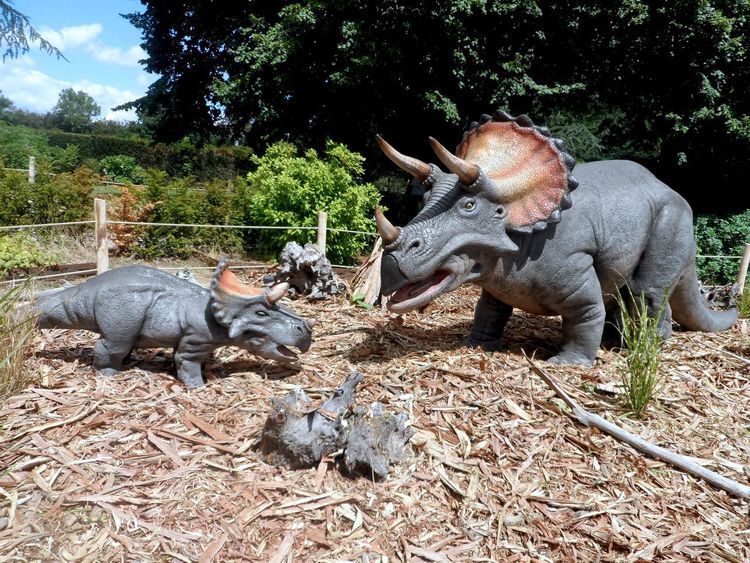
About twenty minutes by car from the center, the Dino-Zoo in Charbonnières-les-Sapins remains the most popular outing for children aged 4–10. The park follows a 2.5 km trail through shaded forest, dotted with life-size dinosaurs and more recently extinct species such as the woolly rhinoceros and the cave bear. On site you will also find play areas, a 4D cinema, the Megalodon River water attraction, and paleontological activities.
The 2026 season runs from February to mid-November, with a new nocturnal feature: a trail where dinosaurs light up with colorful LEDs at nightfall. Admission costs €19 per adult and €15.50 for ages 3–17, free for younger children.
Further afield, at 1,200 meters altitude in the Risoux forest, the Parc Polaire (25240 Chaux-Neuve, rated 4.2/5 on Google from 1,766 reviews) in Chaux-Neuve spans 12 hectares and is dedicated to animals from cold climates: reindeer, yaks, Arctic wolves, polar foxes, European bison, ibex, and marmots. The visit lasts around 1h30 and always takes place with a keeper-guide, a format that works very well with curious children. Allow around 1h15 by road from Besançon.
For a more peaceful experience, the Llama Farm in Mamirolle, a quarter of an hour from the city, allows you to get up close to these animals. Higher up in the Doubs, in Rochejean, the Ferme la Batailleuse raises goats, cows, pigs, rabbits, and poultry, with a teaching garden and a bakery that young children love.
Two more addresses round out this overview if you have extra time. In Damprichard, the bisons du Sachuron form a herd of around sixty American bison that you can approach from June to September aboard a large secured wagon, with a snack, tasting, or even a night in a tipi depending on the package. As for the Écomusée Michaud, it leans more toward the rural heritage of the Haut-Doubs than toward a zoo: a stop to slip into a day on the plateau.
Thrills and Outdoor Activities: Tree Climbing, Mountain Biking, and Summer Luge
The Haut-Doubs offers enough terrain to keep outdoor enthusiasts busy, with activities clearly suited to different ages. For climbing through the trees, the Au fil des arbres park in Malbuisson offers a green trail and a "Squirrel Cabin" for the youngest children, while teenagers head straight for the zip lines.
In Métabief, Métabief Aventures (Rue du Mont Chamois, 25370 Métabief, rated 4.5/5 on Google from 1,122 reviews) combines tree climbing and four-season mountain activities. The resort is also well known for its summer luge, which children almost always want to ride again the moment they reach the bottom.
If you want to go mountain biking, Métabief also claims the status of a family-friendly mountain bike resort, with green trails and rental shops offering electric bikes, very handy when the going gets steep. Closer to Besançon, there is no shortage of trails suited to little feet: Chailluz forest, the banks of the Doubs, and the marked paths through the hills. Our selection of hikes around Besançon will help you choose a short loop.
All these activities take place outdoors and therefore depend on the weather: schedule them at the start of your stay and keep the Citadelle or the Pavillon des sciences as a backup option if the weather turns.
Interactive Heritage: Steam Train, Science, and Escape Game
For learning without realizing it, the Doubs has several cards up its sleeve. The Coni'fer, billed as the highest steam train in France, runs at over 1,000 meters altitude across 8 km between Les Hôpitaux-Neufs and Fontaine-Ronde, at 15–20 km/h. The return journey lasts around 1h45, hauled by steam or diesel depending on the date, along a section of the former Paris–Milan international line closed in 1969 and subsequently restored by volunteers.
On rainy days, head to Montbéliard and the Pavillon des sciences (Parc du Près-la-Rose, 25200 Montbéliard, rated 4.5/5 on Google from 390 reviews), set in the Parc du Près-la-Rose. Throughout 2026, its exhibition "A Thousand Billion Ants" offers a hands-on exploration of the world of ants, of which there are more than 14,000 species.
In the Haut-Doubs, the Maison de la Réserve in Labergement-Sainte-Marie serves as the gateway to the Remoray lake nature reserve: exhibitions on local wildlife and flora, followed by guided nature outings in the field.
With teenagers, try L'Artefact, an outdoor escape game created by the board game bar Le Voyage Heure. A puzzle booklet takes you nearly 4 km through the city center, questioning facades and monuments, for 2 to 4 players, from age 14. You can find it at the tourist office, among other places.
Some stops on the Ryo audio-guided tour of Besançon also touch on this industrial and clockmaking heritage, recounted outdoors in just a few minutes per stop: a great complement if a break in the clouds lets you head back outside at the end of the day.
Excursions around Besançon: Château de Joux, Royal Saltworks, and Hérisson Waterfalls
The city also lends itself very well to day trips, provided you are willing to get back in the car. The major sites of Franche-Comté lie between twenty minutes and an hour and a half by road, enough to fill a week without ever repeating the same type of visit.
On the fortress side, the château de Joux, perched above Pontarlier, once controlled the road to Switzerland. The guided tour spans several centuries of fortifications, from the Middle Ages to more recent military additions, with dungeons and armories that spark the imagination far more than long information panels.
In Nancray, about twenty minutes from Besançon, the musée des maisons comtoises takes the opposite approach to a castle: a reconstructed village built from old farmhouses dismantled and reassembled on site, with gardens, animals, and workshops on event days. It can easily be visited in half a day.
Another standout site, the Royal Saltworks of Arc-et-Senans, the work of architect Claude-Nicolas Ledoux in the 18th century, has been a UNESCO World Heritage Site since 1982. Its semicircular plan, designed for salt production, intrigues children, and the gardens can be explored freely.
For nature, head to the neighboring Jura and the Hérisson waterfalls, a series of cascades along a marked trail. The full route tires young walkers quickly: aim instead for the first waterfalls, such as the Éventail.
The saut du Doubs, a 27-meter waterfall on the Swiss border, is easily reached by boat from Villers-le-Lac, with a short walk at the end. To the south, the vallée de la Loue, beloved by the painter Courbet, offers superb viewpoints all the way to the river's source at Ouhans, though its appeal remains limited for very young children.
Finally, three more urban options to the northeast. Montbéliard (Place Saint-Martin, 25200 Montbéliard), the city of princes, charms visitors with its colorful center and the château des ducs de Wurtemberg. Architecture enthusiasts will venture further to the Chapelle Notre-Dame du Haut in Ronchamp, designed by Le Corbusier in 1955 and listed by UNESCO in 2016, whose curved forms surprise children used to classical churches. And for those passionate about mechanics, the musée de l'Aventure Peugeot (Carrefour de l'Europe, 25600 Sochaux, rated 4.6/5 on Google from 5,430 reviews) in Sochaux traces two centuries of industrial history through hundreds of vehicles.
It's hard to fit everything into a single stay: our article on the must-sees of the Doubs helps you sort through these excursions based on your children's ages and the length of your visit.
Where to Eat with Children in Besançon
There is no need to look far: the historic center and its surroundings concentrate most of the family-friendly restaurants, from riverside terraces to cozy dining rooms.
For a simple meal between visits, La Boîte à Crêpes (6 Rue Ronchaux, 25000 Besançon, rated 4.6/5 on Google from 466 reviews), on Rue Ronchaux, serves Breton galettes and crêpes made with quality ingredients, for a budget of €11 to €20 per person. Book ahead at weekends.
For a more local food experience, let children taste the Comté classics: aged comté cheese, Morteau sausage, warm cancoillotte, or croûte aux morilles for the more adventurous. The cheese shops and markets in the center are perfect for an impromptu tasting, and our selection of culinary specialties of Besançon points you in the right direction.
Where to Stay: Our Top Picks
If you are staying in the city, choose accommodation close to the historic center, within walking distance of the riverbanks and the tram line. If you are traveling by car, our selection of accommodations leans toward peaceful houses a few minutes from Besançon.
The Maison Séré de Rivières, a four-star property, is one of three accommodations set up within the Fort de Fontain, south of the city: two rooms for four people, a fully equipped kitchen, and a green setting, with the added bonus of a 19th-century fort's history to share with the children.
For a larger group, the Villa du Papetier in Boussières has four rooms set in a 2-hectare park of centuries-old trees on the banks of the Doubs, with a picnic area and barbecue. It is located about 17 km from Besançon-Viotte station, a good compromise between access to the city and space for children to burn off energy.
Good to Know: Budget, Season, and Length of Stay
For a well-balanced stay combining the Citadelle, a boat trip, and one or two excursions, plan three to four full days. Two days are enough to cover the main highlights of the city center, but mean sacrificing either the wildlife parks or more distant sites such as the château de Joux or the Royal Saltworks.
Budget-wise, for two adults and two children aged 8 to 16, the main admission fees add up quickly: around €46 for the Citadelle, €52 for the cruise, and roughly €60 for the Dino-Zoo. Adding accommodation and meals, budget an average of €250 to €350 per day, an estimate that varies mostly depending on how many paid activities you choose. Several outings remain free — see the FAQ.
Spring and early autumn offer the best compromise: mild temperatures, open sites, and fewer crowds than in July and August. Summer remains the only period when all outdoor activities — summer luge and bison wagon rides included — run at full capacity.
To get there, Besançon-Viotte station is connected to Paris by TGV, and the Besançon Franche-Comté TGV station is about twenty minutes away by TER regional train. Once there, the historic center is best explored on foot, while the tram connects Viotte station to the Pont de la République and the outlying neighborhoods. A car remains necessary for most excursions (Dino-Zoo, Parc Polaire, Haut-Doubs, Jura).



FAQ
How much time should you plan to visit Besançon with family?
Plan three to four days to combine the Citadelle, a boat trip, a walking tour of Old Besançon, and at least one excursion to the surrounding area. A weekend is enough if you stay focused on the city center.
What budget should you plan for a stay in Besançon with children?
Around €250 to €350 per day for four people, including accommodation and meals. As a benchmark, admission to the Citadelle comes to around €46 for two adults and two children over 8, and the cruise on the Doubs costs €52.
What is the best time to visit Besançon with children?
Spring and early autumn offer the best balance between mild weather and moderate crowds. Summer remains ideal for making the most of outdoor activities such as the summer luge at Métabief.
What free activities can you do in Besançon with children?
The walk along the Doubs loop, the riverbanks, the Chamars promenade, and Parc Micaud are all free, as is the Chailluz forest for a first hike. Admission to the Citadelle is also free for children under 4.
Where can you easily park in Besançon with children?
The Citadelle has a paid car park near the entrance, the simplest option to avoid walking uphill. In the city center, several covered car parks line the Doubs loop, a few minutes from the pedestrian streets, and the tram allows you to leave your car on the outskirts.
Is Besançon a stroller-friendly city?
The historic center is generally easy to navigate with a stroller, including by tram, with the exception of a few hilly streets in Old Besançon and the rampart paths of the Citadelle, which are more uneven. For forest excursions or waterfall trails, a baby carrier is more practical.
Between the Citadelle and its insectarium, the cruise through the rock tunnel, and the llamas of Mamirolle, visiting Besançon with family feels less like a simple heritage weekend than an open-air playground — as long as you balance organized visits with leisurely wandering through the clockmaking alleyways. And when the rain arrives, the Pavillon des sciences steps in.
To get your bearings from the moment you arrive, the Ryo audio-guided tour of Besançon is the simplest starting point: its stops follow the pace of children, pausing as often as needed, without an extra paper guide in the nappy bag.
À lire également