© Shutterstock
 Votre guide Ryo
Visit Calais in 2 Days in 2026: Complete Itinerary, From the Belfry to Cap Blanc-Nez
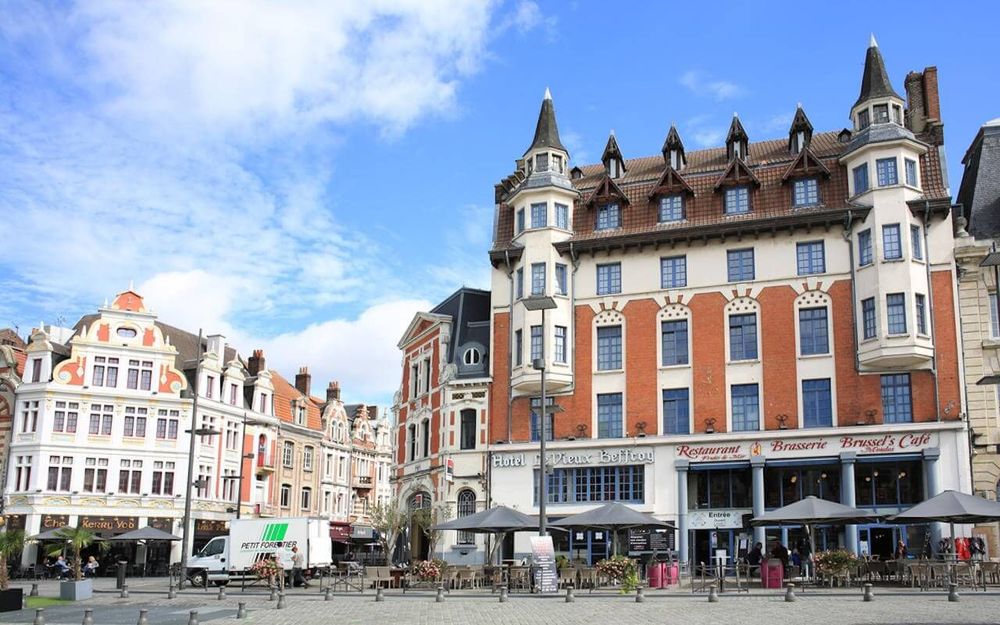
The wind sweeping across Place d'Armes in Calais carries a salty smell recognizable from a hundred meters away, that of the port just behind the Belfry, a UNESCO World Heritage Site since 2005. About twenty minutes on foot separate this historic heart from the beach, and the Opal Coast shoreline, white cliffs included, begins barely twenty minutes by road further on. To visit Calais in 2 days without rushing, here is an itinerary that links these two faces of the city, from urban heritage to wide-open coastal landscapes. The Ryo audio-guided tour of Calais follows a good part of this route, with 24 narrated stops over 5.6 km.
In two days, you have time to meet a 25-meter mechanical dragon that breathes steam on the seafront, compare the original plaster casts of the Burghers of Calais with Auguste Rodin's bronzes, and climb the 271 steps of a lighthouse that has lit the strait since 1848. You can also head to Cap Blanc-Nez to see England with the naked eye on a clear day, before coming back to eat mussels and fries facing the Channel. Here is how to spread all this over two days, without rushing.
Day 1 Morning: The Belfry, Place d'Armes and the Historic Heart
Calais is read in two halves. To the north, the old port town, tightly gathered around the harbor and almost entirely rebuilt after 1944, holds most of the heritage that can be visited on foot. To the south, on both sides of the canal, lie the residential neighborhoods and the train station. To visit Calais in 2 days efficiently, the whole first day takes place on the northern side, without taking the car.
The Calais Belfry leads the way. Built between 1911 and 1925 on the wing of the Town Hall in a Neo-Flemish style rather unexpected for northern France, it rises to 75 meters and has been part, since 2005, of the UNESCO-listed network of belfries of Belgium and France. You can climb up to the panoramic platform: on a clear day, the view reaches the English cliffs of Dover, about forty kilometers away on the other side of the strait.
The Town Hall that carries the belfry tells half of Calais's little history all by itself. The town changed hands several times over a few centuries: taken by Edward III after an eleven-month siege in 1346-1347, it remained English for more than two hundred years, until it was retaken by the Duke of Guise in 1558. Legend has it that Mary Tudor, Queen of England, said on her deathbed that she regretted the loss of Calais more than anything else in her reign. This siege story is also the one that inspired, three centuries later, the sculpted group of the Burghers of Calais that you will discover a little later in the day.
Two minutes on foot away, Place d'Armes (Place d'Armes, 62100 Calais, rated 4.4/5 on Google from 1.2K reviews) serves as an open-air living room. It is the former stronghold square of the medieval town, now lined with cafés and dominated by the Watchtower, a 13th-century relic that long served as a lighthouse before the current one was built. Settle on a terrace for a coffee before tackling the rest: the streets leading from the square toward the port trace the tight layout of the old town, with its facades rebuilt in a uniform post-war style that contrasts with the Flemish architecture of the Town Hall.
The Ryo audio-guided tour of Calais starts precisely with this Belfry and Place d'Armes sequence: its 24 audio stops recount in particular the siege of 1346 and the details of the Town Hall's Flemish architecture, enriching this first half hour without having your nose in a paper guide.
Continuing toward the port, the old town reveals an architectural patchwork you cannot guess from the square: a few half-timbered houses survived the bombings, surrounded by 1950s reconstruction buildings with plainer lines. The post-war reconstruction, carried out on a highly organized urban plan between 1945 and 1955, also explains the regularity of the brick facades you see today: strict alignments, uniform heights, a style found in other bombed towns of the northern coast such as Dunkirk or Boulogne. It is this diversity of styles, more than any single building taken in isolation, that gives the town center its identity.
Practical tip: the belfry can be visited almost every day except Monday, and the climb (a few euros) is well worth the detour if the weather is clear; otherwise keep the afternoon as a museum option, as the Lace City and the Fine Arts Museum are very close by.
The Fine Arts Museum and the Burghers of Calais
Five minutes on foot from the Belfry, the Calais Fine Arts Museum (25 Rue Richelieu, 62100 Calais, rated 4.3/5 on Google from 618 reviews) deserves an hour, especially if the local weather (changeable, to put it politely) pushes you indoors. The collection covers Flemish and French painting from the 16th to the 20th century, but the piece that truly justifies the detour is elsewhere: a set of original plaster casts of Auguste Rodin's Burghers of Calais group.
Rodin spent nearly ten years, between 1884 and 1895, sculpting this monument commissioned by the town to commemorate the siege of 1347. Legend has it that Edward III, hungry after bringing the town to its knees for eleven months, agreed to lift the siege on condition that six notables give themselves up barefoot, with ropes around their necks, to be executed. They were ultimately pardoned, but Rodin chose to sculpt them not as triumphant heroes but rather in their vulnerability, resigned and terrified. The final bronze stands in front of the Town Hall; the museum, for its part, keeps the plaster studies, often more interesting for anyone wanting to understand the artist's work.
Expect a reasonably priced admission (a few euros, free on some Sundays depending on the season) and favor late morning if you are heading to the Lace City right afterward; ask at the reception desk about possible combined tickets between the municipal museums.
The upper floors hold a few surprises: a section devoted to regional modern and contemporary art, and temporary exhibitions that change every four to six months. If you are traveling with children, the museum regularly offers playful trails around the legend of the Burghers, useful for turning the visit into a treasure hunt rather than an art history lesson.
The Lace and Fashion City
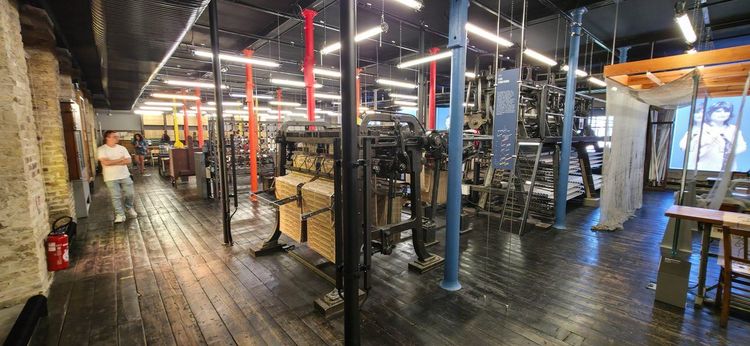
Calais was long, along with Caudry, the world capital of mechanical lace. The Leavers loom, smuggled in from England in 1816 by workers from Nottingham, made the town's industrial fortune for more than a century. The International City of Lace and Fashion (135 Quai du Commerce, 62100 Calais, rated 4.6/5 on Google from 1,972 reviews) traces this history in a converted former textile factory, a stone's throw from the center.
The permanent exhibition showcases Leavers looms still in working order, operated during regular demonstrations. You come to understand concretely why this lace dressed haute couture runways for decades, with the major fashion houses still counting among the clients of Calais's last manufacturers.
The museum also devotes a wing to contemporary fashion collections, and has notably exhibited the designer duo Maurizio Galante and Tal Lancman, who work Calais lace into haute couture pieces, object design and more experimental installations. The exhibition rotates enough that a second visit, a few years later, rarely shows the same thing.
One detail that often surprises visitors: this lace, which we associate with fine lingerie, is also used in aerospace and medicine for its precise mechanical properties. The City displays a few examples, far from the usual clichés on the subject.
Allow an hour and a half if you are interested in the industrial process, less if you head straight to the fashion collections. The site also has a shop with genuine lace pieces, noticeably more interesting than the usual seaside souvenirs.
Day 1 Afternoon: Notre-Dame Church and Open-Air Street Art
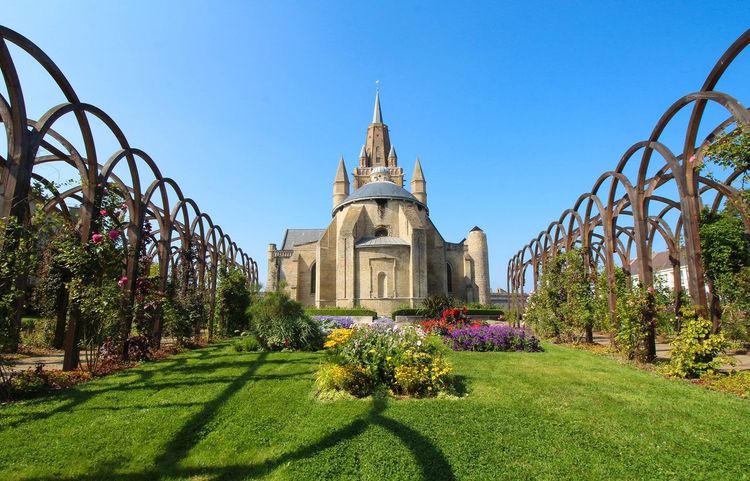
Leaving the Lace City, head back up to Notre-Dame Church in Calais (Rue Notre Dame, 62100 Calais, rated 4.4/5 on Google from 541 reviews), ten minutes on foot away. It is a rare case in France: a church built in the English Perpendicular Gothic style, with a massive 56-meter lantern tower rather than a classic spire, a direct legacy of English rule over the town. The Allied bombing of 23 September 1944 brought its bell tower crashing down onto the north transept; there was even talk of razing the building, which was eventually patiently restored between the 1960s and 2013.
The church holds a more personal memory for the French: it is here that Charles de Gaulle married Yvonne Vendroux on 7 April 1921, the young woman coming from a family of Calais industrialists (her father ran a biscuit factory). A plaque commemorates the event. Also look up at the light stone vaults and the stained glass windows by Gérard Lardeur, which contrast with the sobriety of the exterior facade.
On leaving, head to the district that has made Calais a special case on the French street art scene for about ten years. Calais street art has developed over the past decade, driven by guest artists who have painted entire gable walls of post-war reconstruction buildings, ideal surfaces for murals several stories high. The tourist office now counts 115 works scattered across the town, a true open-air museum.
Unlike other cities where street art hides in back alleys, Calais's can be seen from afar: some murals cover several stories and can be spotted from the main roads. The recurring theme, unsurprisingly, revolves around the sea, with sailor silhouettes or local figures humorously reinterpreted. Allow a good hour of walking to spot around ten murals; the tourist office offers a map dedicated to the street art trail, useful for not going in circles.
The works change gradually: some are restored, others replaced during successive editions of the festival, which gives you a good reason to come back if you already visited a few years ago.
This variety of styles, from the English Gothic of Notre-Dame to the contemporary murals two streets away, sums up quite well the varied architecture that is the true signature of central Calais: few spectacular isolated monuments, but a constant succession of style breaks within a few hundred meters. Plan for late-afternoon light for photos; the colors of the murals stand out noticeably better with a low sun.
The Calais Lighthouse and the Maritime Courgain
Continuing north, the Calais Lighthouse (Rue Philippe Daussy, 62100 Calais, rated 4.6/5 on Google from 1,250 reviews) marks the tip of the town facing the Channel. Commissioned on 15 October 1848, it stands 59 meters tall and is still in operation (automated since 1987), making it one of the few lighthouses in France that you can still visit while seeing it work at night. The climb, 271 steps, leads to a platform overlooking the port, the beaches and, on a clear day, the English coast all at once.
Right at the foot of the lighthouse lies the Maritime Courgain, the historic fishermen's quarter of Calais. The lanes here are narrow, lined with small low houses with colorful facades, a total contrast with the large reconstruction buildings crossed in the morning. The district has kept a distinct identity, almost a village within the city, where fishing families still live across several generations.
The Paradis basin, which borders the Courgain, once sheltered the artisanal fishing fleet; today it mostly hosts pleasure boats, but keeps its evocative name and a calmer atmosphere than the neighboring commercial port a few hundred meters away. The Calais Dragon, which we will come to tomorrow, has taken up residence a little further along, on the seafront.
Take the time to wander without a set route in the Courgain: it is one of the few districts of Calais where you can still feel the rhythm of a fishing town, far from the bustle of the cross-Channel terminal a few kilometers away. The concrete blocks of the former Atlantic Wall, still visible on some stretches of nearby beach, also recall the other historical layer of the area, occupied by the German army between 1940 and 1944.
For sunset, the jetty facing the lighthouse offers one of the best viewpoints in town, far less crowded than the more touristy seafront.
Day 1 Evening: The Beach, the Jetty and the Seafront
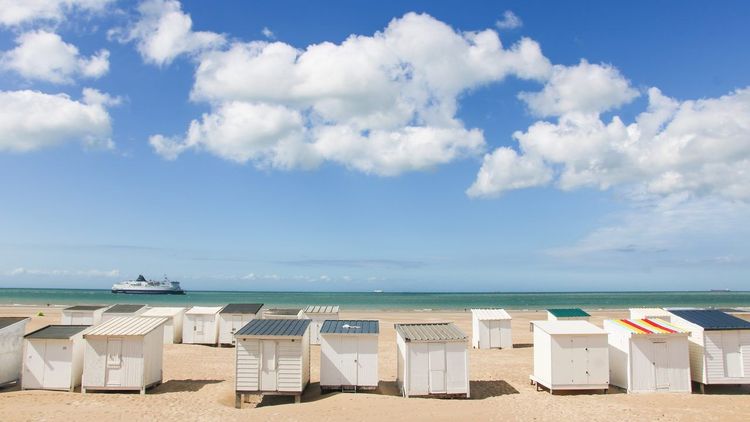
Calais beach begins literally where the Courgain ends: a strip of fine sand stretching for several kilometers to the west, much wider and less crowded than most beaches on the French coast in summer. People come as much to walk as to swim, as the Channel water stays cool even in August.
Calais's seaside vocation actually dates back to the 19th century, when wealthy English visitors crossed the Channel for sea bathing reputed to be invigorating. Villas from that era still stand along the seawall, now converted into restaurants or homes, discreet among more recent buildings.
The jetty that juts into the harbor channel is the most spectacular viewpoint at the end of the day: you watch the ferries leaving for Dover, and the setting sun lights up the town, the port and, in the distance, the English cliffs all at once. Walking out there at sunset is a fairly local ritual, tourists and Calaisiens mingled together.
The beach also holds the memory of a less lighthearted episode: the town, turned into a fortress by the occupier, was only liberated at the end of September 1944, after a ground offensive led by Canadian troops. A few remains of the Atlantic Wall, half-buried bunkers in the sand, quietly recall this history to anyone who takes the time to look for them.
A little hungry? The Courgain and the seafront hold most of the simple addresses for a no-fuss dinner: mussels and fries, catch of the day and Deux Caps beer, brewed locally, appear on almost every menu. No need to book on weekdays out of season; the seaside terraces are more than enough to close a first day that will already have covered most of the historic center and the seafront, from the Belfry to the jetty.
If you prefer to let audio commentary guide your walk rather than looking up information yourself, an audio-guided tour covers precisely this stretch of the seafront down to the beach, with a stop devoted to the town's seaside history and the dark hours of 1944, so you can walk without having your nose in your phone looking for explanations.
In high season, the seafront car parks fill up quickly in the late afternoon: it is better to arrive on foot from the center, as the distance does not exceed twenty minutes.
Day 2 Morning: The Calais Dragon and the Compagnie du Dragon
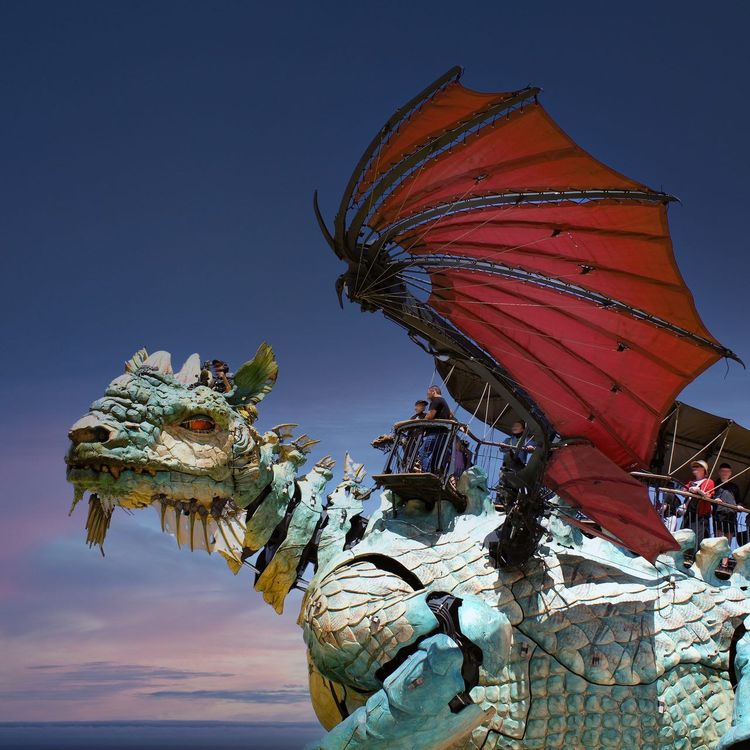
The second day starts with the most unusual, and probably the most photographed, attraction in the entire town. The Calais Dragon (Front de mer, 62100 Calais, rated 4.6/5 on Google from 5,145 reviews) is a mechanical creature 25 meters long, about ten meters high and weighing 72 tons, capable of walking, spitting smoke and carrying up to 50 passengers on the terrace of its tail during its outings.
The machine was designed by François Delarozière, the same creator behind the Machines de l'île de Nantes (the Elephant, the Heron Trees), which explains the family resemblance with its Nantes cousins. Inaugurated in November 2019 and housed in a dedicated hangar on the seafront, near Fort Risban, it has become in just a few years one of the tourist symbols of Calais, on a par with the Belfry or the lighthouse.
The Compagnie du Dragon, the local public company that manages and operates the creature, organizes rides at set times. Even without booking a ride, seeing the dragon at rest near its lair, its wood and metal scales gleaming in the morning light, is well worth the stop.
On site, an area recounts the construction of the machine, useful for grasping the scale of the project: several years of work, dozens of craftspeople, and mechanics operated live by machinists rather than by an automated program. It is this artisanal dimension, more than the size, that impresses most once you know what goes on behind the scenes.
You will hear it told among the most commented stops of the Ryo audio guide to Calais, which recounts precisely this lineage with the machines of the île de Nantes and the behind-the-scenes story of its design, an anecdote that changes how you see the beast once you know it.
The Memory 39-45 Museum and the History of World War II
Ten minutes on foot from the Town Hall, in Parc Saint-Pierre, the Memory 39-45 Museum (Parc Saint-Pierre, 62100 Calais, rated 4.4/5 on Google from 594 reviews) completes the historical angle of the heritage town center visited the day before, but from a darker perspective. The building that houses it is no ordinary one: it is a former German blockhouse, built in 1941 to serve as a naval command post, part of the Atlantic Wall's coastal defense system.
The fairly dense exhibition traces the occupation of Calais between 1940 and 1944: the town, located opposite England, was then considered by the German high command a major strategic point, heavily fortified and repeatedly bombed by the Allies in preparation for the landing, which would ultimately take place further west, in Normandy. The collections mix uniforms, weapons, period documents and reconstructed scenes of life in the blockhouse: radio room, dormitory, firing position.
Allow an hour, a little more if you read every panel in detail, and check opening times with the tourist office before going: the site has had periods of closure. The museum is particularly worthwhile for anyone who saw the remains of the Atlantic Wall on the beach or near the Courgain the day before: it finally gives full context to those half-buried concrete blocks in the sand, which otherwise seem like anonymous ruins.
If time is short, this is one of the sections you can shorten without much regret if military history interests you less than the rest of the itinerary, but it remains the most complete on this period at the scale of the town.
Richelieu Park and Saint-Pierre Park: A Green Break
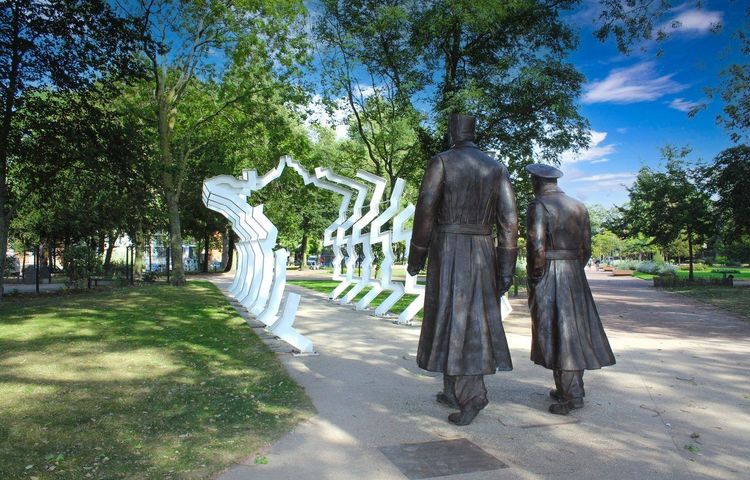
Between two dense visits, the Richelieu Garden offers a welcome breather. It is a fairly classic English-style park, with its lawns, bandstand and flower beds maintained all year round, ideal for a twenty-minute break before tackling the rest of the program.
The Saint-Pierre Park (Avenue Roger Salengro, 62100 Calais, rated 4.2/5 on Google from 2,511 reviews), larger, houses the Memory 39-45 Museum and faces the Town Hall. Its shaded paths and pond make it a natural thoroughfare between the station and the town center, frequented as much by Calais families as by passing visitors.
Neither park justifies a visit on its own, but both help anyone stringing together several museums in the same morning: a bench, a few minutes in the shade, and you set off again with the energy needed for the rest of the day, which promises to be more physical with the trip to Cap Blanc-Nez. This is also often where Calaisiens themselves come to have lunch on the grass in summer, a good sign that these parks are not mere decor for tourists.
Day 2 Afternoon: Excursion to Cap Blanc-Nez and the Opal Coast Shoreline
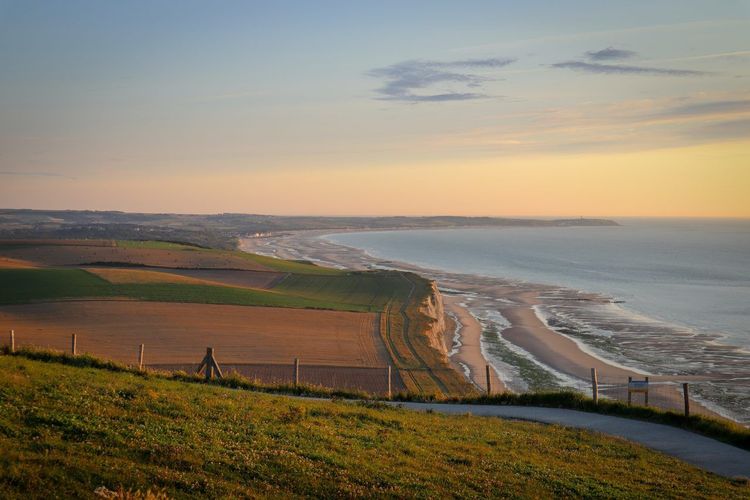
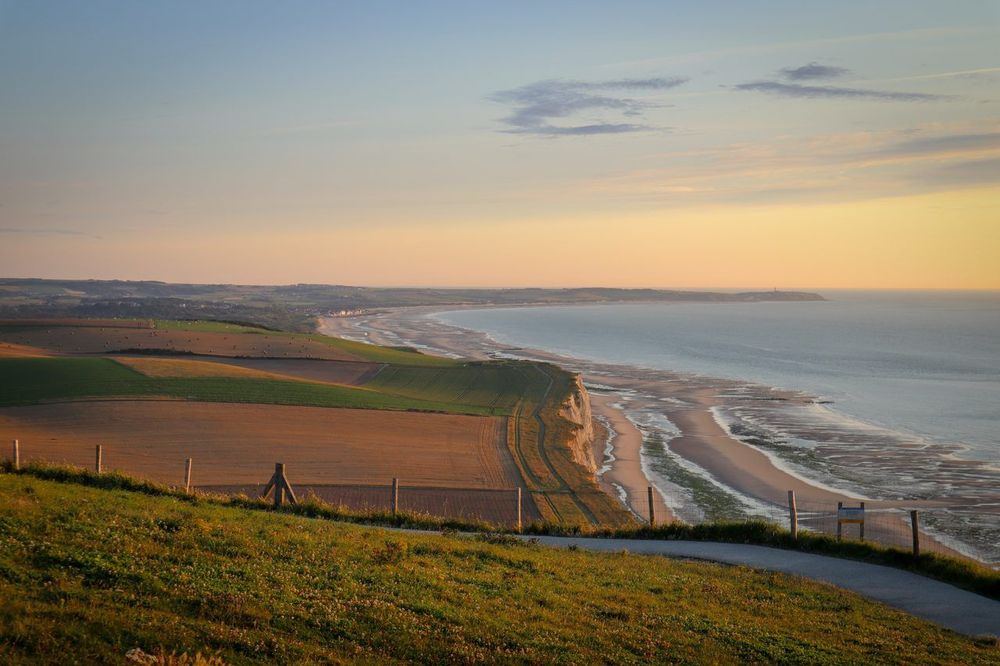
This is the outing that truly sets a real two-day weekend apart from a simple one-day visit of the town center. About twenty minutes by road (or by bus from the station, a regular line but infrequent on weekends), Cap Blanc-Nez (Route du Cap Blanc Nez, 62179 Escalles, rated 4.8/5 on Google from 1,929 reviews), in the commune of Escalles, opens onto the Grand Site de France des Deux Caps, labeled in 2011.
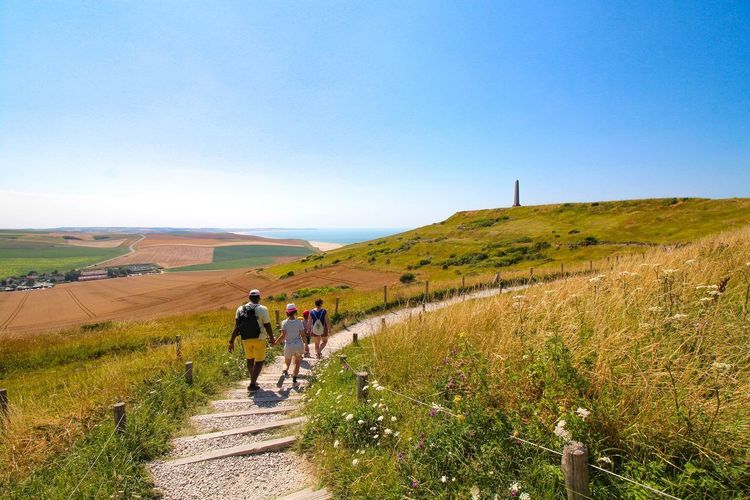
The white chalk cliffs rise 134 meters above the Channel, and the view from the summit, at the foot of the Dover Patrol obelisk erected in 1922 in tribute to the sailors of the Great War, is among the most photographed in northern France. In clear weather, the cliffs of Dover appear sharply on the horizon: the Strait of Dover, the narrowest part of the Channel, measures only about thirty kilometers a little further south, at Cap Gris-Nez.
The site also has a strong military dimension: several Atlantic Wall blockhouses, some still accessible, directly overlook the sea, designed to watch over this strategic passage between 1940 and 1944. The Germans had installed on this coastline, notably at Sangatte, heavy artillery batteries aimed at the English coast, whose concrete remains still dot the landscape.
The name Opal Coast, popularized in the early 20th century, comes from the changing reflections of the sea and sky, which shift from gray to opalescent blue depending on the light, a characteristic that local Impressionist painters widely exploited.
The Opal Coast shoreline continues beyond the cape for several dozen kilometers, but half a day is enough to grasp the essentials: the GR120 trails, which run along the top of the cliffs, offer views that change at every bend, between sheep pastures and sheer drops straight to the sea. The neighboring villages, Escalles at the foot of the cape, Sangatte on the Calais side and Wissant between the two capes, round off the outing if you still have an hour or two and the desire to extend the walk.
The site also shelters rare flora adapted to chalky soils, with several species of wild orchids visible in spring for those who know where to look, and a colony of seabirds nesting directly in the chalk of the cliffs.
Strolling at your own pace remains the best advice for this half day: the site imposes no fixed route, and most visitors settle for the short loop around the cape, about forty minutes round trip from the car park. If you have a car and an extra hour, push on to Cap Gris-Nez, about fifteen kilometers to the southwest, noticeably less crowded for an equally spectacular view.
The wind, almost constant on this stretch of coast, deserves to be taken seriously: even in midsummer, a windbreaker makes a big difference at the top of the cliffs. It is also this constant wind that has made the area a well-known spot for sand yachting and kite flying, practiced on the beaches below whenever conditions allow.
Logistically, it is better to leave right after lunch: allow for the round trip by car, one to two hours on site, and the return to Calais before nightfall in winter, when the secondary roads are poorly lit. For those who prefer a guided walk over an improvised one, Ryo details in a dedicated article several hiking routes around Calais, with several length variants depending on the time available and stops on the geology of the cliffs and the Atlantic Wall remains encountered along the way.
A Shopping Escape to Cité Europe and Local Calais Flavors
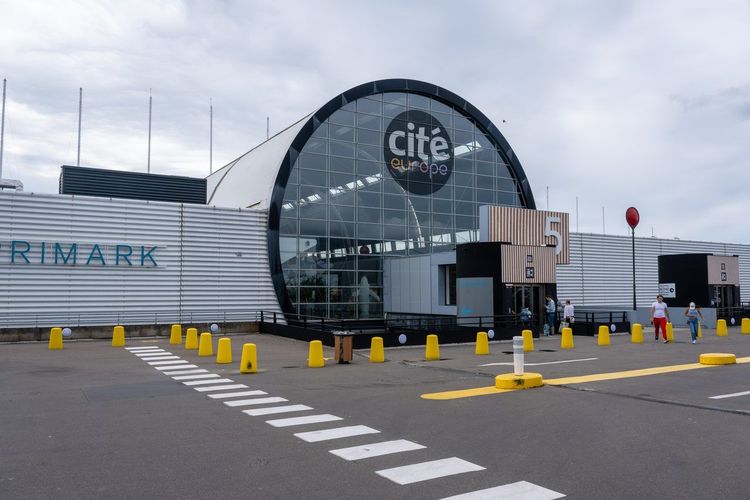
If the schedule still leaves a little time before heading home, or if rain sets in on the Opal Coast, Cité Europe (1000 Boulevard du Kent, 62231 Coquelles, rated 4.3/5 on Google from 17,511 reviews) offers an XXL alternative ten minutes by road from the center, right next to the Channel Tunnel entrance. The shopping center is one of the largest in northern France, with more than 150 stores, and traditionally draws a good share of its customers from England, attracted by tax-free prices on certain products.
Cité Europe opened its doors in 1995, originally designed to take advantage of the flow of travelers from the Channel Tunnel inaugurated the year before; since then, the center has diversified widely and now attracts local customers as much as cross-border ones. The place is obviously not a heritage site, but it rounds off well a weekend that has mostly worked the legs: free parking, varied dining, and a handy adjoining hypermarket for anyone wanting to bring back regional products without hunting for a delicatessen in the town center.
Which brings us precisely to local flavors: Calais and its surroundings are not lacking when it comes to food. Mussels and fries remain the safe bet on every seafront terrace, often accompanied by a Deux Caps beer, from a brewery based in Tardinghen, between the two capes, which offers several recipes, from blonde to amber. Welsh rarebit, the dish made of melted cheddar, beer and bread, of Welsh origin but long adopted across the whole North, also appears on many menus.
Maroilles, a strong cheese typical of the north, and waffles filled with brown sugar are among the classics found on markets as well as on the shelves of Cité Europe. Genièvre, a local eau-de-vie distilled in the region, rounds out the list for those seeking a souvenir with a stronger taste. A detour to the Place d'Armes market, on Wednesday and Saturday mornings, remains the best option for tasting these products directly from the producers rather than in a supermarket.
For those who want to extend their exploration of the region beyond these two days, an article lists several ideas for outings around Calais, between typical villages and other curiosities of the Pas-de-Calais: see what to see around Calais to go further.
How to Get to and Around Calais
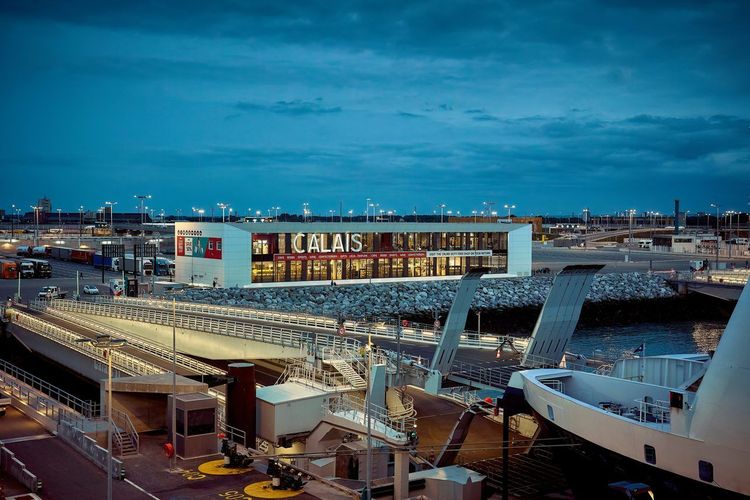
Calais is easy to reach from several directions. By ferry, crossings from Dover take about 1.5 hours and arrive directly in the port, a few minutes on foot from the historic center. The Eurotunnel, on the vehicle side, arrives rather at Coquelles, about fifteen minutes by road from the town center, not very practical without a car. By train, Calais-Ville station is linked by regional TER to Lille (about 1 hour), and Paris is reached in a little under two hours via the TGV at Calais-Fréthun or with a connection in Lille.
Once on site, the question often comes up: visiting Calais on foot, good idea or hassle? The answer fits in one phrase: good idea, as long as you plan well. The historic center, from the station to the seafront, can be crossed in about twenty minutes on foot, and most of day 1 (Belfry, museums, church, street art, lighthouse) is done without any motorized transport.
The real point of caution is day 2: the Dragon and the museums remain within walking distance, but Cap Blanc-Nez is another story. Without a car, you must rely on the regional bus line (reduced frequency on weekends, check the schedules before leaving) or on a taxi, as about twenty kilometers separate the town center from the cape. Some visitors rent a bike for the half day, doable in good weather, but the stretch is hilly and the wind can make the exercise a real workout.
In short: the town center is very easy on foot over the two days, but plan on a motorized means of transport, even just once, for the trip to Cap Blanc-Nez if you do not have a car.
Where to Stay and When to Visit Calais
For accommodation, two districts stand out. The town center, around Place d'Armes and rue Royale, holds most of the hotels and bed and breakfasts, handy for doing everything on foot from the moment you wake up. The Maritime Courgain, further north, offers a more authentic atmosphere and a few addresses with sea views, at the price of a slightly longer walk to reach the central museums each morning.
As for seasons, Calais can be visited year-round, but each period has its advantages. Spring (April to June) offers a good compromise: longer days, Cap Blanc-Nez cliffs covered in wildflowers, and still reasonable crowds. Summer remains the high season, with more reliable weather for enjoying the beach and coastal walks, but also more people on the ferries and in the center. In autumn and winter, the wind becomes sharper on the coast, the museums remain a good fallback option, and accommodation prices drop noticeably.
For any practical question about opening hours, current events (the dragon does not come out every day) or guided tours, the Calais tourist office, located in the heart of town near the Belfry, remains the most reliable and up-to-date resource. The staff know in detail the seasonal schedule changes of the museums, often more precisely than what you find online.
On the accommodation budget, a night in the town center generally runs between 70 and 120 euros for a decent hotel in low season, a bit more in summer. One last tip for the two days: book the Dragon rides and, if possible, a slot at the Lace museum in high season, as these two activities sometimes sell out on busy days, unlike the rest of the itinerary, which can be visited freely without reservation.
Budget for a 2-Day Weekend in Calais
For two days, expect a reasonable budget compared to other French coastal destinations: accommodation (70-120 euros per night), meals (25-40 euros per day per person for two decent meals), museum admissions (often between 4 and 8 euros each), and occasional local transport for the trip to Cap Blanc-Nez. In total, a couple can wrap up the weekend with 250 to 400 euros, not including transport to Calais.
Is Calais worth the detour? In light of this itinerary, clearly yes, as long as you do not limit yourself to the cross-Channel terminal area that most travelers pass through without stopping. One or two days on foot are more than enough to cover the essentials: one day for the historic center and the seafront, a second for the Dragon, the day 2 museums and above all the trip to Cap Blanc-Nez, which alone justifies not settling for a simple stop of a few hours.
Those who truly have only one day can merge the morning's historic center with the afternoon's Dragon, sacrificing either the museums or the trip to the cape, depending on their priorities.



FAQ
Is two days enough to visit Calais?
Yes, two days let you cover the essentials without rushing: the historic center and the seafront on the first day, then the Calais Dragon, the museums and the trip to Cap Blanc-Nez on the second. With only one day, you already have to make choices and sacrifice either the museums or the coastal excursion. Two days remain the most comfortable format for enjoying both the urban heritage and the wide open spaces of the Opal Coast, without feeling like you are ticking boxes in a hurry.
What should you see first in Calais if you only have one day?
With a single day, focus on the Belfry and Place d'Armes in the morning, then the Calais Dragon and the seafront in the afternoon. This trio covers the historic heritage, the city's most unusual attraction and the waterfront in just a few hours. The museums (Fine Arts, Lace, Memory 39-45) and Cap Blanc-Nez each require extra time and are naturally saved for a second visit, if your schedule does not allow you to fit everything into a single day.
Is Calais really worth the detour for a weekend?
Yes, provided you step outside the immediate area around the cross-Channel terminal. The historic center, the Courgain district, the mechanical Dragon and above all the cliffs of Cap Blanc-Nez offer a diversity of landscapes and atmospheres you would never guess from driving through the city. Calais remains less well known than other destinations on the French coast, which also means more reasonable crowds, even in the height of summer, and generally more affordable accommodation prices.
What budget should you plan for visiting Calais in 2 days?
Plan on between 250 and 400 euros for two people over two days, not including transport to Calais: accommodation at around 70 to 120 euros per night, meals between 25 and 40 euros per day per person, and a few euros for each museum visited. The trip to Cap Blanc-Nez adds the cost of a bus, a taxi or a rental vehicle if you do not already have a car on site, the only truly variable expense depending on the mode of transport you choose.
What is the best time of year to visit Calais?
Spring (April to June) offers the best compromise between pleasant weather, long days and still moderate crowds, with the cliffs of Cap Blanc-Nez covered in wildflowers. Summer is a safer bet for weather if you want to enjoy the beach, at the price of a few more people. Autumn and winter are best suited to a weekend focused on museums and heritage, as the wind on the coast becomes harder to face on a long walk along the cliffs.
Can you visit Calais on foot without a car?
Yes for most of the historic center: the Belfry, Place d'Armes, museums, Notre-Dame church, street art, lighthouse, Courgain and seafront are all very easy to cover on foot over the two days, with reasonable total distances. The one notable exception is Cap Blanc-Nez, about twenty kilometers away, which requires a bus, a taxi or a car for the afternoon of the second day. The rest of the itinerary needs no motorized transport, a real advantage for anyone traveling light.
How do you get from Calais to Cap Blanc-Nez?
The trip takes about twenty minutes by car from the center of Calais. By public transport, a regional bus line serves the area but with reduced frequency on weekends, so check before you leave. Some visitors opt for a bike (doable but hilly and windy) or a taxi for a more direct trip. Allow for the round trip plus one to two hours on site to enjoy the viewpoint and the trails along the top of the cliffs without rushing.
In Summary
Two days are enough to make Calais much more than a stopover before the crossing: a dense historic center around the Belfry, a seafront that keeps the memory of the 1944 Liberation, a mechanical dragon that has nothing to envy to those of Nantes, and white cliffs that rank among the finest viewpoints on the French coast. The itinerary proposed here links these places in an order that limits unnecessary back-and-forth, while leaving room to linger longer wherever the mood strikes.
Want to walk while listening to the anecdotes rather than reading them on your phone? With its 24 audio stops, this Ryo audio guide follows a good part of this route, from the Belfry to the seafront, for about 2h15 of walking over 5.6 km. A great way to turn these two days into a real discovery of the town, rather than a mere technical stop between two Channel crossings.
À lire également