© Shutterstock
 Votre guide Ryo
The Best Walks in Le Mans in 2026: Cité Plantagenêt, Arche de la Nature, and Green Spaces
Every walk in Le Mans should begin along the Sarthe, facing the west façade of the Roman walls: the stones change color from bay to bay, an alternation of red brick, russet sandstone, and pale limestone arranged to impress visitors seventeen centuries ago. It is from this side that the most iconic promenade in the city begins, the one that crosses the Cité Plantagenêt, and that our Ryo audio-guided tour of Le Mans lets you follow step by step, with commentary in your ear.
But the city is not limited to its old town. A 72-kilometer green loop, the Boulevard Nature, encircles the agglomeration for walkers, cyclists, and horse riders. A 500-hectare estate ten minutes from the center is home to Saosnoise cows and Norman donkeys, freely and openly accessible. Less than an hour's drive away, the gorges of the Sarthe trace the Alpes Mancelles, a relief you would not expect to find in this department. And on the other side of the border with Mayenne, Sainte-Suzanne, listed among the Most Beautiful Villages of France, once held its own against William the Conqueror. Here are the itineraries that best capture the city and its surroundings, from the historic center to the forests of Sillé and Bercé.
The Cité Plantagenêt, the Historic Walk at the Heart of Le Mans
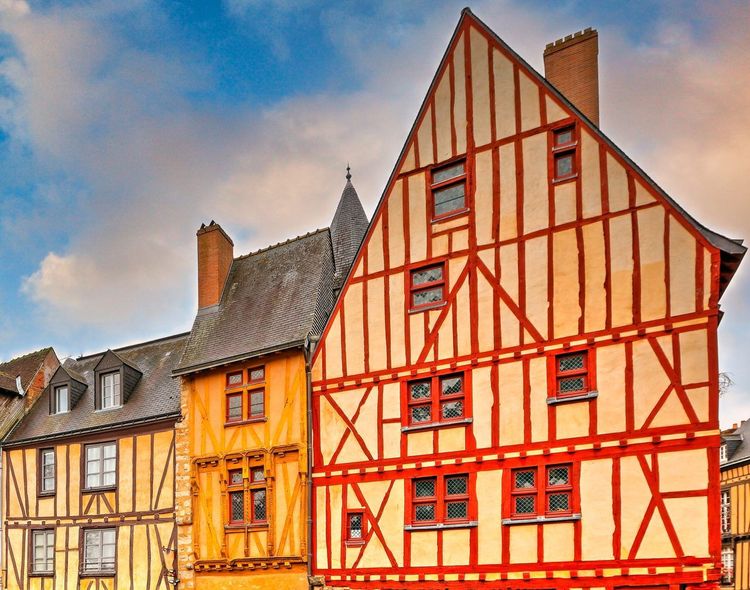
The Cité Plantagenêt occupies the hill overlooking the Sarthe, a medieval core that has remained remarkably homogeneous because the modern city developed around it without tearing it down. Cobbled alleyways, half-timbered houses, Renaissance mansions: the quarter has in fact served as a backdrop for numerous period films, from Cyrano de Bergerac to Le Bossu.
The name of the quarter refers to Geoffrey V of Anjou, nicknamed Plantagenêt after the sprig of broom (planta genista) he reportedly wore in his hat. It is in the cathedral of Le Mans that he married Matilda, heir to the English throne, in 1128, and it is there that he rests. Their son, the future Henry II of England, was born in Le Mans in 1133: the Plantagenet dynasty thus has deep roots in Le Mans, even if the city retains few direct monumental traces of them.
The Gallo-Roman ramparts encircling the city rank among the most celebrated ancient fortifications in Europe. The walls, raised in the 4th century, measured approximately 1,300 meters in length, of which nearly 500 meters remain very well preserved. Their polychrome geometric decoration — red brick alternating with pink or pale stone — has no equivalent in France and earned Le Mans the nickname 'the red city'. The finest section is discovered on the western side, along the Sarthe, from the Gourdaine and Tanneries gardens. Listed as a historic monument as early as 1862, the walls have been a candidate for UNESCO World Heritage status since 2016.
At the top of the city stands the Saint-Julien Cathedral of Le Mans (Place du Cardinal Grente, 72000 Le Mans, rated 4.7/5 on Google from 4,004 reviews), a spectacular structure juxtaposing a Romanesque nave completed around 1120 and a Gothic choir consecrated in 1254, ten meters taller. Its Y-shaped flying buttresses, seen from the place des Jacobins, form one of the most photographed silhouettes in the city. Inside, look for the Ascension stained-glass window, dating from around 1120, in the Romanesque nave: it is one of the oldest stained-glass windows still in situ in the world. The tomb of Charles IV of Anjou, sculpted by Francesco Laurana around 1480, also merits a stop.
The walk continues along the Grande Rue, the old commercial thoroughfare, lined with half-timbered houses whose carved façades date back to the late Middle Ages. The Maison des Deux Amis and the Maison du Pilier Rouge are among the most photographed. Take the time to look up: carved posts, jetties, and signs often tell the story of the original owners, a detail that most hurried visitors miss entirely.
In the evening, the city changes pace. The alleyways empty after the shops close and become ideal for a post-dinner stroll, especially since several restaurants have set up in the quarter's historic buildings. In summer, the Nuit des Chimères projects luminous illustrations onto the façades of the city and the cathedral, a good reason to plan your walk in Le Mans at nightfall.
Allow 1h30 to 2h for a leisurely visit, longer if you step inside the cathedral or sit down on a terrace. The cobbled and sloping streets can only be explored on foot and are not well suited to pushchairs or wheelchairs throughout the route.
To make the most of this maze, the Ryo audio-guided tour of the Cité Plantagenêt strings together 20 audio tracks over approximately 2 kilometers, from the Gallo-Roman ramparts to the Saint-Julien Cathedral via the half-timbered houses of the Grande Rue. Each story triggers at the right spot, with no need to hunt for an information panel.
This urban walk is just a gateway: the sunken lanes and footpaths of the agglomeration extend the outing for those who want to leave the cobblestones without leaving the metropolitan area, starting with the Arche de la Nature.
The Arche de la Nature, the Favorite Green Walk of Le Mans Residents
About ten minutes from the city center, to the east of Le Mans, the Arche de la Nature (51 rue de l'Estérel, 72100 Le Mans, rated 4.4/5 on Google from 1,293 reviews) offers a completely different experience. This 500-hectare estate managed by Le Mans Métropole brings together river, bocage, and forest, the latter covering some 300 hectares on its own. It is freely and permanently open to the public, making it the most frequented nature outing for residents, far more so than for passing tourists.
The estate is organized around three hubs connected by marked trails for walkers and mountain bikers:
- the Maison de l'Eau, with its aquariums of river fish (trout, barbel, bream), an exhibition on the history of water treatment, and a Bollée windmill — a Le Mans invention — reassembled on site;
- the Maison de la Prairie and its farm, home to local breeds: Saosnoise cow, Porc Blanc de l'Ouest pig, Norman donkey, and Le Mans hen, alongside an educational kitchen garden;
- the Maison de la Forêt, the starting point for forest trails, where you may occasionally spot roe deer, wild boar, or pheasants.
Coming with family? The remarkable trees circuit, 2.5 kilometers long, can be done without difficulty with children, as can the barefoot paths and play areas. The more active will find a disc-golf course, three orienteering courses, and an arboretum. In summer, a carriage drawn by two Percheron horses roams the estate, and bicycle and canoe rentals add variety to the experience.
On Sunday mornings, it is not uncommon to meet whole families who have simply come to watch the farm animals, with no other goal than getting some fresh air. Picnic tables scattered along the trails make for a convenient mid-route break.
Wear sturdy shoes once you leave the main paths: the meadow and bocage areas remain damp for much of the year, and some passages become muddy after rain. Allow a good half-day to explore several hubs at a leisurely pace. The estate's reception office is at 51 rue de l'Estérel, and the arche-nature.fr website publishes an interactive map of themed routes.
The ideal combination for a full day? In the morning, follow the Ryo audio-guided tour through the Cité Plantagenêt; in the afternoon, head to the Arche de la Nature. You will thus cover the heritage and the green open spaces of the agglomeration without retracing your steps.
The Boulevard Nature, the Green Corridor Encircling the City
The Boulevard Nature (72000 Le Mans) is a 72-kilometer loop that winds around the Le Mans agglomeration. Reserved for non-motorized users, it welcomes walkers, cyclists, rollerbladers, wheelchair users, and horse riders, with picnic areas and signage devoted to the history and nature of the places it passes through.
The route opened in successive sections: the tourist office announced 52 kilometers accessible out of 72 before the planned completion of the loop. There is no need to walk it all at once: the numerous access points allow you to cover just one section, on foot for an hour or by bike for half a day.
To choose your section, the tourist office has reprinted the walking booklet 'Autour du Boulevard Nature': 24 fold-out cards (€9) detailing stages, duration, distance, historical anecdotes, and practical tips. Six of these walks are accessible to wheelchair users and three-wheel pushchairs, a real advantage for a family walk in Le Mans.
How to approach the loop when you don't know the city? The simplest approach is to find a section in the booklet close to your accommodation, then walk it as an out-and-back. By bike, a 20-to-30-kilometer stretch comfortably fills half a day, including breaks. On foot, one booklet card generally represents one to two hours of walking, ideal for a late afternoon. The themed panels installed along the route turn the outing into a small lesson in local history and natural sciences, which helps motivate children along the way.
Opt for weekday mornings if you are looking for quiet: at weekends, sections near residential areas attract joggers and cycling families. Our Ryo audio-guided tour remains focused on the historic heart; save it for the Cité Plantagenêt and keep the Boulevard Nature for an outdoor outing, walking booklet in hand.
Waterside Walks: the Sarthe, the Loir, and Parc Théodore Monod
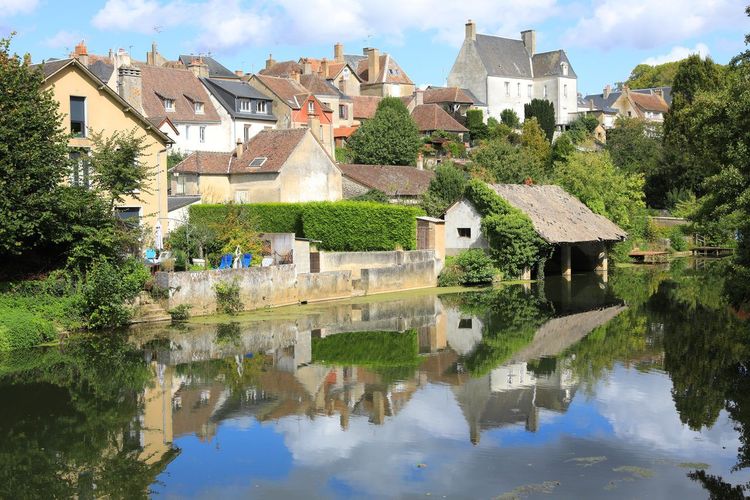
Le Mans developed along the Sarthe, which is joined by the Huisne to the south of the city center. The riverbanks, laid out as a promenade, offer one of the most peaceful outings in the city, with the ramparts of the old town reflected in the water at the end of the day. The Gourdaine gardens and the Tanneries gardens, at the foot of the walls, link the river to the Roman and medieval ramparts.
A little further along, the Île aux Planches is presented by the tourist office as a little paradise for nature lovers, while parc Théodore Monod (72000 Le Mans, rated 4.4/5 on Google from 2,282 reviews) is among the green spaces recommended for a peaceful break. These are good options for a short stop between two visits in the center.
The commentary of the Ryo audio-guided tour of Le Mans revisits the quaysides and the bridges spanning the Sarthe, such as the pont Yssoir at the foot of the old city. A good way to understand why the ancient town was built on this hill rather than elsewhere — a detail that most unguided walks leave aside.
About three-quarters of an hour to the south, the Loir valley offers another type of waterside outing. Between La Flèche and Château-du-Loir, the river winds through poplar groves and vineyard slopes, with paths suitable for walking as well as cycling. The villages are often built in pale tuffeau stone, which contrasts with the russet sandstone of Le Mans: you step into a different geological landscape as soon as you leave the agglomeration.
Fancy seeing the city from the water? Canoe rentals offered in season at the Arche de la Nature provide a different perspective on the river, far from traffic. And if you prefer to stay on the bank, the benches along the quays are perfect for watching herons and ducks at sunset, with the silhouette of the cathedral in the background.
For a short outing, stick to the quays and gardens in the center, doable in an hour. For a full day, combine the Loir valley with a stop at Luché-Pringé, described further on, and plan a picnic: shops are scarce outside the village centers.
Gardens and Parks in the Center: the Green Side of Le Mans
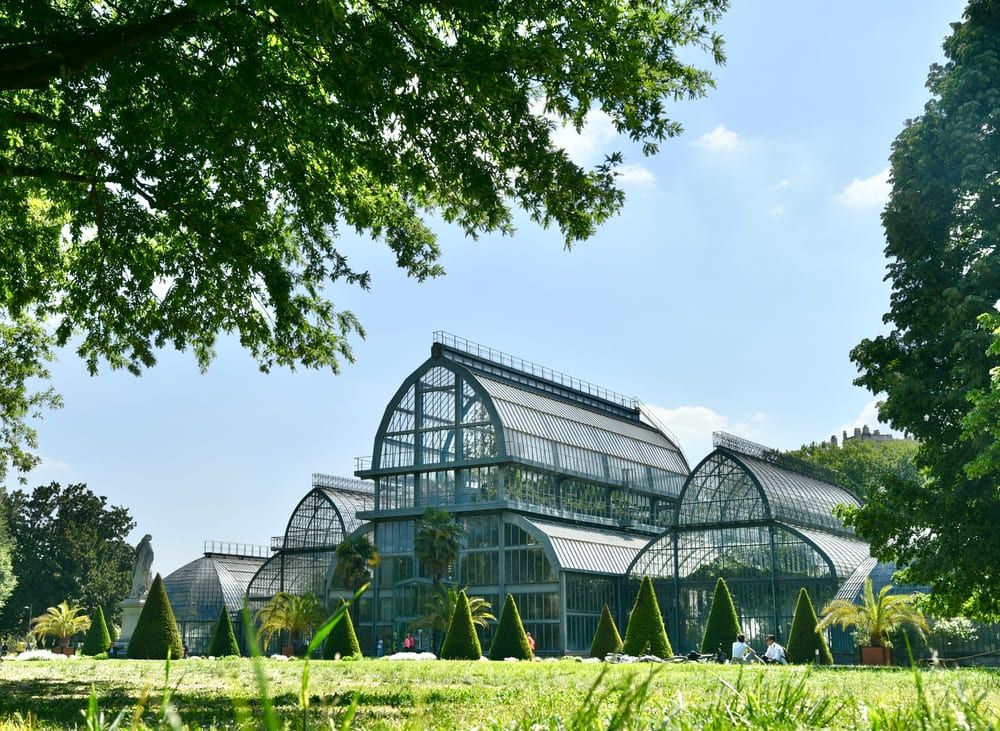
Only have an hour? The Jardin des Plantes, opened in 1867, remains the safe bet. Its formal French section, inspired by the gardens of Versailles, sits alongside a landscaped park and a tropical greenhouse, all just a few minutes' walk from the station.
Close to the cathedral, the Quinconces des Jacobins lines up plane trees over a hundred years old: it is the historic meeting place of the people of Le Mans, and the best vantage point for the apse of Saint-Julien.
Other spaces are worth a detour depending on your neighborhood:
- the parc des Gentianes, with its wildflower meadows, awarded in 2022 for biodiversity preservation;
- the parc Banjan, whose shaded paths lend themselves to family walks;
- the plaine du Gué de Maulny, a wide open space for picnics and outdoor games;
- the arboretum de la Grand Prée, for lovers of rare tree species.
The tourist office lists around thirty parks and gardens in the city: enough to plan an entirely green walk in Le Mans without getting in a car, by linking, for example, the Jardin des Plantes, the Jacobins, and the gardens along the Sarthe.
Hikes in the Sillé-le-Guillaume Massif and the Alpes Mancelles
Less than an hour to the north of Le Mans, the landscape changes radically. The Alpes Mancelles form a natural region of some 355 km² straddling the Sarthe, Mayenne, and Orne departments, attached to the Armorican Massif and included in the Normandie-Maine Regional Natural Park. The Sarthe has carved deep valleys here, with rocky escarpments you would not expect to find in the department. The area's highest point, the Mont des Avaloirs, reaches 416 meters on the Mayenne side.
The origin of the name has a legendary quality: in the 7th century, two hermits from Spoleto, Céneri and Cénerède, are said to have found in these hills an air reminiscent of the Alps they had just crossed. The first gave his name to Saint-Céneri-le-Gérei, listed among the Most Beautiful Villages of France.
Saint-Léonard-des-Bois is the iconic village of the massif and the best base for exploring. This is where the Vallée de Misère begins, one of the most spectacular sites in the area, and where the Toyères viewpoint offers a sweeping view down over the Sarthe valley. Hiking, climbing, canoeing, and mountain biking are all practiced here in season.
A few kilometers away, Fresnay-sur-Sarthe provides another gateway, with the ruins of its castle perched above the river and several trail starting points from the village.
Further south, the Sillé forest offers a different profile, less rugged but very extensive: approximately 3,500 hectares between the Sarthe and Mayenne, acquired by Louis XIV in 1683 for his legitimized daughter, and a state forest since 1925. Its 40-hectare lake hosts water sports, and the Tour des Étangs de Sillé remains the most popular outing, flat and shaded, ideal for families. Climbers know Roche Brune and the Saut du Cerf, two climbing sites in the massif, and the La Rosière area is one of the appreciated starting points for hikers.
For more variety, the Circuit de Verniette and the Circuit de Cordé venture away from the swimming area, while the Circuit de la Forêt de Mézières and the Sentier Découverte Nature, being shorter, suit a two-to-three-hour outing with children. The small village of Tronchet, neighboring Mézières-sous-Lavardin, serves as a discreet starting point for these walks in the Sillé canton.
At the far north of the department, on the outskirts of Alençon, the Perseigne forest closes this chapter with its beech groves. The village of Saint-Rigomer-des-Bois, surrounded by the forest on three sides, makes a peaceful starting base. If you venture that far, our article on what to do in Alençon details the other visits possible in this neighboring city.
Beaumont-sur-Sarthe (Place de la Mairie, 72170 Beaumont-sur-Sarthe, rated 3.9/5 on Google from 16 reviews), halfway between Le Mans and the Alpes Mancelles, makes a logical stop to break the journey: the small town overlooks the Sarthe and retains the remains of its medieval castle and an old bridge that is worth a photo stop in itself.
Wear proper walking shoes for the Vallée de Misère: some rocky passages become slippery in wet weather. The loops around the Sillé ponds, on the other hand, remain walkable almost year-round.
The Bercé Forest, an Oak High Forest South of Le Mans
About 35 kilometers to the southeast of Le Mans, the Bercé forest is the other major unmissable massif of the Sarthe, celebrated for its tall sessile oaks whose timber is prized for barrel-making. The futaie des Clos, where some of the oldest trees in the massif stand, remains the best-known walk.
Jupilles, a village bordered by the forest, is its natural gateway. Here you will find Carnuta, the Maison de l'Homme et de la Forêt, an interactive space housed in a timber building that presents the history and ecology of the massif: a good introduction before heading out on the trails, especially with children. Around the village, marked loops lead to groves of sequoias and the fontaine de la Coudre.
Allow half a day to combine Carnuta with a forest loop. Further south, on the borders of Anjou, the Chambiers forest extends the escape for those heading down toward the Loir valley.
Walks in the Picturesque Villages Around Le Mans
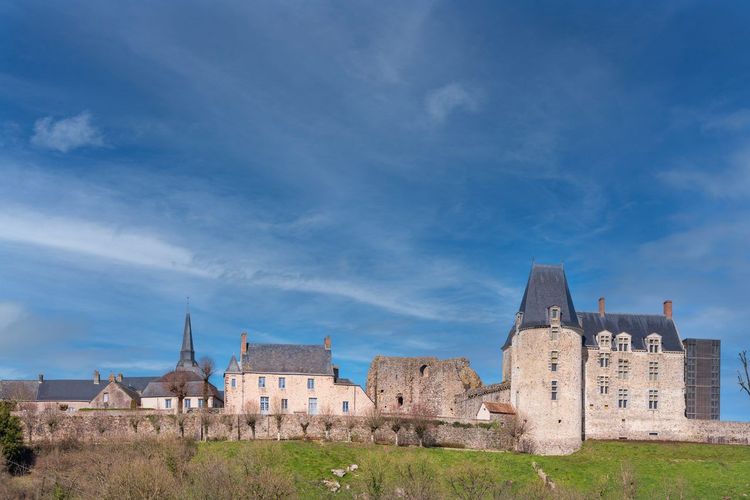
Sainte-Suzanne, about 48 kilometers to the west of Le Mans on the Mayenne side, stands out as a star attraction: the village is listed among the Most Beautiful Villages of France. Perched above the Erve valley, it withstood a siege led by William the Conqueror from 1083 to 1086, who had set up the 'camp des Anglais' nearby. The keep, dating from the first half of the 11th century, is the oldest monument in the medieval city, and the walk around the ramparts offers open views over the bocage.
Luché-Pringé (Place de l'Église, 72800 Luché-Pringé, rated 4.5/5 on Google from 120 reviews), in the Loir valley already mentioned, plays in a more understated register. The village stretches alongside the river, and the château de Gallerande adds a fairytale silhouette to the walk. Allow an hour to tour the village and stroll along the Loir.
Montfort-le-Gesnois, to the east of Le Mans, rounds out the list with a different profile: the municipality, born in 1985 from the merger of Montfort-le-Rotrou and Pont-de-Gennes, stretches along the Huisne, in a landscape of wet meadows more open than that of the Alpes Mancelles.
Around the agglomeration, several communes offer marked trails that are less spectacular but very practical for a short outing: Coulaines and Rouillon (vineyard circuit, 8 km), Ruaudin, Mulsanne (circuit du Houx, 7 km), the latter known for the Hunaudières straight of the 24 Hours of Le Mans, but also Moncé-en-Belin, Brette-les-Pins, Saint-Mars-d'Outillé, Saint-Saturnin, La Bazoge, and Pruillé-le-Chétif. Sargé-lès-le-Mans offers an 11 km loop along medieval lanes.
If time is short, prioritize Sainte-Suzanne for heritage and Luché-Pringé for the gentle charm of the Loir valley. A car is recommended: public transport links between these villages remain limited, especially at weekends.
Where to Rent a Bike to Extend Your Walk in Le Mans

Several itineraries in this guide, notably the Boulevard Nature, the Arche de la Nature, and the Loir valley, can be explored just as well by bike as on foot. If you don't have your own, several options are available.
On site, the Arche de la Nature itself offers bicycle rentals (and canoe rentals) in season, making it convenient to explore the estate without carrying anything. For longer outings, rental shops and cycle workshops such as Le Perche à Vélo, THE GREEN BIKE, and Hadrien Legagneur Cycles supplement the offering, with standard or electric-assist bicycles depending on the outlet. Check directly on available models and book the day before in high season, as electric bikes go quickly at weekends.
Once equipped, the La Sarthe à Vélo network lines up over 400 kilometers of waymarked routes. Its flagship axis, the Vélobuissonnière (V44), links Alençon to Saumur over 230 kilometers through the Sarthe, making it possible to string together the Alpes Mancelles, Le Mans, and the Loir valley over several days.
Practical Tips for Planning Your Walk in Le Mans
How to find walking trails suited to your level? Start with the Le Mans tourist office at 16 rue de l'Étoile, opposite the Jacobins center and a short walk from the cathedral. It sells the 'Autour du Boulevard Nature' booklet and provides information on the agglomeration's walking circuits. Several hiking websites and apps, such as Visorando, also list loops with distance and duration. For the more distant massifs, the local tourist offices of Sillé-le-Guillaume or the Alpes Mancelles remain the best sources.
For safe routes tailored to your needs, distinguish between urban walks, which present no particular difficulty, and forest hikes or routes in the Alpes Mancelles, where mobile coverage can become patchy. Let someone know your itinerary before heading into the Sillé forest or the Vallée de Misère, and keep a paper map as a backup to your phone.
The best season for hiking around Le Mans is spring and early autumn: the Alpes Mancelles and the Sillé forest, very busy in summer, regain their calm from September, and the Bercé forest takes on its colors. Winter remains pleasant for urban walks, the Cité Plantagenêt first and foremost, but the damp trails of the Arche de la Nature call for waterproof footwear.
For family walks, favor the Boulevard Nature (six routes in the booklet are accessible to three-wheel pushchairs and wheelchairs), the Sillé ponds loop, and the remarkable trees circuit at the Arche de la Nature. The Cité Plantagenêt, cobbled and hilly, is better tackled with a baby carrier. Equipment-wise, nothing technical is needed for the majority of outings in this guide: closed-toe shoes, water in summer, and a light layer for viewpoints exposed to the wind.
For getting around, the metropolitan public transport network, including the tram, allows you to reach the Cité Plantagenêt and several parks without a car. For the Alpes Mancelles, the Sillé forest, Bercé, or Sainte-Suzanne, a vehicle remains virtually essential, unless you opt for cycling on the department's bike routes. Also remember to check the opening hours of facilities (Maison de l'Eau, Carnuta, the Sainte-Suzanne keep) before you set off: they vary by season.
Finally, allow extra time beyond the stated duration of any circuit: between photo stops, picnics, and the temptation to linger, an outing almost always takes longer than planned.


FAQ
How can I find walking trails in Le Mans?
The Le Mans tourist office on rue de l'Étoile sells the booklet 'Autour du Boulevard Nature' (24 cards) and provides guidance on the agglomeration's marked circuits. Websites such as Visorando also list loops in neighboring communes, with distance and duration, to help you choose a route suited to your level.
What is the most beautiful walk to do in Le Mans?
The Cité Plantagenêt remains the most iconic, with its Gallo-Roman ramparts and the Saint-Julien cathedral. For a greener outing, the Arche de la Nature, with its farm of local breeds and 500 hectares of meadows, bocage, and forest, enchants residents and visitors alike.
How long should I allow to visit the Cité Plantagenêt on foot?
Allow 1h30 to 2h for a leisurely walk from the ramparts to the cathedral via the Grande Rue. With a thorough visit of the cathedral or a terrace break, plan for half a day instead.
Is the Boulevard Nature accessible for families and pushchairs?
Yes. This 72 km loop is reserved for non-motorized users and is open to wheelchair users. The tourist office walking booklet highlights six routes accessible to wheelchairs and three-wheel pushchairs.
Where can I park to reach the Arche de la Nature?
The estate, to the east of Le Mans, is about ten minutes from the city center. Car parks serve its various hubs (Maison de l'Eau, Maison de la Prairie, Maison de la Forêt); the interactive map on arche-nature.fr helps you choose the one closest to your loop.
What is the best time of year to hike around Le Mans?
Spring and early autumn offer the best conditions, with fewer crowds in the Alpes Mancelles and the Sillé forest than in midsummer. Winter remains pleasant for urban walks, but some Arche de la Nature trails become muddy after rain.
Are there easy walks for children in Le Mans?
Yes: the remarkable trees circuit at the Arche de la Nature (2.5 km), the tour of the Sillé ponds, and several sections of the Boulevard Nature are flat and short. Carnuta, in Jupilles, rounds off a forest outing in Bercé nicely with children.
From the ramparts of the Cité Plantagenêt to the gorges of the Alpes Mancelles, Le Mans concentrates outings that often have little in common except the ease with which they can be combined. A morning in the old town, an afternoon among Saosnoise cows at the Arche de la Nature, and there is still a weekend left to push on to Sainte-Suzanne or the Bercé forest.
To discover the city without missing any of its ramparts or half-timbered houses, our Ryo audio-guided tour of Le Mans remains the simplest starting point: position yourself at the foot of the walls, launch the app, and let yourself be guided all the way to the cathedral.