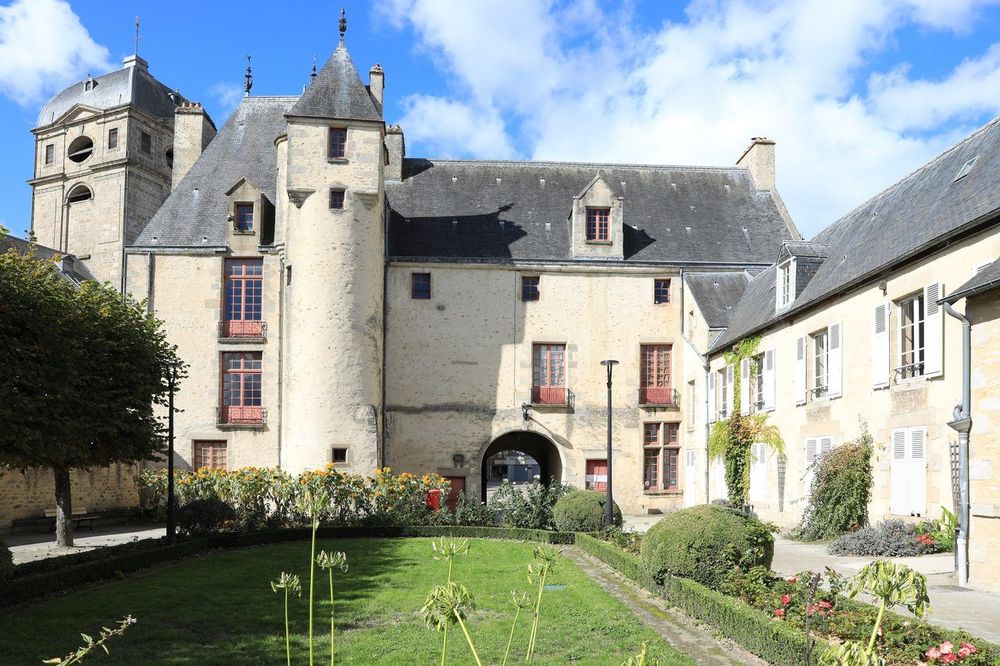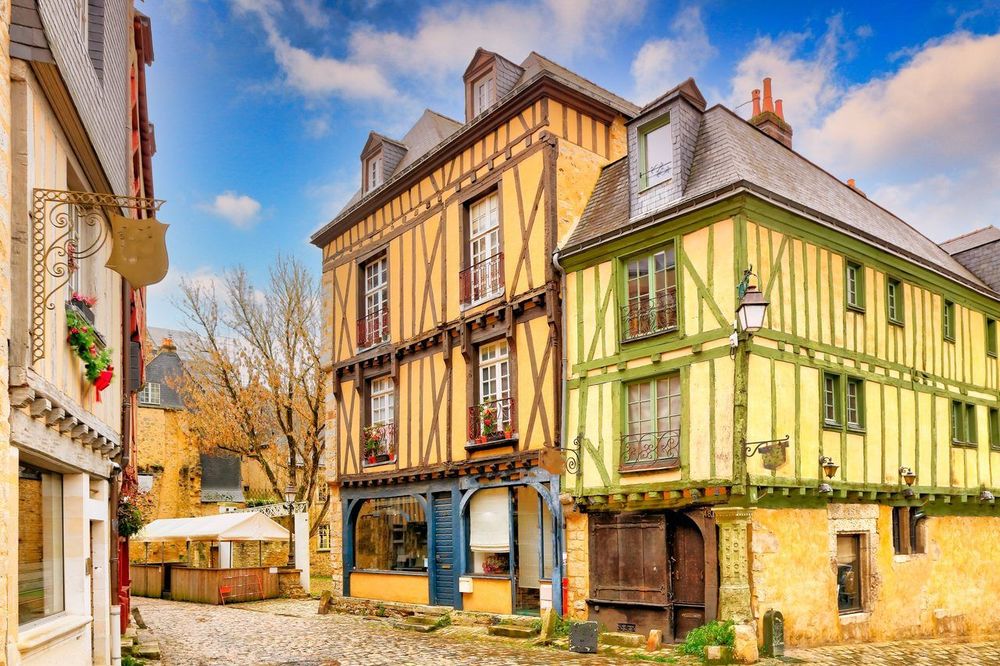
© Shutterstock
 Votre guide Ryo
Le Mans Off the Beaten Path in 2026: the Secret City, Its Hidden Curiosities and Unique Experiences
Le Mans has a reputation that sticks: a city you pass through between two motorways, just long enough to fill up before racing toward Brittany. If you searched for "unusual visit Le Mans" while planning your trip, you already know the city hides something more: push open a carriage gate in the Cité Plantagenêt and a carved monkey grimaces down at you, while a sow spinning a distaff has been mocking passers-by since the Middle Ages. The Ryo audio guide tour of Le Mans starts with exactly these details that most hurried visitors never notice.
In the pages that follow, you will encounter an Egyptian gallery where you can step inside the tomb of Nefertari, a menhir leaning against a cathedral, a foundry where you cast your own medal, a rillettes eau-de-vie distilled right in the city centre, and a mythical racing circuit where you can drive a Ferrari just as easily as sleep in a cabin a few kilometres from the Hunaudières straight. Spanning Roman ramparts, street art and nights beside a Nordic bath, this guide covers both the historic centre and the surrounding Pays du Mans — for those who have more than a day to spare. Here is Le Mans as it reveals itself to those who take the time to look.
The Cité Plantagenêt: Exploring the Medieval Old Town in a Different Way
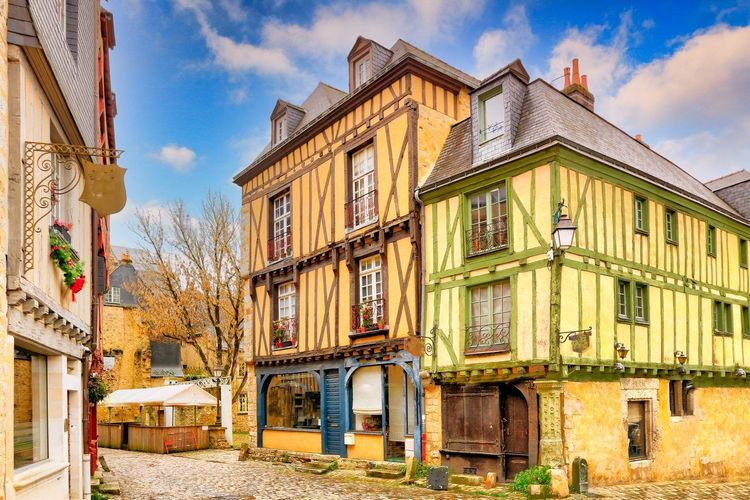
Everything starts here. The Cité Plantagenêt (Place Saint-Michel, 72000 Le Mans, rated 4.7/5 on Google with 1,714 reviews) sits on the promontory overlooking the Sarthe, and it is one of the rare places in France where you can walk alongside a Roman enclosure wall still this legible: the Gallo-Roman ramparts once traced a circuit of roughly 1.3 km, long sections of which still stand on the riverside. Long dated to the late third century, the wall was reassigned by recent Inrap excavations to the fourth century, between approximately 320 and 360 AD. Its masonry alternates stone and brick in diamond patterns and coloured friezes — a decorative scheme found almost nowhere else.
The neighbourhood itself can be explored without a map. The half-timbered houses of the Grande Rue lean toward one another, and every façade tells a different century: fifteenth-century timber framing, Renaissance townhouses, carved porches that no one notices when walking too fast. Uneven cobblestones, alleyways that lead nowhere, staircases cutting between two parallel streets: the Cité sets its own pace. This intact scenery explains why so many swashbuckling films have set up their cameras here.
Two stops add depth to the walk. The Maison de la Reine Bérengère, a fifteenth-century dwelling with sculpted façades, bears the name of Richard the Lionheart's widow even though it was built more than two centuries after her death — a late tribute rather than a historical address. At the foot of the Cité, the Carré Plantagenêt, a museum of archaeology and history, houses the funerary enamel of Geoffrey Plantagenet, father of Henry II of England. Henry II was born in Le Mans in 1133: the dynasty that ruled England has very deep roots here.
For a different atmosphere, come in the evening. Night-time tours of the Cité Plantagenêt are offered with guides, and in summer the Nuit des Chimères projects sound and light shows onto the Roman wall and the cathedral: the towers gain volume, and shadows redraw the lanes.
Even during the day, walking the same passage twice changes what you see: a dormer window noted on the way in reveals a half-erased coat of arms on the way back.
If you can only follow one sub-route on arrival, make it this one. The Ryo audio guide sub-route dedicated to the Cité Plantagenêt unfolds 20 audio tracks over roughly 2 km, along the ramparts and the most characteristic cobbled lanes, with the anecdotes that give meaning to every stone rather than a list of dates.
Hidden Sculptures in the Lanes: the Jester, the Monkey and the House with a Bear
Once inside the Cité, change your approach: stop looking at the façades and start looking at their corners. Le Mans conceals in its lanes a small collection of carved figures that most visitors walk straight past without looking up.
The Cité jester is the perfect example: a small grimacing figure carved at the corner of a half-timbered house. A property mark, a mocking warning or a craftsman's whim? No one can quite decide, and that is what makes the find so enjoyable. A few metres further on, the monkey and the crayfish occupy another corner, two animals that seem to have been taunting each other for centuries.
The most photographed is probably the suspended house with its bear, a corbelled building whose timber bears a carved bear. You will recognise it by the phones held up in front of it.
Then there is the question everyone eventually asks: where is the funniest street in Le Mans? Many point to la Truie qui File, named after a sculpture of a sow spinning a distaff. The motif, widespread in medieval art, was used to mock those who claim to do work they are not suited for. Centuries later, the joke still lands.
The Cité sub-route points out these details as you walk: the audio triggers just before you pass each one, so there is no need to hunt through every corner.
Street Art and the "Énormé'Mans" Wordplay
Le Mans heritage is not only medieval. The city has also covered itself in contemporary murals, and the tourist office has even mapped out street art trails, called Plein Champ, in more recent neighbourhoods.
The local street art plays across very different registers: portraits, fantastical animals, abstract compositions on blank gable walls. A few streets from the half-timbered houses, the contrast produces a deliberately offbeat effect.
This taste for self-deprecation also shows up in the "énormé'Mans" puns scattered around the city, which play shamelessly on the city's name. A repurposed no-parking sign is another wink that locals are happy to point out to visitors.
Even the live scene joins in: a venue dedicated to comedy sports a name that promises laughs. In short, Le Mans cultivates a knowing humour that cuts through its serious image as a city of racing and cathedrals.
The Cathédrale Saint-Julien and Its Lesser-Known Details
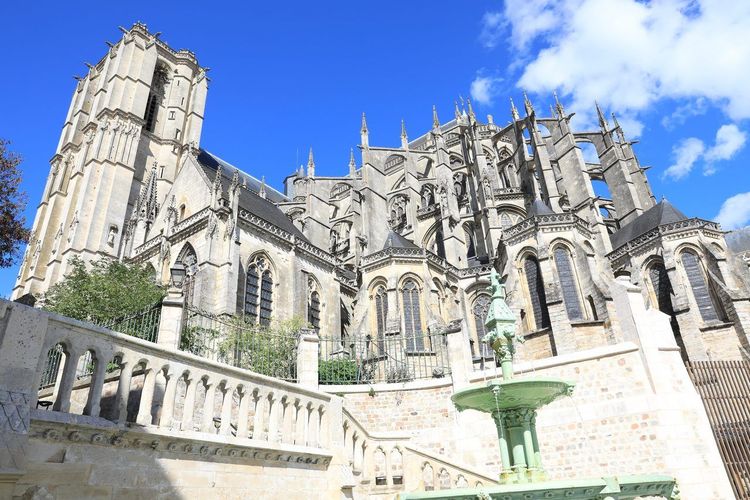
You cannot miss the Cathédrale Saint-Julien (Place Saint-Julien, 72000 Le Mans, rated 4.7/5 on Google with 4,004 reviews): its Gothic chevet, bristling with branching flying buttresses, dominates the lower town. What is less immediately striking is the clash of styles: a Romanesque nave on one side, a thirteenth-century Gothic choir on the other, as though two cathedrals had been assembled without consulting each other.
Before going in, walk around to the angle of the western façade: a sandstone menhir more than four metres tall stands propped against the cathedral. A prehistoric stone planted against a Christian building — the juxtaposition is striking. Inside, look up toward the Ascension stained-glass window in the nave: dating from the twelfth century, it ranks among the oldest stained-glass windows still in situ in France.
One detail amuses visitors: in this church, "please switch off your phone" is far from an empty formula. The building still hosts services, and under these vaults the slightest ringtone echoes for a long time.
Do you have a car? Two detours are worth the drive. The Chapelle de Verniette, in Conlie, is a small Romanesque chapel listed as a historic monument since 1946 for its wall paintings. Further north, the Église Notre-Dame-des-Champs, in Saint-Jean-d'Assé, stands alone amid greenery, far from any village: an ideal photo stop.
The main Le Mans audio guide route passes the cathedral with an anecdote about this marriage of Romanesque and Gothic: a few minutes of listening is all it takes to read what several centuries of building work have left in the stone.
The Musée de Tessé and Its Ancient Egypt Gallery
Few visitors expect to descend into an Egyptian tomb in the middle of the Sarthe. Yet that is the surprise awaiting at the Musée de Tessé (2 Avenue de Paderborn, 72000 Le Mans, rated 4.5/5 on Google with 943 reviews), housed in a former episcopal palace near the cathedral and founded as early as 1799, making it one of the oldest provincial museums in France.
Since 2001, a 600 m² Egyptian gallery occupies the basement. You can step inside reconstructions of two famous tombs: that of Nefertari, wife of Ramesses II, with its vivid colours, and that of Sennefer, mayor of Thebes, whose ceiling is covered in painted vines. It is one of the rare reconstructions of this kind accessible outside the major Parisian museums.
The Ancient Egypt collection at the Musée de Tessé goes beyond these two settings: funerary objects, amulets and stelae complete the route, with explanations that speak to children and adults alike. Allow a good hour if you read the labels.
The rest of the museum covers European painting across several centuries. Access to the collections has been announced as free by recent sources — check the current conditions before you visit. On a rainy day, this is probably the best option in the city centre, and if the weather is fine, the Parc de Tessé and the Quinconces des Jacobins right next door offer a green break.
The Jardin des Simples: a Secret Medieval Garden in the Heart of the City
Near the cathedral, a small garden goes unnoticed if you do not know it exists. The Jardin des Simples (Place du Cardinal Grente, 72000 Le Mans, rated 4.8/5 on Google with 5 reviews) evokes the gardens of medicinal and aromatic plants cultivated within monastery walls during the Middle Ages.
The word "simples" referred precisely to these plants used on their own, without blending, to treat common ailments: sage, lemon balm, wormwood, rue.
Few printed guides mention it, which is all the better: you will almost always find peace here, even at the height of the season. Allow fifteen minutes, no more.
The Abbaye Royale de l'Épau: a Getaway on the Doorstep of Le Mans
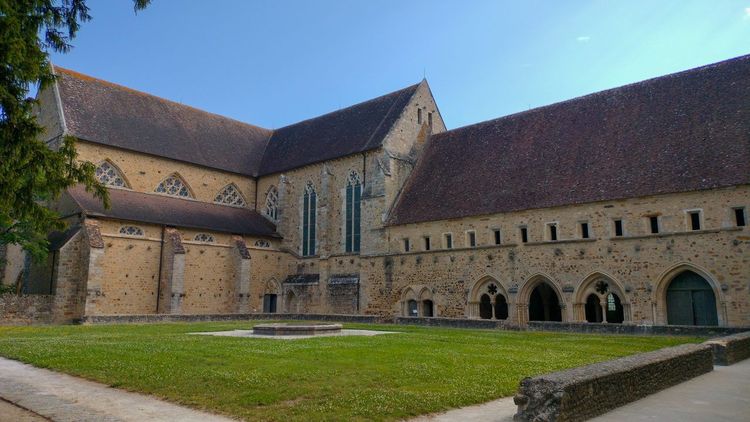
About ten minutes from the centre, in Yvré-l'Évêque, the Abbaye Royale de l'Épau (Route de Changé, 72530 Yvré-l'Évêque, rated 4.6/5 on Google with 2,286 reviews) is a world apart from the urban bustle. Founded in 1229 by Berengaria of Navarre, widow of Richard the Lionheart, it housed Cistercian monks until the Revolution. Later sold, it served as a laundry and then a farm before being repurchased in 1959 and restored.
Visiting the Abbaye Royale de l'Épau means walking through the abbey church, the monks' dormitory and above all the chapter house, where the effigy of Berengaria was returned in 2020 after two centuries spent at the cathedral. The queen lies in a long gown, a lion and a dog at her feet. Curiosity: this Queen of England apparently never set foot in her kingdom. The surrounding Domaine de l'Épau offers a vast wooded park, ideal for extending the visit on foot. Expect a small entrance fee.
Depending on the season, exhibitions and concerts fill the monastic rooms: the face-off between medieval stone and contemporary creation works surprisingly well.
Do you enjoy this kind of escape on the edge of a city? Ryo has explored the same vein elsewhere, with the hidden curiosities of Vannes or those of Quimper.
Le Mans Markets and Rillettes Tasting
You cannot visit Le Mans without devoting at least one full meal to it, and the best starting point is a market. The Marché des Jacobins, at the foot of the cathedral, is the great gathering place for locals, especially on Wednesday and Sunday mornings: cheese vendors, market gardeners and charcutiers sell their rillettes by the slice.
The tasting session at the Marché des Halles (Place des Halles, 72000 Le Mans, rated 4.5/5 on Google with 167 reviews) rounds out the offer: you move from one producer to the next, sampling cheeses, charcuterie and seasonal products.
Then there is the speciality that made the city famous: Le Mans rillettes, slow-cooked in their own fat until they reach that distinctive stringy texture. The most surprising curiosity is found at the Distillerie du Sonneur, rue du Vert Galant, which has dared to produce a rillettes eau-de-vie. Yes, you read that right: you can taste Le Mans rillettes in liquid form.
To go further, a visit to a rillettes maker awaits you in Changé, a few kilometres away: the Tradition Sarthoise house won a gold medal at the Concours Général Agricole 2020. Some venues also offer a rillettes and charcuterie workshop, where you learn the techniques: shredding, seasoning, potting. It is probably the most authentically Le Mans activity in this guide, and families love it.
The Fonderie d'Antoigné: an Overlooked Industrial Heritage Site
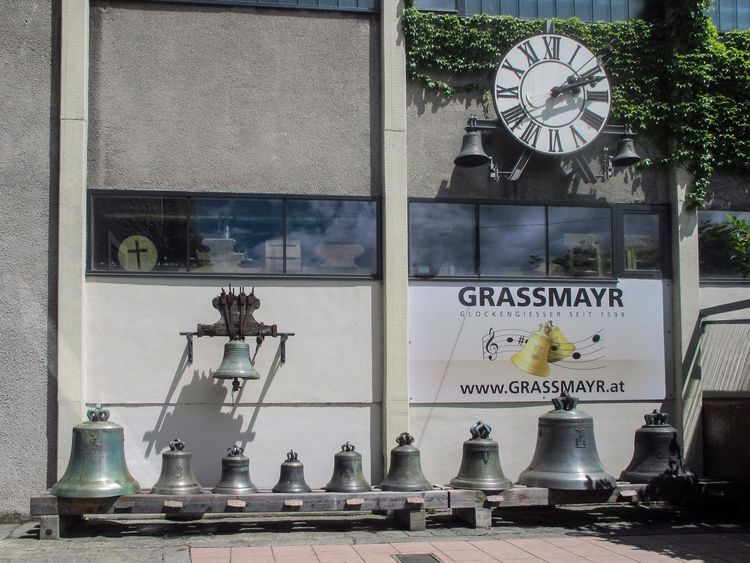
In Sainte-Jamme-sur-Sarthe, north of Le Mans, the Fonderie d'Antoigné (3 Antoigné, 72380 Sainte-Jamme-sur-Sarthe, rated 4.4/5 on Google with 75 reviews) is one of those addresses that even some locals from the Sarthe do not know about. Its appeal: you do not just watch — you cast your own metal medal and leave with it.
From around €6: a modest price to discover the foundry craft, from mould to molten metal. Perfect with curious children. Remember to book during school holidays — slots fill up fast.
The 24 Hours of Le Mans in a Different Way: Circuits, Museum and Driving Thrills

It is impossible to mention Le Mans without the 24 Hours of Le Mans, the world's most famous endurance motor race, held since 1923. But you can experience this legend in many other ways than attending the race itself.
The 24 Hours circuits are alive year-round. The permanent Circuit Bugatti hosts track days, testing sessions and public open days. The full circuit, stretching more than 13 km, uses roads that are open to normal traffic the rest of the year, including the Hunaudières straight. Nearly 6 km long, it has been broken up since 1990 by two chicanes, added after prototypes exceeded 400 km/h. Driving along it in your own car, at the legal speed limit, gives a small thrill when you know what happens there every June.
The 24 Hours Museum, at the circuit entrance, traces more than a century of history, from the victorious Bentleys of the 1920s to hybrid prototypes, by way of the Porsche 917s of the 1970s. Allow two hours.
Want to drive? The Porsche Experience Center offers guided sessions on a private track. A Ferrari 488 GTB driving experience lets you take the wheel of an Italian sports car on a closed circuit, and the BMW M3 drift baptism puts you in the passenger seat for several laps of controlled sliding.
No licence or a tight budget? The JCL Pro racing simulator recreates the sensations of driving. For motorcycle riders, a motorcycle training day or track day at Le Mans circuit (from around €890 for a course) lets you ride on the mythical tarmac. The FIAA du Mans, a major annual fair, occupies the neighbouring exhibition park: a more commercial and rural side of the same neighbourhood.
Above all, remember this: almost all of these experiences can be booked outside race week, often with more availability and gentler prices.
Thrills Around Le Mans: Hot-Air Balloon, Microlight, Skydiving and Bungee Jumping
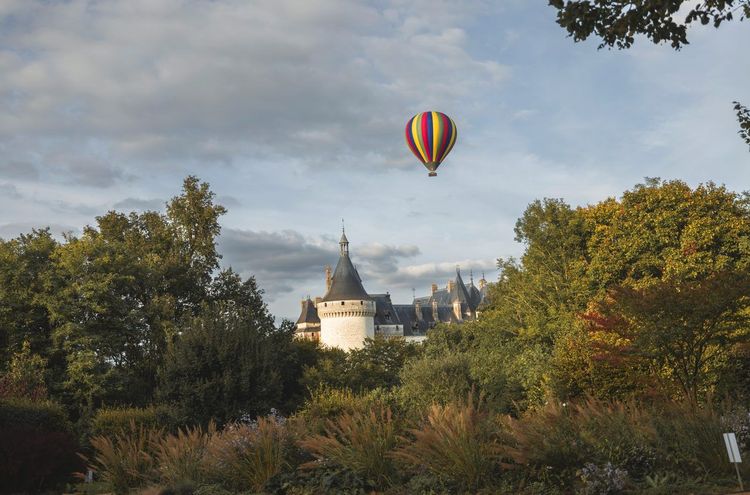
Taking to the skies remains the most spectacular way to see the Sarthe. A hot-air balloon flight over the Loir valley (from around €199) glides silently over châteaux, hillsides and river meanders at sunrise or sunset.
Closer by, an introductory or trial flight in an autogyro microlight (from around €120) offers an open-cockpit view across the Sarthe bocage.
And if you really want to scare yourself? A tandem skydive (from around €259) strings together a few seconds of freefall and several minutes under canopy.
For a head-spinning rush, head to Saint-Georges-le-Gaultier, in the north-west of the Sarthe, for a bungee jump in the heart of nature.
More playful, archery tag at Sillé-le-Guillaume blends archery and team play in the style of paintball, using foam-tipped arrows. The activity works very well for hen and stag parties, corporate outings or an afternoon with friends who have had enough of bowling.
Escape Rooms, Virtual Reality and Original Group Outings
Le Mans has a dense offering of indoor activities for groups, invaluable on rainy days. The escape room "Les Fabuleuses Inventions" immerses players in an inventor's universe where they must solve puzzles before the clock runs out, and several venues offer large-format versions spanning multiple rooms.
Going further, a virtual reality escape room replaces the physical walls with a digital setting. In the same vein, a virtual reality experience offers varied scenarios, from space exploration to roller coasters, without leaving the ground.
The Arcade Social Club lines up more than thirty arcade machines with unlimited play, a cocktail bar and beers: perfect for an evening with friends. A board game evening at a bar also lets you try dozens of titles without investing in your own collection. For music, keep an eye out for concerts in unusual venues: vaulted cellars and alternative spaces regularly host bands.
Amateur photographer? A photo walk around Le Mans off the beaten track takes you toward angles and lighting that conventional guides overlook. For something more hands-on, a pottery initiation workshop in Chantenay-Villedieu lets you leave with your own ceramic piece.
Finally, for families, a ticket to Papéa Parc, an amusement park open since 1971 in Yvré-l'Évêque, promises a day of rides, roller coasters and water attractions.
Sleeping in an Unusual Place: Cabins, Ecolodges and Bubble Tents Near Le Mans
Extending your visit by a night makes all the difference, and the Pays du Mans has no shortage of accommodation that breaks away from the standard hotel: specialist platforms list close to 200 options around Le Mans and throughout the Sarthe. They fall into four broad families.
Treetop cabins dominate the offer, particularly around the Alpes Mancelles at Saint-Léonard-des-Bois: wooden cabins in the trees, sometimes with a Nordic bath and a view over the Sarthe valley. Sacrée Cabane (Sargé-lès-le-Mans, 72190, rated 4.9/5 on Google with 76 reviews), on the outskirts of the city, plays the same card with its Nordic bath, from around €240 per night.
The second family, the ecolodges at the Domaine de l'Épau, set in the grounds of the royal abbey, from around €144 per night. Their themes range from motorsport to wellness. Sleeping steps from a thirteenth-century abbey in a contemporary structure: the contrast alone justifies the stay.
The third option, bubble tents and domes, for a night under the open sky without giving up comfort. The Dôme de la Tuffière is one of the addresses of this type most often mentioned in the Sarthe countryside, highly sought-after on nights of meteor showers.
Finally, caravans and tiny houses appeal to families and couples looking for something between a glamping experience and true privacy, often in the heart of nature with direct access to footpaths. A fully equipped perched cottage rounds out this category. For summer weekends, book several weeks in advance.
Everything you need for a truly immersive night in the Pays du Mans, to combine with a day in the historic centre.
Le Mans Neighbourhoods to Explore in a Different Way
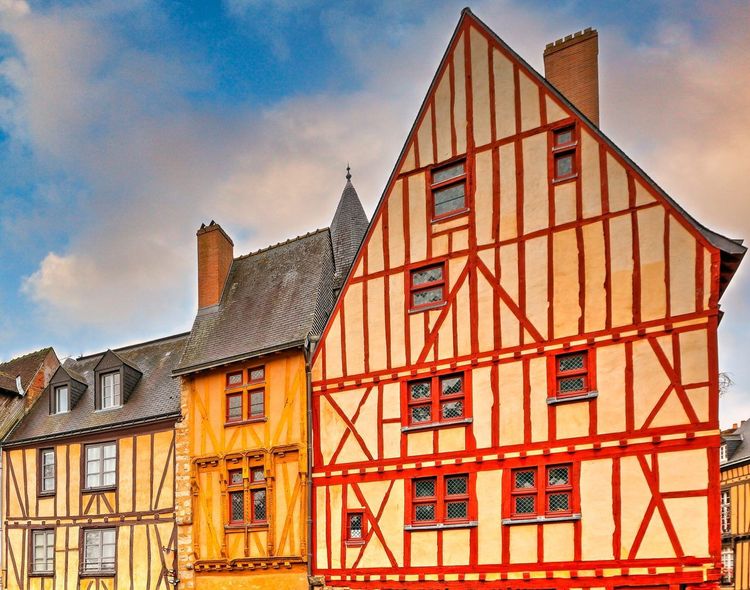
The Le Mans tourist office has mapped ten walking circuits: one for the Cité Plantagenêt and nine for the neighbourhoods, from the Saint-Nicolas quarter to the Pontlieue quarter, by way of the city centre, Bollée-Sainte-Croix, Saint-Vincent, Chasse Royale, Saint-Pavin-des-Champs, the station quarter and the Mission quarter. Rather than stringing them all together, group them by broad area.
In terms of built heritage, Bollée-Sainte-Croix and Saint-Vincent concentrate a large share of nineteenth- and twentieth-century bourgeois architecture. The name Bollée is no coincidence: this family of bell founders also gave Le Mans pioneering figures in the automobile world, well before the first 24 Hours race.
For neighbourhood life, Saint-Nicolas and Chasse Royale offer a more working-class atmosphere, with independent shops and the feel of an urban village. The station quarter has been transforming over the past few years: this is where you will see contemporary Le Mans rather than its postcard version.
Choose two or three circuits according to your interests rather than trying to tick all ten. The Ryo city audio guide links several of these areas in one continuous loop, with duration and distance displayed at each stage: you know in advance how much time to allow.
Charming Addresses to Extend the Experience: the Manoir Auvray
Do you prefer the charm of a characterful house to the anonymity of a chain hotel? The Manoir Auvray is a bed and breakfast set in a house full of character, convenient for exploring the area around Le Mans.
The idea: unpack your bags just once, then alternate days in the historic centre with excursions into the Pays du Mans, rather than moving from cabin to cabin. Book directly with the property to check availability.
The Pays du Mans and the Secret Sarthe Within Easy Reach
What is the Pays du Mans? It is the territory surrounding the city: several dozen communes of bocage, valleys and stone villages, halfway between the urban identity of Le Mans and the best-preserved Sarthe countryside.
A canoe trip on the Sarthe remains one of the best ways to discover it: the river winds between meadows and woodland, and you can even see the city from the water. Allow half a day for a leisurely descent, with no prior experience required.
Several towns near Le Mans are worth a detour: La Flèche and its Prytanée military academy, Sablé-sur-Sarthe, neighbour of the Abbaye de Solesmes renowned for Gregorian chant, or Asnières-sur-Vègre, a village of character on the riverbank. Further south, the Loire Valley is close at hand: the Ryo audio guide tour of the Loire châteaux covers several iconic sites reachable in less than two hours by road.
For getting around, several routes near Le Mans, by bike or by car, allow you to combine two or three rural stops in a single day.
How to Plan Your Day or Weekend in Le Mans off the Beaten Path
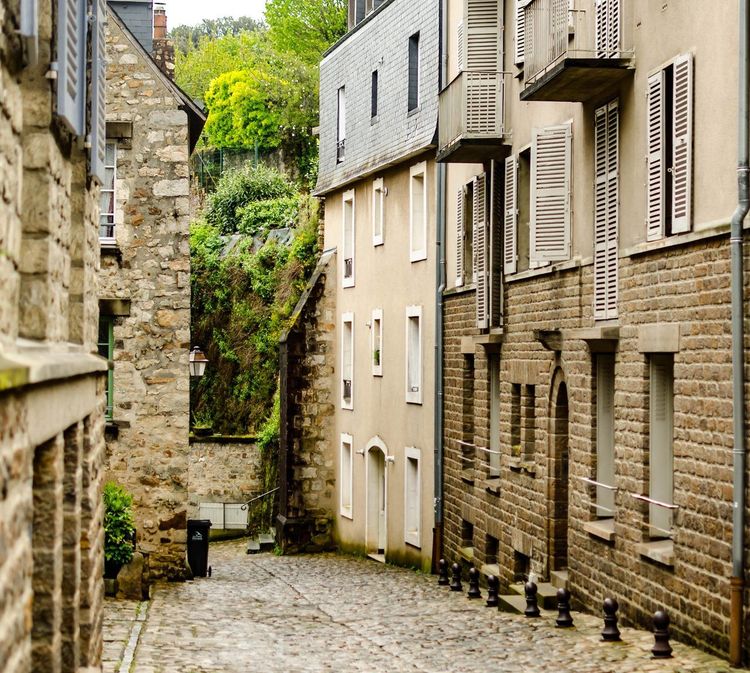
Building your itinerary takes a little method, given how much there is on offer. Rule number one: do not try to do everything at once. A morning in the Cité Plantagenêt (ramparts, hidden sculptures, cathedral) is plenty before switching to a completely different world in the afternoon.
Depending on your profile, several unusual Le Mans visit formats take shape:
- Heritage: Cité Plantagenêt, Carré Plantagenêt, Musée de Tessé and Abbaye de l'Épau in one full day.
- Family: Marché des Jacobins, Fonderie d'Antoigné, Papéa Parc and a night in a cabin.
- Thrills: 24 Hours circuit, drift baptism, then a parachute jump to end the day.
For a full weekend, one format works well: Saturday morning in the old town, lunch centred on rillettes, afternoon at the Musée de Tessé or the Épau depending on the weather, then a night in a cabin or ecolodge. On Sunday, head to the circuit or the canoe before driving home.
For organisation, the audio guide tour displays its duration and stages directly in the app: you can plan your day without guesswork.
Practical Information for Visiting Le Mans in a Different Way
How long to visit Le Mans beyond the classics? Allow at least one day for the Cité Plantagenêt, the Musée de Tessé and a market. To add the circuit, the abbey and a night in a cabin, plan a weekend of two to three days.
When to visit Le Mans? Spring and early autumn offer the most pleasant conditions for walking through the Cité. June is unmissable for motorsport enthusiasts, but expect heavy crowds and significantly higher accommodation prices. In summer, the Nuit des Chimères, canoeing and hot-air ballooning come into their own.
The Pays du Mans is located in the heart of the Sarthe, in the Pays de la Loire region, about one hour from Paris by TGV. Le Mans station, very well served, makes a car-free weekend possible if you stay in the centre: the tram connects the station to the city centre in a matter of minutes. With children, the tourist train loops around the historic centre, and the tourist office runs a chimera hunt that turns the visit into a treasure hunt.
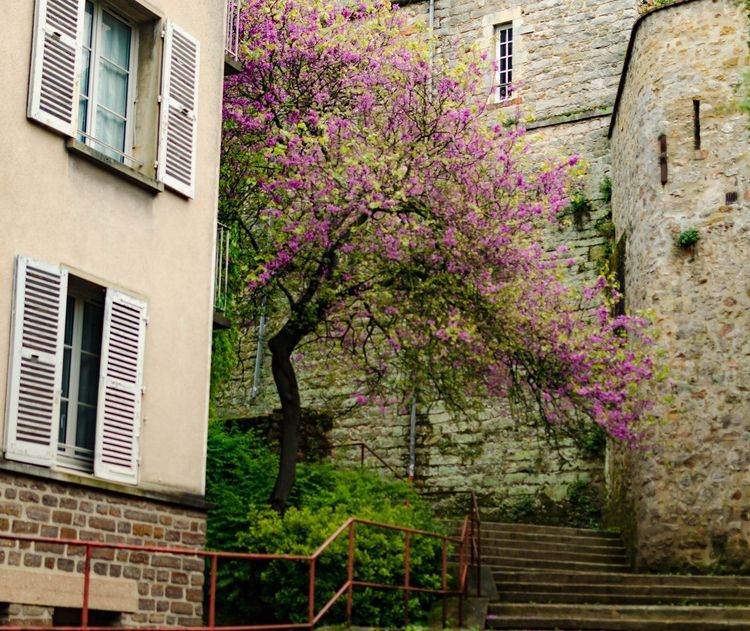
On the ground, the Cité Plantagenêt is explored on foot: its lanes are narrow, cobbled and broken up by stairways. Wear sturdy shoes, and if you are travelling with a very young child, a baby carrier will be more practical than a pushchair. Leave the car in the lower town, then walk up to the cathedral at your own pace: the whole neighbourhood can be covered in a few hours without getting back into a vehicle. For photos, the best time is early morning, when the lanes are still quiet, or late afternoon, when raking light brings out the timber framing and the friezes on the Roman wall. On market days at the Jacobins, arrive early: the neighbourhood fills up quickly and parking becomes difficult. During the 24 Hours race week, book everything in advance — from the train to dinner. Finally, charge your phone and download your audio route before setting off: you will listen to it at your own pace, without wasting time once you are in the lanes.
For dining, restaurants in Le Mans cover a wide range: Cité Plantagenêt bistros built around rillettes and Jasnières or Coteaux du Loir wines, more contemporary addresses in the city centre, and a handful of gastronomic tables. Book ahead on Friday and Saturday evenings, especially during race periods.
The same approach applies to other mid-sized cities that Ryo has explored: Poitiers, Nîmes and Besançon also hide their curiosities behind a more famous heritage.

FAQ
How much time should I allow to visit Le Mans off the beaten path?
One day is enough for the Cité Plantagenêt, its hidden sculptures and the Musée de Tessé. To add the racing circuit, the Abbaye de l'Épau and a night in a treehouse cabin, plan a weekend of two to three days.
When is the best time to visit Le Mans and enjoy its curiosities?
Spring and early autumn offer the best balance of weather and crowds. Summer adds the Nuit des Chimères, and June remains the liveliest month thanks to the 24 Hours, but also the most expensive.
What is the Pays du Mans?
It is the rural territory surrounding Le Mans — several dozen communes of bocage, valleys and stone villages — to explore by canoe, by bike or by car from the city centre.
Where can I stay in a unique accommodation near Le Mans?
Treetop cabins at Saint-Léonard-des-Bois, Sacrée Cabane at Sargé-lès-le-Mans, ecolodges at the Domaine de l'Épau, bubble tents, caravans and tiny houses throughout the Pays du Mans. Book early for summer weekends.
Where can I eat rillettes and local specialities from Le Mans?
At the Marché des Jacobins, in the bistros of the Cité Plantagenêt, or directly from a producer such as Tradition Sarthoise in Changé. Adventurous eaters can try the rillettes eau-de-vie from the Distillerie du Sonneur.
Is an unusual visit to Le Mans suitable for children?
Yes: the Egyptian gallery at the Musée de Tessé, the Fonderie d'Antoigné, Papéa Parc, the tourist train and a night in a cabin are all very popular with families, as is canoeing on the Sarthe.
Between Roman ramparts, grimacing sculptures and nights in a treehouse, Le Mans ultimately has little to do with its image as a pit-stop city for the 24 Hours. It is a destination in its own right, packed into just a few square kilometres, rewarding those who look up at the corbelled houses rather than racing toward the circuit.
To make sure you don't miss any of these details, slip the Ryo audio guide tour of Le Mans into your pocket: it guides you street by street, at your own pace, without depending on a guide's schedule or a sign too short to tell the city's story.