© Shutterstock
 Votre guide Ryo
Visiting Limoges for the First Time: The Complete Guide 2026
In Limoges, porcelain doesn't just sit in the windows of souvenir shops: it dresses façades, slips into street furniture and even decorates the frieze of the covered market. For anyone visiting Limoges for the first time, this omnipresence is far more surprising than the slightly dusty reputation of a “grandma's dinnerware town” would suggest. The Ryo audio-guided tour of Limoges, with 17 audio stops over 5.6 km and about 2h15 of walking, passes through precisely this dense historic center where half-timbered houses, 19th-century metal market halls and one of the most photographed train stations in France all meet.
In a single well-filled day, you can stroll beneath the campanile of a train station listed as a historic monument, taste Label Rouge beef, walk up the lane of the old butchers, then head out to a lake where contemporary art mingles with pine trees. This guide covers the Quartier de la Boucherie, porcelain in all its forms, the little-known workshops of Haute-Vienne, the best places to eat and sleep, and the possible excursions around the city, so you can plan a first visit to Limoges without missing anything essential.
The Quartier de la Boucherie and the Historic Center
The Quartier de la Boucherie is the logical starting point for a first visit to Limoges: it is the medieval heart of the city, the one that postcards show first. The first audio stops of the Ryo tour linger on this maze of lanes before heading to the nearby market halls, so you don't miss the details you wouldn't notice on your own.
The Half-Timbered Lanes and the Halles Centrales
The Quartier de la Boucherie takes its name from a guild of butchers who held these lanes for centuries, from father to son, with such power that the families married almost exclusively among themselves. You can still recognize their former shops by the stone stalls visible beneath some façades, and the small Saint-Aurélien chapel, dedicated to the patron saint of butchers, stands in the middle of the street, wedged between two timber-framed houses.
The half-timbered houses lining the rue de la Boucherie mostly date from the 15th and 16th centuries, with overhanging upper floors that narrow the street as they rise. Take the time to look up: some façades preserve original wooden sculptures, which are rare for a city that has suffered several fires.
A few minutes' walk away, the Halles Centrales (Place de la Motte, 87000 Limoges, rated 4.5/5 on Google from 1,769 reviews) occupy a metal building from 1889, built in the spirit of Paris's Baltard pavilions. The iron-and-brick structure houses a covered market that is lively every morning except Sunday, with stalls of charcuterie, cheeses and farm products from all over Haute-Vienne. The porcelain frieze running along the façade, depicting the products sold inside the hall, is a reminder that even the city's utilitarian architecture could not do without its signature material.
Porcelain Everywhere: Murals, Paving Stones and Art Installations
What strikes you most while wandering the center is how Limoges has turned its public space into a showcase of craftsmanship. White and brown seats in glazed ceramic dot certain squares, painted tiles appear on walls and street signs, and several murals made of porcelain tiles recount, in fragments, episodes from local history.
This “outdoor” porcelain is different in nature: it becomes sturdy, almost industrial, far from the fine tableware you imagine when stepping into a tea room. Several installations pay tribute to the workers and craftsmen who shaped the city's reputation over two centuries, a discreet reminder that behind every plate lay a grueling and technical trade. Keep your eyes open: in the window of a designer's shop, you will also come across porcelain that was cracked and then repaired with gold, in the manner of Japanese kintsugi, a kind of “restorative” porcelain that plays with the idea that beauty can be born from an accident.
The Limoges-Bénédictins Train Station, an Art Deco Masterpiece
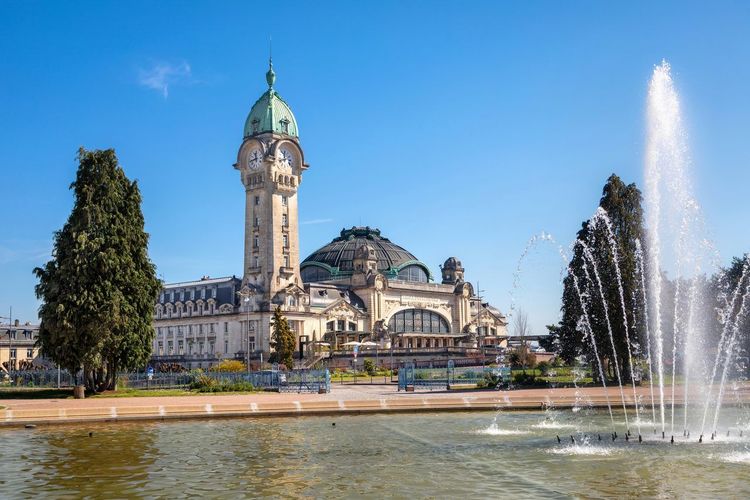
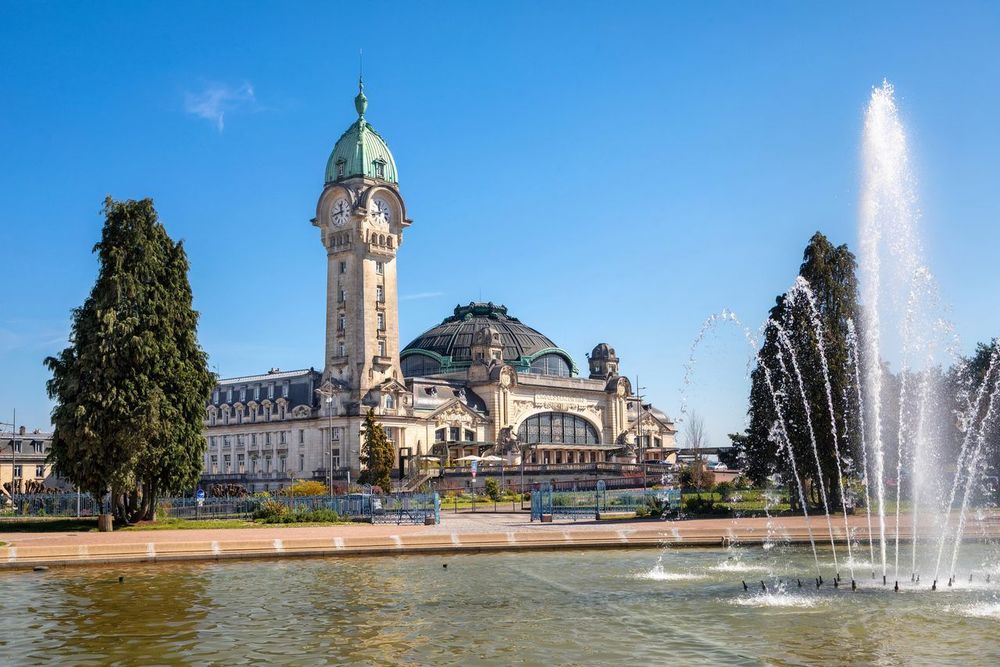
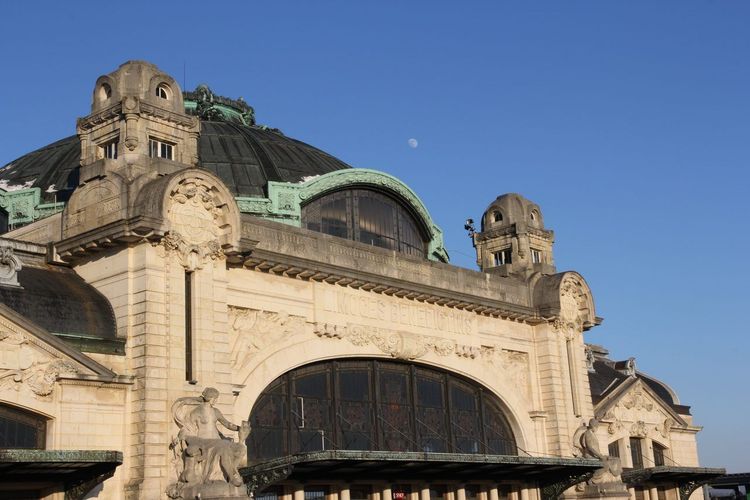
Even travelers who never get off in Limoges know its station by sight, so widely do photographs of its dome circulate on social media. The Limoges-Bénédictins Station (Place Maison Dieu, 87000 Limoges, rated 4.4/5 on Google from 868 reviews), designed by architect Roger Gonthier and inaugurated on July 2, 1929, is dominated by a 67-meter campanile whose clock can be spotted from several neighborhoods of the city.
The interior attends to detail with a refinement rare for a railway building: Art Deco stained glass by master glassmaker Francis Chigot, allegorical sculptures by Henri Varenne on the façades, and ornate ironwork. Listed as a historic monument since 1975, it remains in daily service, which means you can simply sit in the hall and take in the architecture without buying a ticket.
If you arrive by train, this is often where the visit practically begins. One audio stop of the Ryo tour of Limoges is devoted to the history of this station, and nothing stops you from starting the walk right on its forecourt rather than at place de la République.
The Banks of the Vienne and the Medieval Bridges
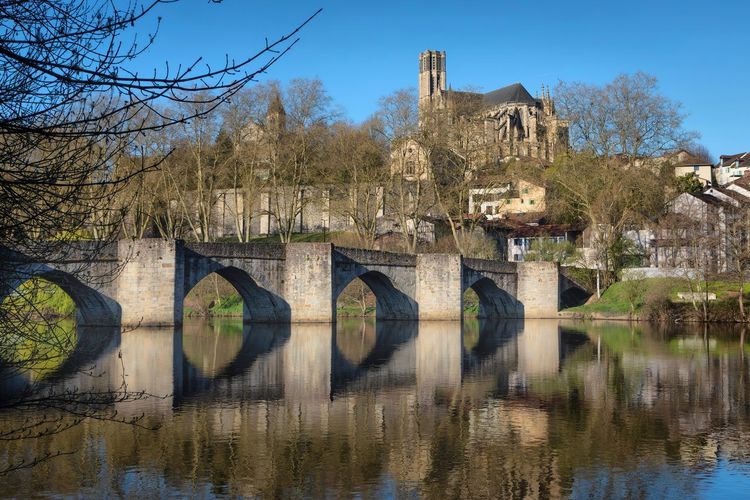
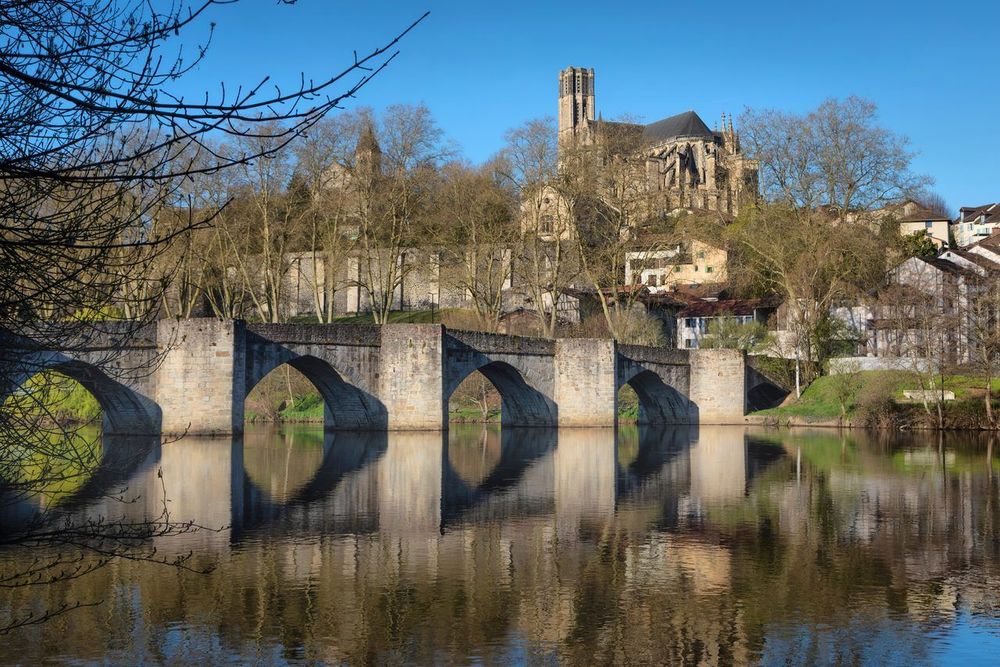
The Vienne runs along the south of the historic center from east to west, below the cathedral, far from the bustle of the shopping streets. The Ryo audio-guided tour also heads down to these banks, with several stops devoted to the bridges and the river's old trades: a chance to hear the history of the place while walking on the same cobblestones as medieval cart drivers.
The Pont Saint-Étienne and the Pont Saint-Martial
The Pont Saint-Étienne (Pont Saint-Étienne, 87000 Limoges), built in the early 13th century at the foot of the cathedral district, has kept its pointed arches and narrow deck, witnesses of an era when bridges served mainly pedestrians and light carts. It was also the obligatory crossing for pilgrims on their way to Santiago de Compostela.
A little further downstream, the Pont Saint-Martial (Pont Saint-Martial, 87000 Limoges, rated 4.5/5 on Google from 750 reviews) was built around 1215 on the site of an ancient Roman bridge. The two structures offer very different views of the cathedral and of the old Ponts district, where washerwomen, tanners and timber raftsmen lived to the rhythm of the river.
A Walk Along the Quays and Gardens
Between the two bridges, the landscaped quays invite you to slow down. You'll see anglers in the late afternoon and families picnicking on the grass in fine weather. The Évêché garden, just above, extends the walk with an open view over the valley and the apse of the cathedral. It is one of the few places in Limoges where the city seems completely silent, a quarter of an hour's walk from the Halles.
Limoges Porcelain: Museums and Factories to Visit
You can only truly understand Limoges by devoting time to its porcelain, not just as a product but as an entire industry that shaped the city's urban planning, economy and working-class neighborhoods for more than two centuries. Since 2017, Limoges has held the UNESCO Creative City designation for crafts and folk arts, a recognition directly tied to this industry.
The Adrien Dubouché National Museum
The Adrien Dubouché National Museum holds the world's largest public collection of Limoges porcelain: about 18,000 works, around 5,000 of them on display, covering ceramics from Antiquity to the present day, from Chinese porcelain to European earthenware. The building, inaugurated in 1900, has been renovated to offer a clear route, from the discovery of kaolin at Saint-Yrieix in the 18th century to contemporary creations.
What surprises most on a first visit is the diversity of porcelain's uses on show here: ceremonial pieces intended for official tables, but also electrical insulators and technical objects, which tell how Limoges managed to diversify its production to survive the industry's successive crises. Good to know: admission is free for everyone on the first Sunday of the month.
The Bernardaud Foundation and the Factory Tour
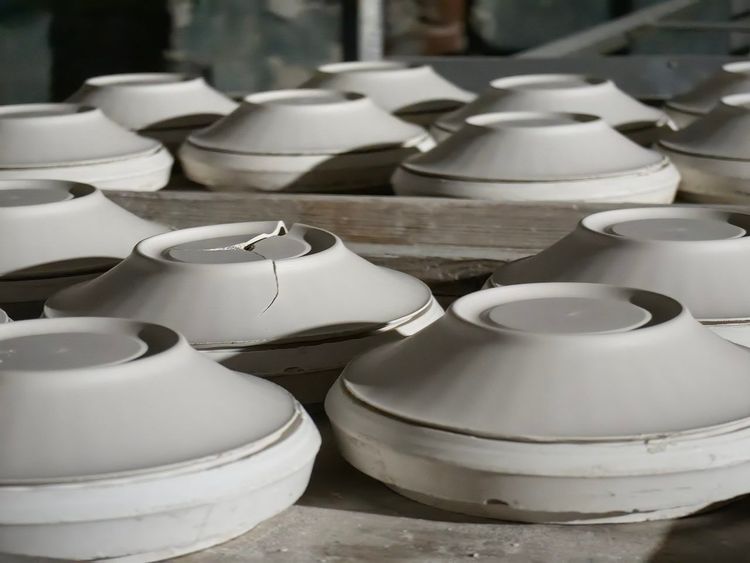
Founded in 1863, the house of Bernardaud remains one of the few historic manufacturers still active in Limoges. Its foundation and guided tours let you follow the whole process: molding, firing at over 1,400 °C, glazing, then decoration by hand or by decal transfer. You can watch gestures that have barely changed in a century, performed by artisans some of whom have worked here for twenty or thirty years.
The adjoining shop offers pieces from the factory, sometimes including second-quality series at low prices. If you only have time to visit one factory during your stay, this one remains the most accessible from the city center.
The Four des Casseaux, a Relic of Wood-Fired Kilns
At the beginning of the 20th century, Limoges still had 135 round kilns in operation, whose smoke gave some neighborhoods the look of a small Manchester. The Four des Casseaux (Place des Casseaux, 87000 Limoges, rated 4.6/5 on Google from 733 reviews), built between 1902 and 1904 on the banks of the Vienne, is the only one of the handful of surviving kilns to be listed as a historic monument. Its 80 m³ made it possible to fire 15,000 pieces in a single batch.
The tour explains the very harsh working conditions of the kiln loaders and stokers, who fed the fire with wood for dozens of hours, and places this industrial relic within the broader story of Limoges's great porcelain houses. Several audio stops of the Ryo tour of Limoges retrace this history, from the Adrien Dubouché museum to the kilns, with the often little-known anecdote of the UNESCO Creative City title won in 2017. To go further, our article on the history of Limoges covers this industrial trajectory in more detail.
Culinary Specialties to Taste in Limoges
Limoges is not just a city of the fire arts: it is also a gourmet stop, backed by a livestock-farming region renowned well beyond Haute-Vienne.
Limousin Beef, Star of Local Tables
The Limousin beef is protected by the “Blason Prestige” Label Rouge and a Protected Geographical Indication, two quality marks that guarantee its origin and largely grass-fed rearing. Renowned for its fine, lean meat, you will find it on most menus in the center, often simply grilled to let the product speak for itself. The butchers around the rue de la Boucherie keep alive the link with the region's breeders.
The Frairie des Petits Ventres and Specialties to Taste
The Frairie des Petits Ventres is not a dish but a festival: created in 1973 by the Renaissance du Vieux Limoges association to honor the memory of the butchers' guild, it takes over the rue de la Boucherie and place Saint-Aurélien every third Friday of October. Around 40,000 people come to taste tripe, andouillettes, blood sausage, calf's head, galetous and girot, the lamb blood sausage typical of Limoges. If your stay falls on that date, it is the best possible immersion in Limoges's popular culture.
As for sweeter specialties, cherry clafoutis and flognarde remain the regional references, as do the chestnuts and porcini mushrooms gathered in the Limousin forests in autumn. The more curious will also look for bréjaude, a cabbage and bacon soup typical of the Limousin, rarely offered outside the most traditional establishments. Our selection of the 10 culinary specialties of Limoges will give you more ideas.
Where to Eat in Limoges: Good Addresses and Markets
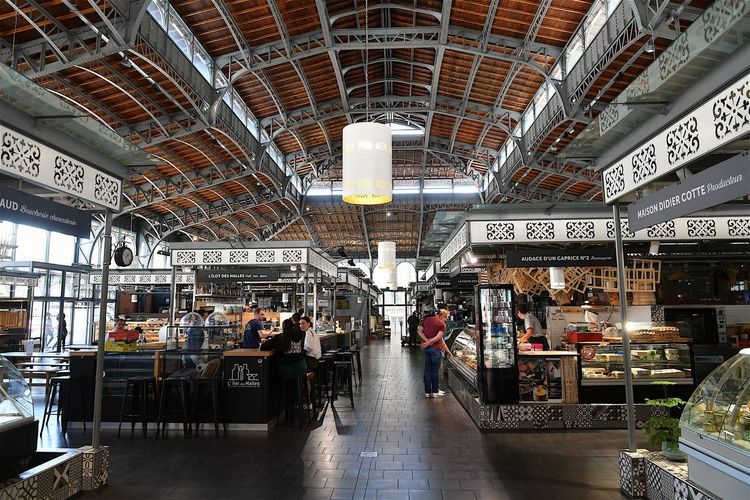
For a quick and authentic meal, the stalls of the Halles Centrales remain the best starting point: you eat at a corner of the counter, between a cheese producer and a rotisserie vendor. The restaurants around place de la Motte rely heavily on Limousin beef, often served with vegetables from the neighboring market.
In the Quartier de la Boucherie, a few traditional bistros still serve offal dishes for those who want to taste the spirit of the Frairie out of season. If you prefer a more contemporary atmosphere, the newer restaurants near the banks of the Vienne reinterpret local cuisine with seasonal produce, at prices that remain reasonable compared to cities of similar size. One tip: book on Saturday evenings, as the best addresses in the center fill up quickly.
Crafts and Know-How to Discover Around Limoges
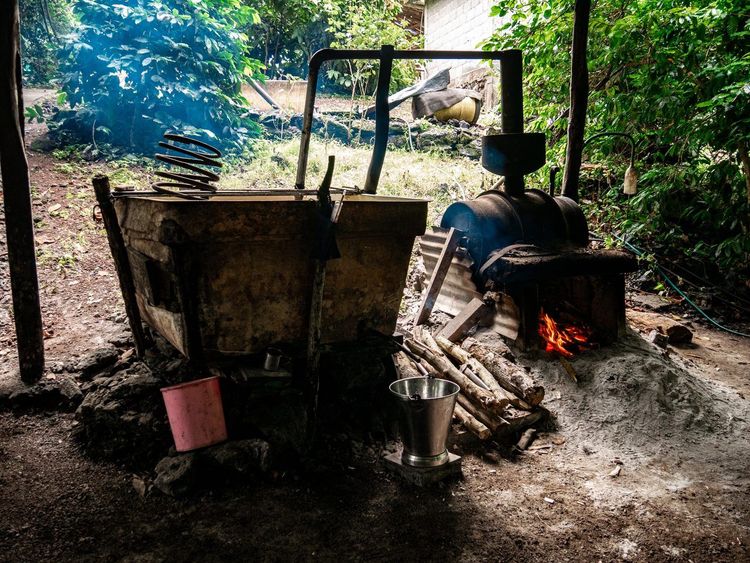
Porcelain has long overshadowed another side of local craftsmanship, just as deeply rooted in the region: leatherwork, textiles and, more surprisingly, distilling.
Leather, Felt and Lingerie: Textile Workshops Around Limoges
About thirty minutes to the west, Saint-Junien brings together several crafts. The Agnelle glove factory keeps up the town's glove-making tradition, with a shop where you can buy models made on site directly. The Depland felt factory, set on the banks of the Glane for about a hundred years and certified as a Living Heritage Company, makes technical wool felts and can be visited by appointment on weekdays. On the textile side, Broussaud socks, produced in Les Cars since 1938, have a factory outlet half an hour southwest of Limoges, while Allande fine lingerie sells its pieces in its factory outlet in Le Dorat, in the north of the département.
Distilleries and Other Crafts to Visit
Without leaving Limoges, the Distillerie du Centre, founded in 1789 on rue de Belfort, houses the museum of the Limoges distilleries: 19th-century copper stills still in use, the maceration of fruits and herbs, and a final tasting of the house liqueur, La Gauloise. Admission to the museum is free. Back in Saint-Junien, there is the workshop of painter Joseph Goscimski, a master porcelain decorator established since 1977, whose know-how is listed in the inventory of intangible cultural heritage. You will find almost none of these places in general guidebooks, which makes them an excellent way to extend your discovery of porcelain from a more intimate angle.
Half-Day Excursions Around Limoges
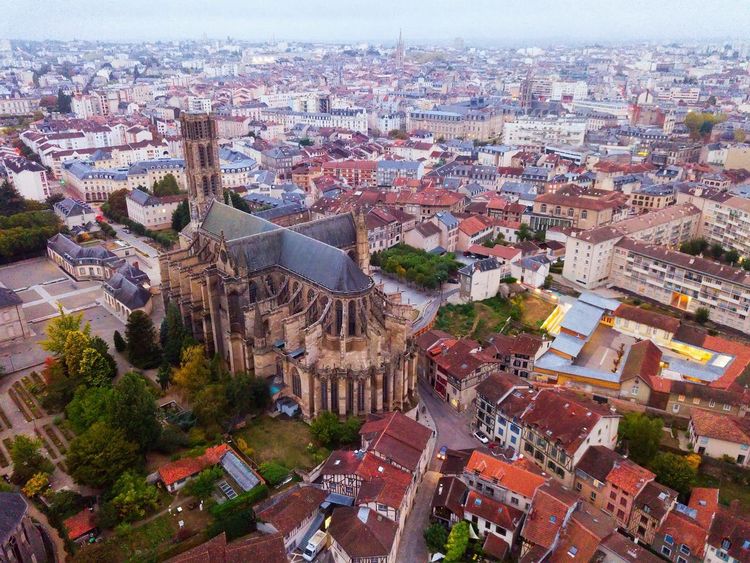
Limoges can be visited well in one to two days, but the surrounding region deserves at least an extra half-day, or even a full weekend if you have more time.
Oradour-sur-Glane, an Essential Place of Remembrance
About twenty minutes by car, the Oradour-sur-Glane Memory Center commemorates the massacre of June 10, 1944, in which 643 inhabitants were killed by a unit of the SS Das Reich division. The martyr village has been left as it was since the Liberation, by decision of General de Gaulle, and is visited in silence through the ruins of houses, the church and shops frozen for more than eighty years.
This is not a light visit: allow at least two hours to walk through the village and the memory center, which puts the events in context without ever falling into sensationalism.
Saint-Léonard-de-Noblat and the Villages of the Val de Vienne
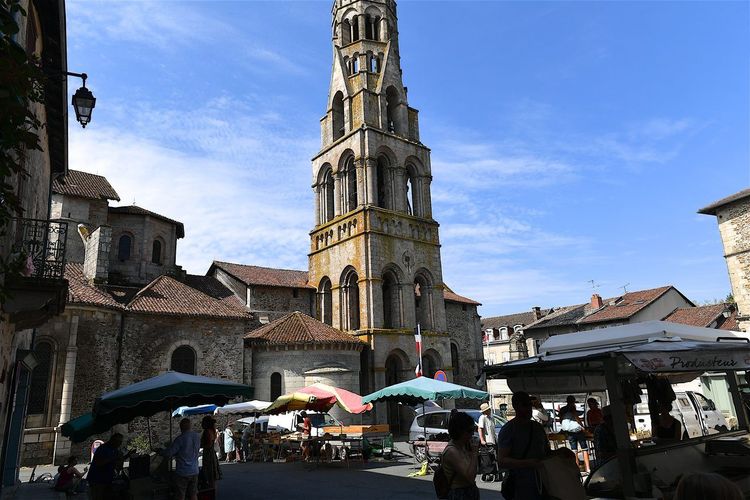
Saint-Léonard-de-Noblat (Place du Champ de Mars, 87400 Saint-Léonard-de-Noblat), about twenty minutes to the east, is often cited as the region's favorite: a Romanesque collegiate church inscribed on UNESCO's World Heritage list as part of the Routes of Santiago de Compostela, steep lanes and medieval houses make it an ideal stop for a morning. The surrounding Val de Vienne strings together several quieter villages, dotted with private châteaux and small Romanesque churches.
Further south, in Corrèze, Ségur-le-Château, ranked among the most beautiful villages of France, clings to a meander of the Auvézère with its turrets and timber-framed houses; our article on the most beautiful villages in Corrèze will help you complete the itinerary. On the way, Saint-Yrieix-la-Perche owes its reputation to its madeleines and to the kaolin deposit discovered in the 18th century, without which Limoges porcelain would never have existed.
Lake Vassivière and the Great Natural Spaces
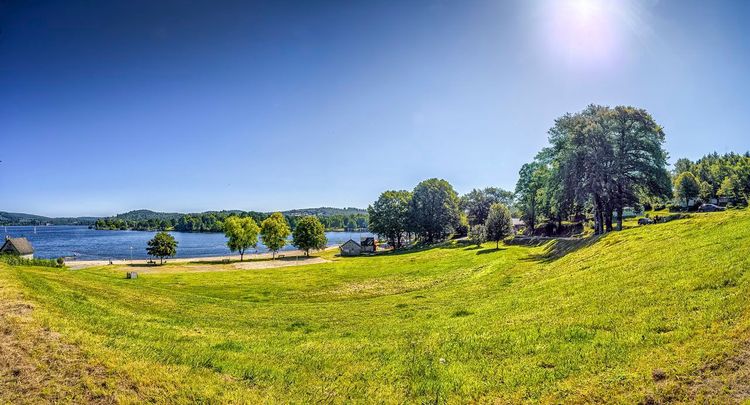
A little under an hour's drive away, Lake Vassivière (Île de Vassivière, 87120 Beaumont-du-Lac, rated 4.6/5 on Google from 773 reviews) is an artificial lake of about 1,000 hectares surrounded by forests, with an island linked by a footbridge that hosts a contemporary art center recognized well beyond the region. You can go sailing, paddleboarding and hiking, in a setting that contrasts sharply with the urban atmosphere of Limoges.
Other sights complete this regional playground: the Rochechouart château and contemporary art museum, housed in a medieval building, the romantic ruins of the Châlucet fortress in the middle of the forest, or the Bonneval château, in Coussac-Bonneval, open to visitors in season. Our article on Lake Vassivière details the best access points and activities on site. A planning tip: do the Ryo audio-guided tour in town on the first day, as it will give you the historical keys to better appreciate these getaways afterward.
Where to Stay in Limoges According to Your Budget
For a first stay, lodging in the historic center, around the Quartier de la Boucherie or the Halles, lets you do everything on foot and enjoy the lanes early in the morning. Mid-range hotels are plentiful there and generally more affordable than in tourist cities of comparable size.
If you arrive by train, the places around the Bénédictins train station are convenient for an early departure to regional excursions. For smaller budgets, several guesthouses are located slightly on the outskirts, ten or fifteen minutes' walk from the center, with noticeably lower rates. Families will find a growing choice of furnished rentals with equipped kitchens, particularly well suited to a multi-day stay including the surrounding area.
Practical Info: Getting There, Getting Around and Preparing Your Visit
Limoges is surprisingly accessible for a mid-sized city, which greatly eases the planning of a first visit.
How to Get to Limoges (Train, Car, Plane)
By train, Limoges is about three hours from Paris-Austerlitz and just over three hours from Toulouse, with regular direct connections. By car, the city is served by the A20, halfway between Paris and Toulouse, making it a logical stopover on that route. Limoges-Bellegarde airport offers a few low-cost flights, notably to the United Kingdom.
Getting Around and Where to Find the Tourist Office
The historic center can be covered entirely on foot: allow twenty minutes to reach the banks of the Vienne from the Quartier de la Boucherie. The Limoges Tourist Office, in the city center on boulevard de Fleurus, offers detailed maps as well as themed guided tours, notably on porcelain. For regional excursions, a car is strongly recommended, as public transport to Oradour-sur-Glane or Vassivière is limited.
Which Season to Choose for Visiting Limoges

Spring and early autumn offer the most pleasant conditions, with moderate temperatures and still-reasonable crowds. October has an added bonus: the Frairie des Petits Ventres. Summer remains pleasant, but some heritage companies close their doors in August. For porcelain lovers, the European Crafts Days (Journées Européennes des Métiers d'Art), in early April, open workshops that are usually closed to the public.



FAQ
How many days do you need to visit Limoges?
One full day is enough to cover the essentials of the historic center: the Quartier de la Boucherie, the Halles, the Bénédictins train station and the banks of the Vienne. Allow two days if you want to add the Adrien Dubouché museum and a porcelain factory, and three days to include an excursion to Oradour-sur-Glane or Lake Vassivière.
What is the best time of year to visit Limoges?
April to June and September to October offer the best compromise between mild weather and moderate crowds. Winter remains pleasant for museums, but outdoor excursions lose much of their appeal in the rain.
How do you get to Limoges from Paris or Toulouse?
The train remains the simplest option: about three hours from Paris-Austerlitz and a little longer from Toulouse-Matabiau, with several daily connections. By car, the A20 motorway links the three cities directly.
What can you do for free in Limoges?
Strolling through the Quartier de la Boucherie, the hall of the Bénédictins train station, the banks of the Vienne and the Évêché garden costs nothing. The Adrien Dubouché museum is free on the first Sunday of the month, and the museum of the Limoges distilleries is free all year round.
Where should you stay to explore central Limoges on foot?
The neighborhoods around the Boucherie, the Halles or the Bénédictins train station let you reach everything on foot in under twenty minutes, making them the most convenient areas for a first trip without a car.
What is there to see around Limoges in half a day or a weekend?
Oradour-sur-Glane and Saint-Léonard-de-Noblat can each be visited in half a day from Limoges. For a full weekend, add Lake Vassivière, Rochechouart and Saint-Junien, or even Ségur-le-Château or Saint-Yrieix-la-Perche depending on the time available.
Limoges invites you to discover it without hurry, at a human scale, between medieval lanes and porcelain shop windows that tell two centuries of industrial history. Whether you come for a one-day stopover or a full stay including the surrounding area, the Ryo audio-guided tour of Limoges remains the simplest way to link these places in a coherent order, at your own pace and with no imposed schedule. All that will be left is to extend your walk to the factories or the surrounding villages, depending on the time you have left.
À lire également