© Shutterstock
 Votre guide Ryo
Free Limoges: 15 Places and Experiences to Enjoy Without Paying in 2026
Looking for free things to do in Limoges without the usual lists copied from site to site? Good news: the porcelain capital is easy to discover without a ticket, starting with the Art Deco hall of the Bénédictins train station, which you walk through as soon as you step off the train. The half-timbered lanes of the Boucherie quarter can be explored at any hour, Saint-Étienne Cathedral opens its doors without a reservation, and the Évêché gardens offer one of the finest views over the Vienne. To explore this dense historic centre without getting lost, the Ryo audio-guided tour of Limoges links a good number of the sites mentioned here in 2h15, with 17 audio stops spread over 5.6 km of easy walking.
The city is not just about Christmas markets. You will find a library where the little ones have their own story hour, 19th-century market halls adorned with a porcelain frieze, a green valley of nearly 200 hectares west of the centre, and a wood dotted with about sixty contemporary artworks an hour's drive away. As for museums, one simple rule changes everything: on the first Sunday of the month, the city's three major institutions open their collections without asking for anything, and visitors under 26 get in all year round without paying. Here, neighbourhood by neighbourhood and then beyond the city, is what you can visit, walk through and discover without opening your wallet in 2026, with a zero-euro day plan at the end of the article.
1. The Boucherie Quarter, the Historic Heart of Limoges
For nearly eight centuries, a single guild laid down the law over this maze of lanes: the butchers. The Boucherie Quarter (Rue de la Boucherie, 87000 Limoges, rated 4.4/5 on Google from 64 reviews) has kept its medieval layout almost intact, with its half-timbered houses and overhanging upper floors that lean slightly above the cobblestones, and it costs nothing to explore every corner.
Rue de la Boucherie holds the essentials: timber-framed façades, shopfronts that still recall the meat stalls of old, and a few inner courtyards visible from the doorways. The guild long operated in near self-sufficiency, with families intermarrying and handing down their shops from father to son. A few names come up again and again in the quarter's archives, and it is this continuity that explains the architectural coherence of the street: it was built by and for a single community, almost without interruption from the Middle Ages to the 19th century.
Look closely at the ground floors: the wide openings onto the street served as stalls, and the back rooms as slaughterhouses or salting rooms. A small traditional Boucherie house, open mainly during the summer season, recreates the interior of a shop with its furniture and tools. Even with the door closed, the street alone is enough to picture life in this quarter where people lived, worked and prayed within a few dozen metres.
In the middle of the street, the Saint-Aurélien Chapel slips between two houses with no grand façade to announce it. Owned by the butchers' confraternity, it remains one of the few religious buildings in France still belonging to a guild. We will come back to it later, because it deserves its own stop.
Every October, the quarter comes alive for the Frairie des Petits Ventres, a popular festival where the lanes fill with stalls and the smells of Limousin cooking. Strolling through the streets costs nothing; only the tastings are paid. If you visit Limoges in autumn, it is the best time to see the quarter live as it did in the past.
A practical tip: come late in the morning on a weekday, when open shops bring the façades to life without the crowds of Saturday afternoon. This is also where the Ryo audio guide to Limoges makes the most sense: it tells the stories of the old butchers, their rivalries and the architectural details you easily miss when walking head down on the uneven cobblestones.
2. Saint-Étienne Cathedral, a Gothic Masterpiece with Free Access
Its construction lasted more than six centuries. Begun in 1273, Saint-Étienne Cathedral (Place Saint-Étienne, 87000 Limoges, rated 4.6/5 on Google from 2,238 reviews) was only completed in its current form at the end of the 19th century, when the nave was finally connected to the Romanesque porch-tower that had stood isolated for generations.
The result is striking in its verticality: the Rayonnant Gothic choir, inspired by the great building sites of northern France, contrasts with the massive bell tower whose base dates back to the Romanesque period. You enter without a ticket during opening hours, and no reservation is required for the nave.
Don't miss the Renaissance rood screen, sculpted in the 1530s and one of the few preserved in France: it was moved to the back of the nave, which allows you to observe it up close. The Saint-Jean portal, on the north side, also deserves a walk around the building, with its flamboyant stone lacework. In front of this portal, an audio stop on the Ryo tour tells the story of the six centuries of construction and the reasons for this slowness, an anecdote that changes the way you look at the cathedral.
Inside, take the time to look up at the stained-glass windows and walk along the radiating chapels of the choir, where several sculpted bishops' tombs lie. The Limousin granite, very hard to cut, partly explains the sobriety of the decoration and the slowness of the work: each block required considerable effort.
Then take the time to wander through the surrounding Cité quarter. For centuries, Limoges was a double city: on one side the Cité, around the bishop and the cathedral, on the other the Château, around the powerful Saint-Martial abbey, each with its own ramparts and consuls. The Cité has remained calmer and more residential, and its sloping streets that descend toward the Vienne are among the most pleasant in the city for an aimless stroll.
3. Saint-Michel-des-Lions and Saint-Aurélien Chapel, Two Religious Buildings to Visit for Free
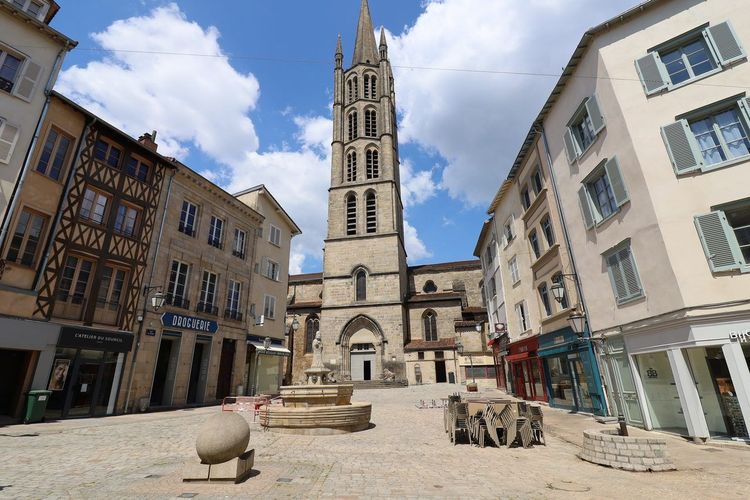
Two buildings, two atmospheres, a few minutes' walk from each other. The Saint-Michel-des-Lions Church, raised to the rank of basilica in 2023, owes its name to the two heavily eroded granite lions, probably Gallo-Roman, that stand guard at the entrance.
Its spire of about 65 metres, topped with a large copper ball nearly two metres in diameter, can be spotted from almost anywhere in the city. This sphere, added in the 19th century after a lightning strike, served as a reference point for triangulation operations. Inside, with free access, the church has housed since the Revolution the relics of Saint Martial, the first bishop of Limoges, saved during the destruction of the abbey that bore his name. Every seven years, these relics are at the heart of the Limousin ostensions, a tradition listed as UNESCO intangible cultural heritage.
Back to the Saint-Aurélien Chapel (Rue de la Boucherie, 87000 Limoges, rated 4.5/5 on Google from 73 reviews), already passed in the Boucherie quarter: inside, polychrome statues and Baroque decoration surprise you in such a small space. Entry remains free, with more limited hours than the cathedral or Saint-Michel.
If you combine the two visits, allow a little under half an hour in total. Between the two, the Ryo audio guide offers a dedicated stop for each building, a way to spot details that a simple sign at the entrance does not mention.
4. The Town Hall, the Cour du Temple and the Squares of the City Centre
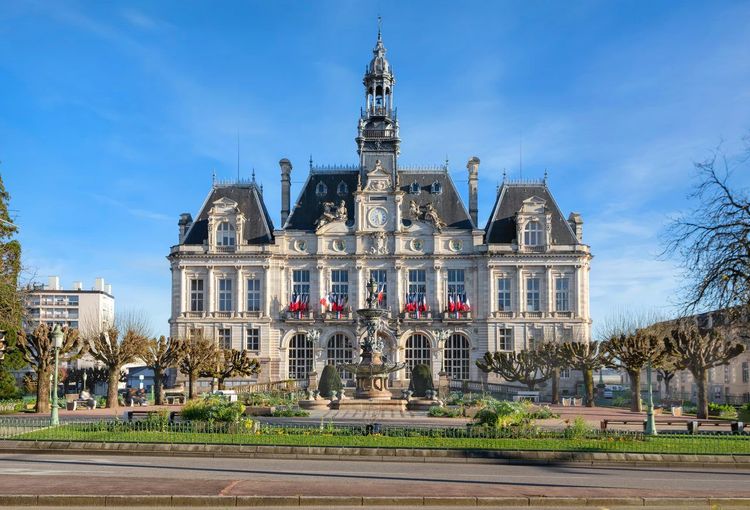
Late 19th-century façade, belfry and open square: the Town Hall of Limoges does not try to impress, but its Place Léon-Betoulle deserves a stop for a specific reason. Its fountain is decorated with porcelain, a nod to the industry that made the city's fortune, and people gladly stop here for a photo before heading to the shopping centre.
The square also serves as a setting for occasional events, themed markets or open-air concerts in summer, none of which require a ticket. On weekdays, the benches attract mostly regulars who eat lunch there, making it a pleasant break between two visits.
A few streets away, don't miss the Cour du Temple, one of the most discreet surprises in Limoges. You reach it through a narrow passage from Rue du Temple, and you emerge into a Renaissance courtyard lined with arcaded galleries and an exterior stone staircase. The place is small, but it sums up on its own the elegance of the 16th-century town mansions, hidden behind unremarkable façades.
You can continue toward Place de la Motte and Place de la République, two breathing spaces in the Château quarter. Beneath Place de la République lie the remains of the former Saint-Martial abbey, one of the most powerful in the West in the Middle Ages, demolished after the Revolution. The layout of the surrounding streets preserves the memory of this abbey town, which you understand better once you know what stood there.
Between these squares, the pedestrian streets of the centre, such as Rue du Clocher or Rue Ferrerie, line up old façades and porcelain shop windows. Window-shopping at the porcelain merchants is an indirect, cost-free way to see local know-how up close: dinner services, decorative pieces, collaborations with contemporary designers.
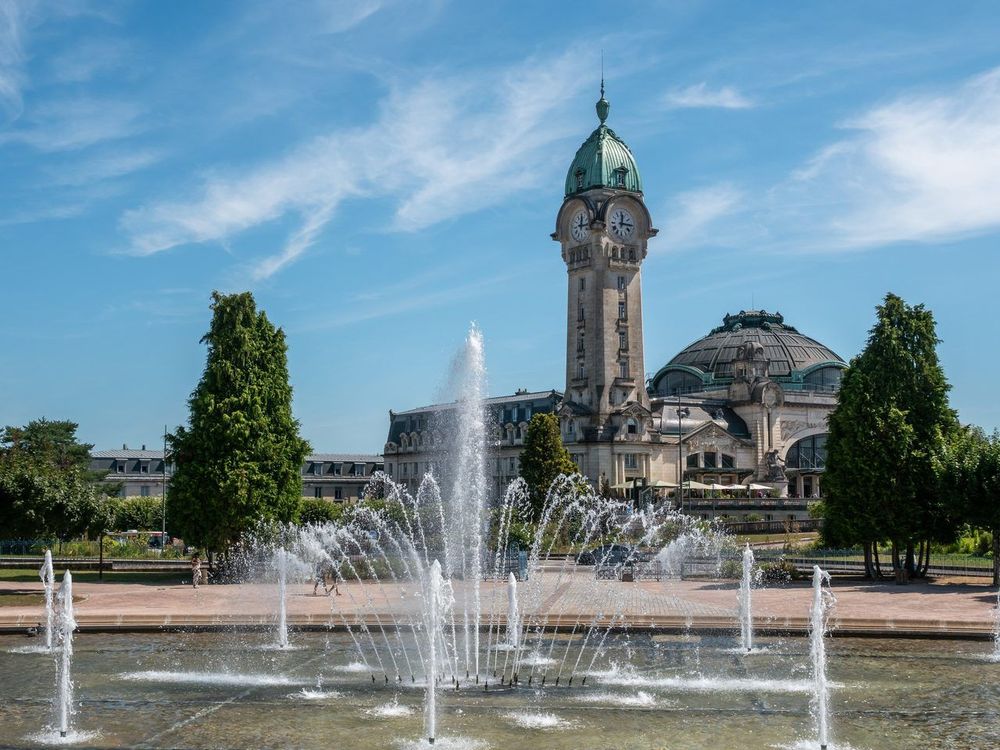
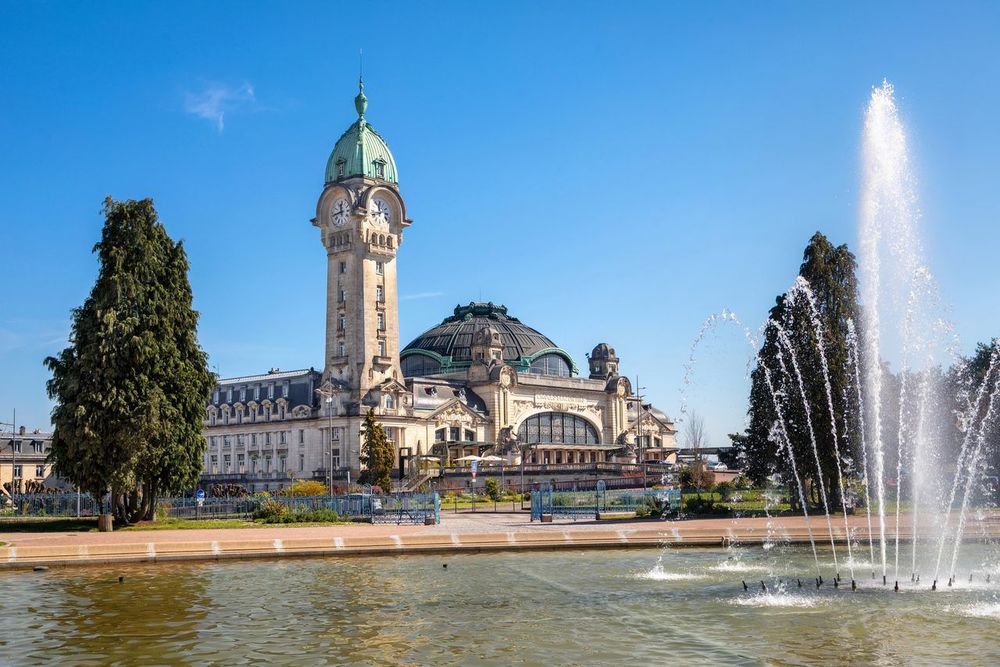
5. Limoges-Bénédictins Station, an Art Deco Gem to Admire Without a Ticket
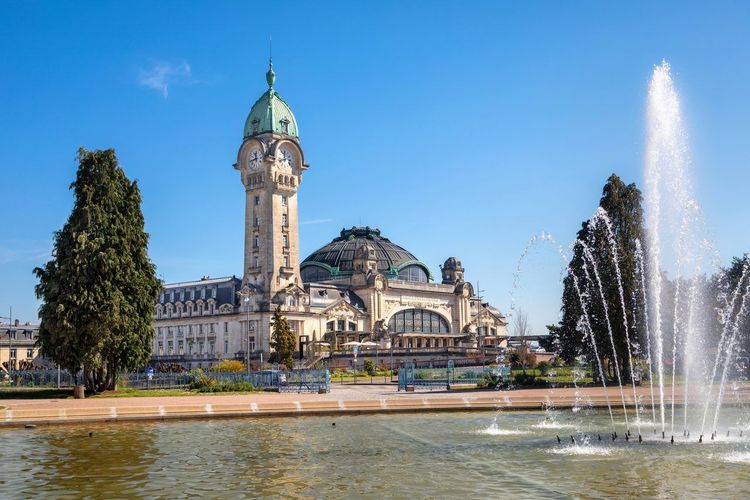
Few French train stations are worth a detour in themselves. The Limoges-Bénédictins Station (Place Maison Dieu, 87000 Limoges, rated 4.4/5 on Google from 863 reviews), listed as a historic monument since 1975, is one of them thanks to its verdigris copper dome and its campanile of more than 60 metres, visible from much of the city.
Built between 1924 and 1929 to plans by the architect Roger Gonthier, on the site of a former Benedictine convent that gave it its name, it blends Art Deco with Byzantine reminiscences. The interior hall preserves its stained-glass windows and original decoration, accessible without buying a train ticket: you just walk in.
The most spectacular viewpoint, however, is outside. From the bridge that spans the tracks, the station appears to sit above the rails, a rare arrangement that explains its highly photogenic silhouette. Regularly cited among the most beautiful stations in France, it also nearly disappeared: in 1998, a fire ravaged the dome's framework, since restored identically. If you arrive by train, the Ryo audio guide starts a stone's throw away and comments on this dome before tackling the rest of the itinerary.
6. The Évêché Gardens and the Botanical Garden, a Green Break in the City Centre
Clinging to the hillside that slopes down to the Vienne, the Évêché Gardens (Place de l'Évêché, 87000 Limoges, rated 4.4/5 on Google from 3,283 reviews) offer one of the finest views of Limoges, with no entrance fee. Laid out in terraces in the 18th century, they surround the former episcopal palace that now houses the Museum of Fine Arts.
The Botanical Garden of the Évêché, part of this same complex, brings together several thousand plants classified by theme: medicinal plants, species from Limousin environments, useful plants, an aromatic herb bed. Entry is free every day, with hours that adapt to the season. The labels detail the name, origin and use of each plant, turning the walk into a little botany lesson at your own pace.
The real draw of the place remains the upper terrace: the view plunges over the meanders of the Vienne and the Saint-Étienne bridge, at any time of day. Many Limoges residents come simply to read on a bench, away from the bustle of the shopping centre.
An essential stop on the Ryo audio-guided tour in Limoges, these gardens are the subject of an audio stop devoted to their history and to this panorama over the Vienne that has inspired several generations of local painters.
7. The Aurence Park, Lake Uzurat and the Champ de Juillet, the Green Lungs of Limoges
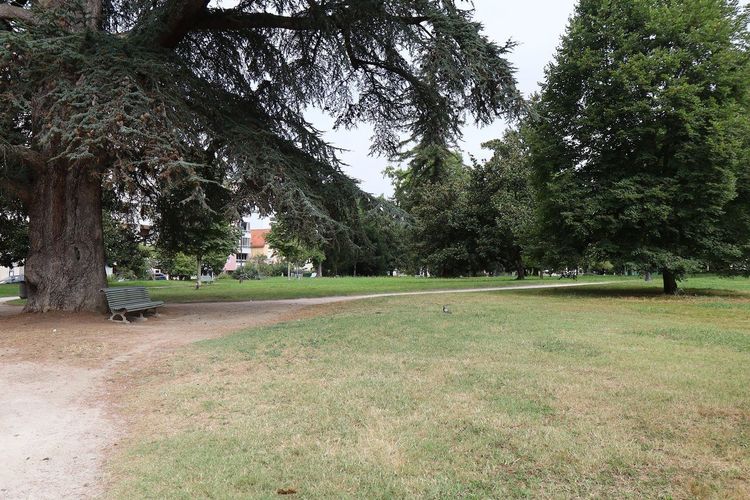
Three spaces, three complementary uses. In the north-west of the city, the Aurence Park (Avenue du Président Kennedy, 87000 Limoges, rated 4.5/5 on Google from 1,856 reviews) stretches over about forty hectares along the little river that gives it its name, with lawns and paths where you meet joggers and families.
The park is part of a larger complex, the Aurence valley, which covers nearly 200 hectares by bringing together Lake Uzurat, the Moulin-Pinard park and the Aurence park. The walk around the lake is one of the locals' favourite Sunday strolls, and you can link the three sites on foot over half a day. The playgrounds spread along the route are free to use, as are the picnic tables.
More central, the Champ de Juillet plays a different role. This large public garden just below the Bénédictins station features a pond, a bandstand, century-old trees and children's play areas. It is the park for quick breaks: a sandwich on a bench before a train, half an hour of play between two visits.
Other, lesser-known green spaces complete the offer, such as the Victor-Thuillat park, a small wooded garden popular with neighbourhood residents, or the Bois de la Bastide north of the city, where forest paths offer a real change of scenery a few minutes from the centre.
If you have to choose for a picnic, favour the Aurence valley for space and calm, and the Champ de Juillet for its proximity to the historic centre.
8. The Banks of the Vienne, a Nature Walk Along the Water
Limoges was built on the banks of the Vienne, and the banks of the Vienne remain the best way to understand this river geography. A pedestrian path follows the river for several kilometres, at the foot of the Saint-Étienne bridge (Pont Saint-Étienne, 87000 Limoges, rated 4.6/5 on Google from 210 reviews).
This medieval bridge, built in the early 13th century to link the episcopal Cité to the left bank, preserves its granite arches and has seen Saint James pilgrims pass for eight hundred years. Right next to it, the Ponts quarter recalls the era of the gabariers, the boatmen who floated wood down the Vienne for the porcelain makers' kilns. The small, low houses of this suburb, long inhabited by boatmen's and fishermen's families, form a setting quite different from that of the centre.
Allow about an hour for the round trip between the Saint-Étienne bridge and the Saint-Martial bridge, downstream, whose foundations date back to Roman times. In spring, herons and cormorants frequent this stretch, for those who take the time to watch. In the evening, the low light on the cathedral, seen from the left bank, offers one of the most beautiful photos of Limoges.
You can also do the full loop: go down through the Évêché gardens, cross the Saint-Étienne bridge, follow the left bank to the Saint-Martial bridge, then climb back to the centre through the Château quarter. An hour and a half of walking, no ticket to buy, and the city seen from every angle.
9. Limoges Museums: Fine Arts, Adrien-Dubouché and Resistance on the First Sunday of the Month
Limoges owes its worldwide reputation to one material: hard-paste porcelain, born here in the late 18th century thanks to the discovery of a kaolin deposit at Saint-Yrieix-la-Perche. Three museums tell the story of the city, and all follow the same rule: a modest fee in normal times, but free entry for everyone on the first Sunday of every month, and all year round for those under 26. If you can time your stay around that Sunday, you save around fifteen euros per adult.
The Museum of Fine Arts, nicknamed the BAL, occupies the former episcopal palace, in the heart of the Évêché gardens. Its collections cover local Gallo-Roman archaeology, an Egyptian section surprising for a city this size, painting from the 15th to the 20th century with several canvases by Renoir, a Limoges native, and above all a gallery of Limoges enamels among the richest in the world.
Outside the first Sunday, admission costs 5 euros at full price and 3 euros at the reduced rate. Good to know: a combined ticket at 6 euros, valid for three days, also gives access to the Resistance Museum, and in summer, during heatwaves under orange alert, the BAL opens its doors without a ticket to offer a cool refuge.
Ten minutes' walk away, the Adrien-Dubouché National Museum (Place Winston Churchill, 87000 Limoges, rated 4.6/5 on Google from 1,789 reviews) changes scale. Its ceramics collection, one of the most important in the world, traces the history of earthenware, stoneware and porcelain, from the first Chinese productions to the contemporary creations of the Limoges manufactories, by way of the great services commissioned in the 19th century.
The ticket costs 7 euros at full price and 5 euros at the reduced rate. The museum is open every day except Tuesday. As with the BAL, on the first Sunday of the month admission is free, and teachers, job seekers and those under 26 benefit all year round.
A third, often forgotten address, the Resistance Museum, housed on Rue Neuve-Saint-Étienne in a former convent, traces the history of Haute-Vienne between 1939 and 1945, from the action of the Limousin maquis to the tragedy of Oradour-sur-Glane, about twenty kilometres away. Same conditions as the BAL: 5 euros, free entry on the first Sunday of the month and for those under 26. The building also overlooks a small medieval garden.
Check the programme before you go: some temporary exhibitions follow their own pricing.
10. The Bibliothèque Francophone Multimédia (BfM) and the Network of Media Libraries
The Bibliothèque Francophone Multimédia (Place Aimé Césaire, 87000 Limoges, rated 4.6/5 on Google from 302 reviews), opened in the late 1990s in the heart of the city, is one of the major public libraries in France outside Paris. You can walk in, settle down and read on site without a card or registration.
The building houses a heritage collection devoted to the French language around the world, which justifies its name, as well as regular exhibitions with free access. Families will find a programme with no charges: story hours for toddlers, "baby reader" sessions, workshops during school holidays, and a press area where you can read the daily papers without a subscription.
The architecture is also worth a look: large glass roofs, a bright atrium, reading areas open to the city. In rainy weather, it is one of the best refuges in the centre, with wifi, consultation stations and armchairs where no one will ask you to buy anything. Lectures, author meetings and screenings also punctuate the calendar, most with free entry subject to available seats.
The network of media libraries and toy libraries in Limoges goes well beyond the BfM: several neighbourhood branches offer, in addition to books, play areas for children and digital workshops for adults. For families with young children, it is one of the easiest outings to organise: you spend an hour there without having reserved anything, and leave with your arms full of books.
11. Free Markets, Exhibitions and Events All Year Round
The best-known event remains the Christmas market set up every winter on Place de la République, with its chalets, lights and evening entertainment. But the city does not keep its good deals for December.
All year round, the Halles Centrales on Place de la Motte can be visited freely, even with no intention of buying. Built between 1885 and 1889, with a metal framework designed by two collaborators of Gustave Eiffel, they bear on their façade a frieze of 368 porcelain panels made by the Guérin manufactory: game, fish, fruit and vegetables illustrate what was sold inside. Look up before you enter, it is one of the most photographed porcelain pieces in the city. Inside, the morning atmosphere of the stalls lets you observe local life up close. You can also continue to the Halles Carnot, the other large covered market, more frequented by neighbourhood residents.
On the cultural side, free exhibitions follow one another all year: the Frac-Artothèque Nouvelle-Aquitaine presents contemporary works, the BfM hosts regular displays, and several community spaces in the centre exhibit local artists with no entry ticket. During the holidays, shop windows and the halls of town mansions also turn into small pop-up galleries.
Finally, the year-round events deserve a look before planning your stay: Fête de la musique in June, European Heritage Days in September with exceptional opening of buildings usually closed, European Museum Night in spring, which extends visits late into the evening, and Frairie des Petits Ventres in October in the Boucherie quarter. In summer, several squares and parks also host concerts and open-air screenings. Check the city hall and tourist office calendars a few weeks before your visit: dates vary from year to year.
12. Playgrounds and Family Outings Without Spending Money
Beyond the large parks already presented, Limoges has many playgrounds scattered across its neighbourhoods, several of them recently renovated with structures suited to all age groups, from toddlers to pre-teens. The Parc des Étoiles, laid out in the Val de l'Aurence, is a good example.
With a baby, favour quiet spaces: the media libraries organise "baby reader" sessions, and the Évêché gardens or the Champ de Juillet have shaded paths accessible to strollers, away from the noisier play areas.
Beware of a common trap: educational farms and animal parks around Limoges are rarely free. Some let you see the enclosures from a public path, but most charge admission. Check the conditions before promising animals to children: nothing is more frustrating than an outing announced as free that turns out to be paid on arrival. At Lake Uzurat, on the other hand, ducks and swans can be watched without any formality.
For slightly older children, turn the visit of the centre into a treasure hunt: count the lions of Saint-Michel, spot the copper ball of the spire from different points in the city, find on the Halles frieze the panel with game or the one with fish. These little challenges turn an adults' stroll into an adventure, without spending a euro.
A typical family day almost always has the same ingredients: a park with space, a body of water to watch, a neighbourhood media library in case of rain. Also consider the Resistance Museum or the BAL for teenagers: under 26, they get in free, and parents benefit from the first Sunday of the month.
13. Around Limoges: the Vassivière Sculpture Woods and Other Gems
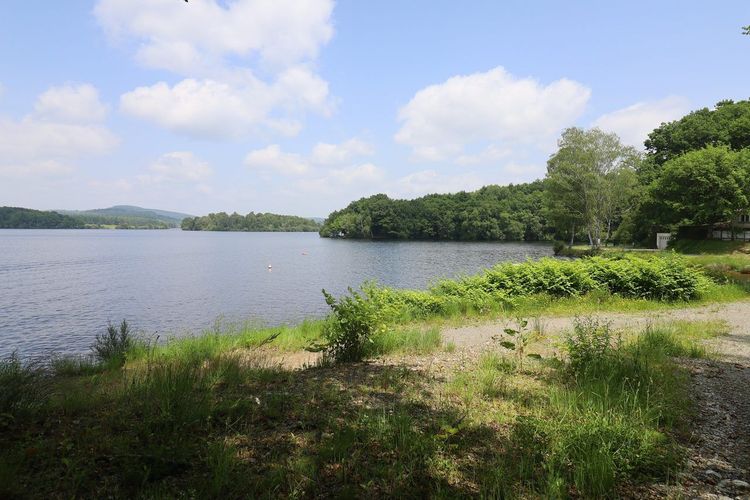
About an hour's drive away, Lake Vassivière and its island concentrate one of the most unusual sites in the region. The Vassivière Sculpture Woods, launched in 1983, bring together about sixty contemporary artworks installed in the open air on the island and its surroundings, with free access all year round.
The path winds between the works over several kilometres, with regular glimpses of the lake. The International Centre for Art and Landscape, whose building designed by Aldo Rossi dominates the island, charges for its exhibitions (5 euros, free for under-12s). The forest walk, however, requires neither ticket nor reservation. The island is reached on foot by a footbridge from the shore, which lets you walk around it in a short half-day.
In summer, Lake Vassivière also becomes the beach of the Limoges locals: several sandy beaches with free access line its shores, with supervised swimming in season. A path goes all the way around the lake for seasoned walkers, but short sections are enough to enjoy the coves and viewpoints.
Closer to Limoges, other gems are worth the detour if you have a car. Solignac, about fifteen kilometres to the south, has a domed Romanesque abbey church whose interior can be visited freely. Saint-Léonard-de-Noblat, about twenty kilometres to the east, lines up its medieval houses around a collegiate church listed as a UNESCO World Heritage Site as part of the Routes of Santiago de Compostela. Oradour-sur-Glane, martyr village of 10 June 1944, can be walked through without a ticket in its ruins preserved as they were; only the Memory Centre charges admission. The visit, deeply moving, requires time and reflection: allow at least an hour and a half.
For easy walks near Limoges, the banks of the Briance at Solignac or the paths around Saint-Léonard offer short, well-marked loops suitable for families. Allow one to three hours of walking depending on the circuit chosen, and bring water.
If the excursion to Vassivière appeals to you, our dedicated article details how to organise a trip to Lake Vassivière from Limoges, with the best viewpoints and travel time depending on the season.
14. Limoges Craftsmanship: Porcelain and Enamel to Discover for Free
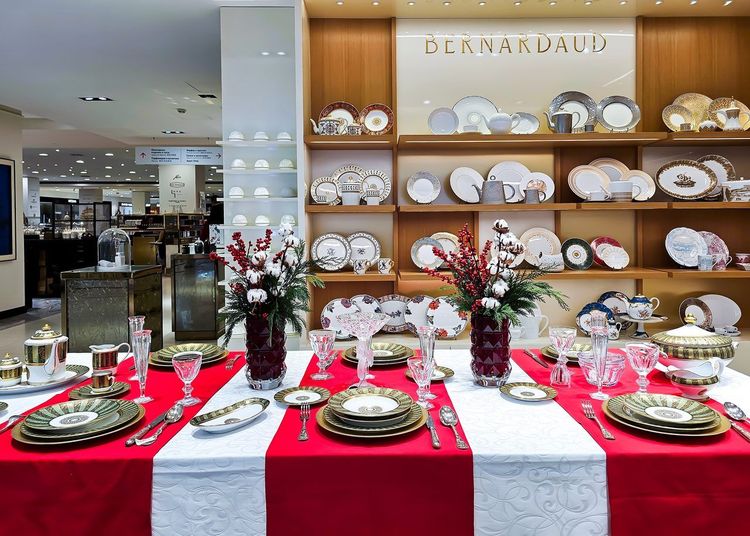
Porcelain is not just a museum matter in Limoges: you come across it everywhere in the city, from the Halles frieze to the Town Hall fountain. The Bernardaud Manufactory (27 Avenue Albert Thomas, 87000 Limoges, rated 4.4/5 on Google from 423 reviews), one of the great historic houses still established in the city, has a showroom and a shop with free access where you can admire the house's creations.
Two offers need to be distinguished: the workshop tour, which follows the whole process from raw paste to finished piece, remains paid and must be booked in advance. The showroom and the shop, on the other hand, can be browsed without a ticket during opening hours.
The other Limousin art of fire, enamel, is even older: from the 12th century, the "Limoges work" was exported all over Europe in the form of reliquaries and crosiers in champlevé enamel. The finest collection is at the BAL, to be seen on the first Sunday of the month. To understand why Limoges excelled in these two arts, the BAL and Adrien-Dubouché combination remains the best entry point, and you can do it in a single day without spending a cent if you hit the right Sunday.
While strolling through the centre, keep your eyes open: street plaques, signs and façade decorations in porcelain or enamel appear almost everywhere, souvenirs of an era when dozens of manufactories kept the city alive. The windows of the enamellers' shops, around the cathedral and the Château quarter, also let you admire contemporary work without pushing open the door.
15. Practical Info: Zero Budget, When to Come and How to Get Around Limoges
To visit Limoges on a zero budget, a few rules are enough. Time your stay around the first Sunday of the month for the three museums, group your visits by neighbourhood, and save the parks for sunny afternoons. For lunch, a picnic assembled at the Halles Centrales and enjoyed in the Évêché gardens remains the most economical and most pleasant option.
Here is a typical zero-euro day, on foot. In the morning, start from the Bénédictins station, cross the Champ de Juillet then head to the Halles Centrales and the porcelain frieze. Continue with Rue de la Boucherie, Saint-Aurélien Chapel and Saint-Michel-des-Lions. After the picnic in the Évêché gardens, visit the cathedral, then the BAL if it is the first Sunday of the month. Finish with the loop of the banks of the Vienne and the Saint-Étienne bridge at sunset.
In case of rain, reverse the programme: morning at the BfM or in a neighbourhood media library, a sheltered stop at the Halles Centrales, then a visit to the cathedral and Saint-Michel-des-Lions, two interiors well suited to long observation when the sky clouds over.
On the question of when to visit Limoges, spring and early autumn remain the most comfortable seasons for combining walking and outdoor visits. October combines the Frairie des Petits Ventres and autumn colours in the Aurence valley. Winter is mainly justified by the Christmas market, summer by open-air concerts and the parks.
As for transport in Limoges, the historic centre can be covered almost entirely on foot: from the Bénédictins station to the Boucherie quarter, allow about fifteen minutes of walking. For the Aurence valley, the urban bus network serves the surroundings, and a car becomes necessary for Vassivière, Solignac or Saint-Léonard-de-Noblat. Finally, stop by the tourist office at the start of your stay: city maps and the events calendar are handed out free of charge.



FAQ
What are the free things to do in Limoges?
The Boucherie quarter, Saint-Étienne Cathedral, Saint-Michel-des-Lions Church, the Cour du Temple, the Évêché gardens, the Halles Centrales and the banks of the Vienne can all be visited without a ticket. Add to that the parks, the media libraries and, outside the city, the Vassivière sculpture woods.
Which museums are free in Limoges?
None is permanently free for everyone, but the Museum of Fine Arts, the Resistance Museum and the Adrien-Dubouché National Museum require no ticket on the first Sunday of every month. Visitors under 26 get in free all year round.
When are Limoges museums free?
On the first Sunday of every month for all visitors. The BAL also opens its doors free of charge during heatwaves under orange alert.
What can you do with children in Limoges without spending money?
The playgrounds in the Aurence valley and at the Champ de Juillet, the ducks at Lake Uzurat, the BfM's baby reader sessions and walks along the Vienne are the simplest family outings.
Where can you go for a walk in Limoges?
The banks of the Vienne, the Évêché gardens, the Aurence valley and the Boucherie quarter each offer a different kind of walk, from the dense historic centre to the calmer riverbanks.
What can you see around Limoges for free?
The Vassivière sculpture woods, about an hour's drive away, are open to everyone all year round. Solignac, Saint-Léonard-de-Noblat and the martyr village of Oradour-sur-Glane complete the list.
What is the best season to visit Limoges on a budget?
Spring and early autumn offer the best compromise between pleasant weather and few crowds. Winter is mainly worth it for the Christmas market, summer for the parks and the banks of the Vienne.
Limoges thus keeps a rare promise for a city of its size: you can spend several days here without taking out your bank card, between the historic centre, first-Sunday museums and an excursion to Vassivière. All that remains is to plan the order of your visits according to the neighbourhood you are in.
To link it all together without improvising, the Ryo audio-guided tour of Limoges remains the simplest starting point: 17 audio stops over 2h15 and 5.6 km, to follow at your own pace between a break in the Évêché gardens and a stop in front of Saint-Étienne Cathedral.
À lire également