© Shutterstock
 Votre guide Ryo
Museums of Nancy in 2026: The Complete Guide, from the City Center to the Lorraine Countryside
Looking for must-see museums in Nancy? The city offers far more than an obligatory stop at Place Stanislas, and a hurried visitor can easily miss half of them for lack of knowing where to look. The museums of Nancy hide behind 18th-century façades, inside an intact Art Nouveau villa, and within an Art Deco building housing a tropical aquarium. The Ryo audio-guided tour of Nancy connects several of these façades in just 1 hour 40 minutes on foot, making it a great starting point before stepping inside.
This guide reviews around twenty venues: the Italian primitives and the Daum collection at the Musée des Beaux-Arts, the Masson dining room at the Musée de l'École de Nancy, Villa Majorelle, the ducal palace under renovation, followed by embroidery workshops, glasswork spaces, and mine galleries an hour's drive away, around Lunéville and the Moselle. You will also find information on free admission policies and tips for planning your visits.
Musée des Beaux-Arts de Nancy
Its façade is impossible to miss, aligned along Place Stanislas, itself listed as a UNESCO World Heritage Site. The Musée des Beaux-Arts de Nancy (3 Place Stanislas, 54000 Nancy, rated 4.6/5 on Google with 2,056 reviews) occupies a building of two eras: an 18th-century pavilion designed by Emmanuel Héré, and an extension opened in 1999 that plunges beneath the square.
Architect Laurent Beaudouin made a choice visitors rarely expect: rather than concealing the fortification remains uncovered during construction, he incorporated them into the visitor route. You descend to the basement and come face to face with a section of 15th- and 16th-century ramparts before entering the galleries.
The collection spans several centuries of European painting, from Italian primitives to contemporary art, with works by Perugino, Rubens, Delacroix (his celebrated 'Battle of Nancy') and Manet. The basement houses one of the museum's centerpieces: a vast ensemble of Daum glassware, from Art Nouveau creations to contemporary pieces, presented in a dark scenography that brings out every color. Allow 1.5 to 2 hours for a full visit.
The museum opens at 10am and is closed on Tuesdays, like the other municipal museums. Full-price admission is under €10, and entry is free on the first Sunday of each month, a detail many visitors are unaware of. Worth knowing: the museum also manages the Jean Prouvé house, the home the Nancy-born designer built for himself on the heights of the city.
Worth mentioning upfront: our Ryo audio-guided tour of Place Stanislas passes in front of this museum and sets its façade within the context of the entire square, across its 27 audio stops, giving you a sense of the setting before you even walk in.
Musée de l'École de Nancy
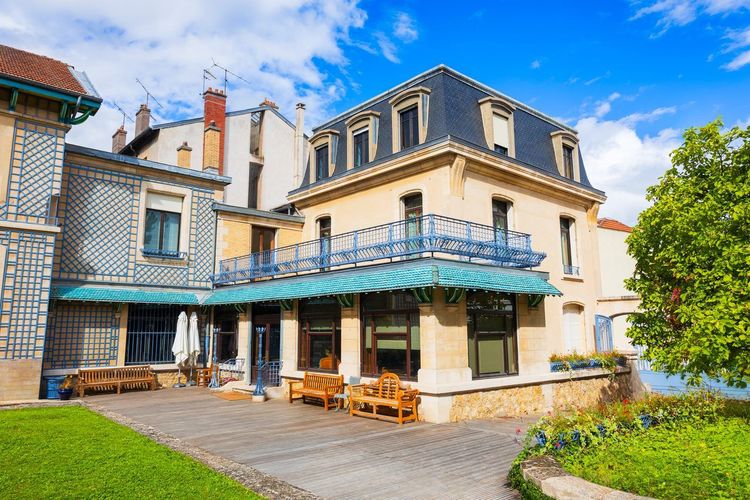
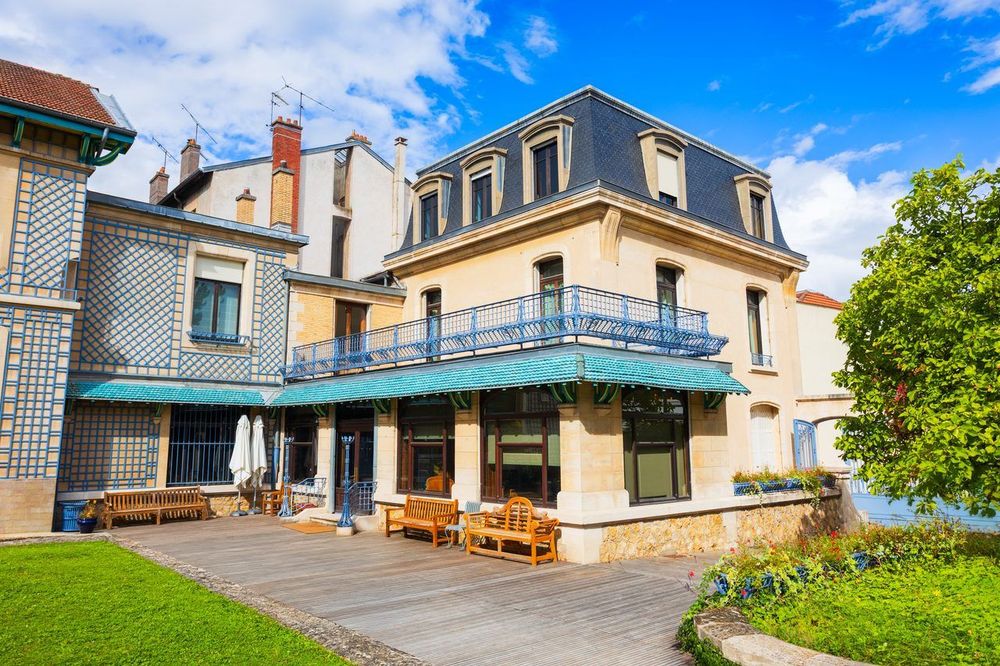
A change of scenery: head to a residential neighborhood on Rue du Sergent-Blandan, in the former property of Eugène Corbin, patron and great collector of Lorraine Art Nouveau. The Musée de l'École de Nancy (36-38 Rue du Sergent Blandan, 54000 Nancy, rated 4.6/5 on Google with 2,439 reviews) opened here in 1964, and it looks nothing like a conventional exhibition hall: furniture, stained glass, and woodwork are presented as ensembles, as if in a lived-in home.
The Masson dining room, created by Eugène Vallin with paintings and leatherwork by Victor Prouvé, encapsulates the movement on its own: every piece of furniture and every panel of woodwork echoes plant motifs down to the finest detail. You will also encounter the glassware of Émile Gallé, often adorned with lines borrowed from Symbolist poets, and the furniture of Louis Majorelle, including the celebrated 'Water Lily' desk.
The garden is worth a visit in its own right. Planted with species dear to the artists of the École de Nancy, it houses an Art Nouveau aquarium pavilion, a curiosity that many visitors stumble upon by chance on their way out.
Allow 1.5 hours on site. The museum opens at 10am, closes at least on Tuesdays, and follows the same free-admission rule on the first Sunday of the month as the Musée des Beaux-Arts. If you visit during term time, aim for the afternoon: groups often take up the first morning slots.
Palais des Ducs de Lorraine: Musée Lorrain and Église des Cordeliers
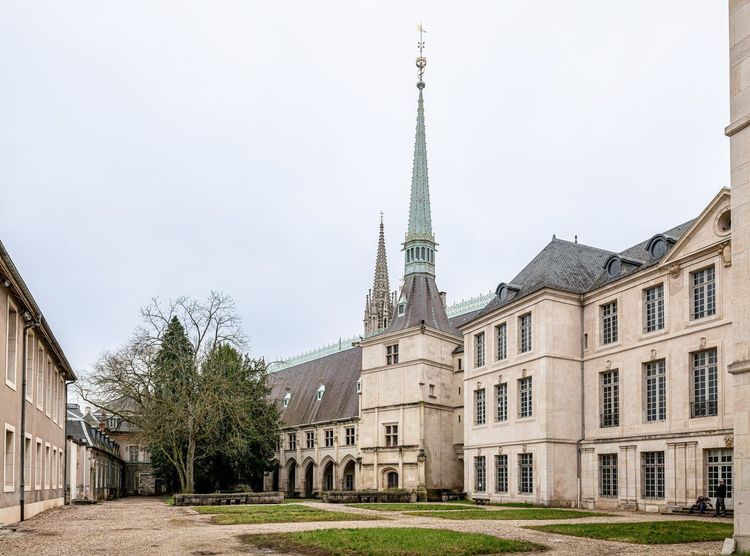
The Palais des Ducs de Lorraine, the historic home of the Musée Lorrain, has been undergoing an extensive renovation for several years. The palace remains closed to the public in 2026 and no reopening date has been announced: check the museum's website before making a special trip.
Built from 1502 under Duke René II, the palace blends Flamboyant Gothic with early Renaissance influences, clearly visible on the Porterie facing Grande Rue, topped by the equestrian statue of Duke Antoine. Upon reopening, the museum will trace the history of Lorraine from prehistory to the 20th century, with a rich Gallo-Roman and Merovingian archaeological collection.
The good news is that the Église des Cordeliers (66 Grande Rue, 54000 Nancy, rated 4.6/5 on Google with 277 reviews), adjoining the palace, remains open from 10am to 12:30pm and from 2pm to 6pm, except on Mondays. It houses the tombs of the Dukes of Lorraine, including that of René II, and most notably the recumbent effigy of Philippe de Gueldre sculpted by Ligier Richier, one of the most striking funerary works of the Lorraine Renaissance. The darker octagonal ducal chapel offers a marked contrast with the nave.
The palace-church pairing sits at the heart of the old ducal city, a short walk from Porte de la Craffe. The Ryo audio guide of the old ducal city tells the story of the dukes along Grande Rue, a good way to keep track of the history despite the museum's closure.
Villa Majorelle
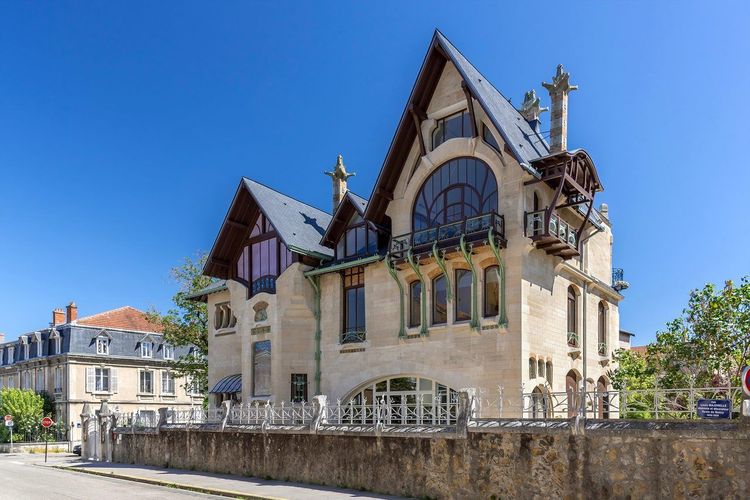
A fifteen-minute walk from the Musée de l'École de Nancy, Villa Majorelle (1 Rue Louis Majorelle, 54000 Nancy, rated 4.4/5 on Google with 2,442 reviews) is the house that cabinetmaker Louis Majorelle had built for himself in 1901–1902 by Parisian architect Henri Sauvage, with Lucien Weissenburger. Attached to the Musée de l'École de Nancy, it reopened after a lengthy restoration and stands as one of the most complete manifestations of Nancy Art Nouveau.
Every room was conceived as a whole: the wrought-iron staircase railing, the dining room with its Alexandre Bigot stoneware fireplace, the stained glass by Jacques Gruber. Unlike the neighboring museum, the villa does not bring together objects from elsewhere: you are inside the architecture itself, and that changes the entire experience of the visit.
It opens in the afternoon by timed entry, and capacity is limited: book ahead if you are coming on a weekend. Allow 45 minutes to 1 hour. If you are staying in the city center, the villa is reachable on foot or by tram as a complement to the Ryo audio-guided tour, whose commentary remains available on your phone to keep the thread of the city's story as you walk.
Muséum-Aquarium de Nancy
The Muséum-Aquarium de Nancy (34 Rue Sainte-Catherine, 54000 Nancy, rated 4.5/5 on Google with 4,193 reviews) is housed in an Art Deco building on Rue Sainte-Catherine, steps from the Parc de la Pépinière. Co-managed by the Grand Nancy metropolitan authority and the University of Lorraine, it brings together two worlds on separate levels: the zoology gallery upstairs and the aquariums on the ground floor.
On the museum side, the zoology gallery displays 570 taxidermied specimens from every continent, a sample of the more than 136,000 pieces held in reserve, the legacy of collections accumulated since the late 18th century. On the aquarium side, 57 tanks present more than 300 species in reconstructed environments, from coral reefs to tropical rivers.
Children often press their faces against the large tank windows for a long time, and the zoology gallery, with its rows of animals, makes a strong impression on younger visitors. Allow 1.5 to 2 hours if you have curious children, less if you head straight to the aquarium. Tram A stops at the Division de Fer station, very close by.
Opening hours vary by season and school holidays: check the metropolitan authority's website before you visit.
Le Féru des Sciences
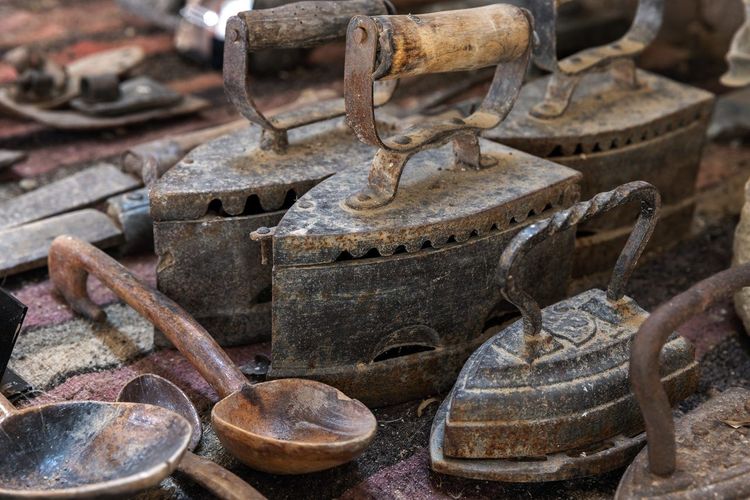
Le Féru des Sciences (1 Avenue du Général de Gaulle, 54140 Jarville-la-Malgrange, rated 4.2/5 on Google with 466 reviews) took over from the former iron history museum in Jarville-la-Malgrange, on the southern edge of Nancy. The venue has shifted its philosophy: here, you handle things rather than looking at them through glass.
Its 'Tinkering Space' offers hands-on science experiments designed for children and families. The approach favors doing and experimenting over theory, making it a great stop for children aged 6 to 12. Allow 1 to 1.5 hours, more if a workshop is scheduled during your visit.
The center is open Wednesday to Sunday, from 9am to 12pm and from 2pm to 6pm. Check the program online for workshops that require booking.
Galerie Poirel
Close to the Parc de la Pépinière and the train station, Galerie Poirel (3 Rue Victor Poirel, 54000 Nancy, rated 4.6/5 on Google with 1,486 reviews) occupies the same late-19th-century building as the Salle de Concert Poirel. There is no permanent collection here: the city mounts temporary exhibitions covering photography, design, and contemporary art.
Admission conditions vary depending on the current exhibition. Check the program before you visit: the gallery closes between shows for installation.
Jardin Botanique Jean-Marie Pelt
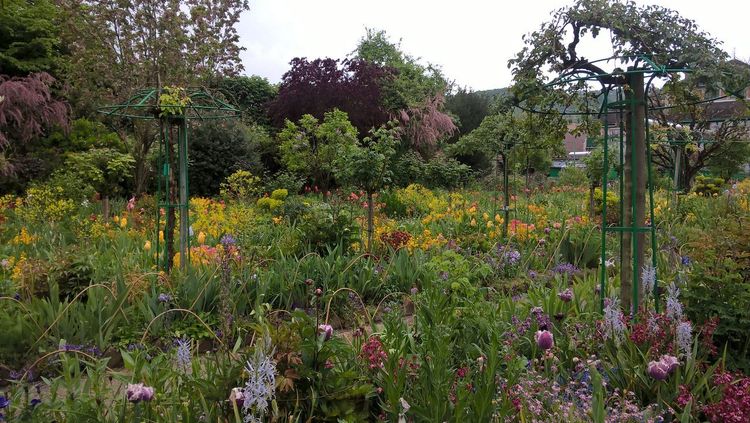
On the heights of Villers-lès-Nancy, about fifteen minutes from the city center, the Jardin Botanique Jean-Marie Pelt (100 Rue du Jardin Botanique, 54600 Villers-lès-Nancy, rated 4.7/5 on Google with 4,201 reviews) (also known as the Jardin Botanique du Montet) extends over around thirty hectares. Sources cite between 27 and 32 hectares depending on the perimeter considered.
More than 6,000 species from every continent are cultivated here, a large proportion of them in 2,500 m² of tropical greenhouses. Carnivorous plants, orchids, and arid-climate vegetation attract amateur photographers, while the arboretum and outdoor collections can be explored on foot.
The site forms part of the Botanical Gardens of Grand Nancy and the University of Lorraine, along with the alpine garden of Haut-Chitelet, located in the Vosges at Xonrupt-Longemer. This university management explains the scientific depth of the collections, well beyond a simple park. Opening hours vary by season. Allow a good hour for the greenhouses, half a day if you plan a picnic.
Memory and History Museums on the Outskirts of Nancy
Less than an hour's drive from Nancy, several sites tell another story of Lorraine: mining, military, and religious. They lend themselves less to an impromptu visit than to a dedicated excursion, but are well worth the trip if 20th-century Lorraine interests you.
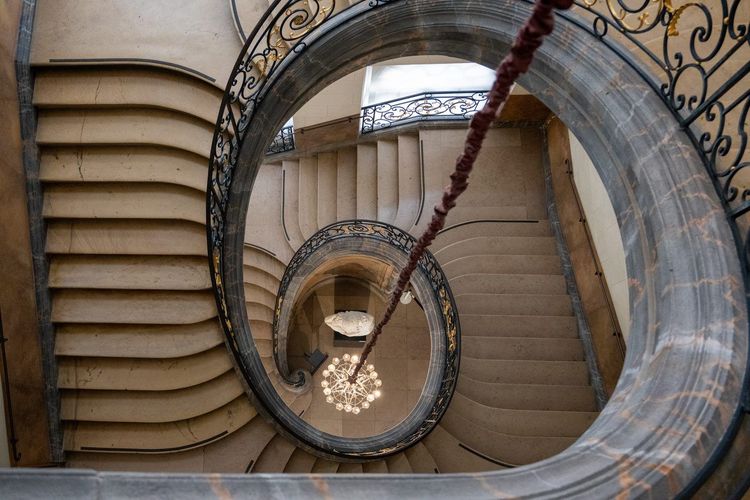
The Abbaye des Prémontrés in Pont-à-Mousson is undoubtedly the most spectacular: an 18th-century monastic complex renowned for its monumental staircases, considered one of the region's architectural gems. It now hosts exhibitions, concerts, and conferences, and even has a hotel.
To the south of the urban area, in Neuves-Maisons, the Atelier de Mémoire Ouvrière (AMO) tells the story of iron mining around Nancy, which once had 42 mining concessions. A scale model of the Zublin machine and reconstructed galleries immerse you in the daily life of the miners, told through their own testimonies.
In Vézelise, the Espace de Mémoire Lorraine 1939-1945 presents itself as the first site in Lorraine dedicated to the Second World War. It covers civilian victims, resistance fighters, and life under Nazi occupation, with a focus on individual stories.
Finally, the Château de Montaigu (54410 Laneuveville-devant-Nancy, rated 4.4/5 on Google with 343 reviews) is located very close to the city center, in Laneuveville-devant-Nancy. This manor house set in parkland, bequeathed to the department by archaeologist and industrialist Édouard Salin, can be visited with its original furniture and interior décor: an easy half-day visit.
These four sites do not combine well in a single day: choose based on what appeals to you most, mines or wartime history, and consult our Ryo article on what to do around Nancy to plan a full excursion.
Lunéville and Lorraine Crafts: Embroidery, Glass, and Iron Mines
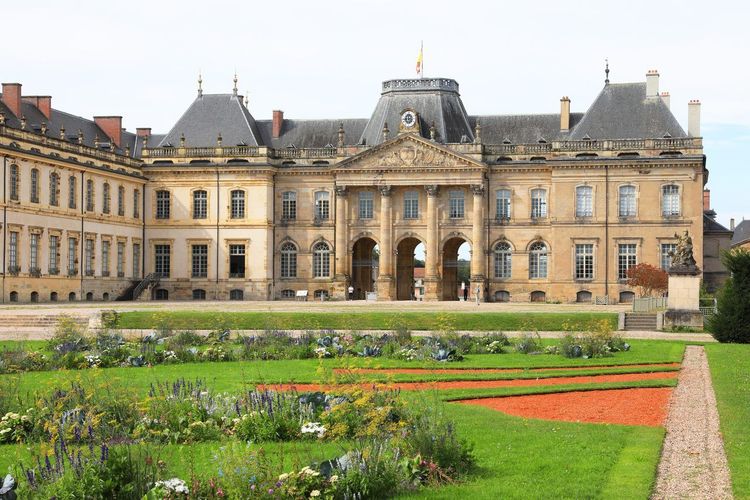
Lunéville, about thirty kilometers southeast of Nancy, deserves half a day on its own, if only for its château nicknamed the 'little Versailles of Lorraine'. The town and its surroundings also concentrate a handful of small museums documenting regional craftsmanship.
Housed in the château, the Conservatoire des broderies de Lunéville presents fine collections of embroidery and beading using the Lunéville stitch, a crochet technique still used in haute couture. It also offers embroidery classes and sells kits to try at home.
On Place Saint-Rémy, the Espace Muséal Hôtel Abbatial de Lunéville occupies a building dating from 1727 and hosts permanent and temporary exhibitions. A few streets away, the Jardins de l'Abbé are inspired by 18th-century monastic gardens: aromatic plants, medicinal herbs, and even the famous black melon of Lunéville.
Further west, in Vannes-le-Châtel, the Espace Verre Cristal ID serves as a meeting point between glassblowers and students. You can watch demonstrations and commission custom pieces, in a village that has lived from glassmaking for a long time.
Next, head to the Moselle for the Ecomusée des mines de fer de Lorraine (25 Rue de Saint-Léger-de-Montbrillais, 57710 Aumetz, rated 4.4/5 on Google with 121 reviews), spread across Neufchef and Aumetz. It offers an underground immersion in the life of iron miners since 1820, with industrial installations nicknamed the 'temples' of the basin. It is a more physical experience than the museums in Nancy's city center, and cool even in summer: bring a layer.
Finally, near Lunéville, the Espace Pédagogique Muséal Chaubet in Vitrimont, located at the Mouton Noir farm near the Friscati national war cemetery, reconstructs the equipment of the French soldier in 1914. Around one hundred objects from the Battle of Léomont and audiovisual displays recount the fighting of August–September 1914 around the town.
If you can only choose one of these sites to complement Nancy, go for the Ecomusée des mines de fer for its immersive quality, or the Conservatoire des broderies if textile and fashion speak to you.
Practical Information: Opening Hours, Prices, and Museum Passes in Nancy
Nancy's municipal museums (Beaux-Arts, École de Nancy) are closed on Tuesdays and offer free admission on the first Sunday of each month. A smart move if you want to fit in several visits without overspending: schedule your stay around that Sunday. The Muséum-Aquarium and Le Féru des Sciences, managed by the metropolitan authority, follow their own hours.
On the membership side, the city offers the Museo card, which grants access to the municipal museums throughout the year; ask at the museum welcome desk for details and conditions. Outside this card, each site has its own ticketing. Booking is most important for Villa Majorelle, whose slots fill up quickly at weekends.
Budget-wise, expect to pay under €10 per museum at full price, with reductions for students and families depending on the venue. Several sites remain free outdoors, such as the garden of the Musée de l'École de Nancy.
To plan a multi-day stay, our Ryo guide to visiting Nancy in 3 days lays out an itinerary that leaves room for two or three museums a day without feeling rushed.
On the ground, the Ryo audio-guided tour of Nancy remains the most flexible option between visits: no booking, no set time, 27 audio commentaries over 4 km to listen to on your smartphone, at your own pace.
FAQ
Which is the most visited museum in Nancy?
The Musée des Beaux-Arts de Nancy, thanks to its location on Place Stanislas, is among the most frequented, along with the Muséum-Aquarium, which is very popular with families during school holidays.
Are the museums in Nancy free?
Not all the time, but the municipal museums are free on the first Sunday of each month. The Église des Cordeliers and the garden of the Musée de l'École de Nancy can also be visited at little or no cost.
How much time should I allow to visit the museums of Nancy?
For the must-sees in the city center (Beaux-Arts, École de Nancy, Villa Majorelle), allow a full day. Add half a day for the Muséum-Aquarium and Le Féru des Sciences if you are traveling with family, and a full day to venture as far as Lunéville.
Is the Musée Lorrain open in 2026?
No, the Palais des Ducs de Lorraine, which houses the Musée Lorrain, remains closed for renovation, with no reopening date announced. The neighboring Église des Cordeliers, with its ducal tombs, remains open and is the best alternative.
Which museums should I visit in Nancy with children?
The Muséum-Aquarium and Le Féru des Sciences are the most family-friendly, with large tanks and hands-on experiments. The Jardin Botanique Jean-Marie Pelt is a great way to round off the day with some time outdoors.
Which museums should I see in Nancy in one day?
Start with the Musée des Beaux-Arts in the morning, then head to the Musée de l'École de Nancy in the early afternoon, and finish at Villa Majorelle, which opens in the afternoon, a fifteen-minute walk away.
In Summary
Nancy packs a surprisingly dense map for its size: two major Art Nouveau landmarks a fifteen-minute walk apart, a ducal palace under renovation offset by a church with remarkable recumbent effigies, and all around a region that tells its mining, military, and craft history. Enough to build a tailor-made stay, whether you have two hours between trains or a long weekend ahead of you.
Before stepping into the museums, start with a walk through the historic center: the Ryo audio tour of Nancy connects Place Stanislas to the old ducal city in around 1 hour 40 minutes, a great warm-up to put each museum in its proper context.
À lire également