© Shutterstock
 Votre guide Ryo
Narbonne in 2 Days: 2026 Itinerary between Ancient Rome and the Mediterranean
Narbonne once ruled all of Roman Gaul before a simple change in the Aude's course deprived it of its port and nearly erased it from the map for centuries. Today the city has reclaimed its splendour, and visiting Narbonne in 2 days is more than enough to understand why this former capital of Gallia Narbonensis deserves far more than a passing stop on the way to a holiday destination. The Ryo audio-guided tour of Narbonne takes you through this very historic centre, unfinished cathedral included, across twenty stops to listen to as you walk.
In two days, you can climb to the rooftops of a Gothic cathedral that was never completed, wade along the edge of Gruissan's pink salt flats, spot giraffes in an African reserve twenty minutes from the centre, or savour a bourride de baudroie on a terrace overlooking the canal de la Robine. The city alone combines a 41-metre-high Gothic choir without a nave, a Roman warehouse preserved beneath the current streets, a museum designed by Foster + Partners and a Cistercian abbey less than half an hour's drive away — a remarkably rare combination for a prefecture of this size. Add to that a wine route accessible without a major detour and a coastline still largely spared from mass tourism, and a two-day programme fills up quickly without ever feeling contrived.
This guide details hour by hour a first day devoted to the ancient and medieval heritage of the city centre, then a second day focused on the vineyards, the Fontfroide abbey and the sea, before listing possible excursions, the best addresses, accommodation options and practical information to plan the stay without any unpleasant surprises. Each step is presented in the most logical order to avoid wasting time on the ground, with distances and timings included.
Day 1, Morning: Cathédrale Saint-Just-et-Saint-Pasteur and the Palais des Archevêques
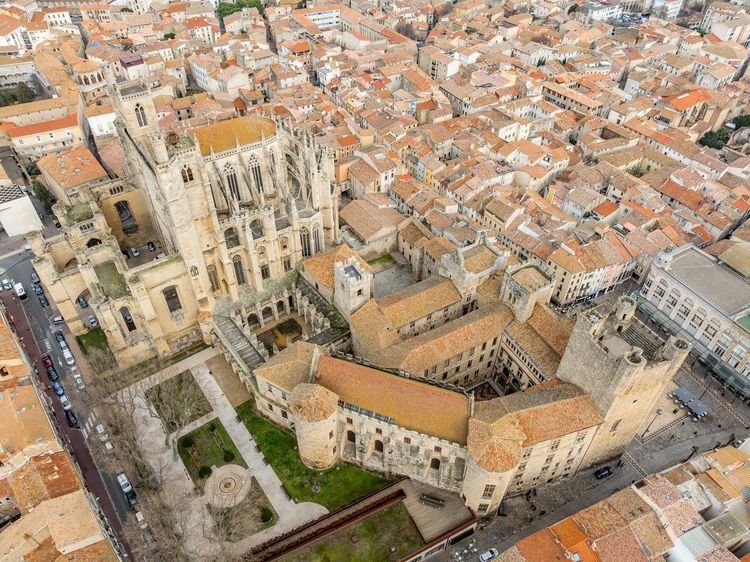
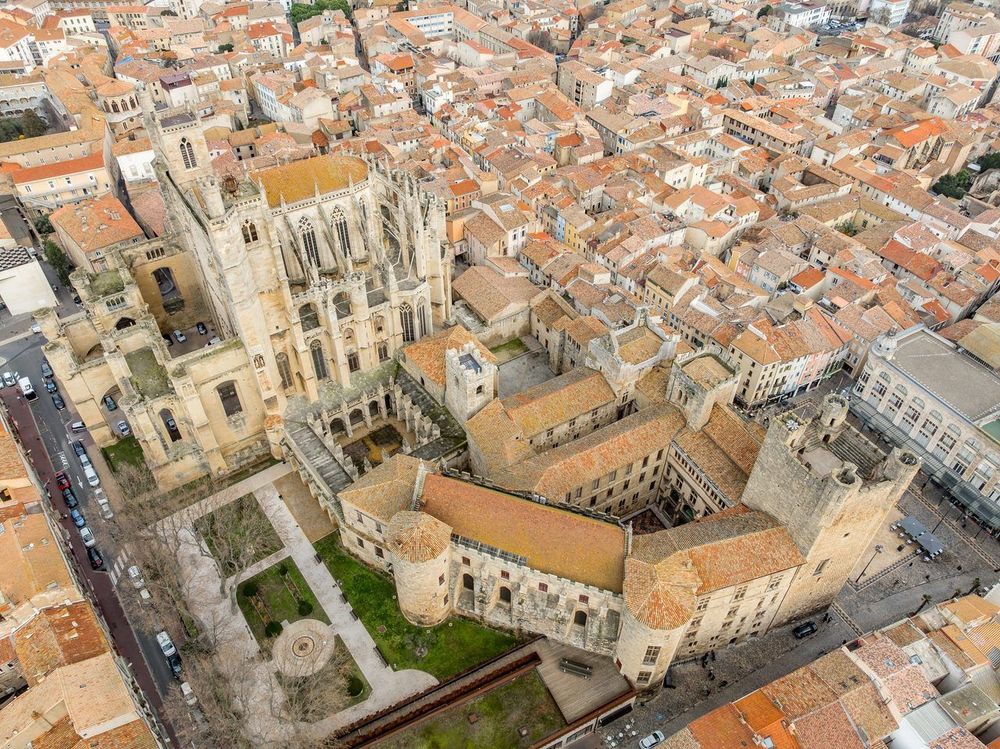
Start with the city's religious and political heart, just steps from each other. The Cathédrale Saint-Just-et-Saint-Pasteur impresses less through its size than through what it lacks: its nave was never built. For lack of funds and due to the proximity of the ramparts blocking the site's extension, only the Gothic choir was completed, in 1332, after sixty years of construction begun in 1272 following the model of the great cathedrals of northern France. The result is striking: a choir as tall as that of Amiens, standing in the middle of a square with no façade or nave to balance it visually. The archbishops of the time were clearly dreaming bigger than their finances would allow.
Inside, the proportions are striking: 41 metres under the vaulted ceiling, 14th-century stained glass still in place on the north side, and a treasury that holds a Flemish tapestry from the late 15th century depicting the Creation of the World. If you have time and energy, the climb to the rooftops (guided visit, separate ticket, around 45 minutes) offers a 360° panorama over the city, the Corbières in the distance and, on a clear day, the Mediterranean. Allow 45 minutes for the cathedral alone, an extra hour with the rooftop terrace.
A practical tip before you go: the rooftop visit is limited to a few time slots per day in low season, often mornings only. Check these at the tourist office on arrival, which is right across the square, rather than at the last minute at the ticket desk, especially on a Saturday when slots fill up quickly.
Adjoining the cathedral's chevet, the Palais des Archevêques forms a complex of three buildings constructed between the 12th and 14th centuries: the Palais Vieux, the Palais Neuf and the Gilles Aycelin keep. Narbonne's archbishops lived here until the Revolution, wielding temporal power almost equivalent to that of a duke, which explains the scale of the construction for a simple episcopal residence. The narrow passage between the two palaces, known as the passage de l'Ancre, leads directly to the Place de l'Hôtel de Ville, whose neo-Gothic town hall façade was designed in the 19th century by Viollet-le-Duc.
The Gilles Aycelin keep can be visited independently: 162 spiral steps and 42 metres up to a platform overlooking the entire old town, an excellent vantage point before heading off to explore the alleyways. Unlike the cathedral, it is also open year-round without limited time slots, making it a reliable alternative if the cathedral rooftop is fully booked. Today, the Palais Neuf houses the Palais-musée des Archevêques and its Art and History museum, set in the former apartments of the archbishops, with faïence and paintings from the late 15th to the early 20th century that offer a glimpse into the daily life of Narbonne's bishops — very different from the austere image one might instinctively conjure up.
Allow just under an hour for this section. Roman archaeology is best explored at NarboVia, presented further below.
Behind the palace, take a moment to stop in the Jardin de l'Archevêché (Place de l'Hôtel de Ville, 11100 Narbonne, rated 4.6/5 on Google with 191 reviews), a miniature French formal garden laid out in the former inner courtyard of the palace. It is one of the few shaded and quiet spots in the city centre during the day, with a view of the eastern façade of the palace and the keep-bell tower rising above the trimmed box hedges. Many visitors skip it in their rush towards the museums — that is a mistake, especially if you are travelling with children who need a breather between two paid visits, or if the afternoon heat is starting to bear down.
If you want to avoid the queue at the shared ticket desk — in high season the cathedral, palace and keep often share the same line — arrive at opening time, around 10am. Good news for navigation: our audio-guided tour passes through the cathedral, the Palais des Archevêques and the adjoining garden, covering 1h40 and twenty audio stops to listen to as you walk, allowing you to move through all three without backtracking or unfolding a map at every street corner.
Day 1, Afternoon: the Canal de la Robine, the Halles and the City Centre
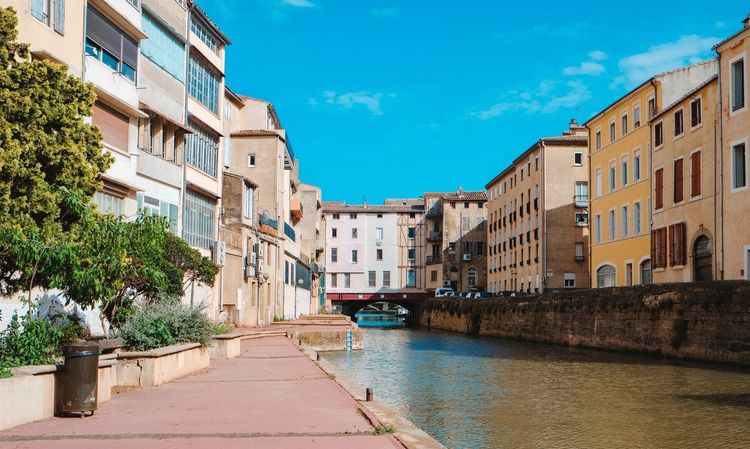
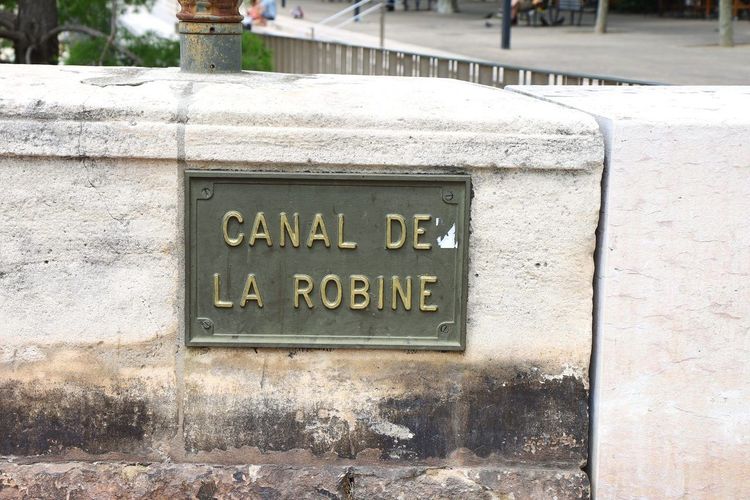
After lunch, shift gear entirely: head to the canal de la Robine (Quai Victor Hugo, 11100 Narbonne, rated 4.7/5 on Google with 800 reviews), listed as a UNESCO World Heritage Site as a historical branch of the Canal du Midi leading to the sea. Traced along a former bed of the Aude and developed in the modern era to connect Narbonne to the sea, it runs through the entire city, separating two distinct neighbourhoods — the Cité to the north and the Bourg to the south. The quays, shaded by centuries-old plane trees and lined with terraces, are ideal for a leisurely stroll along the water, passing several bridges including the pont des Marchands, one of the few inhabited bridges still in use in France, with shops built directly onto its structure — somewhat reminiscent of the Ponte Vecchio in Florence, on a more modest scale.
In season, electric boats allow you to travel down the canal towards the outskirts of Gruissan over several hours, a relaxing way to watch the landscape shift from urban façades to the first reeds of the lagoons. Out of season, the route works perfectly on foot or by bike, with benches placed at regular intervals along the quays, in the shade of the plane trees lining both banks.
A few minutes' walk away, the Halles de Narbonne are worth a stop even if you are not particularly hungry. This covered Baltard-style market, built in 1901, brings together more than sixty traders under an immense metal and glass canopy. You will find stalls with seafood fresh from the nearby lagoons, locally aged sheep's milk cheeses, and several stands serving tapas to eat on the spot, standing at the counter between purchases. On Saturday mornings in particular, the atmosphere intensifies as locals come to do their weekly shopping, and it is not unusual to have to squeeze between the most popular stalls.
On your way out, take time to wander through the Narbonne city centre without a fixed route. The alleyways around the rue Droite, the ancient via Domitia that once ran straight through the city in Roman times, are lined with independent shops, medieval façades and small shaded squares where it is pleasant to linger. A section of this ancient road, the first Roman road laid in Gaul when Narbo Martius was founded in 118 BC, is visible in the open air on the Place de l'Hôtel de Ville: an authentic paving block protected by a glass panel, a reminder that Narbonne was once a strategic crossroads linking Italy to Spain long before it became a simple prefecture of the Aude.
If you are travelling with children, this part of the afternoon lends itself well to an improvised treasure hunt: spot the three bridges on the canal, find the Roman paving, then look for the half-timbered façades on the rue Armand Gauthier. The pace is free, with no museum opening hours to meet, leaving time to stop at an ice cream parlour or push open the door of an antiquarian bookshop.
Another good reason to keep your headphones in: the Ryo audio itinerary follows the canal de la Robine and passes through the Halles, with an anecdote about the history of Narbonne's trade told along the way, between two quays and a Belle Époque shopfront. It is a simple way to turn a purposeless stroll into a narrated walk, without having to look up information yourself about every bridge or façade.
Narbonne's Essential Museums: Horreum, Archaeology and NarboVia
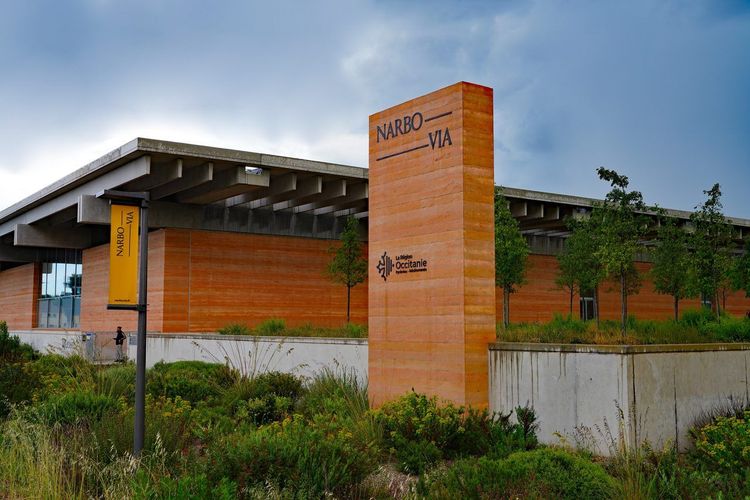
Looking for the Roman museums? Since 2021, Narbonne's archaeology is best explored across two sites jointly managed by the Narbo Via institution: the NarboVia museum (2 Avenue André Mècle, 11100 Narbonne, rated 4.6/5 on Google with 1,969 reviews) and the underground galleries of the Horreum, with the Gallo-Roman site of Amphoralis, in Sallèles-d'Aude, added for enthusiasts. If time is short, start with NarboVia, then the Horreum at the end of the day.
The Musée Roman Horreum is a Roman underground warehouse from the 1st century BC, preserved almost intact beneath the current streets of the city centre. You descend via a narrow staircase to walk through vaulted galleries that once served as storage for goods transiting through the ancient port — grain, oil and wine destined to supply Rome itself. It is one of the few sites of this type open to visitors in Europe, and the cool underground air provides a welcome break in the height of summer when the square above is already hitting thirty degrees.
What about the Narbonne archaeological museum or the lapidary museum mentioned in older guides? The first, housed in the Palais Vieux, has been closed to the public since its ancient collections were transferred to NarboVia. The second, in the former Lamourguier church, has also handed over its sculpted blocks to the new museum. There is no point looking for them: their key pieces — Roman wall paintings comparable to those of Pompeii and funerary stelae — are now all in one place.
The NarboVia museum, inaugurated in 2021 in a contemporary building designed by Foster + Partners, brings together the core of Narbonne's archaeological collections in a modern museum space designed for the general public. Its centrepiece is a lapidary wall of 760 ancient funerary blocks, long reused in the medieval ramparts, stacked the full height of the building like an open storage visible to all visitors. Inside, an interactive trail traces the height of Narbo Martius, one of the most active ports in the western Mediterranean in the 1st century, with digital reconstructions of the ancient port now buried beneath the vineyards.
The museum is open Tuesday to Sunday, from 10am to 7pm from May to September and from 10am to 6pm for the rest of the year. Allow two hours for NarboVia and three quarters of an hour for the Horreum.
On the way to these sites, the Ryo audio guide of Narbonne (20 audios, 1h40, 4 km) revisits Narbonne's Roman past as the capital of Gallia Narbonensis — an evocation that takes on its full meaning just before you descend into the underground galleries of the Horreum. A way to arrive at the museum already armed with a few reference points rather than discovering the explanatory panels cold once you are inside.
Day 2, Morning: Fontfroide Abbey and the Wine Route
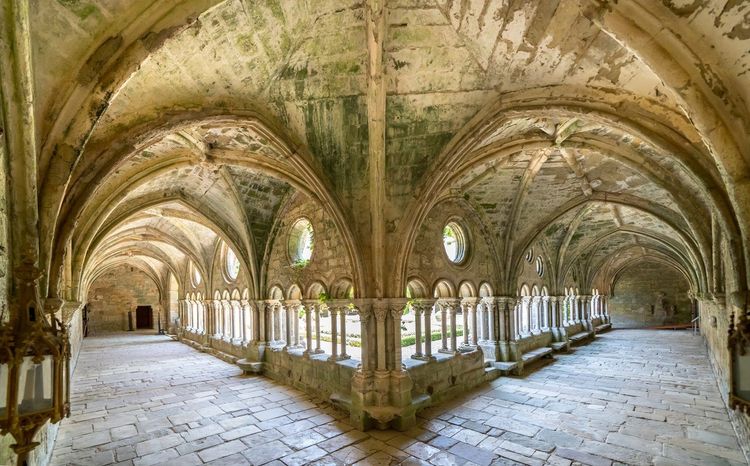
The second day heads out into the Narbonne countryside, about twenty minutes' drive from the city centre. The Abbaye Sainte-Marie de Fontfroide, founded in 1093 by Benedictines and affiliated with the Cistercian order in 1145, is one of the best-preserved monastic complexes in the south of France, remaining in the hands of the same family since 1908, which explains the quality of its conservation. The Romanesque cloister, completed in the 12th century, exudes an atmosphere of silence that starkly contrasts with the bustle of the Narbonne city centre, barely twenty minutes away.
The abbey's rose garden, planted in the early 20th century by the last private owners of the site, brings together more than 2,500 old rose varieties that climb up to the top of the surrounding hill. In June, the blooming completely transforms the atmosphere of the place, with fragrances mingling with those of the nearby garrigue. Allow 1h30 to 2 hours for the full visit, including the cloister, abbey church and gardens, and wear good shoes if you plan to climb to the belvedere overlooking the entire estate.
One detail few visitors anticipate: the abbey is privately owned by a family that organises concerts and events there in summer, and there is an on-site restaurant for lunch before heading on to the wine route.
The abbey also marks the entrance into wine-growing territory that Narbonne shares with the Corbières and the Languedoc — a distinguishing feature that few guides detail beyond a passing mention. Driving the Languedoc-Roussillon wine route from Narbonne allows you to combine heritage and wine tasting without venturing more than 30 minutes from the centre, and most estates offer a cellar tour followed by a guided tasting — generally allow between one and one and a half hours per stop.
At château l'Hospitalet, fifteen minutes from Narbonne-Plage, biodynamic farming has been practised across the entire estate for several years, an approach that rules out all chemical inputs and follows the lunar calendar for vineyard work. The visit includes the cellars, a guided tasting and an on-site restaurant for those who want to extend the stop into lunch, with a terrace open onto the rows of vines.
For a broader perspective, head to château Camplazens, perched on a promontory overlooking the vineyard plain and, on a clear day, the lagoons all the way to the sea. The tasting terrace enjoys one of the finest panoramas in the region, particularly sought after at sunset when the raking light illuminates the rows of vines below.
Along the Canal du Midi, château de Paraza offers a different, more intimate setting for lunch or an overnight stay by the water, a stone's throw from the century-old plane trees of the canal. Château de Lastours (Route de Boutenac, 11490 Portel-des-Corbières, rated 4.6/5 on Google with 293 reviews), in the Corbières, takes a different approach with a complete experience combining a hike through the vines with a cellar tasting — a format particularly appreciated by those who want to stretch their legs between glasses rather than sit through the entire visit.
Allow half a day if you want to visit two estates without rushing, or limit yourself to one to keep time free for the afternoon. Book your tasting in advance in summer if possible — some estates limit the number of visitors per slot to maintain the quality of the welcome — and designate a driver who does not taste if you plan to visit several stops in the same morning.
Day 2, Afternoon: Narbonne-Plage and the Massif de la Clape
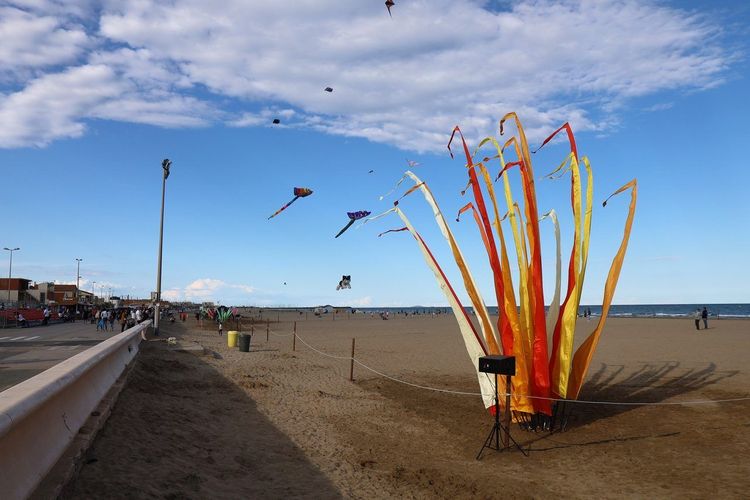
Back to the sea for the second half of the day. Narbonne-Plage is fifteen kilometres from the city centre, around twenty minutes by car or about thirty minutes by bus from the bus station. The seaside resort, developed in the 1960s as part of the major Languedoc-Roussillon coastal development plan, stretches three kilometres of fine sand lined with restaurants and beach clubs, with generally calm water thanks to the natural shelter provided by the nearby massif.
Enjoying the sun at Narbonne-Plage in the late afternoon, once the heat has eased, remains the most pleasant window for a swim without having to battle for a parking space. Outside of July and August, the beach retains a decidedly more local and less crowded character than Gruissan or Cap d'Agde, about thirty minutes away, and restaurant prices are noticeably more reasonable.
Getting to Narbonne-Plage from the centre is straightforward: the road is direct and well signposted, and a free car park can be found at the northern entrance of the resort for those who arrive early. In peak season, it is best to aim for when the beaches open or mid-afternoon to avoid the busiest period between noon and 3pm.
Just behind the resort, the massif de la Clape (11100 Narbonne, rated 4.6/5 on Google with 130 reviews) is a former limestone island now joined to the coast by Aude river deposits, making it as much a geological curiosity as a hiking destination. Its highest point, the Pech Redon at 214 metres, commands a view that takes in the Mediterranean, the lagoons and, on clear days, the first foothills of the Pyrenees. Several waymarked trails set off from the car parks at Narbonne-Plage and Gruissan, through fragrant garrigue and terraced vineyards, for hikes of one to three hours depending on the section chosen, with very little shade: bring water and a hat if you head out in the middle of the day.
If you prefer to extend the day at the beach rather than continue on to the Sigean reserve described below, the Ryo article dedicated to the most beautiful beaches around Narbonne details lesser-visited coves in the Clape, accessible only on foot or by boat, for those who really want to get away from the crowds.
Nature Excursions Nearby: the Sigean African Reserve and the Gruissan Salt Flats
If you have an extra day, or prefer to swap the beach afternoon for a nature excursion, two sites less than thirty minutes from Narbonne pair together particularly well and are rarely presented alongside each other in existing guides — a good way to step off the well-trodden path already covered by other articles about the city.
The Sigean African Reserve covers more than 300 hectares and is home to around 3,800 animals from 160 species, including white rhinoceroses, giraffes and lions, visible in semi-freedom from your own vehicle on the safari section, then on foot through the zoological area where flamingos and giant tortoises also live. Open all year, the reserve requires a full half-day to explore without rushing — safari and pedestrian zone combined, around four hours in total.
In Gruissan, the salin de l'Île Saint-Martin offers a striking contrast with its evaporation basins that turn an intense pink in summer, caused by a microscopic alga, dunaliella salina, which proliferates in the high salt concentration. The site, still partly in operation for the production of fleur de sel, can be visited by small train or on foot along a laid-out path that runs alongside the salt tables, with panels explaining how a traditional salt works functions, from the arrival of seawater through to the harvest.
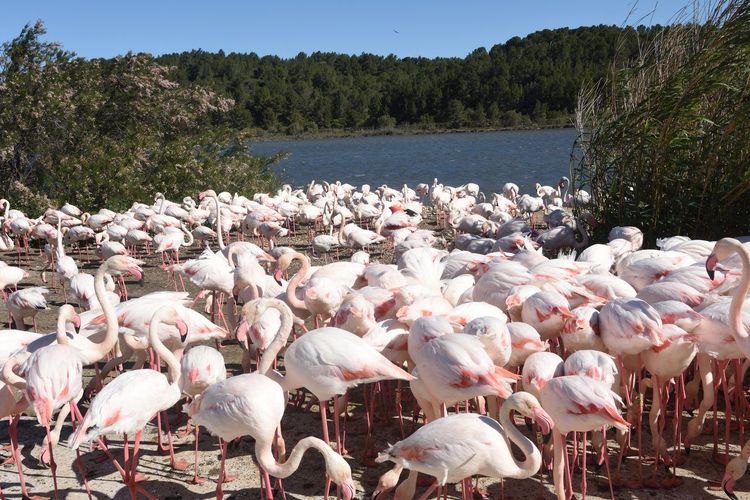
Close by, the Port Mahon base in Sigean offers nautical outings on the lagoon — paddleboard, kayak or catamaran — to observe the flamingos that frequent the area year-round, and in particularly large numbers in spring and autumn during migration. For river tourism, you need to set out from Narbonne itself: boat hire companies without a licence requirement, based on the canal de la Robine, allow you to reach the Canal du Midi at the slow pace of the locks.
Finally, the château Le Bouis wine estate (Chemin du Grau, 11430 Gruissan, rated 4.1/5 on Google with 226 reviews), in Gruissan, completes the loop with a tasting by the lagoon, in a setting far more understated than the large estates on the wine route mentioned earlier, just a few minutes from the salt flats.
If the programme feels full, treat the African reserve as the absolute priority: it is the most content-rich site, and the Gruissan salt flats remain accessible from Narbonne-Plage at the end of the previous day if timing is tight. Bring water and sunscreen for both sites — shade is scarce both in the reserve and along the salt flat paths.
The Most Beautiful Villages and Towns to Visit around Narbonne
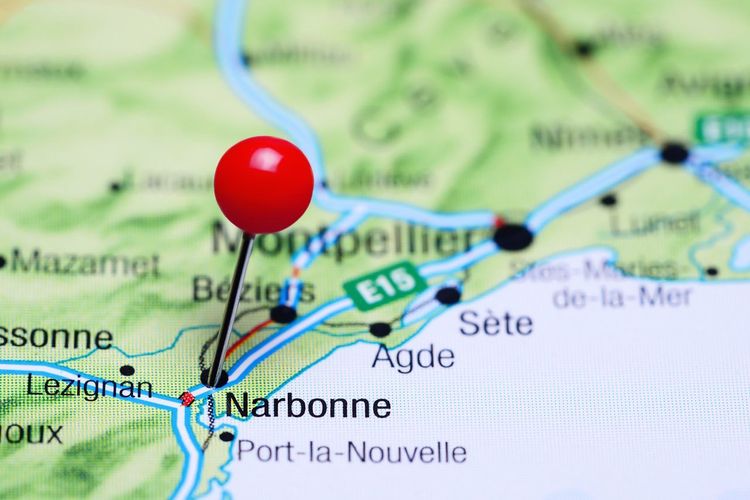
If your stay extends beyond the strict two-day framework, several destinations within an hour are worth slipping in as options, without turning the itinerary into a frantic road trip. Three of them come up regularly in searches related to Narbonne, and each deserves its own half-day rather than a brief detour.
Letting yourself drift into the warmth of Collioure, about an hour to the south, means discovering the Catalan village that inspired Matisse and Derain in the early 20th century, with its colourful houses clustered around the harbour and its distinctive lighthouse-bell tower standing directly in the water. The steep alleyways of the Mouré quarter still hide a few artists' studios, and Collioure's anchovies, prepared according to a recipe passed down through generations, can be tasted directly at the producers' shops by the port.
Feeling the energy of Perpignan, about 45 minutes away, provides a denser urban counterpoint, between the palace of the kings of Majorca perched on its hill and a lively Catalan historic centre, particularly animated on Friday evenings around the Place de la Loge and the Castillet, the former fortified gate that has become the city's symbol.
Visiting Sète, 55 minutes to the north-east, rounds out the picture with its Venetian canals that earned it the nickname 'the Venice of the Languedoc', its traditional water jousting contests held every summer on the central canals, and a gastronomic scene centred on local fishing, with tielle sétoise and macaronade at the top of the list.
If only one day is available for these excursions, combining Perpignan in the morning and Collioure in the afternoon works particularly well, as the two towns are barely half an hour apart by road. Sète, on the other hand, calls for a dedicated day: the drive is longer and the historic centre merits a leisurely visit without rushing back.
These three stops work well as day trips if you extend your stay, but they hold their own interest in their own right: they are not simply add-ons to Narbonne, but full destinations that each deserve a thorough visit rather than a hurried glance between two journeys. The list of villages to visit around Narbonne is not limited to these three names: our article on the most beautiful villages around Narbonne details thirteen others, often more off the beaten track, for those with time to spare who want to stray from the most well-trodden routes.
Where to Eat in Narbonne: Specialities and Good Addresses
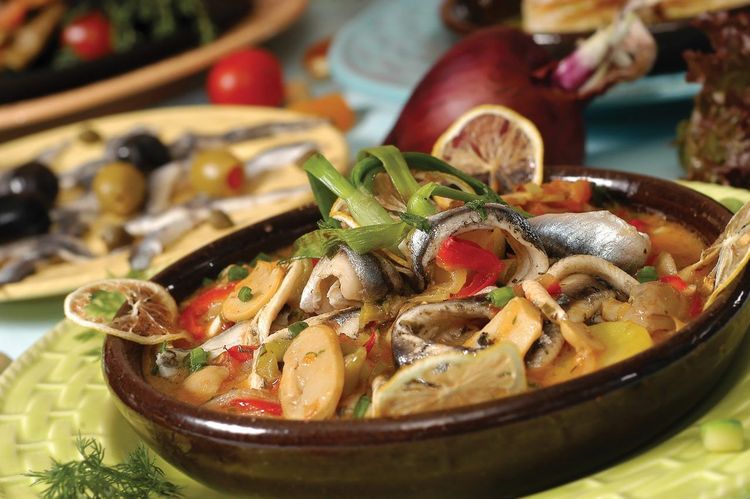
Narbonne's cuisine draws as much from the Mediterranean as from the wine-growing hinterland, with a fairly distinctive identity. Among Narbonne's specialities, bourride de baudroie — a fish soup bound with aioli and served with garlic-rubbed croutons — appears on most menus in the city centre, alongside boudin blanc and anchoïade as starters, two preparations that the people of Narbonne readily claim as their own against neighbouring towns.
Where to eat in Narbonne depends largely on the atmosphere you are looking for. The terraces along the canal de la Robine offer a pleasant evening setting with views of the water and illuminated façades, while the alleyways around the Halles are home to more discreet addresses, often run by the same family for several generations and still operating without online booking. For lunch, the restaurants set directly inside the Halles generally charge lower prices than those in the historic centre, with a choice that varies according to the day's catch.
Markets remain the best way to sample local produce at the Halles de Narbonne: open every morning, they allow you to buy directly from producers — shellfish from the nearby lagoons, goat's cheeses and Corbières charcuterie — with the option of putting together a picnic to take to the canal or the Jardin de l'Archevêché rather than sitting on a terrace. The open-air market, held on specific days along the allées Paul Voulquin, offers a wider selection of seasonal fruit and vegetables sourced directly from farms on the Narbonne plain.
For gourmet shopping, it is hard to do better than the Halles already mentioned on Day 1: local olive oil, garrigue honey and wines from the route explored on Day 2 are all gathered under the same glass canopy, often at lower prices than in the tourist shops in the city centre. Allow just under an hour to put together a basket of gourmet souvenirs without rushing, taking a little time to chat with the producers who know their products well and can advise according to your tastes.
Where to Stay in Narbonne: Our Selection of Accommodation
For a two-day stay in Narbonne, it is best to choose accommodation in the city centre or just along the canal de la Robine, within walking distance of the cathedral and the museums. Boutique hotels housed in former merchants' townhouses often offer the best balance of authenticity and comfort, with rooms that sometimes still have their original beams or fireplaces, and the advantage of being able to do everything on foot from morning to evening without getting back in the car.
Those travelling with families or staying for several nights will find more options on the outskirts, particularly towards Narbonne-Plage or in the direction of the wine route, with free parking and sometimes a pool, at the cost of a ten-to-twenty-minute drive to the historic centre each day. For a stay combining beach and heritage, sleeping near Narbonne-Plage in July and August cuts down on evening drives to the sea, even if it means taking the car each morning to reach the centre.
One final option, rarer but worth considering, is to stay directly at one of the wine estates mentioned on Day 2: several offer guest rooms on site, a way to extend the evening tasting without getting back on the road, surrounded by vines and far from the bustle of the city centre.
Whatever profile you choose, book early between June and September: Narbonne remains a logical base for visiting the entire Aude coastline, and the best addresses in the city centre are fully booked several weeks in advance at the height of the season.
Practical Information: How to Get There, When to Go and Good to Know
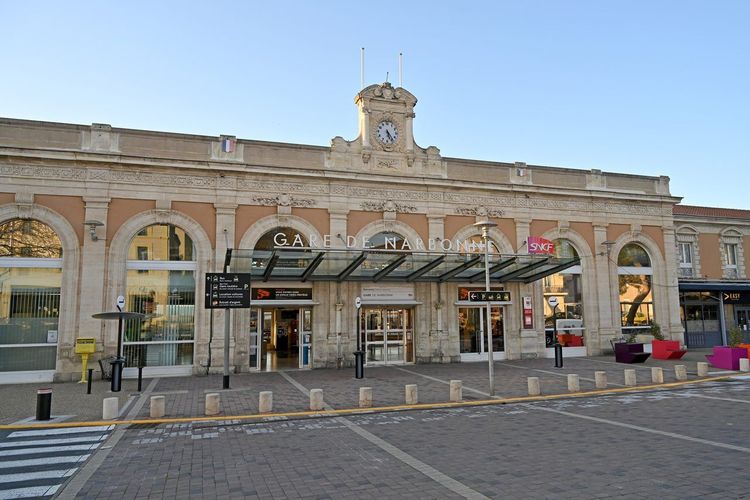
How to get to Narbonne depends mainly on your starting point. The city has a train station with direct TGV services from Paris, around 4h30 journey time, and regular connections with Montpellier, Perpignan and Toulouse. By car, Narbonne sits at the junction of the A9 and A61 motorways, making it a natural stopping point between Spain and the Rhône valley. The closest airport is Béziers-Cap d'Agde, about 35 minutes away; those of Perpignan and Carcassonne are alternatives within an hour.
Getting around Narbonne once you arrive poses no particular difficulty: the historic centre can be walked from one end to the other in just under half an hour, but the Day 2 excursions — Fontfroide, the wine route, Sigean, Gruissan — require a car, as there are no regular public transport links to these sites. Free parking is available mainly on the immediate outskirts of the centre, with paid car parks closer to the Halles and the cathedral for those who prefer to keep the walk short.
Good to know before visiting Narbonne: the city is exposed to the wind, the famous Tramontane that blows in sometimes strong gusts — a factor to bear in mind for water activities or extended outdoor visits. On the budget side, a combined ticket covering the cathedral, palace and museums generally saves money compared to buying tickets separately; ask at the tourist office reception when you arrive.
On the events and festivals front, the summer highlight is the Nuits merveilleuses: from July to the end of August, a free sound and light walk brings the façades and monuments of the centre to life after dark, including the Place de l'Hôtel de Ville. In December, the Fééries de Noël take over with illuminations and a Christmas market. Check the city's calendar before setting your dates.
One curious fact worth slipping in here: the birthplace of Charles Trenet (13 Avenue Charles Trenet, 11100 Narbonne, rated 4.3/5 on Google with 579 reviews), the author of 'La Mer', can be visited at 13 avenue Charles Trenet, the 'house with green shutters' where he was born in 1913, tracing the Narbonne singer's path from childhood to his Paris breakthrough, with personal objects and period recordings.
Before you leave, downloading the Ryo twenty-stop audio-guided tour allows you to organise the Day 1 morning without depending on Wi-Fi on site — a useful precaution in the alleyways of the historic centre where the mobile network can be unreliable between the high stone walls. Our Ryo app works offline once the content is downloaded, which simplifies planning a packed morning between the cathedral, palace and museums, without relying on a patchy connection at the crucial moment.
FAQ
How many days do you need to visit Narbonne?
Two days are enough to visit Narbonne without rushing: the historic centre (cathedral, palace, NarboVia, canal) on the first day, then the Fontfroide abbey, the wine route and the sea on the second. With a third day, add the Sigean reserve or the Gruissan salt flats, two excursions that each require a full half-day and are difficult to combine with an already packed itinerary.
Is Narbonne worth a visit?
Yes, absolutely. Few French cities of this size combine a major Gothic cathedral, such well-preserved Roman heritage, a Cistercian abbey twenty minutes away and Mediterranean beaches accessible within the same half-day — a combination that easily justifies a detour even outside of peak season.
How do you get to Narbonne?
By TGV from Paris, about 4h30 journey time, by car via the A9 or A61, or by plane to Béziers-Cap d'Agde airport, 35 minutes from the city centre. The SNCF train station is a ten-minute walk from the historic centre.
What are Narbonne's culinary specialities?
Bourride de baudroie, boudin blanc, anchoïade and local goat's cheeses are among the must-tries, best sampled at the Halles or on the canal terraces in the evening.
Where should you stay in Narbonne to explore the city on foot?
Opt for the city centre or the banks of the canal de la Robine, within walking distance of the cathedral, the Palais des Archevêques and the Halles, to avoid any dependence on a car during the day devoted to heritage sites.
When is the best time to visit Narbonne?
Spring, from April to June, and early autumn in September offer pleasant temperatures without the tourist density of high summer, while still keeping the sea and outdoor excursions perfectly accessible. July and August remain hotter and more crowded, particularly along the coast.
What are the most beautiful villages to visit around Narbonne?
Collioure, Perpignan and Sète are among the most popular options within an hour, complementing the thirteen villages detailed in our dedicated article on the surroundings of Narbonne.
After these two days, Narbonne will have revealed a surprisingly complete face: a forgotten Roman capital, an unfinished yet spectacular religious city, an open-air vineyard and a coastal strip still largely unspoilt. The Ryo audio-guided tour of Narbonne remains the simplest way to connect all these places without wasting time looking for directions, allowing you to focus on what the city truly has to tell rather than on the logistics of the trip.