© Shutterstock
 Votre guide Ryo
Visit Toulouse in 2 Days: The Complete Itinerary of the Pink City in 2026
Can you really visit Toulouse in 2 days without rushing from one monument to the next? The answer lies in the city's geography: the historic center can be crossed on foot in just under an hour, leaving plenty of time to wander without ever watching the clock. A UNESCO-listed Romanesque basilica, a river port on the Canal du Midi, an industrial district converted into a stage for mechanical creatures — the Pink City packs into a small area experiences that other cities spread across a week. To find your way around without endless back-and-forth, the Ryo audio-guided tour of the Pink City connects the main sites in the center by the most logical route.
Over these 48 hours, you will encounter the Basilique Saint-Sernin and its apostolic relics, a covered market where you can breakfast from 8am on tourin soup and Toulouse sausage, a 14-meter mechanical minotaur roaming the former Aéropostale runways, and a sunset over the Garonne widely considered one of the most spectacular free shows in the city. From the Place du Capitole to the Halles de la Cartoucherie by way of the Canal du Midi, here is how to string the two days together without sacrificing anything essential.
Day 1 Morning: Place du Capitole and the Great Monuments of the Center
The first morning focuses on a simple axis: from the Capitole to the rue d'Alsace-Lorraine, everything is reachable on foot in under 20 minutes. The Toulouse audio-guided tour follows this same route — a useful reference if you prefer a voice in your ear rather than a paper map.
Place du Capitole and the Hôtel de Ville: the Beating Heart of the City
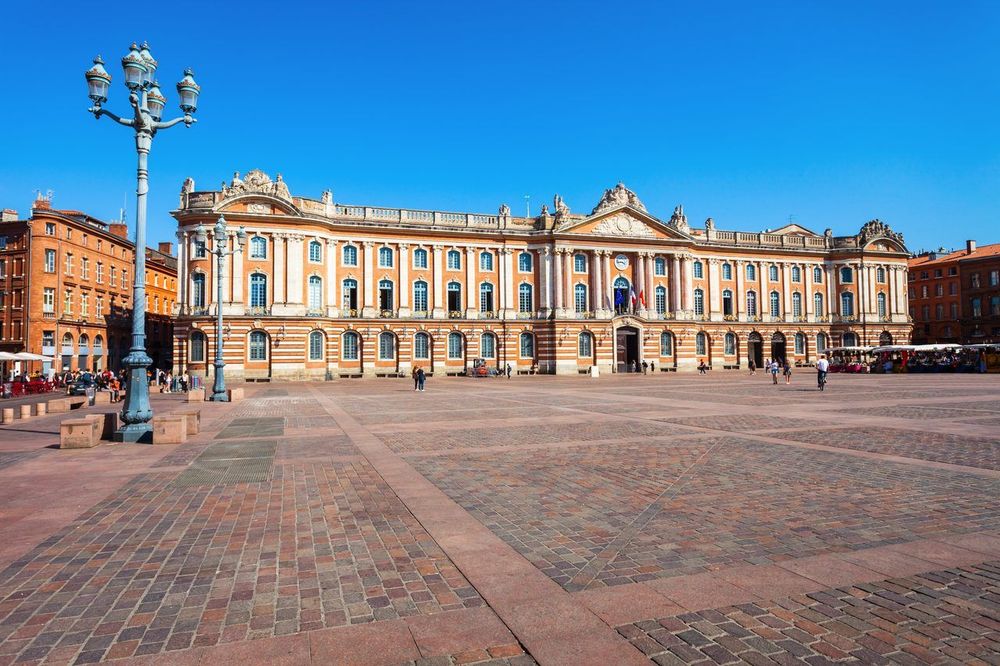
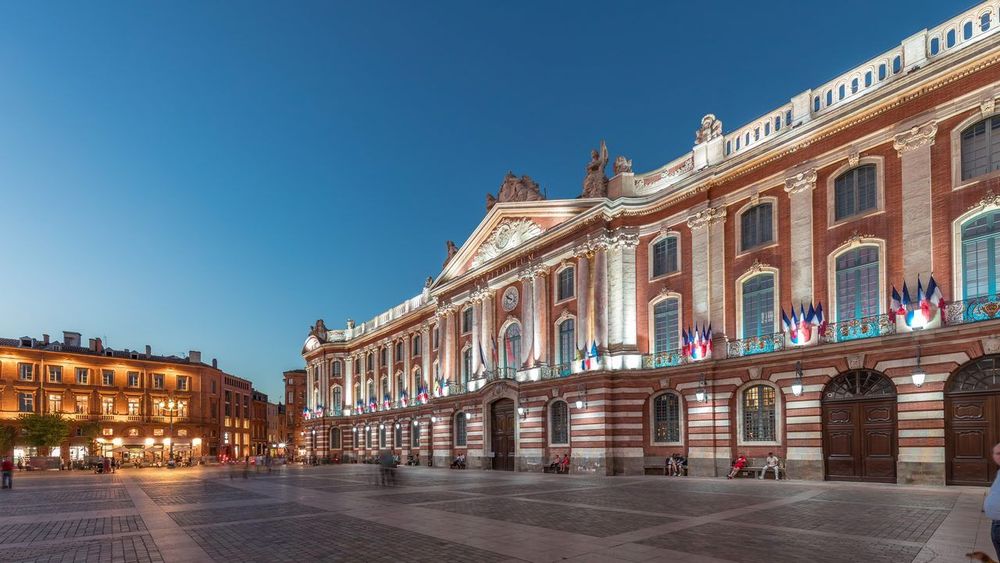
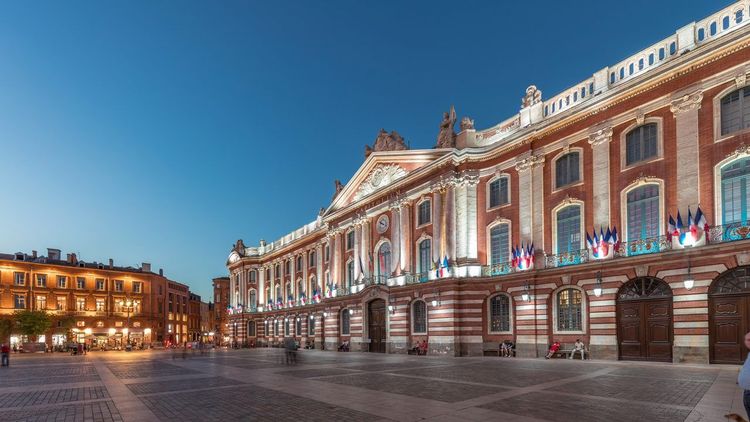
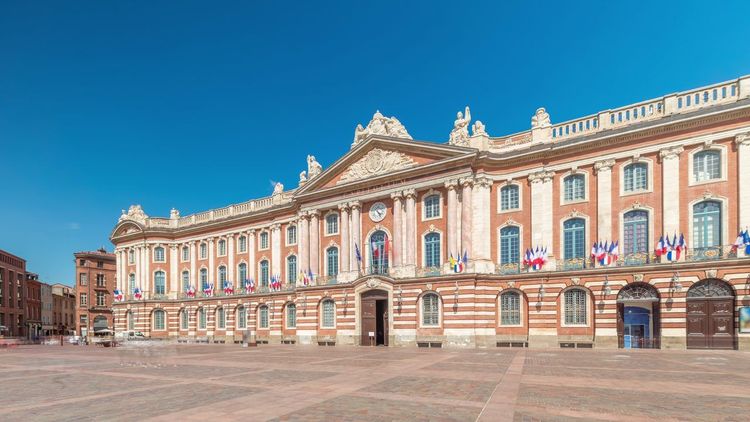
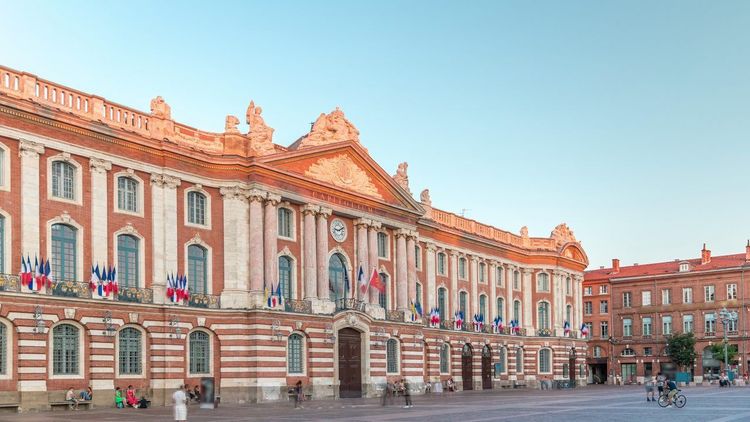
Everything begins naturally at the Place du Capitole, 12,000 m² of pink cobblestones that host several morning markets a week, a flower market, and on some summer evenings, free concerts. On the ground, the bronze Occitan cross inlaid in the paving serves as a landmark for generations of Toulouse residents who meet there.
The square takes its name from the Capitole, the seat of the town hall since the Middle Ages and still an active city hall today. Its neoclassical facade, commissioned in the 18th century, features eight pink marble columns echoing the eight capitouls who governed the city before the Revolution. Inside, the Salle des Illustres is worth a ten-minute detour: its 19th-century frescoes recount Toulouse's history with an abundance of gilding, and admission is free outside of ceremonies.
On market days, arrive before 9am if you want to enjoy the stalls before the crowds that gather late in the morning. The rest of the week, the square regains its calm at the crack of dawn — a good moment to photograph the facade without a silhouette crossing the frame.
Head next to the rue d'Alsace-Lorraine, the shopping street connecting the Capitole to the Saint-Étienne neighborhood. Allow twenty minutes to walk it without stopping, but it is better to budget twice that: the storefronts mix national brands with independent boutiques, and several covered passages lead to inner courtyards that are unsuspected from the street. This is one of the rare axes in the historic center where you truly appreciate what it means to explore the city on foot, as the distances between monuments are measured in minutes rather than metro stops.
Basilique Saint-Sernin, the Chapelle des Carmélites, and the Couvent des Jacobins
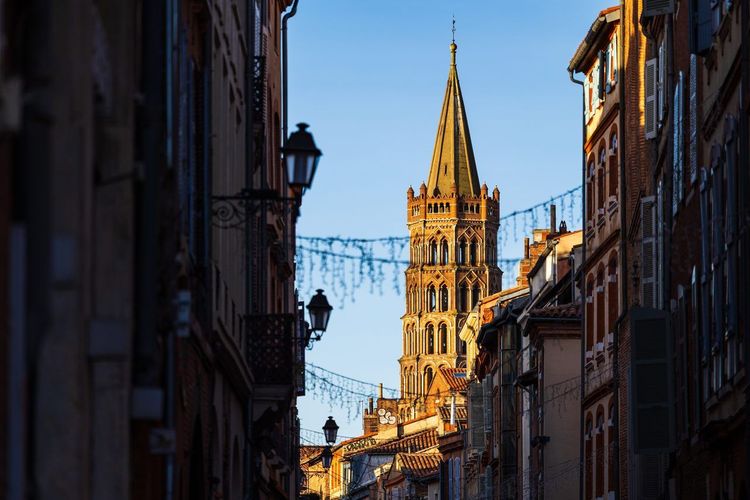
Ten minutes on foot north of the Capitole, the Basilique Saint-Sernin asserts its 65-meter octagonal bell tower and its status as the largest Romanesque church preserved in Europe. Listed by UNESCO as part of the pilgrimage routes of the Way of Saint James, it houses in its crypt an exceptional treasury of relics, including those of several apostles, gathered here since the Middle Ages to welcome pilgrims on their way to Spain.
Entry to the nave is free; only the visit to the crypt is ticketed, for a few euros. Take a few minutes to sit on the choir benches: the silence contrasts with the bustle of the nearby Place du Capitole, and the light filtering through the ambulatory's stained glass windows shifts with the time of morning.
On the way back toward the center, a detour to the Chapelle des Carmélites is a must for lovers of Baroque art. Little known to visitors in a hurry, this former 17th-century convent chapel conceals beneath its understated roof a ceiling entirely covered in trompe-l'œil frescoes, unique in the South-West of France. Entry is free and the visit wraps up in 20 minutes, yet it leaves a lasting impression.
The final stop of the morning, the Couvent des Jacobins is recognizable by its palm-tree vault, one of the architectural masterpieces of Southern Gothic. Built from the 13th century onward for the Dominican order, it houses the tomb of Saint Thomas Aquinas and a cloister whose columns cast different shadows depending on the season. The church is free to visit; the cloister costs a few euros — allow 45 minutes for both, a little longer during temporary exhibitions.
If time allows, extend the morning with a coffee on a terrace at the place Saint-Georges, just steps from the Jacobins: less well known than the Capitole, it often serves as a quiet shortcut between the two monuments, with a few benches in the shade of trees for a breather before the afternoon.
Day 1 Afternoon: Old Toulouse and the Saint-Étienne Neighborhood
The afternoon shifts to a more intimate Toulouse, made up of narrow lanes and half-open private courtyards. To understand how the neighborhoods relate to one another, the Ryo article on Toulouse's neighborhoods provides a useful overview before you willingly lose yourself in them.
Hôtel d'Assézat and the Lanes of Old Toulouse
A few streets from the Couvent des Jacobins, the Hôtel d'Assézat illustrates the fortune built on the pastel trade — the blue pigment that made Toulouse wealthy in the 16th century. Its Renaissance courtyard, with its superimposed orders of columns, houses the Fondation Bemberg and a painting collection ranging from the Italian Renaissance to Impressionism.
The museum visit takes a good hour, but it is possible to simply walk through the inner courtyard — freely accessible during opening hours — to admire the architecture without paying for entry. Toulouse has several dozen such mansions built by pastel merchants, often identifiable by their exterior staircase tower, a sign of wealth at the time.
Pastel, derived from the fermented and dried leaves of the woad plant, long rivaled indigo before the latter, imported from Asia at lower cost, brought Toulouse's golden age to an end. Today it remains a prized souvenir, sold as soaps, pigments, or cosmetics in several shops in the historic center.
It is precisely by venturing into the lanes of old Toulouse surrounding the Hôtel d'Assézat that the afternoon truly comes alive. Rue Malcousinat, rue des Filatiers, rue Peyrolières: this web of medieval alleyways has barely changed its layout since the Middle Ages, even if the facades have been altered over the centuries. Regularly look up at the half-timbering and mullioned windows, often more interesting than the ground-floor storefronts. Many carriage doors open onto courtyards unsuspected from the street; some are accessible, others not, but curiosity rarely costs more than a discreet glance.
Place des Carmes, Place Saint-Étienne, and the Cathédrale Saint-Étienne
The place des Carmes provides a welcome break in the walk, with its morning covered market and its terraces that fill up as soon as the sun appears. Less photographed than the Capitole, it keeps a neighborhood rhythm, with traders greeting one another and students cycling through.
Continuing eastward, the place Saint-Étienne opens onto one of the most puzzling ensembles in the city. Its central fountain, the oldest in Toulouse, precedes a cathedral that appears to have been built by two architects who never spoke to each other — and that is almost the truth. The Cathédrale Saint-Étienne (Place Saint-Étienne, 31000 Toulouse, rated 4.5/5 on Google with 5,233 reviews) juxtaposes a wide, dark Southern Gothic nave with a Rayonnant Gothic choir brought from northern France, offset by several meters from the nave's axis. The result, born of several centuries of interrupted construction, resembles no other French cathedral.
For lovers of religious architecture, this asymmetry is explained by a medieval enlargement project that was never completed: the bishop of the time had planned to demolish the old nave and replace it entirely — a project whose interruption left two styles side by side without ever truly meeting.
Entry is free, making it an easy stop to include even for travelers short on time. The quartier Saint-Étienne surrounding it, more residential in character, is worth wandering through without a specific goal: lesser-known mansions, gardens glimpsed through iron gates, relative quiet after the bustle of the Capitole. You will also find a few antique dealers and galleries there — a legacy of a neighborhood long inhabited by Toulouse's parliamentary bourgeoisie. It is one of the areas to prioritize for those seeking a less picture-postcard side of Toulouse, yet just steps from the city's most photographed monuments. The Pink City audio-guided tour passes right by the Hôtel d'Assézat on its way toward the Capitole, a handy waypoint here.
Day 1 Evening: A Walk Along the Garonne Riverbanks and Sunset
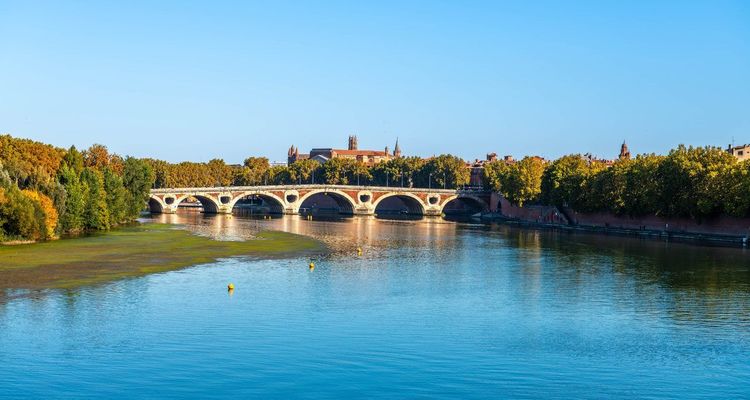
The end of the day plays out entirely by the water. From the Saint-Étienne neighborhood, simply head down toward the Garonne to reach the riverbanks in about ten minutes of easy walking.
The Right Bank and the Basilique Notre-Dame-de-la-Daurade
The right bank of the Garonne, between the pont Saint-Pierre and the quai de Tounis, offers the best vantage point over the pink facades that gave the city its nickname. The river, wide and calm at this point, reflects the old buildings in a light that turns orange toward the end of the afternoon.
Nearby, the Basilique Notre-Dame-de-la-Daurade owes its name to the golden mosaics that once covered the early Christian building that previously occupied this site. The current interior, rebuilt from the 18th century onward, houses a Black Virgin venerated by Toulouse residents for centuries, regularly dressed in new liturgical garments according to the feast days of the calendar. Brides-to-be in the city still come to leave a bouquet here — a tradition still very much alive on Saturdays.
Pont Neuf, Sunset, and Riverside Terrace Bars along the Garonne
Despite its name, the Pont Neuf is the oldest bridge in Toulouse still standing, completed in 1632 after nearly a century of construction. Its uneven arches and circular openings, designed to let floodwaters pass without giving way, make it an engineering feat that most passersby cross without a second thought.
It is from this bridge, or from the quays surrounding it, that the finest sunset over the Garonne in the city unfolds. The pink brick of the facades literally blazes when the sun drops behind the hills — a play of light that earns Toulouse its nickname of the Pink City far more than the color of its monuments themselves. Plan to be in position about 30 minutes before the official sunset time to enjoy the gradual shift in colors.
To extend the evening, head along the Garonne riverbank toward the open-air bars that liven up the banks from the first warm days. The Guinguette Chez Tomas (176 Avenue de Muret, 31300 Toulouse, rated 4.5/5 on Google with 3,650 reviews), on the riverside along the avenue de Muret, remains a reliable choice for a drink on the terrace with your feet almost in the water, a relaxed atmosphere, and occasional live concerts at weekends. Closer to the center, the bars and terraces not to miss are concentrated on the quai de Tounis and around the place Saint-Pierre, where you can put the world to rights without ever taking your eyes off the river.
If the terraces are full or the weather does not cooperate, several barges moored at the quai de la Daurade also offer drinks on board — an original option for enjoying the twilight without leaving the water's edge. Booking ahead is advisable at weekends, as demand rises quickly with the first fine days.
Day 2 Morning: Covered Market, Musée des Augustins, and the Canal du Midi
Second day, new pace: head to the market before the heat sets in, then east of the historic center to reach the Canal du Midi. Allow a good morning to work through the three stages without rushing.
Marché Victor Hugo and the Must-See Markets of Toulouse
The Marché Victor Hugo, a covered market that has occupied this site since the late 19th century and was rebuilt in its current form in the early 1960s, remains the place to take the pulse of the city's food scene. On the ground floor, fishmongers, butchers, and greengrocers call to one another from stall to stall; upstairs, a handful of small restaurants serve hearty menus from morning, often featuring tripe, garlic tourin soup, or grilled Toulouse sausage — a local institution for early-rising big eaters.
It is one of the three markets not to miss if your stay goes beyond simply visiting monuments: alongside Victor Hugo, the market on the place des Carmes (visited the day before) and the Saint-Aubin market, more low-key and local, complete the picture. Each has its own character, between neighborhood regulars and curious tourists, and each is ideally visited early in the morning before the stalls begin to thin out around midday.
The stalls also overflow with products that sum up the Toulouse terroir: foie gras from the Gers, crystallized violets, Toulouse sausage sold in a coil, sheep's milk cheeses from the nearby Pyrenees. Many vendors offer small tastings — a pleasant way to assemble a picnic for later in the day without needing to book a table.
For breakfast, opt for a coffee on a terrace around the place Victor Hugo rather than inside the market: tables free up more easily and the view of the morning bustle ### Musée des Augustins (21 Rue de Metz, 31000 Toulouse, rated 4.4/5 on Google with 3,268 reviews) and a walk along the Canal du Midi
Fifteen minutes' walk away, the Musée des Augustins occupies a former Gothic convent whose cloister alone justifies the visit. The collection, one of the richest in Romanesque and Southern Gothic sculpture in France, brings together carved capitals from the city's vanished cloisters, as well as paintings by masters from the 17th to the 19th century. Reopened in 2025 after several years of renovation, the museum has regained its conventual church and its painting galleries, entirely reimagined.
Allow an hour and a half for a complete visit, slightly less if you focus on the cloister and the Romanesque sculpture rooms, generally considered the highlights of the collection. The full-price ticket remains under €15, with free entry for under-18s and, as with other municipal museums, on the first Sunday of the month. For more depth before or after the visit, the Ryo article dedicated to the Musée des Augustins details the works. If museums and exhibition venues play an important role in your travels, note that Toulouse has several others within twenty minutes of the center: the Musée Saint-Raymond, located opposite the Basilique Saint-Sernin, presents the collections of the Roman city; the Muséum de Toulouse, beside the Jardin des Plantes, delights families with its skeletons and botanical garden; the Abattoirs, on the left bank, champion modern and contemporary art in a former municipal slaughterhouse; and for aviation enthusiasts, Aeroscopia in Blagnac lines up a Concorde, a Caravelle, and an A300B under one roof. None is essential on a tight schedule, but any one of them can replace a half-day of the itinerary if the weather turns rainy.
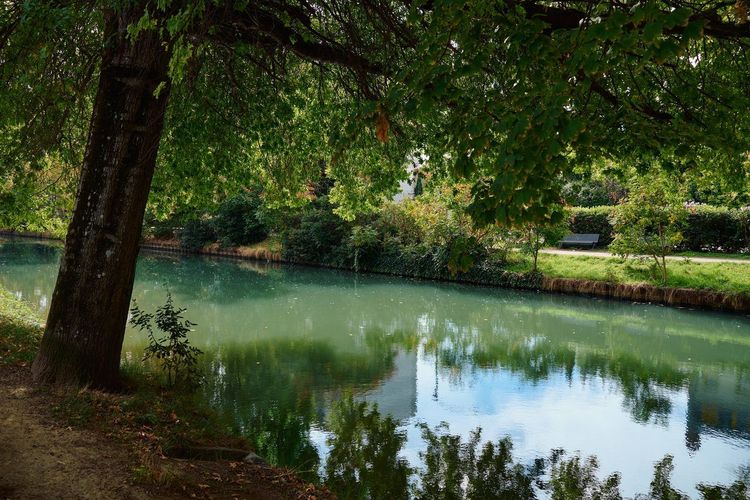
The morning ends ideally beside the Canal du Midi, UNESCO-listed and reachable in ten minutes' walk from the museum. Port Saint-Sauveur, with its moored barges and plane trees, offers a restful setting for a break before lunch. It is possible to follow the canal on foot or by bike for several kilometers in the direction of the Ponts Jumeaux, time permitting.
Self-service bikes (VélôToulouse) are available near the port — a practical option for pushing further toward the Ponts Jumeaux or, in the other direction, reaching the Halle de la Machine more quickly at the start of the afternoon. Allow around 25 minutes by bike for this connection, compared to nearly an hour on foot.
For lunch before the afternoon dedicated to Montaudran, several restaurants along Port Saint-Sauveur have shaded terraces facing the barges — a pleasant option to recharge before setting off again. The more organized can also picnic directly on the banks with produce bought earlier that morning at the Marché Victor Hugo, an economical and particularly enjoyable solution on fine days.
Day 2 Afternoon: the Halle de la Machine and the Creative Neighborhoods
The afternoon leaves the historic center for a more contemporary Toulouse, out by the former Aéropostale runway at Montaudran. Allow about twenty minutes by public transport or bike from the Canal du Midi to reach this neighborhood in the midst of transformation.
Halle de la Machine and Halles de la Cartoucherie
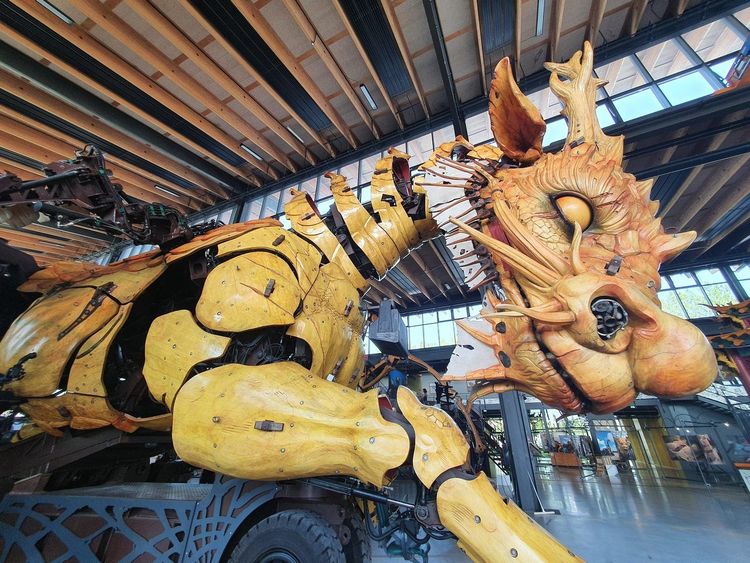
Set on the former industrial site of Montaudran, the Halle de la Machine houses a collection of giant mechanical creatures designed by the company La Machine. The star of the show, Astérion the Minotaur — roughly 14 meters tall and mounted on wheels — regularly leaves its hangar to roam the Giants' Track, breathing steam and startling the closest visitors. Other machines, from the articulated spider to the fantastical animals on the carousel, round out the visit.
The entry ticket, around €12 at full price, gives access to the hall and its machines; the outings and rides on the Minotaur's back are booked separately and sell out quickly — it is best to check schedules online on the morning of your visit. Budget a good half-day if you are traveling with children: between the machinists' demonstrations and time spent watching the mechanisms, no one leaves after an hour.
A few minutes away, the Halles de la Cartoucherie (51 Rue Jacques Babinet, 31100 Toulouse, rated 4.4/5 on Google with 3,074 reviews) occupy a former munitions manufacturing site converted into a co-working space and food hall. Around ten stalls, from gourmet burgers to Asian cuisine to a craft brewery, are organized around long communal tables in an atmosphere that is decidedly younger and more relaxed than the Marché Victor Hugo in the morning.
Quartier Saint-Aubin: the Local, Living Side of Toulouse
To close the afternoon off the beaten track, head to the quartier Saint-Aubin, which embodies what residents call the local, living side of Toulouse. Far from the tourist density of the Capitole, this working-class neighborhood blends shaded little squares, neighborhood bars, and a popular Sunday morning market around the église Saint-Aubin.
The neighborhood takes its name from this 19th-century neo-Byzantine church, long surrounded by workshops and workers' housing. This working-class identity, claimed by its residents, explains why prices remain noticeably lower here than in the center, whether for a drink or a meal.
It is also one of the areas where Toulouse's street art expresses itself most freely, on blank walls and the metal shutters of closed businesses. Taking the time for a coffee on a terrace here, among students and local families, offers a sharp contrast to the day spent in the historic center. The gulf between the two stops of the afternoon — the mechanical extravagance of the Halle de la Machine and the simplicity of Saint-Aubin — sums up the city's diversity beyond its historic monuments.
Beyond the Center: Cité de l'Espace and Extending to 3 Days
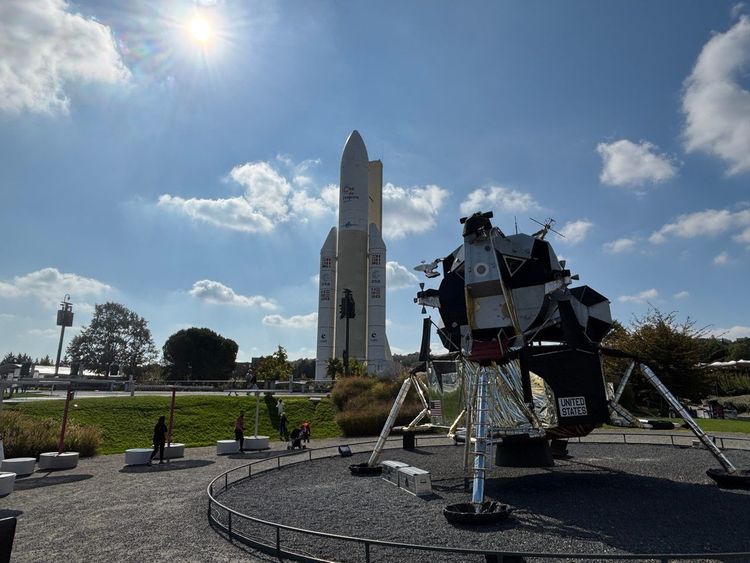
If your stay stretches to a third day, or if you have simply rented a car, two options naturally extend the program: a space immersion on the outskirts of the city, or an excursion to the villages surrounding it. Neither is essential for a 48-hour format, but both justify an extra day on their own.
Cité de l'Espace and the Japanese Garden of Compans-Caffarelli
The Cité de l'Espace, about twenty minutes from the center, traces the history of space exploration through a full-scale replica of the Ariane 5 rocket, a reconstruction of the Mir space station, and interactive exhibitions designed for all ages. Allow a full half-day to take it in at a leisurely pace, especially with children.
The site also offers the LuneXplorer, a simulator that recreates a lunar mission and its reduced-gravity sensations. The experience, short but physical, should be booked in advance and usefully completes the visit for those who want to turn a museum outing into something more sensory. Plan to start with the outdoor exhibitions in the morning: queues build noticeably at the simulators by mid-afternoon.
Closer to the city center, the Japanese Garden of Compans-Caffarelli (Boulevard Lascrosses, 31000 Toulouse, rated 4.5/5 on Google with 18,746 reviews) offers a contemplative interlude that is the polar opposite of the energy of the Cité de l'Espace. Laid out in the early 1980s in the spirit of 16th-century Japanese gardens, it features ponds, a red bridge, a tea pavilion, and maple trees across just over a hectare — a peaceful setting for a breather between visits. Entry is free, making it one of the most pleasant pauses of the stay.
What to See within 2 Hours of Toulouse: Villages and Surroundings
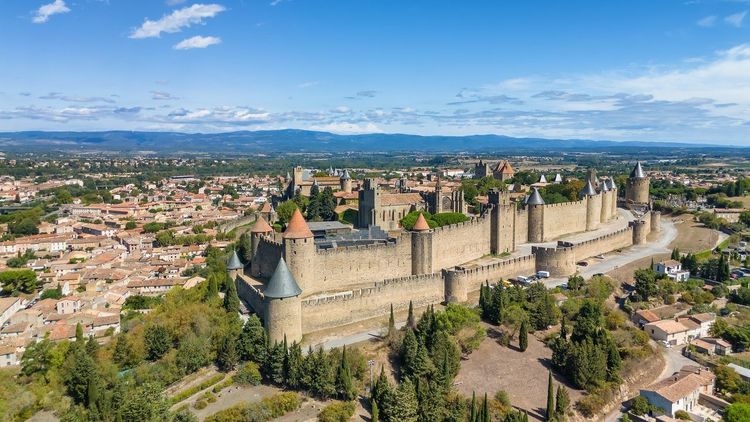
To extend your stay and visit Toulouse over 3 days, the surrounding countryside is full of towns and villages each worth a full day. Albi and its UNESCO-listed brick cathedral, Carcassonne and its fortified medieval citadel, Cordes-sur-Ciel perched on its rocky outcrop, and Auch with its monumental staircase are among the destinations most often cited by Toulouse residents themselves for a day trip.
Cordes-sur-Ciel in particular deserves special mention: a perched medieval village, it offers far-reaching views over the Tarn countryside. The climb from the lower car park takes about fifteen minutes on foot, more than compensated by the panorama and the Gothic facades of the Grand-Rue, among the best-preserved in the South-West of France.
For further guidance on the choice, the Ryo article Top 7 Most Beautiful Villages around Toulouse details seven destinations reachable in under two hours by road, with a travel time estimate and the highlights for each. It is a useful resource for deciding if your schedule only allows for a single excursion.
The question of where to go for a weekend within 2 hours of Toulouse also comes up regularly among residents themselves looking for a quick getaway: between the Pyrenees, the Gaillac wine country, the Gers, and the Mediterranean coast, the city has the advantage of sitting at the crossroads of very different landscapes.
Getting to Toulouse and Getting Around During Your Stay
Getting to Toulouse is straightforward: Toulouse-Blagnac airport, about twenty minutes from the center, receives direct flights from most major French and European cities, with a shuttle reaching the center in around thirty minutes. Traveling to Toulouse by train from Paris, the direct service connects the two cities in just over 4 hours by TGV — a journey time that makes a weekend round trip entirely realistic. From Bordeaux, allow around 2 hours; from Montpellier, slightly over 2 hours as well.
Once there, exploring the historic center on foot remains the most sensible option: the majority of sites on this itinerary fall within a 2 km radius of the Capitole, meaning less than 30 minutes' walk from one end to the other. For longer journeys, toward Montaudran or the Cité de l'Espace, public transport and alternatives take over: the Tisséo network (metro, tram, bus) covers the agglomeration with a single ticket at around €2 and day passes that are significantly better value if you plan three or more journeys. VélôToulouse self-service bikes complement the system well, especially along the Canal du Midi where cycling paths are continuous.
Another option, more tourist-oriented, visiting Toulouse by tourist train lets you cover the essentials of the center in just under an hour with commentary — a practical format for families with young children or for getting your bearings on the first morning, departing from near the Capitole in season. Finally, a map of Toulouse's historic center helps you gauge the actual distances between the Capitole, Esquirol, Saint-Étienne, and Carmes neighborhoods: they flow into one another without a clear break, which means the entire first day can be done entirely on foot — with comfortable shoes on your feet.
Where to Stay in Toulouse for a 2-Day Trip
Where to stay in Toulouse? The choice of neighborhood depends mainly on the pace you want to set for these two days. To avoid losing any time on travel, the Capitole-Esquirol area remains the most obvious option: most of the sites on this itinerary can then be reached on foot in under 15 minutes, at the cost of a higher accommodation budget than elsewhere and evenings that can be lively under the windows.
Want to sleep peacefully without leaving the center? The Saint-Étienne neighborhood offers an interesting compromise: still central, but noticeably quieter in the evening, often in converted former mansions. The Carmes, just to the south, plays the same card with a few more food shops at street level.
For better value for money over a weekend, hotels around Matabiau station and the Canal du Midi allow you to stay within reasonable walking distance of the center while benefiting from noticeably lower rates — at the cost of an extra 10 to 15 minutes on foot each day. It is also the most practical area if you arrive by train late on Friday evening.
Families or groups will often find more value in furnished apartments around the place Saint-Aubin or the Saint-Cyprien neighborhood on the left bank — more spacious than a standard hotel room and five minutes' walk from the Pont Neuf. Whatever neighborhood you choose, book several weeks in advance in high season and during major sporting events, which fill the city at once. The Toulouse audio-guided tour remains a useful visual reference for locating your accommodation in relation to the sites on this itinerary.
Where to Eat and Brunch in Toulouse
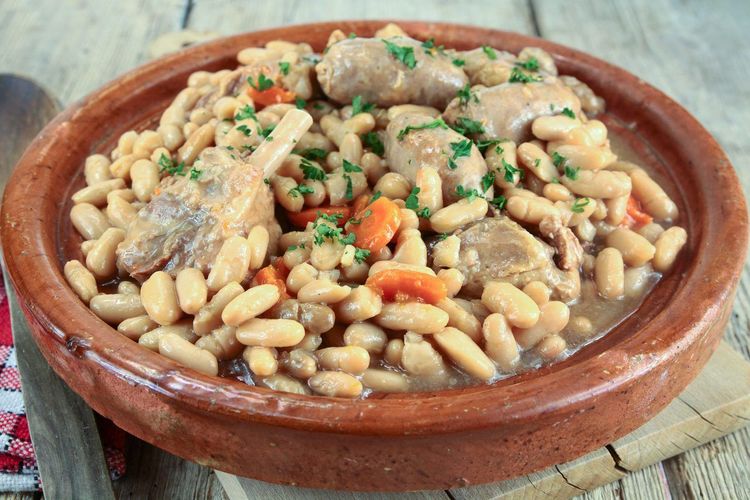
Looking for where to eat in Toulouse inevitably starts with cassoulet — the city's signature dish, slow-cooked for hours with white beans, Toulouse sausage, and duck or goose confit depending on the recipe. Chez Attila, in the historic center, serves one of the most talked-about versions in the city, in a simple setting that puts the plate's contents before décor. Book ahead: the dining room is small and fills up quickly in the evening.
For those wondering where to brunch in Toulouse, the Saint-Aubin neighborhood and the area around the place Victor Hugo concentrate most of the trendy addresses. Une Île (4 Rue Riguepels, 31000 Toulouse, rated 4.4/5 on Google with 1,064 reviews), with its shaded terrace, ranks among the reliable weekend options: house pastries, egg dishes, and freshly pressed juices — though it is best to book or arrive early on Sunday to avoid waiting on the pavement.
Cafés and breakfast spots also multiply around the Marché Victor Hugo, where several small tables upstairs serve coffee and pastries from the moment the stalls open — a practical option before starting the morning's sightseeing. The independent roasters in the Carmes-Esquirol area are the go-to for those who judge a stay by the quality of their first coffee.
For casual dining and trendy spots, the Halles de la Cartoucherie — already mentioned for the second afternoon — remain the most versatile address: a stall for every craving, from burgers to poke bowls, with the option of sharing a table while everyone orders something different. The Cartoucherie also has the advantage of staying open late, unlike the covered markets that close in the early afternoon.
Finally, it would be a shame to leave without sampling a few local specialties beyond cassoulet: grilled Toulouse sausage, Gascon foie gras, garlic tourin soup served at the market, and of course crystallized violets — the city's sweet emblem, sold in metal tins in most fine-food shops in the center. For a deeper dive, the Ryo article on Toulouse's culinary specialties lists the dishes and products to seek out first depending on the season.
When to Go and What Budget to Plan for a Weekend in the Pink City
What is the best time to discover the city? Spring and early autumn offer the best balance between pleasant weather and reasonable crowds, with terraces already full from mid-April. Summer remains manageable thanks to the shade of the plane trees and the proximity of the Garonne, but July and August afternoons often exceed 33°C — it is best to schedule monument visits during the hottest hours. Winter, finally, allows you to work through the monuments without queuing, with a Christmas market on the place du Capitole in December.
On the practical side, budget an average of €80 to €120 per person per day for a comfortable weekend including accommodation, or considerably less by opting for hostels, casual dining, and the many free visits. Monument entry fees rarely exceed €15, and the tourist office offers a multi-site pass that pays off from the third paid visit onward.
What can you do for free on a weekend in Toulouse? The nave of Saint-Sernin, the courtyard of the Hôtel d'Assézat, the Cathédrale Saint-Étienne, the Japanese Garden, a walk along the Canal du Midi, and the sunset over the Garonne all cost nothing. For a romantic weekend in Toulouse, prioritize the evening stroll along the quays, a drink on a barge at la Daurade, and a terrace dinner in old Toulouse. For a family weekend in Toulouse, the Cité de l'Espace and the Halle de la Machine remain the surest bets for keeping children captivated for a full half-day, complemented by the Muséum and its Jardin des Plantes if the youngest start to flag.
FAQ
How many days do you need to visit Toulouse?
Two days are enough to cover the essentials of the historic center, from the Capitole to the banks of the Garonne, taking in the Augustins museum and the Canal du Midi. A third day allows you to add the Cité de l'Espace or a trip to Albi or Carcassonne, but it is not essential for a first stay focused on heritage.
What is the best time to visit Toulouse?
Spring and early autumn offer the best balance between mild weather and moderate crowds. Summer remains pleasant thanks to the terraces and the nearby Garonne, while winter allows you to visit monuments one after another without queuing.
Is Toulouse suitable for families?
Yes: the Cité de l'Espace and the Halle de la Machine are particularly popular with children, as are walks along the Canal du Midi or the Garonne. The historic center, which is largely pedestrianized, is easy to navigate with a stroller.
Can you visit Toulouse on foot?
Easily. The majority of sites in the historic center fall within a two-kilometer radius of the Capitole, making walking faster and more enjoyable than public transport for the first day.
Where should you stay for a weekend in Toulouse?
The Capitole-Esquirol area is ideal for direct walking access to most of the main sites, while the neighborhoods around Matabiau station or the Canal du Midi offer lower rates at the cost of a few extra minutes on foot.
Can you discover Toulouse in a single day?
It is possible by focusing on the Capitole, Saint-Sernin, and old Toulouse triangle, but the pace will inevitably be tighter. A 48-hour program is preferable if you want to include a walk along the Garonne riverbanks and the Canal du Midi without rushing.
How can you discover Toulouse by tourist train?
The tourist train departs several times a day from near the Place du Capitole and offers a guided tour of the historic center in just under an hour — a practical option for getting your bearings before exploring on foot the neighborhoods that caught your attention.
Forty-eight hours are therefore more than enough to take in the essentials of the Pink City, provided you move through the neighborhoods in a logical order rather than zigzagging from one end of the city to the other. From the Capitole to the Garonne, then from the Marché Victor Hugo to the Halle de la Machine, the itinerary proposed here covers heritage, gastronomy, and the contemporary side of the city without ever forcing the pace.
If you prefer a voice in your ear rather than a notebook, the Ryo audio-guided tour of Toulouse covers the main points of this route, with the anecdotes and practical landmarks that make the difference between a simple stroll and a genuine discovery.
À lire également