© Shutterstock
 Votre guide Ryo
Visiting Toulouse in 3 Days: Complete Itinerary 2026
At 7:30 in the morning, the raking light on the Capitole brick gives the square its true color: not candy pink, but a roof-tile red that shifts toward orange depending on the hour. That is the kind of detail that explains why visiting Toulouse in 3 days rarely convinces visitors to leave without already wanting to come back. La Ville Rose owes its name to the foraine brick, a material found everywhere from the Capitole to the alleyways of the Saint-Cyprien neighborhood, and the Ryo audio-guided tour of Toulouse helps you decode this architecture as you walk, without having to pull out a map at every street corner.
In three days, you will encounter a Romanesque basilica listed by UNESCO that took nearly two centuries to complete, a space center where you can touch a real astronaut's suit, an Airbus factory converted into a museum with a Concorde and one of the very first A380s parked permanently inside, and a covered market where producers still sell ewe's milk cheese by the slice, right below the upstairs restaurant tables. Between visits, the Garonne remains the best reference point: all the neighborhoods are organized around it, from the 17th-century Pont Neuf to the seasonal riverside bars of the Prairie des Filtres. This guide lays out a day-by-day itinerary, with the best addresses and practical information so you don't miss anything essential in three days.
Day 1: the Historic Center and the Pink Soul of Toulouse
The first day focuses on the historic center, a compact area that can be covered entirely on foot in a single day without any need for transport.
The Capitole and the Bouquières Neighborhood
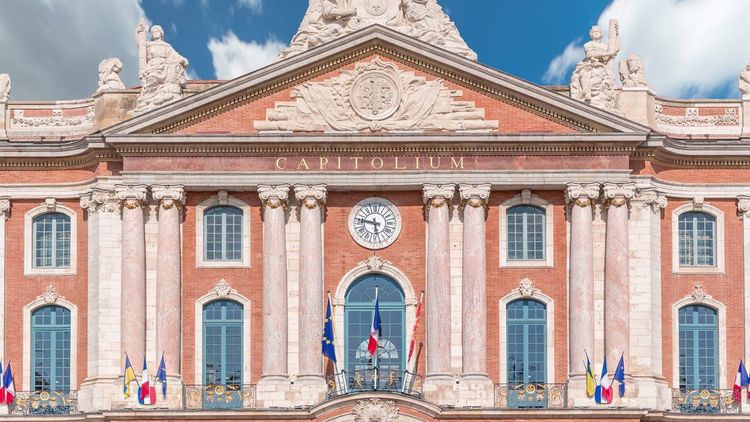
Start at the Place du Capitole, the city's beating heart since the Middle Ages and the seat of municipal power for the Capitouls, the magistrates who governed Toulouse before the Revolution. The 128-meter-long neoclassical façade conceals an Italian-style theater and a Salle des Illustres covered in 19th-century frescoes, open free of charge to visitors outside official ceremonies.
Beneath your feet, the Occitan cross inlaid in the paving serves as a discreet compass for locals, who have been meeting here for generations. Turning right as you exit, head into the Bouquières neighborhood, a maze of cobbled lanes between the rue du Taur and the rue des Filatiers where half-timbered façades stand alongside Renaissance mansions built by wealthy 16th-century pastel merchants. Take time to look up: the interior courtyards, often left ajar in the morning, reveal brick turrets and spiral staircases that hurried visitors rarely notice. You are here in one of the best-preserved medieval urban fabrics in the southwest, just a few minutes' walk from the Garonne. This stretch of the center largely overlaps with the route of the Toulouse audio-guided tour, handy if you prefer an audio commentary while you walk rather than a paper guide to consult at every stop.
Basilique Saint-Sernin and Cathédrale Saint-Étienne
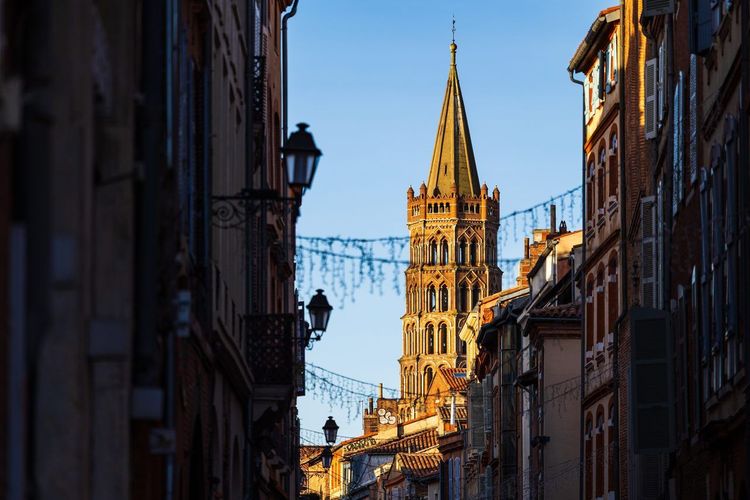
Walking up the rue du Taur, you reach the basilique Saint-Sernin, the largest preserved Romanesque church in Europe and a major historic stopping point on the Camino de Santiago, inscribed as such on the UNESCO World Heritage List. Its five-aisle nave soars to 21 meters and the octagonal bell tower, visible from almost anywhere in the city center, took nearly two centuries to complete between the 11th and 13th centuries.
The crypt holds one of the most important collections of relics in Western Europe, inherited from the great medieval pilgrimages: allow about twenty minutes for the visit, with a ticket separate from free access to the nave. Allow a short half-hour's walk southeast to reach the cathédrale Saint-Étienne, recognizable by its striking asymmetry: the Gothic nave and the choir are simply not aligned, the result of seven centuries of interrupted and restarted construction work across different eras.
The ancient stained-glass windows on the south side are worth lingering over in late morning, when the light shines directly through the great rose window. You can then head to the marché Victor Hugo (Place Victor Hugo, 31000 Toulouse, rated 4.5/5 on Google with 6,851 reviews), a ten-minute walk away cutting through the rue de Metz, passing several private mansions whose courtyards are freely accessible during the day.
Marché Victor Hugo and Lunch Break
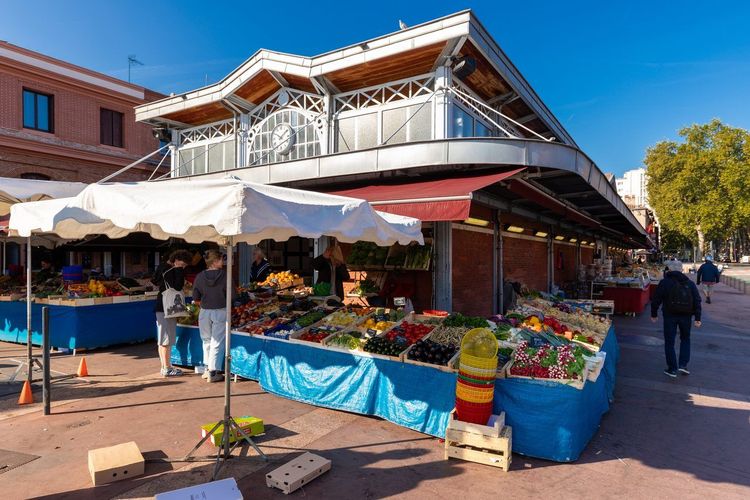
The marché Victor Hugo occupies a building reconstructed in the early 1960s on the site of the original 19th-century covered market, laid out on two levels: producers' stalls on the ground floor, a handful of small restaurants upstairs. This is where Toulousains buy their Toulouse sausage and foie gras before the holidays, and the atmosphere on a weekday morning is worth the trip even if you have no intention of buying anything.
Head upstairs around noon: tables free up quickly after 1:30 pm when the neighborhood regulars return to work. Many stalls offer a tasting menu for around 15 to 18 euros, cassoulet included. Watch out for the closing day — Monday — which catches visitors who arrived the previous evening off guard. If you prefer eating outside, the square itself has several shaded terraces where you can watch neighborhood life before heading into the afternoon. It is also a good moment to identify the producers you might want to return to at the end of your stay, once you know what you want to bring home.
Day 2: Space, Aeronautics, and Extraordinary Machines
Head to the eastern and then northwestern outskirts of Toulouse for this second day, entirely dedicated to the city's aerospace identity. You will need a car, a bike, or public transport: the two main sites are outlying and cannot easily be connected on foot.
The Cité de l'espace, Aeronautics Capital of the World
The Cité de l'espace occupies a large landscaped park on the eastern edge of the city, with a full-scale replica of the Ariane 5 rocket standing more than 50 meters tall, visible from the ring road well before you reach the car park. Inside, a recreation of International Space Station modules can be explored freely, and the planetarium runs several shows a day on a giant dome.
Book your tickets online at least 48 hours in advance in high season: planetarium slots fill up quickly in July and August. Allow 3 to 4 hours on site, more with children who will want to linger at the simulators and hands-on workshops.
Toulouse is home to the Airbus headquarters, the CNES, and a large share of the European space industry, making it the largest aerospace employment hub in Europe. This identity permeates the entire neighborhood, down to street names that pay tribute to the pioneers of the Aéropostale — the aviators who linked Toulouse to Dakar and then to South America in the 1920s.
Aeroscopia and the Halle de la Machine

In Blagnac, about twenty minutes' drive away, the Aeroscopia museum brings together some thirty aircraft, including about ten full-size planes sheltered in a hangar spanning several thousand square meters: two Concordes, an A300B, a Super Guppy, and one of the first A380s to roll off the production line. The guided tour of the A380, offered as an add-on depending on available slots, lets you board the plane and see the flight deck.
A few minutes away, on the Piste des Géants, the Halle de la Machine (4 Rue Marcel Doret, 31400 Toulouse, rated 4.5/5 on Google with 10,650 reviews) displays extraordinary mechanical creatures created by the company of the same name: the Minotaure Astérion, standing some fifteen meters tall, and a giant spider that sometimes roam outside during scheduled performances on certain weekends throughout the year.
Check the calendar before you come — the Minotaure outings are not daily and sometimes require advance booking. If your afternoon is tight, prioritize Aeroscopia for the aeronautical experience and save the Halle for a future visit: the two sites combined require a full day rather than a simple afternoon, especially factoring in the travel time between them.
Evening on the Garonne Terraces
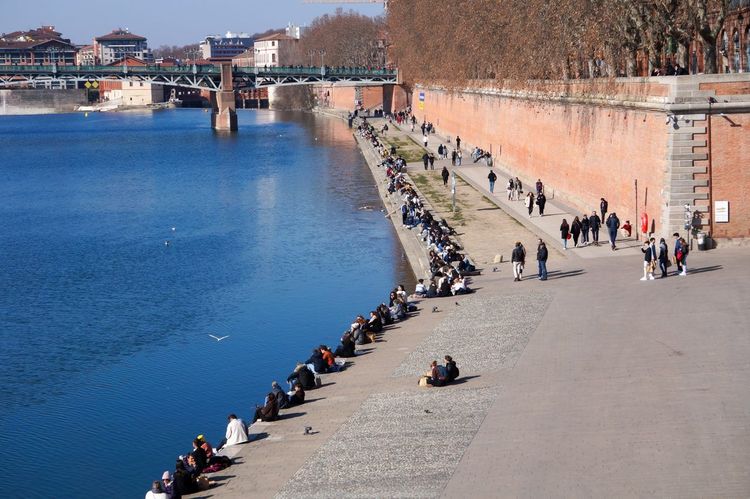
Return to the center in the late afternoon and settle in around the place Saint-Pierre, where about ten bars open their terraces facing the church of the same name. It is one of the densest student gatherings in the city in the evening, especially from September to June when the nearby universities are in full swing.
For a quieter moment, stroll along the left bank instead, between the Pont Neuf and the Prairie des Filtres: the public benches and stone steps serve as informal tiered seating at sunset. Several seasonal riverside bars set up there in the warm months, with DJ sets and locally brewed beer served in returnable cups. End the evening walking along the water rather than seated at a table for three hours: it is the best time to watch the brick change color one last time.
Day 3: the Garonne Riverbanks, Modern Neighborhoods, and Local Life
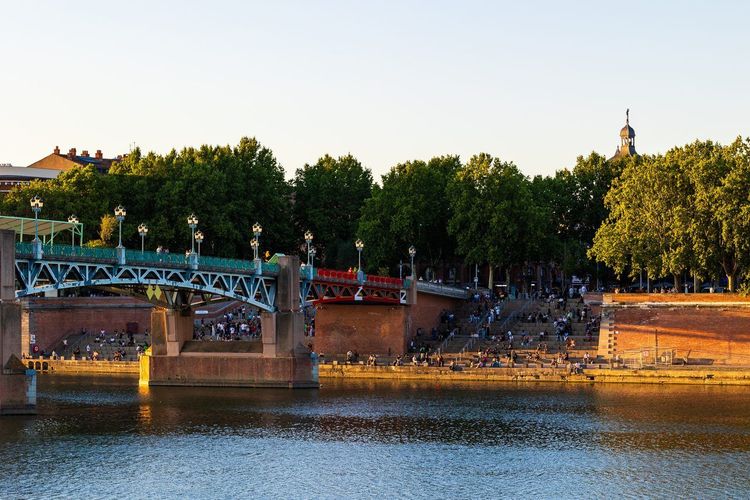
The final day is organized around the Garonne and the neighborhoods where Toulousains actually live, far from the must-see stops of the historic center.
Garonne Riverbanks and Prairie des Filtres
Start early on the riverbanks, before the midday crowds arrive. The Prairie des Filtres (Allées Charles de Fitte, 31300 Toulouse, rated 4.4/5 on Google with 6,562 reviews), a vast lawn on the left bank, serves as a sports ground, picnic spot, and open-air stage: the Rio Loco festival sets up there each June for several days of concerts facing the river.
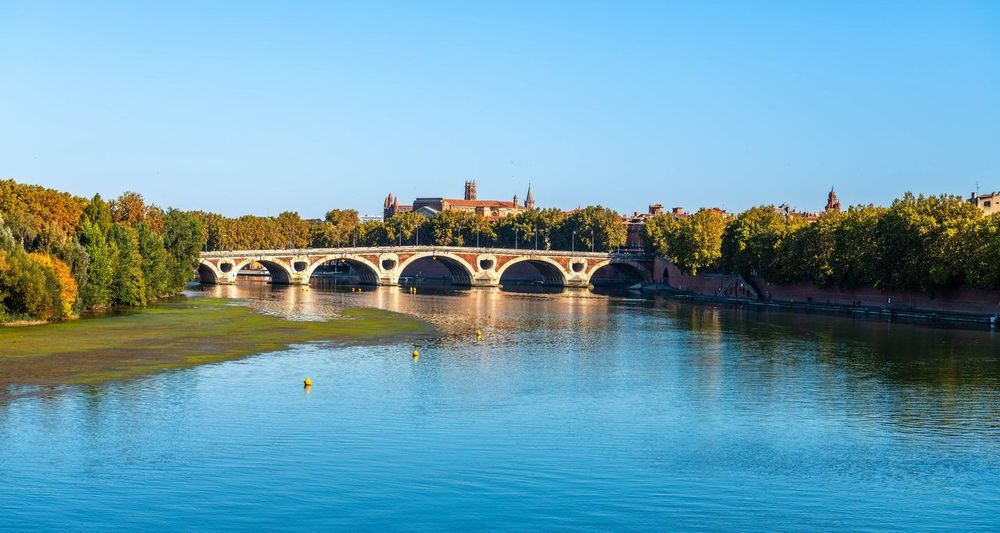
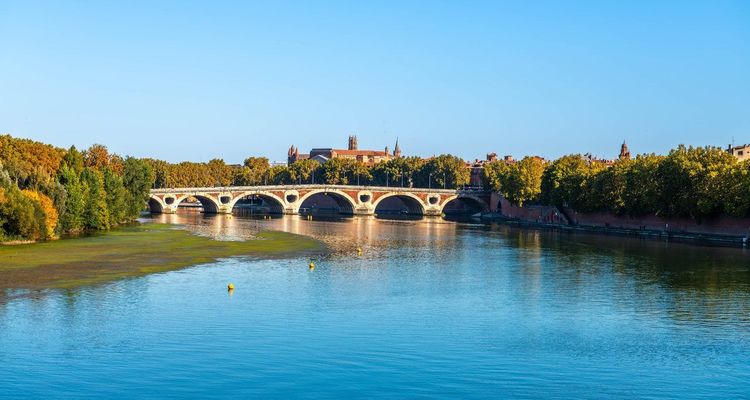
From there, head up toward the Pont Neuf, the city's oldest bridge despite its name, completed in 1632 after nearly a century of construction. Its technical distinction: arches pierced with openings that allow floodwater to pass without giving way, a rare engineering solution for the time and still effective today. The view from the bridge, with the dome of the Hôpital de La Grave in the background, remains one of the most photographed scenes in Toulouse, especially at sunset.
Saint-Cyprien and Les Carmes, Neighborhoods to Live In
Cross the bridge to enter Saint-Cyprien, long a working-class neighborhood and today one of the most sought-after by young professionals in Toulouse. The covered Saint-Cyprien market, smaller and less touristy than Victor Hugo, remains a good indicator of the prices locals pay in their daily lives. The surrounding streets are packed with second-hand shops, independent wine merchants, and craftspeople's workshops that open late on Saturday mornings.
Then cross back to the right bank toward the Carmes neighborhood, known for its covered market and natural wine bars that fill the small squares from 6 pm. The difference from the historic center is immediately felt: fewer tour groups, more Toulousains seated on a terrace on an ordinary Tuesday evening. These two neighborhoods, with their addresses that change faster than guides can document them, give the best sense of local life outside tourist season. Our Ryo article on the neighborhoods of Toulouse details these differences atmosphere by atmosphere, useful if you are still deciding where to stay.
Cycling or Boating on the Garonne
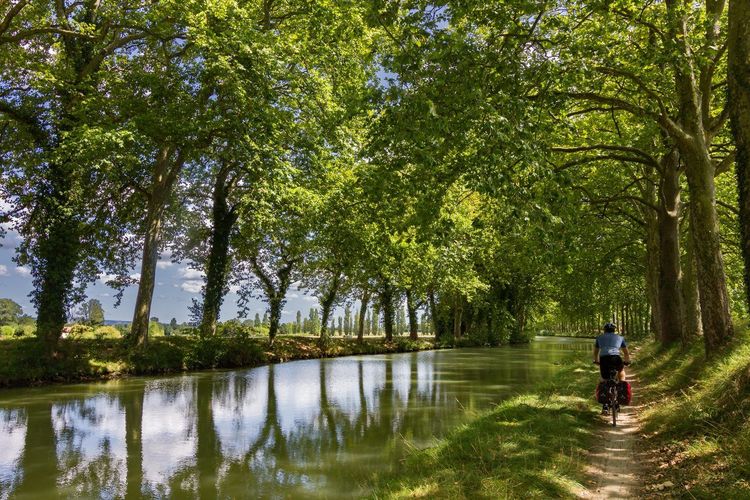
The metropolitan area has several hundred kilometers of cycling infrastructure and a dense bike-sharing system in the inner city, with stations every 300 meters or so. A ride along the UNESCO-listed canal du Midi allows you to reach neighborhoods in 30 minutes of pedaling that walking visitors never access, on a flat, plane-tree-shaded path.
For a slower pace, several companies offer guided cruises of about an hour on the Garonne and the canal, departing from the Port de la Daurade, passing under the Pont Neuf and offering views of the riverbanks from the water. Book the day before in high season, as late-afternoon departures often sell out. For those wanting to cool off in summer, our Ryo selection of the best swimming spots around Toulouse complements this final riverside half-day nicely. It shows a Toulouse at river scale, complementing the density of the city center explored on the first day.
The Essential Museums You Should Not Miss
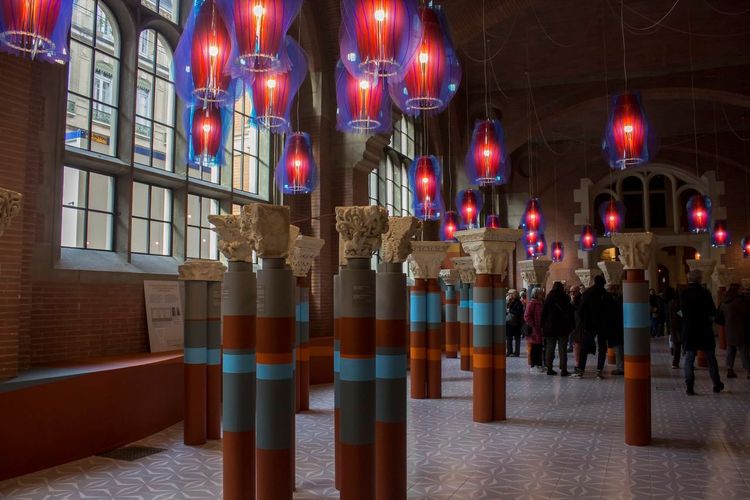
Few Toulouse travel guides devote an entire section to museums, even though they can save a rainy late afternoon or provide a pause between two outdoor visits. Good news for tight budgets: city museums are free for everyone on the first Sunday of every month.
The musée des Augustins (21 Rue de Metz, 31000 Toulouse, rated 4.4/5 on Google with 3,268 reviews), housed in a former Gothic convent in the city center, holds one of the richest collections of Romanesque and Gothic sculpture in France, much of it recovered from Toulouse churches dismantled during the Revolution. Closed for several years for a major renovation, it has reopened with a reorganized layout: simply check the opening hours on the day before you go. The cloister, with its paired columns and garden of medicinal plants, is worth the visit on its own, even for those who do not enter the galleries.
Our Ryo article on the musée des Augustins details the room-by-room layout and key works. The natural history museum, one of the largest in France by exhibition space, is a great addition to a family program thanks to its zoology collections, botanical garden, and greenhouses. For the contemporary scene, the Abattoirs, installed in a former industrial hall on the left bank, present a modern and contemporary collection whose most spectacular piece is the immense painted stage curtain based on a drawing by Picasso. The Bemberg Foundation, nestled in the Hôtel d'Assézat, presents a private collection ranging from the Italian Renaissance to the post-Impressionists, in a Renaissance setting that is rarely crowded even in high season: allow 45 minutes for the visit. Temporary exhibitions change several times a year at each of these venues, and some popular ones require a timed ticket, bookable online the day before to avoid queuing.
Our Top Food and Drink Addresses in Toulouse
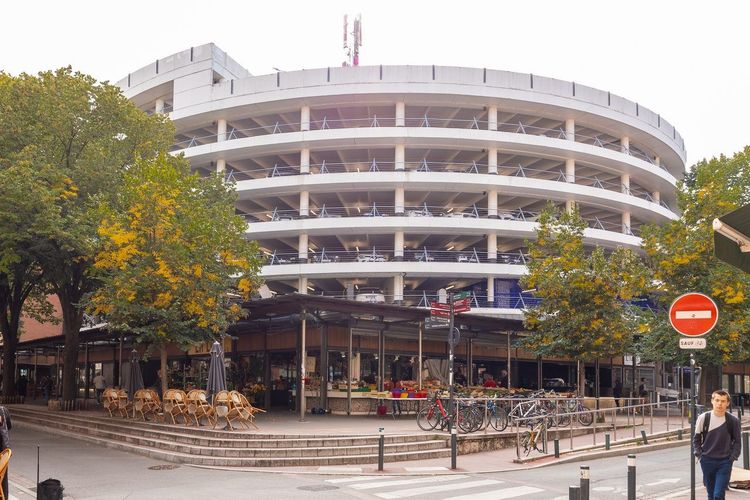
Toulouse gastronomy deserves time beyond just the meals taken at the marché Victor Hugo.
Local Specialties: Violet, Cassoulet, and Toulouse Sausage
You cannot leave without having come across the Toulouse violet, cultivated in the region since the 19th century and available as confectionery, liqueurs, and even cosmetics in several boutiques in the center. The specialist shop near the Capitole sells sugar-crystallized flowers, a recipe that nearly disappeared before being revived by a handful of local producers.
On the savory side, the Toulouse cassoulet is distinguished from its cousins in Castelnaudary and Carcassonne by the near-universal addition of Toulouse sausage, coarsely ground and additive-free at the best charcuteries. Historic restaurants in the center still serve it in an individual cassole, the earthenware dish that gave the recipe its name. Pastel, the blue dye that made Toulouse merchants rich during the Renaissance, is found today more in soap and textile boutiques than in cuisine, but it remains the finest souvenir to bring back alongside the violet sweets.
Where to Eat and Where to Have a Drink
For a quick lunch between visits, the Victor Hugo and Saint-Cyprien markets remain the safest bets. In the evening, the streets around the place Saint-Georges and the place Wilson offer a dense range of bistros, with menus of around 25 to 35 euros for well-executed seasonal cooking.
The best restaurant terraces are found around the place de la Trinité, the place Saint-Georges, and the rue des Filatiers, where tables spill onto the cobblestones from the first warm days. For a drink, les Carmes and Saint-Aubin have the most popular natural wine bars and independent cellars, while the Saint-Pierre neighborhood remains the classic student haunt on weeknights. A few local agencies also offer half-day food tours of the historic center, often centered on the markets and charcuteries — a good option if you would rather delegate the search for good addresses entirely. Our Ryo article on the culinary specialties of Toulouse lists further tables organized by neighborhood.
Best Cheese Monger and Best Coffee Roaster
For cheese, the fromagers at the Victor Hugo market age part of their selection themselves in their cellars, with Pyrenean tommes and mountain ewe's cheeses that are hard to find elsewhere. Budget 15 to 25 euros for an assortment to take on a picnic at the Prairie des Filtres.
On the coffee front, several artisan roasters have opened in the Carmes neighborhood and near Saint-Aubin in recent years, with beans roasted on the premises and both filter and espresso brewing methods on offer. Stopping at one of these counters early in the morning before the monuments open is one of those small habits that distinguish a rushed trip from a stay more attuned to local life.
Where to Stay in Toulouse Based on Your Profile
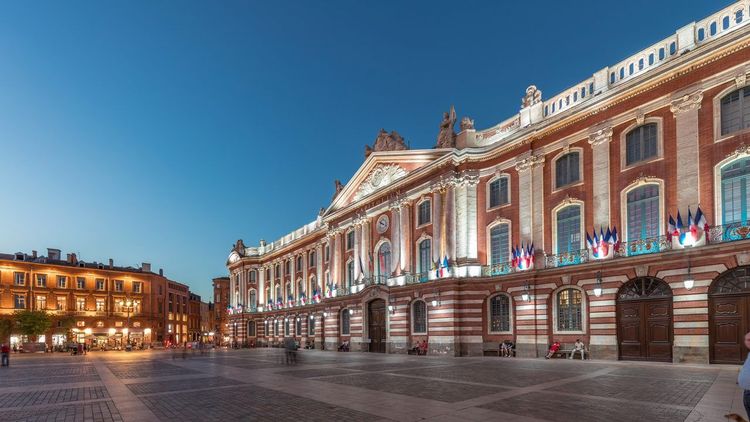
The historic center, between the Capitole and Saint-Sernin, remains the most practical choice for a 3-day stay: everything is walkable and you limit evening travel. Budget 90 to 140 euros per night for a well-located 3-star hotel in high season.
Saint-Cyprien appeals to travelers who prefer a more local atmosphere and slightly lower prices, while remaining 10 to 15 minutes' walk from the Capitole via the Pont Neuf. The Carmes neighborhood, more intimate, suits a couple looking for small addresses and wine bars rather than loud nightlife.
Families with children will find a good compromise around Compans-Caffarelli or les Chalets, two quiet residential neighborhoods 15 to 20 minutes' walk from the center, well served by the metro and close to green spaces for a breather between visits. Conversely, travelers who prioritize nightlife will opt for Saint-Georges or Wilson, where bars close late and the distances to terrace-lined streets are counted in minutes.
For a tighter budget, the area around the Matabiau station offers cheaper hotels, with the downside of a 20-minute walk to the historic center or the cost of a metro ticket. If you are planning back-and-forth trips to Blagnac for Aeroscopia, accommodation near line A cuts down on travel time. The Ryo audio-guided tour of Toulouse works wherever you are staying, as it can be started and paused at any time from the app. Whatever neighborhood you choose, book at least a month in advance in the event of a major festival or a match weekend at the Ernest-Wallon stadium.
How to Get Around Toulouse During Your Stay
Toulouse is easy to navigate thanks to a dense network combining metro, tram, and bus, complemented by a rapidly expanding range of soft mobility options.
Tourism Pass and Public Transport
The tourist office's Tourism Pass gives access to a range of monuments and museums, with either included entry or discounts depending on the site, plus unlimited access to Tisséo public transport for its entire validity period. It comes in 24, 48, and 72-hour versions: for a 3-day stay with several museums on the program, it typically pays for itself by the second or third paid admission of the day, transport included.
The Toulouse metro, entirely automated, has two lines serving the majority of points of interest in the center: line A toward Blagnac and the western suburbs, line B for the universities and certain residential neighborhoods. A single ticket costs around 2 euros, with a book of 10 tickets being more economical from the second day of visiting. The tram also connects the center to Blagnac airport in about thirty minutes.
To reach Toulouse by train, the Matabiau station is 20 minutes' walk from the Capitole, or just two metro stops away. Direct TGV services from Paris take around 4 hours 10 minutes, a journey time that has considerably boosted short breaks to the region in recent years.
Exploring on Foot, by Bike, or by Panoramic Bus
The historic center is entirely walkable: allow 25 to 30 minutes to cross the city's core from the Capitole to Saint-Sernin. This is in fact the format followed by the short version of the Ryo audio-guided tour of Toulouse, a smartphone audio tour designed for continuous walking, with no need to pull out a map or look for an information panel at each monument.
For longer trips, especially toward outlying neighborhoods or Blagnac, bike-sharing or regular buses take over efficiently. A hop-on hop-off panoramic bus also runs through the city center with a recorded commentary, a convenient option for a first orientation if you arrive tired from a long journey. On the Garonne, river shuttles and pleasure boats, as well as small tourist trains, round out the offer for families with young children who tire quickly on foot. Combine several formats rather than sticking to just one: walking for the historic center, cycling or the metro for extensions toward Blagnac or outlying neighborhoods. The Pink City audio-guided tour works well on foot too, threading between these same stops without needing a vehicle.
Adapting the Itinerary: Toulouse in 1, 2 Days, or a Week
The program above is designed for 3 full days, but it can be compressed or extended easily depending on the time available.
Toulouse in 1 day (24 hours): focus on the historic center (Capitole, Saint-Sernin, marché Victor Hugo) and keep the afternoon for the musée des Augustins or a walk along the riverbanks. This is a tight format that leaves little room for improvisation or detours.
Toulouse in 2 days (48 hours): add either the Cité de l'espace or Aeroscopia — rarely both in a single day given the travel involved — plus an evening in les Carmes or at Saint-Pierre.
Toulouse in 3 days corresponds to the full format detailed in this guide: historic center, aeronautics and space, then the Garonne and lively neighborhoods.
Toulouse in 4 days: the extra day lends itself well to an excursion into the surrounding area, toward a medieval village or the first Pyrenean foothills, detailed in the section below.
Toulouse in a week: combine the 3-day program with two or three excursions into Occitanie (Albi, Cordes-sur-Ciel, Cathar castles) and a day dedicated solely to museums and the gastronomic scene, with no obligatory monument on the agenda.
In any case, keep in mind that the Cité de l'espace and Aeroscopia each require a half-day on their own including travel: these are the two variables that most affect the total length of a Toulouse stay, far more than the historic center itself.
Day Trips and Villages Around Toulouse
If your stay extends beyond 3 days, or if you prefer to lighten the urban program for half a day, several excursions can easily be launched from Toulouse.
Villages and Occitanie within an Hour
Albi, 1 hour's drive away, deserves a full-day excursion for its Sainte-Cécile cathedral, the world's largest brick cathedral, and for the Toulouse-Lautrec museum housed in the adjacent episcopal palace: the episcopal city is listed as a UNESCO World Heritage Site. Cordes-sur-Ciel, perched on its rocky spur 1 hour 15 minutes away, makes a great addition for those who enjoy medieval villages spared from mass tourism. Albi can also be reached by train from Matabiau in about an hour, a good option without a car.
Closer by, several villages listed among the most beautiful in Occitanie can be visited in half a day: fortified bastides, village markets on weekends, small wine valleys less than 45 minutes from the city center. Our Ryo article on the most beautiful villages around Toulouse lists the most accessible options for an extended stay.
To cool off on a summer's day, several lakes and swimming rivers are within an hour's drive, an option that few guides mention even though it regularly saves afternoon plans during the July-August heat waves.
Cathar Castles and the Pyrenees
About 1.5 to 2 hours' drive away, the Cathar castles perched on their rocky outcrops (Montségur, Peyrepertuse, Quéribus) tell the story of the crusade against the Cathars in the 13th century. A full-day excursion is enough for one or two sites, more if you want to chain several fortresses in the same outing. Our Ryo article on the Cathar castles of Occitanie helps you choose sites based on your available time and physical fitness, as some approaches are quite steep.
To the south, the first Pyrenean foothills are reachable in just over an hour, with mountain refuges accessible on half-day hikes for those wanting some altitude after three days of dense urban heritage. In winter, several resorts even offer dog-sledding excursions, an unusual activity less than two hours from La Ville Rose. These excursions generally require a rental car, as public transport connections to mountain areas remain limited.
Budget and Best Time to Visit Toulouse
Budget an average daily spend of 70 to 120 euros per person, including accommodation in a 3-star hotel, meals, and entry to two or three paid sites. Travelers in a hostel or shared accommodation can get by on under 50 euros a day without too many sacrifices, especially by taking advantage of the free municipal museums on the first Sunday of the month.
Spring, from April to June, offers the best conditions: mild temperatures, gardens in bloom, and crowds still manageable before the school holidays. Autumn, from September to October, is also pleasant and coincides with the student return that brings life back to the city center terraces.
The Toulouse summer regularly exceeds 35 degrees Celsius in July and August, which means scheduling outdoor visits early in the morning and reserving air-conditioned museums for the afternoon. Several events punctuate the local calendar, including the Rio Loco festival in June on the Garonne riverbanks: our Ryo article on events in Toulouse lists the dates worth checking before you fix your travel dates, as certain weekends can push accommodation prices up by 20 to 30%.
Winter remains an underrated option for discovering La Ville Rose at a lower cost, with hotels significantly cheaper than in peak season and virtually no queues in museums, even at weekends.
FAQ
How many days do you need to visit Toulouse?
Three full days are enough to cover the historic center, one aeronautical or space site, and a half-day along the Garonne riverbanks. Plan for 4 to 5 days if you want to add an excursion into Occitanie or visit both the Cité de l'espace and Aeroscopia at a leisurely pace.
How do you visit Toulouse on foot?
The historic center, from the Capitole to Saint-Sernin via the marché Victor Hugo, can be covered entirely on foot in half a day, on flat and compact terrain. For outlying sites like the Cité de l'espace or Aeroscopia, it is better to combine walking with the metro or a bike, as the distances make walking alone impractical.
What to do in Toulouse and its surroundings with a family?
The Cité de l'espace and the natural history museum are particularly popular with children, as is the Halle de la Machine during Minotaure outings. Villages and swimming spots within an hour's drive make a great complement to a family program spread over several days, with less hectic days than the city center.
What is the best neighborhood to stay in Toulouse?
The historic center remains the most convenient for a first stay, Saint-Cyprien for a more local atmosphere and slightly lower prices. Les Carmes suits couples looking for peace and good dining, away from student nightlife.
Should you book the Cité de l'espace and Aeroscopia in advance?
Yes, especially in high season: planetarium time slots and guided tours of the A380 at Aeroscopia fill up quickly in July and August. Booking 48 hours ahead is generally sufficient for the rest of the year, outside school holidays.
What is the best time to visit Toulouse?
Spring and early autumn offer the best conditions, with mild temperatures and moderate crowds at the main sites. Summer can be very hot, which makes it wise to plan outdoor visits early in the morning and save the air-conditioned museums for the afternoon.
Is the Toulouse Tourism Pass worth it?
For a 3-day stay with several museums and monuments on the program, the Tourism Pass typically pays for itself by the second or third paid admission of the day, plus unlimited access to public transport for its entire validity period — a real bonus if you are making multiple trips to Blagnac.
A City That Reveals Itself in Layers
Three days in Toulouse are never quite enough, and that is probably intentional: between the brick of the historic center, the aerospace ambitions of Blagnac, and the neighborhood life that pulses through Saint-Cyprien and les Carmes, La Ville Rose reveals itself in successive layers rather than all at once.
If you want to turn this itinerary into a guided walk without juggling a paper map and Google searches in the middle of the street, the Ryo audio-guided tour of Toulouse follows exactly this logic of a continuous walk through the historic center, with commentary triggered automatically as you approach each monument. Whether you leave after three days or extend your trip toward Albi and the Pyrenees, keep in mind that the city lends itself equally well to a quick stopover and to a full week's stay.
À lire également