© Shutterstock
 Votre guide Ryo
Visit Reykjavik in 2 Days: Complete 2026 Itinerary
Visiting Reykjavik in 2 days is far from a tall order: the Icelandic capital is largely walkable, and its centre fits almost entirely between a futuristic church and a fishing port converted into a designers' district. At the June solstice, you will have just over twenty-one hours of daylight, plenty to understand why this city of nearly 140,000 inhabitants concentrates so much creative energy in such a small area. The Ryo audio-guided tour of Reykjavik links these two poles, from the concrete silhouette of Hallgrímskirkja all the way to the waterfront.
In two days, you will have time to climb the tower of a church that took forty-one years to rise from the ground, to spot a Viking ship that isn't one, to feed ducks on a lake that freezes in winter and to taste a hot dog that Bill Clinton himself went to get in person. Between these two days in the city, an excursion on the Golden Circle or a break in 38°C water easily rounds out the programme. What remains is deciding in which order to string it all together, how to adapt the itinerary to the season and where to put down your bags: that is precisely the purpose of this guide.
Day 1 in Reykjavik: Hallgrímskirkja, Harpa and the Waterfront
Hallgrímskirkja, Rainbow Street and the Historic Centre
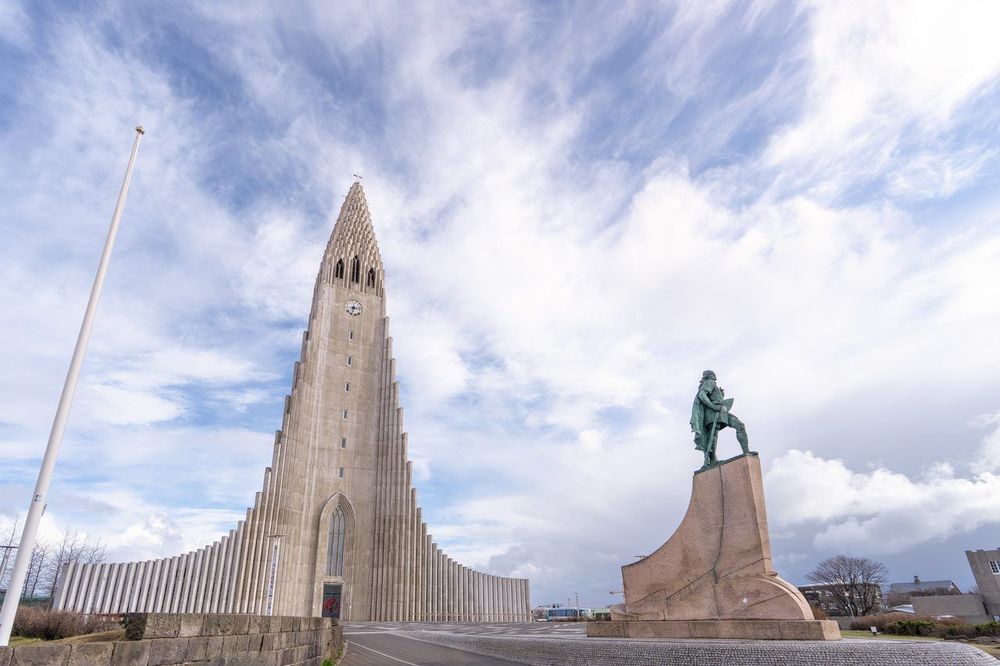
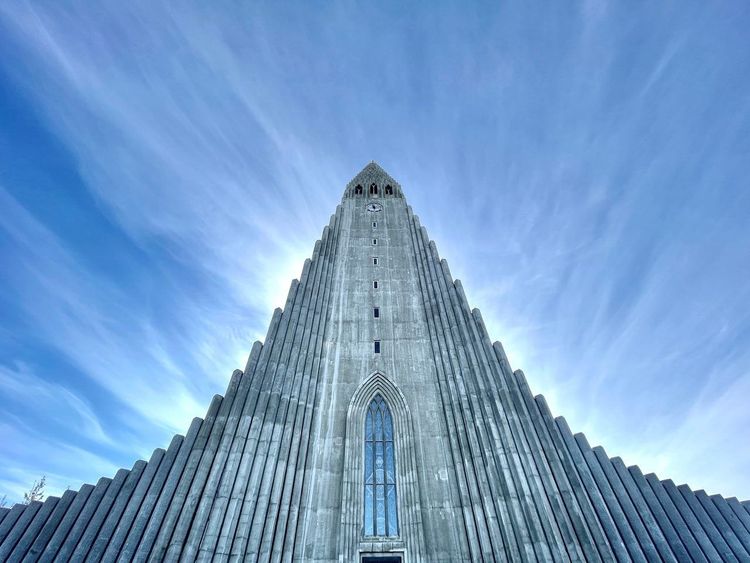
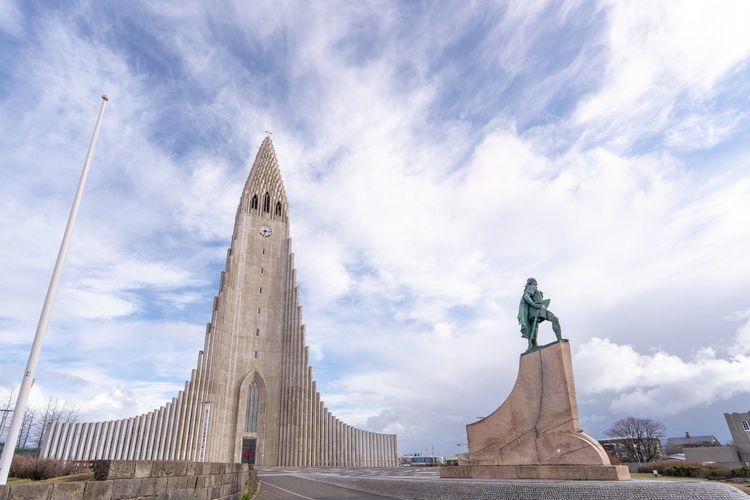
The silhouette of Hallgrímskirkja dominates Reykjavik from every point in the city, and it is logically where the visit begins. The architect Guðjón Samúelsson designed its grey concrete columns inspired by the basalt organ formations found all over the island; construction, begun in 1945, was only completed in 1986. In front of the porch, the statue of Leif Erikson is a reminder that the Viking explorer set foot in North America nearly five centuries before Christopher Columbus. Go up the tower (paid lift): at a height of 74.5 metres, the view takes in the colourful rooftops of the city centre all the way to the snow-capped mountains on the other side of the bay.
Allow a good hour and a half for this stretch if you take the time to go up the tower: the queue for the lift can grow long in high season, between 10 a.m. and 3 p.m. Many visitors skip it and kick themselves once back home, because it is the only vantage point in the city centre offering an unobstructed 360° view.
On the way down, head into Rainbow Street: the cobbled street was painted in rainbow colours for the 2015 Pride, and the initiative became permanent because residents embraced it so warmly. It lines up Icelandic design shops, galleries and cafés over a few hundred metres, sloping gently towards the historic centre.
At the foot of the street opens Austurvöllur Square, bordered by Parliament and the Lutheran cathedral. Icelanders gather here in summer to picnic on the grass, a stone's throw from the statue of Jón Sigurðsson, a figure of the country's independence.
Just behind, Reykjavik City Hall extends part of its structure directly over the waters of Lake Tjörnin; inside, a relief model of the whole of Iceland occupies a large hall, useful for visualising the next few days' programme at a glance. Then simply head down towards the water along Lækjargata to start the second part of the day.
Harpa, the Harbour and the Sun Voyager
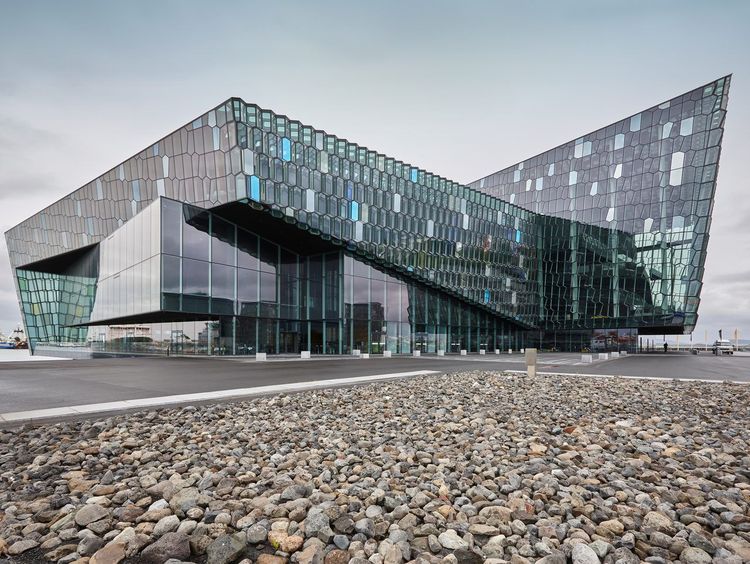
The Harpa concert hall has established itself as the architectural symbol of post-crisis Reykjavik: its honeycomb façade, designed by the artist Ólafur Elíasson with the firm Henning Larsen, plays with the polar light and changes hue depending on the time and the season. Opened in 2011, the building hosts the Iceland Symphony Orchestra and a good share of the city's major concerts, but its public spaces can be visited freely during the day, if only to admire the play of reflections from the inside.
If you have an hour to spare, first make a detour to the west: the Old Harbour, still active, lines up ticket huts, fishing boats and departures for whale-watching tours directly from the city centre. Then retrace your steps and follow the waterfront eastwards, along Sæbraut.
After a few minutes, you can't miss the Sun Voyager (Sæbraut, 101 Reykjavik, rated 4.5/5 on Google from 10,565 reviews) (Sólfar), a steel sculpture by Jón Gunnar Árnason installed in 1990. Many take it for a Viking ship; the artist actually intended it as a "dream boat", an ode to light and hope rather than a precise historical reference. On a summer evening, when the sun barely sets, it is one of the most photographed viewpoints in all of Iceland.
The name Reykjavik, "Smoky Bay", comes precisely from the steam that the first settlers spotted here in the ninth century, escaping from hot springs. From the waterfront you will no longer see it: the heat from underground is now captured by the geothermal network that heats the whole city, but the anecdote remains a good starting point for understanding how much volcanic activity has shaped local urban planning.
This whole loop between the church and the waterfront follows the route of the Ryo audio-guided tour: the commentary flows from stop to stop, from Hallgrímskirkja to the Sun Voyager, with the story of that famous Smoky Bay as a common thread. End the day in one of the Old Harbour restaurants, where menus mix catch of the day with reimagined traditional dishes.
Day 2 in Reykjavik: Lake Tjörnin, Grandi and the Perlan Museum
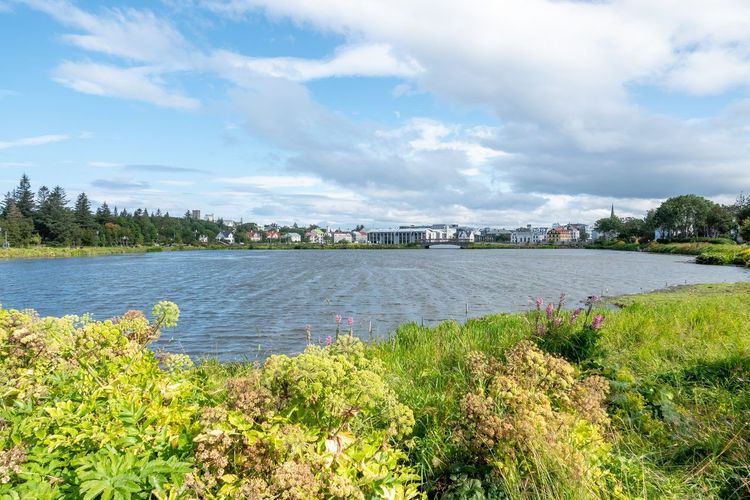
Lake Tjörnin, the Parliament and Hólavallagarður Cemetery
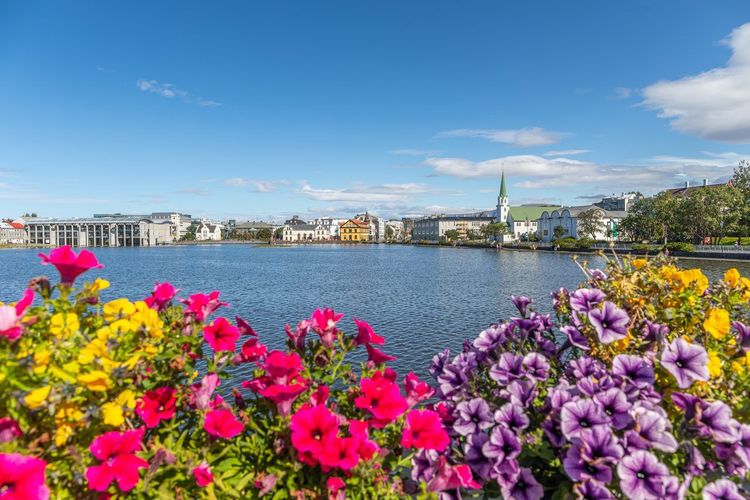
The second day starts gently, on the shores of Lake Tjörnin, in the heart of the city. More than forty species of birds nest or stop over here, and feeding the ducks remains a local ritual, practised as much by neighbourhood children as by passing tourists. In winter, when the surface freezes, Icelanders skate on the natural ice.
Close by, the dark cut-stone building of the Icelandic Parliament) houses the Alþingi, founded in 930 at Þingvellir, re-established in Reykjavik in 1845 and housed in this building since 1881. According to Icelandic tradition, it is the oldest parliament still in operation in the world, even though the assembly went through a long interruption at the turn of the nineteenth century.
Then head up to Hólavallagarður Cemetery, opened in 1838: century-old trees, moss-covered gravestones, barely marked paths. The place surprises with its almost woodland atmosphere in the middle of the city, a world away from the bustle of the harbour. Keep it for a moment of calm between two denser visits.
About twenty minutes' walk is then enough to reach the northern shoreline and slip into the more industrial atmosphere of Grandi.
The Grandi District and the Perlan Museum
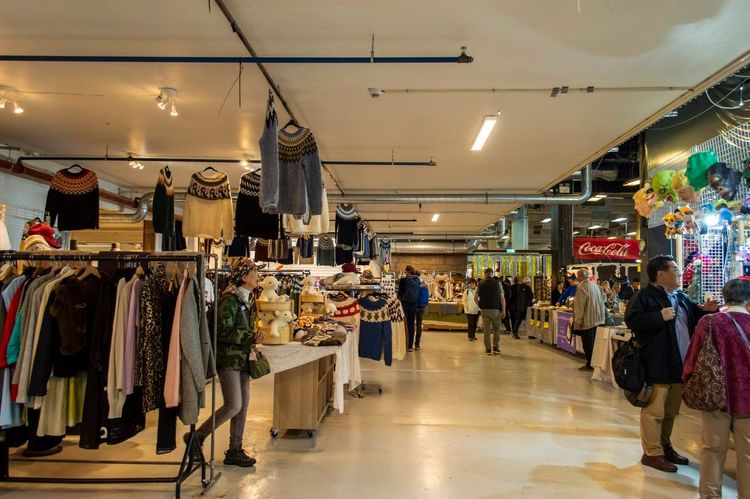
The Grandi district was, until the early 2010s, a simple fishing port. The old warehouses now house designers' workshops, coffee roasters and the Omnom chocolate factory, whose shop organises tastings. At the weekend, on the way back to the Old Harbour, the covered Kolaportið flea market completes the stroll: stalls of wool, vinyl records and, at the back, the food section selling fermented shark and dried fish for the most curious.
Two addresses in Grandi deserve a stop, both set up in the old warehouses: Whales of Iceland, which displays more than twenty life-size replicas of the cetaceans found in Icelandic waters, useful if your schedule doesn't allow a trip out to sea; and FlyOver Iceland, a suspended flight simulator that virtually flies over the country's main landscapes in about twenty minutes, waterfalls and volcanoes included.
In the late afternoon, take a bus or a taxi to the wooded hill of Öskjuhlíð, south of the centre, crowned by the glass dome of the Perlan museum (Varmahlíð 1, 105 Reykjavik, rated 4.5/5 on Google from 11,629 reviews). Built on former hot water tanks, the building combines a scientific exhibition ("Wonders of Iceland"), a planetarium devoted to the northern lights and above all a genuine artificial ice cave kept at sub-zero temperatures all year round: a good way to see Icelandic ice without going hiking on a glacier. The panoramic platform offers, in clear weather, a view reaching as far as Mount Esja.
For this lighter second day, the short version of the Ryo audio-guided tour reduces the number of audio stops: handy if you have planned an excursion in the afternoon or if rain, frequent in Reykjavik, shortens your window for sightseeing.
Street Art, Laugavegur and the Quirky Museums of the Centre
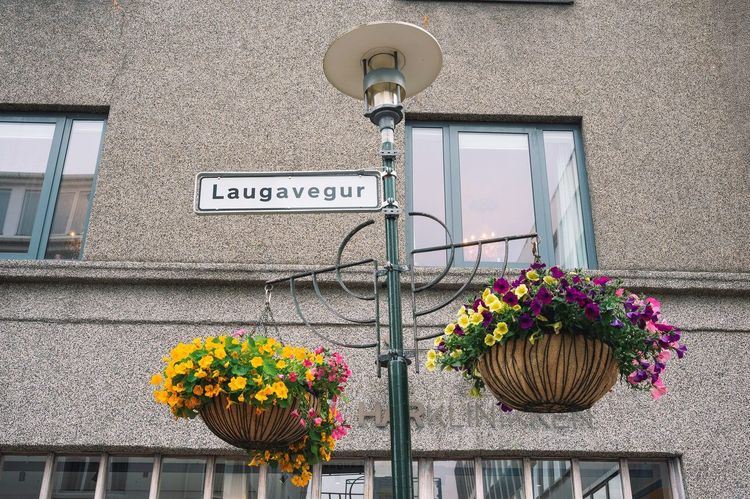
The Laugavegur Shopping Street and Street Art
Laugavegur literally means "washing road": it is the path residents once took to wash their laundry in the hot springs of Laugardalur, before the street became the main shopping artery of the centre. Icelandic design, lopapeysa wool sweaters, bookshops and cafés follow one another over more than a kilometre.
The district's street art and colourful houses owe a great deal to the Wall Poetry festival, launched in 2015, which pairs a musician with a visual artist to paint a façade. The side streets running off Laugavegur, notably around Vitastígur and Grettisgata, hold most of the murals. Wandering half an hour through these small streets, with no set route, remains one of the simplest ways to feel the creative pulse of the city. Also look up at the painted corrugated iron façades: this cheap material, imported in the nineteenth century to protect wooden houses from wind and damp, has become Reykjavik's visual signature.
For those who want to go further on this creative side, our article on the best things to do in Reykjavik details other places to explore between two galleries.
Museums and Curiosities Not to Miss
The National Museum of Iceland (Þjóðminjasafn Íslands), near the university, traces the country's history from the Viking settlement of the ninth century to independence in 1944. The collections of medieval metalwork and textiles provide a useful foundation for understanding everything you will have seen the day before in the city centre.
More unexpected: the penis museum (Icelandic Phallological Museum (Kalkofnsvegur 2, 101 Reykjavik, rated 4.3/5 on Google from 5,451 reviews)) brings together more than two hundred specimens belonging to almost all the mammals found in Iceland, whales included. The place, openly embraced as a tourist curiosity, attracts the curious as much as travellers looking for an offbeat break between two heritage visits.
Between the two, allow a good hour and a half if you really want to take the time to read the information panels rather than rush through the rooms.
Excursions from Reykjavik: Golden Circle, Blue Lagoon and Sky Lagoon
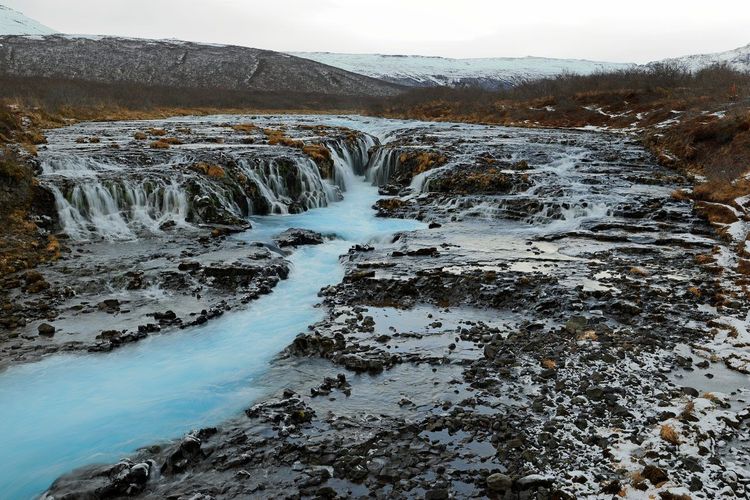
The Golden Circle: Þingvellir, Geysir and Gullfoss
The Golden Circle remains the most popular excursion from Reykjavik, and for good reason: the loop of about 300 km links three major sites. In express format, a good half-day is enough; with secondary stops (Kerið crater, Friðheimar greenhouses), plan for a full day instead.
First stop, Þingvellir, a UNESCO World Heritage Site: the national park marks the visible boundary between the North American and Eurasian tectonic plates, which drift apart by about two centimetres a year. It is also here that the Alþingi, the Icelandic parliament mentioned above, held its very first assembly in 930.
Next comes the geothermal area of Geysir, which gave its name to all the geysers in the world. The original geyser is now dormant, but its neighbour Strokkur erupts every five to ten minutes, sending a column of water up to 20 metres high; it's better to keep the camera ready than to keep your eyes glued to the screen.
Final stop, the Gullfoss waterfall plunges in two tiers into a canyon carved by the Hvítá river. In fine weather, the spray regularly forms a rainbow above the chasm, visible from the viewing platforms built on the site.
Blue Lagoon and Sky Lagoon: Thermal Relaxation
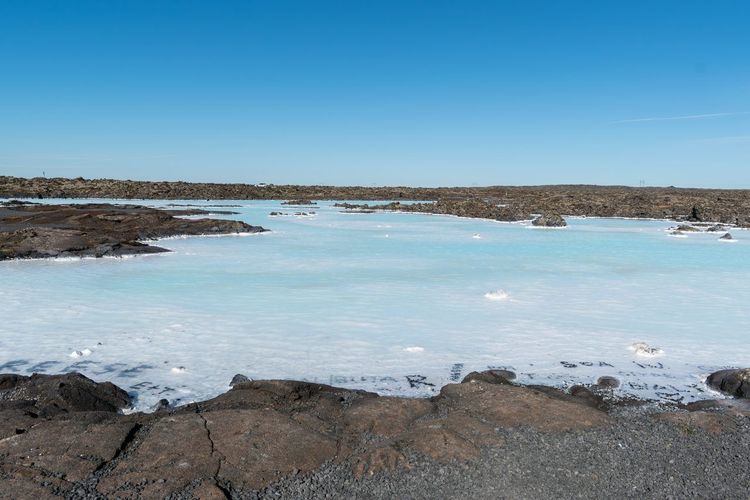
If the Golden Circle takes up the morning, thermal baths suit the end of the day well. The Blue Lagoon, near Grindavík, remains the best known: its milky, silica-rich water comes from the neighbouring geothermal plant and generally hovers around 37-39°C all year round. Booking is mandatory, often several weeks ahead in high season. Also check the opening status a few days beforehand: since 2023, the site has closed several times during eruptions on the Reykjanes Peninsula.
Closer to the city centre, only about twenty minutes away, the Sky Lagoon (Vesturvör 44-48, 200 Kópavogur, rated 4.7/5 on Google from 9,647 reviews) bets on an infinity pool facing the ocean rather than on the sheer expanse of the Blue Lagoon. Its seven-step ritual, the Skjól, runs through a hot bath, cold plunge, glass-fronted sauna, scrub and steam: a relevant option if your 2-day schedule leaves no room for a full round trip to Grindavík.
For the most daring, snorkelling at Silfra, in Þingvellir park, lets you swim between two continents in glacial meltwater so pure that visibility often exceeds 100 metres. A full dry suit is provided, and the water temperature is around 2-4°C all year round: guaranteed thrills, but not for the cold-averse.
A tip before hitting the road: the day before, listen to the stops in the Ryo audio-guided tour devoted to the birth of Reykjavik and the Alþingi. The story gives the Þingvellir fault its full meaning when you discover it the next day. To extend the programme beyond the capital, our article on an Iceland road trip details multi-day itineraries across the whole island.
Seeing the Northern Lights in Reykjavik
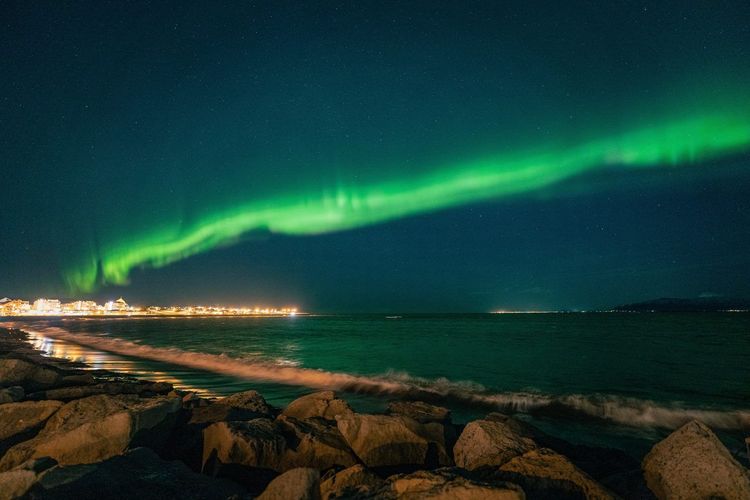
The northern lights season runs roughly from September to April, when nights become dark enough to make them out. There are no guarantees: solar activity and cloud cover decide at the last minute, but a few habits improve your chances. Each afternoon, check the forecasts from the Icelandic Meteorological Office, which publishes a cloud cover map and an aurora activity index.
Then move away from the city centre's street lighting. The Grotta lighthouse, at the tip of the Seltjarnarnes peninsula, can be reached in a quarter of an hour by bus or in a little under an hour on foot along the coast. It is one of the most accessible spots without a car: a small island connected to the land at low tide, with a little geothermal footbath on site to wait in the warm until the sky clears.
If the sky stays overcast or your stay falls outside the season, the Aurora Reykjavik (Northern Lights Center) (Grandagarður 2, 101 Reykjavik, rated 4.5/5 on Google from 2,025 reviews), located in the Grandi district, offers an exhibition and an immersive screening that recreates the phenomenon indoors. An honest alternative rather than a stopgap, especially with children unwilling to wait outside at -5°C.
To take the aurora hunt further once outside the city, this dedicated article on the northern lights in Iceland details the best periods and the forecast apps to activate before leaving.
Where to Eat in Reykjavik: Specialities and Good Addresses
Icelandic Specialities to Try
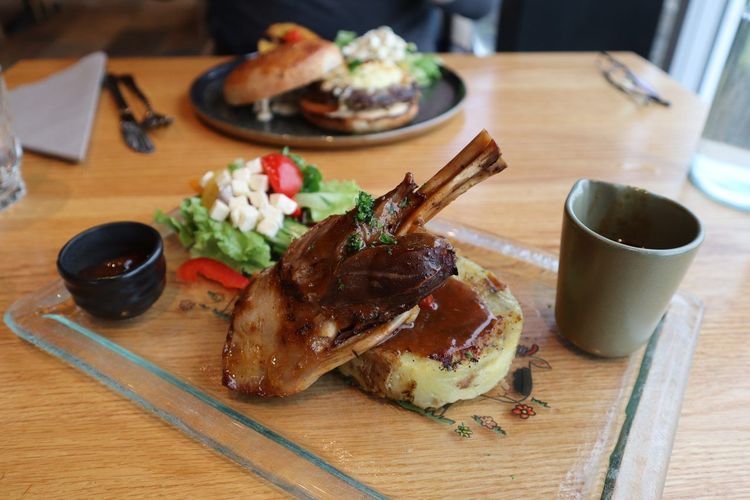
The Icelandic cuisine has largely reinvented itself over the past fifteen years, driven by a generation of chefs working with local fish, free-range lamb and vegetables grown in geothermal greenhouses. Plokkfiskur, a fish and potato stew, remains a comforting classic found on many menus, as are lamb soup (kjötsúpa) and skyr, that thick dairy product served at breakfast as well as for dessert.
But the must-try remains the pylsur, the Icelandic hot dog, sold on the street for decades. The stand Bæjarins Beztu Pylsur (Tryggvagata 1, 101 Reykjavik, rated 4.4/5 on Google from 9,444 reviews), near the Old Harbour, has made it its speciality since 1937; the standard order, "ein með öllu" ("one with everything"), piles fried onions, raw onions, ketchup, sweet mustard and remoulade onto a lamb-based sausage. Bill Clinton stopped here in 2004, and the anecdote is still part of the counter's legend.
Recommended Restaurants and Cafés
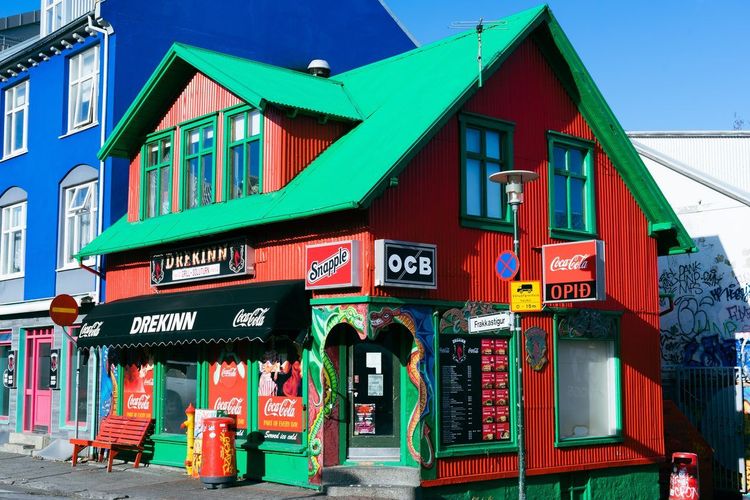
The restaurants and cafés in the centre cover a wide range: allow about thirty euros for a decent dish in a neighbourhood brasserie, more in the fine-dining places that focus on raw fish or smoked lamb. Cafés, for their part, remain a good option for a light lunch: soup of the day with unlimited bread, a common deal throughout the city centre. Also look out for happy hours, very popular between 4 p.m. and 7 p.m., which sometimes halve the price of a beer.
Book if possible in the evening in high season: tables fill up quickly in the streets around Laugavegur, and many establishments are full after 7 p.m. between June and August. Our article on Reykjavik's culinary specialities lists other addresses ranked by budget.
Where to Stay in Reykjavik
The historic centre, postcode 101, remains the most practical choice for visiting Reykjavik in 2 days: everything is done on foot, from Hallgrímskirkja to the harbour. Prices there are also the highest, especially in July-August. If you are travelling without a car, this is also where most airport shuttles and organised excursions pass through.
The Hlemmur district, ten minutes' walk from the centre, offers more affordable options, notably hostels and mid-range hotels, without sacrificing proximity to Laugavegur. Its former bus station, converted into a food hall, also offers a quick dinner a stone's throw from the hotel.
With a car, look instead at Laugardalur or the neighbouring municipalities (Kópavogur, Hafnarfjörður): parking there is free or cheap, and you save a few minutes on the road to the Golden Circle or the Blue Lagoon.
Accommodation in Iceland should be booked early: hotel capacity remains limited in the face of the summer tourist influx, and the best addresses in the centre are often full several weeks ahead in high season. For a 2-day stay, it is better to decide quickly between budget and location rather than wait until the last week to book.
Apartments with a kitchenette also appeal to some travellers, if only to lighten the bill for meals, as Iceland remains one of the most expensive countries in Europe for everyday dining.
Extending Your Stay: What to See with One or Two More Days
Additional Museums and Viðey Island
If your programme overflows the strict 2-day frame, several places are worth the detour. The Ásmundur Sveinsson Museum), in the Laugardalur district, occupies a dome-shaped building designed by the sculptor himself, who lived and worked there; his monumental sculptures are arranged in the garden, which is freely accessible.
In Klambratún park, the Kjarvalsstaðir art museum is devoted to Jóhannes Kjarval, one of the most influential Icelandic painters of the twentieth century, known for his lava landscapes treated almost in abstraction.
The National Gallery of Iceland), on the shore of Lake Tjörnin, completes the visit with a broader panorama of Icelandic art since the nineteenth century.
More unusual, Viðey Island can be reached in a few minutes by boat from Skarfabakki harbour (and from the Old Harbour in summer). There you will find Viðeyjarstofa, one of the oldest stone houses in Iceland, completed around 1755, and the Imagine Peace Tower, installed by Yoko Ono in tribute to John Lennon and lit each year between 9 October and 8 December.
Urban Thermal Pools and the Volcano Show
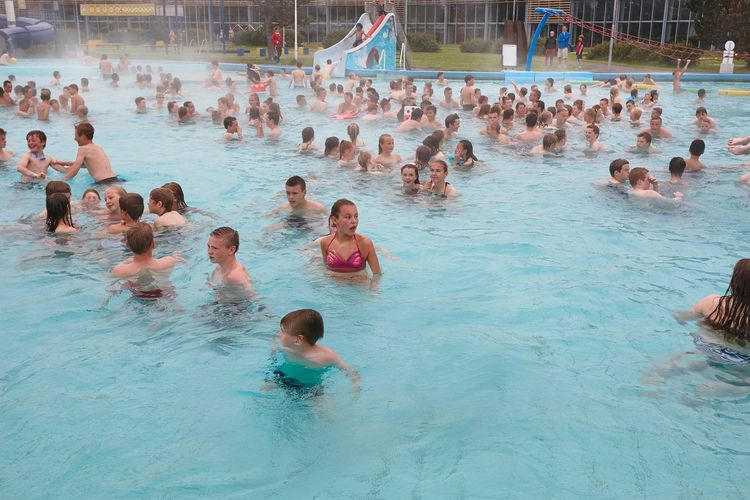
Swimming in a Reykjavik pool is one of those local rituals it would be a shame to miss with a bit of time to spare. The largest, Laugardalslaug (Sundlaugavegur 30, 105 Reykjavik, rated 4.6/5 on Google from 2,241 reviews), combines heated outdoor pools, a paddling pool and several hot pots at varying temperatures, all used by locals far more than by tourists. One rule to know: a soapy shower, without swimwear, is mandatory before entering the water, and the staff make sure of it.
As for volcanoes, the famous "Volcano Shows" that introduced generations of visitors to Icelandic eruptions have found an heir in Grandi: the Lava Show, where real lava, melted at over 1,000°C, flows in front of the audience in a small room. The commented demonstration also looks back at the major recent eruptions, including that of Eyjafjallajökull in 2010, which paralysed European air traffic.
These additions suit a third day well; our article on Iceland by campervan offers ideas for turning this extension into a real road trip.
Practical Information: Getting There, Getting Around and Budget in Reykjavik

Flights, Keflavik Airport and Car Rental
How to get to Reykjavik? By plane, almost exclusively: Keflavik international airport is about 50 km from the city centre, or 45 minutes by road. Flybus shuttles connect the airport to the centre in sync with flights, with a transfer possible to most hotels.
If your programme includes the Golden Circle or the thermal lagoons outside organised excursions, renting a car directly at the airport remains the most flexible option: roads are generally in good condition around Reykjavik, even if winter driving requires more caution on icy surfaces.
Once in the city, how to park in Reykjavik becomes the next question. The centre operates on paid zones (P1 to P4), with an hourly rate that rises the closer you get to the historic heart; mobile apps let you pay and extend parking remotely, handy so you don't have to come back every hour.
Getting Around Town, Budget and Best Time to Visit
How to get around Reykjavik without a car? The question arises less than elsewhere: the historic centre can be crossed entirely on foot in a little under half an hour from one end to the other. The Strætó bus network completes the offer for more outlying districts such as Laugardalur, Perlan or Grotta, with a ticket valid for 75 minutes, transfers included, available through the Klappið app.
The budget for visiting Reykjavik climbs quickly if you don't pay attention: Iceland regularly ranks among the most expensive destinations in Europe. As a guide, allow between €150 and €250 per day per person for a comfortable stay including accommodation, meals and an excursion, excluding airfare. Grab-and-go meals (hot dog, soup, takeaway dish) significantly reduce the bill compared with sit-down restaurants.
Then there is the question of timing. The best time to visit Reykjavik depends above all on what you are looking for: June and July offer almost permanent daylight and temperatures around 12-15°C, ideal for outdoor excursions, while the September-March period opens the northern lights season, at the cost of shorter days and a sharper cold. Our article on the best time to go to Iceland details the trade-offs month by month.
Finally, on the recurring question of the number of days to visit Reykjavik, two days cover the city centre and one excursion very well; beyond that, each additional day is justified mainly by the desire to add a more distant excursion (Snæfellsnes Peninsula, south coast) rather than by any real gap to fill in the city itself.
Adapting Your 2 Days to the Season, the Weather and Your Travel Companions
In Winter: Little Light, a Tighter Programme
Between November and January, the sun rarely rises before 10:30 a.m. and sets around 4 p.m.; around the winter solstice, you have barely four to five hours of daylight. So concentrate outdoor visits (Hallgrímskirkja, waterfront, Golden Circle) in late morning and early afternoon, and keep museums, pools and Perlan for after dark. Bring light ice grips to slip under your shoes: the pavements in the centre are heated in places, but not everywhere, and black ice often catches visitors by surprise.
The advantage is that the early nightfall multiplies the chances of seeing the aurora: a clear sky from 6 p.m. leaves you the whole evening to try your luck from Grotta or the heights of Öskjuhlíð, without sacrificing the next day's programme.
With Children or in Rainy Weather
Reykjavik is well suited to family stays, provided you alternate outdoor and indoor activities. The Laugardalur zoo and family park, with its reindeer, seals and farm animals, easily fills a morning, and the municipal pools, with their slides and shallow pools, quickly become the youngest travellers' best memory. Perlan and its ice cave, Whales of Iceland or FlyOver Iceland also form an effective fallback trio when the rain sets in.
Wind, more than rain, is often what tires you most: pack a windproof layer even in July, and shorten stages if necessary. This is also where the short version of the Ryo audio-guided tour proves its worth: you keep hold of the thread of the history of the city while walking less time under the showers.



FAQ
How many days do you need to visit Reykjavik?
Two days are enough to cover the historic centre, the Grandi district, Perlan and an excursion such as the Golden Circle. A third day lets you add a more distant excursion, such as the Snæfellsnes Peninsula, without feeling rushed.
Is one day in Reykjavik enough?
One day lets you see the essentials of the city centre, from Hallgrímskirkja to the waterfront, but forces you to sacrifice either Grandi and the Perlan museum, or any excursion outside the city. For a full programme including the Golden Circle, it is better to plan two full days.
What budget should you plan for a 2-day stay in Reykjavik?
Overall, allow between €300 and €500 per person for two days, including accommodation and meals, excluding international flights. A paid excursion such as the Blue Lagoon or the Golden Circle on an organised bus adds between €80 and €150 per person depending on the option chosen.
What is the best time to visit Reykjavik?
Summer, from June to August, offers very long days and a milder climate, perfect for walks and excursions. From September to March, the city is better suited to those hoping to see the northern lights, at the cost of shorter days and lower temperatures.
How do you get around Reykjavik without a car?
The city centre can be explored entirely on foot. For more outlying districts or Golden Circle excursions, Strætó buses and organised tourist shuttles cover most needs without requiring a rental car.
Do you need to book the Blue Lagoon or the Sky Lagoon in advance?
Yes, in both cases, and ideally several weeks ahead in high season, from June to August, or around the year-end holidays. Time slots are limited and both lagoons regularly sell out several days before the desired date.
Conclusion
Two days in Reykjavik ultimately leave little room for boredom: a church-tower completed forty years ago, a Viking ship that isn't one, pools where the whole city gathers in swimwear even at -5°C, and, less than two hours away by road, geysers that erupt every ten minutes. The city lends itself well to discovery at your own pace, without a car for the centre, with an organised excursion for the Golden Circle or the lagoons.
If you would rather walk along to a commentary than put together the itinerary yourself, the Ryo audio-guided tour of Reykjavik covers most of the stops mentioned in this guide, from Hallgrímskirkja to the Sun Voyager, with the story of Smoky Bay as a common thread. Enough to turn these two days into a real guided stroll, without having to pull this guide out at every street corner.
À lire également