© Shutterstock
 Votre guide Ryo
Visiting Lucca for the First Time: The Complete 2026 Guide
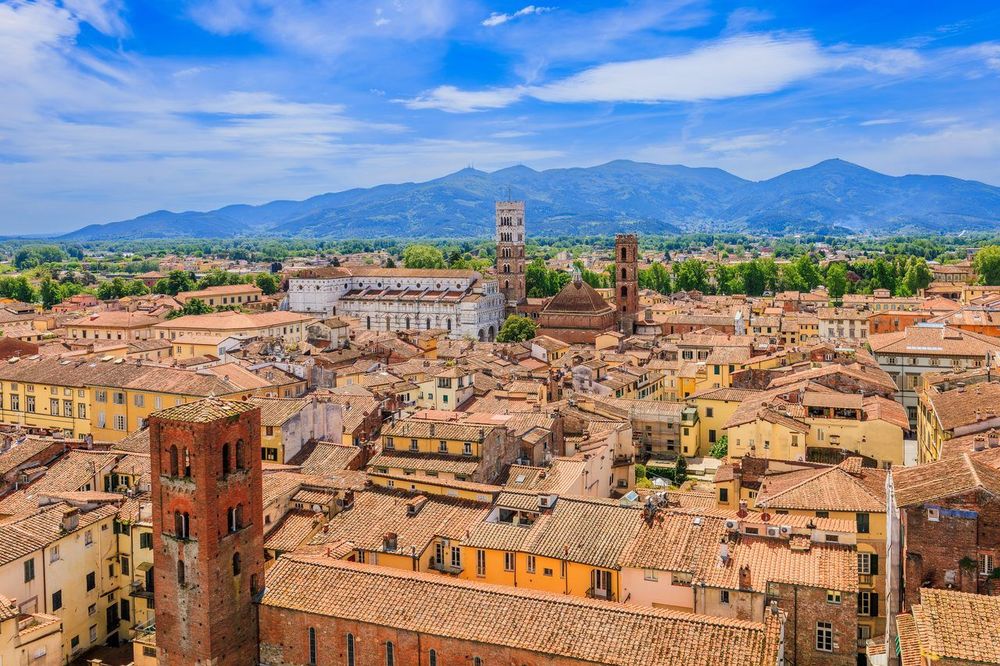
At seven in the morning, the Lucca ramparts still belong only to joggers and to the bakers delivering fresh bread to the cafés of the Via Fillungo. If you are visiting Lucca for the first time, this will probably be the detail that stays with you most: this Tuscan town of around 90,000 inhabitants has kept 4.2 km of Renaissance fortifications fully intact, turned into a tree-lined promenade where you can walk, cycle and picnic above the rooftops. To get your bearings in your first hours on site, the Ryo audio-guided tour of Lucca links the city's main monuments in a single narrated loop. Behind the walls, the city holds other surprises: a Roman amphitheatre turned oval square where local olive oil is still sold, a 14th-century tower crowned with oak trees growing on its roof, concerts devoted to Puccini every evening in the warm season, and the composer's birthplace, two streets from the cathedral. Monument by monument, here is the order in which to discover them, along with practical options for a successful first stay.
The Lucca Ramparts, the City's Must-Do Promenade
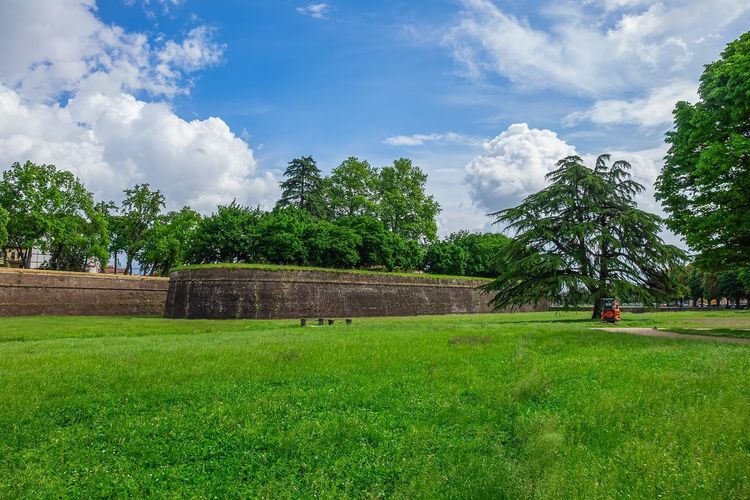
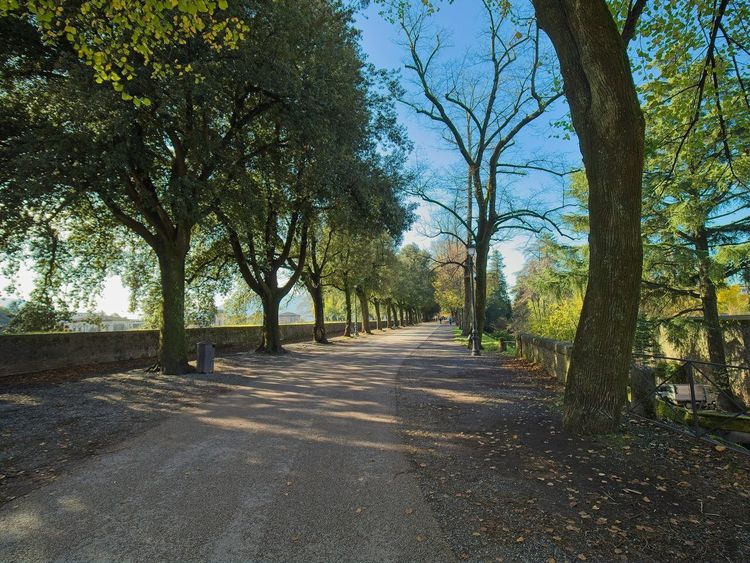
The Lucca ramparts form an unbroken 4.2-kilometre ring around the historic centre, built between 1544 and 1650. Designed to withstand the artillery of the time, this fortification of brick and rammed earth never actually had to repel a siege: from the 19th century onwards, it mainly served as a tree-lined promenade for the locals. Eleven bastions and twelve curtain walls punctuate the route, including the Baluardo San Paolino, often used to climb onto the walls from the station, and the Baluardo Santa Croce, which is quieter.
The people of Lucca like to say that their city owes its centuries-old tranquillity to these walls: unlike Pisa or Siena, it kept its status as an independent republic for a long time, until Napoleon's arrival in 1799. During the day, the top of the ramparts looks like a suspended park: century-old plane trees shade a path several metres wide, joggers pass families on bikes, and benches facing inward offer a view over the red tiles, the bell towers and, on a clear day, the Apuan Alps on the horizon. It is one of the rare vantage points where you grasp the shape of the old town at a glance.
This peaceful face owes a great deal to Marie Louise of Bourbon, Duchess of Lucca in the early 19th century, who had the avenues planted and turned the military structure into a public garden. The walls nonetheless proved their usefulness one last time in 1812: during a violent flood of the Serchio, the gates were blocked up and the city stayed dry while the surrounding plain was flooded. You are therefore walking on a dyke as much as on a fortification.
At the foot of the San Regolo bastion, on the east side, Lucca's botanical garden, founded in 1820, is worth a stop: century-old trees, a small lake and old greenhouses, a few steps from the ramparts. It is the coolest spot in the city when the sun beats down.
Allow one hour on foot for a full circuit without stopping, or twenty-five to thirty minutes by bike. Rental shops are concentrated near Porta Santa Maria and the station; expect a few euros per hour, slightly less per day. Go early in the morning or late in the afternoon: the shade of the trees doesn't stop the heat from rising quickly in summer.
Cycling on the ramparts remains the option most appreciated by first-time visitors, because it lets you combine the full circuit with spontaneous stops at each bastion. Some prefer a guided tour of the walls with a local historian, useful for understanding the military engineering behind the grassy slopes and for going down into the casemates of certain bastions, which are opened occasionally during organised visits.
If you prefer to go it alone, our Lucca audio guide starts at the ramparts and leads to the centre: you know which detail to look at without having to consult a brochure at every step.
The Torre Guinigi and the Torre delle Ore, the Two Towers Dominating Lucca
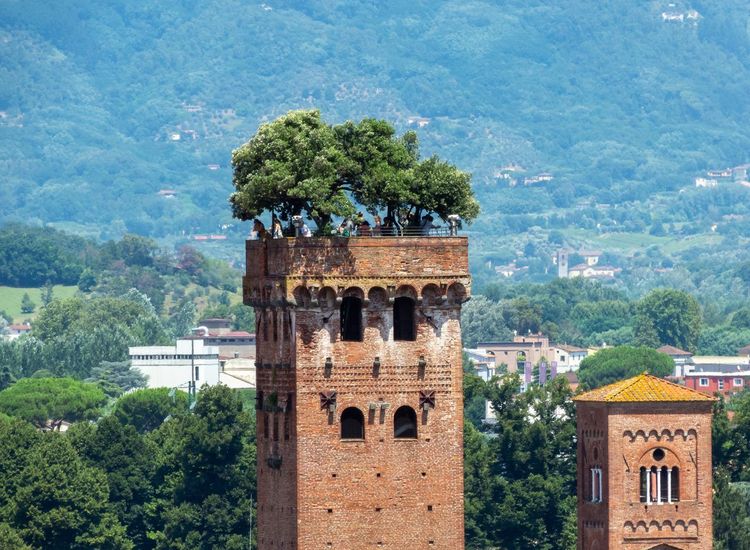
In the Middle Ages, Lucca had more than a hundred towers, each great family displaying its power in height. Only a handful remain, and two rise above the rest: the Torre Guinigi, raised by the wealthy merchant family of the same name in the late 14th century, and the Torre delle Ore (Via Fillungo 54, 55100 Lucca, Italy, rated 4.5/5 on Google from 2,364 reviews), the tallest in the city at around 50 metres.
What makes the Torre Guinigi unique is its summit: a terrace planted with holm oaks, which has become the city's emblem. Climbing its 230 steps leads to this hanging garden at about 44 metres, with a view stretching over the tiled roofs and the surrounding hills.
The Torre delle Ore ("tower of the hours") houses a clockwork mechanism from 1754, signed by Louis Simon of Geneva, still wound by hand. Its 207 wooden steps, narrower and steeper, give the feeling of climbing into the innards of an old machine rather than a simple bell tower.
A combined ticket lets you climb both towers, and it is the best deal if you have an hour. Need to choose? The Torre Guinigi offers the most photogenic view, while the Torre delle Ore appeals to those curious about old mechanics.
A tip if you are afraid of heights: the last flights of the Torre Guinigi go through fairly open metal staircases, and the space at the top remains cramped when several groups cross paths. Go up at opening time or in the last hour, and bring a bottle of water in summer: the climb heats up quickly under the bricks.
St. Martin's Cathedral, the Spiritual Heart of the Duomo di Lucca
The Cathedral of St. Martin (Duomo di Lucca (Piazza San Martino, 55100 Lucca, Italy, rated 4.6/5 on Google from 13,003 reviews)) first strikes you with its asymmetry: its Romanesque façade, by Guidetto da Como and dated 1204, doesn't line up with the rest of the building, because it had to work around the bell tower already in place. Three levels of superimposed loggias, with columns that are all different, give the whole an almost musical rhythm.
Inside is the Volto Santo, a large carved wooden crucifix that tradition attributes to Nicodemus and which supposedly arrived in Tuscany in the 8th century on a boat with no crew. Whether or not you believe it, the relic remains at the centre of Lucca's religious life: every 13 September, the Luminara di Santa Croce celebrates it with a night procession lit by thousands of candles. On a pillar of the porch, a small labyrinth carved into the stone also awaits attentive visitors.
The sacristy, accessible with an inexpensive ticket, houses the tomb of Ilaria del Carretto, sculpted by Jacopo della Quercia in the early 15th century. The little dog lying at the young woman's feet, a symbol of fidelity, is the detail people remember.
Visit in the morning for the raking light on the façade. Appropriate dress (shoulders and knees covered) is required.
A combined ticket generally covers the sacristy, the Museo della Cattedrale next door, and the church of San Giovanni, where excavations have uncovered several layers of the ancient city beneath the nave floor: Roman baths, the first early Christian church and a baptistery. If you have an extra hour, this descent into Lucca's underground sheds light on everything you will see afterwards above ground.
Piazza dell'Anfiteatro, Between Roman Remains and Tuscan Flavours
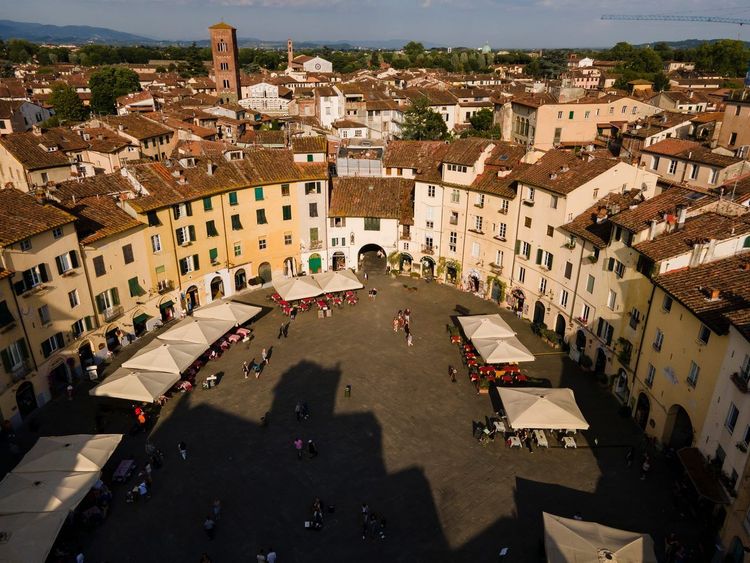
The oval shape of the Piazza dell'Anfiteatro (Piazza dell'Anfiteatro, 55100 Lucca, Italy, rated 4.6/5 on Google from 34,528 reviews) is no accident: it follows the outline of the Roman amphitheatre whose foundations are occupied by today's houses. You enter through narrow vaulted passages that once served as access points to the ancient monument, a detail many visitors miss.
Over the centuries, the arena filled up with houses, warehouses and even a prison. It was the architect Lorenzo Nottolini who, in the 1830s, had the interior cleared to create the current square, preserving the ring of façades built on the former tiers. Look up at the upper floors: Roman arches still emerge here and there in the brick walls.
The atmosphere changes with the time of day: almost silent in the early morning, the square comes alive at the end of the day with the terraces lining its perimeter. It is also the ideal place to taste local products: the nearby delis sell buccellato (a raisin and aniseed sweet bread typical of Lucca), farro from Garfagnana, and olive oil from the neighbouring hills, often offered for tasting.
If your visit coincides with a market, stop by: Tuscan cured meats, sheep's cheeses and pastries are sold in an ancient setting that few cities can offer.
Ten minutes' walk away, change scale entirely at Piazza Napoleone, the largest in the centre, bordered by the Palazzo Ducale, the former seat of Lucca's power. Its plane trees shelter a carousel in winter and the main stage of the Lucca Summer Festival in July. The contrast between the intimate oval of the Anfiteatro and this open esplanade sums up the city well: medieval in its alleys, princely in its squares.
The Church of San Michele in Foro and the Old Town on Foot
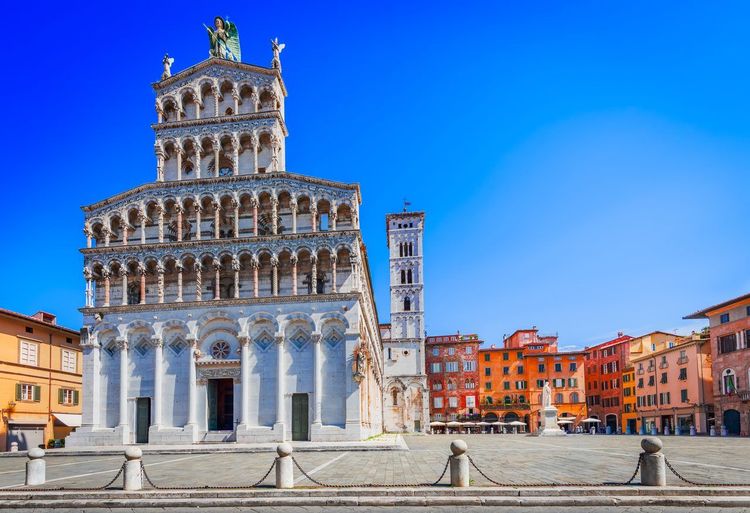
On the site of the ancient Roman forum stands the church of San Michele in Foro, whose Romanesque façade rivals that of the Duomo: its top level, purely decorative, rises above the roof and bears a statue of the Archangel Michael slaying the dragon, four metres tall and visible from several streets.
Two minutes on foot away, in Corte San Lorenzo, stands the birthplace of Giacomo Puccini, where the composer grew up before leaving to study at the Milan conservatory. The museum traces his life through scores, the piano on which he worked on Turandot and stage costumes. On the small neighbouring square, a bronze statue shows him seated, cigarette in hand.
Around these two monuments, the old town lends itself to a photographic stroll: Via Fillungo, a shopping street with Art Nouveau shopfronts, leads to quieter squares where laundry dries at the windows. Lucca built its medieval wealth on the silk trade, and this merchant past can be read in the density of palaces tucked behind sober façades.
Take a break at Caffè Di Simo, on Via Fillungo, a historic establishment where Puccini and the poet Giovanni Pascoli had their regular spots. And don't leave Piazza San Michele without stopping at Taddeucci, a pastry shop open since 1881, which claims the original buccellato recipe. Lucca is nicknamed "the city of a hundred churches": you will come across one at almost every crossroads, often open and free.
This maze is best enjoyed with a common thread. Between the Guinigi Tower and the statue of Puccini, the audio stops of the Ryo tour tell the medieval history of the district as you walk, with no map to unfold.
The Basilica of San Frediano and Lucca's Discreet Palaces
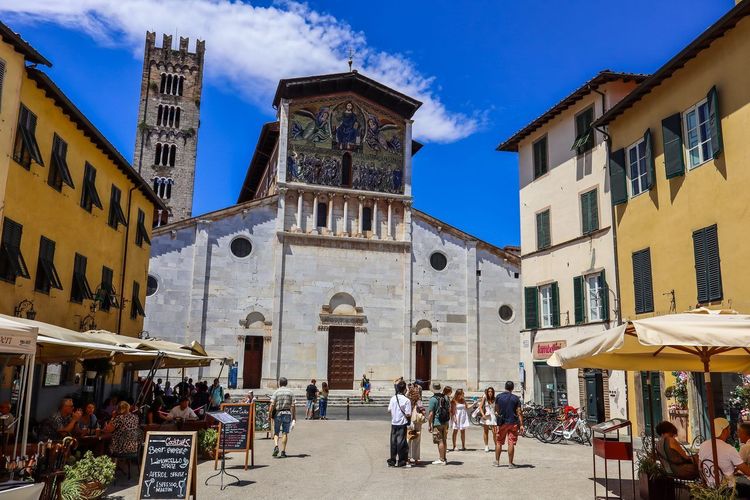
Less visited than the Duomo, the Basilica of San Frediano is worth the detour for its façade, dominated by an immense 13th-century golden mosaic depicting the Ascension of Christ. Inside, the 12th-century baptismal font, carved with biblical scenes, is among the finest examples of Tuscan Romanesque sculpture, and the shrine of Saint Zita, patron saint of domestic servants, still draws the faithful.
Her body, preserved in a glass shrine, surprises visitors who are not expecting it.
If you enjoy painting, the nearby Palazzo Mansi houses Lucca's National Picture Gallery and 18th-century salons with painted ceilings, including a silk-hung bridal chamber that recalls the city's textile fortune.
The district breathes a different kind of calm: narrow lanes, fewer shops, neighbours greeting each other on their doorsteps. This is where Lucca's intimacy is best revealed.
A few streets away, the Palazzo Pfanner (Via degli Asili 33, 55100 Lucca, Italy, rated 4.4/5 on Google from 2,588 reviews) opens its Baroque garden: a monumental outdoor staircase, mythological statues among boxwood parterres, a setting that has been used for several film shoots, including Jane Campion's The Portrait of a Lady. Allow thirty minutes for the visit, for a modest entrance fee.
For other, less-visited palaces and museums, our article on the must-do things in Lucca details more places, useful if your stay lasts longer than a day.
Experiencing Lucca Differently: Cycling the Countryside, Wine and Puccini's Music
Once the monuments of the centre are ticked off, Lucca is also well worth discovering beyond the ramparts. The Tuscan countryside begins almost at the city gate, and several ways of experiencing it deserve half a day, or even a full day.
A bike tour of the countryside is a natural extension of the walk on the walls: several rental shops offer routes to the neighbouring villages, among vineyards, olive groves and Renaissance villas. The cycle path along the Serchio is flat and accessible without any special training; allow half a day for a leisurely round trip.
The surrounding hills produce the wines of the Colline Lucchesi appellation, less well known than Chianti but just as interesting. Several estates within thirty minutes of the centre organise guided tastings, often accompanied by cured meats and cheeses, in family-run properties. Some historic villas in the area, such as the Villa Reale di Marlia, also open their gardens to visitors.
Prefer to roll up your sleeves? A Tuscan cooking class teaches you how to prepare tordelli (meat-filled ravioli, a Lucca speciality) or a farro soup, often on a farm on the outskirts, with the meal served at the end of the session.
Without a class, Lucca's cuisine can also be tasted in the trattorias of the centre. Look on the menu for zuppa di farro, tordelli al ragù, torta coi becchi (a sweet chard tart, surprising at first) and, for dessert, buccellato dipped in vin santo. The shorter lunch menus often let you taste everything without breaking the bank.
Finally, music: the Puccini e la sua Lucca festival gives a concert every evening at 7 pm in the church of San Giovanni from 31 March to 31 October, with piano and two opera singers; from November to March, concerts continue from Thursday to Saturday at the Oratorio di San Giuseppe. Tickets are bought on site during the day.
The programmes change every evening, from the great arias of La Bohème or Tosca to evenings devoted to Verdi or Mozart: if you stay two nights, you will never hear the same recital twice.
For opera lovers, one audio stop of the Ryo tour is devoted to Puccini, in front of his statue: a good prelude to the evening concert.
Guided Tour or Independent Visit: How to Organise Your Sightseeing in Lucca
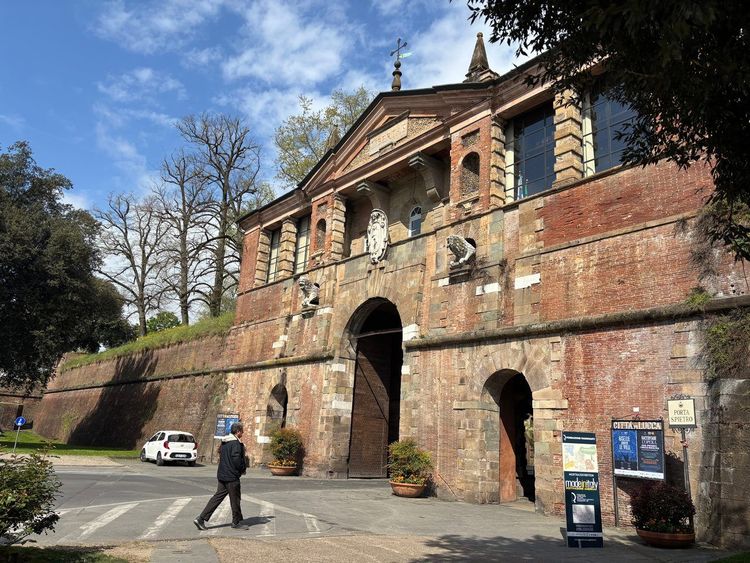
Three ways of discovering Lucca coexist. The classic guided tour, in a small group with a local guide, remains the best suited for grasping the historical details of the ramparts or the cathedral in an hour and a half, questions included.
At the other end, independent sightseeing suits such a compact city: you can wander without a fixed itinerary, as the centre can be crossed on foot in a quarter of an hour. In between, an audio guide offers a comfortable compromise: you move at your own pace, trigger the commentary in front of each monument and linger wherever you like.
A night visit to Lucca deserves a special mention: the ramparts and squares take on a different look under the lighting, with far fewer people. These outings, often guided, should be booked in advance.
With children, Lucca remains one of the easiest cities in Tuscany: no cars in the centre, ramparts where little ones can ride safely, playgrounds on some bastions and short distances between each stop. Strollers can go almost anywhere, except of course in the towers.
One last point that is often overlooked: opening hours. Many churches close between noon and mid-afternoon, while the towers and ramparts remain accessible all day in high season. So schedule religious buildings in the morning and keep the viewpoints for the afternoon: you will avoid finding a closed door after crossing the city, and you will enjoy the softest light from the heights.
From spring onwards, also book small-group guided tours; simple entry tickets, on the other hand, are easy to buy on site.
Where to Stay, How to Get There and When to Go to Visit Lucca
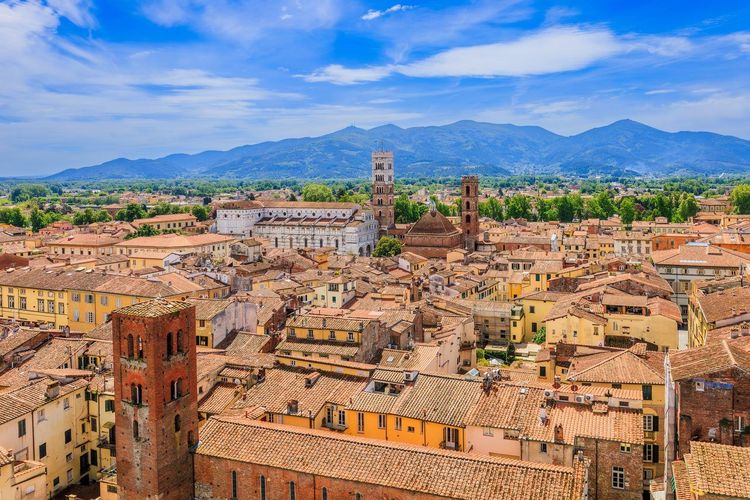
Pisa airport, about thirty kilometres away, is the most convenient gateway. The Pisa Mover, a small automatic metro, connects the terminal to Pisa Centrale station in about five minutes; from there, regional trains reach Lucca in twenty-five to thirty minutes, with frequent departures. Direct buses also exist.
For accommodation, choose a place inside the walls: everything becomes accessible on foot, including on the way back from a concert. Options range from family-run B&Bs in old palaces to charming hotels, with value for money often better than in Florence or Pisa. Since non-resident cars are banned from the centre (limited traffic zone), park in a car park outside the walls.
Budget-wise, Lucca remains reasonable for Tuscany: a double room in a B&B inside the walls can often be found for between 80 and 150 euros a night outside major events, a meal in a trattoria costs around 25 to 35 euros, and the main monuments cost a few euros each. The ramparts, most churches and a stroll through the centre cost nothing, which noticeably lightens the bill for a first stay.
As for the season, spring (April to June) and early autumn offer the best compromise between weather and crowds. July brings the Lucca Summer Festival and its concerts on Piazza Napoleone, but also oppressive heat in the alleys. At the end of October, Lucca Comics & Games attracts hundreds of thousands of visitors: book very early or avoid these dates. Winter suits those who prefer an almost empty city.
If your stay lasts more than two days, a trip to Pisa is easily combined using the same rail line: the Leaning Tower and Piazza dei Miracoli can be visited in half a day. Our article on what to do in Pisa details a suitable itinerary.
Lucca in One Day: The Ideal Itinerary for a First Stay
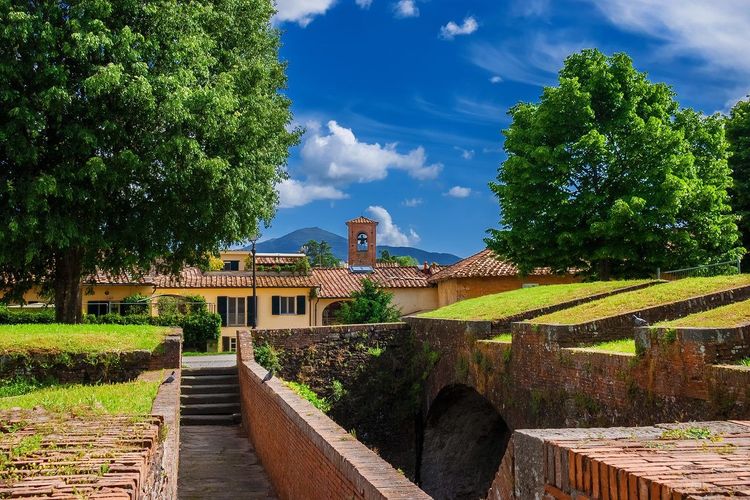
For a first one-day stay, the order of the visit matters almost as much as the monuments. Start early with the ramparts, on foot or by bike, while the light is still soft and the paths are calm.
Then head down to the Duomo di San Martino for the façade and the sacristy in late morning. Lunchtime is a good moment for a stop at Piazza dell'Anfiteatro, before walking on to San Michele in Foro and Puccini's birthplace.
The afternoon is split between climbing one of the two towers and a detour via San Frediano and the Palazzo Pfanner. In the evening, a final walk on the ramparts at sunset, followed by the 7 pm concert at San Giovanni, close the day.
This sequence also works in reverse depending on your arrival time. To miss nothing without retracing your steps, follow the loop of the Ryo audio-guided tour, which links these stops in a logical order.
With two days, keep the first for the centre and devote the second to the countryside: cycling along the Serchio in the morning, the gardens of the Villa Reale di Marlia or a tasting in the Colline Lucchesi in the afternoon. Those who prefer to stay in town can use the time for the Palazzo Mansi, the excavations at San Giovanni and a second evening concert, as the programme changes every night.



FAQ
What is the best time of year to visit Lucca?
Spring (April to June) and September offer the best combination of mild weather and moderate crowds. July and August are hot, and at the end of October the city is overrun by Lucca Comics & Games. Winter suits those looking for a quiet town.
How long do you need to visit Lucca?
A full day lets you see the essentials: the ramparts, the Duomo, a tower, Piazza dell'Anfiteatro and San Michele in Foro. Two days leave time to add the countryside, a wine tasting or a concert.
Do you need to book visits and activities in advance?
Simple entry tickets can be bought on site. Small-group guided tours, night tours and accommodation during the major festivals should be booked in advance.
How do you get to Lucca from Pisa airport?
Take the Pisa Mover to Pisa Centrale, then a regional train to Lucca (twenty-five to thirty minutes). Direct buses from the airport also exist.
Are Lucca's ramparts free, and can you cycle on them?
Yes, access to the ramparts is open and free. Cycling is allowed along the entire route, and several rental shops are located near the main gates.
Is Lucca an easy city to explore on foot?
Very easy: the walled centre is barely more than a kilometre across, and most monuments can be reached within a few minutes' walk of each other.
Conclusion
What makes Lucca so pleasant for a first visit comes down to its size: unlike Florence, nothing is rushed or stretched over long distances. You naturally find yourself returning to the ramparts at the end of the day, as if to close the loop of the walk begun in the morning, and you often leave wanting to come back for the countryside, the wines of the Colline Lucchesi or another evening of opera.
To keep track of the city and its stories, download the Ryo audio-guided tour of Lucca before you leave: it will accompany you from the Guinigi Tower to the statue of Puccini, at your own pace.