© Shutterstock
 Votre guide Ryo
Visiting Lucca at Christmas 2026: Market, Lights and Must-Sees
In Lucca, winter changes life atop the city walls. While summer sees sweaty cyclists pedaling along the promenade that encircles the old town, December reserves this ramparts path for bundled-up joggers and families trying out the new bikes they got for Christmas. Visiting Lucca at Christmas means enjoying exactly this shift: a human-sized Italian city that swaps its passing tourists for locals bringing out garlands, wooden stalls and seasonal recipes. Between the market set up on Piazza Napoleone, the little forest of fir trees that grows each year on Piazza San Michele, light projections on the facades starting with the long weekend of December 8, and restaurants that, unlike many Tuscan villages, stay open on New Year's Eve, the city has plenty to fill a stay of two or three days. To find your way around without rushing, the Ryo audio-guided tour of Lucca links the highlights of the walls to the historic center, to be enjoyed at your own pace between mulled wine stops.
Why Visit Lucca at Christmas
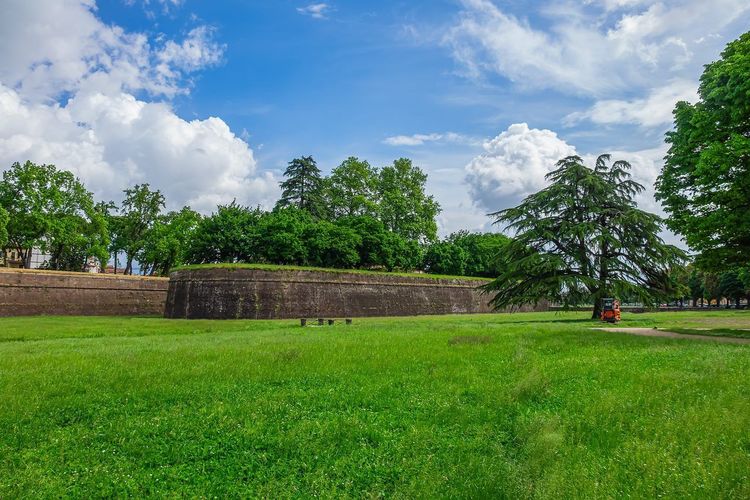
Lucca is a modest-sized city, with just over 89,000 inhabitants, enclosed within about 4.2 kilometers of intact Renaissance walls. Unlike Florence or Siena, its small size lets you see the essentials of the historic center on foot in a single day, which makes it a particularly relaxing Christmas destination: no endless lines at museums, no need to book a restaurant weeks in advance.
The city suits several kinds of visitors. Couples will find cobbled lanes and heated terraces perfect for long evening strolls; families appreciate a fully pedestrian center, with no cars to watch out for, and walls as wide as an avenue where children can run safely. Finally, fans of human-sized Italian cities will find what Lucca has always offered: fewer crowds than Florence, 1h15 away, and a Christmas atmosphere that remains authentic, designed for residents before tourists.
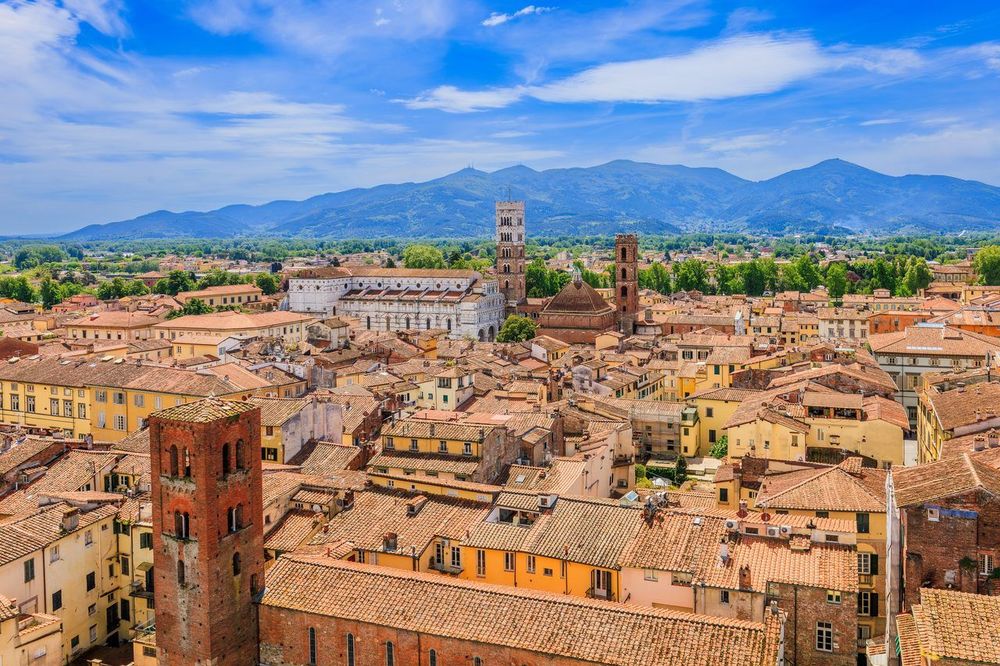
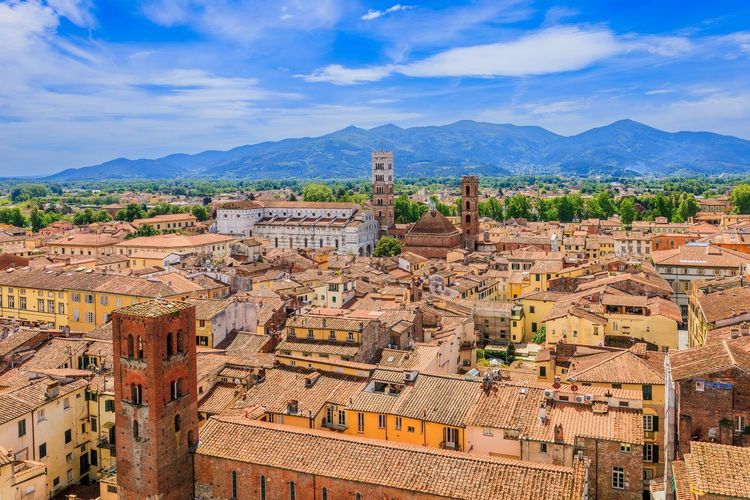
If you're still hesitating, keep in mind one detail that changes everything in winter: the Lucca city walls are open year-round, day and night, and in December offer a clear view over the tiled roofs and illuminated bell towers of the old town.
The Christmas Market on Piazza Napoleone
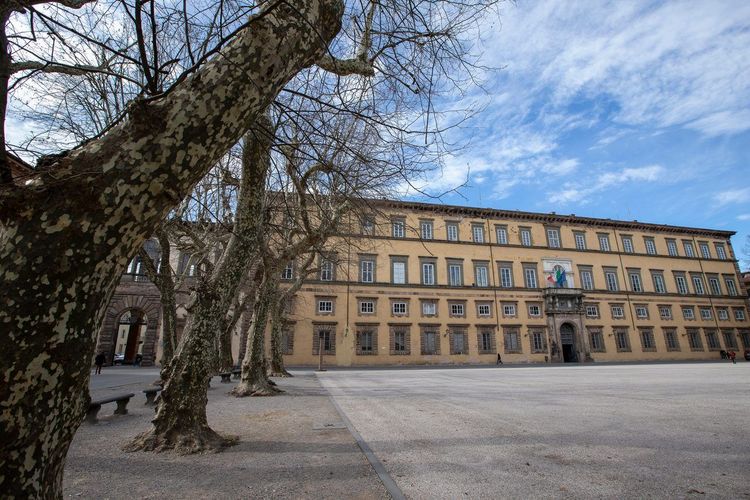
The Piazza Napoleone, which locals also call Piazza Grande, turns each year into the beating heart of the local Christmas. Lined by the Palazzo Ducale and a double row of century-old plane trees, the square hosts wooden chalets arranged around a large lit-up fir tree, the centerpiece of the Lucca Magico Natale event. You'll find classic Tuscan crafts, ceramics, embroidered linen tablecloths, olive wood objects, as well as a generous food offering, from mulled wine to roasted chestnuts and the thick cioccolato caldo typical of the region.
For the 2026 edition, the fifth of Lucca Magico Natale, the festivities run from November 22, 2026 to January 6, 2027. In 2025, the market (then themed as a French Christmas village, lavender soaps and Provençal fabrics included) opened from 9:30 am to 8 pm, and only from 3:30 pm on Mondays. Hours and theme change from year to year: check the Lucca tourist office's program before planning your visit for a specific day.
As for crowds, Piazza Napoleone breathes better on weekdays, especially in the morning and late afternoon before nightfall. On weekends, particularly Saturday afternoons, the aisles between the chalets fill up quickly, especially during the Italian school holidays around Christmas. If you're traveling with young children or simply want to take your time at each stand, opt for a Tuesday or Thursday morning.
This market is not isolated, by the way: Lucca is part of a network of Tuscan Christmas markets that enlivens the whole region from November to January, from Florence to Pisa and through smaller towns like Barga or Pietrasanta. But the one on Piazza Napoleone has a clear advantage: it can be visited in half an hour on foot from anywhere along the walls, making it an easy stop to combine with the rest of the historic center.
Incidentally, the Palazzo Ducale overlooking the square is itself worth a look, with its neoclassical facade and inner courtyard often lit up for the holidays.
To get your bearings before wandering the market, the Ryo audio guide to Lucca passes right through Piazza Napoleone and tells in a few minutes the story of the square and the statue that towers over it, giving you an anecdote to share between two mulled wine stands.
The Christmas Forest and the Historic Center's Lights
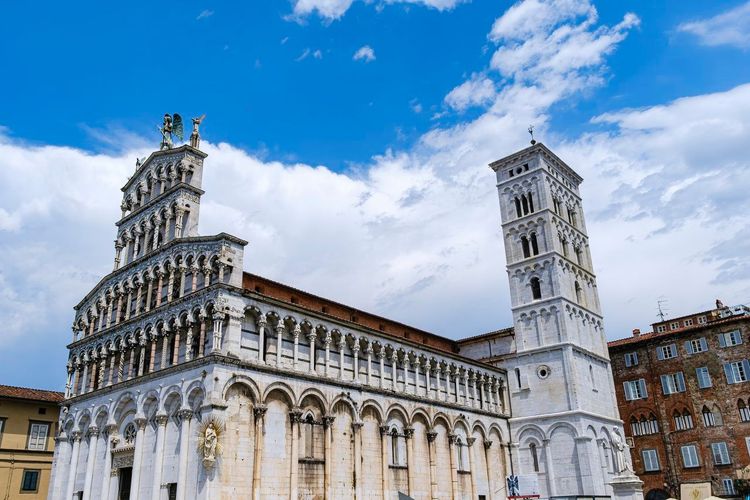
On Piazza San Michele, a five-minute walk from Piazza Napoleone, Lucca sets up its famous Foresta di Natale each winter: more than 200 plants recreating a natural landscape at the foot of the church, complemented by contemporary trees designed by local artists and a large illuminated fir. You won't find any stalls here: it's a contemplative installation, made for family photos and evening strolls, when the garlands reflect off the wet cobblestones.
Elsewhere in the historic center, trails of luminous stars run above the streets. The Via Fillungo, the shopping street that crosses the city from north to south, is covered in light garlands strung from one facade to the other, creating a sparkling tunnel effect that is particularly photogenic after 5 pm. In the evening, artistic 3D projections light up the facade of the Palazzo Ducale, Piazza dell'Anfiteatro, San Michele church, Palazzo Bernardini and Porta San Gervasio: plan a night walk to take them all in.
One detail few visitors anticipate: December 8, the feast of the Immaculate Conception, is a public holiday in Italy and traditionally marks the real kickoff of the festivities. Italians often make it a "ponte dell'Immacolata", the Immaculate Conception bridge, meaning a long weekend when many come to stroll through Tuscan cities. Expect more people on those days; it is also traditionally when families put up the tree and nativity scene at home.
As for local traditions, the people of Lucca keep up a few very Tuscan habits: living nativity scenes in some churches, chestnut markets, and a seasonal pastry, panforte or artisanal panettone, sold in bakeries in the center. During the holiday period, classical music concerts and small temporary exhibitions are added to the program, often in churches or the Palazzo Ducale, a good option for a warm evening when the Tuscan cold sets in.
This is precisely the kind of detail the Ryo audio-guided tour distills as it passes through the illuminated squares of the center, San Michele and San Martino foremost: a loop of about two and a half hours, best done in the late afternoon when the lights begin to come on across the facades.
What to See in Lucca: City Walls, Guinigi Tower and Iconic Monuments
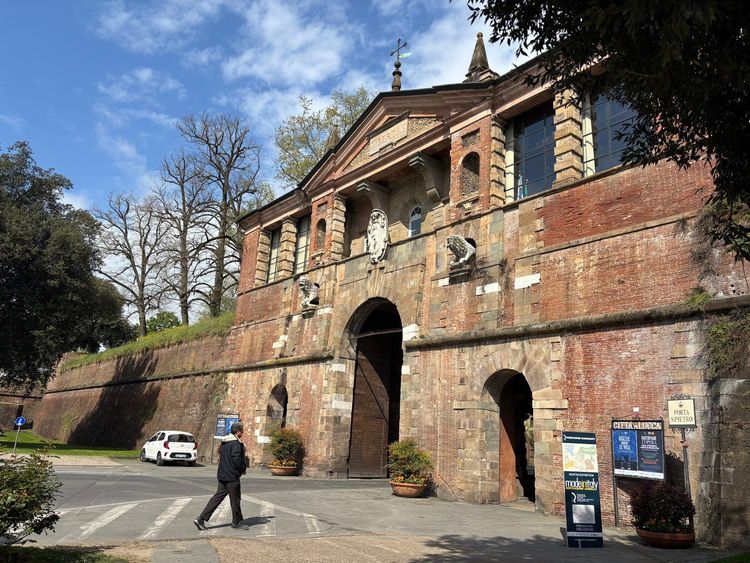
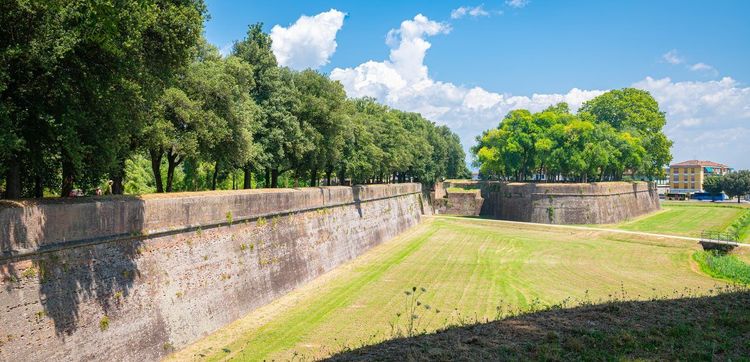
The Lucca city walls) remain the best starting point to take the measure of the city. Built between the 16th and 17th centuries, they form a complete loop of 4.2 kilometers, now turned into a tree-lined promenade, wide and fully pedestrian and bike-friendly. In winter, renting a bike for an hour and riding the full circuit remains one of the most pleasant ways to warm up while discovering the city from every angle, with the walls on the countryside side and the roofs and bell towers on the historic center side.
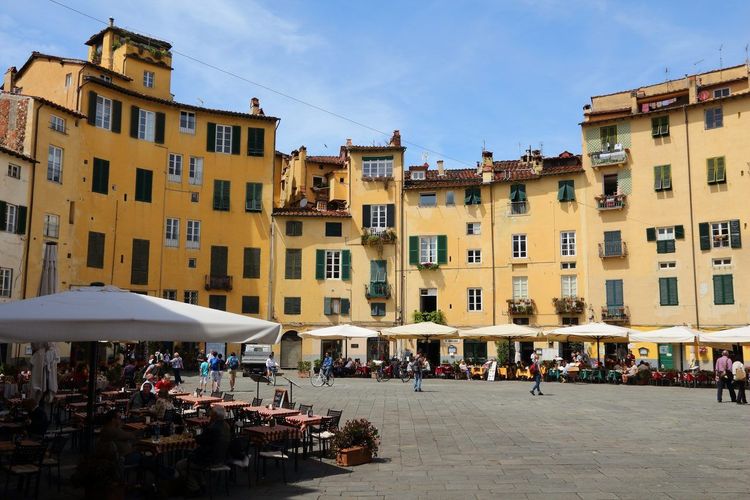
Coming down from the walls toward the center, the Piazza dell'Anfiteatro (Piazza dell'Anfiteatro, 55100 Lucca, rated 4.6/5 on Google from 34,610 reviews) surprises with its perfectly oval shape: it was built directly on the remains of a 2nd-century Roman amphitheater, whose outline can still be guessed in the alignment of the buildings around it. A few minutes' walk away, the Guinigi Tower is recognizable from afar thanks to the holm oaks that have grown, improbably, at its top since the 14th century. The 230 steps leading up are worth the effort: the view takes in the whole city and, on clear days, the surrounding Tuscan hills.
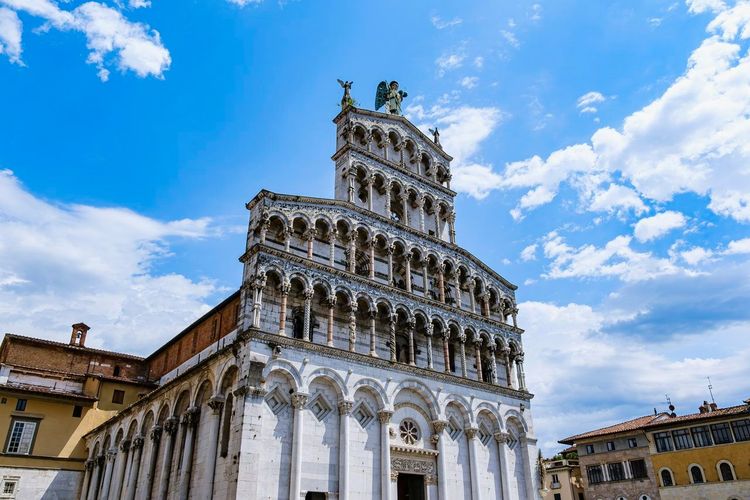
Lucca's religious heritage deserves half a day on its own. The Cathedral of Saint Martin (the Duomo), recognizable by its asymmetrical facade built to fit around an already existing bell tower, houses the Volto Santo, a carved wooden crucifix that local tradition attributes to Nicodemus himself. A little further on, the Basilica of San Frediano displays a golden 13th-century mosaic on its facade, visible from afar when the winter sun lights it at the end of the day. Finally, on Piazza San Michele, the Church of San Michele in Foro is crowned by a large marble statue of the Archangel Michael slaying the dragon, which dominates the whole square from the top of its white and green marble facade.
For a more intimate break, three addresses round out the visit. The Palazzo Pfanner hides a Baroque garden with an exterior double-flight staircase and marble statues, a surprisingly calm setting a stone's throw from the bustle of the Christmas market. The Palazzo Mansi, meanwhile, preserves a bridal chamber entirely covered in frescoes, while the Puccini Museum, housed in the composer's birthplace on Corte San Lorenzo, traces through scores and personal belongings the Lucca childhood of the author of Madame Butterfly. Finally, the Orto Botanico, the city's botanical garden, offers a tree-filled park set against the walls, pleasant even in winter for a quiet break between visits.
This entire ensemble, walls included, is covered by the Ryo audio-guided tour of Lucca, with dedicated commentary for each monument, from the climb up the Guinigi Tower to the walk past the Duomo. Handy for leaving nothing to chance without having to pore over a paper guide in the cold.
A Little History and Christmas Traditions in Lucca
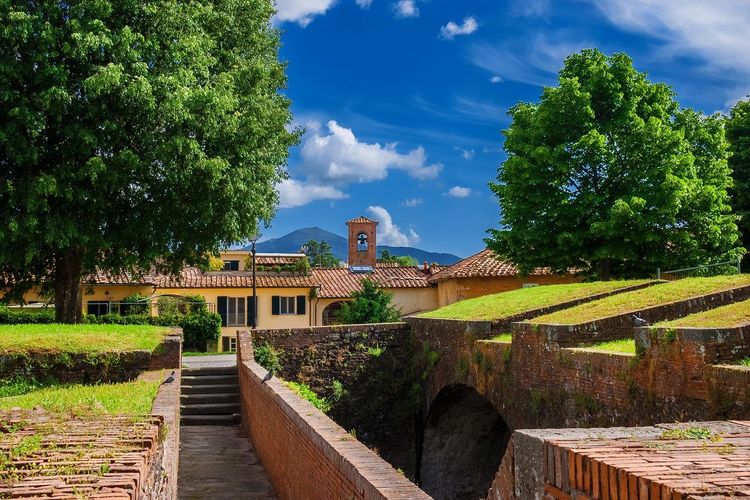
The walls that are now Lucca's pride never saw a siege once completed: they were so dissuasive that the city never had to defend them, a rarity in Italy. This history of a citadel city spared by wars forged a particular relationship with heritage: most of the historic center has come through the centuries without major reconstruction, which explains the architectural coherence you feel strolling through it today, Christmas or not.
This stability is also seen in year-end traditions, which have remained very local. No big parade or entertainment calibrated for tourists: the city lights up its squares, sets up nativity scenes in its churches and lets residents organize their own festive meals, often built around simple dishes like baccalà (salt cod) or tortello lucchese, a stuffed pasta typical of the region.
With Kids at Christmas in Lucca
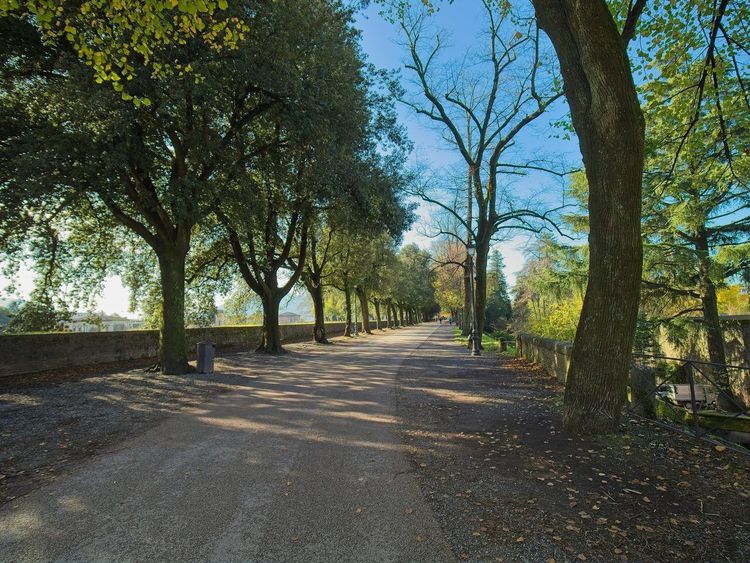
Lucca lends itself particularly well to a family stay during the holidays, and not only thanks to the Christmas market. The fully pedestrian historic center removes the usual stress of Italian cities where you must watch traffic at every street corner: here, children can run ahead of you safely, including on the wide walls.
Several activities punctuate the period: in 2026, the IcePark ice rink sets up at the Cavallerizza, on Piazzale Verdi, right next to Santa Claus's village, and the Fabbrica del Natale (the Christmas factory) keeps the youngest busy. Small shows or workshops for children accompany the Christmas music and exhibition program mentioned above, often free or modestly priced. Cycling around the walls also works very well for families: tandems or bikes with child seats are available for rent near the main gates, for a loop of about an hour that requires no particular effort.
A practical tip if you're traveling with young children: plan your monument visits (Guinigi Tower, cathedral) for the morning, while the Piazza Napoleone market is still calm, and keep the afternoon for the walls and the lights, better suited to tired children who mostly want to walk and look at the lights. Besides, the Ryo audio guide pauses and resumes easily between stops, handy for adapting the pace of the visit to a family's tempo rather than the other way around.
Where to Drink Mulled Wine and Find a Gift from Lucca
Between visits, Lucca is full of places to warm up. The bars around Piazza San Michele and Via Fillungo serve the classic mulled wine (vin brulé), but also local variations made with Tuscan red wine spiced with cinnamon and citrus. For a more substantial break, the wine bars (enoteca) in the center often offer a Tuscan charcuterie board, wild boar included, along with a glass of local wine, a welcome alternative to the market stands when it's too cold to eat standing up.
For gifts, Lucca has a specialty that reaches far beyond its borders: olive oil. Several shops in the center sell oil produced in the surrounding hills, in bottles or gift boxes, a souvenir that travels much better than a ceramic. You'll also find artisanal stationery shops featuring the floral motifs typical of the region, Tuscan leather goods and, of course, the Christmas market stands for local crafts at gentler prices than in shops.
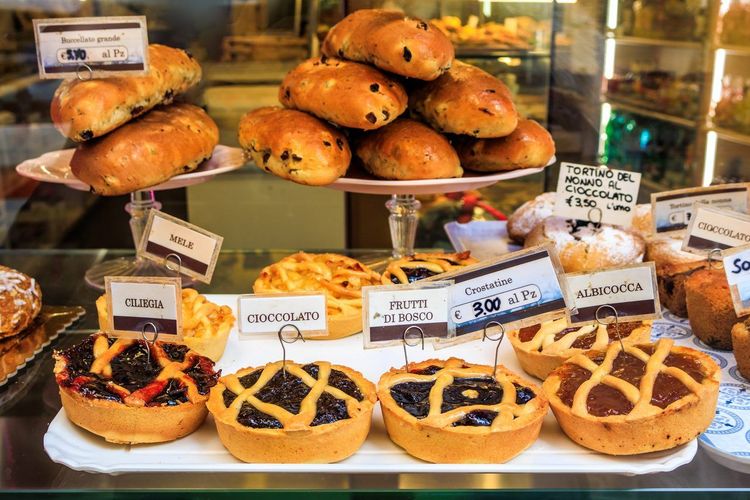
For food lovers, bringing back a buccellato, Lucca's traditional anise-flavored sweet bread, always makes an impression: you can find it in most bakeries in the center, wrapped for the journey.
Day Trips: Pisa and Tuscan Christmas Markets
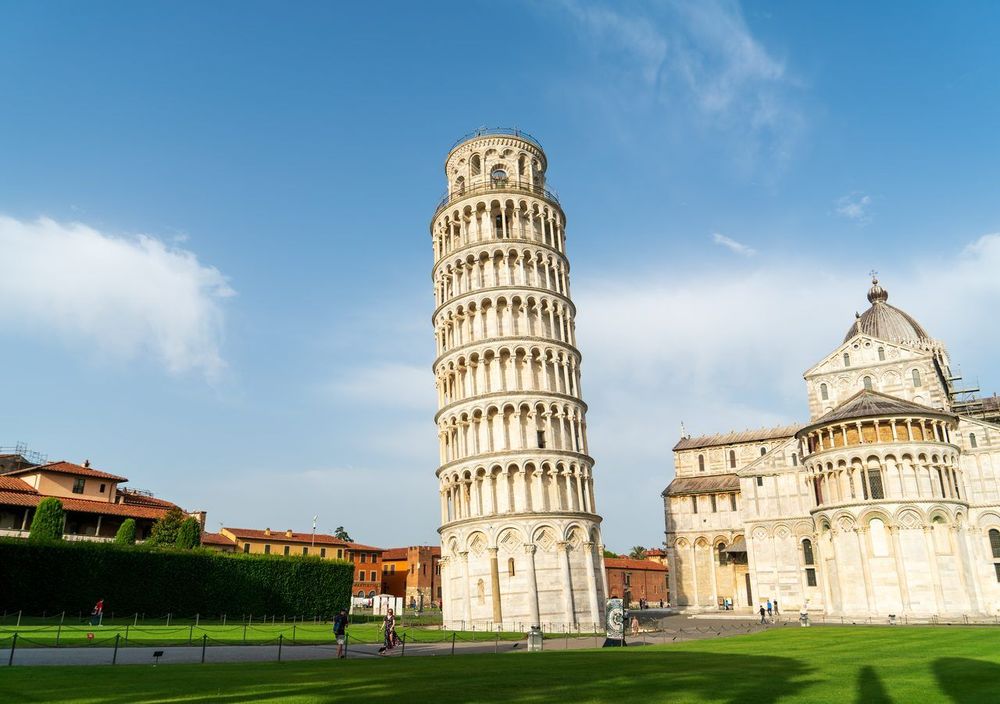
Lucca can be comfortably visited in two days, which leaves room for a day trip. The most obvious remains Pisa, less than 30 minutes by direct train from Lucca station, with no change. The city is best known for its leaning tower, but the entire Piazza dei Miracoli (Piazza del Duomo, 56126 Pisa, rated 4.7/5 on Google from 143,658 reviews) is worth the detour in winter: the cathedral, baptistery and monumental cemetery can be visited without the crowds that surround them in summer, and you can enjoy Pisa's center decorated for the holidays before returning to Lucca for the evening.
Lucca-Pisa trains run about every thirty minutes during the day, which lets you plan a trip without booking in advance or fixed-schedule constraints: leave mid-morning, come back late afternoon before nightfall, and still enjoy an evening at the Piazza Napoleone market when you return to Lucca.
If your stay exceeds three or four days, other Tuscan towns deserve a mention, however brief. Pietrasanta and Barga also host smaller, lesser-known Christmas markets, interesting for getting off the beaten path. Montecatini Terme, about 45 minutes by road, combines a Christmas market with access to thermal baths, an option appreciated by those who want to include a wellness break in their winter stay in Tuscany. For longer stays, Tuscans themselves sometimes head up to the Abetone ski resorts, less than two hours by road, for a day of skiing or sledding at Christmas time, a more low-key option than the urban markets but one that rounds out a long weekend in the region nicely.
To go deeper into visiting Pisa, our article on things to do in Pisa details a full-day itinerary, useful for organizing this trip without losing time once there.
When to Go, Crowds and New Year's Eve
The best window to visit Lucca at Christmas in good conditions is on weekdays, between December 1 and 20: the market and lights are already set up, but the city hasn't yet been flooded by the Italian school holidays, which generally start around December 23. Mornings, especially before 11 am, remain the quietest time to photograph the squares without crowds.
The busiest period is unsurprisingly between Christmas and New Year's, when Italians themselves travel as families. New Year's Eve on December 31 clearly changes the city's atmosphere: for the turn of 2027, the city gathers on Piazza Santa Maria from 10 pm, with a DJ set and a countdown at midnight, then the Teatro del Giglio stages The Nutcracker on January 1 at 6 pm. Restaurants are fully booked several weeks in advance for New Year's dinner. If you're aiming for that specific date, book your table as soon as possible, ideally a month ahead.
As for weather, expect daytime temperatures between 2 and 10°C (36 to 50°F), with colder nights: bring warm layers and comfortable shoes to enjoy the walls without cutting your stroll short.
Where to Stay in Lucca During the Holidays
For a Christmas stay in Lucca, the choice really comes down to two quite different options. Staying intra-muros, inside the walls, lets you walk back after the night market and enjoy the lights without depending on a taxi; places there are often smaller (guesthouses, apartments in historic buildings) and rates climb noticeably during the holiday period. Staying on the outskirts, in one of the suburbs just outside the gates, is generally cheaper and remains accessible on foot in ten to fifteen minutes.
For a longer stay, country villas around Lucca are among the most sought-after accommodations in the region: rural Tuscany is home to many properties with gardens, sometimes heated pools, ideal for a group or extended family who want to combine city visits with countryside tranquility. It is also one of the most requested types of lodging for a Christmas and New Year's stay in Tuscany, far more than traditional hotels.
Expect on average 120 to 180 euros per night for a double room intra-muros during the holidays, and rather 200 to 400 euros per night for a country villa with several bedrooms shared among several travelers. Whichever format you choose, book early: the Christmas period, and even more so New Year's Eve, fills up quickly in Lucca as in the rest of Tuscany, and the best intra-muros places generally go as early as October.
How to Get to Lucca and Get Around
Lucca is easy to reach from the main Tuscan cities. By train, allow about 25 to 30 minutes from Pisa, and 1h15 to 1h30 from Florence, with frequent trains throughout the day. The two nearest airports are Pisa (Galileo Galilei Airport), about thirty minutes away, and Florence, a little over an hour by road or by train with one change.
By car, the A11 motorway connects Florence directly to Lucca. As the historic center is entirely closed to traffic (limited traffic zone), you have to park outside the walls: several car parks, including the one near the Baluardo San Paolino, let you reach the center on foot in a few minutes.
Once there, forget the car and even public transport: Lucca's historic center is entirely walkable, and the walls also offer a quick, pleasant way to get from one point of the city to another without crossing the crowded shopping lanes of the Christmas market. Bike rental, available at several points around the walls, remains a faster option than walking to reach a neighborhood far from the center, particularly at the end of the day when the cold discourages lingering outside.
Budget, Open Restaurants and Practical Tips for the Holidays
Lucca's restaurants, unlike many more isolated Tuscan villages, remain generally active on December 25 and January 1, but with different hours and menus: many offer only a fixed-price festive menu, reservation required, rather than their usual menu. Some family-run places close outright on the evening of the 25th to devote themselves to their own meal, a fairly common reflex in Italy that is best anticipated by calling ahead.
For budget, a simple trattoria averages 15 to 25 euros for a dish, and a full meal with wine around 35 to 45 euros per person during the holiday period, slightly above usual off-season prices. The Christmas market, meanwhile, remains an affordable option for snacking on the go: a glass of mulled wine and a savory or sweet crêpe rarely exceed 10 euros for two.
A few insider tips to finish: dress in layers, as the wind blowing on the walls makes it feel colder than it actually is in the city; favor monument visits in the morning, before the market crowds at the end of the day; and always keep an indoor option in reserve (church, palace, museum) for rainy days, which are frequent in Tuscany in December.



FAQ
When is the best time to visit Lucca at Christmas?
The first half of December offers the best compromise: the Piazza Napoleone market and the lights are already up, but the city hasn't yet been overrun by the Italian school holiday crowds, which start around December 23 and peak until New Year's.
Is the Piazza Napoleone Christmas market paid?
No, entry to the Piazza Napoleone Christmas market is completely free, like most Christmas markets in Tuscany. Only purchases (crafts, mulled wine, specialties) cost money, and prices remain generally reasonable.
What is the most beautiful city in Italy at Christmas?
There is no single answer: Florence and Verona charm visitors with their grand squares and spectacular lights, while Lucca stands out for a more intimate atmosphere, thanks to its fully walkable city walls and a traffic-free historic center, ideal for strolling without the crowds of the big cities.
What are the Christmas traditions in Tuscany?
Tuscan traditions blend living nativity scenes, craft markets and festive meals built around regional dishes such as baccalà or seasonal pastries (panforte, and buccellato in Lucca). December 8, the day of the Immaculate Conception, traditionally marks the real start of the festivities.
Are restaurants open in Lucca on December 25 and January 1?
Most stay open, but generally with a fixed-price festive menu and by reservation only. A few family-run places close that day for their own meal: it's always best to confirm by phone the day before.
How many days should I plan to visit Lucca at Christmas?
Two full days are enough to see the essentials: the city walls, the Piazza Napoleone market, the main monuments and an evening among the lights. A third day lets you add a trip to Pisa or slow down the pace.
How do I get to Lucca from Pisa or Florence?
By train, allow about 25 to 30 minutes from Pisa and 1h15 to 1h30 from Florence, with frequent trains throughout the day. Lucca's train station is a few minutes' walk from the city walls.
Lucca at Christmas keeps a fairly rare promise for such a well-known Tuscan city: staying true to itself during the holidays, without turning into a stage set for tourists. Between the Piazza Napoleone market, the Piazza San Michele fir forest and the walls that still encircle the city as they did in the 17th century, two to three days are enough to leave feeling you've seen the essentials without rushing.
To link all these places without wasting time finding your way in the cold, the Ryo audio-guided tour of Lucca remains the simplest option: a loop at your own pace, headphones on, between the walls, the market and the monuments, ready to pause as soon as a mulled wine appears along the way.