© Shutterstock
 Votre guide Ryo
Visiting Palermo Solo in 2026: Complete Itinerary and Smart Habits for Solo Travelers
Visiting Palermo solo is nothing eccentric: it's actually one of the best ways to savor the city. Nobody gives you a strange look if you eat an arancina standing alone at the counter of a crowded market. The Sicilian capital has a somewhat rough reputation that frightens some solo travelers, but the reality is different: the alleys of its historic center are easy to explore on foot, and the Ryo audio-guided tour of Palermo provides a reassuring common thread between the major monuments.
Here, you will climb onto the cathedral roof for a 360° panorama, encounter the golden mosaics of the Palatine Chapel, eat at the counter of the Ballarò market without ever feeling the weight of a table for two, and hop on a bus to the mosaics of Monreale or the beach at Mondello on a whim. This guide details, topic by topic, how to organize a solo stay in Palermo without wasting time or money.
Palermo Solo: A Destination That Truly Suits You?
Palermo has long carried a reputation as a difficult city: chaotic traffic, dilapidated neighborhoods, crushing heat in summer. For a solo traveler, these clichés deserve some nuance. The historic center, which holds most of the monuments, can be explored on foot in complete peace of mind, by day or in the evening, as long as you stay on the lively thoroughfares (Via Maqueda, Corso Vittorio Emanuele, the Kalsa district).
What makes Palermo particularly well suited to solo travel is its extroverted way of life. Palermitans live outdoors, eat at the counter, and chat on their doorsteps. A solo traveler is never as conspicuous here as elsewhere: the city works through small informal social touches, a market, a square, a bar at aperitif hour, which naturally fulfill the need for contact without having to organize anything.
Is it a destination for a first solo trip? Yes, as long as you can accept a bit of visual and sonic disorder. Palermo is not a sanitized city: traffic is dense, some sidewalks are battered, and facades mix Baroque splendor with neglect. Nothing dangerous in itself, but this aesthetic chaos requires a minimum of adaptability. If you are looking for a city with immediate, predictable landmarks, you might prefer a more mainstream Italian stop for your very first solo trip.
On the other hand, if you like cities that reveal themselves in layers, between Norman, Arab, and Baroque influences, and the idea of eating alone at a market counter doesn't scare you, Palermo is probably one of the best Mediterranean destinations for solo travel this year.
Essential Information Before You Go
Before booking, a few practical pointers help avoid unpleasant surprises once you are there.
Formalities: Palermo is in Italy, hence in the Schengen area for French, Belgian, or Swiss travelers. A valid ID card is enough, and no visa is required for a tourist stay of less than 90 days.
Time difference: none. Sicily is on the same time as France all year round, which simplifies organizing a solo stay with no jet lag to manage on arrival.
Direct flight time: allow about 2h30 from Paris, a little less from Marseille or Lyon. Several low-cost airlines serve Falcone-Borsellino airport with direct flights, making it possible to fit in a solo weekend without sacrificing too many days off.
Do you need to speak Italian to travel alone in Palermo? Not really, but a few basics help. In the tourist center, many shopkeepers and restaurateurs get by in English, sometimes in French in the busiest areas. However, at the Ballarò market or in the working-class neighborhoods, Italian, even basic, opens doors and eases exchanges when you travel alone, if only to ask for directions or order without misunderstanding. Learning about ten polite phrases before leaving remains the best investment.
How Many Days to Visit Palermo Solo?
How much time to plan depends mostly on your appetite for excursions, but a few pointers help you decide quickly.
One day is enough for a dense overview of the historic center: the cathedral, the Norman Palace and its Palatine Chapel, the Quattro Canti, and Piazza Pretoria can be visited in the same half-day since these sites are so close on foot. The afternoon is well suited to a break at the Ballarò market and then an aimless stroll through the alleys of the Kalsa.
Two days allow you to add the Arab-Norman churches (Martorana, San Cataldo), a museum or two, and a proper street food break in the evening, without rushing. It is the most comfortable format for a solo traveler who wants to tick off the essentials and also take the time to stop without guilt.
Three days open the door to the Capuchin Catacombs, an evening at the opera at the Teatro Massimo, or a half-day excursion to Monreale or Mondello, in addition to the historic heart. It is the ideal length if you also want to venture a little outside the center, on foot or by bus, without feeling frustrated when it's time to leave.
To organize this first day without having to improvise an itinerary alone, map in hand, the Ryo audio guide of Palermo offers 23 commented stops over about 3 hours and 7.7 km, enough to complete a full loop of the historic center without worrying about the order of the monuments or the travel time between each.
What to do without overloading your stay: the temptation, with such a rich list, is to want to see everything in a single day. Bad idea when traveling alone: with nobody to take over reading a map or negotiating a ride, it's better to accept missing a site or two rather than running around without enjoying yourself. Two or three standout stops per half-day, with a proper sit-down lunch, leave a sharper memory than a list ticked off in a hurry.
The Iconic Monuments of the Historic Center
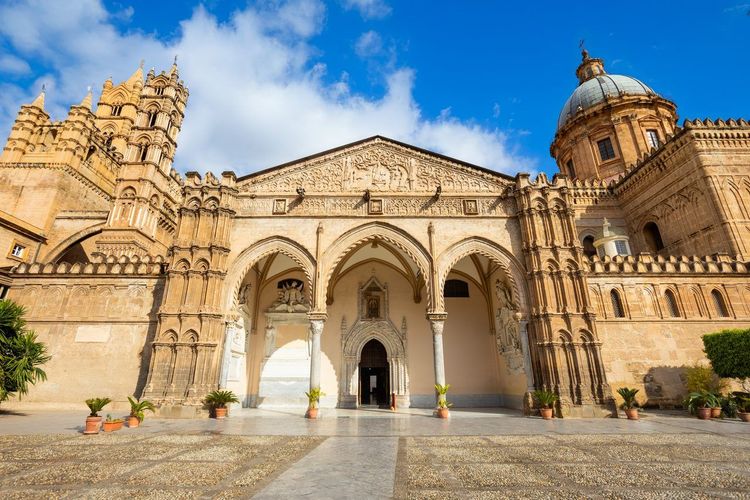
Palermo's historic center concentrates, within less than a kilometer, the traces of eight centuries of successive dominations: Norman, Arab, Spanish, Baroque. Four stops are enough to grasp this layering, and they follow one another naturally on foot.
Start with the Cattedrale di Palermo, an improbable blend of styles accumulated since the late 12th century: Norman base, Gothic additions, an 18th-century neoclassical dome. The interior, rather austere compared with the Palatine Chapel, redeems itself with a curiosity: it is possible to climb onto the roofs for a 360° panorama over the city with Monte Pellegrino in the background. Allow a good half hour; access to the terraces is paid, with several combined ticket options (treasury, crypt, roofs) sold on site.
Ten minutes on foot up the Corso Vittorio Emanuele, the Palazzo dei Normanni houses what remains, for many visitors, the artistic peak of the whole trip: the Palatine Chapel. This private chapel of the 12th-century Norman kings covers its walls with golden Byzantine mosaics, painstaking work that took decades. Alone before this profusion of gold and color, you understand why so many visitors stand rooted there longer than planned. Book your ticket online in advance: queues on site can exceed an hour in high season, a frustrating waste of time when you have nobody to take turns queuing with.
Heading back down toward the heart of the old town, about fifteen minutes of walking leads to the Quattro Canti, an octagonal Baroque crossroads where Palermo's four historic districts meet. Each of the four facades stacks, over three levels, a fountain, the statue of a Spanish king, and that of a patron saint of the city. It is an ideal spot for a solo photo: just stand at the corner of a sidewalk, watching the traffic, to frame two or three facades at once, especially late in the day when the low light catches the stone.
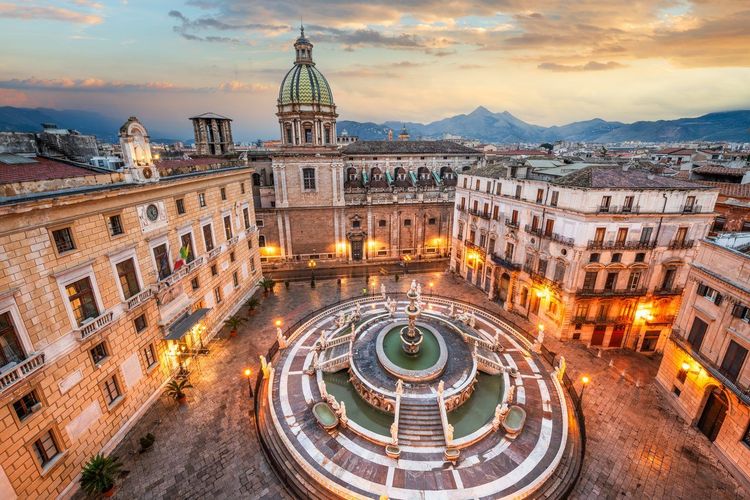
Just behind, less than two minutes away, the Piazza Pretoria and its Fontana Pretoria (Piazza Pretoria, 90133 Palermo, rated 4.6/5 on Google from 8,106 reviews) surprise with their sculptural generosity: dozens of nude marble statues, nymphs, river gods, and allegorical figures, which earned the fountain the local nickname "fountain of shame" when it was installed in the 16th century, judged scandalous by the nuns of the neighboring convent. The contrast between this very sensual fountain and the Santa Caterina church looming above it sums up Palermo's somewhat contradictory identity well.
These four stops can be covered in a relaxed half-day, with breaks. The Ryo audio guide of Palermo passes in front of each of them on its 3-hour route, with commentary that places each monument in the Norman or Spanish context that gave birth to it: handy if you want to understand what you are looking at without relying on a human guide booked in advance.
The Most Beautiful Churches in Palermo
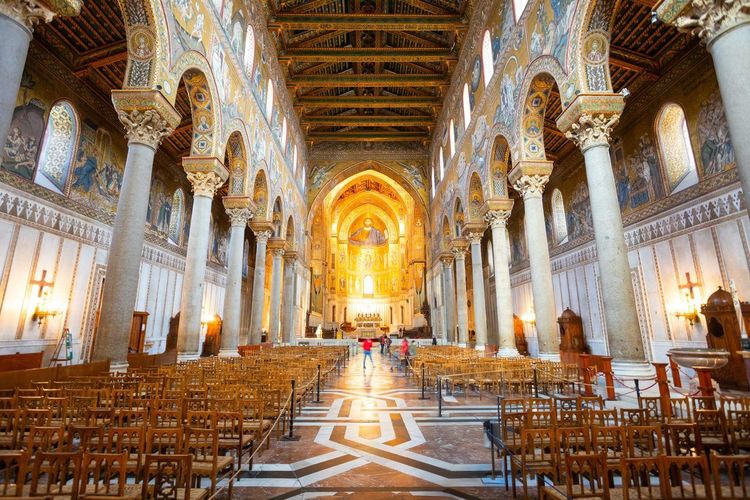
Beyond the cathedral, Palermo has a collection of churches that tell, each in its own way, the Arab-Norman blend that built Sicily's architectural reputation.
The Chiesa della Martorana impresses from the entrance with its 12th-century Byzantine mosaics, among the best preserved in Italy. The scene showing King Roger II crowned directly by Christ, without a papal intermediary, is a strong political symbol of Norman independence from Rome. Allow twenty minutes for the visit; the entrance costs a few euros.
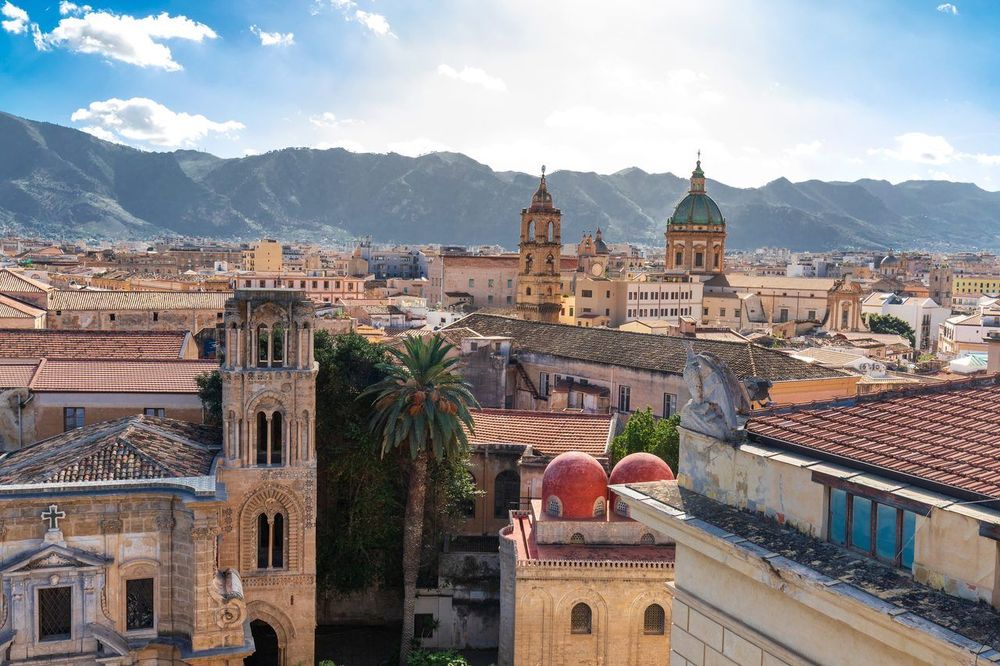
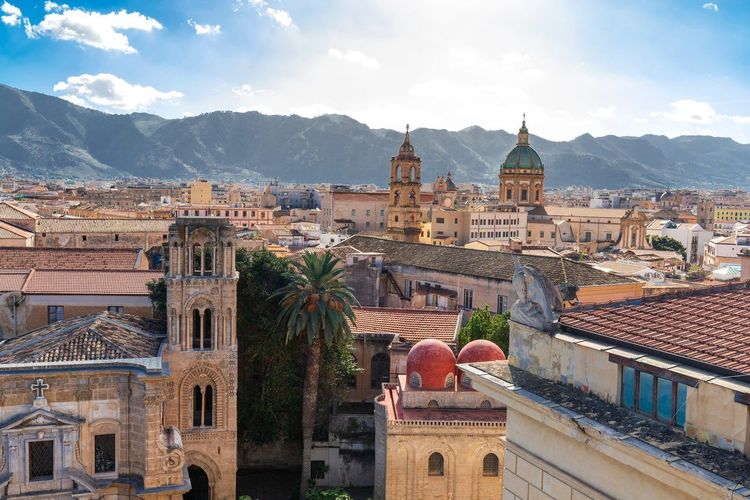
Right next door, you can't miss the three red domes of the Chiesa di San Cataldo, set on the same square. Built between 1154 and 1160 at the initiative of Admiral Maio of Bari, it is much plainer than its neighbor: bare walls, reused columns, almost no decoration. The contrast between the two buildings, a few meters apart, is the best illustration of the Arab-Norman style the city offers.
A little farther on, behind the Palazzo dei Normanni, the church of San Giovanni degli Eremiti is recognizable by its five red domes, but seduces above all with its cloister and garden, a square of greenery planted with citrus trees and palms where you forget the bustle of the center within seconds. It is one of the rare places in the historic center where sitting alone on a bench, with no particular purpose, never seems out of place.
Finally, the Chiesa del Santissimo Salvatore (Via Vittorio Emanuele 341, 90133 Palermo, rated 4.6/5 on Google from 503 reviews) hides an asset many visitors overlook: its dome, reached by a narrow staircase, opens onto one of the finest elevated views of the Corso Vittorio Emanuele, often less crowded than the cathedral's. Climb up late in the afternoon: the low light on the orange rooftops of the old town more than justifies the steps.
These four churches can be visited one after another, on foot, counting a half-day with coffee breaks. You will also notice that you enter and leave a religious site at your own pace, without having to negotiate timing with anyone.
Must-See Museums and Palaces
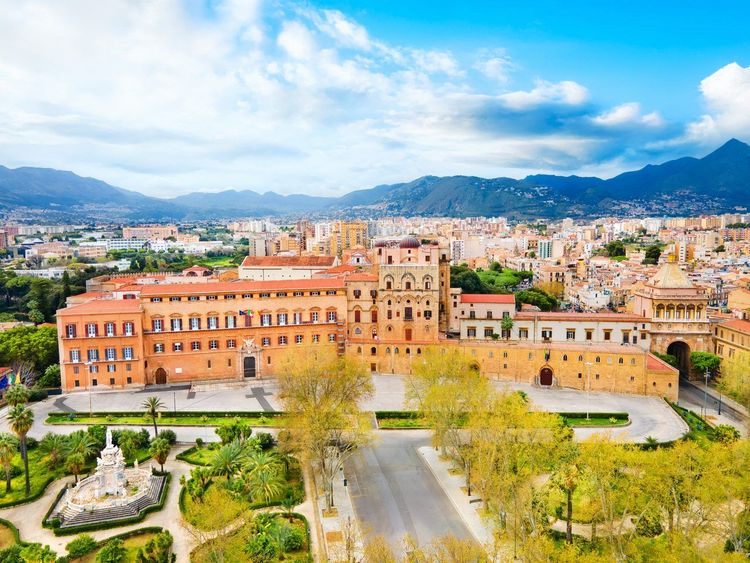
Palermo has a handful of museums and palaces that deserve a place in the itinerary, provided you don't try to link them all on the same day.
The Museo Archeologico Regionale Antonio Salinas brings together one of the richest collections of Phoenician, Greek, and Egyptian art in the Mediterranean, largely drawn from Sicilian excavations. The metopes of the temple of Selinunte, gigantic limestone bas-reliefs, are worth the visit on their own.
The Palazzo Mirto, for its part, offers a very different experience: an aristocratic residence that has remained almost intact, with its period furniture, silk-hung salons, small Chinese room, and ceremonial stables, a rare vestige of Palermitan domestic luxury from before Italian unification.
For a more contemporary counterpoint, the Palazzo Riso houses Sicily's contemporary art museum, in a Baroque setting restored after the bombings of the Second World War. A few streets away, the Galleria d'Arte Moderna, housed in the former convent of Sant'Anna, covers Sicilian painting of the 19th and early 20th centuries, far from the crowds of the major sites.
Further out, the Palazzo della Zisa (Piazza Guglielmo il Buono, 90135 Palermo, rated 4/5 on Google from 6,446 reviews) is worth the detour by bus or a twenty-five-minute walk from the center. This 12th-century Norman summer residence, built using natural ventilation techniques inspired by Arab architecture, now houses a museum of Islamic art that sheds new light on the whole previous section on the Arab-Norman churches.
Several commentaries in the Ryo audio-guided tour return to this dual Norman and Arab-Sicilian heritage even before you enter these palaces, a good way to place each piece in context before seeing it in person rather than on the way out, when attention is already dropping.
Markets, Street Food, and the Palermo Rhythm
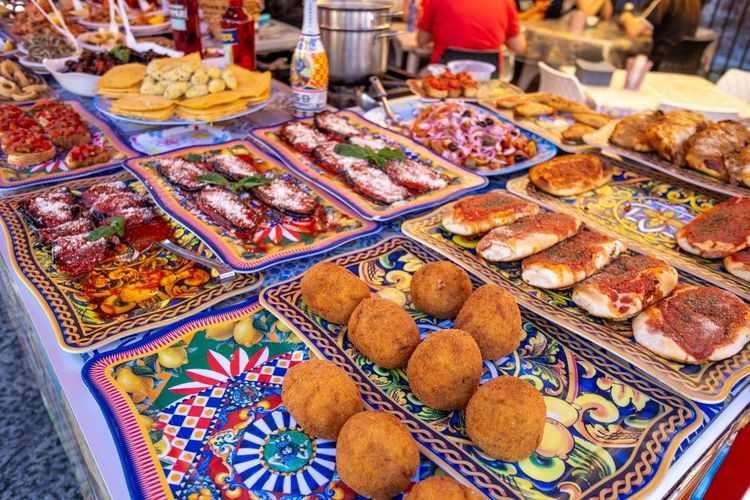
Eating alone in Palermo is not a problem at all, it's even easier than elsewhere, and the markets are the best illustration.
The Ballarò market, the largest and noisiest in the city, comes alive every day from the morning: fish stalls hawked at full voice, vegetables stacked in pyramids, and a handful of counters where you can settle down for an arancina, a pani ca' meusa (spleen sandwich), a local specialty that baffles as much as it delights, or a glass of wine by the liter. Perched alone on a stool facing the stall, nobody will notice you: everyone eats standing or quickly, solo or in a group, without distinction.
Fifteen minutes' walk away, the Capo market offers a tighter and, according to many regulars, more authentic version: narrow alleys, packed stalls, fewer tourists than at Ballarò. It is the place to buy something to nibble on the go before resuming your visit, far from the tourist terraces of the center.
The Palermitan rhythm follows a simple rule: people go out late. The aperitif, around 7-8 pm, precedes a dinner that rarely starts before 9 pm. It is the ideal time to settle into a spritz bar overlooking a lively square: standing at the counter or on a high stool, nobody is surprised that you came alone to sip a drink while watching the city live.
Finish on a sweet note with a granita or an artisanal ice cream: Palermo boasts some of the best gelaterie in Sicily, particularly around Via Vittorio Emanuele and the Kalsa district. Local tradition has it eaten in a brioche, at any hour of the day, including breakfast, a habit that surprises the first time but is quickly adopted.
If you want to go further, our Ryo article on the culinary specialties of Palermo details about ten dishes to taste and where to find them.
Catacombs, Opera, and Off-the-Beaten-Path Experiences
Some Palermo experiences have a reputation for being better in a group. In reality, most lend themselves very well, even better, to a solo visit.
The Catacombe dei Cappuccini impress with their raw character: about 8,000 embalmed bodies, dressed and lined up along underground galleries between the late 16th and early 20th centuries, including the famous little Rosalia Lombardo, astonishingly well preserved. The place is striking, sometimes oppressive, but the silence that reigns there is better experienced alone, with nobody commenting out loud on what deserves to be observed in silence.
Attending an opera at the Teatro Massimo, the largest opera house in Italy and one of the largest in Europe, works perfectly solo: a single seat is often easier to find than a pair, even at the last minute, and nobody whispers next to you during act two. Book a few days ahead in high season; if opera doesn't tempt you, the guided tour of the theater during the day at least lets you discover the hall.
Ten minutes' walk further north, the Teatro Politeama Garibaldi (Piazza Ruggero Settimo, 90139 Palermo, rated 4.6/5 on Google from 12,902 reviews), recognizable by its neoclassical triumphal arch crowned with a bronze quadriga, hosts concerts and shows. Even without a ticket, the facade alone justifies a detour on the way.
Finally, to step outside the strictly tourist register, an anti-mafia guided tour retraces the history of Cosa Nostra in Palermo and the places marked by the fight against the mafia, notably the 1992 attacks against judges Falcone and Borsellino. This tour is particularly well suited if you are alone: organized in a small group led by a local guide, it naturally creates exchanges with the other participants, without needing to know anyone beforehand to sign up.
Nature and Fresh Air: Botanical Garden, Monte Pellegrino, and the Gulf
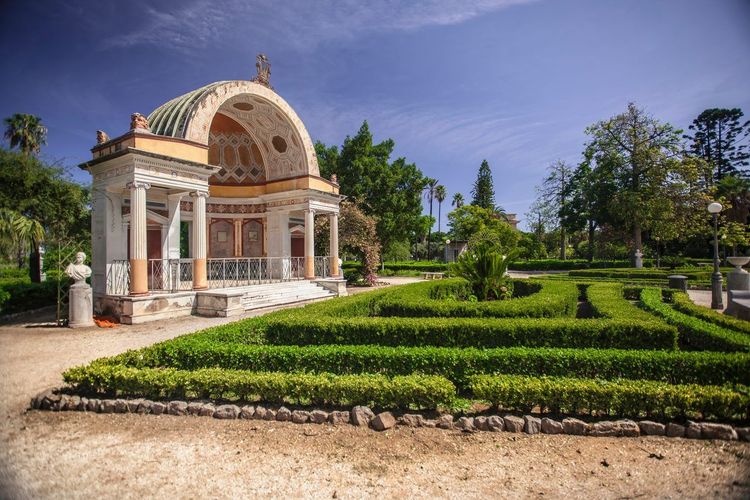
Palermo is not just an accumulation of monuments: the city also offers several open-air escapes, welcome when you want to catch your breath between two dense visits.
The Orto Botanico di Palermo, founded in the late 18th century, shelters impressive tropical species, including century-old ficus trees with aerial roots that alone occupy the equivalent of a small square. It is one of the richest botanical gardens in Europe for subtropical species, and a welcome shaded break in midsummer.
More central, the Giardino Garibaldi stands out for a giant ficus whose aerial roots form a spectacular tangle, often cited among the largest trees in Europe by spread. Sitting on a bench in the shade of this giant, notebook or book in hand, is one of the most pleasant breaks in the historic center.
For a real breath of fresh air, the Parco della Favorita, at the foot of Monte Pellegrino (90100 Palermo, rated 4.7/5 on Google from 666 reviews), is well suited to a solo picnic: wide shaded avenues, sports fields, and far fewer tourists than in the center. Bringing something to nibble bought at the morning market is a good option for a relaxed lunch.
Just above, a hike up Monte Pellegrino lets you reach the sanctuary of Santa Rosalia and, above all, a viewpoint overlooking the whole bay of Palermo. Allow two to three hours round trip depending on your pace; walking shoes are recommended even though the trail remains accessible.
To see the city from the water, a boat excursion in the Gulf of Palermo reveals an impressive coastal profile, the cliffs of Monte Pellegrino on one side, the urban skyline on the other. Several operators offer shared outings on small boats from the port or Mondello, a format that spares you from privatizing a boat and lets you share the trip with other passengers.
Another option, a bike tour of the old town, self-guided rental or in a small guided group, lets you cover in two hours what would take half a day on foot: handy if you want to save time without sacrificing the view of the facades.
The route of the Ryo audio guide comes close to the waterfront, a good starting point to extend your walk toward Monte Pellegrino or the Parco della Favorita, by bus or bike.
Day Trips Around Palermo
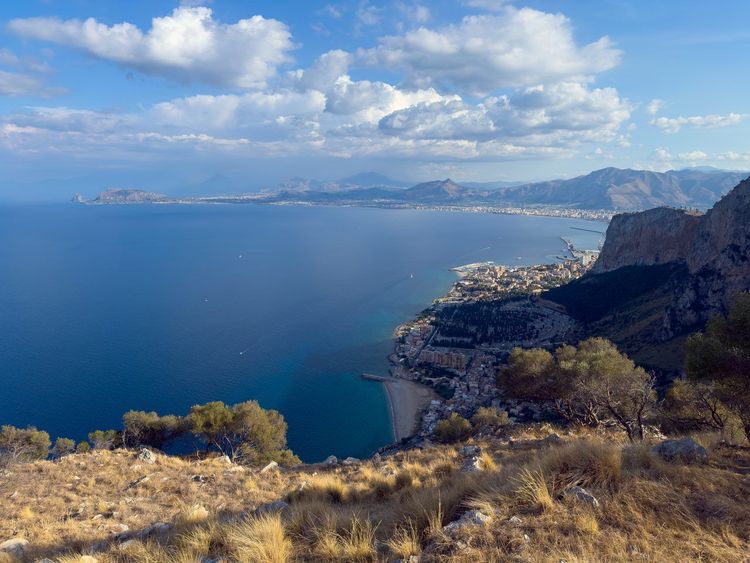
Beyond the city, several excursions deserve a half-day or a full day, all reachable by train, bus, or rental car without difficulty for a solo traveler.
Monreale, about thirty minutes by bus from the center, houses one of the most beautiful Norman cathedrals in Sicily: more than 6,000 m² of golden Byzantine mosaics cover the interior, in an exceptional state of preservation. The adjoining cloister, lined with carved columns that are all different, completes the visit. Allow a half-day round trip including travel.
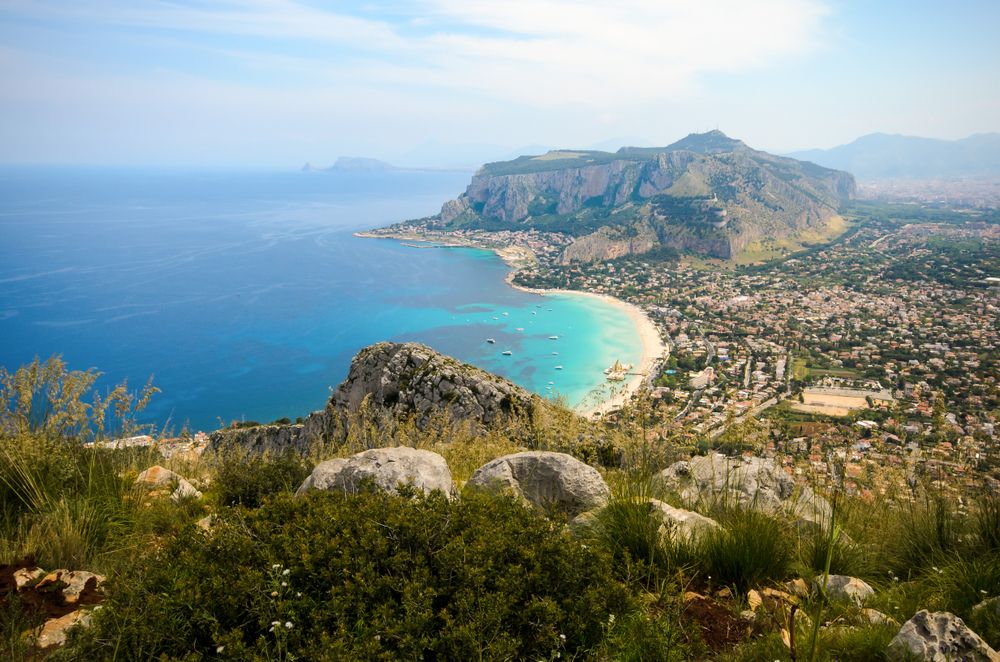
On the beach side, three options stand out. Mondello, about half an hour by bus from the center, is the best-known and easiest-to-reach beach, with its fine sand and its Art Nouveau bathing establishment set in turquoise water. Aspra, a more modest fishing village east of the city, offers a distinctly more local atmosphere, with its colorful boats pulled up on the sand and its small, unpretentious seafood trattorias. Isola delle Femmine, a little farther west, charms with its clear waters and relative calm outside high season, with its protected islet facing the beach.
To explore seaside options further, our Ryo article on the most beautiful beaches of Palermo details other coves reachable by public transport.
For a hilltop village format rather than a seaside one, two destinations complement each other well. Castelbuono (Via Umberto I, 90013 Castelbuono, rated 4.6/5 on Google from 1K reviews), in the Madonie mountains about 1h15 away by road, preserves a medieval Ventimiglia castle and a gourmet tradition renowned throughout Sicily, notably for its artisanal panettone and manna, the ash-tree sap harvested on its hills. Corleone, made famous by the saga "The Godfather" even though no scene was filmed there, offers a small museum devoted to the history of the anti-mafia struggle, a logical complement to the guided tour mentioned above, in an authentic village far from the crowds.
Finally, Bagheria, about fifteen minutes by train, is worth a detour for its 18th-century Baroque villas, particularly the Villa Palagonia and its grotesque statues that intrigued Goethe during his journey to Italy.
If you arrive or depart via Palermo Falcone-Borsellino airport, located at Punta Raisi about 35 kilometers from the center, note that it is very close to some of these coastal getaways: Isola delle Femmine is only a few kilometers away, an option to consider if your flight lands early or leaves late.
If you only have one day to split between the city and its surroundings, the simplest approach is to first complete the Ryo audio-guided tour of Palermo in the morning, then head off in the early afternoon to Monreale or Mondello: the 23 audio stops of the urban route fit into a well-filled morning, freeing the afternoon for the excursion without sacrificing either.
Where to Sleep Alone in Palermo: Choosing Your Neighborhood
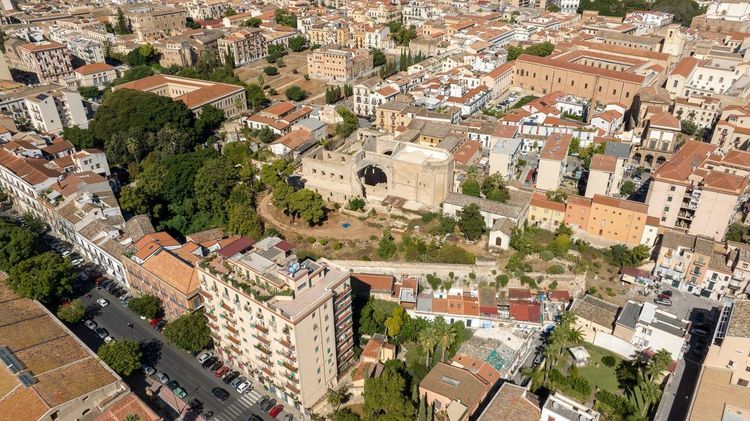
The choice of neighborhood matters more than the accommodation category when traveling alone, especially for evening trips.
The Kalsa district, a former Arab quarter turned bohemian area with art galleries and cocktail bars, remains the most popular option for solo travelers: central, lively until late, within walking distance of most monuments. It is also one of the neighborhoods where it is easiest to meet other solo travelers in hostels or on rooftops.
The Vucciria, around the market of the same name, offers a rawer, more nocturnal atmosphere, prized for its improvised wine bars on the square, but a bit noisier at night if you sleep right above.
For more calm without moving away from the center, the area around Via Roma and the central station is logistically practical, with buses and trains to the airport and trains to Cefalù or Bagheria, though less charming architecturally.
Is it better to stay in a hostel or a hotel when solo? Both work well in Palermo. Hostels, more present in the Kalsa district, make it easier to meet other travelers, useful for sharing a dinner or an evening outing without planning ahead. A hotel or B&B, more discreet, suits better if you prioritize your peace and quiet: many small family-run Palermo places take the time to advise their solo guests on neighborhoods to avoid at night or good addresses nearby.
In any case, avoid booking too far from the historic center to save a few euros: evening trips on public transport, even if safe, remain less pleasant alone than a ten-minute walk from well-located accommodation.
How to Get to and Around Palermo
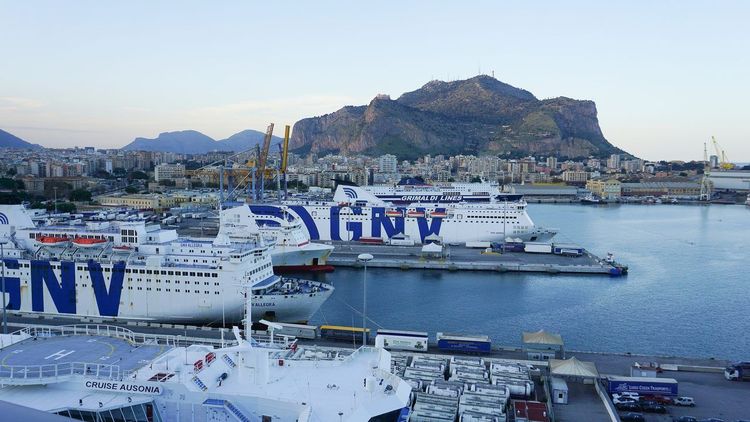
How to get to Palermo? Flying remains the fastest option from France, with about 2h30 of direct flight from Paris and connections from several regional cities in season. The ferry also exists, from Naples (about ten hours of overnight crossing) or Genoa (about twenty hours), but it mainly suits travelers who want to include Sicily in a broader trip.
How to get to Palermo from the airport? Falcone-Borsellino airport is about 35 km from the city center. The Trinacria Express train links the airport to the central station in 45 to 55 minutes, for just under €6, the simplest option for a solo traveler laden with luggage. The Prestia e Comandè shuttle bus makes the trip in 40 to 50 minutes for about €6 and makes several stops in the center, handy depending on the location of your accommodation.
How to get around alone from the airport? Train or bus remain the reference: frequent, direct, with no fare negotiation to plan for unlike a taxi. Avoid unofficial drivers who approach travelers as soon as they leave the arrivals hall, especially when alone with luggage, to make sure you pay the regulated fare.
Where to rent a car in Palermo? Rental counters are at the airport, handy to avoid an extra trip to the city center to finalize paperwork. However, a car is only useful for excursions in the surroundings, Monreale excepted, which is well served by bus: in the historic center, it quickly becomes a handicap.
Where to park in Palermo? Parking in the historic center is both scarce and complicated, with limited traffic zones and narrow one-way streets. It is better to aim for a paid car park on the edge of the center, around the station, and finish on foot: driving alone through Palermo's alleys is not a relaxing experience for a first stay.
For practical details on the airport-to-center trip, our Ryo article on the transfer from Palermo airport goes into the details of schedules and fares.
Budget, Safety, and the Right Pace for Solo Travel
Budget: allow about €60 to €90 per day solo, including decent accommodation, meals at the counter or in a trattoria, and a few paid visits. Solo travelers often pay an accommodation surcharge, as single rooms are rare, sometimes forcing you to book a double at the full rate: factor this into your calculation.
Season: spring, from April to June, and early autumn, September-October, offer the best compromise between temperature and crowds. In summer, the heat can exceed 35°C during the day, a real obstacle to the prolonged walking that visiting the historic center requires.
Safety: Palermo is not a dangerous city for a solo traveler who applies the usual precautions of any large Mediterranean city. Pickpocketing in crowded markets, Ballarò foremost, remains the most frequent risk, far more than any assault. Keep your bag closed in front of you, avoid wearing a big camera around your neck in the crowd, and limit isolated nighttime walks to genuinely lively streets.
Pace: adapting to the Palermo tempo, rather than fighting it, changes the solo experience a lot. The midday break, 1-4 pm, when many shops close, is well suited to a nap or reading in the shade rather than a frustrating visit in front of lowered shutters. Evenings start late: a 9 pm dinner is nothing unusual, and it is often at this hour that the street atmosphere is most pleasant for observing local life alone from a terrace.
Keep in mind throughout your stay that the route of the Ryo audio-guided tour remains a simple reference so you never feel lost in the historic center: its 7.7 km chain the stops in a logical order that avoids unnecessary detours.
Mistakes to Avoid When Going Solo in Palermo
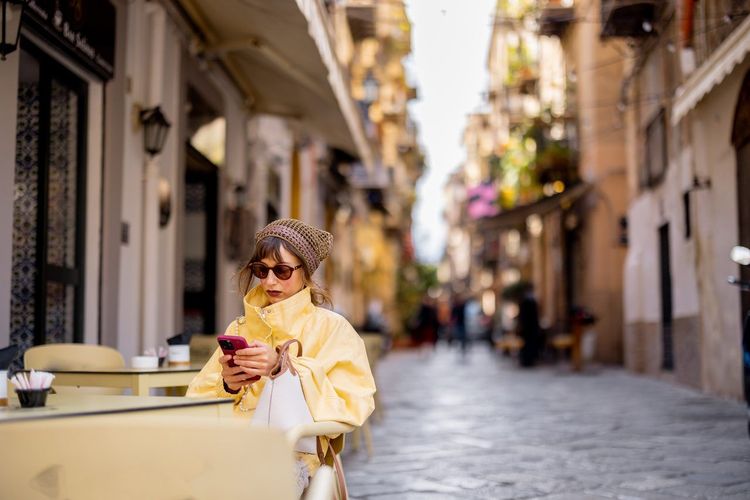
A few pitfalls come up often among solo travelers in Palermo, easy to avoid once identified.
Trying to see everything in two days. The density of monuments pushes you to overload the schedule, which, alone, exhausts you faster than in a group where you can take turns with the organization. Better to accept sacrificing one or two.
Pulling out a paper map or your phone in the middle of a crowded market. A traveler absorbed in a screen attracts a pickpocket's attention more easily than a group in conversation. Plan your route before entering the crowd.
Neglecting to book the Palatine Chapel. Queues on site can exceed an hour in high season, a particularly long dead time when you have nobody to chat with while waiting.
Parking a car in the historic center. Between limited traffic zones and one-way alleys, it is an avoidable source of stress for a solo driver with no co-pilot to read the GPS.
Ignoring the midday break. Planning a visit between 1 and 4 pm, when many shops and some sites close, needlessly frustrates. Instead, set this time slot aside for a long lunch or a return to your accommodation.
Eating exclusively in restaurants on the tourist frontage. Addresses lining the big squares rarely serve the best food: market counters and trattorias two streets away often offer much better value for a quick solo meal.
What Decision to Make Based on Your Solo Traveler Profile
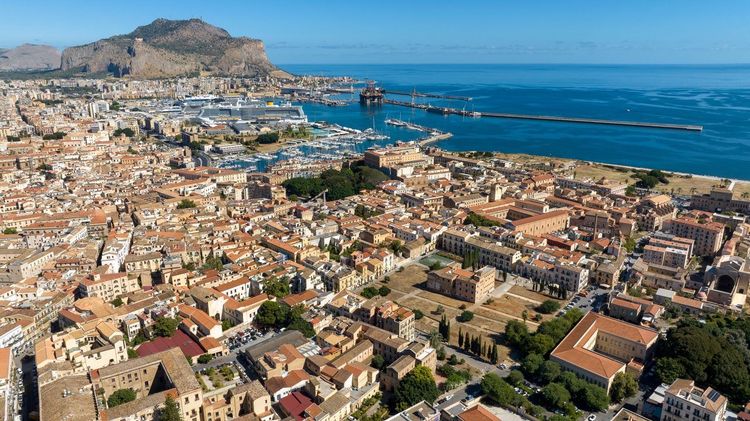
If this is your first solo trip, opt for a three-day format: long enough not to rush, short enough not to tire of a city that demands real adaptation to the unexpected. Stay in the Kalsa, in accommodation with a personalized welcome, and devote the first day to the historic center to get your bearings before venturing farther.
If you are rather introverted and mainly seek calm, focus on the gardens, the Orto Botanico and the Giardino Garibaldi, churches in the morning before groups arrive, and save the markets for a quiet hour rather than the morning peak.
On a small budget, concentrate on what is free or nearly so: facades, squares, public gardens, markets where eating costs less than in a trattoria, and save your sightseeing budget for two or three essential paid sites, the Palatine Chapel, the cathedral, a museum.
For a short stay of 24 to 48 hours, give up the idea of excursions to the surroundings and focus entirely on the historic center: better to leave with a sharp memory of Palermo itself than a diluted one of a rushed half-day in Monreale.



FAQ
Do you need to speak Italian to travel alone in Palermo?
Not necessarily: English works well in tourist areas and accommodations. But at the Ballarò market or in the working-class neighborhoods, a few Italian phrases make exchanges much easier and are reassuring when you travel without anyone to relay the conversation.
Is Palermo suitable for a first solo trip?
Yes, as long as you can accept a bit of urban disorder. The historic center is easy to explore on foot, the atmosphere is warm, and the city's extroverted way of life makes informal contact easy, even without organizing anything in advance.
How do you get around alone from Palermo airport?
The Trinacria Express train links Falcone-Borsellino airport to the central station in 45 to 55 minutes for just under €6, and the Prestia e Comandè bus makes the trip for about €6: two simple, safe options for a solo traveler with luggage, with no fare negotiation.
Is it better to stay in a hostel or a hotel when traveling alone?
Both work. Hostels, concentrated in the Kalsa district, make it easier to meet other travelers. A hotel or family-run B&B offers more peace and quiet and often valuable personalized advice for a first solo trip.
Where should you park in Palermo if you come by car?
Avoid the historic center, with its limited traffic zones and narrow one-way streets. Opt for a paid car park on the outskirts, near the train station, and finish the trip on foot.
How long does it take to visit Palermo?
One day is enough for an overview of the historic center, two days allow you to add the churches and a museum, and three days open the door to the catacombs, the opera, or an excursion to Monreale or Mondello.
What is there to do around Palermo besides the city itself?
Monreale for its mosaics, Mondello or Isola delle Femmine for the beach, Castelbuono and Corleone for inland villages, and Bagheria for its Baroque villas, all reachable by train, bus, or rental car in half a day to a day.
Conclusion
Visiting Palermo solo means accepting a city that won't be tamed by a hurried list, but which, in return, offers a rare freedom: stopping before a mosaic as long as you like, eating at a market counter without waiting for anyone, changing plans on a whim to head off to Monreale or Mondello. Between Arab-Norman monuments, noisy markets, and coastal escapes, the city has plenty to fill a solo stay of two to five days without ever going in circles.
To keep a simple common thread in the historic center without depending on a paper map or a human guide, the Ryo audio-guided tour of Palermo remains the most direct way to plan a complete first day, at your own pace, headphones on and address book in your pocket.
À lire également