© Shutterstock
 Votre guide Ryo
Visit Amsterdam in 2 Days: The Complete Itinerary for 2026
Amsterdam is meant to be explored by bike, or so everyone says before you arrive, but past the first canals you quickly realize it is best enjoyed on foot, at the pace of the bridges that follow one another every hundred meters. Visiting Amsterdam in 2 days is no race against the clock if the itinerary is planned in chronological blocks rather than as a list of museums to tick off: the Ryo audio-guided tour of Amsterdam starts precisely in those little streets, headphones on, with no need to wait for a guide or a tourist bus.
In two days, you will have plenty of time to pass a leaning 17th-century house in the Jordaan, stop in front of the canvases of a painter who only picked up a brush at 27, taste raw herring sold from a stand in the middle of a market, and cruise along a canal belt that has been a World Heritage site since 2010. Between the museums, the neighborhoods that change character every five hundred meters and the practical questions, bike, budget, best season, this guide follows the order in which the city is really discovered, day by day, hour by hour.
Day 1, Morning: The Historic City Center and the Jordaan
Most visits start in the same place: Dam Square, because that is precisely where the city was born, around a dam built on the Amstel in the 13th century. The Royal Palace occupies one side of the square, the Nieuwe Kerk the other, and pigeons direct the traffic in the middle, between the café terraces and the roaming herring vendors.
Five minutes away on foot, a discreet door squeezed between two shops opens onto the Begijnhof, a 14th-century courtyard where beguines, pious women without definitive religious vows, once lived. The silence there is almost unsettling given how much it contrasts with the bustle of the Dam. A 15th-century wooden house, one of the last two in Amsterdam, hides in a corner of the courtyard.
Continuing west, the Negen Straatjes (the Nine Streets) form a grid of shopping lanes linking the canals between the Singel and the Prinsengracht. You go in for a vintage shop and come out an hour later with a bag of warm stroopwafels, lured in by the windows of concept stores and small galleries. Allow one hour if you can resist the shops, two if you give in.
The morning naturally ends at the gates of the Jordaan, the former working-class district that has become one of the most sought-after in the city, recognizable by its narrow houses and by the Westerkerk (Prinsengracht 281, 1016 Amsterdam, rated 4.4/5 on Google from 1,678 reviews), whose carillon still marks the hours of the neighborhood from the edge of the Prinsengracht. The Ryo audio-guided tour of Amsterdam chose this area for its first stops: you hear the story of the leaning canal houses and the hidden little courtyards you would never notice on your own, at your own pace, with no group and no imposed guide.
If you only have two days, schedule this loop before 11 a.m.: the Dam and the Negen Straatjes become twice as crowded with tourists after lunch, and the charm of the Jordaan owes a lot to its still-quiet streets.
Day 1, Afternoon: The Must-See Museums and a Walk Along the Canals
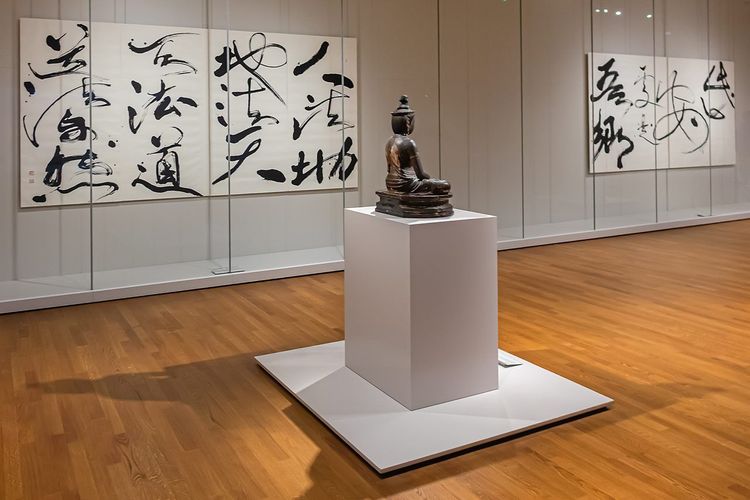
The afternoon shifts into a completely different rhythm, that of the museums, where you sometimes have to make choices for lack of time. The Rijksmuseum concentrates the best of Dutch art, from Rembrandt's Night Watch to the ship models of the East India Company. Its Cuypers Library, an immense reading room bathed in light, is worth the detour even if you are not the type to stop at every painting.
Two minutes' walk away, the Van Gogh Museum houses the largest collection of the artist in the world, arranged chronologically: you follow his painting brighten year after year, from the dark canvases of Nuenen to the sunflowers painted in Arles. Book your time slot online before leaving: the museum sells no tickets on site, and weekend slots often sell out several days ahead in high season.
Two museums are enough for a manageable afternoon. If you are hesitating between the two, choose the Van Gogh for a focused immersion, the Rijksmuseum for a broader view of Dutch history.
Between the two, the Museumplein, the large lawn that separates them, is where the people of Amsterdam themselves come to have lunch on the grass at the slightest ray of sunshine. A ten-minute stop is enough to catch your breath before the second visit.
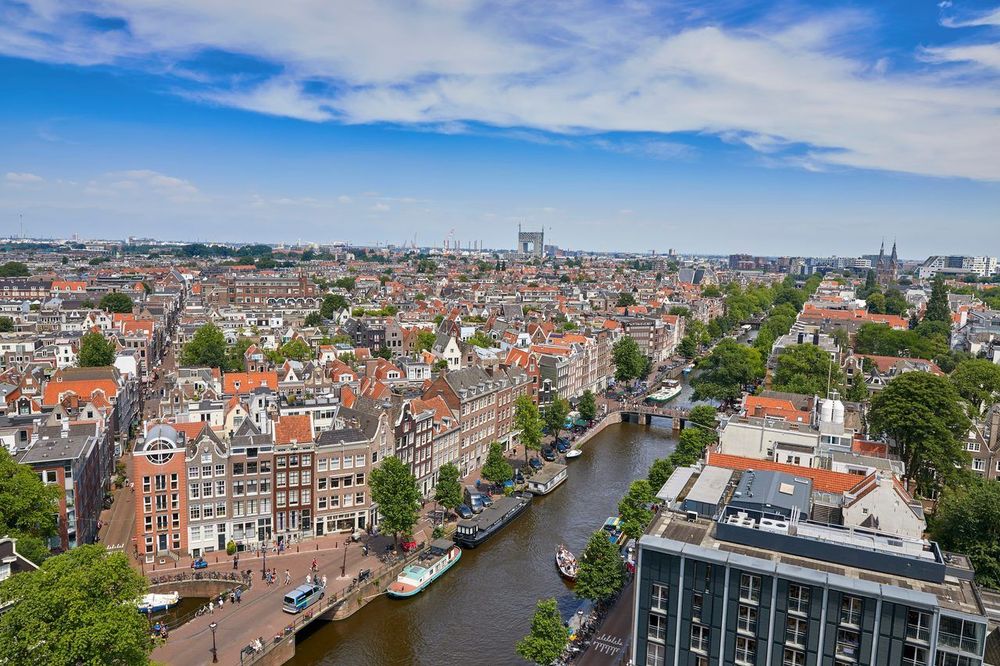
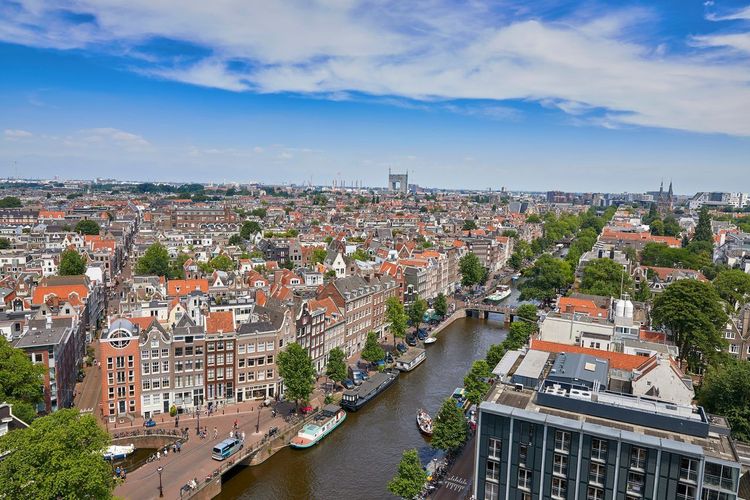
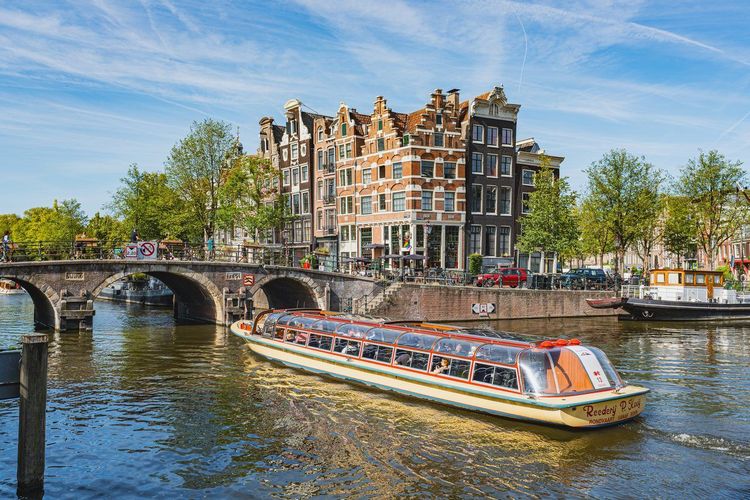
That leaves the canal belt, the famous Grachtengordel, a UNESCO World Heritage site since 2010 for its Golden Age urban plan. Seeing it on foot gives you an idea of the whole, but it is from the water that you truly understand why Amsterdam has more bridges than Venice: the narrow facades of the Prinsengracht (Prinsengracht, 1016 Amsterdam) glide by at water level, with their hoisting hooks still visible beneath the gables.
The canal houses owe their narrowness in part to a tax system that was based on the width of the facade: the wider the house was on the street, the higher the tax. Families therefore built in depth, with staircases so steep that furniture came in through the window, hoisted with the beam you can still see at the top of each gable.
A classic cruise lasts about an hour and costs between 16 and 20 euros depending on the company and the season. Would you rather stay on dry land? The Ryo audio-guided sub-tour Au rythme des canaux follows precisely this listed belt: shorter than the main tour, it slips easily between two museum visits without disrupting the rest of the day.
Avoid Saturday afternoon if you hate crowds: that is when the Museumplein is busiest, right after the cruise ships unload their passengers near Centraal. If time is short, skip the cruise and settle for a walk along the Herengracht to the Leidseplein: the view of the patrician houses remains comparable, for zero euros spent.
Day 1, Evening: Where to Dine and Go Out After Dark
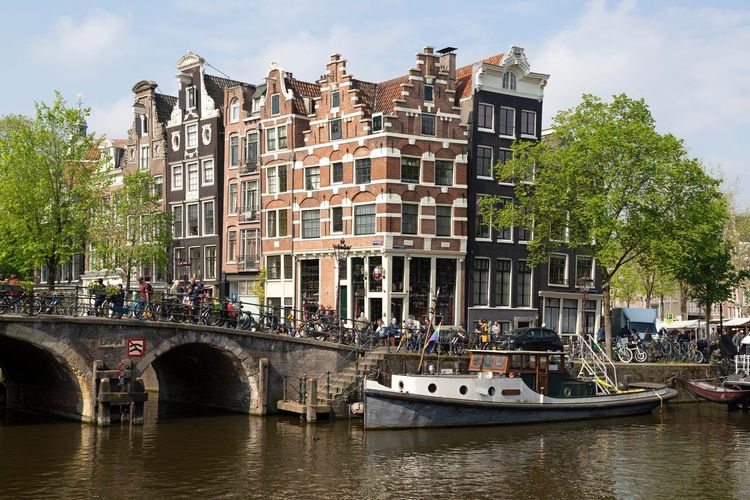
Once night falls, the canals change character: street lamps are reflected in the dark water and the bruin cafés, those typically Dutch brown cafés with dark wood paneling, slowly come alive. Café Papeneiland, set at the corner of a bridge on the Prinsengracht in a house dating from 1642, remains a safe bet for an appeltaart and a last drink before heading back to the hotel.
For dinner, the Jordaan is full of small restaurants that are cheaper than those in the center, often specializing in reinvented Dutch cuisine or Indonesian cuisine, a colonial heritage that has largely shaped local gastronomy. If you want to dig deeper into the subject before choosing a table, the Ryo guide to Amsterdam's culinary specialties details the dishes to look for, from stamppot to rijsttafel.
To extend the evening, head east: the brewery Brouwerij 't IJ (Funenkade 7, 1018 Amsterdam, rated 4.6/5 on Google from 8,738 reviews), set at the foot of the De Gooyer windmill, a windmill from 1725, serves its own beers until late. The atmosphere is loud and informal, far from the cocktail bars of the center.
Day 2, Morning: Trendy Neighborhoods and Local Flavors
A complete change of scenery for the second day: head to De Pijp, the neighborhood that has succeeded the Jordaan in the hearts of residents seeking authenticity, with its denser streets and the mix of populations that has always made its reputation.
In the heart of the neighborhood, the Albert Cuypmarkt lines up more than 260 stalls over nearly a kilometer, from fabric by the kilo to herring, including stroopwafels made before your eyes on scorching hot plates. It is the best-known daily market in the Netherlands, open Monday to Saturday, and probably the best place in the city for a lunch under 10 euros.
De Pijp was built at the end of the 19th century to house working-class families, in tightly packed, quickly built buildings, hence its narrow, parallel streets compared to the stem of a pipe. The Ryo audio-guided tour also passes through these more local neighborhoods and tells you this working-class story, where most tours are content with citing street names.
Just steps from the market, the Sarphatipark, smaller and more intimate than the Vondelpark, offers a quiet bench to catch your breath before the rest of the program. Neighborhood regulars gather there more willingly than tourists, which says a lot about its atmosphere.
If the weather permits, push on to De Hallen (Bellamyplein 51, 1053 Amsterdam, rated 4.5/5 on Google from 8,654 reviews), in the Oud-West district, a former tram depot converted into a food hall where about twenty world cuisines share long communal tables. The place works as well for a late brunch as for escaping a shower, which are frequent in Amsterdam even in midsummer.
Bring cash in small bills for the market: some stalls accept neither cards nor contactless payment.
Day 2, Afternoon: Cultural or Offbeat Immersion, Your Choice
The afternoon of the second day lends itself to a choice rather than an imposed program: head to the historic center for a denser cultural immersion, or east for something more unexpected.
First option, the Red Light District, De Wallen in Dutch, one of the oldest areas of the city, long before being associated with what it is known for today. Its heart is home to the Oude Kerk, the oldest church in Amsterdam, born from a wooden chapel from the early 13th century and consecrated in 1306, today surrounded by the windows that made the district's international reputation. The contrast between this religious heritage and the activity around it almost always surprises passing visitors.
The district owes its very particular status to its historical position near the port: sailors who landed after months at sea found there a way to spend their pay, and the area was structured around this activity from the 14th century. The legalization of brothels in the Netherlands in 2000 only made official a practice that had been largely tolerated for centuries.
Walking through the district by day, in mid-afternoon, radically changes the perception you have of it compared with evening accounts: the canals are narrow and photogenic, the facades among the oldest in the city, and the atmosphere still calm before nightfall. One stop on the Ryo audio-guided tour covers this area with its historical context told in audio, and the Ryo article on Amsterdam's Red Light District helps you prepare the visit rather than walking through without explanation.
One point of etiquette to know before going: it is forbidden to photograph the windows and their occupants, a rule strictly enforced and reiterated by signs on every street corner. Beyond the regulations, it is also a matter of basic respect toward people who are working, not tourist attractions. Basic caution is enough the rest of the time: during the day, the atmosphere remains touristy and without any particular problem, and it is mainly late in the evening, on weekends, that the atmosphere changes.
Second option, more offbeat: the NEMO Science Museum (Oosterdok 2, 1011 Amsterdam, rated 4.5/5 on Google from 38,186 reviews), an immense verdigris-green structure shaped like a ship's hull set on the water near the central station. Inside, the interactive experiences are officially aimed at children but easily capture adults' attention for a good hour. Its rooftop terrace, accessible free of charge without a museum entry ticket, offers one of the most open views of the harbor and the lower city.
Between the two, there is no absolute rule: if you are traveling with children, you will naturally lean toward the NEMO and its terrace; if you are a fan of urban history, toward the Red Light District and the Oude Kerk. Nothing prevents you from combining both in a short version either, as the Red Light District can be visited in under an hour if you do not linger. For an even more offbeat touch, the Micropia museum, dedicated to micro-organisms and located at the entrance of the Artis zoo, complements the offbeat option well if you have already exhausted the classics on a previous stay.
End of Your Stay: Last-Minute Shopping and Heading Back Before Departure
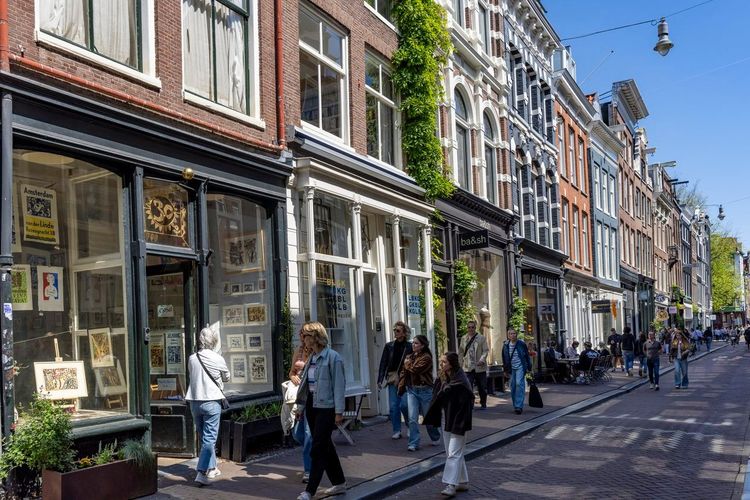
Before catching your plane or train, there is almost always an hour left to fill. The Negen Straatjes, already walked through on the first day, remain the best place for a last souvenir that is not a fridge magnet: Delft ceramics, aged cheeses vacuum-packed for the journey, or certified tulip bulbs for export, sold in sealed bags.
If your flight leaves from Schiphol, allow plenty of time: the train from Amsterdam Centraal takes about 15 to 20 minutes, but security lines in high season can easily double the planned time. For a long-distance train to Belgium or Germany, Amsterdam Centraal is enough, with no detour via the airport.
A last stop at an Albert Heijn supermarket to buy Tony's chocolate or boxed stroopwafels is often the most useful purchase once you are back home, far more than magnets bought in a hurry.
How to Get Around Amsterdam: On Foot, by Bike or by Tram
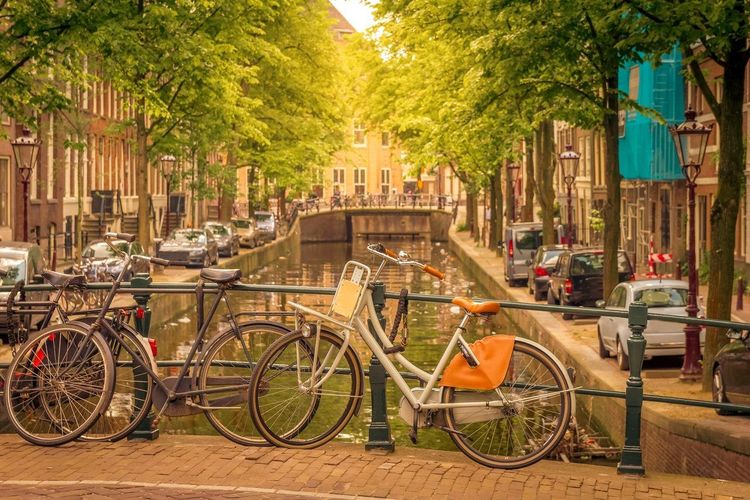
Amsterdam is mainly visited on foot, and that is exactly the format this guide follows: the historic center, the Jordaan, the canal belt and De Pijp follow one another without a single walk exceeding 25 minutes at a stretch. The Ryo audio-guided tour, on foot is based on the same logic: no tourist bus or guide imposing their pace, just your headphones and the map in your pocket just in case.
The bike remains the most local option, and the fastest for covering long distances such as Oud-West or the eastern harbor. Rental costs between 10 and 15 euros a day in most shops in the center, with a deposit or ID often required. Be careful, though: cycling traffic in Amsterdam follows rules as strict as they are invisible to an untrained eye, and locals do not forgive hesitation at a red light. For a guided warm-up rather than a risky improvisation, the Ryo article on bike rides details routes suited to beginners.
Finally, the tram usefully complements the first two modes for longer trips or when you are tired: a one-hour GVB ticket costs 3.40 euros, and the 24-hour pass, at 10 euros, covers tram, bus and metro with unlimited trips.
As for cars, it is best to do without one from the center onward: parking spaces there are rare and expensive, often over 7 euros an hour. If you arrive by car anyway, the Ryo article on parking in Amsterdam lists the park-and-ride lots on the outskirts, much more affordable than a space in the Grachtengordel.
Where to Stay for 2 Days: The Best Neighborhoods by Travel Profile
The choice of neighborhood matters almost as much as the choice of hotel itself, as the atmospheres differ so much from one end of the city center to the other.
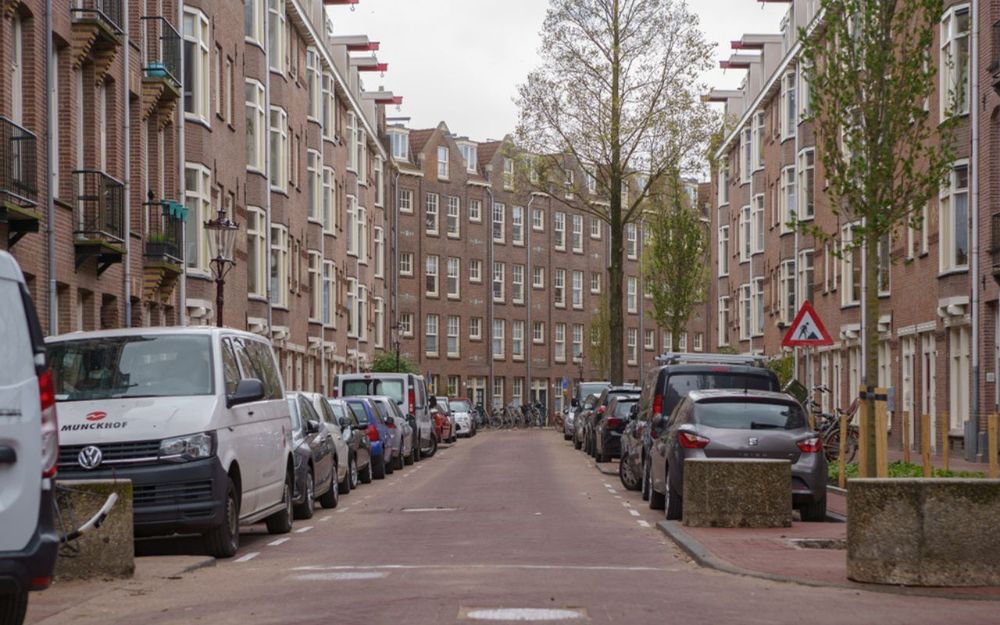
The Jordaan will suit you if you want to wake up in a postcard setting: canals, gabled facades, brown cafés on the street corner. It is also one of the most expensive neighborhoods, logically, for direct walking access to the historic center from the first day.
De Pijp appeals more to solo travelers or young couples looking for a more local, less polished atmosphere, with prices generally 15 to 20% lower than in the Jordaan for comparable quality. The Albert Cuyp market a few steps away is a strong argument if you like to have breakfast outdoors.
For a family stay, the Museumplein district or Oud-West offer a good compromise: proximity to the museums and the Vondelpark to let the children unwind, wider streets, fewer bikes speeding along than in the center. This is also where most apartments with fully equipped kitchens are concentrated, handy for limiting the restaurant budget over two days.
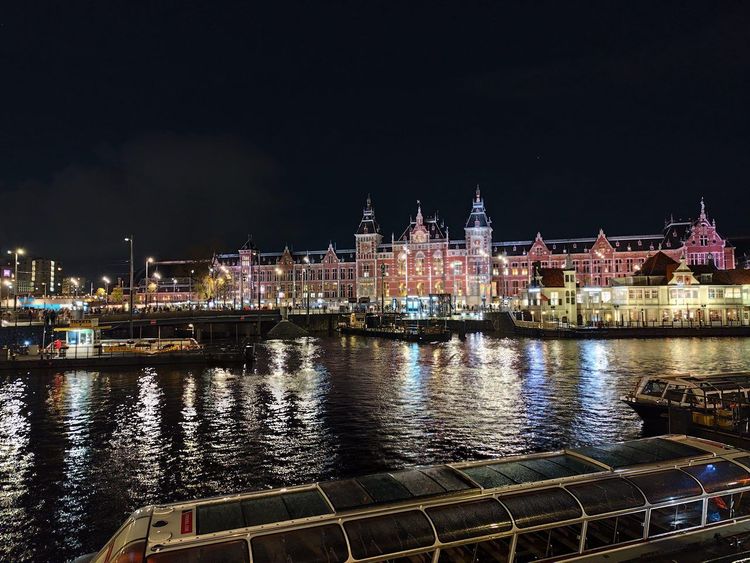
Finally, the Centrum, around the Dam and the station, mainly suits those who prioritize immediate proximity to transport over calm: it is the noisiest area at night, particularly near the Red Light District, but also the most convenient for a very short stay without a car.
If possible, book three to four months in advance for the April to June period: it is both tulip season and the time when hotel prices climb fastest from one week to the next. To refine your choice based on your travel profile, the Ryo article on a weekend in Amsterdam details the options more broadly depending on whether you come as a couple, as a family or solo.
Budget and Payment: How Much to Plan and How to Pay on Site
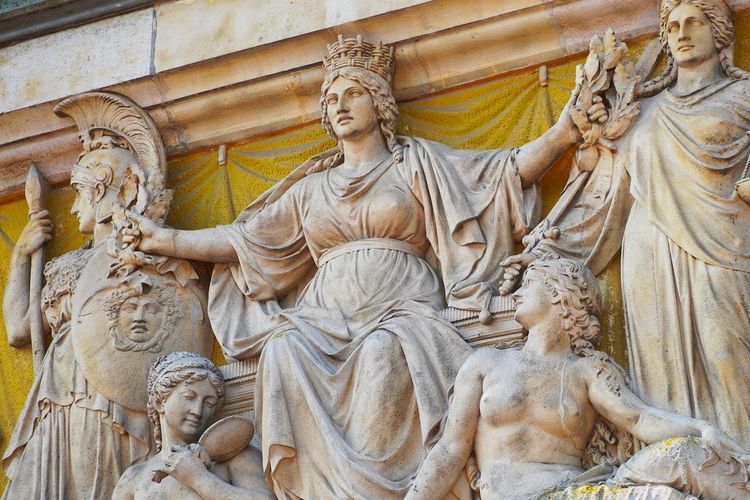
For two days in Amsterdam, excluding flights and accommodation, expect a daily budget between 80 and 120 euros per person: about 15 to 25 euros for meals, around fifty euros for the two main museums, and the rest spread across transport, drinks and small extras. In 2026, both the Rijksmuseum and the Van Gogh Museum charge an adult ticket of around 25 euros, free for under-18s (with a reserved time slot mandatory at the Van Gogh).
As for payment, the Netherlands has largely switched to contactless: bank cards and mobile payments are accepted almost everywhere, including in small shops, and some establishments even refuse cash. Cash is still useful occasionally, though: a few stalls at the Albert Cuypmarkt, some food trucks and informal tips still work better with coins. Plan on 20 to 30 euros in cash for these specific cases, no more.
Tipping is never mandatory in the Netherlands: rounding up the bill or leaving 5 to 10% in a decent restaurant is more than enough, and nobody will be offended by an exact payment in a café.
Wondering what to visit for free in Amsterdam? Several activities remain entirely accessible without spending a cent: walking in the Jordaan and the Negen Straatjes, access to the Begijnhof, the NEMO terrace without a museum entry ticket, and simply walking along the canal belt rather than taking a boat. Add to that the surroundings of the Oude Kerk, whose exterior can be freely discovered even though the interior requires a fee.
Tourist cards such as the I amsterdam City Card can represent real savings if you plan to visit three or more paid museums over two days, with GVB public transport included as a bonus. Note that the Van Gogh Museum is not part of it. Below this threshold, buying tickets separately often remains more advantageous. Always keep a 1 or 2 euro coin on you: several public toilets in the city center are still paid.
When to Go: The Best Time for a 2-Day Stay
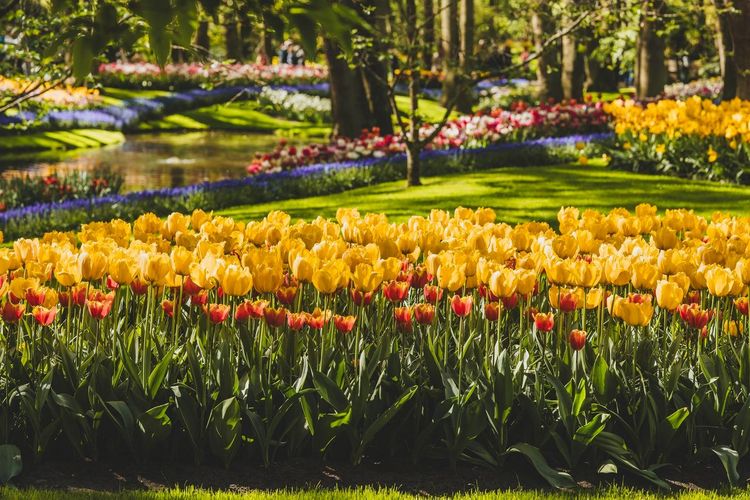
The best time to visit Amsterdam depends mostly on what you come looking for. Spring, from April to May, remains the most popular choice thanks to the tulip bloom in parks and the surrounding area, notably at the Keukenhof garden less than an hour from the city, described in more detail in the Ryo article on Keukenhof.
Summer, from June to August, offers the longest days, with light until after 10 p.m., ideal for fitting in both days of sightseeing without rushing, at the cost of a markedly denser tourist presence and accommodation prices at their peak.
Autumn, especially September, often combines the best of both: still-mild temperatures, a clear drop in crowds, and golden light on the canals that is particularly photogenic in the late afternoon. Winter remains relevant for a tight budget, provided you accept frequent rain and days that end as early as 4:30 p.m.
And If You Have More Time: Extending to 3 or 4 Days
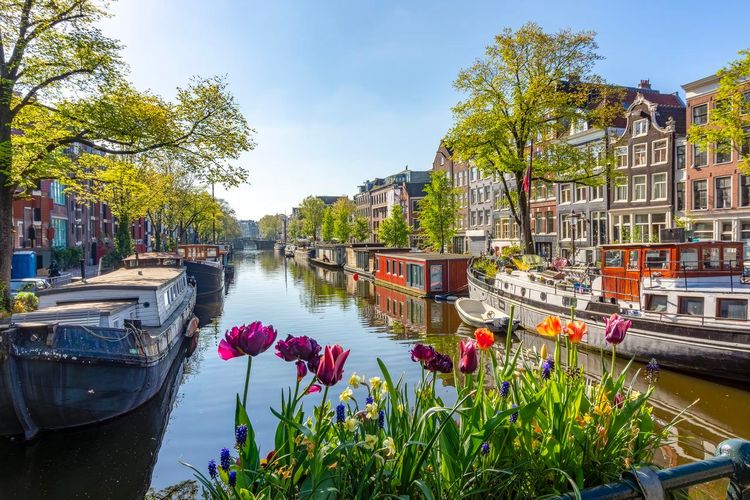
Two days are enough for the essentials, but Amsterdam keeps plenty to fill a third, or even a fourth day if time allows.
To visit Amsterdam in 3 days, the most natural approach is to add a day trip outside the city: Zaanse Schans and its traditional windmills about twenty minutes away by train, or Haarlem, more intimate and much less crowded than the capital, for a breather of an afternoon. The Ryo article on Amsterdam in 3 days details a complete itinerary for this option.
To visit Amsterdam in 4 days, add a museum that the two-day program could not fit in: the Stedelijk for modern and contemporary art, or the Anne Frank House, whose tickets, sold only online, go on sale six weeks in advance and sell out very quickly. That is, incidentally, the main reason not to include it in a tight two-day program: the risk of finding no available tickets is real in high season.
To visit Amsterdam in 1 day, on the contrary, focus on the historic center, a single museum of your choice and a walk along the canals: it is better to leave with three well-lived experiences than six rushed visits.
If you are traveling backpacker-style, with a rucksack and a tight budget, Amsterdam remains a city where walking and cycling are more than enough to replace paid transport, and where hostels located outside the historic center often offer significantly lower rates for a comparable quality of welcome.



FAQ
What is the best time to visit Amsterdam?
Spring (April-May) remains the most popular time for the tulip bloom, but September often offers the best compromise between pleasant weather and smaller crowds. Summer guarantees the longest days, at the cost of heavier crowds and higher accommodation prices.
What is the budget for 3 days in Amsterdam?
Excluding flights and accommodation, expect to spend between 240 and 360 euros per person for three days, following the same daily range of 80 to 120 euros as for a two-day stay, adjusted according to the number of museums visited and the mode of transport chosen.
How do you visit Amsterdam in 4 days?
By adding two days to the two-day program described above: an extra museum such as the Stedelijk or the Anne Frank House on one side, and an excursion to Zaanse Schans or Haarlem on the other, to vary the pace between city and countryside.
Is it possible to visit Amsterdam on foot?
Yes, largely: the historic center, the Jordaan, the canal belt and De Pijp can all be explored on foot without any single leg really exceeding 25 minutes. That is also the principle behind the Ryo audio-guided tour of Amsterdam, designed entirely for discovery on foot, with no bus and no guide setting the pace.
Are two days enough to see the essentials of Amsterdam?
Yes, provided you group places by geographic area rather than rushing from one end of the city to the other. This guide's itinerary, organized by half-day, covers the historic center, the major museums, the canals and the more local neighborhoods with no downtime or unnecessary travel.
Do you need to book museum tickets in advance?
Yes. The Van Gogh Museum only sells tickets online, for timed slots, and the Rijksmuseum also recommends booking. For the Anne Frank House, booking as soon as tickets go on sale, six weeks ahead, is almost essential.
Two days in Amsterdam, well organized by half-day rather than by a list of museums, are more than enough to understand why the city continues to attract so many visitors despite its prices and compact size: it can be covered almost entirely on foot, discovered neighborhood by neighborhood, and always keeps a hidden alley or a brown café in reserve for those who take the time to look up from the canals.
To enjoy this itinerary without juggling a paper map and last-minute searches, the Ryo audio-guided tour of Amsterdam covers the essentials of these two days, from the Jordaan to the Red Light District, with the historical context told directly in your headphones, at your own pace and without booking a guide.
À lire également